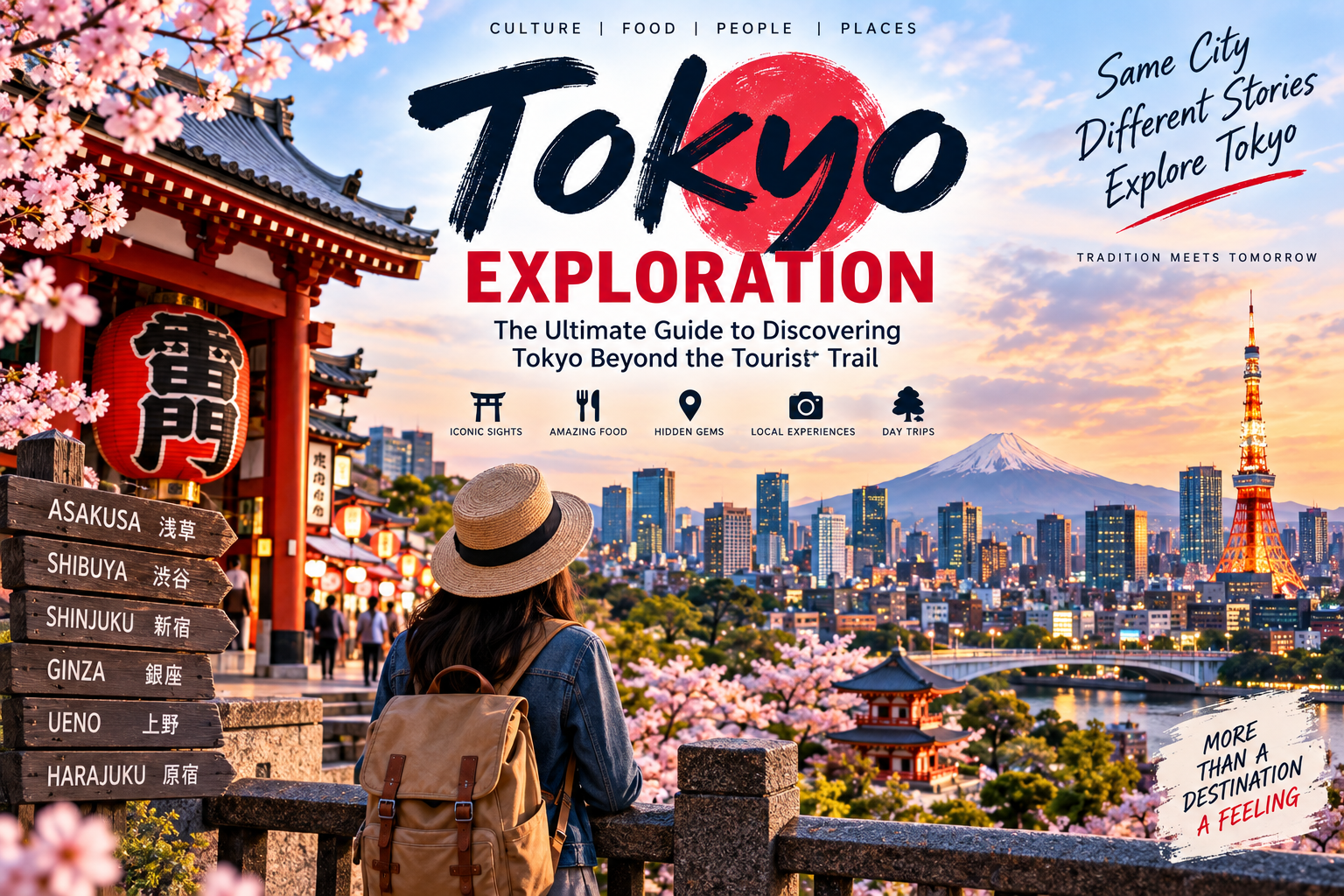
Tokyo Exploration: 50+ Amazing Places, Hidden Gems & Travel Tips
Tokyo exploration is about experiencing the city as a collection of contrasting neighbourhoods, cultures, streets, food traditions, historic sites, modern architecture and everyday moments rather than simply checking famous attractions off a list. The most rewarding Tokyo experience combines major landmarks such as Senso-ji, Shibuya and Tokyo Skytree with quieter streets, local cafés, traditional neighbourhoods, parks, markets and unexpected discoveries Tokyo History
What Makes Tokyo So Interesting to Explore?
Tokyo’s greatest attraction may not be a particular building or landmark.
It is the contrast between places.
One minute you can be surrounded by enormous digital screens and crowds.
A short train ride later, you may find yourself beside a quiet shrine surrounded by trees.
Walk another few minutes and you might encounter a narrow lane filled with tiny restaurants.
This constant change gives Tokyo its distinctive character.
Tokyo Is a City of Contrasts
Tokyo brings together:
- Edo-era history
- Modern Japanese culture
- Traditional architecture
- Contemporary architecture
- Global fashion
- Local neighbourhood life
- Dense urban development
- Large parks
- Waterfront districts
- Mountain landscapes
- Technology
- Traditional crafts
- Pop culture
- Fine dining
- Casual street food
The official Tokyo outline describes the metropolitan government area as including 23 special wards, 26 cities, five towns and eight villages, with landscapes ranging from lowland areas to mountains and extending to islands in the Pacific.
For travellers, this means the word “Tokyo” covers a much broader experience than the central skyscraper districts most visitors initially imagine.
Tokyo Exploration vs Traditional Sightseeing
Traditional sightseeing usually revolves around a list.
For example:
- Visit temple.
- Visit tower.
- Visit shopping district.
- Eat lunch.
- Visit museum.
- Return to hotel.
There is nothing wrong with this approach.
But Tokyo rewards another method.
Explore by Neighbourhood
Instead of selecting random attractions across the city, choose a neighbourhood and explore it deeply.
For example, an Asakusa exploration might include:
- Senso-ji
- Nakamise
- Side streets
- Small shops
- Local cafés
- Sumida River
- Traditional architecture
- Nearby museums
You are not simply visiting one attraction.
You are experiencing a district.
Explore by Theme
You can also build themed exploration days.
Examples include:
- Tokyo architecture
- Tokyo food
- Tokyo history
- Tokyo photography
- Tokyo gardens
- Tokyo shopping
- Tokyo cafés
- Tokyo design
- Tokyo family attractions
- Tokyo hidden streets
This approach makes the city easier to understand.
Understanding Tokyo’s Geography
Tokyo becomes much less confusing once you stop thinking of it as one giant city centre.
Central Tokyo
Central Tokyo includes areas such as:
- Tokyo Station
- Marunouchi
- Ginza
- Nihonbashi
- Kanda
- Jimbocho
- Tsukiji
- Akasaka
- Shinbashi
These areas are useful for visitors interested in business districts, shopping, food, history and architecture.
Eastern Tokyo
Eastern Tokyo includes:
- Asakusa
- Ryogoku
- Tokyo Skytree area
- Toyosu
- Kiyosumi Shirakawa
- Fukagawa
This side of the city offers a mixture of traditional culture, waterfront environments and newer development.
Northern Tokyo
Northern areas include:
- Ueno
- Yanaka
- Nezu
- Nippori
- Sugamo
- Akabane
These districts can provide a slower and more residential perspective.
Western Tokyo
Western Tokyo includes:
- Shinjuku
- Shibuya
- Harajuku
- Omotesando
- Aoyama
- Shimokitazawa
- Daikanyama
- Kichijoji
- Nakano
- Koenji
This area is particularly valuable for visitors interested in fashion, entertainment, contemporary culture, shopping and independent neighbourhoods.
Southern Tokyo
Southern areas include:
- Roppongi
- Azabu
- Tokyo Tower
- Odaiba
- Shinagawa
- Tennozu
- Ebisu
- Nakameguro
- Haneda
These districts combine museums, nightlife, contemporary development, waterfront scenery and commercial areas.
Start Your Tokyo Exploration in Asakusa
Asakusa is one of the strongest places to begin understanding Tokyo.
Explore Senso-ji
Senso-ji is one of Tokyo’s most recognizable temples.
The attraction is not limited to the temple itself.
The surrounding streets create an entire cultural landscape.
Explore:
- Kaminarimon
- Nakamise
- Temple grounds
- Side streets
- Traditional shops
- Nearby cafés
- Sumida River
Walk Beyond the Main Tourist Street
After visiting Senso-ji, resist the temptation to immediately leave.
Walk outward.
You will encounter smaller streets, restaurants, residential buildings and everyday businesses.
This is where exploration begins to replace sightseeing.
Explore the Sumida River
The Sumida River provides another perspective on Tokyo.
The river can be explored on foot or by water transportation, and the official Tokyo tourism guide highlights river cruises as a way to experience landmarks from a different viewpoint.
Explore Ueno for Culture and History
Ueno is one of Tokyo’s major cultural districts.
Visit Ueno Park
Ueno Park brings together:
- Museums
- Green space
- Cultural institutions
- Religious sites
- Walking paths
- Seasonal scenery
It is particularly useful for visitors who want to combine several cultural experiences without constantly crossing the city.
Explore the Museums
Depending on your interests, Ueno can support a full cultural day.
Consider:
- Art
- History
- Science
- Natural history
- Japanese culture
Always check current exhibitions and opening arrangements before visiting.
Discover Yanaka and Nezu
If you want to experience a slower side of Tokyo, explore Yanaka and Nezu.
Walk the Traditional Streets
These areas contain a different scale of urban development from Shinjuku or Shibuya.
Look for:
- Small houses
- Local shops
- Temples
- Narrow streets
- Small gardens
- Independent cafés
- Traditional businesses
Explore Yanaka Ginza
Yanaka Ginza is known for its local shopping-street atmosphere.
The experience is less about a single landmark and more about observing everyday Tokyo.
This is one of the most important lessons in Tokyo exploration:
A neighbourhood can be the attraction.
Explore Tokyo Station and Marunouchi
Tokyo Station is both a transportation hub and an architectural landmark.
See the Historic Station Building
The Marunouchi side of Tokyo Station provides a striking contrast with the surrounding skyscrapers.
The official Tokyo outline identifies the restored Tokyo Station building as an example of historic brick architecture within the modern capital.
Walk Through Marunouchi
After seeing the station, walk through the surrounding district.
Look for:
- Modern office towers
- Public spaces
- Historic façades
- Contemporary retail
- Cafés
- Street landscaping
This is a useful place to study the relationship between old and new Tokyo.
Discover Ginza
Ginza represents another side of the city.
Explore Luxury Shopping Streets
Ginza is known for:
- Department stores
- Luxury brands
- Restaurants
- Contemporary architecture
- Elegant streets
The official Tokyo tourism guide describes Ginza as one of Tokyo’s major destinations for shopping and gourmet dining.
Look Beyond the Main Avenue
The main streets are impressive, but smaller side streets can reveal:
- Independent restaurants
- Bars
- Galleries
- Specialist shops
- Older buildings
Exploration often begins when you leave the obvious route.
Explore Tsukiji
Tsukiji remains an important food destination for visitors even though the wholesale market functions historically associated with the old market site moved to Toyosu.
Explore the Outer Market
Visitors can explore food shops, restaurants and specialist businesses.
Try to arrive with a curiosity about ingredients and food culture rather than treating the area only as a place for one meal.
Learn About Japanese Food Culture
Look for:
- Seafood
- Japanese sweets
- Kitchen tools
- Pickles
- Tea
- Seasonings
- Specialty foods
Discover Akihabara
Akihabara is internationally associated with electronics and Japanese pop culture.
Explore Beyond the Main Street
The major roads are only part of the experience.
Look for:
- Hobby shops
- Electronics stores
- Collectibles
- Manga-related businesses
- Anime merchandise
- Small specialist stores
Explore Akihabara for Its Retail Culture
One of the most interesting aspects is specialization.
A store may focus on an extremely narrow category of products.
This creates a retail environment that differs from conventional shopping malls.
Explore Harajuku
Harajuku is associated with youth culture and fashion.
Visit Meiji Jingu
Meiji Jingu provides a dramatic contrast with nearby Harajuku.
After navigating busy streets, you can enter a large wooded shrine environment.
That contrast is one of Tokyo’s defining experiences.
Walk Omotesando
Omotesando is especially valuable for architecture and design enthusiasts.
Explore:
- Fashion flagships
- Contemporary buildings
- Street trees
- Side streets
- Galleries
- Cafés
Explore Shibuya
Shibuya is one of Tokyo’s most recognizable urban environments.
Experience Shibuya Crossing
The famous crossing demonstrates the scale and density of Tokyo.
But do not stop there.
The larger Shibuya area offers:
- Shopping
- Restaurants
- Entertainment
- Contemporary architecture
- Observation spaces
- Smaller streets
Explore the Side Streets
Walk away from the most crowded areas.
The surrounding streets reveal another side of Shibuya with:
- Smaller restaurants
- Fashion stores
- Cafés
- Local businesses
- Creative spaces
Explore Shinjuku
Shinjuku is enormous.
It combines:
- Skyscrapers
- Shopping
- Restaurants
- Transport
- Entertainment
- Parks
- Government buildings
Visit the Tokyo Metropolitan Government Area
The Tokyo Metropolitan Government Building is one of the district’s major landmarks.
Explore Shinjuku Gyoen
Shinjuku Gyoen provides an important change of pace.
Large green spaces are particularly valuable in a city where urban density can otherwise dominate the experience.
Explore Kabukicho From a Cultural Perspective
Kabukicho is one of Shinjuku’s most recognizable entertainment districts.
Visitors should follow local rules, respect businesses and avoid situations that appear unclear or unsafe.
Discover Daikanyama
Daikanyama is useful for travellers who want a more relaxed urban experience.
The official Tokyo tourism guide specifically highlights Daikanyama for its combination of fashion, cafés, cosmetics and architecture.
Explore at Walking Speed
This is a neighbourhood where walking is more important than rushing between attractions.
Look for:
- Independent shops
- Design stores
- Cafés
- Small streets
- Residential architecture
Explore Shimokitazawa
Shimokitazawa is known for its alternative cultural atmosphere.
Discover Independent Businesses
Explore:
- Vintage clothing
- Music shops
- Small theatres
- Cafés
- Restaurants
- Independent retailers
The district demonstrates how Tokyo’s cultural identity is not limited to major commercial centres.
Explore Kichijoji
Kichijoji can be a rewarding choice for travellers who want to move beyond the most famous tourist districts.
The official Tokyo tourism guide describes Kichijoji as an area with contrasting experiences, including traditional eateries around Harmonica Alley and modern shopping.
Visit Inokashira Park
The park gives visitors another perspective on Tokyo’s relationship with nature.
Combine:
- Park walking
- Local cafés
- Shopping streets
- Neighbourhood exploration
Explore Roppongi
Roppongi is especially useful for culture and contemporary architecture.
Visit Museums
The district contains major cultural institutions and art spaces.
Check current exhibitions before travelling because schedules change.
Explore Modern Developments
Roppongi also demonstrates Tokyo’s large-scale mixed-use urban development.
Compare major towers with smaller streets around them.
Explore Tokyo Tower and Surrounding Areas
Tokyo Tower remains one of the city’s most recognizable landmarks.
The official Tokyo tourism guide notes that the tower was completed in 1958 and remains a popular lookout point.
Look at Tokyo Tower From Different Angles
Rather than visiting only the observation facilities, explore nearby streets and parks.
The tower changes appearance depending on:
- Weather
- Time of day
- Distance
- Surrounding buildings
Explore Odaiba
Odaiba offers a very different Tokyo environment.
The official Tokyo tourism guide describes it as a large reclaimed area in Tokyo Bay with attractions and waterfront scenery.
Walk Along the Waterfront
Odaiba is particularly interesting around sunset.
Look for:
- Tokyo skyline
- Rainbow Bridge
- Waterfront parks
- Modern architecture
- Large public spaces
Explore Kiyosumi Shirakawa
Kiyosumi Shirakawa has become known for cafés and a calmer neighbourhood atmosphere.
Combine Coffee and Walking
Rather than turning the visit into a checklist, choose a few cafés and spend time walking around.
The district is particularly suitable for travellers interested in:
- Coffee culture
- Local neighbourhoods
- Small galleries
- Contemporary urban life
Explore Nakameguro
Nakameguro is particularly popular for its riverfront atmosphere.
Walk Along the River
The area changes dramatically with the seasons.
Spring can bring blossom interest, while other times of year offer a quieter neighbourhood experience.
Explore nearby:
- Cafés
- Restaurants
- Boutiques
- Side streets
Explore Ebisu
Ebisu combines restaurants, cafés, residential streets and commercial areas.
It is useful for travellers who want to experience Tokyo outside the largest tourist clusters.
Explore Jiyugaoka
Jiyugaoka is another neighbourhood highlighted by the official Tokyo tourism guide for its lifestyle stores and eateries.
Experience Residential Tokyo
The district can provide insight into how shopping, dining and residential life interact in Tokyo.
Explore Western Tokyo and the Tama Area
Tokyo does not end with the 23 wards.
The Tama area offers a substantially different environment.
Explore Mt. Takao
Mt. Takao is accessible from central Tokyo and offers hiking and nature experiences.
Explore Okutama
Okutama provides:
- Mountains
- Rivers
- Lakes
- Hiking
- Nature
- Seasonal scenery
The official Tokyo outline identifies Okutama as a popular destination for hiking, camping, autumn leaves and other natural experiences.
This is an important reminder:
Tokyo can be a nature destination as well as an urban destination.
Explore Tokyo’s Islands
One of the least expected facts about Tokyo is that the metropolitan government area includes islands.
Izu Islands
The Izu Islands offer opportunities for:
- Beaches
- Marine activities
- Nature
- Fishing
- Local culture
Ogasawara Islands
The Ogasawara Islands are much farther from central Tokyo and offer subtropical environments and distinctive ecosystems.
The official Tokyo outline notes that the Ogasawara Islands are about 1,000 kilometres from central Tokyo and include Chichijima and Hahajima as inhabited islands.
These destinations require substantially more planning than a central Tokyo neighbourhood.
Tokyo Exploration Through Food
Food can be one of the best ways to understand Tokyo.
Explore Breakfast Culture
Try starting one day with a Japanese breakfast experience.
Depending on your accommodation and preferences, this could include:
- Rice
- Miso soup
- Grilled fish
- Pickles
- Egg
- Tea
Explore Lunch Neighbourhoods
Rather than crossing Tokyo for one restaurant, choose lunch within your exploration district.
Explore Department Store Food Halls
Japanese department-store food halls can be fascinating places to observe presentation, packaging and variety.
Explore Small Restaurants
Small restaurants can provide memorable experiences because their menus are often focused rather than enormous.
Tokyo Exploration Through Architecture
Architecture is everywhere in Tokyo.
Traditional Architecture
Look for:
- Shrines
- Temples
- Wooden structures
- Gates
- Gardens
- Traditional houses
Modern Architecture
Explore:
- Tokyo Station
- Marunouchi
- Shinjuku
- Ginza
- Omotesando
- Roppongi
Residential Architecture
Do not overlook small houses.
Tokyo’s compact residential architecture can reveal how architects respond to limited land, light, privacy and density.
Tokyo Exploration Through Photography
Tokyo provides endless photographic opportunities.
Photograph the Big Picture
Capture:
- Skylines
- Towers
- Bridges
- Major streets
- Station areas
Photograph the Details
Look for:
- Doorways
- Signs
- Street lamps
- Shopfronts
- Tiles
- Architecture
- Vending machines
- Small gardens
Photograph the Contrast
A particularly effective Tokyo photography technique is to place contrasting elements together:
- Temple + skyscraper
- Traditional house + modern tower
- Quiet alley + busy road
- Garden + concrete building
- Old shop + contemporary façade
Tokyo Exploration Through History
Tokyo’s current appearance makes more sense when you understand its history.
Edo
The city developed as Edo under the Tokugawa shogunate.
Meiji Period
Japan’s modernization transformed Tokyo’s architecture, institutions and infrastructure.
1923 Earthquake
The Great Kanto Earthquake dramatically changed the city’s development.
Postwar Reconstruction
The decades following World War II produced rapid urban and economic transformation.
Modern Tokyo
The city continues to redevelop around transportation, housing, business, culture and technology.
Tokyo Exploration Through Culture
Tea Culture
A tea experience can provide a slower introduction to Japanese traditions.
Calligraphy
Calligraphy offers insight into Japanese writing and artistic practice.
Traditional Crafts
Explore specialist shops and cultural centres for crafts such as:
- Ceramics
- Textiles
- Woodwork
- Paper
- Lacquerware
Festivals
Tokyo’s festivals vary throughout the year.
The official Tokyo tourism guide notes that matsuri occur across the seasons and may involve temples, shrines, parks, processions, dances and fireworks.
Tokyo Exploration for Families
Family travel requires a different pace.
Choose Fewer Major Attractions
Children may enjoy one major attraction far more than five rushed visits.
Use Parks as Recovery Spaces
Parks provide opportunities to:
- Rest
- Eat snacks
- Play
- Reset between activities
Combine Indoor and Outdoor Activities
A practical family day might be:
Museum → lunch → park → shopping → early dinner
rather than six attractions.
Tokyo Exploration for Solo Travellers
Solo travel makes neighbourhood exploration easier.
Create Flexible Days
You can change plans without negotiating with a group.
Explore at Your Own Pace
Spend an hour photographing one street if you want.
Stop at a café.
Visit a small museum.
Return to a neighbourhood you enjoyed.
Use Public Transportation
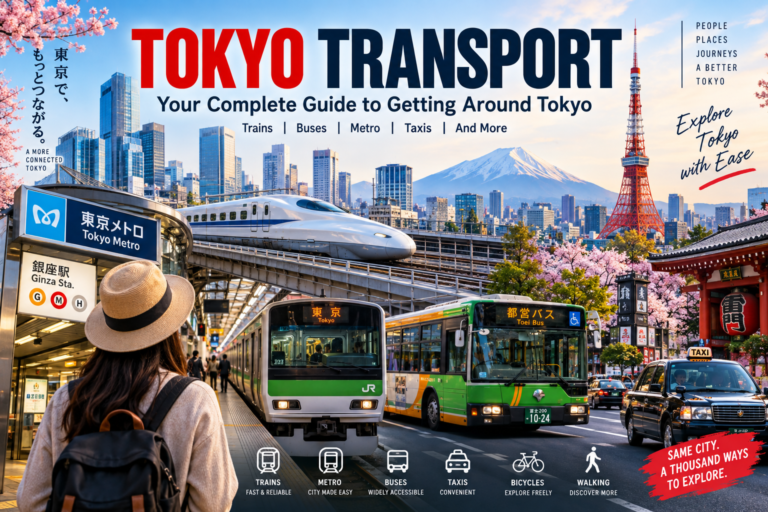
Tokyo’s transport network is extensive. The official tourism guide says trains, subways, buses, taxis, bicycles and water transport all provide ways to explore the city.
Tokyo Exploration for Couples
Couples can focus on experiences rather than attraction counts.
Consider:
- Scenic walks
- Gardens
- Waterfronts
- Cafés
- Museums
- Evening views
- Neighbourhood restaurants
The best couple itinerary often leaves enough unplanned time for conversation and discovery.
Tokyo Exploration for Older Travellers
Tokyo can involve substantial walking and station navigation.
Reduce Unnecessary Transfers
A slightly longer route with fewer transfers may be more comfortable than the fastest theoretical route.
Use Taxis Strategically
Taxis can be useful when carrying luggage or travelling after a long day.
The official Tokyo tourism guide notes that taxis are widely available and recommends having your destination written in Japanese when language barriers may be an issue.
Plan Rest Stops
A good itinerary includes cafés, parks and hotel breaks.
Tokyo Exploration for Budget Travellers
You do not need a luxury budget to explore Tokyo.
Walk More
Walking is free and can reveal places you would miss from a train.
Use Public Transportation
Tokyo’s public transportation network provides extensive coverage.
Mix Free and Paid Experiences
Combine:
- Parks
- Shrines
- Neighbourhood walks
- Free public spaces
- Paid museums
- Observation decks
- Special experiences
Tokyo Exploration for Luxury Travellers
Luxury exploration is often about reducing friction.
Consider:
- Premium accommodation
- Private guides
- Reserved dining
- Private transportation
- Carefully timed cultural experiences
The goal is not necessarily to see more.
It is to experience each place comfortably.
Tokyo Exploration for Architecture Lovers
Architecture enthusiasts can create entire days around design.
Marunouchi
Study:
- Historic Tokyo Station
- Modern towers
- Public spaces
Omotesando
Study:
- Flagship stores
- Glass
- Concrete
- Innovative façades
Roppongi
Study:
- Museums
- High-rise development
- Public spaces
Shinjuku
Study:
- Skyscrapers
- Government architecture
- Transportation infrastructure
Tokyo Exploration for Nature Lovers
Nature exists throughout Tokyo.
Parks and Gardens
Explore:
- Ueno Park
- Shinjuku Gyoen
- Imperial Palace gardens and surrounding areas
- Traditional Japanese gardens
Rivers
Explore:
- Sumida River
- Meguro River
- Other urban waterways
Mountains
For a different experience, travel west toward:
- Mt. Takao
- Okutama
Tokyo Exploration by Season
Spring
Spring can be an excellent time for gardens and blossoms.
Popular areas can become crowded, so consider visiting early and exploring less-famous alternatives.
Summer
Summer can be hot and humid.
Plan:
- Early mornings
- Indoor attractions
- Evening walks
- Hydration breaks
Autumn
Autumn is excellent for parks, gardens and seasonal colour.
Winter
Winter can provide crisp city views, illuminations and a different atmosphere.
The official Tokyo tourism site maintains seasonal guides and current event information, making it useful to check before travelling.
Tokyo Exploration and Transportation
Transportation is not just a logistical issue.
It is part of the Tokyo experience.
Explore by Train
Trains allow you to observe the city changing from one neighbourhood to another.
Explore by Subway
Subways connect many central districts efficiently.
Explore by Bus
Buses can reveal streets that you might otherwise only see from a train.
Explore by Bicycle
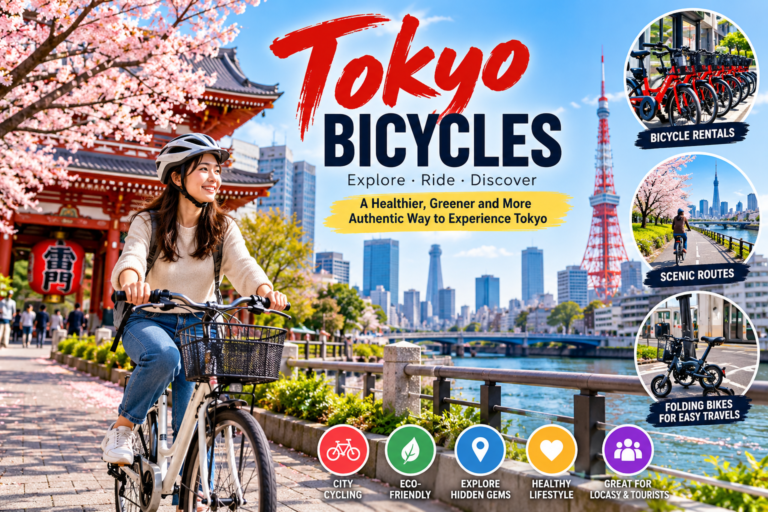
The official Tokyo tourism guide describes bicycle exploration as a way to experience sights and sounds that may be missed when using other transport.
Explore by Water
Riverboats and waterbuses provide another perspective.
How to Navigate Tokyo Efficiently
Use an IC Card
IC cards can simplify many public transportation journeys.
Download Maps
Keep important information accessible even if connectivity becomes unreliable.
Save Hotel Information
Keep your hotel’s:
- Name
- Address
- Phone number
- Nearest station
available on your phone.
Learn the Station Exit
Large stations may have many exits.
The correct exit can save significant walking time.
The Tokyo Station Exit Problem
A common mistake is assuming that being at a station means you have arrived.
In Tokyo, stations can be enormous.
Check the Exit Before Walking
If your destination is near a particular exit, identify it before leaving the station.
Give Yourself Extra Time
Major stations can involve:
- Long corridors
- Multiple levels
- Different railway operators
- Underground shopping areas
- Numerous exits
This is especially important when travelling with luggage.
Tokyo Exploration and Accessibility
Accessibility should be considered when designing an itinerary.
Research Routes
Look for:
- Elevators
- Step-free entrances
- Accessible toilets
- Accessible transport routes
Use Official Information
Tokyo’s tourist information centres provide practical information about sightseeing, routes, transportation and accommodation, and the Tokyo Metropolitan Government also provides accessibility-related support.
Tokyo Exploration and Digital Tools
Technology can make exploration easier.
Map Applications
Use maps to:
- Find routes
- Locate restaurants
- Check opening hours
- Identify nearby attractions
Translation Tools
Translation tools can assist with menus, signs and basic communication.
Official Tokyo Tourism Resources
The official GO TOKYO website provides current information about:
- Attractions
- Neighbourhoods
- Events
- Transportation
- Tourist information
- Seasonal activities
Its 2026 guide also includes current area-based information covering all 23 wards, Tama and Tokyo’s islands.
Ten Travel Brands and Tools for Tokyo Exploration Compared
The following comparison focuses on travel services, navigation tools and official tourism resources that can support Tokyo exploration. It is not a ranking.
| Brand or Tool | Main Purpose | Best Use | Key Advantage | Limitation |
|---|---|---|---|---|
| GO TOKYO | Official Tokyo tourism | Destination research | Current official information | Not a personal itinerary manager |
| Google Maps | Navigation | Walking and transport | Extensive mapping | Large stations can still be confusing |
| Tokyo Metro | Subway information | Metro travel | Official network information | Focused on Tokyo Metro |
| JR East | Rail information | JR journeys | Official JR East network information | Not a complete Tokyo transport guide |
| Suica | Transit/payment | Everyday transport | Convenient for compatible journeys | Not designed for sightseeing planning |
| PASMO | Transit/payment | Rail and bus travel | Useful across compatible services | Not a full itinerary platform |
| NAVITIME Japan Travel | Route planning | Detailed transport planning | Japan-focused route information | Can feel complex for beginners |
| GO Taxi | Taxi travel | Point-to-point journeys | Useful when trains are inconvenient | More expensive than public transport |
| Hato Bus | Guided sightseeing | Structured tours | Easy way to see multiple sights | Less flexible than independent travel |
| Tripadvisor | Reviews and discovery | Restaurants and attractions | Large amount of traveller feedback | Review quality varies |
The official Tokyo tourism site currently identifies a range of transport options, tourist services and sightseeing tools, while its tourist information centres offer practical route and destination guidance.
How to Choose the Right Tokyo Exploration Style
There is no universal way to explore Tokyo.
If You Have Two Days
Focus on:
- One traditional district
- One modern district
- One major shopping area
- One evening neighbourhood
If You Have Four Days
Add:
- Museums
- Architecture
- A quieter neighbourhood
- A flexible half-day
If You Have Seven Days
Add:
- Western Tokyo
- Nature
- Day trips
- Local neighbourhoods
- Multiple cultural experiences
If You Have Two Weeks
You can explore Tokyo at a much slower pace.
Consider spending entire days in districts that most visitors only pass through.
The Slow Tokyo Exploration Method
One of the best ways to understand Tokyo is to deliberately slow down.
Pick One Station
Choose a station.
Then walk outward for two hours.
Do not plan every turn.
Look for:
- Cafés
- Shops
- Parks
- Temples
- Architecture
- Residential streets
Why This Works
You begin seeing Tokyo as a place where people live rather than simply a collection of tourist attractions.
The Three-Layer Exploration Method
A particularly useful framework is to explore Tokyo in three layers.
Layer One: Famous Landmark
Visit the major attraction.
Examples:
- Senso-ji
- Tokyo Tower
- Shibuya Crossing
- Tokyo Station
Layer Two: Neighbourhood
Walk around the surrounding district.
Layer Three: Ordinary Street
Move one or two streets away from the tourist route.
This is often where the most interesting discoveries happen.
The One-Street-Further Rule
If a street is extremely crowded, walk one street away.
If a restaurant has a long queue, look nearby.
If a shopping street feels overly commercial, explore the side roads.
This simple rule can reveal a quieter and sometimes more authentic-feeling side of Tokyo without requiring a complicated itinerary.
Common Tokyo Exploration Mistakes
Trying to Visit Too Many Neighbourhoods
Tokyo is large.
Crossing the city repeatedly can consume hours.
Solution: Group areas geographically.
Staying Only in Famous Districts
Shibuya and Shinjuku are worth visiting, but they are not the whole city.
Solution: Add at least one quieter neighbourhood.
Ignoring the Tama Area
Tokyo includes much more than the 23 wards.
Solution: If you have enough time, explore western Tokyo and its natural areas.
Treating Food as an Afterthought
Food is an important part of Tokyo’s culture.
Solution: Build food exploration into each neighbourhood day.
Overplanning
A completely fixed itinerary leaves no space for discovery.
Solution: Keep part of each day flexible.
Ignoring Walking Distance
A route may look short on a map but involve complex station navigation.
Solution: Estimate actual walking and transfer time.
Depending on One App
Technology can fail.
Solution: Keep hotel information, addresses and important reservations available offline.
Challenges of Exploring Tokyo
Tokyo’s size creates genuine challenges.
Challenge: Information Overload
There are too many recommendations.
Solution: Choose five interests and filter everything through them.
Challenge: Crowds
Popular attractions can become extremely busy.
Solution: Visit early, choose quieter times where practical and explore alternatives.
Challenge: Language Differences
Not every local business will operate in English.
Solution: Keep addresses and important information written clearly and use translation tools when needed.
Challenge: Fatigue
Tokyo can involve extensive walking.
Solution: Schedule breaks and avoid crossing the city unnecessarily.
Challenge: Weather
Rain and heat can alter your plans.
Solution: Have indoor alternatives ready.
Pros and Cons of Tokyo Exploration
Advantages of Exploring Tokyo
Tokyo offers:
- Exceptional cultural variety
- Extensive public transportation
- Diverse neighbourhoods
- Historic sites
- Modern architecture
- Excellent food
- Shopping opportunities
- Urban nature
- Day-trip possibilities
- Strong seasonal variety
Potential Disadvantages
Exploration can also involve:
- Large crowds
- Complex stations
- Significant walking
- High accommodation costs in popular areas
- Information overload
- Language barriers in some settings
- Long travel times if poorly planned
These challenges are manageable when the trip is organized around realistic priorities.
Tokyo Exploration and Responsible Tourism
As Tokyo continues to attract visitors, responsible travel becomes increasingly important.
Respect Residential Areas
Do not enter private property.
Avoid blocking narrow streets.
Be considerate when photographing homes.
Follow Local Rules
Pay attention to:
- Photography restrictions
- Queueing
- Waste disposal
- Temple and shrine etiquette
- Public transportation etiquette
Spread Your Visits
If possible, explore a wider range of neighbourhoods instead of concentrating all activity in a few famous streets.
Support Local Businesses
Independent restaurants, cafés, shops and cultural businesses can add depth to the travel experience.
Tokyo Exploration and the Future
Tokyo is not a static destination.
The city is constantly changing.
The official GO TOKYO site currently highlights new neighbourhood developments, cultural spaces, seasonal experiences and next-generation mobility as part of its current Tokyo coverage.
New Urban Developments
Areas such as Oimachi and Takanawa are examples of districts where urban development and cultural experiences are changing the city’s landscape.
Next-Generation Mobility
Tokyo is also exploring new transportation concepts involving boats and vehicles.
This suggests that future visitors may experience the city through an increasingly diverse combination of transport options.
AI-Assisted Travel
The Tokyo Metropolitan Government currently provides Tokyo Navigation AI as a 24/7 online tourist guide for travel consultations.
This points toward a future in which travel planning becomes more personalized.
Instead of simply asking:
What are the top attractions?
Travellers may increasingly ask:
What can I explore near me right now based on my interests, weather and available time?
Future Trends in Tokyo Exploration
More Neighbourhood-Based Travel
Travellers are increasingly interested in experiences beyond the standard checklist.
Personalized Itineraries
Technology will increasingly adapt recommendations to:
- Age
- Budget
- Interests
- Mobility
- Travel companions
- Weather
- Available time
More Responsible Tourism
Tourism planning may increasingly encourage visitors to explore less crowded areas.
More Local Experiences
Visitors are likely to seek:
- Workshops
- Food experiences
- Craft activities
- Local festivals
- Neighbourhood walks
More Flexible Travel Tokyo exploration
Real-time information will make it easier to change plans during the day.
How to Build the Perfect Tokyo Exploration Day
A useful daily formula is:
Morning: Major Experience Tokyo exploration
Visit your primary attraction early.
Late Morning: Walk Tokyo exploration
Explore the surrounding streets.
Lunch: Local Area Tokyo exploration
Eat within the neighbourhood.
Afternoon: Secondary Experience Tokyo exploration
Visit a museum, garden, shopping area or cultural attraction.
Late Afternoon: Free Time Tokyo exploration
Stop at a café or explore side streets.
Evening: Atmospheric Experience Tokyo exploration
Choose:
- Skyline
- Waterfront
- Restaurant
- Shopping district
- Night walk
This formula provides structure without creating a rigid schedule.
A Sample 3-Day Tokyo Exploration Plan
Day One: Traditional Tokyo exploration
Start in Asakusa.
Explore:
- Senso-ji
- Nakamise
- Side streets
- Sumida River
Continue toward:
- Tokyo Skytree area
Finish with dinner in eastern Tokyo.
Day Two: Modern Tokyo exploration
Start at:
- Meiji Jingu
Continue through:
- Harajuku
- Omotesando
- Aoyama
Then explore:
- Shibuya
Finish around:
- Shinjuku
Day Three: Central and Cultural Tokyo Tokyo exploration
Start at:
- Tokyo Station
Walk through:
- Marunouchi
Continue toward:
- Ginza
- Tsukiji
Then choose:
- Roppongi
- Ueno
- Odaiba
depending on your interests.
A Sample 5-Day Tokyo Exploration Plan
Day One: Asakusa and Ueno Tokyo exploration
Traditional culture and museums.
Day Two: Tokyo Station, Marunouchi and Ginza Tokyo exploration
Architecture, shopping and central Tokyo.
Day Three: Harajuku, Omotesando and Shibuya Tokyo exploration
Culture, fashion and contemporary Tokyo.
Day Four: Shinjuku and Nakano Tokyo exploration
Skyscrapers, parks, shopping and neighbourhood exploration.
Day Five: Daikanyama, Nakameguro and Shimokitazawa Tokyo exploration
Slower neighbourhood exploration.
This fifth day deliberately avoids packing in too many major landmarks.
A Sample 7-Day Tokyo Exploration Plan
Day One Tokyo exploration
Asakusa and Ueno.
Day Two Tokyo exploration
Tokyo Station, Marunouchi and Ginza.
Day Three Tokyo exploration
Meiji Jingu, Harajuku and Shibuya.
Day Four Tokyo exploration
Shinjuku and western Tokyo.
Day Five Tokyo exploration
Roppongi, Azabu and Tokyo Tower.
Day Six Tokyo exploration
Daikanyama, Nakameguro and Shimokitazawa.
Day Seven Tokyo exploration
Tama, Mt. Takao, Odaiba or a flexible day depending on interests.
How to Make Tokyo Exploration More Memorable
The strongest memories often come from moments that were not on the original itinerary.
Perhaps it is:
- A tiny restaurant
- A quiet shrine
- A beautifully designed café
- A local shop
- A street musician
- A sunset over the river
- A small garden
- An unexpected view of Tokyo Tower
These moments happen when you leave space for them.
Keep One Empty Block Every Day Tokyo exploration
Reserve at least one period for:
“Whatever we discover.”
This can become the most memorable part of the trip.
Final Tokyo Exploration Checklist
Before your trip, make sure you have considered:
Before You Travel Tokyo exploration
- Choose your travel dates
- Decide your main interests
- Select a suitable accommodation area
- Research airport transportation
- Download navigation tools
- Prepare payment options
- Check important reservations
- Research seasonal conditions
During Each Day Tokyo exploration
- Start with one major attraction
- Explore the surrounding neighbourhood
- Have lunch locally
- Visit one secondary attraction
- Leave time for walking
- Take breaks
- Check the weather
- Keep an evening option flexible
For Better Exploration Tokyo exploration
- Walk beyond the famous streets
- Explore side roads
- Visit local cafés
- Try neighbourhood restaurants
- Look for traditional architecture
- Visit parks and gardens
- Use public transport
- Respect residential areas
- Keep your schedule flexible
FAQs
What is the best way to explore Tokyo?
The best approach for many visitors is to combine major landmarks with neighbourhood exploration. Group attractions geographically, use public transportation, walk through surrounding streets and leave flexible time for discoveries.
How many days are needed to explore Tokyo?
Three to five days can provide a useful introduction, while a week or longer allows deeper exploration of neighbourhoods and areas outside central Tokyo.
What are the best areas for Tokyo exploration?
Popular choices include Asakusa, Ueno, Ginza, Tokyo Station, Harajuku, Omotesando, Shibuya, Shinjuku, Roppongi, Daikanyama, Shimokitazawa and Kichijoji. Western Tokyo and the Tama area offer additional nature-focused experiences.
Is Tokyo easy to explore without a car?
Yes. Tokyo has an extensive network of trains, subways, buses and other transportation options. The official Tokyo tourism guide says central visitors are generally unlikely to need a rental car.
What is the best way to get around Tokyo?
For many visitors, trains and subways are the practical foundation. Buses, taxis, bicycles and water transport can complement them depending on the destination.
Is Tokyo good for walking?
Yes. Walking is one of the best ways to discover smaller streets and neighbourhoods, although travellers should plan for substantial walking and allow rest periods.
Where can I find hidden gems in Tokyo?
Consider areas such as Yanaka, Nezu, Daikanyama, Kiyosumi Shirakawa, Jiyugaoka, Kichijoji, Shimokitazawa and smaller streets around major districts.
What should I explore beyond central Tokyo?
Consider western Tokyo, Mt. Takao, Okutama and, for longer trips, Tokyo’s islands. The metropolitan government area extends far beyond the central 23 wards.
What is the best Tokyo exploration experience for first-time visitors?
A balanced first trip can combine Asakusa, Shibuya, Shinjuku, Meiji Jingu, Tokyo Station and one quieter neighbourhood.
Can I explore Tokyo on a budget?
Yes. Walking, public transportation, parks, shrines, neighbourhood exploration and carefully selected paid attractions can create a varied trip without requiring luxury spending.
Is Tokyo suitable for solo exploration?
Yes. Solo travellers can take advantage of Tokyo’s extensive transportation network and flexible neighbourhood-based travel.
How can families explore Tokyo without getting exhausted?
Limit the number of major attractions each day, use parks and indoor spaces as breaks, keep meals flexible and avoid unnecessary cross-city travel.
Is Tokyo worth exploring outside the famous tourist areas?
Absolutely. Neighbourhoods such as Daikanyama, Kichijoji, Yanaka, Jiyugaoka and Shimokitazawa can reveal different aspects of everyday Tokyo. The official tourism guide specifically promotes several of these less internationally famous areas.
Should I plan every Tokyo activity before arriving?
No. Reserve important time-sensitive experiences, but leave flexible periods for neighbourhood exploration, weather changes and unexpected discoveries.
Conclusion
Tokyo exploration is about much more than visiting famous attractions. The city’s greatest strength is its variety. You can begin your morning at a centuries-old temple in Asakusa, spend the afternoon surrounded by contemporary architecture in Omotesando, eat dinner in a small neighbourhood restaurant and finish the evening beneath the illuminated skyline of Shinjuku. The next day can be completely different. You might walk through a traditional neighbourhood, visit a museum, explore a Japanese garden or take a train into the mountains of western Tokyo. That variety is what makes Tokyo such a rewarding destination.

One Comment