Tokyo Money Guide: Currency, Costs & Smart Payment Tips
Understanding Tokyo money before your trip can make it much easier to control your travel budget, choose the right payment methods, avoid unnecessary fees, and know when to use Japanese yen, cards, or IC payment cards. Tokyo can be experienced on different budgets, but the smartest approach is to combine cash, card payments, and prepaid transportation options while planning daily spending around accommodation, food, transport, attractions, and shopping Tokyo Secret Places
What Is Tokyo Money?
Tokyo money generally refers to the Japanese yen used for everyday spending in Tokyo.
The official currency is the Japanese yen (JPY).
You will commonly see prices written in forms such as:
- ¥500
- ¥1,000
- ¥1,500
- ¥5,000
- ¥10,000
A Japanese price may also be written with the currency symbol after the number in some contexts.
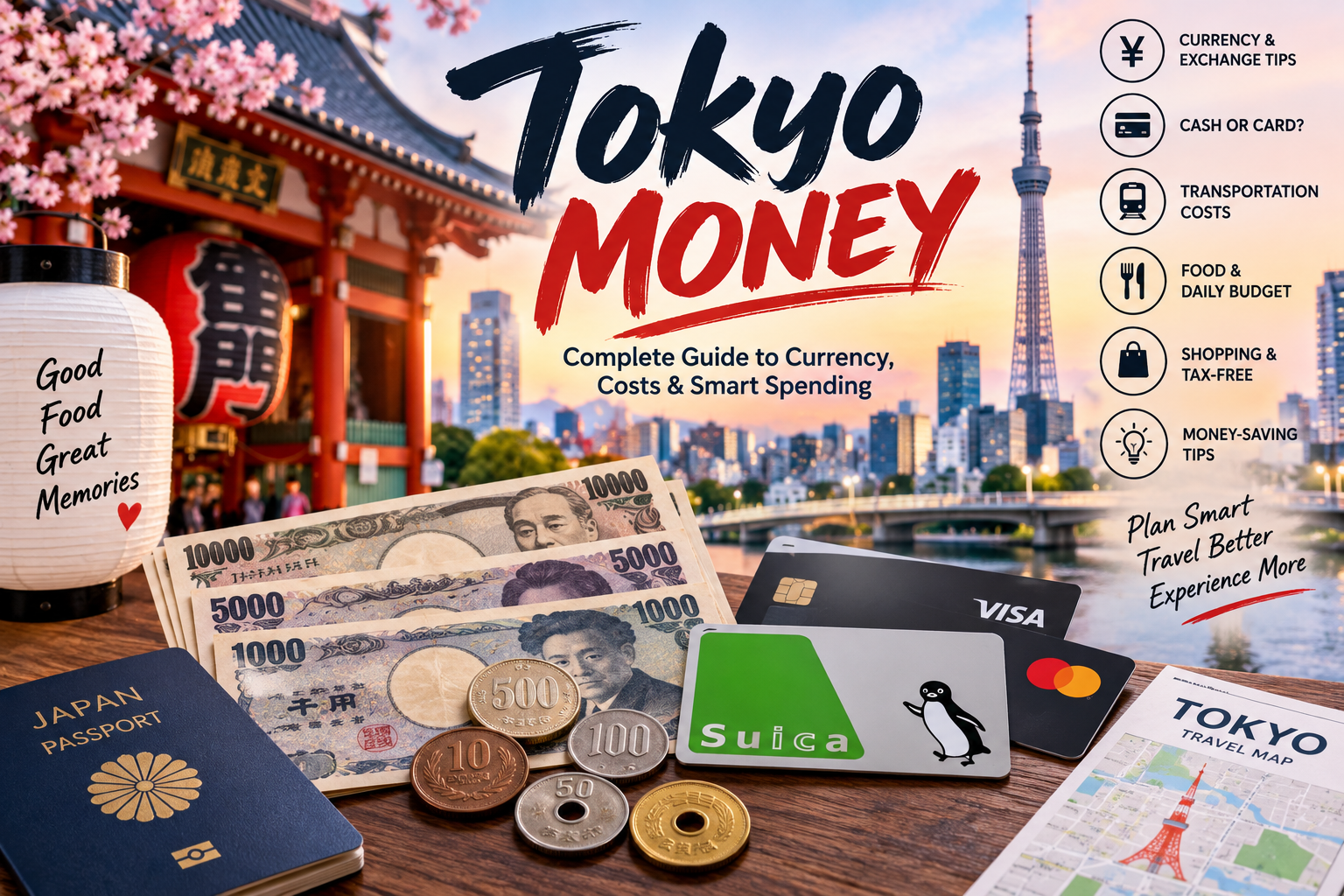
Japanese Yen Banknotes
The main banknote denominations currently issued are:
- ¥1,000
- ¥2,000
- ¥5,000
- ¥10,000
The Ministry of Finance confirms the currently issued ¥1,000, ¥5,000 and ¥10,000 notes, while ¥2,000 notes remain valid and are in circulation even though they are less commonly encountered by travelers.
For most travelers, the ¥1,000 and ¥5,000 notes are particularly useful for everyday purchases.
A ¥10,000 note is also legal and useful for larger purchases, but some very small businesses may not be comfortable making change for large notes when the purchase is inexpensive.
Japanese Yen Coins
Commonly issued coins include:
- ¥1
- ¥5
- ¥10
- ¥50
- ¥100
- ¥500
The ¥500 coin is particularly useful because it has a relatively high value compared with coins in many other currencies.
The ¥5 and ¥50 coins have central holes, which makes them easy to distinguish.
The Ministry of Finance’s current coin list confirms the currently issued ¥500, ¥100, ¥50, ¥10, ¥5 and ¥1 coins.
Why Japanese Coins Can Surprise Travelers
A traveler used to a currency where low-value coins represent very small amounts may initially find Japanese coins surprisingly useful.
A few hundred yen can pay for:
- Small snacks
- Drinks
- Vending-machine purchases
- Small transport-related expenses
- Convenience-store items
- Temple or shrine-related purchases where applicable
Rather than treating coins as inconvenient, learn to use them as part of everyday Tokyo spending.
Is Tokyo Expensive?
Tokyo can be expensive, moderate, or surprisingly affordable depending on how you travel.
There is no single Tokyo daily budget that works for everyone.
A luxury traveler staying in a high-end hotel and dining at premium restaurants will have a completely different budget from a backpacker staying in a hostel and eating inexpensive local meals.
The major spending categories are:
- Accommodation
- Food
- Transportation
- Attractions
- Shopping
- Entertainment
- Internet and connectivity
- Insurance
- Airport transfers
- Unexpected expenses
Tokyo Budget Depends More on Choices Than on the City Alone
Two travelers can visit Tokyo for the same number of days and spend dramatically different amounts.
For example, one traveler might:
- Stay near a major station
- Eat at inexpensive restaurants
- Use public transportation
- Visit parks and free attractions
- Limit shopping
Another might:
- Stay in a luxury hotel
- Take taxis
- Eat at premium restaurants
- Purchase designer goods
- Visit several expensive attractions
Both are experiencing Tokyo.
Their budgets simply reflect different priorities.
Tokyo Money and Daily Travel Budgets
Instead of treating the following figures as fixed prices, use them as planning frameworks. Actual costs vary by season, location, exchange rates, accommodation type and personal choices.
Budget Traveler
A budget traveler might prioritize:
- Hostel or low-cost accommodation
- Affordable meals
- Public transportation
- Free or low-cost attractions
- Limited shopping
A reasonable planning framework could be approximately ¥8,000–¥15,000 per day excluding accommodation, depending heavily on food, transportation and activities.
Mid-Range Traveler
A mid-range traveler might combine:
- Comfortable hotel
- Restaurants and casual dining
- Public transportation
- Several paid attractions
- Moderate shopping
A planning range of roughly ¥15,000–¥30,000 per day excluding accommodation can provide a useful starting point, but actual spending may be substantially higher or lower.
Premium Traveler
Premium travelers may spend significantly more through:
- Luxury hotels
- Fine dining
- Private experiences
- Taxis
- Premium shopping
- High-end entertainment
Daily spending can easily exceed ¥30,000, with accommodation and premium shopping potentially making the total much higher.
Why You Should Not Copy Someone Else’s Tokyo Budget
A travel blogger may claim that ¥10,000 per day is enough.
Another may spend ¥50,000.
Neither number automatically describes your trip.
The better method is to build your own budget from your actual plans.
The Five-Part Tokyo Money Framework
A simple way to plan Tokyo expenses is to divide your money into five categories.
Category One: Sleep
This includes:
- Hotel
- Hostel
- Guesthouse
- Apartment-style accommodation
- Resort or luxury property
Accommodation can become the largest part of a Tokyo budget.
Category Two: Move
This includes:
- Trains
- Subway
- Buses
- Airport transfers
- Taxis
- Occasional private transportation
Category Three: Eat
This includes:
- Breakfast
- Lunch
- Dinner
- Snacks
- Drinks
- Cafés
- Desserts
Category Four: Experience
This includes:
- Museums
- Observation decks
- Theme parks
- Cultural activities
- Guided tours
- Workshops
- Entertainment
Category Five: Remember
This is your shopping and souvenir budget.
It can include:
- Clothing
- Electronics
- Japanese crafts
- Snacks
- Character merchandise
- Beauty products
- Gifts
This fifth category is often forgotten.
Then travelers reach the final two days and realize that shopping has consumed money originally intended for food or transportation.
How Much Cash Should You Carry in Tokyo?
The answer depends on your itinerary.
Because cashless payments are increasingly common, carrying a huge amount of physical currency is generally unnecessary.
However, JNTO continues to advise visitors to keep some cash because cash remains necessary at some businesses, particularly smaller establishments and some rural or remote locations.
A Practical Cash Strategy
Instead of carrying your entire travel budget in cash:
- Carry enough yen for the day.
- Keep a backup amount separately.
- Use cards where convenient.
- Use an IC card for eligible transport and small purchases.
- Refill cash when necessary.
For many travelers, carrying around ¥5,000–¥15,000 in everyday cash can provide a comfortable buffer, but the appropriate amount depends on your plans.
A traveler visiting small restaurants and local markets may need more cash than someone spending most of the day in major department stores.
Don’t Put All Your Cash in One Place
A simple security habit is to divide your money.
For example:
- Daily spending cash in your wallet
- Emergency cash separately
- Primary payment card in your wallet
- Backup card stored separately
This reduces the impact if a wallet is lost.
Should You Use Cash or Card in Tokyo?
The best answer is both.
When Cash Makes Sense
Cash can be useful for:
- Small restaurants
- Local shops
- Some vending machines
- Certain traditional businesses
- Some smaller attractions
- Some rural excursions
- Emergency backup
When Cards Make Sense
International cards are commonly accepted at:
- Hotels
- Department stores
- Major shopping centers
- Larger restaurants
- Major attractions
- Convenience stores
- Many transportation-related services
JNTO notes that international credit, debit and prepaid cards are generally accepted throughout Japan, although individual businesses may differ.
Why Carrying Only Cash Is Not Ideal
Carrying large amounts of cash creates several problems.
You must:
- Protect it
- Exchange more money if needed
- Keep track of denominations
- Carry heavier coins
- Deal with remaining yen at the end of your trip
Why Using Only Cards Is Also Not Ideal
Cards can fail.
A restaurant may not accept your card.
A payment terminal may have a problem.
A small shop may accept cash only.
Your bank may decline an international transaction.
Your phone could lose connectivity.
The simplest solution is redundancy.
Tokyo Money and Credit Cards
Visa
Visa is widely accepted in Japan, especially in urban areas and major commercial establishments.
It is a useful primary card for many international travelers.
Mastercard
Mastercard is another broadly accepted option.
It can work well as either a primary or backup card.
JCB
JCB is a major Japanese card network and is widely used within Japan.
International travelers with a JCB card may find it useful, particularly where local card infrastructure is involved.
American Express
American Express can be useful at hotels, premium retailers and many major establishments, although acceptance can vary more than Visa or Mastercard depending on the business.
Discover and Other Networks
Some international networks may work through partnerships, but acceptance should never be assumed at every small business.
For that reason, carrying a Visa or Mastercard as a backup can be sensible.
Tokyo Money and IC Cards
IC cards are one of the most useful financial tools for a Tokyo visitor.
Examples include:
- Suica
- PASMO
- Welcome Suica
- Other compatible IC cards
JNTO explains that IC cards can be used on trains and buses and at many vending machines, convenience stores and other participating businesses.
GO TOKYO also notes that IC cards can be used across many major rail and bus services and at participating shops and vending machines.
Why IC Cards Are Useful
Imagine taking ten train or bus journeys during a busy sightseeing day.
Buying individual tickets every time can become tedious.
An IC card allows you to tap in and out where supported.
It can also be used for small purchases at participating locations.
IC Cards Are Not Universal
An IC card should not be treated like a universal credit card.
Acceptance varies.
You may still need:
- Cash
- Credit card
- Debit card
- Another payment method
Charging an IC Card
IC cards are prepaid and rechargeable.
JNTO notes that physical cards can generally be topped up at ticket machines, and some charging processes require cash.
This is another reason to keep some physical yen available.
Tokyo Money and Mobile Payments
Japan’s payment environment has become increasingly digital.
JNTO notes that cashless transactions are becoming more common, including cards, electronic money and smartphone payment methods.
However, overseas travelers should not assume that every payment app from their home country will work everywhere.
Smartphone Payments
Depending on your device, card issuer and location, you may be able to use:
- Apple Pay
- Google Pay
- Compatible transit apps
- International card wallets
- Selected QR payment systems
Compatibility varies.
The Problem With Assuming Your Phone Will Work Everywhere
Your phone may support contactless payments at home but behave differently abroad.
Potential problems include:
- Card compatibility
- Region-specific transit support
- Mobile wallet restrictions
- Merchant terminal limitations
- Internet connectivity
- Battery failure
Always keep a physical backup card and some cash.
Ten Tokyo Money Brands and Payment Options Compared
The following comparison is designed to help travelers understand different payment methods and financial tools. It is not a ranking.
| Brand / Option | Type | Main Use in Tokyo | Useful For | Main Advantage | Important Limitation |
|---|---|---|---|---|---|
| Visa | Card network | Retail, hotels, restaurants | Everyday spending | Broad acceptance | Some small businesses may not accept cards |
| Mastercard | Card network | Retail, hotels, restaurants | Everyday spending | Broad international usability | Acceptance varies by merchant |
| JCB | Card network | Retail, restaurants, services | Japan-focused spending | Strong presence in Japan | Availability depends on your issuer |
| American Express | Card network | Hotels, retail, dining | Premium and urban spending | Useful at many major establishments | Acceptance can vary |
| Suica | IC card | Transport and small purchases | Daily commuting/sightseeing | Fast tap payments | Not accepted everywhere |
| PASMO | IC card | Transport and participating shops | Public transport | Convenient prepaid system | Coverage and rules vary |
| Welcome Suica | Tourist IC card | Transport and purchases | Short-term visitors | Designed for visitors | Availability and current conditions should be checked |
| PayPay | QR payment | Participating merchants | Digital payments | Major Japanese payment ecosystem | Overseas setup/use may be limited |
| Seven Bank ATMs | ATM network | Cash withdrawal | Getting yen | Widely useful for international visitors | Your bank/card may charge fees |
| Japan Post Bank ATMs | ATM network | Cash withdrawal | Getting yen | Useful for international cards | Availability and fees can vary |
JNTO specifically identifies Visa, JCB and Mastercard among widely accepted cards and notes that cash withdrawals can be made at Japan Post Bank and Seven Bank ATMs.
Where to Get Japanese Yen
Exchange Money Before Leaving Home
You can obtain yen before your trip.
The advantage is certainty.
You arrive with local currency already available.
The disadvantage is that exchange rates and fees vary by provider.
Exchange Money at the Airport
Japan’s major airports have currency exchange facilities.
JNTO confirms that major airports have exchange points in arrival areas.
Airport exchange is convenient, although convenience and exchange-rate competitiveness are separate issues.
Withdraw Yen From an ATM
For many travelers, withdrawing yen from an ATM can be practical.
JNTO specifically identifies Japan Post Bank and Seven Bank ATMs as options for cash withdrawals using international cards.
Why ATM Fees Matter
There can be two different types of costs:
- Fee charged by the Japanese ATM operator
- Fee charged by your own bank or card provider
Your card issuer may also apply a foreign transaction fee or currency conversion markup.
Check your bank’s international fee schedule before traveling.
Should You Exchange Money at the Airport?
Airport exchange is convenient, but convenience does not automatically mean the best exchange rate.
A sensible strategy is:
- Arrive with a small amount of yen.
- Use an ATM or exchange service after arrival if necessary.
- Compare fees rather than looking only at the advertised exchange rate.
Never Exchange Large Amounts Without Checking the Rate
A small difference in the exchange rate may not matter much for ¥10,000.
It can matter much more when exchanging a large travel budget.
Tokyo Money and Exchange Rates
Currency exchange rates change continuously.
This means a fixed statement such as:
“¥1,000 equals exactly $X”
will become outdated.
Instead, check the live exchange rate shortly before your trip.
The Mental Conversion Trick
A useful travel habit is to choose a rough mental conversion rate based on the currency you use.
For example, if you are thinking in dollars, you might mentally estimate what ¥1,000 represents in your home currency before shopping.
The goal is not perfect mathematical accuracy.
The goal is preventing impulse purchases.
Why Mental Conversion Matters
Suppose you see a Japanese product priced at ¥18,000.
It can be psychologically easier to spend that amount when you only see the yen figure.
Converting it approximately into your home currency creates a better spending decision.
Tokyo Money and Food Costs
Food can be one of the easiest categories to control.
Budget Meals
Tokyo has many inexpensive food options.
Examples can include:
- Ramen
- Udon
- Soba
- Curry
- Rice bowls
- Convenience-store meals
- Bakery items
- Set meals
The exact price depends on the restaurant and location.
Mid-Range Dining
A traveler might spend more on:
- Sushi
- Specialty restaurants
- Izakaya-style meals
- Higher-quality meat
- Regional cuisine
- Dessert cafés
Premium Dining
Tokyo also has an enormous premium dining market.
Costs can rise significantly for:
- Fine dining
- Omakase experiences
- High-end sushi
- Premium wagyu
- Luxury hotel restaurants
The key is to decide which meals deserve more of your budget.
You do not need every meal to be expensive.
Tokyo Money and Transportation Costs
Transportation is another major daily expense.
Tokyo’s public transportation network includes:
- JR trains
- Tokyo Metro
- Toei Subway
- Private railways
- Buses
- Monorails
- Taxis
- Airport services
GO TOKYO notes that Tokyo’s public transportation is operated by different companies and that fares vary, while IC cards can simplify payments across many services.
How to Control Transport Spending
Group attractions by neighborhood.
For example:
Asakusa + Ueno + Skytree area
or:
Harajuku + Omotesando + Shibuya
rather than constantly crossing Tokyo.
Why Location Matters
A cheaper hotel far away from your activities may not actually be cheaper.
If you spend additional time and money traveling every day, your total trip cost can increase.
Accommodation location should therefore be evaluated together with transportation.
Tokyo Money and Accommodation
Accommodation can dominate a Tokyo travel budget.
Budget Accommodation
Options may include:
- Hostels
- Capsule-style accommodation
- Budget hotels
- Guesthouses
Mid-Range Accommodation
This may include:
- Business hotels
- Three- or four-star hotels
- Apartment-style properties
Luxury Accommodation
Tokyo has many high-end hotels and luxury properties.
Prices vary significantly according to:
- Season
- Location
- Room type
- Demand
- Events
- Booking timing
The Location Trade-Off
A hotel near a major station may cost more but save time.
A cheaper hotel farther away may reduce accommodation costs but increase transportation time.
Neither choice is automatically better.
Calculate the total trip cost, not only the room rate.
Tokyo Money and Shopping
Shopping can completely change your travel budget.
Tokyo offers:
- Electronics
- Fashion
- Japanese crafts
- Beauty products
- Anime merchandise
- Character goods
- Stationery
- Food gifts
- Luxury products
Create a Shopping Envelope
Before shopping, set a specific amount.
For example:
Daily travel money: ¥15,000
Shopping fund: ¥50,000
Keep these categories separate.
Avoid the “It’s Cheaper Than Home” Trap
Some products may appear inexpensive because you are comparing them with prices in your home country.
But ten small purchases can become one large bill.
Shopping in Department Stores
Department stores can be excellent places to explore Japanese products, especially food, beauty, fashion and gifts.
Major stores generally have more sophisticated payment infrastructure.
Tokyo Money and Tax-Free Shopping
Japan has a tax-free shopping system for eligible visitors under specific conditions.
However, the rules are changing.
JNTO currently explains that the system has undergone revisions in 2025 and 2026. For purchases made on or after November 1, 2026, the revised system adopts a refund method in which the consumption-tax equivalent is refunded after Customs confirms at departure that qualifying goods are being taken out of Japan.
This is especially important for travelers planning trips around late 2026 and beyond.
Why You Should Not Rely on Old Tax-Free Guides
Many travel websites continue to contain older explanations.
Because Japan’s tax-free shopping system is changing, always check current official information before making a large purchase.
Keep Your Purchase Documents
If you make tax-related purchases, retain relevant receipts and documents until you have completed the required departure procedures.
Tokyo Money and Tipping
Japan does not have the same tipping culture found in countries such as the United States.
In many ordinary situations, you should not assume that you need to leave a tip.
Instead:
- Pay the bill
- Follow the restaurant’s instructions
- Check whether service charges are already included
- Avoid leaving cash on the table unless specifically appropriate
Why This Matters for Budgeting
Travelers accustomed to adding 15–20% gratuity may accidentally overestimate or misunderstand their Japanese dining costs.
However, individual restaurants and premium establishments may have their own service charges, so check the bill.
Tokyo Money and Vending Machines
Vending machines are a normal part of everyday Japanese life.
You may encounter them for:
- Drinks
- Snacks
- Tickets
- Other small purchases
Some accept cash.
Others may support IC cards or contactless payment.
Keep Small Coins Available
Although digital payments are increasingly common, coins can still be useful for vending machines and small purchases.
This is another reason not to immediately get rid of every coin you receive.
Tokyo Money for Families
Families need a different budgeting approach.
Budget for Children
Children may increase spending through:
- Snacks
- Attractions
- Character merchandise
- Games
- Transportation
- Souvenirs
Set Daily Limits
Give each family member an appropriate discretionary amount.
This can turn shopping into a fun budgeting exercise rather than an endless series of purchases.
Carry Emergency Cash
Families should consider carrying a little more backup cash than solo travelers because unexpected transportation, food or child-related expenses can arise.
Tokyo Money for Solo Travelers
Solo travelers often have more flexibility.
You can:
- Eat inexpensive meals
- Walk more
- Choose budget accommodation
- Avoid expensive group activities
- Change plans quickly
However, solo travelers should still maintain emergency funds.
Keep a Backup Card
A backup payment card stored separately can be extremely useful if your primary card is lost or blocked.
Tokyo Money for Couples
Couples may spend more on:
- Dining
- Hotels
- Photography
- Special experiences
- Shopping
A useful approach is to decide which experiences deserve premium spending.
For example:
Premium hotel + affordable lunches
or:
Budget hotel + memorable dinner
This gives you control without making the entire trip expensive.
Tokyo Money for Business Travelers
Business travelers may have different priorities.
They may spend more on:
- Convenient accommodation
- Taxis
- Business meals
- Coffee
- Airport transfers
- Last-minute transportation
The most important factor may be time rather than minimizing every expense.
Tokyo Money for Budget Travelers
Budget travelers can make Tokyo significantly more manageable by focusing on value.
Eat Strategically
Mix:
- Affordable restaurants
- Convenience stores
- Bakeries
- Food halls
- Occasional premium meals
Use Public Transportation
Avoid taxis unless they provide meaningful convenience.
Walk
Tokyo’s neighborhoods can be explored on foot.
Use Free Experiences
Parks, neighborhood walks, certain cultural sites and public spaces can provide memorable experiences without a large admission fee.
Common Tokyo Money Mistakes
Mistake One: Carrying Too Much Cash
Large amounts of cash create unnecessary risk.
Mistake Two: Carrying No Cash
This creates problems when a business does not accept your preferred payment method.
Mistake Three: Ignoring Foreign Transaction Fees
A card with a poor international fee structure can quietly increase your trip cost.
Mistake Four: Using Dynamic Currency Conversion Without Thinking
When a terminal asks whether you want to pay in yen or your home currency, the conversion offered by the merchant may not always be the best option.
Mistake Five: Forgetting ATM Fees
Your bank may charge one fee while the ATM operator charges another.
Mistake Six: Spending Too Much on Shopping Early
A traveler may spend ¥100,000 during the first two days and then have to reduce spending later.
Mistake Seven: Ignoring Transportation Geography
Cheap accommodation far from your itinerary can increase total costs.
Mistake Eight: Assuming Every Card Works Everywhere
Always keep alternatives.
How to Avoid Tokyo Money Problems
Carry Three Payment Layers
A practical strategy is:
Layer 1: Primary credit/debit card
Layer 2: Backup card
Layer 3: Japanese yen cash
Then use an IC card for transport and eligible small purchases.
Track Spending Every Evening
Spend two minutes recording:
- Food
- Transport
- Attractions
- Shopping
- Other
You do not need complicated accounting.
A simple note on your phone can be enough.
Use a Daily Spending Cap
If your budget is ¥150,000 for ten days, your mathematical average is ¥15,000 per day.
But do not treat that as a rigid limit.
You may spend ¥8,000 one day and ¥25,000 the next.
The important thing is your overall average.
A Sample Tokyo Money Budget
The following is an illustrative planning example, not a fixed Tokyo price list.
Seven-Day Budget Traveler
Accommodation:
¥35,000–¥70,000
Food:
¥28,000–¥49,000
Transportation:
¥7,000–¥15,000
Attractions:
¥5,000–¥15,000
Shopping and miscellaneous:
¥10,000–¥25,000
Potential total excluding international flights:
Approximately ¥85,000–¥174,000
Actual costs can vary substantially.
Seven-Day Mid-Range Traveler
Accommodation:
¥70,000–¥140,000
Food:
¥50,000–¥90,000
Transportation:
¥10,000–¥20,000
Attractions:
¥10,000–¥30,000
Shopping and miscellaneous:
¥20,000–¥60,000
Potential total:
Approximately ¥160,000–¥340,000
Again, this is a planning framework rather than a quotation.
Seven-Day Premium Traveler
Premium accommodation, dining and shopping can push spending far beyond these ranges.
For luxury travelers, it is more useful to establish individual budgets for:
- Hotel
- Dining
- Transport
- Shopping
- Experiences
rather than applying a generic daily figure.
How to Build a Tokyo Money Spreadsheet
If you are serious about controlling expenses, create a simple spreadsheet.
Column One: Date
Example:
September 22
Column Two: Category
Examples:
- Food
- Transport
- Shopping
- Attraction
- Hotel
- Other
Column Three: Yen Amount
Record the amount in JPY.
Column Four: Home Currency
Record the approximate converted amount.
Column Five: Payment Method
Record:
- Cash
- Visa
- Mastercard
- IC card
- Other
This helps you understand where your money is going.
Tokyo Money and Emergency Funds
Every traveler should have an emergency reserve.
This should be separate from everyday spending.
Potential emergency expenses include:
- Replacement transportation
- Unexpected hotel night
- Medical expense
- Lost card
- Phone replacement
- Emergency taxi
- Flight disruption
- Unplanned accommodation
How Much Emergency Money Should You Keep?
There is no universal amount.
A sensible approach is to maintain enough accessible money to handle several unexpected expenses without depending on one payment method.
The emergency fund should be accessible but not stored entirely in the same wallet as your daily cash.
Tokyo Money and ATMs
Seven Bank ATMs
Seven Bank ATMs are widely known among international visitors because they can support foreign cards.
However, fees and card compatibility vary.
Japan Post Bank ATMs
Japan Post Bank is another option identified by JNTO for international card cash withdrawals.
Why Your Card Might Be Declined
A withdrawal can fail because of:
- Bank security settings
- ATM compatibility
- Card network restrictions
- Daily withdrawal limits
- Incorrect PIN
- Insufficient account balance
- Temporary technical issues
If one ATM fails, try another rather than assuming your card is unusable.
Tokyo Money and Foreign Exchange Fees
The exchange rate shown by your card provider may differ from the market rate.
Your final cost can be influenced by:
- Card issuer markup
- Foreign transaction fee
- ATM fee
- Exchange-rate spread
- Merchant conversion rate
Ask Your Bank Before Traveling
Find out:
- Foreign transaction fee
- International ATM fee
- Daily ATM limit
- International usage settings
- Fraud alerts
- Card replacement process
This five-minute check can prevent major problems.
Tokyo Money and Dynamic Currency Conversion
Dynamic currency conversion allows some merchants or ATMs to offer a charge in your home currency instead of Japanese yen.
It can look convenient.
But convenience does not guarantee the best exchange rate.
A Practical Rule
When offered a choice, understand the rate and fees before accepting.
If your own card issuer provides the conversion, it may be preferable to compare that with the merchant’s conversion.
Do not automatically accept a home-currency amount simply because it looks familiar.
Tokyo Money and Travel Insurance
Travel insurance is not technically part of your daily Tokyo spending, but it belongs in the overall financial plan.
Potentially relevant coverage can include:
- Medical expenses
- Trip cancellation
- Baggage
- Travel delays
- Personal liability
Review the actual policy terms rather than assuming every situation is covered.
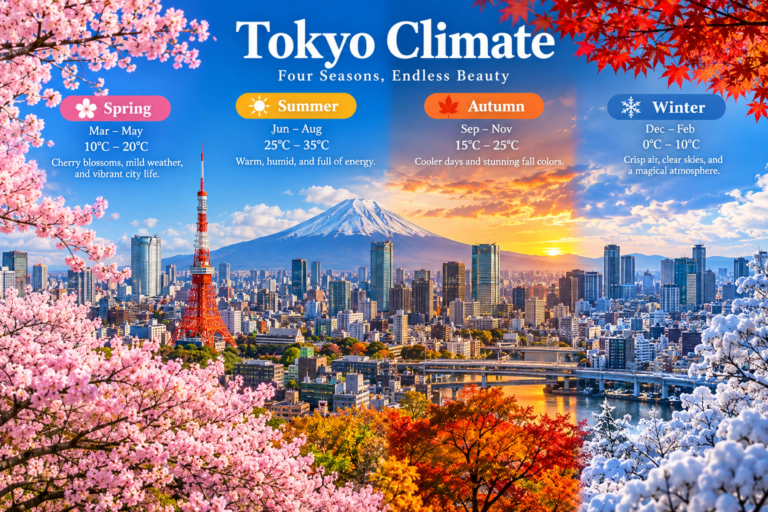
Tokyo Money and Seasonal Travel
Your budget can change depending on when you visit.
Spring Tokyo money
Cherry blossom periods can increase demand for accommodation in popular destinations.
Summer Tokyo money
Weather can affect your choice of activities and transportation.
Autumn Tokyo money
Autumn foliage can increase demand for certain areas and excursions.
Winter Tokyo money
Some travel periods can offer different accommodation patterns, while holiday periods can change demand.
Why Dates Matter Tokyo money
A “Tokyo daily budget” without dates is incomplete.
Accommodation can vary considerably depending on demand.
Tokyo Money and Travel Planning
Book Major Expenses First Tokyo money
Start with:
- Flights
- Accommodation
- Major attractions
- Transportation planning
- Daily spending
- Shopping
This provides a realistic picture of how much money remains.
Create a Pre-Trip Money Checklist Tokyo money
Before leaving:
- Notify your bank if necessary.
- Check international fees.
- Confirm card expiration dates.
- Record emergency numbers.
- Download banking apps.
- Carry backup payment methods.
- Obtain some yen.
- Check ATM compatibility.
- Prepare an emergency fund.
Tokyo Money for Long Stays
Longer stays require more careful budgeting.
Monthly Costs Tokyo money
A longer stay may include:
- Accommodation
- Utilities
- Food
- Transportation
- Mobile service
- Insurance
- Laundry
- Household expenses
- Entertainment
Why Long Stays Are Different Tokyo money
A tourist can spend heavily for seven days.
A person staying for several months must think about averages.
Small daily expenses become major monthly expenses.
For example, an extra ¥1,000 spent every day becomes approximately ¥30,000 over a 30-day period.
This is the power of recurring costs.
Tokyo Money and Cashless Trends
Japan has been moving toward greater cashless adoption.
JNTO describes electronic transactions and cashless payments as increasingly widespread, while also emphasizing that cash remains necessary in some locations.
GO TOKYO’s September 2026 guidance similarly promotes IC cards as a convenient way to pay for transportation and participating purchases.
What This Means for Travelers Tokyo money
The future is not necessarily “cash disappears.”
Instead, travelers should expect a hybrid environment:
Cash + cards + IC cards + mobile payments
The most adaptable traveler will understand all four.
Future Trends in Tokyo Money
More Contactless Payments Tokyo money
Contactless card payments are becoming increasingly common.
This should make everyday purchases faster.
Greater Smartphone Integration Tokyo money
Mobile wallets and transportation apps may increasingly merge travel and payment functions.
More Digital Tourist Services Tokyo money
Travelers are increasingly using digital tools for:
- Transport
- Reservations
- Maps
- Translation
- Payments
- Travel planning
Continued Importance of Cash Tokyo money
Despite the cashless trend, Japan’s small businesses, local neighborhoods and certain travel situations mean cash will likely remain useful for visitors.
The practical future is therefore likely to be hybrid rather than cash-only or cashless-only.
The Smart Tokyo Money Strategy
A useful overall strategy is:
Keep Cash for Resilience Tokyo money
Carry enough for situations where cards are not accepted.
Use Cards for Larger Purchases Tokyo money
Cards can reduce the need to carry large amounts of cash.
Use IC Cards for Everyday Transport Tokyo money
They make supported journeys and small purchases easier.
Track Your Spending Tokyo money
A simple daily record prevents budget surprises.
Separate Your Emergency Fund Tokyo money
Do not mix your emergency reserve with everyday spending.
Check Official Rules Tokyo money
Tax-free shopping and payment systems can change.
The current Japanese tax-free system is particularly important to verify because a major revision is scheduled for purchases from November 1, 2026.
FAQs
What money is used in Tokyo?
Tokyo uses the Japanese yen, abbreviated JPY and represented by the ¥ symbol.
What are the Japanese yen denominations?
Japanese banknotes include ¥1,000, ¥2,000, ¥5,000 and ¥10,000. Commonly issued coins include ¥1, ¥5, ¥10, ¥50, ¥100 and ¥500.
Is Tokyo cashless?
Tokyo is increasingly cashless, but it is not completely cashless. Many businesses accept cards and electronic payments, while some smaller businesses and other locations may still require cash.
Should I take cash to Tokyo?
Yes. You do not necessarily need a large amount, but carrying some Japanese yen is recommended because not every business accepts cards or electronic payments.
Can I use Visa in Tokyo?
Visa is widely accepted at many hotels, stores, restaurants and other major businesses, although acceptance can vary by merchant.
Can I use Mastercard in Tokyo?
Yes. Mastercard is widely used in Japan, particularly at major businesses and urban establishments. Individual merchant acceptance can vary.
Can I use American Express in Tokyo?
American Express is accepted at many major hotels, retailers and restaurants, but acceptance is not universal. Carry another payment option as a backup.
Are Suica and PASMO still useful in Tokyo?
Yes. IC cards such as Suica and PASMO can be used on many major transportation services and at participating shops, vending machines and other businesses.
Can I withdraw Japanese yen from an ATM?
Yes. JNTO identifies Seven Bank and Japan Post Bank ATMs as options for travelers using international cards. Fees and card compatibility can vary.
How much cash should I carry in Tokyo?
There is no universal amount. A practical approach is to carry enough yen for daily spending plus a small emergency reserve while using cards for larger or supported purchases.
How much does a day in Tokyo cost?
The answer depends heavily on your accommodation, food, transportation, attractions and shopping. Budget travelers can spend considerably less than travelers staying in luxury hotels and dining at premium restaurants.
Is ¥10,000 enough for one day in Tokyo?
It can be possible for a budget-focused traveler, particularly when accommodation is already paid for, but it may not be enough if you have expensive attractions, extensive shopping, premium dining or significant transportation costs.
Is Tokyo expensive for tourists?
Tokyo can be expensive, but travelers have many ways to control costs. Public transportation, affordable restaurants, free attractions, neighborhood exploration and careful accommodation choices can help reduce spending.
Does Tokyo accept US dollars?
You should not depend on US dollars for everyday purchases. Japanese yen is the local currency. Use yen, a suitable card or another accepted payment method.
Should I exchange all my money into yen before visiting Tokyo?
Not necessarily. Many travelers use a combination of yen cash, cards and IC cards. Exchanging a small amount before arrival and obtaining additional yen when needed can be more flexible.
Are there ATM fees in Tokyo?
ATM fees can apply, and your own bank or card provider may also charge international withdrawal or currency-conversion fees. Check both sides before traveling.
Should I use an ATM or currency exchange service?
Both can be useful. Compare the total cost, including the exchange rate and fees, rather than judging the service only by convenience.
What is the best payment method in Tokyo?
There is no single method that works best everywhere. A combination of a major international card, Japanese yen cash and an IC card provides useful flexibility.
Does Tokyo have tax-free shopping?
Eligible visitors can use Japan’s tax-free shopping system under specific conditions. The system is being revised, including a major change for purchases made from November 1, 2026, so travelers should check current official guidance.
Do I need to tip in Tokyo?
Japan generally does not use the same tipping culture found in countries where gratuity is routinely added to restaurant bills. Always check individual establishments for service charges or special arrangements.
How can I save money in Tokyo?
Use public transportation, walk between nearby neighborhoods, choose accommodation strategically, mix inexpensive and premium meals, limit impulse shopping and prioritize experiences that matter most to you.
What is the biggest Tokyo money mistake?
One common mistake is relying entirely on one payment method. A card can fail, a small business may require cash, or an IC card may not work for a particular purchase. A backup payment method reduces this risk.
How can families manage money in Tokyo?
Set a daily family budget, separate shopping money from essential spending, use public transportation where practical and keep emergency cash available.
How can solo travelers manage Tokyo expenses?
Solo travelers can control costs by choosing flexible accommodation, eating at affordable restaurants, walking between neighborhoods and setting a daily spending target.
How can couples save money in Tokyo?
Decide in advance which experiences deserve premium spending. You might choose a special dinner or hotel while keeping other meals and transportation relatively affordable.
How can I avoid overspending on shopping?
Set a specific shopping budget before your trip and track purchases in yen. Convert larger purchases into your home currency before deciding whether they fit your budget.
Conclusion
and less stressful. Tokyo offers a flexible payment environment where cash, international cards, IC cards, and mobile payment methods can all play a useful role. However, relying on only one payment method is not always practical. The Japanese yen remains the foundation of everyday spending, so travelers should understand basic denominations and keep some cash available for smaller restaurants, local shops, vending machines, transport-related situations, and businesses that do not accept cards. At the same time, a reliable international card can make larger purchases, hotel payments, shopping, and unexpected expenses more convenient.