Tokyo Retreats: 15 Peaceful Wellness Escapes in Tokyo
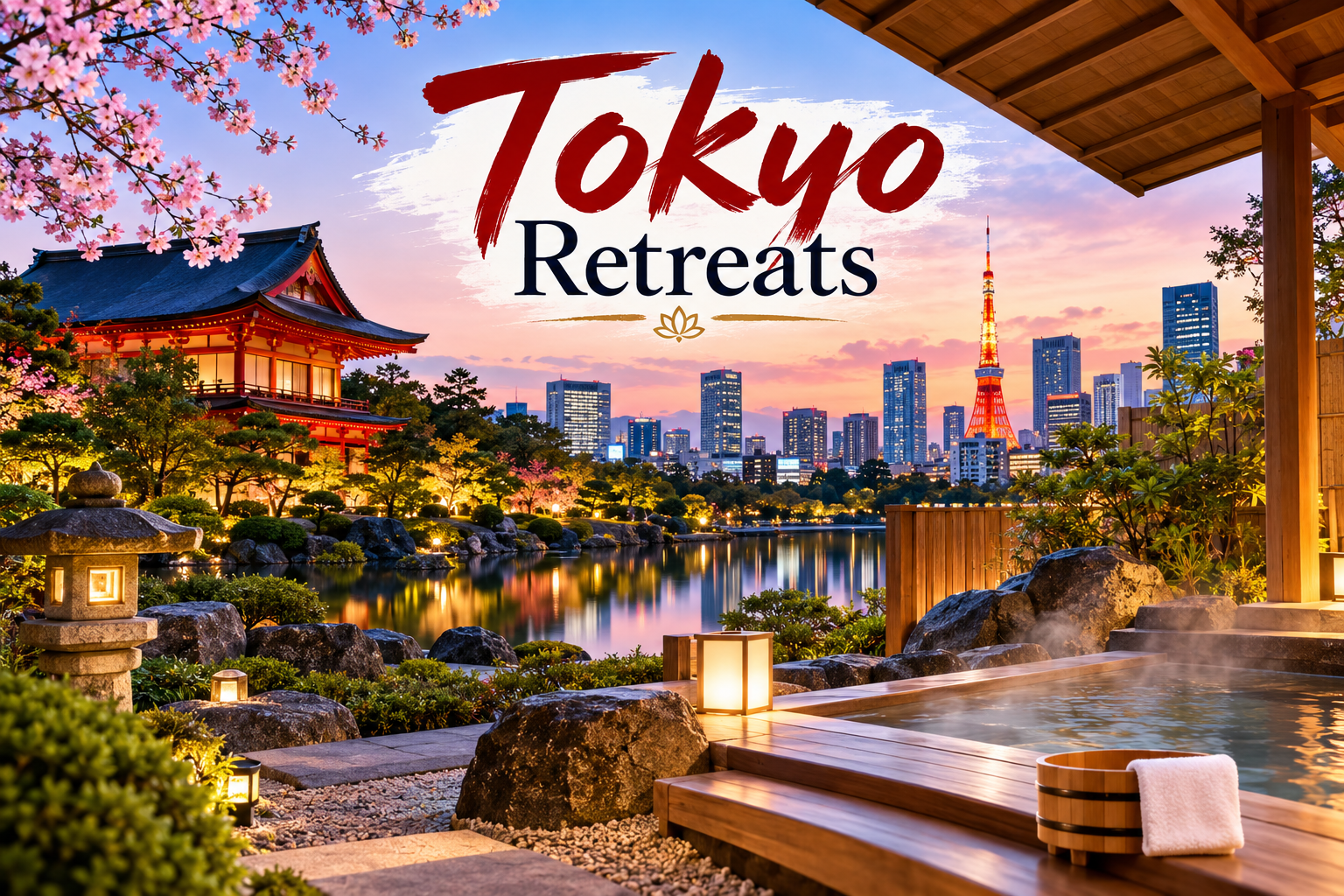
Tokyo certainly offers all of those things. Yet behind the city’s famous energy is another side that many first-time visitors never expect: quiet gardens, traditional bathing rituals, meditation, tea culture, peaceful temples, wellness spas and restorative spaces where travelers can slow down. Tokyo retreats offer a way to experience Japan’s capital at a slower pace, combining wellness, Japanese traditions, nature, mindfulness, spa treatments, meditation and comfortable accommodation without necessarily leaving the metropolitan area. From an urban ryokan and rooftop onsen to garden hotels, meditation communities and short escapes into forests or coastal areas around Tokyo, there is a retreat style for almost every traveler Tokyo Exhibitions
What Is a Tokyo Retreat?
A Tokyo retreat is a travel experience designed around rest, reflection, wellness, cultural immersion, nature or personal renewal rather than simply visiting as many attractions as possible.
Unlike a traditional sightseeing itinerary, a retreat usually gives you fewer scheduled activities and more intentional time.
Depending on the type of retreat, you might experience:
- Meditation
- Yoga
- Japanese tea culture
- Onsen bathing
- Spa treatments
- Mindfulness
- Forest walks
- Traditional Japanese food
- Breathwork
- Massage
- Digital detox
- Temple experiences
- Gardens
- Art and cultural activities
- Slow travel
- Personal reflection
Tokyo also works well as a base for retreat-style experiences outside the dense central districts.
The emerging concept of “Tokyo Retreat” increasingly emphasizes experiences between urban life and nature, with retreat environments categorized around the seaside, forest, rivers, mountains, skyline and traditional culture.
This is important because a Tokyo retreat does not have to mean staying inside a luxury hotel.
It can mean finding a quiet corner of the city and deliberately designing your trip around restoration.
Why Tokyo Is Becoming a Popular Retreat Destination
Tokyo is often marketed as one of the world’s most exciting megacities. But the same city also contains many elements associated with wellness tourism.
Japan has long had cultural traditions involving bathing, gardens, tea, meditation, seasonal food and appreciation of nature.
Tokyo brings many of these traditions together with modern hospitality.
Hotel Chinzanso Tokyo, for example, describes wellness tourism as travel focused on restoring energy, supporting wellbeing and reconnecting with yourself, while combining a garden environment, spa facilities and other wellness-oriented services.
This creates an unusual combination.
You can have:
Megacity + mindfulness
Luxury + tradition
Technology + simplicity
Urban convenience + nature
Modern spa + Japanese bathing culture
That contrast is one reason Tokyo works particularly well for short wellness escapes.
Tokyo Retreats for Different Types of Travelers
Not every traveler wants the same kind of retreat.
A business traveler may want a quiet hotel spa after several meetings. A solo traveler may prefer meditation and reflection. A couple might want a luxury wellness weekend. A family may simply want a peaceful garden hotel with spa facilities.
Tokyo Retreats for Solo Travelers
Solo travelers often benefit from the flexibility of retreat-style travel.
Instead of trying to fill every hour, you can create a personal schedule around:
- Morning walks
- Coffee and journaling
- Temple visits
- Meditation
- Japanese gardens
- Onsen bathing
- Spa treatments
- Slow meals
- Photography
- Reading
Tokyo is particularly convenient for this because its extensive public transportation system makes it possible to combine different neighborhoods without needing a car.
Tokyo Retreats for Couples
Couples can create a retreat around relaxation rather than sightseeing.
A two-night stay might include:
- A peaceful hotel check-in
- Afternoon spa treatment
- Japanese dinner
- Evening walk
- Slow breakfast
- Garden visit
- Private cultural experience
- Onsen or bath
- Sunset or skyline viewing
The objective is not to see everything.
It is to create time together without constantly rushing to the next attraction.
Tokyo Retreats for Busy Professionals
Professionals often need a different type of retreat.
The challenge is not finding luxury. Tokyo has plenty of it.
The challenge is finding mental separation from work.
A useful professional retreat might include:
- Minimal scheduling
- Quiet accommodation
- Fitness facilities
- Spa access
- Meditation
- Good sleep environment
- Healthy meals
- Short nature excursions
- Limited work commitments
A retreat can therefore be incorporated into a business trip rather than requiring an entirely separate vacation.
Tokyo Retreats for Wellness Travelers
Wellness-focused visitors may want more structured experiences.
Possible priorities include:
- Yoga
- Meditation
- Pilates
- Massage
- Onsen
- Sauna
- Japanese wellness traditions
- Mindful eating
- Fitness
- Nature
- Sleep and recovery
Aman Tokyo, for example, offers a 2,500-square-metre wellness space with onsen-style baths, steam rooms, a 30-metre indoor pool, fitness facilities and yoga and Pilates studios. Its wellness program also includes experiences such as Zazen meditation and Japanese acupuncture.
Tokyo Retreats for First-Time Visitors
First-time visitors do not necessarily need an isolated retreat.
A better approach can be a balanced Tokyo retreat itinerary.
Spend part of the day sightseeing and part of the day slowing down.
For example:
Morning: shrine or garden
Afternoon: spa or tea experience
Evening: traditional Japanese meal
Night: quiet hotel and early sleep
This prevents the common mistake of turning a wellness trip into another exhausting sightseeing marathon.
Types of Tokyo Retreats
The word “retreat” covers several different experiences.
Understanding the categories makes it easier to choose the right one.
Luxury Wellness Retreats
Luxury wellness retreats combine premium accommodation with spa, fitness, dining and relaxation.
They are suitable for travelers who want convenience and privacy.
Typical features include:
- Large rooms
- Spa treatments
- Swimming pools
- Fitness centers
- Private wellness sessions
- Fine dining
- Concierge service
- Quiet lounges
- Premium Japanese experiences
The main advantage is simplicity.
You do not need to organize every detail yourself.
Onsen Retreats
Onsen is one of Japan’s most recognizable wellness traditions.
An onsen retreat centers the experience around bathing in naturally heated mineral-rich water.
Tokyo itself has fewer traditional hot-spring experiences than some resort areas, but there are notable urban examples.
HOSHINOYA Tokyo has an onsen sourced from approximately 1,500 meters underground, with an outdoor bath located on the top floor. Its wellness programming also includes a deep-breathing regimen combining bathing and fermented foods.
This demonstrates how traditional Japanese bathing can be adapted to an urban environment.
Meditation Retreats
Meditation retreats focus more directly on mental stillness.
Activities may include:
- Zazen
- Mindfulness
- Guided meditation
- Breathwork
- Silent periods
- Walking meditation
- Journaling
Tokyo Mindfulness describes itself as a mindfulness community offering events, courses and retreats, including meditation, hiking, breathwork and nature-based programs.
For travelers who do not want a formal multi-day retreat, a short meditation session can be enough to introduce the concept.
Yoga Retreats
Yoga retreats combine physical movement with relaxation and mindfulness.
They may be particularly attractive to travelers who want to maintain an existing wellness routine while traveling.
Look for retreats offering:
- Beginner-friendly classes
- Morning yoga
- Evening restorative yoga
- Breathwork
- Meditation
- Nature sessions
- Small groups
- English-language instruction
Some retreat programs in Japan specifically advertise English-language meditation and yoga experiences, showing that international visitors can find programs designed for non-Japanese speakers.
Nature Retreats Near Tokyo
Tokyo’s urban boundaries do not define the entire retreat experience.
Travelers can use the capital as a starting point for forest, mountain, river and coastal escapes.
The idea of traveling “from Tokyo” rather than staying “in Tokyo” is increasingly useful for retreat planning.
This allows visitors to experience:
- Forest bathing
- Hiking
- Mountain air
- Rivers
- Coastal scenery
- Rural accommodation
- Hot springs
- Traditional villages
For travelers who want deeper immersion in nature, extending the retreat beyond central Tokyo may be more satisfying than spending the entire trip inside the city.
Digital Detox Retreats
A digital detox does not necessarily mean handing over your phone at check-in.
You can create your own version.
Try:
- No social media before breakfast
- Phone on airplane mode during meals
- No work email after a specific time
- One hour of reading each evening
- Morning walks without headphones
- Photography only during designated periods
The goal is not to reject technology.
It is to prevent technology from controlling the rhythm of your trip.
The Japanese Philosophy Behind Retreat-Style Travel
One of the most interesting aspects of Tokyo retreats is that many experiences can be connected to broader Japanese cultural concepts.
Wabi-Sabi
Wabi-sabi is commonly associated with appreciating imperfection, simplicity and impermanence.
A retreat does not need to be extravagant.
A quiet room, a cup of tea, natural materials and an open window can sometimes create a stronger sense of calm than a heavily programmed luxury experience.
Shinrin-Yoku and Forest Experiences
Shinrin-yoku, often translated as forest bathing, involves spending mindful time among trees and natural surroundings.
The concept is especially relevant to travelers experiencing urban fatigue.
Instead of treating a forest as a sightseeing destination, the traveler focuses on:
- Walking slowly
- Listening
- Breathing
- Observing
- Resting
- Reducing distractions
Zen and Zazen
Zazen is seated meditation associated with Zen Buddhism.
Travelers should approach temple-based meditation respectfully rather than treating it simply as another tourist attraction.
A useful retreat mindset is to observe rather than demand a particular outcome.
You do not have to “achieve” enlightenment.
You simply sit.
Omotenashi
Omotenashi is often described in relation to Japanese hospitality.
In a retreat setting, this can translate into thoughtful details such as quiet spaces, carefully prepared food, attentive service and an environment designed to reduce unnecessary friction.
10 Tokyo Retreat Brands and Properties Compared
The following comparison focuses on recognizable Tokyo-area hospitality or wellness options rather than treating every property as the same type of retreat.
| Retreat / Brand | Retreat Style | Key Experience | Best For | Main Strength |
|---|---|---|---|---|
| HOSHINOYA Tokyo | Urban ryokan wellness | Onsen, Japanese hospitality, cultural atmosphere | Couples, solo travelers | Traditional retreat in central Tokyo |
| Aman Tokyo | Luxury wellness | Spa, pool, yoga, Pilates, meditation | Luxury travelers | Comprehensive urban wellness |
| Hotel Chinzanso Tokyo | Garden wellness | Garden, spa, onsen, pool | Couples, families, wellness travelers | Nature-like setting in the city |
| Tokyo Mindfulness | Mindfulness community | Meditation, retreats, courses | Beginners, solo travelers | Accessible mindfulness programs |
| Hoshino Resorts | Japanese retreat brand | Ryokan, hot springs, nature stays | Multi-destination travelers | Broad Japanese retreat portfolio |
| KAI by Hoshino Resorts | Onsen ryokan | Traditional Japanese hospitality | Couples, cultural travelers | Hot-spring retreat experience |
| Aman Japan | Luxury wellness collection | Tokyo, Kyoto and Amanemu experiences | Luxury travelers | Multi-destination wellness journey |
| Tokyo Retreat | Retreat discovery concept | Forest, seaside, mountain and cultural escapes | Nature seekers | Retreat ideas beyond central Tokyo |
| Hotel Chinzanso Spa | Urban spa retreat | Pool, sauna, hot spring and treatments | Short stays | Resort-like facilities within Tokyo |
| HOSHINOYA Tokyo Spa | Onsen wellness | Mineral-rich hot spring and treatments | Short wellness breaks | Urban onsen experience |
HOSHINOYA Tokyo is particularly distinctive because it interprets the traditional ryokan concept vertically in a 17-story building, while its Otemachi location provides easy access to central Tokyo.
Hoshino Resorts also operates multiple brands and destinations across Japan, including HOSHINOYA and KAI, giving travelers the option of extending a Tokyo trip into a wider Japanese wellness itinerary.
Aman Tokyo is positioned at the luxury end of the spectrum, while Hotel Chinzanso offers another form of urban retreat built around gardens, spa facilities, hot spring water from Izu and wellness-oriented services.
How to Choose the Right Tokyo Retreat
The best retreat is not automatically the most expensive.
Start by asking what problem you are trying to solve.
If You Are Mentally Tired
Prioritize:
- Quiet accommodation
- Spa
- Massage
- Nature
- Sleep
- Minimal itinerary
Avoid scheduling five major attractions per day.
If You Feel Physically Tired
Look for:
- Onsen
- Sauna
- Massage
- Gentle yoga
- Swimming pool
- Comfortable beds
- Healthy meals
If You Feel Digitally Overloaded
Choose:
- Quiet surroundings
- Nature
- Meditation
- Limited activities
- Reading spaces
- No-work policies where available
If You Want Cultural Immersion
Consider:
- Ryokan-style accommodation
- Tea experiences
- Temple visits
- Japanese gardens
- Traditional cuisine
- Onsen
- Seasonal activities
If You Have Only One Day
Do not attempt to create a full retreat schedule.
Choose one area and build the day around it.
For example:
Morning: garden
Lunch: Japanese seasonal meal
Afternoon: spa or meditation
Evening: slow dinner
Night: quiet hotel
This is enough to feel different from an ordinary sightseeing day.
How to Plan a Tokyo Retreat
Step 1: Define Your Retreat Goal
Write one sentence.
For example:
“I want two days without rushing.”
Or:
“I want to recover from a stressful work trip.”
Or:
“I want to experience Japanese wellness traditions.”
This single sentence can guide your accommodation and activity choices.
Step 2: Choose Your Retreat Radius
You have three broad options.
Central Tokyo: maximum convenience.
Greater Tokyo: more access to nature.
Tokyo + nearby destination: deeper retreat experience.
Do not automatically choose the most remote location.
Travel time can become another source of fatigue.
Step 3: Choose Your Accommodation Carefully
Look beyond room photographs.
Check:
- Noise
- Spa hours
- Bath facilities
- Fitness facilities
- Breakfast
- Restaurants
- Nearby parks
- Transportation
- Cancellation policy
- Language support
- Treatment availability
Step 4: Book Wellness Treatments Early
Popular spa experiences can have limited availability.
If a massage, private yoga class or meditation session is central to your trip, reserve it before arrival where possible.
Step 5: Leave Empty Time
This is one of the most important retreat principles.
Do not fill every hour.
A retreat with three hours of unplanned time may be more restorative than one with ten activities.
Step 6: Build Around One Daily Anchor
Choose one important activity each day.
For example:
Day 1: Onsen
Day 2: Garden and meditation
Day 3: Spa treatment
Everything else remains flexible.
A 3-Day Tokyo Retreat Itinerary
Day 1: Arrival and Slowdown
Arrive and avoid immediately starting a sightseeing marathon.
Check in.
Take time to settle into your room.
Have tea.
Explore the immediate neighborhood.
Enjoy a Japanese dinner.
Return to the hotel early.
If available, use the bath or spa.
The purpose of Day 1 is to transition.
Day 2: Wellness and Culture
Begin with a slow breakfast.
Take a morning walk.
Visit a Japanese garden or shrine.
Have lunch without rushing.
Return to the hotel for a spa treatment, onsen or meditation session.
In the evening, choose a high-quality Japanese meal.
Avoid late-night sightseeing unless it genuinely interests you.
Day 3: Nature and Reflection
Start with a quiet morning.
Depending on your location and schedule, choose:
- Park
- Garden
- River walk
- Coastal destination
- Forest excursion
- Temple
End the trip with a simple activity rather than a crowded checklist.
Write down what you enjoyed.
This helps turn a short vacation into a meaningful travel experience.
Best Tokyo Retreat Experiences by Season
Spring Tokyo Retreats
Spring is particularly attractive for travelers interested in gardens, flowers and outdoor walking.
Possible retreat themes include:
- Garden walks
- Seasonal cuisine
- Photography
- Tea
- Meditation
- Cherry blossom viewing
However, popular seasonal locations can become crowded.
A retreat itinerary should therefore include quiet periods away from the busiest viewing areas.
Summer Tokyo Retreats
Summer can be hot and humid.
A wellness itinerary should prioritize:
- Indoor spas
- Swimming pools
- Early-morning walks
- Air-conditioned cultural attractions
- Evening activities
- Hydration
- Short nature excursions
Avoid building an entire retreat around long midday walks.
Autumn Tokyo Retreats
Autumn is well suited to slow travel.
Consider:
- Temple gardens
- Autumn foliage
- Forest walks
- Photography
- Tea
- Seasonal food
- Onsen
The combination of cooler temperatures and seasonal scenery can make outdoor retreat experiences particularly appealing.
Winter Tokyo Retreats
Winter can be ideal for an onsen-centered retreat.
HOSHINOYA Tokyo has specifically promoted winter retreat experiences built around its Ochanoma lounge, seasonal atmosphere and urban onsen.
A winter retreat can focus on:
- Hot baths
- Tea
- Warm Japanese food
- Spa treatments
- Reading
- Meditation
- Early nights
Tokyo Retreats for Beginners
If you have never attended a retreat before, do not immediately book a seven-day silent meditation program.
Start small.
Try a three-hour experience.
Or spend one night in a quiet hotel.
Or simply dedicate one day of your Tokyo vacation to wellness.
A beginner-friendly retreat might look like:
Morning: garden walk
Late morning: tea
Afternoon: spa
Evening: Japanese dinner
Night: no social media
This provides the benefits of slowing down without requiring a major lifestyle change.
Tokyo Retreats for Introverts
Introverted travelers may prefer environments where social interaction is optional.
Look for:
- Private rooms
- Quiet lounges
- Individual treatments
- Self-guided activities
- Gardens
- Libraries
- Onsen
- Scenic walks
Avoid retreat programs where group participation is central if that feels uncomfortable.
The goal is personal restoration, not forcing yourself into an unfamiliar social environment.
Tokyo Retreats for Families
A family retreat needs a different definition.
Young children may not enjoy silent meditation or long spa treatments.
Instead, build a family retreat around:
- Gardens
- Pools
- Nature
- Comfortable accommodation
- Family-friendly dining
- Easy transportation
- Short cultural experiences
Parents can alternate individual wellness time while children participate in suitable activities.
Always check age restrictions for spa, sauna and bathing facilities before booking.
For example, Hotel Chinzanso Tokyo publishes specific rules for children’s use of its spa facilities.
Tokyo Retreats for Couples
Couples can make a retreat feel special without creating a complicated itinerary.
Try combining:
- Private spa treatments
- Japanese dinner
- Garden walk
- Onsen
- Tea
- Sunset views
- Traditional accommodation
The biggest mistake is turning the retreat into another performance.
You do not need to photograph every moment.
Sometimes the most memorable part is simply sitting together.
Tokyo Retreats for Older Travelers
Older travelers may benefit from shorter transportation connections and less physically demanding schedules.
Prioritize:
- Comfortable hotels
- Elevators
- Accessible transportation
- Short walking distances
- Seating
- Spa facilities
- Gardens with manageable paths
- Flexible schedules
Check individual facilities for accessibility details rather than assuming all historic buildings or traditional venues provide the same level of access.
Tokyo Retreats for Budget Travelers
A retreat does not require a luxury hotel.
You can create a low-cost wellness day using public spaces.
Try:
- Start with a park.
- Visit a temple or shrine.
- Have a simple Japanese lunch.
- Spend time in a café.
- Visit an affordable bathhouse or public bathing facility where appropriate.
- Take an evening walk.
- Return to a comfortable budget hotel.
The most important resource is not money.
It is time without pressure.
Tokyo Retreats for Luxury Travelers
Luxury travelers can build highly personalized experiences.
Potential components include:
- Five-star accommodation
- Private yoga
- Spa journeys
- Personal fitness sessions
- Fine dining
- Private cultural experiences
- Premium transportation
- Traditional Japanese experiences
- Multi-destination Japanese wellness journeys
Aman Tokyo’s wellness facilities illustrate the upper end of the urban wellness model, with treatment rooms, pool, fitness facilities, yoga and Pilates studios and meditation offerings.
Common Mistakes When Planning Tokyo Retreats
Trying to See Too Much
This is the biggest problem.
Travelers often create a “retreat” itinerary that includes 12 attractions per day.
That defeats the purpose.
Choosing a Hotel Only Because It Has a Spa
A spa does not automatically make a hotel a retreat.
Check whether the overall environment supports relaxation.
Ignoring Travel Time
A hotel may look peaceful online but require long transfers to every activity.
Convenience matters.
Scheduling Treatments Too Tightly
Leave recovery time after massages, bathing or meditation.
Treating Meditation Like an Attraction
Meditation is not a photo opportunity.
If you participate in a traditional practice, follow the instructions and observe the setting respectfully.
Ignoring Bathing Etiquette
Japanese bathing environments may have specific expectations around washing, towels, clothing and tattoos.
Research the rules before entering.
Expecting Every Retreat to Be Silent
Tokyo is a huge metropolitan area.
Even luxury properties can have city noise.
If silence is essential, investigate the location and room characteristics carefully.
Pros and Cons of Tokyo Retreats
Advantages
- Excellent transportation
- Wide choice of accommodation
- Strong wellness infrastructure
- Japanese cultural experiences
- Onsen options
- High-quality food
- Gardens and parks
- Luxury wellness facilities
- Easy combination of sightseeing and relaxation
- Options for different budgets
Potential Disadvantages
- Central Tokyo can be crowded
- Premium wellness experiences can be expensive
- Some traditional experiences require cultural etiquette
- Language can occasionally be a barrier
- Popular seasonal attractions can become busy
- Urban retreat experiences may not provide complete silence
- Traveling to nature areas takes additional planning
The key is matching the retreat format to your expectations.
The Difference Between a Hotel Stay and a Retreat
A hotel stay is primarily accommodation.
A retreat is an intentional experience.
Imagine two travelers staying at the same property.
Traveler A wakes up, checks email, rushes to breakfast, visits six attractions, answers messages throughout the day and returns exhausted.
Traveler B wakes up without an alarm, has breakfast slowly, takes a walk, spends an hour reading, enjoys a treatment and eats dinner without checking work messages.
They stayed in the same building.
But only one created a retreat.
The difference is intention.
The Role of Food in a Tokyo Retreat
Food can become an important part of the wellness experience.
Instead of thinking only about calories or “healthy food,” consider the broader experience.
Japanese meals often place emphasis on:
- Seasonality
- Presentation
- Portion balance
- Fresh ingredients
- Texture
- Variety
- Ritual
A retreat meal can therefore become a mindfulness exercise.
Eat slowly.
Notice the ingredients.
Put your phone away.
Pay attention to the presentation.
The objective is not to create a restrictive diet.
It is to eat deliberately.
How Nature Changes the Retreat Experience
Nature can provide a psychological contrast to dense urban environments.
Tokyo’s built environment is extraordinary, but even short periods among trees, water or open landscapes can change the feeling of a trip.
The emerging “Tokyo Retreat” concept explicitly highlights seaside, forest, river, mountain, skyline and traditional-art environments as different retreat settings.
This suggests an important planning idea:
Do not ask only, “Which hotel should I book?”
Ask:
“Which environment do I need?”
If you feel overwhelmed, choose forest.
If you want reflection, choose water.
If you want convenience, choose skyline.
If you want cultural connection, choose tradition.
If you want physical activity, choose mountains.
How Long Should a Tokyo Retreat Last?
One-Day Retreat
Suitable for:
- First-time travelers
- Business travelers
- People with limited time
Two-Night Retreat
Often enough to create a noticeable change of pace.
Three to Four Nights
Ideal for travelers who want both relaxation and sightseeing.
One Week
Better for structured wellness or deeper nature-based experiences.
The longer the retreat, the more important it becomes to define its purpose.
Tokyo Retreat Budget Planning
Costs vary dramatically depending on accommodation, spa services, dining and transportation.
A practical budget should separate:
- Accommodation
- Wellness treatments
- Food
- Transportation
- Cultural activities
- Nature excursions
- Shopping
- Emergency spending
Do not spend the entire budget on accommodation and then have no flexibility for experiences.
Alternatively, if wellness is the primary purpose, investing more in the accommodation and spa may make sense while reducing shopping and sightseeing costs.
How to Make a Tokyo Retreat More Sustainable
Wellness should not come at the expense of the destination.
Consider:
- Using trains instead of private cars
- Supporting local businesses
- Choosing seasonal food
- Avoiding unnecessary disposable products
- Respecting gardens and natural spaces
- Following bathing rules
- Avoiding overcrowded locations when possible
- Staying longer rather than constantly changing hotels
- Purchasing locally made products
Current travel trends increasingly connect wellness with sustainability, conservation, accessibility and community engagement rather than treating wellness as purely luxury consumption.
Tokyo Retreats and the Future of Wellness Travel
The future of Tokyo retreats is likely to become less about a single category called “spa travel.”
Instead, wellness travel is increasingly becoming multidimensional.
Travelers may want:
- Sleep improvement
- Mindfulness
- Fitness
- Food experiences
- Cultural immersion
- Nature
- Digital balance
- Mental recovery
- Personalized treatments
- Preventive wellness
This creates opportunities for Tokyo because the city can combine many of these elements within a relatively compact travel destination.
The Rise of Micro-Retreats Tokyo retreats
Not everyone can take a week off.
Three-hour, half-day and one-night retreats can make wellness travel more accessible.
Personalized Wellness Tokyo retreats
Travelers increasingly expect experiences to reflect their individual needs.
Instead of a generic spa package, future retreats may combine different services based on personal goals.
Urban Wellness Tokyo retreats
Tokyo demonstrates that wellness does not always require a remote mountain resort.
A city hotel can become a retreat if the design, service and programming create enough separation from everyday pressure.
Nature-Based Extensions Tokyo retreats
Another likely direction is combining Tokyo with nearby nature destinations.
This creates a two-stage trip:
Tokyo city experience → nature retreat
or:
Urban wellness → traditional hot spring experience
This model provides variety without requiring travelers to abandon Tokyo altogether.
Technology With Boundaries Tokyo retreats
Technology will continue to play a role in wellness travel.
Apps can help with:
- Meditation
- Sleep
- Fitness
- Navigation
- Reservations
- Translation
But the most effective retreat experiences may use technology selectively rather than continuously.
The paradox is simple:
Technology can help you find the retreat, but the retreat may help you step away from technology.
A Sample 5-Day Tokyo Retreat Plan
Day 1: Arrival Tokyo retreats
- Hotel check-in
- Tea
- Neighborhood walk
- Japanese dinner
- Early sleep
Day 2: Urban Wellness Tokyo retreats
- Slow breakfast
- Garden
- Spa
- Onsen
- Relaxed dinner
Day 3: Culture Tokyo retreats
- Shrine or temple
- Traditional meal
- Tea experience
- Meditation
- Quiet evening
Day 4: Nature Tokyo retreats
- Day trip to a nature-oriented destination
- Walking
- Local food
- Scenic rest
- Return to Tokyo
Day 5: Reflection Tokyo retreats
- Breakfast
- Shopping or light sightseeing
- Café
- Journaling
- Final Japanese meal
Notice what is missing:
A packed schedule.
That is intentional.
A Tokyo Retreat Packing List
Clothing Tokyo retreats
Pack comfortable clothing suitable for walking and changing temperatures.
Wellness Items Tokyo retreats
Consider:
- Comfortable sleepwear
- Reusable water bottle
- Small towel
- Yoga clothing if needed
- Comfortable walking shoes
Digital Detox Items Tokyo retreats
A physical book or journal can replace some screen time.
Cultural Considerations Tokyo retreats
Bring clothing appropriate for temples, shrines and traditional environments.
Practical Items Tokyo retreats
Depending on the season:
- Portable charger
- Rain protection
- Sun protection
- Medication
- Travel documents
- Comfortable day bag
Tokyo Retreat Etiquette
Respect is one of the most important parts of a culturally immersive retreat.
At Temples and Shrines Tokyo retreats
Observe local rules.
Keep noise low.
Do not treat sacred areas as ordinary photo sets.
At Onsen Tokyo retreats
Follow the bathing instructions.
Wash before entering shared baths.
Keep towels out of the bathing water.
Follow facility-specific rules regarding tattoos and children.
During Meditation Tokyo retreats
Arrive quietly.
Follow the teacher’s instructions.
Avoid unnecessary photography.
In Traditional Accommodation Tokyo retreats
Observe house rules carefully.
Some experiences involve removing shoes, wearing provided clothing or following specific meal and bathing customs
FAQs
What are Tokyo retreats?
Tokyo retreats are travel experiences focused on relaxation, wellness, mindfulness, Japanese culture, nature or personal renewal. They can include hotels, spas, meditation programs, onsen, gardens, yoga and nature experiences.
Are there wellness retreats in Tokyo?
Yes. Tokyo has a wide range of wellness experiences, including luxury hotel spas, meditation programs, yoga classes, onsen, fitness facilities, Japanese gardens and traditional cultural activities.
What is the best area for a Tokyo retreat?
The best area depends on your goals. Central Tokyo is convenient for luxury hotels and cultural attractions, while areas farther from the busiest districts can provide more nature and tranquility.
Can I do a Tokyo retreat for just one day?
Yes. A one-day retreat can include a Japanese garden, relaxing meal, spa treatment, onsen or meditation session. You do not need to stay overnight to create a retreat experience.
Are Tokyo retreats expensive?
They can range from affordable self-guided experiences to high-end luxury wellness stays. Public gardens, walking routes, temples and selected cultural experiences can keep costs relatively low.
Are Tokyo retreats suitable for solo travelers?
Yes. Solo travelers can enjoy meditation, spa treatments, gardens, onsen, quiet cafés, cultural experiences and nature walks without needing a group.
What are the best Tokyo retreats for couples?
Couples may enjoy luxury wellness hotels, private spa experiences, Japanese dining, gardens, onsen and traditional accommodation. A slower itinerary can make the experience more relaxing.
Can I find meditation retreats in Tokyo?
Yes. Tokyo has meditation communities and programs offering mindfulness, meditation and related experiences. Some programs are designed specifically to accommodate international visitors.
What is an onsen retreat?
An onsen retreat centers the experience around Japanese hot-spring bathing. It may combine bathing with accommodation, traditional meals, relaxation, nature and other wellness activities.
Is HOSHINOYA Tokyo a retreat?
HOSHINOYA Tokyo can be used as a retreat-style stay because it combines an urban ryokan atmosphere with Japanese hospitality, an onsen experience and wellness-oriented activities.
Is Aman Tokyo suitable for a wellness retreat?
Aman Tokyo offers extensive wellness facilities, including spa treatments, an indoor pool, fitness facilities, yoga and Pilates studios, meditation experiences and traditional Japanese wellness treatments.
Can I combine sightseeing with a Tokyo retreat?
Absolutely. A balanced itinerary can combine sightseeing in the morning with spa, meditation, gardens, onsen or relaxed dining later in the day.
What should I pack for a Tokyo retreat?
Comfortable walking shoes, suitable seasonal clothing, sleepwear, personal wellness items, a reusable water bottle and any necessary medications are useful. Check the specific requirements of your accommodation or retreat provider.
How many days do I need for a Tokyo retreat?
A single day can work for a short wellness escape, while two to four nights can provide more time for relaxation. Longer retreats are useful if you want to include nature or destinations outside central Tokyo.
Are Tokyo retreats suitable for families?
Yes, although the type of retreat should be adapted for children. Gardens, pools, nature experiences and family-friendly hotels may be more suitable than silent meditation or adult-only spa programs.
What is the best season for a Tokyo retreat?
Every season offers different possibilities. Spring is attractive for gardens and flowers, summer works well for indoor wellness and evening activities, autumn is excellent for nature and foliage, while winter can be ideal for onsen and cozy indoor experiences.
Can I have a digital detox in Tokyo?
Yes. You can create a personal digital detox by limiting social media, avoiding work email during certain hours, keeping your phone away during meals and spending more time walking, reading, meditating or enjoying nature.
What is the difference between a Tokyo retreat and a normal vacation?
A normal vacation often emphasizes sightseeing and activities, while a retreat places greater emphasis on rest, mindfulness, wellness and intentional time. A retreat can still include sightseeing, but the pace is usually slower.
Are Tokyo retreats suitable for first-time visitors?
Yes. First-time visitors can combine major Tokyo attractions with peaceful experiences such as gardens, temples, spas, tea houses and onsen rather than dedicating the entire trip to sightseeing.
How can I plan an affordable Tokyo retreat?
Choose reasonably priced accommodation and focus on low-cost experiences such as parks, gardens, neighborhood walks, temples and local restaurants. Spend selectively on one or two wellness experiences rather than booking an expensive package.
What makes Tokyo unique for retreat travel?
Tokyo combines a massive modern city with Japanese traditions such as onsen, meditation, gardens, tea culture, seasonal cuisine and traditional hospitality. This allows travelers to experience both urban energy and restorative environments during the same trip.
Conclusion
Tokyo retreats offer a different way to experience Japan’s capital. Instead of filling every day with crowded attractions and strict schedules, a retreat allows travelers to slow down, reconnect with themselves and experience Tokyo through wellness, Japanese culture, nature, meditation, onsen and relaxation. Whether you choose a luxury wellness hotel, a traditional ryokan-style stay, a meditation session, a Japanese garden, an onsen experience or a nature escape outside the city, Tokyo provides options for different travel styles and budgets. The most important part of planning a Tokyo retreat is understanding what you want from the experience.