Tokyo Festivals: 25 Unforgettable Celebrations, Seasons, Tips & Local Experiences
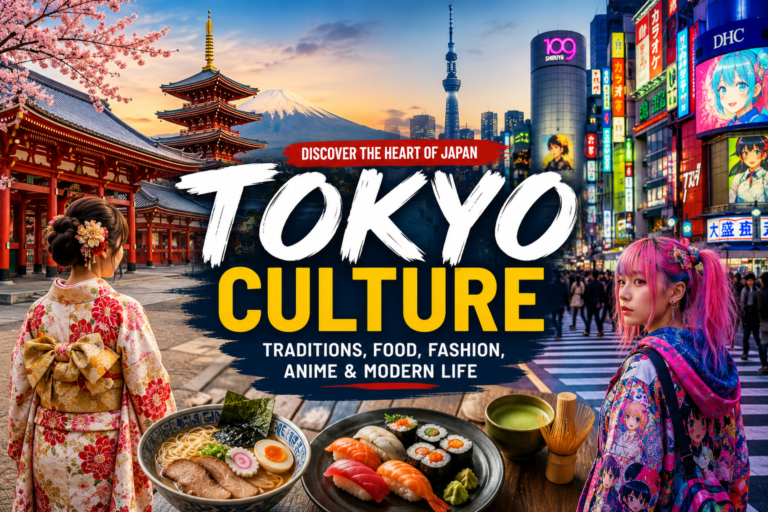
Tokyo festivals are a year-round celebration of Japanese culture, religion, food, music, history, and neighborhood life. From spectacular summer fireworks and traditional shrine processions to cherry-blossom events and autumn cultural celebrations, Tokyo offers festivals for almost every type of traveler Tokyo Culture
Tokyo can feel futuristic at first glance: towering buildings, electronic signs, packed train stations, themed cafés, and fast-moving crowds. Yet beneath that modern surface is another Tokyo that becomes especially visible during festival season.
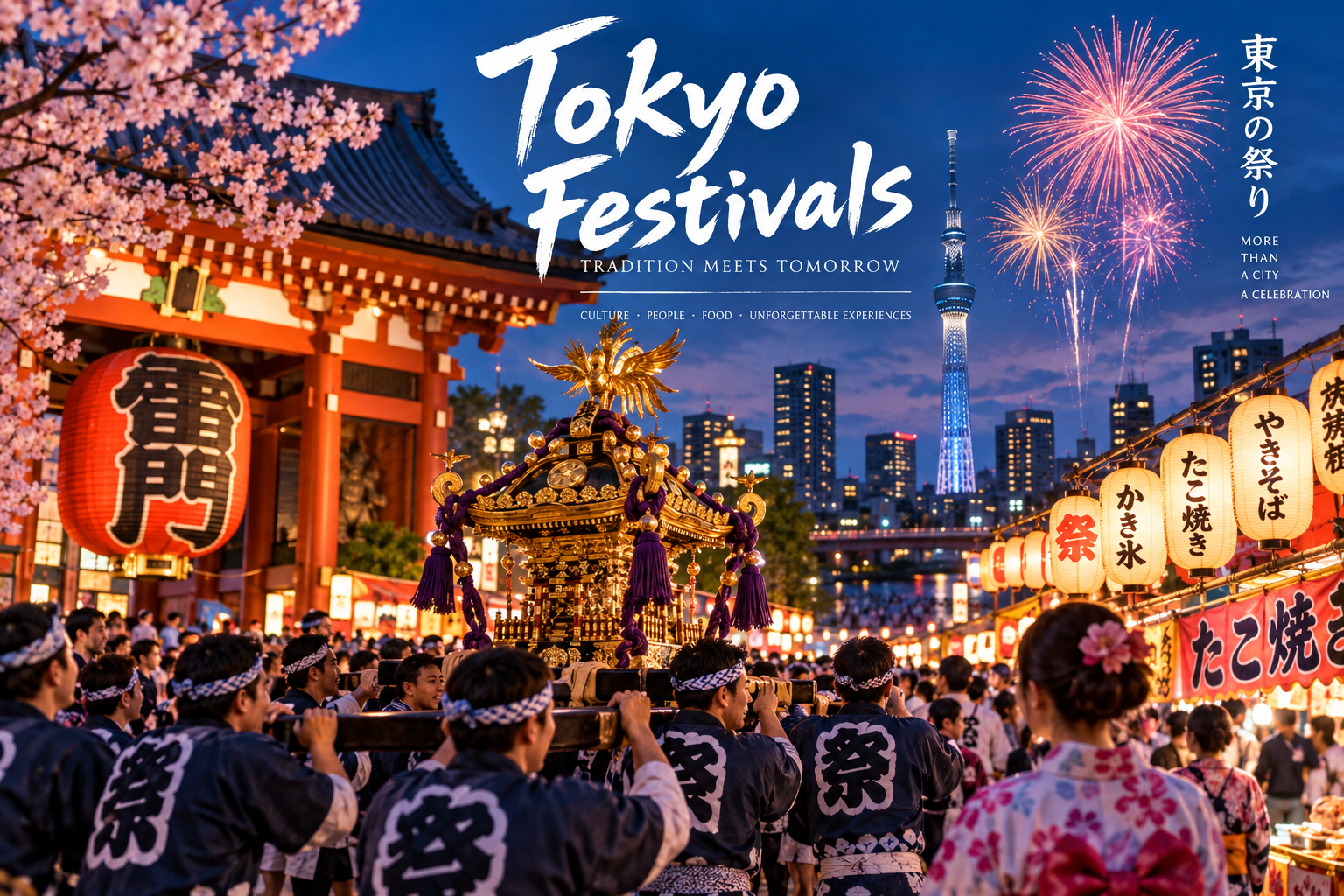
A quiet neighborhood suddenly fills with lanterns. Residents carry a mikoshi through streets. Food stalls appear beside a shrine. Children play traditional games while older generations watch from nearby. Drums echo through narrow lanes, and visitors discover that the city is not simply hosting an event—it is participating in a living tradition.
That is what makes Tokyo festivals so compelling.
They are not all designed as tourist attractions. Many began as religious ceremonies, seasonal celebrations, neighborhood gatherings, or historical traditions. Some have evolved into enormous public events, while others remain surprisingly local.
This guide explains the best Tokyo festivals, when they happen, what makes them special, what travelers should expect, how to behave respectfully, what to eat, where to go, and how to plan a festival-focused Tokyo trip.
What Makes Tokyo Festivals Special?
Tokyo festivals are often called matsuri, a Japanese word commonly used for festivals and celebratory events. The word covers a huge variety of experiences, from major shrine festivals to neighborhood summer celebrations and seasonal events.
One reason Tokyo is particularly interesting for festival travelers is its mixture of old and new.
A centuries-old shrine can become the center of a modern urban celebration. Traditional taiko drums may sound beneath skyscrapers. People wearing yukata may walk alongside commuters. Historic rituals can take place only a few train stops from some of the world’s busiest commercial districts.
This contrast gives Tokyo festivals their distinctive character.
Festivals Are Connected to Local Communities
Many traditional festivals are closely associated with a shrine, temple, neighborhood association, or local community.
This means visitors are often seeing something that residents genuinely care about rather than a performance created exclusively for tourists.
A festival can therefore reveal details about Tokyo that ordinary sightseeing may miss.
You might notice:
- Neighborhood groups organizing activities
- Local families preparing food
- Children participating in traditional games
- Residents carrying portable shrines
- Musicians performing traditional instruments
- Temporary stalls operated by local vendors
- Seasonal decorations around religious sites
- Community volunteers managing crowds
Tokyo Festivals Change With the Seasons
Japan’s four seasons strongly influence its festival calendar.
Spring brings flowers, shrine celebrations, and outdoor gatherings. Summer is famous for fireworks, dancing, food stalls, and evening festivals. Autumn introduces harvest-related traditions and cultural events. Winter brings New Year rituals, temple visits, illuminations, and seasonal celebrations.
For travelers, this means there is rarely a completely wrong time to explore Tokyo festivals.
Tokyo Festival Calendar by Season
Understanding the seasons makes planning much easier.
| Season | Typical Festival Experience | What to Expect |
|---|---|---|
| Spring | Cherry blossoms, shrine events, seasonal celebrations | Flowers, outdoor gatherings, mild weather |
| Early Summer | Shrine festivals and local matsuri | Processions, food stalls, traditional performances |
| Summer | Bon dances, fireworks, neighborhood festivals | Yukata, dancing, street food, warm evenings |
| Autumn | Cultural and harvest-related events | Cooler weather, traditional ceremonies |
| Winter | New Year and temple traditions | Bells, shrine visits, decorations, colder weather |
Dates can vary from year to year, particularly for events connected to religious calendars, weekends, lunar traditions, or local scheduling.
Always check the official event information before building a trip around a particular festival.
Best Tokyo Festivals You Should Know
Tokyo has an enormous festival calendar, but some events stand out because of their history, scale, atmosphere, or cultural significance.
Sanja Matsuri
Sanja Matsuri is one of Tokyo’s most famous traditional festivals and is associated with Asakusa’s Sensō-ji and Asakusa Shrine area.
The festival is known for energetic processions, mikoshi, musicians, performers, and huge crowds.
The atmosphere can become intense. Rather than feeling like a quiet historical ceremony, Sanja Matsuri demonstrates the powerful community energy associated with a major Japanese matsuri.
Why Visit Sanja Matsuri?
The biggest attraction is the combination of history and spectacle.
Asakusa already offers travelers one of Tokyo’s strongest concentrations of traditional architecture and culture. During the festival, the neighborhood becomes even more animated.
Visitors can experience:
- Portable shrine processions
- Traditional music
- Street food
- Festival decorations
- Crowds in traditional clothing
- Neighborhood celebrations
- A lively atmosphere around Asakusa
Best Strategy for Visitors
Arrive early and expect crowds.
Do not assume you can move quickly through the area. Festival streets can become congested, and certain processions may restrict movement.
If photography is your priority, choose your location before the main crowds arrive.
Kanda Matsuri
Kanda Matsuri is another major Tokyo festival and is traditionally associated with Kanda Myojin.
It has an important connection to Tokyo’s historical identity and is particularly interesting because the festival route passes through areas that now contain some of the city’s most modern commercial districts.
What Makes Kanda Matsuri Different?
The contrast is fascinating.
Traditional festival processions can move through urban areas near business districts, creating a visual connection between historical Edo and modern Tokyo.
The festival is generally held on a major cycle rather than every year in the same full-scale format, so travelers should check the current schedule before planning a trip specifically around it.
Fukagawa Hachiman Matsuri
Fukagawa Hachiman Matsuri is associated with Tomioka Hachimangu in the Fukagawa area.
It is famous for energetic mikoshi processions and a tradition of participants and spectators splashing water around the portable shrines.
This gives the festival an unusually physical and refreshing character, especially during Tokyo’s hot summer.
Why Travelers Love It
The water-splashing tradition makes the event visually memorable.
However, visitors should remember that the water is part of the festival environment. Protect cameras, phones, passports, and other sensitive belongings.
A waterproof bag can be extremely useful.
Sumida River Fireworks Festival
Fireworks are among Japan’s most recognizable summer traditions, and Tokyo’s Sumida River Fireworks Festival is one of the city’s best-known fireworks events.
The event connects modern Tokyo with a long fireworks tradition associated with the Sumida River area.
What to Expect
Expect:
- Huge crowds
- Summer food stalls
- Riverside viewing areas
- Traditional summer clothing
- Spectacular fireworks
- Heavy pedestrian traffic
- Crowded trains before and after the event
The fireworks themselves are only part of the experience.
The atmosphere surrounding the event is equally important.
Azabudai Hills Christmas Market and Winter Events
Tokyo’s winter festival culture is not limited to traditional shrine events.
Modern seasonal markets and illumination events create another type of festival experience.
Areas around major commercial developments can transform during the winter season with:
- Decorative lights
- Seasonal markets
- Food and drinks
- Gift shopping
- Music
- Winter installations
These events are especially useful for travelers who want a festival atmosphere without attending a traditional religious festival.
Setagaya Boro-ichi
Setagaya Boro-ichi is a historic flea market tradition in Tokyo’s Setagaya area.
It provides a different perspective on Japanese festival culture because it combines community tradition, shopping, food, and history.
Visitors may encounter antiques, household goods, crafts, clothing, and local foods.
Why It Is Worth Visiting
Not every Tokyo festival needs fireworks or giant processions.
Boro-ichi demonstrates how a traditional community event can survive by adapting to contemporary urban life.
It is particularly attractive for travelers interested in:
- Vintage goods
- Japanese crafts
- Local food
- Traditional markets
- Neighborhood culture
- Photography
Hachioji Festival
Hachioji Festival takes place in western Tokyo and is known for its impressive festival floats and traditional performances.
It can be a useful choice for travelers who want to explore beyond central Tokyo.
Why Go Beyond Central Tokyo?
Many first-time visitors concentrate on Shibuya, Shinjuku, Ginza, Asakusa, and Tokyo Station.
But Tokyo is enormous.
Traveling into western neighborhoods can reveal a different rhythm of city life.
A festival such as Hachioji Festival can therefore become part of a broader strategy: use festivals to explore parts of Tokyo you might otherwise overlook.
Koenji Awa Odori
Koenji Awa Odori is one of Tokyo’s most famous dance festivals.
Inspired by the Awa Odori tradition associated with Tokushima, the Tokyo version transforms Koenji into a huge dance environment.
What Happens During the Festival?
Dance groups perform through the streets accompanied by traditional music.
The event is energetic, rhythmic, and highly visual.
Unlike festivals centered mainly around religious processions, Koenji Awa Odori places dance and community performance at the heart of the experience.
Best For
This festival is especially suitable for:
- First-time visitors
- Young travelers
- Photographers
- Families
- Culture enthusiasts
- Travelers who enjoy music and dance
Azabujuban Noryo Festival
The Azabujuban Noryo Festival is a summer neighborhood event known for food, shopping, entertainment, and community atmosphere.
“Noryo” relates to enjoying relief from summer heat, making the festival particularly appropriate for Tokyo’s hot season.
What Makes It Different?
It feels less like a formal historical spectacle and more like an urban neighborhood celebration.
This makes it useful for travelers who want to see how festival culture fits into everyday Tokyo life.
Yosakoi Festivals in Tokyo
Yosakoi-style dance events combine traditional inspiration with modern choreography, costumes, music, and high-energy performances.
Tokyo hosts several dance events influenced by the broader yosakoi tradition.
These festivals are particularly attractive if you enjoy:
- Dance
- Music
- Photography
- Colorful costumes
- Group performances
- Contemporary Japanese culture
Tokyo International Film Festival
Not every festival in Tokyo is a traditional matsuri.
Tokyo also hosts major cultural festivals focused on cinema, art, music, and international exchange.
The Tokyo International Film Festival is an important example.
For travelers interested in Japanese cinema and global filmmaking, a film festival can offer a completely different way to experience Tokyo.
Instead of watching a shrine procession, you may spend the day moving between cinemas, screenings, talks, and cultural events.
Tokyo Jazz and Music Festivals
Tokyo’s music scene creates another category of festival experience.
Depending on the year, the city hosts major music events covering jazz, contemporary music, traditional Japanese music, electronic music, and other genres.
The key difference is that these events often operate through concert venues rather than shrine grounds or neighborhood streets.
Cherry Blossom Festivals in Tokyo
Spring brings one of Tokyo’s most popular seasonal experiences: cherry blossoms.
Many locations organize seasonal events around sakura viewing, food stalls, cultural activities, and evening illuminations.
Popular viewing areas can become extremely crowded during peak bloom.
The Difference Between Hanami and a Traditional Matsuri
Hanami means flower viewing, particularly cherry-blossom viewing.
It is not exactly the same as a shrine festival.
However, from a travel perspective, hanami events often function like seasonal public celebrations.
People gather, eat, talk, take photographs, and enjoy the atmosphere beneath the blossoms.
This makes spring one of the easiest seasons for visitors to experience Japanese seasonal culture.
Tokyo Summer Festivals
Summer is arguably the strongest season for travelers who want the classic festival atmosphere.
The combination of warm evenings, fireworks, food stalls, yukata, dancing, and traditional performances creates an experience that is difficult to replicate elsewhere.
Bon Odori
Bon Odori is traditional dance associated with Obon.
In Tokyo, local neighborhoods may organize Bon Odori events in parks, shrine grounds, school areas, and community spaces.
The structure can be surprisingly welcoming to visitors.
You may watch at first and eventually join the circle if participation is appropriate.
What to Wear
A yukata is a popular summer option, but it is not required.
Visitors can comfortably attend in normal summer clothing.
If you choose a yukata, remember that summer in Tokyo can be extremely humid. Comfortable footwear and breathable clothing matter more than achieving a perfect traditional look.
Tokyo Autumn Festivals
Autumn brings cooler weather and a different atmosphere.
The city becomes easier to explore on foot, and many cultural events benefit from comfortable temperatures.
Autumn festivals may include:
- Shrine celebrations
- Cultural performances
- Food events
- Traditional arts
- Local markets
- Seasonal displays
For travelers who dislike extreme summer heat, autumn can be one of the most comfortable periods for festival exploration.
Tokyo Winter Festivals
Winter festivals are often quieter than major summer matsuri but can be deeply atmospheric.
New Year is especially important.
Shrines and temples become major destinations for hatsumode, the first shrine or temple visit of the year.
Hatsumode
During the New Year period, people visit religious sites to pray for good fortune, health, safety, and success.
Major locations can become extraordinarily crowded.
The experience is less about watching a staged event and more about participating respectfully in a major seasonal tradition.
How to Plan a Tokyo Festival Trip
Festival travel requires more planning than ordinary sightseeing.
A normal Tokyo itinerary might allow you to decide where to go after breakfast.
A major festival may require you to plan your transportation, arrival time, viewing position, food, clothing, and return route in advance.
Step 1: Choose Your Festival Type
First decide what kind of experience you want.
If you want traditional culture, prioritize shrine festivals.
If you love fireworks, focus on summer events.
If you prefer food and local neighborhoods, look for noryo festivals and markets.
If you enjoy dance, search for Awa Odori and yosakoi events.
If you prefer modern culture, consider film, music, design, or seasonal urban festivals.
Step 2: Check the Official Schedule
Festival dates can change.
Some events operate annually, while others have special schedules or major-cycle calendars.
Always verify:
- Date
- Starting time
- Location
- Procession route
- Admission requirements
- Weather policy
- Crowd restrictions
- Transportation information
Step 3: Study the Transportation Situation
Tokyo’s public transportation system is excellent, but major festivals can overwhelm nearby stations.
A station that normally feels efficient may become extremely crowded after fireworks or major processions.
Consider arriving early and leaving after the main rush.
Step 4: Carry Less
Large crowds and festival environments are not ideal for bulky bags.
Bring only what you need:
- Phone
- Small wallet
- Portable charger
- Water
- Hand towel
- Small umbrella if appropriate
- Camera
- Cash where useful
- Portable rain protection
Step 5: Protect Your Electronics
Some festivals involve water, rain, food, or dense crowds.
A simple waterproof pouch can protect your phone and documents.
This is particularly useful for outdoor summer events.
Best Tokyo Festivals for Different Travelers
Different travelers should choose different festivals.
| Traveler Type | Good Festival Experience |
|---|---|
| First-time visitor | Sanja Matsuri |
| Culture enthusiast | Kanda Matsuri |
| Fireworks fan | Sumida River Fireworks |
| Dance lover | Koenji Awa Odori |
| Food lover | Neighborhood summer festivals |
| Photographer | Sanja Matsuri or dance festivals |
| Family traveler | Local summer festivals |
| History enthusiast | Setagaya Boro-ichi |
| Modern culture fan | Film and music festivals |
| Budget traveler | Free public matsuri and Bon Odori |
10 Tokyo Festival Experiences Compared
Rather than treating every event as interchangeable, compare them by the type of experience they provide.
| Festival / Event | Main Attraction | Best Season | Cultural Depth | Crowd Level | Best For |
|---|---|---|---|---|---|
| Sanja Matsuri | Mikoshi and shrine traditions | Spring | Very High | Very High | First-time visitors |
| Kanda Matsuri | Historic procession | Spring | Very High | High | History lovers |
| Fukagawa Hachiman Matsuri | Water and mikoshi | Summer | Very High | High | Traditional culture |
| Sumida River Fireworks | Fireworks | Summer | High | Very High | Couples and families |
| Koenji Awa Odori | Dance and music | Summer | High | Very High | Young travelers |
| Azabujuban Noryo | Food and neighborhood life | Summer | Medium | High | Food lovers |
| Hachioji Festival | Floats and performances | Summer | High | High | Culture explorers |
| Setagaya Boro-ichi | Traditional market | Winter | High | Medium | Shoppers |
| Bon Odori Events | Dance and community | Summer | High | Medium/High | Beginners |
| Tokyo International Film Festival | Cinema | Autumn | Medium/High | Medium | Film fans |
Tokyo Festivals for Beginners
If this is your first visit to Japan, you do not need to understand every ritual.
The best approach is to observe first.
Watch what local people do.
If people bow before entering a shrine area, follow the general etiquette. If a procession blocks the street, wait patiently. If a particular area appears restricted, do not cross the boundary simply to get a better photograph.
The Beginner’s Festival Formula
A simple formula works well:
Observe → Understand → Participate Carefully → Respect the Space
This is better than immediately trying to become part of the event.
Tokyo Festivals for Families
Families should consider crowd density, walking distance, heat, restroom availability, and transportation.
Large fireworks festivals can be exciting but difficult with small children because crowds can become extremely dense.
Neighborhood festivals may provide a more manageable experience.
Look for events with:
- Food stalls
- Games
- Open spaces
- Shorter walking distances
- Family-oriented activities
- Easy train access
Tokyo Festivals for Couples
Festival evenings can be especially enjoyable for couples.
Walking through lantern-lit streets, sharing street food, watching performances, and exploring neighborhood stalls creates a relaxed experience.
Summer festivals are particularly atmospheric after sunset.
If you want a quieter experience, consider visiting a smaller local event rather than the city’s biggest festival.
Tokyo Festivals for Photographers
Festival photography requires preparation.
The biggest mistake is arriving with only the expectation of photographing the main procession.
Some of the best images can come from preparation.
Look for:
- Lanterns before sunset
- Vendors preparing food
- Musicians tuning instruments
- Traditional clothing
- Children playing festival games
- Shrine decorations
- Empty streets before crowds arrive
- Evening lights
- Reflections after rain
Ask Before Photographing People
Not everyone wants to be photographed.
Especially when photographing close-up portraits, be considerate.
A respectful gesture or simple request can make the interaction much better.
What to Eat at Tokyo Festivals
Food stalls are one of the pleasures of Japanese festival culture.
Depending on the event, you may encounter foods such as:
- Takoyaki
- Yakisoba
- Okonomiyaki-style festival foods
- Yakitori
- Taiyaki
- Kakigori
- Dango
- Corn on the cob
- Grilled seafood
- Fresh fruit preparations
- Festival sweets
Availability varies by event.
Do not expect every festival to offer exactly the same menu.
Why Festival Food Tastes Different
Part of the appeal is context.
A simple snack can feel special when eaten outdoors, surrounded by lanterns, music, crowds, and seasonal decorations.
The food is part of the atmosphere rather than merely a meal.
Festival Etiquette in Tokyo
Respect is more important than knowing every rule.
Keep Shrine Areas Clean
Do not leave trash behind.
If bins are limited, carry your waste until you find an appropriate disposal point.
Follow Barriers
Temporary barriers exist for safety and crowd management.
Do not step over them for a photograph.
Avoid Blocking Processions
If a procession is moving through the street, step aside when directed.
Be Careful With Flash Photography
Flash can be distracting during performances or ceremonies.
When in doubt, avoid it.
Do Not Touch Religious Objects
Some festival objects have religious significance.
Treat them as cultural and religious artifacts rather than props.
Avoid Excessive Selfie Behavior
A festival is a shared public event.
Try not to block pathways or stand in the middle of a procession route for photographs.
What to Bring to a Tokyo Festival
A compact festival kit can make a huge difference.
| Item | Why It Helps |
|---|---|
| Small water bottle | Useful in warm weather |
| Portable charger | Long festival days drain phones |
| Hand towel | Helpful in summer |
| Comfortable shoes | Walking and standing |
| Waterproof pouch | Protects electronics |
| Small cash supply | Useful at some stalls |
| Foldable umbrella | Useful during unpredictable weather |
| Small bag | Keeps essentials organized |
Common Tokyo Festival Mistakes
Even experienced travelers can make avoidable mistakes.
Arriving at the Last Minute
This is one of the biggest errors.
Major festivals can attract huge crowds.
Arriving early gives you more freedom to choose where to stand and allows you to explore before the main event.
Treating Every Festival Like a Tourist Show
Some festivals have religious significance.
A respectful attitude matters.
Ignoring the Weather
Tokyo summers can be hot and humid.
Heat can become a bigger problem than expected when standing outdoors for several hours.
Choosing the Biggest Festival Automatically
Bigger does not always mean better.
A smaller neighborhood festival can sometimes produce a more memorable cultural experience because it is easier to navigate and observe.
Trying to See Everything
Tokyo’s festival calendar is enormous.
Instead of rushing between multiple events, choose one major festival and one smaller local-style event.
This gives you time to understand each experience.
Pros and Cons of Visiting Tokyo During Festival Season
Advantages
- Greater cultural immersion
- Traditional performances
- Seasonal food
- Unique photography opportunities
- Neighborhood exploration
- Special atmosphere
- Opportunities to see traditional clothing
- Memorable evening experiences
Disadvantages
- Large crowds
- Transportation congestion
- Higher accommodation demand around major events
- Heat during summer
- Limited personal space
- Potential schedule changes
- Difficult photography conditions
- Long periods of standing
The solution is not to avoid festivals.
The solution is to plan around their unique challenges.
The Hidden Value of Smaller Tokyo Festivals
One of the most useful strategies for festival travelers is to stop measuring events by size.
A giant festival may give you spectacle.
A small neighborhood event may give you connection.
This distinction matters.
At a huge event, you may spend much of your time trying to see over other people’s shoulders.
At a smaller event, you may notice details that explain how local communities actually celebrate.
For travelers interested in understanding Tokyo rather than simply photographing it, smaller festivals can be more rewarding.
How Tokyo Festivals Reveal Different Neighborhoods
Festival planning can become a neighborhood-discovery strategy.
Instead of asking:
“Which festival should I see?”
Ask:
“Which part of Tokyo do I want to understand?”
Then choose a festival there.
This approach can lead you away from the standard tourist circuit.
For example, a festival in an older neighborhood can reveal traditional streets, local shops, small restaurants, and community spaces that you might otherwise miss.
The Relationship Between Old Tokyo and New Tokyo
Tokyo festivals demonstrate something important about the city’s identity.
Tokyo is not simply replacing its historical culture with modern technology.
In many places, the two coexist.
A traditional shrine may sit near modern apartments. A festival procession can pass through commercial streets. Young people may wear traditional clothing while using smartphones to coordinate with friends.
This coexistence is one of the most interesting aspects of modern Japanese urban culture.
How Social Media Is Changing Tokyo Festivals
Social media has transformed the way travelers discover festivals.
A striking photograph or short video can suddenly make a relatively unknown event popular among international visitors.
This creates both opportunities and challenges.
The Positive Side
Social media can:
- Introduce visitors to smaller festivals
- Support local businesses
- Increase international awareness
- Encourage cultural curiosity
- Help travelers discover event schedules
The Negative Side
Viral attention can also produce:
- Overcrowding
- Disrespectful photography
- Traffic problems
- Pressure on local infrastructure
- Disruption to residents
The best festival traveler understands that a viral location is still someone’s neighborhood.
Sustainable Festival Travel
Responsible tourism is becoming increasingly important.
Visitors can reduce their impact by using public transportation, avoiding unnecessary disposable items, following waste rules, and respecting residential areas.
A Simple Responsible Travel Framework
Before attending, ask:
Will my behavior make this event easier or harder for local residents?
That question is surprisingly powerful.
It can influence where you stand, how loudly you behave, how you photograph people, where you dispose of trash, and when you leave.
How to Build a Tokyo Festival Itinerary
A festival should not exist separately from the rest of your Tokyo trip.
Instead, build a neighborhood day around it.
Morning
Explore nearby temples, shrines, markets, or traditional streets.
Afternoon
Eat locally and return toward the festival area.
Early Evening
Find your preferred viewing location before crowds become extreme.
Evening
Watch the main performances, procession, dance, or fireworks.
Late Evening
Leave patiently and consider walking to a less crowded station if practical.
This approach transforms one event into an entire cultural day.
A 3-Day Tokyo Festival-Focused Plan
Day One: Traditional Tokyo
Spend the day exploring Asakusa and surrounding historic areas.
If a festival is taking place, dedicate the evening to the event.
Day Two: Neighborhood Culture
Choose a neighborhood festival or market.
Spend time in local shops and restaurants rather than moving constantly between famous landmarks.
Day Three: Seasonal Experience
Choose an event connected to the season—fireworks, cherry blossoms, autumn culture, winter illuminations, or another special event.
This gives your trip variety.
A 7-Day Tokyo Festival Strategy
For a longer trip, avoid attending major festivals every day.
Instead, combine festival days with normal sightseeing.
A balanced week might look like:
- Traditional Tokyo exploration
- Modern Tokyo
- Festival day
- Food and neighborhood exploration
- Cultural attraction
- Festival or seasonal event
- Relaxed shopping and departure preparation
This prevents festival fatigue.
How Much Do Tokyo Festivals Cost?
Many outdoor festivals are free to attend.
However, your total cost can still include:
- Transportation
- Food
- Drinks
- Optional paid viewing areas
- Accommodation
- Traditional clothing rental
- Shopping
- Museum or cultural attractions nearby
A free festival can therefore become an expensive day if you combine it with shopping, dining, and transportation.
Planning a daily budget helps.
Are Tokyo Festivals Safe?
Tokyo is generally considered a very safe destination for visitors, but festival crowds create ordinary crowd-management risks.
Stay aware of:
- Your belongings
- Children
- Meeting points
- Exit routes
- Heat
- Dehydration
- Crowded train platforms
For large events, agree on a meeting point with companions before the crowd becomes dense.
What Happens if It Rains?
Weather policies depend on the specific festival.
Some events continue with adjustments. Others may postpone or cancel certain activities.
Outdoor events can change quickly because of severe weather.
Therefore, check official announcements close to the event date.
Do not rely entirely on an old travel blog post for weather-sensitive information.
Best Time to Experience Tokyo Festivals
There is no single best month for everyone.
Spring
Best for travelers who want:
- Cherry blossoms
- Comfortable temperatures
- Seasonal photography
- Outdoor walks
Summer
Best for travelers who want:
- Fireworks
- Bon Odori
- Yukata
- Street food
- Night festivals
- High-energy matsuri
Autumn
Best for:
- Comfortable walking
- Cultural events
- Seasonal scenery
- Less intense heat
Winter
Best for:
- New Year traditions
- Temple and shrine visits
- Illuminations
- Seasonal markets
- Cooler weather
Future Trends in Tokyo Festival Tourism
Tokyo festivals will likely continue to balance tradition with modern tourism.
Several trends are especially important.
Digital Festival Information
Travelers increasingly expect real-time information about schedules, transportation, crowd conditions, and changes.
International Participation
As international tourism grows, more visitors will discover local events that were previously known mainly within Japan.
Stronger Crowd Management
Popular events may increasingly use controlled entry, designated viewing areas, route management, and other measures to manage visitor numbers.
Responsible Tourism
Local communities are likely to place greater emphasis on protecting residential neighborhoods and preserving the character of traditional events.
Hybrid Cultural Experiences
Future festival experiences may increasingly combine traditional performances with modern technology, digital storytelling, multilingual information, and international participation.
The challenge will be preserving authenticity without making traditions inaccessible to outsiders.
FAQs About Tokyo Festivals
What is the most famous festival in Tokyo?
Sanja Matsuri is one of the most famous traditional festivals in Tokyo. Other major events, including Kanda Matsuri and large summer fireworks festivals, are also widely recognized.
What month has the most festivals in Tokyo?
Summer, particularly June through August, is an especially active period for festivals, fireworks, Bon Odori, and neighborhood summer events.
Are Tokyo festivals free?
Many outdoor festivals and public viewing areas are free, although food, transportation, optional seating, and other activities may cost money.
Can tourists join Tokyo festivals?
Visitors can participate in some public activities, such as appropriate Bon Odori dancing, but religious ceremonies and restricted areas should be treated differently. Observe local behavior and follow event instructions.
What should I wear to a Tokyo festival?
Comfortable clothing is usually sufficient. During summer, a yukata can be a fun traditional option, but it is not required.
Are Tokyo festivals crowded?
Major festivals can be extremely crowded, especially fireworks events and famous shrine festivals. Smaller neighborhood events may provide a more relaxed experience.
What food is popular at Tokyo festivals?
Festival stalls commonly sell foods such as takoyaki, yakisoba, grilled foods, sweets, shaved ice, and other seasonal snacks.
Can children attend Tokyo festivals?
Yes. Many festivals are family-friendly, although parents should consider heat, crowds, walking distances, and transportation.
What is the best Tokyo festival for first-time visitors?
Sanja Matsuri is a strong choice for travelers seeking a traditional Tokyo festival experience, while smaller local festivals may be better for visitors who prefer a relaxed atmosphere.
Should I book accommodation early for major festivals?
Yes. If your trip is specifically built around a major festival, booking accommodation and planning transportation early can reduce stress and provide more options.
Can I take photographs at Tokyo festivals?
Photography is generally possible in public areas, but visitors should respect restrictions, barriers, performers, religious spaces, and individual privacy.
Are Tokyo festivals held in winter?
Yes. Winter includes New Year-related traditions, temple and shrine visits, illuminations, markets, and other seasonal events.
Conclusion: Experience Tokyo Through Its Festivals
Tokyo festivals provide a different way to understand the city.
Instead of seeing Tokyo only through famous attractions, festivals allow travelers to watch communities celebrate seasons, traditions, history, religion, food, music, and neighborhood identity.
The best experience does not necessarily come from the biggest event.
Sometimes the most memorable moment is standing quietly beside a neighborhood street while drums echo in the distance. Sometimes it is eating a simple festival snack beneath lanterns. Sometimes it is watching residents carry a mikoshi while modern buildings rise behind them.