Tokyo Transport: 10 Best Ways to Get Around Tokyo Without Stress
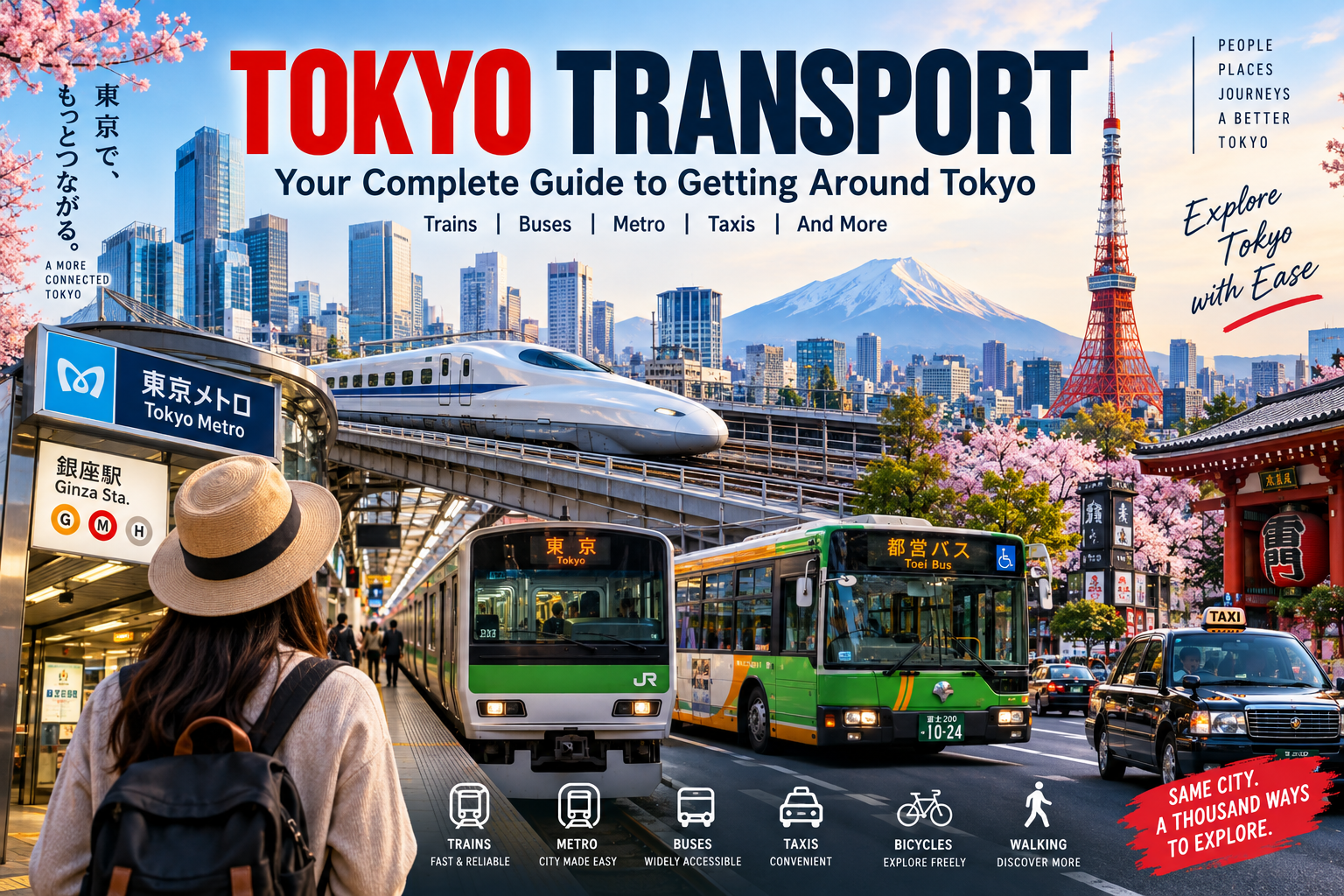
Tokyo transport is fast, extensive, and surprisingly easy to use once you understand the difference between subway, JR trains, private railways, buses, taxis, and airport services. For most visitors, the smartest approach is to use an IC card such as Suica or PASMO, choose routes by destination rather than by company, and avoid taxis for journeys that trains can handle efficiently Tokyo Culture
Tokyo can feel intimidating on your first day. You arrive with luggage, step into a huge station, see several signs pointing in different directions, and suddenly realize that “the train station” is not always one station.
It may be a complex of JR lines, subway lines, private railways, underground shopping areas, and multiple exits.
The good news is that Tokyo’s transport network becomes much simpler when you stop thinking of it as one giant system and instead understand how its pieces fit together.
This guide explains Tokyo transport for beginners and international travelers, including trains, subways, buses, taxis, airport transfers, IC cards, fares, passes, accessibility, luggage, rush hours, common mistakes, and the best transport options for different types of travelers.
It also compares 10 major Tokyo transport brands and operators so you can understand which one is useful for which journey.
Quick Summary of Tokyo Transport
Tokyo is best explored primarily by train and subway. Walking should be treated as part of the transport system rather than something separate, because many Tokyo destinations are reached by walking between stations and attractions.
For most visitors, the basic strategy is simple:
- Use JR trains for many major destinations and longer urban journeys.
- Use Tokyo Metro and Toei Subway when the subway provides the more direct route.
- Use private railways for destinations such as Asakusa-area connections, Shibuya-area routes, Odaiba, Tokyo Disney Resort access, and western Tokyo.
- Use buses for short local journeys where rail stations are inconvenient.
- Use taxis for late-night travel, heavy luggage, families, or places far from stations.
- Use airport trains or airport buses for Haneda and Narita.
- Use an IC card whenever practical to avoid buying individual tickets.
- Check the exact station and exit, not just the neighborhood name.
- Avoid changing trains unnecessarily during busy periods.
- Allow extra time when navigating large stations such as Shinjuku, Tokyo, Shibuya, or Ikebukuro.
The biggest lesson is this: the fastest route on a map is not always the easiest route on foot.
Why Tokyo Transport Can Feel Complicated
Tokyo does not operate like a city with one simple subway company.
Instead, the metropolitan area is served by multiple operators.
These include:
- JR East
- Tokyo Metro
- Toei Subway
- Odakyu Electric Railway
- Keio Railway
- Tokyu Corporation
- Seibu Railway
- Tobu Railway
- Keikyu
- Yurikamome
- Monorail services
- Municipal and private bus companies
- Taxis
- Airport transportation services
The result is an enormous network with many possible routes between the same two areas.
For a first-time visitor, this can create a strange experience: you may enter a station expecting one railway and discover several.
The important thing is not to memorize every operator.
Instead, learn how to read the network.
How Tokyo’s Transport Network Is Organized
JR East
JR East operates many important railway lines in Tokyo.
For tourists, some of the most useful include the:
- Yamanote Line
- Chuo Line
- Chuo-Sobu Line
- Keihin-Tohoku Line
- Tokaido Line
- Yokosuka Line
- Ueno-Tokyo Line
- Saikyo Line
The Yamanote Line is particularly useful for visitors because it loops through many famous areas, including Shinjuku, Shibuya, Harajuku, Ueno, Tokyo Station, and Shinagawa.
It is not always the fastest route, but it is often easy to understand.
Tokyo Metro
Tokyo Metro operates a large subway network serving central Tokyo.
Its lines include:
- Ginza Line
- Marunouchi Line
- Hibiya Line
- Tozai Line
- Chiyoda Line
- Yurakucho Line
- Hanzomon Line
- Namboku Line
- Fukutoshin Line
Tokyo Metro is particularly useful when traveling between central neighborhoods where JR may not offer a direct route.
Toei Subway
The Tokyo Metropolitan Bureau of Transportation operates the Toei subway system.
Its four subway lines are:
- Asakusa Line
- Mita Line
- Shinjuku Line
- Oedo Line
Toei and Tokyo Metro are separate operators, but their networks connect extensively.
This distinction matters because a route can involve both companies, potentially affecting fares and passes.
Private Railways
Private railways are extremely important in Tokyo.
Companies such as Tokyu, Odakyu, Keio, Tobu, Seibu, and Keikyu connect central Tokyo with suburban districts and major attractions outside the central core.
For tourists, this matters because some famous destinations are easier to reach using private railways than JR or the subway.
The Best Tokyo Transport Options at a Glance
| Transport | Best For | Main Advantage | Main Limitation |
|---|---|---|---|
| JR trains | Major Tokyo districts | Extensive network | Can be crowded |
| Tokyo Metro | Central Tokyo | Excellent subway coverage | Separate operator from Toei |
| Toei Subway | Central and eastern Tokyo | Useful cross-city routes | Different operator |
| Private railways | Suburbs and attractions | Direct routes to many destinations | Less familiar to beginners |
| Bus | Local neighborhoods | Reaches areas without rail | Slower in traffic |
| Taxi | Luggage, families, late nights | Door-to-door convenience | Expensive |
| Airport train | Haneda/Narita | Reliable and comfortable | Route depends on destination |
| Airport bus | Luggage and hotels | Convenient luggage handling | Traffic can affect journey |
| Monorail | Haneda access | Direct airport connection | Limited coverage |
| Walking | Short distances | Free and flexible | Tokyo distances can be deceptive |
Tokyo Trains: The Backbone of City Travel
For most tourists, trains are the foundation of Tokyo transport.
They are frequent, extensive, and usually more predictable than road transportation.
A visitor staying in Shinjuku, for example, can reach many major areas without using a car.
From Shinjuku, travelers can access:
- Shibuya
- Harajuku
- Tokyo Station
- Ueno
- Ikebukuro
- Nakano
- Akihabara
- western Tokyo
The challenge is not finding a train.
The challenge is selecting the right line, direction, station, and exit.
Understanding Train Directions
Japanese train stations often display the final destination or major station toward which a train is traveling.
Instead of thinking only:
“I need the train to Shibuya.”
also check:
- Which line?
- Which direction?
- Local or express?
- Which platform?
- Is a transfer required?
- Is the destination served by this specific train?
This becomes especially important on private railways, where local, rapid, express, limited express, and other service types can operate on the same route.
Local, Rapid, Express, and Limited Express Trains
One of the most common beginner mistakes is assuming that every train stops at every station.
They do not.
Depending on the railway, you may encounter:
- Local
- Rapid
- Special Rapid
- Express
- Limited Express
- Semi-Express
- Commuter Express
The terminology varies between operators.
A faster service can save significant time, but only if it stops at your destination.
Before boarding, check the station list displayed on the platform or in your navigation app.
The Yamanote Line for Beginners
The Yamanote Line is one of the easiest Tokyo train services for visitors to recognize.
It forms a loop around central Tokyo.
It serves major areas including:
- Shibuya
- Harajuku
- Shinjuku
- Ikebukuro
- Ueno
- Akihabara
- Tokyo
- Shinagawa
The line can be especially convenient when you are visiting several famous neighborhoods during one trip.
However, it should not automatically be considered the best option.
A subway route may be faster.
A different JR line may also reduce travel time.
The best approach is to compare the available routes rather than choosing the Yamanote Line simply because it is famous.
Tokyo Subway Guide
Tokyo’s subway network is one of the most useful systems for visitors.
Subways can be particularly valuable when traveling across central districts where JR stations are not always conveniently located.
For example, depending on your starting point and destination, Tokyo Metro may provide a much more direct journey than going through a major JR station.
Tokyo Metro Versus Toei Subway
This is an important distinction.
Tokyo Metro and Toei Subway are not the same operator.
They are separate networks that connect to each other.
That means a journey involving both systems can have different fare and ticket implications than a journey entirely within one operator’s network.
For everyday travel, an IC card makes this distinction much easier.
You generally do not need to manually calculate every fare before traveling.
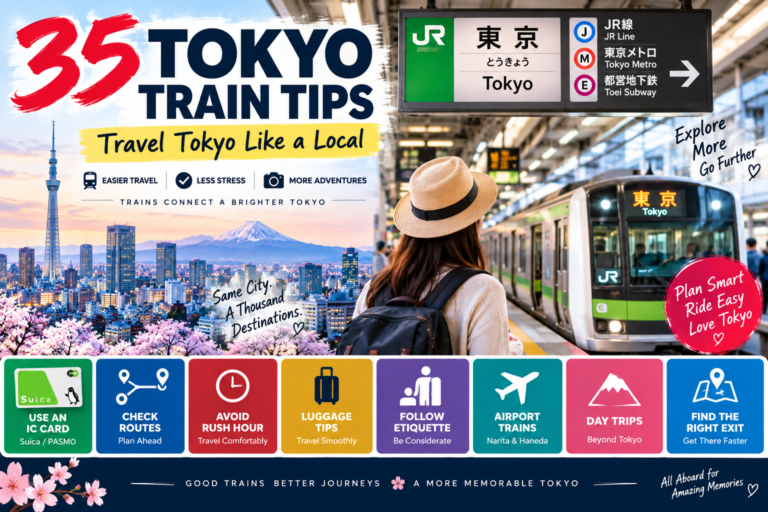
How IC Cards Simplify Tokyo Transport
One of the best pieces of advice for visitors is to use a rechargeable Japanese IC transportation card where available.
Common IC brands include:
- Suica
- PASMO
- ICOCA
- Other interoperable regional IC cards
These cards can be used across a broad range of participating transportation services and for some retail purchases.
Instead of purchasing a separate paper ticket for each journey, you can generally:
- Tap in.
- Travel.
- Tap out.
- Pay the applicable fare from the stored balance.
This is much easier when you are traveling multiple times each day.
Suica and PASMO
Suica and PASMO are two names travelers commonly encounter in Tokyo.
The important point for tourists is not to become obsessed with which logo you have.
For many journeys, interoperability makes an IC card much more convenient than repeatedly buying individual tickets.
Availability and purchase procedures can change, particularly for physical cards and tourist products, so travelers should check current operator information before their trip.
How Much Does Tokyo Transport Cost?
Tokyo does not have one universal fare.
The price depends on:
- Operator
- Distance
- Route
- Train type
- Ticket type
- Pass
- Whether a special service surcharge applies
Short urban rail trips are generally relatively affordable compared with taxi travel.
However, costs can accumulate when you make many journeys.
For this reason, it is useful to distinguish between single-trip convenience and day-pass value.
A pass is not automatically cheaper.
If you only make two or three journeys, paying individual fares may be better.
If you make numerous eligible trips within the same network, a pass can become more attractive.
Should You Buy a Tokyo Transport Pass?
This depends on your itinerary.
A pass can be useful when:
- You have many trips planned on eligible lines.
- Your itinerary stays within the covered network.
- You want predictable transport spending.
- The pass covers the routes you actually need.
A pass may be poor value when:
- Your hotel and attractions are close together.
- Your itinerary uses several different operators.
- You are walking frequently.
- You are taking long-distance JR services not covered by the pass.
- You are buying a pass simply because it sounds convenient.
The best transport pass is not the one with the largest coverage.
It is the one that matches your actual journeys.
Tokyo Transport for First-Time Visitors
First-time visitors often have a simple itinerary:
- Tokyo Station
- Asakusa
- Shibuya
- Shinjuku
- Harajuku
- Akihabara
- Ueno
- Ginza
- Odaiba
The easiest approach is to plan each day geographically.
Instead of traveling:
Shinjuku → Asakusa → Shibuya → Ueno → Shinjuku
try grouping nearby destinations.
For example:
Day area grouping
- Shibuya
- Harajuku
- Omotesando
Another day:
- Ueno
- Akihabara
- Asakusa
This reduces unnecessary crossings of the city.
The Hidden Cost of Tokyo Transport: Station Walking
This is one of the most overlooked aspects of Tokyo transport.
A journey displayed as 20 minutes on a route planner may involve:
- Walking to the station
- Finding the correct platform
- Navigating underground corridors
- Waiting for a train
- Traveling
- Walking through another station
- Finding the correct exit
The train ride itself may only be half of the journey.
This is why station navigation time matters.
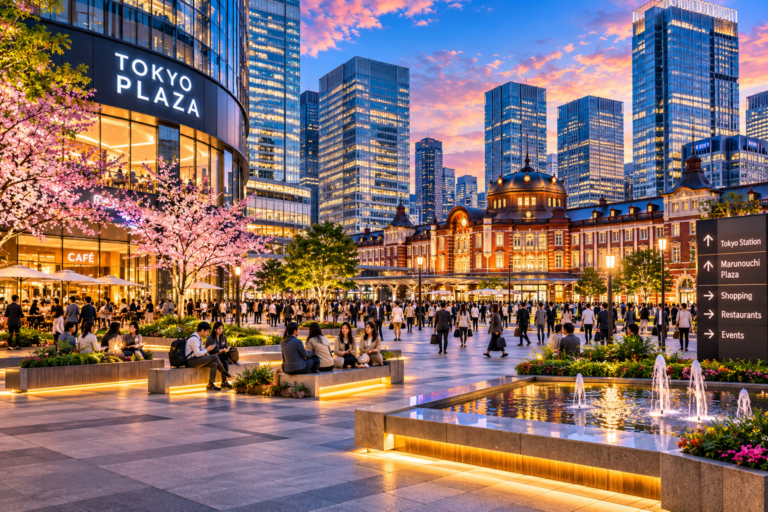
Tokyo Station Is Not Just a Train Station
Tokyo Station is enormous and contains multiple railway services, subway connections, shopping areas, restaurants, underground passages, and numerous exits.
If you are meeting someone, saying:
“Meet me at Tokyo Station”
is often not specific enough.
A better meeting instruction identifies:
- Station
- Operator
- Exit
- Landmark
- Floor or concourse
This principle applies even more strongly to Shinjuku.
Shinjuku Station and Tokyo Transport
Shinjuku is one of Tokyo’s most important transport hubs.
It connects multiple railway and subway operators and serves enormous numbers of passengers.
For visitors, the biggest challenge is often not transportation itself but orientation.
Before entering Shinjuku Station, identify your intended exit.
If you are going to a hotel, restaurant, shopping street, or attraction, check which exit is closest.
This can save considerable walking.
Shibuya Station and the Modern Tokyo Journey
Shibuya is another complex station area.
The district has undergone major redevelopment, so station navigation can feel different from older travel guides or videos.
This illustrates an important lesson for Tokyo visitors:
A route guide written years ago may no longer describe the easiest station exit.
Always check current navigation information.
Tokyo Transport and Google Maps
For international visitors, a reliable navigation app is extremely useful.
Google Maps is particularly popular because it can show:
- Train routes
- Platform information
- Transfer options
- Walking directions
- Departure times
- Travel duration
- Station exits
But do not follow the first route blindly.
Compare two or three options.
A route that saves five minutes may involve a complicated transfer.
Another route that takes seven minutes longer may be much easier with luggage.
The “Easy Route” Principle
When traveling in Tokyo, use this simple decision rule:
If two routes have similar travel times, choose the route with fewer transfers.
For example:
- Route A: 25 minutes, two transfers
- Route B: 29 minutes, zero transfers
For a tired traveler with luggage, Route B may be the better choice.
Travel efficiency is not always about minimizing minutes.
It is about minimizing friction.
Tokyo Buses
Tokyo’s buses are useful but usually less intuitive for first-time visitors than trains.
They are particularly helpful when:
- Your destination is far from a railway station.
- You are traveling within a local neighborhood.
- You want to avoid complicated station transfers.
- You are visiting residential areas.
- You are carrying luggage and a suitable direct bus is available.
The downside is traffic.
A train may have a predictable journey time while a bus can be affected by road conditions.
How to Use Tokyo Buses
Bus boarding and payment procedures can vary.
Before boarding, check:
- Where to enter
- Where to exit
- Whether payment occurs when boarding or leaving
- Whether IC cards are accepted
- Whether exact cash is required
- Which stop you need
An IC card can make bus travel considerably easier where accepted.
Tokyo Taxis
Taxis are not the cheapest form of Tokyo transport, but they have an important role.
They are especially useful for:
- Families
- Travelers with large luggage
- Elderly travelers
- Travelers with mobility challenges
- Late-night journeys
- Short trips between nearby locations
- Destinations poorly served by rail
Tokyo taxis can also be useful when several people share the cost.
A taxi may be expensive for one person but more reasonable when divided among three or four travelers.
When a Taxi Is Better Than a Train
Consider a taxi when:
You have heavy luggage
Dragging large suitcases through a major station can be exhausting.
It is very late
Train services have operating hours and may not be available all night.
You are traveling with young children
Door-to-door travel may be worth paying more for.
Your destination is far from a station
A train plus a long walk may not offer meaningful savings.
You are in a group
The cost difference may be smaller per person.
Tokyo Transport and Rush Hour
Tokyo’s rail network is famous for being busy.
Peak commuting periods can be particularly challenging.
During busy times:
- Platforms become crowded.
- Trains become packed.
- Transfers take longer.
- Elevators can have queues.
- Luggage becomes more difficult to manage.
Tourists should avoid unnecessary peak-hour travel when possible.
If you are sightseeing, you often have more flexibility than commuters.
Use that advantage.
Traveling With Luggage on Tokyo Transport
Large luggage is one of the biggest sources of transport stress.
A station that is easy with a backpack can feel completely different with two large suitcases.
Before traveling, check:
- Elevator availability
- Station exits
- Walking distance
- Transfer complexity
- Whether your hotel offers luggage storage
- Whether luggage delivery is available
Japan has well-developed luggage delivery services, and these can transform a multi-city trip.
Instead of carrying large bags across multiple train transfers, travelers may send luggage ahead and explore with a small day bag.
Tokyo Airport Transport
Tokyo’s two main international airports are:
- Haneda Airport
- Narita International Airport
They are not equally close to central Tokyo.
This distinction should influence your transport choice.
Haneda Airport Transport
Haneda is much closer to central Tokyo than Narita.
Depending on your destination, common options include:
- Keikyu Railway
- Tokyo Monorail
- Airport limousine buses
- Taxi
The best choice depends on where you are staying.
For example, a traveler heading toward Shinagawa may favor one railway option, while someone staying near Hamamatsucho may find another option more convenient.
Narita Airport Transport
Narita is farther from central Tokyo.
Common transport options include:
- Narita Express
- Keisei Skyliner
- Other Keisei services
- Airport buses
- Taxi
For many tourists, the Narita Express is useful for destinations connected with JR.
The Keisei Skyliner can be attractive for travelers heading toward areas such as Ueno and Nippori.
The correct choice depends heavily on your hotel location.
Narita Express Versus Skyliner
| Feature | Narita Express | Keisei Skyliner |
|---|---|---|
| Operator | JR East | Keisei |
| Best known for | JR-connected destinations | Fast access toward Ueno/Nippori |
| Central Tokyo access | Strong | Strong |
| Useful for | Shinjuku, Tokyo, Shinagawa and other JR areas | Ueno, Nippori and related routes |
| IC card | Useful for eligible portions, but reserved services may require additional arrangements | Similar principle for reserved/express services |
| Main consideration | Your destination | Your destination |
The important lesson is that airport transport should be selected based on your hotel, not simply on which airport train has the best reputation.
Tokyo Monorail
The Tokyo Monorail connects Haneda Airport with central Tokyo via Hamamatsucho.
It is a particularly recognizable airport transport option.
For travelers staying near areas conveniently connected with Hamamatsucho, it can be an efficient choice.
But again, the best airport route depends on the final destination.
Airport Buses
Airport buses can be underrated.
They can be especially useful when:
- Your hotel is served directly.
- You have several large bags.
- You do not want to navigate stairs and platforms.
- You prefer a seated journey.
- Your destination is not directly connected by rail.
The major disadvantage is road traffic.
A train generally offers more predictable travel time during congestion.
Tokyo Transport for Families
Families need a different transport strategy.
A route that looks perfect for a solo traveler can be exhausting with children.
Parents should prioritize:
- Fewer transfers
- Elevators
- Shorter walking distances
- Convenient toilets
- Flexible schedules
- Taxi options for difficult segments
Do not underestimate Tokyo station walking.
Children may become tired before the actual sightseeing begins.
A practical family itinerary often combines trains with occasional taxis.
Tokyo Transport for Seniors
Older travelers may want to prioritize comfort over absolute speed.
Useful strategies include:
- Choose routes with elevators.
- Reduce unnecessary transfers.
- Avoid peak commuting periods.
- Use taxis for short difficult connections.
- Allow extra station-navigation time.
- Carry a smaller day bag.
The goal is not to maximize the number of attractions.
It is to make transportation sustainable throughout the day.
Tokyo Transport for Solo Travelers
Solo travelers have more flexibility.
You can move quickly, change plans easily, and use smaller stations without worrying about coordinating a group.
An IC card, smartphone navigation, and a lightweight bag can make Tokyo transport extremely efficient.
The biggest solo-travel mistake is usually overplanning.
Trying to visit five distant neighborhoods in one day creates more transport time than sightseeing time.
Tokyo Transport for Couples
Couples can benefit from combining trains with walking.
Tokyo is especially enjoyable when a train takes you to a neighborhood and you explore locally on foot.
For example, you can use rail transport to reach a district and then spend several hours walking through:
- Shopping streets
- Cafes
- Parks
- Temples
- Side streets
- Local restaurants
This creates a better balance than continuously jumping between stations.
Tokyo Transport for Budget Travelers
Budget travelers should generally prioritize:
- Trains
- Subways
- Walking
- IC cards
- Carefully selected passes
Avoid taxis for every journey.
However, completely avoiding taxis can also be counterproductive.
If four people are traveling together and a short taxi journey saves a complicated series of transfers, the convenience may justify the cost.
Tokyo Transport for Business Travelers
Business travelers often value time and predictability.
Their priorities may include:
- Reliable arrival times
- Easy station access
- Minimal transfers
- Airport connectivity
- Proximity to business districts
- Comfortable luggage handling
For business trips, the best hotel is often not simply the one with the cheapest room.
A hotel near a convenient station can reduce transportation friction every day.
Tokyo Transport for Night Travelers
Tokyo is not a city where you should assume trains operate all night.
Late-night travelers need to check the final train.
If you miss the last train, options may include:
- Taxi
- Walking
- Late-night bus where available
- Staying near the destination
- Waiting until services resume
Nightlife plans should include the return journey.
A cheap dinner can become an expensive night if you unexpectedly need a long taxi ride.
Tokyo Transport for People With Disabilities
Tokyo has made substantial efforts to improve accessibility, but accessibility can vary by station, route, and exit.
Travelers with mobility requirements should check:
- Elevator locations
- Accessible entrances
- Step-free routes
- Accessible toilets
- Platform arrangements
- Station assistance
A route with one transfer may be preferable to a nominally faster route requiring stairs.
Tokyo Transport and Accessibility: The Practical Rule
Never ask only:
“Is this station accessible?”
Ask:
“Is my complete route accessible?”
One accessible station does not guarantee an easy journey if the transfer station or final exit presents obstacles.
10 Major Tokyo Transport Brands and Operators Compared
The following table gives a practical overview of major operators and services that tourists may encounter.
| Brand / Operator | Transport Type | Best Known For | Best For Tourists | Main Strength | Watch Out For |
|---|---|---|---|---|---|
| JR East | Railway | Yamanote and major JR lines | Major Tokyo districts | Huge network | Complex stations |
| Tokyo Metro | Subway | Central Tokyo subway | Downtown sightseeing | Extensive subway coverage | Separate from Toei |
| Toei Subway | Subway | Asakusa, Oedo, Mita, Shinjuku lines | Central/eastern Tokyo | Strong city coverage | Separate operator |
| Tokyu | Private railway | Shibuya and southern/western routes | Shibuya-area trips | Convenient suburban links | Service patterns vary |
| Odakyu | Private railway | Shinjuku–Odawara area | Hakone access | Strong tourist connections | Express services may require supplements |
| Keio | Private railway | Shinjuku and western Tokyo | Western Tokyo | Useful Shinjuku connections | Multiple service types |
| Seibu | Private railway | Northwestern Tokyo | Suburban destinations | Strong western/northwestern reach | Less useful for central sightseeing |
| Tobu | Private railway | Asakusa and northern/eastern routes | Nikko and eastern areas | Major sightseeing connections | Some services need reservations/surcharges |
| Keikyu | Private railway | Haneda and southern Tokyo | Airport access | Excellent Haneda connections | Route patterns can be confusing |
| Yurikamome | Automated transit | Odaiba | Waterfront sightseeing | Scenic elevated route | Limited geographic coverage |
The table illustrates an important point: there is no single best Tokyo transport brand.
Each operator becomes useful according to where you are going.
How to Choose the Right Tokyo Transport
Use this five-step system.
Step 1: Identify Your Exact Destination
Do not search only for:
Shibuya
Search for:
Hotel name + Shibuya
or:
Attraction name + Tokyo
The correct station may be different from what you expect.
Step 2: Check the Walking Distance
A station can be technically nearby but still require a long underground or above-ground walk.
Look at the walking portion of the route.
Step 3: Compare Transfers
If two routes have similar durations, choose fewer transfers.
Step 4: Check the Operator
If a route involves multiple railway companies, understand whether your ticket or pass covers the complete journey.
Step 5: Consider Your Situation
Ask:
- Do I have luggage?
- Is it rush hour?
- Am I traveling with children?
- Is it late?
- Do I need step-free access?
- Am I exhausted?
This final step often determines the best route.
Common Tokyo Transport Mistakes
Mistake 1: Choosing the Wrong Station
Some Tokyo neighborhoods have multiple stations.
The closest station to your hotel may not be the station displayed most prominently in travel guides.
Solution: Always check the exact station entrance and exit.
Mistake 2: Assuming Every Train Stops Everywhere
Express services can skip stations.
Solution: Check the stop list before boarding.
Mistake 3: Buying a Pass Without Calculating
A pass may look like a bargain but provide little value for your itinerary.
Solution: Estimate your actual journeys first.
Mistake 4: Changing Trains Too Many Times
Navigation apps often optimize travel time rather than comfort.
Solution: If the time difference is small, choose the route with fewer transfers.
Mistake 5: Ignoring Station Exit Numbers
You can arrive at the correct station and still emerge several blocks from your destination.
Solution: Check the recommended exit before leaving the paid area.
Mistake 6: Carrying Large Luggage Everywhere
Huge suitcases can make crowded stations extremely difficult.
Solution: Consider hotel luggage storage or luggage delivery.
Mistake 7: Traveling During Peak Commuting Hours
Crowded trains are uncomfortable for visitors unfamiliar with the network.
Solution: Shift sightseeing schedules when possible.
Mistake 8: Forgetting the Last Train
A night out can become expensive when the train network closes for the night.
Solution: Check the final departure before staying out late.
Mistake 9: Assuming a Short Distance Is a Short Walk
Tokyo’s urban scale can be deceptive.
Solution: Check actual walking minutes rather than judging distance visually.
Mistake 10: Treating All Tokyo Transport as One System
JR, Tokyo Metro, Toei, and private railways have different operating structures.
Solution: Think of Tokyo as an interconnected network of systems.
Pros and Cons of Tokyo Transport
Advantages
Tokyo transport offers several major advantages.
Extensive coverage: Major tourist districts and residential areas are connected by rail.
Frequent services: Many routes operate frequently, making spontaneous travel practical.
Strong connectivity: Different operators connect through major hubs.
Reduced dependence on cars: Visitors can explore large parts of the city without renting a vehicle.
Useful airport connections: Haneda and Narita have multiple transport options.
Good integration: IC cards simplify many everyday journeys.
Walkable neighborhoods: Rail travel works especially well when combined with walking.
Disadvantages
The network also has weaknesses.
Complex stations: Major hubs can overwhelm first-time visitors.
Multiple operators: Different companies can complicate fares and passes.
Crowding: Commuter periods can be intense.
Limited late-night service: Trains do not operate continuously throughout the night.
Long station walks: Transfers can involve significant distances.
Luggage challenges: Large bags can make station navigation difficult.
Route complexity: The fastest route may not be the easiest route.
The Best Tokyo Transport Strategy for a Seven-Day Trip
A week-long visitor does not need to become a transportation expert.
Use a simple strategy.
Days 1–2: Central Tokyo
Use trains and subway services to explore central districts.
Keep each day geographically concentrated.
Days 3–4: Major Neighborhoods
Use JR or subway routes depending on your destination.
Allow more time for walking between stations and attractions.
Day 5: Outer Destination
If you visit a place such as Hakone, Nikko, Kamakura, or another destination outside central Tokyo, research the specific railway operator and ticket requirements.
Days 6–7: Flexible Exploration
Use your IC card and choose destinations based on weather, energy, and interests.
This avoids overcommitting to a rigid transport schedule.
Tokyo Transport for Different Problems
If You Hate Crowds
Travel outside peak commuter periods and choose less congested routes.
If You Have Heavy Luggage
Consider airport buses, taxis, luggage delivery, or hotels close to major stations.
If You Are on a Tight Budget
Prioritize trains, subways, walking, and an IC card.
If You Are Traveling With Children
Minimize transfers and use taxis strategically.
If You Have Limited Mobility
Prioritize step-free routes even when they take slightly longer.
If You Are Visiting Tokyo for the First Time
Use major rail lines and simple routes before experimenting with complicated transfers.
If You Are Staying Far From Central Tokyo
Learn your nearest station and identify one or two reliable routes into the main sightseeing areas.
Tokyo Transport and Walking: The Combination Most Visitors Miss
Tokyo is not simply a train city.
It is a train-plus-walking city.
This is one of the most important insights for planning a successful visit.
Imagine your day like this:
Hotel → train → neighborhood → walking → attraction → walking → restaurant → train → hotel
The train moves you between districts.
Walking lets you experience them.
If you try to use public transport for every short movement, you may spend more time entering stations, finding platforms, and waiting for trains than simply walking.
How to Build a Better Tokyo Itinerary Around Transport
A good itinerary has a geographic shape.
Instead of selecting attractions randomly, group them into clusters.
For example:
Shibuya cluster
- Shibuya
- Harajuku
- Omotesando
Ueno cluster
- Ueno
- Ameyoko
- Akihabara
Asakusa cluster
- Asakusa
- Senso-ji area
- Tokyo Skytree area
The exact grouping depends on your interests, but the principle is universal.
Reduce unnecessary cross-city travel.
Tokyo Transport and Google Discover-Friendly Travel Planning
Travelers increasingly plan trips on smartphones.
That means useful Tokyo transport content should answer specific questions quickly.
Examples include:
- Tokyo transport for first-time visitors
- Tokyo transport from Haneda Airport
- Tokyo transport from Narita Airport
- Tokyo Metro vs JR
- Tokyo transport for families
- Tokyo transport with luggage
- Tokyo transport at night
- Tokyo transport pass guide
- Tokyo train system for tourists
- Tokyo subway guide
- Tokyo IC card guide
- Tokyo transport for seniors
- Tokyo transport for budget travelers
These problem-based searches reflect real traveler needs better than generic “Tokyo transportation” advice.
Future Trends in Tokyo Transport
Tokyo’s transport system is already highly developed, so future improvements are likely to focus less on simply building more railways and more on integration, accessibility, digital convenience, and passenger experience.
Digital Ticketing
Mobile ticketing and digital IC-card functionality continue to reduce the need for physical tickets.
The broader trend is toward travelers using smartphones rather than paper.
Better Station Navigation
Large stations are likely to become easier to navigate through improved digital maps, multilingual signs, and location-based guidance.
More Accessibility
Station accessibility is an important long-term priority as cities adapt to aging populations and diverse mobility needs.
Smarter Travel Information
Navigation tools increasingly combine:
- Real-time departures
- Platform information
- Walking routes
- Delays
- Transfer instructions
- Station exits
The result is a more personalized transport experience.
Tourism-Focused Mobility
As international tourism grows, transport operators have strong incentives to make airport access, multilingual information, luggage handling, and tourist ticketing easier.
What Tokyo Transport Could Look Like for Tourists in the Future
The most useful future development may not be a new train.
It may be a more invisible improvement:
better integration between different transport systems.
Imagine planning a journey and receiving one clear recommendation that combines:
- Walking
- JR
- Subway
- Private railway
- Bus
- Taxi
without requiring the traveler to understand which company owns each section.
Tokyo already has much of the physical infrastructure needed for this experience.
The next stage is making the complexity invisible to the passenger.
A Practical Tokyo Transport Checklist
Before leaving your hotel each morning, check:
- Your first destination
- Nearest station
- Correct station exit
- Recommended route
- Number of transfers
- Estimated walking time
- Weather
- Whether you need a reserved train
- Your IC card balance
- Last train if staying out late
This takes only a few minutes but can prevent many transport problems.
A Simple Tokyo Transport Formula
For most travelers, use this formula:
IC card + navigation app + trains + walking + occasional taxi
That combination handles a surprisingly large percentage of Tokyo travel needs.
You do not need to memorize every railway line.
You need to understand the logic of the network.
Frequently Asked Questions About Tokyo Transport
What is the best transport in Tokyo for tourists?
Trains and subways are generally the best options for tourists because they provide extensive coverage and can avoid road traffic. Use JR, Tokyo Metro, Toei Subway, and private railways according to your destination.
Is Tokyo transport easy for first-time visitors?
Yes, but the large stations can initially feel complicated. Once you understand IC cards, station exits, line names, and transfer signs, getting around becomes much easier.
Should tourists use Suica or PASMO?
Either can be convenient where accepted. The important advantage is having a compatible IC card that reduces the need to purchase individual tickets.
Is Tokyo Metro the same as JR?
No. Tokyo Metro is a subway operator, while JR East operates JR railway services in the Tokyo region. They are separate systems, although their networks connect.
Is Toei Subway the same as Tokyo Metro?
No. They are separate subway operators. However, their lines connect and can be used together during a trip.
Is it cheaper to use trains or taxis in Tokyo?
Trains and subways are generally much cheaper for individual travelers. Taxis provide greater convenience and can make sense for groups, luggage-heavy trips, late-night journeys, or difficult station connections.
Can you use an IC card on Tokyo trains?
IC cards are widely useful across participating transportation networks. Always check current acceptance for a specific service, especially when special tickets or reserved services are involved.
Is Tokyo transport expensive?
For a major global city, everyday public transportation can be relatively affordable compared with taxis. Your total cost depends on how frequently and how far you travel.
Do Tokyo trains run all night?
No. Tokyo’s rail network does not generally provide continuous overnight service. Travelers staying out late should check the final train.
What is the best way to travel from Haneda Airport to Tokyo?
The best option depends on your destination. Keikyu, Tokyo Monorail, airport buses, and taxis can all be useful depending on where you are staying.
What is the best way to travel from Narita Airport to Tokyo?
Narita Express, Keisei Skyliner, other railway services, airport buses, and taxis are available. Your hotel location should determine which option you choose.
Is the Yamanote Line good for tourists?
Yes. It connects many famous Tokyo districts and is relatively easy to understand. However, another JR or subway route may sometimes be faster.
Do I need a Japan Rail Pass for Tokyo?
Not necessarily. A nationwide rail pass is designed for broader travel and may not be economical if you are primarily staying within Tokyo. Compare the actual journeys you plan to make.
Can I take luggage on Tokyo trains?
Yes, but large luggage can be difficult during busy periods and inside crowded stations. Plan your route carefully and consider luggage delivery for very large bags.
Is Tokyo accessible for wheelchair users?
Many stations and routes provide accessibility features, but conditions can vary. Travelers should check the accessibility of the complete route rather than assuming every transfer is step-free.
Are Tokyo buses useful for tourists?
Yes. Buses can be valuable for destinations away from railway stations, but they can be slower because they operate on roads.
Should I rent a car in Tokyo?
Most tourists do not need a rental car for central Tokyo. Public transport is usually more practical, while taxis can cover journeys where trains are inconvenient.
What is the biggest Tokyo transport mistake?
One of the biggest mistakes is focusing only on train travel time and ignoring station walking, transfers, exits, and luggage.
How can I make Tokyo transport less stressful?
Use an IC card, check your route before leaving, identify your station exit, minimize transfers, avoid unnecessary peak-hour travel, and allow extra time in major stations.
Conclusion: Master Tokyo Transport Without Overcomplicating Your Trip
Tokyo transport may look complicated because several railway and subway companies operate together across one enormous metropolitan network.
But you do not need to understand every part of it.
The key is to think like a local traveler: choose the transport method according to your destination, situation, and convenience rather than automatically choosing the fastest-looking route.
For most visitors, trains and subways will do most of the work. JR is valuable for major districts, Tokyo Metro and Toei provide extensive subway coverage, private railways connect important suburban and tourist destinations, buses fill local gaps, and taxis provide a useful backup when convenience matters more than price.
The most successful Tokyo travelers also recognize that the journey does not end when the train arrives. Station exits, walking distances, transfers, luggage, and timing are all part of Tokyo transport.