Tokyo in Summer: 15 Best Things to Do, Festivals & Travel Tips
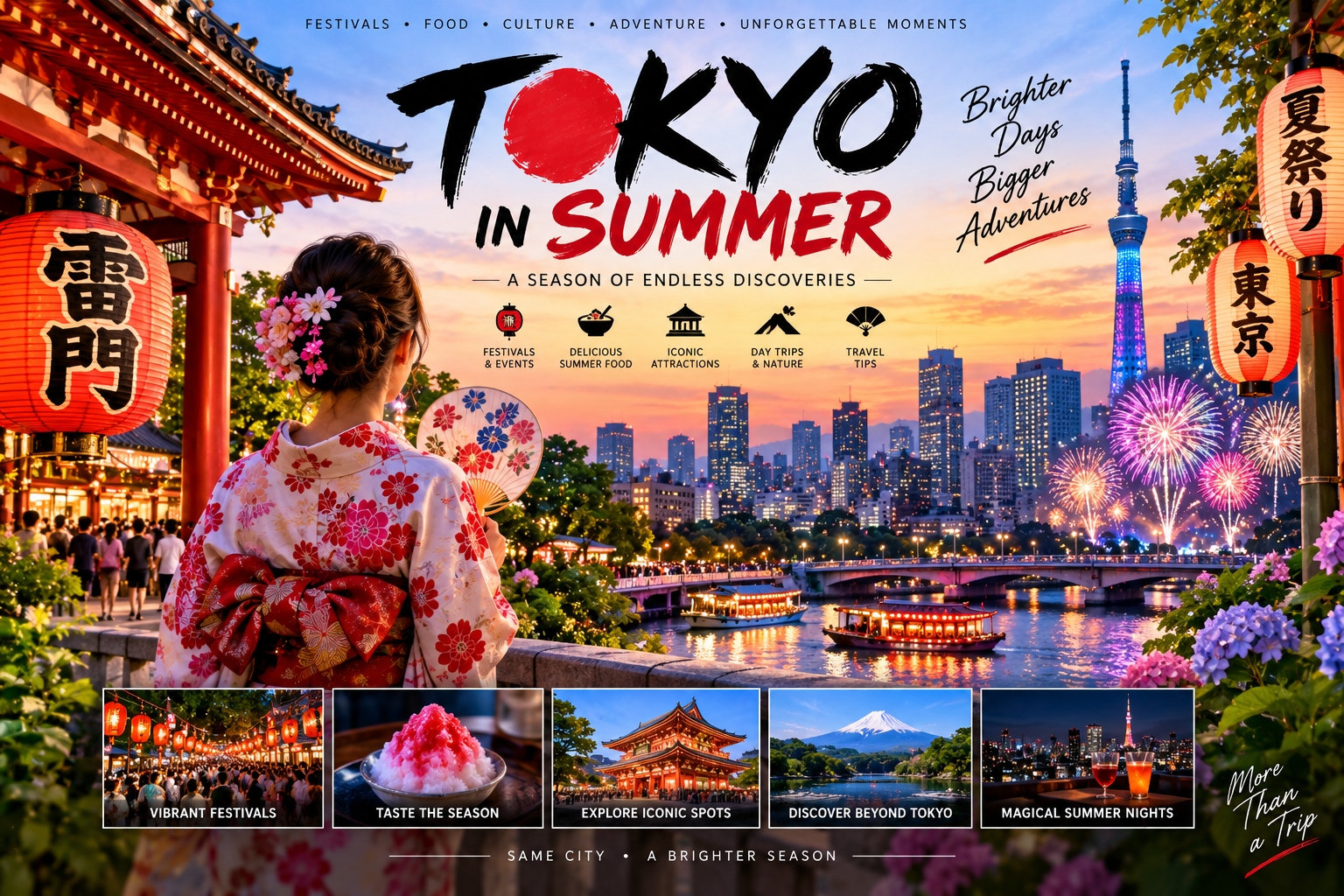
Tokyo in summer is hot, humid, colorful, and packed with experiences that you cannot enjoy in quite the same way during other seasons. From June’s rainy-season atmosphere and July’s fireworks and festivals to August’s traditional dances, lantern events, beaches, and long summer evenings, Tokyo offers a surprisingly rich travel experience if you plan around the heat Tokyo Restaurants
Why Visit Tokyo in Summer?
Tokyo’s summer has a reputation for heat and humidity, and that reputation is justified.
But focusing only on uncomfortable weather misses the larger picture.
Summer is one of the most culturally active periods of the year.
The official Tokyo tourism calendar highlights June beer gardens, July fireworks and traditional summer events, and August fireworks, Bon-odori dances, Tanabata-related events, water parks and beach activities.
This means summer is not simply a weather season.
It is an event season.
You can experience aspects of Japanese culture that are less visible during a typical sightseeing trip.
Summer Gives Tokyo a Different Personality
In spring, Tokyo is often associated with cherry blossoms.
In autumn, visitors think about foliage and comfortable walking weather.
Winter brings illuminations and crisp skies.
Summer is different.
It is about:
- Festivals
- Fireworks
- Matsuri food
- Yukata
- Bon-odori
- Beer gardens
- Outdoor entertainment
- Summer desserts
- Green parks
- Evening walks
- Waterfront experiences
- Seasonal cultural events
The city becomes more active after sunset because evenings are often more comfortable than the hottest part of the afternoon.
Tokyo Summer Weather: What to Expect
Summer in Tokyo generally means June through August.
However, those three months should not be treated as identical.
June, July and August can feel like three different travel seasons.
Tokyo in June
June is often associated with the beginning of the rainy season, known as tsuyu.
The official Tokyo tourism guide describes June to mid-July as a wet and humid period, with humidity often exceeding 80%.
The rain does not necessarily mean constant heavy rainfall every day.
Instead, travelers may encounter:
- Cloudy skies
- Humid conditions
- Light rain
- Intermittent showers
- Damp streets
- Sudden changes in weather
This can actually create beautiful photography conditions.
Wet streets reflect Tokyo’s signs and lights, while parks become intensely green.
Tokyo in July
July is when summer becomes more obvious.
The rainy season generally begins to give way to hotter conditions, although weather patterns can vary.
This is also a major festival period.
The official Tokyo calendar describes July as a month filled with summer events, markets, fireworks and traditional celebrations.
For many travelers, July offers the best combination of:
- Cultural events
- Fireworks
- Festivals
- Long daylight
- Summer food
- Outdoor entertainment
But heat and humidity can become serious.
Tokyo in August
August is generally the hottest part of Tokyo’s summer.
The official tourism guide warns that temperatures can rise above 35°C (95°F), while nighttime temperatures may remain above 25°C (77°F).
That creates a very different travel rhythm.
Instead of walking continuously from 9 AM to 9 PM, consider:
Morning → indoor attraction → lunch → air-conditioned break → evening sightseeing → nighttime festival
August also introduces another consideration: typhoons.
The official Tokyo tourism guide notes that typhoon season begins in August and that strong winds and heavy rain can affect transportation and travel plans.
Is Tokyo Too Hot in Summer?
For some travelers, yes.
For others, absolutely not.
The answer depends heavily on your heat tolerance.
Tokyo’s summer heat becomes more challenging because temperature and humidity work together.
A day that looks manageable on a thermometer can feel much more exhausting when humidity is high.
Why Humidity Matters
Humidity slows the evaporation of sweat from your skin.
That means your body’s natural cooling mechanism becomes less effective.
The result can be:
- Feeling hotter than the actual temperature
- Faster fatigue
- More sweating
- Dehydration
- Headaches
- Reduced concentration
- Heat exhaustion
This is why summer sightseeing requires more than simply carrying water.
How to Adapt
Do not treat heat management as an emergency response.
Make it part of your itinerary.
Plan:
- Shorter walking periods
- Indoor attractions
- Shaded streets
- Café breaks
- Hydration stops
- Early mornings
- Evening sightseeing
The official Tokyo tourism guide specifically recommends hydration, replenishing sodium, getting out of the sun and taking frequent breaks to reduce heatstroke risk.
Best Month to Visit Tokyo in Summer
There is no single best summer month.
Each has different advantages.
June: Best for Travelers Who Can Handle Rain
Choose June if you want:
- Green scenery
- Fewer peak-summer crowds in some situations
- Seasonal indoor attractions
- Early summer atmosphere
- Flexible sightseeing
The main challenge is humidity and rainy weather.
July: Best for Festivals and Fireworks
July is particularly attractive if your priority is cultural events.
You may find:
- Fireworks
- Matsuri
- Bon-odori-related events
- Outdoor markets
- Beer gardens
- Summer performances
August: Best for Full Summer Atmosphere
August provides the strongest sense of Japanese summer.
Expect:
- Hot weather
- Festivals
- Fireworks
- Traditional dances
- Summer foods
- Lantern events
- Water activities
But it also requires the most serious heat planning.
Tokyo in Summer for First-Time Visitors
If this is your first trip to Tokyo, summer requires a slightly different strategy.
Do not attempt to follow a rigid sightseeing schedule.
Start Your Day Early
The first few hours of the day can be much more comfortable than the afternoon.
Use the morning for:
- Temples
- Parks
- Outdoor neighborhoods
- Photography
- Walking districts
Move Indoors at Midday
The middle of the day is a good time for:
- Museums
- Shopping malls
- Department stores
- Aquariums
- Digital art experiences
- Cafés
- Restaurants
Return Outdoors in the Evening
Once the sun becomes less intense, return outside.
This is when summer festivals, illuminated streets, food stalls and nightlife become especially attractive.
Best Things to Do in Tokyo in Summer
Attend a Japanese Summer Festival
A summer festival, or matsuri, is one of the best reasons to visit Tokyo during this season.
Festivals vary enormously.
Some are large city events.
Others are neighborhood celebrations organized around local shrines or shopping streets.
You may encounter:
- Food stalls
- Traditional performances
- Music
- Decorations
- Children’s activities
- Games
- Religious ceremonies
- Bon-odori dancing
Watch Summer Fireworks
Fireworks are among the most iconic Japanese summer experiences.
Tokyo’s summer calendar regularly features major fireworks events.
A fireworks evening is more than simply watching explosions in the sky.
It often involves:
- Crowds
- Food stalls
- Summer clothing
- Picnic-style gatherings
- Local traditions
- Photography
Wear a Yukata
A yukata is a lightweight summer kimono traditionally associated with warm-weather festivals and informal summer occasions.
Wearing one can make a festival experience feel more immersive.
However, comfort matters.
Tokyo summer heat can make layered clothing uncomfortable, so choose breathable materials and consider how long you will be outside.
Visit a Beer Garden
Beer gardens are a distinctive summer tradition.
The official Tokyo tourism calendar specifically highlights the opening of Tokyo’s summer beer-garden season in June.
Some are located on:
- Hotel rooftops
- Department-store terraces
- Parks
- Gardens
- Elevated viewpoints
You do not need to drink alcohol to enjoy the atmosphere.
Many venues also provide food and non-alcoholic options.
Explore Tokyo’s Parks Early in the Morning
Summer greenery can make Tokyo’s parks spectacular.
Try:
- Shinjuku Gyoen
- Yoyogi Park
- Ueno Park
- Hamarikyu Gardens
- Koishikawa Korakuen
The important strategy is timing.
Go early.
Visit Museums During the Afternoon
Museums are particularly valuable during Tokyo’s hottest hours.
You can combine cultural sightseeing with air-conditioned comfort.
Consider:
- Tokyo National Museum
- Mori Art Museum
- National Museum of Emerging Science and Innovation
- Edo-Tokyo-related exhibitions
- Contemporary art spaces
Explore Department Stores
Tokyo department stores are not simply shopping centers.
They can function as cultural experiences.
Explore:
- Fashion floors
- Beauty sections
- Food halls
- Restaurants
- Gift departments
The basement food halls can be particularly interesting for travelers who want to discover Japanese food without committing to an expensive restaurant.
Visit an Aquarium
An aquarium is an excellent summer activity for families, couples and travelers looking for a break from outdoor heat.
It combines entertainment with a comfortable indoor environment.
Visit Tokyo Skytree
Tokyo Skytree can be especially attractive during summer evenings.
Instead of visiting during the hottest part of the afternoon, consider going near sunset.
You can watch Tokyo transition from daylight into its nighttime landscape.
Explore Odaiba
Odaiba provides a different side of Tokyo.
The waterfront environment can be enjoyable during summer, especially in the evening.
However, avoid assuming that open waterfront areas will always feel cool.
Humidity and direct sunlight can still be intense.
Take a Day Trip to Mount Takao
Mount Takao offers a greener alternative to central Tokyo.
The official Tokyo tourism calendar even highlights summer beer-garden experiences around Mount Takao.
Summer hiking requires more preparation than spring or autumn hiking.
Start early, carry sufficient water and check weather conditions.
Visit Okutama
Western Tokyo includes mountainous and nature-oriented areas such as Okutama.
This is an important reminder that Tokyo is not only skyscrapers.
The metropolitan government includes substantial rural and island territories within Tokyo’s broader geographic boundaries.
Summer can be an excellent time to explore nature, provided you monitor heat and weather conditions.
Visit Tokyo’s Beaches and Islands
Tokyo’s metropolitan area includes islands as well as the mainland.
Summer is the natural season for exploring these destinations.
The official Tokyo tourism guide notes that the Izu and Ogasawara islands have significantly warmer conditions and can be affected by rain and typhoons.
Island travel requires more weather awareness because ferry and transport schedules can be affected by conditions.
Tokyo Summer Festivals You Should Know
Sumida River Fireworks
The Sumida River fireworks tradition is one of Tokyo’s most recognizable summer events.
Large crowds are expected.
If you plan to attend, arrive early and research access arrangements before the event.
Ueno Summer Festival
The Ueno Summer Festival is another example of Tokyo’s summer cultural programming.
The 2026 event ran from July 10 through August 11 and included concerts, comedy, wrestling, an antique market, festival activities and entertainment around Shinobazu Pond.
Dates change by year, so travelers should verify the current schedule.
Asagaya Tanabata Matsuri
Tanabata is associated with wishes, bamboo decorations and colorful festival displays.
The Asagaya Tanabata Matsuri is a large summer event held around Asagaya Station and Pearl Center Shopping Street. The 2026 edition ran August 7–11.
Azabu-Juban Noryo Festival
The Azabu-Juban Noryo Festival is an excellent example of how Tokyo combines old neighborhood culture with modern international life.
The festival takes place around the Azabu-Juban shopping area and features local food, markets, performances and traditional summer entertainment. The 2026 edition ran August 22–23.
Haneda Lantern Festival
The Tokyo Haneda Lantern Festival is another distinctive summer experience.
The 2026 event was scheduled for August 22–23 around Anamori Inari Shrine near Haneda Airport, featuring illuminated lanterns and traditional religious elements.
Summer Food in Tokyo
Food is one of the strongest reasons to visit Tokyo in summer.
Japanese cuisine responds to seasons, and summer is no exception.
Kakigori
Kakigori is Japanese shaved ice.
It can be served with:
- Matcha
- Fruit
- Syrups
- Condensed milk
- Sweet red bean
- Seasonal toppings
It is more than a dessert.
It is part of the summer experience.
Somen
Somen are thin wheat noodles commonly enjoyed cold.
They can be particularly refreshing during hot weather.
Unagi
Grilled eel is traditionally associated with summer in Japan.
The rich flavor makes it very different from the lighter foods commonly associated with hot-weather dining.
Hiyashi Chuka
Cold ramen-style noodles with toppings are another summer-friendly option.
Yakitori at a Summer Festival
Few things feel more like Japanese summer than eating grilled food from a festival stall while surrounded by lanterns and music.
Watermelon and Summer Fruits
Seasonal fruit can be surprisingly high quality in Japan.
Look for:
- Watermelon
- Peaches
- Melons
- Grapes
What to Wear in Tokyo in Summer
Packing correctly can make or break your trip.
Lightweight Clothing
Choose:
- Breathable shirts
- Lightweight trousers
- Comfortable shorts where appropriate
- Breathable dresses
- Moisture-managing fabrics
Comfortable Shoes
Tokyo remains a walking city even when you use trains.
Choose shoes that are:
- Breathable
- Comfortable
- Already broken in
- Suitable for sudden rain
Rain Protection
During the rainy season, carry:
- Compact umbrella
- Lightweight rain jacket
- Water-resistant footwear
The official Tokyo guide specifically recommends a breathable rain jacket and waterproof shoes during the rainy season.
Sun Protection
Bring:
- Sunglasses
- Hat
- Sunscreen
- Lightweight long-sleeve layer
A parasol can also be useful.
Tokyo Summer Packing List
A practical packing list includes:
- Lightweight shirts
- Breathable trousers or shorts
- Comfortable walking shoes
- Sandals if appropriate
- Compact umbrella
- Sunscreen
- Sunglasses
- Hat
- Portable phone charger
- Reusable water bottle
- Small towel
- Hand fan
- Moisture wipes
- Light rain jacket
- Small day bag
Why a Small Towel Helps
Japanese summers can involve significant sweating.
A small towel is inexpensive, easy to carry and genuinely useful.
You will see many people using hand towels or small cooling towels during hot weather.
How to Stay Cool in Tokyo Summer
Drink Before You Feel Thirsty
Thirst is not always an early warning sign of dehydration.
Make hydration a routine.
Replenish Electrolytes
During prolonged outdoor activity, water alone may not always replace the sodium lost through sweating.
Electrolyte drinks can be useful.
Use Convenience Stores Strategically
Convenience stores are everywhere in Tokyo.
They can provide:
- Water
- Sports drinks
- Cold tea
- Towels
- Snacks
- Ice cream
- Umbrellas
They are effectively part of your summer travel infrastructure.
Take Air-Conditioned Breaks
Do not treat breaks as wasted sightseeing time.
A 30-minute café break can make the next three hours much more enjoyable.
Avoid the Strongest Afternoon Heat
If possible, schedule major outdoor activities earlier or later.
Tokyo Summer Rain: How to Handle It
Rain does not have to ruin your itinerary.
Have a Rainy-Day Backup
Prepare a list of:
- Museums
- Shopping malls
- Aquariums
- Department stores
- Indoor attractions
- Cafés
- Covered markets
- Entertainment centers
Use Rain as a Neighborhood Experience
Rain can actually make certain areas more atmospheric.
Try walking through:
- Asakusa
- Yanaka
- Shinjuku
- Ginza
with an umbrella after a shower.
Neon reflections and wet streets can create memorable scenes.
Understand Sudden Downpours
Tokyo can experience intense localized rainfall.
The official Tokyo tourism guide warns that sudden summer downpours can occur in the afternoon or evening and advises moving to a safe location when torrential rain occurs.
Tokyo Summer and Typhoons
Typhoons are one of the biggest weather considerations for late-summer travel.
What Is a Typhoon?
A typhoon is a tropical cyclone occurring in the western North Pacific region.
It can bring:
- Heavy rain
- Strong winds
- Transport disruption
- Flooding
- Flight delays
- Event cancellations
When Should Travelers Be Most Alert?
August and the months afterward can bring increased typhoon risk.
That does not mean every August trip will encounter a typhoon.
It means travelers should monitor forecasts.
What to Do During a Typhoon
If a significant storm is approaching:
- Monitor official weather updates
- Follow transportation announcements
- Avoid unnecessary travel
- Stay indoors when advised
- Keep your phone charged
- Follow evacuation instructions
- Contact your airline if flights are affected
Tokyo Summer for Families
Summer can be a wonderful time for families, but children may be more vulnerable to heat.
Family-Friendly Summer Activities
Consider:
- Aquariums
- Museums
- Indoor theme parks
- Department stores
- Arcades
- Water parks
- Evening festivals
- Fireworks
Plan Shorter Outdoor Sessions
Instead of spending five consecutive hours outside, break the day into smaller segments.
For example:
Morning park → lunch → museum → hotel rest → evening festival
This is much easier on children.
Tokyo Summer for Couples
Tokyo can be extremely romantic in summer.
Romantic Summer Activities
Try:
- Sunset views
- Rooftop dining
- River walks
- Summer festivals
- Fireworks
- Traditional yukata experiences
- Evening gardens
- Cocktail bars
Fireworks for Couples
A summer fireworks event can be memorable, but crowds can be intense.
If you dislike crowds, consider smaller local fireworks events or alternative evening viewpoints.
Tokyo Summer for Solo Travelers
Solo travelers have a major advantage: flexibility.
You can change your itinerary based on the weather without coordinating with anyone else.
Best Solo Summer Strategy
Morning:
Explore a neighborhood.
Afternoon:
Visit a museum.
Evening:
Attend a festival.
Night:
Eat at an izakaya or ramen shop.
This rhythm provides variety without excessive heat exposure.
Tokyo Summer for Budget Travelers
Summer can be expensive around major festivals and peak travel dates, but there are ways to control costs.
Eat Locally
You do not need expensive restaurants every night.
Try:
- Ramen
- Curry
- Gyudon
- Conveyor-belt sushi
- Convenience-store meals
- Local izakayas
Use Free Experiences
Many summer experiences cost little or nothing.
Examples include:
- Neighborhood festivals
- Public parks
- Temple grounds
- Evening walks
- Shopping districts
- Summer decorations
Stay Outside the Most Expensive Districts
Accommodation near major stations such as Shinjuku or Shibuya can be convenient but expensive.
Consider neighboring districts with good railway connections.
Tokyo Summer for Luxury Travelers
Luxury travelers can turn the heat into an advantage by using premium indoor experiences.
Consider:
- Luxury hotel pools
- Spa treatments
- Rooftop dining
- High-end sushi
- Premium cocktail bars
- Private tours
- Luxury shopping
- Fine-dining experiences
The Best Luxury Strategy
Do outdoor sightseeing early.
Reserve premium indoor experiences for the hottest part of the day.
Then enjoy the city at sunset.
Tokyo Summer for Photographers
Summer offers a different photographic palette from spring.
Greenery
Tokyo’s parks become intensely green.
Rain Reflections
Wet streets can create dramatic reflections.
Fireworks
Long exposures can capture spectacular scenes.
Festival Photography
Look for:
- Lanterns
- Food stalls
- Yukata
- Shrine decorations
- Dance performances
- Crowds
Always respect photography restrictions.
Best Tokyo Neighborhoods in Summer
Asakusa
Best for:
- Traditional festivals
- Senso-ji
- Summer atmosphere
- Local food
- Evening walks
Shibuya
Best for:
- Shopping
- Modern entertainment
- Nightlife
- Indoor escapes
Shinjuku
Best for:
- Restaurants
- Nightlife
- Department stores
- Indoor entertainment
Ueno Tokyo in summer
Best for:
- Museums
- Parks
- Summer festivals
- Family activities
Ginza Tokyo in summer
Best for:
- Luxury
- Shopping
- Restaurants
- Air-conditioned department stores
Kichijoji Tokyo in summer
Best for:
- Inokashira Park
- Cafés
- Local atmosphere
Shimokitazawa Tokyo in summer
Best for:
- Indie culture
- Music
- Cafés
- Vintage shopping
Tokyo Summer Day Itinerary
A smart summer day could look like this.
7:00 AM — Outdoor Exploration Tokyo in summer
Visit a temple or park before the heat becomes intense.
9:30 AM — Breakfast Tokyo in summer
Choose a local café or Japanese breakfast.
10:30 AM — Indoor Attraction Tokyo in summer
Visit a museum, gallery or shopping district.
1:00 PM — Lunch Tokyo in summer
Eat somewhere air-conditioned.
2:00 PM — Rest Tokyo in summer
Return to your hotel or spend time in a café.
4:30 PM — Evening Exploration Tokyo in summer
Head toward a neighborhood festival or shopping district.
6:30 PM — Dinner Tokyo in summer
Try an izakaya or seasonal Japanese meal.
8:00 PM — Summer Experience Tokyo in summer
Watch fireworks, attend a festival or explore Tokyo nightlife.
This schedule may look slower than a typical tourist itinerary.
That is intentional.
Tokyo Summer Nightlife
Summer evenings create a special atmosphere.
After sunset, the city becomes more comfortable and more social.
Summer Night Activities Tokyo in summer
Consider:
- Rooftop bars
- Beer gardens
- Izakayas
- Fireworks
- Night markets
- Evening festivals
- River walks
- Observation decks
- Karaoke
Why Evening Sightseeing Works Tokyo in summer
The combination of lower sunlight, illuminated streets and seasonal events makes evening one of the most valuable periods of the day.
Ten Travel Brands to Compare for a Tokyo Summer Trip
| Brand | Main Service | Best For | Summer Advantage | Important Consideration |
|---|---|---|---|---|
| Booking.com | Hotels | General travelers | Large accommodation choice | Check cancellation rules |
| Agoda | Hotels | Asia travelers | Broad Asian inventory | Compare final prices |
| Japan Airlines | Flights | International travelers | Strong Japan network | Compare fare conditions |
| ANA | Flights | Domestic/international | Extensive network | Check baggage rules |
| JR East | Rail | Tokyo & eastern Japan | Excellent regional rail access | Check route and pass suitability |
| Klook | Activities | International tourists | Tickets and experiences | Check event availability |
| KKday | Tours | Activity seekers | Broad Asia-focused inventory | Review inclusions |
| Rakuten Travel | Hotels | Japan travelers | Strong domestic inventory | Compare hotel policies |
| Jalan | Hotels & activities | Japan-focused travel | Large domestic selection | Research details carefully |
| Trip.com | Flights & hotels | International travelers | Broad booking platform | Compare cancellation conditions |
These brands are useful starting points for travel research, but summer events, transport schedules and hotel policies can change. Always verify current conditions before finalizing a booking.
Common Mistakes When Visiting Tokyo in Summer
Mistake 1: Treating Summer Like Spring
This is perhaps the biggest mistake.
A spring itinerary might involve walking for hours.
A summer itinerary should include cooling breaks.
Mistake 2: Carrying Too Many Heavy Clothes
Tokyo summer does not require bulky clothing.
Prioritize breathable materials.
Mistake 3: Ignoring Humidity Tokyo in summer
Temperature alone does not tell you how exhausting the weather will feel.
Mistake 4: Planning Outdoor Activities at Midday Tokyo in summer
Move major outdoor activities to morning or evening.
Mistake 5: Forgetting Rain Protection Tokyo in summer
Even a beautiful summer morning can become wet later.
Mistake 6: Not Checking Festival Dates Tokyo in summer
Summer events can occur only on specific dates.
Do not assume a festival will be happening simply because you are visiting Tokyo in July or August.
Mistake 7: Ignoring Typhoon Forecasts Tokyo in summer
Late summer requires weather awareness.
Mistake 8: Overpacking Your Schedule Tokyo in summer
Heat makes excessive scheduling much more tiring.
Mistake 9: Drinking Too Little Tokyo in summer
Do not wait until you feel severely thirsty.
Mistake 10: Forgetting to Rest Tokyo in summer
Rest is part of successful summer travel.
Pros and Cons of Visiting Tokyo in Summer
Advantages Tokyo in summer
Tokyo in summer offers:
- Major festivals
- Fireworks
- Seasonal foods
- Long daylight
- Green landscapes
- Outdoor entertainment
- Summer cultural experiences
- Beaches and islands
- Vibrant evening atmosphere
- Unique photography opportunities
Disadvantages Tokyo in summer
The challenges include:
- High humidity
- Extreme heat
- Sudden rain
- Heat exhaustion risk
- Crowds at major festivals
- Possible typhoon disruption
- Higher demand around popular events
- More difficult long-distance walking
Is Tokyo in Summer Worth It?
For many travelers, absolutely.
But the correct question is not:
“Is Tokyo summer weather comfortable?”
It often isn’t.
The better question is:
“Are the seasonal experiences worth adapting my itinerary for?”
For travelers interested in Japanese festivals, fireworks, food, traditional culture and summer atmosphere, the answer can be yes.
The Hidden Advantage of Tokyo in summer
There is an overlooked benefit to traveling during hot weather.
It forces you to slow down.
Instead of rushing through ten attractions, you may spend an hour in a small café.
Instead of walking across the city at 2 PM, you may visit a museum.
Instead of returning to your hotel at sunset, you may discover a neighborhood festival.
This slower rhythm can actually create a deeper travel experience.
Future Trends for Tokyo Summer Travel
Tokyo’s summer tourism is likely to evolve as weather patterns, technology and visitor behavior change.
More Heat-Aware Tourism Tokyo in summer
Travel planning will increasingly account for heat rather than simply rainfall.
Visitors will likely choose:
- Early-morning tours
- Evening experiences
- Indoor attractions
- Air-conditioned transportation
- Flexible schedules
More Nighttime Tourism Tokyo in summer
Hot afternoons naturally encourage tourism after sunset.
Expect continued interest in:
- Night markets
- Illuminated attractions
- Evening festivals
- Rooftop experiences
- Nighttime cultural programs
More Digital Event Planning Tokyo in summer
Travelers increasingly discover festivals and events online before arriving.
This makes it easier to build trips around specific summer experiences.
Greater Interest in Regional Tokyo in summer
Central Tokyo receives enormous attention, but western Tokyo, waterfront areas and islands offer alternatives.
Future visitors may increasingly explore these less-concentrated destinations.
More Climate-Conscious Travel Tokyo in summer
Extreme heat will likely encourage tourism organizations, hotels and attractions to provide better cooling infrastructure, hydration information and weather-aware recommendations.
How to Build a Perfect Tokyo in summer
Start with your priorities.
If you love culture, build around festivals.
If you love food, build around summer dishes.
If you love photography, prioritize early mornings and evenings.
If you are traveling with children, focus on indoor attractions and shorter outdoor sessions.
If you are a couple, choose evening experiences.
If you are a budget traveler, combine free festivals with affordable local food.
If you are a luxury traveler, use the afternoon for premium indoor experiences.
The secret is not avoiding Tokyo’s summer weather.
It is designing your itinerary around it.
FAQs
Is Tokyo worth visiting in summer?
Yes. Tokyo can be hot and humid, but summer offers festivals, fireworks, Bon-odori, seasonal food, beer gardens, green parks, beaches and unique cultural experiences that are difficult to replicate during other seasons.
Is Tokyo very hot in summer?
Yes. Tokyo can experience very hot and humid conditions, especially in July and August. Official Tokyo tourism guidance warns that temperatures can exceed 35°C and that nighttime temperatures can remain above 25°C.
What are the summer months in Tokyo?
Summer is generally considered June, July and August.
Is June a good time to visit Tokyo?
June can be a good choice if you do not mind humidity and rain. It is also a useful month for travelers who want early-summer greenery and seasonal experiences.
Does it rain a lot in Tokyo in summer?
Tokyo experiences a rainy season generally centered around mid-June to late July. Rain does not necessarily occur continuously, but cloudy conditions, humidity and showers are common.
Is July a good month for Tokyo?
July can be excellent for travelers interested in festivals, fireworks and summer culture. However, temperatures and humidity can become challenging.
Is August too hot for Tokyo?
August can be extremely hot, but it is still a popular travel period because of festivals, fireworks and summer events. Travelers should plan outdoor activities for cooler periods of the day.
What should I wear in Tokyo in summer?
Wear lightweight, breathable clothing and comfortable shoes. Carry sun protection and rain protection. During the rainy season, a breathable rain jacket and waterproof footwear can be particularly useful.
Do I need an umbrella in Tokyo in summer?
It is highly recommended, particularly during the rainy season. Convenience stores commonly sell inexpensive umbrellas, according to the official Tokyo tourism guide.
What should I pack for Tokyo in summer?
Pack breathable clothing, comfortable walking shoes, sunscreen, sunglasses, a hat, a compact umbrella, a reusable bottle, a small towel, a portable charger and a lightweight rain jacket.
What are the best things to do in Tokyo in summer?
Some of the best experiences include festivals, fireworks, museums, summer food, beer gardens, parks, evening walks, shopping, aquariums, observation decks and day trips to greener parts of Tokyo.
What is the best summer festival in Tokyo?
There is no single best festival because it depends on your interests. Fireworks events, Tanabata celebrations, Bon-odori events and neighborhood matsuri all provide different experiences.
Can I see fireworks in Tokyo in summer?
Yes. July and August are major fireworks months in Tokyo, although exact events and dates vary each year.
What is a matsuri?
Matsuri generally refers to a Japanese festival or traditional celebration. Summer matsuri can include food stalls, performances, decorations, dances and religious or community activities.
What is Bon-odori?
Bon-odori is a traditional Japanese dance associated with Obon, a period of remembrance for ancestors. Summer events may feature group dancing, music and festival gatherings.
Should I wear a yukata in Tokyo?
You can, especially for a summer festival or cultural experience. A yukata is lightweight compared with formal kimono and is strongly associated with summer.
Is Tokyo summer good for families?
Yes, but families should plan carefully around the heat. Aquariums, museums, indoor attractions, evening festivals and shorter outdoor activities can work particularly well.
Is Tokyo summer good for couples?
Yes. Fireworks, evening walks, rooftop dining, festivals, gardens and seasonal food can create memorable romantic experiences.
Is Tokyo summer good for solo travelers?
Yes. Solo travelers benefit from having the flexibility to adjust plans around weather and heat.
What is the best time of day to explore Tokyo in summer?
Early morning and evening are generally more comfortable than the hottest afternoon period. Use midday for indoor attractions and rest.
How can I avoid heatstroke in Tokyo?
Stay hydrated, replenish electrolytes when needed, avoid prolonged direct sun, take frequent breaks, use shaded or air-conditioned spaces and pay attention to symptoms such as dizziness or unusual fatigue.
Are Tokyo trains affected by summer weather?
Normal summer heat does not necessarily stop trains, but heavy rain, storms and typhoons can cause delays or disruptions. Check transportation updates during severe weather.
Does Tokyo have typhoons in summer?
Typhoon risk increases during the later summer period, and August can be affected. Official Tokyo tourism guidance recommends monitoring weather reports and preparing to follow safety instructions.
Is Tokyo expensive in summer?
It can be, especially around major festivals and high-demand travel periods. However, travelers can control costs through affordable restaurants, free events, public transportation and carefully selected accommodation.
What summer foods should I try in Tokyo?
Consider kakigori, somen, hiyashi chuka, unagi, seasonal fruit, festival foods and cold Japanese desserts.
Can I visit Mount Fuji from Tokyo in summer?
Yes, summer is an important season for Mount Fuji activities, but conditions and access vary. Check current mountain and transport information before traveling.
Can I go hiking near Tokyo in summer?
Yes, areas such as Mount Takao and Okutama offer hiking opportunities. However, summer heat, humidity, sudden rain and storms require additional preparation.
Are Tokyo beaches open in summer?
Some beaches and swimming areas around Tokyo and its islands operate seasonally. Check current local conditions, opening dates and water safety information.
What is the best area to stay in Tokyo during summer?
There is no single best area. Staying near a major railway station can reduce walking in the heat. Shinjuku, Shibuya, Ueno, Tokyo Station and Asakusa can all work depending on your itinerary.
Should I stay near a Tokyo train station in summer?
Yes, this can be particularly useful because it reduces the amount of outdoor walking required with luggage and makes it easier to return indoors quickly during rain or extreme heat.
Is Tokyo summer better than Tokyo winter?
Neither is universally better. Summer is better for festivals, fireworks, greenery and outdoor cultural events, while winter is generally cooler and drier. Your interests should determine the season.
What is the biggest mistake tourists make in Tokyo summer?
The biggest mistake is planning too much outdoor walking during the hottest part of the day. A flexible schedule with morning, indoor and evening blocks is usually much more comfortable.
Conclusion
Tokyo in summer is not simply a hotter version of the city you can visit in spring or autumn. It is a distinct seasonal experience built around festivals, fireworks, green landscapes, traditional celebrations, summer food, evening entertainment and a different rhythm of daily life. June brings the rainy season and high humidity, July delivers some of the strongest festival and fireworks energy, and August reaches the height of summer with intense heat, traditional events and increased weather considerations. The official Tokyo tourism guidance emphasizes the importance of hydration, breaks, weather monitoring and preparation for sudden rain and typhoons, making smart planning just as important as choosing what attractions to visit.


One Comment