Tokyo Stadiums: 10 Amazing Sports Venues You Should Know
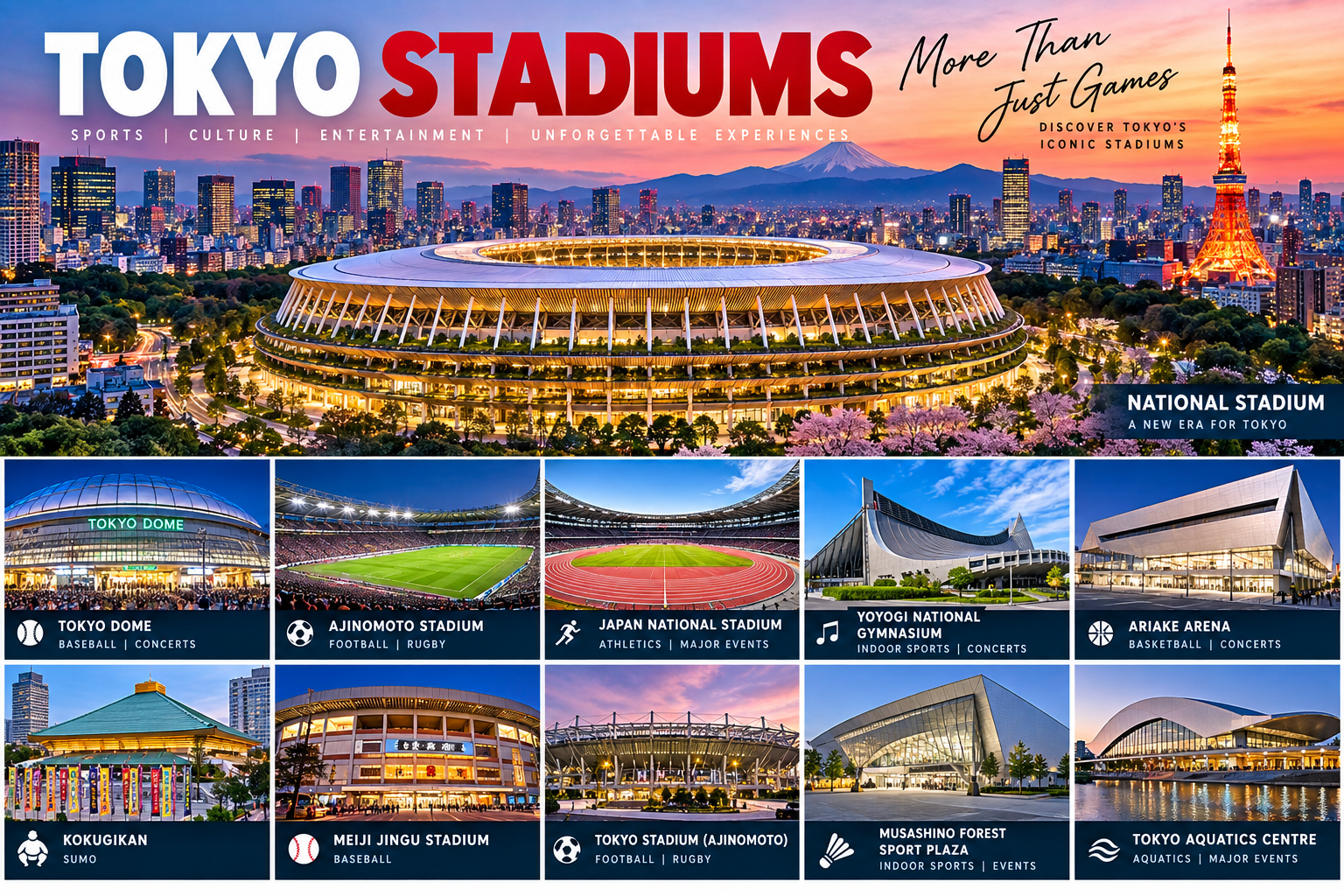
Tokyo stadiums are much more than places to watch football, baseball, rugby, and other sports; they are major landmarks that connect modern entertainment with Japan’s sporting history and culture. From the 67,750-seat Japan National Stadium to the iconic Tokyo Dome and the waterfront Ariake Arena, Tokyo offers an impressive range of venues for sports fans and travelers. Imagine arriving in Tokyo and spending a day surrounded by some of Japan’s most impressive sporting architecture. In the morning, you could explore the area around the Japan National Stadium, later watch baseball beneath the famous roof of Tokyo Dome, and finish the day near Tokyo Bay at a modern arena such as Ariake Arena Tokyo Business
What Makes Tokyo Stadiums Special?
Tokyo’s sporting venues reflect the city’s unusual ability to combine history, technology, architecture, transportation, and entertainment.
A stadium in Tokyo is rarely just a stadium.
It can also be:
- A landmark
- A concert venue
- An Olympic legacy site
- A football destination
- A baseball attraction
- An architectural experience
- A cultural meeting place
- A transportation hub
- A tourist attraction
- A major event destination
The city’s sports infrastructure is also unusually diverse. Tokyo Metropolitan Government information lists major venues covering athletics, football, rugby, basketball, volleyball, gymnastics, swimming, martial arts, tennis, hockey, rowing, canoeing, and other sports.
This means visitors do not have to be professional sports fans to appreciate Tokyo stadiums.
You can visit because you love architecture, Japanese culture, Olympic history, photography, entertainment, or simply want to experience Tokyo away from the usual tourist attractions.
A Brief History of Stadiums in Tokyo
Tokyo’s modern sporting identity developed over many decades.
The 1964 Tokyo Olympics were particularly important because they helped transform Tokyo into a global city and introduced major sporting infrastructure to an international audience.
Venues associated with that era, including Yoyogi National Stadium, remain important today.
Later, Tokyo continued developing large-scale facilities for professional sports and entertainment.
Tokyo Dome opened in 1988 and became one of the city’s most recognizable indoor sporting venues. The venue describes itself as Japan’s first all-weather multipurpose stadium and has hosted baseball, concerts, exhibitions, and other events since opening.
Then came another major transformation.
The Tokyo 2020 Olympic and Paralympic Games generated extensive investment in new and renovated facilities. Although the Games were officially named Tokyo 2020, most competitions were held in 2021 after the event was postponed because of the COVID-19 pandemic.
The result was a new generation of Tokyo sports venues, particularly around Tokyo Bay.
Japan National Stadium: The Heart of Tokyo’s Modern Sports Scene
The Japan National Stadium is arguably the most important modern stadium in Tokyo.
Located in Kasumigaoka-machi in Shinjuku, the stadium was completed on November 30, 2019. It became the main stadium for the Tokyo 2020 Olympic and Paralympic Games and continues to host athletics, football, rugby, cultural events, and other major competitions.
The stadium has approximately 67,750 seats, including around 500 wheelchair spaces. It also features a 400-meter, nine-lane track and a natural grass field.
Why Japan National Stadium Is Important
The stadium is significant for several reasons.
First, it occupies a central position in Japanese sporting history.
Second, its architecture attempts to connect a huge modern stadium with its surrounding environment.
Third, it represents the legacy of the Tokyo 2020 Olympic and Paralympic Games.
The stadium was designed by architect Kengo Kuma and his team. Tokyo’s official tourism information highlights the relationship between nature, creativity, and sport in the stadium’s design.
Architecture and Design
One of the most interesting aspects is the extensive use of wood.
The official facility information states that approximately 2,000 cubic meters of wood were used throughout the stadium, including wood sourced from forests across Japan for the eaves and related areas.
This creates a visual connection between contemporary stadium design and traditional Japanese architectural ideas.
Rather than creating a completely enclosed concrete-and-steel monument, the design incorporates natural materials, greenery, ventilation, and large roof structures.
What Can You See Here?
Depending on the event calendar, visitors may experience:
- Athletics
- Football
- Rugby
- Special sporting events
- Cultural events
- Large-scale ceremonies
- Concerts and entertainment
The venue also has large video systems, digital signage, extensive Wi-Fi infrastructure, accessible facilities, and sophisticated lighting and sound systems.
Location
The stadium is conveniently positioned in central Tokyo.
It is approximately:
- 1 minute from Kokuritsu-kyogijo Station
- 5 minutes from Sendagaya Station
- 5 minutes from Shinanomachi Station
- 9 minutes from Gaiemmae Station
according to Tokyo’s official sports facility information.
For international visitors, this accessibility is one of the biggest advantages of visiting a major Tokyo stadium.
Tokyo Dome: Tokyo’s Legendary Indoor Stadium
If Japan National Stadium represents modern Olympic-era Tokyo, Tokyo Dome represents Tokyo’s long-running entertainment culture.
Tokyo Dome opened in 1988 and quickly became one of Japan’s most recognizable sporting landmarks.
The venue is particularly famous for baseball, but its purpose extends far beyond baseball.
Official Tokyo Dome information states that the facility can accommodate approximately 55,000 people, while baseball capacity is around 43,500.
Why Tokyo Dome Is Different
The most obvious difference is its roof.
Tokyo Dome is an all-weather facility, meaning events can take place regardless of rain or many other weather conditions.
This makes it particularly valuable in a city where seasonal weather can affect outdoor events.
Baseball at Tokyo Dome
Tokyo Dome is strongly associated with professional baseball.
For baseball fans visiting Japan, attending a game can be one of the easiest ways to experience Japanese sporting culture.
The atmosphere is different from many Western baseball experiences.
Japanese baseball combines organized cheering, coordinated fan sections, music, chants, food, merchandise, and a strong sense of community.
Beyond Baseball
Tokyo Dome has hosted:
- Concerts
- Exhibitions
- Large entertainment events
- Sporting events
- Special events
The venue’s multipurpose design is one reason it remains important decades after opening.
Tokyo Dome City
Another major advantage is the surrounding entertainment district.
Tokyo Dome is part of Tokyo Dome City, which provides visitors with attractions, restaurants, entertainment, and leisure activities.
This makes the area particularly convenient for travelers who want to combine sports with sightseeing.
Ajinomoto Stadium: A Major Football and Rugby Venue
Ajinomoto Stadium, also known as Tokyo Stadium, is located in Chofu in western Tokyo.
The stadium opened in 2001 and can accommodate up to 48,013 spectators.
It is strongly associated with football and rugby.
Football at Ajinomoto Stadium
The stadium is home to professional football activity and has been an important venue for Japanese football.
For football travelers, it offers a different experience from the larger central Tokyo venues.
The stadium is more closely connected to local professional sport, creating an opportunity to see how football functions as part of everyday Japanese sporting culture.
Rugby and Other Events
Ajinomoto Stadium is not restricted to football.
It hosts rugby, concerts, flea markets, and other events.
This multipurpose use is common among major Tokyo stadiums.
Stadium Facilities
The venue includes:
- Large video systems
- Sound systems
- Digital signage
- LED floodlights
- Electric scoreboards
- Broadcasting facilities
- Accessible facilities
- Training facilities
- Press rooms
- Guest rooms
- Lounges
Who Should Visit?
Ajinomoto Stadium is particularly suitable for:
- Football fans
- Rugby fans
- Sports photographers
- Travelers staying in western Tokyo
- Visitors attending concerts
- Fans interested in Japanese professional sports
Ariake Arena: Tokyo Bay’s Modern Sports and Entertainment Venue
Ariake Arena is one of the most recognizable modern venues in Tokyo Bay.
The arena was developed as part of the infrastructure surrounding the Tokyo 2020 Games and has become an important sports and entertainment facility.
Tokyo’s official sports information lists Ariake Arena with an approximate capacity of 15,000.
The venue’s own information describes its vision as becoming a new sports and cultural center for Tokyo.
Sports Hosted at Ariake Arena
The facility is suitable for:
- Basketball
- Volleyball
- Handball
- Futsal
- Badminton
- Judo
- Karate
- Table tennis
- Gymnastics
- Tennis-related events
- Entertainment events
Why the Location Matters
Ariake Arena is located in Tokyo Bay, close to Toyosu and Odaiba.
This makes it easy to combine a stadium or arena visit with other waterfront attractions.
The nearest Yurikamome stations include Shin-Toyosu and Ariake-Tennis-no-mori, both approximately eight minutes away on foot according to the venue’s official information.
A Different Kind of Stadium Experience
Ariake Arena illustrates an important trend in modern Tokyo.
The contemporary stadium is increasingly becoming part of a larger urban entertainment ecosystem.
Visitors can combine:
sport + restaurants + shopping + waterfront sightseeing + entertainment
instead of treating a sporting event as a standalone activity.
Yoyogi National Stadium: An Architectural Landmark
Yoyogi National Stadium is one of Tokyo’s most historically significant sports facilities.
Its distinctive architecture is strongly associated with the 1964 Tokyo Olympics.
The facility includes two major gymnasiums.
Tokyo’s current sports facility information lists capacity at approximately:
- First Gymnasium: 12,934
- Second Gymnasium: 4,002
Why Yoyogi Is Special
Yoyogi National Stadium is particularly interesting because architecture is almost as important as sport.
Its suspended-roof design became internationally recognized and remains an important example of postwar Japanese architecture.
The venue has hosted numerous sports and cultural events over the decades.
Sports at Yoyogi
Depending on the facility and event schedule, visitors may encounter:
- Basketball
- Volleyball
- Handball
- Futsal
- Badminton
- Gymnastics
- Judo
- Karate
- Fencing
- Wrestling
- Table tennis
- Taekwondo
Tokyo’s sports authority identifies the gymnasiums as multipurpose facilities covering many of these disciplines.
Why Travelers Should Consider It
Yoyogi is especially attractive to visitors interested in:
- Japanese architecture
- Olympic history
- Sports history
- Harajuku
- Shibuya
- Meiji Jingu
- Urban photography
Its location also makes it easy to combine sports sightseeing with one of Tokyo’s most popular visitor areas.
Tokyo Metropolitan Gymnasium
Tokyo Metropolitan Gymnasium is another important central Tokyo sports facility.
Located near Sendagaya, it has a maximum capacity of approximately 9,308 people.
It is designed primarily as a multipurpose sports complex rather than a giant football stadium.
Sports Available
The facility supports sports including:
- Basketball
- Volleyball
- Table tennis
- Badminton
- Fencing
- Judo
- Karate
- Wrestling
- Gymnastics
- Handball
- Tennis
- Taekwondo
This makes it particularly interesting for travelers who want to explore sports beyond football and baseball.
Why It Matters
Tokyo’s sports identity is often reduced to baseball and football.
That misses a major part of Japanese sporting culture.
Martial arts, gymnastics, volleyball, basketball, table tennis, badminton, and other indoor sports are deeply embedded in Japan’s competitive sporting environment.
Tokyo Metropolitan Gymnasium provides a window into this side of the city.
Tokyo Budokan
Tokyo Budokan is located in Adachi and specializes in sports strongly associated with Japanese martial arts and indoor competition.
Tokyo’s sports facility directory lists a maximum capacity of approximately 3,728 people.
Sports at Tokyo Budokan
The venue is associated with:
- Judo
- Karate
- Badminton
- Table tennis
- Taekwondo
- Volleyball
Why It Is Interesting for International Visitors
For someone visiting Japan for the first time, martial arts can be one of the most fascinating elements of Japanese sporting culture.
A venue such as Tokyo Budokan provides a connection between modern competitive sport and traditional Japanese martial arts.
It is particularly relevant to travelers interested in:
- Japanese culture
- Martial arts
- Judo
- Karate
- Sports history
- Local competitions
Komazawa Olympic Park General Sports Ground
Komazawa Olympic Park is another major part of Tokyo’s sporting landscape.
The facility has a maximum capacity of approximately 20,010 according to Tokyo’s sports facility information.
The sports complex supports a broad selection of activities.
These include:
- Baseball
- Softball
- Basketball
- Football
- Rugby
- Volleyball
- Handball
- Wrestling
- Fencing
Olympic Legacy
The park has historical connections with the 1964 Tokyo Olympics.
That makes Komazawa more than just another sports ground.
It is part of Tokyo’s broader Olympic legacy.
A More Relaxed Experience
Compared with giant stadiums, Olympic park environments can provide a more relaxed experience.
Visitors can combine sport with walking, outdoor recreation, photography, and neighborhood exploration.
This is particularly useful for travelers who are interested in seeing how sporting infrastructure integrates into daily urban life.
Musashino Forest Sport Plaza
Musashino Forest Sport Plaza is another important venue created in connection with Tokyo’s modern sporting infrastructure.
Tokyo lists it as a western Tokyo facility with a capacity of more than 10,000 people.
It supports sports including:
- Badminton
- Basketball
- Fencing
- Volleyball
The venue was also part of the Tokyo 2020 Olympic and Paralympic legacy network. Tokyo Metropolitan Government identifies Musashino Forest Sport Plaza among the competition venues associated with the Games.
Why It Is Worth Knowing
The venue demonstrates how Tokyo developed a network of specialized facilities rather than relying on one giant stadium.
This approach allows different sports to operate in spaces designed around their particular requirements.
AJINOMOTO FIELD NISHIGAOKA
AJINOMOTO FIELD NISHIGAOKA is a smaller football-oriented stadium in Tokyo.
It has a capacity of approximately 7,258 spectators and has been used for various football competitions, including university and national-level tournaments.
Why Smaller Stadiums Matter
When people search for Tokyo stadiums, they often focus only on the biggest venues.
But smaller facilities can provide a more intimate sporting atmosphere.
A 7,000-seat stadium can make a match feel very different from a 60,000-plus-seat national stadium.
For visitors interested in Japanese football culture, university competitions, local tournaments, or smaller sporting events, venues such as Nishigaoka can be especially interesting.
10 Major Tokyo Stadiums and Sports Venues Compared
The word “stadium” can be interpreted broadly when researching Tokyo sports venues. Some facilities are large outdoor stadiums, while others are indoor arenas or specialized sporting complexes.
| Venue | Approx. Capacity | Main Sports / Events | Best Known For | Location Area |
|---|---|---|---|---|
| Japan National Stadium | 67,750 | Athletics, football, rugby | Olympic legacy and major events | Shinjuku |
| Tokyo Dome | 55,000 / about 43,500 baseball | Baseball, concerts, exhibitions | Professional baseball and entertainment | Bunkyo |
| Ajinomoto Stadium | 48,013 | Football, rugby, concerts | Professional football | Chofu |
| Ariake Arena | Approx. 15,000 | Basketball, volleyball, indoor sports | Tokyo Bay modern arena | Koto |
| Yoyogi National Stadium | 12,934 / 4,002 | Basketball, volleyball, indoor sports | 1964 Olympic architecture | Shibuya |
| Tokyo Metropolitan Gymnasium | 9,308 | Indoor sports | Multi-sport competitions | Shibuya |
| Musashino Forest Sport Plaza | 10,000+ | Badminton, basketball, fencing, volleyball | Tokyo 2020 legacy | Chofu area |
| Komazawa Olympic Park | 20,010 | Football, baseball, rugby, basketball | Olympic legacy park | Setagaya |
| Tokyo Budokan | 3,728 | Judo, karate, volleyball, badminton | Martial arts | Adachi |
| AJINOMOTO FIELD NISHIGAOKA | 7,258 | Football | Smaller football competitions | Kita |
Capacity figures and sports classifications are based on current official Tokyo facility information and individual venue sources where available.
How to Choose the Right Tokyo Stadium
There is no single type of stadium experience.
The best venue depends on what you want to experience.
For Football Fans
Consider:
- Japan National Stadium
- Ajinomoto Stadium
- AJINOMOTO FIELD NISHIGAOKA
For Baseball Fans
Tokyo Dome should be near the top of your research list because of its longstanding association with professional baseball.
For Rugby Fans
Japan National Stadium and Ajinomoto Stadium are important venues to monitor for rugby events.
For Basketball and Volleyball Fans
Consider:
- Ariake Arena
- Yoyogi National Stadium
- Tokyo Metropolitan Gymnasium
- Musashino Forest Sport Plaza
For Martial Arts Fans
Tokyo Budokan is particularly relevant for judo and karate.
For Architecture Fans
Consider:
- Japan National Stadium
- Yoyogi National Stadium
- Tokyo Dome
For Olympic History
Consider:
- Japan National Stadium
- Yoyogi National Stadium
- Komazawa Olympic Park
- Musashino Forest Sport Plaza
- Ariake Arena
Tokyo Stadiums for Tourists: What You Should Know
Visiting a stadium is different from attending a match.
A tourist may want to see the building, take photographs, explore the surrounding neighborhood, or experience an event.
But access varies.
Some venues may have public events, guided experiences, stadium tours, or accessible areas at specific times.
Others may primarily be accessible when an event is taking place.
Check the Event Schedule
The first thing to do is determine whether an event is happening during your trip.
Possible event types include:
- Football matches
- Baseball games
- Rugby matches
- Basketball games
- Volleyball competitions
- Athletics
- Martial arts
- Concerts
- Exhibitions
- Festivals
Buy Tickets Carefully
Ticket systems can vary by venue and event.
Some events sell tickets weeks or months in advance.
Others may have different release dates.
International visitors should check:
- Ticket availability
- Entry requirements
- Venue rules
- Seating sections
- Event start time
- Transportation
- Bag restrictions
- Photography policies
The Best Time to Visit Tokyo Stadiums
Tokyo experiences four distinct seasons, and the best timing depends heavily on the activity.
Spring
Spring is popular for tourism because of pleasant temperatures and seasonal scenery.
A stadium visit can easily be combined with sightseeing around central Tokyo.
Summer
Summer can be hot and humid.
Indoor venues such as Tokyo Dome and Ariake Arena can therefore be particularly attractive.
For outdoor stadiums, evening events may be more comfortable than afternoon events.
Autumn
Autumn is often an excellent period for outdoor sports and city exploration.
The combination of comfortable weather and major sporting events can make this season appealing.
Winter
Winter can be cold but generally provides clearer conditions for outdoor sightseeing.
Indoor arenas become particularly useful for sports fans.
How to Get to Tokyo Stadiums
One of Tokyo’s biggest advantages is public transportation.
Many major stadiums and arenas are connected to:
- JR lines
- Tokyo Metro
- Toei Subway
- Private railways
- Yurikamome
- Local buses
Japan National Stadium, for example, is within a few minutes’ walk of multiple railway and subway stations.
Ariake Arena is similarly connected to the Yurikamome and Rinkai Line network.
Avoid Driving When Possible
For tourists, public transportation is usually easier than driving to a major sporting event.
Large events can produce:
- Heavy traffic
- Limited parking
- Crowded roads
- Temporary restrictions
- Long queues
Tokyo’s rail network can also make it easier to move from a stadium to another attraction.
How to Plan a Tokyo Sports Day
A well-planned sports day can be one of the most enjoyable ways to explore Tokyo.
Morning
Start around a stadium located near other attractions.
For example, a visit around Japan National Stadium can be combined with areas such as Sendagaya, Shinanomachi, Harajuku, or Meiji Jingu.
Afternoon
Move toward another attraction or entertainment district.
If you are visiting Tokyo Dome, Tokyo Dome City provides additional activities around the venue.
Evening
Attend a sporting event.
Evening matches and indoor events can be particularly comfortable depending on the season.
After the Event
Use Tokyo’s rail network to return to your hotel or explore nearby restaurants and entertainment districts.
Tokyo Stadiums and Japanese Sports Culture
A stadium visit can reveal something that ordinary sightseeing sometimes misses.
Japanese sports culture often emphasizes:
- Organized cheering
- Respect for opponents
- Team identity
- Community participation
- Rituals
- Discipline
- Merchandise
- Food
- Family participation
Baseball is a particularly strong example.
At a Japanese baseball game, the crowd can participate in coordinated cheering that creates a rhythm throughout the game.
Football and rugby have their own traditions.
Martial arts provide another perspective, where etiquette and discipline are central to the sporting experience.
What to Eat at Tokyo Stadiums
Food is an important part of Japanese sporting events.
Depending on the venue and event, visitors may find:
- Bento boxes
- Rice dishes
- Noodles
- Fried foods
- Snacks
- Desserts
- Soft drinks
- Regional specialties
Tokyo Dome, for example, operates within a large entertainment complex, providing numerous food options beyond the stadium itself.
Try Local Food Before or After the Match
One practical strategy is to avoid relying entirely on stadium food.
Tokyo neighborhoods around major venues can provide excellent dining options.
For international travelers, this creates a chance to combine a sporting event with a local food experience.
Accessibility at Tokyo Stadiums
Accessibility is an increasingly important consideration for modern sports venues.
Japan National Stadium includes approximately 500 wheelchair seats and numerous accessible toilets. The facility also includes elevators, escalators, accessible facilities, and other infrastructure designed to support visitors with different mobility requirements.
Ajinomoto Stadium also provides barrier-free support and accessible seating.
However, accessibility can vary according to:
- Seating section
- Event configuration
- Transportation route
- Entrance
- Companion seating
- Specific venue policies
Visitors who require particular accessibility arrangements should verify the latest event-specific information before traveling.
Tokyo Stadiums for Families
Families can enjoy Tokyo stadiums, but choosing the right event is important.
Family-Friendly Options
Baseball games can be a particularly accessible introduction to Japanese sports culture.
Indoor arenas may also be comfortable for families because they offer controlled environments.
What Parents Should Consider
Before attending, check:
- Event duration
- Seating location
- Restroom availability
- Food options
- Noise levels
- Transportation after the event
- Child ticket rules
- Stroller policies
Large sporting events can become crowded, particularly around entrances and train stations.
Tokyo Stadiums for International Visitors
International travelers sometimes worry that they will not understand a Japanese sporting event.
You do not need to understand every chant or announcement to enjoy the atmosphere.
Many stadium experiences are visual and communal.
You can watch:
- Crowd reactions
- Player introductions
- Team ceremonies
- Cheer squads
- Half-time entertainment
- Food traditions
- Merchandise culture
Learning a few basic Japanese sports-related words can also make the experience more enjoyable.
Common Mistakes When Visiting Tokyo Stadiums
Mistake 1: Assuming Every Stadium Has Daily Public Access
Many sports venues do not function like museums.
A building may be visible from outside but not open for general exploration.
Solution: Check event schedules and visitor policies before traveling.
Mistake 2: Choosing a Stadium Only by Capacity
A huge stadium is not automatically the most interesting experience.
A smaller venue can provide a closer connection to the sport.
Solution: Choose according to the type of event and atmosphere you want.
Mistake 3: Ignoring Transportation
Large events can create significant crowd movement.
Solution: Research the nearest station before the event and consider your return route.
Mistake 4: Arriving Too Late
Security checks, ticket scanning, merchandise queues, and food lines can consume time.
Solution: Arrive early, especially for major international events.
Mistake 5: Assuming All Events Have the Same Rules
Bag restrictions, photography rules, food policies, and ticket requirements can differ.
Solution: Read the specific event information carefully.
Mistake 6: Forgetting That Some Stadiums Are Outside Central Tokyo
Ajinomoto Stadium and Musashino Forest Sport Plaza are in western Tokyo areas.
Solution: Allow additional travel time.
Pros and Cons of Visiting Tokyo Stadiums
Pros
- Excellent public transportation
- World-class sporting infrastructure
- Diverse sports
- Strong Olympic history
- Modern architecture
- Rich Japanese sports culture
- Major entertainment events
- Family-friendly options
- Indoor and outdoor venues
- Excellent food and surrounding attractions
Cons
- Major events can sell out
- Large crowds can make transportation busy
- Event information may primarily be available in Japanese
- Stadium access varies
- Some venues are far from central tourist districts
- Weather can affect outdoor experiences
- Event schedules change regularly
Tokyo Stadiums vs Other Tokyo Attractions
A stadium may not be the first attraction a tourist thinks about.
Tokyo has famous destinations such as:
- Tokyo Tower
- Shibuya Crossing
- Senso-ji
- Meiji Jingu
- Akihabara
- Harajuku
- Odaiba
- Tokyo Skytree
But stadiums provide a different type of experience.
Instead of observing Tokyo as a tourist, a sporting event allows you to participate in the city’s entertainment culture.
You sit among local supporters.
You hear the crowd.
You watch Japanese sporting traditions.
You eat stadium food.
You experience the excitement of a live event.
That is something a photograph of Tokyo Tower cannot reproduce.
A Case Study: Tokyo’s Olympic Legacy
Tokyo’s stadium network provides an interesting case study in how cities attempt to preserve the legacy of mega-events.
The Tokyo 2020 Games required an extensive collection of venues.
Several facilities continue to function as sporting and cultural destinations.
Tokyo Metropolitan Government identifies venues including Tokyo Metropolitan Gymnasium, Musashino Forest Sport Plaza, Tokyo Stadium, Ariake Arena, Ariake Tennis Park, Tokyo Aquatics Centre, Sea Forest Waterway, Yumenoshima Park Archery Field, and other facilities as part of the Olympic and Paralympic legacy.
This demonstrates that Olympic infrastructure does not necessarily disappear after the Games.
Instead, it can become part of a city’s long-term sports ecosystem.
Why Tokyo’s Stadium Network Is Different
One of the most interesting characteristics of Tokyo is that its sports infrastructure is distributed across the metropolitan area.
Instead of relying on one mega-stadium for everything, Tokyo has:
- National stadiums
- Baseball stadiums
- Football grounds
- Rugby facilities
- Indoor arenas
- Olympic parks
- Aquatic centers
- Martial arts facilities
- Tennis venues
- Waterfront sporting complexes
This specialization creates a broader sporting ecosystem.
For visitors, it also means that Tokyo sports tourism can be customized around a particular interest.
Future Trends for Tokyo Stadiums
The future of Tokyo stadiums is likely to be shaped by several major trends.
More Multipurpose Venues
Modern sports facilities increasingly need to generate activity beyond match days.
That means venues may host:
- Concerts
- Conferences
- Exhibitions
- Festivals
- Community events
- Corporate events
Tokyo Dome already demonstrates the long-term value of this approach.
Smarter Stadium Technology
Future venues will increasingly use:
- Mobile ticketing
- Digital signage
- Cashless payments
- High-speed connectivity
- Data-driven crowd management
- Digital fan experiences
Japan National Stadium already incorporates extensive digital infrastructure, including digital signage and large video systems.
Greater Accessibility
Accessibility will continue becoming a central design requirement.
Modern stadiums are increasingly expected to accommodate visitors with different physical and sensory needs.
Sustainability
Large sports facilities consume substantial amounts of energy and resources.
Future stadium development is therefore likely to focus increasingly on:
- Energy efficiency
- Renewable energy
- Water management
- Sustainable materials
- Waste reduction
- Public transportation
- Green spaces
Japan National Stadium’s use of wood and its relationship with surrounding greenery illustrates one approach to integrating environmental ideas into stadium architecture.
Sports Tourism Growth
As Tokyo continues attracting international visitors, sporting events can become an increasingly important component of tourism.
A visitor who comes to Tokyo for a football match may also spend money on:
- Hotels
- Restaurants
- Transportation
- Shopping
- Attractions
- Merchandise
This creates economic connections between stadiums and the wider tourism industry.
Demographic and Problem-Solving Modifiers for Tokyo Stadium Content
For SEO publishers, Tokyo stadium content becomes more useful when paired with specific audience modifiers.
Examples include:
Tokyo Stadiums for Families
Focus on:
- Child-friendly venues
- Seating
- Toilets
- Food
- Transportation
- Event duration
Tokyo Stadiums for Football Fans
Focus on:
- Football clubs
- Match schedules
- Stadium atmosphere
- Seating
- Transportation
Tokyo Stadiums for Baseball Fans
Focus on:
- Tokyo Dome
- Baseball culture
- Ticket information
- Food
- Fan traditions
Tokyo Stadiums for Tourists
Focus on:
- Location
- Nearby attractions
- Public transportation
- Photography
- Event schedules
Tokyo Stadiums for Architecture Lovers
Focus on:
- Kengo Kuma
- Yoyogi National Stadium
- Tokyo Dome
- Olympic architecture
- Stadium design
Tokyo Stadiums for Families with Children
Focus on:
- Accessibility
- Seating
- Restrooms
- Food
- Crowds
- Transportation
Tokyo Stadiums for International Visitors
Focus on:
- Ticket purchasing
- English information
- Transportation
- Event etiquette
- Stadium rules
These modifiers help create content that answers specific search intent rather than producing another generic list of stadiums.
Practical Tips for a Better Tokyo Stadium Experience
1. Research the Venue Before Booking
Do not simply search for “Tokyo stadium.”
Identify the exact sport and event.
2. Check the Official Event Information
Schedules, ticket rules, entry policies, and venue arrangements can change.
3. Plan Your Transportation Tokyo stadiums
Identify both the nearest station and an alternative route.
4. Arrive Early Tokyo stadiums
Give yourself time for:
- Transportation
- Walking
- Security
- Ticket checks
- Food
- Merchandise
5. Learn Basic Stadium Etiquette Tokyo stadiums
Follow instructions from staff and respect local supporters.
6. Carry Only What You Need Tokyo stadiums
Large events can have restrictions on bags and other belongings.
7. Keep Your Ticket Accessible Tokyo stadiums
Digital or physical ticket requirements depend on the event.
8. Check Weather Conditions Tokyo stadiums
For outdoor stadiums, weather can significantly affect comfort.
9. Explore the Neighborhood Tokyo stadiums
Don’t immediately leave after the event.
The surrounding area can be part of the experience.
10. Photograph Responsibly Tokyo stadiums
Follow the event’s photography rules and avoid disturbing other spectators.
Internal Linking Opportunities for a Tokyo Tourism Website
For a Tokyo tourism website, this article can become a central pillar page.
Suggested related pages include:
Tokyo Sports and Events Tokyo stadiums
Create supporting content about Tokyo sports culture, major sporting events, and seasonal competitions.
Tokyo Football Stadiums
Build a dedicated guide covering football venues, clubs, match-day experiences, and transportation.
Tokyo Baseball Guide Tokyo stadiums
Create a baseball-focused article explaining Japanese baseball culture, stadium food, ticketing, and fan traditions.
Tokyo Olympic Venues Tokyo stadiums
A dedicated article can explore the venues connected with the Tokyo 1964 and Tokyo 2020 Olympic Games.
Tokyo Architecture Tokyo stadiums
Connect stadium architecture with broader articles about modern Japanese architecture and famous Tokyo buildings.
Tokyo Bay Attractions Tokyo stadiums
Ariake Arena can be connected to content about Toyosu, Odaiba, waterfront attractions, and Tokyo Bay.
Tokyo Family Attractions Tokyo stadiums
Sports venues can be incorporated into broader family travel planning.
Tokyo Public Transportation Tokyo stadiums
A detailed transport guide can help visitors understand how to reach major stadiums by train and subway.
Tokyo Travel Itineraries Tokyo stadiums
A Tokyo sports itinerary could combine stadiums with nearby tourist attractions.
How to Build a Tokyo Stadium Photography Itinerary
Photography enthusiasts can approach Tokyo stadiums differently.
Japan National Stadium
Focus on:
- Architectural lines
- Wooden elements
- Large-scale structure
- Surrounding greenery
- Exterior details
Tokyo Dome Tokyo stadiums
Focus on:
- Roof architecture
- Urban surroundings
- Night lighting
- Event atmosphere
Yoyogi National Stadium
Focus on:
- Suspended roof
- Structural geometry
- Historic architecture
- Exterior curves
Ariake Arena Tokyo stadiums
Focus on:
- Contemporary architecture
- Waterfront surroundings
- Modern urban landscape
Ajinomoto Stadium
Focus on:
- Large-scale seating
- Football atmosphere
- Match-day crowds
- Stadium exterior
Always respect venue photography policies when attending an event.
Tokyo Stadiums for Different Budgets
You do not need an unlimited travel budget to experience Tokyo sports.
Budget Traveler Tokyo stadiums
Consider:
- Smaller sporting events
- Local competitions
- Public sports grounds
- Free outdoor areas
- Stadium exteriors
Mid-Range Traveler Tokyo stadiums
Consider:
- Standard match tickets
- Local professional sports
- Indoor sporting events
- Stadium food experiences
Premium Traveler Tokyo stadiums
Depending on event availability, consider:
- Premium seating
- Hospitality experiences
- Major international events
- High-profile concerts
The most expensive ticket does not necessarily create the most memorable experience.
The atmosphere, event, seat location, and your personal interest in the sport can matter more.
Tokyo Stadiums and Local Neighborhoods
One of the best ways to experience Tokyo’s sporting venues is to combine them with neighborhood exploration.
Shinjuku and Sendagaya Tokyo stadiums
Japan National Stadium provides an opportunity to explore areas around Sendagaya and the broader Shinjuku district.
Bunkyo Tokyo stadiums
Tokyo Dome places visitors near a different side of central Tokyo, with entertainment and leisure facilities surrounding the stadium.
Shibuya and Yoyogi Tokyo stadiums
Yoyogi National Stadium is close to some of Tokyo’s most recognizable urban districts.
Chofu Tokyo stadiums
Ajinomoto Stadium and Musashino Forest Sport Plaza make Chofu relevant to sports tourism.
Tokyo Bay Tokyo stadiums
Ariake Arena connects sports with the rapidly developing waterfront districts of Tokyo.
This neighborhood approach is useful because it turns a stadium visit into a full-day travel experience.
Are Tokyo Stadiums Worth Visiting Without Attending a Match?
Yes, but expectations should be realistic.
Some stadiums are interesting primarily because of their architecture or history.
Others are much more rewarding when an event is taking place.
If you are passionate about sports, attending a live event will usually provide a much deeper experience.
If you are interested in architecture, photography, or Olympic history, simply visiting the surrounding area can still be worthwhile.
The key is choosing a venue that matches your reason for visiting
Tokyo Stadiums vs Indoor Arenas
The terms “stadium” and “arena” are sometimes used interchangeably by tourists, but there is an important distinction.
Stadiums Tokyo stadiums
Usually associated with:
- Football
- Rugby
- Athletics
- Baseball
- Outdoor events
Arenas Tokyo stadiums
Usually associated with:
- Basketball
- Volleyball
- Futsal
- Martial arts
- Indoor athletics
- Concerts
- Entertainment
Tokyo has both.
This diversity makes the city especially attractive for sports tourism
The Role of Naming Rights Tokyo stadiums
One unusual aspect of Japanese sports facilities is the prominence of naming rights.
Ajinomoto Stadium is a well-known example.
The stadium was the first public facility in Japan to introduce naming rights, according to its official information.
This is useful for travelers and researchers because a venue may have an official name, a traditional name, and a sponsor-associated name.
SEO Implication Tokyo stadiums
Travel writers should be careful to include both names where appropriate.
For example:
Ajinomoto Stadium (Tokyo Stadium)
This makes the content more useful for people searching using different terminology.
The Importance of Checking Current Venue Names Tokyo stadiums
Stadium naming and operating arrangements can change.
For example, Japan National Stadium’s official tourism information currently identifies the venue as MUFG STADIUM (Japan National Stadium), while government sports information continues to describe the facility as Japan National Stadium.
The operating structure also changed in April 2025, when the operating business was transferred to Japan National Stadium Entertainment.
For travel publishers, this illustrates an important rule:
Always verify current names, operators, capacities, and event information before publishing or updating a stadium guide.
What Tokyo Stadiums Tell Us About the City
Tokyo’s stadiums reveal a lot about the city.
They show how Tokyo:
- Preserves history
- Adopts technology
- Integrates public transportation
- Supports professional sport
- Uses architecture as cultural expression
- Hosts international events
- Develops waterfront districts
- Reuses Olympic infrastructure
- Combines sport and entertainment
Perhaps the most interesting lesson is that Tokyo does not treat sport as an isolated industry.
Sport is connected to architecture, transportation, tourism, entertainment, food, retail, and urban planning.
That is why stadium tourism can become an important part of understanding Tokyo.
FAQs
What is the biggest stadium in Tokyo?
Japan National Stadium has a listed capacity of approximately 67,750, making it one of the largest major sporting venues in Tokyo.
What is Tokyo’s most famous baseball stadium?
Tokyo Dome is one of Tokyo’s best-known baseball venues and has been operating since 1988. Its overall capacity is approximately 55,000, while baseball capacity is around 43,500.
Which Tokyo stadium is associated with football?
Ajinomoto Stadium, also known as Tokyo Stadium, is a major football venue with a capacity of 48,013.
Which Tokyo stadium is best known for Olympic history?
Several Tokyo venues have Olympic connections. Japan National Stadium was the main stadium for the Tokyo 2020 Olympic and Paralympic Games, while Yoyogi National Stadium and Komazawa Olympic Park have strong connections with the 1964 Tokyo Olympics.
Is Tokyo Dome only for baseball?
No. Tokyo Dome is a multipurpose venue that hosts baseball as well as concerts, exhibitions, and other events.
Where is Ariake Arena?
Ariake Arena is located in Ariake in Tokyo’s Koto Ward, in the Tokyo Bay area near Toyosu and Odaiba.
How many people can Ariake Arena hold?
Tokyo’s official sports facility information lists the arena’s maximum capacity at approximately 15,000.
Which Tokyo stadium is best for rugby?
Japan National Stadium and Ajinomoto Stadium are among the major Tokyo venues used for rugby. Event schedules determine which matches are held at each venue.
Can tourists visit Tokyo stadiums?
Tourist access depends on the venue and event. Some stadiums may have tours or public events, while others are primarily accessible during scheduled competitions or entertainment events.
Are Tokyo stadiums easy to reach?
Many major venues are well connected to Tokyo’s extensive railway and subway network. Japan National Stadium and Ariake Arena, for example, have nearby public transportation stations.
What is the best Tokyo stadium for architecture?
This depends on personal taste. Japan National Stadium and Yoyogi National Stadium are particularly notable examples of Japanese stadium architecture, while Tokyo Dome is distinctive because of its large membrane roof and indoor multipurpose design.
Are Tokyo stadiums suitable for families?
Many are, particularly when attending family-friendly sporting events. However, families should check individual event policies, seating, accessibility, food options, and transportation before attending.
Can I visit a Tokyo stadium without watching a game?
Sometimes. External areas and surrounding neighborhoods may be accessible even when an event is not taking place, but access inside the venue varies.
Which Tokyo stadium is best for international tourists?
The answer depends on the sport and interests of the traveler. Tokyo Dome, Japan National Stadium, Ajinomoto Stadium, Ariake Arena, and Yoyogi National Stadium all provide different types of experiences.
Conclusion
Tokyo stadiums provide a unique way to understand Japan’s capital. They combine professional sport, Olympic history, architecture, technology, entertainment, and local culture in ways that are difficult to experience through conventional sightseeing alone. For first-time visitors, the Japan National Stadium offers an impressive introduction to modern Tokyo’s sporting identity, while Tokyo Dome provides a completely different experience centered around baseball and entertainment. Ajinomoto Stadium is particularly relevant to football and rugby fans, while Ariake Arena demonstrates the city’s modern waterfront development. Yoyogi National Stadium and Komazawa Olympic Park provide valuable connections to Tokyo’s Olympic past. The most important takeaway is that there is no single “Tokyo stadium experience.” Each venue tells a different story.