Tokyo Technology: AI, Robotics, Smart Cities & Future Tech
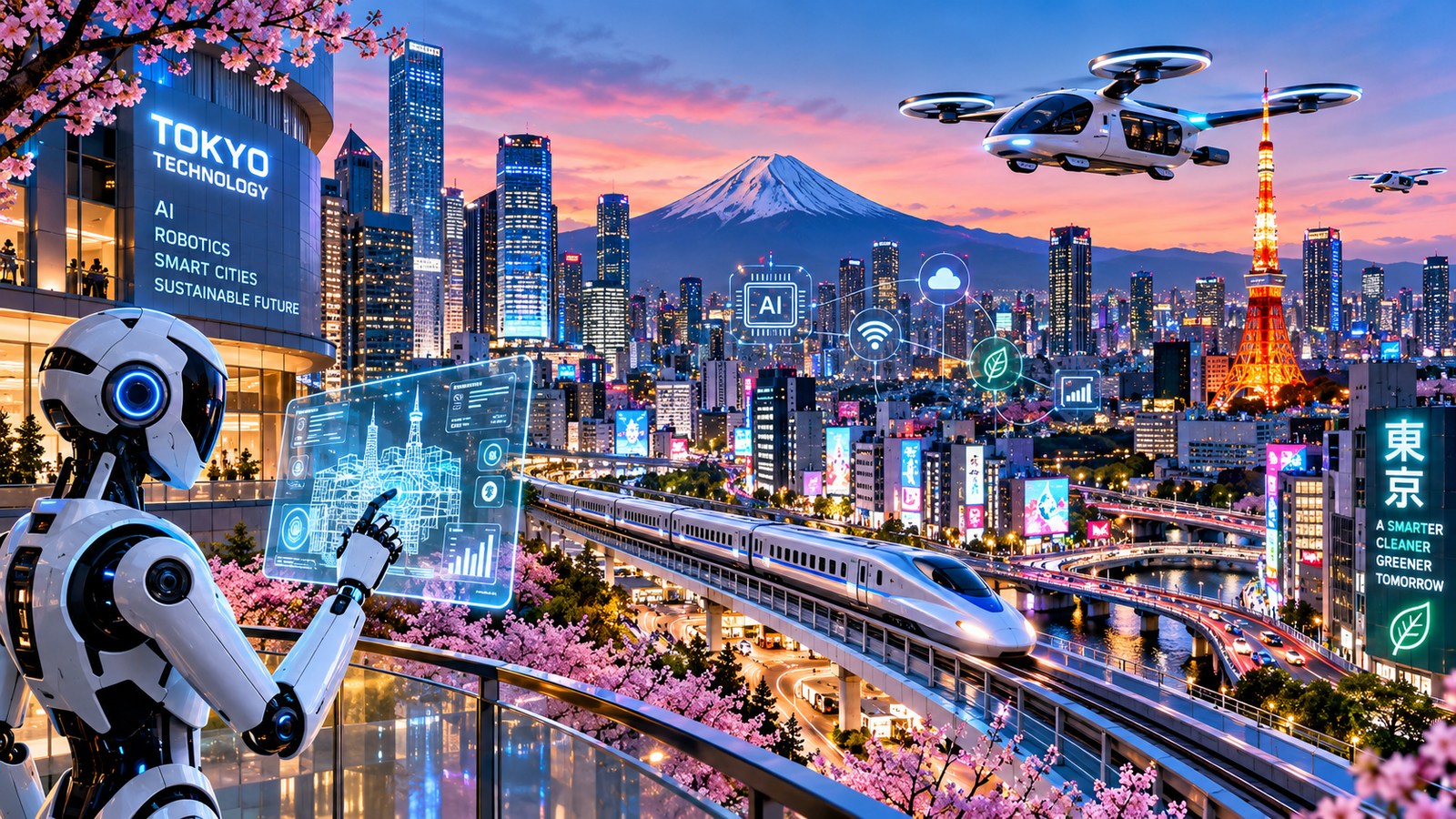
Tokyo technology is a powerful combination of artificial intelligence, robotics, advanced manufacturing, digital infrastructure, mobility, electronics, and smart-city systems that increasingly connect technology with everyday life. From autonomous machines and AI research to high-speed communications, cashless services, gaming, transportation, and urban innovation, Tokyo offers a unique view of how a technology-driven megacity can evolve Tokyo Alternative
What Makes Tokyo Technology Different?
Tokyo is one of the world’s most important technology ecosystems because several industries overlap in a relatively concentrated metropolitan environment.
The city has long been associated with electronics, automobiles, cameras, gaming, telecommunications, precision engineering, and manufacturing. Today, that foundation is increasingly being combined with artificial intelligence, cloud computing, robotics, data platforms, automation, and advanced mobility.
This creates a technology environment with two distinct layers.
The first is the visible layer.
This includes:
- Digital signage
- Smart payment systems
- Robotics
- High-tech trains
- Gaming
- Consumer electronics
- Automated retail
- Smartphone applications
- Connected transportation
- Interactive entertainment
The second is the invisible layer.
This includes:
- Data infrastructure
- Telecommunications
- Cloud platforms
- AI models
- Sensors
- Semiconductor technologies
- Cybersecurity
- Industrial automation
- Logistics software
- Digital identity and payment systems
The second layer often has a greater long-term impact than the first because it supports thousands of other services.
Tokyo’s Technology Story Did Not Begin With Artificial Intelligence
It is tempting to describe Tokyo’s technology industry entirely through modern concepts such as generative AI and robotics.
That would miss much of the city’s history.
Tokyo’s technology ecosystem developed over decades through electronics, communications, engineering, manufacturing, automobiles, cameras, computing, gaming, and consumer products.
Large Japanese technology companies helped create expertise in areas such as sensors, imaging, displays, telecommunications, industrial machinery, semiconductors, software, and precision manufacturing.
The result is a technology ecosystem in which software and physical engineering often meet.
This is particularly important for robotics.
A company developing a robot does not only need artificial intelligence. It also needs motors, sensors, cameras, batteries, mechanical engineering, communications, control systems, manufacturing expertise, safety systems, and software.
Tokyo and the wider Japanese industrial ecosystem have deep experience across many of these areas.
The Japan Patent Office’s published analysis of AI-related inventions illustrates the depth of this industrial base. Companies including Fujitsu, NTT, Hitachi, Canon, NEC, Toyota, Mitsubishi Electric, Toshiba, FANUC, OMRON, Sony and others have been significant applicants for AI-related inventions in Japan.
Artificial Intelligence in Tokyo
Artificial intelligence is becoming one of the most important areas of Tokyo technology.
AI is no longer limited to research laboratories or experimental software. It is increasingly connected to manufacturing, transportation, finance, retail, healthcare, entertainment, customer service, security, and robotics.
Tokyo’s AI ecosystem includes established corporations, universities, startups, research institutions, and government-supported programs.
One particularly important development is the growing relationship between AI and physical machines.
Traditional software AI operates primarily inside computers.
Physical AI attempts to connect intelligence with the real world.
That can mean:
- Robots understanding their surroundings
- Machines interpreting camera feeds
- Autonomous vehicles making decisions
- Industrial equipment adapting to changing conditions
- Robots responding to natural-language instructions
- Automated systems interacting safely with humans
This is an important direction for Tokyo because Japan has a mature manufacturing and robotics industry.
Physical AI and the Next Generation of Robotics
Physical AI is becoming a major theme in Japanese technology development.
In 2026, companies including Sony, SoftBank, NEC and Honda became core participants in Noetra’s full-scale research and development initiative for a Japan-developed multimodal foundation model intended to support AI-enabled robots and physical AI. The initiative also involves a much wider group of companies and research organizations.
This development illustrates an important shift.
AI is moving from:
text → images → software actions
toward:
perception → reasoning → physical action
A robot may need to understand a spoken instruction, identify objects with cameras, plan a route, manipulate an object, and respond if something changes.
That is considerably more complicated than generating text.
Tokyo’s technological importance therefore extends beyond consumer AI applications. Its industrial ecosystem gives AI researchers access to physical environments where intelligent machines can eventually be deployed.
Robotics in Tokyo
Robotics has a particularly strong connection with Japan.
Tokyo’s robotics ecosystem includes industrial robots, logistics robots, mobility systems, healthcare applications, consumer robotics, research platforms, and autonomous machines.
One reason robotics matters so much is the practical challenge of labour shortages.
In 2025, Japan’s Ministry of Economy, Trade and Industry highlighted Telexistence, a company developing AI-powered robots for tasks such as retail stocking and logistics, when it received the Prime Minister’s Award in the Nippon Startup Awards.
The significance is broader than one company.
Robotics can potentially help organizations automate repetitive tasks while allowing human workers to concentrate on activities requiring judgement, communication, creativity, or physical flexibility.
Industrial Robotics
Industrial robotics is one of Japan’s established strengths.
Factories can use robotic systems for:
- Welding
- Assembly
- Painting
- Inspection
- Packaging
- Material handling
- Precision manufacturing
- Quality control
Companies such as FANUC, Yaskawa Electric, Mitsubishi Electric and Kawasaki Heavy Industries have contributed to Japan’s industrial robotics ecosystem.
Tokyo’s importance comes partly from the concentration of technology companies, engineering expertise, research organizations, customers, and investors surrounding the wider metropolitan region.
Logistics Robotics
Logistics is another important area.
Tokyo is a huge metropolitan market with enormous demand for moving products efficiently.
Robots can potentially assist with:
- Warehouse transportation
- Sorting
- Picking
- Shelf replenishment
- Inventory movement
- Delivery operations
Preferred Robotics, based in Tokyo, develops autonomous mobile robots and has worked with Preferred Networks on robot foundation-model research. Japan’s Ministry of Economy, Trade and Industry describes its technology as supporting automation in environments including factories, logistics warehouses, supermarkets and medical facilities.
Service Robots
Service robots are designed to interact more directly with people.
They can appear in:
- Hotels
- Restaurants
- Retail environments
- Airports
- Hospitals
- Offices
- Public facilities
The challenge is very different from factory automation.
A factory is controlled.
A restaurant is unpredictable.
Customers move around, objects are misplaced, lighting changes, conversations occur, and unexpected situations happen.
This makes service robotics an important test of real-world AI.
Tokyo Technology and Smart Cities
A smart city is not simply a city containing lots of technology.
A truly smart city attempts to use technology to improve how urban systems operate.
Tokyo offers an interesting environment for this because of its enormous population, dense infrastructure, transportation systems, commercial districts, and complex urban requirements.
Smart-city technology can involve:
- Intelligent transportation
- Energy management
- Environmental monitoring
- Digital government
- Connected buildings
- Smart infrastructure
- Disaster preparedness
- Mobility platforms
- Data systems
- Digital payments
- Urban analytics
The Tokyo Metropolitan Government’s SusHi Tech Tokyo initiative demonstrates how the city is bringing startups and major companies together around urban innovation. Its 2026 fact book lists dozens of corporate partners from technology, finance, telecommunications, real estate, transportation and other sectors.
This illustrates an important principle:
Smart-city development requires many industries to cooperate.
A city cannot become smart through smartphones alone.
It needs buildings, roads, telecommunications, energy systems, transportation, data platforms, businesses, government organizations, and citizens.
Tokyo and Telecommunications
Modern Tokyo depends on high-capacity communications.
Millions of people rely on digital networks every day for:
- Messaging
- Navigation
- Banking
- Shopping
- Streaming
- Business
- Transportation
- Cloud services
- Remote work
- Mobile applications
Telecommunications companies such as NTT and KDDI have played major roles in Japan’s communications ecosystem.
The importance of telecommunications becomes even greater as devices become connected.
A smartphone is no longer an isolated device.
It communicates with:
- Payment systems
- Maps
- Transportation networks
- Cloud servers
- Wearables
- Smart appliances
- Business platforms
- Security systems
As the Internet of Things expands, communications infrastructure becomes part of the foundation of the modern city.
Tokyo Technology and Transportation
Tokyo’s transportation network is one of the most visible examples of technology working quietly in the background.
The city’s rail systems depend on sophisticated scheduling, signalling, communications, maintenance, ticketing, station management, and passenger information.
Technology helps manage an environment where enormous numbers of passengers move through a complex network.
The future of mobility extends beyond trains.
Tokyo’s technology ecosystem also includes:
- Electric vehicles
- Autonomous driving
- Advanced driver-assistance systems
- Connected vehicles
- Fleet management
- Intelligent logistics
- Mobility-as-a-service platforms
- Delivery robots
- Drones
- Traffic-management technologies
Tokyo-based startup Turing, for example, is developing end-to-end autonomous-driving technology using AI to integrate perception and driving decisions. Japan’s Ministry of Economy, Trade and Industry lists Turing among organizations participating in robot foundation-model development.
Autonomous Driving and Tokyo
Autonomous driving is especially interesting in Tokyo because the city presents a difficult environment.
Vehicles must potentially deal with:
- Dense traffic
- Pedestrians
- Cyclists
- Narrow streets
- Complex intersections
- Construction
- Weather changes
- Parking restrictions
- Emergency vehicles
- Human drivers
An autonomous vehicle that performs well only on a controlled highway has limited urban usefulness.
The larger goal is therefore to build systems capable of handling real-world complexity.
AI-powered mobility also connects naturally with robotics because both require machines to perceive and respond to physical environments.
Tokyo Technology and Manufacturing
Tokyo’s technology story cannot be separated from manufacturing.
Japan’s industrial expertise provides a foundation for many technologies that consumers never see.
A modern robot, camera, automobile, medical device, or electronic system may contain dozens or hundreds of components.
Those components depend on:
- Precision engineering
- Sensors
- Motors
- Semiconductors
- Materials science
- Software
- Control systems
- Manufacturing processes
- Quality management
This is where Tokyo’s technology ecosystem becomes different from a purely software-focused technology hub.
The city operates within a wider industrial network capable of turning digital concepts into physical products.
Semiconductors and Advanced Electronics
Semiconductors are fundamental to modern technology.
They power:
- Smartphones
- Cars
- AI servers
- Robots
- Cameras
- Industrial machines
- Gaming systems
- Telecommunications equipment
Tokyo and the surrounding Japanese industrial ecosystem contain companies involved in semiconductor equipment, electronics, materials, sensors, imaging, and advanced manufacturing.
Tokyo Electron is particularly significant in semiconductor manufacturing equipment.
The semiconductor industry also demonstrates why technology leadership cannot be measured simply by consumer-facing products.
A company may never produce a smartphone yet still provide critical equipment or components used to manufacture millions of electronic devices.
Gaming Technology in Tokyo
Gaming is another major part of Tokyo’s technology culture.
Tokyo is closely associated with globally recognized gaming companies and platforms.
Gaming combines:
- Software engineering
- Graphics
- Artificial intelligence
- Sound
- Hardware
- Networking
- User experience
- Digital distribution
- Storytelling
The gaming industry also contributes to technological innovation outside games.
Real-time rendering, simulation, computer graphics, motion tracking, virtual environments, and interactive interfaces have applications in education, training, architecture, entertainment, advertising and industrial design.
Consumer Electronics and Tokyo
Tokyo has historically been associated with consumer electronics.
Although the global electronics industry has changed substantially, Japanese companies remain important in areas such as cameras, imaging, audio, displays, sensors, gaming, appliances, professional equipment, and industrial electronics.
For visitors, Tokyo’s technology districts provide an opportunity to see the consumer side of this ecosystem.
Akihabara remains one of the city’s most recognizable technology and electronics areas.
But modern Tokyo technology is much broader than Akihabara.
A visitor interested in technology should also look at:
- Shibuya
- Odaiba
- Marunouchi
- Shinagawa
- Roppongi
- Nihonbashi
- Tokyo Bay development areas
- University and research districts
Different neighbourhoods reveal different parts of the technology ecosystem.
Tokyo Startups and Entrepreneurship
Tokyo is not only a city of established corporations.
Its startup ecosystem has become increasingly important.
Startups are developing products in areas such as:
- Artificial intelligence
- Robotics
- Fintech
- Mobility
- Climate technology
- Healthcare technology
- Enterprise software
- Space technology
- Automation
- Data platforms
Government-backed programs and corporate innovation initiatives are increasingly attempting to connect startups with large companies.
This can be important because Japan’s major corporations possess manufacturing capabilities, customers, capital, infrastructure, and technical expertise.
Startups often bring speed, experimentation, and new business models.
When these strengths meet, technology can move from prototype to real-world deployment more efficiently.
Tokyo Universities and Research
Universities are another important part of the ecosystem.
The University of Tokyo and other research institutions contribute to research in:
- Artificial intelligence
- Robotics
- Computer science
- Materials science
- Engineering
- Telecommunications
- Medicine
- Mobility
- Environmental technology
Research organizations can provide the scientific foundations for technologies that later become commercial products.
The relationship between universities, corporations, startups, and government programs is therefore one of the most important characteristics of Tokyo technology.
Tokyo Technology and AI Robotics Research
A particularly interesting development is the creation of organizations designed to connect AI and robotics.
Japan’s AI Robot Association was established in late 2024 and began expanding its activities in 2025. Its stated objectives include large-scale data collection, foundation-model development, open-source approaches, and building an ecosystem for AI-enabled robots.
This reflects a broader trend.
Instead of developing robots as isolated machines, researchers are increasingly considering shared models, datasets, simulation environments, and common AI infrastructure.
That could make it easier to transfer knowledge between different robots and industries.
The Role of Data in Tokyo Technology
AI needs data.
But physical AI needs a special kind of data.
A robot may need information about:
- Objects
- Human movement
- Spatial relationships
- Lighting
- Surfaces
- Forces
- Motion
- Environmental changes
- Human instructions
Collecting this information safely and ethically is difficult.
Tokyo’s dense urban environment provides many potential real-world applications, but it also creates privacy and safety considerations.
This means future technology development will not be determined only by algorithms.
It will also depend on:
- Data governance
- Privacy
- Cybersecurity
- Safety standards
- Public acceptance
- Regulation
- Responsible AI development
Tokyo Technology and Everyday Life
The most interesting aspect of Tokyo technology may be how little attention some technologies receive.
A visitor may not think of a train ticket as artificial intelligence.
They may not think of a payment terminal as advanced infrastructure.
They may not think of logistics software when receiving a package.
But modern cities depend on thousands of technological systems working simultaneously.
Technology becomes truly successful when people stop noticing it.
A reliable digital service should feel simple.
A good transportation system should feel predictable.
A useful navigation application should reduce confusion rather than create more.
This leads to an important definition of successful urban technology:
The best technology often makes itself less visible.
Digital Payments in Tokyo
Cashless payments have expanded across Japan, although cash remains important.
Visitors can encounter:
- IC-based transportation payments
- Credit and debit cards
- QR-code payments
- Mobile wallets
- Online booking systems
- Digital ordering
Transportation cards are particularly interesting because they combine mobility and payment functionality.
The same digital infrastructure can support transportation, retail purchases and other everyday services.
This is an example of technology becoming useful because it solves several problems at once.
Tokyo Technology for International Visitors
Technology can significantly improve a trip to Tokyo.
International visitors can use technology for:
- Navigation
- Translation
- Train planning
- Restaurant discovery
- Digital payments
- Hotel reservations
- Travel planning
- Emergency information
- Currency conversion
- Photography
- Mobile communication
A smartphone with a reliable data connection can act as a travel assistant.
However, visitors should avoid assuming that every service is completely digital.
Japan still combines modern digital systems with traditional processes.
Keeping some cash, carrying identification when necessary, and having offline information available can still be sensible.
How to Explore Tokyo Technology
A technology-focused trip does not require visiting only electronics stores.
A better approach is to explore technology through several categories.
Start With Transportation
Observe how passengers interact with:
- Ticket gates
- Mobile payment
- Station displays
- Navigation systems
- Platform systems
- Railway information
Transportation provides one of the easiest ways to understand urban technology.
Explore Akihabara
Akihabara is useful for understanding Tokyo’s consumer technology culture.
You can find:
- Electronics
- PC equipment
- Components
- Gaming products
- Cameras
- Anime technology
- Hobby electronics
- Specialty stores
The area has evolved significantly over time, so it should not be treated simply as an electronics district.
Explore Odaiba
Odaiba provides a different perspective.
Its large-scale urban development, entertainment facilities, transportation links and technology-focused attractions make it useful for understanding how Tokyo combines technology with leisure and urban planning.
Visit Technology Events
Technology exhibitions and innovation events can provide more useful information than simply visiting shops.
Tokyo hosts events covering:
- Robotics
- AI
- Mobility
- Startups
- Smart cities
- Manufacturing
- Digital transformation
SusHi Tech Tokyo is one example of a platform connecting startups, corporations and urban innovation.
Ten Major Technology Brands Connected With Tokyo’s Technology Ecosystem
The following brands represent different parts of the wider Japanese and Tokyo technology ecosystem. They should not be viewed as identical competitors because they operate across different industries.
| Brand | Main Technology Areas | Tokyo Relevance | Notable Strength |
|---|---|---|---|
| Sony | Entertainment, imaging, electronics, AI, sensors | Major corporate and innovation presence | Consumer and creative technology |
| NEC | AI, cybersecurity, communications, digital government | Major Japanese technology company | Enterprise and public-sector technology |
| Fujitsu | AI, cloud, computing, enterprise technology | Strong Tokyo business ecosystem | Enterprise digital transformation |
| NTT | Telecommunications, networks, computing, research | Central to Japan’s communications ecosystem | Communications infrastructure |
| Hitachi | Digital systems, industrial technology, infrastructure | Major Japanese technology group | Industrial digital transformation |
| Panasonic | AI, electronics, mobility, devices | Tokyo R&D activity alongside wider Japanese operations | Connected hardware and industrial technology |
| SoftBank | Telecommunications, AI, investment, digital services | Major Tokyo-based corporate presence | Digital platforms and investment |
| Toyota | Mobility, robotics, AI, automotive technology | Major participant in Japanese technology ecosystem | Mobility engineering |
| FANUC | Industrial robotics and factory automation | Important Japanese robotics ecosystem participant | Industrial automation |
| Mitsubishi Electric | Automation, electronics, infrastructure, AI | Strong industrial technology presence | Factory automation and infrastructure |
These companies represent a key feature of Tokyo technology: technology is distributed across industries rather than concentrated in one product category.
Japan’s current physical-AI ecosystem illustrates this cross-industry model. Companies and organizations including FANUC, Fujitsu, Hitachi, Kawasaki Heavy Industries, NEC, SoftBank, Sony and Yaskawa have been involved in initiatives around physical AI and robotics.
Sony and Tokyo Technology
Sony is one of the most recognizable Japanese technology brands internationally.
Its technology activities span:
- Imaging
- Cameras
- Sensors
- Gaming
- Entertainment
- Audio
- Electronics
- Artificial intelligence
- Robotics research
Sony is especially interesting because it sits at the intersection of technology and entertainment.
Its business demonstrates that advanced technology does not have to be purely industrial.
A camera sensor, gaming console, image-processing system and AI model can all contribute to different parts of a technology ecosystem.
Sony is also participating in Japan’s emerging physical-AI initiatives, including the Noetra foundation-model project announced in 2026.
NEC and Tokyo Technology
NEC has long operated in telecommunications, computing, enterprise systems, cybersecurity and public-sector technology.
Its importance demonstrates another side of Tokyo technology.
Not all innovation is visible to consumers.
Enterprise technology can operate behind:
- Government systems
- Financial platforms
- Security infrastructure
- Telecommunications
- Business software
- Data systems
NEC is also participating in Japan’s emerging AI and robotics ecosystem.
Fujitsu and Tokyo Technology
Fujitsu is another major player in enterprise computing and AI.
Its technology activities include:
- Artificial intelligence
- Cloud
- Computing
- Enterprise software
- Data platforms
- Digital transformation
Fujitsu has also been involved in efforts connecting AI with Japanese robotics manufacturers.
In 2026, Fujitsu and other Japanese robotics companies announced work involving NVIDIA technology and physical AI.
NTT and Communications Technology
NTT represents the infrastructure side of technology.
Communications networks form the foundation for modern digital services.
Without reliable networks, many technologies would become far less useful.
AI services, cloud applications, connected vehicles, smart buildings and digital payments all depend on communications.
This makes telecommunications one of the less visible but most important components of Tokyo technology.
Hitachi and Industrial Digital Technology
Hitachi operates across digital systems, infrastructure and industrial technologies.
Its role illustrates the growing convergence between:
physical infrastructure + software + data + AI.
For example, industrial systems increasingly use sensors and software to monitor equipment, identify problems, improve efficiency and predict maintenance requirements.
This approach can be applied to factories, transportation, energy systems and other infrastructure.
Panasonic and Connected Technology
Panasonic has invested in AI, IoT, robotics and sensing research.
Its Tokyo Hamarikyu site has brought together engineers working in areas including AI, IoT, robotics and sensing.
This illustrates another important trend.
Technology companies increasingly need interdisciplinary teams.
An AI engineer working alone cannot build a complete smart machine.
The system may require:
- AI researchers
- Mechanical engineers
- Electrical engineers
- Product designers
- Data scientists
- UX specialists
- Safety experts
SoftBank and Digital Platforms
SoftBank has a major presence in telecommunications, investment and digital technology.
Its position also highlights how technology ecosystems are shaped by capital.
Startups need funding.
Research needs funding.
Infrastructure needs funding.
Large technology transitions often require long development cycles, making investors and corporate partnerships important parts of the ecosystem.
Toyota and Mobility Technology
Toyota is best known as an automobile company, but modern mobility is increasingly a technology industry.
Vehicles are becoming software-defined systems containing:
- Sensors
- Cameras
- Computing
- AI
- Connectivity
- Advanced driver assistance
- Automated functions
Toyota’s participation in Japan’s AI and robotics ecosystem shows how automotive companies are increasingly connected to broader AI development.
FANUC and Industrial Automation
FANUC represents the industrial side of Japanese robotics.
Industrial automation is less glamorous than a humanoid robot but can be economically significant.
A robotic arm that improves factory productivity can influence thousands of products.
Industrial robots can provide:
- Consistency
- Precision
- Repeatability
- High-speed operation
- Reduced exposure to dangerous tasks
Their future increasingly involves AI-based perception and decision-making rather than simple pre-programmed movements.
Mitsubishi Electric and Factory Technology
Mitsubishi Electric operates across automation, electronics, infrastructure and industrial systems.
Factory automation increasingly depends on connecting:
machines + sensors + software + data + human workers.
This is sometimes called the industrial Internet of Things.
The objective is not simply to automate everything.
It is to make industrial systems more observable, controllable and adaptable.
Tokyo Technology for Students
Students interested in Tokyo technology can approach the city through several academic fields.
Computer Science Students
Focus on:
- AI
- Machine learning
- Software engineering
- Computer vision
- Data science
- Cybersecurity
Engineering Students
Explore:
- Robotics
- Automation
- Electronics
- Mechanical engineering
- Sensors
- Mobility
- Manufacturing
Business Students
Study:
- Technology management
- Digital transformation
- Startup ecosystems
- Venture capital
- Innovation strategy
- Platform businesses
Design Students
Explore:
- Human-computer interaction
- Product design
- Gaming
- Digital experiences
- Robotics interfaces
- Service design
Tokyo is particularly valuable because these fields intersect in real-world applications.
Tokyo Technology for Entrepreneurs
Entrepreneurs can learn several lessons from Tokyo’s technology ecosystem.
Solve a Physical Problem
Technology does not have to begin with an impressive algorithm.
Start with a problem.
For example:
- Warehouse workers spend too much time moving inventory.
- Small businesses struggle with customer support.
- Elderly people need mobility assistance.
- Factories require better inspection.
- Visitors struggle with multilingual information.
Then determine whether technology can solve the problem.
Combine Technologies
Many successful products combine existing technologies.
For example:
Camera + AI + robotics + cloud + mobile application
can become an intelligent logistics platform.
The innovation may not come from inventing every component.
It may come from combining them effectively.
Design for Real Environments
A laboratory demonstration is not the same as a commercial product.
Real environments contain:
- Noise
- Errors
- Weather
- Human behaviour
- Equipment failures
- Unexpected situations
Tokyo’s dense urban environment can therefore be a useful reference for thinking about technology that must work outside controlled laboratories.
Challenges Facing Tokyo Technology
Tokyo’s technology ecosystem also faces significant challenges.
Technology development is not automatically successful.
Labour and Demographic Pressure
Japan’s demographic changes create demand for automation and productivity improvements.
But technology cannot instantly replace every human task.
Care work, communication, creative work, management, and many physical activities require complex human abilities.
The challenge is deciding where automation creates genuine value.
High Development Costs
Robotics and physical AI can require expensive:
- Hardware
- Sensors
- Computing
- Testing
- Safety validation
- Maintenance
Software startups can sometimes scale faster than hardware companies.
Robotics companies often need physical infrastructure before they can reach large markets.
Data Privacy
Smart-city systems can involve enormous amounts of information.
Connected cameras, sensors and mobile devices can improve services while also raising privacy concerns.
A responsible technology ecosystem needs clear rules around:
- Data collection
- Consent
- Storage
- Security
- Access
- Retention
- Use
Cybersecurity
As cities become more connected, cybersecurity becomes more important.
A cyberattack on a social-media account is serious.
A cyberattack affecting transportation, energy, healthcare or industrial infrastructure can have much wider consequences.
Technology Adoption
A technology can be technically impressive yet commercially unsuccessful.
Users may reject it because it is:
- Too expensive
- Too complicated
- Unreliable
- Difficult to maintain
- Unnecessary
- Poorly designed
The best technology solves a real problem with minimal friction.
Common Mistakes When Understanding Tokyo Technology
Mistake 1: Thinking Everything Is Automated
Tokyo is technologically advanced, but it is not a fully automated city.
Many everyday processes still involve people.
Mistake 2: Equating Robots With Humanoid Machines
Robotics includes industrial arms, autonomous mobile robots, inspection machines, warehouse systems, surgical devices and many other forms.
A robotic arm in a factory may be far more commercially important than a humanoid robot demonstration.
Mistake 3: Assuming Japanese Technology Is Always New
Some of Tokyo’s most important technology is mature infrastructure.
Reliability can be more valuable than novelty.
Mistake 4: Looking Only at Consumer Electronics
Tokyo technology also includes:
- Infrastructure
- AI
- Telecommunications
- Manufacturing
- Logistics
- Enterprise software
- Cybersecurity
- Mobility
Mistake 5: Confusing a Demonstration With Mass Adoption
A prototype shows that something can work.
It does not necessarily prove that it can operate economically at scale.
Advantages of Tokyo Technology
Tokyo’s technology ecosystem has several notable strengths.
Strong Industrial Foundation
Japan has decades of experience in manufacturing, electronics, precision engineering and automation.
Dense Business Ecosystem
Companies, startups, universities and investors operate within a large metropolitan market.
Strong Robotics Expertise
Japan has deep experience in industrial automation and robotics.
Real-World Testing Environment
A complex metropolitan area creates opportunities to develop and test technologies for transportation, logistics, retail and urban services.
Cross-Industry Collaboration
Modern AI projects increasingly connect telecommunications, manufacturing, automotive, electronics and software companies.
The 2026 Noetra initiative is a strong example, bringing together companies from multiple sectors around multimodal AI and physical AI.
Limitations of Tokyo Technology
Complex Regulation
Highly regulated industries can require significant testing and approval.
High Costs
Tokyo is an expensive environment for businesses, property and highly skilled labour.
Legacy Infrastructure
Large cities must modernize existing infrastructure while continuing to operate it.
Fragmentation
Different systems may use different standards or platforms.
Human Acceptance
People ultimately determine whether many technologies become part of everyday life.
Tokyo Technology and the Human Factor
One of the biggest lessons from Tokyo is that technology should not be judged only by how advanced it looks.
Consider two systems.
System A is extremely sophisticated but confusing.
System B is less technically impressive but makes a daily task easier.
For ordinary users, System B may have greater practical value.
This is particularly important for smart cities.
A smart-city project should ideally answer questions such as:
- Does it save people time?
- Does it improve safety?
- Does it reduce waste?
- Does it improve accessibility?
- Does it make transportation easier?
- Does it help businesses?
- Does it protect privacy?
- Can it operate reliably?
Technology is a tool.
The objective is the human outcome.
The Future of Tokyo Technology
The next stage of Tokyo technology is likely to involve increasing convergence between different technologies.
Instead of isolated systems, expect more integration.
AI + Robotics
AI models will increasingly control physical machines.
AI + Mobility
Vehicles will become more intelligent and connected.
AI + Manufacturing
Factories will use AI for inspection, planning, maintenance and automation.
AI + Smart Cities
Urban systems may increasingly use data and AI to improve traffic, energy use and public services.
Robotics + Logistics
Warehouses and delivery systems will continue exploring automation.
Digital Twins
Cities and industrial environments may increasingly use digital representations to simulate systems before changing the physical environment.
Edge AI
More AI processing may happen closer to devices rather than entirely in distant cloud systems.
This can help reduce latency and support applications requiring fast responses.
The Rise of Physical AI
Physical AI may become one of the defining technology themes of Tokyo’s next decade.
A traditional AI system can generate an answer.
A physical AI system needs to act.
That requires:
- Perception
- Understanding
- Planning
- Decision-making
- Movement
- Feedback
- Safety
The machine must continuously compare what it expected with what actually happened.
This makes robotics a powerful test for AI.
Japan’s emerging initiatives around robot foundation models, including projects supported through METI programs, indicate growing attention to this area.
The Importance of Foundation Models for Robots
A traditional robot may be programmed for one task.
A foundation-model approach aims to create more general capabilities.
Instead of teaching every robot every instruction separately, researchers can develop models that understand broader concepts.
For example, a robot might learn relationships between:
- Language
- Images
- Objects
- Spatial information
- Actions
This could make robots more flexible.
However, it also creates difficult engineering challenges.
A language model can make an incorrect statement.
A physical robot can cause physical damage if it makes the wrong decision.
Therefore, robotics AI requires much stronger safety considerations.
Tokyo and the Future of Smart Mobility
Future mobility may involve more than autonomous cars.
It could include combinations of:
- Rail
- Electric vehicles
- Autonomous shuttles
- Delivery robots
- Bicycles
- Micromobility
- Intelligent logistics
- Mobility platforms
The goal may shift from owning a vehicle to accessing transportation as a service.
Tokyo’s dense transportation network makes it a particularly useful environment for exploring these ideas.
Tokyo Technology and Sustainability
Technology can support sustainability, but it is not automatically sustainable.
A smart building can reduce energy use.
An intelligent logistics platform can reduce unnecessary transportation.
AI can optimize industrial processes.
Sensors can detect leaks or equipment problems.
But data centers, electronics manufacturing, batteries and computing also consume energy and materials.
The future of sustainable technology therefore depends on considering the entire lifecycle.
This includes:
- Manufacturing
- Energy consumption
- Maintenance
- Repair
- Recycling
- Disposal
A genuinely sustainable technology system must consider more than its software.
Tokyo Technology and Accessibility
Technology can also improve accessibility.
Examples include:
- Navigation assistance
- Mobility devices
- Translation
- Speech interfaces
- Automated information systems
- Assistive robotics
Japan’s startup ecosystem includes companies working on inclusive mobility. METI’s 2025 startup awards, for example, recognized WHILL for its work toward enabling people to move more freely through short-distance mobility technology.
This demonstrates how technology can address social and practical challenges rather than simply create entertainment products.
What Visitors Can Learn From Tokyo Technology
A technology-focused visit to Tokyo can teach several important lessons.
Lesson One: Infrastructure Matters
The most valuable technology may be invisible.
Lesson Two: Reliability Is Innovation
Making a complex system dependable can be as difficult as inventing a new product.
Lesson Three: Physical and Digital Technology Are Converging
AI increasingly interacts with machines, buildings, vehicles and infrastructure.
Lesson Four: User Experience Matters
Advanced technology is valuable only when people can use it effectively.
Lesson Five: Ecosystems Beat Isolated Products
The combination of universities, startups, corporations, investors and government programs can accelerate innovation.
A Practical Tokyo Technology Exploration Plan
For someone visiting Tokyo specifically to understand technology, a multi-layer approach works well.
Day One: Consumer Technology
Explore electronics, gaming, cameras and digital entertainment.
Day Two: Transportation Technology
Observe railway infrastructure, ticketing, navigation and passenger information.
Day Three: Robotics and Innovation
Explore exhibitions, innovation centers or technology events operating during your visit.
Day Four: Smart-City Development
Look at modern urban districts and consider how buildings, mobility, communications and public spaces interact.
Day Five: Startup and Research Ecosystem
Explore public technology events, university-linked activities, startup programs or business districts when access is available.
The exact locations and events change, so visitors should verify schedules before travelling.
How Businesses Can Learn From Tokyo Technology
Businesses outside Japan can take several practical lessons.
Automate Repetitive Work
Identify tasks that consume employee time without requiring high-level judgement.
Connect Data Sources
Separate data systems create inefficiencies.
Connecting them can improve visibility.
Build Around Users
Technology should simplify a customer’s experience rather than simply add features.
Combine Human and Machine Capabilities
Automation does not need to eliminate humans.
The strongest systems often divide work according to strengths.
Test in Real Conditions
A system that works in a laboratory may fail in real-world environments.
Testing should include realistic conditions.
What Tokyo Technology May Look Like by the Early 2030s
No one can reliably predict exactly which technologies will dominate.
However, several directions are already visible.
More software will interact with physical infrastructure.
Robots are likely to become more capable in controlled commercial environments.
AI will become increasingly integrated into enterprise applications.
Transportation will become more connected.
Manufacturing will use increasingly intelligent automation.
Smart-city systems may become more data-driven.
At the same time, concerns about privacy, cybersecurity, energy consumption and employment will remain important.
The future will therefore not simply be about adding more technology.
It will be about deciding where technology creates measurable value.
Tokyo Technology: A Balanced View
Tokyo should not be understood as a perfect technological city.
It is better understood as a large-scale laboratory where technology, infrastructure, business and human behaviour constantly interact.
Some technologies succeed.
Others disappear.
Some futuristic concepts become ordinary services.
Some impressive demonstrations never reach mass adoption.
That is normal.
The most important characteristic of Tokyo’s technology ecosystem is its ability to connect different disciplines.
AI connects with robotics.
Robotics connects with manufacturing.
Manufacturing connects with sensors.
Sensors connect with communications.
Communications connect with cloud computing.
Cloud computing connects with AI.
Mobility connects with urban planning.
And all of these ultimately connect with people.
FAQs
What is Tokyo technology known for?
Tokyo technology is known for its broad ecosystem covering robotics, artificial intelligence, electronics, gaming, telecommunications, transportation technology, automation, advanced manufacturing, and digital services.
Is Tokyo a technology city?
Yes. Tokyo is one of the world’s major technology and innovation centres, with a large ecosystem of technology companies, startups, universities, research institutions, manufacturers, and digital infrastructure.
What technology is Tokyo famous for?
Tokyo and the wider Japanese technology ecosystem are particularly associated with robotics, electronics, gaming, cameras, automation, telecommunications, automotive technology, artificial intelligence, and advanced manufacturing.
Where can I experience technology in Tokyo?
Visitors can experience different aspects of Tokyo technology in areas such as Akihabara, Odaiba, Shibuya, Marunouchi, and other innovation and business districts. Technology exhibitions, science museums, gaming venues, electronics stores, and startup events can also provide useful experiences.
Is robotics important in Tokyo?
Yes. Robotics is an important part of Japan’s technology ecosystem. Industrial automation, logistics robots, service robots, mobility systems, and emerging AI-powered robots are all areas of development.
How is AI being used in Tokyo?
AI can be used across areas such as business software, customer service, manufacturing, transportation, cybersecurity, research, image processing, logistics, robotics, and urban services.
What is physical AI?
Physical AI refers broadly to artificial intelligence systems designed to understand and interact with the physical world. Examples can include intelligent robots, autonomous vehicles, industrial machines, and other systems that combine perception, reasoning, and physical action.
Which companies are important in Tokyo technology?
Major companies connected with Tokyo and Japan’s broader technology ecosystem include Sony, NEC, Fujitsu, NTT, Hitachi, Panasonic, SoftBank, Toyota, FANUC, and Mitsubishi Electric. These companies operate in different technology sectors rather than being direct competitors in every field.
Is Tokyo good for technology students?
Tokyo can be valuable for students interested in computer science, artificial intelligence, robotics, engineering, electronics, mobility, manufacturing, business technology, and digital design because of its universities, companies, research ecosystem, and technology events.
What is the future of Tokyo technology?
Future development is likely to involve greater integration between AI, robotics, autonomous mobility, smart-city systems, telecommunications, advanced manufacturing, and digital infrastructure. Physical AI and intelligent automation are particularly important areas to watch.
Does Tokyo use smart-city technology?
Tokyo is developing and testing technologies associated with smart-city development, including connected infrastructure, mobility solutions, digital services, data-driven urban planning, and energy-related technologies.
Why is Tokyo important for robotics?
Tokyo benefits from Japan’s long history of industrial automation, precision engineering, electronics, manufacturing, and robotics research. These capabilities provide a strong foundation for developing more intelligent physical machines.
Can tourists use technology easily in Tokyo?
Yes. Smartphones, navigation applications, translation tools, transportation applications, electronic payment methods, and online booking services can make travelling around Tokyo considerably easier. Visitors should still prepare for situations where cash or traditional processes are required.
What is Akihabara known for?
Akihabara is famous for electronics, gaming, computers, anime, manga, hobby products, and other elements of Tokyo’s technology and pop-culture ecosystem. Its character has evolved over time, so it is best viewed as a broader entertainment and retail district rather than only an electronics market.
Conclusion
Tokyo technology represents a powerful combination of innovation, engineering, digital infrastructure, and practical urban solutions. From artificial intelligence and robotics to smart transportation, advanced manufacturing, telecommunications, gaming, and connected services, technology is deeply integrated into many parts of life in Tokyo. One of the city’s most important technological developments is the growing connection between AI and the physical world. Robotics, autonomous mobility, intelligent factories, and smart-city systems show how artificial intelligence can move beyond screens and interact with real environments.