Tokyo Culture: 25 Fascinating Traditions, Modern Trends, Food, Fashion and Everyday Life
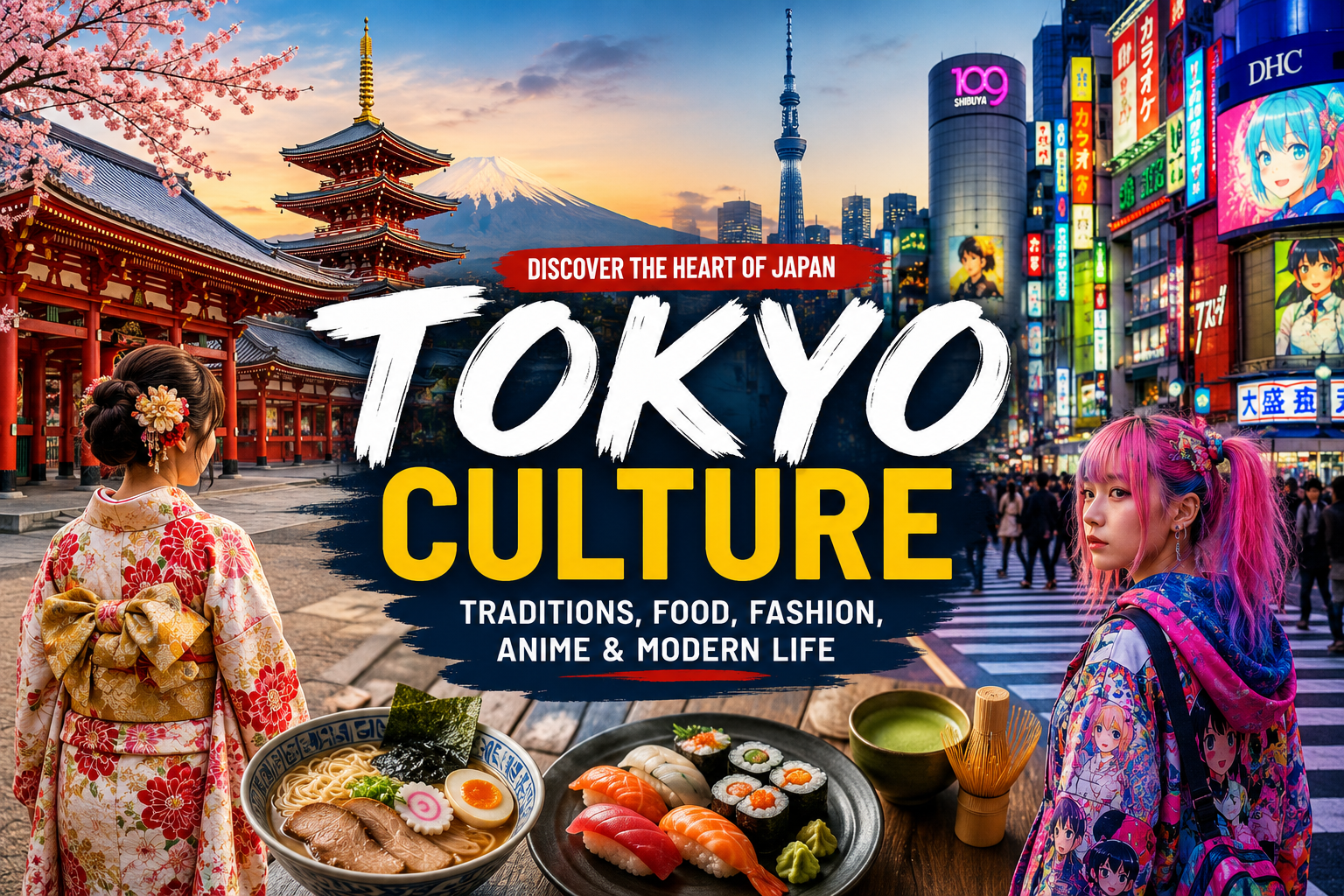
Tokyo can look futuristic at first glance: giant digital screens, automated trains, glass towers, themed cafés, fashion districts, and streets that seem to move at incredible speed. Yet walk a few blocks farther and you may find a quiet shrine, a centuries-old craft shop, a neighborhood festival, or a small restaurant built around traditions passed down through generations Smoke in Tokyo
Tokyo culture is a remarkable blend of old and new, shaped by Edo history, Japanese customs, local neighborhoods, food, religion, art, fashion, technology, and everyday social values. To understand Tokyo properly, you need to look beyond famous attractions and notice how tradition and modern life coexist in ordinary streets, shops, restaurants, homes, and public spaces.
That contrast is one of the reasons Tokyo continues to fascinate travelers from around the world. In 2025, Tokyo recorded approximately 28.65 million foreign visitors, a record high, according to the Tokyo Metropolitan Government. Total visitors, including domestic travelers, were estimated at about 508.62 million. Tourism spending also reached record levels.
But Tokyo culture is not simply something visitors observe. It is something experienced through behavior, sound, food, architecture, clothing, public spaces, seasonal celebrations, entertainment, and small daily interactions.
This guide explores those layers in depth.
What Is Tokyo Culture?
Tokyo culture is the collection of traditions, social behaviors, artistic expressions, lifestyles, foods, fashions, entertainment, values, and urban habits that have developed in and around Japan’s capital.
It is important to understand that there is no single definition of Tokyo culture.
Tokyo is home to people with different backgrounds, generations, occupations, interests, and lifestyles. A salary worker commuting through Marunouchi has a very different daily experience from a fashion enthusiast exploring Harajuku, a student in Shimokitazawa, a traditional craftsman in Asakusa, or an artist working in an independent gallery.
Tokyo culture is therefore best understood as a layered urban culture.
Some layers are centuries old.
Others are only a few years old.
Some are deeply traditional.
Others are global, experimental, digital, or youth-driven.
The fascinating part is how these layers interact.
Why Tokyo Culture Is So Unique
Tokyo’s cultural identity developed through a long historical process rather than appearing overnight.
Before becoming Tokyo, the city was known as Edo. In 1603, Tokugawa Ieyasu established the Tokugawa shogunate in Edo. During the approximately 265-year Edo period, the city experienced peace, economic development, and a major flowering of arts and popular culture. Many traditions and artistic forms associated with Japan today developed or became established during this era.
In 1868, following the Meiji Restoration, Edo was renamed Tokyo and became the capital. The city then entered a period of rapid modernization.
That history explains an important feature of modern Tokyo.
Tokyo does not always replace its past with the future. It often places the two beside each other.
A traditional shrine can stand near a railway station.
A centuries-old food tradition can survive in a modern shopping district.
A contemporary fashion label can draw inspiration from traditional Japanese design.
A digital entertainment company can become part of a culture that still values physical rituals and seasonal celebrations.
This coexistence is one of Tokyo’s defining cultural characteristics.
The Edo Influence on Modern Tokyo Culture
The Edo period remains one of the most important foundations for understanding Tokyo.
During the Edo era, the city developed into a major commercial and cultural center. Urban entertainment, crafts, theater, food culture, publishing, and merchant life all contributed to its distinctive character.
Areas such as Nihonbashi and Asakusa still provide visible connections to this past.
Nihonbashi, for example, was an important commercial center of Edo and remains associated with traditional commerce while being surrounded by modern buildings and businesses. The original Nihonbashi bridge dates back to 1603, and the area historically functioned as a major starting point for important routes.
This is why walking through Tokyo can sometimes feel like moving through several historical periods at once.
Edo Culture and Everyday Life
Edo culture was not limited to wealthy elites.
Urban merchants, artisans, performers, food sellers, publishers, and ordinary residents helped create a lively popular culture.
This legacy can still be noticed in:
- Small neighborhood restaurants
- Traditional festivals
- Crafts
- Theater
- Sumo
- Street food
- Seasonal celebrations
- Local shopping streets
- Gardens
- Shrine traditions
- Entertainment districts
For travelers, this provides an important lesson.
You do not always need to enter a museum to experience Tokyo’s history.
Sometimes a neighborhood street tells the story more effectively.
Japanese Values You Can See in Tokyo
Tokyo culture is influenced by broader Japanese cultural concepts, but visitors should avoid assuming that every Japanese person behaves in exactly the same way.
Still, several values are particularly useful for understanding daily life.
Respect for Others
Consideration for other people is an important part of Japanese social etiquette.
This can appear in small behaviors such as speaking quietly on trains, waiting in orderly lines, avoiding unnecessary disturbance, and being careful about shared spaces.
The Japan National Tourism Organization explains that Japanese etiquette often centers on avoiding inconvenience to others.
For visitors, this means that cultural awareness often matters more than memorizing dozens of complicated rules.
Cleanliness and Shared Responsibility
Tokyo’s public environment is remarkably organized in many areas despite the city’s enormous size.
Cleanliness is connected not only to government services but also to social expectations about shared spaces.
You may notice people taking responsibility for their surroundings, carefully disposing of waste, and avoiding behavior that creates problems for others.
Respect for Personal Space
Tokyo is crowded, yet social behavior often emphasizes minimizing unnecessary intrusion.
Physical contact is generally less common in everyday greetings than in many other countries. The JNTO notes that hugs, kisses, and handshakes are not the default social greeting in the way they may be elsewhere.
This does not mean Japanese people are unfriendly.
Instead, warmth can be communicated through politeness, attention, helpfulness, tone, and actions.
The Concept of Omotenashi
The Japanese word omotenashi is often associated with hospitality and thoughtful service.
In Tokyo, visitors may notice this in restaurants, hotels, retail stores, transportation, and other services.
The important point is that hospitality is often expressed through anticipation.
A restaurant employee may carefully arrange a dish.
A shop worker may package an item beautifully.
A hotel may pay attention to small details that the guest did not explicitly request.
These actions reflect a cultural preference for thoughtful service rather than loud displays of hospitality.
Tokyo Culture and Japanese Etiquette
Learning basic etiquette can dramatically improve the travel experience.
You do not need to become an expert before visiting Tokyo.
You simply need to observe and show respect.
Bowing and Greetings
Bowing is a familiar part of Japanese communication.
Visitors do not need to master every formal bow.
A small polite nod or bow when appropriate is usually sufficient for casual situations. JNTO specifically notes that travelers do not need to learn every bowing rule unless they are entering a highly formal environment.
Shoes
Removing shoes is an important custom in many Japanese settings.
You may be expected to remove them when entering:
- Traditional accommodations
- Some restaurants
- Certain temples or cultural facilities
- Private homes
- Some changing areas
Look for signs, shoe racks, or cues from other people.
Public Transportation
Tokyo’s transportation system is part of the city’s culture as much as its infrastructure.
On trains, visitors should generally:
- Keep voices low
- Avoid blocking doors
- Queue before boarding
- Let passengers exit first
- Keep bags from occupying unnecessary space
- Follow priority seating expectations
- Avoid eating messy food
- Keep phone conversations to a minimum
The goal is simple: make your presence as unobtrusive as possible.
Dining Etiquette
Japanese dining customs vary depending on the food and setting.
Common expectations include:
- Say appropriate thanks before and after meals
- Avoid wasting food
- Use chopsticks carefully
- Follow restaurant-specific rules
- Watch what locals are doing
- Avoid making a mess
- Do not automatically assume every Japanese dining custom applies everywhere
JNTO recommends observing those around you because dining practices can vary by situation and region.
Tokyo Food Culture
Tokyo is one of the world’s great food cities, but its food culture is more complex than sushi and ramen.
Tokyo’s culinary identity combines traditional Japanese cuisine, regional Japanese foods, international influences, convenience food, street snacks, department-store food halls, specialist restaurants, neighborhood diners, and highly refined dining.
Sushi Culture
Sushi is one of Tokyo’s most recognizable foods.
However, eating sushi in Tokyo can be very different from the experience offered by a typical international sushi restaurant.
You can find:
- High-end sushi counters
- Conveyor-belt sushi
- Casual neighborhood sushi shops
- Department-store sushi
- Market-oriented food businesses
- Modern fusion interpretations
The important cultural lesson is that sushi is not one single experience.
Ramen Culture
Ramen has become one of Tokyo’s most accessible food cultures.
Different shops focus on different broths, noodles, toppings, cooking techniques, and regional influences.
A ramen restaurant may be tiny, highly specialized, and designed around efficiency.
This is another useful example of Tokyo culture: specialization can become an art form.
Izakaya Culture
Izakaya are Japanese-style establishments where people gather for drinks and food.
They can be informal and social.
For many visitors, an izakaya experience offers a better window into everyday social life than a formal tourist restaurant.
You may see:
- Colleagues relaxing after work
- Friends meeting in the evening
- Small groups sharing dishes
- Seasonal food
- Local drinks
- Casual conversation
Convenience Store Food
One of the most overlooked parts of Tokyo food culture is convenience-store food.
Convenience stores are deeply integrated into urban life.
Visitors can find:
- Rice balls
- Sandwiches
- Desserts
- Drinks
- Hot snacks
- Bento-style meals
- Seasonal products
The cultural significance is not simply that the food is convenient.
It reflects Tokyo’s broader culture of efficiency, accessibility, consistency, and specialization.
Tokyo Tea Culture
Tea has a deep cultural history in Japan.
The traditional tea ceremony is much more than drinking tea.
It can involve:
- Preparation
- Seasonal awareness
- Architecture
- Garden design
- Ceramics
- Hospitality
- Movement
- Silence
- Attention to detail
Tokyo offers ways to experience tea culture through tea houses, museums, gardens, cultural centers, and specialized experiences.
The Ebara Hatakeyama Museum of Art, for example, focuses partly on the relationship between traditional tea ceremony culture, tea utensils, art, gardens, and architecture. The museum’s collection includes approximately 1,300 objects, including designated national treasures and important cultural properties.
Why Tea Culture Still Matters
Modern Tokyo moves quickly.
Tea culture intentionally slows things down.
That contrast makes it especially relevant today.
A short tea experience can demonstrate a different relationship with time: instead of rushing toward the next activity, attention is concentrated on the current moment.
Tokyo Fashion Culture
Tokyo fashion is one of the city’s most influential cultural exports.
Different neighborhoods have developed different fashion identities.
Harajuku Fashion
Harajuku is strongly associated with youth fashion, creativity, street style, and experimentation.
Its cultural importance comes from the way young people use clothing as a form of identity.
Fashion in Tokyo can communicate:
- Music interests
- Subculture membership
- Creativity
- Social identity
- Personal taste
- Rebellion
- Minimalism
- Luxury preferences
Shibuya Fashion
Shibuya represents another side of contemporary Tokyo.
It combines mainstream fashion, youth culture, global brands, entertainment, technology, and nightlife.
The district demonstrates how Tokyo culture can quickly absorb global influences and reinterpret them locally.
Ginza Style
Ginza represents a more polished and sophisticated side of Tokyo.
Luxury retailers, department stores, traditional businesses, restaurants, galleries, and historic establishments create a different cultural atmosphere from Harajuku or Shibuya.
This shows why talking about “Tokyo fashion” as a single style can be misleading.
Tokyo has multiple fashion ecosystems.
Tokyo Pop Culture
Few cities have influenced global pop culture as strongly as Tokyo.
Anime, manga, gaming, character culture, music, toys, fashion, and digital entertainment all contribute to the city’s cultural identity.
Anime Culture
Anime is not merely an entertainment category.
For many people, it is a gateway into Japanese language, food, art, fashion, history, and travel.
Visitors may explore districts and stores connected with animation and character culture.
However, respectful tourism matters.
Neighborhoods where fans gather are still living communities, not theme parks.
Manga Culture
Manga has influenced Japanese publishing and global entertainment.
Tokyo offers bookstores, specialty stores, exhibitions, cafés, and cultural spaces connected to manga.
For international visitors, manga can provide a fascinating way to understand how visual storytelling functions in Japanese society.
Gaming Culture
Tokyo’s gaming culture extends beyond arcades.
It includes:
- Console gaming
- Mobile gaming
- Competitive gaming
- Character merchandise
- Retro games
- Collecting
- Technology
- Gaming cafés
- Fan communities
Akihabara became internationally famous for electronics and otaku culture, but its identity continues to evolve.
Tokyo Shrine and Temple Culture
Religion and spirituality are another important part of Tokyo’s cultural landscape.
Visitors can encounter both Shinto shrines and Buddhist temples.
These places are not simply tourist attractions.
They can remain active religious and community spaces.
Shinto Culture
Shinto traditions are connected with shrines, rituals, seasonal celebrations, purification practices, and relationships with kami.
Visitors may notice:
- Torii gates
- Purification fountains
- Shrine buildings
- Offerings
- Prayer rituals
- Festival activities
- Omamori charms
Buddhist Culture
Tokyo also has numerous Buddhist temples.
Some are peaceful spaces within busy urban districts.
This creates one of the city’s most interesting contrasts.
A traveler can leave a crowded shopping street and enter a quiet temple environment within minutes.
Tokyo Festival Culture
Festivals are an important way to experience living culture.
They bring together:
- Neighborhood communities
- Traditional performances
- Food
- Music
- Processions
- Decorations
- Religious rituals
- Seasonal traditions
Some festivals are large and internationally known.
Others are small neighborhood events.
Seasonal Festivals
Tokyo’s cultural calendar changes throughout the year.
Spring can bring cherry-blossom celebrations.
Summer often features festivals and fireworks.
Autumn brings seasonal colors and cultural events.
Winter includes illuminations and traditional New Year activities.
The best way to understand seasonal culture is not simply to photograph it.
Participate respectfully.
Local Festivals and Community Identity
One of the most important cultural insights is that many festivals are connected to local communities.
They can help maintain relationships between residents, businesses, religious institutions, and generations.
That makes festivals more than entertainment.
They are mechanisms for cultural continuity.
Sumo Culture in Tokyo
Sumo is one of Japan’s best-known traditional sports.
Tokyo’s Ryogoku district is strongly associated with sumo culture.
The Ryogoku Kokugikan hosts major tournaments, including tournaments in January, May, and September. The venue has an official capacity of more than 11,000 people.
Sumo culture involves much more than the match itself.
It includes:
- Ritual
- Rank
- Training
- Discipline
- Ceremonial behavior
- Traditional clothing
- Stable communities
- Historical continuity
This makes sumo an excellent example of how sport can function as cultural heritage.
Kabuki and Traditional Performing Arts
Kabuki emerged around the beginning of the Edo period and became one of Japan’s most recognizable traditional performing arts.
Tokyo remains an important place to experience it.
Kabukiza Theatre in Ginza is one of the city’s major venues for kabuki.
For first-time visitors, kabuki may initially seem unfamiliar because of its stylized movement, costumes, makeup, language, music, and storytelling.
But that unfamiliarity is exactly what makes it valuable.
Instead of expecting it to resemble Western theater, approach it on its own terms.
Tokyo Craft Culture
Traditional craftsmanship remains an important part of Tokyo’s cultural identity.
Craft traditions can include:
- Ceramics
- Woodworking
- Metalwork
- Textiles
- Lacquerware
- Paper products
- Traditional food preparation
- Decorative arts
Many crafts are based on principles of precision and repetition.
A small object may require years of training.
Why Traditional Crafts Matter
Traditional crafts face an obvious challenge.
Modern mass production can make handmade products more expensive and less convenient.
Yet craftsmanship also has renewed appeal.
Consumers increasingly value:
- Authenticity
- Durability
- Traceability
- Human skill
- Heritage
- Unique design
This creates an opportunity for traditional crafts to survive by connecting heritage with modern lifestyles.
Tokyo Architecture and Cultural Identity
Tokyo’s architecture tells a story of destruction, rebuilding, modernization, economic change, and cultural experimentation.
The city contains:
- Historic wooden structures
- Shrines
- Temples
- Department stores
- Modern skyscrapers
- Small homes
- Narrow streets
- Art museums
- Contemporary architecture
- Postwar buildings
The result is architectural diversity.
Old and New Architecture
Tokyo’s architecture rarely follows a single visual style.
You may see a traditional shrine surrounded by office buildings.
A tiny wooden house can exist beside a modern apartment block.
A historic shopping street can sit close to a futuristic railway station.
This mixture is not necessarily accidental.
It reflects Tokyo’s continuous process of rebuilding and adaptation.
Tokyo Neighborhood Culture
One of the biggest mistakes first-time visitors make is thinking of Tokyo as one unified place.
It is better to think of Tokyo as a collection of neighborhoods with different cultural personalities.
Asakusa
Asakusa is strongly associated with traditional Tokyo.
Visitors can explore:
- Senso-ji
- Traditional shops
- Street food
- Crafts
- Festivals
- Historic streets
It is especially useful for travelers interested in old Tokyo.
Shibuya
Shibuya represents contemporary urban Tokyo.
It is associated with:
- Youth culture
- Fashion
- Shopping
- Entertainment
- Technology
- Nightlife
Harajuku
Harajuku is particularly interesting for:
- Street fashion
- Youth culture
- Creative subcultures
- Character culture
- Cafés
- Design
Akihabara
Akihabara is internationally associated with:
- Electronics
- Anime
- Manga
- Gaming
- Collectibles
- Otaku culture
Ginza
Ginza offers a more refined urban experience.
It is associated with:
- Luxury
- Department stores
- High-end dining
- Art
- Traditional businesses
- Premium retail
Shimokitazawa
Shimokitazawa has a different atmosphere, with strong associations with:
- Independent shops
- Music
- Vintage fashion
- Cafés
- Theater
- Youth culture
These neighborhood differences are essential to understanding Tokyo.
Tokyo Night Culture
Tokyo after dark is not one single experience.
Nightlife can range from quiet neighborhood bars to enormous entertainment districts.
Visitors may encounter:
- Izakaya
- Jazz bars
- Karaoke
- Live music
- Clubs
- Cocktail bars
- Small standing bars
- Late-night restaurants
- Entertainment complexes
Karaoke Culture
Karaoke is an important part of Japanese popular entertainment.
Private karaoke rooms allow groups to socialize without requiring the same public performance environment found in some other countries.
This makes karaoke as much a social activity as a musical one.
Tokyo Convenience Culture
Tokyo’s convenience culture is one of the least glamorous but most revealing aspects of the city.
People often value:
- Speed
- Reliability
- Organization
- Accessibility
- Consistency
- Service
You can see this in transportation, convenience stores, vending machines, restaurants, retail stores, lockers, packaging, and digital services.
This does not mean Tokyo life is always stress-free.
In fact, the same systems that create convenience can also contribute to a highly structured and demanding urban lifestyle.
That is one of Tokyo culture’s important contradictions.
Work Culture in Tokyo
Tokyo has historically been associated with intense work culture and demanding corporate environments.
The stereotype of the Japanese salary worker remains culturally recognizable, although modern employment patterns are changing.
Remote work, flexible arrangements, international companies, entrepreneurship, changing attitudes toward careers, and demographic pressures are influencing the workplace.
The Salaryman Image
The salaryman became a recognizable symbol of postwar Japanese corporate culture.
The image includes:
- Formal clothing
- Commuting
- Long working hours
- Corporate loyalty
- After-work socializing
Today, however, this image should not be treated as a complete description of Tokyo’s workforce.
Modern Tokyo includes freelancers, startup employees, international workers, creatives, students, entrepreneurs, remote workers, and many other professional lifestyles.
Tokyo Youth Culture
Young people have played an enormous role in shaping Tokyo’s cultural identity.
Youth culture often moves faster than mainstream culture.
It can influence:
- Fashion
- Slang
- Music
- Social media
- Food trends
- Entertainment
- Beauty
- Technology
Harajuku and Shibuya have historically demonstrated how youth trends can become internationally visible.
But online platforms are changing the process.
A trend no longer needs to remain inside one neighborhood.
A Tokyo fashion idea can become global within days.
Tokyo Beauty Culture
Beauty culture is another significant part of modern Tokyo.
It includes:
- Skincare
- Cosmetics
- Hair styling
- Nail art
- Fashion
- Minimalist beauty
- Specialized salons
Japanese beauty culture often emphasizes attention to detail and consistent routines.
The wider cultural principle is similar to craftsmanship: small details matter.
Tokyo Design Philosophy
Tokyo design frequently combines simplicity with functionality.
Minimalism is often associated with Japanese design, but Tokyo’s design culture is more varied than minimalism alone.
You can also find:
- Bold colors
- Dense visual environments
- Playful characters
- Experimental architecture
- Retro design
- Industrial design
- High-tech interfaces
The deeper pattern is often purposeful design.
An object can be beautiful because it works exceptionally well.
Ten Brands That Reflect Different Sides of Tokyo Culture
Brands are not perfect representations of culture, and no company can speak for an entire city.
However, certain brands provide useful windows into different aspects of Tokyo’s consumer, fashion, entertainment, design, and lifestyle culture.
| Brand | Cultural Connection | What It Represents | Best For |
|---|---|---|---|
| Uniqlo | Japanese retail and clothing | Practical everyday fashion | Minimalist wardrobes |
| MUJI | Japanese lifestyle design | Simplicity and functionality | Home and lifestyle |
| Nintendo | Japanese gaming culture | Interactive entertainment | Gamers and families |
| Sanrio | Character culture | Cute design and fandom | Pop-culture fans |
| Bandai Namco | Entertainment culture | Games, toys and characters | Collectors |
| Onitsuka Tiger | Japanese fashion heritage | Sneakers and design | Fashion travelers |
| ASICS | Japanese sports design | Performance and innovation | Sports enthusiasts |
| Issey Miyake | Tokyo fashion | Experimental clothing design | Design lovers |
| Comme des Garçons | Avant-garde fashion | Creative experimentation | Fashion enthusiasts |
| Sony | Japanese technology culture | Electronics and entertainment | Technology fans |
Uniqlo and Everyday Tokyo Style
Uniqlo is useful for understanding practical Japanese-inspired clothing.
Its global presence means it is no longer exclusively a Tokyo brand experience, but its roots and design philosophy remain connected to Japanese retail culture.
MUJI and Minimalist Living
MUJI is especially interesting for travelers studying Japanese design.
Its products emphasize restrained design and functionality.
The brand illustrates how everyday objects can become part of a broader lifestyle philosophy.
Nintendo and Gaming Culture
Nintendo demonstrates how Japanese gaming culture became a global cultural force.
Its influence extends beyond games into characters, merchandise, theme experiences, and international entertainment.
Sanrio and Kawaii Culture
Sanrio is closely associated with Japanese character culture and the broader concept of kawaii.
Kawaii culture demonstrates how cuteness can become a serious commercial and cultural language.
Bandai Namco and Collecting
Bandai Namco connects gaming, animation, toys, characters, and collecting.
This helps explain why Tokyo’s pop-culture economy is often built around interconnected worlds rather than single products.
Onitsuka Tiger and Fashion Heritage
Onitsuka Tiger demonstrates how sportswear can become fashion.
Its visual identity connects Japanese heritage with international fashion.
ASICS and Japanese Innovation
ASICS is another example of how Japanese design can combine functionality with cultural identity.
Its influence is particularly visible in running and sneaker culture.
Issey Miyake and Design
Issey Miyake represents an intellectual approach to fashion in which material, movement, structure, and technology can become part of clothing design.
Comme des Garçons and Avant-Garde Fashion
Comme des Garçons demonstrates Tokyo’s willingness to challenge conventional ideas about beauty, shape, and clothing.
Sony and Technology Culture
Sony represents another side of Tokyo’s global cultural influence.
Its history connects Japanese electronics, entertainment, design, music, and consumer technology.
How to Experience Tokyo Culture Like a Local
You do not need to pretend to be Japanese to experience Tokyo authentically.
In fact, trying too hard to “act local” can sometimes create awkward situations.
Instead, focus on being a respectful visitor.
Spend Time Outside Major Attractions
Do not spend every hour visiting famous landmarks.
Walk through residential streets.
Visit a neighborhood shopping street.
Sit in a small café.
Explore a local market.
Visit a small museum.
Look at ordinary architecture.
Observe how people use public spaces.
These experiences reveal the everyday side of Tokyo.
Learn Basic Japanese Phrases
Even a few phrases can make interactions easier.
Useful examples include:
- Konnichiwa — hello
- Arigato gozaimasu — thank you
- Sumimasen — excuse me / sorry
- Onegaishimasu — please
- Oishii — delicious
JNTO notes that using even a few Japanese expressions can be appreciated by locals.
Observe Before Acting
This may be the most useful Tokyo travel rule.
If you are unsure:
Stop. Look. Observe. Follow the local pattern.
This works for:
- Train queues
- Restaurant procedures
- Shrine etiquette
- Shoes
- Trash
- Escalators
- Photography
- Public behavior
Observation is often more valuable than memorizing a long list of rules.
A Practical Tokyo Culture Itinerary
A culture-focused Tokyo trip does not need to be complicated.
Day One: Edo Tokyo
Start with Asakusa and explore traditional streets, temples, shops, and food.
Continue toward areas connected with old Tokyo.
Spend time observing architecture rather than simply checking attractions off a list.
Day Two: Modern Tokyo
Explore Shibuya and Harajuku.
Look at fashion, youth culture, architecture, cafés, and entertainment.
Do not rush.
Spend time noticing how people interact with the spaces.
Day Three: Pop Culture
Explore Akihabara or another entertainment-focused neighborhood.
Visit gaming, anime, manga, character, and electronics stores according to your interests.
Day Four: Food and Daily Life
Visit a market or food district.
Try a local restaurant.
Explore a convenience store.
Have a meal at a neighborhood establishment.
Day Five: Traditional Arts
Choose a cultural experience involving:
- Tea
- Kabuki
- Sumo
- Traditional crafts
- A museum
- A Japanese garden
This creates a balance between Tokyo’s historical and modern identities.
Common Mistakes When Exploring Tokyo Culture
Treating Japan as One Single Culture
Japan has regional differences.
Tokyo itself is diverse.
Do not assume something you see in one Tokyo neighborhood represents the whole country.
Turning Traditions Into Performances
Visitors sometimes become so focused on getting photographs that they forget they are inside a religious or community space.
A shrine or temple is not simply a photo backdrop.
Expecting Everyone to Speak English
Many tourist-oriented places have English support, but you should not expect every local person to speak fluent English.
Simple Japanese phrases, patience, translation tools, and respectful gestures can help.
Being Too Loud
Tokyo is energetic, but many public spaces are relatively quiet.
Adjust your volume, especially on trains and in residential areas.
Ignoring Local Rules
Different restaurants, temples, attractions, and accommodations may have different policies.
Read signs.
If something is unclear, ask politely.
Assuming “Authentic” Means Old
This is a major misconception.
Modern Tokyo culture is authentic too.
A gaming store, contemporary art space, street-fashion shop, or modern café can be just as culturally relevant as a centuries-old temple.
The Pros and Cons of Tokyo Culture
Advantages
Tokyo culture offers remarkable diversity.
You can experience:
- Ancient traditions
- Modern technology
- Global fashion
- Traditional food
- Pop culture
- Contemporary art
- Architecture
- Seasonal festivals
- Neighborhood communities
- Highly developed public services
The city also allows visitors to experience very different cultural environments without traveling far between them.
Challenges
Tokyo can also feel overwhelming.
Potential challenges include:
- Crowds
- Language barriers
- Complex transportation
- Cultural differences
- High demand in popular areas
- Busy schedules
- Tourist congestion
- Difficulty finding quiet spaces in central districts
There is also a deeper cultural challenge.
As international tourism grows, popular neighborhoods can become crowded, and the distinction between a living community and a tourist attraction can become blurred.
Overtourism and the Future of Tokyo Culture
Tokyo’s record foreign visitor numbers demonstrate the city’s growing international popularity. Foreign visitors reached approximately 28.65 million in 2025, up 15.6% from the previous year according to Tokyo’s metropolitan government.
That growth creates opportunities.
More visitors can support:
- Restaurants
- Hotels
- Museums
- Craftspeople
- Cultural attractions
- Local businesses
- Transportation
- Entertainment
But tourism can also create pressure.
Popular neighborhoods may experience:
- Crowding
- Noise
- Waste
- Disruption
- Increased prices
- Strain on local infrastructure
The future of Tokyo tourism will therefore depend partly on how effectively the city balances global access with local quality of life.
Technology and the Future of Tokyo Culture
Technology will continue to influence Tokyo culture.
Artificial intelligence, digital payments, robotics, translation tools, immersive entertainment, virtual spaces, and smart-city systems may increasingly become part of daily life.
But technology is unlikely to eliminate traditional culture.
Instead, it may change how traditions are experienced.
For example:
- Digital guides can explain traditional arts
- Translation tools can improve cultural exchange
- Online platforms can promote local crafts
- Virtual experiences can introduce international audiences to Japanese culture
- Digital archives can preserve historical material
- New technology can support traditional manufacturing
The more interesting future is not “technology versus tradition.”
It is technology helping tradition evolve.
The Rise of Experience-Based Travel
Travelers increasingly want experiences rather than simple sightseeing.
That trend could benefit Tokyo’s cultural economy.
Instead of simply photographing a traditional object, visitors may want to:
- Make one
- Cook one
- Wear traditional clothing
- Attend a workshop
- Learn calligraphy
- Join a tea experience
- Watch a performance
- Visit a craftsman’s studio
- Explore a local festival
This can create deeper connections between tourism and cultural preservation.
Tokyo Culture and Sustainable Tourism
Responsible tourism will become increasingly important.
Visitors can contribute by:
- Using public transportation
- Avoiding unnecessary waste
- Respecting residential areas
- Supporting local businesses
- Following photography rules
- Not blocking streets
- Avoiding intrusive behavior
- Visiting less crowded areas
- Learning basic etiquette
Sustainable tourism is not simply about environmental impact.
It is also about social sustainability.
A destination remains culturally healthy when residents can continue living normal lives.
Why Small Businesses Matter to Tokyo Culture
Large brands often receive international attention, but small businesses may provide a more intimate cultural experience.
A tiny restaurant can preserve a food tradition.
A local shop can maintain a craft.
A family-run store can preserve neighborhood history.
A small theater can support an artistic community.
A local festival can connect generations.
This means travelers should not measure cultural value by business size.
Sometimes the smallest place tells the biggest story.
Tokyo Culture for Different Types of Travelers
Tokyo Culture for First-Time Visitors
First-time visitors should focus on broad cultural contrasts.
Combine:
- Asakusa
- Shibuya
- Harajuku
- A traditional garden
- A local restaurant
- A cultural museum
- A neighborhood walk
This gives you a strong introduction without becoming overwhelmed.
Tokyo Culture for Food Lovers
Food-focused travelers should explore beyond famous restaurants.
Try:
- Sushi
- Ramen
- Tempura
- Yakitori
- Soba
- Udon
- Izakaya dishes
- Japanese sweets
- Convenience-store snacks
- Department-store food halls
Tokyo Culture for Fashion Travelers
Fashion travelers should compare neighborhoods.
Explore:
- Harajuku
- Shibuya
- Ginza
- Shimokitazawa
- Vintage stores
- Independent designers
- Department stores
Tokyo Culture for Families
Families can explore:
- Parks
- Museums
- Character experiences
- Traditional neighborhoods
- Food markets
- Interactive cultural attractions
Tokyo Culture for Anime Fans
Anime-focused visitors can explore:
- Akihabara
- Character stores
- Manga shops
- Themed cafés
- Exhibitions
- Pop-culture districts
But remember that anime culture exists within ordinary Tokyo life rather than replacing it.
Tokyo Culture for History Lovers
History-focused visitors should prioritize:
- Asakusa
- Nihonbashi
- Edo-related museums
- Traditional gardens
- Temples
- Shrines
- Kabuki
- Sumo
- Historic neighborhoods
The Tokyo Metropolitan Edo-Tokyo Museum reopened on March 31, 2026, following extensive renovation, making it particularly relevant for travelers wanting to understand the city’s development from Edo to modern Tokyo.
Tokyo Culture Through Gardens
Japanese gardens provide another perspective on cultural values.
Tokyo has gardens that emphasize:
- Seasonal change
- Water
- Rocks
- Plants
- Paths
- Balance
- Framing
- Controlled views
Rikugien, for example, was designed in 1695 and includes landscape features connected with classical Japanese poetry.
A garden can therefore function as a form of cultural storytelling.
Instead of explaining a poem with words, the landscape creates a physical interpretation.
Tokyo Culture and the Seasons
Seasonality is deeply embedded in Japanese culture.
Tokyo’s cultural rhythm changes with the calendar.
Spring
Spring is strongly associated with cherry blossoms.
But the cultural importance of sakura goes beyond taking photographs.
It reflects themes of:
- Renewal
- Temporary beauty
- Social gatherings
- Seasonal awareness
Summer
Summer brings:
- Festivals
- Fireworks
- Outdoor events
- Traditional clothing
- Seasonal foods
Autumn
Autumn emphasizes:
- Changing leaves
- Seasonal foods
- Cultural events
- Gardens
- Traditional celebrations
Winter
Winter can bring:
- Illuminations
- New Year traditions
- Temple visits
- Seasonal foods
- Quiet urban experiences
Seasonality helps explain why the same neighborhood can feel culturally different at different times of year.
What Tokyo Culture Teaches the World
Tokyo’s cultural influence is not limited to entertainment or tourism.
The city provides several broader lessons.
Tradition Can Adapt
A tradition does not necessarily need to remain frozen in time to survive.
Tokyo shows that cultural practices can evolve while retaining their identity.
Small Details Can Matter
From packaging to food preparation to clothing construction, Tokyo culture often demonstrates how small details influence the overall experience.
Cities Can Preserve Multiple Identities
A city can be modern without completely erasing its history.
Tokyo proves that skyscrapers and shrines can exist within the same cultural landscape.
Pop Culture Can Become Cultural Diplomacy
Anime, manga, gaming, fashion, food, and design have introduced millions of people to Japan.
Entertainment can therefore become an informal bridge between cultures.
How to Be a Respectful Cultural Traveler in Tokyo
Before your trip, learn a few basic customs.
During your trip:
- Watch how people behave.
- Keep your voice moderate.
- Respect religious spaces.
- Follow photography rules.
- Queue properly.
- Keep public areas clean.
- Avoid blocking sidewalks.
- Learn basic Japanese phrases.
- Support local businesses.
- Do not treat residents as part of the attraction.
JNTO emphasizes that understanding local customs can make travel smoother and create more meaningful interactions.
Frequently Asked Questions About Tokyo Culture
What is Tokyo culture known for?
Tokyo culture is known for its combination of traditional Japanese customs and modern urban life. Major cultural influences include Edo history, food, fashion, anime, manga, gaming, technology, architecture, festivals, temples, shrines, traditional arts, and highly organized everyday life.
What makes Tokyo culture different from other Japanese cities?
Tokyo’s enormous size and role as Japan’s capital have created an unusually diverse urban culture. The city combines historical neighborhoods, global business, youth fashion, pop culture, traditional arts, international influences, and highly modern infrastructure.
Is Tokyo culture traditional or modern?
It is both. Traditional practices such as tea culture, kabuki, sumo, shrine festivals, crafts, and seasonal celebrations exist alongside gaming, anime, technology, contemporary fashion, digital entertainment, and modern architecture.
What traditional culture can tourists experience in Tokyo?
Visitors can experience tea culture, sumo, kabuki, traditional crafts, shrine and temple customs, festivals, Japanese gardens, historic neighborhoods, traditional food, and Edo-related history.
What is the most famous part of Tokyo culture?
There is no single most famous element. Internationally, Tokyo is strongly associated with sushi, ramen, anime, manga, gaming, fashion, technology, Shibuya, Harajuku, and traditional Japanese culture.
Is Tokyo culture expensive to experience?
It can be, but it does not have to be. Visitors can experience Tokyo culture through neighborhood walks, shrines, public parks, shopping streets, convenience stores, affordable restaurants, festivals, museums, and public spaces without spending heavily.
What should tourists avoid doing in Tokyo?
Visitors should avoid disruptive behavior such as being excessively loud on public transportation, ignoring queues, entering restricted areas, disrespecting religious sites, blocking walkways, littering, or taking inappropriate photographs.
Do I need to speak Japanese to experience Tokyo culture?
No. Major tourist areas often have multilingual support, and translation technology can help. However, learning a few basic Japanese expressions can improve everyday interactions and demonstrate respect.
What neighborhood is best for traditional Tokyo culture?
Asakusa is one of the strongest choices for visitors seeking traditional Tokyo atmosphere. Ryogoku is particularly useful for visitors interested in sumo, while Nihonbashi offers connections to Edo’s commercial history.
Where should I go for modern Tokyo culture?
Shibuya, Harajuku, Akihabara, and Shimokitazawa are useful starting points, although each represents a different part of contemporary Tokyo culture.
Is anime the main part of Tokyo culture?
No. Anime is an important part of contemporary Japanese and Tokyo pop culture, but it represents only one layer of a much broader cultural landscape.
Why is Tokyo so clean?
Cleanliness in Tokyo reflects a combination of infrastructure, social expectations, individual behavior, and cultural emphasis on consideration for shared spaces. It should not be attributed to one single factor.
What is omotenashi?
Omotenashi is commonly used to describe a Japanese approach to hospitality involving thoughtful, attentive service and anticipation of guests’ needs.
What is Edo culture?
Edo culture refers to the cultural development associated with the city of Edo, the former name of Tokyo, particularly during the Tokugawa period from 1603 to 1867. Many influential Japanese arts, entertainment traditions, commercial practices, and urban customs developed or flourished during this period.
How can I experience Tokyo culture beyond tourist attractions?
Spend time in residential neighborhoods, independent shops, local restaurants, gardens, small museums, traditional shopping streets, community festivals, and cultural workshops. The key is to observe everyday life rather than only visiting famous landmarks.
The Future of Tokyo Culture
Tokyo culture is unlikely to become simply more traditional or more modern.
Instead, it will probably become more interconnected.
Traditional crafts may use modern marketing.
Cultural museums may adopt immersive technology.
Restaurants may combine traditional techniques with new culinary ideas.
Fashion designers may reinterpret historical clothing.
Anime may continue merging with global entertainment.
Artificial intelligence may become part of translation and cultural education.
Tourism may spread beyond the most famous districts.
At the same time, local communities will need to protect the spaces and traditions that make Tokyo culturally distinctive in the first place.
The most valuable future for Tokyo is therefore not one in which tradition is preserved behind glass.
It is one where tradition remains alive, useful, respected, and capable of changing.
Conclusion: Why Tokyo Culture Is Worth Exploring
Tokyo culture is difficult to summarize because Tokyo itself refuses to fit neatly into one category.
It is ancient and futuristic.
Quiet and energetic.
Traditional and experimental.
Local and global.
Highly organized and creatively chaotic.
A visitor who only sees the bright lights of Shibuya misses the historical depth of Edo.
A visitor who only visits temples misses the city’s youth culture.
A visitor who only shops misses its food traditions.
A visitor who only photographs famous landmarks misses the everyday behavior that makes the city distinctive.
The best way to understand Tokyo is therefore to look at the connections between its different cultural layers.