
Tokyo Traditions: 15+ Timeless Japanese Customs, Culture & Experiences to Discover
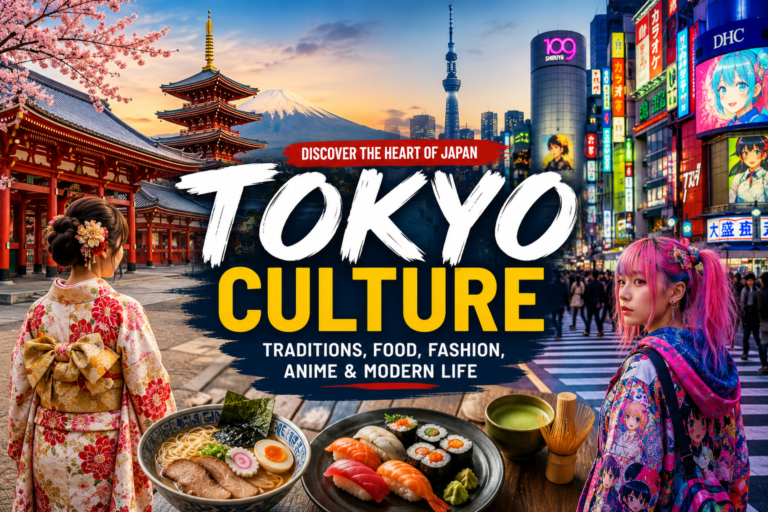
Tokyo traditions reveal how Japan’s capital blends centuries-old customs with modern city life, from shrine visits and tea culture to seasonal festivals, etiquette, food, and neighborhood rituals. Understanding these traditions can make a Tokyo trip more respectful, meaningful, and memorable while helping visitors see the cultural stories behind everyday experiences Tokyo Culture
Tokyo can seem like a city built for the future. Skyscrapers rise above historic neighborhoods, automated trains move millions of passengers, and digital technology is part of everyday life. Yet beneath this modern surface, Tokyo traditions remain deeply connected to history, community, nature, religion, food, craftsmanship, and seasonal change.
A visitor may walk through Shibuya in the morning, explore an ancient shrine in the afternoon, eat traditional soba in the evening, and watch a centuries-old festival at night. That contrast is one of the things that makes Tokyo fascinating.
The important point is that Tokyo traditions are not simply museum pieces. Many continue to influence how people celebrate holidays, interact with others, eat, pray, shop, travel, and experience the changing seasons.
This guide explores the most important Tokyo traditions and Japanese cultural customs, explains their historical background, and shows how travelers can experience them respectfully.
What Are Tokyo Traditions?
Tokyo traditions are customs, practices, celebrations, arts, foods, rituals, and social behaviors that have developed in Tokyo or become strongly associated with life in the capital.
Some traditions date back to the Edo period, when Tokyo was known as Edo and became the political center of Japan under the Tokugawa shogunate. Others have roots that are much older and were adopted or adapted in Tokyo over time.
Tokyo culture is therefore not one single tradition.
Instead, it is a combination of:
- Edo-period customs
- Shinto practices
- Buddhist traditions
- Japanese seasonal celebrations
- Traditional food culture
- Tea culture
- Performing arts
- Craftsmanship
- Neighborhood festivals
- Japanese etiquette
- Family customs
- Modern interpretations of older traditions
This mixture helps explain why traditional and contemporary Tokyo can exist side by side without seeming completely disconnected.
A Brief History Behind Tokyo Traditions
To understand Tokyo traditions, it helps to understand how the city developed.
Edo Became the Foundation of Modern Tokyo
Before it became Tokyo, the city was called Edo. Edo grew dramatically after Tokugawa Ieyasu established the Tokugawa shogunate in 1603.
For more than two centuries, Edo developed into a major urban center.
The city’s large population created strong neighborhood communities, commercial traditions, entertainment districts, crafts, food businesses, festivals, and forms of popular culture.
Many traditions associated with modern Tokyo can be traced back to this period.
From Edo to Tokyo
In 1868, the Meiji Restoration transformed Japan’s political system. Edo was renamed Tokyo, meaning “Eastern Capital,” and the imperial court moved from Kyoto to Tokyo.
The city rapidly modernized.
Western-style architecture, railways, new industries, modern government institutions, and new technologies transformed daily life.
However, modernization did not completely replace traditional culture.
Instead, Tokyo developed a distinctive pattern: old customs adapted to new circumstances.
That pattern remains visible today.
Why Tokyo Traditions Still Matter
Traditional culture can sometimes appear disconnected from modern urban life. Tokyo offers a different example.
A person can use a smartphone to navigate the city and still participate in a shrine ritual.
Someone can work in a modern office and attend a neighborhood matsuri.
A family can buy convenience-store food during a busy weekday and prepare traditional dishes for New Year.
This coexistence is one of the most interesting aspects of Tokyo culture.
Traditions survive because they often perform practical social functions.
They can:
- Connect generations
- Strengthen communities
- Mark important life events
- Celebrate seasonal changes
- Preserve craftsmanship
- Encourage gratitude
- Create shared memories
- Provide continuity during periods of change
1. Shrine Visits and Shinto Traditions
One of the easiest ways to encounter Tokyo traditions is by visiting a Shinto shrine.
Shrines can be found throughout the city, from enormous famous complexes to small neighborhood sanctuaries tucked between buildings.
What Happens at a Shrine?
Visitors commonly follow a simple etiquette sequence.
Before entering the main shrine area, people may bow respectfully at the entrance.
At the purification fountain, visitors traditionally rinse their hands and mouth.
At the main worship area, people make an offering, bow, clap, and bow again according to common shrine etiquette.
The exact practice can vary between locations, so observing other visitors is useful.
Omamori and Omikuji
Two popular elements of shrine culture are omamori and omikuji.
Omamori are protective charms associated with particular wishes or purposes.
Omikuji are fortunes written on paper.
Visitors may receive a favorable fortune and keep it. If they receive an unfavorable one, they may tie the paper at a designated location at the shrine.
These practices combine spirituality, tradition, hope, and personal reflection.
2. New Year Traditions in Tokyo
New Year is one of Japan’s most important seasonal celebrations.
In Tokyo, the beginning of the year is associated with family gatherings, traditional foods, prayers, and shrine or temple visits.
Hatsumode
Hatsumode refers to the first shrine or temple visit of the New Year.
People visit to pray for health, happiness, safety, success, and other hopes for the coming year.
Major shrines can become extremely crowded during the New Year period.
For travelers, hatsumode provides a powerful opportunity to observe Japanese culture, but visitors should remember that it is a meaningful religious practice rather than simply a tourist attraction.
Traditional New Year Food
New Year meals can include osechi ryori, a collection of specially prepared dishes traditionally served during the holiday.
Different foods can have symbolic meanings related to health, prosperity, longevity, fertility, happiness, or other wishes.
Another familiar New Year food is ozoni, a soup containing mochi and ingredients that vary by region and household.
New Year Decorations
Traditional decorations can include items such as:
- Kadomatsu
- Shimekazari
- Kagami mochi
They symbolize welcoming the New Year and are connected to Japanese seasonal customs.
3. Cherry Blossom Traditions and Hanami
Few experiences represent Tokyo more strongly than cherry blossoms.
The tradition of hanami, or flower viewing, has deep historical roots in Japan.
Today, hanami often involves gathering beneath blooming cherry trees with family, friends, or colleagues.
Hanami Is More Than Taking Photos
For visitors, cherry blossoms can look like a visual spectacle.
For Japanese culture, however, seasonal flowers can also encourage reflection on impermanence.
Cherry blossoms bloom beautifully but for a relatively short period.
This idea connects with the Japanese cultural concept of mono no aware, often described as an awareness of the temporary nature of things and the emotions that come with change.
How Visitors Should Enjoy Hanami
If you participate in hanami:
- Keep shared spaces clean.
- Follow park rules.
- Avoid damaging trees.
- Respect reserved areas.
- Dispose of waste properly.
- Keep noise under control.
- Do not block pathways.
A responsible visitor contributes to the atmosphere instead of treating the event as a private party.
4. Matsuri: Tokyo’s Traditional Festivals
Japanese festivals are called matsuri.
Tokyo hosts many festivals throughout the year, ranging from large events associated with major shrines to small neighborhood celebrations.
What Makes a Tokyo Matsuri Special?
A matsuri may feature:
- Portable shrines
- Traditional clothing
- Drums
- Dance
- Food stalls
- Religious rituals
- Lanterns
- Community gatherings
- Traditional performances
The atmosphere can change dramatically depending on the festival.
Neighborhood Festivals
One of the most interesting aspects of Tokyo’s festival culture is the importance of local communities.
Small neighborhood festivals may receive less international attention than famous events, but they can provide a more intimate look at everyday community life.
For travelers, this creates an important lesson:
The most authentic cultural experience is not always the biggest event.
5. Senso-ji and Buddhist Traditions
At its center is Senso-ji, a major Buddhist temple complex.
The surrounding streets, traditional shops, food stalls, and cultural attractions create an environment strongly associated with old Tokyo.
Temple Etiquette
Temple practices differ from Shinto shrine practices.
Visitors should avoid assuming that every religious site follows exactly the same ritual.
Quiet behavior, respectful clothing, and following posted instructions are usually good starting points.
Nakamise Shopping Street
The approach to Senso-ji includes a famous shopping street where visitors can find souvenirs, traditional snacks, crafts, and other products.
Although shopping is now a major part of the experience, the area also reflects Tokyo’s long history of commerce and pilgrimage.
6. Tea Culture in Tokyo
Japanese tea culture is another important part of Tokyo traditions.
Tea is not simply about drinking a beverage.
Traditional tea culture can emphasize:
- Hospitality
- Preparation
- Attention to detail
- Calmness
- Seasonality
- Respect
- Appreciation of surroundings
The Japanese Tea Ceremony
The formal tea ceremony, often associated with chanoyu or sado, developed over centuries and incorporates aesthetics, etiquette, architecture, utensils, and hospitality.
The ceremony can be highly structured.
Every movement may have a purpose.
Can Travelers Experience Tea Culture?
Yes.
Tokyo offers various opportunities to experience Japanese tea culture, including traditional tea houses, cultural centers, gardens, and workshops.
For beginners, an introductory experience is often easier than trying to understand the entire history of tea ceremony at once.
Focus on observing.
Notice:
- How the tea is prepared
- How utensils are handled
- How guests behave
- How seasonal details appear
- How the host creates a sense of welcome
7. Traditional Japanese Food Culture
Food is one of the most accessible ways to experience Tokyo traditions.
Tokyo’s traditional food culture includes dishes that have developed over centuries as well as regional specialties brought to the capital from throughout Japan.
Sushi
Modern Tokyo has a major relationship with sushi, particularly the style historically associated with Edo.
Edomae sushi traditionally developed around ingredients and techniques suited to Edo.
The concept of using fresh seafood available near the city was important to its development.
Today, sushi ranges from inexpensive casual restaurants to highly formal dining experiences.
Soba
Soba noodles have long been part of Japanese food culture.
Tokyo has an especially strong association with soba as a practical urban food.
A bowl of soba can be simple, affordable, and deeply connected to the city’s culinary history.
Tempura
Tempura became an important part of Edo food culture.
Historically, food vendors and urban dining culture helped make prepared foods accessible to city residents.
Modern Tokyo offers tempura at almost every level, from casual restaurants to highly refined establishments.
Wagashi
Traditional Japanese sweets, known as wagashi, often reflect seasonal ingredients and aesthetics.
Their appearance can be just as important as their flavor.
Many wagashi are designed to suggest flowers, leaves, weather, festivals, or other seasonal themes.
8. Japanese Dining Etiquette
Understanding food traditions also means understanding table manners.
Chopstick Etiquette
Some important habits include avoiding:
- Sticking chopsticks vertically into rice
- Passing food directly from chopsticks to chopsticks
- Pointing at people with chopsticks
- Playing with chopsticks
- Using chopsticks carelessly around shared dishes
These actions can have negative associations in Japanese culture.
Slurping Noodles
Visitors sometimes worry about making noise while eating noodles.
In casual Japanese settings, slurping noodles can be accepted and may make eating hot noodles easier.
However, etiquette varies according to the setting.
A formal restaurant may have different expectations from a casual noodle shop.
9. Bowing and Japanese Respect
Bowing is one of the most recognizable aspects of Japanese etiquette.
However, visitors should not assume that every situation requires a deep formal bow.
Bowing can communicate:
- Greeting
- Thanks
- Apology
- Respect
- Acknowledgment
The depth and duration can vary depending on the relationship and situation.
What Should Tourists Do?
You do not need to become an expert in Japanese bowing before visiting Tokyo.
A simple polite nod or slight bow is generally more comfortable than attempting an exaggerated formal bow.
The key principle is respect rather than performance.
10. Removing Shoes
Removing shoes is an important custom in many Japanese homes and some traditional establishments.
Visitors may be expected to remove shoes when entering:
- Private homes
- Certain traditional restaurants
- Ryokan-style accommodations
- Some temples or cultural spaces
- Selected changing areas
Look for signs, shoe shelves, raised floors, or instructions.
Why Is This Tradition Important?
The practice helps separate outside spaces from interior living areas.
Cleanliness has long been important in Japanese domestic culture.
If you are asked to remove your shoes, do so without hesitation.
Wearing clean socks is also a practical idea.
11. Traditional Clothing: Kimono and Yukata
Kimono
Kimono is a traditional garment with a complex history and many styles.
Different types may be associated with age, occasion, season, marital status, and formality.
Yukata
Yukata is generally lighter and more casual than formal kimono.
It is strongly associated with summer and festivals.
Visitors can sometimes rent yukata or kimono for cultural experiences.
Cultural Respect
Wearing traditional clothing as a visitor is not automatically disrespectful.
The important thing is to use reputable rental services, follow instructions, and understand that the clothing has cultural meaning.
Avoid treating it purely as a costume without learning anything about it.
12. Japanese Gardens and Seasonal Appreciation
Tokyo contains numerous gardens where traditional Japanese landscaping can be experienced within a modern urban environment.
Japanese gardens often emphasize:
- Balance
- Water
- Rocks
- Plants
- Paths
- Borrowed scenery
- Seasonal change
- Controlled asymmetry
Why Gardens Matter
Traditional Japanese aesthetics often appreciate subtle changes.
A garden may look different in spring, summer, autumn, and winter.
This seasonal awareness is important throughout Japanese culture.
Flowers, leaves, food, clothing, decorations, architecture, and festivals can all change with the calendar.
13. Calligraphy and Traditional Arts
Japanese calligraphy, known as shodo, is both an artistic and disciplined practice.
The visual result is important, but so are:
- Brush movement
- Pressure
- Rhythm
- Balance
- Concentration
Tokyo visitors can sometimes join introductory workshops.
Other Traditional Arts
Depending on where you go, Tokyo can also introduce visitors to:
- Pottery
- Woodworking
- Lacquerware
- Textile arts
- Papermaking
- Traditional sweets
- Doll making
- Metalworking
These crafts demonstrate something that mass-produced souvenirs often fail to communicate: traditional Japanese culture is strongly connected to skilled manual work.
14. Kabuki and Traditional Performing Arts
Its distinctive makeup, costumes, movement, music, and dramatic style make it immediately recognizable.
Tokyo is home to major venues where visitors can encounter Kabuki.
Is Kabuki Difficult for Foreign Visitors?
The language and performance conventions can make a full Kabuki program challenging for newcomers.
That does not mean it is inaccessible.
Visitors can start with a shorter performance or use available explanations and translations where offered.
The goal should not necessarily be to understand every line.
Observe the movement, staging, costumes, music, and theatrical conventions.
15. Sumo and Japanese Tradition
Sumo is often described as Japan’s national sport, but it also has important religious and ceremonial elements.
Before a bout, wrestlers perform rituals that reflect the sport’s Shinto connections.
Tokyo is particularly important because major professional sumo tournaments are held in the city.
What Makes Sumo Different?
Sumo combines:
- Athletic competition
- Ceremony
- Ritual
- Discipline
- Tradition
- Hierarchy
- Spectacle
For international visitors, attending a tournament can be an excellent way to experience a tradition that is still actively practiced rather than reconstructed for tourists.
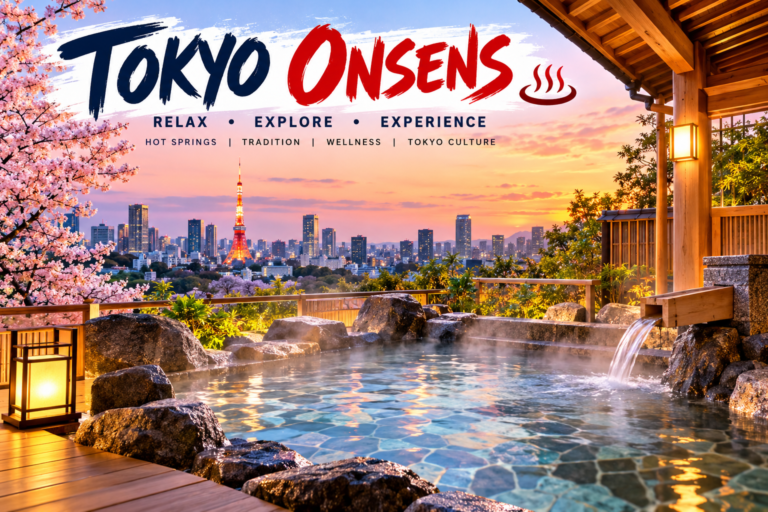
16. Onsen and Bathing Culture
Public bathing is another important element of Japanese culture.
While Tokyo is not primarily known for the rural hot-spring experience associated with mountain towns, the city and surrounding region provide opportunities to experience Japanese bathing culture.
Basic Bathing Etiquette
The most important rule is:
Wash yourself before entering the communal bath.
The bath is generally for soaking rather than washing.
Visitors should also:
- Keep towels out of the bathwater.
- Keep voices low.
- Follow facility rules.
- Rinse thoroughly before entering.
- Respect other bathers.
Rules regarding tattoos can vary by facility, so checking beforehand is wise.
17. Omotenashi: The Culture of Hospitality
One concept frequently discussed in relation to Japanese hospitality is omotenashi.
It is often translated simply as hospitality, but the idea can involve anticipating a guest’s needs and providing thoughtful service without demanding recognition in return.
In Tokyo, this can appear in subtle ways.
For example:
- Careful presentation of food
- Precise service
- Clean public environments
- Attention to customer needs
- Thoughtful packaging
- Detailed instructions
The important insight is that hospitality is often communicated through small actions rather than dramatic gestures.
18. Cleanliness and Public Behavior
Visitors often notice how orderly Tokyo can feel.
This is connected to many factors, including infrastructure, social expectations, community behavior, and public etiquette.
Why Are Public Spaces So Important?
Japanese social norms often emphasize consideration for others.
Examples include:
- Avoiding loud conversations on trains
- Queuing properly
- Keeping personal belongings controlled
- Following pedestrian rules
- Keeping shared spaces clean
- Respecting designated smoking areas
These are not all ancient traditions.
Some are modern social practices.
But together they show how Japanese culture values harmony and shared responsibility.
19. Train Etiquette as Modern Tokyo Tradition
Tokyo’s railway culture illustrates how tradition can evolve.
Taking a train is obviously not an ancient Japanese custom.
However, the etiquette surrounding public transportation reflects broader social values.
Passengers commonly try to:
- Queue before boarding
- Allow passengers to exit first
- Avoid blocking doors
- Keep voices low
- Put phones on silent or avoid loud calls
- Keep bags from taking unnecessary space
For visitors, following these habits makes travel easier and demonstrates respect.
20. Traditional Neighborhoods in Modern Tokyo
Some neighborhoods preserve elements of older urban life.
Areas associated with traditional streetscapes may contain:
- Small family businesses
- Old houses
- Local temples
- Neighborhood shrines
- Traditional restaurants
- Craft shops
- Small gardens
- Community festivals
Why Neighborhoods Matter
A major mistake travelers make is looking for “traditional Tokyo” only in famous tourist attractions.
Tradition is often easier to understand in ordinary neighborhoods.
A small shop that has served local customers for decades can reveal more about daily continuity than a highly staged cultural show.
21. Tokyo’s Seasonal Traditions
Seasonality is one of the strongest threads connecting different Tokyo traditions.
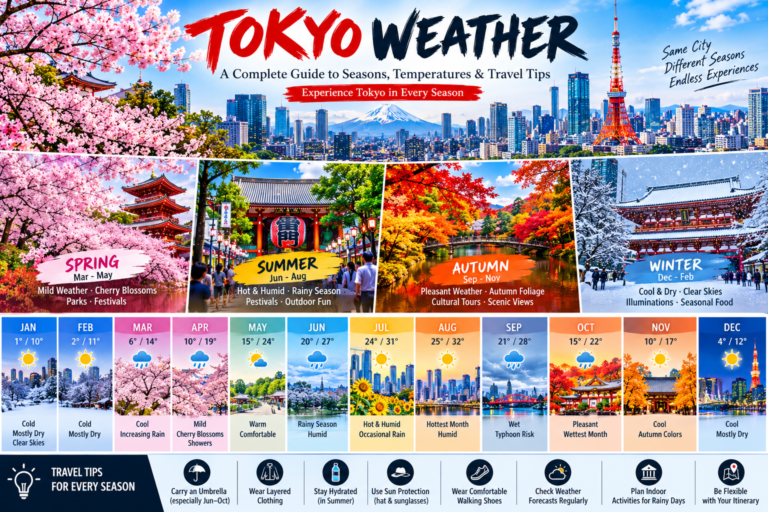
Spring
Spring can bring:
- Cherry blossoms
- Hanami
- Seasonal sweets
- Spring festivals
- New school and business years
Summer
Summer traditions can include:
- Matsuri
- Fireworks
- Yukata
- Bon-related observances
- Seasonal foods
Autumn
Autumn is associated with:
- Changing leaves
- Harvest-related foods
- Seasonal sweets
- Cultural events
Winter
Winter traditions include:
- New Year preparations
- Hatsumode
- Traditional decorations
- Warm seasonal foods
- Temple and shrine visits
This seasonal rhythm helps explain why Japanese culture often changes its visual language throughout the year.
22. Tokyo Traditions for Families
Families traveling with children can experience many traditions without attending formal cultural programs.
Good options include:
- Shrine visits
- Japanese gardens
- Seasonal festivals
- Traditional food markets
- Simple craft workshops
- Sumo-related experiences
- Cultural museums
- Tea experiences designed for beginners
How to Make Traditional Culture Interesting for Children
Avoid turning every cultural experience into a lecture.
Instead, encourage children to observe.
Ask:
- Why are these decorations here?
- Why are people bowing?
- What season does this food represent?
- Why are shoes removed?
- What does this fortune say?
- What sounds can you hear?
Curiosity makes cultural learning much more memorable.
23. Tokyo Traditions for First-Time Visitors
First-time travelers do not need to experience everything.
A simple cultural itinerary might combine different dimensions of traditional life.
A One-Day Traditional Tokyo Experience
You could begin with a historic temple area.
Afterward, explore traditional shops and try a Japanese lunch.
In the afternoon, visit a garden or participate in a cultural workshop.
In the evening, enjoy a traditional meal or cultural performance.
This approach is better than rushing through ten attractions because it gives each experience enough time to make sense.
24. Tokyo Traditions for Couples
Couples can experience traditional culture through:
- Tea ceremonies
- Garden walks
- Kimono or yukata experiences
- Seasonal festivals
- Traditional restaurants
- Evening temple visits
- Craft workshops
A cultural activity can also provide a slower alternative to Tokyo’s busy nightlife.
25. Tokyo Traditions for Solo Travelers
Solo travelers may actually find traditional Tokyo easier to appreciate because many cultural experiences are naturally suited to individual visitors.
Consider:
- Soba restaurants
- Tea houses
- Gardens
- Museums
- Shrine visits
- Traditional craft workshops
- Kabuki or theater
- Quiet temple areas
Solo travel also allows you to spend longer observing details.
26. Tokyo Traditions for Budget Travelers
Traditional culture does not always require a large budget.
Many experiences can be inexpensive or free.
Affordable Cultural Experiences
Examples include:
- Walking through historic neighborhoods
- Visiting public shrine grounds
- Exploring temple approaches
- Enjoying local festivals
- Visiting public gardens
- Trying affordable soba
- Exploring traditional markets
- Observing seasonal decorations
The best cultural experience is not necessarily the most expensive one.
27. Tokyo Traditions for Luxury Travelers
Luxury travelers can explore tradition through highly specialized experiences.
Options can include:
- High-end kaiseki dining
- Private cultural workshops
- Premium tea experiences
- Traditional arts demonstrations
- Luxury ryokan-style experiences outside central Tokyo
- High-level sushi experiences
- Private guided cultural tours
The difference is often not simply price.
Premium experiences can provide greater access to specialized knowledge and craftsmanship.
28. Tokyo Traditions for Photographers
Tokyo provides endless opportunities for cultural photography.
However, visitors should distinguish between photographing public spaces and photographing people engaged in private or religious activities.
Better Cultural Photography
Instead of focusing only on famous landmarks, consider:
- Lanterns
- Seasonal flowers
- Traditional architecture
- Food preparation
- Craft details
- Streetscapes
- Temple gates
- Festival decorations
- Gardens
Always follow photography restrictions.
If photography is prohibited, do not assume the rule is optional.
29. Common Mistakes Visitors Make
Understanding traditions is useful, but cultural mistakes are still possible.
Treating Religious Sites Like Photo Studios
Shrines and temples are living religious spaces.
Avoid blocking worshippers or interrupting rituals for photographs.
Ignoring Local Rules
A sign may specify:
- No photography
- No entry
- No smoking
- Shoes required or prohibited
- Restricted areas
Follow these instructions.
Speaking Too Loudly
What feels normal in a crowded tourist destination may feel disruptive in a quiet temple, train, restaurant, or neighborhood.
Assuming All Japanese People Follow Every Tradition
Japan is a modern society.
Not everyone practices every tradition in the same way.
Avoid stereotypes.
Wearing Traditional Clothing Without Understanding It
If you rent kimono or yukata, learn basic etiquette and handle the garments respectfully.
30. How Tokyo Traditions Are Changing
Traditions do not remain frozen.
Modern Tokyo continues to reshape traditional culture.
Digital Technology
Technology has changed how people discover cultural experiences.
Visitors can now use smartphones to:
- Learn etiquette
- Translate signs
- Reserve workshops
- Navigate temples and shrines
- Research festivals
- Learn about traditional foods
Technology can therefore support traditional tourism rather than necessarily replacing it.
Tourism
International tourism has also changed how traditions are presented.
Some cultural experiences are designed specifically for visitors.
This is not automatically negative.
A carefully designed introduction can help people understand traditions they might otherwise never encounter.
The challenge is maintaining authenticity and respect.
Younger Generations
Younger Japanese people may engage with traditional culture differently from older generations.
Some practices decline while others are revived in new forms.
Traditional fashion, crafts, food, festivals, and design can be reinterpreted through modern aesthetics and social media.
31. The Difference Between Authenticity and Performance
This is one of the most important questions for cultural travelers.
Is a tourist-oriented cultural experience still authentic?
There is no simple answer.
A traditional activity does not become meaningless merely because visitors participate.
A tea ceremony conducted for tourists may still teach genuine concepts of hospitality, seasonality, and etiquette.
A kimono rental may introduce visitors to real clothing traditions.
A festival may welcome tourists while remaining primarily a community event.
The better question is:
Does the experience help you understand the culture respectfully, or does it reduce the culture to a costume or spectacle?
That distinction is useful when choosing activities.
32. Pros and Cons of Experiencing Tokyo Traditions
| Pros | Cons |
|---|---|
| Builds cultural understanding | Some experiences can be expensive |
| Makes travel more meaningful | Popular sites can be crowded |
| Supports traditional businesses | Some activities may feel tourist-oriented |
| Connects travelers with local history | Language barriers can exist |
| Provides memorable experiences | Religious etiquette requires attention |
| Introduces traditional food and crafts | Some traditions are difficult to understand quickly |
The solution is not to avoid tourist experiences.
Instead, choose experiences that combine accessibility, education, respect, and genuine cultural context.
33. Ten Brands and Cultural Businesses to Know
The word “brand” can be interpreted broadly in the context of traditional Tokyo culture. The following organizations and cultural destinations represent different ways visitors can encounter Japanese traditions, food, hospitality, crafts, or cultural experiences.
| Brand / Organization | Cultural Connection | Best For | Experience Type |
|---|---|---|---|
| Senso-ji | Buddhist heritage | First-time visitors | Temple culture |
| Kabukiza | Kabuki theater | Performing arts fans | Traditional theater |
| Ippodo Tea | Japanese tea culture | Tea enthusiasts | Tea |
| Toraya | Wagashi | Food lovers | Traditional sweets |
| Nakamise | Asakusa commerce | Souvenir hunters | Traditional shopping |
| Mitsukoshi | Japanese department-store culture | Shoppers | Food, crafts, gifts |
| Nihonbashi Mitsukoshi | Historic retail culture | Culture-focused travelers | Shopping |
| Kappabashi | Culinary tools and crafts | Food enthusiasts | Kitchen culture |
| Japan Traditional Crafts Aoyama Square | Traditional craftsmanship | Craft lovers | Arts and crafts |
| The Japan Folk Crafts Museum | Mingei culture | Design enthusiasts | Folk crafts |
These should not be treated as identical types of businesses or institutions. Each represents a different doorway into Japanese cultural life.
34. A Practical Tokyo Traditions Checklist
Before your trip, consider learning these basics:
- Learn simple Japanese greetings.
- Understand basic shrine etiquette.
- Learn when shoes may need to be removed.
- Understand basic chopstick etiquette.
- Learn basic train manners.
- Check photography rules.
- Respect religious spaces.
- Carry a small amount of cash where appropriate.
- Learn how to dispose of trash properly.
- Research seasonal festivals before traveling.
- Dress appropriately for cultural sites.
- Avoid touching traditional objects unless invited.
- Ask before photographing people closely.
- Follow local signs.
- Stay curious rather than judgmental.
35. How to Experience Tokyo Traditions Respectfully
Respect does not require perfection.
You do not need to memorize every Japanese rule.
A few principles can make a major difference.
Observe Before Acting
When you enter a shrine, temple, restaurant, bathhouse, or traditional establishment, look around first.
People often demonstrate the expected behavior.
Ask When Unsure
If you are uncertain, politely ask staff.
A simple question is better than confidently doing something inappropriate.
Avoid Cultural Stereotypes
Japan is not a frozen traditional society.
Tokyo contains diverse lifestyles, generations, identities, occupations, and personal preferences.
Traditional culture is only one part of modern Japanese life.
Spend Money Thoughtfully
When possible, support small businesses, craftspeople, local restaurants, cultural institutions, and community events.
Your travel spending can help maintain living traditions.
36. Why Tokyo’s Traditions Are Different From Kyoto’s
Visitors often compare Tokyo and Kyoto.
Kyoto is widely associated with imperial history, classical architecture, temples, gardens, and traditional arts.
Tokyo, by contrast, developed as Edo, a major urban and commercial center.
This gave Tokyo a different cultural personality.
Tokyo traditions often feel:
- Urban
- Practical
- Commercial
- Community-focused
- Fast-moving
- Adaptable
- Closely connected to modern life
The distinction should not be exaggerated.
Both cities preserve traditional Japanese culture, but they developed through different historical paths.
37. The Hidden Tradition of Adaptation
One of the most overlooked Tokyo traditions is adaptation itself.
Tokyo has repeatedly transformed.
Edo became Tokyo.
Traditional neighborhoods survived modernization.
Old food traditions became modern restaurant culture.
Traditional crafts entered contemporary design.
Festivals adapted to changing neighborhoods.
Tea culture became available through new experiences.
This suggests that cultural preservation does not always mean keeping something exactly as it was.
Sometimes preservation means allowing a tradition to evolve while retaining its core meaning.
38. Future of Tokyo Traditions
Tokyo traditions are likely to continue changing.
Several trends may shape their future.
Technology-Enhanced Cultural Experiences
Augmented reality, digital guides, translation tools, and interactive experiences may make traditional culture easier for international visitors to understand.
Revival of Traditional Crafts
Interest in handmade products, sustainable materials, and Japanese design could support renewed interest in traditional craftsmanship.
Cultural Tourism
As international visitors seek experiences beyond famous landmarks, smaller cultural institutions and local neighborhoods may become more important.
Sustainability
Festivals, food businesses, crafts, and tourism organizations may increasingly consider waste reduction, local sourcing, and environmental impact.
Tradition Through Contemporary Design
Traditional Japanese aesthetics are likely to continue influencing architecture, fashion, food presentation, packaging, and digital design.
39. Frequently Asked Questions About Tokyo Traditions
What are the most famous Tokyo traditions?
Some of the best-known traditions include shrine and temple visits, New Year celebrations, hanami, matsuri festivals, tea culture, traditional food, sumo, Kabuki, kimono, Japanese gardens, and traditional crafts.
What is Tokyo famous for culturally?
Tokyo is culturally famous for its combination of modern urban life and historical traditions. The city is particularly known for Edo heritage, food culture, festivals, temples, shrines, performing arts, shopping, craftsmanship, and seasonal celebrations.
What should tourists know about Japanese etiquette?
Visitors should generally respect personal space, follow local signs, keep voices low on public transportation, queue properly, observe religious-site rules, and follow restaurant and bathing etiquette.
Is bowing required for tourists in Tokyo?
Tourists do not need to master formal Japanese bowing. A polite nod or slight bow is usually sufficient in many everyday situations.
Can tourists participate in Japanese traditions?
Yes. Visitors can participate in activities such as tea ceremonies, shrine visits, festivals, craft workshops, kimono experiences, traditional dining, and cultural performances.
Is it disrespectful to wear a kimono as a tourist?
Not necessarily. Wearing kimono or yukata through a reputable cultural or rental experience can be a respectful way to learn about Japanese clothing traditions. The key is to treat the clothing and cultural setting appropriately.
What traditional food should I try in Tokyo?
Depending on your preferences, consider sushi, soba, tempura, wagashi, traditional Japanese sweets, seasonal dishes, and other foods connected with Edo and broader Japanese culinary culture.
What is hanami?
Hanami is the Japanese tradition of enjoying flowers, especially cherry blossoms. In Tokyo, it often involves gathering with friends, family, or colleagues beneath blooming cherry trees.
What is a matsuri?
Matsuri is a Japanese festival. Tokyo hosts many different festivals throughout the year, including major shrine festivals and smaller neighborhood celebrations.
What should I avoid doing at Japanese temples and shrines?
Avoid being loud, entering restricted areas, ignoring photography rules, touching sacred objects without permission, or interrupting people who are praying.
Are Tokyo traditions still practiced today?
Yes. Many traditions remain part of contemporary life, although the way people practice them can differ between generations, communities, and individuals.
What is the best season to experience Tokyo traditions?
There is no single best season. Spring offers cherry blossoms, summer brings many festivals, autumn highlights seasonal nature and foods, and winter offers New Year traditions.
How can I experience traditional Tokyo without spending much money?
Walking through historic neighborhoods, visiting shrine and temple grounds, exploring gardens, attending public festivals, and trying affordable traditional foods can provide meaningful cultural experiences at relatively low cost.
Are Tokyo traditions only for tourists?
No. Many traditions remain part of Japanese religious, family, seasonal, culinary, artistic, and community life. Some experiences are designed for tourists, while others are primarily local practices.
Conclusion
Tokyo traditions are not simply remnants of an older Japan hidden behind modern skyscrapers. They are living parts of a city that has spent centuries adapting to change.
The most fascinating thing about Tokyo is often the moment when the old and new appear together: a quiet shrine surrounded by office buildings, a centuries-old food tradition served in a modern restaurant, a summer festival taking place beside a contemporary neighborhood, or traditional craftsmanship influencing modern design.
For travelers, understanding these traditions changes the way Tokyo feels.