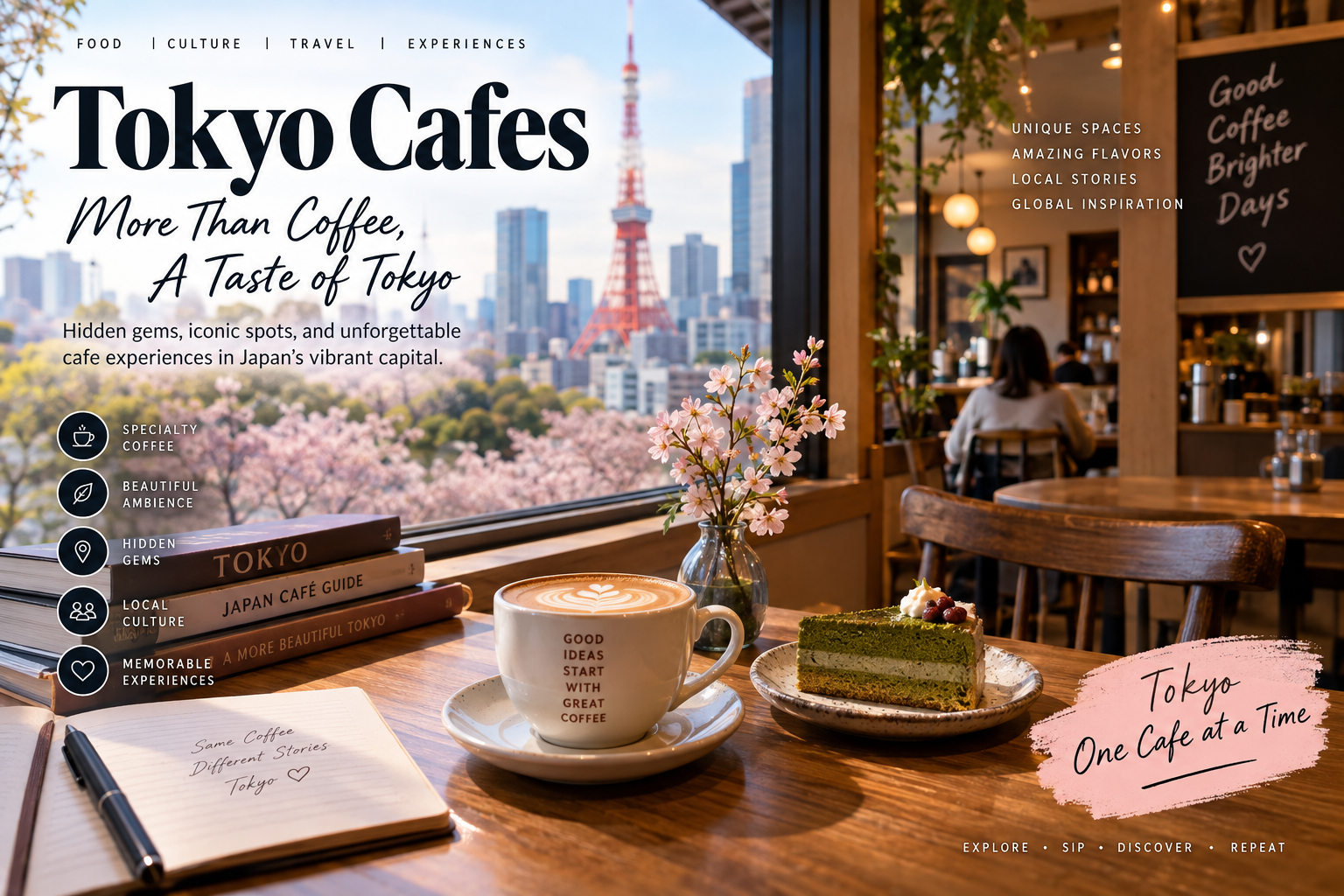
Tokyo Cafes: Why They Are Worth Exploring
Have you ever walked through Tokyo and wondered whether the tiny café behind an unmarked door might serve one of the best drinks of your trip? Tokyo cafes are much more than places to buy coffee; they are spaces where Japanese craftsmanship, design, nostalgia, food, hospitality, and modern lifestyle come together. From historic kissaten and specialty coffee bars to matcha cafés, minimalist roasteries, and themed experiences, Tokyo offers a café for almost every traveler Tokyo Streets
The challenge is not finding a café. Tokyo has thousands of places where you can sit down with coffee, tea, dessert, or a light meal. The real challenge is knowing which type of café fits your travel style.
A first-time visitor may want a quiet café near Shibuya. A coffee enthusiast may be searching for carefully prepared single-origin beans. A photographer may want beautiful interiors and desserts. A family may need a comfortable café with enough space for children. A solo traveler may prefer a counter seat where spending an hour alone feels completely normal.
Tokyo makes all of these experiences possible.
The city’s café culture also has an unusual dual personality. One side looks forward, with modern specialty coffee, experimental brewing, fashionable interiors, and new café concepts. The other looks backward, with traditional kissaten that preserve the atmosphere of Japan’s Showa era.
That contrast is one of the reasons Tokyo cafes are so fascinating.
Understanding Tokyo’s Café Culture
Tokyo’s café scene developed through several overlapping traditions rather than one single movement.
The traditional kissaten is particularly important. These old-style Japanese coffee shops were designed as places to sit, talk, read, think, and enjoy carefully prepared coffee. Many also developed distinctive food menus featuring dishes such as pudding, toast, sandwiches, Napolitan spaghetti, omelets, parfaits, and cream soda.
Japan’s official Tokyo tourism guide describes kissaten as more than simple coffee shops, highlighting their role as cultural spaces and their connection with long-loved coffee and food traditions.
At the same time, Tokyo has become one of Asia’s major destinations for specialty coffee.
Modern coffee shops may focus heavily on bean origin, processing method, roast profile, extraction, water temperature, brewing technique, and sensory characteristics. Instead of simply asking whether you want coffee with milk or sugar, a barista may help you choose between several beans with very different flavor profiles.
Then there is a third category: themed cafés.
These can include character cafés, animal cafés, anime-inspired spaces, gaming cafés, dessert cafés, and other highly designed experiences. The drink itself may be only one part of the attraction.
Understanding these categories before you start café hopping makes your trip much easier.
The Three Main Types of Tokyo Cafes
Traditional Kissaten
A kissaten is the choice for travelers who want atmosphere and history.
Imagine entering a dimly lit room with dark wood, vintage furniture, old cups, carefully prepared coffee, and music playing softly in the background. The experience is intentionally slower than a modern takeaway coffee shop.
Kissaten culture is closely associated with Japan’s Showa period, and the style has recently attracted renewed attention from younger visitors. The Japan Times reported in 2026 that younger café owners are helping revive traditional coffeehouse culture while nostalgic kissaten aesthetics have become increasingly popular on social media.
The appeal is not necessarily the newest brewing technology.
It is the feeling.
You are not simply drinking coffee. You are temporarily entering another period of Tokyo’s history.
Specialty Coffee Shops
Specialty cafés are better suited to travelers who genuinely care about coffee.
These shops often emphasize single-origin beans, careful roasting, manual brewing, espresso, pour-over coffee, and knowledgeable baristas.
Some cafés make the bean-selection process part of the experience. You may be able to smell different beans, discuss flavor preferences, and choose between coffees with fruity, floral, chocolatey, nutty, acidic, or heavier profiles.
KOFFEE MAMEYA is a particularly good example of this approach. The café is known for its tasting-oriented service and baristas who help customers choose beans according to their preferences.
Themed and Experience Cafés
Themed cafés operate differently.
Here, the goal may be entertainment, photography, interaction, design, or a memorable experience rather than exceptional coffee.
Tokyo’s themed café landscape includes animal cafés, character experiences, dessert-focused shops, and concept-driven venues.
This category requires more planning because opening hours, reservations, admission systems, and concepts can change more frequently than at established coffee shops.
Why Tokyo Cafes Feel Different
One of the most interesting things about Tokyo’s café culture is that the city does not force tradition and modernity to compete.
They exist side by side.
You can drink an extremely carefully prepared pour-over in a minimalist room in the morning and later sit inside a decades-old kissaten eating pudding.
The two experiences may seem completely different, but they share several Japanese values.
Attention to Detail
Japanese café culture often places strong emphasis on preparation and presentation.
This can appear in small details: the way coffee is poured, how cups are selected, how desserts are arranged, how customers are greeted, or how a compact space is organized.
Respect for the Customer Experience
Hospitality is another important part of the experience.
In a good café, service may feel calm rather than rushed. Staff may give you space rather than repeatedly checking whether you need something.
This does not mean every café provides the same service style, but thoughtful hospitality is a recurring feature of Japanese food culture.
Small Spaces Used Intelligently
Tokyo real estate is expensive, so many cafés operate in surprisingly compact spaces.
A tiny shop may have only a few seats but still create a memorable atmosphere through lighting, furniture, music, architecture, or the presentation of food.
This is particularly noticeable in specialty coffee shops.
10 Tokyo Cafe Brands and How They Compare
The following comparison is designed to help travelers understand the different types of experiences available rather than simply create a ranking.
| Café / Brand | Best For | Style | Coffee Focus | Atmosphere | Ideal Traveler |
|---|---|---|---|---|---|
| KOFFEE MAMEYA | Coffee discovery | Specialty | Very high | Minimal, focused | Coffee enthusiasts |
| GLITCH COFFEE & ROASTERS | Specialty coffee | Modern | Very high | Energetic, contemporary | Serious coffee lovers |
| Blue Bottle Coffee | Reliable specialty coffee | Modern | High | Minimalist | First-time visitors |
| KITSUNÉ CAFÉ | Design and lifestyle | Fashion café | Moderate | Stylish | Fashion-conscious travelers |
| Fuglen Tokyo | Coffee and design | Scandinavian-inspired | High | Social, stylish | Design lovers |
| Onibus Coffee | Neighborhood coffee | Independent specialty | High | Relaxed | Slow travelers |
| Sarutahiko Coffee | Everyday Japanese coffee | Contemporary | High | Casual | General travelers |
| Ogawa Coffee | Japanese coffee culture | Modern/classic blend | High | Refined | Coffee and food lovers |
| Chatei Hatou | Traditional kissaten | Retro | High | Historic, intimate | Nostalgia seekers |
| Coffee Seibu | Retro experience | Kissaten | Moderate | Classic Showa | First-time kissaten visitors |
This table should be treated as a style guide rather than an absolute ranking. Tokyo’s café scene changes constantly, and individual branches can provide very different experiences.
KOFFEE MAMEYA: A Destination for Coffee Enthusiasts
KOFFEE MAMEYA is one of the clearest examples of Tokyo’s modern coffee culture.
Instead of making the interior the main attraction, the experience puts coffee selection and preparation at the center.
Baristas can help visitors choose beans according to taste preferences, making the café especially useful for travelers who are interested in understanding specialty coffee rather than simply drinking it.
Food & Wine included KOFFEE MAMEYA among the Tokyo recommendations of World Barista Champion Hidenori Izaki, who described it as a particularly elevated, tasting-focused coffee experience.
Who Should Visit KOFFEE MAMEYA?
This café is especially suitable for:
- Specialty coffee enthusiasts
- Travelers interested in single-origin beans
- People who enjoy pour-over coffee
- Visitors who want to buy beans
- Travelers who appreciate knowledgeable service
If you normally order a sweet latte and do not know much about coffee, do not worry. You do not need to be an expert.
Instead, tell the barista what you normally enjoy.
For example, you can explain that you prefer coffee that is:
- Sweet
- Fruity
- Smooth
- Strong
- Dark
- Light
- Chocolate-like
- Less acidic
That information is often more useful than trying to name a coffee-growing region you barely know.
GLITCH COFFEE & ROASTERS
GLITCH has become one of the names frequently associated with Tokyo’s modern specialty coffee movement.
The café is particularly interesting for travelers who enjoy bright, expressive coffees and want to explore different beans.
A recent guide to Tokyo coffee describes GLITCH as a destination for specialty coffee and notes its focus on modern coffee preparation.
However, online popularity can create a problem.
A famous café may not provide the same experience every day.
Recent coffee-community discussions illustrate this perfectly: some visitors report excellent experiences at GLITCH, while others have found certain locations busier or less personal than expected.
That does not make the café bad.
It simply demonstrates why travelers should separate coffee quality, atmosphere, service, and expectations when judging a café.
Blue Bottle Coffee in Tokyo
Blue Bottle is a useful option for travelers who want specialty coffee with a familiar modern format.
Its Tokyo presence helped connect the city with the broader third-wave coffee movement, and the brand now operates in multiple Japanese locations.
For international travelers, one advantage is predictability.
You generally know what type of experience you are walking into.
That can be valuable after a long day of sightseeing when you want good coffee without spending time researching a tiny independent shop.
Best Use Case
Choose a Blue Bottle location when:
- You want a modern café
- You are traveling with friends
- You want a recognizable specialty coffee brand
- You prefer a clean, minimalist environment
- You want coffee rather than a long cultural experience
It may not be the most adventurous choice, but predictable quality has value when you are tired.
KITSUNÉ CAFÉ
KITSUNÉ CAFÉ combines café culture with fashion and lifestyle.
The Omotesando location is particularly relevant to travelers exploring the fashionable Aoyama and Omotesando area.
Its identity is closely connected to Maison Kitsuné, giving the café a more fashion-oriented atmosphere than a traditional coffee bar.
The café is known for its recognizable fox-themed presentation and French-Japanese lifestyle aesthetic.
Who Will Enjoy It?
KITSUNÉ CAFÉ is a strong option for:
- Fashion lovers
- Instagram and photography enthusiasts
- Couples
- Design-conscious travelers
- Visitors exploring Omotesando
It is less about becoming a coffee expert and more about combining coffee with Tokyo’s fashion culture.
Fuglen Tokyo
Fuglen is another interesting choice for travelers who enjoy cafés with strong design identities.
The Tokyo café connects coffee with a Scandinavian-inspired environment and social atmosphere.
It can work particularly well for travelers who want somewhere to relax after walking around the city rather than a highly technical coffee tasting.
Its broader identity demonstrates an important point about Tokyo.
The city does not simply imitate foreign café culture.
It absorbs outside influences and gives them a place within Tokyo’s own lifestyle.
Onibus Coffee
Onibus Coffee is associated with Tokyo’s independent specialty coffee culture.
It is particularly relevant when exploring neighborhoods such as Nakameguro and nearby areas where independent cafés and design-oriented businesses create a slower urban atmosphere.
For travelers, Onibus can be a good choice when the goal is not simply checking a famous café off a list.
Instead, it fits into a neighborhood walk.
Buy a coffee, walk beside the streets, explore small stores, and allow the area to become part of the experience.
Sarutahiko Coffee
Sarutahiko Coffee is useful for travelers who want a modern Japanese coffee experience without making the trip exclusively about specialty coffee.
It has a broader appeal and can work for casual coffee breaks during sightseeing.
This is an important category because not every traveler wants a 45-minute discussion about processing methods.
Sometimes you just want a good cup of coffee.
Ogawa Coffee
Ogawa Coffee represents another side of Japanese coffee culture.
The brand has roots in Kyoto but has locations in Tokyo, making it useful for travelers who want to experience a Japanese coffee brand with a more established identity.
Its appeal sits between traditional coffee culture and modern café expectations.
Chatei Hatou
If specialty coffee is about precision, Chatei Hatou is about atmosphere.
A classic kissaten experience can feel almost theatrical to a modern traveler.
The room, furniture, lighting, cups, coffee preparation, and food all contribute to the experience.
This is where the phrase “Tokyo cafes” becomes much broader than “Tokyo coffee shops.”
You are not simply buying caffeine.
You are experiencing a form of urban heritage.
Coffee Seibu
Coffee Seibu is another recognizable name for visitors interested in Tokyo’s retro café culture.
Its traditional atmosphere demonstrates why kissaten remain popular even in an era of minimalist specialty coffee shops.
Retro cafés can be especially appealing to travelers who have already experienced Tokyo’s modern districts and want something visually and culturally different.
Best Tokyo Cafes by Traveler Type
One of the biggest mistakes in café guides is pretending that one ranking works for everyone.
It does not.
The “best” café depends on the person sitting at the table.
Best Tokyo Cafes for Coffee Lovers
Coffee enthusiasts should prioritize:
- KOFFEE MAMEYA
- GLITCH
- Onibus Coffee
- Specialty roasters
- Independent pour-over cafés
- Coffee tasting experiences
Look for menus that provide information about origin, processing, roast profile, and brewing method.
Best Tokyo Cafes for First-Time Visitors
First-time travelers may prefer cafés that combine accessibility with a distinctive Tokyo atmosphere.
Good choices include:
- Blue Bottle
- KITSUNÉ CAFÉ
- Sarutahiko Coffee
- A traditional kissaten
- A neighborhood specialty café
The goal should be variety rather than visiting five cafés that all look the same.
Best Tokyo Cafes for Couples
Couples may prefer:
- Stylish cafés
- Dessert cafés
- Kissaten
- Scenic cafés
- Design-focused spaces
- Café-and-shopping combinations
Omotesando, Daikanyama, Nakameguro, and Kiyosumi-Shirakawa can be useful areas for combining café visits with walking and shopping.
Best Tokyo Cafes for Solo Travelers
Tokyo is particularly comfortable for solo café travelers.
A counter seat can be an advantage rather than a disadvantage.
Solo visitors should consider:
- Coffee bars
- Kissaten
- Specialty roasteries
- Small neighborhood cafés
- Book cafés
A small café can actually feel more comfortable alone than a large restaurant.
Best Tokyo Cafes for Families
Families should focus less on online popularity and more on practical factors.
Before visiting, consider:
- Seating space
- Stroller access
- Restroom availability
- Noise level
- Waiting time
- Menu variety
- Whether children are welcomed
- Whether reservations are required
A tiny specialty coffee counter may be fantastic for an adult traveler but difficult with a stroller.
Tokyo Cafe Neighborhoods You Should Know
Tokyo is too large to explore through one café district.
Choosing neighborhoods according to your interests can save significant travel time.
Shibuya
Shibuya is ideal for travelers who want a mixture of:
- Modern cafés
- Fashion
- Shopping
- Specialty coffee
- Desserts
- Youth culture
The neighborhood is busy, so do not expect every café to provide a quiet escape.
Shinjuku
Shinjuku is one of the best areas for mixing sightseeing with cafés.
It also has a strong connection with older coffeehouse culture.
You can move from huge department stores and skyscrapers into a tiny café that feels decades older than the street outside.
Omotesando and Aoyama
This area is particularly strong for:
- Fashion cafés
- Design
- Specialty coffee
- Luxury shopping
- Lifestyle brands
- Photogenic interiors
KITSUNÉ CAFÉ and KOFFEE MAMEYA make the area especially interesting for café-focused travelers.
Daikanyama
Daikanyama is a strong choice for travelers who prefer a calmer, stylish environment.
It works well for café hopping combined with boutique shopping and neighborhood walks.
Nakameguro
Nakameguro is famous for its attractive streets and riverside atmosphere.
It is particularly pleasant when you combine coffee with walking rather than treating the café as the entire destination.
Kiyosumi-Shirakawa
Kiyosumi-Shirakawa is one of the areas that specialty coffee enthusiasts should know.
The neighborhood became associated with the modern coffee movement and is a good destination for travelers interested in independent cafés and roasters.
Jimbocho
Jimbocho is especially interesting for book lovers.
It provides a natural combination of:
Books + coffee + quiet streets + old Tokyo atmosphere.
If your ideal afternoon involves reading while drinking coffee, this district deserves consideration.
How to Build a Tokyo Cafe-Hopping Day
Café hopping sounds easy.
It is not.
The main problem is that drinking several coffees in a short period can quickly become unpleasant.
Instead of trying to drink espresso at every stop, design your day around different experiences.
Morning: Specialty Coffee
Start with one high-quality coffee.
Choose a specialty café where you can learn about the beans.
Do not immediately order another coffee after finishing.
Walk for 30 to 60 minutes.
Lunch: Kissaten Food
Visit a traditional kissaten around lunchtime.
Try a food item rather than another large coffee.
Possible choices may include:
- Toast
- Egg sandwiches
- Napolitan spaghetti
- Pudding
- Omurice
- Parfait
- Cream soda
Availability varies by café.
Afternoon: Dessert or Matcha
Switch away from coffee.
A matcha café, tea house, dessert shop, or seasonal sweets café can provide variety.
Evening: Café With Atmosphere
Finish with a place selected for atmosphere rather than caffeine.
This could be a stylish café, dessert shop, book café, or another relaxing space.
This approach creates a better travel experience than attempting to drink six coffees in one afternoon.
What to Order at Tokyo Cafes
You do not need to know Japanese coffee terminology before visiting.
Start with what you already like.
If You Like Strong Coffee
Ask about darker roasts or more intense preparations.
If You Like Fruity Coffee
Ask about light-roasted single-origin coffees.
Fruity does not mean the coffee contains fruit.
It refers to naturally occurring flavor characteristics that may remind you of berries, citrus, stone fruit, tropical fruit, or flowers.
If You Prefer Milk Drinks
Look for:
- Café latte
- Cappuccino
- Flat white where available
- Espresso-based seasonal drinks
If You Do Not Like Coffee
Tokyo is still excellent for you.
Look for:
- Matcha
- Japanese tea
- Hojicha
- Fruit drinks
- Cream soda
- Cocoa
- Desserts
A Tokyo café guide should never assume every visitor is a coffee enthusiast.
Japanese Café Foods You Should Try
Tokyo cafes are often as interesting for food as they are for drinks.
Japanese Pudding
Retro kissaten pudding is one of the most recognizable café desserts.
It is usually firmer than many Western puddings and is often served with caramel.
Cream Soda
The classic green cream soda is strongly associated with retro Japanese café culture.
Its visual appearance makes it particularly popular with travelers.
Thick Toast
Japanese kissaten-style toast can be surprisingly satisfying.
The bread may be thick, soft inside, and crisp outside.
Napolitan Spaghetti
Despite the Italian-sounding name, Napolitan is a Japanese yoshoku dish rather than a traditional Italian pasta recipe.
It is strongly connected with Japanese café and Western-style restaurant culture.
Parfaits
Japanese café parfaits can become elaborate desserts featuring layers of fruit, cream, ice cream, jelly, cake, cereal, or other ingredients.
Tokyo Cafes for Photography
Tokyo’s cafés are naturally suited to visual storytelling.
But there is a difference between a café that looks good online and one that is genuinely enjoyable.
Before visiting a highly photographed café, ask:
Would I still want to go if I could not take a photo?
If the answer is yes, it is probably worth visiting.
Best Visual Themes
Look for cafés featuring:
- Showa interiors
- Minimalist architecture
- Handcrafted ceramics
- Seasonal desserts
- Matcha presentation
- Retro signs
- Japanese gardens
- Industrial design
- Books
- Vintage furniture
The most memorable photos often come from cafés that have a genuine identity rather than simply adding decorative objects.
Tokyo Cafes for Remote Work
Remote work requires a different selection strategy.
A beautiful café is not automatically a good workplace.
Before opening your laptop, consider:
- Wi-Fi
- Power outlets
- Seating comfort
- Noise
- Table size
- Time limits
- Customer turnover
- Laptop rules
Some cafés are designed for quick visits and may not appreciate customers occupying a small table for several hours.
Specialty coffee shops can have limited seating, making them poor choices for long work sessions.
A larger café, coworking café, or hotel lounge may be more appropriate.
Tokyo Cafe Etiquette
Good café etiquette is simple.
Keep Your Voice Reasonably Low
Many cafés are quiet spaces.
Avoid speaking loudly, especially in small traditional cafés.
Follow Ordering Rules
Some cafés have minimum-order requirements or specific ordering procedures.
Look for signs or ask staff if you are unsure.
Do Not Assume Unlimited Seating Time
A café is a business, not a free workspace.
If a shop is crowded, staying for hours after buying one drink may not be appropriate.
Ask Before Taking Photos of People
Photographing food and interiors is usually different from photographing strangers.
Be respectful.
Do Not Rearrange the Café for a Photograph
If you move furniture, cups, signs, or decorations, return everything to its original position.
Common Mistakes Travelers Make at Tokyo Cafes
Mistake 1: Only Visiting Viral Cafes
Social media can be useful, but it can also create unrealistic expectations.
A café may be famous because its interior looks great in a photograph rather than because it provides the experience you personally want.
Mistake 2: Drinking Too Much Coffee
Three or four specialty coffees in a few hours may sound exciting.
Your stomach may disagree.
Alternate coffee with tea, water, dessert, or food.
Mistake 3: Ignoring Opening Days
Small independent cafés often have unusual schedules.
Always check the café’s current official information before traveling across Tokyo specifically for it.
Mistake 4: Expecting English Everywhere
Popular tourist areas often have more English support, but not every small café will.
Useful Japanese phrases can make the experience easier.
Mistake 5: Treating Every Café Like Starbucks
The ordering process varies.
Some cafés are fast and casual.
Others are deliberately slow.
Some are designed around tasting.
Some have very limited seating.
Observe what other customers do and follow the café’s system.
How Much Should You Budget for Tokyo Cafes?
There is no single universal café price.
Your cost depends heavily on the category.
A simple coffee from a neighborhood café may be relatively affordable, while premium specialty coffee, elaborate desserts, tasting experiences, and themed cafés can cost considerably more.
Recent Tokyo café guides commonly describe traditional kissaten and specialty coffee as different price categories, while themed cafés may use session-based or experience-based pricing.
The smartest approach is to create a flexible café budget.
For a normal sightseeing day, plan for:
One specialty drink + one food or dessert experience + one casual café stop.
That gives you variety without turning every break into a major expense.
Are Tokyo Cafes Expensive?
Tokyo cafés can be inexpensive, moderate, or surprisingly expensive.
The important question is not simply the price.
Ask what you are paying for.
A ¥700 drink at a carefully designed specialty café and a ¥2,500 tasting experience are fundamentally different products.
The second may involve multiple preparations, professional guidance, rare beans, or a longer experience.
Likewise, a traditional kissaten may charge more than a convenience-store coffee because you are paying for the space, service, food preparation, and atmosphere.
Traditional Kissaten vs Modern Specialty Cafes
This is one of the most useful comparisons for travelers.
| Feature | Kissaten | Specialty Café |
|---|---|---|
| Main appeal | Atmosphere and tradition | Coffee quality |
| Interior | Retro | Minimalist/modern |
| Coffee | Often darker and traditional | Often lighter and origin-focused |
| Food | Strong emphasis | Varies |
| Experience | Slow and atmospheric | Technical and focused |
| Best for | Culture lovers | Coffee enthusiasts |
| Photography | Vintage | Contemporary |
| Seating | Often comfortable | Can be limited |
| Music | Often part of atmosphere | Varies |
| Travel value | Cultural | Culinary/coffee |
Neither is objectively better.
They answer different questions.
The Hidden Value of Visiting Small Tokyo Cafes
The biggest opportunity for travelers may be avoiding the obsession with famous cafés.
A famous café gives you recognition.
A small neighborhood café can give you discovery.
There is something special about walking down a residential street, seeing a tiny sign, entering a small room, and realizing that the place was not designed for international tourism.
This does not mean unknown cafés are automatically better.
It means your Tokyo itinerary should leave room for accidental discoveries.
Do not schedule every minute.
Leave one afternoon open.
Walk.
If you see a café that looks inviting, check whether it is open and step inside.
That may become one of the most memorable moments of your trip.
Tokyo Cafe Trends to Watch
Tokyo’s café culture continues to evolve.
The Return of Retro
Retro kissaten are experiencing renewed interest, particularly among younger visitors.
The Japan Times reported that nostalgic coffee shops have become popular again, with visual elements such as vintage interiors, parfaits, and cream sodas gaining strong social-media attention.
This creates an interesting cycle.
A café style once considered old-fashioned can become fashionable precisely because it feels different from modern cafés.
Coffee as an Experience
Coffee is increasingly becoming an experience rather than simply a beverage.
The Financial Times highlighted Tokyo’s development of coffee omakase-style experiences, where customers may receive several carefully designed coffee-based preparations as part of a course.
This suggests that premium coffee is moving toward the same experiential model seen in high-end restaurants.
More Focus on Bean Storytelling
Customers increasingly want to know:
- Where beans come from
- How they were processed
- How they were roasted
- What flavors they may have
- How brewing changes the taste
This creates opportunities for cafés to educate customers rather than simply sell drinks.
Cafés as Lifestyle Spaces
Modern Tokyo cafés increasingly overlap with:
- Fashion
- Books
- Art
- Design
- Music
- Retail
- Architecture
- Wellness
- Travel
This means the future café may not look like a traditional coffee shop.
It may be a hybrid space.
The Future of Tokyo Cafes
The future will probably not be purely traditional or purely modern.
Instead, Tokyo is likely to continue developing a mixed café ecosystem.
Traditional kissaten will remain attractive because they offer something that technology cannot easily reproduce: history.
Specialty cafés will continue experimenting because coffee enthusiasts want new flavors and techniques.
Themed cafés will continue evolving because visitors increasingly seek experiences that can become memories and visual stories.
The strongest cafés will probably combine several of these qualities.
A café might have excellent coffee, a compelling design, a local story, and a food menu that encourages customers to stay.
That combination is difficult to replicate.
How to Choose the Best Tokyo Cafe for You
Use this simple framework before choosing a café.
Step 1: Identify Your Main Goal
Are you looking for:
- Coffee quality?
- Food?
- Photography?
- History?
- Quiet?
- A date?
- Remote work?
- Family space?
- A unique experience?
Step 2: Choose Your Neighborhood
Do not travel across Tokyo for every café.
Group cafés geographically.
For example, combine several cafés with sightseeing in:
- Shibuya
- Shinjuku
- Omotesando
- Daikanyama
- Nakameguro
- Kiyosumi-Shirakawa
- Jimbocho
Step 3: Check Current Information
Opening hours and reservation policies can change.
This is especially important for small independent cafés and themed cafés.
Step 4: Select Different Café Types
A good café itinerary should include contrast.
Try:
One kissaten + one specialty café + one dessert or tea café.
This will teach you much more about Tokyo’s café culture than visiting three nearly identical modern cafés.
A One-Day Tokyo Cafe Itinerary
Here is an example framework.
Morning in Kiyosumi-Shirakawa
Start with a specialty coffee.
Focus on the coffee itself.
Ask about the beans and try something different from your usual order.
Late Morning Walk
Explore the neighborhood instead of immediately going to another café.
Take photographs, visit small shops, and enjoy the streets.
Lunch at a Kissaten
Choose a traditional café with a food menu.
Try a classic Japanese café dish.
Afternoon in Omotesando
Move toward Omotesando and explore fashion, architecture, and lifestyle stores.
Stop at a design-oriented café.
Late Afternoon Dessert
Choose matcha, parfait, pudding, or another Japanese dessert.
This creates a much more balanced day.
A Two-Day Tokyo Cafe Strategy
If cafés are a major reason for your trip, two days can create a much richer experience.
Day One: Modern Tokyo
Focus on:
- Specialty coffee
- Modern design
- Fashion cafés
- Pour-over
- Contemporary desserts
Neighborhoods can include:
- Shibuya
- Omotesando
- Aoyama
- Daikanyama
- Nakameguro
Day Two: Old Tokyo
Focus on:
- Kissaten
- Retro desserts
- Traditional coffee
- Books
- Quiet streets
- Older neighborhoods
Consider:
- Shinjuku
- Jimbocho
- Ueno
- Yanaka
- Other historic neighborhoods
This contrast makes the trip much more meaningful.
What Makes a Tokyo Cafe Truly Great?
A café should not be judged only by its coffee.
A useful five-part framework is:
Drink + Atmosphere + Hospitality + Value + Context.
A café with extraordinary coffee but uncomfortable seating may be perfect for a coffee enthusiast and terrible for someone wanting a two-hour conversation.
A café with average coffee but extraordinary atmosphere may become a favorite memory.
A famous café with a long queue may not be worth waiting for if an equally good independent café is five minutes away.
This is why café rankings should always be treated cautiously.
Pros and Cons of Exploring Tokyo Cafes
Advantages
Tokyo’s café culture offers remarkable variety.
You can experience traditional Japanese coffee culture, modern specialty brewing, matcha, desserts, design cafés, themed experiences, and neighborhood coffee shops during the same trip.
The city is also excellent for solo café travel.
Many cafés make sitting alone feel normal.
Another advantage is the connection between cafés and neighborhoods. A café visit can easily become part of a larger walking itinerary.
Disadvantages
The biggest challenge is choice overload.
There are too many options.
Some famous cafés can also become crowded, reducing the atmosphere that made them attractive in the first place.
Small cafés may have limited seating, unusual opening schedules, or policies that are not obvious to international visitors.
Themed cafés can also cost more because you are paying for an experience rather than simply a drink.
How to Avoid Café Burnout
Café hopping should be enjoyable.
Do not turn it into a checklist.
Instead of saying:
“I need to visit 10 Tokyo cafés.”
Try:
“I want to experience three different sides of Tokyo café culture.”
That small change makes your itinerary better.
You will remember the café with the incredible coffee, the tiny kissaten with the old-fashioned pudding, and the stylish dessert café.
You probably will not remember the seventh latte.
A Practical Tokyo Cafe Checklist
Before visiting a café, check:
- Current opening hours
- Weekly closing day
- Reservation requirements
- Seating availability
- Menu
- Payment options
- Photo rules
- Laptop policy
- Location
- Expected wait
- Whether children are permitted
- Whether there is a time limit
For popular or small independent cafés, always confirm current information before making a special journey.
Tokyo Cafes for Different Budgets
Budget Travelers
Focus on:
- Neighborhood cafés
- Traditional coffee shops
- Simple tea cafés
- Bakeries with seating
- Department-store café counters
Avoid building your entire itinerary around premium tasting experiences.
Mid-Range Travelers
Mix:
- Specialty coffee
- Kissaten
- Desserts
- Matcha cafés
- Independent neighborhood cafés
This is probably the best balance for most tourists.
Luxury Travelers
Consider:
- Premium coffee tastings
- High-end dessert cafés
- Hotel cafés
- Designer lifestyle cafés
- Reservation-based coffee experiences
The advantage is not necessarily better taste.
It is often a more elaborate experience.
Tokyo Cafes for Coffee Beginners
You do not need a sophisticated palate.
Start with a simple question:
What coffee do I normally enjoy?
If you like sweet coffee, explain that.
If you usually drink milk coffee, explain that.
If you dislike bitterness, say so.
Good baristas can often guide you toward something more approachable.
And remember that specialty coffee is not a test.
You do not have to identify tasting notes correctly.
If you taste peach, chocolate, citrus, flowers, or nuts, that is simply your sensory impression.
Tokyo Cafes for Serious Coffee Enthusiasts
Experienced coffee drinkers should explore beyond famous names.
Look for:
- Small roasters
- Seasonal beans
- Experimental processing
- Pour-over specialists
- Coffee tasting experiences
- Japanese roasting styles
- Independent baristas
Community discussions among coffee travelers show that Tokyo has enough specialty cafés to reward repeat visits and deep exploration rather than a single tourist checklist.
Tokyo Cafes for Travelers Who Prefer Tea
Do not let the keyword “Tokyo cafes” make you think only about coffee.
Japanese tea culture provides another major path.
Try cafés featuring:
- Matcha
- Hojicha
- Sencha
- Genmaicha
- Japanese tea desserts
Matcha cafés can also provide a completely different flavor profile from coffee.
This is particularly useful when you want to reduce caffeine from coffee but still enjoy a café experience.
Tokyo Cafes for Dessert Lovers
Dessert-focused travelers should explore:
- Japanese pudding
- Parfaits
- Matcha desserts
- Fruit sandwiches
- Japanese pancakes
- Seasonal fruit sweets
- Cream sodas
- Wagashi and tea pairings
Dessert cafés can also be easier for groups because people can order different items and share.
The Most Important Café-Hopping Rule
Do not chase the number.
Chase the experience.
Tokyo rewards travelers who slow down.
One thoughtfully chosen café can be more valuable than five rushed stops.
Sit.
Taste.
Look around.
Notice the cups.
Listen to the room.
Watch the barista.
Observe how customers interact with the space.
That is where Tokyo’s café culture becomes more than a list of recommendations.
FAQs About Tokyo Cafes
What are the best Tokyo cafes for first-time visitors?
First-time visitors should experience more than one style. A modern specialty café, a traditional kissaten, and a dessert or matcha café provide a balanced introduction to Tokyo’s café culture.
What is a kissaten in Tokyo?
A kissaten is a traditional Japanese coffee shop known for its relaxed atmosphere, coffee, and often nostalgic food and interiors. Many are strongly associated with the Showa-era aesthetic.
Are Tokyo cafes expensive?
Prices vary significantly. Simple neighborhood cafés can be affordable, while premium specialty coffee, elaborate desserts, and experience-based cafés can cost considerably more.
Can I work on my laptop in Tokyo cafes?
Some cafés allow laptop use, while others discourage long stays or have limited seating. Always check the café’s rules and consider the space before settling in for several hours.
Do Tokyo cafes accept credit cards?
Payment methods vary by café. Larger chains and established businesses are more likely to support cards and cashless payments, while some smaller businesses may have different options. Carrying some Japanese yen remains a practical backup.
Do I need reservations for Tokyo cafes?
Many ordinary cafés accept walk-ins, but some specialty tasting experiences and themed cafés may require reservations. Always check the current rules before visiting a highly popular location.
What should I order at a Japanese kissaten?
Popular choices can include hand-brewed coffee, thick toast, pudding, cream soda, Napolitan spaghetti, sandwiches, parfaits, and other classic café foods. Menus vary by establishment.
Where should coffee lovers go in Tokyo?
Coffee enthusiasts should explore specialty coffee districts and independent roasters, particularly around areas such as Kiyosumi-Shirakawa, Jimbocho, Nakameguro, Daikanyama, and other neighborhoods with strong specialty coffee communities.
Are Tokyo cafes good for solo travelers?
Yes. Solo café visits are particularly easy in Tokyo because counter seating and individual customers are common. Specialty coffee bars and kissaten can both work well for solo travelers.
What is the difference between a kissaten and a modern café?
A kissaten generally emphasizes tradition, atmosphere, classic coffee, and nostalgic food, while a modern specialty café often emphasizes bean origin, roasting, brewing technique, and contemporary design.
Are themed cafés worth visiting?
They can be worthwhile if you are interested in the theme. However, remember that you are often paying for entertainment and atmosphere rather than simply the quality of the drink.
What is the best area for Tokyo cafes?
There is no single best area. Omotesando and Aoyama work well for stylish cafés, Kiyosumi-Shirakawa is interesting for specialty coffee, Jimbocho suits book lovers, and Shinjuku offers a mixture of modern and traditional café experiences.
How many cafes should I visit in one day?
Two or three meaningful stops are usually better than trying to visit many cafés quickly. Consider alternating coffee with tea, food, dessert, or walking.
Can I take photos inside Tokyo cafes?
Photography policies vary. Food and interiors may be acceptable in many cafés, but you should avoid photographing customers or staff without permission and follow posted rules.
Conclusion: The Best Tokyo Cafe Is the One That Fits Your Trip
Tokyo’s café culture is powerful because it refuses to fit into one definition.
It can be nostalgic.
It can be experimental.
It can be luxurious.
It can be extremely simple.
It can be about coffee, tea, dessert, architecture, fashion, books, conversation, solitude, or simply taking a break from a busy day.
The smartest way to explore Tokyo cafes is therefore not to search for one universal “best café.” Instead, build a small collection of different experiences.
Start with a specialty coffee shop if you want to understand Tokyo’s modern coffee movement. Visit a kissaten if you want to experience the city’s café history. Try a matcha or dessert café if you want something distinctly Japanese. Add a neighborhood café where you can slow down and observe everyday life.