Tokyo Food: 25 Must-Try Japanese Dishes, Best Areas, Tips & Food Guide
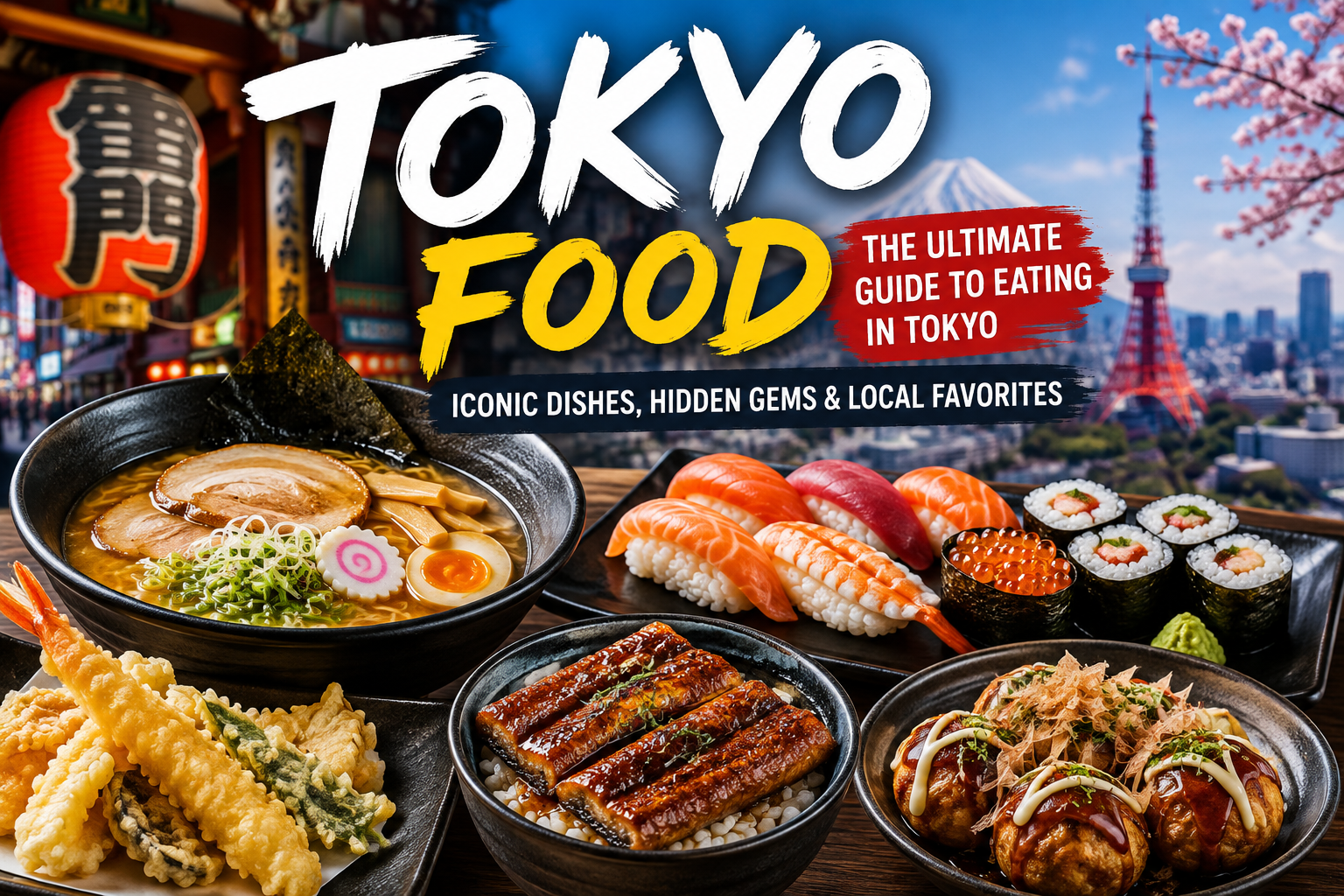
Tokyo food is far more than sushi and ramen: it is a huge culinary world where street snacks, neighborhood diners, izakayas, department-store food halls, traditional Japanese dishes, and modern restaurants all compete for your attention. For first-time visitors, the best approach is to eat by category and neighborhood rather than trying to find one “best” restaurant Smoke in Tokyo
If you arrive in Tokyo expecting every meal to be an expensive fine-dining experience, you may be surprised. Some of the city’s most memorable meals can happen at a tiny counter, a busy noodle shop, a basement food hall, or a casual restaurant hidden above a train station.
Tokyo rewards curiosity. You can eat a bowl of ramen for lunch, grilled yakitori in the evening, sushi for breakfast, Japanese curry the next day, and finish the night with a convenience-store dessert. The variety is part of what makes Tokyo food so exciting.
This guide explains what to eat, where to eat it, how Japanese food culture works, how to choose restaurants, what different dishes taste like, what visitors often get wrong, and how Tokyo’s food scene may evolve in the coming years.
Why Tokyo Food Is So Special
Tokyo’s food culture developed from centuries of Japanese culinary traditions combined with the city’s enormous population, international connections, regional migration, and constant appetite for new ideas.
The result is not a single style of cuisine. Instead, Tokyo functions almost like a giant culinary marketplace.
One street may have a ramen restaurant, sushi counter, yakitori shop, bakery, curry restaurant, dessert café, and standing soba shop within a few minutes of each other.
Tokyo is also an excellent place to experience both traditional and modern Japanese cuisine. You can find dishes associated with long-established culinary traditions alongside creative restaurants that reinterpret familiar ingredients.
Another important feature is specialization. Many restaurants concentrate on doing one thing exceptionally well. A restaurant may focus almost entirely on ramen, tempura, eel, soba, yakitori, or sushi.
That specialization is one reason casual restaurants can be so impressive.
Tokyo Food Culture in Context
Tokyo’s culinary identity is closely connected to the city’s history.
Edo, the former name of Tokyo, developed into a major urban center. Food culture grew alongside the city’s expanding population, markets, merchants, craftsmen, and working communities.
One important historical influence was the development of what is now called Edomae cuisine. Seafood caught in Tokyo Bay was used in dishes prepared close to the water, contributing to traditions associated with sushi and other seafood preparations.
Over time, Tokyo also absorbed food traditions from across Japan.
A visitor can therefore encounter regional specialties from Hokkaido, Osaka, Kyoto, Kyushu, Okinawa, and many other areas without leaving the city.
This is an important point for travelers: Tokyo food is not limited to food that originated in Tokyo. Tokyo is also one of the world’s great places to discover the wider cuisine of Japan.
The 25 Tokyo Foods You Should Try
There is no perfect list because taste is personal, but these dishes provide a strong introduction to Tokyo’s food culture.
1. Sushi
Sushi is probably the first food many international visitors associate with Japan.
Tokyo is particularly important in sushi history because of the Edomae tradition. Traditional Edomae sushi developed around seafood available in and around Tokyo Bay and methods designed to preserve or prepare ingredients before refrigeration became widespread.
Today, sushi ranges from inexpensive conveyor-belt restaurants to highly specialized counters.
For beginners, it is useful to understand that sushi quality is not simply about expensive fish. Rice temperature, seasoning, texture, knife work, freshness, and balance between rice and topping all matter.
If you are new to sushi, start with familiar choices such as salmon, tuna, shrimp, and tamago before exploring more unusual ingredients.
2. Ramen
Ramen is one of the easiest Tokyo foods for visitors to enjoy.
A typical bowl combines noodles, broth, toppings, and aromatic ingredients, but there are enormous variations.
Common broth styles include shoyu, shio, miso, and tonkotsu, although Tokyo ramen is particularly associated with soy-sauce-based broths.
The important lesson is that ramen is not one dish.
Two restaurants can serve completely different bowls.
The noodles may be thin or thick. The broth may be light or rich. Toppings may include sliced pork, green onions, bamboo shoots, seaweed, eggs, or other ingredients.
Ramen is also relatively easy to fit into a travel itinerary because many shops specialize in quick meals.
3. Tempura
Tempura consists of ingredients coated in a light batter and fried.
The contrast is the key: crisp exterior, tender interior.
Common ingredients include shrimp, fish, eggplant, pumpkin, mushrooms, and other vegetables.
Good tempura should not feel excessively heavy. The batter is meant to complement the ingredient rather than completely hide it.
For a first experience, try a tempura set containing several seafood and vegetable pieces with rice, soup, and dipping sauce.
4. Yakitori
Yakitori is grilled chicken served on skewers.
It is strongly associated with casual Japanese dining and is particularly enjoyable in the evening.
Different parts of the chicken can be grilled, including breast, thigh, skin, liver, cartilage, and meatball preparations.
Restaurants commonly season skewers with either salt or tare, a savory-sweet sauce.
Yakitori is ideal for travelers who want a social meal because you can order several skewers and try different flavors.
5. Soba
Soba noodles are made primarily from buckwheat.
They can be served cold with dipping sauce or hot in broth.
Cold soba can be particularly refreshing during warmer months, while hot soba works well during colder weather.
Soba also provides an interesting introduction to the idea that Japanese noodles are not interchangeable. The texture and flavor of buckwheat create a very different experience from wheat-based ramen noodles.
6. Udon
Udon noodles are thick, chewy wheat noodles.
Depending on the preparation, they can be served in hot broth, with dipping sauce, or in other regional styles.
Udon is often a good choice for travelers who prefer mild, comforting flavors.
Tokyo has many casual udon restaurants, making it easy to include this dish in a budget-conscious itinerary.
7. Tonkatsu
Tonkatsu is a breaded and deep-fried pork cutlet.
It is typically served with shredded cabbage, rice, miso soup, and a thick sauce.
The appeal is simple: crisp coating and juicy pork.
There are different cuts and levels of richness, so if you prefer a leaner meal, ask about available cuts before ordering.
8. Japanese Curry
Japanese curry is different from many South Asian and Southeast Asian curries.
It is usually thicker, sweeter, and milder, often served with rice.
Popular versions include curry with pork cutlet, vegetables, chicken, seafood, or other toppings.
It is one of the easiest Japanese dishes for travelers who are cautious about unfamiliar flavors.
9. Unagi
Unagi is freshwater eel, often grilled and coated with a sweet-savory sauce.
It is commonly served over rice.
The preparation requires skill because the texture of eel changes dramatically depending on how it is cooked.
Unagi can be a richer meal, so it works particularly well when you want something substantial rather than a light lunch.
10. Donburi
Donburi refers broadly to rice bowls topped with ingredients.
This category includes many variations.
You might find bowls topped with raw seafood, grilled meat, tempura, eel, chicken and egg, or other ingredients.
Donburi is useful for travelers because it provides a complete meal in a relatively simple format.
11. Kaisendon
Kaisendon is a seafood rice bowl.
It typically features several types of seafood arranged over rice.
For seafood lovers, it can be an excellent way to sample different textures without ordering several separate dishes.
The appearance is often beautiful, but the real value comes from ingredient quality and balance.
12. Monjayaki
Monjayaki is strongly associated with Tokyo.
It is a savory mixture cooked on a hot griddle and has a softer, more fluid texture than Osaka-style okonomiyaki.
It is particularly associated with the Tsukishima area.
The dish may initially look unfamiliar to visitors, but it is worth trying because it represents a distinct part of Tokyo’s local food culture.
13. Okonomiyaki
Okonomiyaki is a savory Japanese pancake-like dish made with ingredients such as cabbage and other toppings.
Different regions prepare it differently.
Although Osaka-style okonomiyaki is especially famous, Tokyo visitors can still find many versions of the dish.
It is a fun group meal because portions can often be shared.
14. Gyoza
Gyoza are Japanese dumplings usually filled with meat and vegetables.
Pan-fried gyoza are particularly popular.
The best part is the combination of crispy bottom, soft wrapper, and savory filling.
They are inexpensive, shareable, and easy to combine with ramen or rice.
15. Karaage
Karaage is Japanese-style fried chicken.
It is usually marinated before being coated and fried.
The result can be crisp on the outside and juicy inside.
Karaage is a reliable choice for travelers who want familiar food with a distinctly Japanese flavor profile.
16. Onigiri
Onigiri are rice balls commonly filled or flavored with ingredients such as salted salmon, pickled plum, tuna-based fillings, or other combinations.
They are one of the most convenient foods in Japan.
You can buy them at convenience stores, supermarkets, food halls, and specialty shops.
For budget travelers, onigiri can be an easy breakfast, snack, or emergency meal between sightseeing stops.
17. Tamagoyaki
Tamagoyaki is Japanese rolled omelet.
The texture is soft and layered, and the flavor can range from sweet to savory depending on the recipe.
It appears in sushi restaurants, breakfast meals, bento boxes, and other settings.
Although simple, it demonstrates how Japanese cooking can turn a familiar ingredient into something distinctive through technique.
18. Wagyu
Wagyu refers to Japanese cattle breeds and beef produced under specific systems.
Visitors often associate wagyu with extremely high prices, but the category is broad.
The marbling can be exceptionally rich, which means portions may be smaller than visitors expect.
If you are trying highly marbled beef for the first time, sharing a portion can be a smart approach.
19. Shabu-Shabu
Shabu-shabu is a Japanese hot-pot meal.
Thin slices of meat and vegetables are cooked briefly in hot broth.
The cooking process itself becomes part of the dining experience.
It is particularly enjoyable during cooler weather and works well for travelers who prefer interactive meals.
20. Sukiyaki
Sukiyaki combines thinly sliced beef, vegetables, tofu, and other ingredients cooked in a sweet-savory broth or sauce.
It is richer and sweeter than many everyday Japanese dishes.
Because it is commonly shared, sukiyaki can be a good choice for couples, families, or groups.
21. Oden
Oden is a comforting Japanese dish made from ingredients simmered in a light broth.
Typical ingredients can include daikon radish, eggs, tofu products, and other components.
It is particularly associated with colder months.
You can find casual versions at convenience stores as well as more specialized restaurants.
22. Yakisoba
Yakisoba is stir-fried noodles prepared with vegetables, meat or seafood, and a savory sauce.
It is common at casual restaurants and festivals.
It is a useful choice when you want something filling without committing to a formal restaurant experience.
23. Taiyaki
Taiyaki is a fish-shaped Japanese snack traditionally filled with sweet red bean paste.
Modern versions may include custard, chocolate, cheese, or other fillings.
The crispy exterior and warm filling make it especially enjoyable as a walking snack.
24. Matcha Desserts
Matcha is used in numerous Japanese desserts.
Tokyo cafés may serve matcha parfaits, cakes, soft-serve, puddings, and other sweets.
Matcha has a distinctive bitter and grassy character, which balances well with sweet cream and sugar.
25. Japanese Cheesecake
Japanese cheesecake is known for a lighter, softer texture than many dense Western-style cheesecakes.
Depending on the bakery, it may be airy and soufflé-like or richer and creamier.
It makes a useful dessert stop when traveling with people who are less interested in traditional Japanese sweets.
Tokyo Food by Neighborhood
One of the smartest ways to explore Tokyo food is geographically.
Different neighborhoods have different personalities, and food can become part of your sightseeing route.
Shibuya
Shibuya is ideal for visitors who want a mix of casual restaurants, cafés, desserts, international food, and modern Japanese dining.
The area is particularly useful for first-time visitors because there are countless choices within walking distance.
The challenge is also the same: choice overload.
Instead of wandering randomly, decide whether you want ramen, sushi, dessert, izakaya food, or something else before choosing a restaurant.
Shinjuku
Shinjuku has an enormous range of restaurants.
You can find inexpensive noodle shops, izakayas, sushi restaurants, yakitori, international cuisine, cafés, and higher-end dining.
Omoide Yokocho and the surrounding areas are particularly interesting for travelers looking for a more intimate, old-school atmosphere.
Asakusa
Asakusa is one of the strongest areas for combining sightseeing with traditional-style food experiences.
You can explore around Senso-ji and then look for snacks, tempura, soba, sweets, and other Japanese dishes.
The area is particularly good for travelers interested in historical atmosphere.
Tsukishima
Tsukishima is closely associated with monjayaki.
If you want to try a food that feels specifically connected to Tokyo rather than simply “Japanese,” this is an excellent neighborhood to consider.
Ginza
Ginza is associated with upscale shopping and sophisticated dining.
It is a strong choice for travelers interested in premium sushi, refined Japanese cuisine, desserts, and special-occasion restaurants.
However, premium does not automatically mean better for every traveler.
A casual neighborhood restaurant may provide a more memorable experience if you prefer relaxed dining.
Ueno
Ueno combines sightseeing, markets, casual dining, and affordable food.
It can be a practical place for travelers who want good food without focusing entirely on luxury restaurants.
Ikebukuro
Ikebukuro has a broad mix of affordable restaurants and modern food experiences.
It is especially useful for travelers staying in or around the area.
Ebisu
Ebisu has a reputation for dining and nightlife.
It is worth considering if your Tokyo itinerary includes evening food exploration.
Kichijoji
Kichijoji provides a more neighborhood-oriented experience than some of Tokyo’s busiest tourist districts.
It can be useful for travelers who want cafés, casual restaurants, izakayas, and local atmosphere.
Tokyo Food for Different Types of Travelers
There is no single perfect food itinerary.
Your ideal Tokyo food experience depends on your budget, dietary needs, age group, travel style, and tolerance for unfamiliar ingredients.
Tokyo Food for First-Time Visitors
First-time visitors should focus on variety rather than luxury.
A good first day might include ramen for lunch, a Japanese dessert in the afternoon, and yakitori or sushi for dinner.
This gives you three very different experiences without making the trip overly complicated.
Tokyo Food for Budget Travelers
Tokyo can be expensive, but eating well does not require luxury restaurants.
Look for:
- Ramen shops
- Soba restaurants
- Udon shops
- Curry restaurants
- Convenience-store meals
- Onigiri
- Supermarket food halls
- Affordable donburi restaurants
- Casual izakayas
One useful strategy is to spend more on one memorable meal while keeping breakfast and some lunches inexpensive.
Tokyo Food for Families
Families often benefit from restaurants with simple menus and shareable dishes.
Udon, ramen, curry, gyoza, tempura, and donburi can be approachable choices.
Department-store food halls can also be useful when family members want different foods.
Tokyo Food for Couples
Couples may enjoy:
- Sushi counters
- Izakayas
- Yakitori
- Shabu-shabu
- Dessert cafés
- Kaiseki-style dining
- Nighttime food walks
The best choice depends on whether you want romance, interaction, or casual exploration.
Tokyo Food for Solo Travelers
Tokyo is exceptionally convenient for solo dining.
Counter seating is common in many restaurants, and some establishments are designed around individual diners.
Solo travelers should not feel pressured to find a table for two.
In fact, eating alone can sometimes make it easier to try specialized restaurants.
Tokyo Food for Vegetarians
Vegetarian travelers should plan ahead.
Some Japanese dishes that appear vegetarian may contain fish-based stock, particularly dashi.
Do not assume that removing meat automatically makes a dish vegetarian.
Clear communication is important, and specialized vegetarian restaurants can make the experience easier.
Tokyo Food for Halal Travelers
Muslim travelers should pay close attention to ingredients and preparation methods.
Pork, pork-derived ingredients, alcohol, and non-halal meat can appear in dishes where visitors may not expect them.
Restaurants that explicitly provide halal options can simplify the process.
It is also useful to check ingredients before ordering rather than relying only on the appearance of a dish.
Tokyo Food for Seafood Lovers
Seafood lovers have almost unlimited possibilities.
Sushi, sashimi, kaisendon, grilled fish, tempura, and other seafood dishes can fill an entire itinerary.
However, variety matters.
Instead of eating sushi every day, try different cooking methods to understand how Japanese cuisine treats seafood.
Tokyo Food for Travelers Who Do Not Like Raw Fish
You absolutely do not need to eat raw fish to enjoy Tokyo.
Try:
- Ramen
- Tonkatsu
- Tempura
- Yakitori
- Curry
- Udon
- Soba
- Karaage
- Gyoza
- Unagi
- Shabu-shabu
Tokyo food is much broader than sushi and sashimi.
How to Choose a Good Tokyo Restaurant
Restaurant selection can feel overwhelming.
Instead of relying only on online ratings, use several signals.
Look at the restaurant’s specialization.
A focused menu can be a good sign because the kitchen may have developed expertise in a particular dish.
Look at customer flow.
A busy restaurant can indicate popularity, but a long line is not automatically proof that a restaurant is right for you.
Check the menu.
If you cannot understand what the restaurant specializes in, look for photographs or translated menu information before entering.
Also consider the meal’s purpose.
A tiny ramen counter may be perfect for lunch but unsuitable for a large family dinner.
The Tokyo Food Queue Problem
Queues are common at popular restaurants.
But travelers often make one mistake: spending too much of their limited vacation time waiting.
Ask yourself whether the restaurant is worth an hour of your itinerary.
Sometimes the answer is yes.
Often it is not.
If a restaurant specializes in a dish available throughout the city, consider trying a nearby alternative.
Your goal is not to collect queues.
Your goal is to collect memorable meals.
Tokyo Food Prices and Budget Planning
Food prices vary dramatically.
A casual meal can be relatively affordable, while premium sushi, wagyu, or high-end Japanese cuisine can become expensive quickly.
Instead of building your food budget around one average price, use categories.
Budget Meal
Think ramen, udon, soba, curry, convenience-store food, or simple rice bowls.
Mid-Range Meal
This might include a more substantial restaurant meal, izakaya dining, quality sushi, tempura, or specialty cuisine.
Premium Meal
Premium sushi counters, wagyu restaurants, kaiseki, and other high-end experiences can require significantly more planning.
A smart traveler can combine all three levels.
Tokyo Food Etiquette Beginners Should Know
Japanese dining etiquette can seem intimidating, but you do not need to know every rule.
Start with basic respect.
Do not speak excessively loudly in quiet restaurants.
Avoid wasting food.
Follow the restaurant’s seating instructions.
If you are unsure whether shoes should be removed, look for signs or observe the entrance.
At many restaurants, payment is made at a register rather than directly at the table.
Chopstick etiquette is another area worth learning.
Avoid sticking chopsticks vertically into rice, as this is associated with funeral customs.
Also avoid passing food directly from chopstick to chopstick.
These are small details, but knowing them can make you feel more comfortable.
How to Order Tokyo Food When You Do Not Speak Japanese
You do not need fluent Japanese to eat successfully in Tokyo.
Many restaurants have photographs, ticket machines, translated menus, or simple ordering systems.
A few Japanese expressions can still help.
“Arigatou gozaimasu” is a polite way to say thank you.
“Sumimasen” can be useful for getting attention or politely saying excuse me.
If you have allergies or dietary restrictions, prepare a clear written explanation in Japanese.
For serious allergies, do not rely solely on verbal communication.
Convenience Stores and Tokyo Food
Visitors sometimes overlook convenience stores because they assume they are only for emergency snacks.
That is a mistake.
Japanese convenience stores can be useful for breakfast, drinks, snacks, rice balls, sandwiches, desserts, and quick meals.
They are particularly valuable for travelers with early morning tours or late-night arrivals.
However, convenience-store food should complement your trip, not replace the restaurant experience.
Department Store Food Halls
Department-store basements are another underappreciated part of Tokyo food culture.
Known for extensive prepared-food selections, these spaces can provide access to sushi, bento, sweets, bakery items, seasonal products, and other foods.
They are especially useful when traveling with a group because everyone can choose something different.
Tokyo Food Markets
Markets can be exciting for travelers because they combine food with atmosphere.
However, visitors should distinguish between a market visit and a restaurant meal.
A market is often better for sampling several small items than for expecting one perfect sit-down meal.
Always follow local rules regarding where food can be eaten.
The Best Way to Build a Tokyo Food Itinerary
Instead of planning every meal months in advance, use a flexible structure.
Day 1: Classic Tokyo Food
Choose sushi, ramen, yakitori, and a Japanese dessert.
Day 2: Traditional Flavors
Try soba, tempura, unagi, and traditional sweets.
Day 3: Casual Tokyo
Explore convenience-store snacks, curry, gyoza, and an izakaya.
Day 4: Neighborhood Food
Choose one neighborhood and eat locally rather than crossing the city for every meal.
Day 5: Premium Experience
If your budget allows, reserve one special meal such as premium sushi, wagyu, or another specialized Japanese dining experience.
This approach creates variety without making food feel like a checklist.
The 10 Tokyo Food Brands and Restaurant Chains Worth Knowing
The word “brand” can mean different things in Tokyo food. Some names below are national chains or recognizable restaurant groups rather than single independent restaurants. They are useful reference points for travelers because they illustrate different parts of the Japanese dining market.
| Brand | Main Food | Style | Best For | Price Level |
|---|---|---|---|---|
| Ichiran | Ramen | Casual ramen | First-time ramen experience | $$ |
| Ippudo | Ramen | Ramen chain | Tonkotsu ramen fans | $$ |
| Yoshinoya | Gyudon | Fast casual | Budget meals | $ |
| Matsuya | Gyudon and set meals | Fast casual | Quick affordable meals | $ |
| Sukiya | Gyudon | Fast casual | Budget travelers | $ |
| CoCo Ichibanya | Japanese curry | Casual chain | Curry lovers | $ |
| Tenya | Tempura | Casual chain | Affordable tempura | $ |
| Torikizoku | Yakitori | Casual izakaya | Groups and evening dining | $$ |
| Sushiro | Sushi | Conveyor-belt sushi | Families and casual diners | $–$$ |
| MOS Burger | Japanese-style burgers | Fast casual | Quick alternative meal | $ |
Prices are relative rather than fixed because individual locations, menu choices, and special items can vary.
What These Brands Teach You About Tokyo Food
The interesting point is not which chain is “best.”
The comparison shows how diverse Japanese casual dining can be.
Yoshinoya, Matsuya, and Sukiya demonstrate the popularity of fast rice-bowl meals.
CoCo Ichibanya shows how deeply Japanese curry has become part of everyday food culture.
Tenya makes tempura accessible without requiring a formal dining experience.
Conveyor-belt sushi restaurants demonstrate how sushi can be presented as an approachable everyday meal rather than only a luxury experience.
Torikizoku represents the social side of casual evening dining.
Common Tokyo Food Mistakes
Even experienced travelers can make avoidable mistakes.
Mistake 1: Eating Only Sushi and Ramen
These are famous, but Tokyo offers far more.
Solution: Try at least one dish from noodles, grilled foods, fried foods, rice bowls, seafood, and desserts.
Mistake 2: Choosing Restaurants Only Because They Are Viral
Social media popularity can create huge queues.
Solution: Look for restaurants based on specialization, location, reviews, menu, and your actual preferences.
Mistake 3: Assuming Expensive Means Better
Price can reflect ingredients, location, service, craftsmanship, and atmosphere.
It does not guarantee that you will personally enjoy the food more.
Solution: Mix affordable local meals with one or two premium experiences.
Mistake 4: Ignoring Dashi
Some visitors think a vegetable dish is automatically vegetarian.
Solution: Ask about fish stock and other ingredients.
Mistake 5: Overplanning Every Meal
Tokyo is too large and unpredictable for a rigid food itinerary.
Solution: Reserve only meals that genuinely require reservations and keep other meals flexible.
Mistake 6: Forgetting Breakfast
Some travelers plan elaborate dinners but have no breakfast strategy.
Solution: Use a bakery, convenience store, café, or simple Japanese breakfast depending on your schedule.
Mistake 7: Eating Too Much at One Stop
Tokyo encourages constant snacking.
Solution: Share dishes when possible and leave room for the next neighborhood.
Pros and Cons of Exploring Tokyo Food
Pros
Tokyo offers exceptional variety.
You can eat traditional Japanese dishes, regional specialties, international cuisine, casual street-style foods, and high-end dining in the same trip.
The city also provides options for almost every budget.
Another major advantage is specialization. If you love one dish, you can explore multiple interpretations rather than settling for a generic version.
Cons
The sheer number of choices can be overwhelming.
Language barriers can sometimes make ordering difficult.
Popular restaurants may have long queues.
Dietary restrictions require more preparation than some travelers expect.
Premium dining can become expensive very quickly.
Tokyo’s size also means that chasing restaurants across the city can consume valuable sightseeing time.
A Better Framework: Eat by Experience, Not Just by Dish
A useful way to think about Tokyo food is through five experiences.
Comfort: ramen, udon, curry, and rice bowls.
Craftsmanship: sushi, tempura, soba, and high-end Japanese cuisine.
Social: izakayas, yakitori, hot pot, and shared dishes.
Discovery: monjayaki, regional specialties, unfamiliar seafood, and seasonal foods.
Convenience: onigiri, bakeries, convenience stores, and department-store food halls.
This framework is better than simply making a list of 50 foods because it helps you create a balanced trip.
Seasonal Tokyo Food
Seasonality is an important concept in Japanese food culture.
Some foods become more appealing during particular seasons.
Winter is excellent for hot-pot dishes, oden, ramen, and other warming meals.
Spring brings seasonal ingredients and food connected to cherry-blossom viewing.
Summer favors lighter noodles, chilled dishes, shaved ice, and refreshing drinks.
Autumn is associated with seasonal produce and ingredients such as mushrooms, sweet potatoes, and chestnuts.
Rather than asking only “What is famous in Tokyo?”, ask “What is good in Tokyo during the month I am visiting?”
That small change can improve your food itinerary.
Tokyo Food and the Future of Dining
Tokyo’s food scene will continue changing.
One trend is the continued blending of traditional Japanese techniques with international influences.
Another is the growing importance of digital restaurant discovery. Travelers increasingly choose restaurants through maps, short-form videos, review platforms, and travel communities.
Technology is also influencing restaurant operations through digital menus, ticket machines, reservation systems, and automated ordering.
At the same time, traditional food culture remains powerful.
Small specialist restaurants, neighborhood shops, family-run businesses, and traditional cooking methods are unlikely to disappear simply because newer dining formats exist.
The future will probably be a mixture of old and new.
Sustainable Tokyo Food
Sustainability is becoming increasingly relevant to food systems worldwide, and Tokyo is no exception.
Travelers can make simple choices without turning every meal into a sustainability project.
Avoid ordering substantially more than you can eat.
Use restaurants that emphasize seasonal ingredients.
Consider neighborhood dining instead of traveling long distances for every meal.
Choose local and regional ingredients when available.
These small decisions can reduce waste while making your food experience more connected to place.
How Social Media Is Changing Tokyo Food
Social media has made visually impressive Japanese food easier to discover globally.
This has benefits.
Small restaurants can attract international visitors.
Travelers can discover dishes they would otherwise miss.
But there are drawbacks.
A photogenic dish may not necessarily be the most interesting meal.
A viral restaurant can become overwhelmed by tourists.
The best approach is to use social media for discovery, then evaluate the restaurant independently.
What Makes a Truly Memorable Tokyo Food Experience?
The most memorable meal is not always the most expensive.
It may be the ramen you ate while exhausted after a long day.
It may be a bowl of noodles on a rainy evening.
It may be an unexpected dessert discovered while walking through a neighborhood.
It may be a quiet breakfast before visiting a temple.
Food becomes more memorable when it connects to the place and the moment.
That is why your Tokyo food itinerary should leave room for spontaneity.
Practical Tokyo Food Checklist
Before your trip, decide which categories matter most to you.
A useful checklist includes:
- Sushi
- Ramen
- Tempura
- Yakitori
- Soba
- Udon
- Curry
- Tonkatsu
- Gyoza
- Unagi
- Donburi
- Japanese desserts
- Convenience-store snacks
- Department-store food halls
- One special-occasion meal
You do not need to complete the entire list.
The goal is variety, not achievement.
Quick Summary
Tokyo food is best experienced as a broad culinary journey rather than a hunt for one famous dish.
The city offers everything from inexpensive noodles and rice bowls to highly refined sushi and traditional Japanese cuisine.
For first-time visitors, prioritize variety. Try different cooking techniques, neighborhoods, restaurant formats, and price levels.
Most importantly, do not assume that the most famous restaurant or longest queue will produce your best meal.
FAQs About Tokyo Food
What food is Tokyo famous for?
Tokyo is particularly well known for sushi, ramen, tempura, soba, yakitori, monjayaki, unagi, and many forms of Japanese cuisine. The city is also a major destination for regional Japanese food from across the country.
What should I eat first in Tokyo?
For a first visit, sushi, ramen, tempura, yakitori, and a Japanese dessert provide a strong introduction. If you do not eat seafood, try ramen, curry, tonkatsu, gyoza, yakitori, or udon.
Is Tokyo food expensive?
It can be, but Tokyo offers food across a wide price range. Casual restaurants, noodle shops, rice-bowl chains, convenience stores, and supermarkets can be relatively affordable, while premium sushi, wagyu, and high-end Japanese restaurants can cost considerably more.
Is Tokyo good for vegetarians?
Yes, but vegetarian travelers should plan carefully because fish-based dashi can appear in dishes that otherwise look vegetarian. Specialized vegetarian restaurants can make dining easier.
Is Tokyo good for halal food?
Tokyo has halal-friendly dining options, but travelers should verify ingredients and preparation methods carefully. Pork, alcohol, and non-halal meat can appear unexpectedly in Japanese dishes.
Can I eat Tokyo food without knowing Japanese?
Yes. Many restaurants use pictures, translated menus, ticket machines, or simple ordering systems. Learning a few basic Japanese expressions and preparing dietary requirements in written Japanese can make things easier.
What is the cheapest food in Tokyo?
Affordable options include onigiri, noodles, curry, gyudon, simple set meals, convenience-store foods, and other casual restaurant dishes.
Is sushi in Tokyo always expensive?
No. Tokyo has sushi at many price levels, including casual conveyor-belt restaurants and inexpensive lunch sets. High-end sushi counters are a separate category.
What Tokyo food should picky eaters try?
Ramen, Japanese curry, tonkatsu, gyoza, karaage, udon, and some types of tempura are often approachable for travelers who prefer familiar flavors.
What food should I try in Asakusa?
Asakusa is a strong area for tempura, soba, traditional sweets, snacks, and other Japanese foods that pair well with sightseeing.
Where should I go for monjayaki?
Tsukishima is particularly associated with monjayaki and is a good place to explore this Tokyo specialty.
Should I make restaurant reservations in Tokyo?
For highly popular or premium restaurants, reservations can be important. For casual ramen, soba, curry, and other everyday restaurants, reservations are often unnecessary.
Is street food common in Tokyo?
Tokyo has many food stalls, markets, festival foods, snacks, and casual takeaway options, but visitors should not assume that every famous Japanese food is traditionally eaten while walking. Follow local signs and restaurant guidance about where food should be consumed.
What is the best Tokyo food for families?
Families may find ramen, udon, curry, gyoza, tempura, karaage, and rice bowls easy to share or customize. Department-store food halls can also be useful when everyone wants something different.
What is the best Tokyo food for solo travelers?
Ramen, soba, udon, curry, sushi counters, yakitori, and other counter-style restaurants are excellent choices for solo travelers.
How many days do I need to explore Tokyo food?
You can experience the basics in three to five days, but Tokyo is large enough that food exploration can easily continue for weeks. A longer stay allows you to explore neighborhoods and regional Japanese cuisines more deeply.
Conclusion
Tokyo food is not simply a collection of famous Japanese dishes. It is an entire ecosystem of restaurants, markets, neighborhood shops, specialist counters, convenience stores, cafés, food halls, traditional techniques, seasonal ingredients, and modern culinary ideas.
The smartest approach is to balance famous foods with local exploration.
Try sushi, but do not stop there. Eat ramen, but make room for soba. Visit a premium restaurant if it fits your budget, but also enjoy a simple bowl of curry or noodles. Explore famous districts, but leave time for neighborhoods that are not on every tourist checklist.