Tokyo Urban Tourism: 25+ Smart Ways to Experience the World’s Most Exciting City
Tokyo urban tourism is the experience of exploring a constantly changing city where technology, traditional culture, business, food, neighbourhood life, architecture, entertainment, and public transportation operate together. Rather than simply visiting famous attractions, urban tourism in Tokyo allows travellers to understand how the city works, how different districts develop their own identities, and how everyday life becomes part of the travel experience Travel Advice
What Is Tokyo Urban Tourism?
Tokyo urban tourism refers to travel experiences centred on the city’s built environment, neighbourhoods, culture, infrastructure, businesses, public spaces, attractions and everyday urban life.
Traditional sightseeing often focuses on individual landmarks.
Urban tourism takes a wider view.
Instead of asking only, “What famous place should I visit?”, urban tourism asks:
- How does this neighbourhood function?
- Why did this district develop here?
- What makes one area different from another?
- How do residents use public spaces?
- What role does the railway network play?
- How has architecture changed?
- Where do locals shop and eat?
- How does traditional culture survive inside a modern metropolis?
- What new areas are emerging?
- How can visitors explore responsibly?
This approach makes Tokyo particularly suitable for urban tourism because the city contains many different forms of urban development.
You can encounter historic streets, dense commercial centres, high-rise business districts, compact residential neighbourhoods, railway-oriented shopping areas, waterfront redevelopment, creative districts and enormous transportation hubs within a relatively short journey.
Why Tokyo Is One of the World’s Most Interesting Urban Tourism Destinations
A City Built Around Neighbourhoods
One of Tokyo’s biggest strengths is its neighbourhood structure.
Shibuya is not the same experience as Asakusa. Ginza feels different from Koenji. Shinjuku differs dramatically from Yanaka, while Odaiba has a completely different urban character from Kagurazaka.
This creates an important advantage for travellers.
If one neighbourhood does not match your interests, another probably will.
A visitor interested in history can focus on traditional districts. Someone interested in fashion can explore Harajuku and Shibuya. Architecture enthusiasts can investigate Marunouchi, Ginza and contemporary redevelopment areas. Families can choose parks, museums and interactive attractions. Food travellers can build an itinerary around markets, neighbourhood restaurants and specialist food streets.
Exceptional Public Transportation
Tokyo’s railway and subway network is fundamental to the urban tourism experience.
The official Tokyo tourism guide describes the city’s transportation network as extensive and increasingly accessible, with multilingual signage and options including trains, subways, buses, waterbuses, taxis and bicycles.
The important point is that transportation is not simply a way of moving between attractions.
It is part of the Tokyo experience.
Stations function as miniature urban centres containing shops, restaurants, department stores, pedestrian connections and business facilities.
The Combination of Old and New
Tokyo’s urban identity is built around contrasts.
A modern tower may stand close to a historic shrine.
A traditional Japanese garden can exist beside a dense commercial district.
A quiet shopping street can be only a short train ride from a major international fashion centre.
This contrast creates an urban tourism experience that is difficult to reproduce elsewhere.
Understanding Tokyo’s Major Urban Tourism Areas
Shibuya
Shibuya is one of Tokyo’s best-known urban districts and is strongly associated with youth culture, fashion, entertainment, technology, shopping and contemporary city life.
The district is particularly useful for travellers interested in understanding how Tokyo’s commercial landscape changes over time.
Large redevelopment projects have transformed parts of the district, adding new buildings, observation spaces, retail areas, offices and pedestrian connections.
Instead of simply photographing famous crossings, spend time walking beyond the central intersection.
Explore side streets.
Look at building design.
Observe how pedestrians move between railway stations, shopping centres and smaller businesses.
This transforms Shibuya from a photograph into an urban case study.
Shinjuku
Shinjuku is another major urban tourism centre.
The area combines one of the world’s busiest transportation environments with department stores, offices, restaurants, hotels, shopping facilities, parks and entertainment areas.
For urban tourism, Shinjuku is especially interesting because of its vertical structure.
Different experiences exist at different levels of the city.
A basement may contain food halls or railway connections. Street level can be dominated by pedestrians and traffic. Upper floors may contain restaurants, offices, hotels or observation facilities.
This vertical layering is an important feature of Tokyo’s modern urban environment.
Asakusa
Asakusa provides a different perspective.
The district is closely associated with traditional Tokyo, historic religious sites, traditional shopping streets and cultural tourism.
It is an excellent location for visitors who want to understand how historical identity is maintained within a modern metropolitan environment.
The best experience does not necessarily come from rushing through the major attractions.
Walk slowly.
Look at traditional shopfronts.
Explore smaller streets.
Observe the relationship between residents, businesses and visitors.
Ueno
Ueno is particularly useful for travellers interested in museums, parks, culture and history.
Ueno Park provides a substantial green space within a dense urban environment and is surrounded by cultural institutions and transportation connections.
For families, museum visitors and travellers interested in Japanese culture, Ueno can form an important part of an urban itinerary.
Ginza
Ginza represents another side of Tokyo.
The district is associated with luxury retail, department stores, restaurants, architecture and established commercial culture.
Even visitors who do not intend to shop at premium stores can enjoy Ginza as an architectural and urban walking destination.
Pay attention to façades, street design, pedestrian activity and the relationship between older commercial traditions and newer developments.
Tokyo Station and Marunouchi
Tokyo Station is both a transportation hub and a major urban landmark.
The surrounding Marunouchi district contains offices, retail, restaurants, public spaces and large-scale corporate architecture.
This area is particularly valuable for business travellers and architecture enthusiasts.
It also demonstrates how Tokyo integrates transportation infrastructure with commercial development.
Harajuku and Omotesando
Harajuku is strongly connected with fashion, youth culture and creative expression.
Omotesando provides a contrasting architectural environment, with major retail buildings and prominent contemporary designs.
Walking between these areas can reveal how different forms of fashion and architecture coexist within the same part of Tokyo.
Akihabara
Akihabara is associated with electronics, gaming, anime, manga and specialist retail.
For urban tourism, its significance extends beyond shopping.
It demonstrates how a district can develop a highly specialised commercial identity and attract visitors because of that identity.
Yanaka
Yanaka offers a slower-paced urban experience.
The district is known for traditional streets, temples, small shops and a neighbourhood atmosphere that differs from Tokyo’s major commercial centres.
It is particularly suitable for travellers who want a more relaxed urban walking experience.
Odaiba
Odaiba provides a different type of Tokyo landscape.
The waterfront district combines modern architecture, entertainment, shopping, public spaces and views across Tokyo Bay.
It is useful for understanding Tokyo’s relationship with reclaimed land, waterfront development and large-scale urban planning.
Tokyo Urban Tourism and Everyday Life
Why Small Streets Matter
Many visitors concentrate on famous attractions.
That can be useful, but it can also create a narrow understanding of Tokyo.
Some of the city’s most revealing experiences happen on streets without major tourist attractions.
A small shopping street can show how local commerce works.
A neighbourhood bakery can reveal everyday food culture.
A compact park can show how residents use public space.
A residential street can demonstrate Tokyo’s unusual combination of density and quietness.
This is one of the most important principles of urban tourism:
Do not measure a neighbourhood’s value only by the number of famous attractions it contains.
Convenience Stores as Urban Infrastructure
Convenience stores are another useful lens through which to understand Tokyo.
They provide food, drinks and everyday services, but their broader significance is connected to the convenience-oriented structure of Japanese urban life.
For travellers, they can also be practical stops during long walking days.
However, visitors should remember that a convenience store is primarily a local business rather than a tourist attraction.
Use it respectfully and avoid blocking entrances or creating unnecessary congestion.
Tokyo Urban Tourism Through Food
Street-Level Food Culture
Tokyo’s food scene is one of the strongest reasons people visit the city.
However, urban food tourism should go beyond famous restaurants.
Explore neighbourhood cafés, bakeries, department-store food halls, local restaurants and specialist shops.
Different districts have different culinary identities.
Department Store Food Halls
Japanese department stores can be destinations in themselves.
Food floors often bring together prepared foods, sweets, regional products and premium ingredients.
For travellers, they provide an efficient introduction to different aspects of Japanese food culture.
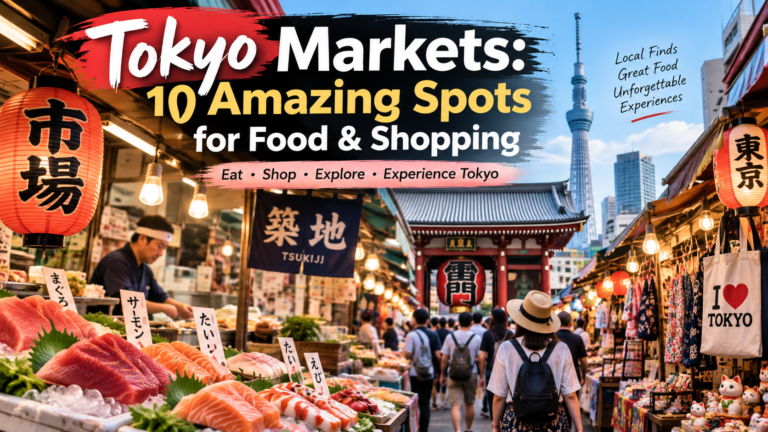
Markets and Food Streets
Markets can also provide valuable urban experiences.
Rather than treating a market as merely a place to buy food, observe how vendors interact with customers, how products are presented and how the market connects to its surrounding neighbourhood.
Restaurant Etiquette
Travellers should learn basic dining etiquette before visiting smaller establishments.
Useful habits include:
- Follow the restaurant’s seating instructions.
- Avoid blocking narrow entrances.
- Check whether photography is permitted.
- Do not assume every restaurant accepts cards.
- Be aware of ordering procedures.
- Keep your voice at a reasonable volume.
- Follow local rules about eating while walking.
- Avoid creating unnecessary queues.
These small actions can significantly improve the relationship between visitors and local communities.
Tokyo Urban Tourism Through Architecture
Traditional Architecture
Traditional buildings, wooden houses, temples and shrines provide important clues about Tokyo’s history.
They should not be treated simply as decorative backgrounds.
Look at materials, roof structures, entrances, gardens and relationships between buildings and streets.
Contemporary Architecture
Tokyo is also a major destination for contemporary architecture.
Modern buildings often demonstrate innovative approaches to limited land, dense development, mixed-use planning and pedestrian movement.
Architecture enthusiasts can create entire itineraries around buildings rather than conventional attractions.
Skyscrapers and Observation Spaces
High-rise buildings offer another way to understand the city.
From above, Tokyo’s scale becomes easier to appreciate.
Instead of seeing thousands of individual buildings, visitors can see districts, railway corridors, parks, rivers and major roads forming an enormous urban system.
Tokyo Urban Tourism Through Public Transportation
Understanding the Railway System
Tokyo’s transportation system can initially feel complicated because multiple operators and networks overlap.
However, visitors quickly become more comfortable when they understand the basic structure.
JR East operates railway services across eastern Japan, including Tokyo. Tokyo also has extensive subway services operated by different companies.
IC Cards
IC cards such as Suica and PASMO can make everyday travel much easier.
The official Tokyo travel guide explains that IC cards can be used across many major rail and bus services and can also be used at participating shops and vending machines.
JR East also provides visitor-oriented Welcome Suica products, with sales locations including major airports and stations.
Tap-to-Ride Options
Tokyo Metro has also expanded contactless payment options on eligible services.
However, travellers should check the exact coverage before relying entirely on a bank card because contactless services may not cover every railway operator or transfer combination. Tokyo Metro specifically notes limitations when travelling between Tokyo Metro and JR East using its Tap to Ride service.
Walking Between Stations
One common mistake is assuming every journey requires a train.
Tokyo is often more enjoyable when short journeys are completed on foot.
Walking between nearby districts can reveal cafés, shops, architecture and residential streets that would otherwise remain invisible from a train window.
How to Plan a Tokyo Urban Tourism Itinerary
Start With Neighbourhoods Rather Than Attractions
Instead of listing twenty attractions and trying to connect them afterward, choose two or three neighbourhoods per day.
For example:
Morning: Asakusa
Afternoon: Ueno
Evening: Akihabara
This approach reduces unnecessary transportation and gives you more time to explore.
Use the Three-Layer Method
A useful planning strategy is to divide each day into three layers.
The first layer is a major attraction.
The second is a neighbourhood experience.
The third is an unplanned walking period.
For example, you might visit a major museum, explore the surrounding neighbourhood and then leave an hour for spontaneous discoveries.
This creates a more flexible experience.
Build Around Transportation Hubs
Tokyo’s major stations can serve as itinerary anchors.
Stations such as Tokyo, Shinjuku, Shibuya and Ueno provide strong connections to surrounding neighbourhoods.
However, avoid assuming that the closest station entrance is always the most convenient entrance for your destination.
Large stations can have numerous exits.
Check the destination’s recommended exit before starting your walk.
Tokyo Urban Tourism for First-Time Visitors
Keep the First Day Simple
First-time travellers often try to see too much.
Tokyo rewards repetition.
Your first day should not necessarily include every famous attraction.
Choose one major district and learn how it works.
Use Google Maps Carefully
Digital maps are extremely useful, but do not blindly follow the shortest route.
A route that saves five minutes may take you through an uninteresting underground passage.
A slightly longer walking route may reveal an excellent street.
Allow Time for Station Navigation
Large stations can take longer to navigate than expected.
Give yourself extra time for transfers, exits and finding the correct platform.
Avoid Overloading the Schedule
Tokyo can be physically demanding because urban tourism often involves significant walking.
A realistic itinerary is better than an ambitious list that leaves you exhausted.
Tokyo Urban Tourism for Families
Choose Shorter Travel Segments
Families should avoid crossing the city repeatedly.
Group activities geographically.
Mix Attractions With Open Space
Children may become tired after museums and shopping districts.
Add parks, waterfront areas or open pedestrian spaces.
Plan Rest Stops
Cafés, department stores and shopping centres can provide useful opportunities for breaks.
Consider Weather
Tokyo’s seasons can significantly affect walking comfort.
Hot and humid periods require more hydration and rest, while rainy days make covered attractions especially valuable.
Tokyo Urban Tourism for Solo Travellers
Take Advantage of Flexible Scheduling
Solo travellers can change plans quickly.
This makes neighbourhood exploration particularly rewarding.
If a street looks interesting, stop.
If a museum takes longer than expected, stay.
If the weather changes, move indoors.
Explore During the Day
Many neighbourhoods are particularly enjoyable during daylight when visitors can observe architecture and local activity more clearly.
Choose Convenient Accommodation
For solo travellers, accommodation near a well-connected station can reduce daily transportation complexity.
Tokyo Urban Tourism for Older Travellers
Prioritise Convenience
Tokyo’s transport network is extensive, but large stations can involve significant walking.
Choose accommodation near convenient transport connections.
Avoid Excessive District Hopping
Two neighbourhoods explored thoroughly can be more enjoyable than five visited briefly.
Schedule Breaks
A slower itinerary allows more time for cafés, gardens, museums and cultural sites.
Tokyo Urban Tourism for Budget Travellers
Use Public Transportation
Tokyo’s transport system allows visitors to move around the metropolitan area without relying heavily on taxis.
Focus on Free Urban Experiences
Many of Tokyo’s best urban experiences do not require admission fees.
Examples include:
- Walking neighbourhoods
- Exploring public streets
- Visiting many shrines and temples
- Viewing architecture
- Exploring public parks
- Walking along waterfront areas
- Visiting free observation areas where available
- Browsing shopping districts
Compare Transport Options
Different ticket systems may be useful depending on your itinerary.
The official Tokyo travel guide notes that different railway and subway operators have their own fares and ticket products, making some advance planning worthwhile.
Tokyo Urban Tourism for Luxury Travellers
Premium Shopping Districts
Ginza, Omotesando and selected areas of Marunouchi offer premium retail experiences.
Luxury Hotels
Tokyo’s hotel market includes international luxury brands alongside Japanese hospitality companies.
Fine Dining
Luxury travellers can build itineraries around high-end Japanese cuisine, international restaurants and specialist dining experiences.
The important distinction is that luxury urban tourism does not have to mean staying indoors.
Some of Tokyo’s most memorable premium experiences are still connected to neighbourhood exploration.
Tokyo Urban Tourism for Photographers
Shoot at Different Times
The same location can look completely different in morning, afternoon and evening.
Look Beyond Famous Views
Instead of photographing only iconic landmarks, document:
- Street signs
- Building façades
- Railway crossings
- Small shops
- Architectural details
- Pedestrian movement
- Reflections
- Bridges
- Parks
- Waterfront views
Respect Privacy
Avoid photographing individuals closely without permission.
Be particularly careful around residential areas and private property.
Tokyo Urban Tourism for Architecture Enthusiasts
Create District-Based Architecture Walks
Rather than travelling randomly, choose a district and document its architectural evolution.
A useful route could combine older buildings, postwar structures, modern commercial architecture and contemporary developments.
Compare Building Functions
Ask why a building looks the way it does.
Is it retail?
Office space?
A railway facility?
A mixed-use development?
A museum?
Understanding function often makes architecture more interesting.
Tokyo Urban Tourism and Sustainable Travel
Why Sustainable Urban Tourism Matters
Tokyo’s growing international visitor numbers create economic opportunities but also place pressure on communities, transportation systems and popular areas.
The official Tokyo tourism guide describes responsible tourism around three broad principles: environmental conservation, community welfare and economic sustainability.
Spread Your Visits
One simple solution is to avoid concentrating every trip around the same handful of famous locations.
Exploring additional neighbourhoods can distribute visitor spending and reduce pressure on the most crowded areas.
Support Local Businesses
Choose independent shops and restaurants when appropriate.
Buy locally produced goods.
Eat at neighbourhood businesses.
Use local services respectfully.
Respect Residential Areas
A neighbourhood is somebody’s home.
Visitors should avoid shouting, blocking streets, trespassing, leaving rubbish or treating private residential spaces as photographic sets.
The Economic Importance of Tokyo Urban Tourism
Tokyo’s tourism economy is enormous.
The Tokyo Metropolitan Government reported approximately ¥10.13 trillion in total tourism expenditure in 2025, with foreign visitors accounting for approximately ¥4.55 trillion. Foreign tourism expenditure increased 14.9% year over year.
This demonstrates why urban tourism has consequences beyond hotels and major attractions.
Tourism spending reaches:
- Restaurants
- Retail stores
- Transportation
- Museums
- Hotels
- Tour operators
- Cultural institutions
- Local businesses
- Entertainment venues
- Food producers
- Creative industries
This creates an important relationship between tourism and the wider urban economy.
The Challenges of Tokyo Urban Tourism
Crowding
Popular districts can become extremely busy.
Crowding can reduce the quality of visitor experiences and affect residents.
Transportation Complexity
Tokyo’s network is efficient but can be confusing for first-time visitors.
Rising Costs
Currency movements, accommodation demand, dining preferences and seasonal demand can influence travel budgets.
Language Barriers
Many major tourism facilities provide multilingual information, but visitors should not expect every small business to operate in English.
Physical Fatigue
Tokyo urban tourism often involves extensive walking.
The solution is not simply better shoes.
It is better itinerary design.
Common Tokyo Urban Tourism Mistakes
Trying to See Everything
Tokyo is too large for a single trip.
Accepting that early makes the trip more enjoyable.
Spending the Entire Trip in Famous Districts
Shibuya, Shinjuku and Asakusa are worthwhile, but Tokyo has much more to offer.
Ignoring Opening Hours
Some museums, shops and attractions have specific closing days.
Check schedules before travelling across the city.
Underestimating Stations
Large stations can take time to navigate.
Forgetting Weather
A beautiful itinerary can become uncomfortable if it does not account for seasonal conditions.
Treating Local Neighbourhoods Like Theme Parks
Residents live in these areas.
Visitors should behave accordingly.
Pros and Cons of Tokyo Urban Tourism
Advantages
Tokyo urban tourism offers several major advantages:
- Extremely diverse neighbourhoods
- Excellent public transportation
- Strong food culture
- Rich historical heritage
- Contemporary architecture
- Excellent shopping
- Extensive cultural institutions
- Many free or low-cost walking experiences
- Strong seasonal variety
- Excellent opportunities for photography
- Experiences suitable for different budgets
- Easy combination of traditional and modern attractions
Challenges
There are also disadvantages:
- Large crowds in popular districts
- Complex transportation networks
- Extensive walking
- High accommodation costs in some periods
- Language challenges in smaller businesses
- Weather-related discomfort
- Very large city scale
- Risk of over-planning
- Visitor pressure in residential areas
Ten Major Brands and Platforms Useful for Tokyo Urban Tourism
The word “brand” can mean different things in tourism. The following comparison focuses on well-known tourism, transportation and travel-planning brands or platforms that can help travellers research or navigate Tokyo. It is not a ranking.
| Brand / Platform | Main Role | Particularly Useful For | Main Strength |
|---|---|---|---|
| GO TOKYO | Official Tokyo tourism guide | First-time and repeat visitors | Official destination information |
| JNTO | Japan National Tourism Organization | International travellers | Japan-wide travel information |
| JR East | Railway operator | Regional and Tokyo rail travel | Extensive rail network |
| Tokyo Metro | Subway operator | Central Tokyo travel | Subway connectivity |
| Suica | Transportation IC service | Daily transport | Convenient tap-based travel |
| PASMO | Transportation IC service | Rail and bus travel | Broad metropolitan usability |
| NAVITIME | Travel/navigation platform | Route planning | Detailed navigation |
| Google Maps | Mapping and navigation | Independent travellers | Walking and transport directions |
| Tripadvisor | Travel research platform | Reviews and planning | User-generated travel information |
| Booking.com | Accommodation platform | Hotel planning | Large accommodation selection |
GO TOKYO is operated as the official Tokyo tourism guide and provides information on attractions, neighbourhoods, transportation and responsible travel.
JR East provides rail services across eastern Japan and offers information on visitor rail products and IC-card travel.
Tokyo Metro provides subway services and has introduced contactless Tap to Ride on eligible services, although coverage limitations apply.
Travellers should always verify current fares, ticket rules, service coverage and operating information directly with the relevant provider before travelling.
How These Ten Brands Differ
GO TOKYO vs JNTO
GO TOKYO focuses specifically on Tokyo.
JNTO provides information about Japan as a whole.
If Tokyo is your primary destination, a Tokyo-specific resource can be useful. If your trip includes Kyoto, Osaka, Hokkaido, Hiroshima or other regions, a Japan-wide tourism resource becomes more relevant.
JR East vs Tokyo Metro
JR East and Tokyo Metro are both important, but they are different transportation operators.
JR East operates extensive railway services, while Tokyo Metro focuses on subway routes.
Visitors frequently use both during the same trip.
Suica vs PASMO
Suica and PASMO are transportation IC systems with broadly similar everyday functions in Tokyo.
The important point for visitors is not necessarily choosing one brand over the other, but having a compatible payment method that makes everyday transport easier.
Google Maps vs NAVITIME
Google Maps is familiar to many international travellers and provides broad walking and transportation navigation.
NAVITIME is particularly focused on Japanese transportation and travel navigation.
Using a combination can sometimes be useful when checking routes.
Tripadvisor vs Official Tourism Resources
User reviews can provide practical perspectives, but official sources are usually more appropriate for confirming current operating information, regulations, transportation rules and tourism guidance.
Pairing Tokyo Urban Tourism With Different Traveller Needs
Tokyo Urban Tourism for First-Time Visitors
Focus on major districts, simple transportation routes and one or two cultural experiences.
Avoid building a schedule with attractions scattered across the entire metropolitan area.
Tokyo Urban Tourism for Repeat Visitors
Move beyond famous attractions.
Explore neighbourhoods such as Yanaka, Kagurazaka, Koenji, Kichijoji, Jimbocho or other areas that match your interests.
Tokyo Urban Tourism for Food Lovers
Build days around neighbourhood food rather than travelling across Tokyo for individual restaurants.
Tokyo Urban Tourism for Families
Combine museums, parks, shopping areas and attractions with regular rest periods.
Tokyo Urban Tourism for Photographers
Plan around light, weather and walking routes.
Tokyo Urban Tourism for Architecture Lovers
Create district-based walking routes.
Tokyo Urban Tourism for Budget Travellers
Prioritise neighbourhood walks, public spaces, free attractions and efficient public transportation.
Tokyo Urban Tourism for Luxury Travellers
Combine premium hotels, dining and shopping with carefully selected neighbourhood experiences.
Tokyo Urban Tourism for Older Travellers
Reduce the number of daily locations and prioritise convenient transportation.
Tokyo Urban Tourism for Solo Travellers
Use flexible schedules and spend more time exploring individual neighbourhoods.
A Practical Seven-Day Tokyo Urban Tourism Framework
Day One: Historic Tokyo
Begin around Asakusa.
Explore traditional streets and cultural landmarks.
Continue toward Ueno if energy allows.
Finish with a relaxed dinner.
Day Two: Modern Tokyo
Explore Shibuya and Omotesando.
Study the architecture and redevelopment of the area.
Walk rather than immediately taking transportation between nearby locations.
Day Three: Shinjuku
Explore Shinjuku’s commercial areas.
Visit a major cultural attraction or park.
Spend time observing the district’s transportation and architectural environment.
Day Four: Tokyo Station and Marunouchi
Explore Tokyo Station.
Walk around Marunouchi.
Continue toward Ginza.
Use the evening for dining or shopping.
Day Five: Alternative Neighbourhoods
Choose a slower neighbourhood such as Yanaka, Kagurazaka, Koenji or Kichijoji depending on your interests.
The purpose is to experience a different side of Tokyo.
Day Six: Waterfront Tokyo
Explore Odaiba or another waterfront area.
Look at the city’s relationship with Tokyo Bay.
Day Seven: Flexible Exploration
Keep the final day open.
Return to a favourite neighbourhood.
Shop for souvenirs.
Visit anything missed earlier.
This approach reduces stress and creates space for unexpected discoveries.
How to Make Tokyo Urban Tourism More Meaningful
Spend More Time in Fewer Places Tokyo urban tourism
A three-hour exploration of one neighbourhood can be more memorable than visiting three major attractions in three hours.
Talk to Local Businesses Respectfully Tokyo urban tourism
Even simple interactions can make the experience more personal.
Learn a few Japanese expressions.
Observe Before Photographing Tokyo urban tourism
Take time to understand a place before immediately taking pictures.
Learn the History Tokyo urban tourism
Knowing why a neighbourhood developed makes walking through it more meaningful.
Use Public Transportation as a Window Into the City Tokyo urban tourism
Do not treat the train simply as a transfer mechanism.
Stations and railway corridors reveal how Tokyo’s urban structure works.
The Future of Tokyo Urban Tourism
More Data-Driven Tourism
Tokyo is increasingly using tourism data to understand visitor numbers, spending, behaviour and geographic distribution.
The Tokyo Tourism Data Catalog provides statistical information covering visitor numbers, tourism spots, foreign traveller behaviour and economic impact. The catalogue was renewed in September 2026 and includes additional dashboards using mobile-data-based visitor analysis.
This can support more informed destination management.
Greater Interest in Neighbourhood Tourism
As famous attractions become more crowded, travellers are likely to become increasingly interested in neighbourhood-based experiences.
This benefits visitors because it creates more diverse itineraries.
Responsible Tourism Tokyo urban tourism
Responsible travel is becoming increasingly important.
Tokyo’s official tourism guidance explicitly encourages travellers to consider their effects on local communities and the environment.
Contactless Transportation Tokyo urban tourism
Transportation is also becoming more convenient.
Tokyo Metro has expanded contactless payment options, while IC cards and mobile payment systems continue to simplify urban travel.
Greater Integration Between Tourism and Everyday Urban Life
The future of Tokyo tourism is unlikely to be limited to traditional sightseeing.
Visitors increasingly want:
- Local food
- Neighbourhood experiences
- Architecture
- Shopping
- Cultural workshops
- Local transportation
- Seasonal events
- Wellness experiences
- Photography
- Design
- Technology
- Sustainable travel
This means the city itself becomes the attraction.
What Tokyo Urban Tourism Could Look Like in the Future
The next stage of urban tourism may be less about collecting famous attractions and more about understanding cities.
Technology can make transportation easier.
Tourism data can help authorities identify crowded areas.
Digital maps can encourage travellers to explore alternative districts.
Contactless payments can reduce friction.
Translation technology can improve communication.
But technology should not replace curiosity.
A perfect digital itinerary can still miss the best street in the neighbourhood.
The future traveller may therefore combine technology with slower exploration.
Use the map to reach the district.
Then put the phone away for a while.
Walk.
Observe.
Listen.
Eat.
Explore.
That combination could become one of the defining characteristics of successful Tokyo urban tourism.
Practical Tokyo Urban Tourism Checklist
Before You Leave Tokyo urban tourism
- Research the neighbourhoods you want to visit.
- Check transportation routes.
- Confirm attraction opening hours.
- Check seasonal weather.
- Reserve popular experiences when necessary.
- Learn basic Japanese etiquette.
- Prepare a suitable payment method.
- Keep your itinerary flexible.
During Your Trip Tokyo urban tourism
- Carry comfortable footwear.
- Keep a reusable water bottle where practical.
- Respect residential areas.
- Avoid blocking pedestrian paths.
- Follow photography rules.
- Keep public spaces clean.
- Use transportation respectfully.
- Give yourself rest periods.
- Explore beyond the busiest attractions.
Before Returning Home Tokyo urban tourism
- Check station and airport routes.
- Confirm luggage arrangements.
- Leave enough time for transportation.
- Keep souvenirs within your baggage limits.
- Review whether you have left anything at your accommodation.
FAQs
What is Tokyo urban tourism?
Tokyo urban tourism is travel focused on experiencing the city’s neighbourhoods, architecture, transportation, culture, food, public spaces, shopping areas, historical districts and everyday urban life rather than visiting only individual tourist attractions.
Why is Tokyo good for urban tourism?
Tokyo combines an extensive public transportation system with diverse neighbourhoods, historic sites, modern architecture, food culture, shopping, museums, parks and rapidly changing urban districts.
How many foreign tourists visited Tokyo in 2025?
The Tokyo Metropolitan Government estimated approximately 28.65 million foreign travellers visited Tokyo in 2025, an increase of 15.6% from the previous year and a record high.
Is Tokyo expensive for tourists?
Tokyo can be expensive, particularly for accommodation, premium dining and certain attractions, but travellers can control costs through public transportation, neighbourhood restaurants, free walking experiences, parks and careful accommodation choices.
How many days do you need for Tokyo urban tourism?
Five to seven days provides a useful starting point for first-time visitors, while repeat visitors can easily spend considerably longer exploring different neighbourhoods.
Is Tokyo easy to explore without a car?
Yes. Tokyo has an extensive network of trains, subways, buses and other transportation options. The official Tokyo tourism guide specifically highlights the city’s extensive public transportation network.
Should I use Suica or PASMO?
Either can be convenient for many travellers because both are widely used transportation IC systems. Availability and product conditions can change, so check the current information before purchasing.
Can tourists use contactless bank cards on Tokyo transportation?
Contactless payment is available on some services, but coverage varies by operator and route. Tokyo Metro’s current Tap to Ride information, for example, lists limitations involving transfers to JR East and other non-participating railway services.
What is the best area for first-time visitors?
There is no single area that suits every traveller. Asakusa can provide historical experiences, Shibuya offers contemporary urban culture, Shinjuku provides a major commercial and transportation environment, and Tokyo Station/Marunouchi combines transportation, business, architecture and shopping.
Is Tokyo suitable for families?
Yes. Families can choose from museums, parks, shopping centres, cultural attractions and entertainment facilities. The key is to avoid excessive travel between distant districts on the same day.
Is Tokyo suitable for solo travellers?
Yes. Tokyo’s transportation network, variety of neighbourhoods and large selection of cafés, restaurants, museums and cultural experiences make it suitable for flexible solo itineraries.
What are the best free things to do in Tokyo?
Walking neighbourhoods, exploring many public parks, viewing architecture, visiting some shrines and temples, exploring shopping streets and enjoying public urban spaces can provide memorable experiences without major admission costs.
How can I avoid crowded places in Tokyo?
Travel outside the busiest periods when possible, visit major attractions early, choose alternative neighbourhoods and explore smaller streets instead of concentrating your entire itinerary around the most famous landmarks.
Is Tokyo safe for tourists?
Tokyo is generally regarded as a well-organised destination for international visitors, but normal travel precautions still apply. Keep valuables secure, follow local rules and stay aware of your surroundings.
What should I wear for Tokyo urban tourism?
Comfortable walking shoes are essential. Clothing should also reflect the season because Tokyo can experience substantial differences in temperature and weather throughout the year.
Is Tokyo good for architecture tourism?
Yes. Tokyo contains traditional buildings, historic structures, postwar architecture, contemporary commercial buildings, skyscrapers, mixed-use developments and large-scale transportation infrastructure.
How can I experience local Tokyo culture?
Explore neighbourhoods, visit cultural institutions, eat at local businesses, learn basic etiquette, visit traditional districts and spend time observing everyday life rather than visiting only major tourist attractions.
Should I stay near a train station?
For most visitors, staying within convenient walking distance of a well-connected station can make urban sightseeing considerably easier.
How can I travel sustainably in Tokyo?
Use public transportation, walk when practical, support local businesses, avoid unnecessary waste, respect residential neighbourhoods and spread your visits across different areas.
Is Tokyo urban tourism changing?
Yes. Tokyo’s tourism authorities are collecting more detailed visitor data, while the city continues to experience strong international tourism growth. Official data also shows increasing attention to responsible and sustainable tourism.
Conclusion
Tokyo urban tourism is ultimately about much more than famous landmarks. It is about understanding a city where historic neighbourhoods, modern architecture, public transportation, food culture, technology, commerce and everyday life operate side by side. The city’s enormous scale can initially seem overwhelming, but that scale is also its greatest tourism advantage. Every neighbourhood can offer a different experience, and every journey between districts can reveal another part of Tokyo’s urban identity. The strongest Tokyo itinerary is not necessarily the one containing the most attractions. It is the one that gives you enough time to notice the city.