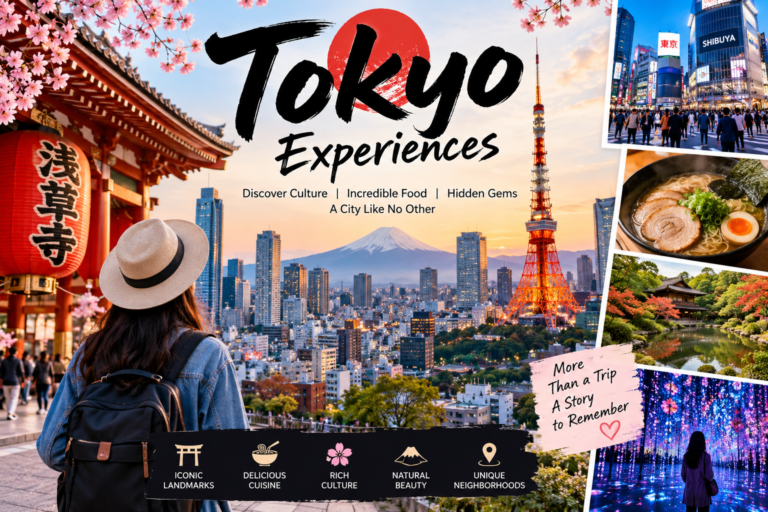
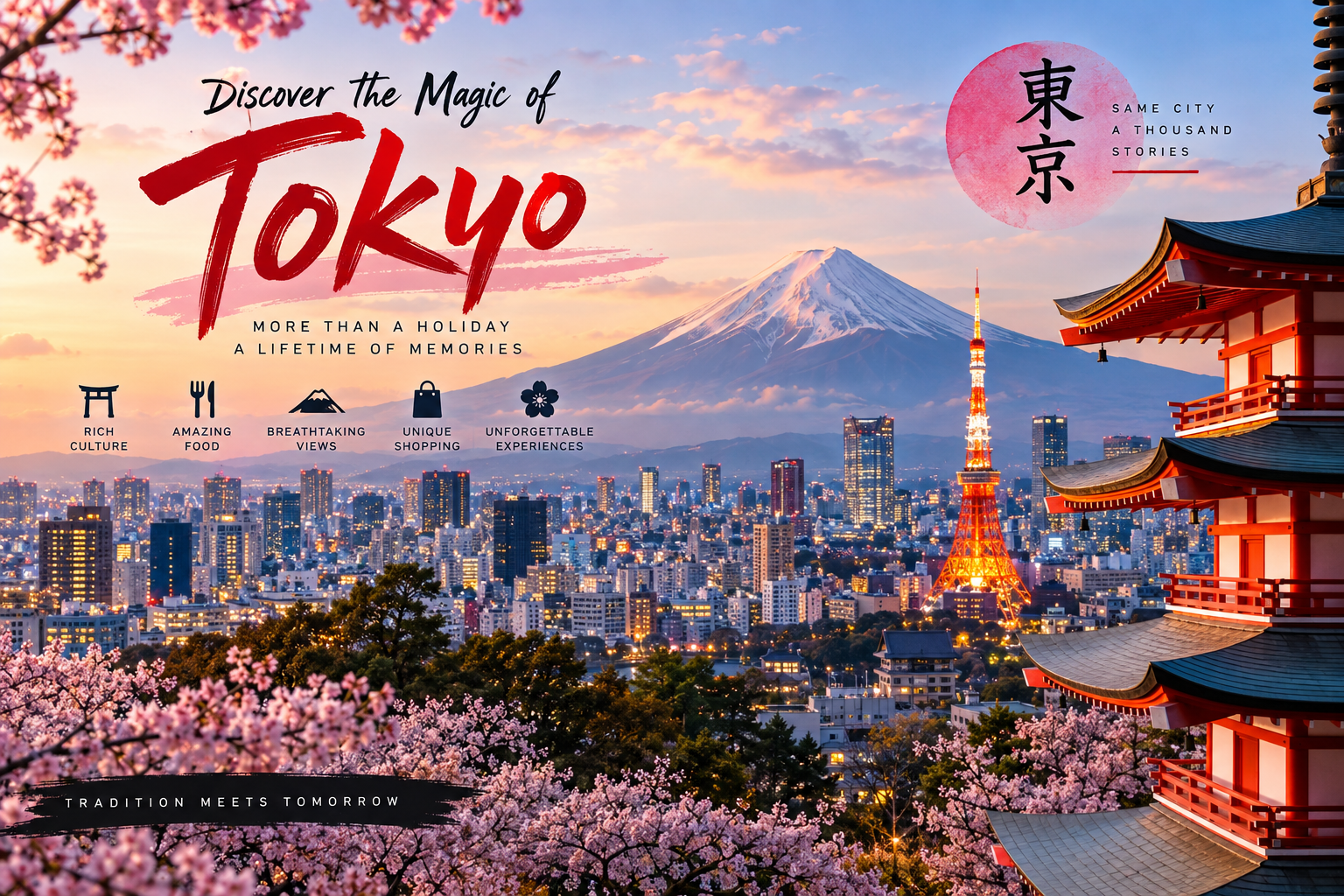
Tokyo Holiday: The Ultimate 2026 Guide to Planning an Unforgettable Trip
A Tokyo holiday is one of the best ways to experience the contrast between ancient Japanese traditions and one of the world’s most futuristic cities. From peaceful temples and hidden neighborhood cafés to neon streets, world-class food, shopping, technology, and efficient public transport, Tokyo gives first-time visitors an extraordinary range of experiences in a single trip Tokyo Property
Have you ever imagined starting your morning beside an ancient temple, eating handmade ramen for lunch, exploring a futuristic shopping district in the afternoon, and watching Tokyo’s skyline glow after sunset?
That is the magic of a Tokyo holiday.
Tokyo can initially feel overwhelming. It is enormous, fast-moving, densely connected, and filled with thousands of attractions. Yet that same complexity is what makes the city so rewarding. You can spend one day visiting historic Asakusa, another discovering Harajuku and Shibuya, and another exploring quiet neighborhoods that barely resemble the Tokyo shown in movies and social media.
The official Tokyo tourism guide describes the city’s transport network as exceptionally extensive, with trains, subways, buses, waterbuses, taxis, and other options connecting its neighborhoods.
The key to enjoying Tokyo is therefore not trying to see everything. It is learning how to organize your holiday around neighborhoods, travel time, seasonal conditions, food preferences, budget, and the type of experience you want.
This comprehensive Tokyo holiday guide explains how to plan the trip, where to stay, what to see, how to get around, what to eat, how long to stay, what mistakes to avoid, and how to build an itinerary that feels exciting rather than exhausting.
What Makes a Tokyo Holiday Special?
Tokyo is difficult to define with a single image.
It is the quiet sound of footsteps around a temple courtyard. It is the rush of Shibuya Crossing. It is a tiny restaurant hidden underneath a railway track. It is a convenience store breakfast before catching an early train. It is a rooftop view over a sea of buildings.
Japan’s capital combines historic neighborhoods with modern architecture, fashion, entertainment, technology, traditional cuisine, pop culture, and an enormous public transportation network.
JNTO describes Tokyo as a city where tradition and innovation coexist, highlighting areas such as Shibuya, Harajuku, Ginza, Shinjuku, and Asakusa for their distinctive experiences.
This variety makes Tokyo suitable for almost every type of traveler.
A first-time visitor can concentrate on famous landmarks. A family can combine museums, parks, observation decks, and entertainment. Couples can explore romantic neighborhoods and restaurants. Solo travelers can comfortably spend hours wandering through cafés, bookstores, markets, galleries, and side streets.
Food lovers have an almost endless selection, while photographers can find something interesting in almost every neighborhood.
How Many Days Do You Need for a Tokyo Holiday?
There is no perfect length for a Tokyo holiday, but your available time should determine the structure of your itinerary.
Tokyo in 3 Days
Three days can work for a short city break, but you need to be selective.
A practical three-day holiday could focus on:
- Asakusa and Tokyo Skytree
- Ueno or Akihabara
- Shibuya and Harajuku
- Meiji Jingu
- Shinjuku
- One major observation deck
- Japanese food experiences
The biggest mistake is trying to visit every famous attraction.
Instead, group attractions geographically.
Tokyo in 5 Days
Five days is a much more comfortable option for first-time visitors.
You can explore several major neighborhoods without constantly feeling rushed.
A five-day Tokyo holiday might include:
Day 1: Asakusa and Tokyo Skytree
Day 2: Shibuya, Harajuku, and Meiji Jingu
Day 3: Shinjuku and Tokyo Metropolitan area
Day 4: Ginza, Tokyo Station, and Marunouchi
Day 5: Akihabara, Ueno, or a flexible day
You can also use the fifth day for a day trip if you want to explore outside central Tokyo.
Tokyo in 7 Days
Seven days allows you to experience Tokyo at a slower pace.
This is particularly valuable because Tokyo is not simply a collection of tourist attractions. Its neighborhoods are part of the experience.
With a week, you can include:
- Major landmarks
- Traditional Tokyo
- Modern Tokyo
- Food exploration
- Shopping
- Museums
- Parks
- Nightlife
- Hidden neighborhoods
- A day trip
A seven-day Tokyo holiday is often a good balance between sightseeing and relaxation.
Tokyo in 10 Days or More
If you have ten days or longer, consider combining Tokyo with nearby destinations or another Japanese region.
The Shinkansen makes Tokyo a useful base for exploring other parts of Japan. JNTO notes that Tokyo connects to major destinations through several Shinkansen routes, including the Tokaido route toward Nagoya, Kyoto, and Shin-Osaka.
Longer holidays can therefore combine Tokyo with destinations such as Kyoto, Osaka, Hakone, Nikko, or other parts of Japan depending on the season and travel style.
The Best Time for a Tokyo Holiday
Tokyo is a year-round destination, but each season changes the character of the city.
Spring Tokyo Holiday
Spring is famous for cherry blossoms.
The appeal is obvious, but spring also brings high demand around popular viewing periods.
If cherry blossoms are your priority, avoid building the entire holiday around a fixed prediction made months in advance. Bloom timing can vary from year to year.
Instead, keep some flexibility in your schedule.
Popular areas can become crowded during peak blossom periods, so early mornings often provide a calmer experience.
Summer Tokyo Holiday
Summer brings warm weather, humidity, festivals, outdoor events, and long daylight hours.
It can be an exciting season, especially for travelers interested in Japanese festivals and summer atmosphere.
The challenge is heat and humidity.
Plan outdoor sightseeing earlier in the morning and later in the afternoon, while using museums, shopping centers, cafés, and indoor attractions during the hottest part of the day.
Autumn Tokyo Holiday
Autumn is one of the most comfortable seasons for many travelers.
Temperatures can be pleasant, foliage adds color to parks and gardens, and walking around the city can be particularly enjoyable.
It is also a good season for combining outdoor sightseeing with food-focused travel.
Winter Tokyo Holiday
Winter can be an underrated choice.
Tokyo’s winter atmosphere can feel crisp and clear, while illumination events create a completely different visual character after dark.
Winter also makes it easier to structure your days around indoor attractions, restaurants, shopping, museums, and evening experiences.
Tokyo Holiday Weather: What Should You Expect?
Tokyo experiences distinct seasons, so packing should be based on the month rather than simply the destination.
Rain is another factor to consider.
A compact umbrella or lightweight rain jacket can be useful, especially during wetter periods.
Your footwear deserves more attention than many travelers realize.
Tokyo holidays involve substantial walking and frequent train transfers. A beautiful but uncomfortable pair of shoes can turn an exciting trip into an exhausting one.
Choose comfortable footwear before choosing your outfits.
How to Get to Tokyo
International visitors generally arrive through either Haneda Airport or Narita International Airport.
GO TOKYO identifies Haneda and Narita as Tokyo’s principal airport gateways.
Haneda Airport
Haneda is especially convenient for travelers heading into central Tokyo.
The airport is directly connected to both the Keikyu Line and Tokyo Monorail. Official airport information lists approximate rail travel times of around 30 minutes to Tokyo Station, 45 minutes to Shibuya, and 50 minutes to Shinjuku, although actual journeys depend on the service and connection.
For many visitors, this convenient access is one of Haneda’s biggest advantages.
Narita Airport
Narita is farther from central Tokyo but serves a large number of international flights.
Several rail and bus services connect Narita with Tokyo.
If your accommodation is near a major railway station, compare the airport transfer options before arriving rather than choosing the first service you see.
Tokyo Airport Transfer Tips
Before leaving the airport, identify:
- Your hotel address
- Nearest major station
- Best airport route
- Approximate arrival time
- Whether you have large luggage
- Whether your accommodation has late check-in
- Whether your phone has mobile data
This five-minute preparation can prevent a frustrating first hour in Tokyo.
How to Get Around During a Tokyo Holiday
Tokyo’s public transportation system is one of the city’s greatest advantages.
GO TOKYO notes that visitors can use trains, subways, buses, waterbuses, taxis, IC cards, passes, and other transportation options.
Trains and Subways
For most visitors, trains and subways should form the foundation of a Tokyo holiday.
They are generally fast and efficient, but the network can appear complicated.
The trick is not memorizing every line.
Instead, identify the station closest to your accommodation and use a reliable navigation app to plan individual journeys.
IC Cards
An IC transit card can make everyday travel much easier.
Instead of repeatedly purchasing individual tickets, travelers can use supported IC cards for eligible transportation and purchases.
Always check current availability, compatibility, and refund rules before your trip because transport products and procedures can change.
Taxis
Taxis are useful when:
- You have heavy luggage.
- You are traveling late.
- You are traveling with children.
- Your destination is awkwardly connected.
- You want door-to-door convenience.
They are generally less economical than trains for everyday sightseeing, but convenience sometimes has greater value than saving a small amount of money.
Walking
Walking should be part of your Tokyo itinerary.
Some of the city’s most interesting experiences happen between attractions.
A five-minute walk through a neighborhood can reveal a small bakery, traditional house, independent store, temple, coffee shop, or local restaurant that would never appear on a standard sightseeing list.
Where to Stay During a Tokyo Holiday
Choosing your neighborhood can influence the entire trip.
Instead of asking, “What is the best area to stay in Tokyo?” ask:
“Which area best matches the holiday I want?”
Shinjuku
Shinjuku is ideal for travelers who want:
- Major transport connections
- Restaurants
- Nightlife
- Shopping
- Skyscraper views
- A lively atmosphere
It can feel intense, but that is part of its appeal.
Shibuya
Shibuya is a strong choice for younger travelers, first-time visitors, shopping enthusiasts, nightlife fans, and people interested in contemporary Tokyo.
It is also a convenient base for exploring Harajuku and nearby neighborhoods.
Asakusa
Asakusa offers a very different atmosphere.
It is particularly appealing if you want:
- Traditional Tokyo
- Temples
- Older streets
- Local shops
- A calmer evening atmosphere
It can also be attractive for travelers looking for a more traditional visual experience.
Ginza
Ginza is known for upscale shopping, department stores, dining, and polished city streets.
It is particularly suitable for travelers who prioritize comfort, luxury, restaurants, and central access.
Tokyo Station and Marunouchi
This area is practical for travelers who value transport connections and central positioning.
Tokyo Station is also a major destination in its own right. JNTO describes its historic red-brick exterior and extensive underground network of shops, restaurants, and railway facilities.
The Best Tokyo Attractions for a First Holiday
Tokyo has so many attractions that creating a shortlist is essential.
Senso-ji Temple
Senso-ji in Asakusa is one of the city’s most recognizable traditional landmarks.
The temple area gives visitors an immediate sense of historical Tokyo.
Visit early if you want a calmer experience.
Tokyo Skytree
Tokyo Skytree provides a dramatic perspective over the enormous metropolitan area.
A skyline observation experience can help you understand Tokyo’s scale in a way that walking through individual neighborhoods cannot.
Meiji Jingu
Meiji Jingu provides a powerful contrast with the commercial energy of Shibuya and Harajuku.
The forested approach and shrine environment create a feeling of separation from the surrounding city.
Shibuya
Shibuya is one of the defining modern Tokyo experiences.
The famous crossing is only one part of the district.
Spend time exploring:
- Shopping centers
- Side streets
- Cafés
- Restaurants
- Fashion stores
- Rooftop views
- Entertainment venues
Harajuku
Harajuku is closely associated with youth culture, fashion, street style, and creative expression.
It can be especially interesting for travelers who want to understand Tokyo beyond traditional tourist landmarks.
Shinjuku
Shinjuku is a city within the city.
Its major station area can feel overwhelming at first, but exploring its different sides reveals restaurants, entertainment, shopping, business districts, and quieter streets.
Akihabara
Akihabara is particularly relevant for visitors interested in:
- Anime
- Manga
- Gaming
- Electronics
- Collectibles
- Japanese pop culture
However, you do not need to be an anime fan to enjoy the neighborhood’s distinctive atmosphere.
Ueno
Ueno combines parks, museums, shopping, food, and cultural attractions.
It can be a good choice for travelers who want several experiences within a relatively compact area.
Ginza
Ginza is a destination for sophisticated shopping, department stores, architecture, restaurants, and urban photography.
Even travelers who are not interested in luxury shopping may enjoy walking through the district.
Tokyo Station
Tokyo Station is more than a transport hub.
Its surrounding Marunouchi district offers modern architecture, restaurants, shopping, and attractive city views.
Tokyo Food: What Should You Eat?
A Tokyo holiday without exploring Japanese food is incomplete.
But do not assume you need to visit expensive restaurants.
Some of the most memorable meals can come from simple neighborhood establishments.
Sushi
Tokyo is an obvious destination for sushi.
Instead of automatically choosing the most expensive restaurant, consider what experience you actually want.
Do you want:
- Counter seating?
- Traditional atmosphere?
- Casual sushi?
- Omakase?
- Market-style food?
- Affordable conveyor-belt sushi?
The answer determines the right restaurant.
Ramen
Ramen is one of the easiest foods to incorporate into a Tokyo holiday.
Different shops offer different broths, noodles, toppings, and regional influences.
Try more than one style if you have enough time.
Tempura
Good tempura is about texture.
Look for restaurants that specialize in the dish rather than treating it simply as another menu item.
Yakitori
Yakitori is ideal for an evening meal.
Small grilled chicken skewers can be enjoyed in casual restaurants and izakaya-style settings.
Japanese Breakfast
One of the best ways to experience a different rhythm is to try a Japanese-style breakfast.
Rice, fish, soup, pickles, and other components can create a completely different start to the day.
Convenience Stores
Do not overlook Japanese convenience stores.
They are useful for:
- Quick breakfasts
- Drinks
- Snacks
- Desserts
- Simple meals
- Travel supplies
They can also be a practical budget tool during a busy sightseeing day.
A Better Tokyo Food Strategy
Instead of planning every meal around famous restaurants, divide your food budget.
For example:
Budget meal: casual restaurant or convenience store
Mid-range meal: neighborhood specialty restaurant
Splurge meal: one memorable high-end experience
This approach often creates better memories than eating expensively every day.
Tokyo Holiday Shopping Guide
Tokyo offers shopping experiences for almost every budget.
Luxury Shopping
Ginza is a natural choice for luxury brands and premium department stores.
Fashion
Shibuya and Harajuku are useful for contemporary fashion and youth-oriented styles.
Electronics and Gaming
Akihabara remains an important destination for electronics, gaming, anime, and collectibles.
Traditional Souvenirs
Asakusa and other historic areas are useful for finding traditional Japanese gifts and crafts.
Station Shopping
Major stations often contain extensive shopping and food areas.
This is especially convenient when you need last-minute souvenirs before departure.
Tokyo Nightlife
Tokyo nightlife is far more varied than simply visiting bars.
You can choose from:
- Cocktail bars
- Izakaya
- Live music
- Karaoke
- Night views
- Late-night restaurants
- Entertainment districts
- Cultural performances
Shinjuku at Night
Shinjuku becomes particularly atmospheric after sunset.
The neon-lit streets and compact entertainment areas create a very different environment from daytime Tokyo.
Shibuya at Night
Shibuya is ideal for travelers who want energetic nightlife, music, restaurants, shopping, and modern city culture.
Golden Gai
Golden Gai is famous for its tiny bars.
Because some venues are extremely small, check entry policies and respect house rules.
Tokyo for Families
A Tokyo holiday can work exceptionally well for families if the itinerary is designed around energy levels.
Children may enjoy:
- Tokyo Disneyland
- Tokyo DisneySea
- Interactive museums
- Parks
- Aquariums
- Character stores
- Toy stores
- Observation decks
- Train experiences
Do not schedule five major attractions in one day.
Children often enjoy Tokyo more when adults leave room for discovery.
Tokyo for Couples
Tokyo offers a huge variety of experiences for couples.
Consider:
- Evening skyline views
- Quiet gardens
- Romantic restaurants
- Neighborhood cafés
- River walks
- Seasonal illuminations
- Shopping
- Traditional cultural experiences
A couple’s Tokyo holiday does not need to be expensive.
Sometimes the best experience is simply walking through a quiet neighborhood after dinner.
Tokyo for Solo Travelers
Tokyo is particularly rewarding for solo travelers.
You can eat alone without feeling unusual, change plans easily, and spend as much time as you want in museums, shops, cafés, or neighborhoods.
Solo travel also makes it easier to wake up early and explore popular locations before the crowds arrive.
Tokyo for Older Travelers
Older travelers should prioritize convenience over an aggressive itinerary.
Choose accommodation near a major station, but not necessarily directly above the busiest part of it.
Build rest periods into the day.
Tokyo has extensive accessibility infrastructure, although large stations can still involve considerable walking and complex transfers. GO TOKYO’s accessibility guidance recommends advance planning and notes that many stations have elevators, accessible toilets, and tactile paving.
Tokyo Holiday on a Budget
Tokyo can be expensive, but it does not require a luxury budget.
Save on Accommodation
Compare hotels, hostels, business hotels, apartments where legally permitted, and other suitable accommodation types.
Location matters more than simply finding the cheapest room.
A cheaper hotel that requires long daily transfers may not actually save you money or energy.
Save on Food
Mix restaurants with affordable meals.
Convenience stores, casual ramen shops, local restaurants, food halls, and station eateries can help control costs.
Save on Attractions
Many Tokyo experiences are free or relatively inexpensive.
Walking through neighborhoods, visiting certain shrines and temples, exploring parks, and enjoying city streets can provide excellent experiences without expensive tickets.
Save on Transportation
Use public transportation intelligently.
Do not buy a tourist pass simply because it sounds convenient.
Compare its cost with the journeys you actually expect to make.
Tokyo Holiday for Luxury Travelers
Tokyo is equally impressive at the luxury end.
Luxury travelers can focus on:
- Premium hotels
- Fine dining
- Private cultural experiences
- High-end shopping
- Spa experiences
- Chauffeur services
- Premium observation experiences
- Exclusive bars
The advantage of luxury travel in Tokyo is not simply comfort.
It can also provide access to experiences that require reservations, specialist knowledge, or concierge assistance.
How to Build a Better Tokyo Itinerary
A good itinerary is not a list of attractions.
It is a geographic strategy.
Use the Neighborhood Method
Group attractions by location.
For example:
Asakusa day: Senso-ji, Nakamise area, nearby attractions, Tokyo Skytree
Shibuya day: Shibuya, Harajuku, Meiji Jingu
Ueno day: Ueno Park, museums, nearby shopping areas
This reduces unnecessary transportation.
Use the Energy Method
Do not schedule two exhausting days back-to-back.
Follow a demanding sightseeing day with a slower neighborhood day.
Use the Weather Method
Keep some flexible attractions available.
If rain arrives, switch from an outdoor-heavy itinerary to museums, shopping, cafés, food halls, or indoor entertainment.
A Practical 7-Day Tokyo Holiday Itinerary
Day 1: Traditional Tokyo
Begin in Asakusa.
Visit Senso-ji and explore surrounding streets.
After lunch, head toward Tokyo Skytree.
Spend the evening in a relaxed neighborhood rather than rushing across the city.
Day 2: Shibuya and Harajuku
Start at Meiji Jingu.
Continue toward Harajuku and explore the area’s fashion and food scene.
Finish the day in Shibuya.
Stay for the evening atmosphere.
Day 3: Shinjuku
Explore Shinjuku during the day.
Visit a viewpoint, explore shopping areas, and enjoy lunch.
Return after sunset for the illuminated cityscape.
Day 4: Ueno and Akihabara
Start in Ueno.
Explore cultural attractions and the park area.
Continue toward Akihabara in the afternoon.
Spend the evening trying Japanese food.
Day 5: Ginza and Tokyo Station
Explore Ginza.
Continue toward Marunouchi and Tokyo Station.
This is a good day for shopping, architecture, restaurants, and slower sightseeing.
Day 6: Flexible Tokyo
Use this day for your interests.
Choose:
- Disney
- Museums
- Shopping
- Anime
- Food
- Gardens
- Hidden neighborhoods
- A day trip
Day 7: Your Favorite Tokyo
Do not add another huge sightseeing list.
Return to the neighborhood you liked most.
Shop for souvenirs.
Eat your favorite meal again.
Take photographs.
Enjoy the city without checking your itinerary every thirty minutes.
Common Tokyo Holiday Mistakes
Trying to See Everything
Tokyo is too large for that strategy.
Choose priorities.
Staying Too Far From Transport
A cheap room far from your daily activities can cost you hours.
Ignoring Walking Distance
A route that looks short on a map can involve large stations, stairs, transfers, and crowded streets.
Overpacking Each Day
Tokyo rewards spontaneous exploration.
Leave empty space.
Booking Every Meal
Reservations can be useful for popular restaurants, but overplanning removes flexibility.
Forgetting Cash and Payment Variety
Japan has become increasingly convenient for cashless payments, but travelers should not assume every small establishment accepts every payment method.
Carry an appropriate backup.
Ignoring Luggage
Large luggage can make train transfers difficult.
Use luggage forwarding or storage options when appropriate, especially during multi-city trips.
Visa and Entry Considerations
Visa requirements depend on nationality and travel circumstances.
JNTO states that all foreign visitors need a valid passport and that citizens of certain countries and regions may enter Japan visa-free for eligible short tourist stays, while rules can change. Travelers should check current requirements through the official Japanese authorities before departure.
Never rely on an old visa article or social-media post for entry requirements.
Check official sources shortly before traveling.
Connectivity During a Tokyo Holiday
Reliable internet can make a major difference.
You may want:
- eSIM
- Physical SIM
- Pocket Wi-Fi
- International roaming
Your choice depends on your phone, carrier, length of stay, and how much data you expect to use.
Download important information before leaving the airport.
Useful offline information includes:
- Hotel address
- Reservation confirmations
- Train information
- Maps
- Emergency contacts
- Passport copies
Tokyo Holiday Safety
Tokyo is generally considered a safe destination for tourists, but normal travel precautions still matter.
Keep an eye on:
- Passport
- Wallet
- Phone
- Credit cards
- Luggage
Follow local rules and instructions.
Pay attention to weather warnings, particularly during periods of extreme heat, heavy rain, typhoons, or other severe conditions.
Travel insurance can also be useful because medical treatment, cancellations, lost luggage, and unexpected disruptions can become expensive.
Cultural Etiquette for Visitors
A good Tokyo holiday includes respect for local customs.
Keep Noise Low on Public Transport
Avoid loud conversations and phone calls.
Queue Properly
Japanese cities generally place strong emphasis on orderly queues.
Follow Restaurant Rules
Some restaurants have specific ordering or seating systems.
Observe what other customers are doing or ask staff.
Respect Temples and Shrines
Do not treat religious sites merely as photo backgrounds.
Follow posted rules and behave respectfully.
Do Not Block Narrow Streets
Tokyo’s busiest areas can become crowded quickly.
Move aside if you need to stop and check your phone or map.
Ten Travel Brands to Consider for a Tokyo Holiday
The following comparison is not a ranking. Different brands serve different travel needs, and prices, availability, routes, and policies can change.
| Brand | Main Use | Best For | Strength | Consideration |
|---|---|---|---|---|
| ANA | Airline | International/domestic flights | Extensive Japan network | Fares vary by route |
| Japan Airlines | Airline | International/domestic flights | Strong Japan connectivity | Compare fare classes |
| JR East | Rail | Tokyo and eastern Japan | Extensive rail network | Route complexity |
| Tokyo Metro | Subway | Central Tokyo | Extensive urban coverage | Multiple operators exist |
| Keikyu | Rail/Airport | Haneda access | Useful airport connections | Route depends on destination |
| Tokyo Monorail | Airport rail | Haneda access | Direct airport-city option | Not ideal for every neighborhood |
| Hyatt | Hotels | Luxury/upscale stays | Wide hotel portfolio | Rates can be premium |
| Marriott | Hotels | Luxury/upscale stays | Broad accommodation choice | Property experience varies |
| Hilton | Hotels | Premium stays | International loyalty ecosystem | Rates vary significantly |
| Booking.com | Accommodation search | Hotel comparison | Large accommodation selection | Always review cancellation terms |
The most important point is that a “best brand” depends on your itinerary.
For example, a traveler staying near a station served by JR East may value rail convenience differently from someone staying close to a Tokyo Metro station.
Tokyo Holiday Pros and Cons
Pros
Outstanding public transportation: Tokyo’s transport network makes it possible to explore a huge metropolitan area without needing a car.
Exceptional food: The city offers everything from casual street-level meals to sophisticated fine dining.
Huge variety: Traditional culture, modern entertainment, shopping, technology, nature, nightlife, and museums coexist.
Excellent for different budgets: Visitors can create both budget-conscious and luxury holidays.
Year-round appeal: Every season provides a different reason to visit.
Cons
Crowds: Major attractions and stations can become extremely busy.
Scale: Tokyo can feel exhausting if your itinerary requires constant cross-city travel.
Language challenges: English is increasingly available, but communication is not guaranteed everywhere.
Walking: A Tokyo holiday can involve much more walking than expected.
Complex transport: The network is excellent but can be confusing to first-time visitors.
The Biggest Hidden Advantage of a Tokyo Holiday
The most overlooked benefit of Tokyo is not a famous attraction.
It is density.
In many cities, interesting places are spread far apart.
Tokyo frequently places restaurants, shops, temples, cafés, stations, parks, galleries, and entertainment within the same general neighborhood.
That means an unplanned afternoon can become one of the best parts of your holiday.
You might leave a major attraction and discover a tiny restaurant around the corner.
That experience is difficult to schedule.
It is one reason not to overplan.
How Social Media Can Mislead Tokyo Travelers
Instagram and TikTok can be useful for discovering ideas, but they can also distort expectations.
A viral location may look spectacular in a carefully framed photograph but feel ordinary when surrounded by crowds.
The opposite is also true.
A quiet side street with no viral reputation can become one of your favorite memories.
Use social media for inspiration rather than treating it as a definitive Tokyo checklist.
A Better Way to Think About Tokyo
Instead of dividing Tokyo into “tourist attractions” and “hidden gems,” divide it into experiences.
Ask yourself:
What do I want to feel?
Do you want:
- Energy?
- Peace?
- Tradition?
- Food discovery?
- Shopping?
- Nightlife?
- Photography?
- Family entertainment?
- Luxury?
- Pop culture?
- Local neighborhood life?
Then build your itinerary around those emotions.
This approach creates a more personal holiday.
Future Trends for Tokyo Holidays
Tokyo travel will continue to evolve.
More Digital Travel Planning
Travelers increasingly use smartphones for maps, translation, reservations, transport information, and itinerary management.
AI-based planning is also likely to make personalized travel planning easier.
Greater Demand for Neighborhood Experiences
Travelers increasingly want experiences beyond famous landmarks.
That could benefit less-famous neighborhoods and independent businesses.
More Accessibility-Focused Travel
Accessibility is becoming a more important consideration for families, older travelers, and travelers with disabilities.
Tokyo’s official tourism resources increasingly emphasize accessible transport and attractions.
More Sustainable Travel Choices
Rail travel, walking, public transportation, reusable products, and neighborhood-based tourism can reduce unnecessary travel within the city.
Longer, Slower Trips
Rather than rushing through a destination, some travelers are likely to choose longer stays and slower itineraries.
Tokyo is particularly suitable for this approach because the city offers enough variety to support repeated exploration.
How to Make Your Tokyo Holiday More Sustainable
You do not need to make your trip complicated.
Simple decisions can help.
Use trains instead of taxis when practical.
Walk between nearby attractions.
Carry a reusable bottle.
Avoid unnecessary disposable items.
Support independent restaurants and neighborhood businesses.
Avoid overcrowding sensitive locations.
Most importantly, treat Tokyo as a living city rather than a theme park.
People live, work, study, worship, and raise families there.
Good tourism respects that reality.
The Ultimate Tokyo Holiday Planning Checklist
Before departure, confirm:
- Passport validity
- Japan entry requirements
- Flights
- Accommodation
- Airport transfer
- Travel insurance
- Mobile data
- Payment methods
- Emergency information
- Major reservations
- Weather forecast
- Appropriate clothing
- Comfortable walking shoes
- Medication
- Important documents
- Transportation plan
Then leave some space for spontaneity.
Tokyo Holiday Quick Summary
A successful Tokyo holiday does not depend on seeing the largest number of attractions.
It depends on choosing the right experiences for your travel style.
The ideal approach is to:
- Stay in a convenient neighborhood.
- Use public transportation.
- Group attractions geographically.
- Leave flexible time in your itinerary.
- Explore both famous areas and ordinary neighborhoods.
- Eat at different price levels.
- Respect local customs.
- Prepare for changing weather.
- Check current entry requirements.
- Avoid trying to see the entire city in one trip.
Frequently Asked Questions About a Tokyo Holiday
Is Tokyo good for a holiday?
Yes. Tokyo is one of the world’s most diverse city destinations, offering traditional culture, modern entertainment, food, shopping, museums, nightlife, parks, and extensive public transportation.
How many days are enough for a Tokyo holiday?
Five to seven days is a comfortable starting point for a first visit. Three days can work for a short break, while ten days or more allows a slower itinerary or additional destinations.
What is the best month to visit Tokyo?
There is no single best month for everyone. Spring is attractive for cherry blossoms, autumn can offer comfortable sightseeing conditions and seasonal scenery, summer provides festivals but can be hot and humid, and winter offers a different atmosphere with colder weather and seasonal illuminations.
Is Tokyo expensive?
Tokyo can be expensive, but it does not have to be. Travelers can control costs through accommodation choices, casual restaurants, public transportation, free attractions, and careful planning.
Is Tokyo suitable for families?
Yes. Families can enjoy theme parks, museums, aquariums, parks, shopping, food, and cultural attractions. The key is avoiding overly ambitious daily schedules.
Is Tokyo suitable for solo travelers?
Yes. Tokyo is particularly convenient for independent travelers because of its transportation, restaurants, shopping, entertainment, and wide variety of individual activities.
Should I stay in Shibuya or Shinjuku?
Both are excellent choices. Shibuya is particularly attractive for contemporary culture, shopping, nightlife, and younger travelers. Shinjuku offers extensive transportation, restaurants, nightlife, shopping, and a more intense metropolitan atmosphere.
Is Asakusa a good area to stay?
Asakusa can be an excellent choice for travelers who want traditional Tokyo, temples, older streets, and a somewhat different atmosphere from Shibuya or Shinjuku.
Is Tokyo easy to navigate?
Tokyo’s transportation network is extensive and efficient, but first-time visitors may find it complicated. Navigation apps, IC cards, and a little advance planning make it much easier. GO TOKYO specifically notes the city’s multilingual signage and extensive public transportation options.
Which airport is better for Tokyo?
Neither airport is universally better. Haneda is generally more convenient for many central Tokyo journeys because it is closer to the city and has direct rail connections. Narita serves a large international network and has multiple transportation options into Tokyo.
Do I need a Japan Rail Pass for Tokyo?
Not necessarily. A nationwide rail pass should not automatically be purchased for a Tokyo-only holiday. Compare the expected cost of your actual train journeys and consider whether you will travel between regions.
Can I use public transportation with luggage?
Yes, but large luggage can make busy stations and trains more difficult. Consider luggage delivery or storage when appropriate, particularly if you are moving between cities.
Is Tokyo safe for tourists?
Tokyo is widely regarded as a safe destination, but visitors should still use normal travel precautions and follow local guidance, especially during severe weather or other emergencies.
Do I need to book Tokyo attractions in advance?
Some popular attractions, restaurants, special exhibitions, and entertainment experiences may require or strongly benefit from advance reservations. Check the official attraction or venue before traveling.
Can I visit Tokyo on a low budget?
Yes. Affordable accommodation, casual Japanese food, public transportation, free neighborhood exploration, parks, temples, and selected free attractions can significantly reduce costs.
What should I not do in Tokyo?
Avoid overcrowding your itinerary, making excessive noise on public transportation, ignoring local rules, blocking busy walkways, assuming every restaurant follows the same ordering system, or treating residential neighborhoods as photo sets.
Conclusion
A Tokyo holiday is not simply a trip to see famous landmarks. It is an opportunity to experience one of the world’s most fascinating urban environments, where centuries-old traditions and futuristic city life exist side by side.
You can spend the morning walking through a historic temple district, have lunch at a tiny restaurant, take an efficient train across the city, shop in a modern fashion district, and finish the night beneath Tokyo’s neon skyline.
The secret is not trying to experience everything.
It is choosing the experiences that matter most to you.
For first-time visitors, five to seven days provides a strong foundation. Stay somewhere convenient, organize your itinerary by neighborhood, use public transportation, wear comfortable shoes, and keep some time unplanned.