Tokyo Waterparks: 10 Best Places for Pools, Water Slides and Family Fun
Imagine escaping Tokyo’s busy streets on a hot summer afternoon. Instead of walking through crowded shopping districts, you are floating in a wave pool, racing down a water slide, or relaxing beside a swimming pool surrounded by greenery. Tokyo offers several ways to enjoy water-based attractions, from large summer leisure pools and traditional swimming facilities to indoor aquatic centres and spectacular water-themed rides at major amusement parks Tokyo Cycling
The Best Tokyo Waterparks at a Glance
1. Tokyo Summerland
Best for: Families, mixed-age groups and thrill-seekers.
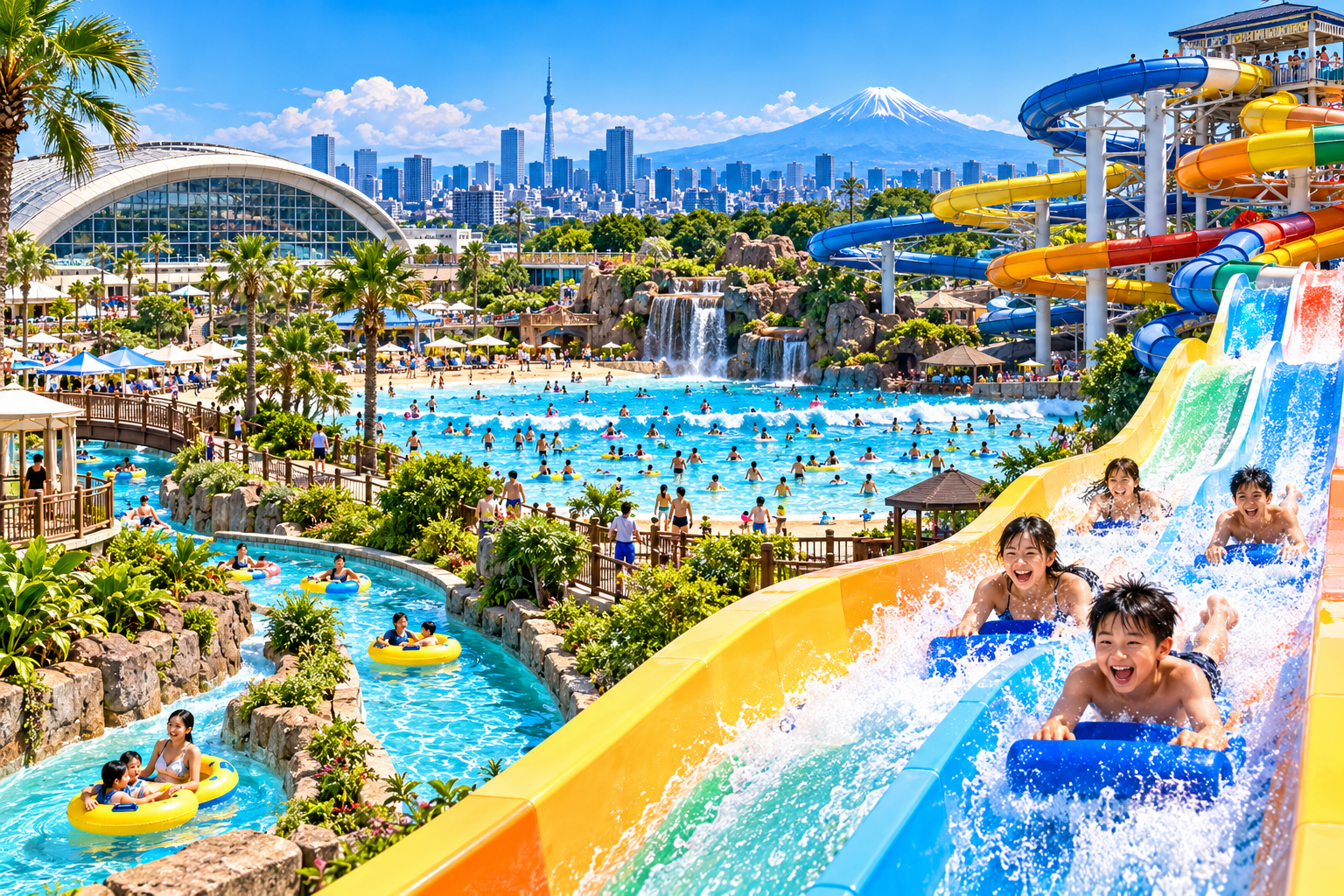
Tokyo Summerland is a large water leisure resort with indoor pools, seasonal outdoor pools, slides and a long lazy river. It is a strong choice for families and groups who want a full day of water activities.
2. Yomiuriland Pool WAI
Best for: Summer days, groups of friends and evening pool experiences.
Pool WAI is a seasonal pool complex with wave and flowing pools, water slides and special night-pool sessions on selected dates.
3. Hotel New Otani Tokyo Garden Pool
Best for: Couples, luxury travellers and adults seeking a stylish pool day.
This hotel pool experience focuses on atmosphere, relaxation and a premium summer outing rather than water slides. Access and special evening events depend on the season.
4. ANA InterContinental Tokyo Garden Pool
Best for: Couples, hotel guests and central-Tokyo itineraries.
This is a city-centre hotel pool option for visitors who prefer a quieter setting and convenient access to central Tokyo. Confirm whether non-guests can book a pool session for your dates.
5. Grand Nikko Tokyo Daiba Pool Option
Best for: Hotel stays and Tokyo Bay sightseeing.
A hotel-based alternative for travellers staying in the Odaiba area. Treat this as a hotel pool rather than a public waterpark, and verify current access arrangements.
Important: The first two options are the main places to investigate if your priority is a conventional waterpark-style day. Hotel pools generally have fewer attractions and may have stricter access, age, reservation or dress requirements.
What Are Tokyo Waterparks Like?
Waterparks versus swimming pools
A waterpark is usually designed around recreation rather than swimming alone. Typical attractions include:
- Water slides with different heights and speeds.
- Lazy rivers where visitors float along a circulating current.
- Wave pools that simulate gentle surf.
- Shallow children’s pools and splash play areas.
- Water-play structures with tipping buckets, fountains and small slides.
- Cabanas, shaded seating, restaurants and changing facilities.
Tokyo’s major seasonal pool complexes often combine several of these attractions with an amusement park. This creates a hybrid experience: you can spend the morning on water rides, relax in a pool after lunch and, where the venue permits, visit dry rides as well.
A conventional indoor swimming pool serves a different purpose. It may offer lane swimming, lessons, fitness facilities or family recreation without having the large slides and themed environments associated with a waterpark.
Why Tokyo’s waterparks are often seasonal
Tokyo experiences hot, humid summers, making outdoor water attractions particularly appealing during the warmer months. Many large outdoor pools concentrate their operations in summer, while indoor facilities may open for a longer season.
The distinction matters when planning a trip outside July and August. An attraction may be open while its outdoor waterpark area is closed. Tokyo Summerland, for example, operates an indoor pool area separately from its summer-only outdoor Adventure Lagoon.
Always check the calendar for the precise area you want to use, not just the general park opening hours.
What makes a Tokyo waterpark visit different?
Three practical differences are worth understanding before you go.
First, admission can be date-specific. Popular summer venues may use advance booking, capacity limits or variable pricing.
Second, swimming etiquette is important. Rules can cover tattoos, swimwear, inflatable equipment, food, footwear, photography and what visitors may bring into the pool area.
Third, transport takes planning. Some large parks sit outside central Tokyo. The journey may involve a train followed by a local bus or shuttle, so travel time can be a significant part of the day.
These details are not minor inconveniences. They can determine whether a waterpark is a good fit for a short city break, a family holiday or a longer stay in Japan.
Tokyo Summerland: Best for a Full Waterpark Day
What makes Tokyo Summerland special?
Tokyo Summerland, in Akiruno in the western part of the Tokyo metropolitan area, is one of the strongest choices for visitors looking for a substantial waterpark experience. It combines indoor and outdoor aquatic areas with amusement-park attractions, making it more versatile than a simple swimming pool.
Its two main pool zones serve different purposes:
- Adventure Dome: The indoor pool area, useful when the weather is unsettled or when you want an alternative to outdoor swimming.
- Adventure Lagoon: The outdoor pool area, associated with the summer season, larger leisure pools and outdoor water attractions.
This split is particularly useful for families. Younger children may prefer shallow pools and gentle play areas, while older children and adults can look for bigger slides and more energetic rides.
Great Journey: The lazy-river experience
One of the park’s signature features is Great Journey, a long circulating river. Floating along a lazy river is a different kind of waterpark activity from racing down a slide. The pace is slower, conversation is easy, and visitors can take a break from more intense attractions.
The river is approximately 650 metres long, making it a notable feature for visitors who enjoy relaxing water activities.
For families travelling with grandparents, parents and children, this kind of attraction can help everyone enjoy the day without requiring the same level of physical effort.
Monster Stream and DEKASLA
Monster Stream is a more energetic water attraction that combines moving water with wave-like action. DEKASLA is a large group water slide, designed to deliver a more dramatic ride than a small children’s slide.
These attractions are especially appealing to visitors who want more than floating or swimming. However, water rides can have height, age, weight, health or group-size rules. Read the posted restrictions before joining a queue.
Is Tokyo Summerland suitable for young children?
It can be, provided you select attractions that match your child’s swimming ability and age. The indoor area includes shallow and children’s pools, while the broader park offers a mix of family-friendly and more adventurous experiences.
Parents should consider:
- Whether the child is comfortable in water.
- The distance between the children’s area and the rides adults want to use.
- Whether a suitable life jacket or flotation aid is permitted.
- How easily the family can return to a meeting point if separated.
- Whether the day’s weather makes sun protection or indoor breaks especially important.
Do not assume that a child who can swim in a calm pool is ready for a wave pool or water slide.
How to get the most from Tokyo Summerland
For a first visit, make a simple plan instead of trying to experience every attraction.
- Arrive early enough to complete entry and changing before the busiest period.
- Start with the attractions your group most wants to experience.
- Use the lazy river or a quieter pool for a mid-day break.
- Eat at a sensible time rather than waiting until everyone is hungry.
- Finish with favourite rides or a relaxed indoor session, depending on the operating schedule.
Check the official calendar, ticket conditions and transport options before leaving your hotel.
Yomiuriland Pool WAI: Best for Summer Pool Fun
What is Pool WAI?
Pool WAI is the seasonal water recreation area within Yomiuriland, a larger amusement park in the Tokyo metropolitan area. The pool complex offers several pool types and water slides, and selected dates feature a night-pool experience with illuminated areas.
It is a good option for people who want a summer pool day that feels more like a leisure event than a visit to a standard municipal swimming pool.
Wave pools and flowing pools
Pool WAI’s pool selection includes a wave pool and a circulating pool. The wave pool has a beach-like edge, while the flowing pool offers a circuit of approximately 250 metres.
These attractions suit different moods:
- A wave pool creates a more active, beach-like atmosphere.
- A flowing pool is better for relaxed floating.
- A conventional swimming pool is useful for playing in the water without the movement of waves.
- Smaller slides and children’s water-play areas offer alternatives for younger visitors, subject to their height and safety restrictions.
Is Pool WAI good for teenagers and groups of friends?
Yes, it can be an appealing choice for teenagers, young adults and mixed groups because it combines pools with slides and, on selected dates, evening lighting.
The night-pool option is not necessarily available every day. Visitors should check the calendar for the date they intend to visit, including the time the pool closes and whether the ticket includes evening admission.
How much does Pool WAI cost?
Prices depend on the date, ticket type and whether admission includes the wider amusement park. The venue uses variable pricing, so different days may have different admission prices.
Rather than relying on a price quoted in an older travel article, compare the official ticket options for your exact date. Include transport, meals, lockers and any paid seating in your total budget.
Tips for a better Pool WAI visit
- Check whether amusement-park entry is included in the pool ticket.
- Review the tattoo policy before booking.
- Avoid bringing prohibited glass containers, alcohol or oversized carts.
- Check slide restrictions before queuing with children.
- If you want the night-pool atmosphere, select a date when it is specifically scheduled.
Tokyo Hotel Pools: A More Relaxed Alternative
Not everyone wants a day of slides, crowds and wave pools. If your ideal summer experience involves a sun lounger, a calm swim and a comfortable place to change, a hotel pool may be a better match.
Tokyo has several hotel pool options, including Hotel New Otani Tokyo, ANA InterContinental Tokyo and Grand Nikko Tokyo Daiba. Access, prices and special events vary by property and season.
Hotel New Otani Tokyo: Garden Pool
The Garden Pool is a premium urban pool experience. It is worth investigating if you are staying near central Tokyo or want to combine a pool session with dining and sightseeing.
Some seasonal events have featured evening lighting and music, but dates and entry conditions should be verified with the hotel before planning around them.
Best for: Couples, premium travel, adults and visitors who value atmosphere over water rides.
Potential drawback: The experience can be substantially more expensive than a standard public pool, and access may be restricted to particular dates, guests or booking categories.
ANA InterContinental Tokyo: Garden Pool
This pool offers another way to enjoy a summer swim without leaving the city centre. It may suit travellers who want a pool break between sightseeing activities or who are staying in the surrounding area.
Before booking, confirm whether day visitors are accepted, whether advance reservations are required and whether the pool is operating on your dates.
Best for: Central-Tokyo stays, couples and travellers seeking a quieter environment.
Potential drawback: It is a hotel pool rather than a full waterpark, so slides and children’s play structures should not be expected.
Grand Nikko Tokyo Daiba: Pool option
The Odaiba area is known for waterfront views, shopping and entertainment. A hotel pool can fit naturally into an itinerary based around Tokyo Bay, particularly if your accommodation is nearby.
Check the property’s current pool facilities and access policy rather than assuming that a pool advertised in an older travel guide is available to every visitor.
Best for: Hotel guests and travellers exploring Odaiba.
Potential drawback: Hotel location and view do not guarantee public admission or waterpark-style attractions.
How hotel pools compare with waterparks
| Feature Tokyo waterparks | Large waterpark Tokyo waterparks | Hotel pool Tokyo waterparks |
|---|---|---|
| Water slides | Often available | Usually limited or absent |
| Children’s play areas | Common at family-oriented venues | Depends on the property |
| Relaxation | Possible, but often busy | Often the main focus |
| Price | Varies by date and ticket | May be premium-priced |
| Booking | May be date-specific | May require advance reservation |
| Best use | Full-day activity | Short swim or luxury leisure session |
The key is to choose by experience, not simply by the word “pool.” A hotel pool can be excellent, but it is not a substitute for a large waterpark if your children are expecting slides and splash zones.
Ten Tokyo Waterpark and Pool Options Compared
The word “waterpark” is often used loosely in travel searches. To help you choose accurately, this comparison separates dedicated water attractions from hotel pools and swimming or bathing facilities.
The first two entries are the clearest choices for a classic waterpark day. The remaining options are alternatives for visitors who prefer relaxation, hotel convenience or indoor aquatic recreation.
| Venue or brand Tokyo waterparks | Type of experience Tokyo waterparks | Best for Tokyo waterparks | Main consideration Tokyo waterparks |
|---|---|---|---|
| Tokyo Summerland | Large waterpark and amusement resort | Families, slides and lazy rivers | Outdoor areas are seasonal |
| Yomiuriland Pool WAI | Seasonal leisure pool complex | Groups, slides and wave pools | Check date-specific opening and pricing |
| Hotel New Otani Tokyo | Premium hotel garden pool | Couples and luxury leisure | Seasonal access and pricing |
| ANA InterContinental Tokyo | Hotel garden pool | Central-Tokyo visitors | Confirm day-use eligibility |
| Grand Nikko Tokyo Daiba | Hotel pool option | Odaiba visitors and hotel guests | Check current facilities and reservations |
| Spa LaQua | Hot-spring bathing and spa | Adult relaxation | Not a conventional waterpark |
| Tokyo Metropolitan Gymnasium | Sports and swimming facilities | Fitness-oriented visitors | Check current pool access and session rules |
| Tokyo Tatsumi International Swimming Center area | Aquatic-sports destination historically associated with competitive swimming | Swimming enthusiasts researching Tokyo’s aquatic facilities | Confirm current operating status before planning |
| Showa Kinen Park former Rainbow Pool | Former recreational pool complex | Visitors researching older Tokyo guides | The Rainbow Pool has closed permanently |
| Tokyo’s public and ward-operated swimming pools | Local swimming and recreation | Budget-conscious swimmers | Facilities, rules and opening seasons vary by pool |
Why include alternatives that are not waterparks?
Because travellers frequently search for “Tokyo waterparks” when they actually want one of several different things: a place for children to play, somewhere to swim on a rainy day, an outdoor pool with a view, or a relaxing bathing experience.
Spa LaQua, for example, is a hot-spring bathing and wellness facility, not a swimsuit waterpark. It focuses on hot-spring baths, saunas, relaxation spaces and other spa facilities.
Similarly, Showa Kinen Park’s former Rainbow Pool is no longer an option. The pool has closed permanently. This is a useful warning against relying on old travel lists without checking current status.
For the Tokyo Metropolitan Gymnasium, public swimming pools and any aquatic-sports facility you are considering, confirm the current schedule, maintenance closures and visitor eligibility directly with the operator.
Tokyo Waterparks for Families With Children
A successful family waterpark visit is not necessarily the one with the largest slides. It is the one where the children can safely enjoy suitable activities, adults can manage the practical details and the group has enough flexibility to take breaks.
Best waterpark features for toddlers Tokyo waterparks
For very young children, prioritise:
- Shallow pools with clear depth markings.
- Small slides designed for their age and height.
- Splash fountains or interactive play structures.
- Nearby changing rooms and toilets.
- Shaded seating and places to rest.
- Clear rules about adult supervision and flotation aids.
Tokyo Summerland’s indoor pool area includes shallow and children’s pools, making it an option worth investigating for families. However, the availability of each attraction can vary with the operating schedule.
Before you book, look beyond promotional photographs. Ask whether a toddler can use the specific pool you want, whether swim nappies are accepted and whether a parent must enter the water with the child.
Best options for primary-school children Tokyo waterparks
Children in primary school may enjoy a wider selection of activities, including wave pools, moderate slides, lazy rivers and interactive water-play structures.
For this age group, a large venue such as Tokyo Summerland or Pool WAI may offer more variety than a simple swimming pool. The right choice depends on your children’s swimming confidence, height and appetite for more adventurous rides.
One overlooked issue is height rather than age. A child may be old enough to understand a ride but still fall below its minimum height requirement. Check restrictions before promising a particular attraction.
Planning a visit with several children Tokyo waterparks
If children have different ages, agree on a simple plan before entering the pool area.
- Choose a meeting point that everyone can recognise.
- Explain which attractions require an adult to accompany a child.
- Keep younger children within arm’s reach in water.
- Take breaks before children become overtired.
- Make sure everyone knows what the lifeguards and staff look like.
- Establish a clear rule for what to do if someone becomes separated from the group.
Waterpark environments are busy, noisy and visually stimulating. A meeting point and simple supervision plan can make the day much less stressful.
Tokyo Waterparks for Teenagers and Thrill-Seekers
Teenagers often want attractions that feel more exciting than a conventional pool. Look for larger slides, group rides, wave pools and opportunities to spend several hours moving between activities.
Prioritise ride variety Tokyo waterparks
Tokyo Summerland is worth researching for its larger water attractions, including DEKASLA and Monster Stream. Pool WAI is another option for visitors interested in slides and wave-pool recreation.
When comparing venues, ask these questions:
- How many rides suit the group’s age and height?
- Are the main attractions included in admission?
- Are some rides closed during bad weather?
- Do the rides require groups of a particular size?
- Can visitors leave and re-enter the pool area?
- Is the venue open late enough to justify the journey?
Why the schedule matters to teenagers Tokyo water parks
Teenagers may want to stay until closing, particularly if the venue offers a night-pool session. But evening admission, lighting events and ride operations are not necessarily available every day.
Pool WAI offers special night-pool sessions on selected dates. Check the official calendar rather than assuming every evening offers the same experience.
Safety without spoiling the fun Tokyo waterparks
A useful approach is to let older children choose several attractions in advance, while agreeing on non-negotiable safety rules.
Never use a slide outside its posted restrictions, dive into an unfamiliar pool or ignore staff instructions. Alcohol and swimming are an unsafe combination, and visitors should not enter water when unwell or excessively tired.
Tokyo Waterparks for Couples and Adults
Not every adult wants a high-energy waterpark. Some visitors want to cool down between sightseeing stops, while others want a special summer outing.
Choose between excitement and atmosphere Tokyo waterparks
For active fun, the larger seasonal pool complexes are the more relevant options. For a premium, quieter experience, investigate hotel pools such as those at Hotel New Otani Tokyo or ANA InterContinental Tokyo.
The distinction affects more than the price. It changes the expected dress code, crowd profile, available facilities and overall mood.
What about night pools?
Night-pool sessions can be attractive to couples and groups who prefer to avoid the strongest midday sun. They can also create a different atmosphere through lighting and evening events.
However, a night pool is still a swimming environment. Darkness, reflections and crowds can make it harder to judge depth or see other swimmers, so follow all lifeguard instructions and stay within your swimming ability.
Before booking, confirm:
- Whether the event is adults-only or family-friendly.
- The permitted age range.
- Whether the ticket includes daytime access.
- The closing time and final admission.
- Rules about photography and personal devices.
- Whether food, drinks or reserved seating cost extra.
A balanced itinerary for couples Tokyo waterparks
A pool session can fit into a wider Tokyo day. You might spend the morning exploring a neighbourhood, use the pool in the afternoon and then have dinner nearby. This works especially well when the pool is close to your hotel.
For a destination outside central Tokyo, allow enough time for travel, changing and drying off. Otherwise, a day intended to be relaxing can turn into a rushed sequence of train connections.
Tokyo Waterparks for Budget Travellers
Tokyo can be an expensive city, but enjoying water does not always require a premium waterpark ticket. Public swimming pools and selected recreational facilities may be more economical alternatives for visitors whose main goal is to swim rather than use slides.
Compare the complete cost, not just admission Tokyo waterparks
Your real budget may include:
- Admission for every member of your group.
- Train and bus fares.
- Locker rental or other facility charges.
- Towel rental, if needed.
- Food and drinks.
- Paid seating or cabanas.
- Accommodation, if the attraction is far from your hotel.
A lower-priced ticket can become less attractive if the journey is long or if you need to pay for several extras.
Look for official online ticket options Tokyo waterparks
Some large seasonal venues offer online ticketing and variable prices. Pool WAI, for example, changes prices depending on the date.
Check whether the online ticket is date-specific and whether it can be changed if the weather forecast deteriorates. Read cancellation conditions before paying.
Is a public swimming pool a better choice?
A public pool can be the more sensible choice if you want to swim for fitness, spend a short time in the water or avoid the expense of a full-day attraction.
The trade-off is that it may not provide slides, wave pools or resort-style facilities. Confirm visitor eligibility, swimming-cap rules, session lengths and whether advance booking is required.
For a budget-conscious traveller, the best decision is often to match the venue to the actual activity you want rather than paying for attractions you will not use.
Indoor Waterparks and Rainy-Day Alternatives in Tokyo
Rain does not automatically mean you have to abandon an aquatic activity. The important question is whether the attraction has a suitable indoor area and whether that area is operating on your visit date.
Tokyo Summerland’s indoor pool area Tokyo waterparks
Tokyo Summerland’s Adventure Dome is an indoor pool area. Its indoor and outdoor sections follow different schedules, so check the official operating calendar carefully.
This can be a useful option when outdoor weather is uncertain, but an indoor pool is not a guarantee that every ride will remain open. Maintenance, operating hours and safety decisions may affect individual attractions.
Indoor swimming facilities Tokyo waterparks
For visitors whose priority is swimming rather than entertainment, public sports centres and indoor pools may be more practical than a seasonal waterpark.
Search by neighbourhood, then verify the facility’s official information for:
- Public-use hours.
- Advance reservation rules.
- Swimming-cap requirements.
- Lane-swimming or family-session schedules.
- Rules for children and accompanying adults.
- Temporary closures or maintenance.
Some facilities are designed for serious swimming and may not permit casual play, inflatables or young children during particular sessions.
Hot springs and bathing facilities are different Tokyo waterparks
A bathing facility such as Spa LaQua can be an enjoyable rainy-day alternative for adults, but it is not a replacement for a waterpark. Spa LaQua uses traditional bathing arrangements and has its own entry rules, including restrictions on young children.
Do not book a spa expecting a conventional swimming pool unless the operator specifically confirms that one is available.
Best Time to Visit Tokyo Waterparks
Summer: the main outdoor season Tokyo waterparks
Summer is the most obvious time to visit Tokyo’s major outdoor water attractions. However, the most popular days can also be the busiest.
School holidays, weekends and public holidays may increase demand, while heat and humidity can make a full day outside tiring.
For the best balance, consider a weekday during the operating season, if your schedule allows. Always verify the exact date on the venue’s calendar.
Spring and autumn: check indoor options Tokyo waterparks
Spring and autumn can be pleasant seasons for exploring Tokyo, but outdoor waterpark availability is more limited. Some indoor pool facilities may operate on a longer schedule, while seasonal outdoor pools may be closed.
Tokyo Summerland’s indoor and outdoor areas have different operating calendars.
If you are travelling outside summer, choose the attraction first and then confirm that the specific pool you want will be open.
Winter: do not assume a waterpark is operating Tokyo waterparks
During winter, many outdoor pool attractions are closed. A hotel pool, indoor sports pool or bathing facility may be more suitable, depending on the venue’s policy.
Check whether the facility is genuinely open to visitors on your date, rather than relying on a general description that says it has indoor facilities.
Weekdays versus weekends Tokyo waterparks
Weekdays may offer a more relaxed experience, but opening times and available attractions can differ. Weekends may have longer hours or special events at some venues.
A practical approach is to compare three things before choosing a date:
- The operating calendar.
- The official ticket price.
- The weather forecast close to your visit.
This is more reliable than choosing a date based only on the general season.
How to Plan a Tokyo Waterpark Visit Step by Step
Step 1: Decide what kind of experience you want Tokyo waterparks
Start by identifying your main priority.
- Big slides and a full-day experience: Investigate Tokyo Summerland.
- Seasonal pools and possible night swimming: Investigate Yomiuriland Pool WAI.
- A quieter, premium swim: Check hotel pool access.
- Fitness swimming: Research public indoor pools.
- Relaxation and bathing: Investigate a spa or hot-spring facility, understanding that it is not a waterpark.
This simple decision prevents disappointment and makes the rest of the planning easier.
Step 2: Check the official operating calendar Tokyo waterparks
Find the specific date you plan to visit and check the opening status of the attraction.
Look for:
- Seasonal opening and closing dates.
- Weekday and weekend hours.
- Maintenance days.
- Special events.
- Weather-related restrictions.
- Last admission and pool closing times.
If the venue has multiple pool zones, verify each one separately.
Step 3: Buy the correct ticket Tokyo waterparks
Read what the ticket includes. A waterpark may have several admission products, and a pool ticket may be bundled with general amusement-park entry.
Check whether you need to select a date, whether there are capacity limits and what happens if the venue closes an attraction.
Keep the confirmation accessible on your phone and understand the cancellation policy.
Step 4: Plan the transport Tokyo waterparks
Tokyo’s railway system is extensive, but a waterpark outside central Tokyo may require a local bus or additional transfer.
Check the route from your actual accommodation, including the return journey. If the park closes later than the trains or buses you plan to use, you may need to adjust your schedule.
Allow extra time for summer crowds, transfers and queues.
Step 5: Pack for the venue Tokyo waterparks
A practical packing list includes:
- Swimsuit that meets the venue’s rules.
- Towel, unless included or rented.
- Change of clothes.
- Waterproof bag for wet items.
- Sunscreen suitable for your skin.
- Water bottle, if permitted.
- Payment card or cash accepted by the venue.
- A small bag for essentials.
Do not assume every park permits personal inflatables, food, glass containers or large bags. Read the venue’s list of prohibited items before packing.
Step 6: Make a plan for meals and breaks Tokyo waterparks
Water activities can be tiring, especially in humid weather. Schedule a meal and regular rest periods instead of treating them as optional.
Check whether you may bring food and drinks or whether you must use the venue’s dining facilities. If your group has dietary requirements, research food options before arriving.
Step 7: Leave room for changes Tokyo waterparks
Weather, maintenance and crowd management can affect attractions. Keep a flexible plan with a few alternatives so your visit remains enjoyable even if your favourite ride is unavailable.
Tokyo Waterpark Tickets, Prices and What to Budget
Prices change by season, date, age category and ticket type. Rather than quoting one fixed price that may become outdated, use the official booking information for your planned visit.
What affects ticket prices?
The main factors are:
- Date: Weekend, holiday and peak-season prices may differ from weekday prices.
- Admission type: A pool-only ticket, combined park ticket or evening ticket may offer different access.
- Age category: Child, student, adult and senior rates may apply.
- Extras: Reserved seating, lockers, food, rentals and other services may cost more.
- Booking method: Some venues offer online prices or require advance purchase.
Pool WAI uses variable pricing, while Tokyo Summerland provides date-specific admission information.
A simple budget planner Tokyo waterparks
Use the following checklist to calculate your expected cost before booking.
| Expense Tokyo waterparks | What to include Tokyo waterparks |
|---|---|
| Admission | Tickets for every visitor |
| Transport | Return train and bus fares |
| Food and drinks | Meals, snacks and water |
| Lockers | Storage fees, where applicable |
| Rentals | Towels or other equipment |
| Extras | Reserved seating and optional activities |
Calculate the total for your group, not just the cost per person. Replace any estimated amounts with current ticket prices and your own travel costs before making a booking.
Common Mistakes When Visiting Tokyo Waterparks
Mistake 1: Assuming every attraction is open all year Tokyo waterparks
Many outdoor pools are seasonal, and even venues with indoor areas may have separate calendars for each section.
Solution: Check the operating calendar for the exact date and the specific pool or ride you intend to use.
Mistake 2: Confusing a hotel pool with a waterpark Tokyo waterparks
Hotel pools may be beautiful but typically focus on swimming and relaxation rather than slides and children’s attractions.
Solution: Confirm the available facilities and admission policy before paying.
Mistake 3: Ignoring tattoo policies Tokyo waterparks
Some Japanese pool complexes restrict tattoos, including temporary tattoo stickers or body paint.
Solution: Read the venue’s official rules. Do not assume that covering a tattoo will be accepted unless the operator explicitly confirms it.
Mistake 4: Arriving without a suitable ticket Tokyo waterparks
Some attractions use date-specific tickets, capacity limits or online booking systems.
Solution: Book through the official website when required and keep the ticket confirmation available.
Mistake 5: Underestimating travel time Tokyo waterparks
A venue may be inside the Tokyo metropolitan area without being close to your hotel or a major sightseeing district.
Solution: Check the full route, including local buses and the return trip. Compare travel time with the number of hours you will actually spend at the park.
Mistake 6: Bringing prohibited equipment Tokyo waterparks
Rules may restrict inflatables, glass containers, large bags, certain footwear, cameras or food.
Solution: Review the official prohibited-items list before packing.
Mistake 7: Forgetting about sun exposure Tokyo waterparks
Spending hours in water does not eliminate the effects of sunlight. Reflected light and repeated time outdoors can increase exposure.
Solution: Use suitable sun protection, take shade breaks, drink water and follow venue guidance. Reapply sunscreen as directed on its packaging.
Mistake 8: Assuming all rides are suitable for every swimmer Tokyo waterparks
A ride may have height, health or swimming requirements even when the surrounding pool appears shallow.
Solution: Check the restrictions at the attraction and follow lifeguard instructions. Children should be supervised according to the venue’s rules and their swimming ability.
Mistake 9: Relying on outdated travel articles Tokyo waterparks
Older lists may include attractions that have changed their opening arrangements or closed entirely. Showa Kinen Park’s former Rainbow Pool, for example, has closed.
Solution: Use older articles for inspiration, then verify the venue’s current status through an official source.
Pros and Cons of Visiting Tokyo Waterparks
Advantages Tokyo waterparks
- A break from sightseeing: Waterparks offer a different pace from shopping, museums and city walks.
- Family-friendly activities: Larger venues can provide options for several age groups.
- Summer entertainment: Outdoor pools are particularly appealing during hot weather.
- Flexible experiences: Visitors can choose between slides, lazy rivers, wave pools, swimming and hotel pools.
- Good group activities: A waterpark can work well for families, friends and multigenerational groups.
- Indoor alternatives: Some venues have indoor areas that may extend the available swimming season.
Disadvantages Tokyo waterparks
- Seasonal availability: Outdoor pools may close outside summer.
- Crowds: Peak dates can involve queues, busy changing rooms and limited seating.
- Additional expenses: Transport, food, lockers and reserved seating can add up.
- Travel time: Some of the largest facilities are outside central Tokyo.
- Strict rules: Tattoo policies, ride restrictions and swimwear requirements may affect eligibility.
- Weather uncertainty: Rain, lightning, strong winds or other conditions can affect outdoor operations.
Is a Tokyo waterpark worth visiting?
For visitors travelling in summer with children or friends, a large waterpark can be an excellent use of a day. It offers a different view of Tokyo and can create a welcome break from urban sightseeing.
For a short trip focused on temples, museums, food and neighbourhood exploration, the travel time may be harder to justify. In that case, a convenient pool near your accommodation may be a better option.
The best choice is not necessarily the biggest or most famous attraction. It is the one that fits your travel dates, budget, interests and available time.
Future Trends in Tokyo Waterparks
The following are informed expectations about how water-based leisure facilities may evolve, not confirmed announcements about every venue.
More emphasis on indoor and weather-resilient attractions Tokyo waterparks
Indoor facilities offer greater protection from rain and some weather-related interruptions. As visitors look for activities that can fit into different seasons, venues may continue to emphasise indoor recreation, flexible facilities and alternative attractions.
However, maintaining indoor pools requires substantial energy, water treatment and operational investment. Not every venue will find the same approach commercially practical.
Digital ticketing and date-based pricing Tokyo waterparks
Online booking, electronic tickets and variable pricing are increasingly part of the visitor experience at major seasonal attractions.
These systems can help venues manage demand and communicate changes, while visitors benefit from checking prices and availability before travelling.
The trade-off is that customers may need to plan further ahead, and flexible changes can depend on ticket conditions.
More attention to safety and accessibility Tokyo waterparks
Visitors increasingly need clear information about ride restrictions, accessible facilities, changing arrangements and rules for children.
Better pre-visit information can help families choose suitable attractions and reduce confusion at the entrance. The quality of this information matters just as much as promotional images.
Water and energy efficiency Tokyo waterparks
Waterparks depend on large volumes of treated water, pumping systems, filtration and, where applicable, heating. Water conservation and efficient equipment can therefore have operational and environmental benefits.
Future improvements could include more efficient filtration, monitoring systems and energy management. Actual progress will depend on individual facilities, their infrastructure and investment decisions.
Personalised experiences Tokyo waterparks
Online booking and digital visitor information can make it easier to choose a suitable visit time, compare tickets and check operating conditions.
More personalised services could help visitors with children, mobility requirements or limited time. Nevertheless, customers should look for practical information and verified accessibility details rather than assuming that digital services automatically make a venue accessible.
Practical Recommendations by Visitor Type Tokyo waterparks
Use this quick guide if you are still deciding which experience fits your trip.
| Visitor type Tokyo waterparks | First option to research Tokyo waterparks | Why Tokyo waterparks |
|---|---|---|
| Family wanting a full day of water activities | Tokyo Summerland | Indoor and seasonal outdoor pool areas, slides and leisure attractions |
| Teenagers and groups of friends | Yomiuriland Pool WAI | Seasonal pool complex with slides and wave-pool options |
| Couple seeking a premium pool experience | Hotel New Otani Tokyo | Garden-pool atmosphere and seasonal events |
| Visitor staying in central Tokyo | ANA InterContinental Tokyo | Convenient hotel-based pool option, subject to access rules |
| Visitor exploring Odaiba | Grand Nikko Tokyo Daiba | Hotel pool option in the Tokyo Bay area |
| Budget-conscious swimmer | Local public indoor pool | Potentially better suited to swimming without paying for waterpark rides |
| Adult seeking a bathing experience | Spa LaQua | Hot-spring baths and relaxation facilities, not a waterpark |
| Traveller visiting outside summer | Indoor pool or confirmed hotel pool | Less dependent on outdoor seasonal operations |
These are starting points, not guarantees of availability. Confirm current opening times, entry policies and facilities before travelling.
FAQs
What is the best waterpark in Tokyo?
Tokyo Summerland is one of the strongest options for a full waterpark day because it combines indoor and outdoor pool areas with slides, a long lazy river and amusement attractions. Yomiuriland Pool WAI is another major seasonal option.
The best choice depends on your travel dates and the attractions you prefer.
Are there waterparks in Tokyo for children?
Yes. Tokyo Summerland offers children’s pools and family-oriented attractions, while Pool WAI has several pool types and slides. Parents should check the age, height and supervision requirements for each attraction.
Are Tokyo waterparks open all year?
Not all of them. Outdoor pool areas are often seasonal, while indoor pool areas may have a different schedule. Check the venue’s official calendar for your exact date.
Can you visit Tokyo waterparks in winter?
Some indoor swimming or bathing facilities may be available, but that does not mean a conventional waterpark will be open. Verify which pool areas and attractions are operating.
Which Tokyo waterpark is best for teenagers?
Tokyo Summerland and Yomiuriland Pool WAI are good starting points for teenagers interested in slides, wave pools and energetic water activities. Check height restrictions, opening dates and admission options before choosing.
Are there indoor waterparks in Tokyo?
Tokyo Summerland has an indoor pool area called Adventure Dome. It is worth checking if you want water activities without relying entirely on outdoor conditions. Its opening calendar is separate from that of the outdoor pool area.
Are Tokyo waterparks expensive?
Costs vary by venue and date. A major waterpark ticket may cost more than entry to a public swimming pool, especially once transport, meals and extras are included. Check current official ticket prices and calculate the full-day cost.
Do Tokyo waterparks allow tattoos?
Policies differ by venue, and some major pool complexes prohibit tattoos, including certain temporary tattoo products. Review the current official rules before booking.
Can tourists visit hotel pools without staying overnight?
Sometimes, but access depends on the property, season, date and booking arrangements. Do not assume that every hotel pool accepts non-guests. Contact the hotel or check its official pool information.
Is Spa LaQua a waterpark?
No. Spa LaQua is a hot-spring bathing and wellness facility with baths, saunas and relaxation areas. It is better suited to bathing and relaxation than water slides or conventional swimming-pool entertainment.
Is Tokyo Bay suitable for swimming?
Do not assume that every waterfront location permits swimming. Check water quality, local signs and designated swimming areas before entering the water. Some waterfront locations, including Odaiba, do not permit swimming.
Should I book Tokyo waterpark tickets in advance?
Advance booking is advisable whenever the official venue requires it or when you are visiting on a popular date. Some venues use date-specific tickets or variable pricing, so check the booking information before travelling.
What should I bring to a Tokyo waterpark?
Bring appropriate swimwear, a towel, a change of clothes, sun protection and a waterproof bag. Check the official rules for food, drinks, inflatables, bags and electronic devices before packing.
Are waterparks in Tokyo accessible by public transport?
Many are reachable by rail and local transport, but some require a bus or additional transfer. Check the full route from your accommodation and allow enough time for the return journey.
Conclusion
Tokyo offers more than one way to enjoy a day in the water. The right attraction depends on whether you want thrilling slides, family-friendly pools, a premium hotel setting or a simple place to swim. For most travellers looking for a conventional waterpark, Tokyo Summerland is the strongest starting point, while Yomiuriland Pool WAI is another leading option during its seasonal operating period. Hotel pools can work well for a quieter experience, and indoor swimming facilities may suit visitors who want fitness or recreation without the cost of a full waterpark ticket.