Tokyo Cycling: The Ultimate Guide to Bike Routes, Rentals, Safety, and Exploring Tokyo on Two Wheels
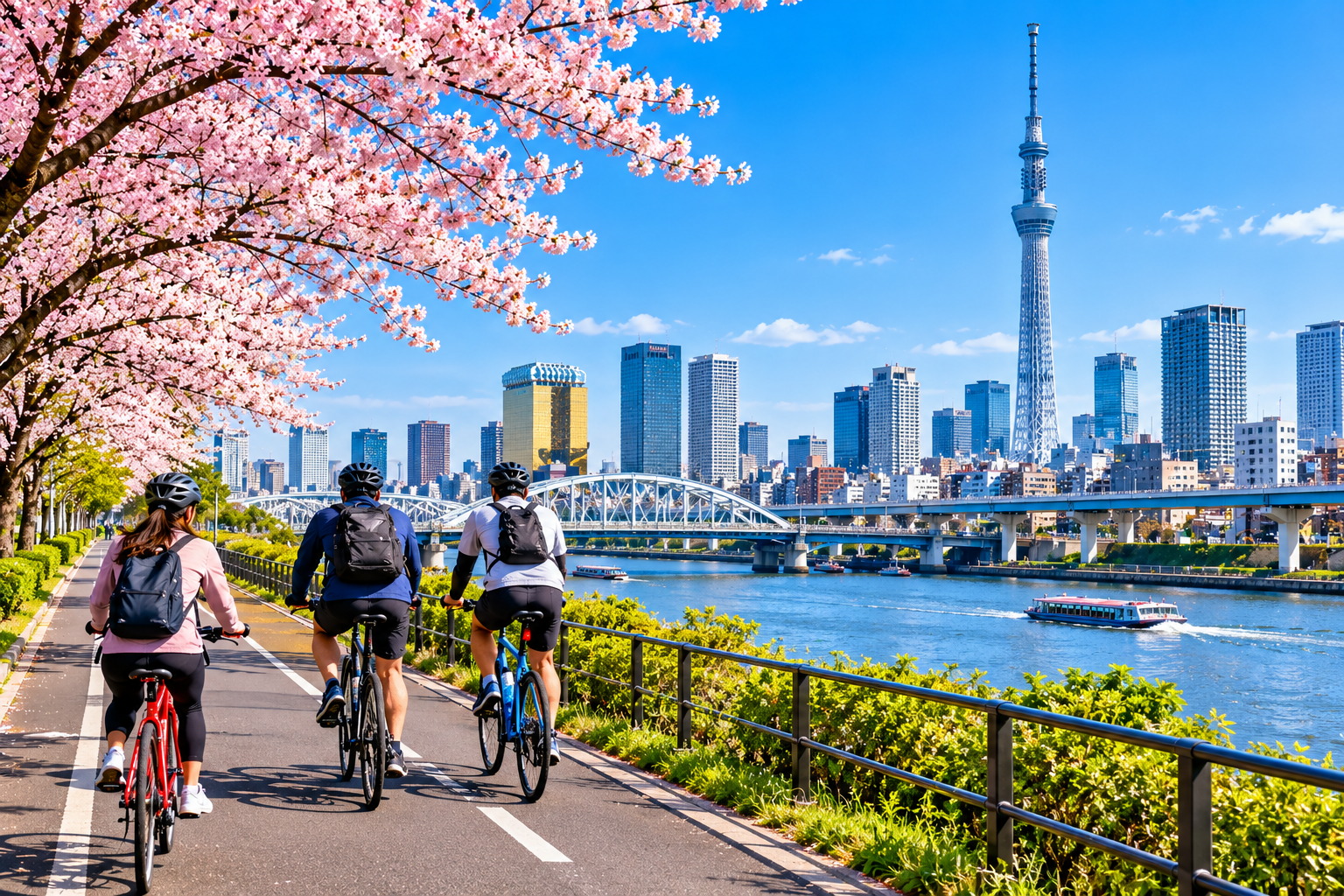
Tokyo is often associated with packed trains, neon-lit streets, towering skyscrapers, and busy pedestrian crossings. Yet beyond the major stations and commercial districts, another side of the Japanese capital reveals itself to people travelling on two wheels: quiet residential lanes, riverside paths, traditional shopping streets, neighbourhood cafés, and peaceful parks. Tokyo cycling is an excellent way to explore the city at a slower pace, discover neighbourhoods that tourists often miss, and enjoy scenic routes along rivers and green spaces. With the right bicycle, a sensible route, and an understanding of Japanese traffic rules, visitors can make cycling part of a memorable Tokyo travel experience Tokyo Boating
Understanding Tokyo Cycling and Urban Bike Culture
Tokyo has a distinctive cycling culture. Bicycles are used for everyday errands, commuting, school journeys, shopping, and recreation. In many residential neighbourhoods, a bicycle is as much a practical transport tool as a car or train.
This everyday role makes cycling especially interesting for visitors. Rather than experiencing Tokyo only through major attractions, cyclists can explore the small streets that connect them.
Why Cycling Is Popular in Tokyo
Several factors help explain why bicycles are common across the city.
Convenience: Many local journeys are short enough to make cycling practical. A bicycle can be useful for reaching a supermarket, local station, neighbourhood restaurant, or community facility.
Public transport connections: Some residents cycle to a railway station, park their bicycle, and continue their journey by train. This combination helps make longer commutes manageable.
Neighbourhood accessibility: Residential streets often connect small businesses, parks, schools, and shopping areas that may be spread across a wider district.
Recreation: Rivers, parks, and longer paths around the metropolitan area provide opportunities for exercise and weekend rides.
Flexibility: A bicycle allows riders to stop when something catches their attention, whether that is a traditional storefront, a small shrine, a bakery, or a view of the city.
Tokyo Is Not One Uniform Cycling Environment Tokyo cycling
One of the most important things to understand is that Tokyo’s cycling conditions vary considerably.
Central commercial areas may contain heavy pedestrian traffic, buses, taxis, delivery vehicles, and complex junctions. Residential districts can be quieter but may feature narrow roads, limited visibility, and parked bicycles. Riverside routes often provide a more relaxed environment, although access points and path-sharing rules vary.
For this reason, the best cycling experience does not necessarily come from riding through the most famous parts of the city. It often comes from selecting a route suited to your confidence and experience.
Everyday Cycling Versus Tourist Cycling
Local residents may be familiar with their neighbourhood’s traffic patterns, shortcuts, parking areas, and road layouts. Visitors may not have that advantage.
Tourists should therefore plan more carefully than someone making a familiar daily journey. A route that appears short on a map may involve a difficult junction, stairs, a narrow pedestrian area, or a road that is unsuitable for inexperienced riders.
A successful Tokyo cycling trip balances distance, scenery, safety, and the time available for sightseeing.
Best Places for Tokyo Cycling
Tokyo offers several types of cycling environments, from riverside routes to green urban parks and quieter neighbourhood streets. Each has its own advantages.
The following locations are useful starting points, but conditions, access rules, and construction work can change. Check local signage before riding.
Cycling Along the Arakawa River
The Arakawa River area is one of the most appealing options for cyclists who want a longer ride away from dense commercial traffic.
The river corridors around Tokyo provide expansive skies, open views, and a different sense of scale from the tightly packed streets of central districts. Depending on the section, riders may encounter paved paths, open embankments, sports grounds, bridges, and recreational facilities.
Why the Arakawa Area Is Popular With Cyclists
The main attraction is space. Compared with many central streets, suitable riverside sections can feel open and relatively uninterrupted.
This makes the area appealing to recreational cyclists who want to maintain a steady pace, build endurance, or enjoy a longer weekend ride.
The landscape also provides a contrast to Tokyo’s urban core. Residential buildings, bridges, distant high-rises, and open river views create a distinctly metropolitan riverside experience.
How to Plan an Arakawa Ride Tokyo cycling
Choose a start and finish point before setting out. Riverside paths can extend over long distances, so riding without a return plan may leave you farther from public transport than expected.
Consider these practical steps:
- Check whether your intended route is open and suitable for bicycles.
- Confirm access points and bridges along the way.
- Carry water, especially during hot weather.
- Identify places where you can safely stop for a break.
- Check the wind forecast because exposed river corridors can be tiring in strong winds.
- Avoid riding too close to pedestrians or other path users.
- Leave enough time to return before dark.
Who Should Cycle Here?
The Arakawa area is best suited to riders who are comfortable managing a longer outing and who want a more open environment than central Tokyo’s streets.
Beginners may enjoy shorter sections, provided they choose an appropriate route and can ride confidently around other users.
Tokyo Cycling Along the Tama River
The Tama River corridor offers another attractive setting for recreational cycling. It runs through the western Tokyo metropolitan area and borders areas that feel more spacious than the busiest central districts.
Depending on the section, the scenery can include riverbanks, greenery, sports grounds, residential neighbourhoods, and distant hills.
Why the Tama River Is Worth Exploring Tokyo cycling
The Tama River can appeal to riders who want a longer ride with a mixture of urban and natural scenery.
It is particularly useful for cyclists who have already explored central Tokyo and want to experience the wider metropolitan area. Rather than passing a succession of major attractions, the ride can focus on the rhythm of the river, the changing landscape, and the experience of cycling itself.
Planning a Comfortable Ride Tokyo cycling
The Tama River corridor is extensive, and facilities vary by section. Some stretches have clearly defined cycling routes, while others require more care around pedestrians, local roads, or access points.
Before leaving, decide whether your objective is a short recreational outing or a longer endurance ride.
A beginner might choose a manageable out-and-back section. A more experienced rider could plan a longer journey that connects with other local routes, provided the route has been checked in advance.
Important: Do not assume every riverside path is exclusively for bicycles. Follow posted rules and slow down around walkers, children, dogs, and other path users.
Cycling Around the Imperial Palace
The area around the Imperial Palace is a well-known destination for urban runners and cyclists. Its broad surrounding roads, greenery, and central location make it a distinctive place to experience Tokyo from a different perspective.
However, cycling arrangements around the palace depend on the particular road, time, and event. Some roads may be restricted or designated for special use during certain periods.
What Makes the Area Interesting?
The Imperial Palace area brings together historic surroundings, modern office buildings, open spaces, and major transport routes.
Cycling here can offer a visual contrast between Tokyo’s imperial history and its contemporary business districts. The area is also conveniently located for visitors staying in central Tokyo.
Understanding Special Road Arrangements
Some sections around the palace are associated with organised cycling events or temporary road closures. These should not be interpreted as permanent permission to ride freely around the entire perimeter.
Check the current local arrangements before planning a visit. Follow traffic signals, remain aware of turning vehicles, and use only the sections where cycling is permitted.
Is It Suitable for Beginners?
The area may suit confident urban cyclists, but a first-time rider should not assume that central Tokyo is the easiest place to learn.
Traffic, junctions, pedestrians, and changing road conditions can make urban riding challenging. Beginners may prefer to practise in a quieter area before attempting a central route.
Cycling in Yoyogi Park and Around Harajuku Tokyo cycling
Yoyogi Park is a large urban green space near Harajuku and Shibuya. It offers a welcome change from the surrounding shopping streets and busy pedestrian areas.
The park is attractive for walking, relaxing, and spending time outdoors. However, do not assume that every park path is open to ordinary bicycle riding. Cycling access and designated routes depend on the specific area and current park rules.
Why This Area Appeals to Visitors Tokyo cycling
The wider neighbourhood offers a mixture of greenery, fashion, cafés, cultural sites, and busy shopping streets. It is ideal for travellers who want to combine a short ride with other activities.
Harajuku and Shibuya are particularly popular with visitors, but their busiest pedestrian areas can be unsuitable for cycling. Parking the bicycle legally and exploring crowded streets on foot is often the better choice.
A Better Way to Explore Tokyo cycling
Consider a neighbourhood-based trip rather than trying to cycle through every attraction.
- Choose a bicycle-friendly route to reach the area.
- Check park signs before entering with a bicycle.
- Use approved bicycle parking facilities.
- Explore crowded shopping streets on foot.
- Avoid riding through groups of pedestrians.
- Allow time for cafés, gardens, and local attractions.
This approach offers the freedom of cycling without making busy tourist streets unnecessarily difficult to navigate.
Cycling in Odaiba and Along Tokyo Bay
Odaiba is a waterfront district known for modern buildings, open spaces, shopping, and views across Tokyo Bay.
The area can be attractive for a recreational outing because the waterfront scenery feels different from the compact streets of central Tokyo. The bay, bridges, promenades, and modern architecture provide a distinctive backdrop.
What Can You Expect?
A ride around suitable parts of Odaiba can include waterfront views, landscaped areas, contemporary buildings, and spaces for stopping to take photographs.
It can be particularly enjoyable in good weather, when the waterfront provides open views and a chance to take a break from busy commercial districts.
However, not every promenade or pedestrian path is suitable for cycling. Some areas have restrictions, and the most convenient walking route may not be a legal or practical bicycle route.
Planning a Waterfront Cycling Trip
Check the exact route and permitted riding areas rather than simply searching for a general cycling route around Odaiba.
Keep the following in mind:
- Follow posted rules on promenades and shared paths.
- Check bicycle access to bridges and waterfront facilities.
- Allow extra time for sightseeing stops.
- Avoid riding in crowded pedestrian areas.
- Check the wind forecast before setting out.
- Confirm how you will return your rental bicycle.
Who Will Enjoy Odaiba?
Odaiba can be a good option for leisure cyclists, couples, and travellers who enjoy modern urban scenery. It is especially appealing to people who prefer waterfront views to dense inner-city streets.
For beginners, the main priority should be selecting a permitted, manageable route rather than trying to cover the entire district.
Tokyo Cycling Through Traditional Neighbourhoods
One of the most rewarding ways to experience Tokyo is to explore its quieter residential neighbourhoods. Areas such as Yanaka, Nezu, and Sendagi are known for traditional streets, small shops, temples, and a more relaxed atmosphere than major shopping districts.
These neighbourhoods can be explored as part of a cycling itinerary, but they are not necessarily ideal for fast riding.
Why Local Streets Offer a Different Experience
Tokyo’s character is often easiest to appreciate away from its most famous landmarks. Small streets reveal everyday life: people walking to local shops, residents tending plants, traditional storefronts, and compact neighbourhood businesses.
Cycling gives visitors the flexibility to move between these areas, but narrow streets demand care. Pedestrians, delivery vehicles, parked bicycles, and vehicles emerging from side roads may appear with little warning.
Ride Slowly and Explore on Foot Tokyo cycling
A good strategy is to use a bicycle to reach the neighbourhood and then walk through the narrowest or busiest streets.
This makes it easier to stop for photographs, visit a temple, enter a small shop, or enjoy a café without obstructing local residents.
Remember that a quiet residential lane is still a public street. Keep noise low, avoid blocking entrances, and do not photograph people in a way that invades their privacy.
Best for: Culture-focused travellers, independent explorers, and visitors who prefer local atmosphere over high-speed cycling.
Tokyo Cycling for Beginners
Tokyo can be an enjoyable place to cycle, but beginners should select routes carefully. The city contains both accessible recreational paths and demanding urban traffic environments.
Start With a Short, Familiar Route Tokyo cycling
If you have not cycled in a city for some time, begin with a simple outing rather than a long cross-city journey.
Choose a route with clear access, manageable traffic, convenient stopping places, and a straightforward return journey.
Before setting off, practise:
- Starting and stopping smoothly.
- Looking behind without losing control.
- Signalling turns clearly.
- Braking gently and predictably.
- Moving around pedestrians at low speed.
- Locking the bicycle securely.
- Dismounting safely where required.
A short practice ride can reveal whether the bicycle fits you properly and whether its brakes and gears work as expected.
Choose the Right Bicycle
A comfortable, well-maintained bicycle is more useful than a high-performance model that feels difficult to control.
For casual sightseeing, a city bicycle may be sufficient. For longer rides, a hybrid bicycle can offer a more suitable combination of comfort and efficiency. An electric-assist bicycle may be useful for hills or riders who want to reduce physical effort.
Make sure you can reach the brakes comfortably and place your feet securely when stopping. Ask the rental provider to adjust the seat height if necessary.
Avoid Overplanning Your First Ride Tokyo cycling
It can be tempting to combine multiple landmarks into a single cycling route. However, long distances, traffic, navigation, and sightseeing stops can make a planned journey take much longer than expected.
Start with a short route and leave time to learn the area. Once you understand local conditions, you can gradually increase the distance.
Tokyo Bicycle Rentals: How to Choose the Right Option
Visitors without their own bicycles can explore several rental options, including local bicycle shops, hotel arrangements, and shared bicycle services.
Availability, prices, rental periods, registration requirements, and return rules vary by provider. Check current terms before relying on a particular service.
Shared Bicycle Services Tokyo cycling
Shared bicycle systems can be convenient for short trips when a suitable bicycle and docking or return option are available.
Some systems use designated stations, while others may allow parking only within approved areas. Electric-assist bicycles are available through some services, depending on the operator and location.
Before starting, understand how the system works. Do not assume that you can leave a bicycle anywhere or return it to any location in Tokyo.
Traditional Bicycle Rental Shops
Local rental shops may offer bicycles for a defined period, which can be useful for a planned sightseeing trip.
Ask about the type of bicycle, included equipment, rental duration, return deadline, damage policy, and whether the provider allows you to leave the bicycle outside its original area.
If you want to ride longer distances, check whether the bicycle is suitable for that purpose rather than selecting solely on price.
Hotel Bicycle Rentals
Some accommodation providers offer bicycles or can recommend a nearby rental shop. This can be a convenient way to begin a ride without travelling to another neighbourhood first.
However, hotel bicycle availability is not universal. Confirm whether reservations are necessary, what identification is required, and whether the bicycle can be used outside the immediate area.
What to Check Before Renting Tokyo cycling
Use this checklist before accepting a bicycle:
- Brakes work smoothly.
- Tyres are properly inflated and undamaged.
- The chain and gears operate normally.
- Lights are working.
- The seat can be adjusted securely.
- The bicycle is appropriate for your height and riding ability.
- The rental period and return location are clear.
- The operator’s insurance and damage terms are understood.
- You know how to contact the provider if the bicycle develops a problem.
A few minutes of inspection can prevent a frustrating or unsafe ride.
Ten Bicycle Brands to Consider for Tokyo Cycling
Tokyo cycling does not require an expensive bicycle. The most appropriate brand depends on whether you are commuting, touring, riding recreationally, or using an electric-assist bicycle.
The following brands offer different kinds of bicycles. They are a comparison of manufacturers, not a ranking of current Tokyo rental availability.
| Brand Tokyo cycling | Common bicycle categories | Potential advantage Tokyo cycling | Suitable use Tokyo cycling |
|---|---|---|---|
| Bridgestone | City, commuter, electric-assist | Strong association with everyday cycling | Urban errands and commuting |
| Panasonic | Electric-assist and city bicycles | Useful electric-assist options | Everyday transport and easier rides |
| Giant | Hybrid, road, mountain, electric | Broad range of bicycle types | Recreational rides and longer distances |
| Trek | Hybrid, road, mountain, electric | Multiple options for fitness and leisure | Touring and recreational cycling |
| Specialized | Road, hybrid, mountain, electric | Performance-focused models | Fitness and longer rides |
| Cannondale | Road, hybrid, mountain, electric | Options for different riding styles | Recreation and sport cycling |
| Merida | Road, hybrid, mountain, electric | Broad recreational and performance range | Fitness and leisure |
| Bianchi | Road, urban, hybrid | Distinctive styling and road models | Leisure and road cycling |
| Dahon | Folding bicycles | Compact storage and portability | Short urban journeys and mixed transport |
| Brompton | Folding bicycles | Compact folding design | Commuting and train-and-bike travel |
Which Bicycle Type Is Best for Tokyo?
For short urban journeys, a city bicycle is often adequate. For longer rides on suitable paved paths, a hybrid bicycle can be more comfortable. Folding bicycles may be useful for people who combine cycling with train travel, provided they follow the relevant transport operator’s rules. Electric-assist bicycles can help riders manage longer distances or hills with less effort.
The best bicycle is one that fits the rider, suits the route, and can be controlled confidently. Brand prestige should be secondary to fit, condition, brakes, and intended use.
Should Visitors Buy a Bicycle in Tokyo?
For a short visit, renting is often more practical than purchasing. Buying can make sense for a longer stay, frequent commuting, or a trip where the bicycle will be used regularly.
If purchasing a bicycle in Japan, understand the relevant registration, security, and disposal requirements. Do not buy a bicycle without appropriate ownership documentation.
Tokyo Cycling Laws and Road Rules
Understanding Japanese traffic rules is essential for anyone planning to ride in Tokyo. Rules may differ from those in your home country, and unfamiliar road layouts can make even a short ride challenging.
The guidance below is general information. Before riding, check current official Japanese road-safety guidance and any local rules that apply to your route.
Where Are Bicycles Allowed to Ride?
In Japan, bicycles are generally treated as vehicles and are normally expected to use the road rather than the pavement. Pavement cycling is permitted in certain circumstances, such as where signs allow it or where specific legal conditions apply.
When riding on a pavement where cycling is permitted, cyclists must give priority to pedestrians and ride at a suitably slow speed. If pedestrian movement makes safe riding difficult, dismounting may be the best option.
Do not assume that a wide pavement is automatically a bicycle route. Look for signs and designated markings, and follow the instructions provided.
Traffic Signals and Road Signs Tokyo cycling
Cyclists must obey applicable traffic signals and road signs. This includes stopping where required, yielding appropriately, and following rules governing turns and road access.
At busy junctions, pay attention to traffic from all directions, including vehicles turning across your path.
If you are uncertain about a junction, stop at a safe, legal place and work out the route before continuing. Never make a sudden turn across moving traffic simply because a navigation app tells you to turn.
Riding at Night Tokyo cycling
A bicycle ridden at night must be equipped with the lighting required under applicable Japanese rules. A working front light and rear visibility equipment are important for being seen by drivers and other road users.
Before leaving a rental shop, confirm that the lights work and understand how to switch them on. Reflective clothing or accessories can provide additional visibility, but they do not replace required bicycle equipment.
Mobile Phones and Headphones Tokyo cycling
Using a phone while riding can take your attention away from pedestrians, traffic, and road conditions. Japanese rules restrict dangerous riding behaviours, including certain forms of phone use and headphone use that prevent riders from hearing surrounding traffic.
Set your route before moving. If you need to read a message, change navigation settings, or make a call, stop in a safe location first.
Drinking and Cycling
Do not ride a bicycle after drinking alcohol. Japanese law prohibits riding while intoxicated, and alcohol can reduce balance, reaction time, and judgement.
The safest approach is simple: if you have been drinking, walk, take public transport, or use another lawful means of getting home.
Cycling With Children Tokyo cycling
Rules concerning child passengers, approved seats, helmets, and equipment can depend on age and circumstances. Check current Japanese requirements rather than relying on assumptions based on the rules in your home country.
For family rides, use suitable equipment, make sure it is correctly fitted, and choose a route appropriate for the child’s age and experience.
Tokyo Cycling Safety: Practical Advice for International Visitors
Tokyo cycling safety involves more than obeying the law. It also requires anticipating the behaviour of other road users and understanding the limitations of unfamiliar streets.
Watch for Vehicles Turning Across Your Path Tokyo cycling
A vehicle may indicate a turn and move across the route you intend to follow. Buses, taxis, delivery vehicles, and larger trucks can have substantial blind spots.
Avoid riding alongside a large vehicle where the driver may not see you. Leave enough space to stop, and never assume that an indicator means the driver has seen you.
Be Careful Around Parked Cars Tokyo cycling
Car doors can open suddenly into a cyclist’s path. Where practical, maintain a safe distance from parked vehicles instead of riding close to their doors.
If the road is too narrow to maintain a safe distance, slow down and assess whether it is safer to wait, move carefully, or dismount.
Expect Limited Visibility at Small Junctions Tokyo cycling
Some Tokyo neighbourhood streets are narrow and intersect at sharp angles. Buildings, walls, parked vehicles, and vegetation can restrict visibility.
Approach these junctions slowly. Look carefully in both directions and be ready to stop before entering the intersection.
Keep a Safe Distance From Pedestrians Tokyo cycling
Pedestrians may step into a route unexpectedly, especially near stations, schools, shopping streets, and bus stops.
Slow down well before reaching a busy area. Use a bell only as appropriate under local rules and never as a substitute for reducing speed or giving people space.
Secure the Bicycle When You Stop Tokyo cycling
Bicycle theft can occur in any large city. Use a suitable lock and follow the rental provider’s parking instructions.
Do not block entrances, emergency access, tactile paving, or narrow pavements. Tokyo has designated bicycle parking facilities, and some areas have restrictions or removal programmes for improperly parked bicycles.
If you are renting a shared bicycle, use the operator’s approved return or parking area and confirm that the rental has ended successfully.
Common Tokyo Cycling Challenges and Their Solutions
Challenge: Finding a Route That Is Actually Suitable for Cycling
A map may suggest a short route through a busy shopping street, narrow alley, or pedestrian-only area.
Solution: Check the route in advance, look for permitted cycling paths, and be prepared to walk the bicycle through restricted or crowded areas where dismounting is allowed and appropriate.
Challenge: Confusing Bicycle Parking With Ordinary Street Parking
Visitors may assume that a bicycle can be left outside a station or shop for a few minutes.
Solution: Look for designated bicycle parking. Read signs and follow rental-provider instructions. Improperly parked bicycles may be removed by local authorities.
Challenge: Dealing With Rain Tokyo cycling
Rain can reduce visibility, make road markings slippery, and increase braking distances. Sudden showers can also make riverside paths less comfortable.
Solution: Check the forecast, use appropriate waterproof clothing, slow down on wet surfaces, and avoid riding in severe weather. If conditions become unsafe, stop in a suitable location and use another transport option.
Challenge: Summer Heat and Humidity Tokyo cycling
Tokyo summers can be hot and humid. Long rides under these conditions can cause dehydration, fatigue, and heat-related illness.
Solution: Choose shorter rides, carry water, take breaks, and avoid the hottest part of the day. If you feel unwell, stop riding and seek a cool place. Do not push through dizziness, confusion, or severe weakness.
Challenge: Navigating Without Distracting Yourself Tokyo cycling
Looking at a phone while riding can lead to sudden braking or missed hazards.
Solution: Set navigation before departure, use a safe and lawful navigation setup if needed, and stop in a safe place whenever you need to study the map.
Challenge: Running Out of Time Tokyo cycling
A sightseeing route may take longer than expected because of traffic signals, stops, navigation, and photo opportunities.
Solution: Plan a shorter route than your maximum comfortable distance and allow extra time to return the bicycle. Check the rental deadline and return location before leaving.
Pros and Cons of Tokyo Cycling
Cycling offers considerable freedom, but it is not the best solution for every journey.
| Advantages Tokyo cycling | Disadvantages Tokyo cycling |
|---|---|
| Allows flexible exploration of neighbourhoods | Some streets are narrow and congested |
| Can be economical for short journeys | Rental costs and parking fees may apply |
| Provides exercise and outdoor time | Weather can affect comfort and safety |
| Works well for riverside recreation | Riverside paths may have access restrictions |
| Makes it easy to stop at local shops and cafés | Carrying luggage can be difficult |
| Avoids some short trips by train | Navigation and unfamiliar junctions can be challenging |
| Can combine with public transport | Bicycle transport rules differ between operators |
| Provides a different view of everyday Tokyo | Safe parking and theft prevention require attention |
The most important trade-off is between flexibility and complexity. Cycling allows spontaneous exploration, but visitors must take responsibility for route planning, traffic awareness, parking, and weather.
For many travellers, the best strategy is to cycle for a specific part of the journey rather than trying to replace every train trip with a bicycle.
Tokyo Cycling for Different Types of Travellers
Tokyo Cycling for Solo Travellers
Solo cyclists can enjoy considerable freedom, particularly when exploring quieter streets or riverside paths.
Plan your route, carry a charged phone, and tell someone your approximate plans if you are going on a longer ride. Keep identification and emergency contact information accessible, and know how to contact the rental provider.
Avoid unfamiliar isolated routes late at night, particularly if you are uncertain about transport connections or return arrangements.
Tokyo Cycling for Couples
A leisurely ride can be an enjoyable way to explore waterfront scenery, parks where cycling is permitted, or quieter neighbourhoods.
Choose a route that matches the less experienced rider’s ability. Avoid making the outing a race between attractions, and allow time for walking, food stops, and photographs.
If you are riding together in an unfamiliar area, agree on stopping points in advance and avoid riding side by side where doing so would obstruct traffic or other path users.
Tokyo Cycling for Families
Family cycling requires additional planning. Children may need more breaks, and parents must account for the suitability of the route, bicycle fit, safety equipment, and the rules governing child passengers.
A short, familiar route is usually more manageable than a long journey through central Tokyo.
Before leaving, check the bicycle’s brakes, tyres, lights, and any child seat. Ensure that the child is secured correctly and that the equipment is approved for the intended use.
Tokyo Cycling for Fitness Enthusiasts
Experienced cyclists may prefer longer rides along suitable river corridors or routes connecting the wider metropolitan area.
Plan for distance, elevation, wind, water, food, and the return journey. Carry basic repair supplies if you know how to use them, and understand how to contact assistance if a mechanical problem occurs.
Do not assume that every recreational route is free of pedestrians, intersections, or interruptions. Even a long riverside route may require careful navigation around bridges and access points.
Tokyo Cycling for Older Adults Tokyo cycling
Older adults and riders returning to cycling may prefer electric-assist bicycles or short routes with convenient places to rest.
Choose a bicycle that is easy to mount and dismount, offers predictable braking, and feels stable at low speed. Avoid routes that require complicated traffic manoeuvres or long periods of riding without breaks.
If balance, vision, or mobility affects your cycling, consider whether a guided ride, quieter route, or alternative form of transport would provide a safer and more enjoyable experience.
Tokyo Cycling for Digital Nomads and Long-Stay Visitors Tokyo cycling
People staying in Tokyo for several weeks or months may find cycling useful for everyday journeys between accommodation, cafés, coworking spaces, and local shops.
For longer stays, consider bicycle storage, theft prevention, maintenance, registration requirements, and the rules that apply to your chosen bicycle.
A bicycle can be convenient, but it should fit into your overall transport plan. Train services remain useful for longer journeys, poor weather, and destinations where cycling would be inconvenient.
How Tokyo Cycling Is Changing
Cycling in Tokyo continues to sit at the intersection of everyday transport, public health, tourism, and urban planning. The city’s future cycling experience will depend on how roads, shared spaces, technology, and public attitudes develop.
More Attention to Bicycle Infrastructure Tokyo cycling
As cities seek practical ways to manage transport demand, cycling infrastructure becomes an important planning consideration.
Dedicated bicycle lanes, clearer junction layouts, improved signs, and safer connections between neighbourhoods can make cycling easier for both residents and visitors.
However, the quality of cycling infrastructure can vary by location. A painted lane alone does not necessarily make a road comfortable for every rider, especially where traffic is heavy or parked vehicles obstruct the route.
The most useful improvements are those that create predictable journeys and reduce conflict between cyclists, pedestrians, and motor vehicles.
Electric-Assist Bicycles Tokyo cycling
Electric-assist bicycles can help riders manage longer distances, hills, and everyday errands with less physical effort.
They may be particularly useful for visitors who want to explore beyond a single neighbourhood without arriving exhausted. They can also make cycling more accessible to people who do not regularly exercise.
Riders must still understand the bicycle’s controls, braking behaviour, permitted use, and any rules specific to the model. Electric assistance does not remove the need for careful route planning or traffic awareness.
Shared Mobility and Digital Rentals Tokyo cycling
Shared bicycle systems can make short journeys more convenient by reducing the need to own and store a bicycle.
Mobile applications may support bicycle discovery, rental payments, navigation, and return procedures. The experience depends on the operator, available bicycles, network coverage, and local parking rules.
For visitors, the main advantage is flexibility. The main challenge is understanding the system before starting the journey, particularly when rental periods, parking restrictions, and return locations are unfamiliar.
Greater Integration With Public Transport Tokyo cycling
Tokyo’s railway network is central to how the city functions. Cycling can complement it by covering the distance between a station and a destination.
Better bicycle parking, clear station access, and practical connections to local routes can support this combination.
Visitors should remember that taking a bicycle on a train is different from parking it at a station. Rail operators may require folding bicycles to be placed in an appropriate bag and may apply other conditions. Check the specific operator’s current rules before travelling with a bicycle.
Safer Streets and Shared Spaces Tokyo cycling
Future improvements may place more emphasis on protecting vulnerable road users, managing vehicle speeds, and creating clear rules for mixed-use paths.
Education also matters. Visitors who understand local rules and residents who share public spaces considerately can help reduce conflict.
The goal is not simply to increase the number of cyclists. It is to make cycling practical, predictable, and safe enough for a wider range of people.
Planning a Tokyo Cycling Day: A Practical Framework
A successful cycling day starts with a clear objective. Decide whether you want a scenic recreational ride, a neighbourhood exploration, a fitness session, or a short journey between attractions.
Before You Leave Tokyo cycling
Use this checklist to prepare:
- Select a route suitable for your ability.
- Check current access restrictions and road conditions.
- Confirm your rental period and return point.
- Inspect the bicycle and test its brakes.
- Check the weather forecast.
- Carry water, identification, and a charged phone.
- Set navigation before starting.
- Bring appropriate clothing and any required safety equipment.
- Identify places to stop for food, water, and rest.
- Make a backup plan for rain or mechanical problems.
While Riding Tokyo cycling
Keep your speed appropriate for the surroundings and leave enough space to stop safely.
Watch for vehicles entering the road, pedestrians crossing unexpectedly, and other cyclists changing direction. Use clear signals when appropriate, obey traffic controls, and avoid sudden manoeuvres.
If you need to check your route, stop somewhere safe and out of the way.
At the End of the Ride Tokyo cycling
Return the bicycle according to the provider’s instructions. If you are using a shared service, confirm that the rental has ended and that the bicycle is parked in an approved location.
If you have hired a bicycle from a shop, return it by the agreed deadline and report any damage or mechanical problems.
Finally, allow enough time to reach your next destination. A cycling trip should make the day easier and more enjoyable, not leave you rushing to catch a train or reservation.
FAQs
Is Tokyo a good city for cycling?
Tokyo can be an enjoyable city for cycling, especially for exploring quieter neighbourhoods, suitable riverside routes, and recreational areas. Conditions vary considerably, so route choice and traffic awareness are important.
Can tourists rent bicycles in Tokyo?
Yes, visitors may be able to rent bicycles through local rental shops, accommodation providers, and shared bicycle services. Availability, identification requirements, prices, rental periods, and return conditions vary by provider.
Is cycling safe in Tokyo for beginners?
Beginners can enjoy cycling in Tokyo if they choose appropriate routes and understand local traffic rules. Quieter streets and suitable recreational paths are generally more manageable than crowded central roads.
What are the best places for Tokyo cycling?
The Arakawa River and Tama River areas are useful options for recreational rides. Suitable parts of Odaiba offer waterfront scenery, while selected neighbourhood routes provide opportunities to explore local streets. Check current access rules for the exact route.
Can you cycle around the Imperial Palace?
Cycling may be possible on permitted roads around the Imperial Palace, but access depends on the specific route and any temporary restrictions or special arrangements. Check current local information before riding.
Can you cycle in Yoyogi Park?
Cycling access depends on the specific part of the park and its current rules. Do not assume that all pedestrian paths are open to bicycles. Check signs and use only permitted areas.
Do cyclists ride on the pavement in Tokyo?
Bicycles are generally expected to use the road in Japan, with pavement riding allowed only in specified circumstances. Where pavement cycling is permitted, cyclists must give priority to pedestrians and ride carefully.
Is a helmet necessary for cycling in Tokyo?
Helmet use is an important safety measure, and Japanese law encourages bicycle riders of all ages to wear helmets. Check current requirements and rental-provider policies before your trip.
Can I use my phone while cycling?
You should not handle or look at your phone while riding. Set your navigation in advance and stop in a safe location before checking directions or messages. Follow current Japanese traffic rules on mobile-phone use.
Can I cycle in Tokyo at night?
Night cycling is possible, but the bicycle must have the lighting required under applicable rules. Use working lights, remain visible, and choose routes that you can navigate confidently in the dark.
Is Tokyo cycling expensive?
Costs depend on the bicycle, rental period, provider, and route. A short shared-bike trip may be economical, while a longer rental or specialist bicycle can cost more. Check current prices and any additional fees before booking.
Can I take a rental bicycle on a Tokyo train?
You generally cannot assume that a rented bicycle can be taken directly onto a train. Rail operators have rules concerning bicycles, often including requirements for folding bicycles to be placed in a suitable bag. Check the specific operator’s policy and the rental provider’s conditions.
What is the best bicycle for exploring Tokyo?
A city bicycle is suitable for many short journeys, while a hybrid bicycle may be more comfortable for longer recreational rides. Folding bicycles can be useful for some mixed-transport journeys, and electric-assist bicycles can help with distance and effort. Fit and condition matter more than brand alone.
What should I do if it rains during my ride?
Slow down, increase your stopping distance, and avoid slippery surfaces. If conditions become unsafe, stop at a suitable location and use another transport option. Check your rental terms if you need to return the bicycle early.
Can families cycle together in Tokyo?
Families can cycle together when they select suitable routes, bicycles, and safety equipment. Check child-passenger requirements, helmet guidance, and local route conditions. Shorter rides in manageable environments are generally easier to plan than long urban journeys.
Related Topics for Further Reading
For a Tokyo tourism website, the following topics can complement an article about cycling. Use these phrases as internal-link anchor text when matching articles are available.
- Tokyo public transport guide
- Tokyo walking routes and neighbourhoods
- Best parks in Tokyo
- Tokyo riverside attractions
- Tokyo sightseeing itinerary for beginners
- Tokyo bike rental guide
- Tokyo traffic rules for tourists
- Tokyo outdoor activities
- Tokyo waterfront attractions
- Tokyo budget travel guide
- Tokyo travel tips for families
- Tokyo day trips and scenic routes
These related topics help readers plan transport, discover outdoor attractions, and explore neighbourhoods beyond the main tourist centres.
Conclusion
Tokyo cycling offers a different way to experience one of the world’s most fascinating metropolitan areas. Instead of travelling only between major stations and famous landmarks, you can discover riverside scenery, quiet neighbourhood streets, local cafés, and green spaces at your own pace. The experience depends on making sensible choices. A recreational ride beside a river requires different skills from navigating central traffic, and a bicycle that works for a short errand may not be appropriate for a long-distance outing.