Tokyo Guide: 25+ Smart Tips for an Unforgettable First Trip to Japan’s Capital
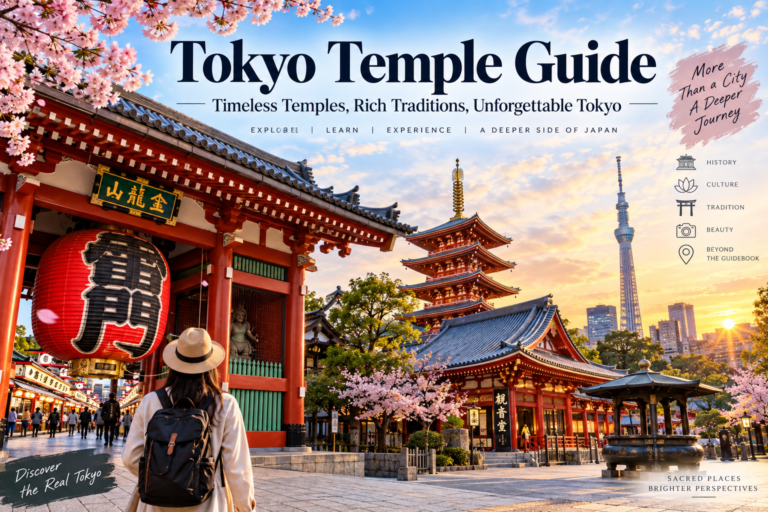
Tokyo is a huge but remarkably organized city where ancient temples, futuristic technology, world-class food, shopping, nightlife, and peaceful neighborhoods exist side by side. This Tokyo guide explains where to go, how to get around, where to stay, what to eat, how to budget, what mistakes to avoid, and how to build a practical itinerary Tokyo Temples
Tokyo can feel overwhelming before your first visit. The city is enormous, train stations can seem confusing, and the sheer number of attractions makes it difficult to decide what deserves your limited travel time.
The good news is that Tokyo becomes much easier once you understand its basic structure.
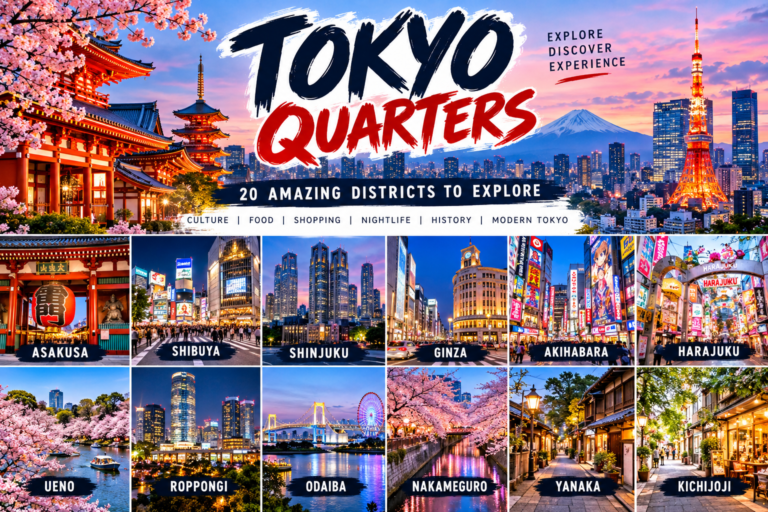
Instead of treating Tokyo as one giant sightseeing destination, think of it as a collection of different neighborhood experiences. Shibuya offers energy and modern city culture. Asakusa provides a historic atmosphere. Shinjuku combines skyscrapers, restaurants, nightlife, and entertainment. Ueno is excellent for museums and parks, while Ginza is known for upscale shopping and dining.
This approach changes the entire travel experience.
Rather than rushing across the city to collect famous landmarks, you can explore one area at a time and experience Tokyo more naturally.
Quick Tokyo Guide Overview
Tokyo is one of the world’s most rewarding destinations for travelers because it offers an unusually broad mix of experiences within one metropolitan area.
For a first visit, consider combining:
- Historic temples and shrines
- Modern neighborhoods
- Japanese food
- Traditional gardens
- Observation decks
- Shopping streets
- Museums
- Anime and gaming culture
- Local markets
- Nightlife
- Day trips
- Seasonal attractions
A practical first trip can range from 4 to 7 days, although you could easily spend several weeks exploring different neighborhoods.
The most important lesson is simple: do not try to see everything.
Tokyo rewards slow exploration.
Understanding Tokyo Before You Visit
Tokyo is not simply a collection of famous attractions. It is a vast urban region made up of numerous districts and neighborhoods, each with its own identity.
This is one reason travelers have very different opinions about the same city.
One traveler may describe Tokyo as futuristic and crowded, while another remembers quiet gardens, traditional streets, tiny restaurants, and peaceful temples.
Both experiences can be completely accurate.
The difference is usually where they spent their time.
Tokyo Is Best Experienced by Neighborhood
A common mistake is planning an itinerary based only on individual attractions.
For example, a traveler might schedule:
- Tokyo Tower in the morning
- Asakusa in the afternoon
- Shibuya in the evening
- Odaiba at night
That looks impressive on paper but can create unnecessary transportation and fatigue.
A better strategy is to group attractions geographically.
For example, you can dedicate one day to:
Asakusa → Ueno → Akihabara
Another day could focus on:
Meiji Shrine → Harajuku → Shibuya
This reduces travel time and gives you more opportunities to explore spontaneously.
Tokyo Has Multiple Personalities
Tokyo can be:
- Traditional
- Futuristic
- Quiet
- Crowded
- Luxurious
- Affordable
- Family-friendly
- Romantic
- Tech-focused
- Food-focused
- Fashion-oriented
- Nightlife-driven
Your experience depends heavily on the neighborhood, time of day, season, and type of activities you choose.
Best Time to Visit Tokyo
There is no single perfect month for everyone.
The best season depends on what you want from your trip.
Spring in Tokyo
Spring is famous for cherry blossoms and pleasant sightseeing conditions.
Parks and riverside areas become particularly attractive during cherry blossom season.
Popular places can become extremely busy during peak bloom, so travelers who want a quieter experience should consider visiting less-famous parks or arriving early in the morning.
Spring is excellent for:
- Cherry blossoms
- Walking
- Gardens
- Photography
- Outdoor sightseeing
- Comfortable daytime exploration
The exact cherry blossom period changes from year to year, so travelers should check current forecasts before planning around peak bloom.
Summer in Tokyo
Summer can be hot, humid, and uncomfortable for travelers who are not accustomed to Japan’s summer climate.
However, summer also brings festivals, fireworks, seasonal food, and longer daylight hours.
Plan outdoor activities for mornings and evenings when possible.
During the hottest part of the day, consider museums, shopping centers, aquariums, cafes, or other indoor attractions.
Autumn in Tokyo
Autumn is one of the most comfortable periods for exploring Tokyo.
Temperatures generally become more pleasant, and parks and gardens can offer beautiful seasonal scenery.
Autumn works especially well for travelers who want to walk extensively.
Winter in Tokyo
Winter can be cold but often provides clear days and excellent visibility.
The city also becomes attractive around the holiday and New Year period, although Japanese New Year is a major cultural period and some businesses and attractions may operate differently.
Winter is particularly suitable for:
- Shopping
- Food
- Museums
- Indoor attractions
- Illuminations
- Day trips
- Clear city views
How Many Days Do You Need in Tokyo?
For a first-time visitor, 4 to 7 days is a useful range.
Tokyo in 3 Days
Three days can work if your schedule is tight.
Prioritize:
- Asakusa
- Shibuya
- Shinjuku
- Meiji Shrine
- One observation experience
- Japanese food
- One shopping or cultural area
Avoid trying to add too many distant attractions.
Tokyo in 5 Days
Five days provides a much better balance.
You could divide your trip into:
Day 1: Asakusa and Ueno
Day 2: Meiji Shrine, Harajuku, and Shibuya
Day 3: Shinjuku and surrounding neighborhoods
Day 4: Ginza, Tokyo Station, and Marunouchi
Day 5: Akihabara, Odaiba, or another neighborhood based on your interests
Tokyo in 7 Days
A week allows you to explore at a slower pace.
You can include:
- Traditional Tokyo
- Modern Tokyo
- Food neighborhoods
- Shopping
- Museums
- Anime and gaming
- Parks
- Day trips
- Less-touristy neighborhoods
The extra time is valuable because Tokyo is a city where getting lost for an hour can sometimes become part of the experience.
Best Neighborhoods to Visit in Tokyo
Choosing neighborhoods is more important than simply collecting attractions.
Shibuya
Shibuya is one of the most recognizable parts of Tokyo.
It is associated with:
- Shibuya Crossing
- Shopping
- Fashion
- Restaurants
- Cafes
- Nightlife
- Youth culture
- Modern Tokyo
Visit during the day to explore shops and cafes, then return after dark to experience the area’s energy.
Shinjuku
Shinjuku is another major destination for first-time visitors.
The district combines:
- Major railway connections
- Department stores
- Restaurants
- Bars
- Entertainment
- Skyscrapers
- Nightlife
- Parks
One of its biggest advantages is variety.
You can spend the afternoon in a peaceful green space and later find yourself surrounded by bright signs and busy streets.
Asakusa
Asakusa provides a stronger connection to traditional Tokyo.
The area is famous for Senso-ji, one of Tokyo’s best-known Buddhist temples.
Explore the temple area, surrounding streets, traditional shops, and food stalls.
Asakusa is especially attractive in the morning when the streets can feel calmer than later in the day.
Ueno
Ueno is ideal for travelers interested in:
- Museums
- Parks
- Culture
- History
- Markets
- Family activities
Ueno Park makes a useful base for combining outdoor exploration with cultural attractions.
Akihabara
Akihabara is strongly associated with:
- Electronics
- Anime
- Manga
- Gaming
- Collectibles
- Arcades
However, modern Akihabara is broader than its stereotype.
Technology enthusiasts can still find plenty to explore, but the area has also become an important destination for Japanese pop culture.
Harajuku
Harajuku is associated with fashion, youth culture, cafes, and shopping.
It also provides easy access to Meiji Shrine.
A useful route is:
Meiji Shrine → Harajuku → Takeshita Street → Omotesando → Shibuya
This creates a natural full-day exploration route.
Ginza
Ginza is a good choice for travelers interested in:
- Luxury shopping
- Department stores
- Restaurants
- Architecture
- Upscale dining
It is particularly interesting if you want to experience a more polished and sophisticated side of Tokyo.
Tokyo Station and Marunouchi
Tokyo Station is more than a transportation hub.
The surrounding Marunouchi area features modern architecture, offices, restaurants, shopping, and attractive city streets.
It also works well as a starting point for exploring central Tokyo.
Tokyo’s Most Important Attractions
Tokyo has too many attractions to cover in one article, but some deserve priority for first-time travelers.
Senso-ji
Senso-ji is one of Tokyo’s most famous temples and an excellent introduction to the city’s traditional side.
The approach to the temple is part of the experience, with shops, food, souvenirs, and crowds creating a lively atmosphere.
Arriving early can provide a calmer experience.
Meiji Shrine
Meiji Shrine sits within a large forested area near Harajuku.
Its atmosphere contrasts sharply with the busy streets outside.
This makes it one of Tokyo’s most useful attractions for understanding the city’s unusual combination of nature, spirituality, and dense urban development.
Shibuya Crossing
Shibuya Crossing is famous because of its enormous pedestrian movement.
But the crossing itself takes only a few minutes.
The better strategy is to combine it with the surrounding neighborhood.
Explore the streets, shopping centers, cafes, restaurants, and viewpoints rather than treating the crossing as your entire visit.
Tokyo Skytree
Tokyo Skytree offers panoramic views across the metropolitan area.
Visibility matters greatly, so consider weather conditions when choosing when to visit.
On clear days, distant landmarks and the vast scale of Tokyo become much easier to appreciate.
Tokyo Tower
Tokyo Tower remains one of the city’s iconic landmarks.
Its location also makes it useful for combining with other attractions in central Tokyo.
Shinjuku Gyoen
Shinjuku Gyoen provides a major contrast to the surrounding city.
Its gardens make it particularly valuable for travelers who need a slower afternoon after several busy sightseeing days.
Imperial Palace Area
The Imperial Palace area provides an opportunity to see an important part of Tokyo’s historical and political landscape.
Some areas have restricted access, so visitors should check current visitor rules before planning a detailed tour.
How to Get Around Tokyo
Tokyo’s transportation network can look intimidating.
It is actually one of the city’s greatest strengths once you understand the basics.
Trains and Subways
For most tourists, trains and subways will be the primary transportation method.
Tokyo has several operators and networks, so it is important to understand that not every train belongs to the same company.
The practical lesson is:
Use a navigation app and always check the line, direction, platform, and station exit.
IC Transportation Cards
IC cards can make everyday transportation much easier.
They can also be useful for small purchases at participating stores and vending machines.
Availability and exact usage rules can change, so check current official information before your trip.
Google Maps and Navigation Apps
A navigation app is extremely useful in Tokyo.
Do not only look at the station name.
Pay attention to:
- Train line
- Direction
- Platform
- Transfer station
- Exit number
- Walking route
- Estimated travel time
A station may have many exits, and choosing the wrong one can add significant walking time.
Tokyo Station Navigation
Tokyo Station can feel particularly confusing because of its size and multiple connections.
Give yourself extra time if you have a train reservation or luggage.
For important departures, arriving early is much better than navigating the station under pressure.
Should You Use Taxis in Tokyo?
Taxis are useful but generally should not be your default transportation method for every journey.
They make sense when:
- You have heavy luggage
- You are traveling with a group
- It is late
- The destination is poorly connected
- You are physically tired
- You are traveling a short distance where the convenience is worth the cost
For normal sightseeing, public transportation is usually the more practical choice.
Tokyo Airport Guide
Tokyo is primarily served by two major international airports:
- Haneda Airport
- Narita International Airport
Haneda Airport
Haneda is generally closer to central Tokyo and is particularly convenient for many visitors staying in central districts.
Its location can significantly reduce the transfer time compared with Narita, depending on your hotel.
Narita International Airport
Narita is located considerably farther from central Tokyo but has strong rail connections.
Narita can make sense depending on your flight, airline, hotel location, and transportation preference.
The cheapest flight is not always the cheapest overall trip.
Consider the complete journey:
Flight price + airport transfer + transfer time + convenience
This is an important travel-planning calculation that many visitors overlook.
Where to Stay in Tokyo
The best area depends on your travel style.
Best Area for First-Time Visitors
Shinjuku and Shibuya are convenient choices for travelers who want easy access to restaurants, shopping, nightlife, and transportation.
Best Area for Traditional Atmosphere
Asakusa is worth considering if you prefer a quieter, more traditional environment.
Best Area for Luxury
Ginza is attractive for upscale hotels, dining, shopping, and central-city access.
Best Area for Families
Areas with convenient transportation and larger rooms can be particularly valuable for families.
Tokyo hotel rooms can be smaller than travelers from some countries expect, so room size should be checked before booking.
Best Area for Budget Travelers
Ueno, Asakusa, and some areas outside the most famous central districts can offer more affordable accommodation.
The key is not simply the nightly price.
Look at:
- Distance to station
- Number of transfers
- Airport access
- Room size
- Neighborhood atmosphere
- Late-night food options
Tokyo Food Guide
Food is one of the strongest reasons to visit Tokyo.
The city is suitable for almost every budget.
You do not need to eat at expensive restaurants to have excellent meals.
Sushi
Tokyo offers enormous variety in sushi.
Prices can range from casual conveyor-belt restaurants to highly specialized high-end establishments.
For first-time visitors, trying both an affordable sushi meal and a more refined experience can demonstrate how broad the category is.
Ramen
Ramen is one of the easiest foods to fit into a busy sightseeing schedule.
Different shops specialize in different styles, broths, noodles, and toppings.
Queues can be long at famous locations, but excellent ramen does not always require a famous name.
Tempura
Tempura is another classic Japanese food experience.
The difference between casual and high-end tempura can be substantial because technique, ingredients, oil management, and timing matter.
Yakitori
Yakitori is especially enjoyable in the evening.
Grilled chicken skewers are commonly paired with a casual atmosphere, making them a good option for travelers who want something less formal.
Convenience Store Food
Do not underestimate Japanese convenience stores.
They can be extremely useful for:
- Breakfast
- Snacks
- Drinks
- Quick meals
- Desserts
- Travel supplies
For budget travelers, convenience stores can help control daily food costs.
Tokyo Food Etiquette
Japanese dining culture includes many small social expectations.
A few practical habits help:
- Avoid wasting food.
- Follow restaurant-specific instructions.
- Do not block entrances.
- Keep your voice moderate in shared spaces.
- Learn basic chopstick etiquette.
- Do not leave chopsticks standing vertically in rice.
- Check whether payment is made at the table or counter.
- Follow seating instructions.
The goal is not perfection.
Respect and awareness matter more.
How Much Does a Tokyo Trip Cost?
There is no universal Tokyo budget.
Your total spending depends heavily on:
- Hotel category
- Travel season
- Flight origin
- Restaurant choices
- Shopping
- Attractions
- Transportation
- Day trips
A useful way to plan is to divide your budget into categories.
Accommodation
Accommodation can represent one of your biggest expenses.
Budget travelers can look at hostels, capsule hotels, business hotels, and affordable properties.
Mid-range travelers have a much broader range of choices.
Luxury travelers can choose from internationally recognized hotels and high-end Japanese properties.
Transportation
Daily public transportation costs depend on how much you move around.
This is another reason neighborhood-based itineraries can save money.
Food
Tokyo can accommodate different budgets.
You can eat relatively cheaply at:
- Convenience stores
- Casual noodle restaurants
- Fast-casual Japanese restaurants
- Food halls
- Local eateries
At the other end, Tokyo also has some of the world’s most expensive dining experiences.
Attractions
Some attractions are free, while others require admission or advance reservations.
Always check official attraction websites for current prices and booking requirements.
Tokyo Guide for Budget Travelers
Tokyo does not have to be an ultra-expensive destination.
Choose Accommodation Near a Station
Paying slightly more for a convenient location can sometimes reduce transportation costs and save hours during a week-long trip.
Eat Lunch Strategically
Some restaurants offer better-value lunch menus than dinner.
This can be useful for travelers who want to experience higher-quality dining without paying the highest evening prices.
Use Free Attractions
Tokyo has numerous experiences that do not require expensive tickets.
Examples include:
- Neighborhood walks
- Shrine visits
- Temple grounds
- Public viewpoints
- Parks
- Certain shopping districts
- Street photography
Avoid Shopping Without a Plan
Tokyo makes impulse purchases extremely easy.
Set a shopping budget before arriving.
Tokyo Guide for Families
Tokyo can be excellent for families, but planning needs to be slightly different.
Keep Travel Days Flexible
Children can become tired quickly when navigating large stations and crowded areas.
Plan one major activity and several lighter activities rather than filling every hour.
Choose Hotels Carefully
Families should pay particular attention to:
- Room size
- Bed configuration
- Bathroom setup
- Laundry access
- Station distance
- Breakfast availability
Plan Indoor Alternatives
Weather can change your plans.
Keep indoor options available, particularly during hot or rainy periods.
Tokyo Guide for Couples
Tokyo works extremely well for couples because it offers both high-energy experiences and quiet spaces.
You can combine:
- Romantic restaurants
- Night views
- Traditional gardens
- River walks
- Cafes
- Shopping
- Cultural attractions
- Day trips
A good couple’s itinerary should not be packed from morning until midnight.
Leave space for spontaneous discoveries.
Tokyo Guide for Solo Travelers
Tokyo is particularly friendly to solo travelers.
Eating alone is normal in many Japanese restaurants, and public transportation makes independent exploration practical.
Solo travelers can enjoy:
- Ramen shops
- Cafes
- Museums
- Photography
- Shopping
- Arcades
- Neighborhood walks
The biggest challenge is usually not safety but decision fatigue.
There are simply too many choices.
Tokyo Guide for First-Time Visitors
If this is your first trip, focus on the fundamentals.
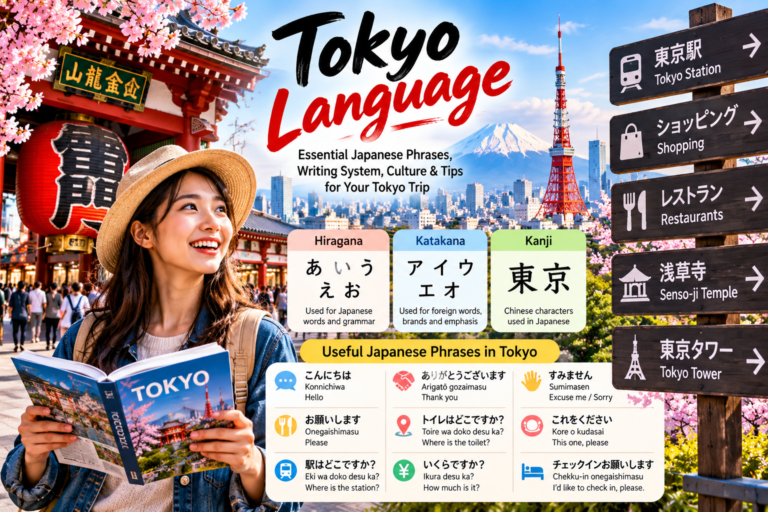
Learn a Few Japanese Words
You do not need to become fluent.
Useful expressions include:
- Hello
- Thank you
- Excuse me
- Please
- Yes
- No
- Where is…?
- How much?
Even a few basic phrases demonstrate respect.
Carry a Small Amount of Cash
Japan is highly modern but cash remains useful in some situations.
Payment acceptance varies by business, so having a backup payment method is sensible.
Carry a Small Bag for Trash
Public trash bins can be less common than many international visitors expect.
A small reusable bag can be surprisingly useful for carrying wrappers until you find an appropriate disposal point.
Tokyo Shopping Guide
Tokyo is one of the world’s best shopping destinations.
Electronics
Akihabara remains an obvious destination for electronics and gaming culture, although the retail landscape has changed significantly over time.
Fashion
Shibuya, Harajuku, Omotesando, and Ginza cover very different fashion segments.
Traditional Products
Travelers looking for Japanese craftsmanship can explore:
- Ceramics
- Textiles
- Stationery
- Kitchen tools
- Tea products
- Traditional crafts
Souvenirs
Good Tokyo souvenirs do not need to be expensive.
Consider:
- Japanese snacks
- Stationery
- Tea
- Small crafts
- Character merchandise
- Kitchen items
- Traditional sweets
Ten Travel Brands and Services Worth Comparing
Travelers often use several brands and services when planning Tokyo trips. The best option depends on whether you prioritize price, flexibility, connectivity, or convenience.
| Brand | Main Use | Strength | Best For | Potential Limitation |
|---|---|---|---|---|
| Japan Airlines | Flights | Full-service network | Comfort-focused travelers | Often higher fares |
| ANA | Flights | Service and network | International visitors | Fare can be higher |
| JR East | Rail travel | Extensive regional network | Train travelers | Ticket options can be complex |
| Tokyo Metro | Subway | Extensive city coverage | Central Tokyo sightseeing | Multiple operators require attention |
| Keikyu | Airport/rail | Haneda connectivity | Haneda travelers | Route depends on destination |
| PASMO | Transit payments | Convenient contactless travel | Everyday transport | Availability and rules can change |
| Suica | Transit payments | Broad usability | Visitors using rail | Purchase/access conditions vary |
| Google Maps | Navigation | Detailed directions | Independent travelers | Requires attention to station exits |
| Booking.com | Hotels | Large accommodation selection | Hotel comparison | Prices and policies vary |
| Klook | Attractions | Tours and tickets | Activity planning | Availability differs by attraction |
Important: Prices, transportation policies, ticket availability, and booking conditions can change. Always verify current information through the relevant official provider before purchasing.
Tokyo Guide for Different Traveler Types
The same Tokyo itinerary does not work equally well for everyone.
Tokyo for Young Travelers
Focus on:
- Shibuya
- Harajuku
- Akihabara
- Shimokitazawa
- Nightlife
- Cafes
- Fashion
- Gaming
Tokyo for Seniors
Prioritize:
- Shorter walking segments
- Gardens
- Museums
- Comfortable restaurants
- Taxi connections when appropriate
- Hotels close to stations
Avoid scheduling too many attractions in one day.
Tokyo for Photographers
Excellent subjects include:
- Shibuya
- Tokyo Tower
- Shinjuku
- Asakusa
- Traditional streets
- Tokyo Station
- Nighttime city scenes
- Seasonal gardens
Early morning is particularly valuable because famous locations are generally less crowded.
Tokyo for Food Lovers
Build your itinerary around neighborhoods rather than attractions.
You could explore:
- Tsukiji area
- Ginza
- Shinjuku
- Shibuya
- Ueno
- Asakusa
- Ikebukuro
Research individual restaurants separately because opening hours and reservation policies change.
Tokyo Guide for Travelers With Limited Time
If you only have 48 hours, prioritize experiences rather than landmarks.
Day One
Start with Asakusa and explore the traditional side of Tokyo.
Move toward Ueno if you enjoy museums or parks.
Finish the day around Akihabara or another nearby area.
Day Two
Begin around Meiji Shrine.
Continue toward Harajuku and Omotesando.
Spend the afternoon in Shibuya.
Finish with a Tokyo night-view experience.
This itinerary is busy but gives a first-time traveler a broad introduction.
Tokyo Guide for a One-Week Trip
A seven-day itinerary can be much more comfortable.
Day One: Traditional Tokyo
Explore Asakusa, Senso-ji, and nearby streets.
Day Two: Shibuya and Harajuku
Combine Meiji Shrine, Harajuku, Omotesando, and Shibuya.
Day Three: Shinjuku
Explore Shinjuku during the day and evening.
Day Four: Central Tokyo
Visit Tokyo Station, Marunouchi, Ginza, and nearby attractions.
Day Five: Culture and Museums
Spend the day in Ueno or another cultural district.
Day Six: Flexible Exploration
Choose Akihabara, Odaiba, Shimokitazawa, Ikebukuro, or another area based on your interests.
Day Seven: Day Trip or Slow Tokyo Day
Consider a day trip outside central Tokyo or simply revisit your favorite neighborhood.
The final option is often underrated.
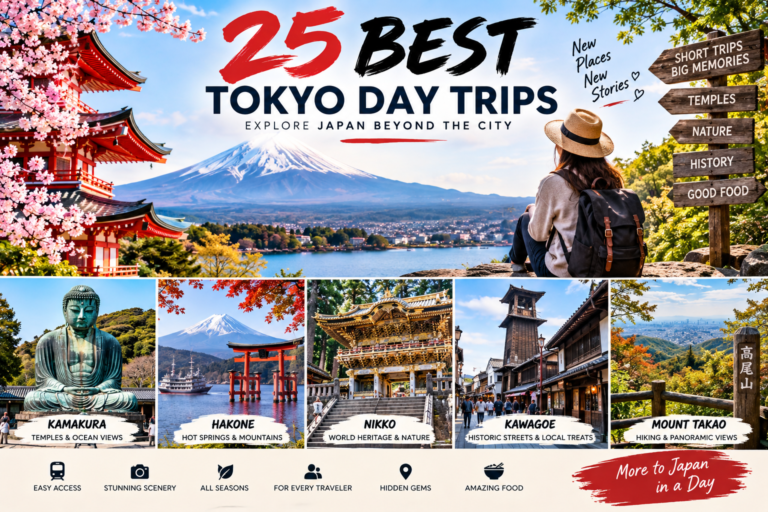
Day Trips From Tokyo
Tokyo’s rail network makes several day trips practical.
Popular options include:
- Kamakura
- Yokohama
- Nikko
- Hakone
- Kawagoe
Each destination offers a different experience.
Kamakura
Kamakura is attractive for travelers interested in temples, shrines, history, and coastal scenery.
Yokohama
Yokohama offers waterfront areas, food, shopping, and a distinct urban atmosphere.
Nikko
Nikko is particularly interesting for temples, shrines, mountains, and nature.
Hakone
Hakone is popular for hot springs, mountain scenery, museums, and views toward Mount Fuji when conditions cooperate.
Kawagoe
Kawagoe provides a more traditional townscape and can work well as a shorter cultural escape from Tokyo.
Tokyo Safety Guide
Tokyo is generally considered a very safe major city for visitors, but normal precautions remain sensible.
Protect Your Belongings
Keep important items secure in crowded areas.
Follow Local Rules
Do not assume that behavior acceptable in your home country is appropriate everywhere in Japan.
Watch Train Platform Etiquette
Follow markings and local passenger behavior.
Avoid Disrupting Crowds
Large tourist areas can become extremely congested.
Move to the side when checking your phone or map rather than stopping in the middle of a pedestrian flow.
Common Tokyo Travel Mistakes
Mistake 1: Trying to See Everything
Tokyo is too large for that.
Solution: Pick a few priorities each day.
Mistake 2: Staying Too Far From Transportation
A cheap hotel can become expensive in time if every journey begins with a long walk or multiple transfers.
Solution: Choose accommodation near a useful station.
Mistake 3: Ignoring Station Exits
You can arrive at the correct station and still emerge far from your destination.
Solution: Follow exit information in your navigation app.
Mistake 4: Overplanning Meals
Tokyo has too many restaurants to predict every meal.
Solution: Reserve special restaurants but leave ordinary meals flexible.
Mistake 5: Assuming Every Restaurant Accepts Every Payment Method
Payment policies vary.
Solution: Carry an appropriate backup payment method.
Mistake 6: Ignoring Weather
Heat, rain, cold, and seasonal conditions can dramatically change your experience.
Solution: Check the forecast each morning and adjust your itinerary.
Mistake 7: Planning Only Famous Attractions
The most memorable experience may happen on a quiet neighborhood street rather than at a famous landmark.
Solution: Leave several hours for unplanned exploration.
Pros and Cons of Visiting Tokyo
Advantages
- Excellent public transportation
- Extraordinary food variety
- Huge range of neighborhoods
- Strong safety reputation
- World-class shopping
- Rich cultural experiences
- Excellent infrastructure
- Options for almost every budget
- Great solo-travel environment
- Excellent base for regional travel
Challenges
- Large crowds
- Huge train stations
- Extensive walking
- Language barriers in some situations
- Accommodation rooms can be small
- Summer heat and humidity
- High prices at luxury restaurants and hotels
- Information overload for first-time visitors
The advantages strongly outweigh the challenges for most travelers, but preparation makes a major difference.
The Tokyo Slow-Travel Strategy
One of the most useful improvements you can make to a Tokyo itinerary is to adopt a slow-travel strategy.
Instead of asking:
“How many attractions can I visit today?”
ask:
“How much of this neighborhood can I understand today?”
Spend three or four hours in one district.
Have lunch.
Walk through side streets.
Enter a small shop.
Visit a shrine.
Sit in a cafe.
Then continue.
This approach often produces a more authentic memory of Tokyo than checking ten landmarks off a list.
Tokyo for Digital Travelers
Modern travelers increasingly rely on smartphones for navigation, reservations, translation, payments, and travel planning.
Before leaving your hotel each morning, make sure you have:
- Internet access
- Charged phone
- Navigation app
- Translation tool
- Hotel address saved
- Reservation details
- Emergency information
- Portable battery if needed
Do not rely entirely on your phone without preparation.
A dead phone in a massive train station is an avoidable problem.
Internet and Connectivity in Tokyo
Visitors commonly use:
- International roaming
- Travel eSIMs
- Physical SIM cards
- Portable Wi-Fi
The best choice depends on your phone, carrier, trip length, and number of connected devices.
For most solo travelers with a compatible unlocked phone, an eSIM can be convenient.
Families with several devices may prefer a shared connection.
Tokyo Etiquette Travelers Should Know
A little cultural awareness goes a long way.
Keep Public Spaces Orderly
Tokyo’s transportation system depends on people following predictable behavior.
Stand where indicated and allow passengers to exit before boarding.
Keep Noise Low
Speaking loudly on public transportation can attract unwanted attention.
Do Not Eat Everywhere
Food etiquette varies by situation.
Rather than assuming that eating while walking is always acceptable, follow the local context.
Respect Shrines and Temples
Remember that these are religious and cultural spaces, not simply photo backgrounds.
Observe posted instructions.
What to Pack for Tokyo
Your packing list should depend heavily on the season.
Basic items include:
- Comfortable walking shoes
- Lightweight day bag
- Portable phone battery
- Weather-appropriate clothing
- Small reusable bag
- Travel documents
- Payment cards
- Some cash
- Necessary medications
- Universal travel adapter if required
Comfortable shoes deserve special attention.
Tokyo sightseeing can involve far more walking than visitors expect.
How to Build a Better Tokyo Itinerary
Use the 3-layer itinerary method.
Layer One: Must-See
Choose two or three experiences you absolutely want.
Layer Two: Nearby Options
Add attractions in the same neighborhood.
Layer Three: Flexible Time
Leave several hours open.
This system prevents one delayed train, crowded attraction, or unexpected restaurant queue from destroying the entire day.
Tokyo Travel Trends to Watch
Tokyo tourism continues to evolve.
More Demand for Local Experiences
Travelers increasingly want experiences beyond the standard landmark checklist.
This may increase interest in:
- Local neighborhoods
- Traditional crafts
- Cooking experiences
- Small-group tours
- Regional food
- Cultural workshops
Greater Use of Digital Planning
Travelers are increasingly using digital maps, translation tools, mobile tickets, and online reservations.
This makes independent travel easier but also increases dependence on reliable connectivity.
Rising Interest in Regional Exploration
Tokyo is increasingly being treated as a gateway rather than the entire Japanese trip.
Travelers may combine Tokyo with:
- Kyoto
- Osaka
- Hiroshima
- Hokkaido
- Tohoku
- Kyushu
- Japanese Alps
Tourism Pressure and Sustainable Travel
As international tourism grows, popular destinations face pressure from crowding.
Travelers can help by:
- Visiting less-crowded neighborhoods
- Traveling outside peak periods
- Following local rules
- Using public transportation
- Supporting local businesses
- Avoiding disruptive photography
The Future of Tokyo Travel
Tokyo’s future tourism experience is likely to become increasingly digital and personalized.
Visitors will probably use technology to create itineraries around specific interests rather than generic city tours.
Imagine planning a day around:
“Traditional Japanese architecture + quiet gardens + vegetarian lunch + photography + minimal walking.”
That type of personalized travel planning is becoming more practical.
At the same time, technology should not replace human exploration.
Tokyo’s biggest strength is still the unexpected discovery.
A tiny restaurant, quiet street, neighborhood bakery, or local festival may become more memorable than the attraction you spent weeks researching.
Frequently Asked Questions About Tokyo
Is Tokyo worth visiting for the first time?
Yes. Tokyo offers an unusually broad combination of food, culture, shopping, history, technology, entertainment, and transportation. It can suit solo travelers, couples, families, luxury travelers, and budget travelers.
How many days are enough for Tokyo?
Four to seven days is a useful range for a first visit. Three days can provide an introduction, while a week allows you to explore more neighborhoods without rushing.
What is the best area to stay in Tokyo?
There is no universal answer. Shinjuku and Shibuya are convenient for first-time visitors, Asakusa offers a more traditional atmosphere, and Ginza suits travelers interested in upscale shopping and dining.
Is Tokyo expensive?
Tokyo can be expensive, particularly for luxury hotels, premium dining, and shopping, but it also offers many affordable accommodation, food, and sightseeing options.
Is Tokyo safe for tourists?
Tokyo has a strong reputation for safety, but visitors should still use normal precautions and respect local laws and customs.
Do I need to speak Japanese in Tokyo?
No. You can travel without speaking Japanese, particularly in major tourist areas. However, learning a few basic Japanese expressions can make interactions easier and more pleasant.
Can I use credit cards in Tokyo?
Many businesses accept cards, especially modern hotels, stores, and restaurants, but payment methods vary. Having a backup payment option is sensible.
Is public transportation difficult in Tokyo?
It can initially seem complicated because multiple railway and subway operators serve the city. Navigation apps make the system considerably easier to use.
Should I stay near Tokyo Station?
It can be convenient, particularly if you plan to take several long-distance trains. However, other neighborhoods may provide a better atmosphere depending on your interests.
Is Tokyo good for families?
Yes. Tokyo offers attractions for children and adults, but families should avoid overpacking their daily schedules and should consider hotel room size and transportation convenience.
Is Tokyo good for solo travelers?
Absolutely. Tokyo’s transportation system, restaurants, attractions, and entertainment make it one of the easier major cities to explore independently.
What should I eat in Tokyo?
Start with sushi, ramen, tempura, yakitori, Japanese sweets, and local convenience-store foods. Then explore regional and neighborhood specialties.
What is the biggest mistake first-time Tokyo visitors make?
Trying to see too much.
Tokyo is better experienced by neighborhood, not by racing between isolated attractions.
Conclusion
Tokyo is not a city you simply “finish.”
It is a destination that becomes more interesting as you understand how its neighborhoods connect.
Your first trip might be dominated by famous places such as Shibuya, Shinjuku, Senso-ji, Meiji Shrine, and Tokyo Tower. Your second trip may focus more on food, neighborhoods, museums, shopping, or day trips.
That is part of Tokyo’s appeal.
The best Tokyo itinerary is not necessarily the one containing the largest number of attractions. It is the one that gives you enough structure to see your priorities while leaving enough freedom to discover something unexpected.