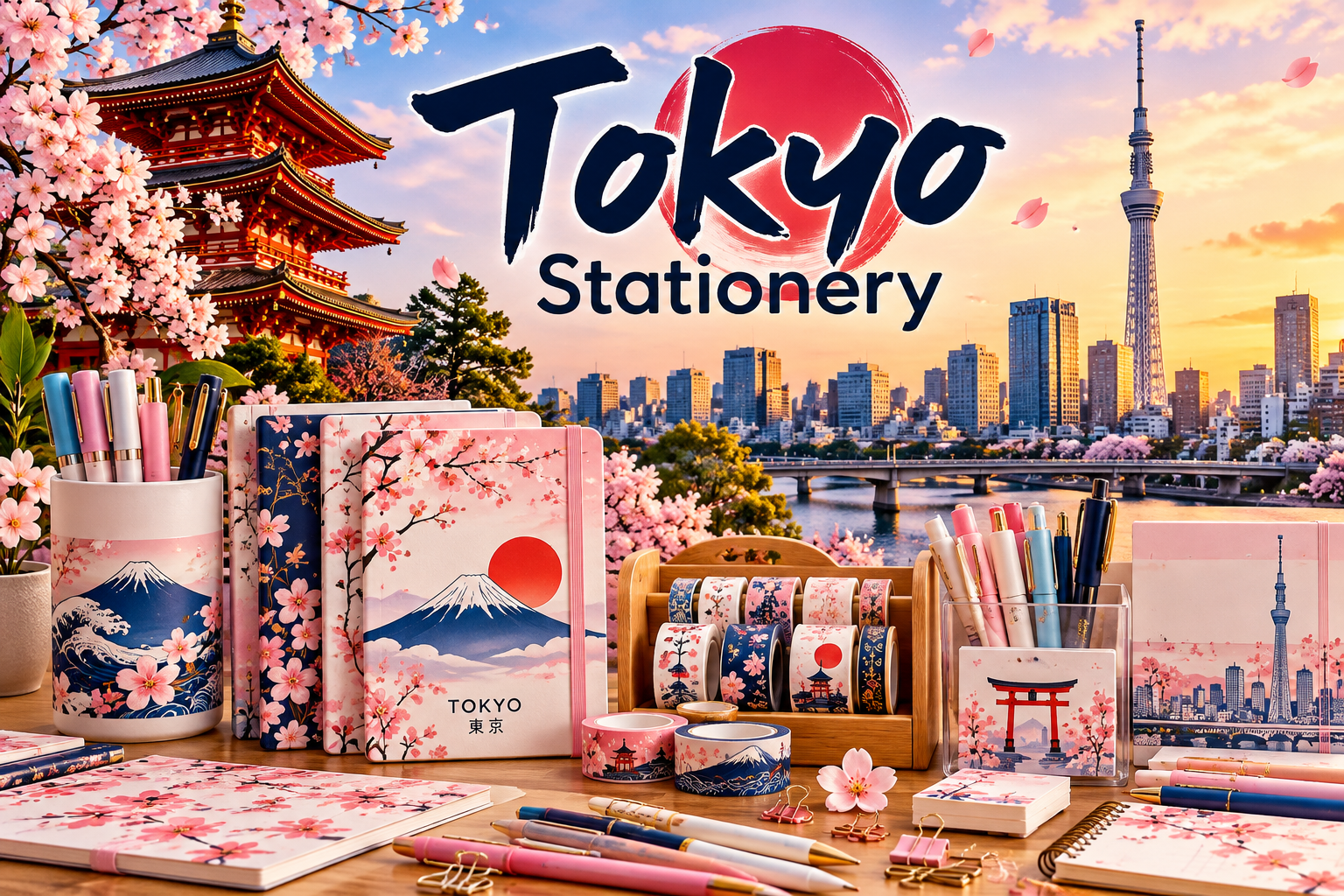
Tokyo Stationery: 10 Best Japanese Stationery Brands, Shops, and Must-Buy Writing Supplies
Have you ever picked up a simple notebook and discovered that its paper, binding, and design make writing feel completely different? Tokyo is an excellent destination for discovering stationery that turns everyday tasks into enjoyable experiences. Tokyo stationery includes Japanese pens, notebooks, planners, washi tape, stickers, calligraphy tools, and beautifully designed desk accessories for students, artists, professionals, and collectors. From affordable writing supplies to premium Japanese paper goods, Tokyo offers a remarkable variety of products that combine practical engineering, thoughtful design, and traditional craftsmanship Tokyo Cycling
What Is Tokyo Stationery?
Tokyo stationery refers to writing instruments, paper products, planning tools, art supplies, and desk accessories sold in Tokyo, Japan. The term covers everyday Japanese stationery as well as specialist products, collectible designs, and premium stationery made by established Japanese manufacturers.
Many products associated with Japanese stationery emphasise usability, compactness, careful finishing, and visual simplicity. However, the market is diverse: colourful character merchandise, traditional Japanese paper, professional drafting instruments, and minimalist office supplies all belong to the same broad category.
The Difference Between Ordinary and Japanese Stationery
Stationery is widely available around the world, but Japanese manufacturers have developed strong reputations in several areas:
- Writing performance: Fine tips, consistent ink flow, and a broad selection of pen types.
- Paper quality: Different paper textures and weights for handwriting, sketching, fountain pens, and planning.
- Organisation: Practical notebooks, index systems, sticky notes, and planners designed around everyday routines.
- Compact design: Portable tools, refillable products, and accessories that save desk space.
- Visual creativity: Washi tape, stickers, patterned paper, stamps, and seasonal designs.
- Attention to detail: Thoughtful packaging, precise manufacturing, and carefully considered product features.
These are general strengths rather than guarantees for every product. The best choice still depends on your writing style, budget, and intended use.
Why Tokyo Is a Major Stationery Shopping Destination
Tokyo brings together established Japanese stationery manufacturers, specialist retailers, department stores, art-supply shops, and independent design businesses. This makes it possible to compare different products in person rather than relying solely on online photographs.
The city is also a useful place to discover products that may be harder to find in overseas shops, including Japanese-language planners, locally themed designs, seasonal stationery, and selected limited-edition collaborations.
For travellers, the experience itself can be part of the attraction. A stationery shop may offer demonstrations, writing samples, customisation services, or carefully arranged displays that help shoppers understand how products differ.
A Brief History of Japanese Stationery
Understanding the background of Japanese stationery makes it easier to appreciate the products found in Tokyo today.
Traditional Japanese Paper and Writing
Japanese writing culture has long been connected with brushwork, calligraphy, handmade paper, and the careful presentation of written communication. Washi, a traditional Japanese paper made using established papermaking techniques, is especially associated with craftsmanship and decorative applications.
Not every modern Japanese notebook is made from washi, and not every Japanese paper product uses traditional manufacturing methods. Nevertheless, the broader tradition of paper craftsmanship continues to influence Japan’s stationery culture.
The Development of Modern Writing Instruments
During the modernisation of Japan, demand grew for dependable writing materials in schools, offices, and businesses. Domestic manufacturers developed and refined pencils, mechanical pencils, ballpoint pens, fountain pens, erasers, and other everyday tools.
Over time, Japanese companies became known internationally for products ranging from affordable school supplies to premium writing instruments.
Contemporary Stationery Culture
Today’s Japanese stationery market combines practical office supplies with creative hobbies, journalling, illustration, scrapbooking, and collecting.
Digital communication has not eliminated demand for physical stationery. Instead, many consumers use notebooks and planners for tasks that benefit from handwriting, visual thinking, creative expression, or a break from screens.
Tokyo’s retail environment reflects this mix of tradition and modern use, with classic writing tools displayed alongside colourful contemporary designs.
10 Types of Tokyo Stationery Worth Exploring
Tokyo’s stationery selection becomes easier to navigate when you organise it by purpose. Instead of buying whatever looks attractive, decide whether you need writing tools, planning supplies, art materials, or souvenirs.
1. Japanese Pens and Mechanical Pencils
Fine-tip gel pens, ballpoint pens, mechanical pencils, and refillable writing instruments are excellent starting points. Students may prefer comfortable everyday pens, while professionals may value reliable ink flow and consistent line widths.
Look for pen tip sizes, refill availability, grip design, and ink type rather than choosing on appearance alone.
2. Japanese Notebooks and Journals
Japanese notebooks come in ruled, grid, dotted, blank, and specialised layouts. They suit lecture notes, daily journalling, meeting records, creative writing, and travel diaries.
Check paper thickness, binding, page size, and whether your preferred pen bleeds through the paper.
3. Washi Tape and Decorative Paper
Washi-style masking tapes are popular for decorating planners, envelopes, gift packaging, scrapbooks, and journals. Designs range from minimalist patterns to flowers, landscapes, animals, and seasonal illustrations.
Buy a few versatile patterns before purchasing large collections that may remain unused.
4. Planner Stickers and Rubber Stamps
Decorative stickers, date markers, index tabs, and small stamps help people personalise planners and organise recurring tasks.
These are particularly useful for bullet journalling, habit tracking, scrapbooking, and creative diary keeping.
5. Fountain Pens and Bottled Inks
Fountain pens offer a different writing experience, with choices in nib width, filling mechanism, ink colour, and body design. Tokyo is worth exploring if you want to compare pens in person.
Beginners should prioritise comfort, maintenance, and an accessible price before purchasing a premium collector’s pen.
6. Art Supplies and Illustration Tools
Artists can explore fineliners, brush pens, coloured pencils, markers, sketchbooks, erasers, and specialist paper. Different tools suit manga illustration, technical drawing, watercolour sketching, and lettering.
Check whether markers are alcohol-based or water-based and choose paper designed for the medium.
7. Letter Sets and Greeting Cards
Japanese letter-writing products combine decorative paper, envelopes, thoughtful illustrations, and seasonal designs. They are suitable for handwritten messages, thank-you notes, invitations, and gifts.
This category is especially appealing to travellers seeking lightweight souvenirs with a practical use.
8. Pencil Cases and Desk Accessories
Compact pencil cases, pen stands, document folders, clips, and desk organisers help keep supplies accessible at school, at work, or while travelling.
Prioritise durability, capacity, and easy cleaning if the accessories will be used daily.
9. Traditional Japanese Paper
Decorative paper and washi products connect modern stationery shopping with Japanese craft traditions. They can be used for correspondence, book covers, collage, gift wrapping, and decorative projects.
Ask about paper thickness, texture, and suitability for your intended application.
10. Character Stationery and Tokyo Souvenirs
Character-themed notebooks, stickers, keyrings, memo pads, and limited-edition designs appeal to collectors and gift buyers. Tokyo-themed illustrations can make especially memorable souvenirs.
Check the licensing and product labelling when buying branded merchandise, especially from unfamiliar sellers.
The Best Places to Buy Tokyo Stationery
The most effective way to shop for stationery in Tokyo is to match the store to your interests. A large specialist retailer may be ideal for comparing notebooks and pens, whereas a small paper shop may offer more distinctive products.
1. Ginza Itoya: The Landmark Stationery Destination
Ginza Itoya is one of the most recognisable stationery destinations in the city. The business dates to 1904 and is known for its distinctive red paper-clip sign, extensive selection, and multi-floor shopping experience.
Its range includes writing instruments, notebooks, greeting cards, art materials, and original products.
Why visit:
- Compare different types of pens, notebooks, and paper.
- Explore stationery for work, study, drawing, and personal planning.
- Find gift-worthy products and distinctive Japanese designs.
- Browse specialist writing and art sections rather than relying on a small stationery aisle.
Best for: First-time visitors, stationery enthusiasts, gift shoppers, and anyone who wants to explore several categories in one place.
Useful tip: Allow enough time to browse. The store is more rewarding when you arrive with a list of priorities but leave room to discover unexpected products.
2. Loft: Colourful Stationery and Modern Lifestyle Products
Loft is a useful name to look for when shopping for contemporary stationery, planners, decorative accessories, gifts, and lifestyle products.
Its appeal is the combination of practical supplies and visually distinctive items. Depending on the branch and season, shoppers may find planners, stickers, pens, desk accessories, character products, and creative organisation tools.
Best for: Students, journal enthusiasts, casual shoppers, and people searching for attractive gifts.
Shopping tip: Compare several branches if you are looking for a particular item. Stock and specialist sections can vary by location.
3. Sekaido: Art Materials and Creative Supplies
Sekaido is associated with art materials and creative supplies. It is worth considering if your stationery list includes drawing pencils, sketchbooks, markers, illustration tools, or other materials beyond everyday office products.
Best for: Illustrators, students in art programmes, hobby artists, and people assembling a creative toolkit.
Shopping tip: Write down the exact product specifications you need, especially for paper sizes, marker types, and replacement supplies. Specialist products can look similar while behaving differently in use.
4. G.C.PRESS: Letter-Writing Stationery and Cards
G.C.PRESS is a design-focused paper stationery destination. Its products are particularly relevant to shoppers interested in greeting cards, letter sets, and carefully designed paper goods.
Best for: Gift buyers, people who enjoy handwritten correspondence, and visitors looking for elegant paper souvenirs.
Shopping tip: Consider buying a matching letter set and envelope collection if you want a ready-to-use gift.
5. Kingdom Note: Fountain Pens and Specialist Writing Instruments
Kingdom Note is a specialist option for fountain-pen enthusiasts. It is particularly relevant to shoppers interested in nibs, bottled ink, pre-owned writing instruments, and collector-oriented products.
Best for: Fountain-pen users, experienced writers, and collectors seeking more specialised options.
Shopping tip: Test the grip and nib whenever possible. A prestigious pen is not necessarily the most comfortable choice for your handwriting.
6. Kyukyodo: Traditional Paper and Japanese Craft
Kyukyodo is known for traditional Japanese goods associated with paper and incense. It is an appealing addition to a stationery itinerary if you want to explore paper products with a more traditional aesthetic.
Best for: Traditional craft enthusiasts, paper collectors, and shoppers looking for refined Japanese gifts.
Shopping tip: Ask staff about the paper’s intended use before buying sheets for calligraphy, painting, or correspondence.
7. Ozu Washi: Traditional Japanese Paper
Ozu Washi is a destination to consider for traditional paper and washi-related products. Its historical association with Japanese papermaking makes it relevant to shoppers interested in the material itself, not just finished notebooks.
Best for: Paper enthusiasts, craft projects, calligraphy, and distinctive souvenirs.
Shopping tip: If you are buying paper for a particular project, explain whether you intend to write, print, fold, paint, or wrap with it.
8. Kakimori: Customised Writing Experiences
Kakimori is associated with personalised stationery experiences, including notebook-making and custom ink offerings. It can be particularly appealing to visitors who want a product connected to their own preferences rather than an ordinary off-the-shelf souvenir.
Best for: Creative travellers, journal writers, and shoppers looking for a more personalised experience.
Shopping tip: Check current booking requirements, workshop availability, and product options before visiting.
9. Gekkoso: Artist-Focused Stationery
Gekkoso is an art-supply destination mentioned in Tokyo shopping guides. It is worth considering when your interests lean towards drawing, painting, and creative practice rather than conventional office stationery.
Best for: Artists, illustrators, sketchbook users, and creative hobbyists.
Shopping tip: Bring a list of the tools you already use so you can compare equivalent products and avoid purchasing duplicates.
10. Gojuon: A Distinctive Stationery and Design Stop
Gojuon is a smaller destination in Ginza associated with vintage stationery, writing-related objects, and design exhibitions.
Best for: Collectors, design lovers, and visitors interested in unusual objects.
Shopping tip: Treat this as a specialist stop rather than assuming it will carry the same broad selection as a department-style stationery store.
Tokyo Stationery Shopping Areas at a Glance
| Area | What to Look For | Best Suited To |
|---|---|---|
| Ginza | Large stationery stores, premium pens, paper goods | First-time visitors and gift shoppers |
| Shinjuku | Art supplies, specialist pens, department-store shopping | Artists and writing enthusiasts |
| Nihonbashi | Traditional paper and heritage craft | Paper lovers and cultural explorers |
| Kuramae | Creative studios and personalised stationery experiences | Journal writers and design fans |
| Major shopping centres | Everyday stationery, planners, lifestyle accessories | Convenient one-stop shopping |
These areas are starting points rather than guarantees of stock or opening hours. Check each shop’s current location and business information before setting out.
10 Best Japanese Stationery Brands to Know
Tokyo stationery shopping is easier when you recognise the manufacturers behind the products. Some brands specialise in pens, others focus on paper and organisation, and some are especially popular among artists and journal enthusiasts.
The following comparison covers ten established or widely recognised Japanese stationery brands. Product availability and ranges vary by shop.
1. Pilot
Best for everyday writing
Pilot makes ballpoint pens, gel pens, fountain pens, and other writing instruments. It is a strong starting point for students, office workers, and anyone who values a dependable everyday pen.
Look for gel pens, refillable pens, and fountain pens.
2. Uni Mitsubishi Pencil
Best for smooth writing and pencils
Uni is associated with everyday pens, mechanical pencils, drawing pencils, and technical writing supplies.
Look for Jetstream ballpoint pens, mechanical pencils, and specialist drawing pencils.
3. Zebra
Best for colourful note-taking
Zebra offers pens, markers, highlighters, and other writing tools suitable for study and work.
Look for Sarasa gel pens and Mildliner highlighters.
4. Tombow
Best for drawing and precision work
Tombow is known for pencils, erasers, correction products, brush pens, and other creative tools.
Look for Mono erasers, drawing pencils, and lettering supplies.
5. Kokuyo
Best for school and office notebooks
Kokuyo focuses on notebooks, paper products, filing systems, and office supplies. Its Campus range is especially relevant for everyday note-taking.
Look for Campus notebooks, binders, and organisation tools.
6. Midori
Best for journalling and minimalist design
Midori is associated with notebooks, diaries, writing accessories, and thoughtfully designed paper products.
Look for MD notebooks, diaries, and compact stationery accessories.
7. Hobonichi
Best for detailed planning
Hobonichi is widely associated with its Techo planners, which appeal to daily journal writers and people who combine scheduling with personal reflection.
Look for planners, notebook covers, and planner accessories.
8. Platinum Pen
Best for fountain-pen enthusiasts
Platinum specialises in fountain pens and related writing products, with options for users who enjoy different nibs and ink systems.
Look for fountain pens, cartridges, bottled ink, and pen accessories.
9. Sailor
Best for premium writing instruments
Sailor is particularly relevant to fountain-pen collectors and writers looking for specialised nibs and premium pen designs.
Look for fountain pens, specialist nibs, and compatible ink products.
10. Kuretake
Best for lettering and brushwork
Kuretake is associated with brush pens, calligraphy products, and creative tools used for illustration and lettering.
Look for brush pens, calligraphy markers, and lettering supplies.
Japanese Stationery Brands Compared
Use this table to narrow down your options before visiting shops or ordering products online.
| Brand Tokyo stationery | Main Strength Tokyo stationery | Ideal Customer Tokyo stationery | Products to Explore Tokyo stationery |
|---|---|---|---|
| Pilot | Everyday pens | Students and professionals | Gel pens, fountain pens |
| Uni Mitsubishi Pencil | Smooth writing and pencils | Students and office users | Jetstream, mechanical pencils |
| Zebra | Pens and highlighters | Note-takers and planners | Sarasa, Mildliner |
| Tombow | Drawing and precision | Artists and students | Mono erasers, pencils |
| Kokuyo | Paper and organisation | Students and businesses | Campus notebooks, binders |
| Midori | Journals and paper goods | Journal enthusiasts | MD notebooks, diaries |
| Hobonichi | Planning systems | Detailed planners | Techo planners, covers |
| Platinum Pen | Fountain pens | Writers and collectors | Pens, ink, cartridges |
| Sailor | Premium pens | Collectors and enthusiasts | Fountain pens, nibs |
| Kuretake | Brushwork and lettering | Artists and calligraphers | Brush pens, markers |
Which brand should you choose? Start with Pilot or Uni for everyday writing, Kokuyo for study notes, Midori for journalling, Hobonichi for planning, and Kuretake or Tombow for creative work. Sailor and Platinum are worth investigating if fountain pens are your main interest.
These are practical starting points, not absolute rankings. The best stationery brand is the one that fits your particular task, budget, and preferences.
Tokyo Stationery Prices: What Should You Budget?
There is no single price for Tokyo stationery. A basic pen, a multi-pack of highlighters, a premium fountain pen, and a specialist notebook belong to very different price categories.
The following are illustrative budgeting estimates in Japanese yen, not verified current prices or quotations from individual shops.
| Product Category Tokyo stationery | Indicative Budget Tokyo stationery |
|---|---|
| Basic pen or pencil | ¥100–¥500 |
| Quality gel pen | ¥200–¥600 |
| Mechanical pencil | ¥300–¥1,500 |
| Everyday notebook | ¥200–¥1,000 |
| Decorative stickers | ¥100–¥600 |
| Washi tape roll | ¥150–¥600 |
| Planner or diary | ¥800–¥4,000+ |
| Premium notebook | ¥1,000–¥4,000+ |
| Artist markers or specialist tools | ¥200–¥1,000+ per item |
| Entry-level fountain pen | ¥1,000–¥5,000+ |
| Premium fountain pen | ¥10,000–¥50,000+ |
Prices vary by model, shop, material, edition, and date. Limited-edition and collectible items may cost substantially more.
How Much Money Should You Set Aside?
Budget stationery trip: ¥2,000–¥4,000
A few pens, a notebook, stickers, and small souvenirs.
Enthusiast shopping trip: ¥5,000–¥12,000
Several quality writing tools, a planner, decorative supplies, and gifts.
Premium stationery shopping: ¥15,000 and above
A budget for premium fountain pens, specialist paper, or multiple high-quality products.
These sample budgets are planning scenarios, not averages of actual visitor spending. They exclude transport, food, and other travel expenses.
How to Shop Without Overspending Tokyo stationery
- Set a total stationery budget before entering a large store.
- Buy functional essentials first, such as notebooks and pens.
- Reserve a smaller amount for decorative stationery and unexpected finds.
- Compare refill costs before buying a premium pen.
- Keep limited-edition items separate from everyday essentials when deciding what is worth the extra cost.
A useful rule is to ask whether you would still buy the item if it had plain packaging. If the answer is yes, the product may offer genuine practical value beyond its appearance.
How to Choose Japanese Stationery for Your Needs
The most attractive product is not always the most suitable. Choosing stationery according to your everyday habits will help you get more value from your purchases.
For Students and University Learners Tokyo stationery
Students often need pens, mechanical pencils, erasers, notebooks, highlighters, sticky notes, and folders.
Prioritise:
- Comfortable writing during long lectures.
- Paper layouts that suit your subjects.
- Highlighters that do not obscure the text.
- Affordable replacement refills.
- Lightweight products that fit in a backpack.
A practical combination is a reliable gel pen, a mechanical pencil, a grid notebook, and two or three highlighters. You do not need a large collection to build an effective study system.
For Office Workers and Business Professionals Tokyo stationery
Professionals may prefer a consistent writing instrument, a structured notebook, and a planning system for meetings and deadlines.
Consider a refillable ballpoint pen, a notebook with clear headings, and sticky notes for short-term reminders.
If you regularly write on documents, test the ink for drying time and smudging. If you take meeting notes quickly, choose a pen that feels comfortable in your hand rather than one that simply looks impressive.
For Artists and Illustrators Tokyo stationery
Artists should consider the interaction between the tool and the surface.
For example, an alcohol-based marker may bleed through ordinary notebook paper. A brush pen may produce very different lines depending on paper texture and writing pressure. Watercolour pencils need paper that can tolerate moisture.
Before buying several colours, test a small number of tools on suitable paper. This reduces waste and helps you discover which materials complement your technique.
For Journal Writers and Stationery Collectors Tokyo stationery
Journal enthusiasts often enjoy combining writing instruments, notebooks, stickers, stamps, and decorative tapes.
However, the most useful collection is one that supports a regular habit. Choose a notebook size that you will actually carry, a pen you enjoy using, and a few decorative supplies that complement your preferred layout.
Collectors should also keep packaging and receipts for limited-edition products when authenticity, resale, or future identification matters.
For Travellers Looking for Tokyo stationery
Small stationery products are ideal souvenirs because many are lightweight, useful, and easy to share.
Good options include:
- Tokyo-themed postcards and letter sets.
- Japanese-patterned washi tape.
- Small notebooks and memo pads.
- Compact pen sets.
- Decorative stickers and bookmarks.
- Specially designed paper goods.
For international travel, check luggage restrictions for art supplies containing liquids or other restricted materials. Bottled ink should be sealed carefully and packed to prevent leaks.
Practical Guide: How to Shop for Stationery in Tokyo
A little preparation can make stationery shopping more enjoyable, particularly if you have limited time in Tokyo or want to bring products home for personal use.
Step 1: Make a Shopping List Tokyo stationery
Divide your list into three groups:
- Essential: Pens, notebooks, refills, pencils, or other items you already use.
- Specialist: Fountain pens, drawing tools, traditional paper, or planners.
- Optional: Stickers, decorative tape, souvenirs, and limited-edition products.
This approach helps prevent attractive displays from distracting you from the items you actually need.
Step 2: Test Pens and Paper Before Buying Tokyo stationery
Where testers are available, write a few lines with the pen you are considering. Check the following:
- Does the pen feel comfortable in your hand?
- Does the ink flow consistently?
- Does it dry quickly enough for your writing speed?
- Is the line width suitable for your handwriting?
- Does the ink bleed or show through your preferred notebook paper?
For fountain pens, also consider nib width, maintenance, ink compatibility, and replacement parts.
Step 3: Check Notebook Specifications Tokyo stationery
A notebook’s cover can be appealing, but the paper inside matters just as much.
Look for page size, ruling, paper thickness, binding, and total page count. If you use fountain pens or wet markers, confirm whether the paper suits those writing tools.
For travel journalling, portability may matter more than a large page count. For university notes, a larger notebook with a clear grid or ruling may be more useful.
Step 4: Compare Prices and Product Versions Tokyo stationery
Japanese stationery sometimes comes in multiple versions that look almost identical.
Check whether a pen includes ink, whether a mechanical pencil includes lead, and whether a notebook is sold individually or in a multipack.
For refillable products, confirm the exact compatible refill. Similar-looking pens do not necessarily use interchangeable refills.
Step 5: Pack Your Purchases Carefully Tokyo stationery
Protect notebooks from bending, keep loose paper flat, and place pens in a secure pouch. Seal ink bottles in leak-resistant packaging.
If you are buying stationery as gifts, consider whether the product needs special packaging to survive a long journey.
Common Tokyo Stationery Shopping Mistakes and Their Solutions
Mistake 1: Buying Stationery Based on Appearance Alone Tokyo stationery
Colourful designs and attractive packaging are part of the appeal, but they do not guarantee good performance.
Solution: Test the product when possible and read the specifications. A simple, comfortable pen may be more useful than an expensive decorative one.
Mistake 2: Assuming Every Japanese Notebook Uses Fountain-Pen-Friendly Paper Tokyo stationery
Paper quality varies by product and intended purpose. Some notebooks are designed primarily for everyday ballpoint or gel pens.
Solution: If you use a fountain pen, test the paper for feathering, bleed-through, and show-through before buying multiple notebooks.
Mistake 3: Confusing a Pen’s Tip Size with Its Actual Writing Line Tokyo stationery
A stated tip size does not always produce an identical line across different pen models or ink formulations.
Solution: Compare writing samples rather than relying only on the number printed on the package.
Mistake 4: Forgetting Replacement Supplies Tokyo stationery
A specialised pen may be enjoyable to use but inconvenient if its refills are difficult to find at home.
Solution: Check refill compatibility and consider buying a few extra refills if you intend to use the pen regularly.
Mistake 5: Spending Too Much on Limited Editions Tokyo stationery
Limited-edition colours and character collaborations can be tempting, particularly when they are unavailable in your home country.
Solution: Decide on a souvenir allowance before shopping and prioritise the products you genuinely want to use or collect.
Mistake 6: Visiting Specialist Shops Without Checking Their Details Tokyo stationery
Small independent shops may have different opening hours, weekly closing days, workshop schedules, or product availability.
Solution: Check official store information before visiting. If a particular item or workshop is essential to your trip, confirm availability directly.
Mistake 7: Assuming Every Product Is Cheaper in Japan Tokyo stationery
Japanese stationery may be better value in some cases, but prices vary internationally. Exchange rates, local taxes, shipping, retailer discounts, and import duties can affect the final cost.
Solution: Compare the total cost of buying locally versus ordering from home, especially for premium writing instruments.
Pros and Cons of Buying Tokyo stationery
Tokyo is a rewarding shopping destination, but the experience has practical limitations.
| Advantages Tokyo stationery | Challenges Tokyo stationery |
|---|---|
| Wide selection of Japanese stationery | Large stores can take considerable time to explore |
| Opportunities to test selected products | Not every item has a tester |
| Access to specialist paper and writing tools | Specialist products may cost more |
| Distinctive designs and seasonal products | Limited editions may sell out |
| Products for beginners and professionals | Product descriptions may be in Japanese |
| Souvenirs that are lightweight and useful | Liquid inks require careful packing |
| Opportunities to compare different brands | Similar models can be confusing |
Is Tokyo Stationery Worth Buying?
For people who enjoy writing, drawing, planning, or collecting, Tokyo can offer considerable value beyond the price of the products themselves. Being able to compare paper, test pens, explore specialist shops, and discover unusual designs is a meaningful advantage.
For someone who simply needs an inexpensive everyday pen, an ordinary local shop may be more convenient.
The decision therefore depends on your purpose. A dedicated stationery trip is most rewarding when you have specific interests, want to explore Japanese products, or value the shopping experience itself.
Tokyo Stationery Trends: What to Watch
Stationery evolves alongside work habits, creative hobbies, and consumer preferences. Several developments are worth watching, although their popularity varies by age group, retailer, and market.
1. Personalised Planners and Journals Tokyo stationery
Planners increasingly serve as personal systems rather than simple calendars. Users combine appointments, habit tracking, reflections, creative writing, and project planning in one place.
Customisable covers, inserts, tabs, and accessories allow people to adapt these systems to their needs.
The opportunity for consumers is flexibility. The challenge is avoiding a planning system that becomes more complicated than the tasks it is meant to organise.
2. Creative Journalling and Decorative Tokyo stationery
Washi tape, stamps, stickers, and coloured pens remain relevant to people who enjoy visual journals, scrapbooking, and memory keeping.
These products make stationery a creative hobby rather than just a practical purchase. They can also encourage people to record trips, events, and everyday experiences.
A balanced approach is to start with a small selection of supplies and expand only when you discover which ones you regularly use.
3. Refillable and Reusable Products Tokyo stationery
Refillable pens, reusable covers, and replaceable components can reduce the need to discard an entire product when one part runs out.
However, environmental benefits depend on product durability, material choices, manufacturing, and whether users actually replace the consumable parts.
For buyers, a practical question is whether a refill is affordable and easy to obtain.
4. Digital and Analogue Productivity Working Together Tokyo stationery
Digital calendars, task-management applications, and handwritten notebooks serve different purposes.
Some users prefer digital tools for reminders and shared schedules, while using paper for brainstorming, personal reflections, or learning. Others prefer paper for nearly everything.
There is no universally superior method. A useful hybrid system might use a digital calendar for appointments and a notebook for daily priorities and ideas.
5. More Interest in Product Design and Tactile Experiences Tokyo stationery
The feel of paper, the weight of a pen, and the sound of a pencil sharpener provide sensory experiences that digital tools do not reproduce in the same way.
For some buyers, these qualities are part of the pleasure of writing. For others, speed, cost, and convenience matter more.
The likely opportunity for stationery makers is to combine useful functionality with distinctive design, without making products unnecessarily complicated or expensive.
Tokyo Stationery for Different Budgets and Demographics
Stationery needs differ considerably across age groups, professions, and hobbies. The following recommendations are starting points, not rigid categories.
| Shopper Tokyo stationery | Recommended Products Tokyo stationery | Buying Priority Tokyo stationery |
|---|---|---|
| School students | Pens, pencils, erasers, notebooks | Durability and affordability |
| University students | Grid notebooks, highlighters, binders | Organisation and comfort |
| Office professionals | Refillable pens, planners, meeting notebooks | Reliability and efficiency |
| Artists | Brush pens, markers, specialist paper | Compatibility with the medium |
| Journal enthusiasts | Diaries, stickers, washi tape | Personalisation and usability |
| Fountain-pen beginners | Entry-level fountain pen and suitable ink | Comfort and easy maintenance |
| Collectors | Limited editions, premium pens, specialist paper | Authenticity and rarity |
| Travellers | Postcards, memo pads, compact stationery | Portability and gift appeal |
| Parents shopping for children | Colourful pencils, erasers, simple notebooks | Safety, ease of use, and durability |
| Gift shoppers | Letter sets, premium notebooks, pen sets | Presentation and suitability |
Best Tokyo Stationery for People Who Write Every Day
If you write for several hours a day, prioritise comfort, reliable ink flow, paper compatibility, and refill availability. A moderately priced pen that feels good in your hand can be a better purchase than a premium pen you find uncomfortable.
Best Tokyo Stationery for People Who Love Cute Designs
Explore stickers, patterned notebooks, character products, decorative tape, and colourful pens. Set a spending limit for collectibles so that your collection stays enjoyable rather than becoming cluttered.
Best Tokyo Stationery for Minimalists
Choose a small collection of versatile tools: one everyday pen, a notebook, a pencil, an eraser, and a simple storage pouch. Midori, Kokuyo, and selected products from Pilot or Uni are reasonable brands to investigate.
Best Tokyo Stationery for Professionals and Business Gifts
Consider premium writing instruments, understated notebooks, elegant letter sets, or personalised products. Before purchasing gifts for colleagues or clients, consider whether the recipient uses handwritten notes and whether the product suits their professional environment.
A Sample One-Day Tokyo Stationery Shopping Itinerary
If you have one day to explore stationery, a focused itinerary can help you avoid spending the entire day travelling between shops.
Morning: Start in Ginza Tokyo stationery
Begin at Ginza Itoya, then explore nearby paper and stationery shops such as G.C.PRESS and Kyukyodo. Focus on comparing writing instruments, notebooks, traditional paper, and gifts.
Lunch: Review Your Purchases Tokyo stationery
Take a break and check your shopping list. Decide which products you still need, which items are duplicates, and how much of your budget remains.
Afternoon: Explore Shinjuku Tokyo stationery
Visit an art-supply retailer such as Sekaido if drawing materials and creative tools are priorities. Add a specialist pen shop if fountain pens are central to your interests.
Before Finishing: Check Your Purchases Tokyo stationery
Verify that you have the correct refills, keep receipts for expensive items, and pack paper products flat.
This is a suggested shopping sequence, not a guarantee that every store is open or has a particular item in stock. Check current locations, hours, and transport connections before travelling.
FAQs
Where Is the Best Place to Buy Stationery in Tokyo?
Ginza Itoya is an excellent starting point because it offers a broad range of stationery, writing instruments, paper goods, and art materials. Specialist shops elsewhere in Tokyo are useful for particular interests, such as fountain pens, traditional paper, or illustration supplies.
Is Japanese Stationery Good Quality?
Many Japanese stationery brands have strong reputations for writing performance, practical design, and product variety. Quality still varies by product and price range, so it is worth comparing specifications and testing items before buying.
Which Japanese Stationery Brands Are Best for Students?
Pilot and Uni are useful starting points for everyday writing, Zebra for highlighters and colourful pens, Tombow for pencils and erasers, and Kokuyo for notebooks and organisation products.
The best combination depends on your subjects, handwriting, and budget.
What Japanese Stationery Should Beginners Buy?
Start with an everyday pen, a notebook, a mechanical pencil, an eraser, and a small set of sticky notes. Add decorative supplies or a fountain pen later if you discover that you enjoy them.
Is Tokyo Stationery Expensive?
It ranges from inexpensive everyday supplies to premium and collectible products. Basic pens and notebooks can be affordable, while specialist art tools, limited editions, and premium fountain pens can cost considerably more.
Can I Buy Japanese Stationery Online?
Yes. Some Japanese stationery brands operate official online stores, and authorised retailers may sell their products internationally. Availability, shipping charges, taxes, and import fees depend on the destination country.
Check the retailer’s authenticity, return policy, and total delivered price before ordering.
Which Japanese Stationery Is Best for Journalling?
Midori notebooks, Hobonichi planners, decorative washi tape, stickers, and fine-tip gel pens are all worth exploring. Choose products based on your preferred page layout and how much decoration you actually enjoy using.
What Is Washi Tape Used For?
Washi tape is a decorative paper-based masking tape commonly used for journalling, scrapbooking, gift wrapping, crafts, and temporary decoration. Its adhesion and removability vary by product and surface.
Are Japanese Fountain Pens Worth Buying in Tokyo?
They can be worthwhile if you want to compare nibs, test different writing experiences, or explore models that are less readily available at home. Check warranty coverage, compatible ink, and refill or repair options before making a premium purchase.
Can Tourists Buy Limited-Edition Japanese Stationery?
Yes, when retailers have stock available. Seasonal designs and collaborations may sell out, so check the product’s release details and shop availability. Be cautious of unusually high resale prices.
Is Stationery a Good Souvenir from Tokyo?
Yes. Notebooks, letter sets, stickers, washi tape, and compact writing instruments are useful, lightweight souvenirs. They are especially suitable for travellers who prefer practical gifts rather than purely decorative objects.
How Much Time Should I Allow for Stationery Shopping?
Allow around one to two hours for a large flagship store if you want to browse several departments. A full shopping day is more appropriate if you plan to visit several districts and specialist retailers.
Can I Find Stationery for Professional Artists in Tokyo?
Yes. Art-supply shops and specialist departments offer products for drawing, illustration, painting, calligraphy, and other creative activities. Confirm the medium, size, and technical specifications before buying.
Is Japanese Stationery Environmentally Friendly?
Some products offer refillable components, reusable covers, or reduced packaging. However, a product’s environmental impact depends on its materials, production, durability, and actual use. Reusability alone does not establish that a product is environmentally superior.
What Is the Difference Between a Planner and a Notebook?
A planner typically includes dates, calendars, or structured scheduling layouts. A notebook generally provides pages for flexible note-taking, writing, or drawing. Some products combine both formats.
Conclusion
Tokyo stationery offers something for almost everyone, from students who need reliable everyday pens to artists looking for specialist tools and collectors searching for distinctive Japanese designs. The key is to shop with a purpose. Understand what you need, compare the available products, and leave room for discoveries that make your trip memorable.