Tokyo Boating: 10 Best Boat Experiences, Cruises and Waterfront Adventures in Japan
Have you ever wondered what Tokyo looks like when viewed from its rivers and harbour rather than its crowded streets? Beyond the famous railway stations, towering skyscrapers and busy shopping districts, Japan’s capital has a fascinating network of waterways that offers a different way to experience the city. Tokyo boating offers visitors a memorable way to explore Japan’s capital through river cruises, traditional Japanese pleasure boats, harbour sightseeing and private boat experiences. Whether you are visiting Tokyo for the first time, planning a romantic evening, travelling with children or searching for unique photography opportunities, a boat trip can add a fresh perspective to your itinerary Tokyo Internet
Understanding Tokyo’s Boating Culture
How Waterways Shaped Tokyo
Tokyo was historically known as Edo, and its development was closely connected to its rivers, canals and coastal location. Waterways helped transport goods, connect commercial districts and support the growth of the settlement.
Boats played an important role before modern roads and railways became the dominant forms of transportation. Rivers and canals linked markets, warehouses and residential areas, making water transport essential to the city’s economic life.
As Tokyo expanded, urban development transformed many waterways. Some canals were modified, some areas were reclaimed, and new infrastructure changed how residents interacted with the water. Nevertheless, important rivers and harbour areas remain prominent features of the capital.
Modern visitors can discover parts of this history through boat journeys. A cruise along the Sumida River, for example, reveals a mixture of older neighbourhoods, modern bridges, commercial buildings and contemporary urban development.
What Makes Tokyo Boating Unique?
Tokyo boating differs from boating destinations known primarily for beaches, isolated lakes or natural wilderness. Here, the attraction is the contrast between moving water and a densely developed metropolitan environment.
Depending on the route, passengers may see historic riverside districts, impressive bridges, modern skyscrapers, landscaped waterfront parks and the wider waters of Tokyo Bay.
Several characteristics make these experiences distinctive:
- Historic scenery: Discover riverfront neighbourhoods and waterways associated with old Edo.
- Modern architecture: Observe Tokyo’s changing skyline from a different angle.
- Harbour views: Explore waterfront areas and selected routes around Tokyo Bay.
- Evening atmosphere: Enjoy illuminated bridges and reflections on the water.
- Seasonal landscapes: Experience cherry blossoms in spring and changing colours in autumn.
- Japanese traditions: Learn about traditional pleasure boats and dining experiences.
- Flexible sightseeing: Choose between short scheduled services, longer cruises and selected private charters.
Tokyo boating can therefore appeal to travellers with very different interests, from history and photography to food, architecture and relaxation.
The Main Types of Tokyo Boat Experiences
River Sightseeing Cruises
River cruises are among the most accessible ways to experience Tokyo from the water. They typically follow established routes and provide views of bridges, riverside buildings and neighbourhoods.
They are particularly suitable for first-time visitors who want to add a new activity to a day of sightseeing without committing to a lengthy excursion.
Tokyo Bay Cruises
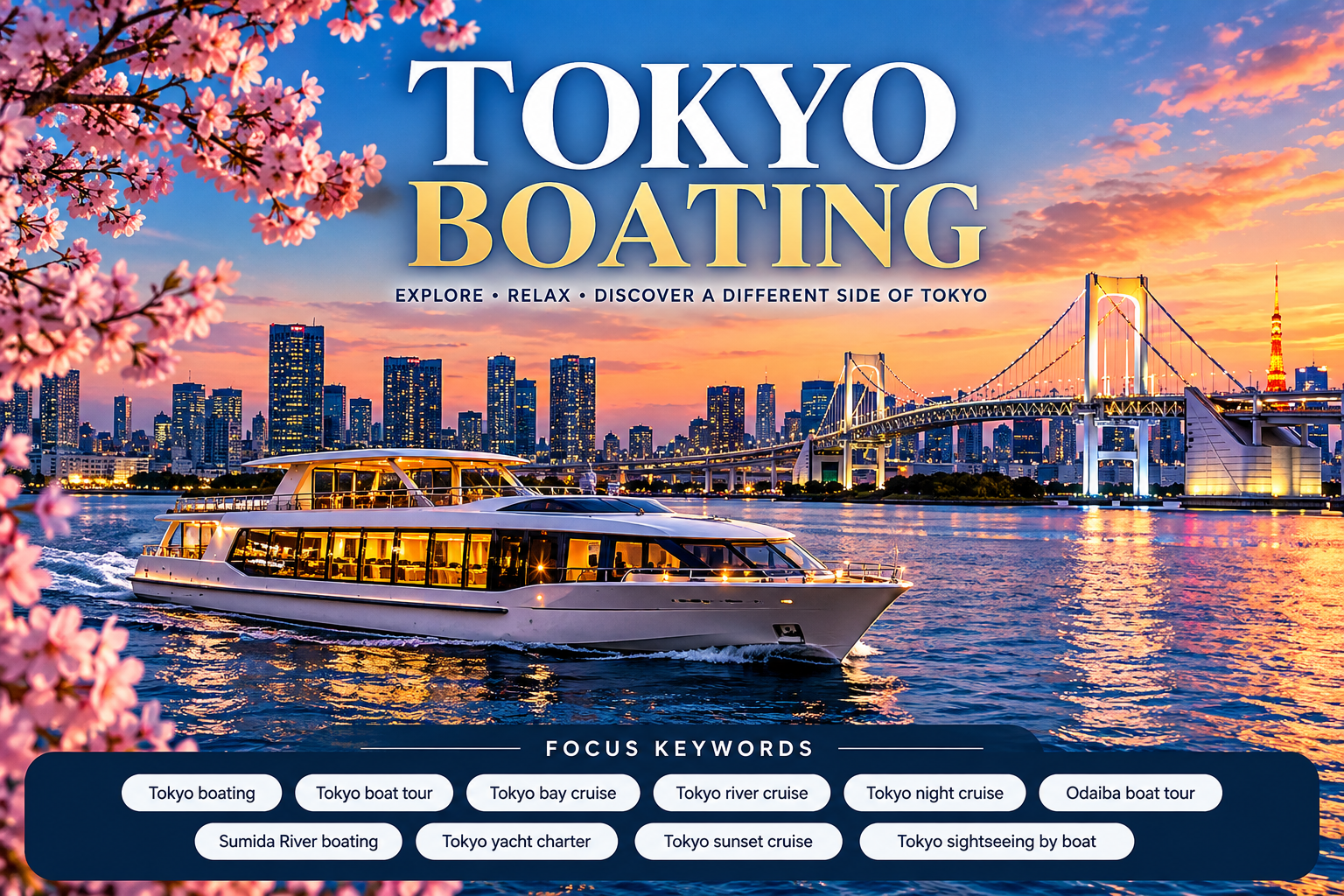
Tokyo Bay cruises offer a broader view of the city’s waterfront. Depending on the route, passengers may see Rainbow Bridge, Odaiba, port infrastructure and the surrounding metropolitan skyline.
These trips are especially appealing to visitors who enjoy panoramic city views and photography.
Traditional Yakatabune Boats
A yakatabune is a traditional Japanese pleasure boat associated with dining, social gatherings and sightseeing. Modern experiences may include Japanese meals, seasonal dishes, drinks and evening views.
Unlike a short waterbus journey, a yakatabune cruise is often designed as a complete leisure experience.
Seasonal Boat Trips
Seasonal services can offer special scenery, including cherry blossoms along selected riverside routes. Certain operators also provide experiences associated with local festivals or waterfront events.
These trips require more planning because the scenery, schedule and demand may depend on the time of year.
Private Charters and Active Water Adventures
Selected operators offer private boat experiences for groups, celebrations and customised outings. Guided kayaking may also be available on suitable waterways.
These activities require closer attention to safety arrangements, passenger capacity, weather restrictions and booking conditions.
10 Best Tokyo Boating Experiences to Consider
1. Sumida River Sightseeing Cruise
The Sumida River is one of Tokyo’s most recognisable waterways and a strong starting point for visitors interested in urban sightseeing.
A cruise along this river reveals a changing landscape of bridges, riverside buildings and neighbourhoods. Depending on the service, journeys may connect areas such as Asakusa and Hinode Pier, making the boat trip useful for both sightseeing and transportation.
Asakusa is particularly convenient because visitors can explore its historic streets and temple district before heading towards the river. From the water, the surrounding city looks different from the view experienced on foot.
The Sumida River also offers opportunities to observe the relationship between Tokyo’s older districts and modern architecture. The Tokyo Skytree area provides a recognisable reference point on selected journeys, although the exact view depends on the route.
Why choose this experience?
- It provides a straightforward introduction to Tokyo boating.
- It can fit into a half-day sightseeing itinerary.
- It combines urban scenery with historic surroundings.
- It may connect with other attractions, depending on the operating service.
Best for: First-time visitors, solo travellers, families and general sightseeing enthusiasts.
2. Asakusa to Odaiba Waterbus
A waterbus journey between Asakusa and Odaiba can connect two contrasting sides of Tokyo.
Asakusa is known for traditional streets, temples and historic atmosphere. Odaiba, by contrast, is associated with contemporary architecture, waterfront attractions and modern leisure developments.
The journey can provide views of bridges, riverside buildings and the transition from the Sumida River towards Tokyo Bay.
However, direct routes and operating schedules can change. Travellers should confirm that the desired service is running on their selected date before building an itinerary around it.
Why choose this experience?
- It combines transportation with sightseeing.
- It provides a different perspective on Tokyo’s urban geography.
- It can reduce the need for separate transport between selected waterfront destinations.
- It offers a useful contrast between historic and contemporary Tokyo.
Best for: Travellers who want to combine Asakusa sightseeing with a visit to Odaiba.
3. Tokyo Bay Sightseeing Cruise
Tokyo Bay provides a broader perspective than the city’s inland rivers. Depending on the itinerary, passengers may see Rainbow Bridge, waterfront developments, port facilities and the metropolitan skyline.
The scenery is particularly appealing to travellers interested in architecture and the scale of Tokyo’s coastal development.
A harbour cruise can also reveal the practical importance of the bay. It is not simply a tourist attraction but part of a wider maritime environment that supports transportation, commerce and urban activity.
When comparing Tokyo Bay cruises, check whether the route passes the landmarks you want to see. Not every cruise advertised as a bay experience follows the same course.
Consider the following before booking:
- Whether Rainbow Bridge is included in the route.
- Whether the boat has an outdoor viewing deck.
- Whether the journey is circular or point-to-point.
- Whether commentary is available in English.
- Whether the cruise operates during daylight or evening hours.
Best for: Couples, photographers, architecture enthusiasts and visitors seeking panoramic waterfront views.
4. Traditional Yakatabune Dinner Cruise
Traditional yakatabune boats provide one of the most distinctive cultural experiences associated with Tokyo boating.
These pleasure boats are traditionally connected with dining and social gatherings. Modern cruises may feature Japanese dishes, tempura, seasonal food, drinks and views of the illuminated city.
The experience is different from taking a conventional waterbus. Rather than concentrating solely on reaching another destination, passengers often spend the journey enjoying the meal, atmosphere and scenery.
Some operators offer shared departures, while others provide private arrangements for groups or special occasions. Menus, entertainment and seating vary by provider.
Before reserving a dinner cruise, check whether the fare includes food, whether drinks cost extra, whether dietary requirements can be accommodated and how long the trip lasts.
Best for: Couples, families, cultural travellers and groups celebrating a special occasion.
5. Tokyo Night Cruise
Tokyo’s waterfront takes on a different character after sunset. Illuminated buildings, bridges and reflections across the water create an atmosphere that contrasts with the busy streets of the daytime city.
A night cruise can be an appealing way to finish a day of sightseeing. Instead of navigating crowded pedestrian areas, passengers can relax while viewing selected parts of the skyline from the water.
Some evening cruises focus on sightseeing, while others combine the journey with dinner or entertainment. The route, duration and onboard facilities vary.
Photography enthusiasts should check whether outdoor deck access is available. Windows can be comfortable in cold weather, but reflections may make night photography more difficult.
Best for: Couples, evening photographers and travellers seeking a relaxed sightseeing experience.
6. Cherry Blossom Boat Cruise
Spring boating can be particularly memorable when cherry blossoms appear along Tokyo’s rivers and parks.
The Sumida River area is associated with cherry blossom scenery, and a boat trip can provide a different view of flowering trees along the riverbanks. The experience combines seasonal landscapes with the city’s urban architecture.
However, cherry blossom timing changes from year to year. A trip planned too early or too late may not coincide with peak flowering.
For a better experience, monitor seasonal forecasts, check whether the operator is running a special blossom service and allow flexibility in your travel plans.
Useful planning tips include:
- Reserve popular seasonal departures early.
- Check local flowering forecasts before travelling.
- Choose daylight hours for blossom photography.
- Confirm the route passes the relevant riverside areas.
- Review cancellation arrangements if the weather changes.
Best for: Nature lovers, photographers and visitors travelling during spring.
7. Private Tokyo Boat Charter
A private charter offers a more personalised boating experience. Depending on the vessel and operator, it may be suitable for sightseeing, family outings, photography, celebrations or corporate gatherings.
The main advantage is greater control over the experience. Some operators allow customers to select a departure time, request a suitable route or arrange onboard services.
However, private charters remain subject to navigation rules, weather, passenger limits and operational restrictions. Not every requested route or activity will necessarily be possible.
Compare the total charter cost with the number of passengers and check whether food, drinks, fuel-related charges or additional services are included.
Best for: Families, groups, private celebrations and travellers seeking a tailored experience.
8. Tokyo Waterfront Photography Cruise
Tokyo’s waterways provide interesting opportunities for architectural and travel photography.
From a boat, bridges, buildings and the skyline appear from angles that are difficult to achieve on land. The scenery also changes continuously, creating different compositions as the vessel moves along the route.
Daytime journeys are useful for photographing architectural details and urban infrastructure. Evening trips can provide illuminated skylines and reflections.
A dedicated photography cruise is not essential. An ordinary sightseeing service may be suitable if its route and departure time match your objectives.
Photography tips include:
- Secure your camera or phone with a strap.
- Use a sufficiently fast shutter speed on a moving boat.
- Protect equipment from rain and water spray.
- Avoid blocking other passengers’ views.
- Check whether tripods are permitted.
- Follow crew instructions on outdoor decks.
Best for: Travel bloggers, photographers, architecture enthusiasts and content creators.
9. Family-Friendly Tokyo Boat Trip
A boat journey can introduce variety into a family itinerary without requiring extensive walking.
Children may enjoy watching bridges pass overhead, spotting other boats and seeing familiar landmarks from the river. A short sightseeing service can also make a transfer between districts feel like an activity in its own right.
Families should compare the practical facilities available on each vessel. Check whether toilets, appropriate seating and stroller arrangements are available and whether children qualify for discounted fares.
For younger children, shorter daytime trips may be easier than long dinner cruises. Parents should also check the operator’s safety guidance and any age-related restrictions.
Best for: Families with children, multigenerational groups and visitors seeking a relaxed activity.
10. Kayaking and Active Water Adventures
Tokyo boating is not limited to passenger cruises. Selected operators provide guided kayaking and paddling experiences on suitable waterways.
These trips appeal to travellers who want a more active outdoor experience and an opportunity to observe the city from closer to the water.
Availability depends on the specific waterway, season, weather and operator. Urban waterways may contain commercial traffic, currents or restricted areas, so beginners should not assume that every river or canal is suitable for recreational paddling.
Choose a guided experience that supplies appropriate safety equipment and clear instructions. Confirm the age requirements, swimming expectations, weather policy and cancellation arrangements.
Best for: Active travellers, outdoor enthusiasts and visitors who want an alternative to conventional sightseeing.
Best Places to Experience Tokyo Boating
Asakusa and the Sumida River
Asakusa is a practical starting point for visitors who want to combine traditional sightseeing with a river journey.
The area offers historic streets, temples and local shops, while the nearby riverfront provides access to selected sightseeing services.
A boat trip can fit naturally into a half-day itinerary. Visitors can explore the district on foot, enjoy a meal and then continue their sightseeing from the water.
Odaiba Waterfront
Odaiba is known for modern architecture, waterfront leisure and wide views across Tokyo Bay.
A boating experience can be combined with a walk along the waterfront, shopping or a visit to a local attraction. Evening visitors may enjoy the area’s atmosphere before or after a suitable cruise.
Check the precise pier location before travelling because a departure point may not be directly beside the attraction you are visiting.
Hinode Pier
Hinode Pier is an important departure and arrival point for selected Tokyo waterbus routes.
Its location can make it useful for connecting river sightseeing with other parts of the waterfront. However, the available destinations depend on the service operating on the selected date.
Travellers should verify the timetable and any intermediate stops rather than assuming every boat follows the same route.
Hama-rikyu Gardens
Hama-rikyu Gardens offers traditional Japanese landscape design surrounded by modern urban development.
Where an appropriate boat service is available, visitors may combine a river journey with a garden visit. Check whether your cruise includes a stop and whether a separate garden admission fee applies.
Tokyo Bay and Rainbow Bridge
Rainbow Bridge is one of Tokyo’s best-known waterfront landmarks.
Certain cruises provide views of the bridge and surrounding skyline, but viewing angles depend on the vessel’s route. If the bridge is a priority, check the itinerary rather than relying solely on a general description of the cruise.
Best Time to Go Boating in Tokyo
Spring: March to May
Spring is popular for sightseeing and seasonal landscapes. Cherry blossom cruises can be especially attractive, although the best flowering dates vary each year.
The main disadvantage is seasonal demand. Popular departures may sell out, and some specialised services operate only during a limited period.
Summer: June to August
Summer offers longer daylight hours and opportunities for evening cruises. Certain waterfront events and fireworks displays may also influence seasonal boating schedules.
However, Tokyo can be hot and humid, and rain, thunderstorms or typhoons can affect operations.
Bring sun protection for daytime journeys, check the weather forecast and confirm the operator’s cancellation policy.
Autumn: September to November
Autumn can offer comfortable sightseeing conditions and seasonal colours in selected parks and riverside areas.
September may still bring significant storm risks. Later autumn often requires warmer clothing, particularly for exposed evening decks.
Winter: December to February
Winter cruises can provide clear skyline views on suitable days. Evening trips may feel atmospheric when the city is illuminated.
Dress in layers and check whether the boat has an enclosed cabin. Wind across the water can make conditions feel colder than they do on land.
Daytime or Nighttime: Which Is Better?
| Feature | Daytime cruise | Night cruise |
|---|---|---|
| Main attraction | Architecture, bridges and riverside details | Illuminated buildings and reflections |
| Photography | Urban details and seasonal landscapes | Skyline and evening atmosphere |
| Comfort | Easier visibility | May be colder and windier |
| Typical purpose | Sightseeing and transportation | Leisure and evening outings |
| Best suited for | First-time visitors and families | Couples and evening photographers |
Neither option is universally better. If your schedule allows, consider a daytime river cruise and a separate evening waterfront experience.
How Much Does Tokyo Boating Cost?
Tokyo boating prices depend on the vessel, duration, route, season and included services.
A scheduled sightseeing waterbus is generally a different purchase from a traditional dinner cruise or private charter. Dinner packages may include food, drinks or entertainment, while some sightseeing tickets cover only the journey.
For budgeting purposes, compare the following categories rather than assuming one fixed fare applies to all experiences.
| Experience Tokyo boating | Relative cost Tokyo boating | Main purpose Tokyo boating |
|---|---|---|
| Short river sightseeing trip | Low | Quick introduction to Tokyo waterways |
| Waterbus between districts | Low to moderate | Transportation and sightseeing |
| Tokyo Bay sightseeing cruise | Moderate | Panoramic waterfront views |
| Traditional dinner cruise | Moderate to high | Dining and cultural experience |
| Private charter | High | Groups and customised outings |
| Guided kayaking | Moderate | Active outdoor adventure |
| Special-event cruise | Variable, often higher | Seasonal or event-based sightseeing |
These categories are relative comparisons, not verified current prices.
How to Save Money on Tokyo Boat Trips
- Choose a scheduled sightseeing boat instead of a private charter.
- Compare one-way journeys with return tickets.
- Check whether children qualify for discounted fares.
- Confirm whether meals and drinks are included.
- Book seasonal experiences early when availability matters.
- Compare the total package price rather than the advertised starting fare.
- Choose a shorter cruise if you mainly want to see Tokyo from the water.
A low-cost waterbus may offer the best value for sightseeing, while a dinner cruise may be worthwhile if the meal and onboard atmosphere are central to your plans.
10 Tokyo Boating Brands and Operators Compared
Tokyo’s boating industry includes scheduled sightseeing services, water taxis, charter providers and traditional pleasure-boat operators. These services are not all direct substitutes, so compare them according to the experience you want.
The following names provide a starting point for researching Tokyo boating options. Confirm the current services, routes, booking conditions and operating status with each provider before making a decision.
| Brand or operator Tokyo boating | Main experience to investigate | Best suited for |
|---|---|---|
| 1. Tokyo Cruise | Scheduled sightseeing waterbuses | First-time visitors |
| 2. Tokyo Mizube Cruising Line | River and waterfront cruises | River sightseeing |
| 3. The Cruise Club Tokyo | Urban cruise experiences | Visitors seeking variety |
| 4. Zeal Cruise | Sightseeing and charter experiences | Groups and special outings |
| 5. Tokyo Water Taxi | Flexible water transportation | Private journeys |
| 6. Urban Launch | Urban waterfront boat experiences | City sightseeing |
| 7. KMC Corporation | Cruise and boat services | Visitors comparing providers |
| 8. Sealine Tokyo | Waterfront cruising | Harbour and city views |
| 9. Tokyo Bay Cruising | Tokyo Bay-oriented cruise experiences | Panoramic sightseeing |
| 10. Tokyo Yakatabune Association | Traditional pleasure-boat experiences through member operators | Dining and cultural cruises |
How to Choose Between the Operators Tokyo boating
For straightforward sightseeing: Compare Tokyo Cruise and Tokyo Mizube Cruising Line. Check the route, departure pier, ticketing arrangements and timetable for your chosen date.
For traditional Japanese dining: Investigate the Tokyo Yakatabune Association and compare individual operators’ menus, cruise lengths, group requirements and booking conditions.
For private outings: Compare providers that offer suitable charters. Confirm vessel capacity, route, duration, onboard services and total cost.
For Tokyo Bay scenery: Compare actual route maps and check whether the landmarks you want to see are included.
An important distinction is that an association may represent individual operators rather than operate every vessel itself. Confirm the company responsible for providing your selected cruise.
Tokyo Boating for Different Travellers and Needs
Tokyo Boating for First-Time Visitors
First-time visitors should consider a short scheduled river cruise. It introduces the city from the water without requiring extensive planning or a large time commitment.
Choose a route that fits your existing itinerary and connects conveniently with areas you already intend to visit.
Tokyo Boating for Couples
Couples may prefer an evening cruise, an illuminated waterfront route or a traditional dinner aboard a yakatabune.
Consider whether you want a quiet sightseeing journey, a full meal or a special-occasion experience. Check seating arrangements and whether the boat is shared with other passengers.
Tokyo Boating for Families With Children
Families should prioritise duration, safety arrangements, toilet access, seating and stroller facilities.
A shorter daytime cruise may be easier to manage than a long dinner excursion, particularly with younger children.
Tokyo Boating for Solo Travellers
Solo visitors can enjoy scheduled sightseeing services without organising a group. A waterbus can also make travel between selected districts more interesting.
For dinner cruises, check whether individual reservations are accepted or whether a minimum group size applies.
Tokyo Boating for Photography Enthusiasts
Choose a route based on your preferred subjects, such as historic bridges, Tokyo Skytree, Rainbow Bridge or the wider skyline.
An outdoor viewing deck may offer clearer photographs than a window, but the best choice depends on weather and onboard rules.
Tokyo Boating for Travellers With Limited Mobility
Accessibility varies by vessel and boarding pier. Some services offer accessibility features, but these should never be assumed for every operator.
Check boarding ramps, step-free access, wheelchair spaces, accessible toilets and the distance between the station and pier. Contact the operator if you require assistance.
Tokyo Boating for Budget-Conscious Travellers
A scheduled sightseeing waterbus may provide an affordable way to enjoy the waterfront without paying for a meal or private charter.
Compare the fare with alternative transport, but remember that a cruise’s main value may be the scenery rather than speed.
How to Plan a Tokyo Boating Trip Step by Step
Step 1: Choose Your Main Objective Tokyo boating
Decide what you want from the experience before comparing tickets.
- Choose a river cruise for historic and urban scenery.
- Choose a Tokyo Bay route for broader harbour views.
- Choose a yakatabune for traditional dining.
- Consider an evening cruise for illuminated buildings.
- Investigate guided kayaking for an active experience.
A clear objective makes it easier to identify suitable routes.
Step 2: Choose the Departure Pier Tokyo boating
The departure point can influence your entire itinerary. Asakusa, Hinode and Odaiba are associated with different services, and not every cruise starts at the same location.
Check the exact pier name and leave enough time to reach the boarding area, particularly if you are unfamiliar with the station exits.
Step 3: Check the Route and Duration Tokyo boating
Read the itinerary carefully. Similar cruise descriptions may refer to different journeys.
Check the departure and arrival locations, intermediate stops, sailing time, return arrangements, outdoor deck access, commentary languages and onboard inclusions.
A one-way cruise may be useful for reaching another district, while a circular cruise is more appropriate if you want to return to the starting point.
Step 4: Compare the Full Price Tokyo boating
Include transportation to the pier, the cruise fare, meals, optional extras and onward travel in your budget.
For a private charter, establish whether the price is per person, per hour or for the entire vessel.
Step 5: Book at the Right Time Tokyo boating
Advance reservations are particularly useful for seasonal cruises, dinner boats and special-event departures.
For ordinary sightseeing services, check whether tickets can be purchased at the pier or whether advance booking is required.
Step 6: Check Weather and Operating Status Tokyo boating
Boats may be delayed, rerouted or cancelled because of weather, tides, safety requirements or waterfront events.
Check the operator’s latest operating information on the day of your trip and understand the cancellation or refund policy.
Step 7: Arrive Early Tokyo boating
Allow enough time to locate the boarding point, collect tickets if necessary and follow staff instructions.
For a reserved dinner cruise, follow the operator’s check-in guidance. Missing a scheduled departure can be more difficult to resolve than missing an ordinary train.
Step 8: Prepare for Conditions on the Water Tokyo boating
Bring a light jacket, suitable footwear and protection for your phone or camera. Wind may feel stronger on an exposed deck than on nearby streets.
Follow safety instructions, remain within permitted passenger areas and avoid leaning over railings to take photographs.
A Sample One-Day Tokyo Boating Itinerary
Morning: Explore Asakusa Tokyo boating
Begin with a walk through Asakusa and visit its historic streets and temple area. Allow time for breakfast, photographs and browsing local shops.
Keep the morning flexible so you can reach the pier without rushing.
Late Morning: Take a Sumida River Cruise Tokyo boating
Choose a scheduled river service from Asakusa if a suitable departure is operating.
A journey towards Hinode Pier or another available destination provides an introduction to Tokyo’s waterways. If you intend to visit Hama-rikyu Gardens, confirm that the selected service stops there and check the garden’s opening arrangements.
Afternoon: Explore the Waterfront Tokyo boating
Continue to Odaiba or another waterfront district accessible from your chosen route. Enjoy a walk, visit an attraction or take a break at a café.
If your preferred direct waterbus service is unavailable, use rail transportation instead of building the entire itinerary around an unconfirmed departure.
Evening: Enjoy a Night Cruise or Waterfront Dinner Tokyo boating
Finish with an evening sightseeing cruise or a traditional yakatabune dinner, depending on your budget and interests.
Avoid scheduling two lengthy cruises too close together. One well-chosen experience may be more enjoyable than spending too much of the day travelling between piers.
Common Tokyo Boating Mistakes and How to Avoid Them
Assuming Every Cruise Runs Daily Tokyo boating
Some routes operate on limited schedules, while others change according to the season or day of the week.
Solution: Verify the departure time, operating date and current service status before travelling.
Choosing a Cruise Without Checking Its Route Tokyo boating
A boat advertised as a Tokyo Bay cruise may not pass the landmark you want to photograph.
Solution: Review the route map and confirm key sights before booking.
Confusing a Waterbus With a Dinner Cruise Tokyo boating
A waterbus is primarily a scheduled transportation or sightseeing service. A traditional dinner cruise is usually a longer leisure experience with different inclusions and pricing.
Solution: Decide whether you want transportation, scenery, dining or a combination of these.
Ignoring the Return Journey Tokyo boating
A one-way cruise may leave you in a different district from where you started. The nearest train station may also require a walk from the pier.
Solution: Plan onward transport in advance and check the final departure if you intend to return by water.
Booking a Seasonal Trip Too Late Tokyo boating
Cherry blossom cruises and special-event departures can be popular, while availability may be limited.
Solution: Research the seasonal schedule early and remain flexible around weather and flowering dates.
Underestimating the Weather Tokyo boating
Wind and rain can make an exposed deck uncomfortable. Poor conditions may also affect operations.
Solution: Bring appropriate clothing and review the cancellation and refund policy.
Forgetting Food and Accessibility Requirements Tokyo boating
Not every vessel offers the same menu, toilet facilities or step-free access.
Solution: Confirm your requirements directly with the operator before paying.
Pros and Cons of Tokyo Boating
Advantages of Tokyo Boating
Tokyo boating provides a different perspective on the city, revealing riverside scenery and architectural features that are easy to overlook from street level.
It can be a relaxing way to enjoy sightseeing without walking long distances. Traditional pleasure boats introduce elements of Japanese dining and hospitality, while evening cruises offer distinctive photography opportunities.
The range of experiences is another advantage. Visitors can choose a short sightseeing journey, a longer harbour cruise, a private charter or a guided paddling experience.
Selected scheduled services also connect sightseeing districts, allowing passengers to combine transportation and leisure.
Disadvantages of Tokyo Boating
The main disadvantage is dependence on weather and operating schedules. Some services have limited departures, and popular seasonal trips may require advance reservations.
Accessibility also varies between vessels, and private charters or dinner cruises can cost considerably more than ordinary sightseeing services.
Boating offers less flexibility than walking because passengers generally cannot leave whenever they choose. Travellers who want to move quickly between destinations may find trains more practical.
Is Tokyo Boating Worth It?
For most visitors interested in sightseeing, a short river cruise is worth considering because it adds variety to a Tokyo itinerary. It is particularly appealing if you enjoy architecture, photography or waterfront scenery.
A more expensive dinner cruise is worthwhile when the onboard meal, cultural atmosphere and evening views are important to you. If your only objective is to reach another neighbourhood quickly, a train may be the better option.
The best experience is the one that matches your travel purpose, budget and available time.
Future Trends in Tokyo Boating
More Sustainable Waterfront Tourism
Environmental awareness is likely to remain an important consideration for urban tourism. Electric propulsion, improved vessel efficiency and better waste management may help some operators reduce their environmental impact.
Progress depends on vessel design, infrastructure, energy sources and operating requirements. Travellers should look for specific environmental information rather than assuming every modern boat is environmentally friendly.
Digital Booking and Better Trip Planning
Online reservations, mobile ticketing and real-time service updates make it easier for international visitors to organise their journeys.
Further improvements could include clearer multilingual information, integrated route planning and better coordination between water transport and other public transportation.
Personalised Private Cruises
Private charters can accommodate different group sizes and travel objectives. Interest in tailored experiences may encourage operators to develop more specialised options for photography, family outings and celebrations.
More Accessible Boating Experiences
Improved access for older travellers, families and passengers with disabilities could make waterfront tourism more inclusive.
Useful developments include better boarding arrangements, clearer accessibility information and more consistent facilities across vessels. Availability will continue to depend on the operator and boat.
Technology-Enhanced Sightseeing
Digital commentary, multilingual audio guides and onboard information displays can help visitors understand the history and architecture of the areas they pass.
The greatest opportunity is to make the experience more informative without distracting passengers from the scenery.
FAQs
Is Tokyo boating worth trying?
Yes. Tokyo boating offers a different perspective on the city, including river bridges, historic districts, modern architecture and harbour scenery. It is particularly worthwhile for visitors interested in sightseeing, photography or Japanese cultural experiences.
What is the best boat cruise in Tokyo for first-time visitors?
A Sumida River sightseeing cruise is a good starting point because it combines urban scenery with access to areas such as Asakusa. If you want broader waterfront views, consider a suitable Tokyo Bay route.
Can you take a boat from Asakusa to Odaiba?
Tokyo has offered direct sightseeing waterbus connections between Asakusa and Odaiba. Routes and operating schedules can change, so check the current service timetable before planning your journey.
How long does a Tokyo boat cruise take?
Short sightseeing trips may take around 40 minutes, while longer journeys and harbour excursions can take more time. Traditional yakatabune dining cruises commonly last approximately two to two-and-a-half hours, depending on the operator and package.
What is a yakatabune boat?
A yakatabune is a traditional Japanese pleasure boat used for dining, sightseeing and social gatherings. Modern experiences may include Japanese cuisine, drinks, illuminated city views and optional entertainment.
How much does a Tokyo boat cruise cost?
Prices depend on the route, duration, operator and included services. Scheduled sightseeing trips are generally more economical than dining cruises or private charters. Check current fares directly with the operator.
What is the best time of day for Tokyo boating?
Daytime is useful for viewing architectural details and seasonal scenery, while evening trips offer illuminated buildings and reflections across the water. Choose according to your interests and the operating schedule.
When is the best season for Tokyo boating?
Spring is popular for cherry blossoms, summer offers longer days, autumn can provide comfortable sightseeing conditions, and winter may offer clear skyline views. Weather and operating schedules should influence your final choice.
Can you enjoy Tokyo boating with children?
Yes. Many sightseeing boats are suitable for family outings, but facilities vary. Check child fares, toilet access, stroller arrangements, seating and age restrictions before booking.
Are Tokyo boat cruises suitable for solo travellers?
Yes. Scheduled sightseeing cruises are convenient for solo visitors. For dining cruises, check whether individual passengers can book shared departures or whether a minimum group size applies.
Conclusion
Tokyo boating is an enjoyable way to experience Japan’s capital beyond its busy streets and famous railway network. From the historic atmosphere of the Sumida River to the expansive scenery of Tokyo Bay, the city’s waterways offer a combination of culture, architecture, relaxation and photography. For first-time visitors, a short river sightseeing cruise is a practical introduction. Travellers interested in Japanese traditions may prefer a yakatabune dinner, while couples and photography enthusiasts may enjoy the illuminated waterfront after dark. Families can look for shorter journeys with convenient facilities, and active travellers can explore guided paddling experiences on suitable waterways.