Tokyo Education: A Complete Guide to Schools, Universities and Studying in Japan
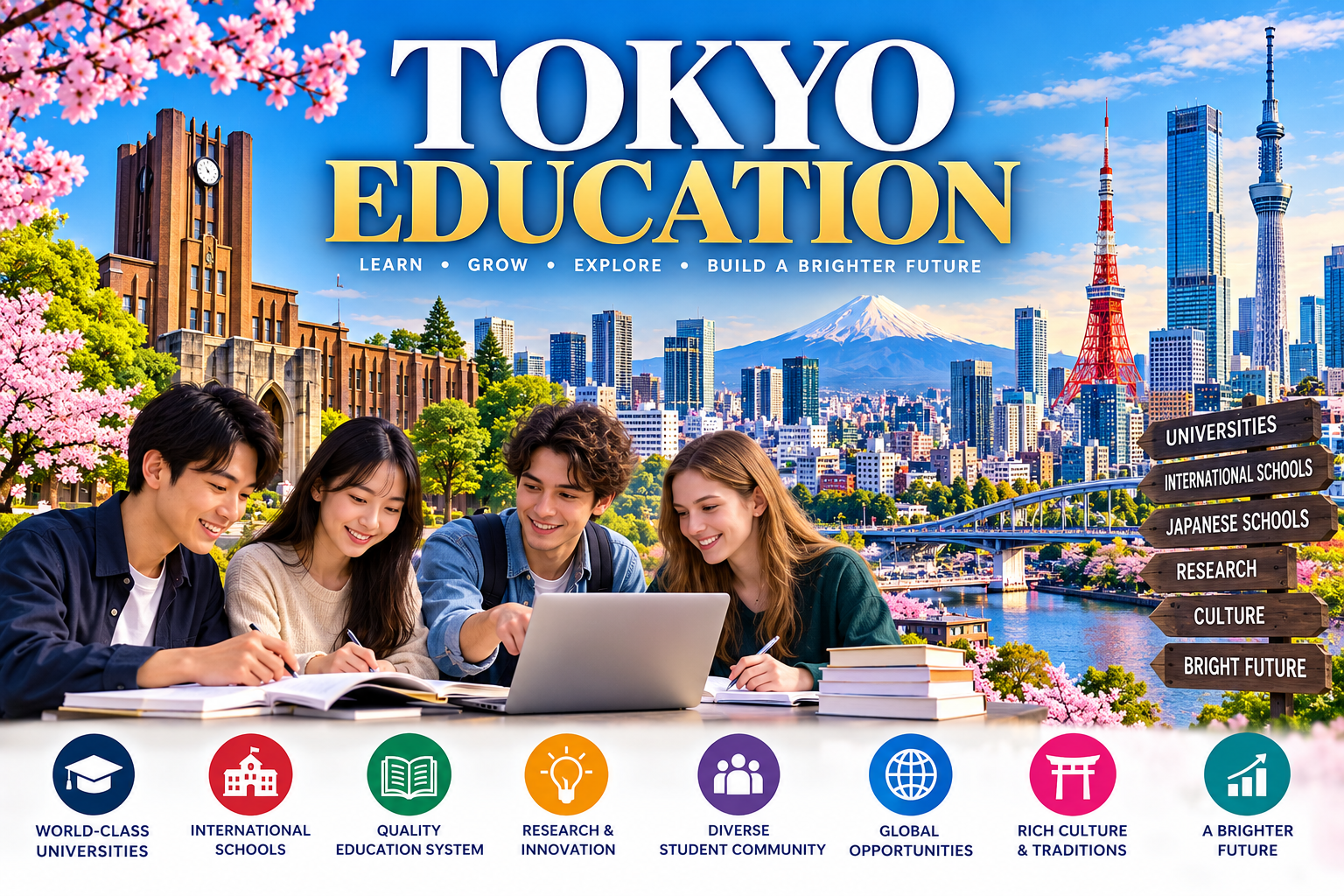
What makes Tokyo an attractive destination for students, parents and international families seeking educational opportunities? The answer lies in its combination of established universities, modern research facilities, diverse school systems, advanced technology and a distinctive approach to learning. Tokyo education encompasses a broad range of opportunities, including Japanese public schools, private institutions, international schools, vocational colleges and globally recognised universities. Whether you are a parent choosing a school, an international student planning to study in Japan or a researcher exploring higher education, understanding Tokyo’s education system can help you make informed decisions Tokyo Landscapes
Understanding the Education System in Tokyo
How Japan’s Education System Is Structured
Japan generally follows a 6-3-3-4 education structure: six years of elementary school, three years of lower secondary school, three years of upper secondary school and typically four years for an undergraduate university degree.
Compulsory education covers elementary and lower secondary schooling, normally from around age six through age fifteen. Upper secondary school is not compulsory under the national system, although participation is widespread.
Tokyo follows Japan’s national education framework while also offering a wide range of private, international and specialised educational institutions.
The main stages are outlined below.
|
Education stage |
Typical age | Usual duration |
|---|---|---|
| Kindergarten or preschool | 3–5 |
Varies |
| Elementary school | 6–12 | 6 years |
| Lower secondary school | 12–15 | 3 years |
| Upper secondary school | 15–18 | 3 years |
| University undergraduate degree | 18+ | Usually 4 years |
| Master’s degree | After undergraduate study | Usually 2 years |
| Doctoral degree | After relevant postgraduate study | Varies |
These ages are approximate. Admission dates, previous schooling, individual circumstances and programme requirements can affect a student’s pathway.
Public and Private Education in Tokyo
Tokyo offers both public and private schools. Public schools operate within Japan’s education framework, while private schools may offer different educational environments, specialised programmes or distinctive institutional traditions.
Public elementary and lower secondary schools are generally organised according to a student’s residential area. Families moving to Tokyo should therefore investigate school assignment, local registration and the language support available in their municipality.
Private schools may use their own admission procedures and entrance examinations. Some have highly structured academic programmes, while others place particular emphasis on language learning, international education or specialised interests.
The right choice depends on a family’s priorities, budget, language needs and plans for the future.
The Academic Calendar
Many Japanese schools and universities begin their academic year in April. The school year typically runs through the following March, although university programmes and international institutions may offer additional entry points.
Japanese schools commonly organise the year into terms or semesters, with holidays that vary by institution and local arrangements.
International schools may follow a calendar that more closely resembles systems used in other countries, including August or September starts.
Families relocating to Tokyo should check the exact academic calendar rather than assume that all institutions use the same dates.
Early Childhood Education in Tokyo
Nursery Schools and Childcare
Early childhood education and childcare are important considerations for families living in Tokyo.
Nursery facilities provide childcare for younger children, often supporting working parents. Admission, availability, eligibility and fees depend on the type of facility, household circumstances and local government arrangements.
In busy residential districts, childcare demand can be an important factor when choosing where to live.
Parents should investigate application deadlines, eligibility rules, daily schedules, meal arrangements and whether a facility offers support for children who are learning Japanese.
Kindergartens and Preschool Learning
Kindergartens generally serve children before elementary school. Programmes may emphasise social development, play, communication, routines and preparation for primary education.
Private kindergartens can differ considerably in their approach. Some provide conventional Japanese-language education, while others may offer bilingual or internationally oriented environments.
Parents should consider whether the educational philosophy matches their expectations and whether the child will eventually enter a Japanese public school, a private Japanese school or an international school.
Choosing an Early Learning Environment
When comparing childcare and preschool options, consider more than the school’s reputation.
Useful questions include:
-
What languages are used throughout the day?
-
How are children supported when they struggle to communicate?
-
What are the staff-to-child arrangements?
-
Are meals, transport or extended childcare included?
-
How does the school communicate with parents?
-
What are the admission criteria and total costs?
A supportive environment during the early years can help children build confidence, develop social skills and adjust to a new language or culture.
Elementary and Secondary Education in Tokyo
Elementary School Education
Elementary education in Japan typically covers six years. Students develop foundational skills in Japanese, mathematics, science, social studies and other subjects, alongside physical education, arts and practical activities.
Japanese schools may also place emphasis on classroom routines, group responsibilities, cooperation and participation in school activities.
For children arriving from overseas, the transition can involve learning new academic expectations as well as a new language.
Parents should ask schools how they assess students who have limited Japanese proficiency and whether additional language assistance is available.
Lower Secondary School
Lower secondary education generally covers ages twelve to fifteen. Academic subjects become more demanding, and students begin preparing for future educational pathways.
Assessment, school attendance and preparation for upper secondary admission become increasingly important.
Students who are new to Japan may need support with subject-specific vocabulary, written Japanese and the expectations associated with examinations.
Upper Secondary School
Upper secondary schools offer different academic pathways. Some emphasise preparation for university entrance, while others provide vocational or specialised programmes.
Admission requirements vary, and entrance examinations may be important for many schools.
Students should compare curriculum, subject options, school location, support services and future progression rather than focusing exclusively on reputation.
School Life and Extracurricular Activities
School life in Tokyo can include sports clubs, cultural activities, music, arts, student committees and school events.
Extracurricular activities can help students develop friendships, practise communication and discover interests beyond academic study.
However, the time commitment varies by school and activity. Families should understand the schedule, costs and expectations before choosing a programme.
International Schools in Tokyo
What Is an International School?
International schools generally provide education for students from a variety of national backgrounds. Depending on the institution, instruction may be in English or another language, and the curriculum may follow an international or foreign national framework.
Some schools offer the International Baccalaureate, while others use different programmes. Admission requirements, language expectations, grade structures and graduation qualifications vary.
International schools can be particularly relevant for families who expect to move between countries or want their children to study in a language other than Japanese.
Benefits of International Education
International schools may offer:
-
English-medium or multilingual instruction.
-
Internationally recognised curricula at participating institutions.
-
Diverse student communities.
-
Educational continuity for internationally mobile families.
-
University preparation for study in Japan or overseas.
-
Learning environments designed for students from different cultural backgrounds.
These benefits depend on the individual school. Families should examine actual programme offerings, accreditation, teaching support and student outcomes rather than assuming all international schools provide identical opportunities.
Challenges of International Schools
International education can involve substantial tuition and additional costs for uniforms, transport, meals, activities and application fees.
Places may be limited, particularly at popular year levels. Some schools also have waiting lists or specific admission priorities.
Another consideration is integration into Japanese society. A student who studies primarily in English may need additional opportunities to develop Japanese language skills and connect with local communities.
How to Choose an International School
Before applying, parents should check:
-
Curriculum and accreditation.
-
Language of instruction.
-
Admission criteria and available places.
-
Tuition and additional expenses.
-
Class sizes and learning support.
-
University progression pathways.
-
Transport arrangements and daily schedules.
-
Opportunities to learn Japanese.
-
School policies for students joining midyear.
-
The institution’s approach to student wellbeing.
A school visit or conversation with admissions staff can help families understand how the institution operates in practice.
Higher Education in Tokyo
Why Tokyo Is an Important University Destination
Tokyo is a major centre for higher education, research and professional development. Its universities operate in a large metropolitan environment with connections to companies, research organisations, hospitals, cultural institutions and public services.
Students can find programmes in engineering, computing, business, economics, medicine, social sciences, humanities, design and many other fields.
The city also offers opportunities to explore Japanese language and culture while studying in a highly urban environment.
However, university selection should be based on the specific programme rather than the city alone. Teaching language, faculty expertise, admissions requirements, research opportunities and graduate outcomes can vary substantially between departments.
Undergraduate Degrees
Undergraduate programmes in Japan commonly take four years, although some professional degrees, including certain medical programmes, have different durations.
Students may need to complete entrance examinations, academic assessments, language requirements or interviews. Requirements differ by university and course.
International applicants should check whether the institution accepts overseas qualifications directly, requires additional examinations or provides a preparatory pathway.
Master’s Degrees
Master’s programmes commonly take around two years, although duration depends on the field and structure of the course.
Students may study advanced theory, complete research projects, conduct laboratory work or prepare a dissertation.
Applicants should investigate the supervisor or faculty member’s research interests when applying to a research-focused programme. A university’s general reputation does not necessarily indicate that every department has the same strengths.
Doctoral and Research Programmes
Doctoral education supports advanced research in fields such as science, technology, medicine, engineering, economics, humanities and social sciences.
Applicants usually need relevant previous qualifications and a clear understanding of the research area. Depending on the programme, they may need to identify a prospective supervisor, submit a research proposal or demonstrate relevant language proficiency.
Funding can be particularly important for doctoral students. Investigate university scholarships, research assistantships, government-supported programmes and external funding options before accepting an offer.
10 Universities and Educational Institutions in Tokyo Compared
The following institutions provide a starting point for exploring higher education in Tokyo. They differ in academic focus, institutional structure and programme offerings, so they should not be treated as interchangeable or ranked solely by name recognition.
| Institution | General areas of study |
Potentially suitable for |
|---|---|---|
| 1. The University of Tokyo | Sciences, engineering, humanities, social sciences and more | Broad academic and research interests |
| 2. Waseda University | Humanities, business, social sciences, science and engineering | Students exploring diverse disciplines |
| 3. Keio University | Business, economics, medicine, law and other fields | Professional and academic pathways |
| 4. Tokyo Institute of Science | Science, engineering, technology and related research | STEM-focused students |
| 5. Sophia University | Humanities, international studies, languages and other disciplines | Students interested in international perspectives |
| 6. Hitotsubashi University | Economics, business, law and social sciences | Students focused on social sciences |
| 7. Tokyo University of Foreign Studies | Languages, international studies and area studies | Language and international relations interests |
| 8. Tokyo University of Agriculture and Technology | Agriculture, engineering and applied sciences | Applied research and technical fields |
| 9. Tokyo Metropolitan University | Sciences, humanities, social sciences and urban-related fields | Students exploring public university options |
| 10. Ochanomizu University | Humanities, sciences and interdisciplinary studies | Students exploring its particular academic programmes |
Programme availability, degree language, campus locations and admission requirements differ. Check the specific department and degree before applying.
How to Compare Tokyo Universities
A useful comparison should consider the following factors:
-
Programme fit: Does the curriculum match your academic and career goals?
-
Language: Is the degree taught in Japanese, English or a combination?
-
Admission requirements: Are your qualifications accepted?
-
Total cost: Can you cover tuition, accommodation and daily expenses?
-
Research opportunities: Are suitable supervisors and facilities available?
-
Student support: Is there assistance for international students?
-
Location: How long is the commute, and where are classes held?
-
Career outcomes: What pathways do graduates commonly pursue?
-
Funding: Are scholarships or research funding available?
-
Progression: Does the degree support further study or professional recognition?
The best institution for an individual student is the one whose programme, support arrangements and costs match their circumstances.
Studying in Tokyo as an International Student
Japanese-Taught and English-Taught Programmes
International students can find both Japanese-taught and English-taught degree programmes in Tokyo, but availability depends on the institution and subject.
Japanese-taught programmes may require evidence of Japanese proficiency, and some admissions routes may involve additional examinations.
English-taught programmes can reduce the initial language barrier, but students should still consider learning Japanese for daily life, internships and employment opportunities.
A programme advertised in English may also include activities or administrative processes that require some Japanese. Ask the institution how language is used outside formal lectures.
Academic Qualifications and Admissions
Universities establish their own application requirements within the relevant education framework.
Applicants may need academic transcripts, graduation certificates, examination results, language test scores, references, personal statements or research proposals.
Some programmes have separate application routes for international applicants. Others use the same general admissions process as domestic applicants, with additional documentation where necessary.
Prepare documents early, confirm translation or certification requirements and check the exact application deadline for your intended intake.
Student Visa Considerations
International students who need immigration permission to study in Japan must follow the applicable visa and residence procedures.
The process may involve obtaining admission, receiving relevant documentation through the institution and applying through the appropriate Japanese authorities or diplomatic mission.
Requirements depend on nationality, programme, duration and individual circumstances. An admission offer alone should not be treated as permission to enter or remain in Japan.
Students should consult current official immigration guidance and their university’s international student office before making travel arrangements.
Scholarships and Financial Assistance
Potential funding sources include university scholarships, government-supported programmes and other eligible awards.
Some scholarships cover tuition, some provide a living allowance, and others offer partial support. Eligibility may depend on academic performance, nationality, financial need, field of study or the application route.
Do not assume that every scholarship is available to every international applicant.
Build a funding plan that covers tuition, housing, insurance, transport, food, study materials and unexpected expenses. If a scholarship is competitive or not yet confirmed, avoid relying on it as guaranteed income.
Tuition Fees and Cost of Education in Tokyo
Public University Tuition
National and public universities in Japan generally publish tuition and admission fees, and some use standard fee structures. However, the total amount depends on the institution, degree and individual circumstances.
Students should distinguish between tuition, admission fees, examination fees and living expenses. A programme with comparatively modest tuition can still require a significant overall budget when accommodation and transport are included.
Private University Tuition
Private university fees vary by institution and subject. Laboratory-based, medical, professional and specialised programmes may have different cost structures from humanities or social science courses.
When comparing universities, use the fee schedule for the exact programme and academic year rather than relying on a general estimate for Tokyo.
International School Tuition
International schools can involve substantial annual fees, along with application charges, registration fees, transport, meals, uniforms and extracurricular costs.
Parents should request a full fee schedule and ask how fees are handled if a family relocates or a student leaves during the academic year.
Living Expenses for Students
Tokyo living costs depend heavily on accommodation, commute, eating habits and personal spending.
A student living in a university residence may have a different budget from someone renting a private apartment in central Tokyo.
Common expenses include:
-
Accommodation and utilities.
-
Food and groceries.
-
Public transportation.
-
Health insurance and medical expenses.
-
Books, stationery and study equipment.
-
Mobile phone and internet services.
-
Clothing and personal items.
-
Social activities and occasional travel.
How to Create a Realistic Education Budget
A practical budget should separate fixed costs from variable expenses.
|
Expense category |
Budgeting approach |
|---|---|
| Tuition | Use the official programme fee schedule |
| Admission and application | Check each institution’s published charges |
| Accommodation | Compare university housing with private rentals |
| Utilities | Ask whether electricity, water and internet are included |
| Food | Estimate weekly grocery and meal costs |
| Transport | Calculate the actual commute |
| Insurance | Confirm applicable requirements and costs |
| Study materials | Ask the department about expected equipment |
| Emergency fund | Keep a reserve for unexpected expenses |
Important: Costs can change from year to year. Verify current tuition and living expenses before deciding whether a programme is financially sustainable.
Teaching Methods and Learning Culture in Tokyo
Structured Classroom Learning
Japanese education often places importance on consistent classroom routines, subject knowledge, practice and participation.
The exact teaching approach varies by institution and teacher. Some courses rely heavily on lectures and examinations, while others use discussion, practical work, projects or collaborative learning.
International students should understand the assessment style before enrolment, particularly if they are accustomed to a different educational system.
Group Work and Cooperation
Group activities, shared responsibilities and collaborative projects can form part of school and university life.
These experiences can help students develop communication, teamwork and problem-solving skills. They may also require adjustment for learners who are unfamiliar with the expectations around participation and group decision-making.
Examinations and Academic Pressure
Entrance examinations are an important part of many Japanese educational pathways, particularly for selective schools and universities.
Preparation can require substantial time and careful planning. However, academic pressure varies by institution, programme and individual circumstances.
Students should consider the balance between academic expectations, extracurricular activities, rest and personal wellbeing.
Independent Learning at University
University students are generally expected to take responsibility for managing their time, completing assignments and seeking support when needed.
Research-focused programmes may require independent reading, project planning and communication with academic supervisors.
International students can benefit from establishing good study routines early, including regular review sessions, realistic deadlines and active participation in classes.
Technology and Digital Learning in Tokyo Education
Digital Classrooms and Learning Platforms Tokyo education
Educational institutions increasingly use digital tools for communication, assignments, learning materials and administration.
Depending on the institution, students may use online learning platforms, digital libraries, recorded lectures and electronic submission systems.
These tools can make learning materials easier to access, but students should understand the institution’s policies on attendance, assessment and academic integrity.
Artificial Intelligence in Education Tokyo education
Artificial intelligence can support certain learning activities, including language practice, brainstorming, feedback and explanations of difficult concepts.
However, AI-generated material may contain mistakes or incomplete information. Students should verify factual claims and follow their institution’s rules about permitted use.
Submitting generated work as one’s own when prohibited can create academic integrity problems. The appropriate approach is to use permitted tools transparently and retain responsibility for the final work.
Coding, Robotics and STEM Education Tokyo education
Tokyo’s broader technology environment provides opportunities for students interested in computing, engineering, robotics and related disciplines.
Educational opportunities may include university courses, research laboratories, specialist programmes and extracurricular projects.
When evaluating a programme, look for practical learning opportunities, suitable facilities, industry engagement and access to research or project work.
Online and Hybrid Study Tokyo education
Some institutions offer online or hybrid components, but delivery methods vary by course.
International students should check whether a programme requires physical attendance, laboratory work, in-person examinations or participation on campus.
This is particularly important for students who expect to study while working or who need to manage travel and accommodation carefully.
Career Opportunities After Studying in Tokyo
Employment in Technology and Engineering Tokyo education
Tokyo has a broad technology and business environment, creating potential opportunities in areas such as software, engineering, data analysis and research.
However, employment depends on qualifications, practical skills, language proficiency, visa eligibility and employer requirements.
Students should use their time at university to build demonstrable skills through projects, internships and research where available.
Business, Finance and Management Tokyo education
Tokyo is an important business centre with opportunities across finance, consulting, marketing, management and corporate operations.
Students interested in these fields should examine the curriculum, professional networks and internship opportunities associated with their programme.
Japanese language proficiency may be important for many roles, although requirements vary by employer and position.
Education, Translation and International Relations Tokyo education
Students with language skills and relevant qualifications may explore careers in education, translation, international business and related areas.
Professional requirements differ, and fluency alone does not automatically qualify someone to teach or provide specialised translation services.
Investigate the relevant credentials, experience and work authorisation requirements before planning a career path.
Research and Academic Careers Tokyo education
Tokyo’s universities and research institutions support work across science, technology, medicine, social sciences and humanities.
Research careers may require postgraduate qualifications, specialised skills and sustained academic experience.
Students interested in these pathways should consider the availability of supervisors, funding, laboratory facilities and opportunities to present or publish research.
Internships and Professional Experience Tokyo education
Internships can help students understand workplace expectations and apply academic knowledge in real settings.
Availability and eligibility vary by institution and employer. International students must also ensure that any employment or internship complies with applicable immigration and university rules.
A useful approach is to start exploring career services and internship opportunities well before graduation.
Tokyo Education for Different Student Needs
Education for Children of Expatriate Families Tokyo education
Families moving to Tokyo should begin by deciding whether their children will follow a Japanese-language curriculum or attend an international school.
The decision may depend on how long the family expects to stay, the child’s language proficiency, future university plans and the household budget.
A long-term stay may make integration into Japanese education attractive for some families, while an international school may offer greater continuity for students who move between countries.
Education for Students With Limited Japanese Tokyo education
Students who have little Japanese proficiency should investigate language support before enrolling.
Some institutions offer preparatory Japanese courses or assistance for international learners, while others expect students to meet the required language level before admission.
It is important to distinguish between conversational Japanese and the language skills needed to understand academic lectures, write reports and complete examinations.
Education for Students With Disabilities Tokyo education
Students and parents should investigate accessibility, learning support, examination arrangements and disability services before choosing an institution.
Support differs between schools and universities. Ask specific questions about physical access, assistive technology, classroom accommodations and how individual needs are assessed.
Written confirmation of available arrangements can help avoid misunderstandings after enrolment.
Education for Adult Learners and Working Professionals Tokyo education
Tokyo offers opportunities for continuing education, professional development and language learning.
Depending on the institution, these may include graduate programmes, short courses, professional certificates and evening or part-time study.
Working professionals should check attendance requirements, course schedules, total costs and whether the qualification meets their career objectives.
Education for Students Planning to Study Abroad Later Tokyo education
Students considering further study overseas should investigate whether their chosen qualification meets the receiving institution’s admission requirements.
International recognition depends on the specific qualification, institution, programme and destination country.
Students should retain official transcripts, course descriptions and graduation documents and seek guidance from the receiving institution before assuming that credits will transfer.
Common Challenges in Tokyo Education and How to Address Them
Language Barriers Tokyo education
Language differences can affect classroom participation, administrative tasks and everyday communication.
Solution: Assess the required proficiency level before applying, use language-learning resources and ask the institution about formal support.
High Living Costs Tokyo education
Tokyo can be expensive, particularly when accommodation and transport are not planned carefully.
Solution: Compare housing options, calculate commuting costs and prepare a monthly budget before accepting an offer.
Competitive Admissions Tokyo education
Selective schools and university programmes may have demanding entry requirements.
Solution: Review previous admission criteria where available, prepare documents early and develop a realistic list of alternative programmes.
Cultural Adjustment Tokyo education
Students arriving from overseas may need time to adapt to communication styles, classroom expectations and social customs.
Solution: Participate in orientation activities, join student groups and ask for clarification when expectations are unfamiliar.
Finding Suitable Accommodation Tokyo education
Housing availability, location, rental requirements and initial move-in costs can complicate relocation.
Solution: Investigate university accommodation, understand rental conditions and confirm the commute before signing a contract.
Balancing Study and Part-Time Work Tokyo education
Working while studying may help with expenses, but excessive work can interfere with attendance and academic performance.
Solution: Understand legal work restrictions, confirm university policies and create a schedule that protects study time and rest.
Choosing a Programme Based on Reputation Alone Tokyo education
A famous university may not offer the most suitable programme for a particular student.
Solution: Compare the specific curriculum, faculty expertise, teaching language, costs, support services and future pathways.
Advantages and Disadvantages of Tokyo Education
Advantages of Studying in Tokyo
Tokyo provides access to a wide range of educational institutions, academic disciplines and research environments.
Students may benefit from modern infrastructure, public transportation, cultural activities and opportunities to learn Japanese while studying in a major international city.
The variety of public, private and international institutions also gives families and students different pathways to consider.
For some learners, the experience of studying in a different cultural environment can improve independence, adaptability and communication skills.
Challenges of Education in Tokyo
The main challenges can include living expenses, language barriers, competitive admissions and the practical demands of relocating.
International students may need additional time to understand academic expectations and administrative procedures. Families may also find that international school tuition places pressure on their budget.
These challenges are manageable for many students, but they should be considered realistically before committing to a programme.
Is Tokyo a Good Place to Study?
Tokyo can be a suitable destination for students seeking academic opportunities, cultural experiences and access to a large metropolitan environment.
Whether it is the right choice depends on the programme, finances, language skills, personal preferences and future plans.
A careful comparison of institutions and costs is more useful than making a decision based solely on the city’s reputation.
Future Trends in Tokyo Education
Greater Use of Digital Learning Tokyo education
Digital platforms may continue to support assignments, communication, learning resources and administrative processes.
The main opportunity is to make learning more accessible and flexible without weakening academic standards or the value of face-to-face interaction.
Internationalisation of Higher Education Tokyo education
Universities may continue developing international partnerships, multilingual services and opportunities for overseas students.
The pace of change will vary by institution and discipline. Students should verify current English-taught programmes and support services rather than relying on general descriptions of internationalisation.
Personalised Learning and AI Tools Tokyo education
AI-assisted learning tools may provide additional ways to practise languages, review concepts and receive feedback.
Their educational value will depend on how effectively they are integrated into teaching, how accurately they respond and whether students learn to assess information critically.
Skills-Based and Industry-Connected Education Tokyo education
Practical projects, internships, research partnerships and professional learning can help students connect academic study with workplace needs.
The value of these opportunities depends on their quality, accessibility and relevance to a student’s intended career.
Sustainability and Environmental Education Tokyo education
Climate change, energy efficiency, urban planning and environmental technology are relevant topics for a large metropolitan region.
Universities and schools may continue incorporating sustainability into research, teaching and campus operations, although the emphasis differs by institution.
Lifelong Learning Tokyo education
Changes in technology and employment may increase the importance of continuing education throughout adulthood.
Short courses, professional development and postgraduate study can help learners update their skills as their careers evolve.
Practical Checklist for Choosing Education in Tokyo
For Parents Tokyo education
-
Decide whether a Japanese or international curriculum best suits your child.
-
Confirm the admission process and available places.
-
Review tuition, transport and additional fees.
-
Ask about language support and student wellbeing.
-
Check school hours, holidays and childcare arrangements.
-
Consider how the school fits the family’s future plans.
For Undergraduate Applicants Tokyo education
-
Identify programmes that match your academic interests.
-
Confirm accepted qualifications and entrance requirements.
-
Check the language of instruction.
-
Prepare transcripts and language test results.
-
Compare tuition and accommodation costs.
-
Investigate scholarships and student support.
-
Review application deadlines and intake dates.
For Postgraduate Applicants Tokyo education
-
Identify faculty members and research areas where relevant.
-
Prepare a suitable research proposal if required.
-
Confirm academic and language requirements.
-
Compare supervision arrangements and research facilities.
-
Investigate funding and assistantship opportunities.
-
Review career progression and qualification recognition.
For International Students Moving to Tokyo education
-
Confirm admission and immigration procedures.
-
Arrange suitable accommodation.
-
Estimate transport and daily living expenses.
-
Understand health insurance requirements.
-
Review work restrictions before accepting employment.
-
Attend orientation and connect with student support services.
FAQs
Is Tokyo good for education?
Tokyo offers a broad range of public schools, private institutions, international schools, universities and vocational programmes. Its suitability depends on the student’s academic goals, language needs, budget and preferred learning environment.
How does the education system in Tokyo work?
Japan generally follows a 6-3-3-4 structure: six years of elementary school, three years of lower secondary school, three years of upper secondary school and typically four years of undergraduate university education.
Is education free in Tokyo?
Public elementary and lower secondary education generally does not charge standard tuition, although families may face costs for meals, supplies, activities and other expenses. Private schools, international schools and universities have different fee structures.
What are the best universities in Tokyo?
Tokyo has several well-known universities, including the University of Tokyo, Waseda University, Keio University, Tokyo Institute of Science and Sophia University. The most suitable institution depends on the specific subject, programme and applicant.
Can international students study in Tokyo in English?
Yes. Selected universities offer English-taught degree programmes, although availability varies by subject and institution. Students should confirm the teaching language and admission requirements for their exact programme.
Do international students need to learn Japanese?
Not every programme requires Japanese proficiency at admission. However, Japanese can be very useful for daily life, internships, social integration and employment. Requirements depend on the course and intended career.
How much does university education cost in Tokyo?
Costs vary according to the university, programme and student’s living arrangements. Tuition, admission fees, accommodation, food, transport and insurance should all be included in the budget.
Are there international schools in Tokyo?
Yes. Tokyo has international schools offering different curricula and languages of instruction. Families should compare accreditation, admission requirements, tuition, location and university progression pathways.
What age do children start school in Tokyo?
Children generally begin elementary school around age six. Preschool and kindergarten arrangements serve younger children, while compulsory education normally continues through lower secondary school until around age fifteen.
When does the school year start in Tokyo?
Many Japanese schools and universities begin their academic year in April. Some international schools and particular programmes use different calendars, so confirm the dates with the institution.
Conclusion
Tokyo education offers a wide range of opportunities for children, university students, international families and working professionals. Its schools and universities provide different pathways across academic study, vocational training, research, languages and professional development. For families, the most important considerations are the educational environment, language support, location, fees and the child’s long-term needs. For international students, careful research into admissions, teaching language, funding, immigration procedures and living expenses can make the transition much smoother.