Tokyo Lifestyle: 15 Fascinating Ways to Experience Everyday Life in Japan’s Capital
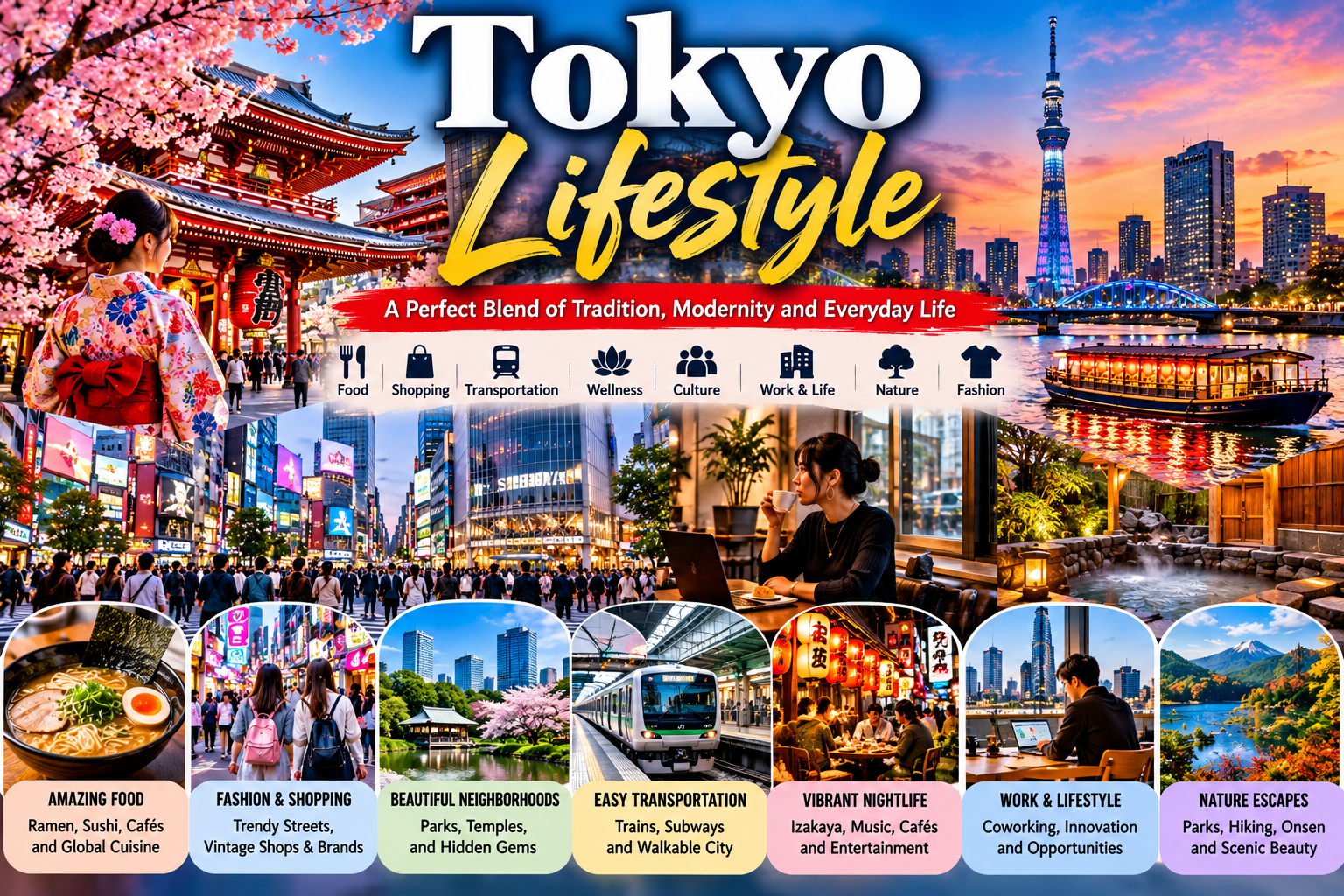
What comes to mind when you imagine everyday life in Tokyo? Is it crowded train stations, neon lights, sushi restaurants, futuristic technology, tiny apartments, fashionable streets, or quiet temples hidden between modern buildings? Tokyo lifestyle is a fascinating combination of efficiency, tradition, convenience, creativity, technology, food, fashion, and neighborhood culture. From early-morning commuters and neighborhood cafés to late-night ramen shops, compact homes, public baths, shopping streets, parks, and vibrant creative districts, everyday life in Tokyo is far more diverse than its famous tourist attractions suggest Tokyo Landmarks
Understanding the Tokyo Lifestyle
Tokyo Is a Collection of Neighborhood Lifestyles
One of the biggest mistakes visitors make is thinking of Tokyo as one enormous, uniform city.
It is not.
Each neighborhood has its own personality.
Shibuya is associated with youth culture, fashion, entertainment, technology, and constantly changing commercial spaces.
Shinjuku combines offices, department stores, restaurants, entertainment, hotels, and nightlife.
Harajuku is closely connected with street fashion, youth culture, design, and pop culture.
Daikanyama is quieter and more refined, with boutiques, cafés, architecture, books, and lifestyle-oriented businesses.
Shimokitazawa is known for vintage clothing, music, independent shops, cafés, theaters, and a relaxed creative atmosphere. Tokyo’s official tourism guide describes it as a bohemian district and highlights its vintage shops, bookstores, music scene, cafés, and newer developments around the station.
Kichijoji offers another lifestyle altogether, combining shopping streets, cafés, restaurants, residential areas, and Inokashira Park. The area is particularly popular with people looking for a balance between urban convenience and access to green space.
This neighborhood diversity is central to understanding Tokyo lifestyle.
Convenience Is a Major Part of Everyday Life
Tokyo has developed an extraordinary culture of convenience.
Transportation, restaurants, convenience stores, vending machines, pharmacies, supermarkets, shopping centers, delivery services, and digital payment systems make everyday tasks relatively accessible.
Convenience does not necessarily mean luxury.
A small neighborhood restaurant can be extremely convenient.
So can a convenience store where someone buys breakfast, pays a bill, sends a parcel, prints a document, or picks up a meal.
This culture of convenience helps explain why Tokyo can function at such a high level despite its enormous population.
Efficiency Shapes Daily Routines
Efficiency appears everywhere.
Train stations are designed around movement.
Restaurants often specialize in a limited number of dishes.
Shopping districts group related businesses together.
Apartment spaces are frequently organized carefully because urban land is expensive.
People often plan their journeys around train connections rather than driving.
Even leisure activities can be highly organized.
A person might visit a bookstore, café, gallery, park, bathhouse, and restaurant within a relatively small area.
The result is a lifestyle where convenience and specialization frequently overlap.
Tokyo Lifestyle and Daily Routines
Morning in Tokyo
Tokyo mornings can feel completely different from Tokyo at night.
Residential streets may be quiet.
Convenience stores open early.
Cafés begin preparing for the day.
Train stations become busy as commuters travel toward office districts.
Some people stop for breakfast before work, while others buy something from a convenience store.
Early morning is also an excellent time for visitors.
Popular tourist areas can feel dramatically quieter before the main crowds arrive.
The Commuting Culture
Rail transportation is one of the foundations of Tokyo lifestyle.
The city’s extensive train and subway network allows residents to live in one neighborhood while working, studying, shopping, or socializing somewhere else.
This creates a lifestyle that is strongly connected to stations.
In many Tokyo neighborhoods, the area around the station becomes the commercial center.
You may find:
- Supermarkets
- Restaurants
- Cafés
- Pharmacies
- Department stores
- Bookstores
- Clothing stores
- Banks
- Fitness facilities
- Convenience stores
within a short walk.
This station-centered lifestyle is one of Tokyo’s defining urban characteristics.
Lunch Culture
Lunch in Tokyo can be fast or leisurely.
Office workers may choose a quick ramen, soba, curry, rice bowl, sushi set, or convenience-store meal.
Others may spend an hour in a café or restaurant.
Department-store food halls and basement food markets provide another option.
The important thing is variety.
Tokyo does not have one standard lunch.
It has thousands of specialized choices.
Evening Life
After work, Tokyo changes again.
Some people return home.
Others meet friends.
Some go shopping.
Others visit restaurants, izakaya, karaoke boxes, cafés, live music venues, gyms, or public baths.
Areas such as Shinjuku, Shibuya, Ebisu, Nakameguro, Koenji, and Shimokitazawa offer very different versions of evening life.
Tokyo Lifestyle and Food Culture
Why Food Is Central to Tokyo Life
Food is more than a tourist attraction in Tokyo.
It is part of everyday life.
The city combines traditional Japanese cooking with regional Japanese specialties and international cuisine.
Tokyo’s official tourism information emphasizes the diversity of its culinary scene, including traditional food, international cuisine, and restaurants adapting to dietary requirements such as vegetarian, vegan, and Muslim-friendly dining.
Ramen Culture
Ramen is one of the easiest examples of Tokyo’s specialized food culture.
Instead of one generic ramen experience, visitors can find restaurants specializing in different broths, noodles, toppings, preparation methods, and regional styles.
Some restaurants are tiny.
Others are modern and highly designed.
The experience can be fast, affordable, and focused.
Sushi and Seafood
Tokyo’s relationship with seafood is long-standing.
Visitors can experience everything from casual sushi restaurants to highly specialized establishments.
The difference between these experiences is substantial.
A neighborhood sushi restaurant can feel completely different from a luxury omakase experience.
Soba and Udon
Soba and udon fit naturally into everyday Tokyo life.
They can provide affordable, quick meals for commuters, workers, students, and travelers.
The simplicity of these meals is part of their appeal.
Convenience Store Food
For visitors unfamiliar with Japan, convenience-store food can be surprisingly useful.
Onigiri, sandwiches, prepared meals, desserts, drinks, coffee, and snacks are widely available.
Convenience stores are not simply emergency food shops.
They are part of everyday urban life.
Café Culture
Tokyo has an enormous café culture.
The atmosphere ranges from minimalist coffee bars to retro kissaten, specialty roasters, themed cafés, book cafés, design cafés, and neighborhood coffee shops.
Shimokitazawa, Daikanyama, Kichijoji, Koenji, and other creative neighborhoods are particularly suitable for travelers interested in café culture.
Tokyo Lifestyle and Fashion
Tokyo as a Global Fashion City
Tokyo fashion is difficult to define because it contains so many styles.
There is:
- Minimalist fashion
- Japanese streetwear
- Vintage fashion
- Luxury fashion
- Kawaii culture
- Workwear
- Technical clothing
- Traditional clothing
- Designer fashion
- Second-hand fashion
Harajuku has long been associated with Japanese street fashion, while areas such as Daikanyama and Aoyama offer more refined interpretations of fashion and lifestyle. Tokyo’s official tourism guide describes western Tokyo as a center for youth culture, new fashion, vintage shops, creative talent, and subcultures.
Harajuku Lifestyle
Harajuku remains important for youth fashion and pop culture.
Takeshita Street is famous for its energetic shopping environment, while Omotesando offers a more sophisticated fashion experience.
The contrast between these streets illustrates an important feature of Tokyo.
Different social and cultural identities can exist only minutes apart.
Shibuya Lifestyle
Shibuya represents a faster, more contemporary side of Tokyo.
The area combines:
- Fashion
- Technology
- Music
- Restaurants
- Entertainment
- Shopping
- Creative industries
- Youth culture
The redevelopment around Shibuya has also created newer mixed-use spaces.
This reflects a wider Tokyo trend toward integrating shopping, offices, entertainment, housing, public spaces, and transportation.
Shimokitazawa Vintage Culture
Shimokitazawa provides a particularly interesting example of modern Tokyo lifestyle.
Its vintage stores, independent businesses, music venues, cafés, bookstores, and restaurants create an environment where shopping and culture overlap.
Recent tourism coverage also points to growing interest in sustainable and ethical consumption within the neighborhood’s thrift scene.
Tokyo Lifestyle and Shopping
Shopping Is More Than Buying Products
Shopping in Tokyo can be a cultural activity.
A visitor might spend an entire afternoon exploring one department store, shopping street, electronics district, or neighborhood market.
Tokyo’s official tourism guide highlights the distinct shopping personalities of districts including Ginza, Shinjuku, Shibuya, Harajuku, Akihabara, and Asakusa.
Department Stores
Japanese department stores are particularly interesting because they combine:
- Fashion
- Cosmetics
- Food
- Home goods
- Gifts
- Restaurants
- Cultural events
The basement food floors are especially famous.
Shotengai Shopping Streets
Shotengai are local shopping streets that often serve neighborhood communities.
They may contain small restaurants, bakeries, clothing stores, pharmacies, grocery stores, household shops, and specialty businesses.
For travelers wanting to understand everyday Tokyo rather than luxury shopping, shotengai can be particularly rewarding.
Convenience Shopping
Tokyo also has a strong convenience-shopping culture.
Large stores and discount retailers allow visitors to buy everything from household products and cosmetics to snacks, electronics accessories, stationery, and souvenirs.
Ten Lifestyle Brands Associated With Tokyo Shopping
The following brands are useful reference points when exploring Tokyo’s consumer and lifestyle culture. They are not rankings; each serves a different purpose.
| Brand | Lifestyle Focus | Typical Products | Style | Best For |
|---|---|---|---|---|
| MUJI | Minimalist living | Home goods, clothing, stationery | Simple | Minimalist travelers |
| UNIQLO | Everyday fashion | Clothing, basics | Practical | Everyday wear |
| LOFT | Lifestyle & gifts | Stationery, cosmetics, home goods | Creative | Gifts & daily items |
| Hands | DIY & lifestyle | Tools, stationery, household products | Practical | Curious shoppers |
| Don Quijote | Discount variety | Food, cosmetics, electronics, household goods | Value-focused | Budget shoppers |
| DAISO | Affordable daily goods | Household items, stationery, accessories | Low-cost | Budget travelers |
| Nitori | Home living | Furniture, bedding, kitchen goods | Functional | Home products |
| BEAMS | Fashion & culture | Clothing, accessories, lifestyle products | Contemporary | Fashion shoppers |
| Tokyu | Department-store lifestyle | Fashion, food, home goods | Broad | Premium shopping |
| Yodobashi Camera | Electronics & hobbies | Cameras, electronics, games, appliances | Technical | Tech enthusiasts |
MUJI and the Minimalist Tokyo Home
MUJI is particularly relevant to Tokyo lifestyle because its design philosophy reflects ideas of simplicity, practicality, neutral aesthetics, and efficient use of space.
For travelers, MUJI can be interesting even if they are not shopping for clothing.
Its home products, stationery, travel items, storage solutions, and everyday objects demonstrate how design can respond to compact urban living.
UNIQLO and Everyday Clothing
UNIQLO represents another important side of Japanese consumer culture.
The emphasis on functional everyday clothing makes it particularly relevant to people who value practicality.
Its global popularity also demonstrates how Japanese retail concepts have influenced international fashion.
LOFT and Creative Convenience
LOFT is particularly useful for visitors interested in Japanese stationery, lifestyle goods, beauty products, gifts, and small design-focused objects.
Hands
Hands is a good example of Tokyo’s interest in specialized products.
A single store can contain categories that might otherwise require visiting several retailers.
Don Quijote
Don Quijote represents Tokyo’s more chaotic side of shopping.
Its stores can feel overwhelming but entertaining, with enormous product variety and long operating hours at many locations.
DAISO
DAISO is useful for budget-conscious travelers.
Low-cost household products, stationery, accessories, and travel items make it popular with visitors as well as local shoppers.
Nitori
Nitori focuses on home living.
For travelers interested in Japanese interior design, storage, bedding, kitchenware, and compact-home solutions, it can provide useful inspiration.
BEAMS
BEAMS combines fashion with broader lifestyle and cultural influences.
Its appeal is strongest for visitors interested in contemporary Japanese style.
Tokyu
Tokyu’s department-store ecosystem demonstrates the connection between fashion, food, lifestyle, transportation, and neighborhood development.
Yodobashi Camera
Yodobashi Camera is particularly important for electronics enthusiasts.
Tokyo lifestyle has a strong relationship with technology, and stores like Yodobashi demonstrate the breadth of Japan’s electronics and hobby market.
Tokyo Lifestyle and Small Homes
Why Compact Living Matters
Tokyo has expensive urban land and enormous population density.
As a result, many homes are relatively compact compared with suburban houses in other countries.
This has influenced Japanese product design.
Storage becomes important.
Furniture often has multiple functions.
Organization matters.
People learn to use vertical space.
Minimalism and Organization
The popularity of minimalist design is partly cultural and partly practical.
When living space is limited, unnecessary possessions take up valuable room.
This creates demand for:
- Compact storage
- Foldable furniture
- Multi-purpose products
- Organized kitchens
- Space-saving appliances
- Modular furniture
The Small Home Advantage
Small living spaces are not necessarily negative.
They can mean:
- Less cleaning
- Lower maintenance
- Lower furnishing costs
- Better access to central neighborhoods
- More efficient use of possessions
The trade-off is reduced private space.
Tokyo Lifestyle and Transportation
Trains as the City’s Backbone
Tokyo’s rail network is one of the most important parts of everyday life.
For many residents, trains determine where they live, work, shop, and socialize.
A neighborhood with an excellent station can be significantly more convenient than one without easy rail access.
Walking Between Stations
Despite Tokyo’s reputation for trains, walking is an important part of daily life.
People often walk from:
station → shopping street → restaurant → café → park
rather than driving.
This helps create lively streets.
Cycling
Cycling is another part of Tokyo’s everyday mobility.
It is especially useful for shorter neighborhood trips.
Taxis and Ride Services
Taxis remain useful when carrying luggage, traveling late, or reaching areas that are inconvenient by rail.
However, they generally complement rather than replace the train network.
Tokyo Lifestyle and Work Culture
Traditional Work Culture
Japan has historically been associated with long working hours, hierarchical workplaces, and strong company loyalty.
However, modern Tokyo’s work environment is more diverse than this stereotype suggests.
Technology, international business, entrepreneurship, remote work, flexible offices, coworking spaces, and changing workplace expectations are influencing professional life.
Coworking and Workation
Workation culture has become increasingly visible.
Tokyo’s official tourism information highlights shared lounges and coworking spaces where travelers can combine work with travel. Examples include work-friendly facilities around Shimokitazawa and Tokyo Station.
This is particularly relevant to:
- Remote workers
- Freelancers
- Entrepreneurs
- Digital professionals
- International travelers
- Long-stay visitors
The Café as a Workspace
Cafés can also function as informal workspaces.
However, visitors should understand local etiquette.
Some cafés are designed for short visits and high customer turnover.
Others specifically welcome people working on laptops.
The key is to observe the environment rather than assuming every café is a coworking space.
Tokyo Lifestyle and Technology
Technology in Everyday Life
Tokyo’s technology culture is not limited to futuristic robots.
Some of the most meaningful technology is invisible.
It appears in:
- Transportation systems
- Digital payments
- Ticketing
- Vending machines
- Smart appliances
- Delivery systems
- Electronics
- Navigation
- Automated services
Akihabara and Electronics Culture
Akihabara remains an important destination for electronics, games, anime, manga, collectibles, cameras, and technology.
It also illustrates how technology can become part of cultural identity.
Digital Convenience
Smartphone navigation is particularly useful in Tokyo.
Travelers can use digital maps to navigate complex station systems, locate restaurants, translate menus, and manage transportation.
Technology reduces some of the friction traditionally associated with navigating a massive city.
Tokyo Lifestyle and Wellness
The Importance of Bathing
Public baths and onsen are deeply connected with Japanese lifestyle.
Tokyo’s official tourism information describes sento and onsen as an important part of Japanese life and highlights both traditional public baths and modern resort-style facilities.
For travelers, the experience can be both relaxing and cultural.
Sento
Sento are public neighborhood baths.
They are often more closely connected to everyday community life than luxury spa facilities.
Onsen
Onsen are associated with natural hot-spring water.
Some are located within Tokyo itself, while others can be found in the broader Tokyo region and islands.
Sauna Culture
Sauna culture has become increasingly visible in Tokyo’s wellness scene.
Newer facilities often combine:
- Sauna
- Cold bath
- Relaxation spaces
- Food
- Drinks
- Design
- Social areas
The recently opened Oimachi Tracks development, for example, includes a sauna facility with hot baths, cold plunges, and relaxation spaces, illustrating how wellness is being incorporated into newer urban developments.
Tokyo Lifestyle and Parks
Why Green Space Matters
Tokyo is densely developed, but green spaces provide important breaks from urban intensity.
Parks can become places for:
- Walking
- Exercise
- Picnics
- Reading
- Photography
- Family activities
- Seasonal events
Yoyogi Park
Yoyogi Park is closely associated with Harajuku and Shibuya.
It offers a large open space where visitors can escape the intensity of surrounding streets.
Inokashira Park
Inokashira Park is one reason Kichijoji has become such an attractive neighborhood.
The park provides a strong connection between residential life and nature.
Tokyo’s Western Nature
Tokyo’s lifestyle extends beyond the dense 23 wards.
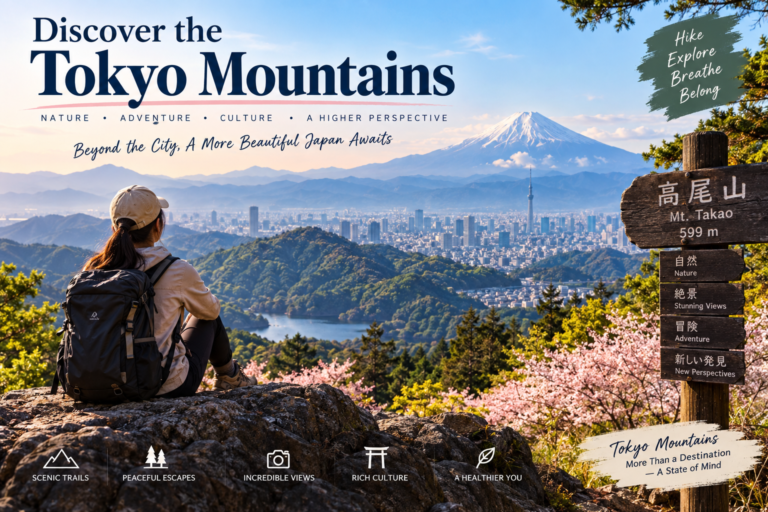
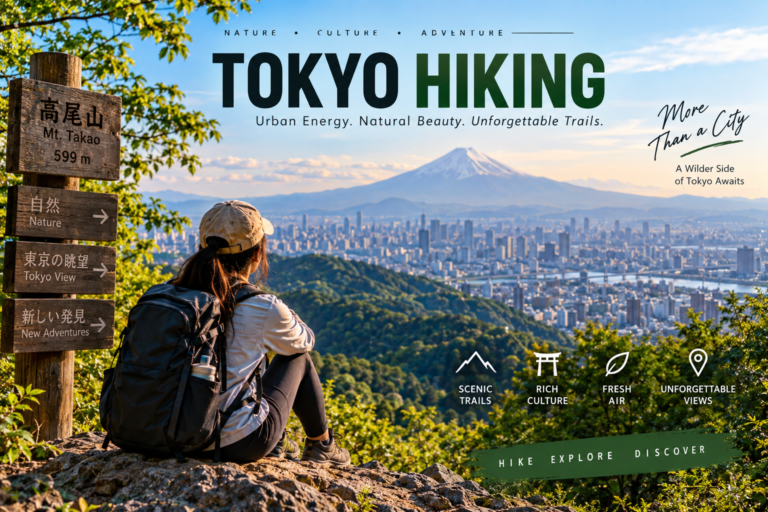
The Tama area includes mountains, valleys, forests, hiking routes, and outdoor destinations.
The official Tokyo guide highlights areas such as Okutama and Mt. Takao for hiking, camping, autumn leaves, and other nature experiences.
This is an important reminder:
Tokyo lifestyle does not always mean urban lifestyle.
Tokyo Lifestyle and Entertainment
Karaoke
Karaoke is deeply integrated into Tokyo’s entertainment culture.
Unlike a traditional stage performance, karaoke boxes allow groups to rent private rooms.
This makes karaoke suitable for friends, families, colleagues, and visitors.
Tokyo’s official tourism guide describes karaoke as popular across demographics and notes the widespread presence of karaoke boxes.
Anime and Manga
Anime and manga are major elements of modern Tokyo culture.
Akihabara is strongly associated with otaku culture, while Nakano and Ikebukuro also offer important anime and manga experiences.
Live Music
Neighborhoods such as Shimokitazawa and Koenji are particularly interesting for live music.
Small venues create opportunities to discover local artists rather than only internationally famous acts.
Gaming
Tokyo’s gaming culture includes arcades, specialty shops, competitive gaming, retro games, and modern entertainment complexes.
Tokyo Lifestyle and Traditional Culture
Temples and Shrines
Traditional religious sites are not simply tourist attractions.
They remain part of the urban landscape.
Residents may visit temples and shrines for festivals, seasonal events, family occasions, or personal reflection.
Festivals
Tokyo festivals combine:
- Traditional clothing
- Music
- Food
- Religious ceremonies
- Community participation
- Seasonal traditions
These events provide visitors with a deeper understanding of local culture.
Traditional Crafts
Tokyo also has a strong craft tradition.
Asakusa and other historic districts contain shops selling ceramics, textiles, Edo Kiriko glass, wood products, kitchenware, and other traditional goods.
Tokyo Lifestyle for Families
Family-Friendly Neighborhoods
Kichijoji is a useful example.
Its combination of parks, shopping, cafés, restaurants, and transportation makes it attractive for families as well as students and younger residents.
Other family-oriented areas include parts of Setagaya, Nerima, Koto, and western Tokyo.
Family Entertainment
Tokyo offers:
- Aquariums
- Zoos
- Parks
- Museums
- Character attractions
- Department stores
- Shopping centers
- Indoor play facilities
The key is to balance busy attractions with quieter activities.
Tokyo Lifestyle for Young Adults
Young adults can find almost every possible social environment.
Creative Neighborhoods
Shimokitazawa is suitable for:
- Vintage shopping
- Music
- Independent cafés
- Theater
- Bookstores
- Alternative fashion
Fashion Neighborhoods
Harajuku, Shibuya, Daikanyama, and Aoyama offer different versions of contemporary fashion.
Nightlife Neighborhoods
Shinjuku, Shibuya, Ebisu, and Nakameguro offer extensive nightlife options.
Tokyo Lifestyle for International Visitors
Multicultural Tokyo
Tokyo may feel extremely Japanese, but it is also increasingly international.
Restaurants cater to global tastes.
Foreign residents contribute to neighborhood culture.
International businesses operate throughout the city.
Travel services increasingly provide multilingual information.
Food for Different Dietary Needs
Tokyo’s official tourism guide specifically highlights vegetarian, vegan, and Muslim-friendly dining and provides guidance for visitors with dietary restrictions.
Travelers should still research individual restaurants carefully because dietary accommodation can differ significantly.
Language
English is increasingly visible in major tourist areas.
However, learning a few Japanese expressions can improve everyday interactions.
Simple phrases such as greetings, thanks, apologies, and requests for assistance are useful.
Tokyo Lifestyle on a Budget
Tokyo can be expensive, but it does not have to be.
Affordable Food
Affordable options include:
- Ramen
- Soba
- Udon
- Curry
- Gyudon
- Convenience-store meals
- Supermarket prepared foods
- Casual family restaurants
Tokyo’s official tourism information also recommends local fast-food chains, family restaurants, shopping streets, supermarkets, convenience stores, and low-cost stores for budget-conscious visitors.
Free Experiences
Some of Tokyo’s best experiences cost little or nothing.
Consider:
- Walking neighborhoods
- Parks
- Shrines
- Temples
- Shopping streets
- Window shopping
- Riverside walks
- Free cultural facilities
- Seasonal festivals
Tokyo Lifestyle for Luxury Travelers
Tokyo also provides an extraordinary luxury lifestyle.
Luxury Shopping
Ginza is the obvious starting point.
Luxury boutiques, department stores, restaurants, hotels, and galleries create a sophisticated environment.
Fine Dining
Tokyo’s restaurant culture ranges from casual neighborhood food to highly specialized fine dining.
Luxury Hotels
High-end hotels increasingly combine:
- Restaurants
- Spas
- Wellness
- Bars
- Cultural programming
- Premium service
Private Experiences
Luxury travelers can explore:
- Private tours
- Personal shopping
- Private dining
- Premium transportation
- Cultural workshops
- Exclusive wellness experiences
Tokyo Lifestyle and Sustainability
Second-Hand Fashion
Second-hand fashion is increasingly relevant to Tokyo lifestyle.
Shimokitazawa is one of the best-known areas for vintage shopping, and recent official tourism coverage notes increasing interest in sustainable and ethical consumption within the local thrift scene.
Repair and Reuse
Japanese culture has long included traditions of maintaining, repairing, and extending the life of objects.
Modern sustainability movements are adding new interpretations.
Smaller Living Spaces
Compact homes can naturally encourage more selective consumption.
People have less incentive to accumulate unnecessary possessions when storage space is limited.
Sustainable Transportation
Public transportation provides a major alternative to private-car dependence.
Walking and cycling also support neighborhood-scale mobility.
Tokyo Lifestyle and New Urban Development
Station-Centered Urban Design
One of the most interesting current trends is the development of neighborhoods around railway stations.
Tokyo’s 2026 developments provide a clear example.
Oimachi Tracks, opened in March 2026, combines a hotel, offices, residences, retail, dining, wellness facilities, and public spaces directly around the railway station.
This represents a modern version of a long-standing Tokyo pattern.
The station is not merely a transportation point.
It becomes the center of daily life.
Mixed-Use Living
Modern Tokyo developments increasingly combine:
- Housing
- Work
- Dining
- Shopping
- Wellness
- Entertainment
- Public space
The goal is to reduce unnecessary travel while increasing convenience.
Culture in Urban Development
New developments are also increasingly integrating cultural experiences.
MoN Takanawa, for example, combines art, architecture, local stories, public spaces, seasonal programming, and relaxation-oriented features.
This indicates that modern Tokyo development is not simply about adding more commercial space.
It is increasingly about creating experiences.
The Psychology of Tokyo Lifestyle
Why Tokyo Can Feel So Organized
Tokyo’s organization comes from multiple layers.
Infrastructure is carefully planned.
Businesses specialize.
Public behavior emphasizes consideration for others.
Transportation follows predictable systems.
Neighborhoods contain dense clusters of services.
These factors reduce friction in everyday life.
Privacy and Personal Space
Tokyo can be crowded but still provide strong personal boundaries.
People often share trains and streets without necessarily interacting with strangers.
This creates an interesting balance between physical density and social distance.
Quietness in a Busy City
Tokyo’s lifestyle is full of contrasts.
A few minutes from a major intersection, you might find:
- A quiet shrine
- A tiny garden
- A traditional café
- A residential street
- A neighborhood bathhouse
This contrast is one of Tokyo’s most memorable characteristics.
Common Mistakes When Experiencing Tokyo Lifestyle
Mistake 1: Staying Only in Tourist Districts
If you only visit Shibuya, Shinjuku, Ginza, and Asakusa, you may see Tokyo but not necessarily understand everyday Tokyo.
Visit at least one residential or creative neighborhood.
Mistake 2: Assuming All Japanese People Live the Same Way
Tokyo contains enormous socioeconomic and cultural diversity.
There is no single Japanese lifestyle.
Avoid turning cultural observations into universal assumptions.
Mistake 3: Ignoring Neighborhood Culture
Do not rush between attractions.
Spend time walking.
Look at local stores.
Visit a neighborhood café.
Observe how people use public spaces.
Mistake 4: Overplanning Every Minute
Tokyo has excellent transportation, so it can be tempting to create an extremely packed itinerary.
Leave room for spontaneous discoveries.
Mistake 5: Ignoring Local Etiquette
Small behaviors matter.
Follow instructions in public baths.
Keep your voice down on trains.
Respect photography restrictions.
Queue properly.
Avoid blocking busy pedestrian areas.
Tokyo’s official etiquette guidance specifically recommends learning local customs, including bathing etiquette at sento and onsen.
Practical Tips for Experiencing Tokyo Lifestyle
Choose One Neighborhood Per Half Day
Instead of crossing Tokyo constantly, choose one neighborhood and explore deeply.
For example:
Morning: Kichijoji
Afternoon: Shimokitazawa
Evening: Shibuya
This gives you three different lifestyles without exhausting yourself.
Eat Where Locals Eat
Avoid choosing restaurants solely because they appear in social media videos.
Look for places with:
- Local customers
- Short menus
- Specialized dishes
- Small dining rooms
- Strong neighborhood presence
Use Public Transportation
The train network is essential for understanding Tokyo.
It also lets you experience the city as residents do.
Explore Side Streets
Main streets show you Tokyo’s commercial face.
Side streets often reveal the residential and community side.
Visit a Shopping Street
A shotengai can teach you more about everyday neighborhood life than a large shopping mall.
Experience a Sento
If you are comfortable with Japanese bathing customs, visiting a public bath can be one of the most culturally interesting lifestyle experiences.
Spend Time in a Park
Tokyo’s parks reveal another side of the city.
Bring a drink, sit down, and observe.
You do not always need an attraction.
Tokyo Lifestyle: Advantages and Challenges
Advantages of Tokyo Lifestyle
Tokyo offers exceptional convenience.
Transportation is extensive.
Food options are extraordinary.
Neighborhoods are diverse.
Public spaces can be highly accessible.
Shopping is varied.
Technology is integrated into everyday life.
Cultural experiences are abundant.
Nature is accessible from the city.
The city also allows people to build very different lifestyles within the same metropolitan area.
Challenges of Tokyo Lifestyle
Tokyo also has challenges.
Housing can be compact.
Popular neighborhoods can become crowded.
Living costs vary significantly.
Commuting can be tiring.
Language barriers can occasionally create difficulties.
The pace of urban life may feel intense.
Visitors can also become overwhelmed by the enormous number of choices.
Finding Balance
The best way to experience Tokyo is not necessarily to copy everything locals do.
Instead, understand the systems and choose what fits your own lifestyle.
You can combine:
- Fast transportation
- Slow cafés
- Modern shopping
- Traditional culture
- Urban entertainment
- Nature
- Wellness
That balance is part of what makes Tokyo so interesting.
Future Trends Shaping Tokyo Lifestyle
More Integrated Urban Districts
Station-centered developments are likely to continue.
Tokyo’s newest projects increasingly combine transportation, housing, offices, retail, food, culture, and wellness.
Growth of Wellness
Saunas, public baths, spas, walking, parks, fitness, and wellness-oriented facilities are becoming increasingly visible within urban developments.
Sustainable Consumption
Second-hand fashion, repair, reuse, smaller homes, and environmentally conscious products are likely to remain important lifestyle themes.
Flexible Work
Coworking spaces and workation-friendly facilities provide new ways to combine professional and personal life.
Local Tourism
As Tokyo becomes more familiar to international travelers, interest is likely to expand beyond famous attractions.
Visitors are increasingly interested in:
- Local shopping streets
- Neighborhood cafés
- Independent stores
- Vintage markets
- Small galleries
- Community festivals
- Local food
- Residential districts
More Experiential Retail
Shopping is increasingly combined with food, entertainment, art, design, and cultural experiences.
Technology With Less Friction
The future of Tokyo lifestyle is unlikely to be defined only by futuristic gadgets.
More important may be technology that quietly makes daily life easier.
Best Tokyo Neighborhoods for Different Lifestyles
Best for Youth Culture: Shibuya
Choose Shibuya for fashion, entertainment, technology, shopping, and contemporary urban energy.
Best for Vintage Lifestyle: Shimokitazawa
Choose Shimokitazawa for vintage clothing, music, independent cafés, bookstores, and creative culture.
Best for Stylish Everyday Life: Daikanyama
Choose Daikanyama for boutiques, cafés, architecture, books, and a quieter fashionable atmosphere.
Best for Families and Parks: Kichijoji
Choose Kichijoji for Inokashira Park, shopping streets, cafés, restaurants, and residential atmosphere.
Best for Traditional Atmosphere: Asakusa
Choose Asakusa for temples, traditional shopping, crafts, food, and historic Tokyo.
Best for Luxury: Ginza
Choose Ginza for high-end shopping, department stores, luxury brands, fine dining, and sophisticated architecture.
Best for Electronics and Pop Culture: Akihabara
Choose Akihabara for anime, manga, games, electronics, collectibles, and otaku culture.
Best for Creative Fashion: Harajuku
Choose Harajuku for street fashion, youth culture, boutiques, and pop culture.
Best for Nightlife: Shinjuku
Choose Shinjuku for restaurants, entertainment, nightlife, shopping, and the dramatic Tokyo skyline.
Best for Nature: Western Tokyo
Explore the Tama and Okutama areas for mountains, valleys, hiking, hot springs, and seasonal scenery.
A One-Day Tokyo Lifestyle Experience
If you have only one day and want to experience lifestyle rather than simply sightseeing, try this approach.
Morning: Kichijoji
Start with breakfast near the station.
Walk toward Inokashira Park.
Spend time walking rather than rushing between attractions.
Explore the shopping streets.
Afternoon: Shimokitazawa
Travel to Shimokitazawa.
Explore vintage clothing stores.
Visit a record shop or bookstore.
Stop at a neighborhood café.
Evening: Shibuya
Continue to Shibuya.
Explore the shopping areas.
Watch the city from a public viewpoint.
Have dinner.
Night: Sento or Entertainment
Finish the day with either a public bath, karaoke, live music, or a quiet late-night meal.
This itinerary demonstrates something important:
Tokyo lifestyle is not one attraction.
It is the combination of ordinary experiences.
How to Photograph Tokyo Lifestyle
Photograph Details
Do not photograph only famous landmarks.
Look for:
- Vending machines
- Train signs
- Small restaurants
- Bicycle parking
- Storefronts
- Street lamps
- Food displays
- Apartment entrances
- Shopping streets
- Café interiors
Capture People Respectfully
Street photography can be fascinating, but always respect privacy and photography restrictions.
Photograph at Different Times
Morning, afternoon, sunset, and night reveal different versions of the same neighborhood.
Tokyo Lifestyle for Different Traveler Types
Tokyo Lifestyle for First-Time Visitors
Combine famous landmarks with one residential neighborhood.
Tokyo Lifestyle for Digital Nomads
Explore coworking spaces, shared lounges, cafés, and station-connected areas.
Tokyo Lifestyle for Families
Focus on parks, shopping centers, aquariums, museums, and neighborhoods with convenient transportation.
Tokyo Lifestyle for Couples
Combine cafés, gardens, shopping, fine dining, evening walks, and wellness.
Tokyo Lifestyle for Solo Travelers
Choose neighborhoods that encourage walking, independent cafés, bookstores, galleries, and casual dining.
Tokyo Lifestyle for Budget Travelers
Use affordable restaurants, convenience stores, public parks, shopping streets, free cultural attractions, and public transportation.
Tokyo Lifestyle for Luxury Travelers
Explore Ginza, luxury hotels, fine dining, premium shopping, private experiences, and wellness facilities.
Tokyo Lifestyle for Food Lovers
Plan around neighborhoods rather than restaurants alone.
Try different food categories throughout the day.
Tokyo Lifestyle for Fashion Lovers
Explore Harajuku, Shibuya, Daikanyama, Aoyama, and Shimokitazawa.
FAQs
What is Tokyo lifestyle like?
Tokyo lifestyle combines convenience, efficiency, technology, traditional Japanese culture, modern fashion, food, entertainment, wellness, public transportation, and neighborhood-based communities.
Is Tokyo lifestyle expensive?
It can be expensive, particularly for housing, luxury shopping, and premium dining, but there are also many affordable food, shopping, entertainment, and transportation options.
Is Tokyo a good city for families?
Yes. Tokyo offers parks, museums, shopping centers, family attractions, convenient transportation, and residential neighborhoods with access to schools and community facilities.
What is everyday life like in Tokyo?
Everyday life varies by neighborhood and individual circumstances, but transportation, shopping, food, work, school, community services, and compact urban living are major parts of life in the metropolis.
Which Tokyo neighborhood has the best lifestyle?
There is no single best neighborhood because lifestyle needs differ. Kichijoji may appeal to people who value parks and residential convenience, Shimokitazawa to creative and vintage culture, Daikanyama to fashion and cafés, while Ginza suits luxury-oriented shopping and dining.
What neighborhood is best for young people in Tokyo?
Shibuya, Harajuku, Shimokitazawa, Koenji, and Nakano are particularly interesting for younger visitors because of fashion, music, entertainment, cafés, and creative culture.
Is Tokyo lifestyle minimalist?
Minimalism is visible in Japanese design and many Tokyo homes, but Tokyo residents have diverse lifestyles and not everyone follows minimalist principles.
Why are Tokyo apartments small?
High urban density and expensive land contribute to compact housing, particularly in central areas.
What is Tokyo known for besides tourism?
Tokyo is known for business, technology, fashion, food, entertainment, design, transportation, education, arts, manufacturing, and diverse neighborhood cultures.
Is Tokyo good for digital nomads?
Tokyo has coworking spaces, shared lounges, cafés, strong transportation, and extensive digital infrastructure. Travelers should research visa and immigration requirements separately because working arrangements depend on nationality and legal status.
What are popular Tokyo lifestyle activities?
Popular activities include café visits, shopping, dining, karaoke, visiting parks, exploring neighborhoods, attending cultural events, visiting public baths, enjoying nightlife, and discovering local markets.
Is Tokyo’s food culture expensive?
Not necessarily. Tokyo offers everything from inexpensive noodles and rice bowls to highly specialized fine dining.
What is a shotengai?
A shotengai is a local shopping street or commercial district, often containing independent stores, restaurants, services, and neighborhood businesses.
What is a sento?
A sento is a Japanese public bath where people bathe communally.
What is an onsen?
An onsen is a Japanese hot spring and, by extension, a bathing facility using natural hot-spring water.
Can tourists visit a sento in Tokyo?
Yes, many public baths welcome visitors, although rules differ by facility. Visitors should learn basic bathing etiquette before entering.
Is Tokyo lifestyle stressful?
Tokyo can feel fast-paced because of commuting, population density, work, and constant activity. However, the city also provides parks, cafés, bathhouses, cultural spaces, and quieter neighborhoods that offer opportunities to slow down.
What is the best way to experience Tokyo lifestyle?
Spend less time rushing between famous attractions and more time exploring one or two neighborhoods on foot. Eat local food, visit a shopping street, use public transportation, enter a small café, and observe everyday city life.
What are the newest Tokyo lifestyle trends?
Current developments include station-connected mixed-use districts, workation facilities, wellness spaces, sustainable second-hand shopping, experiential retail, and new combinations of culture, dining, public space, and transportation. Recent 2026 development around Oimachi Tracks is a useful example.
Is Tokyo becoming more sustainable?
Sustainability is increasingly visible through public transportation, second-hand fashion, reuse-oriented shopping, compact urban living, and newer environmentally conscious developments. The pace and impact vary across sectors.
Where can I experience traditional Tokyo lifestyle?
Asakusa, Yanaka, older shopping streets, neighborhood bathhouses, local festivals, traditional craft districts, and historic areas can provide stronger connections to traditional urban culture.
Where can I experience modern Tokyo lifestyle?
Shibuya, Daikanyama, Aoyama, Omotesando, Odaiba, Shinagawa, and newer station-connected developments provide examples of contemporary Tokyo.
Can Tokyo lifestyle be experienced on a budget?
Yes. Walking neighborhoods, visiting parks, eating at affordable restaurants, using public transportation, exploring shopping streets, and visiting free cultural attractions can keep costs manageable.
Conclusion