Tokyo Onsens: 10 Amazing Hot Springs, Etiquette, Costs & Complete Guide
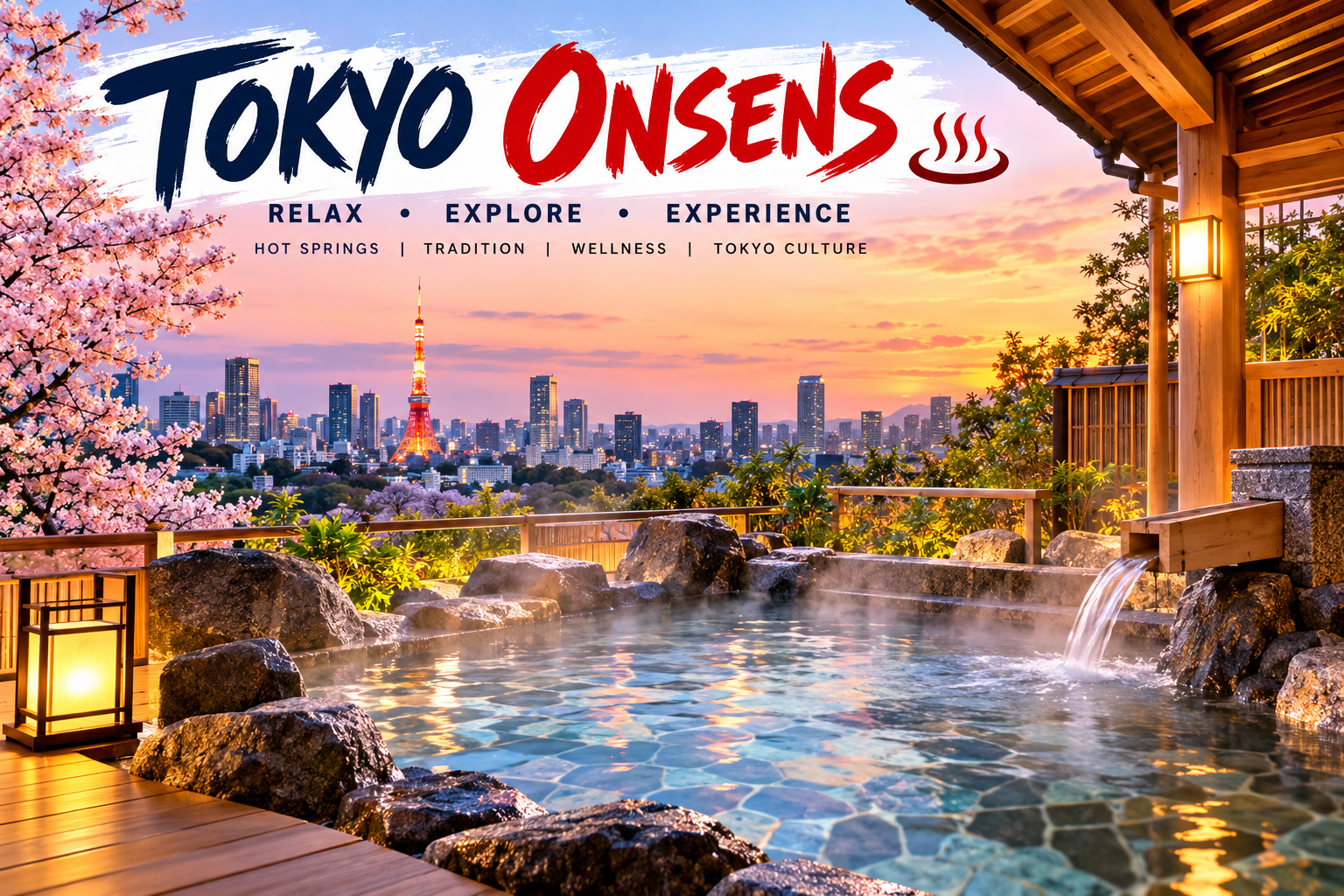
Have you ever spent a long day exploring Tokyo’s crowded streets and wished you could simply sit somewhere warm, quiet, and deeply relaxing? Tokyo onsens offer exactly that experience, combining naturally heated mineral-rich bathing with Japanese tradition, relaxation, and a unique cultural ritual. Whether you are visiting Japan for the first time or have already explored Tokyo several times, an onsen can provide a completely different perspective on the city Tokyo Retreats
What Is an Onsen?
An onsen is a Japanese bathing facility associated with naturally hot spring water. Traditionally, the water comes from a geothermal spring and contains naturally occurring minerals.
The word is often translated simply as “hot spring,” but the Japanese onsen experience involves more than the water itself.
An onsen visit usually includes:
- Washing before entering the bath
- Soaking without clothing
- Moving between different pools
- Relaxing quietly
- Following bathing etiquette
- Enjoying the contrast between hot water and cooler surroundings
This is different from simply taking a bath at a hotel.
Onsen vs Sento
One of the most important distinctions for travelers is the difference between onsen and sento.
An onsen uses qualifying natural hot spring water, while a sento is primarily a public bathhouse using heated tap water or other water sources.
Modern facilities can sometimes blur the distinction because a single complex may contain multiple types of baths.
For tourists, both can be culturally interesting experiences.
Why Are Japanese Hot Springs So Popular?
Japanese bathing culture has practical and social roots.
Bathing historically provided a way to clean the body, relax after work, socialize, and enjoy naturally occurring hot spring environments.
Today, people visit baths for many different reasons:
- Relaxation
- Stress relief
- Cultural experience
- Social tradition
- Warmth during colder months
- Recovery after sightseeing
- Quiet personal time
Why Experience Tokyo Onsens?
Tokyo is one of the world’s busiest metropolitan areas, but its bathing culture provides an interesting contrast.
You can spend the afternoon navigating Shibuya Crossing and the evening sitting quietly in warm water.
That contrast is one of the most memorable aspects of Tokyo.
A Different Side of Tokyo
Many visitors associate Tokyo exclusively with modern attractions. An onsen introduces another side of the city.
Instead of:
- Screens
- Traffic
- Crowds
- Shopping
- Restaurants
- Fast trains
you may experience:
- Steam
- Warm water
- Quiet conversation
- Traditional bathing customs
- Japanese architecture
- Calm surroundings
Onsens for First-Time Visitors
First-time visitors should not assume that the experience is complicated.
Once you understand the basic sequence, it becomes relatively straightforward:
- Remove your shoes where required.
- Pay the entrance fee.
- Enter the changing room.
- Remove all clothing.
- Take a small towel.
- Wash thoroughly.
- Enter the bath.
- Relax quietly.
- Wash or shower again if needed.
- Dry yourself before returning to the changing area.
The most important principle is simple: the bathing area is for cleanliness and relaxation, so wash before entering the shared bath.
History of Japanese Hot Springs
Japan has thousands of hot spring locations because of its volcanic and geothermal environment.
Hot springs became associated with travel, health traditions, religious sites, resorts, and leisure.
Tokyo itself is not the same type of hot-spring destination as famous rural areas such as Hakone or Kusatsu, but the capital has developed a diverse bathing culture of its own.
Edo-Era Bathing Culture
During the Edo period, public bathing became an important part of urban life.
Tokyo, then known as Edo, grew into a major city with dense neighborhoods and thriving commercial districts.
Public bathhouses became places where people could clean themselves and socialize.
This historical tradition helped establish the cultural importance of communal bathing in Japanese society.
Modern Tokyo Bathing Culture
Today, Tokyo’s bathing scene includes:
- Traditional neighborhood sento
- Natural hot spring facilities
- Large spa complexes
- Hotel baths
- Day-use hot spring resorts
- Family-friendly facilities
- Luxury wellness centers
- Tourist-oriented bathing experiences
This diversity means visitors can choose an experience according to their comfort level.
10 Tokyo Onsens and Hot Spring Experiences to Know
Tokyo has many bathing facilities, and the exact availability, opening hours, admission prices, and policies can change.
The following names are useful starting points for travelers researching Tokyo’s bathing culture.
| Onsen / Bathing Facility | Area | Experience | Suitable For |
|---|---|---|---|
| Maenohara Onsen Sayano Yudono | Itabashi | Traditional-style natural hot spring | Relaxation |
| Hisamatsuyu | Nerima | Modern sento experience | Beginners |
| Tsubameyu | Taito | Historic neighborhood bath | Culture |
| Spa LaQua | Tokyo Dome area | Large urban spa | Tourists |
| Thermae-Yu | Shinjuku | Large modern bath and spa | Travelers |
| Yudonaka Onsen | Tokyo | Bathing experience | Visitors |
| Takaban-no-yu | Meguro | Neighborhood bathing | Locals and visitors |
| Kuroyu Onsen Taketori-no-yu | Tokyo | Black-water style bath | Onsen enthusiasts |
| Oedo Onsen Monogatari | Tokyo | Themed bathing concept | Families and tourists |
| LaQua | Bunkyo | Urban spa complex | Day visitors |
Important: Facilities and operating policies change, so travelers should verify current information directly before visiting.
Spa LaQua
Located near Tokyo Dome, Spa LaQua is associated with a large urban entertainment and wellness complex.
It demonstrates how Tokyo has modernized the traditional bathing experience.
Visitors can find multiple bathing and relaxation options within a convenient central location.
Why Travelers Consider It
Its urban location can make it convenient after sightseeing.
It can be particularly interesting for visitors who want a modern introduction to Japanese bathing culture rather than a small neighborhood bathhouse.
Thermae-Yu
Thermae-Yu in Shinjuku is another well-known large bathing and relaxation facility.
Its location makes it relevant to travelers staying around Shinjuku.
What Makes a Large Spa Different?
Large spa facilities may offer:
- Multiple bath areas
- Sauna facilities
- Relaxation rooms
- Food and beverage areas
- Massage or wellness services
- Extended opening hours
This can make them easier for international travelers who want a more comprehensive experience.
Maenohara Onsen Sayano Yudono
Maenohara Onsen Sayano Yudono is located in Itabashi and provides a more traditional hot spring-oriented experience.
For travelers interested in getting away from the central tourist districts, suburban Tokyo can offer a different atmosphere.
Who Might Enjoy It?
This type of facility can appeal to travelers who:
- Have already explored central Tokyo
- Want a quieter neighborhood experience
- Enjoy Japanese bathing culture
- Prefer natural hot spring facilities
- Want to explore beyond major tourist districts
Hisamatsuyu
Hisamatsuyu in Nerima represents another side of Tokyo’s bathing culture.
Modern sento facilities can be especially useful for travelers who want to understand how traditional public baths have adapted to contemporary lifestyles.
Tsubameyu
Tsubameyu in Taito is associated with Tokyo’s traditional neighborhood bathhouse culture.
The surrounding Taito area is particularly interesting for visitors because it contains many historical and cultural attractions.
A bathhouse visit can therefore become part of a broader exploration of old Tokyo.
Tokyo Onsen Etiquette
Understanding etiquette is more important than knowing the name of a particular facility.
Japanese baths are shared spaces, so visitors should pay close attention to cleanliness and consideration for others.
Wash Before Entering
This is the most important rule.
Do not enter the communal bath before washing your body.
Use the shower area to clean yourself thoroughly.
Do Not Wear a Swimsuit
At many traditional Japanese onsens and sento, bathing is done without swimsuits.
For international visitors, this may initially feel unusual, but communal bathing is traditionally practiced this way.
Some tourist-oriented or mixed facilities may have different rules, so always check the facility’s instructions.
Keep Your Small Towel Out of the Water
A small towel is commonly used for modesty or washing.
Do not place it directly into the communal bath.
You can leave it beside the bath or place it on your head if that is practical.
Keep Voices Low
An onsen is not usually treated like a swimming pool.
People generally speak quietly and relax.
Avoid:
- Loud conversations
- Splashing
- Running
- Playing in the bath
- Taking unnecessary photos
Do Not Swim
Even if a pool is large, it is a communal bathing pool rather than a swimming pool.
Sit or soak calmly.
What Should You Bring to a Tokyo Onsen?
Many facilities provide or rent basic items.
However, experienced travelers may prefer carrying a small bathing kit.
Basic Onsen Packing List
Consider bringing:
- Small towel
- Larger towel
- Toiletries
- Hairbrush
- Change of underwear
- Water bottle for after bathing
- Small waterproof bag
- Cash or payment method accepted by the facility
Many larger facilities provide shampoo, conditioner, and body wash.
Do You Need to Bring a Towel?
Not necessarily.
Many facilities rent or sell towels.
However, a small towel is useful and inexpensive.
Tattoos and Tokyo Onsens
Tattoo policies are one of the most important considerations for international visitors.
Historically, many Japanese bathhouses restricted tattoos because tattoos have strong historical associations with organized crime in Japan.
Policies have gradually become more varied.
Are Tattoos Allowed?
There is no single rule for every Tokyo onsen.
Some facilities:
- Prohibit tattoos
- Allow small tattoos if covered
- Allow tattoos with patches
- Allow tattoos during private bathing
- Accept tattooed visitors without restrictions
The policy can differ significantly between facilities.
How Should Tattooed Travelers Prepare?
Check the facility’s current tattoo policy before visiting.
Do not assume that because one Tokyo onsen accepts tattoos, every other facility will do the same.
If necessary, look for:
- Tattoo-friendly onsens
- Private baths
- Family baths
- Facilities specifically advertising tattoo acceptance
Onsen Water and Temperature
One reason people love Japanese baths is the sensation of soaking in hot water.
However, not everyone should immediately enter the hottest bath.
Start Slowly
If you are new to hot springs:
- Shower first.
- Enter a moderate-temperature bath.
- Stay for a short period.
- Leave if you feel uncomfortable.
- Cool down.
- Drink water.
You do not need to prove how long you can tolerate hot water.
Why Does Hot Water Feel So Relaxing?
Warm water can create a strong sense of physical relaxation.
Heat encourages blood vessels near the skin to dilate and can make muscles feel less tense.
The psychological effect is also important.
An onsen removes many normal distractions and encourages people to slow down.
Tokyo Onsens for Different Travelers
There is no single “perfect” onsen experience because travelers have different needs.
Tokyo Onsens for First-Time Visitors
Beginners may prefer a large, modern facility.
Advantages can include:
- Clear signage
- Staff support
- Multiple bath types
- Rental towels
- Lockers
- Restaurants
- Relaxation areas
Tokyo Onsens for Couples
Traditional onsens generally separate male and female bathing areas.
Couples wanting to bathe together should investigate facilities offering:
- Private baths
- Family baths
- Private rooms
- Couples’ bathing areas where legally and operationally permitted
Do not assume that a standard public bath allows mixed bathing.
Tokyo Onsens for Families
Families should check:
- Child age requirements
- Gender separation policies
- Baby policies
- Private bathing availability
- Pool temperature
- Changing-room arrangements
Rules can differ substantially.
Tokyo Onsens for Solo Travelers
Solo travelers may find onsens particularly relaxing.
You can move at your own pace without coordinating schedules.
A solo onsen visit can fit naturally into a sightseeing itinerary.
Tokyo Onsens for Older Travelers
Travelers who are sensitive to heat should pay particular attention to:
- Water temperature
- Time spent soaking
- Hydration
- Facility accessibility
- Seating
- Stair access
When in doubt, choose moderate-temperature baths and take regular breaks.
Tokyo Onsen Etiquette for Foreign Tourists
International visitors sometimes worry that they will accidentally break a rule.
The good news is that basic etiquette is straightforward.
Follow the Sequence
Think of the experience as:
Change → Wash → Soak → Relax → Rinse → Dry
This simple sequence will prevent most common mistakes.
Observe Before You Act
If you are unsure what to do, quietly observe other bathers.
Look at:
- Where people leave towels
- How they use shower stations
- Where they place belongings
- Which pools they enter
- Whether people rinse after specific baths
Following the environment is often the easiest way to understand local customs.
The Role of Silence
One of the most overlooked parts of an onsen experience is the atmosphere.
Silence is not always mandatory, but quiet behavior is generally appreciated.
The lack of phones, cameras, and entertainment can make the experience surprisingly restorative.
For travelers accustomed to constantly documenting trips, this can feel unusual.
That is precisely what makes it memorable.
Health and Safety Considerations
Hot springs are generally associated with relaxation, but hot water places physiological stress on the body.
Travelers should take sensible precautions.
Stay Hydrated
Drink water before and after bathing.
You may sweat more than you realize.
Avoid Staying Too Long
There is no prize for spending the longest time in the hottest pool.
If you feel:
- Dizzy
- Weak
- Nauseated
- Overheated
- Unusually tired
leave the bath and cool down.
Alcohol and Hot Baths
It is safer to avoid bathing while intoxicated.
Heat can increase the physical strain associated with alcohol consumption.
Follow Medical Advice
People with certain medical conditions or those taking particular medications may need to take additional precautions around hot bathing.
If you have a medical condition or concerns about heat exposure, follow advice from your healthcare professional rather than relying on general travel guidance.
Best Time to Visit Tokyo Onsens
The ideal time depends on what you want from the experience.
Winter
Winter is particularly appealing because the contrast between cold air and hot water can be dramatic.
Stepping outside into cool air after soaking can feel refreshing.
Spring
Spring offers comfortable weather for combining an onsen visit with outdoor sightseeing.
Summer
Summer may seem counterintuitive, but air-conditioned relaxation areas and evening bathing can still be enjoyable.
Autumn
Autumn is an excellent season for travelers who enjoy cooler temperatures.
The experience can become even more atmospheric when combined with seasonal sightseeing.
Best Time of Day for an Onsen
Different times create different experiences.
Morning
Morning bathing can be peaceful and quiet.
Afternoon
An afternoon visit can provide a break between sightseeing activities.
Evening
Evening bathing is particularly popular because it can provide a relaxing end to a busy day.
However, popular facilities can become crowded during peak hours.
How Much Does a Tokyo Onsen Cost?
Prices vary significantly according to the facility.
A neighborhood bathhouse may be relatively inexpensive, while a large spa complex can cost considerably more.
Premium facilities may also charge separately for:
- Towels
- Sauna access
- Lounge areas
- Massage
- Food
- Special rooms
Always check current prices before visiting.
Tokyo Onsen vs Luxury Hotel Spa
These experiences are not interchangeable.
A hotel spa generally emphasizes privacy, luxury, and personalized services.
An onsen emphasizes communal bathing and Japanese bathing culture.
Hotel Spa Advantages
- More privacy
- Premium facilities
- Convenient for hotel guests
- Often more international
- Additional wellness services
Traditional Onsen Advantages
- Cultural immersion
- Local atmosphere
- Communal bathing tradition
- Often less expensive
- More authentic neighborhood experience
Tokyo Onsen vs Sento
A traveler who only has time for one experience may wonder which type to choose.
Onsen
Best associated with:
- Natural hot spring water
- Geothermal bathing
- Mineral-rich water
- Resort-style experiences
Sento
Best associated with:
- Neighborhood culture
- Traditional public bathing
- Everyday Japanese life
- Accessible urban bathing
Both can be worthwhile depending on your interests.
Tokyo Onsens for Tourists Near Major Areas
Location matters when planning an onsen visit.
Shinjuku
Shinjuku is convenient for travelers who want nightlife, shopping, restaurants, and urban spa facilities.
Asakusa and Taito
This area is particularly attractive for visitors interested in traditional Tokyo.
Bunkyo
Bunkyo offers convenient access to Tokyo Dome and several cultural attractions.
Nerima and Itabashi
These areas can provide a more residential Tokyo experience.
Travelers willing to leave central Tokyo may discover quieter bathing facilities.
A Practical Tokyo Onsen Itinerary
An onsen can be incorporated into a normal sightseeing day.
Example One-Day Plan
Start the morning exploring a neighborhood.
Have lunch at a local restaurant.
Continue sightseeing during the afternoon.
Around late afternoon, return toward your accommodation.
Have an early dinner or light meal.
Then spend two or three hours at an onsen or spa.
This approach avoids trying to fit a bathing experience into an already exhausting schedule.
What Not to Do at a Tokyo Onsen
A short list of mistakes can save you embarrassment.
Do Not Enter Without Washing
This is one of the clearest etiquette violations.
Do Not Wear Regular Clothes in the Bath
Change completely before entering the bathing area.
Do Not Put Your Towel in the Bath
Keep it outside the water.
Do Not Take Photos
Photography is normally inappropriate in communal changing and bathing areas.
Do Not Shout
Keep the environment peaceful.
Do Not Assume Tattoos Are Accepted
Always verify the policy.
Do Not Stay in Extremely Hot Water Too Long
Listen to your body.
10 Brands and Tokyo Bathing Experiences Compared
The following table compares ten recognizable bathing facilities or bathing brands associated with Tokyo or Tokyo-area experiences. Policies, prices, opening hours, and available services can change, so travelers should verify details before visiting.
| Brand / Facility | General Style | Location Focus | Typical Appeal | Good For |
|---|---|---|---|---|
| Spa LaQua | Urban spa | Bunkyo | Large modern facility | Tourists |
| Thermae-Yu | Urban spa | Shinjuku | Central location | First-time visitors |
| Maenohara Onsen Sayano Yudono | Natural hot spring | Itabashi | Traditional-style bathing | Relaxation |
| Hisamatsuyu | Modern sento | Nerima | Contemporary bathhouse | Beginners |
| Tsubameyu | Traditional sento | Taito | Historic atmosphere | Culture lovers |
| Oedo Onsen Monogatari brand | Resort-style bathing | Tokyo-area | Themed leisure | Families |
| Manyo-no-Yu | Spa / hot spring | Tokyo metropolitan area | Extended relaxation | Day trips |
| Oyata Onsen Myojinkan | Hot spring experience | Tokyo area | Traditional atmosphere | Bath enthusiasts |
| Takaban-no-yu | Neighborhood bath | Meguro | Local experience | Residents and travelers |
| Kuroyu-style facilities | Black-water bathing | Tokyo | Distinctive water experience | Onsen enthusiasts |
The table is intended as a planning overview rather than a ranking.
How to Choose the Right Tokyo Onsen
Instead of choosing based solely on online popularity, consider your actual requirements.
Choose by Location
If you are staying in Shinjuku, an onsen two hours away may not be practical.
Choose by Tattoo Policy
If you have tattoos, make this one of your first checks.
Choose by Privacy
If you are uncomfortable with communal bathing, search specifically for private bath options.
Choose by Experience
Ask yourself whether you want:
- Traditional culture
- Natural hot spring water
- Luxury
- Convenience
- Family facilities
- Sauna
- Massage
- Food
- Quiet relaxation
This approach will narrow your options quickly.
Common Challenges for International Visitors
Tokyo onsens are accessible, but several aspects can surprise first-time visitors.
Challenge: Nudity
Communal bathing without swimsuits may be unfamiliar.
The best approach is to understand that this is a standard part of traditional Japanese bathing culture.
Challenge: Language
Many larger facilities have English signs or instructions, but smaller neighborhood bathhouses may have limited English.
A translation app can help.
Challenge: Tattoo Restrictions
Research in advance.
Challenge: Payment
Some smaller establishments may have different payment preferences or systems than international travelers expect.
Carry an appropriate payment method and check before entering.
Challenge: Cultural Anxiety
Many travelers worry about doing something wrong.
The best solution is to learn the basics before arriving and observe the environment once inside.
Common Myths About Tokyo Onsens
Myth: Every Japanese Hot Spring Is Extremely Hot
Not necessarily.
Temperatures vary between facilities and individual baths.
Myth: Every Onsen Is Outdoors
Many are indoors.
Outdoor baths, known as rotenburo, are simply one type of bathing experience.
Myth: You Need to Be Japanese to Use an Onsen
Foreign visitors can experience many onsens.
The key requirement is following the facility’s rules and etiquette.
Myth: All Onsens Allow Tattoos
This is not true.
Policies vary.
Myth: Onsen and Sauna Are the Same
They are different.
An onsen is primarily associated with hot spring bathing, while a sauna uses heated air or other methods to produce heat exposure.
Many modern facilities offer both.
Rotenburo: Outdoor Onsen Baths
A rotenburo is an outdoor bath.
The combination of warm water and fresh air creates a different atmosphere from an indoor bath.
Why Travelers Like Outdoor Baths
Outdoor baths can provide:
- Open-air atmosphere
- Seasonal scenery
- Cooler surrounding air
- Greater sense of space
- Traditional resort feeling
In Tokyo, outdoor bathing can be especially enjoyable when the weather is comfortable.
Black Water Onsens in Tokyo
One distinctive feature of some Tokyo-area hot spring facilities is dark or black-colored natural spring water.
This can be caused by naturally occurring organic substances in the groundwater.
The appearance can initially surprise visitors.
Is Black Water Dirty?
Not necessarily.
Color alone does not mean that water is contaminated.
The important factor is whether the facility operates under appropriate health and sanitation standards.
Onsen and Japanese Wellness Culture
The appeal of an onsen extends beyond physical bathing.
Japan’s bathing culture often encourages a slower relationship with time.
Instead of rushing through an attraction, visitors sit, soak, cool down, and repeat.
This creates a rhythm very different from conventional sightseeing.
The Importance of Slowing Down
Tokyo can encourage visitors to maximize every hour.
An onsen does the opposite.
You deliberately stop.
That can make an onsen valuable not because it contains a famous attraction, but because it changes how you experience the city.
Tokyo Onsens for Digital Detox
One interesting modern benefit is the opportunity to disconnect from technology.
Phones generally remain outside the bathing area.
For travelers constantly taking photographs and checking maps, this creates a rare period without screens.
A 60-minute bathing experience can therefore become a small digital break.
Sustainability and Modern Japanese Bathing
The future of urban bathing will increasingly involve questions around:
- Water use
- Energy consumption
- Heating efficiency
- Facility modernization
- Waste reduction
- Sustainable tourism
Large facilities need substantial energy to heat and maintain water.
Modern technologies can potentially improve efficiency while maintaining the bathing experience.
Future Trends in Tokyo Onsens
Tokyo’s bathing culture is likely to continue evolving.
More Tattoo-Friendly Facilities
As international tourism grows, some facilities have adapted policies to accommodate foreign visitors.
However, acceptance is still facility-specific.
More Multilingual Services
Large facilities are likely to continue improving:
- English instructions
- Digital information
- Online booking
- Multilingual etiquette guides
Private Bath Experiences Tokyo onsens
Private bathing can attract travelers who want Japanese hot spring culture without communal bathing.
Wellness Integration Tokyo onsens
Modern facilities increasingly combine bathing with:
- Saunas
- Relaxation rooms
- Fitness
- Massage
- Food
- Sleep spaces
- Wellness services
More Design-Focused Sento Tokyo onsens
Contemporary architecture is helping some traditional bathhouses appeal to younger residents and international visitors.
Practical Checklist Before Visiting a Tokyo Onsen
Before leaving your hotel, check:
- Facility opening hours
- Current admission price
- Tattoo policy
- Age restrictions
- Swimwear rules
- Towel availability
- Payment methods
- Sauna availability
- Private bath availability
- Last admission time
Save the facility name and address on your phone.
Step-by-Step Guide for Your First Tokyo Onsen
Step 1: Research the Facility Tokyo onsens
Confirm that it accepts tourists and check the rules.
Step 2: Arrive Prepared Tokyo onsens
Bring a towel or confirm that rentals are available.
Step 3: Pay and Enter Tokyo onsens
Follow the facility’s reception instructions.
Step 4: Change Tokyo onsens
Store your belongings securely.
Step 5: Wash Tokyo onsens
Take a thorough shower.
Step 6: Enter the Bath Tokyo onsens
Enter slowly and quietly.
Step 7: Relax Tokyo onsens
There is no need to rush.
Step 8: Take Breaks Tokyo onsens
Leave the water if you feel too hot.
Step 9: Dry Yourself Tokyo onsens
Use your towel appropriately before entering the changing area.
Step 10: Rehydrate Tokyo onsens
Drink water after bathing.
How Long Should You Spend at an Onsen?
There is no universal ideal duration.
A first visit might last approximately one to two hours including changing, washing, bathing, cooling down, and relaxing.
Large spa complexes can take several hours because they often include relaxation lounges and other amenities.
The important point is not to measure the experience by time.
Measure it by how comfortable you feel.
Pros and Cons of Tokyo Onsens
Advantages Tokyo onsens
- Authentic Japanese cultural experience
- Relaxing after sightseeing
- Wide range of facility types
- Options across Tokyo
- Often affordable compared with luxury spa treatments
- Opportunity to experience traditional bathing etiquette
- Modern facilities can be highly convenient
Potential Disadvantages Tokyo onsens
- Nudity may feel uncomfortable for some travelers
- Tattoo restrictions remain at some facilities
- Rules can vary considerably
- Smaller bathhouses may have limited English
- Hot water may be uncomfortable for some people
- Popular facilities can become crowded
- Public bathing is not ideal for travelers seeking complete privacy
Tokyo Onsens vs Other Japanese Onsen Destinations
Tokyo is convenient, but travelers interested specifically in hot spring tourism may also consider destinations outside the capital.
Tokyo onsens
Best associated with:
- Urban convenience
- Modern facilities
- Neighborhood bathing
- Easy integration with sightseeing
Hakone Tokyo onsens
Known for hot spring resorts and mountain scenery.
Kusatsu Tokyo onsens
Known for its prominent hot spring culture and resort atmosphere.
Beppu Tokyo onsens
Famous for extensive hot spring resources and distinctive geothermal attractions.
Kurokawa Tokyo onsens
Known for a traditional hot spring town atmosphere.
Tokyo therefore should not necessarily be viewed as a replacement for Japan’s famous onsen towns.
Instead, it offers a different experience: Japanese bathing culture inside one of the world’s largest cities.
Tokyo Onsens for Budget Travelers
You do not necessarily need to spend a large amount of money to experience Japanese bathing culture.
Neighborhood sento can provide an affordable introduction.
Budget Strategy
Look for:
- Local sento
- Standard bathing admission
- Facilities that provide basic toiletries
- Shorter visits
- Neighborhood bathhouses near your accommodation
You can then spend your remaining travel budget on food, attractions, or transportation.
Tokyo Onsens for Luxury Travelers
Luxury travelers can choose premium facilities that combine bathing with:
- Spa treatments
- Private rooms
- Restaurants
- Relaxation lounges
- Premium amenities
- Hotel accommodation
This turns bathing into an extended wellness experience.
How to Photograph Your Onsen Experience
One of the biggest cultural mistakes is trying to photograph the bathing area.
Instead, take photographs:
- Outside the facility
- At the entrance
- Of architectural details where permitted
- In designated public areas
- Around the surrounding neighborhood
Never photograph other bathers.
How to Search for Tokyo Onsens Online
Useful search terms include:
- Tokyo onsen
- Tokyo hot springs
- Tokyo tattoo friendly onsen
- Tokyo private onsen
- Tokyo natural hot spring
- Tokyo sento
- Tokyo rotenburo
- Tokyo black water onsen
- Tokyo family onsen
- Tokyo luxury spa
- Tokyo onsen near Shinjuku
- Tokyo onsen near Asakusa
Adding a neighborhood name can dramatically improve search results.
A More Meaningful Way to Experience Tokyo Onsens
Many visitors approach an onsen like another attraction to check off a list.
That can miss the point.
Instead of asking, “How quickly can I visit an onsen?” consider asking:
“How can I use this experience to slow down during my trip?”
You might spend an entire afternoon exploring a neighborhood, eat dinner nearby, and finish the evening with a bath.
That turns the onsen into part of your travel rhythm rather than another item on an itinerary.
FAQs
What is a Tokyo onsen?
A Tokyo onsen is a hot spring bathing facility located in Tokyo or the wider metropolitan area. Facilities can range from traditional bathing establishments to large modern spa complexes.
Can tourists visit Tokyo onsens?
Yes. Many Tokyo bathing facilities welcome international visitors. Travelers should follow the facility’s rules and basic Japanese bathing etiquette.
Do you wear clothes in a Tokyo onsen?
Traditional communal baths generally require bathers to enter the water without clothing. Swimwear is normally not used unless the specific facility says otherwise.
Do you shower before entering an onsen?
Yes. You should thoroughly wash your body before entering a communal bath.
Can you bring a towel into the onsen water?
You should not place your towel in the shared bath. Keep it beside the bath or somewhere designated by the facility.
Are tattoos allowed in Tokyo onsens?
Tattoo policies vary. Some facilities prohibit tattoos, while others permit them under certain conditions or are tattoo-friendly.
Can couples bathe together?
Traditional public baths generally separate male and female bathing areas. Couples seeking a shared bathing experience should look for private or family baths.
Are Tokyo onsens expensive?
Prices vary. Neighborhood public baths can be relatively inexpensive, while large spa complexes and luxury facilities cost more.
What should I bring to a Tokyo onsen?
A small towel, toiletries if needed, clean clothes, and a suitable payment method are useful. Many facilities provide or rent towels and toiletries.
Are Tokyo onsens open year-round?
Many facilities operate throughout the year, although opening schedules and maintenance closures vary.
Can children enter Tokyo onsens?
Some facilities allow children while others have age-related restrictions. Families should check the current rules before visiting.
What is a rotenburo?
A rotenburo is an outdoor bath. It is particularly appealing during cooler seasons because of the contrast between the warm water and surrounding air.
What is the difference between an onsen and a sento?
An onsen is associated with naturally sourced hot spring water that meets Japan’s legal definition, while a sento is a public bathhouse that generally uses heated water.
Can I use my phone inside an onsen?
Phones and cameras should not be used in communal changing and bathing areas because of privacy concerns.
How long should I stay in a Tokyo onsen?
There is no fixed duration. Beginners should start with shorter periods and take breaks whenever they feel too warm or uncomfortable.
Is Tokyo a good place to experience Japanese bathing culture?
Tokyo offers a particularly accessible combination of traditional neighborhood baths, natural hot springs, modern spas, and tourist-friendly facilities.
Conclusion
Tokyo onsens provide much more than an opportunity to sit in hot water. They offer travelers a chance to experience an important part of Japanese bathing culture while discovering a quieter side of one of the world’s busiest cities. From traditional neighborhood bathhouses to modern urban spa complexes, the range of experiences means that beginners, families, solo travelers, luxury visitors, and experienced onsen enthusiasts can all find something relevant