Tokyo Alternative: 30+ Unique Ways to Explore Tokyo Beyond the Tourist Crowds
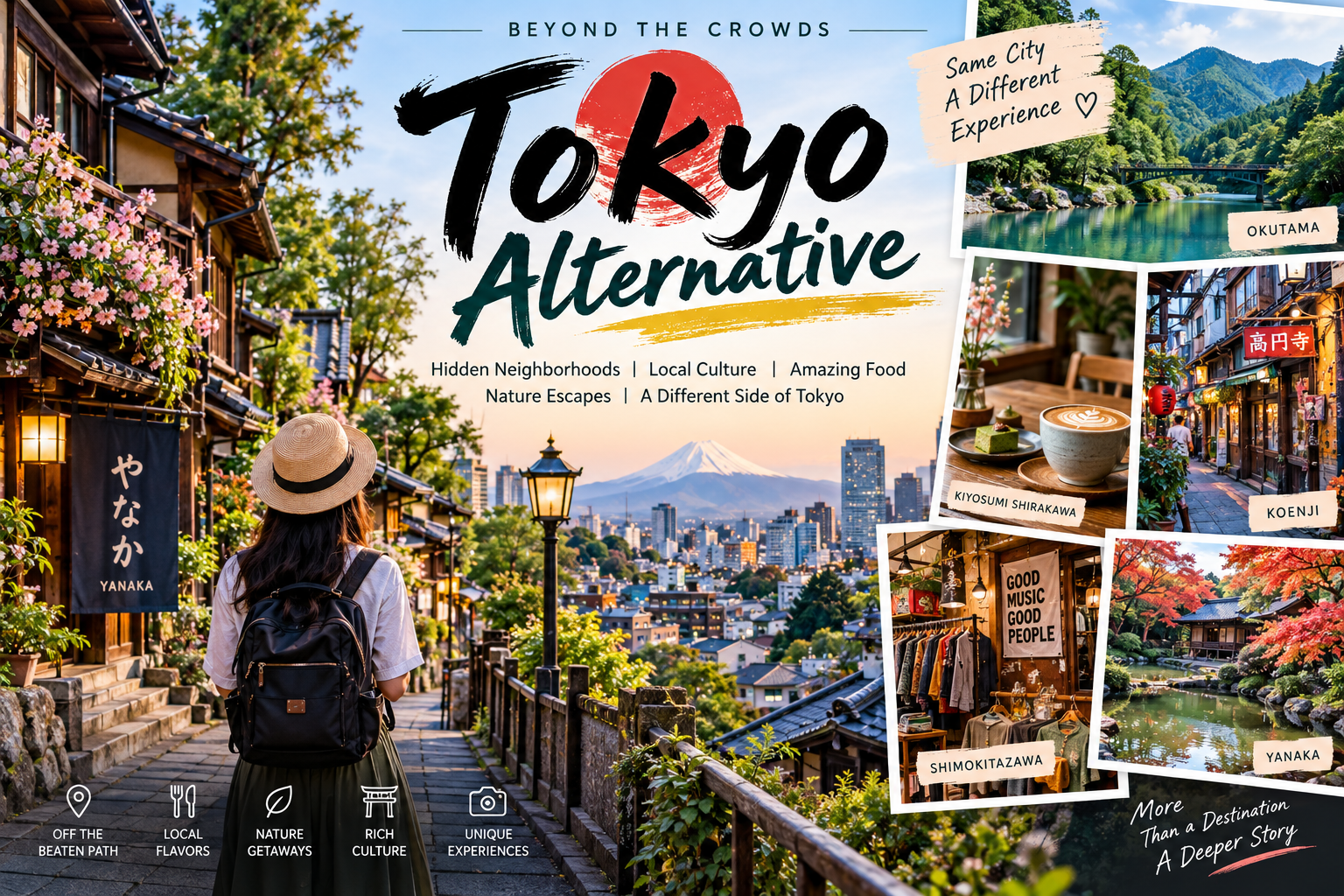
Looking for a Tokyo alternative to crowded landmarks, rushed sightseeing, and the usual tourist checklist? A Tokyo alternative means exploring the capital through quieter neighborhoods, local food, traditional communities, creative districts, nature, independent shops, and experiences that reveal a different side of Japan’s enormous capital. Tokyo is often introduced through a familiar collection of images: Shibuya Crossing filled with pedestrians, neon signs, Tokyo Tower glowing against the skyline, Senso-ji’s Kaminarimon Gate, crowded shopping streets, and trains moving through one of the world’s busiest metropolitan areas Tokyo Unusual
What Does Tokyo Alternative Mean?
The phrase Tokyo alternative does not describe one particular attraction.
It describes a travel approach.
Alternative Tokyo travel generally means moving beyond the standard sightseeing circuit and choosing experiences based on interests rather than popularity alone.
Alternative Tokyo Travel Explained
A conventional Tokyo itinerary might prioritize:
- Shibuya Crossing
- Tokyo Tower
- Senso-ji
- Tokyo Skytree
- Harajuku
- Shinjuku
- Ginza
- Akihabara
An alternative Tokyo itinerary might instead focus on:
- Yanaka and Nezu
- Koenji
- Shimokitazawa
- Kichijoji
- Nakano
- Kiyosumi Shirakawa
- Jiyugaoka
- Daikanyama
- Shibamata
- Okutama
- Mt. Takao
- Independent cafés
- Local shopping streets
- Traditional crafts
- Small museums
- Neighborhood festivals
- Contemporary art
- Architecture
- Cycling
- Nature
The difference is not that one approach is correct and the other is wrong.
The difference is depth versus familiarity.
Why Alternative Tokyo Travel Is Becoming More Interesting
Travelers increasingly want experiences that feel connected to local communities rather than simply collecting photographs.
GO TOKYO has recently highlighted western Tokyo as a destination for travelers seeking nature, slower travel and local community experiences. Its 2024 sustainable-getaway feature described the Tama area as less crowded and rich in mountains, rivers and forests.
This is important because Tokyo is geographically much more diverse than its central skyline suggests.
The official Tokyo outline includes the Tama region as well as the Izu and Ogasawara Islands, meaning Tokyo’s metropolitan boundaries encompass urban neighborhoods, mountains, forests, islands and coastal environments.
Why Look for a Tokyo Alternative?
You Can Experience a Different Pace
Central Tokyo can be intense.
There are trains, advertisements, crowds, department stores, offices, restaurants, traffic signals and constant movement.
Alternative neighborhoods often provide a slower rhythm.
You might walk past:
- A neighborhood bakery
- A tiny temple
- A family-run restaurant
- A local bicycle shop
- An independent bookstore
- A small park
- A traditional house
- A neighborhood café
None may appear on a conventional “top 10 Tokyo attractions” list.
Together, however, they can create a much stronger sense of place.
You Can Discover Everyday Tokyo
The most memorable travel experiences are not always spectacular.
Sometimes they are ordinary.
A morning walk through a local shopping street can show you more about everyday life than another observation deck.
Watching residents shop, commuters travel, children return from school, shop owners prepare their businesses and older buildings sit beside newer construction can reveal how Tokyo actually functions.
You Can Reduce Attraction Fatigue
Visiting too many major attractions in a short period can become tiring.
An alternative itinerary gives you breathing space.
Instead of rushing between five major attractions, you might spend half a day exploring one neighborhood.
That creates a slower and more flexible travel experience.
You Can Find More Specialized Experiences
Alternative Tokyo is particularly valuable for travelers with specific interests.
For example:
- Architecture lovers can explore unusual buildings.
- Food travelers can investigate neighborhood restaurants.
- Music fans can explore Koenji.
- Vintage shoppers can explore independent stores.
- Anime fans can look beyond Akihabara.
- Nature lovers can head toward western Tokyo.
- Coffee enthusiasts can explore café neighborhoods.
- History enthusiasts can investigate older districts.
- Photographers can search for changing streetscapes.
Tokyo Alternative Neighborhoods to Explore
Yanaka and Nezu
Yanaka is one of the most useful areas for travelers seeking a quieter historical atmosphere.
Instead of towering commercial districts, the area offers narrow streets, temples, small shops and residential architecture.
Nezu adds another layer of historical character.
The appeal of this area is not one giant attraction.
It is the accumulation of small details.
Walk slowly.
Look at buildings.
Visit small shops.
Explore temple grounds respectfully.
Stop for food.
Take photographs without disturbing residents.
Koenji
Koenji is an especially interesting choice for travelers searching for an alternative cultural scene.
GO TOKYO describes Koenji as a neighborhood associated with used clothing, shotengai shopping streets, cafés, bars and a long-standing underground music culture. Its live music scene developed through several decades of alternative subcultures.
This makes Koenji particularly suitable for:
- Music lovers
- Vintage shoppers
- Independent-culture enthusiasts
- Night photographers
- Travelers who enjoy local neighborhoods
Koenji’s strength is its character.
It does not feel like a district designed exclusively for international sightseeing.
Shimokitazawa
Shimokitazawa is another popular choice for alternative Tokyo travel.
The neighborhood is known for:
- Vintage clothing
- Independent stores
- Cafés
- Music
- Small theaters
- Creative businesses
- Second-hand shopping
It works particularly well for younger travelers and anyone interested in Tokyo’s independent creative culture.
The important approach is to explore beyond the main commercial streets.
Take side streets.
Look for smaller businesses.
Spend time rather than simply passing through.
Kichijoji
Kichijoji offers a particularly useful balance between urban life and greenery.
GO TOKYO describes it as a destination where traditional eateries around Harmonica Yokocho can be combined with modern shopping and the nearby Inokashira Park.
This makes Kichijoji useful for:
- Families
- Couples
- Café lovers
- Shoppers
- Repeat visitors
- Travelers seeking a slower day
You can combine shopping, food and a park visit without creating an exhausting schedule.
Daikanyama
Daikanyama is a good option for travelers interested in design and sophisticated urban neighborhoods.
GO TOKYO highlights its combination of fashion, cosmetics, cafés and architecture.
It is particularly suitable for travelers who prefer:
- Design
- Architecture
- Independent retail
- Specialty cafés
- Lifestyle stores
- Photography
Jiyugaoka
Jiyugaoka provides another alternative to the major tourist districts.
The official Tokyo tourism guide describes it as a stylish neighborhood with lifestyle stores and appealing eateries.
It can be particularly attractive for visitors who want to experience a more residential, polished side of Tokyo.
Shibamata
Shibamata is a useful choice for travelers interested in traditional Tokyo atmosphere.
The neighborhood provides an opportunity to explore older streets, temple culture and a different pace from central Tokyo.
It is particularly interesting for travelers who have already visited the major central districts.
Kiyosumi Shirakawa
Kiyosumi Shirakawa has become associated with contemporary café culture and creative spaces.
It can work well as part of a day focused on:
- Coffee
- Art
- Architecture
- Gardens
- Walking
- Local food
Rather than treating it as a checklist destination, combine several small stops.
Nakano
Nakano provides an interesting alternative to Akihabara for travelers interested in Japanese pop culture.
Nakano Broadway and surrounding streets offer a different atmosphere from the huge commercial zones of central Tokyo.
Collectors and enthusiasts can find specialized stores, while general visitors can explore the neighborhood’s restaurants and shopping streets.
Fukagawa
Fukagawa offers another way to experience Tokyo through older neighborhood character, temples, waterways and local history.
It is useful for travelers who want to combine cultural exploration with a quieter urban environment.
Tokyo Alternative Experiences Beyond Neighborhoods
Explore Tokyo Through Local Shopping Streets
Japanese neighborhood shopping streets, often known as shotengai, can provide a fascinating window into everyday life.
These streets can contain:
- Grocers
- Restaurants
- Bakeries
- Fish shops
- Clothing stores
- Household businesses
- Cafés
- Traditional shops
The experience is different from visiting a modern shopping mall.
You are seeing a community-oriented commercial environment.
Search for Independent Cafés
Tokyo’s café culture is large enough to become an entire travel theme.
Instead of searching only for famous cafés, choose a neighborhood and explore.
A good café-focused day might include:
- Morning coffee
- Neighborhood walk
- Independent bookstore
- Small gallery
- Local lunch
- Afternoon dessert
The experience becomes about the neighborhood rather than the café alone.
Explore Tokyo Through Architecture
Architecture is one of the strongest alternative Tokyo experiences.
Tokyo contains layers of:
- Traditional Japanese buildings
- Postwar architecture
- Contemporary residential design
- Commercial towers
- Department stores
- Minimalist structures
- Experimental buildings
- Religious architecture
Architecture enthusiasts can create entire walking routes around building design.
Explore Small Museums
Large museums are important, but small museums can sometimes offer more focused experiences.
Look for museums connected with:
- Japanese crafts
- Local history
- Literature
- Transportation
- Food
- Design
- Animation
- Traditional industries
- Everyday life
GO TOKYO also highlights free cultural facilities, museums, temples, shrines and markets as budget-friendly ways to explore Tokyo’s history and traditions.
Experience Tokyo Through Traditional Crafts
A craft workshop changes the relationship between traveler and destination.
Instead of buying an object, you learn how it is made.
Potential experiences include:
- Pottery
- Calligraphy
- Woodworking
- Textile crafts
- Japanese paper
- Traditional decoration
- Cooking
The exact availability of workshops changes, so advance research is recommended.
Tokyo Alternative Food Experiences
Eat in Neighborhood Restaurants
One of the simplest ways to escape conventional tourism is to eat away from the most obvious tourist centers.
Look for restaurants serving:
- Ramen
- Soba
- Udon
- Yakitori
- Tempura
- Curry
- Tonkatsu
- Japanese set meals
- Seasonal dishes
The goal is not to find the “best restaurant in Tokyo.”
It is to find something that fits the neighborhood you are already exploring.
Explore Japanese Bakeries
Japanese bakeries are an excellent alternative food experience.
Try different breads and pastries rather than sticking to familiar international products.
Seasonal items can also provide a glimpse into Japanese food culture.
Explore Depachika Food Halls
Department-store basement food halls can be an excellent alternative for travelers who want to sample many foods.
They often contain:
- Prepared meals
- Desserts
- Bento
- Japanese sweets
- Seasonal products
- Gift foods
- Regional specialties
This is particularly useful for travelers who want variety without booking a formal restaurant.
Create a Tokyo Breakfast Experience
Breakfast is often overlooked in travel planning.
Try a neighborhood breakfast rather than eating the same international hotel breakfast every morning.
A Japanese breakfast may include combinations of:
- Rice
- Miso soup
- Fish
- Pickles
- Egg
- Vegetables
Availability varies by restaurant, so research the local area before leaving your accommodation.
Tokyo Alternative Nature Experiences
Explore Western Tokyo
One of the biggest misconceptions about Tokyo is that the entire metropolitan area looks like central Shinjuku or Shibuya.
It does not.
The Tama region covers a large area west of central Tokyo and contains mountains, rivers, forests, valleys and lakes.
This makes western Tokyo one of the strongest alternatives for travelers who want nature.
Visit Okutama
Okutama is one of the clearest examples of an alternative Tokyo experience.
GO TOKYO highlights hiking, fishing, water sports, hot springs, Lake Okutama, Hatonosu Canyon, Mt. Mitake and Mt. Odake.
Adventure activities in the area can include:
- Hiking
- Cycling
- Camping
- Kayaking
- Stand-up paddleboarding
- Rafting
- Fishing
- Nature walks
GO TOKYO also describes Okutama as a destination for outdoor activities such as rafting, kayaking, canyoning and SUP.
Visit Mt. Takao
Mt. Takao offers a relatively accessible nature escape from central Tokyo.
GO TOKYO describes it as around 50 minutes from Shinjuku by train, making it suitable for travelers who want hiking without committing to a long-distance trip.
This can be an excellent alternative when you want:
- Forest
- Hiking
- Views
- Fresh air
- Seasonal scenery
Explore Tokyo’s Islands
For a much more dramatic alternative, consider Tokyo’s islands.
The Izu Islands and Ogasawara Islands are administratively part of Tokyo but geographically very different from the central metropolitan area.
GO TOKYO describes these islands as places with beaches, volcanic landscapes, forests, marine activities and distinctive ecosystems.
This demonstrates just how broad the concept of Tokyo actually is.
Tokyo Alternative for Different Travelers
Tokyo Alternative for First-Time Visitors
First-time visitors do not need to avoid every famous attraction.
A better approach is to combine famous and alternative experiences.
For example:
Day one: Asakusa and a quieter nearby neighborhood.
Day two: Shibuya followed by Daikanyama.
Day three: Harajuku followed by Yanaka.
This approach allows you to see famous Tokyo while also experiencing less conventional areas.
Tokyo Alternative for Repeat Visitors
Repeat visitors have more freedom.
You can skip major landmarks entirely and focus on:
- Koenji
- Shimokitazawa
- Kichijoji
- Yanaka
- Nakano
- Kiyosumi Shirakawa
- Shibamata
- Western Tokyo
Tokyo Alternative for Families
Families may benefit from destinations where children can participate rather than simply observe.
Consider:
- Parks
- Small museums
- Craft workshops
- Nature areas
- Character attractions
- Interactive cultural activities
- Local food experiences
Kichijoji, for example, combines shopping and dining with Inokashira Park, creating a flexible family day.
Tokyo Alternative for Couples
Couples can focus on slower experiences.
Consider:
- Garden walks
- Café hopping
- Traditional neighborhoods
- Sunset walks
- Architecture
- Food tours
- Craft workshops
- Nature excursions
Tokyo Alternative for Solo Travelers
Solo travelers can take full advantage of flexible exploration.
You can spend an afternoon:
- Browsing independent stores
- Photographing architecture
- Visiting a small museum
- Eating at a counter restaurant
- Sitting in a café
- Walking without a strict destination
This flexibility is one of the greatest advantages of alternative travel.
Tokyo Alternative for Budget Travelers
Alternative travel can also reduce costs.
Many experiences are inexpensive or free.
GO TOKYO specifically promotes free and affordable cultural experiences, including temples, shrines, selected museums and markets.
You can build an inexpensive day around:
- Neighborhood walking
- Parks
- Shrines
- Temples
- Shopping streets
- Local food
- Free exhibitions
- Public spaces
How to Plan a Tokyo Alternative Itinerary
Use the One Neighborhood, One Theme Method
Instead of trying to see everything, give each day a theme.
For example:
Creative Tokyo: Shimokitazawa + Koenji
Traditional Tokyo: Yanaka + Nezu
Nature Tokyo: Mt. Takao or Okutama
Coffee Tokyo: Kiyosumi Shirakawa + nearby galleries
Local Tokyo: Kichijoji + Inokashira Park
This creates a more coherent travel experience.
Use a 70/30 Planning Rule
A useful approach is:
70% planned
and
30% flexible
Plan transportation, accommodation and any attractions requiring reservations.
Leave the remaining time open.
This gives you structure without removing spontaneity.
Avoid Excessive Cross-City Travel
Tokyo is large.
Even with excellent public transportation, moving from one side of the metropolitan area to another repeatedly can consume significant time.
Group nearby neighborhoods.
Plan Around Your Energy
A walking-heavy day should be followed by something slower.
A mountain hike should not necessarily be followed by a packed evening schedule.
Your itinerary should reflect human energy, not just map distances.
Transportation for Alternative Tokyo Travel
Use Rail Strategically
Tokyo’s extensive rail and subway network makes neighborhood exploration practical.
However, large stations can involve substantial walking and complicated transfers.
Allow extra time.
Walk More Than You Think
Walking is one of the most useful alternative travel tools.
A short train journey may be efficient, but walking can reveal:
- Small stores
- Residential architecture
- Street art
- Local shrines
- Cafés
- Parks
- Unexpected viewpoints
Try Cycling
GO TOKYO highlights cycling routes around Tokyo’s rivers and waterfronts as another way to experience the slower side of the capital.
Cycling can be particularly useful in flatter areas.
Always follow local cycling and traffic rules.
Consider Water Transportation
Tokyo’s waterways provide another perspective.
Traveling by boat can turn transportation into an experience.
This is especially useful when you want to see the city from a different angle.
Ten Tokyo Alternative Brands, Areas and Experience Styles Compared
The following comparison uses recognizable Tokyo destinations and experience brands as examples rather than ranking them. Each serves a different type of alternative traveler.
| Brand / Destination | Alternative Experience | Best For | Atmosphere | Main Strength | Planning Level |
|---|---|---|---|---|---|
| Kichijoji | Neighborhood + park | Families, couples, repeat visitors | Relaxed | Combines urban life and greenery | Low–Medium |
| Koenji | Music + vintage culture | Music lovers | Creative, retro | Independent cultural scene | Medium |
| Shimokitazawa | Vintage + creative culture | Young travelers, shoppers | Alternative | Independent retail and music | Low–Medium |
| Yanaka & Nezu | Historic neighborhood | Culture lovers | Traditional, quiet | Older Tokyo atmosphere | Low |
| Daikanyama | Design + cafés | Architecture and lifestyle fans | Stylish | Contemporary neighborhood character | Low |
| Jiyugaoka | Lifestyle + food | Couples, shoppers | Polished, residential | Everyday sophisticated Tokyo | Low |
| Nakano | Pop culture + local shopping | Collectors and anime fans | Local, energetic | Alternative to major anime districts | Low–Medium |
| Kiyosumi Shirakawa | Coffee + art | Café and design travelers | Calm, creative | Coffee and cultural exploration | Low |
| Mt. Takao | Hiking + nature | Outdoor travelers | Natural | Accessible mountain escape | Medium |
| Okutama | Adventure + nature | Outdoor enthusiasts | Rural, scenic | Mountains, rivers and outdoor activities | Medium–High |
The comparison illustrates a key principle: there is no single definition of alternative Tokyo.
A traveler interested in music may find Koenji more meaningful than a mountain destination.
A family may prefer Kichijoji.
A photographer may prefer Yanaka.
A hiker may choose Mt. Takao or Okutama.
The best option depends on the experience you want.
Common Mistakes When Planning Alternative Tokyo
Mistake 1: Searching Only for “Hidden Gems”
Not every quiet place is a secret.
Some supposedly hidden locations are now extremely popular.
The better goal is not to find a place where no tourist has ever been.
The goal is to find a place that matches your interests and offers a different experience from the busiest tourist circuit.
Mistake 2: Treating Local Neighborhoods Like Attractions
A residential neighborhood is someone’s home.
Avoid:
- Blocking entrances
- Photographing people without permission
- Creating excessive noise
- Entering private spaces
- Leaving litter
Alternative travel should benefit from local character without damaging it.
Mistake 3: Overplanning
Alternative travel loses some of its value when every minute is scheduled.
Leave room for discovery.
Mistake 4: Ignoring Transportation Time
A neighborhood may look close on a map but require transfers and walking.
Check the actual route.
Mistake 5: Expecting Every Neighborhood to Be Open Late
Some quieter districts become much calmer in the evening.
That can be part of their charm, but plan accordingly.
Mistake 6: Assuming “Alternative” Means Expensive
It does not.
Some of the most rewarding alternative Tokyo experiences involve walking, public parks, free cultural facilities, neighborhood streets and inexpensive local food.
Pros and Cons of Alternative Tokyo Travel
Advantages
More Personal Experiences
Alternative travel allows you to build an itinerary around your interests.
Less Dependence on Famous Attractions
You are not limited to the same locations found in every guidebook.
Better Neighborhood Understanding
Slower exploration can reveal how Tokyo’s communities function.
Greater Variety
You can combine culture, food, architecture, nature, music and shopping.
Potentially Lower Costs
Many alternative activities can be inexpensive.
Potential Challenges
Less Predictability
Small businesses may have different hours or limited English information.
More Research
Alternative travel sometimes requires more planning.
Transportation Complexity
Some destinations outside central Tokyo require additional travel.
Limited Availability
Small workshops and independent experiences may operate on limited schedules.
Language Barriers
Communication can be more challenging away from major tourist centers.
How to Solve These Challenges
Research Before Leaving
Check:
- Opening hours
- Access
- Reservation requirements
- Weather
- Seasonal closures
- Transportation
Save Offline Information
Download maps and important details before leaving your accommodation.
Carry Translation Support
A translation app can help with menus, signs and basic communication.
Keep Backup Options
If a small museum is closed, have a nearby café, park or shopping street available as an alternative.
Ask Local Tourist Information Centers
Tokyo’s official tourist information network provides current visitor information, and the Tokyo Metropolitan Government operates centers at several locations including Shinjuku, Haneda, Ueno, Yaesu and Tama.
Alternative Tokyo Through the Seasons
Spring
Spring is famous for cherry blossoms, but an alternative approach is to explore smaller neighborhood parks rather than only the most famous viewing locations.
Combine:
- Local cafés
- Neighborhood walks
- Gardens
- Smaller parks
- Seasonal sweets
Summer
Summer can be hot and humid, so alternative indoor experiences become useful.
Consider:
- Museums
- Cafés
- Craft workshops
- Indoor cultural attractions
- Evening neighborhood walks
- Western Tokyo escapes
Autumn
Autumn is excellent for nature-focused alternative travel.
Mt. Takao and Okutama can provide opportunities to experience changing foliage. GO TOKYO specifically highlights autumn scenery in the western Tokyo region.
Winter
Winter can be useful for:
- Museums
- Cafés
- Architecture walks
- Food experiences
- Illuminations
- Indoor cultural activities
The cooler weather can also make long urban walks more comfortable.
Alternative Tokyo for Photography
Photograph Everyday Architecture
Tokyo’s residential streets can be visually fascinating.
Look for:
- Compact homes
- Utility infrastructure
- Narrow streets
- Traditional entrances
- Modern apartments
- Small commercial buildings
- Contrasting architectural styles
Photograph Neighborhood Details
Instead of only capturing landmarks, photograph:
- Shop signs
- Food displays
- Seasonal decorations
- Street corners
- Vending machines
- Bicycles
- Gardens
- Bridges
Always respect private property and people.
Alternative Tokyo for Architecture Lovers
Tokyo’s architecture reflects decades of economic, cultural and technological change.
You can explore different eras within a single walk.
Traditional Architecture
Look for temples, shrines, older houses and traditional shopfronts.
Postwar Architecture
Some areas reveal Tokyo’s reconstruction and development after World War II.
Contemporary Architecture
Daikanyama, Omotesando and other central neighborhoods provide opportunities to see modern architectural experimentation.
Residential Architecture
Perhaps the most interesting category is ordinary residential design.
Small plots and dense urban development have encouraged architects to experiment with compact spaces.
Alternative Tokyo for Culture Lovers
Traditional Performing Arts
Travelers interested in Japanese culture can explore traditional performing arts such as:
- Kabuki
- Noh
- Rakugo
- Traditional music
- Dance
Local Festivals
Neighborhood festivals can offer a more community-focused cultural experience.
Event dates vary, so always verify the current schedule.
Shrines and Temples
Visit respectfully and observe local customs.
The objective is cultural understanding rather than simply collecting photographs.
Alternative Tokyo for Food Lovers
A food-focused alternative itinerary can be built around a single neighborhood.
Morning
Visit a bakery or traditional breakfast restaurant.
Afternoon
Explore local shops and have a casual lunch.
Evening
Choose a neighborhood restaurant rather than traveling across the city for a famous dining destination.
Dessert
Finish with Japanese sweets, seasonal desserts or a specialty café.
This approach reduces travel time and turns eating into part of the neighborhood experience.
A Three-Day Tokyo Alternative Itinerary
Day One: Historic and Local Tokyo alternative
Morning:
- Yanaka
- Nezu
- Local shopping streets
Afternoon:
- Small museum or cultural site
- Local café
- Neighborhood walk
Evening:
- Traditional-style dinner
Day Two: Creative Tokyo alternative
Morning:
- Shimokitazawa
Afternoon:
- Independent shops
- Cafés
- Galleries
Evening:
- Koenji
- Live music or local dining
Always check individual venue schedules before planning around a performance.
Day Three: Nature Tokyo alternative
Option one:
- Mt. Takao
Option two:
- Okutama
Spend the day hiking, exploring nature and enjoying a slower pace.
This three-day plan intentionally avoids making famous central attractions the entire focus.
A Seven-Day Tokyo Alternative Itinerary
Day One: Yanaka and Nezu Tokyo alternative
Focus on traditional neighborhoods and slow walking.
Day Two: Koenji and Nakano Tokyo alternative
Explore local culture, shopping and creative communities.
Day Three: Shimokitazawa Tokyo alternative
Focus on independent retail, cafés and music culture.
Day Four: Kichijoji Tokyo alternative
Combine shopping, food and Inokashira Park.
Day Five: Daikanyama and Jiyugaoka Tokyo alternative
Explore lifestyle stores, architecture and cafés.
Day Six: Mt. Takao Tokyo alternative
Spend a full day in nature.
Day Seven: Okutama or a Flexible Neighborhood Day Tokyo alternative
If you have the energy, explore western Tokyo.
Otherwise, use the final day to revisit your favorite neighborhood.
A Tokyo Alternative Framework for Repeat Travelers
If you have already seen Tokyo’s famous landmarks, try the 5C Framework.
Culture Tokyo alternative
Explore traditional arts, crafts, temples and local history.
Community Tokyo alternative
Visit shopping streets and residential neighborhoods respectfully.
Creativity Tokyo alternative
Explore music, independent shops, architecture and contemporary art.
Cuisine Tokyo alternative
Build days around local food rather than famous attractions.
Countryside Tokyo alternative
Travel toward western Tokyo or the metropolitan islands for a radically different landscape.
This framework prevents your second or third Tokyo trip from becoming a repeat of your first.
The Future of Tokyo Alternative Travel
Travelers Will Look Beyond Central Tokyo
Tokyo’s official tourism strategy increasingly highlights areas beyond the most famous central districts.
Recent official content has promoted western Tokyo’s nature, community-based travel and slower experiences.
This suggests that the concept of Tokyo tourism is becoming broader.
Local Experiences Will Become More Valuable Tokyo alternative
Travelers increasingly want experiences that cannot be easily replicated elsewhere.
A generic shopping mall can exist in many countries.
A neighborhood workshop, local festival or traditional craft experience is more closely connected to place.
Nature Will Become More Important Tokyo alternative
Tokyo’s mountains, forests, rivers and islands provide a major counterbalance to its urban image.
The official Tokyo tourism guide already promotes hiking, camping, cycling, water activities and nature experiences in western Tokyo.
AI Will Change Travel Planning Tokyo alternative
Digital travel tools are likely to make alternative tourism easier to discover.
Tokyo’s official tourism organization currently offers Tokyo Navigation AI, an online tourist guide designed to provide travel consultations.
In the future, travelers may be able to build itineraries based on:
- Walking tolerance
- Interests
- Crowd preferences
- Weather
- Budget
- Food requirements
- Accessibility
- Time available
That could make alternative travel much easier for visitors who do not know where to begin.
How to Make Your Tokyo Alternative Trip More Authentic
Choose Interests Over Rankings Tokyo alternative
Do not automatically visit something because it appears at number one on a list.
Ask whether it interests you.
Stay Longer in Fewer Areas Tokyo alternative
Three hours in one neighborhood can be more rewarding than thirty minutes in six neighborhoods.
Eat Where Your Day Takes You Tokyo alternative
Instead of crossing Tokyo for a famous restaurant, investigate the area you are already exploring.
Talk When Appropriate Tokyo alternative
Small conversations can become memorable experiences, but always respect people’s time and privacy.
Learn Basic Japanese Travel Phrases Tokyo alternative
Simple expressions can help with:
- Greetings
- Ordering food
- Thanking people
- Asking for directions
- Shopping
Respect the Difference Between Public and Private Tokyo alternative
A quiet residential street may look photogenic, but it is still someone’s home.
Responsible alternative travel means observing without intruding.
FAQs
What is a Tokyo alternative?
A Tokyo alternative refers to ways of exploring Tokyo beyond the city’s most famous tourist attractions. It can include quieter neighborhoods, independent cafés, local markets, traditional culture, creative districts, nature and community-based experiences.
What are the best alternatives to Shibuya in Tokyo?
Travelers seeking a different urban atmosphere can consider neighborhoods such as Koenji, Shimokitazawa, Daikanyama, Kichijoji or Jiyugaoka. Each offers a different combination of shopping, food, culture and local atmosphere.
What is an alternative to Asakusa?
Yanaka, Nezu, Shibamata and parts of Fukagawa can provide different historical and traditional experiences. They should not be viewed as exact replacements for Asakusa because each neighborhood has its own character.
What is an alternative to Akihabara?
Nakano is one option for travelers interested in Japanese pop culture and collectibles. Ikebukuro is another major area for anime and manga-related shopping and entertainment.
What are the best alternative neighborhoods in Tokyo?
Popular choices include Yanaka, Nezu, Koenji, Shimokitazawa, Kichijoji, Daikanyama, Jiyugaoka, Nakano and Kiyosumi Shirakawa.
Where can I experience local Tokyo life?
Neighborhood shopping streets, residential districts, independent cafés, small restaurants, local parks and community events can provide opportunities to observe everyday Tokyo life respectfully.
Is alternative Tokyo travel expensive?
Not necessarily. Walking neighborhoods, visiting parks, exploring shrines and temples, discovering shopping streets and visiting selected free cultural facilities can be inexpensive. GO TOKYO also publishes information about free and affordable Tokyo activities.
What is the best Tokyo alternative for nature lovers?
Mt. Takao and Okutama are two strong options. Okutama provides a particularly dramatic contrast with central Tokyo, with mountains, rivers, valleys and outdoor activities.
Can I visit nature areas without leaving Tokyo?
Yes. The Tokyo metropolitan area includes the Tama region and several island groups. Western Tokyo offers mountains, rivers and forests, while the islands provide coastal and subtropical environments.
Is Koenji good for alternative Tokyo travel?
Koenji is particularly interesting for travelers interested in music, vintage clothing, independent shops and local creative culture. GO TOKYO specifically highlights its live-music history and alternative cultural scene.
Is Kichijoji worth visiting?
Kichijoji can be a useful choice for travelers seeking a combination of shopping, food and greenery. Inokashira Park and the area’s traditional and modern commercial spaces make it suitable for a slower day.
What is the best Tokyo alternative for repeat visitors?
Repeat visitors can move away from the standard sightseeing route and focus on neighborhoods such as Koenji, Yanaka, Shimokitazawa, Kichijoji, Nakano or western Tokyo. The best choice depends on whether you prefer culture, food, shopping, music, architecture or nature.
How can I avoid tourist crowds in Tokyo?
Visit popular areas early when practical, explore less-central neighborhoods, travel outside peak periods when possible, and avoid building your entire itinerary around famous attractions. Remember that no destination can guarantee an empty experience.
How many days do I need for alternative Tokyo?
Three days can provide an introduction to alternative neighborhoods, while five to seven days allow more time for creative districts, food experiences and nature excursions.
Is alternative Tokyo suitable for families?
Yes. Families can explore parks, neighborhood shopping areas, interactive cultural activities, museums, craft experiences and destinations such as Kichijoji. The best choice depends on children’s ages and interests.
Is alternative Tokyo suitable for solo travelers?
Yes. Solo travelers often have the flexibility to explore cafés, museums, shopping streets, neighborhoods and walking routes at their own pace.
What should I avoid when exploring residential Tokyo neighborhoods?
Avoid trespassing, excessive noise, blocking entrances, photographing people without permission, littering and treating private residential areas as tourist attractions.
Conclusion