Tokyo Visitor Guide: 25+ Essential Tips for an Unforgettable Trip to Japan’s Capital
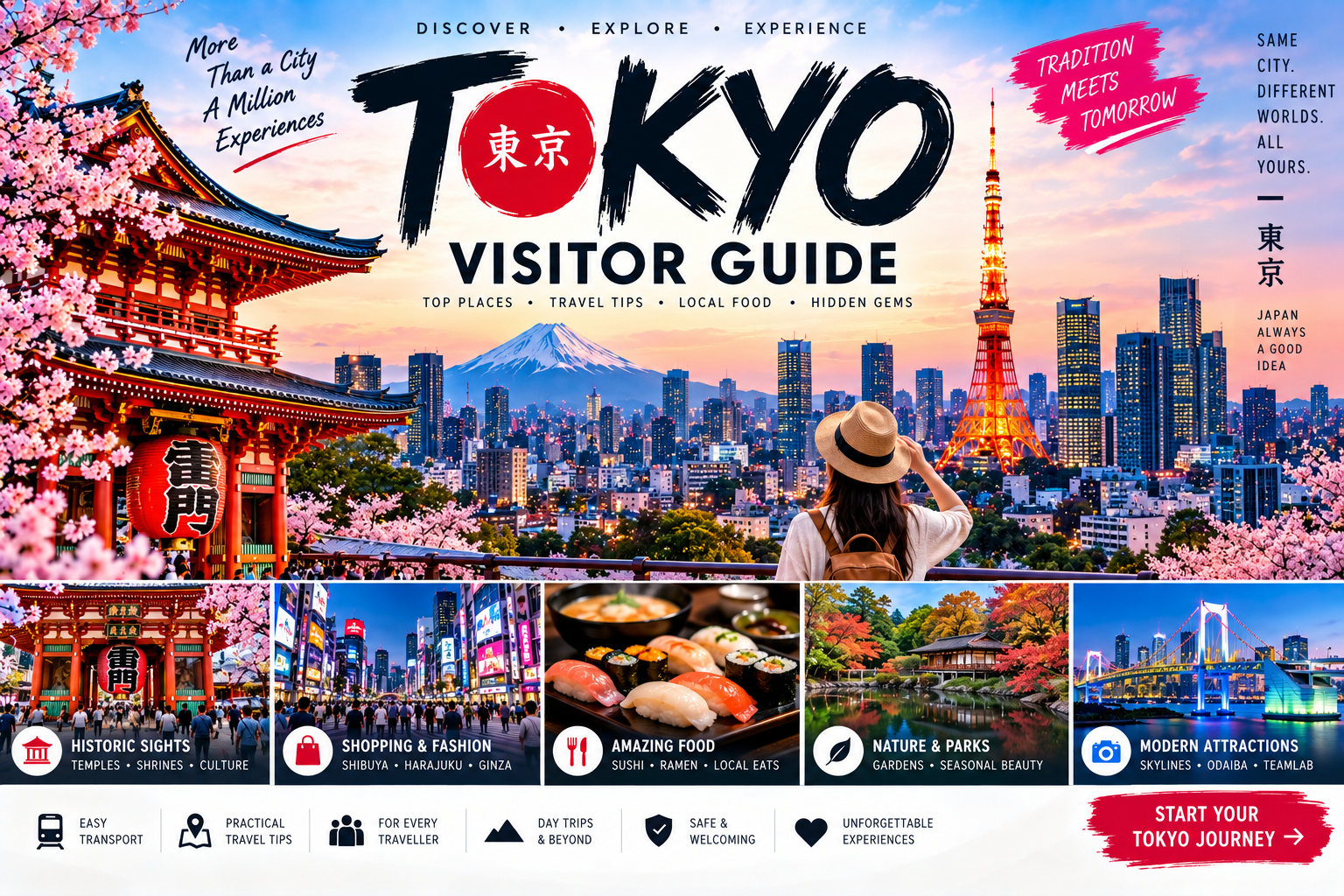
Tokyo visitor guide gives you a practical framework for exploring Japan’s capital, from arrival and public transportation to neighbourhoods, attractions, food, etiquette, budgeting, safety and day-trip planning. Whether you have three days or two weeks, the smartest approach is to group experiences geographically, leave room for spontaneous discoveries and use Tokyo’s exceptional public transport system rather than treating the city like one enormous sightseeing checklist Tokyo Hiking
Why Tokyo Deserves a Proper Visitor Guide
Tokyo is not a destination where simply listing ten famous attractions gives you a good travel plan.
The city works differently.
Its experiences are spread across neighbourhoods, and each district has a distinct personality. Shibuya is associated with youth culture, fashion and contemporary city life. Asakusa provides a strong connection to historic Tokyo. Ginza is associated with shopping, dining and polished urban streets. Akihabara has a long association with electronics and pop culture. Shinjuku combines business districts, shopping, entertainment and enormous transport connections.
The official Tokyo tourism guide itself divides experiences into areas such as attractions, shopping, culture, Edo history, food and drink, anime and manga, outdoors and nature, sports, art and design, and walks and tours.
This matters because the best Tokyo itinerary is usually not:
Attraction A → Attraction B → Attraction C → Attraction D.
A better plan is:
Neighbourhood → nearby attractions → local food → walking route → evening activity.
This simple change can save time and make the trip feel much more relaxed.
Understanding Tokyo Before You Visit
Tokyo Is a City of Cities
One of the biggest mistakes first-time visitors make is thinking of Tokyo as a single compact tourist centre.
Tokyo is better understood as a collection of interconnected urban environments.
The atmosphere can change dramatically within a few train stops.
A quiet lane in Yanaka may feel completely different from the neon streets around Shinjuku. The historic atmosphere of Asakusa contrasts with the commercial energy of Ginza. Harajuku combines fashion and youth culture with the peaceful forest surrounding Meiji Jingu.
This diversity is why Tokyo works for many different types of travellers.
Tokyo Combines Old and New
Tokyo’s appeal does not depend entirely on futuristic technology.
Its character comes from the interaction between different periods.
Visitors can experience:
- Edo-era history
- Buddhist temples
- Shinto shrines
- Japanese gardens
- traditional crafts
- modern architecture
- contemporary art
- fashion
- electronics
- anime and manga culture
- high-rise city views
- waterfront development
- neighbourhood shopping streets
- seasonal festivals
- modern Japanese cuisine
The result is a city where historical and contemporary experiences often sit within the same itinerary.
Tokyo Is Highly Connected
Tokyo’s transport network is one of the most important reasons visitors can explore so much in a short period.
The official Tokyo tourism guide notes that the city’s network includes trains, subways, buses, monorails, waterbuses and taxis, while multilingual signage has made navigation increasingly accessible to international visitors.
Tokyo’s subway network alone covers more than 280 stations. Tokyo Metro operates nine lines across approximately 195 kilometres of track and 180 stations.
For visitors, the lesson is simple:
You do not need to stay directly beside every attraction.
Instead, choose accommodation close to a convenient station and organise your sightseeing around transport connections.
When Is the Best Time to Visit Tokyo?
Spring in Tokyo
Spring is one of Tokyo’s most visually famous seasons.
Cherry blossoms can transform parks, riversides and neighbourhood streets, creating spectacular scenery.
However, spring is also a period when popular areas can become exceptionally busy.
If you visit during cherry blossom season, build flexibility into your itinerary. Do not schedule every minute around one viewing location.
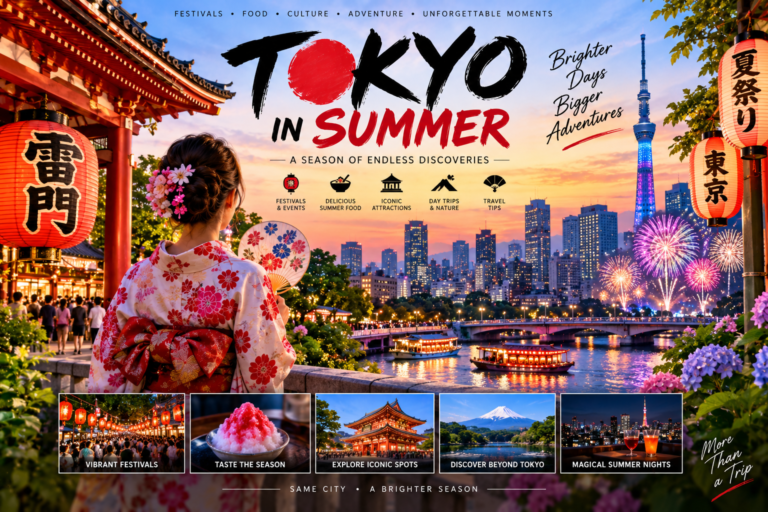
Summer in Tokyo
Summer can be hot and humid.
This makes early mornings especially valuable.
Outdoor sightseeing should ideally be divided into shorter periods with opportunities to cool down indoors.
The official Tokyo Volunteer Guide programme changes some routes during July through September because several tours involve long walks outdoors or unshaded areas. The organisation specifically advises visitors to stay hydrated, seek shade and take breaks.
A useful summer strategy is:
Outdoor morning → indoor afternoon → evening sightseeing.
Autumn in Tokyo
Autumn can be excellent for travellers interested in parks, gardens and seasonal scenery.
The combination of comfortable sightseeing conditions and changing foliage makes it a good season for walking-focused itineraries.
Neighbourhood exploration becomes especially enjoyable because you can spend more time outside without the intensity of summer heat.
Winter in Tokyo
Winter offers a different Tokyo.
The air can be crisp, daylight hours are shorter and evening illumination can become an important part of the experience.
Winter also works well for museums, shopping, food experiences, architecture and indoor cultural attractions.
The best season ultimately depends on what you want from Tokyo rather than on a universal answer.
How to Get to Tokyo
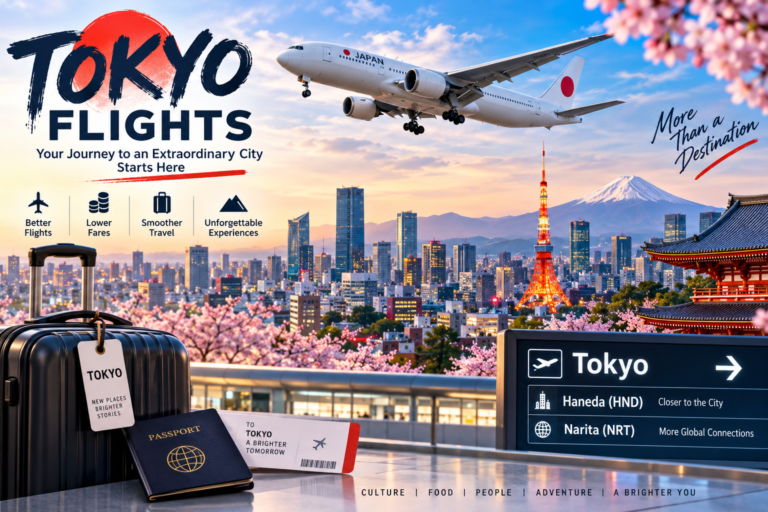
Flying Into Haneda Airport
Haneda Airport is located relatively close to central Tokyo and can be convenient for travellers staying in many central districts.
It is particularly useful when you want to minimise the time between landing and beginning your city experience.
Flying Into Narita International Airport
Narita International Airport is outside Tokyo in neighbouring Chiba Prefecture.
It can take longer to reach central Tokyo, but there are efficient rail and bus connections.
The official Tokyo tourism guide identifies Haneda and Narita as the principal airports serving visitors arriving by air.
The best airport is therefore not simply the one with the cheapest flight.
Consider:
- arrival time
- hotel location
- luggage
- rail connections
- airport transfer cost
- whether you are travelling with children
- whether you have a late-night arrival
Tokyo Transportation Guide
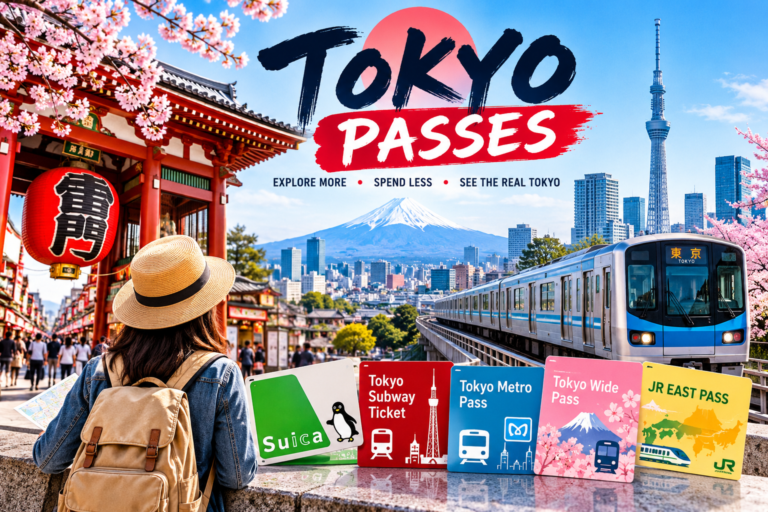
Use an IC Card
For many visitors, an IC card is one of the simplest ways to navigate Tokyo.
Suica and PASMO can be used on many major train and bus services and can also be used for purchases at participating shops and vending machines. Mobile versions are available on smartphones.
Visitors can also consider tourist versions such as Welcome Suica and Tourist PASMO, which have specific conditions and validity periods.
Do Not Automatically Buy Every Rail Pass
A common misconception is that every traveller should buy a multi-day transportation pass.
That is not necessarily true.
If your itinerary involves a modest number of train journeys, an IC card may be simpler.
A pass can become useful when your planned journeys make the maths favourable.
Tokyo offers different options, including:
- Tokyo Metro 24-Hour Ticket
- Tokyo Subway Ticket
- Toei One-Day Pass
- Tokyo One-Day Ticket
- Toei Bus One-Day Pass
The official Tokyo guide currently lists the Tokyo Metro 24-Hour Ticket at ¥700 for adults, while the Tokyo Subway Ticket is listed at ¥1,000, ¥1,500 and ¥2,000 for 24-, 48- and 72-hour versions respectively. Prices and conditions should always be checked before purchase because transport products can change.
Learn the Difference Between JR, Tokyo Metro and Toei
Tokyo transport becomes much easier when you understand that different operators exist.
You may use:
- JR East
- Tokyo Metro
- Toei Subway
- private railway companies
- buses
- monorails
- other regional operators
The mistake is not using multiple operators.
The mistake is assuming they are all the same system.
A journey may involve changing from one operator to another, so allow a little extra time when you are unfamiliar with the station.
Tokyo Stations Can Be Huge
Some Tokyo stations are effectively underground cities.
Large stations can contain:
- multiple platforms
- underground shopping areas
- department stores
- restaurants
- different railway operators
- multiple exits
- pedestrian connections
Always check your destination exit rather than simply searching for the station name.
This small habit can save significant walking time.
Consider Walking Between Nearby Areas
Tokyo’s transport system is excellent, but you do not need to take a train for every movement.
Walking between nearby districts can reveal:
- local cafés
- small temples
- residential streets
- independent shops
- tiny restaurants
- neighbourhood parks
- architectural details
GO TOKYO’s own three-day itinerary emphasises walking as a useful way to experience the city and recommends a rechargeable IC card for convenient transportation.
Where to Stay in Tokyo
Shinjuku
Shinjuku is particularly useful for travellers who value transport connections, shopping, restaurants and evening activity.
It can work well as a first-time base because multiple rail connections make it easier to reach different parts of Tokyo and beyond.
Shibuya
Shibuya suits travellers interested in:
- fashion
- contemporary Tokyo
- cafés
- shopping
- nightlife
- youth culture
It is also a strong location for exploring Harajuku and Omotesando.
Asakusa
Asakusa offers a more historic atmosphere.
It can appeal to travellers who want easier access to:
- Senso-ji
- traditional streets
- Sumida River
- older neighbourhood scenery
- cultural attractions
Ueno
Ueno is useful for travellers interested in museums, parks, markets and cultural attractions.
It can also provide practical rail connections.
Ginza
Ginza is particularly attractive for travellers interested in:
- upscale shopping
- department stores
- restaurants
- architecture
- central Tokyo
Tokyo Station and Marunouchi
This area works well for business travellers and visitors who want central access to major transport connections.
It also provides convenient access to the Imperial Palace area and Nihonbashi.
Ikebukuro
Ikebukuro can be overlooked by first-time visitors, but it offers shopping, entertainment, restaurants and strong transport connections.
The official Tokyo Volunteer Guide programme now includes a route exploring Ikebukuro and nearby Zoshigaya, combining historic streets with the modern district.
The Tokyo Neighbourhoods Every Visitor Should Understand
Asakusa
Visit Asakusa for:
- Senso-ji
- Kaminarimon
- Nakamise shopping street
- traditional atmosphere
- Sumida River views
Go early if you want a quieter experience.
Shibuya
Shibuya is associated with one of Tokyo’s most famous pedestrian crossings, but there is much more to the area.
Explore:
- Shibuya Crossing
- Shibuya Sky
- shopping streets
- cafés
- contemporary architecture
- smaller side streets
Shinjuku
Shinjuku can feel almost like several cities within one district.
Explore:
- Shinjuku Gyoen
- department stores
- observation points
- shopping areas
- entertainment streets
- Golden Gai area
- Omoide Yokocho
Harajuku and Omotesando
This area combines fashion, design, youth culture and major cultural landmarks.
A useful route can connect Harajuku, Meiji Jingu and Omotesando.
The official volunteer programme offers a roughly three-hour Harajuku route combining its fashion-oriented streets with a shrine experience.
Ginza
Ginza is ideal for polished city walking.
Explore department stores, flagship shops, restaurants, cafés and architectural landmarks.
Ueno
Ueno is excellent for visitors who enjoy museums, cultural attractions, parks and traditional shopping areas.
Akihabara
Akihabara remains one of the best-known places to explore electronics, anime, manga and Japanese pop culture.
Do not assume the entire experience is about shopping.
The surrounding streets can also be interesting for architecture, cafés and local city life.
Yanaka
Yanaka offers a different pace.
Its quieter streets and historic atmosphere make it useful when you want to experience a less intensely commercial side of Tokyo.
Roppongi
Roppongi is useful for art, architecture, dining and city views.
It can also be combined with nearby Azabu and Tokyo Tower areas.
Odaiba
Odaiba provides a waterfront perspective of Tokyo.
It can be particularly interesting for families and travellers who want:
- waterfront views
- large modern buildings
- entertainment
- shopping
- technology-focused attractions
Tokyo Attractions: What Should You Actually See?
Senso-ji
Senso-ji is one of Tokyo’s most recognisable temples and a natural starting point for understanding Asakusa.
Rather than treating it as a quick photograph, spend time exploring the surrounding streets.
Meiji Jingu
Meiji Jingu offers an important contrast to the dense urban environment around Harajuku.
The approach through the forest is part of the experience.
Tokyo Skytree
Tokyo Skytree provides panoramic city views.
Weather matters, so if visibility is poor, consider whether changing your schedule would improve the experience.
Tokyo Tower
Tokyo Tower remains one of Tokyo’s most recognisable landmarks.
Its surroundings can be combined with Roppongi, Azabu or nearby parks.
Imperial Palace Area
The Imperial Palace area provides a different perspective on central Tokyo.
The East Gardens are particularly useful for travellers interested in history, greenery and quieter walking.
The official volunteer guide programme currently offers an East Gardens and Outer Garden route, with seasonal adjustments during summer.
Shibuya Sky
For travellers interested in modern Tokyo photography and skyline views, Shibuya Sky has become a major attraction.
Tokyo Metropolitan Government Building
This is an especially useful option for budget-conscious visitors because the government building’s observation experience can provide major skyline views without requiring the same type of ticketed observation-deck experience.
Official volunteer guides also provide observation-deck guidance at approximately 202 metres above ground level.
Tokyo National Museum
Located in Ueno, the Tokyo National Museum is a strong choice for visitors who want more context about Japanese art and history.
teamLab Experiences
Digital-art experiences have become an important part of contemporary Tokyo tourism.
They are particularly attractive to travellers looking for interactive photography, immersive installations and modern art experiences.
Tokyo Food Guide
Sushi
Tokyo is one of the world’s major destinations for sushi.
However, visitors should not assume expensive sushi automatically means a better experience.
Look for a restaurant appropriate for your budget and dining preferences.
Ramen
Ramen is one of the easiest ways to experience Tokyo’s everyday food culture.
Different restaurants specialise in different styles, broths and preparation methods.
Tempura
Tempura can range from casual restaurants to highly specialised dining experiences.
Japanese Breakfast
For travellers staying in Tokyo several days, trying a Japanese-style breakfast can provide a different perspective on everyday food culture.
Convenience Stores
Do not underestimate convenience stores.
They can be useful for:
- breakfast
- drinks
- snacks
- quick meals
- travel supplies
They are also practical when you are travelling on a budget.
Department Store Food Floors
Department-store food halls are one of the most underrated experiences for first-time visitors.
They provide a convenient way to discover:
- boxed meals
- sweets
- bakery products
- regional foods
- Japanese snacks
- premium ingredients
How Much Does a Tokyo Trip Cost?
Budget Travel
A budget-conscious traveller can reduce costs by:
- staying outside premium central districts
- using public transportation
- eating at casual restaurants
- using convenience stores strategically
- visiting free attractions
- walking between nearby districts
- choosing fewer paid observation decks
Mid-Range Travel Tokyo visitor guide
A mid-range traveller might combine:
- a comfortable hotel
- restaurant meals
- several paid attractions
- occasional taxis
- one or two guided experiences
Premium Travel Tokyo visitor guide
Premium travellers may spend significantly more on:
- luxury hotels
- private guides
- high-end restaurants
- private vehicles
- exclusive cultural experiences
- premium observation experiences
The important lesson is that Tokyo does not require a single fixed budget.
Your travel style determines the cost.
A Practical Tokyo Visitor Guide for First-Time Travellers
Three-Day Tokyo visitor guide
Day One: Traditional Tokyo visitor guide
Start in Asakusa.
Explore Senso-ji and surrounding streets before continuing toward Ueno or the Tokyo Skytree area.
Finish the evening with dinner somewhere convenient to your accommodation.
Day Two: Modern Tokyo visitor guide
Start around Meiji Jingu and Harajuku.
Walk toward Omotesando.
Continue to Shibuya.
Spend the evening around Shibuya or Shinjuku.
Day Three: Central Tokyo visitor guide
Start around Tokyo Station and Marunouchi.
Explore the Imperial Palace area.
Continue toward Ginza.
Finish with a skyline experience or dinner.
This approach provides variety without attempting to cross the entire city repeatedly.
A Five-Day Tokyo Visitor Guide
Day One Tokyo visitor guide
Asakusa and Ueno.
Day Two Tokyo visitor guide
Harajuku, Meiji Jingu, Omotesando and Shibuya.
Day Three Tokyo visitor guide
Tokyo Station, Imperial Palace area and Ginza.
Day Four Tokyo visitor guide
Shinjuku, Shinjuku Gyoen and surrounding neighbourhoods.
Day Five Tokyo visitor guide
Choose a specialised experience:
- Akihabara
- Odaiba
- Yanaka
- Kichijoji
- Mt. Takao
- museum day
- food tour
- architecture tour
- shopping day
The fifth day should be shaped around your interests rather than another generic sightseeing checklist.
Tokyo Visitor Guide for Families
Families should think about energy rather than simply distance.
A child may tolerate a short train ride better than a long walk through several enormous stations.
Build the day around:
- one major attraction
- one meal
- one flexible activity
- rest time
Useful family-oriented areas can include:
- Ueno
- Odaiba
- Asakusa
- Tokyo Skytree
- Tokyo Disney Resort area
- museums
- interactive digital-art experiences
Avoid scheduling five major attractions in one day.
Tokyo’s scale can make an itinerary look efficient on paper while becoming exhausting in reality.
Tokyo Visitor Guide for Solo Travellers
Tokyo can work particularly well for solo travel because many activities do not require a group.
Solo visitors can comfortably enjoy:
- cafés
- museums
- neighbourhood walks
- shopping
- food experiences
- temples
- gardens
- observation decks
One advantage is flexibility.
If you love a neighbourhood, stay longer.
If you do not, move on.
Tokyo Visitor Guide for Couples
Couples can build itineraries around atmosphere rather than simply famous landmarks.
Consider:
- Tokyo Bay
- evening skyline views
- gardens
- cafés
- seasonal illumination
- neighbourhood walks
- cultural experiences
- food-focused evenings
The best romantic Tokyo experiences often come from combining a scenic location with unstructured time.
Tokyo Visitor Guide for Senior Travellers
Older travellers should pay particular attention to:
- walking distance
- stairs
- station complexity
- seating availability
- heat
- rest periods
- luggage handling
Accessible tourism services are increasingly integrated into Tokyo’s visitor infrastructure.
Tokyo’s official volunteer programme includes an accessible tour designed for wheelchair and stroller users, although participants should understand that guides generally do not provide physical assistance such as pushing wheelchairs.
Tokyo Visitor Guide for Travellers With Limited Japanese
You can travel successfully without speaking Japanese.
However, learning a few basic expressions can improve everyday interactions.
Useful phrases include:
- Hello
- Thank you
- Excuse me
- Please
- Where is…?
- How much?
- English, please
More importantly, use visual information effectively.
Train stations generally provide extensive signage, and Tokyo’s transport system has multilingual information.
Tourist Information Centres in Tokyo visitor guide
If you become confused, do not struggle unnecessarily.
Tokyo currently has six official Tokyo Tourist Information Centers operated by the Tokyo Metropolitan Government:
- Tokyo Metropolitan Government
- Busta Shinjuku
- Haneda Airport
- Keisei Ueno
- Yaesu
- Tama
The centres provide sightseeing, transportation, accommodation and other visitor information. Some locations also offer services such as luggage storage, currency exchange, ticket sales and accessible tourism support.
Tokyo also provides an online tourism assistance service called Tokyo Navigation AI, designed to provide travel consultation around the clock.
Tokyo Tours: When Should You Hire a Guide?
You do not need a guide for every day.
A guide can be especially useful when:
- you want historical context
- you have limited time
- you want local food knowledge
- you are interested in architecture
- you want a private itinerary
- you are travelling with older family members
- you want help understanding cultural practices
A self-guided day can then provide freedom and spontaneity.
This combination can be more rewarding than using guided tours for the entire trip.
Official Tokyo Volunteer Tours Tokyo visitor guide
Tokyo provides an interesting middle ground between completely independent travel and commercial private tours.
Official Tokyo Volunteer Guide services currently include routes covering areas such as:
- Shinjuku
- Asakusa
- Ryogoku
- Imperial Palace
- Harajuku
- Japanese gardens
- architecture
- Mt. Takao
- Shinjuku at night
- Asakusa at night
- Ikebukuro
Tours are available in multiple languages, including English, French, German, Italian, Spanish, Chinese and Korean on the listed programme. Reservations are generally required at least three days in advance and can be made up to one month ahead.
This is one of the most useful options for travellers who want interpretation without necessarily booking a premium private tour.
Ten Major Tour and Travel Brands to Know
The following brands are options to research rather than a ranking. Each has a different business model, inventory and traveller profile.
| Brand Tokyo visitor guide | Typical Tokyo Use | Main Strength | Best For |
|---|---|---|---|
| JTB | Tokyo travel and packages | Established Japanese travel network | Travellers wanting packaged arrangements |
| HIS Japan Travel | Guided tours and experiences | Japan-focused travel expertise | International visitors |
| Klook | Tours, tickets and activities | Broad digital activity inventory | Independent travellers |
| Rakuten Travel Experiences | Tickets and experiences | Large Japan-focused marketplace | Activity-focused trips |
| VELTRA | Tours and experiences | Japan experience marketplace | Cultural and activity travellers |
| Viator | Tours and sightseeing | Very broad global inventory | Visitors comparing tour formats |
| GetYourGuide | Tours and attractions | International booking platform | First-time visitors |
| Trip.com | Day tours and activities | Integrated travel platform | Travellers booking multiple trip components |
| Japanican | Japan tours and travel products | Japan-focused travel services | Visitors planning broader Japan travel |
| KKday | Activities and day tours | Strong Asian travel inventory | Independent Asia-Pacific travellers |
Current platform inventories demonstrate how broad the Tokyo activity market has become. Rakuten Travel Experiences currently lists more than 1,000 Tokyo activities and experiences, while its sightseeing section includes cultural walking tours, sumo-related experiences, food activities and outdoor options.
HIS currently lists more than 100 Tokyo tour programmes on its international Tokyo page, including cultural experiences and food-related activities.
VELTRA’s Tokyo inventory includes sightseeing, private charters, cruises, culture, food, arts and crafts, anime and pop-culture experiences, among other categories.
Viator currently displays more than 1,000 Tokyo tour and sightseeing results across categories such as walking tours, cultural tours, private sightseeing and cruises.
GetYourGuide’s Tokyo inventory includes experiences ranging from Tokyo Skytree and teamLab tickets to Mt. Fuji excursions, sumo experiences and guided sightseeing.
Trip.com currently lists hundreds of Tokyo day-tour options, including Mt. Fuji and surrounding-area excursions.
KKday also has a large Tokyo activity inventory, including sightseeing, walking tours, food tours, hiking, cruises and private charter services.
Klook’s current Tokyo tour data indicates a typical tour price around US$38, with many listings falling roughly between US$17 and US$81 based on its July 2025–June 2026 booking data. Klook’s historical booking data also indicates higher demand around September and November and lower demand in June. These figures describe Klook’s marketplace and should not be treated as a universal Tokyo price benchmark.
How to Choose a Tokyo Tour
Choose by Experience Tokyo visitor guide
Do not start with the company.
Start with the experience.
Ask:
- Do I want history?
- Food?
- Photography?
- Architecture?
- Shopping?
- Anime?
- Nature?
- Night views?
- Traditional culture?
- Family activities?
Then compare providers.
Choose by Group Size Tokyo visitor guide
Large groups can be affordable and social.
Small groups can provide more interaction.
Private tours offer maximum flexibility but normally cost more.
Check the Walking Requirement Tokyo visitor guide
A “half-day walking tour” may involve significantly more physical activity than the title suggests.
Look at:
- distance
- stairs
- weather exposure
- transport changes
- duration
Check What Is Actually Included Tokyo visitor guide
Always examine whether the price includes:
- transport
- admission tickets
- food
- drinks
- hotel pickup
- guide
- taxes
- reservation fees
A low headline price is not necessarily the lowest final cost.
Tokyo Visitor Guide for Budget Travellers
Use Free Attractions Strategically Tokyo visitor guide
Tokyo contains many experiences that cost little or nothing.
Examples include:
- neighbourhood walks
- public parks
- many shrine visits
- temple grounds
- certain observation experiences
- street photography
- architectural walks
The Tokyo Metropolitan Government Building observation experience is particularly useful for travellers interested in skyline views.
Eat Where Locals Eat Tokyo visitor guide
You do not need a premium restaurant for every meal.
Mix:
- casual restaurants
- ramen shops
- cafés
- department-store food halls
- convenience stores
- market-style food areas
Walk More Tokyo visitor guide
Walking can reduce transport costs while improving your experience of neighbourhoods.
Tokyo Visitor Guide for Digital Travellers
Download Important Apps Before Departure Tokyo visitor guide
Consider having:
- maps
- translation
- weather
- transport
- booking apps
- airline apps
- hotel apps
Keep Your Phone Charged Tokyo visitor guide
Navigation-heavy travel consumes battery quickly.
Carry a power bank.
Use Mobile IC Cards Where Supported Tokyo visitor guide
Tokyo’s official tourism information confirms that mobile Suica and PASMO can be used through smartphones, while Welcome Suica Mobile also provides a mobile option for visitors.
Tokyo Internet and Connectivity
Internet access is extremely useful in Tokyo because navigation can involve:
- station exits
- platform changes
- walking routes
- restaurant searches
- attraction reservations
Options include:
- eSIM
- physical SIM
- pocket Wi-Fi
- hotel Wi-Fi
- public Wi-Fi
Do not wait until you are lost in a giant station to discover your phone has no data.
Tokyo Travel Etiquette
Keep Your Voice Low on Public Transport
Train etiquette is important.
Avoid loud conversations and disruptive behaviour.
Queue Properly
Follow marked lines and local queuing behaviour.
Do Not Block Station Corridors
Large stations are busy.
Standing in the middle of a passage to check your phone can create unnecessary congestion.
Move to the side.
Carry Your Rubbish
Public bins may not always be conveniently available.
Keep a small bag for rubbish until you find an appropriate disposal point.
Follow Photography Rules
Not every location permits unrestricted photography.
Look for signs and follow staff instructions.
Respect Shrines and Temples
Observe posted instructions and behave respectfully.
These are religious and cultural spaces, not merely photo backgrounds.
Common Tokyo Travel Mistakes and Their Solutions
Mistake: Trying to See Everything
Problem: You spend more time commuting than experiencing Tokyo.
Solution: Group attractions geographically.
Mistake: Booking Too Many Activities
Problem: One delayed train or long lunch can disrupt the entire day.
Solution: Book one or two fixed activities and leave flexible periods.
Mistake: Ignoring Walking Distance
Problem: A station-to-attraction route may be much longer than expected.
Solution: Check the complete walking route before leaving.
Mistake: Underestimating Stations
Problem: You arrive at the correct station but use the wrong exit.
Solution: Save the exact exit number or landmark.
Mistake: Buying Every Transport Pass
Problem: You pay for a pass you do not fully use.
Solution: Compare expected fares before purchasing.
Mistake: Visiting Famous Places Only at Peak Times
Problem: Crowds can reduce the experience.
Solution: Visit popular locations early when practical.
Mistake: Ignoring the Weather
Problem: A long outdoor itinerary becomes uncomfortable.
Solution: Check the forecast each morning and adjust your schedule.
Mistake: Scheduling Mt. Fuji Without Considering Visibility Tokyo visitor guide
Problem: Cloud cover can obscure the mountain.
Solution: Keep your Mt. Fuji day flexible where possible.
Pros and Cons of Visiting Tokyo visitor guide
Advantages of Visiting Tokyo visitor guide
- Exceptional public transport
- Huge range of neighbourhoods
- Strong food culture
- Excellent museums
- Historic and modern attractions
- Broad accommodation choice
- Strong infrastructure for international travellers
- Many free and paid experiences
- Excellent shopping
- Diverse cultural experiences
- Large number of guided tours
Potential Challenges Tokyo visitor guide
- Huge stations
- Crowded popular areas
- Long walking distances
- Language barriers in some situations
- High demand during major travel periods
- Heat and humidity during summer
- Accommodation prices can rise during busy periods
- Too many attractions can make itinerary planning difficult
The solution is not to avoid Tokyo.
The solution is to plan around the city’s actual scale.
How to Build a Better Tokyo Itinerary
Step One: Choose Your Base Tokyo visitor guide
Select a neighbourhood according to your transport needs and interests.
Step Two: Choose Three Core Experiences Tokyo visitor guide
Do not begin with 30 attractions.
Choose three things that would make the trip memorable.
Step Three: Add Nearby Attractions Tokyo visitor guide
Once the core experiences are selected, add places nearby.
Step Four: Reserve Only What Needs Reservations Tokyo visitor guide
Do not lock every hour.
Step Five: Leave Empty Time Tokyo visitor guide
This is one of the most important Tokyo travel tips.
Empty time creates opportunities for:
- cafés
- shopping
- photography
- neighbourhood discoveries
- unexpected restaurants
- resting
The “One Neighbourhood, One Story” Strategy
One of the most useful ways to experience Tokyo is to give each day a theme.
For example:
Asakusa = Old Tokyo
Shibuya = Modern Tokyo
Ueno = Culture and museums
Harajuku = Youth and fashion
Ginza = Premium urban Tokyo
Yanaka = Historic neighbourhood life
Odaiba = Waterfront and futuristic Tokyo
This makes your trip easier to remember.
Instead of returning home with hundreds of random photographs, you return with distinct stories.
A More Sustainable Way to Explore Tokyo visitor guide
Tokyo’s dense public transport network means visitors can often explore without relying heavily on private cars.
Walking and public transportation can also make neighbourhood exploration more immersive.
The official Tokyo guide encourages responsible travel and provides information on accessibility, disaster preparedness, connectivity and responsible tourism.
Travellers can contribute by:
- avoiding unnecessary disposable items
- respecting residential neighbourhoods
- following recycling and rubbish rules
- avoiding excessive noise
- supporting local businesses
- following attraction regulations
- travelling respectfully through crowded spaces
Accessibility and Inclusive Tokyo visitor guide
Tokyo is increasingly developing accessible tourism resources.
Official information centres provide accessibility-related assistance, including wheelchair and stroller availability at selected locations.
The volunteer guide programme also includes a specific accessible route.
However, accessibility is not identical everywhere.
Before booking, check:
- step-free access
- lift availability
- toilet facilities
- transport requirements
- walking distance
- slope conditions
- assistance policy
Travellers should communicate specific needs in advance rather than assuming every attraction has identical accessibility.
Tokyo Safety and Emergency Preparation Tokyo visitor guide
Tokyo is generally structured around strong public infrastructure, but travellers should still prepare responsibly.
Keep:
- passport information
- emergency contacts
- accommodation details
- travel insurance information
- medication information where relevant
- copies of important documents
Japan is also exposed to natural hazards, including earthquakes and typhoons.
Follow official instructions during an emergency rather than relying solely on social media.
What to Pack for Tokyo visitor guide
Comfortable Shoes Tokyo visitor guide
This is perhaps the most important packing recommendation.
You may walk much more than expected.
Portable Charger Tokyo visitor guide
Navigation and translation apps consume battery.
Compact Umbrella Tokyo visitor guide
Weather can change.
Light Layers Tokyo visitor guide
Layering helps across changing temperatures.
Small Day Bag Tokyo visitor guide
Avoid carrying a huge backpack through crowded stations.
Reusable Water Bottle Tokyo visitor guide
Useful during long sightseeing days, particularly in warmer weather.
Tokyo Visitor Guide: A Daily Planning Formula
A practical day can follow this structure:
8:00–9:00 — Breakfast
9:00–12:00 — Main sightseeing
12:00–13:30 — Lunch
13:30–16:00 — Flexible neighbourhood exploration
16:00–17:00 — Rest
17:00–20:00 — Evening attraction or shopping
20:00 onward — Dinner
This structure is intentionally flexible.
Tokyo is much more enjoyable when your schedule has room to breathe.
Future Trends in Tokyo Tourism
AI-Assisted Trip Planning Tokyo visitor guide
Digital travel assistance is becoming increasingly relevant.
Tokyo itself now offers the Tokyo Navigation AI service through its official tourism infrastructure.
This suggests a future where visitors increasingly receive itinerary suggestions based on:
- location
- weather
- opening hours
- interests
- crowd levels
- transport conditions
More Personalised Tourism Tokyo visitor guide
Mass sightseeing is gradually being complemented by interest-based experiences.
Travellers increasingly search for:
- local food
- neighbourhood walks
- craft experiences
- architecture
- photography
- anime and pop culture
- accessible tourism
- private tours
- small-group activities
Growth of Experience-Based Tokyo visitor guide
Tokyo’s tourism ecosystem is moving beyond landmark sightseeing.
Platforms now offer experiences ranging from kintsugi and crafts to food, sumo, cruises, outdoor activities and local neighbourhood tours.
Greater Demand for Flexible Itineraries Tokyo visitor guide
As visitors become more experienced travellers, rigid itineraries may become less attractive.
A flexible itinerary can respond to:
- weather
- crowds
- reservations
- seasonal events
- personal energy
- unexpected discoveries
Continued International Growth Tokyo visitor guide
Tokyo’s record 2025 international visitor numbers indicate that global demand remains extremely strong. The Tokyo Metropolitan Government reported approximately 28.65 million international visitors in 2025, while international visitor spending reached approximately ¥4.5534 trillion.
That means future visitors should increasingly think about advance reservations for popular attractions and tours.
The Future Tokyo visitor guide
The future Tokyo traveller is likely to be more informed before arrival.
Instead of simply asking:
What are the top ten attractions?
Travellers increasingly ask:
- Which neighbourhood fits my interests?
- What can I do early in the morning?
- Where can I avoid unnecessary queues?
- Which experiences are genuinely local?
- What is accessible?
- Which activities work with children?
- What can I book online?
- Which areas are best for photography?
- How can I combine history with modern culture?
That is a healthier approach to travel.
FAQs
How many days do you need in Tokyo?
Three days can provide a useful introduction to Tokyo, while five days allows more neighbourhood exploration and flexibility. A week or longer gives you the opportunity to explore beyond the central sightseeing circuit.
Is Tokyo easy for first-time visitors?
Yes, although its size and major stations can initially feel overwhelming. Multilingual signage, extensive public transport and tourist information services make independent travel considerably easier.
What is the best area to stay in Tokyo?
There is no single answer. Shinjuku and Shibuya are useful for transport and modern city experiences, Asakusa for historic atmosphere, Ueno for culture and museums, and Ginza for central shopping and dining.
Is public transport in Tokyo difficult?
It can be confusing during your first few journeys, particularly in major stations, but it becomes much easier once you understand the difference between operators and use an IC card.
Should I use Suica or PASMO?
Both can be useful for visitors. The practical choice depends on availability and your preferred physical or mobile setup. Tokyo’s official tourism information explains current IC-card options and tourist versions.
Do I need a Tokyo rail pass?
Not necessarily. Calculate your expected journeys first. An IC card may be simpler for moderate travel, while a pass can make sense if your planned journeys fit its coverage and price.
How much walking should I expect?
Potentially a lot. Even with excellent public transportation, you may walk between stations, attractions and neighbourhoods. Comfortable shoes are strongly recommended.
Is Tokyo expensive?
Tokyo can be expensive or relatively affordable depending on your choices. Accommodation, dining, attractions and transport vary widely, so visitors can create budget, mid-range or premium trips.
What should I see in Tokyo for the first time?
A balanced first trip could include Asakusa, Shibuya, Shinjuku, Harajuku, Meiji Jingu, Tokyo Station, Ginza and at least one museum, garden or skyline experience.
Is Tokyo suitable for families?
Yes. Families can choose from museums, parks, interactive experiences, waterfront attractions, shopping and major entertainment destinations. The main challenge is managing walking and station complexity.
Is Tokyo suitable for solo travellers?
Yes. Tokyo offers many experiences that work naturally for solo visitors, including restaurants, cafés, museums, shopping, neighbourhood walks and cultural attractions.
Can I visit Tokyo without speaking Japanese?
Yes. You can navigate many parts of Tokyo using English-language information, multilingual signs, translation tools and visual communication. Learning a few Japanese expressions is still helpful.
Are Tokyo tours worth booking?
They can be particularly useful when you want historical context, local knowledge, specialised food experiences, private transport or a highly structured introduction to a neighbourhood.
Are there free guided tours in Tokyo?
Tokyo has official volunteer guide services. Some tours are described as free guidance, although participants may be required to cover transportation and admission-related costs for the accompanying guides. Reservations and conditions vary by route.
Can I get tourist information after arriving?
Yes. Tokyo currently has six official Tokyo Tourist Information Centers, including locations at Haneda Airport, Busta Shinjuku, Keisei Ueno, Yaesu, Tokyo Metropolitan Government and Tama.
What is the best way to explore Tokyo?
Combine public transportation with walking. Use trains for major distances and walk between nearby attractions so that you experience the neighbourhood rather than only the destination.
Should I visit Mt. Fuji from Tokyo?
A Mt. Fuji day trip can be worthwhile, particularly when visibility is good. However, it is a full-day commitment and should not automatically replace a Tokyo neighbourhood day if you have a short trip.
What is the biggest Tokyo travel mistake?
Trying to do too much.
A slower itinerary that allows you to understand a neighbourhood can be more memorable than a packed schedule covering fifteen famous attractions.
Conclusion
Tokyo is one of the world’s most fascinating cities because it refuses to fit into a single category. It is historic and futuristic, peaceful and energetic, highly organised and full of surprises. The most successful visit is rarely the one where you check off the greatest number of attractions. It is the one where you understand how the city fits together. Use public transport intelligently, organise your days geographically, choose accommodation near a useful station, reserve important experiences in advance, allow time for food and neighbourhood exploration, and leave enough empty space for Tokyo to surprise you. Current tourism data shows that international demand is stronger than ever, making practical planning increasingly valuable.

One Comment