Tokyo Vacation: Best Things to Do, See, Eat & Explore
A Tokyo vacation combines historic temples, modern neighborhoods, extraordinary food, shopping, culture, nature and some of the world’s most efficient urban transportation. The best way to experience Tokyo is not to rush through a checklist of attractions, but to combine major landmarks with neighbourhood exploration, local food, flexible time and experiences that match your travel style Tokyo Temple
Why Tokyo Is Such a Special Vacation Destination
Tokyo’s biggest advantage is variety.
Many major cities have a strong identity.
Tokyo has many identities.
It can be:
- historical
- futuristic
- traditional
- fashionable
- peaceful
- energetic
- expensive
- affordable
- sophisticated
- casual
- family-friendly
- romantic
- adventurous
- cultural
- food-focused
And you can experience several of those identities within a single day.
Tokyo Connects Different Eras
Imagine beginning your morning at Senso-ji in Asakusa.
The architecture, temple traditions and surrounding streets connect you with old Tokyo.
Later, you can travel to Shibuya.
Suddenly, you are surrounded by huge digital displays, contemporary buildings, fashion stores and crowds.
In the evening, you might visit a quiet garden.
That transition is not unusual in Tokyo.
It is normal.
Tokyo Works for Different Types of Travellers
A Tokyo vacation can be designed for:
- first-time visitors
- solo travellers
- couples
- families
- seniors
- photographers
- food lovers
- history enthusiasts
- architecture fans
- shoppers
- anime and manga enthusiasts
- nature lovers
- luxury travellers
- budget travellers
- repeat visitors
The trick is to avoid creating one generic itinerary for everyone.
Understanding Tokyo Before Your Vacation
Tokyo Is Larger Than the Central Tourist Area
Visitors often use “Tokyo” to describe the central 23 wards.
But the Tokyo metropolitan government includes a much broader geographical area.
The western Tama region offers mountains, valleys and outdoor opportunities, while the Izu and Ogasawara Islands provide completely different landscapes from central Tokyo.
This means a longer Tokyo vacation can include nature as well as urban sightseeing.
Tokyo Is a City of Neighbourhoods
Instead of thinking about Tokyo as one destination, think about it as a collection of neighbourhood experiences.
For example:
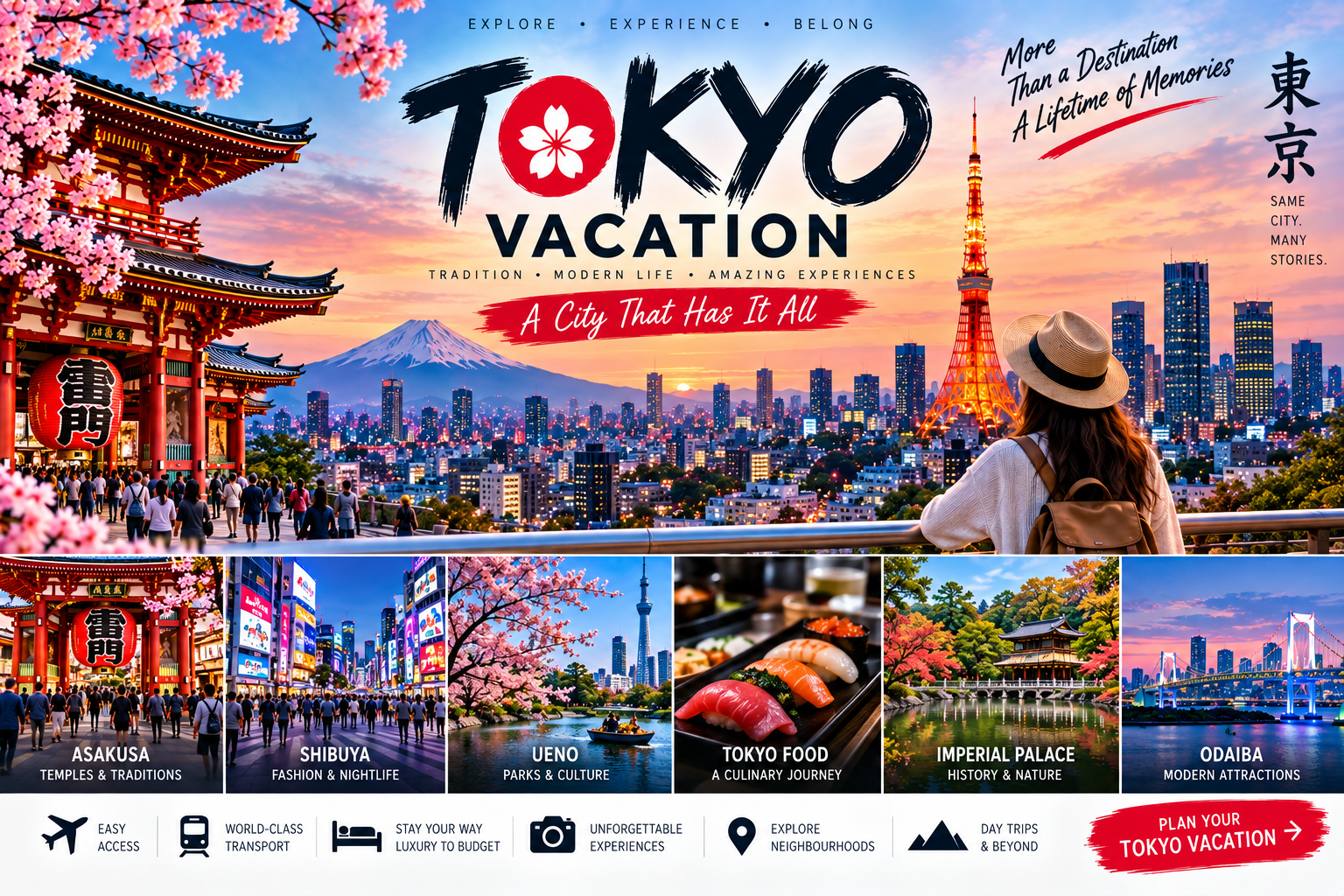
Asakusa — traditional Tokyo
Shibuya — modern urban culture
Shinjuku — entertainment, business and city energy
Harajuku — fashion and youth culture
Ginza — premium shopping and dining
Ueno — museums and culture
Yanaka — quieter historic streets
Akihabara — electronics and pop culture
Odaiba — waterfront and modern attractions
Kichijoji — relaxed neighbourhood atmosphere
This approach makes planning much easier.
When Is the Best Time for a Tokyo Vacation?
There is no single perfect season.
The best time depends on what you want to experience.
Spring Tokyo Vacation
Spring is famous for cherry blossoms.
Parks, riversides and neighbourhood streets can become spectacular during the blossom period.
However, popularity brings crowds.
If cherry blossoms are central to your trip, avoid building your entire itinerary around one viewing location.
Create alternatives.
Summer Tokyo Vacation
Summer can be hot and humid.
Outdoor sightseeing requires more planning.
Start early.
Take breaks indoors.
Use museums, shopping centres and cafés during the hottest part of the day.
Then return outside in the evening.
A useful summer formula is:
Morning outdoors → indoor afternoon → evening sightseeing.
Autumn Tokyo Vacation
Autumn can be excellent for walking.
Parks and gardens become particularly attractive as seasonal colours develop.
This is also a good season for neighbourhood exploration because comfortable weather can encourage longer walks.
Winter Tokyo Vacation
Winter gives Tokyo a different personality.
The air can feel crisp, evenings arrive earlier and illumination displays can add atmosphere to the city.
Winter is also useful for:
- museums
- shopping
- restaurants
- indoor attractions
- cultural experiences
- photography
- city views
How Long Should a Tokyo Vacation Be?
Three-Day Tokyo Vacation
Three days is enough for an introduction.
A practical structure is:
Day 1: Asakusa and traditional Tokyo
Day 2: Harajuku, Shibuya and modern Tokyo
Day 3: Tokyo Station, Imperial Palace area, Ginza or Shinjuku
You will not see everything.
That is fine.
Five-Day Tokyo Vacation
Five days provides much more breathing room.
You can add:
- Ueno
- Akihabara
- Yanaka
- Odaiba
- museums
- food experiences
- gardens
- a specialised tour
Seven-Day Tokyo Vacation
A week allows you to slow down.
You can spend more time in neighbourhoods rather than constantly moving between attractions.
You can also consider:
- Mt. Takao
- Kichijoji
- western Tokyo
- day trips
- additional museums
- food tours
- historical walking tours
- seasonal experiences
Ten-Day or Longer Tokyo Vacation
A longer stay changes the experience completely.
You can explore Tokyo at a local pace.
Instead of asking:
“What can I fit into today?”
You can ask:
“Which neighbourhood would I like to understand today?”
That is when Tokyo becomes much less overwhelming.
How to Get to Tokyo
Haneda Airport
Haneda is geographically closer to central Tokyo than Narita and can be convenient for many international and domestic travellers.
Narita International Airport
Narita is farther from central Tokyo but has extensive transportation connections.
The official Tokyo tourism guide identifies Haneda and Narita as the two principal airports for travellers arriving by air.
When comparing flights, do not consider the airfare alone.
Also consider:
- arrival time
- airport transfer time
- transfer cost
- hotel location
- luggage
- late-night transportation
A slightly cheaper flight can become less attractive if the transfer is inconvenient.
Tokyo Transportation Guide
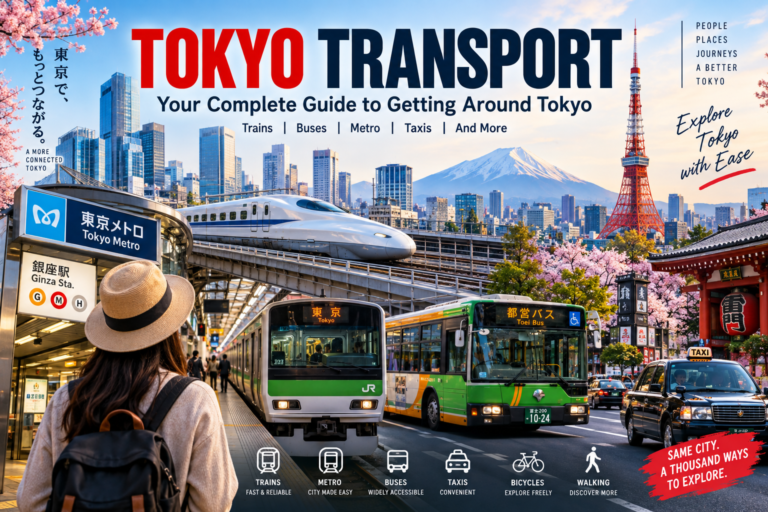
Tokyo’s public transportation system is one of the strongest foundations of a successful vacation.
The official tourism guide describes Tokyo’s network as extensive and increasingly supported by multilingual signage. Visitors can use trains, subways, buses, waterbuses, taxis and other options.
Use an IC Card
For many visitors, a rechargeable IC card is the easiest transportation solution.
Suica and PASMO can be used across many major rail and bus services.
Mobile versions are also available.
The official Tokyo tourism information currently confirms mobile Suica and PASMO options, as well as visitor-oriented options such as Welcome Suica Mobile.
Understand Tokyo’s Different Railway Operators
Tokyo’s rail network is not operated by one company.
You may encounter:
- JR East
- Tokyo Metro
- Toei Subway
- private railways
- buses
- monorails
Understanding this before your vacation reduces confusion.
Tokyo Subway
Tokyo’s subway system covers more than 280 stations.
Tokyo Metro operates nine lines across approximately 195 kilometres and 180 stations.
This is one reason Tokyo can feel complicated at first.
It is also one reason the city is so easy to explore once you understand it.
Should You Buy a Rail Pass?
Not automatically.
Calculate your planned journeys first.
For some travellers, an IC card is simpler.
For others, a multi-day subway ticket can make sense.
The official tourism information currently lists a Tokyo Metro 24-hour ticket at ¥700 and Tokyo Subway Tickets at ¥1,000 for 24 hours, ¥1,500 for 48 hours and ¥2,000 for 72 hours, with specific coverage and conditions.
Prices and conditions can change, so check the current information before purchasing.
Walking Is Part of the Experience
Do not use trains for every short journey.
Tokyo’s neighbourhoods often reveal their character between stations.
Walking can introduce you to:
- small restaurants
- residential streets
- local shops
- tiny temples
- cafés
- gardens
- traditional architecture
- unexpected viewpoints
Where Should You Stay During a Tokyo Vacation?
Shinjuku
Shinjuku is a practical base for travellers who want:
- transport connections
- restaurants
- shopping
- nightlife
- city views
- access to other parts of Tokyo
It is particularly useful for first-time visitors who want a central transport hub.
Shibuya
Shibuya suits travellers interested in:
- fashion
- shopping
- modern Tokyo
- cafés
- youth culture
- evening entertainment
Asakusa
Asakusa is excellent for travellers who prefer:
- historic atmosphere
- temples
- traditional streets
- cultural experiences
- quieter evenings
Ueno
Ueno can be useful for:
- museums
- parks
- culture
- markets
- convenient rail connections
Ginza
Ginza suits visitors looking for:
- premium shopping
- restaurants
- department stores
- central location
- architecture
Tokyo Station and Marunouchi
This area is particularly useful for:
- business travellers
- rail connections
- central sightseeing
- Imperial Palace access
- day-trip connections
Ikebukuro
Ikebukuro is an often-overlooked option with extensive shopping, restaurants and transportation.
It can work well for travellers who want a lively area without necessarily staying in Shinjuku or Shibuya.
The Best Tokyo Neighbourhoods for a Vacation
Asakusa
Asakusa provides one of the clearest introductions to traditional Tokyo.
Explore:
- Senso-ji
- Kaminarimon
- Nakamise
- Sumida River
- traditional shops
- nearby streets
Go early if you want a calmer atmosphere.
Shibuya
Shibuya is about more than the famous crossing.
Explore:
- Shibuya Crossing
- observation decks
- shopping
- cafés
- side streets
- contemporary architecture
Shinjuku
Shinjuku combines:
- skyscrapers
- department stores
- restaurants
- entertainment
- gardens
- railway connections
Visit Shinjuku Gyoen for a change of pace.
Harajuku
Harajuku combines fashion, youth culture, shopping and major cultural landmarks.
Pair the area with Meiji Jingu and Omotesando.
Ginza
Ginza is excellent for architecture, shopping and dining.
It is particularly attractive for travellers who enjoy polished urban environments.
Ueno
Ueno is ideal for culture.
Spend time around:
- Ueno Park
- museums
- temples
- cultural institutions
Yanaka
Yanaka offers a slower experience.
It is particularly suitable for travellers interested in traditional neighbourhoods and local atmosphere.
Akihabara
Akihabara is a major destination for electronics and Japanese pop culture.
Allow time to explore beyond the largest stores.
Odaiba
Odaiba provides:
- waterfront scenery
- modern architecture
- entertainment
- shopping
- family attractions
Kichijoji
Kichijoji offers a more relaxed neighbourhood experience and is particularly appealing when you want to step away from central Tokyo’s intensity.
Tokyo Vacation Attractions You Should Consider
Senso-ji
Senso-ji is one of Tokyo’s most recognisable temples.
The surrounding area provides much more than the temple itself.
Spend time exploring the streets around it.
Meiji Jingu
Meiji Jingu offers a dramatic contrast to nearby Harajuku.
The forested approach creates a feeling of distance from the surrounding city.
Tokyo Skytree
Tokyo Skytree offers panoramic views across the metropolis.
Visibility is important, so check weather conditions before choosing your observation time.
Tokyo Tower
Tokyo Tower remains one of the city’s most recognisable landmarks.
It can be combined with Roppongi, Azabu or nearby attractions.
Imperial Palace Area
The Imperial Palace area provides historical context and green space in central Tokyo.
The site is particularly valuable because it connects modern Tokyo with the former Edo Castle.
Shibuya Sky
Shibuya Sky provides a contemporary perspective on Tokyo’s enormous urban landscape.
It can be especially appealing around sunset when conditions allow.
Tokyo Metropolitan Government Building
The observation area at the Tokyo Metropolitan Government Building is another option for travellers interested in panoramic views.
Tokyo National Museum
Located in Ueno, this museum is useful for travellers who want greater context about Japanese art and history.
Edo-Tokyo Museum
For visitors interested in the city’s transformation, the Edo-Tokyo Museum is an important historical resource.
The museum reopened in 2026 following renovation, making it particularly relevant to travellers planning a current Tokyo vacation.
Tokyo Food Vacation
Tokyo is arguably a destination where food deserves its own itinerary.
Sushi
Tokyo provides enormous choice, from casual sushi restaurants to specialised dining experiences.
You do not need to choose the most expensive option to enjoy excellent sushi.
Ramen
Ramen is one of the easiest foods to incorporate into a Tokyo vacation.
Different shops specialise in different styles.
Tempura
Tempura can be enjoyed at casual restaurants or more specialised establishments.
Yakitori
Yakitori provides a more casual dining experience and can be particularly enjoyable in the evening.
Japanese Curry
Japanese curry is comforting, accessible and generally easy to find.
Convenience Store Food
Convenience stores can be surprisingly useful during a busy sightseeing day.
They are practical for:
- breakfast
- snacks
- drinks
- quick meals
- travel supplies
Department Store Food Halls
Department-store food floors are among Tokyo’s most useful food discoveries.
They can introduce visitors to:
- sweets
- boxed meals
- bakery products
- regional foods
- Japanese snacks
- premium ingredients
Tokyo Vacation for Food Lovers
Food-focused travellers should avoid eating in only one neighbourhood.
Create a food journey.
For example:
Asakusa: traditional snacks
Tsukiji area: seafood and market-related food experiences
Shinjuku: casual dining
Ginza: refined dining
Shibuya: contemporary cafés
Ueno: casual local food
This creates a more diverse culinary experience.
Tokyo Vacation for Families
Tokyo can be fantastic for families, but planning around children’s energy is important.
Choose Fewer Major Attractions
Instead of five attractions in one day, consider:
- one major attraction
- one meal
- one flexible activity
- rest time
Family-Friendly Areas
Consider:
- Ueno
- Odaiba
- Asakusa
- Tokyo Skytree area
- parks
- museums
- interactive attractions
Plan Around Rest
A tired child can turn an otherwise excellent itinerary into a difficult day.
Build recovery time into the schedule.
Tokyo Vacation for Couples
Couples can create a trip based on atmosphere rather than simply famous attractions.
Consider:
- gardens
- Tokyo Bay
- evening city views
- traditional cafés
- neighbourhood walks
- seasonal illuminations
- food experiences
- cultural activities
A slower evening can often be more memorable than another major attraction.
Tokyo Vacation for Solo Travellers
Tokyo works exceptionally well for solo exploration.
You can comfortably enjoy:
- museums
- cafés
- restaurants
- shopping
- photography
- neighbourhood walks
- temples
- gardens
- observation decks
The greatest advantage is flexibility.
If you enjoy an area, stay longer.
If you do not, move on.
Tokyo Vacation for Seniors
Senior travellers should prioritise comfort.
Pay attention to:
- stairs
- walking distance
- station complexity
- weather
- seating
- hotel location
- luggage
Do not underestimate how much walking a Tokyo vacation can involve.
A hotel that saves 20 minutes of commuting every day can make a significant difference.
Tokyo Vacation for Budget Travellers
Tokyo can be experienced on different budgets.
Reduce Accommodation Costs
Consider staying slightly outside the most expensive central areas while remaining close to a convenient railway station.
Use Public Transport
Tokyo’s extensive public transportation makes car rental unnecessary for most central sightseeing.
Mix Restaurant Types
Combine:
- casual restaurants
- ramen
- convenience stores
- food halls
- cafés
- occasional special meals
Choose Free Experiences
Many memorable Tokyo experiences cost little or nothing.
Examples include:
- neighbourhood walks
- shrine visits
- temple grounds
- parks
- public viewpoints
- architecture walks
- street photography
Tokyo Vacation for Luxury Travellers
Luxury travellers can build a very different itinerary.
Consider:
- premium hotels
- private guides
- high-end restaurants
- private vehicle tours
- personalised shopping
- specialist cultural experiences
- premium spa experiences
- exclusive dining reservations
The main benefit is convenience and personalisation rather than simply spending more money.
Tokyo Vacation for Photographers
Tokyo is a remarkable photography destination.
Best Photography Themes
Consider:
- traditional versus modern architecture
- neon streets
- temples
- seasonal flowers
- train stations
- city reflections
- Tokyo Tower
- Mount Fuji views
- Tokyo Bay
- quiet residential streets
Photograph the Contrasts
The strongest Tokyo images often show two different worlds together.
For example:
traditional temple + skyscrapers
old street + modern tower
quiet garden + dense city
That visual contrast explains Tokyo better than a simple skyline photograph.
Tokyo Vacation for History Lovers
History enthusiasts should consider:
- Asakusa
- Ueno
- Yanaka
- Nihonbashi
- Imperial Palace
- Hamarikyu Gardens
- Ryogoku
- Edo-Tokyo Museum
- historic shopping streets
A guided history walk can add context that you would not notice independently.
Tokyo Vacation for Nature Lovers
Tokyo is not only concrete.
You can explore:
- parks
- gardens
- rivers
- mountains
- western Tokyo
- islands
The Tama region includes mountainous landscapes, lakes, valleys and hiking opportunities, while Tokyo’s island territories provide dramatically different natural environments.
Mt. Takao
Mt. Takao can provide a convenient escape from central Tokyo.
It is particularly suitable for travellers who want a combination of nature and urban accessibility.
Tokyo Vacation for Shoppers
Ginza
Best for premium shopping and department stores.
Shibuya
Best for contemporary fashion and youth-oriented shopping.
Harajuku
Best for fashion, street style and specialist shops.
Akihabara
Best for electronics and pop-culture interests.
Asakusa
Best for traditional souvenirs and crafts.
Tokyo Station
Useful for gifts, food products and travel-related shopping.
Tokyo Vacation for Culture Lovers
Tokyo’s cultural experiences include:
- temples
- shrines
- museums
- gardens
- traditional crafts
- food
- festivals
- architecture
- performing arts
- contemporary art
The best cultural itinerary mixes several of these rather than concentrating entirely on museums.
Tokyo Vacation and Japanese Etiquette
Be Quiet on Public Transport
Avoid loud conversations.
Keep phone calls off trains where possible.
Queue Properly
Follow markings and local behaviour.
Do Not Block Station Corridors
Move to the side when checking maps or phones.
Respect Temples and Shrines
Remember that these are active religious spaces.
Follow Photography Rules
Some places restrict photography.
Carry Your Rubbish
Bins are not always located exactly where visitors expect them.
Respect Residential Areas
Popular neighbourhoods are also people’s homes.
Keep noise low and avoid obstructing entrances.
Tokyo Vacation Connectivity
Internet access is extremely useful for:
- maps
- translation
- transport
- restaurant searches
- reservations
- weather
- attraction information
Consider arranging:
- eSIM
- physical SIM
- pocket Wi-Fi
- roaming
Do not wait until you arrive at a complicated station to discover that your phone has no data.
What to Pack for a Tokyo Vacation
Comfortable Shoes
Probably the most important item.
Portable Charger
Navigation can consume significant battery.
Compact Umbrella
Useful during unpredictable weather.
Lightweight Day Bag
Avoid oversized luggage when travelling through crowded stations.
Layered Clothing
Useful because indoor and outdoor temperatures can vary.
Reusable Water Bottle
Particularly useful during warmer months.
Tokyo Vacation Planning Formula
A simple planning system can make your trip dramatically easier.
Step One: Choose Your Base
Pick accommodation based on transport and neighbourhood preferences.
Step Two: Select Three Main Experiences
Do not begin with 30 attractions.
Choose three things you genuinely want to experience.
Step Three: Group Attractions Geographically
Put nearby places together.
Step Four: Reserve Important Activities
Book experiences that have limited availability.
Step Five: Leave Flexible Time
This is one of the most important Tokyo vacation strategies.
Flexible time allows you to:
- rest
- shop
- eat
- explore
- photograph
- revisit favourite places
- deal with unexpected weather
The One-Neighbourhood-Per-Day Strategy
For many visitors, this is more effective than crossing Tokyo repeatedly.
For example:
Day 1 — Asakusa + Ueno
Day 2 — Harajuku + Shibuya
Day 3 — Tokyo Station + Imperial Palace + Ginza
Day 4 — Shinjuku
Day 5 — Odaiba
This reduces unnecessary travel.
Three-Day Tokyo Vacation Itinerary
Day One: Traditional Tokyo
Start in Asakusa.
Visit Senso-ji.
Explore traditional streets.
Walk near the Sumida River.
Finish with dinner.
Day Two: Modern Tokyo
Start at Meiji Jingu.
Explore Harajuku.
Walk through Omotesando.
Continue to Shibuya.
Enjoy an evening city view.
Day Three: Central Tokyo
Explore Tokyo Station and Marunouchi.
Visit the Imperial Palace area.
Continue toward Ginza.
Finish with dinner or a skyline experience.
Five-Day Tokyo Vacation Itinerary
Day One
Asakusa and Ueno.
Day Two
Harajuku, Meiji Jingu, Omotesando and Shibuya.
Day Three
Tokyo Station, Imperial Palace and Ginza.
Day Four
Shinjuku and Shinjuku Gyoen.
Day Five
Choose according to your interests:
- Akihabara
- Yanaka
- Odaiba
- Kichijoji
- Mt. Takao
- museum day
- food tour
Seven-Day Tokyo Vacation Itinerary
Day One
Asakusa.
Day Two
Ueno and Yanaka.
Day Three
Harajuku and Shibuya.
Day Four
Shinjuku.
Day Five
Tokyo Station, Imperial Palace and Ginza.
Day Six
Odaiba or another modern attraction area.
Day Seven
Flexible day for shopping, food, nature or a day trip.
Common Tokyo Vacation Mistakes
Trying to See Everything
This is the biggest mistake.
Tokyo is too large for that.
Solution: Prioritise.
Staying Too Far From Transport
A cheap hotel can become expensive in time and energy.
Solution: Choose a convenient station.
Booking Too Many Activities
A rigid itinerary creates stress.
Solution: Leave empty time.
Ignoring Walking
Tokyo sightseeing often involves extensive walking.
Solution: Wear comfortable shoes and monitor your energy.
Misunderstanding Railway Operators
Visitors may assume all trains use identical tickets.
Solution: Learn the difference between JR, Tokyo Metro and Toei.
Buying Unnecessary Passes
A transport pass is not automatically cheaper.
Solution: Calculate expected journeys first.
Visiting Famous Attractions Only at Peak Times
Crowds can reduce enjoyment.
Solution: Visit popular attractions early where practical.
Ignoring Weather
Outdoor sightseeing can be dramatically affected by heat, rain or poor visibility.
Solution: Keep the itinerary flexible.
Forgetting Station Exits
A large station can have numerous exits.
Solution: Check the exact exit before leaving the platform.
Pros of a Tokyo Vacation
Extraordinary Variety
Few destinations combine historical, cultural, culinary and futuristic experiences so closely.
Excellent Transportation
Tokyo’s extensive transport network allows visitors to cover significant distances without a car.
Exceptional Food
The range of dining options is enormous.
Strong Infrastructure
Visitors can find extensive tourist services, multilingual information and convenient transportation.
Many Different Price Levels
Tokyo can accommodate budget, mid-range and luxury travellers.
Four-Season Experiences
Each season changes the character of the city.
Potential Challenges of a Tokyo Vacation
Crowds
Popular areas can become extremely busy.
Scale
Tokyo’s size can be intimidating.
Walking
A sightseeing day can involve more walking than expected.
Language Differences
Although many services provide multilingual information, visitors may still encounter situations where English is limited.
Summer Heat
Summer can be physically demanding.
Planning Complexity
There are so many options that choosing can become harder than finding something to do.
The solution to most of these challenges is not complicated:
slow down and plan intelligently.
Ten Travel Brands and Platforms to Compare for a Tokyo Vacation
The following brands represent different travel-booking approaches. They are options to compare, not a ranking. Availability, pricing and inclusions can change.
| Brand | Tokyo Vacation Use | Main Focus | Suitable For |
|---|---|---|---|
| JTB | Tours, packages and travel arrangements | Japan-focused travel | Organised holiday planning |
| HIS | Tokyo and Japan tours | Japan travel experiences | International visitors |
| Klook | Tickets, tours and activities | Digital activity marketplace | Independent travellers |
| Rakuten Travel Experiences | Activities and sightseeing | Japan-focused experiences | Experience-focused trips |
| VELTRA | Tours and activities | Japan experience marketplace | Cultural and specialist activities |
| Viator | Tours and sightseeing | Global tour marketplace | Comparing tour styles |
| GetYourGuide | Attractions and guided experiences | International booking | First-time travellers |
| KKday | Tours and activities | Asia-Pacific travel experiences | Independent travellers |
| Trip.com | Hotels, tours and activities | Integrated travel platform | Multi-component vacations |
| Japanican | Japan tours and experiences | Japan-focused travel | Visitors exploring wider Japan |
The important point is not which brand appears first on a booking page.
Compare:
- total price
- cancellation rules
- meeting location
- transport
- guide language
- group size
- duration
- admission tickets
- reviews
- inclusions
How to Choose a Tokyo Vacation Package
Compare the Hotel Location
A hotel in a convenient neighbourhood can save hours over the course of a week.
Check Airport Transfers
Some packages include transfers.
Others do not.
Examine Meals
Do not assume breakfast or dinner is included.
Look at Free Time
A package with every hour scheduled may not suit travellers who enjoy independent exploration.
Check Cancellation Conditions
Travel arrangements can change.
Understand the rules before payment.
Is a Guided Tour Necessary for a Tokyo Vacation?
No.
But guided tours can be valuable.
Use a Guide When You Want Context
History, food and cultural experiences can benefit from expert explanation.
Explore Independently When You Want Freedom
Neighbourhoods such as Shibuya, Ginza and Harajuku are easy to explore independently.
Combine Both
One guided day plus several independent days can provide an excellent balance.
Tokyo Vacation Budget Planning
Rather than asking:
“How much does Tokyo cost?”
Ask:
“What type of Tokyo vacation am I planning?”
Budget Vacation
Prioritise:
- affordable accommodation
- public transportation
- casual food
- free attractions
- neighbourhood exploration
Mid-Range Vacation
Add:
- comfortable hotel
- several paid attractions
- restaurant meals
- guided tours
- occasional taxis
Premium Vacation
Add:
- luxury accommodation
- private transportation
- private guides
- high-end dining
- premium experiences
The city can adapt to all three approaches.
A Better Way to Manage Your Tokyo Vacation Budget
Divide your budget into:
Accommodation
Transportation
Food
Attractions
Shopping
Emergency reserve
Miscellaneous
Do not spend your entire budget on accommodation and then underestimate food and transportation.
Tokyo Vacation Safety
Tokyo has extensive infrastructure, but visitors should still prepare responsibly.
Keep copies or secure records of:
- passport details
- accommodation information
- travel insurance
- emergency contacts
- important booking information
Japan is exposed to natural hazards such as earthquakes and typhoons.
Follow official emergency instructions when necessary.
Tokyo Vacation Accessibility
Tokyo continues to develop accessible tourism resources.
Travellers with mobility requirements should check:
- step-free access
- lifts
- station layouts
- toilets
- walking distance
- attraction accessibility
- assistance policies
Do not assume every historic attraction will have the same accessibility standard as a newly constructed building.
Tokyo Vacation With Children
A practical family formula is:
one major attraction + one meal + one flexible activity + rest.
This is often more effective than trying to visit six places.
Tokyo Vacation With Seniors
Choose hotels close to convenient stations.
Avoid unnecessary transfers.
Schedule rest periods.
Consider taxis for selected short journeys when walking becomes tiring.
Tokyo Vacation in 2026 and Beyond
Tokyo tourism is entering an increasingly technology-assisted period.
AI Travel Assistance
Tokyo already provides digital visitor assistance through its tourism infrastructure.
This points toward a future in which travellers can receive personalised recommendations based on:
- location
- weather
- interests
- available time
- transport conditions
- accessibility requirements
More Personalised Travel
The future of Tokyo tourism is likely to move increasingly from generic sightseeing toward personalised experiences.
Travellers may choose itineraries based on:
- food
- architecture
- history
- photography
- shopping
- anime and manga
- nature
- accessibility
- family needs
AR and Historical Tourism
Augmented reality can make Tokyo’s history more visible.
Historical streets that have disappeared can potentially be reconstructed digitally.
Visitors could see:
- former waterways
- old roads
- historical buildings
- Edo-era maps
- historical photographs
Neighbourhood Tourism
As visitor numbers remain high, more travellers are likely to explore neighbourhoods beyond the most famous districts.
This can distribute visitor activity and create more diverse experiences.
Sustainable Urban Travel
Tokyo’s strong rail infrastructure gives travellers the opportunity to rely heavily on public transportation rather than private cars.
The official tourism guide highlights trains, subways, buses, waterbuses, taxis and cycling as components of the city’s transport options.
The Future Tokyo Vacation
The future Tokyo vacation may look less like a fixed itinerary and more like a responsive experience.
Imagine starting the morning with an AI-generated neighbourhood suggestion based on the weather.
You take a train using your mobile transport card.
You explore a historic district.
Your phone shows an augmented reconstruction of the street.
You eat lunch at a local restaurant.
In the afternoon, you change plans because rain is approaching.
Instead of continuing outdoors, you visit a museum.
In the evening, you receive a recommendation for a nearby food experience.
That kind of flexibility is likely to become increasingly common.
The Most Important Tokyo Vacation Strategy
There is one principle that matters more than almost every other planning tip:
Do not confuse more sightseeing with a better vacation.
A day containing eight attractions is not necessarily better than a day containing three.
Tokyo is a city that rewards observation.
Sit in a café.
Walk a side street.
Watch commuters.
Look at architecture.
Visit a small shrine.
Try something you have never eaten.
Spend an hour somewhere without checking the next destination.
These moments often become the memories you remember most.
FAQs
How many days are ideal for a Tokyo vacation?
Five days is a useful starting point for many first-time visitors because it provides enough time for major attractions and neighbourhood exploration without requiring an extremely rushed itinerary. Three days can work for a short introduction, while seven or more days allow a much slower experience.
Is Tokyo good for a vacation?
Yes. Tokyo offers an unusually broad combination of history, culture, food, shopping, entertainment, architecture and nature, making it suitable for many different travel styles.
What should I do first in Tokyo?
For a first visit, consider beginning with a neighbourhood that provides a strong introduction to Tokyo, such as Asakusa. From there, explore modern areas such as Shibuya and Shinjuku before adding specialised interests.
What is the best area to stay in Tokyo?
There is no universal best area. Shinjuku and Shibuya are useful for modern city experiences and transport, Asakusa for traditional atmosphere, Ueno for culture and museums, and Ginza for premium shopping and dining.
Is Tokyo expensive?
Tokyo can be expensive or relatively affordable depending on accommodation, food, transportation and activities. Travellers can create budget, mid-range or luxury vacations.
Is public transportation easy in Tokyo?
It can feel complicated initially, but the system is extensive and supported by multilingual signage. Rechargeable IC cards such as Suica and PASMO can simplify everyday travel.
Do I need a car in Tokyo?
Most visitors do not need a car for central Tokyo sightseeing. Public transportation is generally much more practical for reaching major neighbourhoods and attractions.
Should I use a Tokyo subway pass?
It depends on your itinerary. Compare the cost of your planned journeys with the current price and coverage of available passes. An IC card may be simpler if you are making a moderate number of journeys.
What is the best month for a Tokyo vacation?
The answer depends on your priorities. Spring is popular for blossoms, autumn is attractive for seasonal scenery and comfortable walking, winter can be excellent for city experiences, while summer offers longer daylight but can be hot and humid.
Is Tokyo suitable for families?
Yes. Families can enjoy museums, parks, waterfront attractions, interactive experiences, shopping and cultural sites. The key is to avoid overloading each day.
Is Tokyo good for solo travel?
Yes. Tokyo offers many experiences that work naturally for solo travellers, including restaurants, museums, cafés, shopping and neighbourhood walks.
Is Tokyo good for couples?
Yes. Couples can combine gardens, food, city views, traditional neighbourhoods, shopping and evening experiences.
How much walking is involved in a Tokyo vacation?
Potentially a lot. Even when using trains, you may walk through large stations and between attractions. Comfortable shoes are essential.
Can I visit Tokyo without speaking Japanese?
Yes. Many major transportation and tourism services provide multilingual information. Translation tools can also help in situations where English is limited.
What food should I try in Tokyo?
Consider sushi, ramen, tempura, yakitori, Japanese curry, traditional sweets and regional or seasonal foods.
Is Asakusa worth visiting?
Yes. Asakusa is one of the most useful neighbourhoods for understanding traditional Tokyo and provides access to Senso-ji, Nakamise and the Sumida River area.
Is Shibuya only for young travellers?
No. Shibuya offers shopping, architecture, restaurants, cafés, city views and contemporary culture that can appeal to many age groups.
Is Tokyo safe for tourists?
Tokyo has extensive public infrastructure and is a major international tourism destination, but travellers should still follow normal safety practices and remain aware of weather and natural-disaster information.
What should I pack for Tokyo?
Comfortable walking shoes, appropriate seasonal clothing, a portable charger, a compact day bag and useful connectivity equipment such as an eSIM or other mobile-data solution can be valuable.
Should I book Tokyo attractions in advance?
Popular attractions and specialised experiences may have limited availability, especially during busy travel periods. Check reservation requirements before travelling.
Can I take a day trip from Tokyo?
Yes. Depending on the season and your interests, options can include mountain areas, historic destinations, hot-spring regions and other parts of the wider Kanto area.
Can I spend a whole week in Tokyo?
Absolutely. A week allows you to explore the major districts while also spending time in quieter neighbourhoods, museums, gardens, food areas and nature destinations.
What is the biggest Tokyo vacation mistake?
Trying to see too much. Tokyo is more enjoyable when your itinerary includes flexibility and time to explore rather than constantly moving between attractions.
Conclusion
A Tokyo vacation is not simply a trip to one of the world’s largest cities. It is an opportunity to experience several different versions of Japan within one destination. You can begin among centuries-old temples, walk through historic neighbourhoods, eat a traditional meal, ride one of the world’s most sophisticated urban transport systems, shop in a modern district, explore a museum, admire contemporary architecture and finish the day looking across an enormous illuminated skyline. The key is not to attempt everything.Tokyo is too large for that. Instead, build your vacation around your interests.