

Travel Itinerary: The Ultimate Guide to Planning a Perfect Trip
Have you ever arrived at a new destination with a long list of places you wanted to see, only to realize that half of them were hours apart? A good travel itinerary solves that problem by turning scattered travel ideas into a practical plan that balances sightseeing, transportation, food, rest, budget, and flexibility.
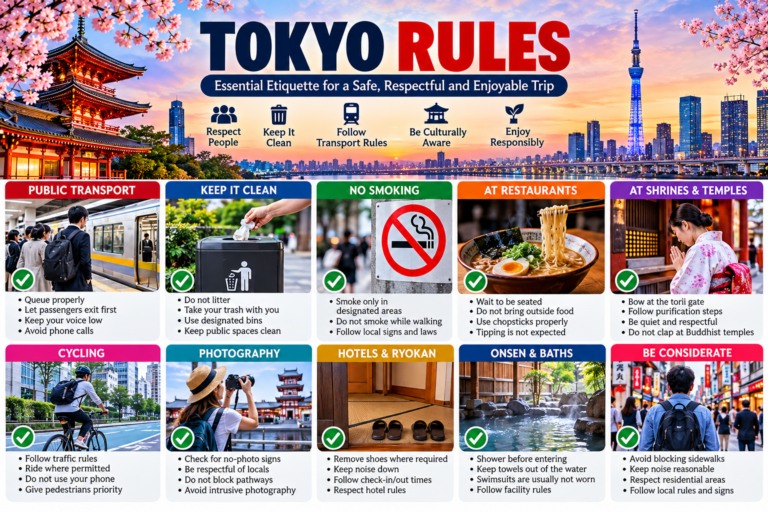
A travel itinerary is a day-by-day plan that organizes where you will go, what you will do, how you will get there, where you will stay, and how much time you should allow for each activity. The best itinerary is not the one that contains the most attractions; it is the one that helps you experience a destination comfortably without wasting time or creating unnecessary stress Tokyo Malls
What Is a Travel Itinerary?
A travel itinerary is a structured plan for a journey. It can be as simple as a list of destinations and hotel reservations or as detailed as a complete schedule containing flights, trains, activities, restaurant reservations, transportation, estimated costs, addresses, maps, and backup options.
A basic itinerary might look like this:
- Day 1: Arrival and hotel check-in
- Day 2: Major attractions
- Day 3: Local neighborhoods and food
- Day 4: Day trip
- Day 5: Departure
A more detailed travel itinerary could include:
- Flight information
- Airport transfer
- Hotel address
- Check-in and check-out times
- Attractions
- Opening hours
- Restaurant reservations
- Public transportation
- Estimated travel times
- Daily budget
- Emergency information
- Weather considerations
- Alternative activities
The level of detail should depend on the traveler.
A solo traveler may prefer a loose plan. A family traveling with children may need a more structured schedule. A business traveler may want exact transportation and meeting times. A road-tripper may care more about driving distances and fuel stops.
The important principle is simple: your itinerary should serve your trip rather than control it.
Why a Travel Itinerary Matters
Travel planning is often treated as an administrative task, but an itinerary can significantly influence the quality of a trip.
Without a plan, travelers frequently lose time deciding what to do next. They may travel across a city several times, miss reservations, underestimate transportation time, or spend more money than expected.
A good itinerary reduces these problems.
It Saves Valuable Travel Time
Time is often more valuable than money when traveling.
Suppose you are visiting Paris for three days. If you visit the Eiffel Tower in the morning, return to your hotel, travel across the city for lunch, then return to the same neighborhood for another attraction, you have created unnecessary travel.
A geographic itinerary groups nearby attractions together.
The same principle works in Tokyo, London, New York, Rome, Dubai, Bangkok, Istanbul, Singapore, or almost any large destination.
It Helps Control Your Budget
An itinerary makes expenses easier to estimate.
You can identify:
- Accommodation costs
- Transportation
- Attraction tickets
- Food
- Tours
- Shopping
- Airport transfers
- Travel insurance
- Emergency funds
This does not guarantee that you will stay within budget, but it gives you a baseline.
It Reduces Travel Stress
Travel can involve many moving parts.
Flights can be delayed. Trains can be missed. Hotels can have different check-in rules. Attractions can sell out. Weather can change.
A well-designed itinerary includes enough flexibility to handle these situations.
Instead of asking, “What should we do now?” after every unexpected event, you already have alternatives.
It Improves Group Travel
Group trips are difficult because everyone has different preferences.
One person may want museums. Another may prefer shopping. Someone else may want restaurants, beaches, hiking, or nightlife.
An itinerary creates a shared framework.
The goal is not to make everyone happy every minute. The goal is to create a trip where everyone gets meaningful time for their priorities.
The Difference Between a Good and Bad Travel Itinerary
Not every itinerary is useful.
A bad itinerary can actually make a vacation worse.
Signs of a Bad Itinerary
A poorly designed itinerary often:
- Contains too many attractions
- Leaves little time for meals
- Ignores transportation
- Changes hotels too frequently
- Assumes everything will run on time
- Has no backup plans
- Uses unrealistic travel times
- Fails to consider opening hours
- Gives every activity the same importance
- Leaves no time for rest
For example, attempting to visit five major attractions in one afternoon may look impressive on paper but could result in rushing, long queues, missed reservations, and exhaustion.
Signs of a Good Itinerary
A strong itinerary:
- Groups locations logically
- Includes realistic travel time
- Prioritizes important experiences
- Builds in breaks
- Protects reservations
- Allows some free time
- Considers arrival and departure days separately
- Includes alternatives
- Matches the traveler’s energy level
- Can be adjusted when circumstances change
The difference is realism.
How to Create a Travel Itinerary Step by Step
Creating an itinerary becomes much easier when you follow a repeatable process.
Step 1: Define the Purpose of the Trip
Before choosing attractions, determine why you are traveling.
Your trip might be for:
- Relaxation
- Adventure
- Culture
- Food
- Shopping
- Business
- Photography
- Family time
- Nature
- History
- Nightlife
- Wellness
- Sports
- Festivals
- Honeymoon
- Solo exploration
This matters because the same destination can produce completely different itineraries.
A honeymoon itinerary may prioritize romantic restaurants, scenic locations, and relaxed mornings.
A backpacking itinerary may prioritize affordable transportation, hostels, walking routes, and local experiences.
Step 2: Choose Your Dates
Your travel dates influence almost everything else.
Consider:
- Weather
- Peak season
- Public holidays
- School holidays
- Festivals
- Events
- Flight prices
- Hotel prices
- Attraction availability
Traveling during peak periods may provide excellent weather but higher prices and larger crowds.
Traveling during shoulder seasons can sometimes provide a better balance between weather, availability, and cost.
Step 3: Decide How Many Days You Actually Have
Do not confuse the number of calendar days with usable sightseeing days.
For example, a five-day international trip might effectively provide only three full sightseeing days because of arrival and departure times.
A useful approach is to classify days as:
- Arrival day
- Full sightseeing day
- Day-trip day
- Transfer day
- Departure day
This prevents unrealistic planning.
Step 4: Make a Master List of Places
Before creating a daily schedule, create a master list.
Include:
- Major landmarks
- Museums
- Neighborhoods
- Restaurants
- Markets
- Parks
- Beaches
- Shopping areas
- Viewpoints
- Religious sites
- Cultural experiences
- Day trips
Do not schedule them immediately.
First collect them.
Step 5: Prioritize Your List
Divide attractions into three groups.
Must-See
These are the experiences you would genuinely regret missing.
Nice-to-See
These would improve the trip but are not essential.
Optional
These should only be included if you have spare time.
This simple system prevents your itinerary from becoming overloaded.
Step 6: Put Locations on a Map
This is one of the most important steps.
Look at where everything is located.
You may discover that three attractions you wanted to visit are within walking distance of one another.
You can then build a single efficient day around that neighborhood.
Modern itinerary platforms increasingly combine maps and schedules for exactly this reason. Wanderlog, for example, allows travelers to see itinerary stops on a map and evaluate distances and travel times between locations.
Step 7: Group Attractions by Area
Instead of organizing your itinerary only by attraction popularity, organize it geographically.
For example:
Day 1: Historic center
Day 2: Museums district
Day 3: Waterfront
Day 4: Day trip
Day 5: Shopping and food
This reduces backtracking.
Step 8: Estimate Travel Time
Never assume that two places are “close” simply because they appear close on a map.
Consider:
- Walking
- Public transportation
- Traffic
- Transfers
- Finding entrances
- Security checks
- Parking
- Queues
- Getting lost
If a map says 20 minutes, your practical itinerary might need 30–40 minutes.
Step 9: Add Meals
Food should not be an afterthought.
A common mistake is planning attractions continuously from morning until evening.
Instead, identify:
- Breakfast location
- Lunch area
- Coffee break
- Dinner area
- Special restaurant reservations
Try to eat near the attractions you are already visiting.
Step 10: Add Rest Periods
Travel is physically demanding.
A good itinerary should include moments when nothing is scheduled.
You might leave:
- One hour in the afternoon
- A relaxed evening
- A free morning
- An unscheduled meal
- A flexible half-day
These spaces are not wasted time.
They make the rest of the itinerary more enjoyable.
The 60–20–20 Travel Itinerary Framework
A useful framework for building flexible itineraries is the 60–20–20 model.
Use approximately:
- 60% planned activities
- 20% flexible activities
- 20% open time
This is not a strict mathematical rule. It is a planning philosophy.
If you have ten usable hours in a day, perhaps six hours contain planned activities, two hours contain optional experiences, and two hours remain flexible.
This creates breathing room.
The framework works especially well for first-time visitors because it provides structure without turning the vacation into a timetable.
How to Build a 3-Day Travel Itinerary
Three-day trips require prioritization.
Day 1: Orientation and Major Highlights
Use the first day to understand the destination.
Consider:
- Hotel check-in
- Central landmark
- Nearby neighborhood
- Local restaurant
- Easy evening activity
Avoid scheduling a complicated excursion immediately after a long flight.
Day 2: Main Exploration
Use your second day for the destination’s most important experiences.
This is often your strongest sightseeing day because you have adjusted to the location.
Schedule:
- Major attractions
- Cultural experiences
- Important neighborhoods
- Signature food
Day 3: Flexible Exploration
The final full day should combine remaining priorities with flexibility.
You might visit:
- A market
- Shopping district
- Museum
- Local neighborhood
- Park
- Scenic viewpoint
Keep the evening relatively relaxed if you have an early departure.
How to Build a 5-Day Travel Itinerary
Five days provide more flexibility.
A common structure is:
Day 1: Arrival
Keep the schedule light.
Day 2: Major Landmarks
Visit the destination’s essential attractions.
Day 3: Culture and Local Life
Explore neighborhoods, museums, markets, and food.
Day 4: Day Trip or Special Experience
Use this day for an excursion outside the city or a major activity.
Day 5: Flexible Day
Leave room for shopping, missed attractions, relaxation, or spontaneous discoveries.
How to Build a 7-Day Travel Itinerary
A week allows more depth.
You can combine:
- Major attractions
- Neighborhood exploration
- Food experiences
- Nature
- Day trips
- Relaxation
- Shopping
However, seven days does not automatically mean you should visit seven locations.
In many destinations, staying in one city for a full week provides a richer experience than changing hotels every night.
How to Create a Multi-City Travel Itinerary
Multi-city travel is where itinerary design becomes particularly important.
Consider a hypothetical Europe trip:
London → Paris → Amsterdam → Rome
This may sound exciting, but each transfer consumes time.
You have to account for:
- Packing
- Hotel checkout
- Airport or station transfer
- Waiting
- Transportation
- Hotel check-in
- Orientation
A four-hour train journey may consume much more than four hours of your travel day.
Use the One-Base Principle
Whenever possible, stay several nights in one location.
Instead of:
City A → City B → City C → City D
consider:
City A → City B → City B → City C
Fewer hotel changes usually mean less logistical stress.
How to Plan a Travel Itinerary for Families
Family travel requires a different approach.
Children may have different energy levels, food requirements, sleep schedules, and interests.
Limit Consecutive High-Energy Activities
Do not schedule several exhausting activities back-to-back.
For example:
Morning: museum
Afternoon: park
Evening: casual restaurant
may work better than:
Morning: museum
Afternoon: mountain hike
Evening: theme park
Night: shopping
Include Child-Friendly Stops
Look for:
- Parks
- Interactive museums
- Aquariums
- Beaches
- Playgrounds
- Family restaurants
- Short activities
Protect Nap and Rest Time
For younger children, rest can be more important than completing an attraction list.
A rested family usually enjoys the destination more than an exhausted family that checked every box.
Travel Itinerary for Solo Travelers
Solo travel offers greater flexibility.
You do not have to coordinate every activity with another person.
However, solo travelers should pay particular attention to:
- Accommodation location
- Transportation
- Emergency contacts
- Communication
- Safe arrival after dark
- Backup plans
- Connectivity
Solo itineraries can be more spontaneous, but having important logistics documented is still valuable.
Travel Itinerary for Couples
Couples should balance shared interests with individual preferences.
A romantic itinerary might include:
- Scenic walks
- Local restaurants
- Sunset viewpoints
- Cultural experiences
- Relaxed mornings
- One special activity
Avoid scheduling every minute.
Some of the best travel memories happen while simply walking through an unfamiliar neighborhood or sitting at a local café.
Travel Itinerary for Seniors
Older travelers may benefit from shorter activity blocks.
Consider:
- Shorter walking distances
- Accessible transportation
- Convenient hotels
- Frequent seating opportunities
- Longer meal breaks
- Fewer hotel changes
- Medical and medication planning
The best senior travel itinerary is often slower and more comfortable rather than packed.
Travel Itinerary for Business Travelers
Business travel is more dependent on timing.
Include:
- Airport transfer
- Hotel
- Meeting addresses
- Meeting times
- Buffer time
- Transportation
- Meals
- Work sessions
- Departure logistics
For important meetings, build extra travel time into the itinerary.
A delay of 15 minutes may be an inconvenience during sightseeing but could be professionally significant before a business meeting.
Travel Itinerary for Budget Travelers
Budget travelers should focus on efficiency.
Choose Central Accommodation Carefully
A slightly more expensive hotel can sometimes save money if it significantly reduces daily transportation costs.
Use Public Transportation
Where practical, buses, trains, metro systems, and walking can reduce expenses.
Group Paid Attractions
Plan expensive attractions strategically rather than buying tickets impulsively throughout the trip.
Build a Daily Spending Limit
Separate your budget into categories:
| Category | Example Allocation |
|---|---|
| Accommodation | 30–40% |
| Transportation | 15–25% |
| Food | 15–25% |
| Attractions | 10–20% |
| Shopping | 5–15% |
| Emergency/Flexibility | 5–10% |
These are planning ranges rather than universal rules. Costs vary dramatically by destination and travel style.
Travel Itinerary for Luxury Travelers
Luxury travel is not simply about expensive hotels.
It is about convenience, comfort, personalization, and time.
A luxury itinerary might include:
- Private transfers
- Premium accommodation
- Reserved experiences
- Private guides
- Fine dining
- Flexible schedules
- Spa time
- Chauffeur services
The biggest luxury is often not having to rush.
How to Plan a Road Trip Itinerary
Road trips require different planning because transportation itself is part of the experience.
Consider:
- Driving distance
- Fuel stations
- Rest stops
- Scenic viewpoints
- Road conditions
- Parking
- Weather
- Vehicle condition
- Accommodation
- Emergency supplies
Do not calculate driving time without considering breaks.
A six-hour theoretical drive may become an eight-hour travel day.
Use Scenic Stops Strategically
Road trips become more memorable when stops are purposeful.
Choose:
- Viewpoints
- Small towns
- Local restaurants
- Historical sites
- Nature areas
- Interesting roadside attractions
The journey is part of the itinerary.
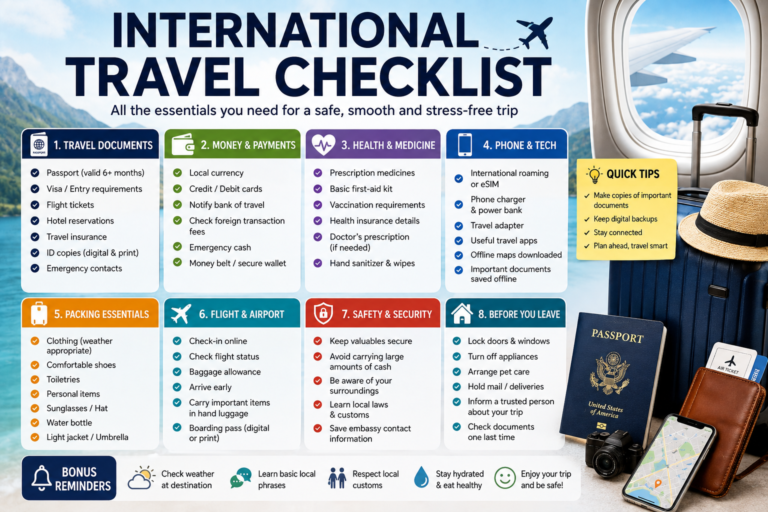
How to Plan an International Travel Itinerary
International travel requires additional preparation.
Include:
- Passport validity
- Visa requirements
- Entry rules
- Travel insurance
- Currency
- Local transportation
- SIM or eSIM
- Accommodation
- Emergency contacts
- Important documents
Entry requirements can change, so travelers should verify current requirements through official government or embassy sources before departure.
How to Handle Jet Lag in Your Itinerary
Long-distance travel can make the first day difficult.
Do not schedule a highly demanding day immediately after an overnight flight if you can avoid it.
Instead:
- Check in
- Eat
- Walk lightly
- Stay hydrated
- Get familiar with the neighborhood
- Sleep according to the destination schedule
Your itinerary should account for your body, not just your calendar.
How to Use Travel Apps for Itinerary Planning
Modern travel planning increasingly involves specialized digital tools.
TripIt focuses strongly on consolidating travel reservations and automatically creating itineraries from confirmation information. Its current features include itinerary organization, calendar synchronization, maps, sharing, offline access, and additional premium alerts.
Wanderlog combines itinerary building with maps, route planning, reservations, budgeting, collaboration, packing lists, and AI-assisted planning.
These tools are useful, but travelers should still verify important information independently.
An app can organize your plan; it cannot eliminate every real-world uncertainty.
The Rise of AI Travel Planning
AI is becoming increasingly relevant to travel planning.
Google reported in 2026 that search interest for terms such as “AI travel assistant” and “AI concierge” had grown substantially year over year, while interest in AI-related flight planning also increased. Google also reported strong interest in solo travel and slow travel during 2026.
This suggests a shift from static travel guides toward interactive planning.
Instead of asking:
“What are the top ten things to do in Rome?”
travelers increasingly want:
“I have four days in Rome, I am traveling with my parents, I dislike long walks, my budget is moderate, and I want local food. Build an itinerary.”
That is a much more personalized problem.
How AI Can Improve a Travel Itinerary
AI can help with:
- Generating initial schedules
- Comparing itinerary structures
- Suggesting alternatives
- Reorganizing activities by location
- Creating packing lists
- Brainstorming restaurants
- Adjusting plans for different traveler types
- Turning preferences into day-by-day plans
But AI should not be treated as an unquestionable authority.
Always verify:
- Opening hours
- Ticket availability
- Transportation schedules
- Visa rules
- Local restrictions
- Weather
- Safety information
- Restaurant operating status
- Event dates
AI is best used as a planning assistant, not as a replacement for official information.
How to Create a Travel Itinerary With AI
A better AI prompt contains specific information.
Instead of:
“Make a Tokyo itinerary.”
Try:
“Create a five-day Tokyo travel itinerary for two adults. We prefer food, traditional culture, neighborhoods, and photography. Keep walking moderate, use public transportation, avoid overly expensive restaurants, and group activities geographically. Include estimated travel time and one flexible period every afternoon.”
The second prompt produces a much more useful result because it provides constraints.
The Six Inputs for Better AI Itineraries
Give the planning system:
- Destination
- Number of days
- Travel dates
- Budget
- Traveler type
- Interests and limitations
You can also provide hotel location and arrival/departure times.
The Problem With Over-Optimized Itineraries
Optimization sounds good, but maximum efficiency is not always maximum enjoyment.
Imagine an itinerary that saves 45 minutes of transportation every day but requires you to move constantly between attractions.
You may technically visit more places.
But you may remember less.
Travel has an intangible component.
Sometimes the best decision is to sit in a café for an hour instead of visiting another attraction.
This is why the ideal itinerary optimizes experience, not simply distance.
The “Anchor and Flex” Method
One of the most effective itinerary frameworks is the Anchor and Flex method.
Each day contains:
Anchors: Activities that must happen at a particular time.
Examples:
- Flight
- Train
- Restaurant reservation
- Guided tour
- Concert
- Museum ticket
Flexible blocks: Activities that can move.
Examples:
- Shopping
- Walking
- Parks
- Neighborhood exploration
- Cafés
- Markets
Put anchors first.
Then build flexible activities around them.
This makes the itinerary much easier to modify.
How Much Should You Schedule Each Day?
There is no universal number.
A useful approach is to think in terms of major experiences, not attractions.
For many travelers, two or three major experiences per day can be enough.
For example:
Morning: Historic attraction
Afternoon: Neighborhood exploration
Evening: Food experience
That can be a complete travel day.
Adding six more attractions may reduce the quality of the experience.
How to Handle Unexpected Delays
Every itinerary should have a recovery strategy.
If your flight is delayed, ask:
- Which activities can be moved?
- Which reservations are fixed?
- Which attractions can be skipped?
- Which activities are nearby?
- What can be done in bad weather?
A good itinerary is modular.
If one piece fails, the entire plan should not collapse.
The Two-Backup Rule
For important activities, identify:
- Plan A
- Plan B
For example:
Plan A: Outdoor viewpoint
Plan B: Indoor museum
If rain arrives, you do not need to redesign the entire day.
This is especially useful for destinations with unpredictable weather.
Common Travel Itinerary Mistakes
Planning Too Many Attractions
This is probably the most common mistake.
More attractions do not necessarily equal a better trip.
Ignoring Travel Time
A destination’s attractions may be geographically spread out.
Always account for transportation.
Changing Hotels Too Often
Frequent hotel changes consume valuable time.
Forgetting Arrival Fatigue
Long flights can make even simple activities exhausting.
Scheduling Every Meal
Restaurant reservations can be useful, but not every meal needs to be planned.
Ignoring Opening Hours
An attraction that is closed on your planned day can disrupt the entire schedule.
Forgetting Buffer Time
Delays happen.
Making the Itinerary Too Rigid
A vacation should not feel like a military operation.
Solutions to Common Itinerary Problems
| Problem | Better Solution |
|---|---|
| Too many attractions | Prioritize must-see experiences |
| Long transportation times | Group attractions geographically |
| Exhaustion | Add rest blocks |
| Bad weather | Create indoor alternatives |
| Delays | Protect buffer time |
| Group disagreements | Allow individual free time |
| Overspending | Set daily budget ranges |
| Missed attractions | Maintain an optional list |
| Too many hotel changes | Stay longer in each base |
| Poor navigation | Map the itinerary before departure |
Travel Itinerary vs Travel Plan
These terms are sometimes used interchangeably, but they can be slightly different.
A travel plan is the broader strategy.
It may include:
- Destination
- Budget
- Dates
- Accommodation
- Transportation
A travel itinerary is the detailed execution plan.
It may specify:
- What you do each day
- Where you go
- When you go
- How you get there
- What reservations you have
The itinerary is therefore one part of the larger travel plan.
Digital vs Printed Travel Itinerary
Both formats have advantages.
Digital Itinerary Advantages
- Easy to update
- Easy to share
- Maps can be integrated
- Reservations can be stored
- Accessible across devices
- Useful for real-time changes
Printed Itinerary Advantages
- Works without battery
- Easy to reference
- Useful during emergencies
- Can contain important backup information
For international trips, keeping an offline copy or printed backup of essential details is sensible.
What to Include in a Travel Itinerary
A comprehensive itinerary can contain:
Transportation
- Flight number
- Departure time
- Arrival time
- Train information
- Car rental
- Airport transfer
Accommodation
- Hotel name
- Address
- Check-in
- Check-out
- Reservation number
- Contact information
Activities
- Attraction
- Address
- Opening hours
- Ticket information
- Reservation time
- Estimated duration
Navigation
- Walking time
- Public transportation
- Taxi or rideshare
- Driving directions
Financial Information
- Estimated daily spending
- Tickets
- Transportation
- Meals
- Emergency reserve
Safety Information
- Emergency contacts
- Insurance details
- Important documents
- Embassy or consulate information where relevant
Travel Itinerary Template
A simple reusable template can look like this:
| Time | Activity | Location | Transportation | Notes |
|---|---|---|---|---|
| 8:00 AM | Breakfast | Hotel/Local café | Walk | Relaxed start |
| 9:30 AM | Main attraction | Attraction | Metro | Reservation |
| 12:00 PM | Lunch | Nearby area | Walk | Local cuisine |
| 1:30 PM | Neighborhood | District | Walk | Flexible |
| 4:00 PM | Rest | Hotel | Metro | Free time |
| 6:00 PM | Dinner | Restaurant | Walk | Reservation |
| 8:00 PM | Evening activity | Nearby | Walk | Optional |
This format works for almost any destination.
10 Popular Travel Planning Brands and Tools Compared
Travelers have many options for researching, organizing, booking, and managing trips. The tools below serve somewhat different purposes, so the “best” option depends on what you need.
| Brand/Tool | Main Strength | Best For | Itinerary Focus | Collaboration | AI/Smart Planning |
|---|---|---|---|---|---|
| TripIt | Organization | Frequent travelers | Excellent | Good | Growing |
| Wanderlog | Complete trip planning | Vacation planners | Excellent | Excellent | Strong |
| Google Travel | Search and discovery | General travelers | Good | Limited | Strong ecosystem |
| Tripadvisor | Reviews and activities | Destination research | Moderate | Limited | Recommendation-focused |
| Booking.com | Accommodation | Hotel planning | Moderate | Limited | Personalized discovery |
| Expedia | Booking ecosystem | Complete booking | Good | Limited | Personalized planning |
| KAYAK | Travel search | Price comparison | Moderate | Limited | Smart search tools |
| Roadtrippers | Road trips | Drivers | Excellent | Good | Route-focused |
| Rome2Rio | Transportation | Multi-city travelers | Strong | Limited | Route discovery |
| Sygic Travel | Maps and sightseeing | Visual planners | Strong | Moderate | Planning assistance |
TripIt is particularly useful when the primary problem is keeping reservations and transportation information together. Its official service allows users to create comprehensive itineraries from travel confirmations and includes features such as calendar synchronization, maps, sharing, and offline access.
Wanderlog is particularly useful for travelers who want a visual itinerary connected to a map, with route optimization, budgeting, collaboration, reservations, and AI-assisted planning.
The important lesson is that these brands are not identical competitors. Some are strongest at booking, others at research, others at route planning, and others at itinerary organization.
Which Travel Itinerary Tool Should You Choose?
Choose based on your problem.
Best for Organizing Reservations
TripIt is a strong choice if you already book through different providers and want one organized itinerary. TripIt can build itineraries from forwarded confirmation emails and supports multiple types of travel arrangements.
Best for Visual Trip Planning
Wanderlog is particularly useful when you want your itinerary and map connected. It provides daily planning, distance information, route organization, budgeting, and collaborative planning.
Best for Road Trips
A road-trip-focused platform can be more useful when the journey itself matters as much as the destination.
Road-trip planning should emphasize:
- Driving distances
- Fuel
- Stops
- Accommodation
- Scenic routes
- Parking
- Road conditions
Best for Transportation Planning
Multi-city travelers benefit from tools that help compare transportation options between locations.
This is especially important when traveling through Europe, Japan, Southeast Asia, or other regions with extensive rail and public transportation networks.
Travel Itinerary by Traveler Problem
A strong itinerary should solve a specific problem.
For Travelers With Limited Time
Prioritize location and importance.
Do not try to “complete” a destination.
Choose the experiences most aligned with your interests.
For Travelers on a Tight Budget
Optimize transportation and accommodation location.
A cheap hotel far outside the city can become expensive after several days of transportation.
For Travelers With Mobility Limitations
Prioritize:
- Accessible accommodation
- Short distances
- Elevators
- Accessible transportation
- Rest periods
- Suitable attractions
For Families With Young Children
Prioritize:
- Short activity blocks
- Food flexibility
- Rest
- Parks
- Family facilities
- Easy transportation
For First-Time International Travelers
Prioritize simplicity.
Choose:
- Fewer hotel changes
- Central accommodation
- Reliable transportation
- Clear airport transfers
- Extra arrival-day time
For Experienced Travelers
You can use a lighter itinerary.
Experienced travelers may prefer:
- Neighborhood exploration
- Local experiences
- Flexible days
- Less sightseeing pressure
How to Make a Travel Itinerary More Sustainable
Sustainable travel is increasingly connected to itinerary design.
You can reduce unnecessary environmental impact by:
- Using trains where practical
- Walking short distances
- Using public transportation
- Staying longer in one destination
- Avoiding unnecessary hotel changes
- Supporting local businesses
- Choosing smaller local experiences
- Avoiding overcrowded attractions when alternatives exist
The 2026 travel trend data published by Google also points toward increased interest in slow travel, where travelers spend longer periods in one place rather than rushing through many destinations.
This approach can also improve the traveler experience.
Fewer transfers mean less packing.
Longer stays mean deeper exploration.
Slower travel can make a trip feel less like a checklist.
The Future of Travel Itineraries
The future of travel planning is likely to become more personalized and dynamic.
Traditional itineraries are static.
Future itineraries will increasingly respond to conditions.
For example:
Morning: Weather is sunny → outdoor activity
Afternoon: Rain forecast → museum
Evening: Restaurant reservation remains unchanged
This is a dynamic itinerary.
AI-Powered Personalization
Travel planning systems are increasingly able to incorporate preferences such as:
- Budget
- Food preferences
- Walking tolerance
- Family composition
- Interests
- Hotel location
- Trip duration
Instead of giving everyone the same destination guide, systems can generate different plans for different travelers.
Real-Time Replanning
Future itinerary tools may increasingly react to:
- Flight delays
- Weather
- Traffic
- Crowds
- Attraction closures
- Transportation disruptions
The itinerary becomes a living document rather than a fixed schedule.
More Slow Travel
Travelers are showing growing interest in longer stays and deeper destination experiences. Google’s 2026 travel trend report highlighted strong interest in slow travel and longer stays.
This could encourage itineraries that prioritize:
- One-city experiences
- Neighborhood exploration
- Local food
- Cultural immersion
- Remote work
- Longer stays
More Personalized Group Planning
Group travel remains difficult because preferences differ.
Future tools are likely to become better at finding compromises.
For example:
- Traveler A wants museums
- Traveler B wants shopping
- Traveler C wants food
- Traveler D wants outdoor activities
A smart itinerary could divide the day so everyone gets something they value.
A Practical 7-Day Worldwide Travel Itinerary Framework
If you do not know how to structure a trip, this general framework works across many destinations.
Day 1: Arrival and Orientation travel itinerary
Check into your accommodation, explore the surrounding neighborhood, have an easy meal, and recover from travel.
Day 2: Major Highlights travel itinerary
Visit the destination’s most important attractions.
Day 3: Culture and Local Life travel itinerary
Explore museums, historic areas, markets, neighborhoods, and local restaurants.
Day 4: Nature or Day Trip travel itinerary
Take a day trip or explore a major natural attraction.
Day 5: Food, Shopping, and Experiences travel itinerary
Use this day for cuisine, markets, shopping, workshops, or local experiences.
Day 6: Flexible Exploration travel itinerary
Return to something you enjoyed or explore an area that was not on the original plan.
Day 7: Slow Morning and Departure travel itinerary
Keep the final day flexible around checkout and transportation.
This structure can be adapted to Tokyo, Paris, Rome, New York, Dubai, Istanbul, Bangkok, Singapore, Barcelona, London, Cape Town, Sydney, or many other destinations.
A Better Way to Think About Travel Itinerary Design
The most useful mental shift is to stop asking:
“How many places can I visit?”
Instead ask:
“What do I want this trip to feel like?”
Do you want:
- Relaxed?
- Adventurous?
- Romantic?
- Cultural?
- Social?
- Luxurious?
- Budget-friendly?
- Food-focused?
- Family-friendly?
- Photogenic?
Once you know the desired experience, itinerary decisions become easier.
For example, a traveler who wants a relaxing trip should not copy an itinerary designed for a traveler trying to photograph every famous landmark.
The destination may be identical.
The itinerary should not be.
Travel Itinerary Checklist Before Departure
Before leaving home, review your itinerary.
Transportation Checklist travel itinerary
- Flight confirmed
- Train confirmed
- Airport transfer arranged
- Rental car confirmed if needed
- Transportation alternatives identified
Accommodation Checklist travel itinerary
- Hotel confirmed
- Address saved offline
- Check-in time checked
- Check-out time checked
- Reservation information accessible
Activity Checklist travel itinerary
- Major tickets purchased
- Timed attractions confirmed
- Restaurant reservations confirmed
- Opening days checked
Documentation Checklist travel itinerary
- Passport
- Visa if required
- Travel insurance
- Identification
- Booking confirmations
- Emergency information
Technology Checklist travel itinerary
- Phone
- Chargers
- Power adapter
- Offline maps
- eSIM/SIM
- Important documents stored securely
Final Travel Itinerary Quality Test
Before finalizing your itinerary, ask yourself ten questions:
- Is the schedule realistic?
- Have I grouped nearby attractions?
- Did I account for transportation?
- Do I have enough rest?
- Did I consider arrival fatigue?
- Are important reservations protected?
- Do I have bad-weather alternatives?
- Can I afford the daily plan?
- What happens if something goes wrong?
- Does the itinerary match the purpose of my trip?
If you can answer all ten confidently, your itinerary is probably strong.
FAQs
What is a travel itinerary?
A travel itinerary is a structured plan showing where you will go, what you will do, when activities happen, how you will travel between locations, and where you will stay during a trip.
How do I create a simple travel itinerary?
Start with your destination and travel dates. List your must-see attractions, group them by location, estimate transportation time, add meals and rest periods, and leave some flexible time for unexpected changes.
How many activities should I put in one day?
There is no universal number, but many travelers are more comfortable with two or three major experiences per day rather than attempting to visit every attraction.
Should a travel itinerary include hotel information?
Yes. Include the hotel name, address, check-in and check-out times, confirmation details, and contact information.
Should I plan every minute of my vacation?
No. A completely rigid itinerary can make travel stressful. Leave flexible periods for rest, spontaneous discoveries, weather changes, and delays.
What is the best travel itinerary for a first-time traveler?
A first-time traveler usually benefits from a simple itinerary with fewer hotel changes, geographically grouped attractions, reliable transportation, and extra time for navigation and unexpected delays.
Is it better to stay in one city or visit several cities?
It depends on the destination and length of your trip. For shorter vacations, staying in one city often provides a deeper and less stressful experience. Longer trips can justify multiple destinations.
Can AI create a travel itinerary?
Yes. AI can help create personalized itineraries based on destination, dates, budget, interests, traveler type, and constraints. However, travelers should verify important information such as visa rules, opening hours, transportation schedules, and reservations independently.
Is TripIt good for travel itineraries?
TripIt is particularly useful for organizing reservations and travel information into one itinerary. Its features include itinerary organization, calendar synchronization, sharing, maps, offline access, and optional premium travel alerts.
Is Wanderlog good for planning trips?
Wanderlog is designed for detailed trip planning and combines itineraries with maps, route organization, reservations, budgeting, collaboration, travel guides, and AI-assisted planning.
Should I print my travel itinerary?
A printed itinerary can be useful as a backup, especially for important information such as hotel addresses, reservation details, emergency contacts, and transportation information.
How far in advance should I create a travel itinerary?
For complicated international trips, starting several weeks or months in advance can be helpful. For a simple weekend trip, a few days may be sufficient. The ideal timing depends on destination, season, availability, and complexity.
What should I do if my itinerary becomes impossible?
Do not try to save every activity. Protect the most important reservations and experiences, remove optional activities, and reorganize the remaining schedule.
Should I include restaurants in my itinerary?
Include restaurants when they are particularly important, require reservations, or are located near your planned activities. Leave some meals flexible so you can respond to local recommendations.
What is a flexible travel itinerary?
A flexible itinerary contains important anchors such as flights, hotel bookings, and timed attractions while leaving other activities open to change.
How can I avoid spending too much time traveling between attractions?
Map your attractions before scheduling them. Group nearby places together and avoid repeatedly crossing the same city.
What is the biggest travel itinerary mistake?
One of the biggest mistakes is trying to do too much. An itinerary should account for transportation, queues, meals, rest, and unexpected delays rather than treating every attraction as if it takes only a few minutes.
Conclusion
A great travel itinerary is not simply a long list of attractions arranged by day. It is a practical framework that connects your destination, time, budget, transportation, interests, energy level, and priorities. The best itinerary leaves room for reality. Flights may be delayed. Weather may change. A restaurant may disappoint you. You may discover a neighborhood you want to explore longer. You may simply decide that sitting beside a river with a coffee is better than visiting another museum.




One Comment