Tokyo Anime: 15 Best Places Every Fan Must Visit
Tokyo anime culture is one of the world’s most immersive pop-culture travel experiences, combining anime, manga, gaming, merchandise, cosplay, themed cafés, exhibitions and real neighborhoods connected to Japanese animation. For first-time visitors, the best way to experience Tokyo anime is to explore several distinct areas—including Akihabara, Ikebukuro, Nakano and selected museums or exhibition spaces—rather than treating the city as one single anime destination Tokyo Subway
What Is Tokyo Anime Culture?
Tokyo anime culture refers to the broad ecosystem surrounding Japanese animation and related creative industries in Tokyo.
It includes:
- Anime series and films
- Manga
- Light novels
- Character merchandise
- Figures
- Collectibles
- Doujinshi
- Cosplay
- Anime music
- Voice actors
- Themed cafés
- Pop-up stores
- Anime exhibitions
- Gaming
- Arcade culture
- Character collaborations
- Anime events
- Studio-related culture
- Anime pilgrimage or seichi junrei
- Fan communities
The official Tokyo tourism guide describes Tokyo as a major center for anime, manga, concept cafés, cosplay, J-pop and street fashion. It specifically highlights Akihabara as a major center of manga and anime culture while also pointing travelers toward Harajuku, Nakano and Shimokitazawa for related youth and pop culture.
This diversity is important.
Someone interested in anime may want completely different experiences from another fan.
A collector may care about rare figures.
A manga reader may want bookstores and specialty shops.
A Studio Ghibli fan may prioritize the Ghibli Museum.
A Pokémon fan may want Pokémon Center and Pokémon Cafe.
A cosplay enthusiast may focus on events and fashion districts.
A casual traveler may simply want to experience Tokyo’s colorful pop-culture atmosphere.
Why Tokyo Is So Important to Anime Fans
Tokyo’s relationship with anime is not limited to entertainment.
The city has developed a dense network of creative businesses, retailers, exhibition venues, publishers, production companies, events and fan communities.
This concentration makes Tokyo unusually valuable for anime tourism.
Instead of traveling to one attraction, you can build an entire trip around different parts of the anime ecosystem.
The official Tokyo tourism authority identifies Akihabara, Ikebukuro and Nakano among the key locations for anime and manga enthusiasts.
Tokyo has also invested directly in presenting anime as part of its cultural and tourism identity.
Anime Tokyo Station, for example, was established by the Tokyo Metropolitan Government and is operated by the Association of Japanese Animations. Its purpose includes preserving animation materials while communicating anime culture to domestic and international visitors.
This demonstrates an important change in how anime is viewed.
Anime is no longer simply a niche hobby that tourists happen to enjoy.
It has become an important part of Tokyo’s cultural tourism ecosystem.
The Best Tokyo Anime Areas to Visit
Tokyo does not have one single “anime district.”
Instead, different neighborhoods provide different experiences.
The most important areas to understand are:
- Akihabara
- Ikebukuro
- Nakano
- Shibuya
- Harajuku
- Mitaka
- Tokyo Station and Nihombashi
- Selected neighborhoods connected to anime pilgrimage
Choosing the right area depends heavily on what kind of fan you are.
Akihabara: The Classic Tokyo Anime Destination
Akihabara, often shortened to Akiba, is probably the first place that comes to mind when people hear “Tokyo anime.”
The official Tokyo tourism guide calls Akihabara the beating heart of manga and anime culture and notes its specialty stores, retro games, concept cafés and otaku atmosphere.
Historically, Akihabara developed a strong identity around electronics.
Over time, its cultural landscape expanded.
Today, visitors can find:
- Anime merchandise
- Manga
- Figures
- Trading cards
- Video games
- Retro games
- Character goods
- Electronics
- Hobby products
- Collectibles
- Themed cafés
- Arcades
- Cosplay-related shopping
Why Anime Fans Should Visit Akihabara
Akihabara is especially suitable for travelers who want the traditional “otaku Tokyo” experience.
It is visually energetic.
Large signs, colorful advertisements, themed stores and dense retail spaces create an environment unlike most conventional tourist districts.
For a first-time anime visitor, simply walking through Akihabara can be an experience in itself.
What to Buy in Akihabara
Depending on your interests, look for:
- Figures
- Acrylic stands
- Keychains
- Posters
- Manga
- Blu-rays
- Character clothing
- Trading cards
- Retro games
- Art books
- Collectible merchandise
However, do not buy the first item you see.
Compare prices between stores.
Collectors should also inspect:
- Packaging
- Condition
- Authenticity
- Edition
- Manufacturer
- Included accessories
Akihabara for Beginners
If you are new to anime culture, you do not need to understand every franchise before visiting.
Treat Akihabara like a cultural neighborhood.
Walk around.
Enter stores that interest you.
Look at the different categories.
You may discover series or genres you have never encountered.
Ikebukuro: A Major Anime Hub
Ikebukuro has developed into one of Tokyo’s most important destinations for anime and manga fans.
The official Tokyo tourism guide specifically identifies Ikebukuro alongside Akihabara and Nakano as a must-see anime and manga area.
For many visitors, Ikebukuro can be easier to explore than Akihabara because its anime attractions are concentrated around a relatively walkable area.
Animate Ikebukuro Flagship Store
One of the major attractions is the animate Ikebukuro Flagship Store.
The official Animate information lists the store as a five-minute walk from Ikebukuro Station’s East Exit and states that it operates from 10:00 AM to 9:00 PM.
The store is much more than a conventional shop.
Its floors include:
- Manga
- Anime merchandise
- Games
- CDs
- Blu-rays
- Character goods
- Art supplies
- Trading cards
- Doujinshi
- Event spaces
- Exhibitions
- Theater facilities
Its Space Galleria hosts rotating exhibitions across anime, manga, games, novels, stage productions and art.
Why Ikebukuro Is Different From Akihabara
Akihabara often feels strongly associated with broad otaku culture, electronics, gaming and collectibles.
Ikebukuro has its own distinct anime ecosystem, with major retail, exhibitions and fan-oriented spaces.
The best strategy is therefore not to choose one and ignore the other.
If you have enough time, visit both.
Anime Tokyo Station
Anime Tokyo Station is one of the most interesting additions to Tokyo’s anime tourism landscape.
It opened in Ikebukuro in October 2023 and was created to support Tokyo’s anime industry, culture and tourism.
The facility includes:
- Special exhibition space
- Anime merchandise
- Anime information
- Preservation materials
- Production-process displays
- Animation resources
- Interactive elements
The official facility information says it holds approximately 50,000 animation production materials from companies in Tokyo and includes a permanent exhibition explaining the animation production process.
Why Anime Tokyo Station Is Different
Many anime attractions focus primarily on merchandise.
Anime Tokyo Station provides a more educational perspective.
It allows visitors to understand how animation is created and how anime culture developed.
That makes it especially valuable for:
- Students
- Families
- First-time anime visitors
- Animation enthusiasts
- Creators
- Researchers
- Travelers interested in Japanese culture
Admission is currently free according to the official facility information, although special exhibitions and operating conditions can change.
Current Exhibition Culture
The attraction also demonstrates how quickly anime tourism changes.
Its current official schedule lists special exhibitions such as a Fist of the North Star exhibition in 2026, along with animator-related exhibitions and workshops.
This means visitors should check the official schedule before traveling rather than assuming the same exhibition will still be available.
Nakano Broadway and Anime Culture
Nakano is another important destination for anime, manga and collectibles.
The neighborhood is particularly interesting for collectors because it has a reputation for secondhand and specialty merchandise.
Unlike the highly polished experience of a large flagship store, Nakano can feel more like a treasure hunt.
Why Collectors Like Nakano
You may find:
- Older figures
- Vintage merchandise
- Manga
- Character goods
- Trading cards
- Retro collectibles
- Hobby items
- Rare pieces
The appeal is uncertainty.
You do not always know what you will find.
That makes Nakano especially enjoyable for experienced collectors who are willing to spend time browsing.
Nakano for Casual Travelers
You do not need to be a serious collector.
Nakano can be combined with a broader neighborhood trip involving food, shopping and local Tokyo life.
This is one of the advantages of anime tourism in Tokyo.
You can combine fandom with ordinary urban exploration.
Shibuya and Tokyo Anime Culture
Shibuya is not exclusively an anime district, but it plays an important role in contemporary Japanese pop culture.
The neighborhood connects:
- Fashion
- Music
- Youth culture
- Digital entertainment
- Anime
- Character collaborations
- Pop-up exhibitions
The Tokyo Anime Center is located at the Shibuya venue and presents exhibitions, shops and events connected to contemporary Japanese animation. Its official concept emphasizes connecting fans, creators, publishers, sponsors and anime works through real and virtual experiences.
Why Shibuya Matters
Shibuya helps explain anime’s connection to broader Japanese youth culture.
Anime does not exist in isolation.
It interacts with:
- Fashion
- Music
- Gaming
- Social media
- Illustration
- Merchandise
- Events
This makes Shibuya useful for travelers who want a wider understanding of modern Tokyo culture.
Harajuku and Anime-Related Pop Culture
Harajuku is best known for street fashion and kawaii culture, but it also intersects with anime and character culture.
The official Tokyo tourism guide describes Harajuku as a long-standing center of Japanese street fashion and highlights its relationship with kawaii culture.
For anime travelers, Harajuku can be combined with:
- Character shopping
- Kawaii fashion
- Pop-up events
- Cafés
- Photography
- Youth culture
It is especially useful for travelers who want something beyond merchandise.
Mitaka and the Ghibli Museum
For Studio Ghibli fans, Mitaka is a completely different experience from Akihabara.
The Ghibli Museum, Mitaka focuses on the artistic world and creative philosophy associated with Studio Ghibli.
The museum’s official site states that admission is by advance reservation only.
That is an important practical detail.
Do not build your Tokyo itinerary around the museum without checking ticket availability first.
Why the Ghibli Museum Is Special
The museum offers:
- Exhibitions
- Original short films
- Animation-related displays
- Reading room
- Museum café
- Museum shop
- Ghibli-focused experiences
Unlike a typical merchandise store, the museum emphasizes the creative process and atmosphere surrounding animation.
Who Should Visit the Ghibli Museum?
It is suitable for:
- Studio Ghibli fans
- Families
- Animation students
- Film enthusiasts
- Art lovers
- Travelers interested in Japanese animation history
Even people who are not hardcore anime fans can appreciate the museum’s artistic focus.
Pokémon in Tokyo
Pokémon deserves its own category because it extends far beyond traditional anime.
Pokémon combines:
- Animation
- Games
- Trading cards
- Merchandise
- Character design
- Food
- Events
- Collecting
Pokémon Center TOKYO DX
Pokémon Center TOKYO DX is located in Nihombashi at Takashimaya’s East Building.
The official Pokémon website lists the center alongside Pokémon Cafe TOKYO in the same location.
For Pokémon fans, this creates an easy combination:
Pokémon Center + Pokémon Cafe.
Pokémon Cafe TOKYO
Pokémon Cafe TOKYO requires advance reservations according to its official listing. It is located in Nihombashi and operates daily under its published schedule, although hours and closures can change.
This is a good example of why anime travel requires planning.
A casual visitor might assume they can simply walk into a popular themed café.
That may not work.
For highly popular experiences, reservations should be treated as itinerary anchors.
Anime Cafés in Tokyo
Anime cafés can be one of the most memorable parts of an anime trip.
The experience can include:
- Character-themed meals
- Special drinks
- Limited-time menus
- Character merchandise
- Coasters
- Art
- Photo opportunities
- Pop-up collaborations
The official Tokyo tourism guide notes that themed cafés frequently operate limited-time menus and collaborations, and recommends checking reservations where possible.
Permanent vs Pop-Up Anime Cafés
There are two broad categories.
Permanent cafés operate as established venues.
Pop-up cafés are usually connected to a particular anime, anniversary, release, event or collaboration.
Pop-ups can be more difficult to plan because they disappear after a limited period.
How to Plan a Themed Café Visit
Before going:
- Check the official website.
- Confirm the operating period.
- Check reservation requirements.
- Confirm location.
- Check menu restrictions.
- Review payment information.
- Allow time for merchandise shopping.
Never assume that a café mentioned in an old travel blog still exists.
Tokyo’s pop-culture scene changes quickly.
Anime Shopping in Tokyo
Shopping is a major part of anime tourism.
But anime merchandise can become overwhelming.
A visitor can easily spend more money than expected.
What Anime Merchandise Can You Buy?
Depending on the store, you may find:
- Figures
- Plush toys
- Acrylic stands
- Keychains
- Posters
- Manga
- Art books
- Clothing
- Character accessories
- Trading cards
- Blu-rays
- CDs
- Games
- Doujinshi
- Limited-edition items
How to Shop Like an Experienced Anime Fan
Do not begin shopping with a blank budget.
Create categories.
For example:
Budget A: Manga
Budget B: Figures
Budget C: Character goods
Budget D: One special collectible
This prevents impulse purchases from consuming your entire travel budget.
Compare Prices
The same franchise can appear across multiple stores.
Prices may vary depending on:
- Condition
- Edition
- Packaging
- Rarity
- Store
- Release period
Collectors should compare before buying expensive items.
Secondhand Anime Merchandise
Secondhand shopping is an important part of Tokyo’s collector culture.
The word “secondhand” does not automatically mean poor quality.
Many items are sold in excellent condition.
Look carefully at:
- Packaging
- Scratches
- Missing parts
- Sun fading
- Manufacturer markings
- Accessories
- Authenticity
- Condition grades
For serious collectors, condition can make a major difference in value.
Anime Figures and Collectibles
Figures are among the most popular anime souvenirs.
However, travelers should think about transportation.
A large figure box may be difficult to fit into luggage.
Smart Figure Shopping
Before buying:
- Measure the box if necessary.
- Consider airline baggage rules.
- Protect fragile pieces.
- Keep receipts.
- Avoid crushing packaging.
- Use suitable protective material.
For expensive purchases, consider how you will transport the item home before paying.
Manga Shopping in Tokyo
Tokyo is an excellent destination for manga readers.
You can find:
- New manga
- Older volumes
- Complete series
- Art books
- Magazine editions
- Light novels
- Specialty publications
- Collector editions
Buying Japanese Manga as a Tourist
If you cannot read Japanese, buying the original Japanese edition can still be valuable as a collectible.
You may also discover visual storytelling techniques that do not depend entirely on language.
For language learners, manga can provide additional reading practice.
Tokyo Anime for International Fans
Tokyo anime tourism has become increasingly international.
The official Tokyo tourism guide explicitly promotes anime and manga experiences to visitors from around the world.
This has several consequences.
Stores increasingly accommodate international visitors through:
- Tax-free shopping
- Multilingual information
- International payment methods
- Tourist-oriented guidance
Animate’s Ikebukuro store, for example, lists multiple international payment methods and tax-free shopping information.
Still, visitors should not assume that every small store will offer English-language support.
Tokyo Anime for Families
Anime tourism does not have to be an adults-only experience.
Families can choose attractions that combine entertainment with education.
Good options may include:
- Anime museums
- Pokémon attractions
- Ghibli experiences
- Character shops
- Interactive exhibitions
- Family-friendly cafés
Anime Tokyo Station is particularly interesting for families because it has educational material about the animation process and does not impose age restrictions.
Tips for Families
Avoid spending the entire day shopping.
Combine:
Anime + food + park + cultural attraction
This gives children and adults variety.
Tokyo Anime for Solo Travelers
Solo travelers have a major advantage: flexibility.
You can spend three hours browsing a store if you want.
You can skip an attraction without negotiating with anyone.
You can change neighborhoods based on your interests.
A good solo anime itinerary might include:
Morning: Akihabara
Afternoon: Ueno or Asakusa
Evening: Ikebukuro
The exact combination should depend on your accommodation and interests.
Tokyo Anime for Couples
Anime can also be a fun couples activity.
One person may be an anime expert while the other is only mildly interested.
In that case, combine anime experiences with broader Tokyo attractions.
For example:
Morning: Anime Tokyo Station
Afternoon: Ikebukuro shopping
Evening: Dinner and city exploration
This avoids making the entire trip dependent on one person’s fandom.
Tokyo Anime for Hardcore Fans
Experienced fans can go much deeper.
Instead of simply visiting major shops, explore:
- Specific franchise exhibitions
- Limited-time pop-ups
- Anime pilgrimage locations
- Secondhand stores
- Smaller specialty retailers
- Voice-actor events
- Character cafés
- Exhibition schedules
- Anime production-related facilities
This is where advance research becomes extremely important.
Anime Pilgrimage in Tokyo
Anime pilgrimage, often referred to as visiting real-world locations associated with fictional works, adds another layer to Tokyo travel.
Instead of visiting an official attraction, you may visit:
- Streets
- Train stations
- Bridges
- Parks
- Neighborhoods
- Shops
- Schools or school-like settings
- Shrines
- Buildings
Tokyo’s tourism authorities actively promote manga and anime-related neighborhoods and locations, including areas associated with works and creators. Their 2026 anime tourism material also highlights anime-related maps, character manholes and neighborhoods connected to anime and manga.
Why Anime Pilgrimage Is Different
The experience becomes less about consuming merchandise and more about observing place.
You start noticing:
- Architecture
- Train lines
- Signage
- Neighborhood design
- Seasonal scenery
- Local shops
It can transform an anime trip into a broader cultural journey.
How to Build a Tokyo Anime Itinerary
A strong anime itinerary should be organized geographically.
Do not randomly jump between neighborhoods.
One-Day Tokyo Anime Itinerary
For a one-day trip, choose one major anime district and one secondary experience.
A possible structure is:
Morning: Akihabara
Late morning: Anime shopping
Lunch: Local restaurant
Afternoon: Arcades and specialty stores
Evening: Move to another nearby area if energy allows
The key is not to visit everything.
It is to experience one area properly.
Two-Day Tokyo Anime Itinerary
Two days provide much more flexibility.
Day 1: Akihabara
- Anime shops
- Manga
- Figures
- Gaming
- Arcades
- Themed café
Day 2: Ikebukuro
- Animate
- Anime Tokyo Station
- Character shops
- Exhibitions
- Café or restaurant
This is a practical introduction to two major anime hubs.
Three-Day Tokyo Anime Itinerary
A three-day trip can include:
Day 1: Akihabara
Day 2: Ikebukuro
Day 3: Mitaka or Nakano
Choose Ghibli Museum if you have secured tickets.
Choose Nakano if your priority is collectibles.
How to Plan Tokyo Anime Around a Regular Tokyo Trip
You do not need a 100% anime vacation.
In fact, combining anime with traditional Tokyo can produce a better trip.
A balanced itinerary could look like:
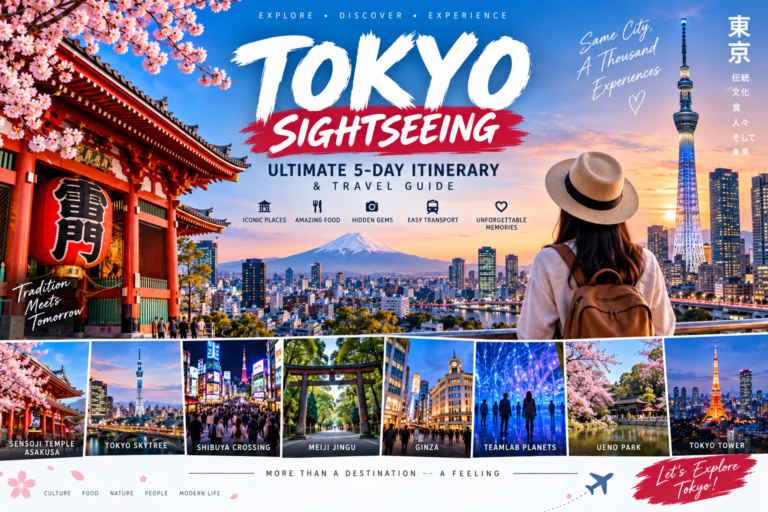
Day 1: Asakusa + Akihabara
Day 2: Shibuya + Harajuku
Day 3: Ikebukuro + Anime Tokyo Station
Day 4: Tokyo Station + Nihombashi + Pokémon Center/Cafe
Day 5: Shinjuku + Nakano
This gives you anime, history, shopping, food and modern city culture.
The Best Time to Visit Tokyo for Anime
There is no single perfect month for anime tourism.
Instead, think about your priorities.
Visit During a Major Anime Event
This can provide:
- Special exhibitions
- New announcements
- Merchandise
- Cosplay
- Industry activity
- Fan gatherings
However, major events can also mean:
- Larger crowds
- Higher accommodation demand
- Sold-out tickets
- Longer queues
Visit During a Normal Period
This may be better if you prefer:
- Shopping
- Neighborhood exploration
- Less event pressure
- More flexible schedules
The best time depends on what you want from the trip.
Anime Events and Pop-Up Exhibitions
Anime tourism changes rapidly because exhibitions and collaborations rotate.
Tokyo Anime Center, for example, currently operates rotating exhibition projects, while Animate’s Space Galleria also changes exhibitions periodically.
This creates an opportunity for repeat visitors.
A traveler who visited Tokyo two years ago may find a completely different anime landscape on the next trip.
Why Pop-Ups Matter
Pop-ups create urgency.
A permanent store can be visited next year.
A limited exhibition may disappear in a few weeks.
Therefore, travelers interested in a specific series should prioritize time-sensitive events.
Ten Major Anime and Character Brands to Know in Tokyo
Tokyo’s anime ecosystem includes hundreds of franchises and companies. The following ten are particularly useful for understanding the range of experiences available to visitors.
| Brand/Franchise | Main Appeal | Tokyo Experience | Best For | Planning Difficulty |
|---|---|---|---|---|
| Pokémon | Games, anime, collecting | Pokémon Center, Pokémon Cafe | Families & collectors | High for café |
| Studio Ghibli | Film, art, storytelling | Ghibli Museum | Families & film fans | High |
| Gundam | Mecha, model kits, anime | Character merchandise and events | Mecha fans | Medium |
| Dragon Ball | Shonen anime & manga | Merchandise, pop-ups | Long-time fans | Medium |
| One Piece | Manga, anime & characters | Merchandise, exhibitions, pop-ups | Shonen fans | Medium |
| Naruto | Ninja-themed anime | Merchandise and collaborations | Shonen fans | Medium |
| Sailor Moon | Magical-girl culture | Merchandise and events | Collectors & fans | Medium |
| Demon Slayer | Modern anime phenomenon | Pop-ups and merchandise | Contemporary fans | Medium |
| Detective Conan | Mystery anime/manga | Merchandise and collaborations | Mystery fans | Medium |
| Hello Kitty/Sanrio | Character culture | Sanrio shops and collaborations | Families & collectors | Low–Medium |
The important distinction is that these brands do not necessarily have a permanent dedicated attraction operating at all times in Tokyo.
Pop-up exhibitions, collaborations and merchandise availability change.
Always check the official brand or venue information before building a trip around a specific franchise.
Pokémon vs Studio Ghibli for Tokyo Visitors
These two experiences illustrate how different anime tourism can be.
Pokémon is strongly connected to character collecting, games, merchandise and themed food.
Studio Ghibli is more strongly connected to animation, storytelling, art and filmmaking.
A family with young children might love both.
A collector may spend more time at Pokémon Center.
An animation student might prefer the Ghibli Museum.
Akihabara vs Ikebukuro
If you only have time for one major anime neighborhood, consider your interests.
Choose Akihabara If You Prefer
- Gaming
- Electronics
- Retro culture
- Figures
- Broad otaku culture
- Arcades
- Specialty stores
Choose Ikebukuro If You Prefer
- Anime merchandise
- Manga
- Exhibitions
- Animate
- Character-focused experiences
- Anime Tokyo Station
- Organized fan shopping
The best choice depends on your personal fandom.
Tokyo Anime and Japanese Language
You do not need Japanese fluency to enjoy Tokyo’s anime scene.
However, even basic Japanese can improve the experience.
Useful words include:
- Anime
- Manga
- Eiga
- Mise
- Kissa
- Yoyaku
- Kudasai
- Arigatou
- Sumimasen
More importantly, learn how to read basic numbers and common shopping information.
This can make prices, sizes and product details easier to understand.
Respecting Anime and Otaku Culture
Visitors should remember that anime culture is not simply a tourist performance.
Millions of Japanese people engage with anime in different ways.
Some are casual viewers.
Some are collectors.
Some work in the industry.
Some are dedicated fans.
The term otaku has developed different meanings across time and context, and the official Tokyo tourism guide notes that the label has become a source of pride for many fans.
Tourists should therefore avoid treating fans as entertainment.
Be respectful when:
- Photographing people
- Watching cosplay
- Entering stores
- Attending events
- Visiting real-world anime locations
Anime Photography in Tokyo
Tokyo provides endless photography opportunities.
You can photograph:
- Storefronts
- Character advertisements
- Figures
- Streets
- Neon signs
- Arcades
- Merchandise displays
- Themed cafés
- Neighborhood scenery
But be careful about photographing people.
Always respect requests and venue rules.
Some stores may prohibit photography of merchandise or displays.
Common Tokyo Anime Travel Mistakes
Mistake 1: Visiting Only Akihabara
Akihabara is important, but Tokyo anime culture extends far beyond it.
Solution: Include at least one additional area such as Ikebukuro, Nakano, Shibuya or Mitaka.
Mistake 2: Relying on Old Blog Posts
Anime cafés and pop-ups change quickly.
Solution: Check official websites shortly before your visit.
Mistake 3: Assuming Every Attraction Is Permanent
An exhibition can disappear after a few months.
Solution: Check dates before adding it to your itinerary.
Mistake 4: Forgetting Reservations
Some experiences require advance booking.
The Ghibli Museum explicitly operates on an advance-reservation system, while Pokémon Cafe TOKYO also requires prior reservations.
Solution: Book fixed experiences first, then build flexible activities around them.
Mistake 5: Spending Your Entire Budget on Merchandise
Tokyo makes impulse shopping very easy.
Solution: Set a daily merchandise budget.
Mistake 6: Ignoring Luggage Space
Large figures and collectibles take space.
Solution: Reserve luggage capacity before shopping.
Mistake 7: Treating Every Anime Store as the Same
Different stores specialize in different categories.
Solution: Research what each location is best for.
Pros of Tokyo Anime Tourism
Huge Variety
Tokyo offers an unusually broad combination of anime, manga, gaming, shopping and cultural experiences.
Strong Public Transportation
Major anime areas can generally be incorporated into a wider Tokyo itinerary using the city’s extensive rail network.
Experiences for Different Ages
Anime tourism can work for:
- Children
- Teenagers
- Adults
- Families
- Collectors
- Casual fans
- Animation professionals
Constant Change
Rotating exhibitions and pop-up events mean there is often something new to discover.
Cons of Tokyo Anime Tourism
It Can Become Expensive
Merchandise, cafés, tickets and transportation can quickly add up.
Crowds
Popular stores and events can become extremely busy.
Language Barriers
Some smaller shops, events and reservation systems may be primarily Japanese.
Rapidly Changing Information
Old travel articles can become inaccurate.
Too Much Merchandise
The sheer amount of choice can overwhelm first-time visitors.
The Hidden Advantage of Tokyo Anime Tourism
One of the most overlooked advantages is that anime can serve as a gateway into Tokyo itself.
Suppose you travel to Tokyo because of anime.
You might start in Akihabara.
Then you discover Japanese gaming culture.
That leads you to retro technology.
Then you become interested in manga.
That takes you to a bookstore.
You discover a neighborhood.
You eat local food.
You visit a shrine nearby.
Suddenly, anime has introduced you to parts of Tokyo you might never have explored.
That is a more meaningful form of fandom tourism.
Anime Tourism and Local Communities
Anime can also contribute to local tourism.
Tokyo’s 2026 tourism material highlights neighborhoods associated with anime and manga, character-related installations and local maps designed around these cultural connections.
This is particularly interesting because anime tourism does not always require a giant theme park.
A neighborhood itself can become part of the attraction.
Visitors may walk through streets associated with a character or series, visit local businesses, buy merchandise and experience ordinary city life.
Anime and Tokyo’s Future Tourism Strategy
Tokyo’s official tourism strategy increasingly treats anime as part of the city’s broader cultural identity.
Anime Tokyo Station is one example.
The Tokyo Anime Center is another.
The expansion of exhibitions, pop-up events, character collaborations and anime-related maps shows how the city can integrate entertainment with tourism.
The future may therefore involve fewer isolated “anime attractions” and more anime-connected neighborhoods and experiences.
How Technology Is Changing Tokyo Anime Tourism
Technology is changing how visitors discover anime locations.
Travelers can now use:
- Digital maps
- QR codes
- Smartphone translation
- Digital tickets
- Mobile payments
- Social media
- Virtual exhibitions
- AI travel assistants
- Digital event calendars
The Tokyo Anime Center explicitly combines physical and virtual experiences as part of its concept.
This could become increasingly important.
AI and the Future of Anime Travel
AI can make anime travel more personalized.
Imagine telling an itinerary assistant:
“I have two days in Tokyo. I love Pokémon and Studio Ghibli, dislike crowded nightlife, have a moderate budget, and want to spend one day shopping and one day exploring anime culture.”
A useful system could potentially organize:
- Neighborhoods
- Transportation
- Reservations
- Opening hours
- Events
- Food
- Shopping
- Alternative plans
But travelers should still verify important information.
AI can suggest.
Official venues confirm.
That distinction will remain important.
The Future of Anime Pilgrimage
Anime pilgrimage is likely to become more sophisticated.
Instead of simply visiting a famous location, future experiences may combine:
- Digital maps
- Augmented reality
- Character overlays
- Audio guides
- Location-based stories
- Digital collectibles
- QR experiences
The result could blur the line between sightseeing and interactive storytelling.
Is Tokyo Anime Worth It for Non-Anime Fans?
Yes, if approached correctly.
You do not have to know hundreds of anime series.
Tokyo’s anime culture offers insight into:
- Graphic design
- Retail
- Japanese youth culture
- Food
- Fashion
- Technology
- Publishing
- Entertainment
- Character design
A non-fan may find the cultural system itself fascinating.
Is Tokyo Anime Worth It for Hardcore Fans?
Absolutely.
But hardcore fans should plan more carefully.
The deeper you go, the more important current information becomes.
A serious fan may want to monitor:
- Official franchise sites
- Exhibition calendars
- Event announcements
- Pop-up schedules
- Store announcements
- Ticket releases
The reward is a much more specialized experience.
A Practical Tokyo Anime Checklist
Before your trip, check:
Attractions
- Akihabara
- Ikebukuro
- Nakano
- Anime Tokyo Station
- Tokyo Anime Center
- Ghibli Museum
- Pokémon Center
- Pokémon Cafe
Shopping Tokyo anime
- Manga
- Figures
- Character goods
- Trading cards
- Art books
- Limited editions
Reservations Tokyo anime
- Ghibli Museum
- Pokémon Cafe
- Special exhibitions
- Limited events
- Popular themed cafés
Budget Tokyo anime
Set separate amounts for:
- Transportation
- Food
- Tickets
- Merchandise
- Collectibles
- Emergency expenses
Technology Tokyo anime
Carry:
- Smartphone
- Portable charger
- Translation app
- Offline maps
- Digital reservations
- Payment options
A Smart 48-Hour Tokyo Anime Plan
If you have only two days, avoid trying to cover the entire city.
Day One: Akihabara Tokyo anime
Start with the neighborhood’s major anime and gaming stores.
Spend the morning browsing.
Have lunch nearby.
Use the afternoon for:
- Figures
- Manga
- Retro games
- Arcades
- Specialty shops
Keep the evening flexible.
Day Two: Ikebukuro Tokyo anime
Begin with Animate Ikebukuro.
The flagship store contains multiple floors dedicated to manga, anime merchandise, games, exhibitions and events.
Then visit Anime Tokyo Station.
Because its exhibition schedule changes, check what is currently available before visiting.
Finish the day with a themed café or restaurant if you have a reservation.
A Seven-Day Tokyo Anime and Culture Itinerary
For travelers with a full week, balance anime with broader Tokyo experiences.
Day One: Traditional Tokyo
Visit Asakusa and surrounding historic areas.
Day Two: Akihabara Tokyo anime
Focus on anime, gaming and otaku culture.
Day Three: Shibuya and Harajuku Tokyo anime
Explore fashion, youth culture and contemporary Tokyo.
Day Four: Ikebukuro Tokyo anime
Explore Animate, Anime Tokyo Station and surrounding anime culture.
Day Five: Mitaka Tokyo anime
Visit the Ghibli Museum if you have secured advance tickets.
Day Six: Nakano Tokyo anime
Explore collectibles, shopping and neighborhood culture.
Day Seven: Flexible Anime Day Tokyo anime
Use the final day for a limited exhibition, pop-up store, shopping or a favorite neighborhood.
This structure provides a better balance than spending seven consecutive days inside anime shops.
How Much Time Should You Spend in Tokyo Anime Areas?
It depends on your interests.
For casual travelers:
2–4 hours in a major anime neighborhood may be enough.
For collectors:
Half a day or more can disappear quickly.
For hardcore fans:
An entire day may not feel sufficient.
Do not judge the quality of an itinerary by how many attractions you visit.
Judge it by whether you had enough time to enjoy them.
What Makes Tokyo Anime Different From Anime Tourism Elsewhere?
Anime has become global.
Many countries now have anime conventions, themed cafés and specialty shops.
Tokyo’s difference is the depth of integration.
Anime is connected to:
- Original publishing
- Japanese retail
- Domestic events
- Character goods
- Local neighborhoods
- Animation history
- Gaming
- Food
- Fashion
- Creative industries
You are not simply visiting an anime-themed attraction.
You are visiting the ecosystem that produced and continues to support much of the culture.
FAQs
What is the best anime area in Tokyo?
Akihabara is the classic choice for anime, manga, gaming, collectibles and otaku culture. However, Ikebukuro is equally important for many fans, especially those interested in Animate, exhibitions and character merchandise. The official Tokyo tourism guide identifies Akihabara, Ikebukuro and Nakano among Tokyo’s key anime and manga destinations.
Is Akihabara only for anime fans?
No. Akihabara also has gaming, electronics, arcades, cafés, collectibles and other forms of Japanese pop culture. Even travelers who are not serious anime fans can enjoy its atmosphere.
Is Ikebukuro good for anime shopping?
Yes. Ikebukuro is one of Tokyo’s major anime destinations, and the Animate Ikebukuro Flagship Store offers manga, merchandise, games, exhibitions, events and other anime-related products.
What is Anime Tokyo Station?
Anime Tokyo Station is an anime-focused cultural facility in Ikebukuro established by the Tokyo Metropolitan Government and operated by the Association of Japanese Animations. It features exhibitions, animation materials, production information and merchandise.
Is Anime Tokyo Station free?
The official Anime Tokyo Station information currently lists admission as free. Special exhibition conditions and opening information can change, so visitors should check the official website before visiting.
Do I need to book the Ghibli Museum in advance?
Yes. The official Ghibli Museum website states that all admission is by advance reservation and that tickets cannot be purchased at the museum itself.
Can I visit Pokémon Cafe without a reservation?
Pokémon Cafe TOKYO currently requires prior reservation according to its official listing. Always check the official Pokémon Cafe website for the latest availability and operating information.
Where is Pokémon Cafe TOKYO?
Pokémon Cafe TOKYO is located in Nihombashi at Nihombashi Takashimaya S.C. East Building 5F, next to Pokémon Center TOKYO DX.
Is Tokyo good for anime collectors?
Yes. Tokyo offers major anime retail districts, secondhand stores, specialty shops, exhibitions and character-goods retailers. Akihabara, Ikebukuro and Nakano are particularly useful areas to investigate.
Where should I buy anime figures in Tokyo?
Akihabara, Ikebukuro and Nakano are good starting points. Compare prices, condition and packaging before purchasing expensive collectibles.
Is Nakano good for rare anime merchandise?
Nakano is particularly interesting for collectors looking for secondhand, vintage and specialty merchandise. Availability changes constantly, so the fun is often in exploring multiple stores.
Is Tokyo anime suitable for children?
Yes. Families can choose experiences such as Pokémon attractions, Ghibli-related experiences, character shops and educational anime exhibitions. Anime Tokyo Station has no age restriction according to its official FAQ.
Can I enjoy Tokyo anime if I do not speak Japanese?
Yes. Major tourist-oriented stores and facilities often provide some multilingual support, and many products are visually easy to understand. However, Japanese-language skills can be helpful at smaller shops and events.
How many days do I need for Tokyo anime?
One day can provide a good introduction to Akihabara or Ikebukuro. Two to three days allow you to explore multiple anime districts. Hardcore fans may want several additional days for exhibitions, shopping, pilgrimage locations and events.
Is Tokyo anime expensive?
It can be. Shopping and limited-edition merchandise can significantly increase your spending. Set a merchandise budget before visiting.
What is anime pilgrimage?
Anime pilgrimage involves visiting real-world locations associated with anime or manga works. These can include streets, neighborhoods, buildings, stations and other places connected to a series or creator.
Are Tokyo anime exhibitions permanent?
Not necessarily. Many exhibitions and pop-up experiences are temporary. Anime Tokyo Station and Tokyo Anime Center regularly feature changing exhibitions, so always check current dates.
Is Tokyo Anime Center the same as Anime Tokyo Station?
No. They are separate facilities. Tokyo Anime Center operates at a Shibuya venue and presents exhibitions, shops and events, while Anime Tokyo Station is a separate anime facility in Ikebukuro.
What is the best anime experience in Tokyo for first-time visitors?
A strong first visit would combine Akihabara and Ikebukuro. Add Anime Tokyo Station for an educational experience, then choose a specific attraction such as Pokémon Cafe or the Ghibli Museum based on your interests and ticket availability.
Should I visit Akihabara or Ikebukuro?
Choose Akihabara for a broad otaku, gaming, electronics and collectibles experience. Choose Ikebukuro for major anime retail, Animate, exhibitions and anime-focused cultural facilities. Ideally, visit both.
What should I buy in Tokyo?
Popular choices include manga, figures, acrylic stands, plush toys, keychains, art books, trading cards, character clothing and limited-edition merchandise.
How can I avoid fake anime merchandise?
Buy from reputable retailers and inspect packaging, manufacturer information, product condition and included accessories. Be especially careful when purchasing expensive collectibles from unfamiliar sellers.
Is anime tourism becoming more important to Tokyo?
Anime has become an increasingly visible component of Tokyo’s cultural and tourism ecosystem. Tokyo has developed facilities such as Anime Tokyo Station and promotes anime and manga destinations through its official tourism resources.
Conclusion
Tokyo anime is much more than shopping for character merchandise. It is an opportunity to explore a living part of Japanese popular culture through neighborhoods, museums, exhibitions, manga, gaming, cafés, collecting, fashion, food and creative industries. The biggest mistake is trying to see everything. Instead, build your trip around your personal interests. Start with Akihabara if you want classic otaku culture, add Ikebukuro for major anime retail and exhibitions, explore Nakano if you love collecting, visit Mitaka for Studio Ghibli, and consider Nihombashi for Pokémon. Anime Tokyo Station is especially worthwhile if you want to understand how animation is produced and preserved rather than simply buying merchandise.