Tokyo Budget Travel: The Ultimate Guide to Exploring Tokyo on a Budget
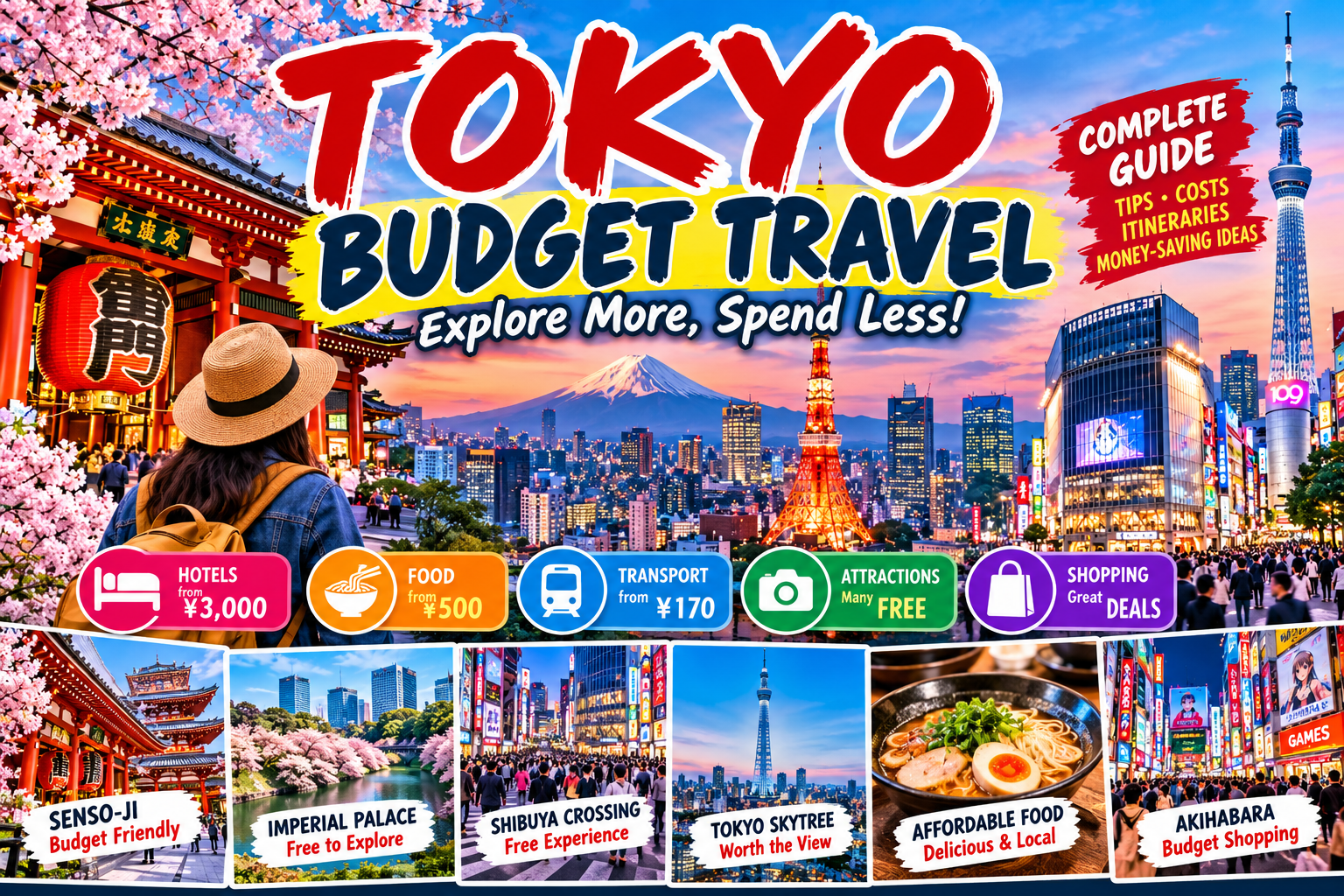
Can one of the world’s most exciting cities really be affordable for travelers who do not want to spend a fortune? Yes—Tokyo budget travel is entirely possible when you control the biggest expenses: accommodation, transportation, food, attractions, and shopping. With smart neighborhood planning, inexpensive local restaurants, free attractions, convenient public transportation, and carefully chosen accommodation, travelers can experience Tokyo without sacrificing the things that make the city special Tokyo Business
What Does Tokyo Budget Travel Actually Mean?
Tokyo budget travel does not necessarily mean staying in the cheapest hostel, eating instant noodles every day or avoiding attractions.
A better definition is:
Getting the greatest travel experience from every yen you spend.
This means understanding where money creates genuine value and where you can save without reducing the quality of your trip.
A budget Tokyo trip might include:
- Affordable accommodation
- Business hotels
- Hostels
- Capsule hotels
- Apartment-style accommodation where appropriate
- Convenience-store breakfasts
- Affordable Japanese restaurants
- Food courts
- Local cafés
- Public transportation
- Walking
- Free temples and shrines
- Public parks
- Free observation areas
- Low-cost museums
- Discount shopping
- Careful souvenir planning
Budget travel also depends heavily on your travel style.
A solo traveler may find a capsule hotel extremely practical.
A couple may prefer a small private hotel room.
A family may save more by staying in a larger room with useful facilities rather than booking multiple tiny rooms.
Why Tokyo Can Be More Affordable Than Travelers Expect
Tokyo has an unusual combination of premium and inexpensive services.
The same city can offer:
- Extremely expensive sushi
- Affordable sushi chains
- Luxury department stores
- Discount shopping streets
- Five-star hotels
- Simple business hotels
- Premium taxis
- Highly efficient public transportation
- Fine dining
- Inexpensive noodle restaurants
This creates a large range of possible travel budgets.
The advantage belongs to travelers who understand that Tokyo does not require you to choose between luxury and deprivation.
There is a huge middle ground.
The Main Costs of a Tokyo Budget Trip
The easiest way to create a realistic Tokyo budget is to divide your spending into categories.
The five most important categories are:
- Accommodation
- Food
- Transportation
- Attractions
- Shopping and entertainment
International flights should usually be calculated separately because airfare varies dramatically depending on the traveler’s departure country, season and booking timing.
Other costs may include:
- Travel insurance
- Airport transfers
- SIM or eSIM
- Laundry
- Luggage storage
- Visa expenses
- Currency exchange fees
- Emergency spending
The important lesson is that small daily expenses can become significant over a week.
Saving the equivalent of a few dollars each day on food, transport and unnecessary purchases can produce a meaningful total saving by the end of the trip.
Tokyo Budget Per Day
A practical budget depends heavily on accommodation and travel style.
A very economical traveler may aim for approximately:
- Accommodation: ¥3,000–¥6,000
- Food: ¥2,500–¥4,500
- Transportation: ¥800–¥1,500
- Attractions: ¥0–¥2,000
- Miscellaneous: ¥500–¥1,500
That creates a rough daily spending range of around ¥6,800–¥15,500, excluding international flights.
A more comfortable budget traveler might spend:
- Accommodation: ¥6,000–¥12,000
- Food: ¥4,000–¥7,000
- Transportation: ¥1,000–¥2,000
- Attractions: ¥1,000–¥3,000
- Miscellaneous: ¥1,000–¥3,000
This can put daily spending around ¥13,000–¥27,000, excluding international flights.
These are planning ranges rather than fixed Tokyo prices. Accommodation rates, exchange rates, weekends, holidays, events and seasonal demand can change the final cost considerably.
Tokyo Budget for Different Types of Travelers
Tokyo Budget for Solo Travelers
Solo travelers have one major advantage: flexibility.
You can:
- Stay in capsule hotels
- Choose hostel dormitories
- Eat at counters
- Walk more
- Change neighborhoods easily
- Take advantage of single-seat restaurants
- Avoid paying for larger rooms
A solo traveler can potentially create a very economical Tokyo itinerary.
The main challenge is accommodation.
Private hotel rooms are generally more expensive per person than sharing a room with another traveler.
Tokyo Budget for Couples
Couples can reduce accommodation costs because one room is shared.
A couple might choose:
- Business hotels
- Compact double rooms
- Budget hotels
- Small private apartments where legally and practically suitable
Food can also be controlled easily by combining inexpensive breakfasts with one more substantial restaurant meal.
Tokyo Budget for Families
Families need a different strategy.
The cheapest room is not always the cheapest overall option.
A family may save by choosing accommodation with:
- Larger rooms
- Family rooms
- Kitchen facilities
- Laundry
- Breakfast options
- Easy station access
Transportation can also become a major expense, especially when children and multiple transfers are involved.
Tokyo Budget for Students
Students can focus heavily on:
- Hostels
- Free attractions
- Discount museums
- Affordable restaurants
- Convenience stores
- Walking
- Public parks
- Neighborhood exploration
Tokyo has enough free cultural experiences that students can create a rich itinerary without purchasing attraction tickets every day.
Tokyo Budget for Senior Travelers
Senior travelers may benefit from spending slightly more on accommodation located near a convenient station.
A hotel that costs a little more but reduces daily walking and complicated transfers can provide better value.
Budget travel should not mean unnecessary physical strain.
How Much Does Accommodation Cost in Tokyo?
Accommodation is usually one of the largest components of a Tokyo travel budget.
However, Tokyo has a wide range of options.
Hostels
Hostels can be among the cheapest choices for solo travelers.
They are particularly useful for:
- Backpackers
- Students
- Solo travelers
- Young travelers
- Social travelers
Dormitory accommodation can significantly reduce the cost of sleeping in central areas.
The trade-off is privacy.
Capsule Hotels
Capsule hotels offer a uniquely Japanese accommodation experience.
Instead of a conventional room, guests receive a compact sleeping pod or capsule.
They can work particularly well for solo travelers who prioritize:
- Location
- Cleanliness
- Convenience
- Low price
- Short stays
However, capsule hotels are not always the best option for travelers with large luggage or families.
Business Hotels
Business hotels are among the most useful choices for budget-conscious travelers.
They usually provide:
- Private rooms
- Private bathrooms
- Basic amenities
- Convenient locations
- Compact layouts
The rooms can be small, but they are often highly functional.
Budget Hotels
Budget hotels provide a middle ground between hostels and larger full-service properties.
When comparing them, look beyond the room price.
Consider:
- Station distance
- Room size
- Bathroom facilities
- Breakfast
- Laundry
- Luggage storage
- Check-in rules
A slightly more expensive hotel can sometimes save money through transportation and convenience.
The Most Important Accommodation Rule
Stay Near a Convenient Station
This is one of the most important Tokyo budget strategies.
A cheap hotel located far from your daily activities may not actually be cheap.
You could spend more on:
- Train fares
- Additional transfers
- Time
- Food while waiting
- Taxis when tired
A moderately priced hotel near a useful station can produce better overall value.
Affordable Tokyo Areas for Travelers
Ueno
Ueno can be attractive to budget travelers because of its combination of transportation, food, culture and accommodation options.
Nearby attractions include:
- Ueno Park
- Tokyo National Museum
- Ameyoko
- Traditional shopping areas
Asakusa
Asakusa is particularly useful for travelers who want:
- Traditional Tokyo
- Senso-ji
- Affordable food
- Walking opportunities
- Cultural experiences
The area can also make a good base for exploring eastern Tokyo.
Ikebukuro
Ikebukuro offers extensive shopping, dining and transportation connections.
It can be a practical alternative for travelers who want access to major parts of Tokyo without staying in the most expensive central districts.
Akihabara
Akihabara is famous for:
- Electronics
- Anime
- Manga
- Gaming
- Pop culture
Accommodation and food options vary considerably, so careful comparison is necessary.
Asakusabashi
Asakusabashi can be useful for travelers seeking a quieter location with access to transportation and traditional eastern Tokyo neighborhoods.
How to Save Money on Tokyo Food
Food is one of the easiest areas to control.
You do not need to avoid Japanese cuisine to save money.
In fact, some of the most affordable meals are excellent introductions to everyday Japanese food culture.
Eat Where Local Workers Eat
Look for restaurants serving:
- Ramen
- Udon
- Soba
- Curry rice
- Donburi
- Set meals
- Yakitori
- Gyoza
- Sushi
Restaurants filled with local workers during lunch can sometimes offer excellent value.
Use Lunch Deals
Lunch can be considerably more economical than dinner at some restaurants.
A restaurant that feels expensive in the evening may offer a reasonably priced lunchtime set.
Convenience Stores Are Useful
Japanese convenience stores can be surprisingly valuable for budget travelers.
You can find:
- Rice balls
- Sandwiches
- Salads
- Noodles
- Drinks
- Yogurt
- Snacks
- Prepared meals
They are particularly useful for breakfast or quick meals.
However, eating every meal at a convenience store would mean missing an important part of Tokyo’s food culture.
Visit Supermarkets
Supermarkets can be useful for travelers staying in accommodation with refrigerators or cooking facilities.
Prepared foods may become especially affordable later in the day, although availability and discount timing vary by store.
Avoid Eating Beside Major Tourist Attractions
Restaurants immediately surrounding famous tourist attractions can sometimes carry higher prices.
Walk a few streets away and compare menus.
Budget Tokyo Breakfast Ideas
Breakfast does not need to be expensive.
Consider:
- Rice balls
- Bread and pastries
- Yogurt
- Fruit
- Convenience-store breakfast sets
- Affordable cafés
- Bakery breakfasts
A simple breakfast can leave more of the daily budget available for lunch and sightseeing.
Budget Tokyo Lunch Ideas
Lunch is an excellent time to try local food.
Consider:
- Ramen
- Udon
- Soba
- Japanese curry
- Donburi
- Set meals
- Gyoza
- Conveyor-belt sushi
Look for menu displays or photographs if you are unfamiliar with Japanese food.
Budget Tokyo Dinner Ideas
Dinner is where budgets can disappear quickly.
Set a spending limit before entering a restaurant.
For example:
“Tonight’s food budget is ¥2,000 per person.”
This simple decision can prevent an unexpectedly expensive evening.
Is Street Food Cheap in Tokyo?
Tokyo does have street-food experiences, particularly around markets and traditional neighborhoods.
However, travelers should not assume every tourist-oriented food stall is automatically cheap.
Compare prices before purchasing.
Markets can also encourage impulse spending.
Tokyo Budget Transportation
Tokyo’s transportation system is one of the strongest tools available to budget travelers.
The city has extensive:
- Subway services
- Railway lines
- Private railway networks
- Buses
- Walking routes
- Water transportation
Walk Whenever Practical
Walking is free and often reveals parts of Tokyo that you would never see from a train.
For example:
Instead of taking a train for one short stop, consider walking if the distance is reasonable.
You may discover:
- Small cafés
- Local shops
- Shrines
- Residential streets
- Parks
- Independent restaurants
Use Trains Instead of Taxis
Taxis are convenient but can significantly increase the daily budget.
Public transportation should generally be the default for budget travelers.
Use taxis strategically when:
- You have heavy luggage
- You are traveling late
- You are traveling with several people
- You need to reach a location poorly served by rail
- The time savings justify the expense
Are Tokyo Transport Passes Worth It?
This depends on your itinerary.
A common mistake is buying a pass simply because it sounds like a money-saving product.
Instead:
- Plan your daily route.
- Estimate the individual fares.
- Compare them with the pass.
- Consider convenience.
- Choose the option that actually saves money.
Do not assume a transportation pass is automatically cheaper.
Airport Transportation on a Budget
Airport transfers can create an unexpected expense.
Before choosing transportation, compare:
- Train
- Airport bus
- Shared transfer
- Taxi
- Private transfer
The best choice depends on:
- Arrival time
- Luggage
- Number of travelers
- Airport
- Hotel location
For a solo traveler, a premium private transfer may make little financial sense.
For a larger group with substantial luggage, the calculation can be different.
Free Things to Do in Tokyo
Tokyo has an impressive number of free experiences.
Senso-ji Area
Exploring the surrounding area and temple grounds can provide hours of cultural sightseeing without requiring a large attraction budget.
Meiji Jingu
The shrine grounds provide a peaceful experience close to central Tokyo.
Shibuya Crossing
You can experience one of Tokyo’s most famous urban landmarks without buying an admission ticket.
Hachiko Statue
The famous meeting point is free to visit.
Tokyo Station
The exterior and surrounding Marunouchi district can be explored without an attraction ticket.
Imperial Palace Area
Selected public areas and gardens can offer inexpensive or free cultural experiences depending on the area and operating arrangements.
Tokyo Metropolitan Government Building
The observation facilities provide a major free viewpoint.
Parks and Neighborhoods
Tokyo’s parks can be excellent budget destinations.
Walking through neighborhoods is also one of the most underrated free activities.
Budget-Friendly Tokyo Attractions
Not every paid attraction is expensive.
Look for:
- Small museums
- Public museums
- Gardens
- Observation facilities
- Cultural exhibitions
- Seasonal events
- Local festivals
Instead of paying for three expensive attractions in one day, consider paying for one memorable experience and filling the rest of the day with free activities.
Tokyo Budget Shopping
Shopping can destroy a carefully planned travel budget.
Tokyo has almost unlimited shopping opportunities.
You will encounter:
- Electronics
- Fashion
- Anime merchandise
- Cosmetics
- Snacks
- Souvenirs
- Traditional crafts
- Designer products
- Collectibles
The solution is simple:
Create a shopping budget before you arrive.
Affordable Tokyo Shopping Areas
Ameyoko
Ameyoko is useful for travelers who enjoy busy market-style shopping.
It can be a good place to compare prices and explore everyday Tokyo retail culture.
Don Quijote
Don Quijote stores can be useful for souvenirs, snacks, household products and various travel purchases.
The selection varies by location.
100-Yen Shops
These stores are useful for inexpensive:
- Souvenirs
- Stationery
- Household items
- Travel accessories
- Small gifts
Secondhand Shops
Secondhand stores can be excellent for budget-conscious fashion and hobby shopping.
Tokyo’s used-goods market includes everything from clothing to books, games and collectibles.
Tokyo Budget for Souvenirs
Do not wait until your final day to buy everything.
You may see a similar item for a different price elsewhere.
Set a souvenir allowance.
For example:
- Small souvenirs
- Food gifts
- Personal purchases
- One special item
This prevents impulse shopping from becoming a major expense.
Tokyo Budget for Attractions: Spend Strategically
A good budget traveler does not necessarily avoid paid attractions.
Instead, ask:
“Will I remember this experience six months from now?”
If the answer is yes, it may be worth paying for.
For example, a skyline observation deck may be expensive compared with a free viewpoint, but if photography is central to your trip, it could represent good value.
Tokyo Budget Travel for Photographers
Photography-focused travelers can save money because many excellent photographic locations are free.
Consider:
- Shibuya
- Asakusa
- Meiji Jingu
- Tokyo Station
- Hamarikyu Gardens
- Odaiba
- Rainbow Bridge viewpoints
- Tokyo streets
- Public parks
Instead of purchasing multiple paid observation tickets, select one premium viewpoint and photograph the rest of the city from street level.
Tokyo Budget Travel for Families
Families should focus on value rather than simply the lowest price.
Choose Accommodation Carefully
A slightly larger room can reduce stress and may eliminate the need for multiple rooms.
Plan One Major Attraction Per Day
Children may become tired from constant sightseeing.
Combine one major attraction with:
- A park
- A meal
- Shopping
- A neighborhood walk
Carry Snacks
Small snacks can prevent unnecessary purchases at tourist attractions.
Tokyo Budget Travel for Couples
Couples can make their budget work particularly well by sharing accommodation and transportation costs.
A budget-friendly romantic day could include:
- Morning temple visit
- Affordable lunch
- Garden walk
- Neighborhood exploration
- Sunset viewpoint
- Inexpensive dinner
The experience can feel romantic without requiring luxury spending.
Tokyo Budget Travel for Backpackers
Backpackers can take advantage of:
- Hostels
- Capsule hotels
- Convenience stores
- Cheap restaurants
- Walking
- Free attractions
- Public parks
- Discount stores
The main challenge is balancing price with location.
The cheapest accommodation may require more transportation and time.
Tokyo Budget Travel for Digital Nomads
Longer stays require different thinking.
Instead of comparing only nightly rates, consider:
- Weekly discounts
- Monthly accommodation
- Laundry
- Wi-Fi
- Desk space
- Kitchen access
- Transportation
- Café costs
A cheap room that forces you to spend money every day in cafés may not actually be economical.
Ten Budget Accommodation Brands and Options to Compare
The following brands and accommodation types can be useful starting points when researching affordable Tokyo stays. Prices and availability vary by date and location.
| Brand / Option | Typical Positioning | Best For | Main Advantage | Possible Limitation |
|---|---|---|---|---|
| Toyoko Inn | Budget business hotel | Solo travelers, couples | Practical rooms and widespread locations | Compact rooms |
| APA Hotel | Budget/business hotel | Short stays | Many locations and convenient access | Rooms can be very compact |
| Sotetsu Fresa Inn | Budget business hotel | Couples and business travelers | Convenient city locations | Rates vary considerably |
| Super Hotel | Budget hotel | Value-focused travelers | Simple accommodation and breakfast options at some properties | Limited room size |
| Hotel Mystays | Budget/mid-range | Longer and short stays | Broad property range | Quality varies by property |
| Richmond Hotel | Budget/mid-range | Couples and business travelers | Often strong location convenience | Can cost more during busy dates |
| Tokyu Stay | Extended-stay focused | Longer stays | Useful room facilities at selected properties | Not always the cheapest nightly rate |
| Capsule Hotels | Low-cost accommodation type | Solo travelers | Can reduce accommodation cost | Limited privacy and space |
| Hostels | Low-cost accommodation type | Backpackers | Dormitory savings and social atmosphere | Shared facilities |
| Business Hotels | Accommodation category | Budget travelers | Reliable private-room format | Small rooms |
The comparison should be treated as a framework rather than a ranking. A hotel’s actual value depends on its specific Tokyo location, travel dates, room type and included facilities.
How to Build a Tokyo Budget From Scratch
Start with your total available travel budget.
For example:
Total trip budget = ¥150,000
Then divide it.
Step One: Accommodation Tokyo budget
Suppose you allocate 35%.
That gives:
¥52,500
Step Two: Food Tokyo budget
Allocate approximately 25%.
¥37,500
Step Three: Transportation Tokyo budget
Allocate approximately 10%.
¥15,000
Step Four: Attractions Tokyo budget
Allocate approximately 10%.
¥15,000
Step Five: Shopping and Miscellaneous Tokyo budget
Keep approximately 20%.
¥30,000
The percentages are flexible.
The important principle is to create limits before the trip.
A Seven-Day Tokyo Budget Example
Consider a traveler staying for seven nights.
A moderate budget might look like:
Accommodation: ¥56,000
Food: ¥35,000
Transportation: ¥10,000
Attractions: ¥12,000
Shopping: ¥15,000
Miscellaneous: ¥7,000
Total: ¥135,000
This excludes international flights.
A backpacker could potentially spend less, while a traveler wanting private accommodation, premium dining and paid attractions could spend substantially more.
How to Save ¥10,000 or More on a Tokyo Trip
Savings do not necessarily require major sacrifices.
Save on Breakfast Tokyo budget
Choose an inexpensive breakfast instead of an expensive hotel buffet every morning.
Save on Transport Tokyo budget
Walk between nearby attractions.
Save on Accommodation Tokyo budget
Choose a convenient business hotel rather than an expensive luxury property.
Save on Attractions Tokyo budget
Mix paid attractions with free experiences.
Save on Shopping Tokyo budget
Set a daily or total shopping limit.
Save on Drinks Tokyo budget
Carry a reusable bottle where practical and avoid buying expensive drinks constantly.
Save on Taxis Tokyo budget
Use trains whenever reasonable.
Small savings across several categories can add up quickly.
Common Tokyo Budget Mistakes
Booking the Cheapest Hotel Without Checking the Location
This can result in higher transport costs and lost time.
Eating Only at Tourist Restaurants Tokyo budget
Tourist districts often contain a wide range of prices.
Explore side streets.
Buying Every Attraction Ticket Tokyo budget
You do not need to visit every observation deck and museum.
Taking Too Many Taxis Tokyo budget
Tokyo taxis are useful, but frequent use can dramatically increase costs.
Shopping Without a Limit Tokyo budget
Tokyo is dangerous for an uncontrolled souvenir budget.
Ignoring Exchange Rates Tokyo budget
A price that looks small in yen can add up when converted into your home currency.
Carrying Too Much Cash Tokyo budget
Japan remains a country where cash can still be useful, but travelers should also understand their card and ATM options.
Not Leaving Emergency Money Tokyo budget
Never allocate 100% of your travel budget to planned spending.
Keep a reserve.
Tokyo Budget Challenges and Their Solutions
Challenge: Hotel Prices Increase Tokyo budget
Solution: Compare multiple dates, neighborhoods and accommodation types.
Challenge: Food Spending Becomes Too High Tokyo budget
Solution: Mix restaurants with convenience stores, affordable local restaurants and supermarket meals.
Challenge: Transportation Costs Add Up Tokyo budget
Solution: Group attractions geographically.
Challenge: Shopping Becomes Uncontrolled Tokyo budget
Solution: Set a shopping budget before arriving.
Challenge: Too Many Paid Attractions Tokyo budget
Solution: Choose one or two premium experiences and fill the remaining itinerary with free attractions.
Challenge: Budget Hotel Is Too Far Away Tokyo budget
Solution: Compare total trip cost rather than room price alone.
Pros of Tokyo Budget Travel
Tokyo is particularly suitable for budget travel because of its enormous variety.
Extensive Public Transportation Tokyo budget
You can reach a huge portion of the city without needing taxis.
Affordable Food Options Tokyo budget
Travelers can find inexpensive meals across the city.
Many Free Experiences Tokyo budget
Temples, shrines, streets, parks and urban landmarks can provide hours of entertainment.
Huge Accommodation Range Tokyo budget
There are options for:
- Backpackers
- Students
- Couples
- Families
- Business travelers
- Long-stay visitors
Excellent Urban Walking Tokyo budget
Neighborhoods are often attractions in themselves.
Cons of Tokyo Budget Travel
Accommodation Can Become Expensive Tokyo budget
Especially during high-demand periods.
The City Is Huge Tokyo budget
Poor planning can create unnecessary transport costs.
Tourist Areas Encourage Spending Tokyo budget
Shopping and entertainment can quickly consume a budget.
Small Rooms Tokyo budget
Budget accommodation often prioritizes location and efficiency over space.
Luxury Is Tempting Tokyo budget
Tokyo offers premium experiences everywhere.
A budget traveler needs discipline.
Is Tokyo Expensive Compared With Other Major Cities?
The answer depends heavily on travel style.
Tokyo can be expensive when you choose:
- Luxury hotels
- Fine dining
- Private transfers
- Designer shopping
- Premium attractions
But it can also be surprisingly manageable when you choose:
- Business hotels
- Hostels
- Local restaurants
- Public transportation
- Free attractions
- Walking
- Discount shopping
This is why simply describing Tokyo as “expensive” is not particularly useful.
A better question is:
What type of Tokyo experience are you trying to create?
Tokyo Budget Travel During Different Seasons
Spring Tokyo budget
Spring can be particularly popular because of cherry blossoms.
High demand can affect accommodation prices in popular areas.
Budget travelers should consider booking early and remaining flexible about neighborhoods.
Summer Tokyo budget
Summer can be hot and humid.
Budget travelers can reduce spending by planning indoor activities during the hottest hours and using parks and outdoor areas during more comfortable periods.
Autumn Tokyo budget
Autumn can offer attractive weather and seasonal scenery.
Demand can vary around major holidays and foliage periods.
Winter Tokyo budget
Winter can provide opportunities for budget travelers because some dates may have lower tourism demand, although holiday periods can behave differently.
Tokyo Budget During Japanese Holidays
Major holidays can influence:
- Hotel prices
- Transportation demand
- Attraction crowds
- Restaurant availability
Travelers on strict budgets should research the Japanese holiday calendar before booking.
A cheap room during a normal week may be significantly more expensive during a high-demand period.
How Technology Can Help Tokyo Budget Travelers
Modern travel technology can help reduce unnecessary spending.
Useful tools include:
- Offline maps
- Public transport navigation
- Currency conversion
- Translation applications
- Digital travel planners
- Hotel comparison tools
- Restaurant search tools
However, technology should support planning rather than encourage constant spending.
How to Track Your Tokyo Budget
Use a simple daily system.
At the end of every day record:
Accommodation
Food
Transport
Attractions
Shopping
Other
Then compare the total against your daily target.
If you spend more one day, reduce discretionary spending the next.
This prevents a final-day budget crisis.
A Simple Tokyo Budget Spreadsheet Formula
You can create five columns:
| Category Tokyo budget | Daily Budget | Actual Tokyo budget | Difference Tokyo budget | Notes Tokyo budget |
|---|---|---|---|---|
| Accommodation | ¥8,000 | ¥7,500 | +¥500 | Good value |
| Food | ¥5,000 | ¥4,200 | +¥800 | Local restaurant |
| Transport | ¥1,500 | ¥1,000 | +¥500 | Walked |
| Attractions | ¥2,000 | ¥1,500 | +¥500 | Free attraction |
| Shopping | ¥2,000 | ¥3,000 | -¥1,000 | Souvenirs |
The important column is the difference.
Positive savings can be carried forward to another day.
Tokyo Budget and Sustainable Travel
Budget travel can sometimes support more sustainable choices.
Walking reduces reliance on motor vehicles.
Public transportation is highly useful for moving around the city.
Shopping from local businesses can keep spending within neighborhoods.
Choosing experiences rather than excessive physical souvenirs can also reduce unnecessary consumption.
Budget and sustainable travel are not automatically identical, but the two approaches can complement one another.
The Psychology of Spending in Tokyo
One of the most overlooked parts of budget travel is psychology.
Tokyo is designed to encourage discovery.
You will constantly encounter:
- Limited-edition products
- Seasonal food
- Anime merchandise
- Electronics
- Fashion
- Vending machines
- Cafés
- Pop-up shops
- Souvenirs
The problem is rarely one expensive purchase.
It is often twenty small purchases.
A ¥500 purchase does not feel significant.
Twenty such purchases equal ¥10,000.
That is why a daily spending limit works.
The Best Tokyo Budget Strategy: Pay for Memories
A useful rule is:
Spend money on experiences you will remember, not simply things that are available.
For example, a traveler might choose:
- One excellent Japanese meal
- One skyline experience
- One cultural attraction
- One special souvenir
Instead of:
- Several mediocre tourist meals
- Multiple unnecessary attraction tickets
- Dozens of impulse purchases
The goal is not the lowest possible spending.
The goal is high-value spending.
Future Trends in Tokyo Budget Travel
Tokyo’s tourism environment will continue to change.
Accommodation pricing, international demand, technology, transportation, tourism development and currency fluctuations can all affect the cost of visiting the city.
One important trend is the increasing importance of experience-based travel.
Travelers are increasingly interested in:
- Neighborhood experiences
- Local food
- Cultural activities
- Walking tours
- Smaller attractions
- Authentic everyday experiences
This can actually benefit budget travelers.
You do not need to pay a large entrance fee to experience Tokyo.
Walking through a neighborhood, visiting a local shrine, eating at a small restaurant and observing everyday city life can provide some of the most memorable experiences.
The Future of Affordable Tokyo Tourism
Tokyo is likely to remain a city with an unusually wide range of travel budgets.
New tourism infrastructure, changing hotel supply, digital booking technology and evolving neighborhoods will continue to create new options.
The biggest opportunity for budget travelers may be flexibility.
Travelers who can change:
- Dates
- Neighborhoods
- Accommodation types
- Meal times
- Attraction choices
- Transportation routes
can often find better value than travelers who require a fixed itinerary.
Tokyo Budget Travel Checklist
Before your trip, check:
- Passport
- Visa requirements
- Flights
- Travel insurance
- Accommodation
- Airport transportation
- Transportation cards or payment options
- Phone connectivity
- Currency
- Emergency funds
- Daily food budget
- Attraction reservations
- Shopping budget
- Weather
- Seasonal events
Tokyo Budget Packing Tips
Packing efficiently can also save money.
Bring:
- Comfortable walking shoes
- Reusable water bottle
- Portable charger
- Small day bag
- Weather-appropriate clothing
- Compact umbrella if appropriate
- Travel documents
- Medication and personal essentials
Comfortable shoes are particularly important.
Tokyo budget travel often means walking.
A Perfect Budget-Friendly Tokyo Day
Here is an example of how to structure a low-cost day.
Morning Tokyo budget
Start with an inexpensive breakfast.
Visit a free shrine or temple.
Late Morning Tokyo budget
Walk through the surrounding neighborhood.
Take photographs.
Lunch Tokyo budget
Choose a local restaurant offering ramen, soba, curry, udon or a set meal.
Afternoon Tokyo budget
Visit a public park or inexpensive museum.
Walk through nearby shopping streets.
Evening Tokyo budget
Choose one paid experience, such as an observation deck.
Dinner Tokyo budget
Eat at an affordable local restaurant.
Night Tokyo budget
Walk through the illuminated streets before returning to your hotel.
This approach provides a full day of experiences without requiring constant paid attractions.
Tokyo Budget Itinerary for Three Days
Day One: Traditional Tokyo
Visit:
- Senso-ji
- Asakusa
- Sumida River
- Local shopping streets
Focus on walking and inexpensive food.
Day Two: Modern Tokyo
Visit:
- Meiji Jingu
- Harajuku
- Shibuya
- Shibuya Crossing
Choose one paid observation experience if your budget allows.
Day Three: Central Tokyo budget
Visit:
- Tokyo Station
- Marunouchi
- Imperial Palace area
- Ginza
Finish with an inexpensive dinner.
Tokyo Budget Itinerary for Five Days
Day One Tokyo budget
Asakusa and Senso-ji.
Day Two Tokyo budget
Meiji Jingu, Harajuku and Shibuya.
Day Three Tokyo budget
Tokyo Station, Marunouchi and Imperial Palace area.
Day Four Tokyo budget
Ueno and cultural attractions.
Day Five Tokyo budget
Odaiba, Rainbow Bridge and Tokyo Bay.
This structure allows travelers to experience different sides of Tokyo without constantly crossing the city.
Tokyo Budget Itinerary for Seven Days
With seven days, travelers can slow down.
Spend:
- One day in eastern Tokyo
- One day in western Tokyo
- One day in central Tokyo
- One day around Ueno
- One day around Tokyo Bay
- One flexible day
- One shopping or neighborhood day
The flexible day is particularly valuable.
It allows you to revisit places you enjoyed or adapt your plans to the weather.
FAQs
Is Tokyo expensive for budget travelers?
Tokyo can be expensive, but it is possible to visit on a controlled budget. The city offers inexpensive accommodation, affordable restaurants, public transportation, free attractions and many low-cost activities.
How much money do I need per day in Tokyo?
A highly economical traveler may plan around ¥6,800–¥15,500 per day excluding international flights, while a more comfortable budget traveler may spend approximately ¥13,000–¥27,000. Actual spending depends heavily on accommodation, food, attractions and travel dates.
What is the cheapest way to stay in Tokyo?
Hostels and capsule hotels can be among the least expensive options for solo travelers. Business hotels can offer better value for travelers who want a private room.
Is food cheap in Tokyo?
Tokyo has both expensive and affordable food. Ramen, udon, soba, curry rice, donburi, set meals, convenience-store food and other everyday options can be suitable for budget travelers.
Can I visit Tokyo without spending much on attractions?
Yes. Tokyo has many free experiences, including temples, shrines, parks, neighborhood walks, famous streets and selected viewpoints.
What are the best free things to do in Tokyo?
Popular free experiences include exploring Senso-ji, visiting Meiji Jingu, experiencing Shibuya Crossing, seeing Hachiko, walking around Tokyo Station and exploring public parks and neighborhoods.
Is public transportation expensive in Tokyo?
Public transportation requires a budget, but it is generally much more economical than relying heavily on taxis. Travelers can also walk between nearby attractions to reduce daily transportation costs.
Should I stay in central Tokyo to save money?
Not necessarily. A hotel farther from the most expensive tourist districts can offer better room rates, but it should still be close to a convenient railway or subway station.
Is Ueno good for budget travelers?
Ueno can be a practical area for budget travelers because it combines transportation, food, cultural attractions and accommodation options.
Is Asakusa good for a budget trip?
Yes. Asakusa offers major cultural attractions, walking opportunities and a large selection of food and shopping experiences.
Are capsule hotels cheaper than normal hotels?
They can be, especially for solo travelers, but prices vary by location and date. A capsule hotel also provides less private space than a conventional hotel.
Is Tokyo suitable for backpackers?
Yes. Hostels, capsule hotels, inexpensive restaurants, public transportation and free attractions make Tokyo suitable for backpackers who plan carefully.
How can I save money on Tokyo hotels?
Compare multiple neighborhoods, travel dates and accommodation types. Prioritize convenient transportation access rather than simply choosing the cheapest room.
How can I save money on Tokyo food?
Eat local Japanese food, use lunch deals, choose inexpensive restaurants, use convenience stores strategically and avoid relying on expensive tourist restaurants.
Should I buy a Tokyo transportation pass?
It depends on your itinerary. Calculate the expected individual fares first and compare them with the cost of the pass.
How much should I budget for shopping in Tokyo?
There is no universal amount. A traveler who wants to control spending should decide on a fixed shopping allowance before the trip.
Can I travel around Tokyo without taxis?
Yes. Trains, subways, buses, walking and other public transportation options make it possible to explore most major tourist areas without regularly using taxis.
What is the biggest Tokyo budget mistake?
One of the biggest mistakes is focusing only on the hotel price while ignoring transportation, food, attraction tickets and shopping. The cheapest room does not always produce the cheapest trip.
Is Tokyo cheaper in winter?
Some periods can offer better accommodation value, but prices vary according to dates, holidays, events and demand. Travelers should compare actual dates rather than assuming one season is always cheaper.
How can I enjoy luxury experiences on a budget?
Choose one premium experience and save elsewhere. For example, you might select one excellent restaurant or observation experience while using inexpensive accommodation, public transportation and free attractions for the rest of the trip.
What is the best Tokyo budget strategy for first-time visitors?
Stay near convenient public transportation, group attractions by neighborhood, eat a mixture of affordable local food and special meals, use free attractions and decide in advance how much you want to spend on shopping.
Conclusion
Tokyo budget travel is not about seeing how little money you can spend; it is about making intelligent choices so that every yen contributes to a better experience. The city offers an unusual combination of affordable food, efficient public transportation, budget accommodation, free cultural attractions, beautiful neighborhoods and unforgettable experiences, meaning travelers do not need a luxury budget to enjoy Tokyo. The smartest approach is to stay near convenient transportation, organize sightseeing geographically, walk whenever practical, mix free attractions with a few carefully selected paid experiences, eat where local residents eat and establish a shopping limit before arriving.



One Comment