Japan Rail Travel: 15 Essential Tips for an Amazing Trip
Have you ever imagined watching Mount Fuji from a train window, travelling between historic cities without worrying about driving, or arriving at a busy station where trains depart with remarkable precision? Japan rail travel makes these experiences possible, connecting futuristic cities, traditional towns, mountain landscapes, coastal communities and some of the country’s most memorable destinations. Japan rail travel is one of the most convenient ways to explore Japan because its extensive railway network connects major cities, regional attractions and many smaller communities. By understanding train types, ticket options, railway passes, station etiquette and route planning, you can make your journey smoother, more affordable and more rewarding Tokyo Local Market
Understanding the Japanese Railway System
How Japan’s railway network works
Japan has an extensive railway network operated by multiple companies. These companies serve different geographical areas and transport needs, from high-speed intercity journeys to suburban commutes and rural sightseeing routes.
The most important distinction for visitors is between Japan Railways Group services, commonly known as JR, and privately operated railways.
JR companies operate many major intercity routes, including the famous Shinkansen network. They also run local and regional trains in many parts of Japan. Private railway companies provide extensive services in metropolitan areas and operate routes to airports, shopping districts, historic sites, resort areas and suburban communities.
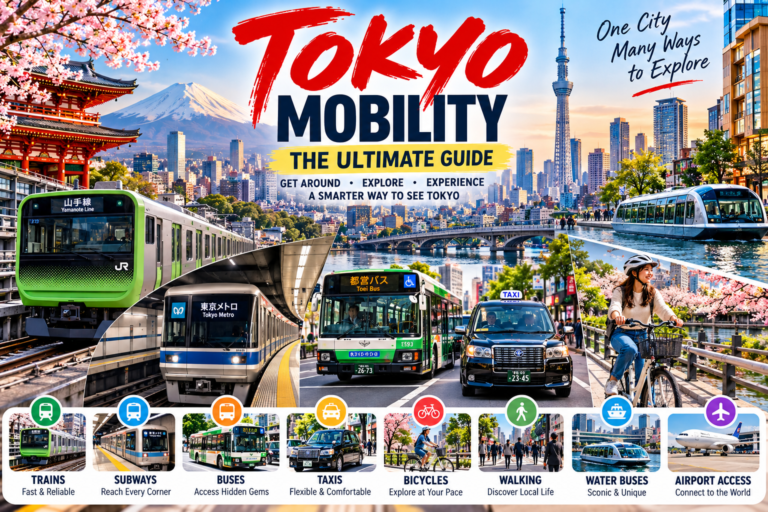
The Tokyo Metro and Toei Subway networks, for example, are essential for moving around central Tokyo. Private railways also connect Tokyo with areas such as Hakone, Nikko and the western suburbs. In Osaka, Kyoto and other Kansai destinations, several operators share the work of connecting neighbourhoods and tourist attractions.
The railway system is therefore best understood as a collection of connected networks rather than one single company.
What makes Japanese rail travel different?
Several characteristics make travelling by train in Japan particularly attractive.
- Frequent services: Major urban and intercity routes often offer frequent departures.
- High-speed connections: Shinkansen trains connect important cities across the country.
- Detailed station information: Many stations provide colour-coded lines, numbered exits, route diagrams and multilingual signage.
- Convenient transfers: Major stations are designed to accommodate large passenger volumes, although some transfers require substantial walking.
- A wide range of train types: Travellers can choose from high-speed services, limited express trains, commuter trains, sightseeing trains and rural local services.
- Scenic journeys: Some routes pass mountains, forests, lakes, coastlines and traditional towns.
These advantages do not mean every journey is effortless. Rural services may be infrequent, some stations have limited accessibility, and transferring between railway companies can require separate tickets. Planning remains important, particularly when travelling outside major cities.
The difference between JR and private railways
JR services are often the first choice for long-distance travel because they operate many major intercity routes. However, private railway companies can be more convenient for specific destinations.
For example, a visitor travelling between Tokyo and Kyoto will usually consider the Tokaido Shinkansen. Someone exploring central Tokyo may rely more heavily on Tokyo Metro and Toei Subway services. A traveller visiting Hakone may find that a regional transport pass combining railway, cable car, bus and other transport services is more practical than a nationwide pass.
The best operator depends on your destination, not simply on the company’s reputation.
The Main Types of Trains in Japan
Understanding the main train categories will make Japan rail travel much easier. Japanese train names often indicate how frequently a train stops and the type of journey it is designed to serve.
Shinkansen bullet trains
The Shinkansen is Japan’s high-speed railway system and one of the country’s most recognisable transport achievements.
These trains connect major destinations across several regions. Depending on the route, they can take travellers between cities in a fraction of the time required by conventional rail services.
The Tokaido Shinkansen links Tokyo, Nagoya, Kyoto and Shin-Osaka. Other Shinkansen routes connect areas including northern Honshu, Hokuriku, Tohoku, Kyushu and Hokkaido.
Shinkansen services are generally comfortable and suitable for longer journeys. Many provide reserved and non-reserved seating, depending on the service and train. Some services or train configurations offer additional premium seating.
Travellers should remember that not all Shinkansen trains stop at every station. The fastest service may skip smaller destinations, so check the stopping pattern before purchasing a ticket.
Limited express trains
Limited express trains connect cities, regional centres and tourist destinations where high-speed rail is not available or is not the most convenient option.
They usually stop at fewer stations than ordinary local trains. Some offer reserved seats, larger windows or special sightseeing features.
Examples include services connecting urban centres with resort regions, mountain destinations and coastal communities. Limited express trains can be particularly useful when travelling to places such as Nikko, the Japanese Alps or parts of the Kii Peninsula.
A limited express journey may require both a basic fare ticket and an additional limited express ticket. The exact arrangement depends on the operator and ticket product.
Rapid and special rapid trains
Rapid services generally stop at fewer stations than ordinary local trains. Special rapid services, where available, may stop at fewer stations still.
They are useful for medium-distance journeys, especially around metropolitan areas.
A rapid train is not necessarily a premium train. It may use the same ordinary seating and ticket arrangements as local services while reducing travel time by skipping selected stops.
Always check the destination and stopping pattern on the platform display.
Local and commuter trains
Local trains stop at most or all stations along their route. They are ideal for short journeys, suburban exploration and reaching neighbourhoods away from major tourist centres.
They can also provide a more relaxed view of everyday Japanese life. A local journey might reveal small shopping streets, school neighbourhoods, riverside communities and landscapes that high-speed trains pass too quickly to appreciate.
However, local trains are not always the best option for long distances. Travelling across several regions on ordinary services can require many transfers and consume an entire day.
Sightseeing and luxury trains
Japan also has sightseeing trains designed to make the journey itself an attraction.
Some feature panoramic windows, regional food, traditional interiors, observation areas or specially designed seating. Others focus on a particular landscape, historical theme or local culture.
Luxury train journeys can provide a more exclusive experience, but they are often expensive and may require reservations well in advance.
For travellers who enjoy slow tourism, a sightseeing train can be a worthwhile alternative to moving quickly between major cities.
Japan Rail Travel Planning: Choosing the Right Route
Start with the destinations, not the rail pass
One of the most common mistakes is purchasing a nationwide rail pass before deciding where to travel.
A better approach is to build a simple itinerary first.
List the cities and regions you want to visit, then identify the likely railway journeys between them. Compare the cost of individual tickets with the passes that cover those routes.
For example, a Tokyo–Kyoto–Osaka itinerary may involve a Shinkansen journey followed by several local trips. Whether a pass offers value depends on the number of long-distance journeys, the pass rules and the prices applicable to your travel dates.
A traveller staying in Tokyo for five days and taking only one long-distance journey may find individual tickets more economical than a nationwide pass.
The Tokyo–Kyoto–Osaka route
This is one of Japan’s most popular travel corridors.
Tokyo offers modern city districts, museums, food markets, shopping and access to day-trip destinations. Kyoto is known for historic temples, gardens, traditional neighbourhoods and cultural attractions. Osaka is famous for its food culture, entertainment districts and convenient connections around Kansai.
The Tokaido Shinkansen is the principal high-speed rail connection between these cities.
A useful itinerary might be:
- Spend several days exploring Tokyo.
- Travel by Shinkansen to Kyoto.
- Explore Kyoto’s historic districts and gardens.
- Continue to Osaka using an appropriate rail service.
- Take regional trips to destinations such as Nara, depending on your interests.
This itinerary is popular because it combines urban experiences, cultural heritage and convenient rail connections. However, it is not the only way to explore Japan. Adding extra time in a smaller city can provide a more relaxed experience.
Exploring northern Japan
Northern Japan offers a different atmosphere from the busy Tokyo–Kyoto corridor.
Travellers can explore Tohoku’s historic towns, seasonal scenery, hot spring regions and coastal landscapes. Hokkaido offers wide-open spaces, major regional centres, winter activities and summer nature trips.
Shinkansen services connect Tokyo with parts of northern Honshu and extend to Shin-Hakodate-Hokuto in southern Hokkaido. Travel beyond these stations often involves conventional railway services, buses or other local transport.
Because distances are large and some regional services are less frequent, northern itineraries benefit from advance planning.
Exploring central Japan and the Japanese Alps
Central Japan is an excellent region for travellers interested in mountains, traditional towns and outdoor activities.
Depending on your route, you may combine trains with buses to reach places such as Takayama, Shirakawa-go, Matsumoto or alpine resort areas.
The railway does not reach every popular attraction directly. Some of the most memorable mountain destinations require a bus connection from a railway station.
Before choosing a ticket, check whether it covers only the railway journey or also includes the relevant bus service. A pass that appears convenient on a map may not cover the final section of your trip.
Exploring Kyushu
Kyushu, Japan’s southwestern main island, combines urban destinations, volcanic landscapes, hot spring regions and coastal scenery.
Rail travel can connect visitors to cities such as Fukuoka, Kumamoto and Kagoshima, as well as destinations served by regional trains.
Kyushu is particularly suitable for travellers who want to combine a major city with regional exploration. A regional rail pass may be worth considering if you plan several covered journeys over a short period.
However, routes and service frequencies vary by region. Check the latest timetable before planning a day around a specific train.
Japan Rail Pass Explained
What is the Japan Rail Pass?
The Japan Rail Pass is a travel product designed primarily for eligible international visitors. It provides access to specified services operated by participating JR companies during a chosen validity period, subject to its terms and restrictions.
Pass durations have traditionally included 7-day, 14-day and 21-day options, with Ordinary and Green Car categories. Availability, prices, eligibility and rules should always be verified through the official Japan Rail Pass information before purchase.
The pass is not a universal ticket for every train in Japan. Some private railway services, subway networks, buses and other transport systems are not covered. Certain premium services or special seating arrangements may also require additional payment or have special restrictions.
When is the Japan Rail Pass worth considering?
A nationwide pass is most worth investigating when your itinerary includes several longer journeys within its validity period.
Potentially suitable itineraries may include:
- Tokyo, Kyoto, Osaka and additional distant destinations.
- A multi-region journey with several Shinkansen trips.
- A route involving multiple covered JR services across a short period.
The actual savings depend on current fares, the services you use and the pass conditions. Do not assume that a pass is automatically cheaper simply because you plan to ride several trains.
When individual tickets may be better
Individual tickets may be preferable when:
- You are staying in one city for most of the trip.
- You plan only one or two major intercity journeys.
- Most of your transport will be on private railways or subway networks.
- Your itinerary includes services that are not covered by the pass.
- You prefer flexibility without needing to maximise a pass’s validity period.
Compare the total cost of the journeys you expect to take rather than counting the number of train rides.
Regional rail passes
Regional passes can be useful when you plan to explore a particular area extensively.
Examples include passes for selected parts of Kansai, Kyushu, Hokkaido, Tohoku and other regions. Their coverage differs considerably, and some include only JR services while others are designed around a wider local transport network.
Regional passes can be especially valuable for visitors who want to spend more time in one area rather than travel across the entire country.
Before purchasing one, check:
- The exact geographical coverage.
- Eligible train categories.
- Whether seat reservations are included.
- Whether airport access is covered.
- Whether buses, ferries or private railways are included.
- The pass’s validity period and activation rules.
A regional pass should fit your itinerary, not determine it.
Green Car versus Ordinary Car
On many Shinkansen and limited express services, travellers can choose between Ordinary Car seating and Green Car seating.
Green Car generally provides a more spacious or premium seating experience, although the precise features depend on the train.
Ordinary Car is usually sufficient for most travellers, particularly those who want to manage costs. Green Car may be appealing on longer journeys, during a special trip or when additional comfort is a priority.
Neither category removes the need to check reservation rules and ticket conditions.
Buying Train Tickets in Japan
Buying tickets at station machines
Many major Japanese stations have ticket machines with English-language options. These can be convenient for ordinary journeys and certain ticket products.
The process varies by operator, but generally involves selecting a destination or fare, choosing the required ticket and following the payment instructions.
At larger stations, staffed ticket offices can help with more complicated purchases, reservations and itinerary questions.
During busy periods, allow extra time for queues. A traveller with an early Shinkansen departure should avoid leaving every ticket-related task until the last minute.
Buying tickets online
Official railway booking services and authorised ticket platforms can allow travellers to check schedules, purchase tickets and reserve seats before arriving in Japan.
Online booking can be particularly helpful during popular travel periods or for journeys involving several connections.
However, booking systems differ by operator. A reservation made through one service may have specific collection, payment, amendment or cancellation conditions.
Before purchasing online, confirm the travel date, departure station, arrival station, passenger details and ticket collection method.
Reserved and non-reserved seats
A reserved seat assigns you a specific seat on a particular train. A non-reserved ticket, where offered, allows travel under the relevant conditions without assigning a specific seat in advance.
Reserved seats are often helpful for families, groups and travellers carrying substantial luggage. They can also reduce uncertainty during busy seasons.
Non-reserved seating may offer flexibility, but a seat is not guaranteed. Availability depends on the service and passenger demand.
Do not assume every train offers the same seating options. Some services use different reservation rules, and particular trains may require reservations for all seats.
IC cards and contactless travel
Rechargeable transport cards, commonly known as IC cards, can make many local journeys easier. Examples include Suica, PASMO and ICOCA.
These cards can be used on participating railway, subway and bus networks. However, acceptance is not universal, particularly in some rural areas and on certain limited services.
An IC card is generally intended for eligible local transport payments. It should not be confused with a nationwide rail pass or assumed to replace every long-distance ticket.
Check whether your destination accepts your card, and keep an alternative payment method available.
Understanding basic fares and supplements
Some railway journeys involve more than one fare component.
A basic fare covers travel between the relevant stations. Certain services, including many limited express trains and Shinkansen journeys, may require an additional express or other ticket component.
The precise rules depend on the train, route and ticket product.
When comparing prices, ensure that you are comparing the full cost of the intended journey. A basic fare alone may not represent the total amount required to board a particular service.
How to Use Japanese Railway Stations
Learn the station layout before arriving
Large Japanese stations can contain numerous platforms, shopping areas, underground passages and separate ticket gates.
A transfer that appears short on a route planner may require several minutes of walking, especially if you change railway operators.
Check the platform number and station map before travelling. If the station is unfamiliar, arrive earlier than you think necessary.
Follow line colours and station numbers
Many railway networks use colour-coded lines and station numbering to help passengers navigate.
These systems can be useful when signs are crowded or when station names are difficult to recognise.
However, line colours and numbering conventions differ between operators. Always verify the line name, destination and direction rather than relying on colour alone.
Understand station exits
In major cities, choosing the correct station exit can save considerable walking.
A station may have multiple exits leading to different streets, landmarks, shopping centres or bus terminals. If you are visiting a specific attraction or hotel, check the most convenient exit before leaving the platform area.
This is particularly helpful when travelling with luggage or meeting someone at a large station.
Use station staff when uncertain
Station employees can often help with ticketing, directions and platform information.
Prepare the destination name in Japanese or have the route displayed on your phone if pronunciation is difficult. Showing a written destination can make communication easier.
When a connection is confusing, asking for help early is generally better than walking through the station until departure time is close.
Japan Rail Travel Etiquette
Queue where indicated
Passengers generally form orderly lines at designated platform positions. Following the markings helps boarding proceed smoothly.
Wait for arriving passengers to exit before boarding. Avoid standing directly in front of doors when people are leaving the train.
Keep noise low
Many passengers use trains to commute, read, rest or work. Speak quietly and avoid loud conversations.
Phone calls are generally discouraged in many train environments, particularly in quiet passenger areas. Follow posted instructions and local practice.
Be considerate with luggage
Large suitcases can block aisles, doors and seating areas.
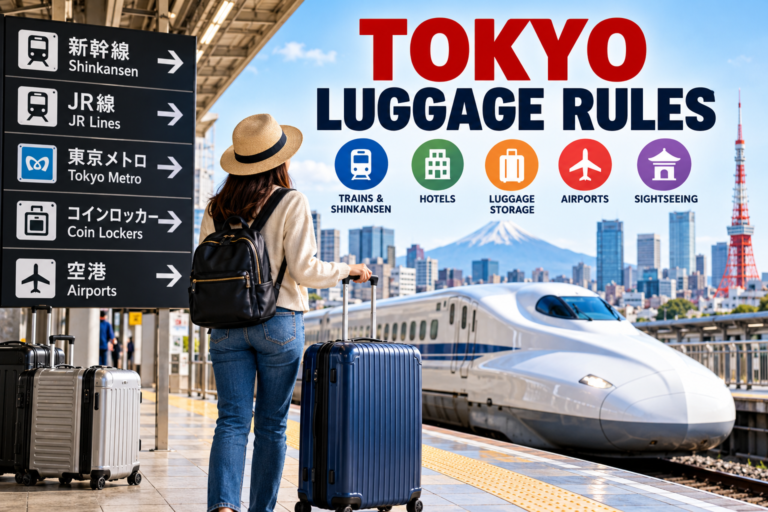
Place smaller bags where they do not obstruct other passengers. Follow the train’s luggage rules, especially on high-speed services where oversized baggage may require advance arrangements or designated storage.
For long journeys, check luggage restrictions before departure rather than assuming every bag can be carried anywhere.
Offer priority seating when appropriate
Priority seating is intended for passengers who may need it, including older people, pregnant passengers and people with disabilities or temporary mobility needs.
If someone appears to require a seat, offer assistance respectfully where appropriate.
Keep in mind that not every disability is visible. Courtesy and awareness are more useful than assumptions.
Follow food and drink rules
Eating and drinking practices vary between local trains, commuter services and long-distance trains.
Food is common on many Shinkansen journeys, and station shops sell boxed meals known as ekiben. On crowded commuter trains, eating may be less appropriate.
Follow posted signs, avoid strong-smelling food in confined spaces and take your rubbish with you if bins are unavailable.
Luggage, Families and Accessibility
Travelling with large suitcases
Large luggage can complicate transfers, especially at busy stations with stairs, narrow passages or crowded platforms.
For Shinkansen journeys, some oversized baggage arrangements require advance reservations or use of designated storage areas, depending on the train and route.
Check the current rules for your specific service and luggage dimensions before travelling.
If you have several large suitcases, consider luggage delivery services between hotels. These can reduce the burden of carrying everything through stations, although delivery deadlines, prices and destination coverage vary.
Japan rail travel with children
Japan’s rail network can make family travel practical, but crowded services require extra attention.
Useful strategies include:
- Choose seats together when possible.
- Allow additional time for transfers.
- Keep snacks, water and essential items accessible.
- Check station lifts and accessible routes in advance.
- Avoid very tight connections with young children.
- Explain where to wait if family members become separated.
For a long Shinkansen journey, reserving seats together may make the experience more comfortable.
Accessibility for travellers with disabilities
Accessibility differs across Japan’s railway network.
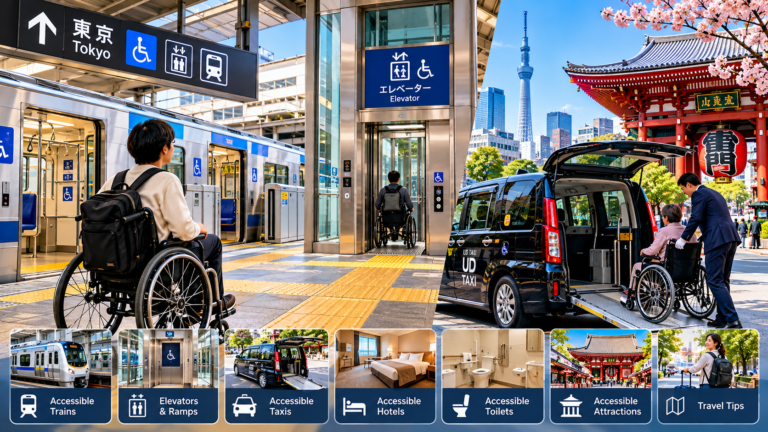
Major stations often provide lifts, accessible toilets, tactile paving and staff assistance, but facilities may vary at smaller stations. Some rural platforms and older station buildings can be more challenging.
If you require wheelchair assistance or have specific mobility needs, contact the railway operator ahead of time when possible. Confirm the platform, boarding assistance arrangements, lift availability and any transfer requirements.
Travellers with visual, hearing or cognitive accessibility needs may also benefit from checking station information and assistance services in advance.
A realistic itinerary should account for the time needed to navigate stations, not just the train’s scheduled travel time.
The Best Seasons for Japan Rail Travel
Spring: Cherry blossoms and busy trains
Spring is a popular time to visit Japan, particularly when cherry blossoms are in season.
Rail travel can be rewarding because trains connect parks, gardens, historic districts and scenic regions. However, blossom timing varies by location and year, so a single national forecast cannot guarantee what you will see at a particular destination.
Popular routes and accommodation can become busy during peak periods. Book essential journeys and hotels early when travelling during high-demand dates.
Summer: Green landscapes and regional festivals
Summer offers lush scenery, seasonal festivals and access to many outdoor destinations.
Heat and humidity can make station walks and crowded platforms uncomfortable. Carry water, plan breaks and consider how much time you will spend outdoors.
Rainy weather and seasonal storms can disrupt services in some regions. Check railway notices and weather forecasts before making long-distance connections.
Autumn: Colourful mountains and gardens
Autumn foliage is a major attraction, particularly in mountainous regions, gardens and historic temple districts.
The timing of peak colour varies with altitude, region and weather conditions. A flexible itinerary can help you adjust if the best scenery appears earlier or later than expected.
Popular sightseeing trains and accommodation in foliage destinations may book up well in advance.
Winter: Snow scenery and seasonal travel
Winter rail journeys can offer beautiful snow-covered landscapes, especially in northern Japan and mountain regions.
Snow and severe weather can also cause delays, cancellations or changes to connecting transport. If you are travelling to a ski resort or rural destination, leave a time buffer and check the latest operating information.
Do not plan a critical international flight connection around a final train journey that could be affected by winter weather without allowing sufficient contingency time.
Ten Important Railway Brands and Operators in Japan
Japan’s railway landscape includes national-scale services, metropolitan networks and regional private companies. The following comparison highlights ten important operators or railway brands that travellers may encounter.
| Railway brand or operator | Main area or role | Best suited for | Important consideration |
|---|---|---|---|
| JR East | Eastern Japan, including Tokyo and Tohoku | Tokyo-area JR travel and many northern journeys | Check the specific route and pass coverage |
| JR Central | Central Japan and the Tokaido Shinkansen | Travel between Tokyo, Nagoya, Kyoto and Shin-Osaka | Shinkansen ticket and reservation rules apply |
| JR West | Western Honshu and parts of Kansai | Kyoto, Osaka, Hiroshima and selected regional routes | Coverage differs by service and pass |
| JR Kyushu | Kyushu | Regional and intercity travel around Kyushu | Check the exact route and timetable |
| JR Hokkaido | Hokkaido | Rail travel around parts of northern Japan | Services can be less frequent outside major centres |
| Tokyo Metro | Central Tokyo subway network | City sightseeing and urban connections | Not generally covered by a nationwide JR Pass |
| Toei Subway | Tokyo subway network | Reaching selected Tokyo districts and connections | Separate operator rules may apply |
| Odakyu Electric Railway | Tokyo and routes towards Hakone and western destinations | Day trips and regional sightseeing | Some services require additional or special tickets |
| Keisei Electric Railway | Tokyo connections, including routes serving Narita Airport | Airport access and eastern Tokyo journeys | Compare service types and destination stations |
| Nankai Electric Railway | Osaka and routes towards destinations such as Koyasan | Kansai regional trips and airport connections | Check the service and ticket combination needed |
Which railway operator should you choose?
There is no single best operator for every traveller. Your destination and travel style should determine the choice.
For long-distance travel between major cities, JR-operated Shinkansen services are often the most direct option. For exploring Tokyo, subway networks and private railways may be more convenient. For regional destinations, a private railway may provide a direct connection that avoids a longer route through a major JR station.
The key is to compare the complete journey, including transfer time, station access, fares and the location of your final destination.
A slightly slower train that arrives near your hotel can be more convenient than a faster train that leaves you with several additional transfers.
Comparing Japan Rail Travel Options
Shinkansen versus conventional trains
Shinkansen services are designed for fast intercity journeys. Conventional trains serve a wider range of local and regional routes.
| Factor | Shinkansen | Conventional trains |
|---|---|---|
| Typical use | Longer intercity journeys | Local, suburban and regional journeys |
| Travel time | Usually faster over long distances | Often slower for long intercity trips |
| Ticketing | May require additional express or reservation components | Depends on the train and operator |
| Scenery | Often fast-moving views between major stops | Can offer more views of local communities |
| Best for | Travellers prioritising speed | Travellers exploring smaller destinations |
Train versus domestic flight
Flying can be practical for very long distances, particularly when travelling between major regions or islands.
Rail travel often provides more convenient city-centre connections and avoids some airport procedures, while flights may save time over certain long distances. The best option depends on the full journey rather than the time spent in the air or on the train alone.
Compare:
- Travel time to and from airports or stations.
- Check-in and security requirements.
- Luggage costs and restrictions.
- Frequency of services.
- Weather-related disruption risks.
- Total price, including transfers.
For a short intercity journey, the train may be more convenient. For a very long journey, a flight may be worth considering.
Train versus rental car
A rental car can be useful for rural areas with limited public transport, especially when travelling with a group or carrying outdoor equipment.
However, driving introduces parking costs, fuel expenses, road tolls and the need to navigate local traffic rules.
Trains are often preferable for major cities because they avoid traffic congestion and parking difficulties. A mixed approach can work well: use rail for intercity travel and rent a car only for a specific rural section.
Train versus long-distance bus
Long-distance buses can be less expensive than trains on some routes, but journey times may be considerably longer.
Buses can be useful for budget travellers, overnight journeys and destinations with limited railway access. Trains often offer greater convenience for travellers who value speed, frequent departures and straightforward city-centre connections.
Compare the complete cost and comfort of each option before deciding.
Budgeting for Japan Rail Travel
Build a realistic transport budget
Rail expenses depend on the distance travelled, the train category, seat choice, ticket type and travel dates.
A traveller exploring one city may spend relatively little on transport compared with someone travelling across several regions. A nationwide pass can be valuable for certain itineraries but poor value for others.
Create a simple spreadsheet with these columns:
- Date.
- Departure station.
- Arrival station.
- Planned train or route.
- Estimated ticket cost.
- Reservation requirement.
- Alternative route.
- Notes about connections.
Add local transport and airport transfers to your total. This gives you a more accurate picture than comparing only the major Shinkansen fares.
Look for savings without sacrificing convenience
You can manage your transport budget by:
- Staying longer in fewer regions.
- Choosing regional passes when they genuinely save money.
- Comparing individual tickets with pass prices.
- Using local trains for short journeys where practical.
- Booking eligible services early when discounts are available.
- Avoiding unnecessary backtracking between distant cities.
- Selecting accommodation near a convenient station.
- Combining rail travel with buses where that is the best route.
The cheapest ticket is not always the least expensive option overall. A low fare that requires several inconvenient transfers may increase your accommodation, food or taxi expenses.
Plan around the total cost of travel Japan rail travel
Suppose two travellers plan to explore Tokyo, Kyoto and Osaka. One purchases a nationwide pass without calculating the expected fares. The other lists the journeys, checks which operators are involved and compares eligible passes with individual tickets.
The second traveller has a better chance of making an informed choice because the decision is based on actual travel plans.
This is a general budgeting principle: purchase a transport product because it fits your route, not because it is widely recommended online.
Japan Rail Travel for Different Types of Travellers
First-time visitors Japan rail travel
First-time visitors often benefit from a simple route with a few major destinations.
Tokyo, Kyoto and Osaka offer a useful introduction to urban Japan, historic sites, food culture and intercity rail travel. The route can be adjusted to include other interests, but adding too many destinations may create unnecessary travel pressure.
Focus on learning the basics: how to find the correct platform, how tickets work, how to read station signs and how much transfer time you need.
Budget travellers Japan rail travel
Budget travellers should compare individual fares, regional passes and alternative transport options.
Staying longer in each destination can reduce transport expenses. It also gives you more time to discover neighbourhoods beyond the main tourist districts.
If you plan to use overnight buses or low-cost flights for selected journeys, compare their arrival times and transfer costs with rail options.
Families with children Japan rail travel
Families may prioritise seating together, accessible facilities and simple transfers.
Choose an itinerary that avoids repeated hotel changes and late arrivals. A slower pace can be more rewarding than trying to visit many cities in a short period.
Older travellers Japan rail travel
Older travellers may value comfortable seating, accessible stations and enough time to navigate large transport hubs.
Consider reserving seats when available, staying near major stations and avoiding overly tight connections. If mobility assistance is required, check arrangements with the operator before departure.
Solo travellers Japan rail travel
Solo travellers can benefit from the flexibility and reach of Japan’s railway system.
Keep your itinerary and booking details accessible, monitor service announcements and avoid relying on the last available connection to a remote destination.
Travelling alone also makes it easier to adjust plans, spend extra time in a favourite neighbourhood or take a spontaneous local train when the timetable allows.
Photography and nature enthusiasts Japan rail travel
Rail travel can be particularly rewarding for people interested in landscapes and photography.
Research scenic routes, observation opportunities and seasonal conditions. However, avoid standing in restricted areas or obstructing other passengers to obtain a photograph.
Some of the best railway photographs come from ordinary journeys through rural communities rather than famous sightseeing trains.
Practical How-To: Planning a Japan Rail Journey Step by Step
Step 1: Confirm your itinerary Japan rail travel
Write down each destination in the order you want to visit it.
Check whether the route makes geographical sense. Avoid travelling east, then west, then east again unless there is a compelling reason.
Step 2: Identify the railway operator Japan rail travel
Determine which company operates the service you need.
Do not assume that a train is covered by JR simply because it appears on a Japanese railway map or passes through a major station.
Step 3: Check the timetable Japan rail travel
Use official railway websites or recognised booking systems to confirm departure times, arrival times, transfers and service types.
For rural travel, check the timetable carefully because the next available service may be much later than expected.
Step 4: Compare ticket options Japan rail travel
Compare the price of individual tickets with eligible nationwide or regional passes.
Check whether reservations, supplements and additional transport are included. Confirm the pass validity dates before purchase.
Step 5: Reserve seats when useful Japan rail travel
Consider reservations for busy periods, family travel, long journeys and services with limited seating options.
If you are carrying oversized luggage, check the relevant baggage rules and reserve any required space.
Step 6: Save important details offline Japan rail travel
Keep your accommodation address, route information and ticket details accessible without relying entirely on a mobile connection.
A screenshot of the route or a saved station name can be helpful if you need to ask for directions.
Step 7: Arrive early Japan rail travel
At large stations, allow time to find the correct entrance, ticket gate and platform.
The train may depart promptly, and walking between distant platforms can take longer than expected.
Step 8: Check for changes before departure Japan rail travel
Review railway announcements and service information, especially during severe weather or periods of disruption.
If your route involves a critical connection, identify an alternative service where possible.
Common Japan Rail Travel Mistakes and How to Avoid Them
Mistake 1: Buying a Japan Rail Pass automatically Japan rail travel
Many travellers assume that the pass must be cheaper than individual tickets.
Solution: Calculate the cost of your planned journeys and compare it with the pass price and conditions.
Mistake 2: Assuming all trains are covered Japan rail travel
Japan has many private railways and independent transport operators.
Solution: Verify the operator and coverage for every important journey.
Mistake 3: Underestimating station walking time Japan rail travel
Large stations can have several levels, long corridors and multiple ticket gates.
Solution: Add a transfer buffer, particularly when changing railway companies or travelling with luggage.
Mistake 4: Choosing the wrong train category Japan rail travel
A train may stop at a different selection of stations than you expect.
Solution: Check the destination, train name and stopping pattern before boarding.
Mistake 5: Ignoring luggage rules Japan rail travel
Some services have special requirements for oversized baggage.
Solution: Check the operator’s current baggage policy before departure and reserve required space where applicable.
Mistake 6: Relying on an IC card everywhere Japan rail travel
IC cards are widely accepted in many areas but not universally.
Solution: Confirm acceptance for rural routes and keep a suitable alternative payment method.
Mistake 7: Planning too many destinations Japan rail travel
Frequent hotel changes and long journeys can leave little time to enjoy each place.
Solution: Group destinations geographically and allow time for unexpected discoveries.
Mistake 8: Ignoring seasonal disruption Japan rail travel
Snow, heavy rain, storms and other events can affect railway services.
Solution: Monitor official notices and avoid scheduling a critical connection with no time buffer.
Mistake 9: Booking a ticket without checking the station Japan rail travel
Some cities have multiple stations with similar names or separate railway terminals.
Solution: Confirm the exact departure and arrival stations, not just the city name.
Mistake 10: Leaving all planning until arrival Japan rail travel
This can be stressful during popular travel seasons or for complex regional trips.
Solution: Research the major journeys in advance, while leaving flexibility for local exploration.
The Advantages and Disadvantages of Japan Rail Travel
Main advantages Japan rail travel
Convenience: Major cities and many regional destinations are connected by frequent services.
Speed: Shinkansen services make long-distance journeys practical without driving.
Comfort: Many long-distance trains provide reserved seating and facilities suited to extended trips.
City-centre access: Stations are often close to business districts, hotels and major attractions.
Environmental potential: Rail travel can have lower greenhouse gas emissions per passenger-kilometre than many car or air journeys, depending on occupancy, energy sources and the specific route.
Travel experience: Train journeys provide opportunities to observe landscapes and everyday life.
Main disadvantages Japan rail travel
Complex ticketing: Multiple operators and ticket types can confuse new visitors.
Cost: Long-distance rail travel can be expensive, especially when several separate journeys are required.
Crowding: Urban commuter trains can be extremely busy at peak times.
Limited rural frequency: Some regional routes offer only a small number of daily services.
Disruption: Weather, technical problems and other incidents can affect journeys.
Accessibility variation: Older or smaller stations may have fewer facilities than major transport hubs.
Is Japan rail travel right for everyone?
For most visitors exploring major Japanese cities and connected regions, rail travel is a strong option. It is especially attractive to people who prefer not to drive, want to reduce the stress of navigating unfamiliar roads or plan to visit several cities.
However, a rental car or bus may be more practical for some rural destinations. Flights may make sense for very long journeys. A mixed transport itinerary can provide the best balance.
The goal is not to use trains for every single journey. It is to use them where they offer the greatest combination of convenience, speed, comfort and value.
Japan Rail Travel and Sustainable Tourism
How trains can support more sustainable trips Japan rail travel
Railways can help travellers explore Japan while reducing dependence on private cars for many journeys.
Electric trains can move large numbers of passengers efficiently, particularly on busy corridors. Their environmental performance depends on factors such as electricity generation, passenger occupancy, infrastructure and the alternative mode of transport.
Travellers can make more responsible choices by using public transport where practical, staying longer in each destination and supporting local businesses along regional routes.
Avoid overtourism by exploring beyond major hotspots Japan rail travel
Popular destinations can become crowded during peak seasons. Rail travel makes it easier to consider less-visited towns and regional attractions, although smaller destinations may have limited services and infrastructure.
Research local transport and visitor guidance before travelling. Respect residential areas, follow photography restrictions and avoid treating communities as scenery without considering the people who live there.
A thoughtful itinerary can distribute visitor spending while providing a richer understanding of Japan.
The Future of Japan Rail Travel
Smarter ticketing and digital planning Japan rail travel
Digital booking tools and mobile transport services continue to change how travellers plan railway journeys.
More integrated information can make it easier to compare routes, check service changes and understand transfers. However, systems may remain fragmented between operators, so travellers should not assume that one app handles every ticket or railway network.
Accessibility and station improvements Japan rail travel
Railway operators continue to face the challenge of making stations easier to use for passengers with different mobility needs.
Improvements may include lifts, clearer signs, better passenger information and more convenient transfer arrangements. The pace of change varies by location, and travellers should still verify facilities at their particular stations.
High-speed rail development Japan rail travel
Japan remains closely associated with high-speed railway technology. Shinkansen development focuses on service performance, safety, capacity and connectivity.
The planned Chuo Shinkansen maglev project is intended to introduce a new high-speed connection using magnetic levitation technology. Its schedule and opening arrangements have faced delays and remain subject to official updates. Travellers should rely on current project announcements rather than assuming a particular opening date.
Changing travel patterns Japan rail travel
Tourism demand, regional population changes and the growth of remote work may influence how railway services are used.
Major corridors are likely to remain important for intercity travel, while some rural regions face challenges related to passenger numbers and service sustainability.
This creates a broader question for Japan’s rail future: how can the country maintain convenient transport in smaller communities while continuing to serve busy urban and high-speed routes?
Potential responses include better connections with buses, more coordinated timetables, targeted tourism services and transport planning that reflects local needs.
The role of artificial intelligence Japan rail travel
Artificial intelligence may help improve demand forecasting, maintenance planning, passenger information and disruption management.
For travellers, the most useful developments may be practical rather than dramatic: clearer alternative routes during disruptions, more accurate crowd information and personalised journey planning.
These tools will not eliminate the need to check official service announcements, but they may make complex journeys easier to manage.
FAQs
Is Japan rail travel easy for first-time visitors?
Yes, particularly on major routes and in large cities where stations commonly provide clear signage and multilingual information. Learning a few basic ticketing and navigation principles will make the experience easier.
Is the Japan Rail Pass worth buying?
It depends on your itinerary. A nationwide pass may be valuable for several long-distance journeys on covered services, while individual tickets or a regional pass may cost less for a shorter or more localised trip.
Can I use a Japan Rail Pass on Tokyo Metro?
Generally, no. Tokyo Metro is a separate subway operator. Check the exact coverage of your pass and purchase separate tickets or use an eligible IC card for services that are not included.
Do I need to reserve Shinkansen seats?
Not always. Some services offer non-reserved seating, while others have different reservation requirements. Reservations can be useful during busy travel periods, for families and for travellers who want to sit together.
Can I use an IC card for every Japanese train?
No. IC cards work on many participating local railway, subway and bus networks, but coverage is not universal. Check acceptance for the route you plan to take.
How early should I arrive at a Japanese railway station?
For a familiar local journey, a small buffer may be sufficient. For a large station or a reserved long-distance service, allow extra time to find the correct platform and boarding area. More time is sensible if you need assistance or are travelling with large luggage.
Is Japan rail travel expensive?
It can be, especially when taking several long-distance journeys. Costs vary according to distance, train category, seat choice and ticket type. Comparing individual tickets with eligible passes is the best way to estimate expenses.
Is train travel better than driving in Japan?
For major cities and many intercity journeys, trains are often more convenient because they avoid traffic and parking. Driving can be useful in rural areas where railway services are limited.
Can I travel around Japan by train with children?
Yes. Families can make rail travel easier by reserving seats where appropriate, allowing extra transfer time and checking station facilities. Avoid overly complicated itineraries with repeated hotel changes.
What should I do if my train is delayed or cancelled?
Check official railway announcements and ask station staff about alternative routes. If the disruption affects a hotel, tour or onward flight, contact the relevant provider as soon as possible. Do not assume every ticket automatically permits travel on every alternative service.
Can I take large suitcases on Shinkansen trains?
Luggage rules depend on the service and baggage dimensions. Some oversized luggage arrangements require advance reservations or designated storage. Confirm the current rules for your route before travelling.
Are scenic trains worth the extra cost?
They can be worthwhile if you enjoy landscapes, regional food, photography or distinctive train interiors. Compare the price with an ordinary service and decide whether the special experience justifies the additional expense.
Is Japan rail travel suitable for older adults?
It can be very suitable, especially with advance planning. Consider station accessibility, walking distances, luggage weight, seat reservations and sufficient time between connections.
What is the best season for Japan rail travel?
Spring and autumn are popular for seasonal scenery, but every season has advantages. Summer offers green landscapes and festivals, while winter can provide snow-covered views. Weather, crowds and personal interests should guide your choice.
Can I travel to rural Japan without a car?
Often, yes, but some destinations require a combination of trains and buses. Check service frequencies carefully, particularly if you are planning a day trip or travelling outside major cities.
Conclusion
Japan rail travel offers more than an efficient way to move between destinations. It gives visitors access to major cities, historic districts, mountain communities, coastal scenery and everyday experiences that might be missed when travelling only by car or plane. The best railway itinerary is not necessarily the one with the greatest number of destinations. It is the one that matches your interests, budget, schedule and comfort level.