Tokyo Areas: The Ultimate Guide to 30+ Districts, Neighborhoods & Best Places to Explore
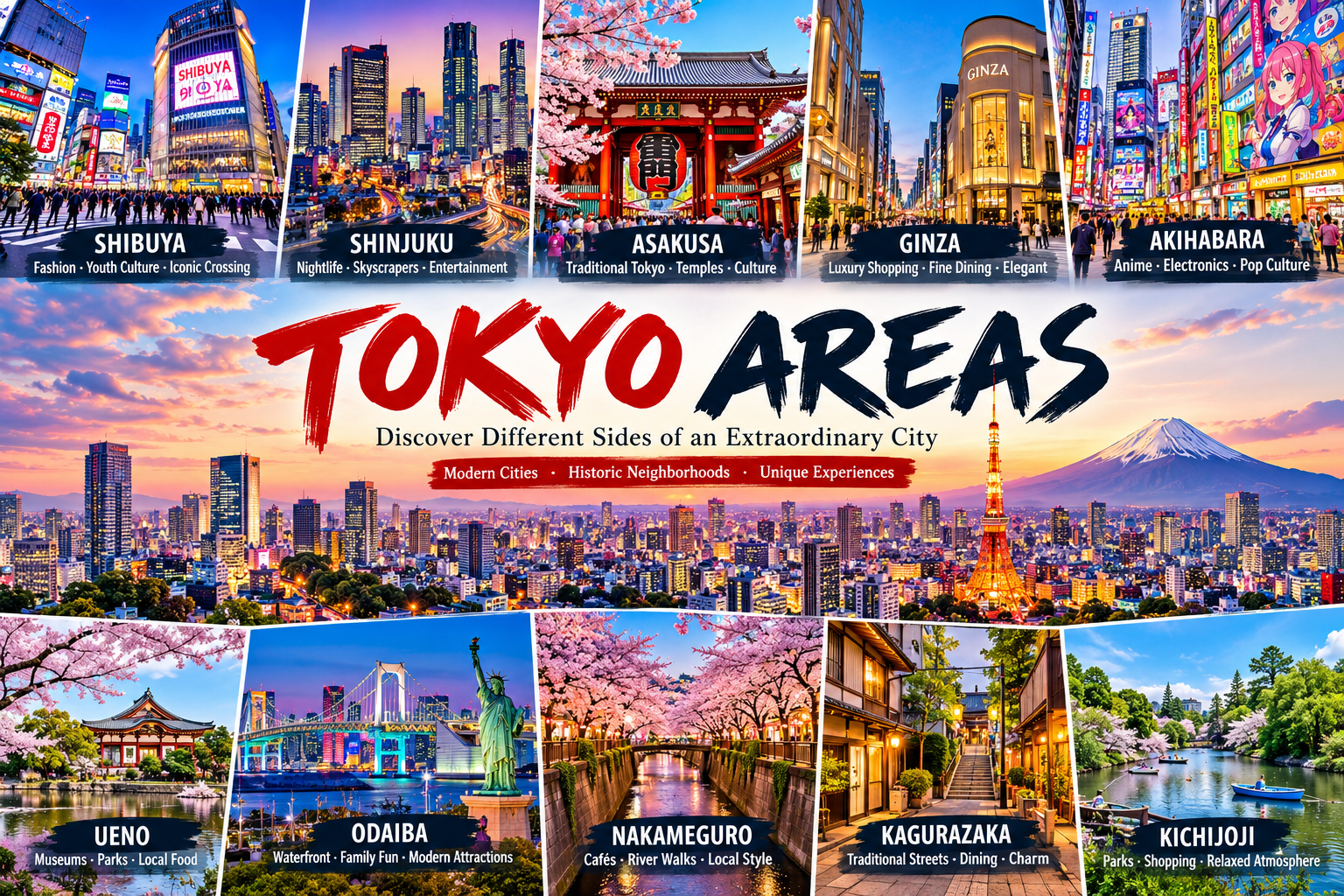
Tokyo can feel less like a single city and more like a collection of different worlds connected by an exceptionally efficient transport network. One moment you can be surrounded by skyscrapers and neon signs, and the next you can find yourself walking through a quiet neighborhood filled with traditional homes, small temples, independent cafés, and local shops. Tokyo areas offer remarkably different experiences, and the best neighborhood depends on what you want from your trip, whether that means nightlife in Shinjuku, fashion in Shibuya, tradition in Asakusa, luxury in Ginza, anime culture in Akihabara, or quieter local life in neighborhoods such as Kichijoji and Yanaka Tokyo Budget Travel
Understanding Tokyo Areas and Neighborhoods
Tokyo Is More Than One City Center
When people say “Tokyo,” they often imagine places such as Shibuya Crossing, Tokyo Tower, or the Imperial Palace. In reality, Tokyo consists of numerous wards, districts, neighborhoods, commercial centers, residential communities, and historic areas.
Some areas are famous internationally, while others are primarily known by residents.
This creates an interesting contrast.
A visitor staying in Shinjuku may experience enormous department stores, skyscrapers, restaurants, bars, and entertainment venues. A visitor staying only a few kilometers away in Kagurazaka may encounter narrow lanes, traditional restaurants, small boutiques, and a much quieter atmosphere.
Both are Tokyo.
Wards Versus Neighborhoods
One important distinction is between Tokyo’s administrative wards and the smaller neighborhoods inside them.
The 23 special wards form the central part of Tokyo. Within those wards are numerous districts with their own identities.
For travelers, neighborhood names are often more useful than administrative boundaries.
For example, saying you are staying in Shibuya tells a traveler much more about the likely atmosphere than simply saying you are staying in Shibuya Ward.
Why Location Matters When Visiting Tokyo
Tokyo’s rail network makes it possible to stay in one area and visit another relatively easily. However, convenience still matters.
If you plan to explore nightlife every evening, staying near Shinjuku or Shibuya can reduce late-night travel.
If your itinerary focuses heavily on historic Tokyo, Asakusa or Ueno may make more sense.
If shopping and upscale dining are priorities, Ginza provides a different experience.
The best Tokyo area is therefore not universal. It depends on your itinerary, budget, travel companions, and preferred atmosphere.
Shinjuku: Tokyo’s High-Energy Urban Center
Why Shinjuku Is Famous
Shinjuku is one of Tokyo’s most recognizable areas and one of the city’s major transportation hubs.
The neighborhood combines towering office buildings, department stores, entertainment complexes, restaurants, hotels, nightlife streets, and residential pockets.
Shinjuku is especially interesting because its personality changes throughout the day.
During business hours, parts of the district feel intensely corporate. After sunset, entertainment areas become much more active.
Things to Do in Shinjuku
Popular experiences include:
- Exploring Shinjuku Gyoen
- Visiting the Tokyo Metropolitan Government Building
- Walking around Kabukicho
- Exploring Omoide Yokocho
- Shopping at major department stores
- Exploring Golden Gai
- Dining at local restaurants
- Enjoying city views from observation areas
Shinjuku Gyoen provides an especially useful contrast to the surrounding urban environment.
After spending hours among buildings and traffic, entering a large green park can completely change the pace of a Tokyo itinerary.
Who Should Stay in Shinjuku?
Shinjuku can work particularly well for:
- First-time visitors
- Nightlife travelers
- Business travelers
- Travelers wanting extensive dining options
- Visitors who prioritize transportation
- Travelers who want a lively urban atmosphere
Families may prefer quieter parts of the broader Shinjuku area, especially if nightlife is not part of their itinerary.
Shibuya: Fashion, Youth Culture and Iconic Tokyo
The Character of Shibuya
Shibuya is one of the most internationally recognizable Tokyo areas.
Its image is strongly associated with Shibuya Crossing, fashion, music, youth culture, shopping, cafés, and contemporary entertainment.
However, Shibuya is much larger than the famous crossing.
Shibuya Crossing
Shibuya Crossing has become one of Tokyo’s defining visual symbols.
Standing near the crossing provides a fascinating example of Tokyo’s urban density. Hundreds or thousands of pedestrians may move through the intersection while enormous advertising screens dominate the surrounding buildings.
The experience is particularly different during daytime compared with evening.
Beyond the Crossing
Travelers can explore:
- Center-gai
- Miyashita Park
- Shibuya Scramble Square
- Cat Street
- Daikanyama nearby
- Ebisu nearby
- Yoyogi Park in the wider area
Shibuya also works as a convenient starting point for exploring western central Tokyo.
Who Will Enjoy Shibuya?
Shibuya is particularly suitable for:
- Young travelers
- Fashion enthusiasts
- First-time visitors
- Shopping fans
- Café lovers
- Photography enthusiasts
- Travelers interested in contemporary Japanese culture
Ginza: Luxury Shopping and Refined Tokyo
What Makes Ginza Different?
Ginza presents a more polished side of Tokyo.
Wide streets, luxury boutiques, department stores, galleries, restaurants, cafés, and premium brands contribute to its reputation as one of the city’s upscale shopping districts.
The atmosphere can feel significantly different from Shibuya or Shinjuku.
Shopping in Ginza
Ginza is associated with:
- Luxury fashion
- Japanese department stores
- Beauty products
- Watches
- Jewelry
- Traditional Japanese goods
- Specialty food
- High-end dining
Even travelers who do not intend to make major purchases can enjoy walking through the district and observing its architecture and street life.
Ginza for Food
Ginza also has an impressive range of dining experiences, from casual Japanese restaurants to sophisticated establishments.
It can be an interesting destination for travelers who want to experience Tokyo’s food culture beyond inexpensive street-style meals.
Asakusa: Traditional Tokyo and Historic Atmosphere
Why Visit Asakusa?
Asakusa is one of the most useful Tokyo areas for travelers who want to experience a stronger connection with the city’s historical character.
The area is particularly associated with Senso-ji, Nakamise shopping street, traditional architecture, and views toward the Sumida River.
Senso-ji and Surrounding Streets
Senso-ji is one of Tokyo’s best-known Buddhist temples.
The approach to the temple is lined with shops selling souvenirs, snacks, traditional items, and gifts.
For first-time visitors, Asakusa can provide an accessible introduction to traditional Japanese architecture and temple culture.
Asakusa Food Experiences
Visitors can find:
- Japanese sweets
- Rice crackers
- Tempura
- Soba
- Traditional snacks
- Casual restaurants
- Local cafés
Asakusa is particularly enjoyable when explored on foot.
Who Should Visit Asakusa?
Asakusa is a strong option for:
- Families
- First-time visitors
- History enthusiasts
- Photographers
- Travelers interested in traditional Japan
- Budget-conscious visitors
Akihabara: Electronics, Anime and Pop Culture
The Identity of Akihabara
Akihabara has developed an international reputation for electronics, gaming, anime, manga, collectibles, and Japanese pop culture.
The district’s colorful signs and specialized stores make it particularly distinctive.
What to Explore
Depending on your interests, you can explore:
- Electronics shops
- Gaming stores
- Manga stores
- Anime merchandise
- Collectible shops
- Arcades
- Hobby stores
- Themed cafés
Akihabara is particularly valuable for visitors who want to understand a major part of modern Japanese entertainment culture.
Akihabara for Families
Families can enjoy some parts of Akihabara, especially gaming and electronics stores, although certain entertainment venues are aimed primarily at adults.
Planning specific stops beforehand can make the visit more comfortable.
Ueno: Museums, Parks and Everyday Tokyo
Why Ueno Matters
Ueno combines cultural attractions, green space, shopping streets, and transportation convenience.
Ueno Park is one of the area’s biggest attractions and provides access to several major cultural institutions.
Ueno Park
The park is particularly popular during cherry blossom season, but it remains useful throughout the year.
Nearby attractions include museums and cultural facilities.
Ameyoko
Ameyoko provides a contrasting experience.
Instead of the formal atmosphere of major museums, the area is characterized by busy shopping streets, food stalls, small shops, and everyday commercial activity.
This combination makes Ueno one of the more versatile Tokyo areas.
Tokyo Station and Marunouchi
Tokyo Station Area
Tokyo Station is more than a place to catch a train.
The surrounding Marunouchi district is an important business and commercial center, while the station itself provides convenient access to many parts of Japan.
Marunouchi
Marunouchi is known for:
- Office buildings
- Restaurants
- Shopping
- Modern architecture
- Views toward Tokyo Station
- Proximity to the Imperial Palace
The area can be particularly attractive to business travelers and visitors interested in modern urban architecture.
Ikebukuro: Shopping, Entertainment and Local Energy
What Is Ikebukuro Like?
Ikebukuro is another major Tokyo transportation and commercial hub.
It is sometimes overshadowed internationally by Shinjuku and Shibuya, but it offers a substantial range of shopping, dining, entertainment, and cultural experiences.
Why Travelers Should Consider Ikebukuro
The area can appeal to:
- Families
- Anime fans
- Shoppers
- Budget travelers
- Visitors looking for accommodation
- Travelers exploring northern-central Tokyo
Ikebukuro also provides access to attractions such as Sunshine City.
Roppongi: Art, Dining and Nighttime Tokyo
Roppongi’s Modern Identity
Roppongi is strongly associated with international culture, art, dining, modern architecture, and nightlife.
It is home to major cultural institutions and large-scale urban developments.
Art in Roppongi
The area is particularly relevant for travelers interested in contemporary art.
Major museums and galleries make Roppongi useful for visitors who want to add cultural experiences to a Tokyo itinerary.
Who Should Visit Roppongi?
Roppongi can be interesting for:
- Art enthusiasts
- Architecture fans
- International travelers
- Adults interested in dining
- Visitors seeking modern Tokyo experiences
Harajuku: Youth Culture, Fashion and Creative Style
Takeshita Street
Harajuku became internationally famous for its youth fashion and colorful street culture.
Takeshita Street remains one of its best-known destinations.
The street can become extremely busy, especially on weekends and holidays.
Meiji Jingu
One of Harajuku’s most interesting qualities is the contrast between energetic shopping streets and the peaceful environment around Meiji Jingu.
This demonstrates one of Tokyo’s recurring characteristics: very different experiences can exist within walking distance of each other.
Odaiba: Waterfront Tokyo
What Makes Odaiba Different?
Odaiba offers a very different visual experience from historic districts such as Asakusa.
The artificial island area features:
- Waterfront promenades
- Shopping complexes
- Museums
- Entertainment
- Modern architecture
- Large open spaces
It can be particularly enjoyable for families.
Best Time to Explore Odaiba
Late afternoon can be especially pleasant because visitors can combine daytime attractions with an evening waterfront walk.
Nakameguro: Cafés, River Walks and Local Style
Why Nakameguro Is Popular
Nakameguro offers a more relaxed atmosphere than some of Tokyo’s major commercial centers.
The Meguro River is a major feature, particularly during cherry blossom season.
The surrounding streets contain cafés, restaurants, boutiques, and independent businesses.
Who Should Visit Nakameguro?
It can suit:
- Couples
- Café lovers
- Photographers
- Slow travelers
- Visitors interested in local neighborhoods
Daikanyama: Stylish and Relaxed
The Character of Daikanyama
Daikanyama is often associated with sophisticated boutiques, cafés, bookstores, and design-oriented businesses.
It can be a useful destination for travelers who want something quieter than Shibuya while remaining close to central Tokyo.
Daikanyama for Slow Travel
Instead of trying to see dozens of attractions, visitors can spend a few hours walking, shopping, drinking coffee, and observing local life.
This style of travel is becoming increasingly attractive to visitors who have already experienced Tokyo’s famous landmarks.
Ebisu: Dining and Neighborhood Atmosphere
What Makes Ebisu Interesting?
Ebisu combines restaurants, cafés, bars, offices, and residential streets.
It has a more neighborhood-oriented atmosphere than some of Tokyo’s enormous tourist hubs.
For travelers focused on food, Ebisu can be particularly rewarding.
Yanaka: Old Tokyo Atmosphere
A Different Side of Tokyo
Yanaka is one of the Tokyo areas worth visiting when you want to escape the visual intensity of skyscrapers.
The neighborhood retains elements of an older Tokyo atmosphere, including traditional streets, temples, small shops, and residential lanes.
Walking Through Yanaka
Yanaka is best explored slowly.
Rather than rushing between attractions, travelers can:
- Walk through the neighborhood.
- Visit small temples.
- Browse local shops.
- Stop at a café.
- Observe residential streets.
- Continue toward nearby Ueno.
This is an excellent example of neighborhood-based tourism.
Kagurazaka: Traditional Streets with Modern Dining
The Appeal of Kagurazaka
Kagurazaka is known for narrow streets, restaurants, cafés, and a distinctive blend of traditional and modern influences.
The area’s slopes and lanes create a different sense of movement from Tokyo’s large commercial districts.
Who Should Visit Kagurazaka?
It can appeal to:
- Food travelers
- Couples
- Repeat visitors
- Photographers
- Travelers seeking quieter neighborhoods
Kichijoji: Parks, Shopping and Local Life
Why Kichijoji Is Worth Exploring
Kichijoji is outside the most heavily visited central Tokyo districts but remains highly relevant to people interested in everyday urban life.
Inokashira Park is a major attraction.
Kichijoji for Repeat Visitors
Travelers returning to Tokyo often enjoy Kichijoji because it provides an opportunity to experience a less tourist-focused side of metropolitan Tokyo.
The neighborhood combines:
- Parks
- Restaurants
- Independent shops
- Cafés
- Residential areas
- Shopping streets
Shimokitazawa: Vintage Fashion and Creative Culture
The Character of Shimokitazawa
Shimokitazawa is known for its independent shops, vintage clothing, music, cafés, restaurants, and creative atmosphere.
It is particularly appealing to travelers who prefer independent businesses over large commercial chains.
Shimokitazawa for Young Travelers
The neighborhood can be especially interesting for:
- Students
- Young professionals
- Music lovers
- Vintage shoppers
- Café enthusiasts
- Creative travelers
Koenji: Music and Alternative Neighborhood Culture
Why Explore Koenji?
Koenji is known for independent businesses, live music, vintage stores, and a neighborhood atmosphere.
It demonstrates that Tokyo’s cultural identity is not limited to the famous tourist districts.
Koenji for Repeat Visitors
If you have already visited Shibuya, Shinjuku, Asakusa, and Ginza, exploring Koenji can provide a substantially different experience.
Nihonbashi: Heritage and Commerce
The Historical Importance of Nihonbashi
Nihonbashi has a long association with commerce and transportation.
Modern redevelopment exists alongside historic businesses and traditional establishments.
Why Visit Nihonbashi?
The area is particularly useful for travelers interested in:
- Japanese history
- Traditional businesses
- Food
- Architecture
- Department stores
- Central Tokyo heritage
Tsukiji: Food and Market Culture
Tsukiji Today
Although the main wholesale market moved to Toyosu, Tsukiji remains an important destination for food-focused travelers.
Visitors can explore restaurants, specialty shops, seafood-related businesses, and culinary experiences.
Tsukiji for Food Travelers
The area can be particularly rewarding in the morning, when many food businesses are active.
Travelers should remember that individual shop schedules can change, so checking current opening information is sensible before making a special trip.
Toyosu: Modern Waterfront Development
The Newer Face of Tokyo
Toyosu represents a more modern waterfront side of the city.
The area includes large-scale developments, shopping, dining, waterfront spaces, and access to the broader Tokyo Bay area.
Toyosu for Families
Its modern infrastructure and open spaces can make it appealing to families, particularly when combined with nearby attractions.
Shinagawa: Transport and Business
Why Shinagawa Matters
Shinagawa is an important transportation and business district.
For travelers arriving or departing via major rail connections, staying nearby can sometimes be practical.
Shinagawa as a Base
Its location makes it useful for:
- Business trips
- Short stays
- Travelers with early departures
- Visitors combining Tokyo with other Japanese destinations
Meguro: Residential Tokyo with Green Spaces
The Character of Meguro
Meguro offers a combination of residential neighborhoods, restaurants, cafés, shopping streets, and green areas.
The Meguro River makes the district especially recognizable during cherry blossom season.
Meguro for Longer Stays
Travelers spending several weeks in Tokyo may appreciate areas like Meguro because they offer a stronger sense of everyday residential life.
Akasaka: Business, Dining and Central Location
Why Consider Akasaka?
Akasaka is a central neighborhood with offices, restaurants, hotels, and convenient transport connections.
It can work well for business travelers and visitors who want a central location without staying directly in one of Tokyo’s busiest tourist hubs.
Azabu: Upscale Residential Tokyo
The Character of Azabu
Azabu contains upscale residential areas, restaurants, international businesses, and quieter streets.
It is less about major tourist landmarks and more about experiencing a polished residential side of central Tokyo.
Setagaya: Residential and Local Tokyo
Why Explore Setagaya?
Setagaya is one of Tokyo’s larger residential areas.
It offers parks, local shopping streets, restaurants, and communities that feel considerably less tourist-oriented than central commercial districts.
Setagaya for Long-Term Travelers
Visitors staying for an extended period may find residential districts particularly useful because they provide opportunities to establish routines rather than constantly visit attractions.
Tokyo Areas for Different Types of Travelers
Best Tokyo Areas for First-Time Visitors
First-time visitors often consider:
- Shinjuku
- Shibuya
- Asakusa
- Ueno
- Ginza
- Tokyo Station
The right choice depends on whether transportation, nightlife, history, shopping, or budget is the primary concern.
Best Areas for Families
Families may consider:
- Asakusa
- Ueno
- Odaiba
- Tokyo Station
- Ikebukuro
- Kichijoji
Look for accommodation near a convenient station and prioritize larger rooms where possible.
Best Areas for Couples
Couples may enjoy:
- Daikanyama
- Nakameguro
- Ebisu
- Kagurazaka
- Ginza
- Roppongi
These areas offer different combinations of dining, walking, shopping, culture, and evening activities.
Best Areas for Budget Travelers
Budget-conscious travelers can investigate:
- Asakusa
- Ueno
- Ikebukuro
- parts of Shinjuku
- areas around major suburban rail stations
The cheapest room is not always the cheapest overall choice. A slightly more expensive hotel near an efficient station can reduce transportation costs and daily travel time.
Best Areas for Food Travelers
Food-focused visitors may consider:
- Tsukiji
- Ginza
- Ebisu
- Shinjuku
- Kagurazaka
- Ueno
- Nihonbashi
Best Areas for Anime and Gaming Fans
Anime and gaming enthusiasts should investigate:
- Akihabara
- Ikebukuro
- Nakano
- Shibuya
Each has a somewhat different relationship with Japanese pop culture.
Comparing 10 Major Tokyo Areas
| Tokyo Area | Main Character | Best For | Atmosphere | Typical Experience |
|---|---|---|---|---|
| Shinjuku | Entertainment & business | Nightlife, transport | Energetic | Skyscrapers, restaurants, nightlife |
| Shibuya | Fashion & youth culture | Shopping, trends | Fast-paced | Crossing, fashion, cafés |
| Ginza | Luxury & dining | Shopping, food | Refined | Premium stores and restaurants |
| Asakusa | Historic Tokyo | Culture, families | Traditional | Temples, old streets, river |
| Akihabara | Pop culture | Anime, gaming, electronics | Colorful | Games, manga, collectibles |
| Ueno | Culture & local commerce | Museums, budget travel | Busy/local | Parks, museums, markets |
| Ikebukuro | Shopping & entertainment | Families, shopping | Lively | Department stores, entertainment |
| Roppongi | Art & modern Tokyo | Museums, dining | International | Art, architecture, restaurants |
| Harajuku | Youth fashion | Fashion, culture | Creative | Street style, shops, shrines |
| Odaiba | Waterfront leisure | Families, attractions | Open/modern | Waterfront, entertainment |
How to Choose the Right Tokyo Area
Step 1: Identify Your Main Interests
Write down your three biggest priorities.
For example:
Food + culture + photography
could point you toward Asakusa, Ueno, Tsukiji, Ginza, or Kagurazaka.
Shopping + nightlife + contemporary Tokyo
could point toward Shibuya or Shinjuku.
Step 2: Consider Your Daily Itinerary
Look at the attractions you plan to visit.
If most of your itinerary is concentrated in eastern Tokyo, staying on the western side may mean spending considerable time on trains.
Tokyo’s transportation system is excellent, but time is still a travel resource.
Step 3: Consider Your Travel Schedule
A traveler with three days should think differently from someone spending three weeks in Tokyo.
For a short trip, convenience can be extremely valuable.
For a longer trip, exploring residential neighborhoods can become part of the experience.
Step 4: Choose Your Desired Atmosphere
Ask yourself whether you want:
- Quiet residential streets
- Traditional architecture
- Luxury shopping
- Nightlife
- Family entertainment
- Youth culture
- Museums
- Food
- Local neighborhood life
Your answer can narrow Tokyo’s enormous selection considerably.
Tokyo Areas by Demographic and Problem-Solving Needs
Tokyo Areas for Solo Travelers
Solo travelers often benefit from neighborhoods with extensive dining options and easy transportation.
Shinjuku, Shibuya, Ueno, and Asakusa can all provide different solutions.
Tokyo Areas for Senior Travelers
Travelers who prefer a slower pace may prioritize:
- Easy station access
- Fewer transfers
- Nearby restaurants
- Parks
- Comfortable accommodation
Ueno, Asakusa, Ginza, and Tokyo Station areas may be worth investigating depending on the itinerary.
Tokyo Areas for Families With Children
Families should consider the distance between their accommodation and attractions.
Odaiba, Ueno, Asakusa, Ikebukuro, and Tokyo Station can provide useful combinations of transportation and family-oriented activities.
Tokyo Areas for Photographers
Photographers may enjoy:
- Shibuya
- Asakusa
- Yanaka
- Shinjuku
- Odaiba
- Nakameguro
- Kagurazaka
The key is not simply finding famous landmarks but finding visual contrasts.
A narrow traditional lane beside a modern building can tell a more interesting Tokyo story than a single landmark.
Tokyo Areas for Remote Workers
Longer-stay visitors may prioritize:
- Reliable transportation
- Cafés
- Supermarkets
- Quiet accommodation
- Walkability
- Local services
Neighborhoods such as Meguro, Kichijoji, Nakameguro, and Setagaya may offer a different experience from highly tourist-oriented districts.
Common Mistakes When Choosing Tokyo Areas
Mistake 1: Choosing Only by Hotel Price
A cheap hotel far from your daily itinerary may cost more in time and transportation.
Consider the total travel cost, not just the room rate.
Mistake 2: Assuming All Central Tokyo Areas Feel Similar
They do not.
Shinjuku, Asakusa, Ginza, Shibuya, and Yanaka can feel dramatically different.
Mistake 3: Staying Too Far From a Station
Tokyo’s rail network is one of its biggest advantages.
Accommodation within practical walking distance of a useful station can make a major difference.
Mistake 4: Planning Every Hour
Tokyo rewards spontaneous exploration.
Leave some time to walk through neighborhoods without a fixed destination.
Mistake 5: Visiting Only Famous Districts
Famous areas are famous for a reason, but neighborhood exploration can reveal another side of the city.
Try combining major attractions with one less-touristy neighborhood.
Pros and Cons of Different Tokyo Areas
High-Energy Commercial Districts
Pros
- Excellent transport
- Huge restaurant selection
- Shopping
- Entertainment
- Plenty of hotels
Cons
- Crowds
- Noise
- Higher prices in some locations
- Less residential atmosphere
Historic Neighborhoods
Pros
- Cultural atmosphere
- Walking opportunities
- Traditional architecture
- Photogenic streets
- Often excellent casual food
Cons
- Fewer large entertainment complexes
- Some businesses close earlier
- Transport connections can vary
Residential Neighborhoods
Pros
- Local atmosphere
- Quieter evenings
- Independent restaurants
- Everyday Japanese life
Cons
- Fewer major attractions
- Potentially longer journeys to tourist sites
- Fewer international services
How Tokyo’s Areas Are Changing
Growth of Neighborhood Tourism
One major travel trend is the movement away from landmark-only tourism.
Visitors increasingly want experiences that involve:
- Local cafés
- Independent stores
- Neighborhood restaurants
- Walkable streets
- Craft businesses
- Residential districts
- Cultural experiences
This benefits neighborhoods outside Tokyo’s traditional tourist circuit.
The Rise of Slow Travel
Instead of attempting ten attractions in one day, some travelers prefer spending an entire day exploring one neighborhood.
This approach can reduce transportation fatigue and create more meaningful experiences.
Redevelopment Around Transport Hubs
Tokyo continues to experience redevelopment around major railway stations and urban centers.
Station areas increasingly combine offices, retail, restaurants, hotels, public spaces, and entertainment.
This makes major transport hubs even more important to the city’s urban structure.
Future Trends in Tokyo Areas
More Neighborhood-Based Travel
Travelers are likely to continue exploring neighborhoods beyond the biggest tourist names.
This could increase interest in places such as:
- Yanaka
- Koenji
- Kichijoji
- Shimokitazawa
- Kagurazaka
- Setagaya
Greater Demand for Authentic Experiences Tokyo areas
The word “authentic” is often overused in travel marketing, but the underlying trend is real: many travelers want experiences that feel connected to ordinary local life.
Small businesses, traditional workshops, neighborhood food, and local cultural activities can become increasingly important.
Technology and Smarter Urban Travel Tokyo areas
Digital maps, multilingual information, mobile payments, navigation apps, translation technology, and AI travel planning are making Tokyo easier to navigate for international visitors.
However, technology does not eliminate the value of understanding the city’s geography.
Knowing that Shibuya is different from Asakusa is still useful even when your phone can navigate between them.
A Practical Tokyo Area Planning Strategy
For a 3-Day Trip Tokyo areas
A short trip can focus on three broad zones.
Day 1: Shibuya and Harajuku
Day 2: Asakusa and Ueno
Day 3: Shinjuku
This provides a mixture of contemporary, historic, cultural, and entertainment-focused Tokyo.
For a 5-Day Trip Tokyo areas
Add:
- Ginza
- Tokyo Station
- Akihabara
- Odaiba
- Nakameguro
For a 7-Day Trip Tokyo areas
A week provides enough time to include less-touristy neighborhoods such as:
- Kichijoji
- Yanaka
- Shimokitazawa
- Koenji
- Kagurazaka
The goal should not be to collect neighborhoods like checklist items.
Instead, use them to experience different sides of the city.
Tokyo Areas for Morning, Afternoon and Evening
Best Areas for Morning Exploration
Morning can be particularly enjoyable in:
- Asakusa
- Tsukiji
- Ueno
- Yanaka
These areas can feel substantially calmer before the main daytime crowds arrive.
Best Areas for Afternoon Tokyo areas
Consider:
- Ginza
- Shibuya
- Harajuku
- Akihabara
- Tokyo Station
Best Areas for Evening Tokyo areas
Depending on your interests:
- Shinjuku
- Shibuya
- Ginza
- Ebisu
- Roppongi
The same neighborhood can offer a completely different experience after sunset.
Tokyo Areas and Food Experiences
Street and Casual Food Tokyo areas
Asakusa, Ueno, and Tsukiji can be excellent starting points for casual food exploration.
Fine Dining Tokyo areas
Ginza, Roppongi, and central business districts provide numerous sophisticated dining options.
Independent Restaurants Tokyo areas
Neighborhoods such as Ebisu, Nakameguro, Kagurazaka, Koenji, and Shimokitazawa can be rewarding for travelers who enjoy smaller establishments.
Coffee and Café Culture Tokyo areas
Visitors interested in cafés should explore areas such as:
- Daikanyama
- Nakameguro
- Kichijoji
- Shimokitazawa
- Shibuya
Tokyo Areas for Shopping
Luxury Shopping Tokyo areas
Ginza is a major destination for luxury shopping.
Youth Fashion Tokyo areas
Shibuya and Harajuku offer a stronger focus on contemporary fashion and youth culture.
Electronics and Pop Culture Tokyo areas
Akihabara is particularly relevant for electronics, gaming, anime, manga, and collectibles.
Vintage Shopping Tokyo areas
Shimokitazawa and Koenji are useful areas to explore for vintage and independent fashion.
Tokyo Areas for Photography
Urban Photography Tokyo areas
Shibuya and Shinjuku offer dramatic skyscrapers, crowds, signs, and nighttime scenes.
Traditional Photography Tokyo areas
Asakusa and Yanaka offer temples, older streets, and traditional visual elements.
Waterfront Photography Tokyo areas
Odaiba provides modern architecture and Tokyo Bay scenery.
Neighborhood Photography Tokyo areas
Kagurazaka, Nakameguro, and Daikanyama are useful for quieter lifestyle-oriented photography.
FAQs
What are the main Tokyo areas for first-time visitors?
Shinjuku, Shibuya, Asakusa, Ueno, Ginza, and Tokyo Station are among the most useful areas for first-time visitors because they provide different combinations of attractions, transportation, shopping, food, culture, and accommodation.
Which Tokyo area is best for families?
There is no single answer for every family, but Asakusa, Ueno, Odaiba, Ikebukuro, and Tokyo Station areas can be practical because of their combination of attractions and transportation.
Which Tokyo area is best for nightlife?
Shinjuku and Shibuya are major nightlife centers, while Roppongi and Ebisu offer different styles of evening entertainment and dining.
Which Tokyo area is best for traditional Japan?
Asakusa and Yanaka are particularly useful for travelers seeking historic streets, temples, and a more traditional atmosphere.
Which Tokyo area is best for shopping?
Ginza is associated with luxury shopping, while Shibuya and Harajuku are strongly connected with contemporary fashion. Akihabara is particularly relevant for electronics, gaming, anime, and collectibles.
Is Shinjuku or Shibuya better for tourists?
They provide different experiences rather than simply being interchangeable. Shinjuku is strongly associated with transportation, entertainment, restaurants, and skyscrapers, while Shibuya is particularly associated with fashion, youth culture, shopping, and contemporary urban life.
Is Asakusa worth visiting?
Yes, particularly for travelers interested in traditional Tokyo, temples, historic atmosphere, Japanese snacks, and walking.
Is Tokyo expensive?
Tokyo offers a wide range of prices. Accommodation, dining, transportation, shopping, and entertainment can all be approached at different budget levels.
Where should I stay in Tokyo for a short trip?
Choose based on your itinerary. A centrally located neighborhood near a convenient station can reduce travel time, while staying farther away may provide more accommodation options at different prices.
Which Tokyo areas are quieter?
Yanaka, parts of Kichijoji, Setagaya, Daikanyama, Nakameguro, and some residential parts of Meguro can provide quieter experiences than major commercial hubs.
Which Tokyo area is best for anime fans?
Akihabara is internationally famous for anime, manga, gaming, electronics, and related pop culture. Ikebukuro and Nakano also offer relevant experiences.
Which Tokyo areas are good for repeat visitors?
Repeat visitors can explore neighborhoods such as Koenji, Shimokitazawa, Kichijoji, Yanaka, Kagurazaka, Nakameguro, and Setagaya to experience less tourist-oriented parts of the metropolis.
How many Tokyo areas should I visit in one day?
There is no fixed number, but grouping nearby neighborhoods is generally more efficient than crossing the entire city repeatedly. Two or three related areas can often provide a comfortable day of exploration.
What is the biggest mistake tourists make when exploring Tokyo?
Trying to see too much in too little time is one of the most common challenges. Tokyo rewards travelers who combine major attractions with slower neighborhood exploration.
Conclusion
Tokyo is easier to understand when you stop thinking of it as one enormous destination and start seeing it as a collection of distinct neighborhoods. Shinjuku shows the city’s energetic commercial side. Shibuya represents contemporary youth culture and fashion. Ginza highlights luxury and refined dining. Asakusa connects visitors with historic Tokyo, while Akihabara reveals the city’s influential pop-culture scene.