Tokyo City Tours: 25+ Incredible Ways to Explore Japan’s Capital
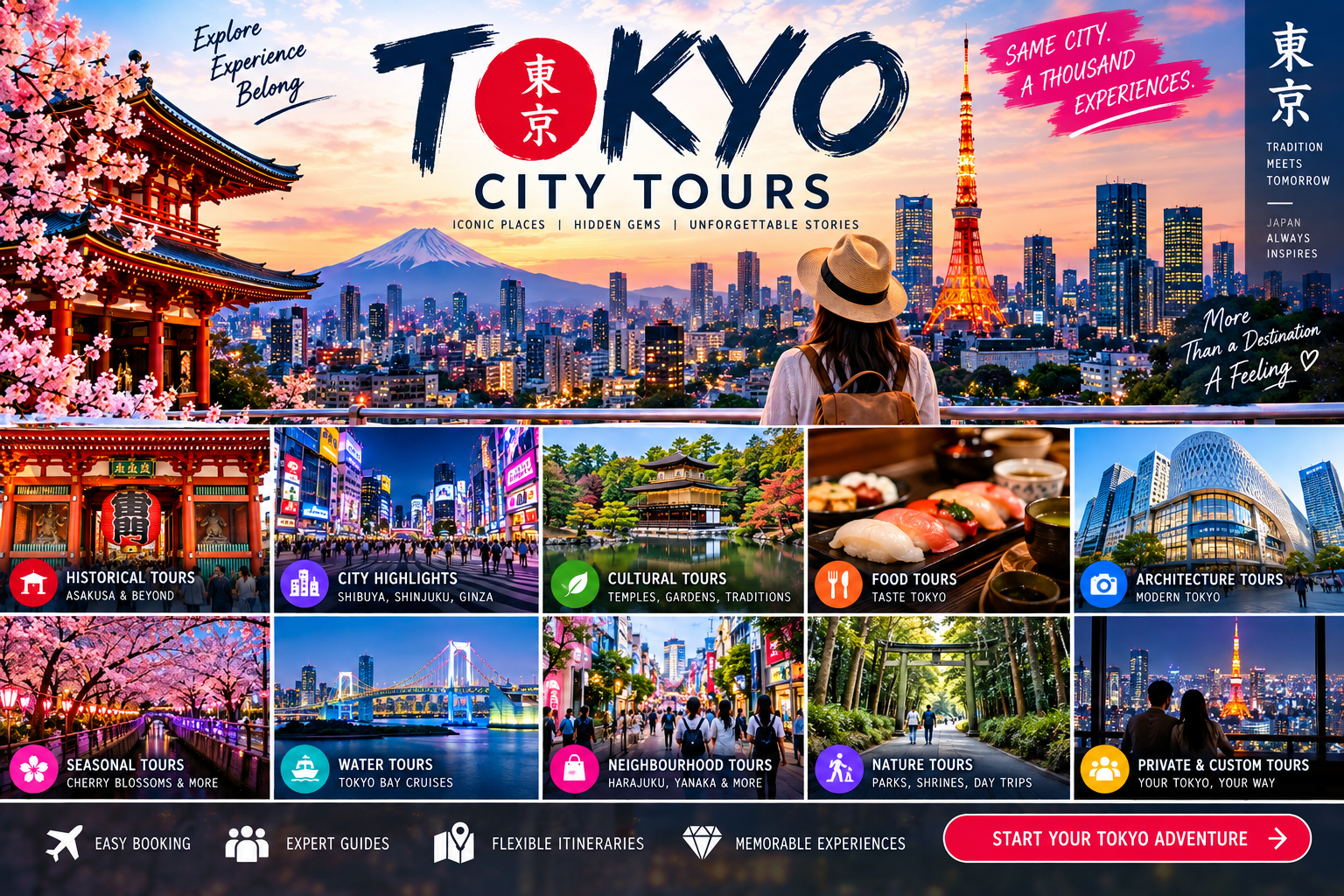
Tokyo city tours are one of the most practical ways to understand Japan’s enormous capital, especially for first-time visitors who want to combine famous landmarks with local culture, history, food, architecture and neighbourhood experiences. From guided walking tours and sightseeing buses to private tours, food tours, cultural experiences and water-based sightseeing, Tokyo offers tour formats for almost every travel style and budget Tokyo in Summer
Why Tokyo City Tours Are So Popular
Tokyo Is Enormous
Tokyo’s size creates both opportunity and difficulty.
There are countless attractions, but they are spread across different districts.
A visitor might want to see:
- Senso-ji
- Meiji Jingu
- Shibuya
- Tokyo Station
- Ginza
- Tokyo Tower
- Akihabara
- Ueno
- Harajuku
- Shinjuku
- Odaiba
- Tsukiji
- Tokyo Skytree
These places are not all within walking distance of each other.
A city tour can group several attractions into a logical route.
Tokyo Has Multiple Layers of History
Tokyo’s present-day appearance can make it easy to forget that the city has a much older history.
The official Tokyo tourism guide notes that the city has flourished as Japan’s political and administrative centre since Tokugawa Ieyasu established the Edo shogunate in 1603.
A guide can help visitors understand how Edo developed into modern Tokyo.
Without that context, a temple may simply look beautiful.
With context, visitors can understand its historical role.
A neighbourhood street may appear ordinary.
With historical interpretation, it can become evidence of how Tokyo’s communities evolved.
Tourism Demand Is Extremely Strong
Tokyo’s tourism industry has reached record levels.
The Tokyo Metropolitan Government reported approximately 28.65 million foreign travellers visited Tokyo during 2025, an increase of 15.6% from 2024 and the highest figure recorded. Total travellers to Tokyo were estimated at approximately 508.62 million, while total tourism expenditure reached approximately ¥10.13 trillion.
For visitors, this means popular tours and attractions can become busy during high-demand periods.
Planning matters.
What Are Tokyo City Tours?
Guided Walking Tours
Walking tours are among the best formats for understanding individual neighbourhoods.
They can focus on:
- History
- Food
- Architecture
- Shopping
- Photography
- Traditional culture
- Local neighbourhoods
- Modern city development
The biggest advantage is proximity.
You experience the streets at pedestrian level rather than looking at Tokyo through a vehicle window.
Bus Tours
Bus tours are useful for visitors who want to cover several major attractions within a limited period.
They can reduce the need to navigate multiple train transfers.
Some tours also use open-top or hybrid buses.
Private Tours
Private tours provide greater flexibility.
The itinerary can sometimes be adjusted around:
- Family needs
- Photography
- Shopping
- Architecture
- Food
- Accessibility
- Limited time
- Specific neighbourhood interests
Private tours can be particularly useful for families and small groups.
Food Tours
Food tours focus on the culinary side of Tokyo.
Rather than visiting attractions simply to photograph them, travellers use food as the organising theme.
A food tour might include:
- Markets
- Local restaurants
- Traditional sweets
- Regional dishes
- Food halls
- Small specialist shops
- Cooking experiences
Cultural Tours
Cultural tours can introduce travellers to Japanese traditions through experiences such as:
- Tea ceremonies
- Traditional crafts
- Calligraphy
- Kimono-related experiences
- Gardens
- Historical districts
- Traditional performing arts
Architecture Tours
Tokyo is an excellent city for architecture tours.
The city contains traditional structures, modern commercial buildings, railway infrastructure, skyscrapers, mixed-use developments and innovative contemporary architecture.
GO TOKYO currently highlights architecture routes around areas such as Ginza and Harajuku-Omotesando.
Water-Based Tours
Tokyo’s waterways provide a different perspective.
Water buses and cruises can connect areas such as Asakusa and Odaiba, while other experiences explore Tokyo Bay and surrounding waterfront districts. GO TOKYO currently lists routes including Asakusa-to-Odaiba water-bus sightseeing.
Tokyo City Tours for First-Time Visitors
Why First-Time Travellers Benefit From Guided Tours
First-time visitors face several challenges.
Tokyo’s railway network is extensive.
Stations can be enormous.
Neighbourhoods can feel unfamiliar.
Japanese signs may initially be difficult to read.
A guided tour removes some of that uncertainty.
It gives travellers a framework for understanding the city.
The Ideal First Tour
For many first-time visitors, a half-day or full-day introductory tour can work well.
A useful route might connect:
- Imperial Palace area
- Tokyo Station
- Asakusa
- Tokyo Tower
- Meiji Jingu
- Shibuya
The exact combination depends on the tour provider and current operating schedule.
Why You Should Not Pack Too Much Into One Tour
A common mistake is choosing a tour that attempts to cover every famous attraction.
The result can be a checklist rather than an experience.
If a tour includes ten major attractions in six hours, much of the day may be spent travelling between stops.
A slightly slower itinerary can be more memorable.
Tokyo City Tours for History Lovers
Asakusa Historical Tours
Asakusa is one of the strongest areas for visitors interested in traditional Tokyo.
A guide can explain:
- Senso-ji
- Nakamise shopping streets
- Edo history
- Traditional architecture
- Local festivals
- Religious customs
- Neighbourhood development
The historical context makes the experience substantially richer.
Imperial Palace Area
The Imperial Palace area provides another opportunity to understand Tokyo’s political and historical development.
Tours can explain the relationship between Edo Castle, the Tokugawa shogunate and modern Japanese government.
Ryogoku and Traditional Culture
Ryogoku is closely associated with sumo culture and the history of Edo.
A cultural walking tour can explain how the neighbourhood developed and why sumo became such an important part of Japanese culture.
Tokyo’s official volunteer guide programme currently includes routes covering Ryogoku, Asakusa, the Imperial Palace gardens and other historically significant areas.
Tokyo City Tours for Food Lovers
Why Food Tours Work So Well
Tokyo’s food culture is too large to understand through a single restaurant.
Food tours provide context.
A knowledgeable guide can explain ingredients, ordering customs, regional influences and dining etiquette.
Tsukiji Food Experiences
Tsukiji remains a popular destination for food-focused visitors.
A tour can introduce travellers to:
- Seafood
- Japanese snacks
- Traditional ingredients
- Market culture
- Food preparation
Asakusa Food Tours
Asakusa combines food and history.
Visitors can explore traditional sweets, snacks and local dishes while learning about the surrounding neighbourhood.
Department Store Food Tours
Tokyo’s department stores often have extensive food floors.
These can be particularly useful for visitors who want to see the variety of Japanese food presentation and craftsmanship.
Food Tours for First-Time Visitors
First-time visitors may benefit from food tours early in their trip.
The information gained during the tour can make later independent dining easier.
Tokyo City Tours for Culture Enthusiasts
Tea Ceremony Experiences
A tea ceremony experience can provide an introduction to Japanese aesthetics, hospitality and traditional etiquette.
Traditional Crafts
Craft-based tours can be more interactive than conventional sightseeing.
Examples include:
- Pottery
- Glasswork
- Calligraphy
- Traditional sweets
- Textile-related activities
- Japanese paper crafts
Gardens and Cultural Landscapes
Japanese gardens provide another way to understand traditional aesthetics.
A guide can explain:
- Seasonal design
- Water features
- Stones
- Plants
- Pathways
- Symbolism
- Tea-house relationships
Tokyo City Tours for Architecture Lovers
Ginza Architecture Tours
Ginza is particularly suitable for travellers interested in commercial architecture and design.
The district combines established retail traditions with contemporary buildings.
Omotesando Architecture Tours
Omotesando is another important destination.
The street contains numerous prominent contemporary buildings and is closely connected with fashion and design.
Tokyo Station Architecture Tours
Tokyo Station provides a powerful contrast between historic railway architecture and modern urban development.
Shibuya Architecture Tours
Shibuya offers an opportunity to study large-scale redevelopment.
New towers, pedestrian spaces, railway infrastructure and commercial complexes demonstrate how Tokyo continually changes.
Tokyo City Tours for Photography
Why Guided Photography Tours Are Useful
A photography tour is different from a normal sightseeing tour.
The guide can focus on:
- Light
- Composition
- Viewpoints
- Timing
- Architecture
- Street scenes
- Seasonal conditions
Best Areas for Tokyo Photography Tours
Potential areas include:
- Asakusa
- Shibuya
- Yanaka
- Tokyo Station
- Odaiba
- Nakameguro
- Shinjuku
Respectful Photography
Photography should never interfere with residents or businesses.
Avoid blocking narrow streets.
Do not photograph private areas.
Follow signs regarding photography.
Ask permission when photographing people closely.
Tokyo City Tours for Families
Why Families May Prefer Guided Tours
Family travel requires more planning.
Children may become tired.
Parents may have luggage.
Transport transfers can become difficult.
A private or small-group tour can simplify logistics.
Family-Friendly Tour Styles
Good options can include:
- Short walking tours
- Cultural workshops
- Museum tours
- Food tours
- Private vehicle tours
- Waterfront experiences
- Neighbourhood tours
Avoid Overlong Walking Routes
Tokyo city tours can involve significant walking.
Check the expected walking distance before booking.
Summer Considerations
Tokyo’s summer conditions can be hot and humid.
The Tokyo volunteer guide programme specifically advises participants on summer routes to drink water, take breaks, seek shade and dress appropriately.
This is an important consideration when choosing outdoor walking tours.
Tokyo City Tours for Solo Travellers
Walking Tours
Solo travellers can benefit from group walking tours because they combine independence with social interaction.
Food Tours
Food tours are particularly practical for solo travellers who may otherwise find it difficult to experience certain restaurants designed around groups.
Photography Tours
Photography tours can provide access to viewpoints and neighbourhoods that travellers might not discover independently.
Tokyo City Tours for Couples
Private Tours
Private tours allow couples to customise the pace.
Food and Culture Tours
Combining food with cultural experiences can make a strong couples itinerary.
Evening City Tours
A guided evening tour can showcase Tokyo’s illuminated streets and architecture without requiring travellers to navigate unfamiliar areas independently.
Official Tokyo volunteer guides currently offer specific Shinjuku and Asakusa night-tour routes, subject to schedule and reservation requirements.
Tokyo City Tours for Older Travellers
Consider Mobility
Tokyo’s size means that sightseeing can involve significant walking.
Choose tours with:
- Shorter walking distances
- Frequent breaks
- Accessible transportation
- Clear meeting points
- Comfortable seating
Ask About Accessibility Before Booking
Accessibility can vary substantially between attractions, stations and tour formats.
Tokyo’s official tourism resources provide dedicated accessibility information and sightseeing courses for visitors with different mobility requirements.
Tokyo City Tours for Travellers With Limited Time
One-Day Tokyo Tours
A one-day tour can be particularly useful for:
- Cruise passengers
- Business travellers
- Airport stopovers
- Short holidays
- First-time visitors with limited time
Three-Hour Tours
Short tours are useful when travellers want an introduction without dedicating the entire day.
Half-Day Tours
Half-day tours provide a useful compromise.
They leave time for independent exploration.
Tokyo City Tours for Repeat Visitors
Why Repeat Visitors Need Different Tours
Tokyo’s tourism audience is increasingly experienced.
Tokyo’s 2025 foreign-tourist behaviour survey found that 54.6% of respondents were repeat visitors, meaning they had visited Tokyo at least twice.
This creates demand for experiences beyond the standard landmark circuit.
Neighbourhood Tours
Repeat visitors can explore:
- Yanaka
- Nezu
- Kagurazaka
- Koenji
- Shimokitazawa
- Kiyosumi-Shirakawa
- Kichijoji
- Nakameguro
Specialist Tours
Repeat visitors may prefer:
- Architecture
- Local food
- Traditional crafts
- Photography
- Japanese gardens
- Railway culture
- Neighbourhood history
GO TOKYO currently promotes walks and tours ranging from Harajuku and Shinjuku to Yanaka, Nezu and suburban areas such as the Akigawa Valley.
Tokyo City Tours by Neighbourhood
Shibuya City Tours
Ideal for:
- Modern Tokyo
- Fashion
- Shopping
- Photography
- Contemporary architecture
Shinjuku City Tours
Ideal for:
- Skyscrapers
- Shopping
- Business districts
- Urban photography
- Department stores
- Parks
Asakusa City Tours
Ideal for:
- History
- Traditional culture
- Food
- Photography
- Temples
Ueno City Tours
Ideal for:
- Museums
- Parks
- Culture
- Families
- History
Ginza City Tours
Ideal for:
- Luxury
- Architecture
- Shopping
- Food
Harajuku City Tours
Ideal for:
- Youth culture
- Fashion
- Street photography
- Contemporary Tokyo
Akihabara City Tours
Ideal for:
- Electronics
- Gaming
- Anime
- Manga
- Specialist retail
Yanaka City Tours
Ideal for:
- Traditional neighbourhoods
- Slow travel
- Photography
- Local streets
Odaiba City Tours
Ideal for:
- Waterfront views
- Modern architecture
- Families
- Technology
- Large public spaces
Tokyo City Tours by Transportation
Walking Tours
Walking offers the deepest street-level experience.
It is especially useful for neighbourhood tours.
Bus Tours
Buses are efficient for covering multiple major attractions.
Private Car Tours
Private vehicles are useful for families, small groups, visitors with mobility concerns and travellers with very limited time.
Train-Based Tours
Some guides deliberately use Tokyo’s public transportation system.
This can be educational because the transport system itself is part of Tokyo’s urban culture.
Water Tours
Water buses and cruises offer an alternative perspective.
They can also reduce walking during part of the itinerary.
Tokyo City Tours and Public Transportation
Why Transport Knowledge Matters
Even when a tour includes transportation, travellers should understand the basics.
Tokyo has an extensive network of trains and subways.
An IC card can simplify many journeys.
GO TOKYO’s current three-day itinerary guide recommends rechargeable IC cards such as Suica or PASMO for convenient station access and everyday purchases.
Tour Meeting Points
Always confirm:
- Station name
- Station exit
- Meeting point
- Departure time
- Required arrival time
A tour can be missed simply because a traveller entered the wrong station exit.
How to Choose the Right Tokyo City Tour
Start With Your Main Goal
Ask yourself:
Do I want history?
Food?
Photography?
Shopping?
Culture?
Architecture?
Family activities?
A general introduction?
The answer should determine the tour.
Choose the Right Duration
For a first experience:
Two to four hours can be sufficient.
For broad sightseeing:
Half-day or full-day tours may work better.
For specialist experiences:
Two or three hours can provide enough depth.
Compare Group Size
A large group can be cheaper.
A small group can provide more interaction.
A private tour provides maximum flexibility but usually costs more.
Check Language
Do not assume every tour is offered in your preferred language.
The official Tokyo volunteer guide service currently provides selected tours in English, French, German, Italian, Spanish, Chinese and Korean, but availability varies by route and date. Reservations generally need to be made at least three days in advance.
Check What Is Included
A tour price may or may not include:
- Attraction admission
- Food
- Drinks
- Transportation
- Hotel pickup
- Guide fees
- Special experiences
Read the inclusions carefully.
What Makes a High-Quality Tokyo City Tour?
Knowledgeable Guide
The guide should provide more than directions.
The best guides explain why places matter.
Logical Route
A good tour minimises unnecessary travel.
Realistic Timing
Each stop needs enough time to be meaningful.
Clear Meeting Instructions
The meeting point should be easy to identify.
Transparent Pricing
Travellers should understand what is and is not included.
Appropriate Group Size
Group size should match the type of experience.
A historical walking tour may benefit from a small group.
A panoramic bus tour can accommodate more people.
Comparing Tokyo City Tour Formats
| Tour Format | Typical Duration | Flexibility | Walking | Group Size | Best For |
|---|---|---|---|---|---|
| Walking tour | 2–4 hours | Medium | High | Small–medium | Culture and neighbourhoods |
| Bus tour | 4–8 hours | Low–medium | Low–medium | Medium–large | First-time visitors |
| Private car tour | 4–10 hours | High | Low | Private | Families and groups |
| Food tour | 2–5 hours | Medium | Medium | Small | Food lovers |
| Architecture tour | 2–4 hours | Medium | High | Small | Design enthusiasts |
| Photography tour | 2–4 hours | High | Medium–high | Small/private | Photographers |
| Cultural workshop | 1–3 hours | Low | Low | Small | Culture enthusiasts |
| Water tour | 1–3 hours | Low | Low | Medium | Scenic sightseeing |
| Neighbourhood tour | 2–4 hours | Medium | High | Small | Repeat visitors |
| Full-day private tour | 7–10 hours | Very high | Variable | Private | Visitors with limited time |
Tokyo City Tours for Different Budgets
Budget Tokyo Tours
Budget travellers should look for:
- Short walking tours
- Group tours
- Free or low-cost local guide services
- Public transport-based tours
- Neighbourhood walks
The Tokyo volunteer guide programme provides volunteer-guided routes, with participants generally paying basic participation and transport/admission-related costs rather than a conventional commercial guide fee. Current programme rules specify that tours are led by volunteer guides and generally use public transportation or walking.
Mid-Range Tokyo Tours
Mid-range travellers can consider:
- Small-group tours
- Food tours
- Cultural experiences
- Bus tours
- Photography tours
Luxury Tokyo Tours
Luxury travellers may prefer:
- Private vehicles
- Custom itineraries
- Personal guides
- Premium dining
- Private cultural experiences
- Professional photography
Rakuten Travel Experiences currently lists private Tokyo vehicle tours that can be customised around attractions such as Asakusa, Meiji Shrine, Shibuya Crossing and Tokyo Skytree.
Tokyo City Tours for Business Travellers
Short Tours Between Meetings
Business travellers may have only a few hours.
A two-hour neighbourhood tour can provide meaningful sightseeing without disrupting the working schedule.
Airport Stopovers
Travellers with long layovers may choose carefully timed tours, but should allow substantial buffer time for airport procedures and transportation.
Evening Tours
After meetings, an evening walking tour can introduce areas such as Shinjuku or Asakusa.
Tokyo City Tours for Cruise Passengers
Why Timing Matters
Cruise passengers have strict departure schedules.
A private or carefully timed shore excursion can reduce the risk of missing the ship.
What to Prioritise
Choose two or three major experiences rather than attempting to see all of Tokyo.
Tokyo City Tours for Digital Nomads
Flexible Experiences
Digital workers may prefer shorter tours that fit around working schedules.
Neighbourhood tours can also help visitors understand the area where they are staying.
Tokyo City Tours for Students
Educational Tours
Students can choose tours based on:
- Japanese history
- Urban planning
- Architecture
- Technology
- Transportation
- Business
- Culture
- Environmental design
Tokyo is effectively an enormous real-world urban studies laboratory.
Tokyo City Tours for Senior Travellers
Prioritise Comfort
Choose:
- Short routes
- Small groups
- Comfortable transport
- Frequent breaks
- Accessible attractions
The official Tokyo tourism ecosystem includes accessibility-oriented sightseeing information and dedicated guide routes.
Tokyo City Tours and Responsible Tourism
Avoid Overcrowded Locations When Possible
Tokyo’s tourism data shows foreign visitors are more concentrated in certain central areas than domestic travellers.
According to 2025 mobile-data analysis, the five wards with the highest numbers of foreign travellers staying were Shibuya, Chuo, Taito, Shinjuku and Chiyoda. Together they represented 56.9% of the aggregate foreign traveller stays across Tokyo municipalities in that dataset.
This concentration can contribute to crowding.
Exploring additional neighbourhoods can create a more distributed tourism experience.
Respect Local Communities
Do not block residential streets.
Keep noise low.
Follow photography rules.
Dispose of rubbish appropriately.
Do not treat private homes as tourist attractions.
Support Local Businesses
Choose local cafés, restaurants, independent shops and cultural businesses where appropriate.
Tokyo City Tours and Accessibility
Why Accessibility Planning Matters
Tokyo is a huge city with large stations and significant walking distances.
Visitors with mobility requirements should investigate the exact route before booking.
Accessible Tour Options
VELTRA currently lists accessible Tokyo tours designed for travellers using wheelchairs and describes options intended to reduce concerns about stairs, ramps and subway navigation.
Tokyo’s official tourism guide also maintains accessibility-focused sightseeing information.
Questions to Ask Before Booking
Ask whether the tour includes:
- Step-free transportation
- Accessible toilets
- Wheelchair-compatible vehicles
- Lift access
- Rest periods
- Accessible entrances
- Assistance with transfers
Common Tokyo City Tour Mistakes
Booking Without Checking the Meeting Point
Tokyo stations can have many exits.
Always identify the exact exit or landmark.
Choosing the Cheapest Tour Without Reading the Details
Low prices can sometimes mean:
- Large groups
- Limited time at attractions
- Few inclusions
- Self-paid admissions
- Less flexibility
Compare what is actually included.
Booking a Tour That Is Too Long
A ten-hour tour sounds comprehensive.
But if you are exhausted after four hours, the remaining six may become difficult.
Ignoring Weather
Walking tours are heavily influenced by weather.
Assuming Every Attraction Is Included
Read the itinerary carefully.
Not Checking Language
Confirm the guide language before payment.
Ignoring Group Size
A large group may not be suitable for travellers seeking personal interaction.
How to Prepare for a Tokyo City Tour
Wear Comfortable Shoes
This is especially important for walking tours.
Carry Water
Outdoor tours can become physically demanding.
Bring a Portable Charger
Navigation and translation applications can consume battery.
Carry a Small Amount of Cash
While electronic payment is widespread, some smaller businesses may still prefer cash.
Arrive Early
Arrive at least 10–15 minutes before the stated departure time unless the provider gives different instructions.
Check Cancellation Rules
Weather, illness or schedule changes can affect plans.
What to Bring on a Tokyo City Tour
Essential Items
- Smartphone
- Portable charger
- Comfortable shoes
- Water
- Small bag
- Identification
- Payment method
- Weather-appropriate clothing
Seasonal Items
Summer:
- Hat
- Water
- Portable fan
- Light clothing
Winter:
- Warm layers
- Gloves
- Comfortable shoes
Rainy periods:
- Compact umbrella
- Waterproof footwear where appropriate
- Light rain jacket
Best Time for Tokyo City Tours
Spring
Spring provides pleasant sightseeing conditions on many days and seasonal scenery.
Popular parks and famous viewing areas can become crowded.
Summer
Summer can be hot and humid.
Shorter morning tours can be more comfortable.
Autumn
Autumn is often excellent for walking and seasonal scenery.
Winter
Winter can offer clearer views and lower crowd levels in some circumstances, though conditions vary.
Tokyo City Tours and Seasonal Planning
Cherry Blossom Tours
Cherry blossom season can dramatically increase demand for popular walking and photography tours.
Book early if the dates are fixed.
Autumn Foliage Tours
Parks and gardens become particularly attractive during autumn.
Winter Illumination Tours
Evening city tours can focus on seasonal lights and illuminated commercial districts.
Summer Cultural Tours
Indoor cultural workshops can provide an alternative to long outdoor walks.
Current Trends in Tokyo City Tours
More Interest in Experiences
Tokyo tourism is increasingly about experiences rather than simply sightseeing.
GO TOKYO’s current experience categories include culture, history, food and drink, art and design, outdoors, sports, anime and manga, shopping and other activities.
Neighbourhood-Based Tours
Travellers increasingly want to understand individual neighbourhoods.
Private and Customised Tours
Private tours allow travellers to build itineraries around specific interests.
Accessible Tourism
Accessible travel is receiving more attention from both official tourism organisations and tour providers.
Technology-Assisted Travel
Tokyo’s official tourism infrastructure now includes an online “Tokyo Navigation AI” service providing travel consultations, alongside physical tourist information centres.
Data-Driven Tourism
Tokyo’s Tourism Data Catalog was renewed in September 2026 and includes dashboards using tourism statistics and mobile-data analysis.
This kind of data can help destination managers understand visitor concentration and movement.
The Future of Tokyo City Tours
More Personalised Itineraries
Artificial intelligence, mobile data and digital booking systems can make tour recommendations increasingly personalised.
A traveller interested in architecture could receive a different itinerary from someone travelling with children.
Smaller Group Experiences
As travellers seek more meaningful experiences, smaller groups may become increasingly attractive.
More Neighbourhood Experiences
Instead of visiting only Shibuya, Shinjuku and Asakusa, travellers may increasingly explore smaller neighbourhoods.
More Accessible Tourism
Tour operators are likely to continue developing routes for visitors with different mobility requirements.
Sustainable Tourism
Tourism managers may increasingly encourage visitors to distribute spending and foot traffic across a broader range of neighbourhoods.
Technology Will Support, Not Replace, Human Guides
Maps can provide directions.
AI can translate.
Booking platforms can compare options.
But human guides can provide context, personal stories and local interpretation.
That human element remains one of the strongest reasons to choose a guided tour.
How Tokyo City Tours Could Change the Way You Travel
A good city tour does more than show you attractions.
It teaches you how to see the city.
After learning about Tokyo’s railway development, you may begin noticing how stations influence neighbourhood growth.
After learning about Edo history, traditional streets become more meaningful.
After taking a food tour, you may recognise ingredients and dining customs that previously seemed unfamiliar.
After an architecture tour, buildings become more than background scenery.
This is the real value of guided tourism.
The tour may last three hours.
The knowledge can improve the remaining three days of your trip.
A Practical Three-Day Tokyo City Tour Plan
Day One: Classic Tokyo
Start with a historical tour covering Asakusa and nearby eastern Tokyo.
Spend the afternoon independently around Ueno or Tokyo Station.
Day Two: Modern Tokyo
Take a guided tour through Shibuya, Harajuku and Omotesando.
Spend the evening exploring Shinjuku.
Day Three: Culture and Local Life
Choose a food, architecture or neighbourhood tour.
Possible areas include:
- Yanaka
- Kichijoji
- Shimokitazawa
- Kiyosumi-Shirakawa
This creates a balance between iconic and local Tokyo.
A Seven-Day Tokyo City Tour Strategy
Day One
Classic sightseeing tour.
Day Two
Asakusa and Ueno historical exploration.
Day Three
Shibuya, Harajuku and Omotesando.
Day Four
Food tour.
Day Five
Architecture or design tour.
Day Six
Private or neighbourhood tour.
Day Seven
Flexible independent exploration.
This structure prevents every day from feeling like the same type of sightseeing.
Tokyo City Tours for Problem-Solving Travel Needs
If You Have Only One Day
Choose a full-day overview tour.
If You Have Three Days
Choose one classic tour, one neighbourhood tour and one food or culture tour.
If You Are Travelling With Children
Choose shorter tours with regular breaks.
If You Have Mobility Concerns
Prioritise accessible routes and ask detailed questions before booking.
If You Are Travelling on a Budget
Use walking tours, public transport and lower-cost group experiences.
If You Want Privacy
Choose a private tour.
If You Hate Crowds
Look for small-group neighbourhood tours.
If You Love Photography
Book a specialist photo tour.
If You Love Food Tokyo city tours
Choose a small-group culinary experience.
If You Have Already Visited Tokyo
Explore neighbourhoods beyond the classic tourist route.
Pros and Cons of Tokyo City Tours
Advantages Tokyo city tours
Tokyo city tours can provide:
- Efficient sightseeing
- Local knowledge
- Historical context
- Easier navigation
- Cultural interpretation
- Food recommendations
- Access to specialist experiences
- Convenient transportation
- Flexible private options
- Opportunities to meet other travellers
Disadvantages Tokyo city tours
Potential drawbacks include:
- Fixed schedules
- Less independence
- Group sizes
- Higher cost for private tours
- Time spent travelling between attractions
- Limited time at individual locations
- Cancellation restrictions
- Different guide quality
- Potentially rushed itineraries
Guided Tour or Independent Travel?
Choose a Guided Tour When Tokyo city tours
You are visiting Tokyo for the first time.
You have limited time.
You want historical context.
You are nervous about transportation.
You want specialist knowledge.
You prefer structured travel.
Choose Independent Travel When Tokyo city tours
You have plenty of time.
You enjoy planning.
You prefer flexibility.
You want to spend hours in one neighbourhood.
You dislike fixed schedules.
Combine Both Approaches Tokyo city tours
For many travellers, the best solution is a combination.
Take one or two guided tours.
Then explore independently using what you learned.
This gives you both structure and freedom.
FAQs
What are Tokyo city tours?
Tokyo city tours are guided or organised sightseeing experiences that help visitors explore Tokyo’s attractions, neighbourhoods, culture, history, food, architecture and transportation system.
Are Tokyo city tours worth it?
They can be particularly useful for first-time visitors, travellers with limited time, families and people interested in learning the historical or cultural context behind Tokyo’s attractions.
How long should a Tokyo city tour be?
Two to four hours is suitable for a focused experience, while half-day and full-day tours work better for visitors wanting broader sightseeing.
What is the best Tokyo city tour for first-time visitors?
A general sightseeing tour covering several major areas can provide a useful introduction, particularly if it combines historic Tokyo with modern districts.
Are walking tours good in Tokyo?
Yes. Walking tours are particularly effective for neighbourhoods such as Asakusa, Yanaka, Harajuku and parts of Shibuya because they allow travellers to experience streets at ground level.
Are Tokyo bus tours worth considering?
Bus tours can be useful when travellers want to cover several major attractions without navigating multiple train transfers.
Are private Tokyo tours expensive?
Private tours generally cost more than group tours because the guide, vehicle and itinerary are dedicated to the private group. The exact price varies significantly by duration, vehicle, guide and inclusions.
Can I customise a Tokyo private tour?
Many private-tour providers offer customisation. For example, current Rakuten Travel Experiences listings include private Tokyo tours where travellers can customise routes around major attractions.
What is the best area for a Tokyo walking tour?
It depends on your interests. Asakusa works well for history, Yanaka for traditional neighbourhoods, Shibuya for modern city life, and Harajuku-Omotesando for fashion and architecture.
Are Tokyo food tours available in English?
Yes. Many international tour platforms list English-language Tokyo food experiences, although language availability should be confirmed for the exact tour before booking.
Can families take Tokyo city tours?
Yes. Families can choose private, small-group, bus, cultural and attraction-focused tours.
Are Tokyo tours suitable for older travellers?
Yes, but travellers should check walking distance, stairs, seating, transportation and accessibility before booking.
Are there accessible Tokyo city tours?
Yes. Official Tokyo tourism resources provide accessibility information, and commercial providers such as VELTRA list accessible tour options.
Can solo travellers join Tokyo tours?
Yes. Walking, food, cultural and photography tours can work particularly well for solo visitors.
Can I take a Tokyo city tour at night?
Yes. Evening sightseeing is available in several areas. Tokyo’s volunteer guide programme currently includes specific Shinjuku and Asakusa night-tour routes, subject to availability and schedule.
Are Tokyo city tours available for couples?
Yes. Private tours, food experiences, photography tours and evening sightseeing can all be adapted for couples.
Can I take a Tokyo tour from the airport?
Some tour and transfer experiences can be arranged around airport arrivals, but travellers should allow sufficient time for immigration, baggage collection and unexpected delays.
What should I wear on a Tokyo walking tour?
Wear comfortable shoes and seasonally appropriate clothing. During hot periods, bring water and consider sun protection.
How much walking is involved in Tokyo city tours?
It depends on the tour. Walking tours can involve several kilometres, while bus and private vehicle tours usually involve less continuous walking.
Should I book Tokyo tours in advance?
For popular dates, specialist experiences, private tours and limited-capacity activities, advance booking is generally sensible.
Can I book Tokyo tours on the same day?
Some activities offer same-day booking, but availability is not guaranteed. Booking ahead is safer during busy periods.
What is the best Tokyo city tour for food lovers?
A small-group food tour through a neighbourhood or market can provide a more focused experience than a general sightseeing tour.
What is the best Tokyo city tour for history?
Asakusa, the Imperial Palace area and Ryogoku are strong choices for historical and cultural tours.
What is the best Tokyo city tour for architecture?
Ginza, Tokyo Station, Marunouchi, Omotesando and Shibuya are excellent areas for architecture-focused exploration.
What is the best Tokyo tour for photography?
A specialist photography tour can be useful because the guide can select viewpoints, timing and routes according to lighting and composition.
Are Tokyo city tours available in languages other than English?
Yes. The official Tokyo volunteer guide programme currently lists selected services in several languages, including English, French, German, Italian, Spanish, Chinese and Korean, although availability varies.
Are there free Tokyo city tours?
Some volunteer-based guide services do not charge a conventional tour fee, although participants may need to cover transportation and admission-related costs. Current Tokyo volunteer guide rules specify participation costs associated with basic guide expenses, while the tour itself is described as free.
Does Tokyo have official tourist information centres?
Yes. Tokyo Metropolitan Government currently operates six Tokyo Tourist Information Centers, including locations at the Tokyo Metropolitan Government Building, Busta Shinjuku, Haneda Airport, Keisei Ueno, Yaesu and Tama.
Is Tokyo too large to explore with tours?
No, but travellers should recognise that no single tour can represent the entire metropolitan area. The best strategy is to select tours according to neighbourhood, theme or travel purpose.
How many Tokyo tours should I take during a week?
There is no fixed number. One or two well-chosen guided experiences combined with independent exploration can provide a good balance.
Are Tokyo city tours good for repeat visitors?
Yes. Repeat visitors can choose specialist tours focused on neighbourhoods, food, architecture, crafts, photography or lesser-known areas.
Why are Tokyo city tours becoming more popular?
Tokyo’s international tourism numbers have reached record levels, while travellers increasingly seek cultural, neighbourhood and experience-based activities rather than only traditional sightseeing. Tokyo received approximately 28.65 million foreign travellers in 2025, according to the Tokyo Metropolitan Government.
Conclusion
Tokyo city tours offer one of the most practical ways to understand a destination that can otherwise feel overwhelming. With an enormous metropolitan area, countless neighbourhoods, extensive transportation networks, deep historical layers and a rapidly changing urban landscape, Tokyo rewards travellers who combine efficient planning with genuine curiosity. For first-time visitors, a well-designed sightseeing tour can establish a foundation. It can explain how Tokyo works, introduce major landmarks and remove some of the uncertainty surrounding transportation and navigation. After that introduction, travellers can explore independently with greater confidence.