Tokyo Neighborhoods: 15 Amazing Areas to Explore, Stay & Experience Tokyo Like a Local
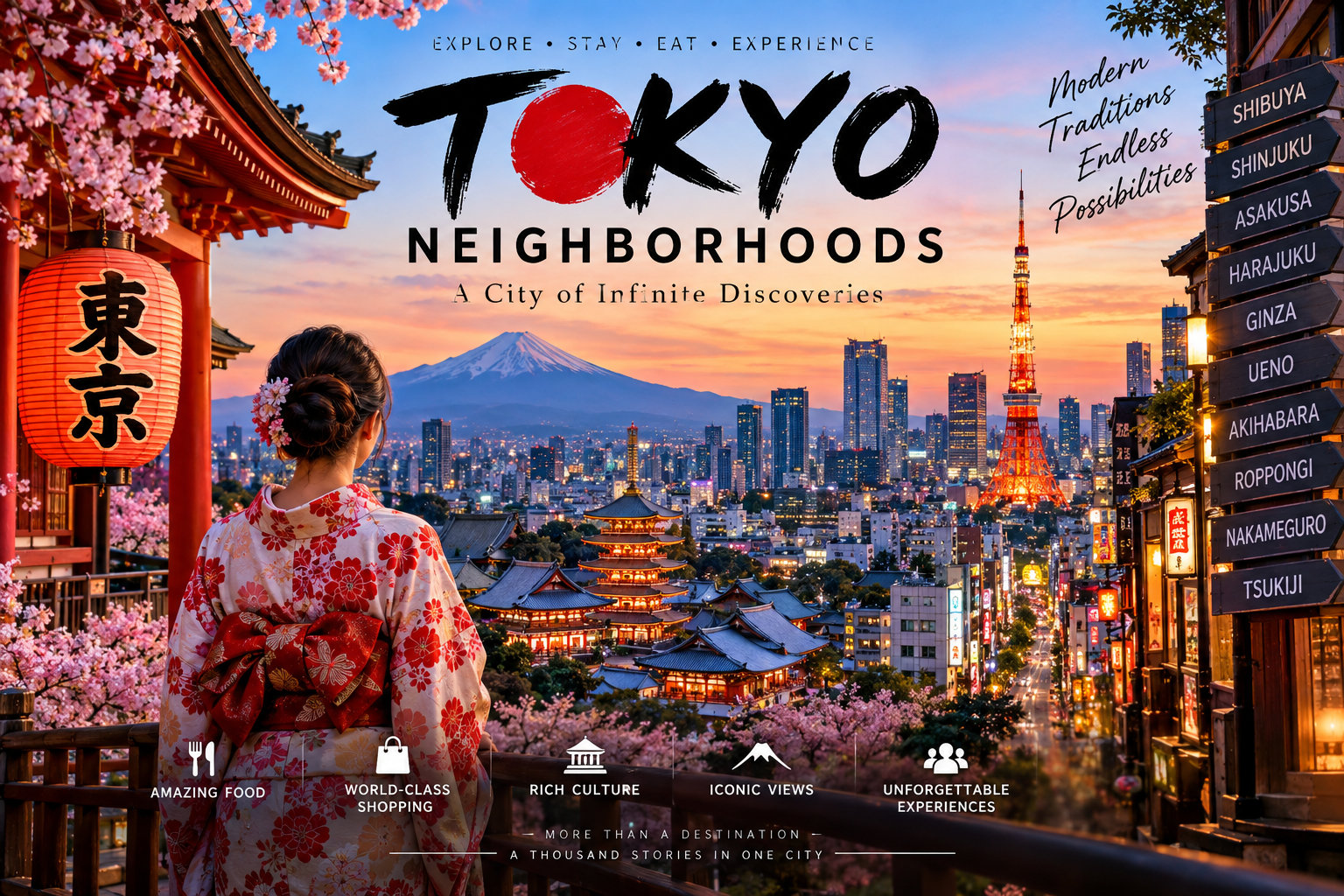
Tokyo neighborhoods are the key to understanding the city: each area has its own personality, from the neon energy of Shinjuku and Shibuya to the historic streets of Asakusa and the relaxed atmosphere of Kichijoji. Whether you are visiting Tokyo for the first time, choosing a hotel, searching for food and nightlife, or looking for quieter local experiences, choosing the right neighborhood can completely change your trip Travel Advice
Understanding Tokyo Neighborhoods Before Your Trip
One of the biggest mistakes first-time visitors make is treating Tokyo as if it were a single centralized tourist district.
It isn’t.
Tokyo is a vast metropolitan area made up of 23 special wards plus additional cities, towns and villages. The Tokyo Metropolitan Government describes the metropolis as covering approximately 2,194 square kilometers and containing 23 special wards, 26 cities, five towns and eight villages.
For travelers, however, the most useful way to understand Tokyo is not necessarily by administrative boundaries. It is by neighborhood personality.
A neighborhood can determine:
- The type of restaurants you encounter
- How busy your evenings feel
- Your accommodation prices
- How convenient transportation is
- Whether the streets feel modern or historic
- Your shopping opportunities
- Nightlife options
- Access to attractions
- The atmosphere after sunset
- How much of “local Tokyo” you experience
This is why selecting a hotel simply because it is “in Tokyo” is not enough.
Why Tokyo’s Neighborhoods Feel So Different
Tokyo developed over centuries rather than being designed as one uniform modern city.
The city grew from Edo, the political center of the Tokugawa shogunate, and its modern development layered railway stations, commercial districts, residential communities, entertainment areas and business centers over older neighborhoods.
That historical layering remains visible today.
In one part of the city, you might see:
- Edo-era temples
- Wooden storefronts
- Traditional crafts
- Narrow residential streets
And elsewhere:
- Glass skyscrapers
- Digital billboards
- Global fashion brands
- Massive railway stations
- Contemporary art museums
Tokyo’s official tourism map similarly emphasizes the intersection of Edo traditions and modern Tokyo culture.
The Best Tokyo Neighborhoods at a Glance
| Neighborhood | Best For | Atmosphere | Ideal Traveler |
|---|---|---|---|
| Shinjuku | First-time visitors, nightlife | Energetic | Almost everyone |
| Shibuya | Trends, nightlife, shopping | Young & energetic | Young travelers |
| Asakusa | Traditional Tokyo | Historic & relaxed | First-time visitors |
| Ginza | Luxury shopping | Elegant | Luxury travelers |
| Harajuku | Fashion & youth culture | Creative | Fashion lovers |
| Omotesando | Design & luxury | Sophisticated | Couples & shoppers |
| Ueno | Museums & budget travel | Local & lively | Families, budget travelers |
| Akihabara | Anime & electronics | Otaku-focused | Anime/gaming fans |
| Shimokitazawa | Indie culture | Relaxed & alternative | Young adults |
| Roppongi | Art & nightlife | International | Professionals |
| Daikanyama | Cafés & design | Stylish & quiet | Couples |
| Kichijoji | Parks & local life | Relaxed | Families & repeat visitors |
| Yanaka | Old Tokyo atmosphere | Traditional | Culture lovers |
| Ikebukuro | Shopping & anime | Busy but practical | Families & shoppers |
| Nakameguro | Cafés & lifestyle | Trendy & relaxed | Couples |
Shinjuku: The Best All-Round Tokyo Neighborhood
If you have never been to Tokyo, Shinjuku is one of the easiest neighborhoods to use as your base.
It combines transportation, restaurants, shopping, skyscrapers, nightlife and entertainment in a remarkably compact area.
The official Tokyo tourism guide describes Shinjuku as an ever-evolving cultural center, with a major business district on the west side and extensive shopping and entertainment around the station.
Why Shinjuku Is So Popular
Shinjuku gives travelers a little bit of everything.
During the day, you can visit:
- Tokyo Metropolitan Government Building
- Department stores
- Bookstores
- Cafés
- Shopping complexes
- Parks
At night, the neighborhood changes.
Tiny bars, izakaya, restaurants and entertainment venues become particularly lively around areas such as Omoide Yokocho and Kabukicho.
Shinjuku for First-Time Visitors
Shinjuku works particularly well if you want to maximize sightseeing efficiency.
The railway connections make it useful for reaching many other parts of Tokyo.
However, there is a catch.
Shinjuku Station can be overwhelming.
The official tourism guide specifically notes that the station can initially be confusing because of its enormous scale.
Best Shinjuku Strategy
Instead of trying to memorize every exit, identify your destination and the correct station exit before leaving the train.
This small habit can save considerable time.
Who Should Stay in Shinjuku?
Shinjuku is excellent for:
- First-time visitors
- Nightlife lovers
- Business travelers
- Travelers who want many restaurants nearby
- Travelers who value transportation
- Short Tokyo trips
It may be less suitable if your dream Tokyo experience is quiet streets and traditional architecture.
Shibuya: Tokyo’s Trendsetting Neighborhood
Shibuya represents another side of modern Tokyo.
The area is famous worldwide for Shibuya Crossing, but reducing Shibuya to the crossing misses most of what makes the neighborhood interesting.
The district combines fashion, restaurants, entertainment, technology, cafés and nightlife.
The official Tokyo tourism guide describes Shibuya as a constantly evolving center of trends, shopping, dining, art and entertainment.
What Makes Shibuya Different?
Shibuya is particularly appealing if you want to experience contemporary urban Tokyo.
The neighborhood is constantly changing.
New commercial developments continue to reshape the skyline, while older streets maintain independent restaurants, bars and shops.
Best Things to Experience in Shibuya
Consider combining:
- Shibuya Scramble Crossing
- Shibuya Sky
- Center-Gai
- Miyashita Park
- Cat Street
- Independent cafés
- Local izakaya
- Fashion stores
Shibuya for Nightlife
Shibuya is one of the strongest choices for travelers who want to stay out late.
It is especially popular with younger visitors, although the neighborhood has increasingly developed experiences suitable for different age groups.
Who Should Stay in Shibuya?
Choose Shibuya if you prioritize:
- Nightlife
- Fashion
- Youth culture
- Modern Tokyo
- Restaurants
- Photography
- Entertainment
Asakusa: The Best Neighborhood for Traditional Tokyo
If Shibuya represents contemporary Tokyo, Asakusa represents a more traditional image of the city.
The district is famous for Senso-ji Temple and Kaminarimon Gate.
The Japan National Tourism Organization describes Asakusa as the heart of Tokyo’s downtown, with ancient temples and traditional stores.
Why Asakusa Is Special
Asakusa gives visitors a stronger sense of historical Tokyo.
You can walk around:
- Senso-ji
- Nakamise-dori
- Kaminarimon
- Traditional shops
- Small restaurants
- Kappabashi
- Sumida River
The neighborhood is particularly atmospheric early in the morning.
Asakusa Beyond Senso-ji Tokyo neighborhoods
Many tourists visit Senso-ji and leave.
That is a mistake.
Walk beyond the main temple approach and explore the surrounding streets.
The official Tokyo guide highlights traditional crafts, ceramics, kimono-related shopping, Edo Kiriko glass and nearby Kappabashi’s kitchenware stores.
Who Should Stay in Asakusa?
Asakusa is particularly good for:
- First-time visitors
- Families
- Culture lovers
- Budget-conscious travelers
- Photographers
- Travelers seeking traditional Tokyo
It can feel quieter than Shibuya or Shinjuku at night.
That can either be an advantage or disadvantage depending on your travel style.
Ginza: Luxury, Shopping and Sophisticated Tokyo
Ginza is Tokyo’s elegant shopping district.
It is associated with luxury brands, department stores, premium restaurants, architecture and polished streets.
The official Tokyo tourism guide describes Ginza as a district with some of the world’s most expensive real estate and a concentration of international brands, department stores, boutiques and galleries.
What to Do in Ginza Tokyo neighborhoods
Explore:
- Ginza Six
- Mitsukoshi
- Wako
- Luxury boutiques
- Art galleries
- Cafés
- High-end restaurants
- Department-store food halls
Is Ginza Only for Luxury Travelers?
No.
You can visit Ginza without buying luxury goods.
Walking through the neighborhood is an experience in itself.
One useful strategy is to explore the major avenues first, then move into the smaller side streets.
Who Should Choose Ginza?
Ginza is especially attractive for:
- Luxury travelers
- Couples
- Fashion enthusiasts
- Architecture lovers
- Fine-dining travelers
- Business travelers
Harajuku: Fashion, Kawaii Culture and Youth Energy
Harajuku has become internationally associated with Japanese youth fashion.
Takeshita Street is the most recognizable part of the district, but the neighborhood extends far beyond it.
The official Tokyo guide identifies Harajuku as a center of kawaii culture, fashion and cosplay, while also highlighting Cat Street, Omotesando and nearby Meiji Jingu and Yoyogi Park.
Takeshita Street Tokyo neighborhoods
Takeshita Street is energetic, colorful and crowded.
Expect:
- Fashion stores
- Character merchandise
- Street food
- Dessert shops
- Accessories
- Youth-oriented brands
Harajuku Beyond Takeshita Street Tokyo neighborhoods
For a more balanced experience, walk toward:
- Cat Street
- Omotesando
- Yoyogi Park
- Meiji Jingu
This creates a fascinating contrast between modern youth culture and spiritual/traditional spaces.
Omotesando: Design, Architecture and Premium Shopping
Omotesando is close to Harajuku but feels distinctly different.
Where Takeshita Street emphasizes youthful energy, Omotesando is more sophisticated.
You will find:
- Designer stores
- Architecture
- Luxury fashion
- Concept stores
- Cafés
- Art
- Lifestyle brands
The official Tokyo tourism guide describes Omotesando and Aoyama as areas where luxury brands and Japanese designers coexist with distinctive architecture and cultural institutions.
Who Should Visit Omotesando?
It is ideal for:
- Architecture enthusiasts
- Fashion lovers
- Couples
- Luxury shoppers
- Design professionals
- Travelers looking for stylish cafés
Ueno: Culture, Museums and Affordable Tokyo
Ueno is one of the best choices for travelers who want culture without the polished feel of Ginza.
It combines museums, parks, markets, restaurants and transport connections.
The official Tokyo area guide describes Ueno as a mixture of cultural institutions, museums, galleries, wholesale businesses and the energetic Ameyoko market.
Ueno Park
Ueno Park is one of the neighborhood’s major attractions.
It provides access to multiple museums and cultural attractions.
Ameyoko
Ameyoko provides a completely different atmosphere.
The market-style streets are busy, commercial and energetic.
You can find:
- Food
- Snacks
- Clothing
- Cosmetics
- Seafood
- Small shops
- Bargains
Who Should Stay in Ueno?
Ueno is particularly practical for:
- Budget travelers
- Families
- Museum lovers
- First-time visitors
- Travelers arriving through Narita
- Travelers who prefer a less glamorous atmosphere
Akihabara: Anime, Manga, Gaming and Electronics
Akihabara is one of the world’s most recognizable neighborhoods for Japanese pop culture.
It is particularly important for:
- Anime
- Manga
- Gaming
- Collectibles
- Electronics
- Figurines
- Hobby culture
Tokyo’s official tourism guide describes Akihabara as the center of otaku culture, while its September 2026 update highlights the neighborhood’s importance to manga, anime, concept cafés and related modern Japanese culture.
What Makes Akihabara Unique?
You can move between stores selling:
- Retro games
- PC equipment
- Cameras
- Figurines
- Manga
- Anime merchandise
- Hobby equipment
- Collectibles
Akihabara for Non-Anime Travelers
Even if you are not an anime fan, Akihabara can be fascinating.
It demonstrates how specialized retail districts can create an identity that is difficult to reproduce elsewhere.
Who Should Visit Akihabara?
Especially:
- Anime fans
- Gamers
- Collectors
- Technology enthusiasts
- Families with older children
- Pop-culture travelers
Shimokitazawa: Tokyo’s Indie Neighborhood
Shimokitazawa feels very different from the giant commercial centers.
The neighborhood is known for:
- Vintage clothing
- Independent cafés
- Live music
- Small restaurants
- Second-hand stores
- Creative culture
Tokyo’s official guide identifies Shimokitazawa alongside Nakano as a neighborhood associated with modern youth culture.
Why Visit Shimokitazawa?
The attraction isn’t one giant landmark.
It is the atmosphere.
This is the kind of neighborhood where wandering without a strict itinerary can be more rewarding than rushing between attractions.
Who Is Shimokitazawa Best For?
- Students
- Young adults
- Indie music fans
- Vintage shoppers
- Café lovers
- Repeat Tokyo visitors
Roppongi: Art, International Life and Nightlife
Roppongi is particularly distinctive because of its international character.
The Japan National Tourism Organization describes Roppongi and Akasaka as areas known for luxury entertainment, upscale museums, restaurants and nightlife.
What to Do in Roppongi
Consider:
- Roppongi Hills
- Tokyo City View
- Tokyo Midtown
- Art museums
- Restaurants
- Nightlife
Who Should Visit Roppongi?
Roppongi works well for:
- Art lovers
- Professionals
- Luxury travelers
- Nightlife visitors
- International travelers
It is less representative of traditional Tokyo than Asakusa or Yanaka.
Daikanyama: Quiet Luxury and Design
Daikanyama is stylish without being overwhelmingly crowded.
The official Tokyo tourism guide describes it as a chic neighborhood featuring fashion, cosmetics, cafés and distinctive architecture near the JR Yamanote area.
Why Daikanyama Is Worth Exploring
It is ideal for slow travel.
Instead of trying to visit ten attractions, you can spend several hours walking between:
- Boutiques
- Cafés
- Bookstores
- Design shops
- Restaurants
- Residential streets
Best Traveler Type
Daikanyama is especially appealing to:
- Couples
- Designers
- Photographers
- Lifestyle travelers
- Repeat visitors
Kichijoji: A Local-Favorite Style Experience
Kichijoji is one of the best choices if you want to combine urban convenience with greenery.
The neighborhood is known for Inokashira Park, shopping streets and smaller eateries.
The official Tokyo tourism guide highlights Kichijoji’s combination of shopping, dining, Harmonica Yokocho and Inokashira Park.
Inokashira Park
The park changes the rhythm of the neighborhood.
Instead of concrete, crowds and skyscrapers, you get:
- Trees
- Walking paths
- Water
- Boats
- Open space
- Relaxed cafés nearby
Who Should Visit Kichijoji?
Kichijoji is excellent for:
- Families
- Couples
- Long-term travelers
- Repeat Tokyo visitors
- Travelers who dislike overly touristy areas
Yanaka and Nezu: Old Tokyo Atmosphere
Yanaka and nearby Nezu are excellent for travelers searching for a slower and more traditional side of Tokyo.
The official Tokyo tourism guide specifically recommends the area for its old-town atmosphere.
Why Yanaka Feels Different
Unlike major commercial centers, Yanaka’s appeal is built around:
- Small streets
- Temples
- Traditional homes
- Independent stores
- Local cafés
- Historic atmosphere
Best Time to Visit
Morning and late afternoon are especially enjoyable.
This is a neighborhood where walking slowly makes sense.
Ikebukuro: Shopping, Entertainment and Practical Convenience
Ikebukuro is often overlooked by international visitors because Shinjuku and Shibuya receive more attention.
That makes it an interesting alternative.
The area offers:
- Shopping malls
- Restaurants
- Entertainment
- Anime stores
- Family attractions
- Excellent transportation
Ikebukuro is also part of Tokyo’s major anime and manga landscape, alongside Akihabara and Nakano.
Who Should Consider Ikebukuro?
It can work well for:
- Families
- Shoppers
- Anime fans
- Travelers seeking alternatives to Shinjuku
- Longer stays
Nakameguro: Cafés, Lifestyle and the Meguro River
Nakameguro is particularly popular among travelers interested in cafés, restaurants, lifestyle stores and photography.
The neighborhood is especially famous for its riverfront atmosphere.
Why Nakameguro Is Popular
The neighborhood combines:
- Independent cafés
- Restaurants
- Boutique stores
- Residential streets
- Riverside walks
It works particularly well when paired with Daikanyama.
How to Choose the Best Tokyo Neighborhood for Your Trip
The “best” Tokyo neighborhood depends on your priorities.
There is no universally correct answer.
Best Tokyo Neighborhood for First-Time Visitors
Consider:
- Shinjuku
- Shibuya
- Asakusa
- Ueno
Shinjuku is particularly versatile, while Asakusa offers a stronger traditional experience.
Best Tokyo Neighborhood for Couples
Consider:
- Daikanyama
- Nakameguro
- Ginza
- Omotesando
- Kichijoji
Best Tokyo Neighborhood for Families
Consider:
- Ueno
- Asakusa
- Kichijoji
- Ikebukuro
Best Tokyo Neighborhood for Nightlife
Consider:
- Shinjuku
- Shibuya
- Roppongi
- Ikebukuro
Best Tokyo Neighborhood for Anime Fans
Consider:
- Akihabara
- Ikebukuro
- Nakano
- Shimokitazawa
Tokyo’s official tourism resources specifically identify Akihabara, Ikebukuro and Nakano as important anime and manga destinations.
Best Tokyo Neighborhood for Luxury
Consider:
- Ginza
- Omotesando
- Roppongi
- Daikanyama
- Aoyama
Best Tokyo Neighborhood for Traditional Culture
Consider:
- Asakusa
- Yanaka
- Nezu
- Ueno
- Ryogoku
Choosing a Tokyo Neighborhood by Traveler Problem
Sometimes the best way to choose an area is to start with your problem rather than your interests.
If You Have Only Two Days Tokyo neighborhoods
Stay near:
- Shinjuku
- Shibuya
- Tokyo Station
- Ginza
You want to minimize unnecessary travel.
If You Are Traveling on a Budget Tokyo neighborhoods
Look at:
- Ueno
- Asakusa
- Ikebukuro
- Parts of northern Tokyo
Avoid assuming that the most famous district is automatically the best-value base.
If You Want Quiet Nights Tokyo neighborhoods
Consider:
- Kichijoji
- Daikanyama
- Yanaka
- Nakameguro
- Residential parts around major stations
If You Want to Party Tokyo neighborhoods
Consider:
- Shinjuku
- Shibuya
- Roppongi
If You Want Traditional Japan Tokyo neighborhoods
Start with:
- Asakusa
- Yanaka
- Nezu
- Ryogoku
If You Are a Solo Traveler Tokyo neighborhoods
Good options include:
- Shinjuku
- Shibuya
- Ueno
- Asakusa
- Ikebukuro
The advantage is having plenty of restaurants and activities within walking distance.
Tokyo Neighborhoods and Transportation
Transportation should influence your hotel decision.
Tokyo is famous for its railway network, and the neighborhood around your station can dramatically affect how efficiently you explore.
Station Proximity Matters Tokyo neighborhoods
A hotel advertised as “in Shibuya” might still require a significant walk from the station.
The same applies to Shinjuku.
When comparing accommodation, check:
- Actual walking distance
- Station exit
- Number of nearby lines
- Airport access
- Late-night transportation
- Elevator availability if carrying luggage
Do Not Choose a Hotel Only by Map Distance Tokyo neighborhoods
Two neighborhoods may look close on a map but require complicated transfers.
A slightly more expensive hotel beside a convenient station can sometimes save hours over several days.
How to Build a Tokyo Neighborhood Itinerary
A smart Tokyo itinerary groups nearby neighborhoods.
Don’t spend your morning in Asakusa, afternoon in Shimokitazawa and evening in Odaiba unless you have a specific reason.
Instead, create geographic clusters.
Example: Traditional Tokyo neighborhoods
Morning:
- Asakusa
- Senso-ji
- Nakamise
Afternoon:
- Kappabashi
- Ueno
Evening:
- Akihabara
This creates a logical eastern Tokyo route.
Example: Modern Tokyo neighborhoods
Morning:
- Harajuku
- Meiji Jingu
Afternoon:
- Omotesando
- Shibuya
Evening:
- Shibuya nightlife
Example: Stylish Tokyo Day
Morning:
- Daikanyama
Afternoon:
- Nakameguro
Evening:
- Ebisu
Example: Alternative Day Tokyo neighborhoods
Morning:
- Shimokitazawa
Afternoon:
- Shibuya
Evening:
- Daikanyama or Nakameguro
The 10 Major Travel Brands and Services to Compare for Tokyo
Travel brands can also influence how you experience Tokyo because accommodation, transportation and booking platforms provide different strengths.
| Brand | Main Use | Best For | Key Advantage | Potential Limitation |
|---|---|---|---|---|
| Booking.com | Hotels | All travelers | Huge accommodation selection | Prices vary by property |
| Agoda | Hotels | Asia travelers | Strong Asia inventory | Cancellation terms vary |
| Airbnb | Apartments | Longer stays | Residential experience | Rules and fees vary |
| JR East | Rail travel | Train travelers | Major Tokyo rail network | Route complexity |
| Japan Airlines | Flights | International travelers | Extensive Japan network | Fare differences |
| ANA | Flights | International/domestic | Large network | Pricing varies |
| Google Maps | Navigation | All travelers | Excellent route planning | Station exits can still confuse visitors |
| NAVITIME | Transit planning | Detailed travelers | Japan-focused navigation | Interface can feel complex |
| Klook | Activities | Tourists | Tickets and experiences | Availability varies |
| Trip.com | Hotels/flights | International travelers | Broad travel inventory | Compare conditions carefully |
These brands should not be treated as interchangeable. A traveler comparing Tokyo hotels should look beyond the headline price and examine cancellation rules, taxes, room size, station distance, luggage policies and reviews.
Common Mistakes When Exploring Tokyo Neighborhoods
Trying to See Everything Tokyo neighborhoods
Tokyo rewards curiosity but punishes over-scheduling.
If you plan twelve major attractions in one day, you may spend more time navigating stations than experiencing Tokyo.
Staying Only in Famous Areas Tokyo neighborhoods
Shibuya and Shinjuku deserve attention, but Tokyo becomes much more interesting when you explore areas such as Yanaka, Kichijoji, Daikanyama or Shimokitazawa.
Ignoring Morning Hours Tokyo neighborhoods
Some neighborhoods become dramatically different early in the day.
Asakusa is a good example.
Arriving early can provide a calmer experience before major visitor crowds build.
Confusing Station Names With Neighborhood Boundaries
A station does not always represent a perfectly defined neighborhood.
The atmosphere can change substantially after a 10-minute walk.
Choosing Accommodation Without Checking the Station Exit
This is one of the most practical mistakes.
Large stations may have numerous exits, and walking around a giant station with luggage can be frustrating.
Pros and Cons of Staying in Different Tokyo Neighborhoods
Central Commercial Neighborhoods
Pros Tokyo neighborhoods:
- Excellent transportation
- Huge restaurant selection
- Shopping
- Nightlife
- Easy sightseeing
Cons Tokyo neighborhoods:
- Crowds
- Higher accommodation prices
- Less residential atmosphere
- Noise
Traditional Tokyo neighborhoods
Pros:
- Cultural atmosphere
- Historic streets
- Often calmer
- Strong local character
Cons:
- Fewer late-night options
- Some attractions require additional travel
- Less nightlife
Residential/Trendy Neighborhoods
Pros:
- Independent cafés
- Local atmosphere
- Stylish restaurants
- Less tourist-focused
Cons:
- Fewer major attractions
- Potentially fewer hotel choices
- More transportation planning
How Tokyo Neighborhoods Are Changing
Tokyo neighborhoods are not frozen in time.
Redevelopment continues to reshape major districts, particularly around large railway stations.
Shibuya is a clear example.
The neighborhood has undergone significant redevelopment while maintaining its role as a center for shopping, culture and entertainment. Official Tokyo tourism materials continue to describe Shibuya as an evolving trend hub.
This creates an important trend for travelers:
Tokyo increasingly offers a combination of old neighborhood identity and new urban infrastructure.
A modern tower may sit only minutes from a tiny restaurant or traditional street.
The Rise of Neighborhood-Based Travel
One of the most interesting trends in Tokyo travel is the shift from landmark tourism toward neighborhood exploration.
Instead of asking:
“Which famous attraction should I visit?”
Travelers increasingly ask:
“What kind of Tokyo do I want to experience today?”
That question leads to better experiences.
For example:
- Want fashion? → Harajuku and Omotesando
- Want old Tokyo? → Asakusa and Yanaka
- Want nightlife? → Shinjuku and Shibuya
- Want anime? → Akihabara and Ikebukuro
- Want cafés? → Daikanyama and Nakameguro
- Want parks? → Kichijoji
- Want luxury? → Ginza
- Want contemporary art? → Roppongi
The Future of Tokyo Neighborhood Tourism
Tokyo’s future is likely to become even more neighborhood-focused.
The official Tokyo tourism ecosystem already provides area-specific guides, walking routes and destination information covering everything from central Tokyo to suburban Tama and Tokyo’s islands.
Several developments are likely to shape future travel.
More Localized Experiences Tokyo neighborhoods
Travelers increasingly want smaller restaurants, local shops, independent businesses and neighborhood walks rather than only major landmarks.
Better Digital Navigation Tokyo neighborhoods
Navigation tools will make it easier to discover businesses and attractions outside traditional tourist corridors.
Continued Station Redevelopment Tokyo neighborhoods
Large railway hubs will continue evolving into mixed-use districts combining shopping, offices, hotels, entertainment and public spaces.
Greater Interest in Suburban Tokyo
Areas such as Kichijoji, Mitaka and western Tokyo can provide a different experience from central Tokyo while remaining accessible by rail.
More Responsible Tourism Tokyo neighborhoods
As visitor numbers grow, spreading travelers across more neighborhoods can reduce pressure on heavily visited areas while creating economic opportunities for smaller communities.
Practical Tips for Exploring Tokyo Neighborhoods
Start Early Tokyo neighborhoods
Popular districts are often much easier to explore in the morning.
Walk Between Areas Tokyo neighborhoods
Don’t treat every neighborhood as a station-to-station experience.
Some of Tokyo’s most memorable moments happen between major attractions.
Use a Transit Card Tokyo neighborhoods
A rechargeable IC card can make everyday transportation considerably easier.
Keep Your Schedule Flexible Tokyo neighborhoods
Leave space for unexpected discoveries.
Explore Side Streets Tokyo neighborhoods
Major roads show you the commercial face of Tokyo.
Side streets often reveal the neighborhood’s personality.
Check Business Hours Tokyo neighborhoods
Independent restaurants and shops may operate on schedules that differ from large chains.
Carry Comfortable Shoes Tokyo neighborhoods
This sounds basic, but Tokyo is a walking city.
Even with excellent trains, a sightseeing day can involve substantial walking.
Respect Residential Areas Tokyo neighborhoods
Not every quiet street is a tourist attraction.
Avoid photographing people without permission and keep noise low in residential neighborhoods.
A Better Way to Think About Tokyo
Perhaps the most important lesson is that there is no single “real Tokyo.”
Shinjuku is real Tokyo.
Asakusa is real Tokyo.
Yanaka is real Tokyo.
Shibuya is real Tokyo.
Kichijoji is real Tokyo.
A modern shopping complex and a tiny neighborhood restaurant can both represent authentic parts of the same enormous metropolitan culture.
The official Tokyo guide itself presents the city through dozens of distinct areas rather than one single tourist center.
That is precisely why neighborhood-based exploration works so well.
FAQs
What are the best Tokyo neighborhoods for first-time visitors?
Shinjuku, Shibuya, Asakusa and Ueno are among the strongest choices. Shinjuku offers transportation and nightlife, Shibuya provides modern Tokyo culture, Asakusa offers traditional experiences, and Ueno combines museums, markets and convenient transportation.
What is the best area to stay in Tokyo?
There is no single best area. Shinjuku is a strong all-round choice, Shibuya suits travelers who want nightlife and modern culture, Asakusa is excellent for traditional Tokyo, and Ginza works well for luxury travelers.
Which Tokyo neighborhood is best for nightlife?
Shinjuku, Shibuya and Roppongi are among the strongest nightlife areas. Each has a different character, with Shinjuku offering dense entertainment, Shibuya emphasizing younger nightlife and Roppongi offering a more international atmosphere.
Which Tokyo neighborhood is best for families?
Ueno, Asakusa, Kichijoji and Ikebukuro can work particularly well for families because of their combination of attractions, restaurants, transportation and shopping.
Which Tokyo neighborhood is best for anime?
Akihabara is the most famous choice, but Ikebukuro and Nakano are also important destinations for anime and manga culture. Tokyo’s official tourism guide identifies all three as significant anime and manga areas.
Is Shinjuku better than Shibuya?
Neither is universally better. Shinjuku is generally stronger for transportation, restaurants and diverse nightlife, while Shibuya is particularly attractive for fashion, contemporary culture, entertainment and younger urban energy.
Is Asakusa worth visiting?
Absolutely. Asakusa is one of the best areas for experiencing Tokyo’s historic side, especially around Senso-ji, Nakamise-dori and the surrounding traditional streets.
Is Ginza expensive?
Ginza is associated with luxury shopping and some of Tokyo’s most expensive commercial real estate, but you do not need to shop at luxury stores to enjoy the neighborhood.
What is the quietest Tokyo neighborhood for tourists?
Yanaka, parts of Kichijoji, Daikanyama and some residential areas away from major stations can provide a quieter experience than Shinjuku or Shibuya.
Which Tokyo neighborhood is best for shopping?
It depends on what you want. Ginza is excellent for luxury, Harajuku for youth fashion, Shibuya for contemporary trends, Akihabara for electronics and anime, and Asakusa for traditional crafts and souvenirs.
How many Tokyo neighborhoods should I visit in one day?
For a comfortable itinerary, two or three geographically close areas are usually enough. Trying to visit too many neighborhoods can turn sightseeing into a transportation exercise.
Should I stay near Tokyo Station?
Tokyo Station is an excellent choice for travelers who prioritize Shinkansen connections, central access and transportation. However, travelers focused on nightlife may prefer Shinjuku or Shibuya, while those seeking traditional atmosphere may prefer Asakusa.
Is Kichijoji worth visiting?
Yes. Kichijoji is particularly good for travelers who want parks, shopping, cafés and a more relaxed neighborhood atmosphere. It is also relatively easy to reach from central Tokyo.
What is the best Tokyo neighborhood for couples?
Daikanyama, Nakameguro, Ginza, Omotesando and Kichijoji are strong choices. The best option depends on whether you prefer cafés, luxury, shopping, parks or nightlife.
What is the best Tokyo neighborhood for budget travelers?
Ueno and Asakusa are worth investigating first, although prices vary substantially by hotel and season.
Are Tokyo neighborhoods safe for tourists?
Tokyo is generally regarded as a very safe major-city destination, but normal precautions still apply. Keep belongings secure, follow local rules and be especially careful around crowded nightlife districts.
Conclusion
Tokyo is not one destination—it is a collection of thousands of smaller experiences connected by an extraordinary transportation network. The best Tokyo neighborhood for you depends on what you want from the trip. Shinjuku is ideal for convenience and nightlife, Shibuya for contemporary culture, Asakusa for tradition, Ginza for luxury, Harajuku for fashion, Akihabara for anime and electronics, Ueno for culture and value, and neighborhoods such as Yanaka, Daikanyama, Shimokitazawa and Kichijoji for a slower, more local perspective.