
Travel Planning: 15 Powerful Tips for Stress-Free Trips
Travel planning can be the difference between a smooth, memorable journey and an expensive trip filled with unnecessary stress. Whether you are planning a short weekend escape, a family vacation, a solo adventure, a business trip, a road trip, or a multi-country journey, the right planning process helps you spend less time solving problems and more time enjoying the destination. The best travel planning strategy is not about filling every hour with activities; it is about balancing destination priorities, budget, transportation, accommodation, flexibility, safety, and realistic time. A well-planned trip gives you enough structure to avoid costly mistakes while leaving enough freedom for unexpected discoveries Travel Itinerary
What Is Travel Planning?
Travel planning is the process of organizing the major decisions involved in a trip before departure. It can include choosing a destination, deciding when to travel, setting a budget, researching transportation, booking accommodation, building an itinerary, checking entry requirements, arranging insurance, preparing documents, planning activities, and creating backup options.
Good travel planning does not necessarily mean booking everything months in advance. In some situations, flexibility is more valuable than certainty. For example, a traveler visiting Europe during shoulder season may benefit from flexible dates, while someone attending a wedding abroad needs fixed flights and accommodation.
The important distinction is between planning for certainty and planning for flexibility.
A useful travel plan answers questions such as:
- Where am I going?
- Why am I going?
- When should I go?
- How much can I afford?
- How will I get there?
- Where will I stay?
- What do I actually want to experience?
- How much time will transportation consume?
- What documents do I need?
- What could go wrong?
- What alternatives do I have if something changes?
Modern travel planning has also changed significantly because of technology. Search engines, mapping platforms, travel apps and generative AI can now combine destination research, transportation information, hotel options and itinerary ideas. Google, for example, has continued adding AI-based travel planning and booking capabilities to Search, including itinerary creation and flight-price tracking.
Why Travel Planning Matters More Than Ever
Travel has become easier to access, but the sheer amount of information available can make decisions harder.
A traveler can compare hundreds of hotels, thousands of flights, dozens of neighborhoods and countless attractions within minutes. The problem is no longer simply finding information. The problem is determining which information actually matters.
This creates a modern travel paradox:
More information does not automatically produce better travel decisions.
An inexperienced traveler may spend hours comparing hotels that are essentially equivalent while ignoring transportation time, cancellation conditions, airport transfers or neighborhood safety.
Another traveler may find an incredibly cheap flight but discover that the airport is far outside the city, baggage costs are high and the arrival time creates an expensive overnight transfer.
Effective travel planning therefore requires decision-making rather than simply searching.
The Difference Between Cheap Travel and Smart Travel
One of the most important principles in travel planning is understanding that the cheapest individual purchase is not necessarily the cheapest trip.
Consider two flights.
Flight A costs $180 but arrives at midnight at an airport 60 kilometers from the city.
Flight B costs $240 and arrives at 3 p.m. at the main airport.
At first glance, Flight A looks cheaper.
But after adding:
- airport transfer
- late-night transportation
- possible hotel complications
- baggage fees
- lost time
- inconvenience
Flight B may provide substantially better value.
This is why experienced travelers evaluate total trip cost, not just headline prices.
A useful formula is:
Total Trip Cost = Transportation + Accommodation + Food + Activities + Local Transport + Fees + Insurance + Visa Costs + Emergency Buffer
The goal is not always to minimize this number. The goal is to maximize the value received for it.
Start Travel Planning With Your Trip Goal
Before searching for flights or hotels, define what you want from the trip.
This sounds simple, but it prevents many poor travel decisions.
A beach holiday, cultural trip, hiking adventure and business trip should not be planned using the same criteria.
Relaxation Travel
For a relaxation-focused trip, prioritize:
- comfortable accommodation
- convenient location
- slower schedules
- easy transportation
- good food
- access to nature
- downtime
A common mistake is trying to visit every major attraction. If the objective is relaxation, an itinerary with three major activities every day may defeat the purpose.
Adventure Travel
Adventure-focused travel requires greater attention to:
- weather
- terrain
- equipment
- transportation
- physical difficulty
- emergency access
- local regulations
- insurance coverage
A beautiful itinerary can become dangerous if seasonal conditions are ignored.
Cultural Travel
Cultural travel benefits from researching:
- local customs
- religious sites
- dress expectations
- public holidays
- local food
- neighborhood history
- etiquette
- language basics
This research can turn sightseeing into a much deeper experience.
Family Travel
Families should prioritize:
- accommodation size
- transportation convenience
- child-friendly activities
- meal options
- rest periods
- medical access
- stroller accessibility
- weather
- bathroom availability
A family itinerary should usually include more buffer time than a solo itinerary.
Business Travel
Business travelers generally value:
- reliable transportation
- proximity to meetings
- Wi-Fi
- quiet accommodation
- flexible booking
- airport access
- predictable schedules
A hotel that is $40 cheaper but requires a 75-minute commute may not be a saving.
Choose the Destination Strategically
Destination selection is one of the biggest decisions in travel planning.
Instead of asking only, “Where should I go?” ask:
“What type of experience do I want, and which destinations deliver it within my constraints?”
This approach creates better results.
For example, if your priority is:
- autumn scenery → consider destinations with strong fall seasons
- affordable beaches → compare shoulder-season coastal destinations
- food → prioritize cities with strong culinary cultures
- hiking → research mountain regions and seasonal accessibility
- history → focus on destinations with preserved historical districts
- nightlife → compare cities based on your preferred style
- family activities → prioritize infrastructure and accessibility
Use a Destination Shortlist
Rather than choosing the first destination you see online, create three to five options.
Score each destination based on:
| Factor | Score |
|---|---|
| Budget | /10 |
| Weather | /10 |
| Transportation | /10 |
| Accommodation | /10 |
| Activities | /10 |
| Safety | /10 |
| Travel time | /10 |
| Personal interest | /10 |
This simple system reduces emotional decision-making.
Choose the Right Time to Travel
Timing can influence almost every aspect of a trip.
The same destination may feel completely different during:
- peak season
- shoulder season
- low season
- major festivals
- school holidays
- national holidays
- weekends
- weekdays
One interesting development is the growing popularity of travel outside traditional summer peaks. Recent reporting indicates that September and October are increasingly competing with summer as preferred travel periods in some markets, partly because travelers are seeking lower crowds, more comfortable weather and better value.
Peak Season
Advantages:
- more attractions operating
- better weather in many destinations
- more transportation choices
- lively atmosphere
Disadvantages:
- higher prices
- larger crowds
- limited availability
- more pressure on infrastructure
Shoulder Season
Shoulder season is often one of the strongest choices for travelers seeking balance.
You may find:
- moderate weather
- fewer tourists
- better hotel rates
- lower attraction congestion
- more authentic local experiences
However, seasonal closures and reduced transport schedules can occur, so research is essential.
Low Season
Low season can provide excellent value.
But cheaper prices may exist because of:
- poor weather
- limited attractions
- reduced transportation
- shorter daylight
- seasonal closures
Never assume that the lowest price automatically means the best travel period.
Build a Realistic Travel Budget
Budgeting is one of the most important parts of travel planning.
Many travelers calculate flights and hotels but forget smaller expenses that accumulate quickly.
Your budget should include:
- flights
- baggage
- airport transfers
- accommodation
- local transportation
- meals
- activities
- attraction tickets
- visas
- travel insurance
- mobile data
- currency exchange costs
- shopping
- tips
- taxes
- emergency expenses
Use a Three-Level Budget
A useful approach is to create three budgets.
Minimum budget: The cheapest realistic version of the trip.
Comfortable budget: The amount required for a pleasant experience without excessive spending.
Maximum budget: The upper limit you are willing to spend.
For example:
| Category | Minimum | Comfortable | Maximum |
|---|---|---|---|
| Flights | $400 | $600 | $850 |
| Hotel | $350 | $650 | $1,000 |
| Food | $150 | $300 | $500 |
| Activities | $100 | $250 | $400 |
| Transport | $80 | $150 | $250 |
| Emergency | $100 | $200 | $300 |
| Total | $1,180 | $2,150 | $3,300 |
The exact numbers depend on the destination and traveler, but the framework is useful worldwide.
Create an Emergency Buffer
A strong travel budget should include money that you do not plan to spend.
An emergency buffer can help with:
- missed transportation
- unexpected accommodation
- medical expenses
- replacement documents
- additional baggage
- weather disruption
- last-minute transportation
The amount depends on the trip, destination and personal circumstances.
Research Flights Properly
Flight planning is more complicated than finding the lowest fare.
Consider:
- departure airport
- arrival airport
- travel dates
- baggage allowance
- number of stops
- layover duration
- airport changes
- arrival time
- departure time
- cancellation rules
- change fees
- seat fees
Compare Total Flight Cost
A low-cost airline fare may exclude:
- checked luggage
- cabin baggage
- seat selection
- meals
- airport transfers
- payment fees
Therefore, compare the final payable price, not the advertised starting price.
Flexible Dates Can Save Money
If your schedule allows flexibility, compare several dates.
Travel planning tools increasingly make this easier. Google has continued integrating price tracking and broader travel research into AI-powered Search, including the ability to monitor flight prices and compare options.
A difference of one or two days can sometimes materially change the cost of transportation and accommodation.
Avoid Unrealistic Layovers
A very short connection can look attractive because it reduces travel time.
But if the itinerary involves:
- immigration
- security
- terminal changes
- separate tickets
- airport transfers
then a short connection can become a serious risk.
For complex journeys, reliability is often more valuable than shaving an hour from the schedule.
Plan Accommodation by Location, Not Just Rating
A hotel with a 9.2 rating is not automatically better for your trip than one with an 8.5 rating.
Location can matter more.
Before booking, ask:
- How far is it from the attractions?
- Is public transport nearby?
- How long is the airport transfer?
- Is the area suitable at night?
- Are restaurants nearby?
- Are there supermarkets or pharmacies?
- Is breakfast included?
- Are taxes included?
- What is the cancellation policy?
Understand Neighborhoods
Cities are rarely uniform.
A hotel described as “central” may still be inconvenient depending on what you want to do.
For a sightseeing trip, staying near major attractions may reduce transport time.
For nightlife, a different neighborhood may be more appropriate.
For families, a quieter residential area with transport access may be preferable.
For business travelers, proximity to the conference center may be more important than tourist attractions.
Build Your Itinerary Around Geography
One of the biggest travel-planning mistakes is creating an itinerary based on popularity rather than geography.
Imagine a city where:
- Attraction A is north
- Attraction B is south
- Attraction C is east
- Attraction D is west
Visiting them in that order could create hours of unnecessary transportation.
Instead, group activities by location.
Use the Neighborhood Method
Plan each day around one geographic zone.
For example:
Day 1: Historic center
Day 2: Museum district
Day 3: Waterfront
Day 4: Local neighborhoods
Day 5: Day trip
This reduces transportation time and makes the itinerary easier to manage.
Leave Empty Space
An itinerary should not be packed from morning until midnight.
Leave time for:
- meals
- transportation delays
- unexpected discoveries
- shopping
- rest
- photography
- weather changes
A traveler who leaves 20 percent of the day unplanned may actually experience more than someone who schedules 100 percent of every hour.
Create a Flexible Daily Schedule
Instead of planning every minute, divide each day into blocks.
Morning
Choose one primary activity.
Afternoon
Choose one or two nearby activities.
Evening
Keep the plan flexible.
This approach provides structure without creating unnecessary pressure.
A good itinerary should answer:
What is the priority today?
It does not need to answer:
What will I be doing at 3:17 p.m.?
Plan Transportation Within the Destination
International travelers often focus heavily on getting to the country and not enough on moving around once they arrive.
Research:
- metro
- trains
- buses
- taxis
- ride-hailing
- ferries
- rental cars
- airport trains
- walking routes
Calculate Door-to-Door Travel Time
Do not judge transportation by vehicle time alone.
For example:
Hotel → station = 15 minutes
Waiting = 10 minutes
Train = 30 minutes
Walking from station = 15 minutes
Total = 70 minutes
The train itself takes only 30 minutes, but the actual journey takes more than an hour.
Door-to-door calculations make itineraries more realistic.
Plan for Different Traveler Types
Travel planning becomes much more useful when the itinerary matches the traveler.
Travel Planning for Solo Travelers
Solo travelers should prioritize:
- flexible accommodation
- safe neighborhoods
- easy transportation
- communication options
- emergency contacts
- social opportunities
- manageable luggage
Solo travel can be highly flexible, but flexibility should not mean a complete lack of planning.
Travel Planning for Couples
Couples should discuss:
- budget expectations
- preferred activities
- accommodation standards
- food preferences
- rest time
- nightlife
- shopping
- photography
A common source of travel stress is not destination choice but different expectations between travelers.
Travel Planning for Families
Families need additional buffers.
Consider:
- shorter daily schedules
- child-friendly transport
- accommodation facilities
- meal timing
- nap periods
- playgrounds
- medical facilities
Travel Planning for Seniors
Older travelers may benefit from:
- fewer hotel changes
- direct transportation
- accessible accommodation
- shorter walking distances
- reliable medical facilities
- flexible schedules
Travel Planning for Budget Travelers
Budget travelers should focus on value rather than price alone.
Look for:
- public transportation
- free attractions
- local restaurants
- hostels or affordable hotels
- shoulder-season travel
- longer stays
- apartment-style accommodation
Travel Planning for Luxury Travelers
Luxury planning is not simply about choosing five-star hotels.
It can involve:
- private transfers
- premium flights
- personalized guides
- exclusive experiences
- premium dining
- spa services
- convenient locations
- flexible cancellation
Travel Planning for Different Problems
Good travel content should also solve specific traveler problems.
Travel Planning for First-Time Travelers
First-time travelers should prioritize simplicity.
Avoid creating complicated multi-country itineraries on the first trip.
Choose:
- one main destination
- reliable transportation
- centrally located accommodation
- manageable activities
- adequate free time
Travel Planning for Short Trips
For a two- or three-day trip, transportation efficiency is extremely important.
A distant hotel can waste a significant percentage of your available vacation.
Choose accommodation close to your primary activities.
Travel Planning for Long Trips
Long trips require different planning.
Consider:
- laundry
- travel insurance
- medication
- multiple SIM/eSIM options
- banking access
- accommodation changes
- visas
- travel fatigue
Travel Planning for Multi-Country Trips
Do not automatically assume that visiting more countries creates a better trip.
Each border crossing adds:
- transportation
- check-in/check-out
- waiting
- immigration
- packing
- unpacking
A three-country trip may feel shorter than a two-week trip in one country.
Research Entry Requirements Early
International travel planning should include official entry requirements.
Depending on nationality and destination, travelers may need:
- passport validity
- visa
- electronic travel authorization
- proof of onward travel
- accommodation details
- travel insurance
- vaccination documentation
- financial evidence
Requirements can change, so travelers should verify them close to departure through official government or embassy sources rather than relying exclusively on old blog posts.
Plan Travel Insurance Carefully
Travel insurance can protect against certain unexpected costs, but policies differ considerably.
Check:
- medical coverage
- emergency evacuation
- trip cancellation
- trip interruption
- baggage loss
- baggage delay
- missed connections
- exclusions
- pre-existing-condition rules
- adventure activity coverage
Do not purchase insurance based only on the headline coverage amount.
Read the exclusions.
Prepare a Travel Document System
Instead of storing every document in a different email account, create one travel folder.
Keep copies of:
- passport
- visa
- flight confirmation
- hotel confirmation
- insurance
- driving license
- rental car documents
- emergency contacts
- important prescriptions
- booking references
Keep both digital and offline-accessible copies where practical.
Use Technology Without Becoming Dependent on It
Technology can dramatically improve travel planning.
Mapping platforms can help visualize routes, while travel organizers can consolidate reservations.
Wanderlog, for example, supports itinerary organization, maps, reservations, road-trip planning and collaboration, making it particularly useful for multi-stop and group trips.
Rome2Rio is particularly useful when comparing transportation between locations because its trip-planning system can create multi-location journeys and display transportation options.
Google’s travel ecosystem has also evolved from basic flight and hotel search toward integrated trip research, mapping and AI-assisted itinerary planning.
Keep Offline Alternatives
Never assume you will always have:
- mobile data
- Wi-Fi
- battery
- GPS
- access to your email
- access to a specific app
Download important maps and confirmations where possible.
Keep important addresses available offline.
Use AI for Travel Planning—But Verify It
Generative AI is becoming one of the most important developments in travel planning.
Research published in 2026 suggests that AI is increasingly influencing travel planning, with personalization, multilingual interaction and decision efficiency among the major benefits identified in the academic literature. At the same time, trust and privacy remain important concerns.
McKinsey reported in 2026 that although fewer than one-third of surveyed travelers had used generative AI for travel tasks, 84% of those users said it improved their experience.
Google has also expanded AI-powered travel planning, including tools that can combine preferences with information from Maps, Flights and Hotels to build personalized itineraries.
What AI Is Good At
AI can help with:
- itinerary brainstorming
- destination comparison
- packing lists
- restaurant ideas
- neighborhood comparisons
- alternative itineraries
- language assistance
- family-friendly planning
- budget structures
- route concepts
What AI Should Not Replace
Always verify:
- visa requirements
- entry regulations
- flight schedules
- hotel availability
- attraction opening hours
- local safety information
- medical information
- transportation disruptions
- prices
AI can produce an excellent starting point but should not be treated as an official authority.
The Best AI Travel Planning Prompt
Instead of asking:
“Plan my trip to Japan.”
Give the system constraints.
A better prompt is:
“Create a 10-day Japan itinerary for two adults with a moderate budget. We prefer food, traditional culture, scenic neighborhoods and easy public transportation. Avoid changing hotels every night. Include estimated travel time between cities, realistic daily pacing, one flexible day, and alternatives for rainy weather.”
The more useful information you provide, the more useful the resulting plan becomes.
Create a Travel Planning Matrix
For complicated trips, create a simple decision matrix.
| Decision | Option A | Option B | Best Choice |
|---|---|---|---|
| Flight | Cheap + late | Expensive + daytime | B |
| Hotel | Central + small | Far + large | A |
| Transport | Rental car | Train | Depends |
| Season | Peak | Shoulder | Shoulder |
| Activities | Many | Focused | Focused |
| Itinerary | Fast | Slow | Slow |
This helps prevent decisions based purely on emotion.
Compare Travel Planning Brands and Platforms
There is no single best travel planning platform for every traveler. The right option depends on whether you need flights, hotels, maps, itineraries, road-trip planning, transportation comparison or AI assistance.
| Brand / Platform | Best For | Main Strength | Potential Limitation |
|---|---|---|---|
| General travel planning | Flights, hotels, Maps and AI integration | Large ecosystem can feel complex | |
| Wanderlog | Detailed itineraries | Maps, itinerary organization and collaboration | Some advanced features may require payment |
| TripIt | Reservation organization | Centralizing travel confirmations | Less focused on destination discovery |
| Rome2Rio | Transportation planning | Comparing ways to travel between places | Booking may involve external providers |
| Roadtrippers | Road trips | Stops and road-trip discovery | Best suited to driving-focused travel |
| Booking.com | Accommodation | Large accommodation inventory | Comparison requires attention to final price and policies |
| Expedia | Complete travel booking | Flights, hotels and packages | Package value varies by destination |
| Airbnb | Homes and unique stays | Apartments and distinctive accommodation | Property quality and rules vary |
| Skyscanner | Flight discovery | Flexible search and comparison | Final booking may be through another provider |
| Kayak | Travel comparison | Broad search and price tools | Results can require additional verification |
These brands serve different parts of the planning process, so comparing them as though they are identical would be misleading.
For example, Wanderlog is primarily useful for organizing an itinerary, while Rome2Rio focuses strongly on transportation connections. Booking platforms are more relevant when you are ready to reserve accommodation, while flight comparison services are useful earlier in the research stage.
How to Choose the Right Travel Planning Tool
Choose your tools according to your problem.
If You Need to Organize Reservations
Use a trip organizer.
If You Need to Compare Flights
Use a flight comparison or airline search platform.
If You Need to Understand Transportation
Use a route and transportation planning service.
If You Need a Road Trip
Use a road-trip-focused platform.
If You Need Accommodation
Compare multiple booking sources and then check the property’s own terms where appropriate.
If You Need Inspiration
Use destination guides, maps, travel communities and increasingly AI-powered discovery tools.
Do Not Over-Optimize Your Trip
Travel planning can become a form of optimization addiction.
A traveler may spend hours trying to save $15 on a flight while losing several hours of research time.
Ask yourself:
Is this decision worth optimizing?
Spend more effort on decisions with large consequences:
- destination
- travel dates
- flights
- accommodation location
- visa
- insurance
- major transportation
Spend less effort on tiny decisions:
- saving a few dollars on a minor meal
- visiting one additional attraction
- choosing between similar cafés
Plan for Weather
Weather is one of the biggest variables in travel.
A good itinerary should have alternatives.
For example:
Sunny day: outdoor sightseeing
Rainy day: museums, cafés, markets and indoor attractions
Extreme heat: early morning sightseeing and indoor afternoon activities
Cold weather: shorter outdoor periods and warmer indoor attractions
This makes the itinerary resilient.
Build a Backup Plan
Every major travel plan should have at least one backup.
If your train is canceled, what is Plan B?
If your hotel cancels, where can you stay?
If it rains, what will you do?
If an attraction is closed, what replaces it?
If your flight is delayed, how will you reach the hotel?
You do not need a backup for every tiny detail.
Focus on high-impact failures.
Common Travel Planning Mistakes
Booking Everything Too Early
Early booking can provide availability, but it is not always cheaper.
Some reservations are best made early, particularly during high-demand periods.
Others may offer flexibility later.
Research cancellation conditions before committing.
Planning Too Many Destinations
Changing cities every one or two days creates hidden costs.
Packing, unpacking, transportation and check-in time consume vacation hours.
Ignoring Airport Location
Some cities have multiple airports with very different transportation connections.
Always check the airport code and location.
Choosing Hotels Only by Rating
A high rating does not compensate for a terrible location if location is important to your trip.
Forgetting Local Transportation Costs
Airport transfers and daily transportation can become surprisingly expensive.
Making Every Day Identical
If every day is packed with major attractions, fatigue builds quickly.
Ignoring Local Holidays
A destination may become dramatically more expensive or crowded during major festivals and holidays.
Trusting Old Information
Travel information changes.
Opening hours, transportation routes, visa rules, attraction policies and prices can change after an article is published.
Always verify time-sensitive information.
Pros of Detailed Travel Planning
Detailed planning offers several benefits.
It can:
- reduce stress
- control spending
- improve time management
- prevent avoidable mistakes
- simplify transportation
- improve safety
- increase confidence
- make group travel easier
For international travel, planning can be especially valuable because unfamiliar systems create additional uncertainty.
Cons of Overplanning
Too much planning can create problems.
It can:
- reduce spontaneity
- create pressure
- make travelers feel rushed
- encourage unrealistic schedules
- make unexpected changes stressful
- turn a vacation into a checklist
The best travel plan is therefore not the most detailed plan.
It is the plan that provides the right amount of structure.
The 70/30 Travel Planning Rule
A useful personal framework is to plan approximately 70% of a trip and leave 30% flexible.
This is not a universal mathematical rule. It is a way to think about balance.
The planned portion can cover:
- flights
- accommodation
- major transportation
- essential reservations
- must-see attractions
- important activities
The flexible portion can cover:
- restaurants
- cafés
- shopping
- local discoveries
- weather alternatives
- spontaneous activities
For highly structured trips, such as cruises or business travel, the ratio may be different.
Sustainable Travel Planning
Sustainability is increasingly becoming part of travel decision-making.
Deloitte’s 2026 travel outlook reported that sustainability-related actions are particularly prominent among younger travelers, with many Gen Z and millennial travelers considering factors such as sustainability certifications and carbon-related options during planning.
Sustainable travel planning can include:
- choosing trains where practical
- staying longer rather than taking frequent short trips
- supporting local businesses
- avoiding unnecessary waste
- respecting wildlife
- choosing responsible tours
- reducing disposable plastics
- visiting less crowded destinations
- traveling during shoulder seasons
Sustainability does not mean sacrificing enjoyment.
Often, slower travel produces a richer experience.
The Rise of Slow Travel
Slow travel is becoming an increasingly attractive alternative to rapid sightseeing.
Instead of visiting five destinations in seven days, a traveler might stay in one region for a week.
Benefits include:
- less transportation
- deeper cultural experiences
- lower stress
- stronger relationships with local businesses
- more time for spontaneous activities
- fewer packing cycles
For many travelers, the future of travel may involve fewer destinations and deeper experiences.
Social Media and Travel Planning
Social media has changed destination discovery.
Travelers now discover:
- restaurants
- hotels
- hidden attractions
- neighborhoods
- scenic viewpoints
- local experiences
through short videos and creator content.
Deloitte’s 2026 outlook highlights the importance of social media in travel planning among younger generations.
However, social media creates a major planning risk:
viral popularity does not necessarily equal personal suitability.
A destination may look spectacular in a 20-second video but be:
- extremely crowded
- difficult to reach
- expensive
- seasonal
- restricted
- less impressive in poor weather
Use social media for inspiration, not as your only source of truth.
Travel Planning and Personalization
The future of travel planning is increasingly personalized.
Instead of generic recommendations such as:
“Here are 10 things to do in Paris,”
travel systems are moving toward:
“Here are five things to do in Paris that match your budget, interests, available time, preferred walking distance and hotel location.”
Research into AI travel personalization published in 2026 emphasizes factors such as connectivity, dynamism and empathy in shaping travelers’ responses to personalized systems.
This represents a major shift from destination-based planning to traveler-based planning.
Future Trends in Travel Planning
AI-Powered Itineraries
AI will increasingly combine:
- preferences
- budget
- dates
- weather
- maps
- transportation
- hotel information
- attractions
into dynamic itineraries.
Google is already moving in this direction by combining AI with travel search, Maps, Flights and Hotels.
Real-Time Itinerary Adjustments
Future planning tools will increasingly respond to changes.
For example:
“It’s raining tomorrow. Move outdoor activities to Friday and find indoor alternatives for tomorrow.”
This is more useful than a static itinerary.
AI-Assisted Booking
Travel planning is moving closer to an environment where users can research and then complete bookings through conversational interfaces.
Google’s 2026 updates show this direction clearly, with AI Mode adding travel price tracking and booking-related capabilities.
More Personalized Recommendations
Future systems may consider:
- previous trips
- preferred hotel types
- walking tolerance
- food preferences
- travel companions
- budget
- photography interests
- preferred neighborhoods
The result should be fewer generic recommendations.
Shoulder-Season Travel
As travelers attempt to avoid peak crowds and high prices, shoulder-season travel is likely to continue growing in popularity.
Longer, Deeper Trips
Travelers may increasingly choose fewer destinations per trip while spending more time in each location.
Sustainable Transportation
Rail, public transportation and lower-impact travel options may become more important components of destination selection.
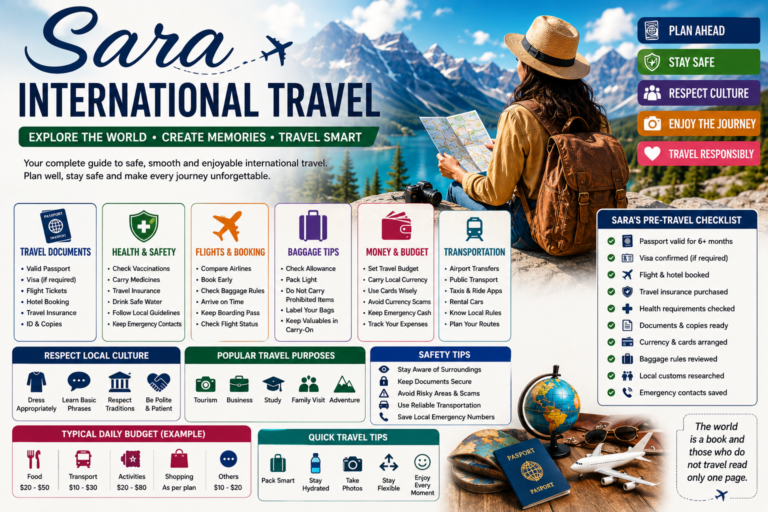
How to Build the Perfect Travel Planning Checklist
Before departure, check the following.
Destination
- Destination selected
- Weather researched
- Peak season checked
- Local holidays checked
- Neighborhoods researched
Transportation
- Flights booked
- Baggage rules checked
- Airport confirmed
- Transfers planned
- Local transport researched
Accommodation
- Hotel booked
- Location verified
- Check-in time confirmed
- Cancellation policy reviewed
- Taxes and fees checked
Documents
- Passport valid
- Visa checked
- Travel insurance arranged
- Copies stored
- Emergency contacts saved
Money
- Budget created
- Payment cards ready
- Backup payment method available
- Currency researched
- Emergency fund prepared
Activities
- Must-see attractions identified
- Major reservations made
- Restaurant reservations made where necessary
- Weather alternatives prepared
Technology
- Maps downloaded
- Booking confirmations accessible
- Phone plan arranged
- Chargers packed
- Power adapter packed if required
A Simple 30-Day Travel Planning Timeline
30 Days Before Travel
Confirm:
- destination
- dates
- passport
- visa requirements
- flights
- accommodation
21 Days Before Travel
Research:
- transportation
- neighborhoods
- major attractions
- restaurants
- local customs
14 Days Before Travel
Finalize:
- activities
- tours
- transportation
- insurance
- important reservations
7 Days Before Travel
Check:
- weather
- flight schedule
- transportation disruptions
- documents
- luggage
1 Day Before Travel
Prepare:
- passport
- wallet
- phone
- charger
- medication
- documents
- essential luggage
Do not leave critical documents until the final few hours.
A Better Way to Plan Travel in 2026
The modern travel-planning process can be summarized as a sequence.
Step 1: Define your travel goal.
Step 2: Set your total budget.
Step 3: Choose several destinations.
Step 4: Compare travel dates.
Step 5: Research entry requirements.
Step 6: Compare transportation.
Step 7: Select accommodation based on location and value.
Step 8: Group activities geographically.
Step 9: Build a realistic itinerary.
Step 10: Add weather and transportation alternatives.
Step 11: Organize documents.
Step 12: Prepare an emergency buffer.
Step 13: Verify important information shortly before departure.
This process is simple enough for beginners but powerful enough for complex international trips.
What Beginners Should Do Differently
If you are planning your first major trip, do not try to imitate experienced travelers immediately.
Start with simplicity.
Choose fewer destinations.
Use reliable transportation.
Stay in convenient locations.
Keep important documents organized.
Avoid extremely tight connections.
Leave free time.
Most importantly, understand that a successful trip is not measured by the number of attractions you visit.
It is measured by the quality of the experience.
What Experienced Travelers Can Optimize
Intermediate and experienced travelers can focus more heavily on:
- flexible dates
- loyalty programs
- points and miles
- shoulder seasons
- open-jaw flights
- multi-city routes
- apartment stays
- rail passes
- local transportation passes
- travel insurance optimization
The more experienced you become, the more you can customize your planning strategy.
But even experienced travelers should avoid unnecessary complexity.
The Most Important Travel Planning Principle
The best travel itinerary is not the one that looks impressive on paper.
It is the one that still works when:
- your flight is delayed
- the weather changes
- you wake up tired
- a restaurant is closed
- transportation takes longer than expected
- an attraction is overcrowded
- you discover somewhere unexpected
In other words, resilience is a better measure of travel-planning quality than density.
A resilient itinerary has alternatives, buffers and flexibility.
FAQs
What is the best way to start travel planning?
Start by defining your destination or destination shortlist, travel dates, trip purpose and total budget. Once these four elements are clear, research transportation and accommodation before building a detailed itinerary.
How far in advance should I plan a trip?
There is no universal answer. International trips, major holidays, popular destinations and limited-availability experiences generally benefit from earlier planning. Flexible travelers can often plan closer to departure, particularly during lower-demand periods.
What should I plan first when traveling internationally?
Start with passport validity, visa or entry requirements, travel dates and transportation. These factors can affect everything else.
How do I plan a trip on a small budget?
Compare flexible travel dates, consider shoulder-season destinations, use public transportation, compare accommodation types and prioritize free or low-cost activities. Most importantly, calculate the entire trip cost rather than focusing only on the cheapest flight.
Is it better to book flights or hotels first?
It depends on the destination. For trips with expensive or limited flights, transportation may need to come first. For destinations where accommodation availability is the biggest constraint, securing the hotel first may make more sense.
How many activities should I plan each day?
For most leisure trips, one major activity plus one or two nearby activities is more realistic than trying to visit five or six major attractions. Your personal energy level and transportation time should determine the final schedule.
Is AI good for travel planning?
Yes, AI can be extremely useful for brainstorming, itinerary creation, personalization, comparisons and packing lists. However, verify critical information such as visas, prices, opening hours, transportation schedules and safety conditions through authoritative or current sources. Current research supports the usefulness of generative AI while also identifying trust and privacy as important considerations.
What is the best travel planning app?
There is no single best app for everyone. Wanderlog is strong for itinerary organization and collaboration, Rome2Rio is useful for transportation planning, Google provides a broad ecosystem covering travel research, Maps and AI, while reservation-management tools such as TripIt focus more heavily on organizing booking information.
How can I avoid overplanning?
Choose your essential experiences first, group them geographically and leave several hours or blocks of time unplanned. Your itinerary should guide your trip rather than control it.
How much emergency money should I take when traveling?
The appropriate amount depends on the destination, trip length and personal circumstances. The important principle is to maintain an emergency reserve separate from your planned daily spending so an unexpected expense does not disrupt the entire trip.
Should I travel during peak season or off-season?
Peak season can provide better weather and more operating attractions but often comes with higher prices and crowds. Off-season can be cheaper and quieter but may involve closures or unfavorable weather. Shoulder season often provides a useful middle ground.
What is slow travel?
Slow travel means spending more time in fewer places rather than constantly moving between destinations. It can reduce transportation stress and allow travelers to experience local culture more deeply.
How can I make my travel itinerary more flexible?
Avoid scheduling every hour, leave gaps between major activities, create weather alternatives and avoid unnecessarily tight transportation connections. A flexible itinerary should have priorities rather than rigid requirements.
What are the biggest travel planning mistakes?
Common mistakes include overpacking the itinerary, choosing accommodation solely by price, ignoring airport locations, forgetting local transportation costs, overlooking visa requirements, relying on outdated information and failing to prepare for unexpected changes.
How can I plan a family vacation better?
Choose accommodation based on convenience, reduce the number of daily activities, account for meal and rest periods, research child-friendly transportation and keep backup activities for bad weather.
How can I plan a solo trip safely?
Research your accommodation area, keep important documents accessible, share your general itinerary with someone you trust, maintain communication options and avoid creating unnecessarily complicated transportation arrangements.
What makes a good travel itinerary?
A good itinerary balances priorities, transportation time, budget, rest and flexibility. It should make the trip easier rather than create pressure to constantly move from one attraction to another.
Is it cheaper to plan a trip yourself or use a travel agent?
Self-planning can reduce service fees and provide more control, particularly for straightforward trips. Travel professionals can add value when a journey is complex, time-sensitive, luxury-focused or involves multiple transportation and accommodation components.
What is the future of travel planning?
Travel planning is moving toward AI-assisted personalization, real-time itinerary changes, conversational search, integrated booking, dynamic recommendations and more sustainable travel choices. The traveler may increasingly describe the desired experience while technology handles much of the research and comparison work.
Conclusion
Travel planning is ultimately about making better decisions before you leave home. The strongest approach combines destination research, realistic budgeting, smart transportation choices, suitable accommodation, flexible scheduling, safety preparation and technology without allowing technology to replace human judgment. In 2026, AI is making travel research faster and more personalized, but official sources, real-time verification and common sense remain essential. The goal should never be to create the busiest possible itinerary. The goal is to create a trip that fits your budget, interests, energy level and priorities while remaining flexible enough to handle the unexpected.