Tokyo Beaches: 15 Best Coastal Escapes, Swimming Spots & Island Beaches
What if you could spend the morning exploring one of the world’s busiest cities and the afternoon walking barefoot beside the sea? Tokyo beaches offer far more variety than many visitors expect, from convenient Tokyo Bay waterfronts and family-friendly seaside parks to tropical beaches on Tokyo’s remote islands Tokyo Property
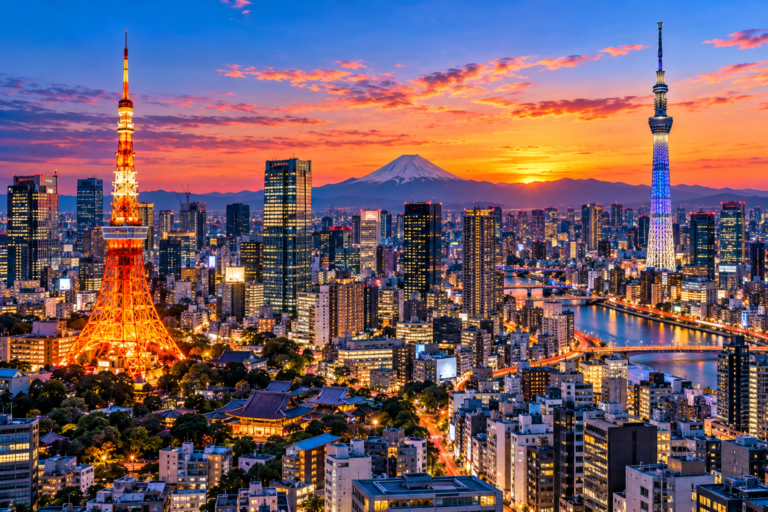
Tokyo is not usually the first destination that comes to mind when people imagine a Japanese beach holiday. Skyscrapers, railway stations, temples, shopping districts, and crowded streets dominate the city’s international image. Yet Tokyo is also a coastal metropolis, and its administrative boundaries stretch far beyond the central urban area into island territory surrounded by the Pacific Ocean.
The important point is that Tokyo beaches are not all the same. Some are primarily scenic waterfront parks rather than swimming beaches. Others are designed for summer recreation. Farther south, the Izu and Ogasawara islands provide a completely different coastal experience, with clearer water, snorkeling, marine wildlife, coral, white sand, and a much stronger sense of escape.
Official Tokyo tourism guidance notes that beach swimming in Tokyo is generally seasonal, with the main swimming season typically concentrated around July and August. It also warns visitors to check local water conditions and rules because some Tokyo Bay beaches, including Odaiba, do not permit swimming.
This guide explains how to choose the right beach according to your travel style rather than simply giving you a list of names.
Understanding Tokyo Beaches
Tokyo’s coastline can broadly be divided into three experiences: Tokyo Bay beaches, mainland beaches within greater Tokyo, and island beaches belonging to Tokyo.
The first category is the easiest for most tourists. Odaiba Marine Park, Kasai Kaihin Park, and Jonanjima Seaside Park provide waterfront scenery without requiring a long journey away from the city. These locations are especially useful when you want a beach atmosphere without sacrificing access to restaurants, shopping, transport, parks, or sightseeing.
The second category involves beaches outside the central Tokyo urban core. Some of the most attractive swimming and surfing areas associated with a Tokyo trip are actually in neighboring Chiba or Kanagawa rather than central Tokyo. Tokyo’s official tourism authority specifically points visitors toward places such as Kamakura, Enoshima, Zushi, and Morito when they want more conventional beach and surfing experiences.
The third category is where the definition of a “Tokyo beach” becomes particularly interesting.
Tokyo includes remote Pacific islands such as the Izu and Ogasawara islands. Chichijima, for example, is roughly 1,000 kilometers south of central Tokyo and offers tropical scenery, snorkeling, wildlife, white sand, and exceptionally different coastal landscapes.
That means a person searching for the best Tokyo beach could actually be looking for several completely different things.
Why Tokyo Beaches Are Worth Visiting
Tokyo gives you a city-and-sea combination
One of the strongest reasons to visit Tokyo’s waterfront is convenience.
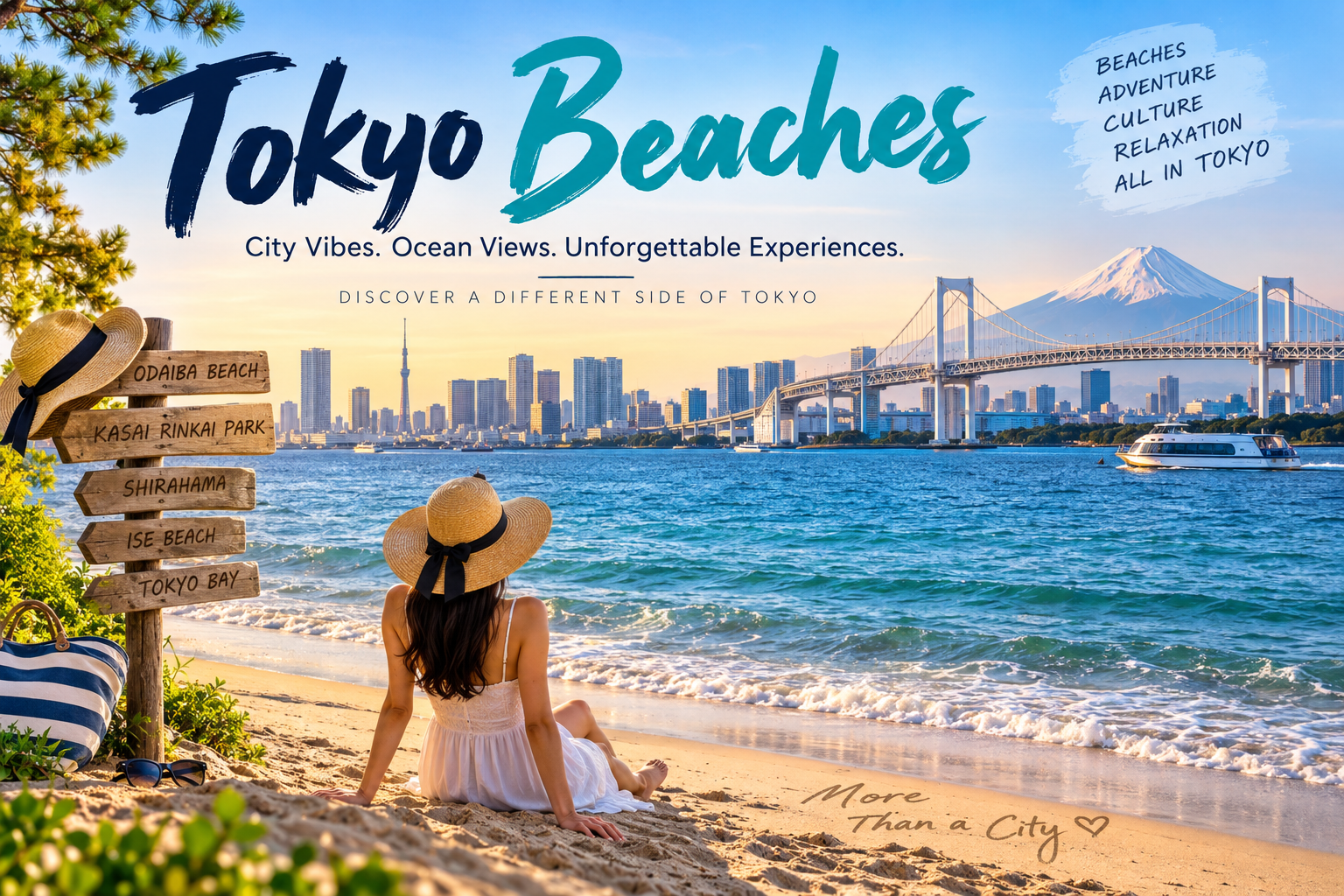
At Odaiba, for example, you can combine a waterfront walk with shopping, restaurants, entertainment, transportation, and views of Rainbow Bridge. The beach itself is not primarily a swimming destination, but it provides a relaxing coastal setting in one of Tokyo’s most developed waterfront districts.
This makes Tokyo Bay beaches useful for travelers who have only a few hours available.
Instead of spending an entire day traveling to a distant resort, you can experience the water, take photographs, eat lunch, and continue exploring the city.
Tokyo’s beaches have different personalities
A common mistake is treating all beaches as interchangeable.
Odaiba is urban and convenient. Kasai is spacious and family-oriented. Jonanjima combines seaside recreation with aircraft watching. Chichijima feels tropical and remote. Other Tokyo islands offer an even stronger combination of hiking, marine life, snorkeling, and quiet beaches.
This diversity is one of Tokyo’s biggest coastal advantages.
Beaches create a different perspective of Tokyo
Tokyo’s skyline looks different from the water.
The waterfront lets travelers see bridges, towers, ships, airports, industrial areas, islands, and modern architecture from a different angle. At some locations, the attraction is not the sand itself but the relationship between the city and the sea.
This is particularly valuable for photographers and first-time visitors who want something beyond the usual Shibuya, Shinjuku, Asakusa, and Harajuku itinerary.
Best Tokyo Beaches at a Glance
| Beach or coastal area | Best for | Swimming | Atmosphere | Access |
|---|---|---|---|---|
| Odaiba Marine Park | City views and photography | No | Urban | Very easy |
| Kasai Kaihin Park Beach | Families and summer recreation | Seasonal/conditions apply | Spacious | Easy |
| Jonanjima Seaside Park | Plane watching and sunsets | Not a conventional swimming beach | Relaxed/industrial | Moderate |
| Chichijima beaches | Tropical escape | Yes at suitable beaches | Remote | Long journey |
| Sakaiura Beach | Snorkeling | Yes | Tropical | Island travel |
| Kominato Beach | Quiet swimming | Yes | Peaceful | Island travel |
| Miyanohama Beach | Snorkeling | Yes | Natural | Island travel |
| Hatsuneura Beach | Adventure | Conditions dependent | Remote | Hiking access |
| Izu island beaches | Swimming, diving, nature | Often | Island resort | Ferry/air depending island |
| Tokyo Bay waterfronts | Walking and sightseeing | Usually no | Urban | Easy |
The exact rules, water conditions, facilities, and seasonal operations can change, so visitors should verify conditions before entering the water.
Odaiba Marine Park
Why Odaiba is one of the easiest Tokyo beaches to visit
Odaiba Marine Park is probably the most recognizable beach-like waterfront destination in central Tokyo.
Located beside Odaiba’s entertainment and shopping district, the park provides views of Rainbow Bridge and the Tokyo waterfront. Odaiba-kaihinkoen Station on the Yurikamome Line is approximately five minutes away on foot.
The biggest misconception about Odaiba is assuming that its sandy shoreline automatically means swimming is allowed.
It does not.
The official Tokyo tourism guide states that swimming is prohibited at Odaiba Marine Park, although certain other water activities may be possible.
That makes Odaiba better suited to walking, photography, sightseeing, relaxing, and enjoying the waterfront atmosphere than planning a traditional beach-swimming day.
Best things to do at Odaiba Marine Park
You can walk along the shoreline and photograph Rainbow Bridge, explore the surrounding entertainment district, enjoy nearby restaurants, and stay until evening for the city’s illuminated skyline.
The location works especially well for travelers who want to combine several activities in one area.
A simple itinerary could be:
- Explore Odaiba in the afternoon.
- Walk along the waterfront.
- Photograph Rainbow Bridge around sunset.
- Have dinner nearby.
- Return after dark for the illuminated skyline.
Best for
Odaiba is particularly suitable for:
- First-time Tokyo visitors
- Couples
- Photographers
- Families wanting easy access
- Travelers with limited time
- Travelers who want a beach atmosphere without leaving Tokyo’s urban core
Kasai Kaihin Park Beach
A different kind of Tokyo beach experience
Kasai Kaihin Park offers one of the most useful seaside experiences for visitors who want more space and a stronger park environment.
The enormous Kasai Rinkai Park sits near Tokyo Disney Resort and includes extensive green space, a bird sanctuary, an aquarium, walking areas, and the Diamond and Flowers Ferris Wheel. The official Tokyo guide describes the park as one of central Tokyo’s largest parks, covering roughly 780,000 square meters.
Its scale changes the experience.
You are not simply visiting a patch of sand. You are entering a large recreational landscape where the beach is only one part of the day.
Can you swim at Kasai Kaihin Park Beach?
Kasai is unusual among Tokyo Bay waterfronts because its beach can allow summer swimming depending on water quality and seasonal arrangements. Official Tokyo guidance specifically identifies Kasai Kaihin Park Beach as an exception to the general restriction on swimming in Tokyo Bay.
This does not mean you should assume swimming is always available.
Conditions, seasonal operations, water quality, and local rules matter.
Always check current information before entering the water.
What else can you do at Kasai?
Kasai works especially well for families because you can combine beach time with other attractions.
Tokyo Sea Life Park is located within the wider Kasai Rinkai Park area, while the park itself provides walking areas, bird-watching opportunities, recreational space, and the Ferris wheel.
The result is an easy full-day itinerary.
Best for families
Families often benefit from destinations where everyone can find something to do.
One person can enjoy the waterfront while another explores the park, aquarium, or other attractions. This is more practical than choosing a remote beach where the entire day depends on swimming.
Getting to Kasai Rinkai Park
Kasai-Rinkai-Koen Station on the JR Keiyo Line is directly associated with the park, making the area relatively convenient for visitors traveling by rail.
Jonanjima Seaside Park
The beach for plane watchers
Jonanjima Seaside Park provides a very different coastal experience.
Its location near Haneda Airport means aircraft become part of the scenery. Instead of a traditional resort atmosphere, you get a fascinating combination of sea, ships, airport activity, industrial infrastructure, and open sky.
Tokyo’s official tourism guide specifically recommends Jonanjima for visitors interested in the intensity of ships and planes around Tokyo Bay.
This is an excellent example of why the phrase “Tokyo beach” should not automatically mean swimming.
Sometimes the attraction is simply being beside the sea while watching the machinery of one of the world’s great metropolitan regions.
Best for photography
Jonanjima can appeal strongly to photographers because it combines several visual subjects:
- Aircraft
- Water
- Ships
- Industrial structures
- Sunsets
- Open horizons
- Urban infrastructure
The location can be especially interesting during golden hour.
Tokyo Beaches for Swimming
Understand the swimming season
Visitors expecting year-round beach swimming may be disappointed.
Tokyo’s official tourism information says the beach swimming season is generally limited to July and August.
That seasonal pattern matters when planning your itinerary.
A beach may remain beautiful outside the swimming season, but facilities, lifeguard services, changing areas, or organized swimming arrangements may not operate in the same way.
Do not confuse a beach with a swimming beach
This is one of the most important lessons for Tokyo beach travelers.
A shoreline can be:
- A scenic beach
- A recreational waterfront
- A water-play area
- A windsurfing location
- A fishing area
- A walking destination
- A designated swimming beach
These are not interchangeable.
Before entering the water, look for official signs and current local guidance.
Check water conditions
Tokyo Bay is heavily developed, and water quality varies by location and conditions.
Official Tokyo tourism guidance specifically recommends checking water quality before swimming.
This is not a minor detail. A beach can look inviting while conditions are unsuitable for swimming.
Tokyo Island Beaches
The tropical side of Tokyo
If central Tokyo Bay beaches are the appetizer, the islands are the full coastal experience.
The Izu and Ogasawara islands belong to Tokyo but feel dramatically different from the capital’s urban center.
The Ogasawara Islands are particularly remarkable because of their distance and isolation.
Chichijima is approximately 1,000 kilometers south of central Tokyo and features white sand, blue water, marine wildlife, coral, snorkeling opportunities, and natural landscapes.
Chichijima
Chichijima is one of the most interesting choices for travelers who want Tokyo plus tropical nature.
The island has numerous beaches, each with its own character.
Kominato is known for smooth white sand and blue water, while Miyanohama is suitable for snorkeling. Hatsuneura requires a substantial hike and rewards visitors with a more remote experience.
Sakaiura Beach
Sakaiura Beach is especially interesting for snorkeling.
It is only a short bus ride from the center of Chichijima and offers calm water, coral, tropical fish, and underwater historical remains associated with the Hinkomaru shipwreck.
This combination of marine nature and history makes Sakaiura different from an ordinary resort beach.
Kominato Beach
Kominato is a strong choice for travelers looking for a peaceful beach experience.
The official Tokyo tourism guide describes its smooth white sand and blue water and notes that the beach has less coral in the water, making it suitable for a relaxed swim.
The beach also offers dramatic nighttime conditions because it is far from much artificial light.
Miyanohama Beach
Miyanohama is particularly interesting for snorkeling.
The protected nature of the beach creates conditions that can be more appealing to travelers interested in observing underwater environments rather than simply lying on the sand.
Hatsuneura Beach
Hatsuneura is for travelers who want the journey to be part of the experience.
Access involves a significant hike through forested terrain. That makes it less appropriate for casual beach visitors but attractive to hikers and adventure travelers.
How to Reach Tokyo Island Beaches
Reaching Chichijima
Chichijima is not a quick day trip from central Tokyo.
The island can be reached by the Ogasawara-maru passenger ferry from Takeshiba Pier, and the journey takes approximately 24 hours.
Tokyo’s updated island transportation guidance notes that Chichijima and Hahajima require a full-day passenger-ship journey and have no flights.
That travel time is not simply an inconvenience.
It is part of what makes the destination different.
You are moving from one of the world’s largest metropolitan environments into an isolated island ecosystem.
Why the long journey can be worth it
A short train ride cannot produce the same feeling of remoteness.
For travelers who want a genuine tropical escape while technically remaining within Tokyo’s administrative boundaries, Chichijima offers something unusual.
It is better approached as a multi-day island trip rather than a quick beach excursion.
Best Tokyo Beaches for Different Travelers
Best Tokyo beaches for families
For families, Kasai Rinkai Park is one of the strongest choices because the beach sits within a much larger recreational environment.
The surrounding park, aquarium, open spaces, and attractions mean the day does not depend entirely on swimming.
Best Tokyo beaches for couples
For couples, Odaiba is an easy choice because the waterfront can be combined with restaurants, shopping, sightseeing, and evening views.
For a more romantic nature-focused trip, an island beach such as Kominato offers a completely different atmosphere.
Best Tokyo beaches for photographers
Odaiba is excellent for architecture and city photography.
Jonanjima is better for aviation and industrial photography.
Kasai offers sunsets, landscapes, and wide views.
Chichijima provides tropical landscapes and marine scenery.
Best Tokyo beaches for snorkeling
For snorkeling, Tokyo’s remote islands are much more compelling than central Tokyo Bay.
Sakaiura and Miyanohama on Chichijima are particularly worth considering. Sakaiura combines coral and tropical fish with underwater historical interest.
Best Tokyo beaches for adventure travelers
Hatsuneura is a strong example because reaching the beach requires a hike through natural terrain.
The wider Izu and Ogasawara island networks also offer opportunities for travelers who want hiking, snorkeling, diving, wildlife, and beaches in the same trip.
Best Tokyo beaches for short itineraries
If you have only half a day, choose Odaiba.
If you have a full day, Kasai or Jonanjima can work well.
If you have several days and want an entirely different environment, consider the islands.
Tokyo Beach Planning by Problem
If you hate crowds
Avoid assuming that every Tokyo beach is quiet.
Instead, consider visiting during less busy periods, choosing larger parks, or traveling to more remote islands.
Island travel naturally reduces the convenience that attracts crowds to central Tokyo.
If you have children
Prioritize destinations where swimming is not the only activity.
Kasai is particularly practical because of the park’s broad range of attractions.
If you want clear water
Do not automatically choose a central Tokyo Bay beach.
The farther you travel toward suitable Pacific islands or other coastal destinations, the more likely you are to find the kind of water and marine environment associated with a traditional tropical beach.
If you want surfing
Central Tokyo is not the place to build your entire surf itinerary.
Official Tokyo tourism guidance notes that serious surfers generally head toward Chiba, Kanagawa, or Izu for better waves.
If you have only one free afternoon
Choose Odaiba.
The transport convenience and surrounding attractions make it much easier to incorporate into a busy Tokyo itinerary.
What to Pack for Tokyo Beaches
Essential beach items
A practical Tokyo beach bag should include:
- Sunscreen
- Sunglasses
- Hat
- Water bottle
- Small towel
- Swimwear if swimming is permitted
- Waterproof phone pouch
- Portable charger
- Comfortable walking shoes
- Light change of clothes
- Cash or payment method
- Reusable shopping bag
- Small first-aid kit
For island trips, increase your preparation.
Remote beaches can have fewer services than central Tokyo.
Sun protection matters
Tokyo summers can be hot and humid. Official Tokyo travel guidance describes summer temperatures with highs commonly reaching the 30s Celsius.
A beach day therefore requires more than simply carrying swimwear.
Heat, UV exposure, humidity, and dehydration can turn a relaxing afternoon into an uncomfortable experience.
The 10 Best Beach and Outdoor Brands for Tokyo Trips
The following comparison is not a ranking of Tokyo beaches. These are 10 outdoor, beach, swim, or travel brands that can be useful when preparing for a Tokyo coastal trip.
| Brand | Best known for | Best use at Tokyo beaches | Strength | Limitation |
|---|---|---|---|---|
| Patagonia | Outdoor clothing | Hiking and island trips | Technical outdoor focus | Premium pricing |
| Columbia | Outdoor apparel | Sun and light outdoor activities | Practical versatility | Less beach-fashion focused |
| The North Face | Outdoor gear | Hiking and travel | Strong outdoor ecosystem | Can be expensive |
| Montbell | Japanese outdoor gear | Island travel and hiking | Lightweight outdoor products | Less fashion-oriented |
| Speedo | Swimwear | Swimming | Swim specialization | Less useful outside water |
| Arena | Swimwear | Pool and swimming | Performance swim focus | Limited general travel use |
| O’Neill | Surf/beachwear | Surf-oriented trips | Beach lifestyle | Less relevant for urban sightseeing |
| Billabong | Surf/beachwear | Surf and beach travel | Surf heritage | Not ideal for hiking |
| Uniqlo | Everyday clothing | City-to-beach travel | Affordable and versatile | Not specialized beach equipment |
| Muji | Travel/lifestyle goods | Simple travel organization | Minimalist design | Limited technical equipment |
The right choice depends on the type of trip rather than brand popularity.
Someone visiting Odaiba for two hours does not need the same equipment as someone hiking to a remote Chichijima beach.
Tokyo Beaches vs Nearby Beach Destinations
Tokyo vs Kamakura
Kamakura is a more conventional beach destination and can be attractive to travelers who want a combination of coastline and historic temples.
It is also much more accessible than Ogasawara.
Tokyo vs Enoshima
Enoshima is popular for combining coastal scenery with island sightseeing, restaurants, and views.
It can be a better choice than central Tokyo for travelers who prioritize a traditional seaside day.
Tokyo vs Chiba
Chiba is important for travelers focused on surfing and larger coastal beaches.
Its proximity to Tokyo makes it a practical alternative when Tokyo Bay does not provide the swimming or surfing experience you want.
Tokyo vs Ogasawara
This is not really a fair competition.
Ogasawara wins for remoteness, tropical nature, marine life, and adventure.
Tokyo Bay wins for convenience.
The choice depends on whether you value time or transformation.
A Better Way to Choose a Tokyo Beach
Instead of asking “Which is the best Tokyo beach?”, ask five questions.
Do you want swimming?
If yes, verify that the specific beach permits swimming and check current water conditions.
Do you want scenery?
Choose Odaiba, Kasai, Jonanjima, or an island depending on the type of scenery you prefer.
Do you want adventure?
Choose an island.
Do you want convenience?
Choose a Tokyo Bay waterfront.
Do you want a tropical experience?
Look toward the Ogasawara or suitable Izu islands.
This simple framework produces a much better recommendation than a generic top-10 list.
Tokyo Beaches for Different Demographics
Tokyo beaches for solo travelers
Solo travelers often benefit from locations where sightseeing does not depend on having a group.
Odaiba is particularly easy because it has numerous nearby attractions.
Island travel is also rewarding for independent travelers who enjoy hiking and nature.
Tokyo beaches for couples
Couples may prefer sunset views, waterfront dining, photography, and quieter beaches.
Odaiba works for convenience, while island destinations provide stronger natural scenery.
Tokyo beaches for older travelers
Accessibility and facilities become more important.
A large urban park such as Kasai may be easier to manage than a remote beach requiring a long hike.
Always check current accessibility information before traveling.
Tokyo beaches for young travelers
Younger travelers may enjoy combining beaches with shopping, nightlife, water activities, photography, and social spaces.
Odaiba is particularly strong for this style of itinerary.
Tokyo beaches for adventure travelers
Remote island beaches are the obvious choice.
The attraction is not simply swimming. It is the combination of ferry travel, hiking, snorkeling, marine life, forests, and isolation.
Common Mistakes When Visiting Tokyo Beaches
Mistake 1: Assuming every beach allows swimming
This is probably the most important mistake.
Odaiba Marine Park, for example, prohibits swimming.
Always check the specific beach rather than relying on the word “beach.”
Mistake 2: Visiting outside the swimming season expecting full facilities
Tokyo’s main beach swimming season is generally July and August.
Outside that period, the shoreline can still be enjoyable, but organized swimming facilities and services may differ.
Mistake 3: Treating Tokyo Bay like a tropical ocean
Tokyo Bay is a highly developed urban marine environment.
If your dream involves turquoise water, coral reefs, and extensive marine life, you should look farther toward Tokyo’s Pacific islands.
Mistake 4: Planning Chichijima as a day trip
The journey to Chichijima takes approximately 24 hours by ferry.
Trying to squeeze it into a conventional Tokyo day trip is unrealistic.
Mistake 5: Ignoring the journey
Remote islands require more planning.
Ferry schedules, accommodation, weather, food, local transportation, and return connections all deserve attention.
Mistake 6: Forgetting that weather can change the experience
A beach that looks spectacular under blue skies can feel completely different during rain or strong wind.
Build flexibility into island itineraries.
Pros and Cons of Tokyo Beaches
Advantages
Tokyo beaches offer several major advantages.
First, variety is exceptional. You can experience an urban waterfront in the morning and a tropical island environment on another trip.
Second, many central waterfront locations are easy to access by public transportation.
Third, Tokyo’s beaches can be combined with other attractions rather than requiring a dedicated resort holiday.
Fourth, the islands provide access to marine environments that feel completely different from central Tokyo.
Disadvantages
The biggest limitation is that not every Tokyo beach is suitable for swimming.
Tokyo Bay water conditions and regulations also mean travelers must pay attention to local information.
Another limitation is seasonality.
Finally, some of Tokyo’s most spectacular beaches require considerable travel time.
The more remote and natural the beach, the less convenient it tends to be.
When Is the Best Time to Visit Tokyo Beaches?
Summer
Summer is the most obvious season for beach activities.
July and August generally correspond with Tokyo’s main beach swimming period.
However, summer also brings heat, humidity, and potentially crowded recreational areas.
Spring
Spring can be excellent for coastal walks.
The focus should be scenery rather than swimming.
Autumn
Autumn is appealing for travelers who prefer comfortable walking conditions.
It can be a good time for photography and seaside exploration without making swimming the center of the trip.
Winter
Winter is not the conventional season for central Tokyo beach recreation, but it can offer crisp views and quieter waterfronts.
The Ogasawara Islands are a notable exception to the traditional mainland Tokyo beach calendar.
Chichijima even holds a beach-opening event on January 1, marking an unusually early public beach season in Japan.
Tokyo Beach Photography Tips
Photograph the city rather than only the sand
The most interesting Tokyo beach photographs often contain multiple layers.
Try composing images with:
- Water in the foreground
- Skyline or bridge in the middle
- Sky in the background
Odaiba is especially effective for this approach.
Use sunset strategically
Sunset can transform an ordinary waterfront into a memorable scene.
At Kasai, the Ferris wheel and open landscape can create strong compositions.
At Odaiba, Rainbow Bridge becomes the obvious subject.
At Jonanjima, aircraft can become part of the composition.
Photograph details
Do not only take wide shots.
Look for:
- Reflections
- Waves
- Boats
- Footprints
- Beach vegetation
- Industrial structures
- People as silhouettes
- Changing colors in the sky
These details often make a Tokyo beach photo feel more personal.
Food and Beach Days
One of the biggest differences between Tokyo and remote resort destinations is the availability of food.
At central waterfront locations, you can often combine beach time with restaurants, shopping areas, and other attractions.
Odaiba is particularly convenient in this regard.
On remote islands, however, dining options can be more limited and planning becomes more important.
This creates another useful rule:
The closer the beach is to central Tokyo, the easier it is to improvise. The farther you travel, the more you should plan.
A One-Day Tokyo Beach Itinerary
Morning
Start at Kasai Rinkai Park.
Explore the park before the day’s heat becomes intense.
Midday
Visit Tokyo Sea Life Park or enjoy lunch in the surrounding area.
Afternoon
Spend time around the waterfront.
If swimming is permitted under current conditions, follow the designated swimming rules.
Evening
Ride the Ferris wheel or explore the park and waterfront around sunset.
This itinerary works because it does not depend entirely on beach conditions.
A Half-Day Odaiba Itinerary
First stop
Arrive at Odaiba-kaihinkoen Station.
Second stop
Walk toward Odaiba Marine Park.
Third stop
Spend time photographing Rainbow Bridge and the waterfront.
Fourth stop
Explore nearby attractions and shopping areas.
Final stop
Stay for the evening illumination and have dinner nearby.
This is one of the easiest ways to add a “beach” experience to a busy Tokyo itinerary without sacrificing an entire day.
A Multi-Day Chichijima Itinerary
Day one
Use the ferry journey as part of the adventure and settle into island life after arrival.
Day two
Explore an accessible beach such as Sakaiura and spend time snorkeling if conditions are suitable.
Day three
Visit another beach such as Kominato and explore the island’s natural environment.
Day four
Choose a hiking-oriented experience such as Hatsuneura if conditions and your fitness level make it appropriate.
The exact itinerary should be adapted to ferry schedules, weather, local conditions, and seasonal availability.
Safety Tips for Tokyo Beaches
Follow local swimming rules
If signs say swimming is prohibited, do not enter the water.
Watch children closely
Natural water environments can change quickly.
Protect yourself from the sun
Use sunscreen, cover exposed skin, drink water, and take breaks from direct sunlight.
Check weather conditions
This becomes especially important on islands.
Do not rely on old travel information
Beach facilities and rules can change seasonally.
Check official sources immediately before your visit.
Respect wildlife
On natural beaches and islands, marine life and coastal ecosystems should be observed without disturbing them.
The Environmental Side of Tokyo Beaches
Tokyo’s beaches also illustrate the relationship between urban development and coastal ecosystems.
Tokyo Bay is highly developed, yet parks such as Kasai demonstrate that coastal recreational and ecological spaces can coexist with major infrastructure.
Kasai Rinkai Park includes a seabird sanctuary, while the wider area combines recreational space with marine and wildlife attractions.
The islands present another model.
Ogasawara’s natural environment is much more sensitive because of its isolation and ecological value. The visitor center emphasizes environmental diversity and conservation activities within the islands.
For visitors, this means responsible tourism is not simply a slogan.
Avoid leaving waste, do not damage coral, follow local access rules, and treat wildlife as something to observe rather than interact with carelessly.
Future Trends for Tokyo Beaches
More interest in urban waterfront recreation
As cities look for ways to improve quality of life, waterfront areas are increasingly becoming recreational spaces rather than purely industrial zones.
Tokyo already demonstrates this through parks, waterfront walks, events, restaurants, and recreational facilities.
Greater demand for nature-based travel
Travelers increasingly want experiences that combine cities with nature.
Tokyo is particularly well positioned for this because its metropolitan core and remote islands fall within the same prefectural boundaries.
More interest in responsible island tourism
The popularity of natural destinations creates a challenge.
Remote islands have limited infrastructure and sensitive ecosystems.
Future tourism will need to balance visitor demand with conservation.
Beach trips will become more experience-focused
The future of Tokyo beach tourism is unlikely to be about simply sitting on sand.
Travelers increasingly combine:
- Photography
- Food
- Wildlife
- Hiking
- Cycling
- Water activities
- Architecture
- Wellness
- Cultural experiences
Tokyo’s diverse coastline fits this multi-interest travel style particularly well.
The Biggest Insight About Tokyo Beaches
The most useful way to think about Tokyo beaches is not as a single category.
Think of them as a coastal spectrum.
At one end is Odaiba: highly urban, convenient, connected, and focused on views.
In the middle is Kasai: a large recreational park with a beach component and family attractions.
Further along is Jonanjima: coastal scenery mixed with aviation and industrial landscapes.
At the far end are islands such as Chichijima: remote, tropical, marine-focused, and dramatically different from central Tokyo.
The further you move from the city center, the more the experience shifts from urban waterfront recreation toward genuine nature travel.
That is the framework most useful to travelers.
Frequently Asked Questions About Tokyo Beaches
Are there beaches in Tokyo?
Yes. Tokyo has several waterfront beach areas, including Odaiba Marine Park and Kasai Kaihin Park, as well as numerous beaches on Tokyo’s Izu and Ogasawara islands.
Can you swim at Tokyo beaches?
Some beaches permit seasonal swimming, but others do not. Odaiba Marine Park, for example, prohibits swimming, while Kasai Kaihin Park Beach can allow summer swimming depending on water quality and current conditions.
What is the best beach in Tokyo for swimming?
For a central Tokyo option, Kasai Kaihin Park Beach is one of the main places to investigate because it can offer seasonal swimming. For clearer-water swimming and a more tropical environment, Tokyo’s remote islands are stronger choices.
Is Odaiba a swimming beach?
No. Swimming is prohibited at Odaiba Marine Park according to the official Tokyo tourism guide.
Is Odaiba worth visiting if you cannot swim?
Yes. Odaiba is valuable for waterfront walks, Rainbow Bridge views, photography, restaurants, shopping, and nearby attractions.
What is the best Tokyo beach for families?
Kasai Rinkai Park is a strong family choice because the wider park includes numerous attractions beyond the beach itself.
What is the best Tokyo beach for snorkeling?
Tokyo’s island beaches are generally more appropriate for snorkeling than central Tokyo Bay. Sakaiura Beach on Chichijima is particularly notable for calm water, coral, tropical fish, and underwater historical remains.
Can you visit Chichijima on a day trip from Tokyo?
Practically, it should not be planned as a normal day trip. The ferry journey takes approximately 24 hours, and the island is best treated as a multi-day destination.
Are Tokyo beaches open in winter?
Beach access and swimming rules vary. The main mainland swimming season is generally July and August, but Tokyo’s Ogasawara Islands have a much warmer climate and even hold a beach-opening ceremony on January 1.
Which Tokyo beach is best for photography?
Odaiba is excellent for city and bridge photography, Jonanjima is interesting for aviation and industrial photography, and Kasai provides broad landscapes and sunset opportunities.
Where should surfers go near Tokyo?
For stronger surf conditions, official Tokyo tourism guidance recommends considering coastal destinations in Chiba, Kanagawa, or Izu rather than relying on central Tokyo Bay beaches.
Are Tokyo beaches crowded?
Popular central waterfront areas can become busy, especially during summer and weekends. More remote beaches and island destinations generally provide a different, quieter experience, although seasonal demand can still vary.
What should I bring to a Tokyo beach?
Bring sunscreen, water, a towel, suitable footwear, a change of clothes, and swimwear only if you have confirmed that swimming is permitted. For remote islands, bring additional supplies and plan carefully.
Conclusion
Tokyo beaches are not a single experience. They range from urban waterfront parks beside skyscrapers to remote Pacific beaches with coral, tropical fish, white sand, and hiking trails.
The key is choosing the destination according to the experience you actually want.
If you want convenience, start with Odaiba.
If you want family-friendly recreation, consider Kasai Rinkai Park.
If you want aircraft and coastal photography, Jonanjima is worth considering.
If you want snorkeling and tropical scenery, look toward Chichijima and its beaches.
If you want a genuinely remote adventure, Tokyo’s islands can take you far beyond the image most travelers have of Japan’s capital.