Tokyo Workshops: 15 Amazing Hands-On Experiences to Discover Japanese Culture
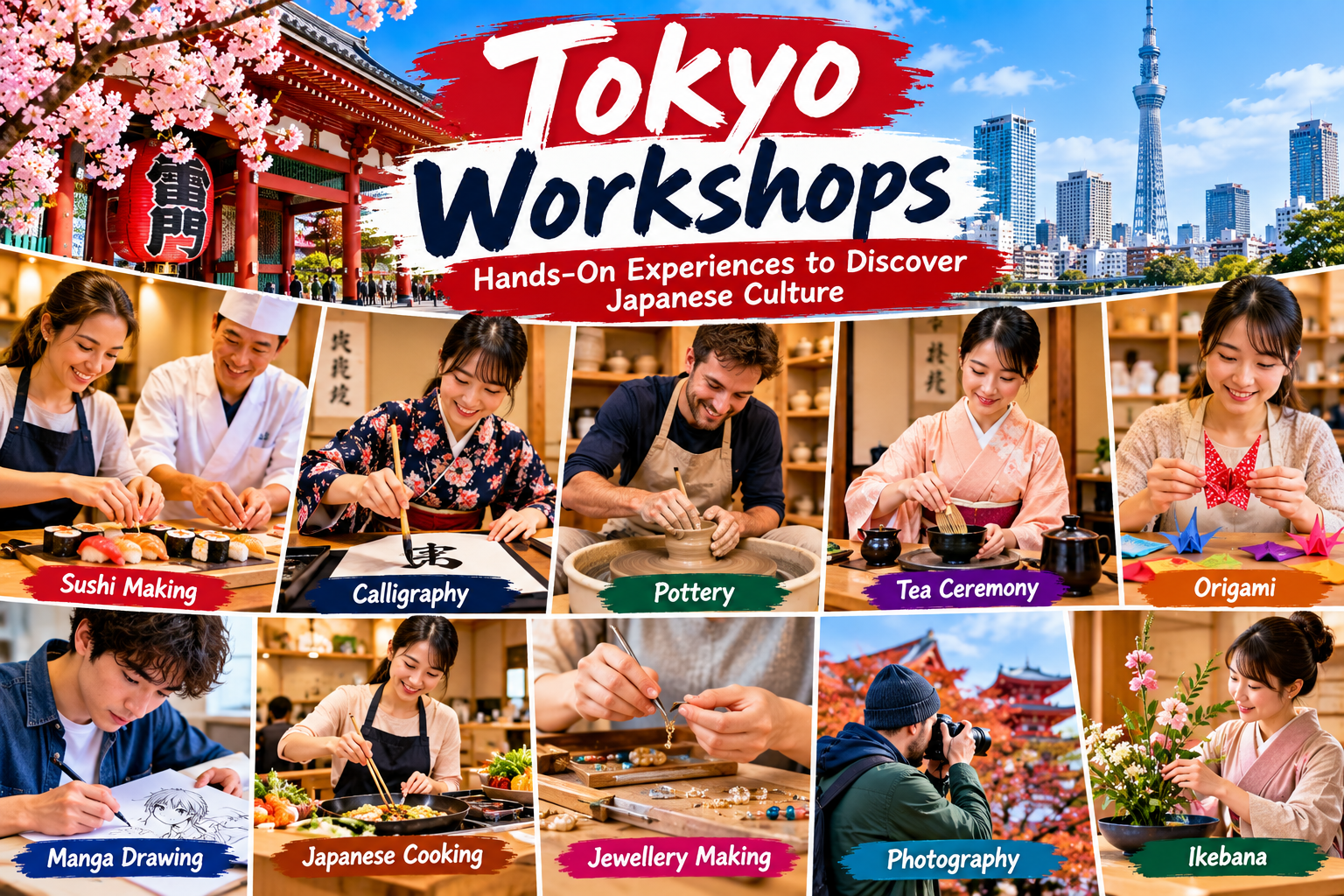
What better way to understand Tokyo than by learning a traditional Japanese skill from someone who practises it every day? Tokyo workshops offer travellers a hands-on way to explore Japanese culture, from sushi making and pottery to calligraphy, tea ceremonies and modern creative crafts. Whether you are visiting Japan for the first time, travelling with family, or searching for a meaningful cultural activity, joining a workshop can turn an ordinary sightseeing trip into a memorable experience. Tokyo is famous for its neon-lit streets, advanced technology, excellent transport system and world-class food Tokyo Antiques
What Are Tokyo Workshops?
Tokyo workshops are organised, hands-on sessions in which participants learn a skill, craft, technique or cultural practice from an instructor. They range from short tourist activities lasting less than an hour to specialist classes that require several hours or multiple visits.
Some workshops focus on traditional Japanese culture, while others introduce modern creative activities, food preparation, technology or design.
Traditional Japanese workshops
Traditional workshops introduce participants to practices that have developed over generations. Common examples include:
- Japanese calligraphy, known as shodō
- Pottery and ceramic making
- Tea ceremony
- Origami and paper crafts
- Traditional textile arts
- Japanese cooking
- Incense appreciation
- Decorative fan or accessory making
These activities can provide insight into Japanese values such as patience, precision, respect for materials and attention to detail.
Modern and creative workshops
Tokyo is also a centre for contemporary design, fashion, technology and popular culture. Modern workshops may include:
- Jewellery and accessory design
- Illustration and manga drawing
- Photography
- Leathercraft
- Perfume or fragrance creation
- Digital art
- Model making
- Robotics and maker activities
The availability of particular classes changes by season and provider, so visitors should check current schedules before making plans.
Workshops for tourists and local residents
Some workshops are designed specifically for international visitors and offer English-language instruction. Others primarily serve Japanese residents, hobbyists or professionals.
A tourist-oriented class often provides materials, simple instructions and a finished item to take home. A specialist workshop may expect previous experience, familiarity with Japanese terminology or a longer commitment.
Before booking, check the language of instruction, session length, materials included, age requirements and whether the finished product can be collected on the same day.
Why Tokyo Is an Excellent City for Workshops
Tokyo combines traditional craftsmanship with modern creative industries. This gives visitors an unusually broad range of experiences within one metropolitan area.
A meeting point of tradition and innovation
In Tokyo, a centuries-old craft can exist alongside a contemporary design studio or technology laboratory. This contrast makes the city particularly interesting for travellers who want to explore both historical and modern Japan.
A visitor might spend the morning learning brush lettering and the afternoon experimenting with digital illustration. Another might learn how to prepare traditional Japanese food before visiting a contemporary food market.
The city does not treat tradition and innovation as opposites. Instead, many crafts continue to evolve while retaining their underlying techniques and cultural significance.
Opportunities to learn directly from practitioners
A workshop provides opportunities to ask questions and observe how an experienced practitioner works. A ceramic artist, cooking instructor or calligraphy teacher may explain details that are difficult to understand from a book or demonstration alone.
For example, when learning pottery, participants can discover how pressure, moisture and hand position affect the shape of clay. During a cooking class, they may learn why ingredient preparation and knife technique matter as much as the final recipe.
Activities suitable for different travel styles
Tokyo workshops can suit many types of travellers:
- Solo visitors looking for structured activities
- Couples searching for memorable shared experiences
- Families seeking creative activities for children
- Students interested in Japanese culture
- Food lovers who want to learn local cooking techniques
- Artists seeking inspiration
- Business travellers looking for an activity outside meetings
- Repeat visitors who have already explored major attractions
The best workshop depends on your interests, available time, budget and preferred level of participation.
15 Best Types of Tokyo Workshops to Try
1. Japanese Calligraphy Workshops
Japanese calligraphy is one of the most meaningful cultural workshops available in Tokyo. Known as shodō, the practice uses brushes, ink and paper to create Japanese characters with deliberate strokes.
A beginner class usually introduces participants to brush handling, ink preparation, posture and basic stroke techniques.
What happens during a calligraphy class?
An instructor may begin by demonstrating how to hold the brush and control the amount of ink. Participants then practise individual strokes before attempting a character or short word.
Some sessions focus on basic Japanese characters, while others introduce kanji or allow participants to create a piece featuring a chosen name or expression.
The finished work may be mounted, framed or packed for travel, depending on the class.
Who should try calligraphy?
Calligraphy is ideal for:
- First-time visitors interested in traditional culture
- Travellers who enjoy art and design
- People seeking a quiet, reflective activity
- Families with older children
- Visitors looking for a lightweight handmade souvenir
Practical tips
Wear clothing that can tolerate an occasional ink mark, or choose a workshop that provides protective coverings. Ask whether the instructor explains the meaning of the characters you will write.
If you want to take your artwork home, check whether the paper needs time to dry and whether suitable packaging is included.
2. Sushi-Making Workshops
Food is one of Tokyo’s strongest cultural attractions, and sushi-making workshops allow visitors to learn about Japanese ingredients and preparation techniques.
A typical beginner session introduces rice preparation, seasoning, ingredient selection and the process of forming different types of sushi.
What can you learn?
Depending on the class, participants may learn to prepare:
- Nigiri sushi
- Maki rolls
- Temaki hand rolls
- Decorative sushi
- Basic Japanese side dishes
Some workshops focus on home-style sushi, while others demonstrate techniques associated with professional sushi preparation.
A short tourist class should not be confused with professional sushi training. Becoming a skilled sushi chef requires extensive practice and a much deeper understanding of ingredients, hygiene, knife work and technique.
What to check before booking
Ask whether the session includes a full meal, whether ingredients are provided and whether dietary requirements can be accommodated.
People with allergies should explain them before attending. Raw fish is common in some sushi classes, but not every class uses raw seafood.
Vegetarian and cooked-ingredient options may be available, although they should never be assumed.
Who will enjoy sushi workshops?
These classes are particularly suitable for food enthusiasts, couples, families and travellers who want to recreate Japanese dishes at home.
3. Japanese Pottery and Ceramic Workshops
Pottery workshops offer a chance to work with clay and learn the fundamentals of shaping ceramic objects.
Depending on the studio, participants may use a pottery wheel, hand-building techniques or decorative methods to create a bowl, cup, plate or small ornament.
Wheel throwing versus hand-building
Wheel throwing involves shaping clay while it rotates on a pottery wheel. It can be challenging for beginners because the clay must remain centred while the hands apply consistent pressure.
Hand-building uses methods such as pinching, coiling and slab construction. These techniques can be easier for some beginners and allow more freedom in creating irregular or sculptural shapes.
Neither approach is universally better. Choose the one that matches your interests and the time available.
Can you take your pottery home?
Not always on the same day.
Ceramic pieces commonly need drying, firing and sometimes glazing before they are ready for use. These processes can take days or weeks.
Ask whether the studio ships finished items internationally, whether international shipping is available and whether additional charges apply. If you are leaving Tokyo soon, choose a workshop that offers a practical collection or delivery option.
Why pottery is worth trying
Pottery offers a tangible connection between creativity and craftsmanship. It also teaches patience: the finished object depends on several stages rather than a single moment of artistic inspiration.
4. Traditional Japanese Tea Ceremony Workshops
The Japanese tea ceremony, often associated with the term sadō or chadō, is a structured practice involving the preparation and serving of matcha.
A workshop may introduce the utensils, sequence of movements, etiquette and cultural ideas associated with tea preparation.
What makes a tea ceremony special?
A tea ceremony is not simply a demonstration of how to make a drink. The experience may emphasise hospitality, mindfulness, seasonal awareness and respect between host and guest.
Participants may learn how matcha is whisked, how tea utensils are handled and how guests traditionally receive and drink tea.
The depth of instruction varies considerably. A short introductory session is different from formal study with a tea school.
Etiquette for beginners
Follow the host’s instructions rather than worrying about memorising every rule in advance.
Useful habits include:
- Arriving on time
- Handling utensils carefully
- Listening before performing a movement
- Asking before photographing people or private spaces
- Wearing clean, comfortable clothing
A tea ceremony is an excellent option for travellers who prefer a calm cultural activity over a physically demanding experience.
5. Origami and Japanese Paper-Craft Workshops
Origami is the art of folding paper into shapes without cutting or gluing in its traditional form. It can range from simple animals to highly complex geometric designs.
Tokyo paper-craft workshops may also introduce decorative paper, patterned folding, card-making and other Japanese paper traditions.
What beginners can make
A beginner class may cover familiar forms such as cranes, flowers, boxes or seasonal decorations. More advanced sessions may explore modular designs and complex folds.
The appeal of origami is its accessibility. The materials are lightweight, relatively inexpensive and easy to carry home.
Why paper crafts are good for families
Paper-folding activities can help children practise patience, follow instructions and develop fine motor skills. They also provide a quiet activity that does not require specialist equipment.
For younger children, choose a session with age-appropriate designs and confirm whether an adult must participate.
How to choose a paper-craft class
Look for an instructor who demonstrates each stage slowly and provides enough time for practice. A class that moves too quickly can become frustrating for beginners.
If your goal is to understand Japanese culture, ask whether the instructor explains the symbolism of the designs rather than focusing only on the folding process.
6. Japanese Cooking Workshops
Beyond sushi, Tokyo offers opportunities to learn a wide range of Japanese dishes. A cooking class can help visitors understand the ingredients, preparation methods and meal structures that shape everyday Japanese food.
Popular dishes to learn
Depending on the instructor, a workshop might focus on:
- Ramen
- Udon or soba
- Tempura
- Japanese curry
- Gyoza
- Bento preparation
- Miso soup
- Onigiri rice balls
- Seasonal home-style dishes
Some classes combine several dishes into a complete meal.
What makes a good cooking workshop?
A strong class balances demonstration with hands-on practice. Participants should have opportunities to prepare ingredients, follow cooking steps and understand why specific methods are used.
For instance, learning to make ramen from scratch can involve several separate skills, including broth preparation, noodle handling and topping preparation. A short class may demonstrate only selected elements.
Read the description carefully so you know whether the session teaches a complete recipe or introduces one part of a larger process.
Food safety and dietary requirements
Tell the provider about allergies, vegetarian requirements or other dietary needs before booking.
Do not assume that a dish is vegetarian simply because it contains vegetables. Broths, sauces and seasonings may contain fish, meat or other animal-derived ingredients.
7. Manga and Anime Drawing Workshops
Tokyo’s relationship with manga and anime makes illustration classes an appealing option for fans of Japanese popular culture.
Workshops may introduce character design, facial expressions, body proportions, panel composition, inking or digital drawing.
What happens in a manga class?
A beginner class may start with basic shapes and character construction before moving to facial features, hairstyles, clothing and expressions.
Some classes teach traditional pen-and-paper methods, while others use drawing tablets or software.
More advanced sessions may explore visual storytelling, page layout and the way artists guide a reader’s attention through a scene.
Is previous drawing experience necessary?
Usually not for introductory classes, but requirements differ by provider.
If you are a complete beginner, choose a session that explicitly welcomes first-time participants. If you already draw, look for instruction focused on a specific skill rather than a general introduction.
A note about commercial use
If you plan to publish or sell artwork inspired by existing manga or anime characters, remember that workshop participation does not automatically grant permission to commercially use copyrighted characters or designs.
Creating original characters is a useful way to develop your own artistic identity.
8. Japanese Traditional Craft Workshops
Traditional Japanese crafts encompass a wide range of materials and techniques. Depending on the studio, visitors may be able to work with textiles, wood, paper, metal, decorative objects or other materials.
Examples of traditional craft activities
Potential workshops include:
- Textile dyeing
- Decorative fan making
- Traditional pattern printing
- Japanese accessory making
- Small wooden craft projects
- Decorative paper design
- Textile wrapping and presentation techniques
Not every craft is offered throughout Tokyo, and some specialist experiences may be available only on particular dates.
What makes traditional crafts valuable?
Traditional crafts can reveal how practical objects become part of a culture’s visual identity.
A fan, fabric pattern or decorative object may reflect regional influences, seasonal themes and techniques passed between generations.
A workshop can also demonstrate how traditional crafts adapt to contemporary tastes, including modern colour palettes, materials and product designs.
Tips for choosing a craft workshop
Check whether the activity is genuinely hands-on or primarily a demonstration. Confirm what materials are included and whether the finished item is yours to keep.
If cultural learning matters to you, select a class that explains the history and purpose of the craft instead of treating it solely as a souvenir-making activity.
9. Japanese Perfume and Fragrance Workshops
Fragrance workshops appeal to visitors who enjoy sensory experiences, design and personalisation.
Participants may explore different scent families, learn basic blending principles and create a fragrance or scented product under an instructor’s guidance.
What might you learn?
A workshop could introduce:
- Floral, woody, citrus and herbal scent families
- The relationship between different fragrance notes
- How to compare scents
- Basic blending and formulation principles
- Personal fragrance preferences
- Safe handling of fragrance ingredients
The format varies between providers, and not every class allows completely independent formulation.
Who should consider fragrance workshops?
They may suit couples, solo travellers, gift shoppers and people interested in beauty, design or product development.
A personalised fragrance can also become a distinctive souvenir, especially when the bottle or label is customised.
Important considerations
Fragrance ingredients may trigger sensitivities. Ask about ingredients and ventilation if you have concerns, and follow the instructor’s handling guidance.
Check bottle size, packaging and airline liquid restrictions before travelling with your finished product.
10. Japanese Floral Arrangement Workshops
Japanese floral arrangement, commonly associated with ikebana, focuses on the placement of flowers, branches and other natural materials.
Unlike arrangements that prioritise fullness alone, many ikebana approaches emphasise line, space, balance and the relationship between materials.
What can beginners learn?
An introductory session may cover:
- Selecting and preparing plant materials
- Basic arrangement principles
- Creating visual balance
- Using negative space
- Positioning stems
- Understanding seasonal elements
The exact techniques depend on the school or instructor.
Why ikebana is different from ordinary flower arranging
In many forms of ikebana, an empty area is as important as the flowers themselves. The arrangement may aim to create a sense of movement, asymmetry or natural simplicity.
This makes the practice interesting for people who enjoy interior design, photography and visual arts.
Practical advice
Ask whether flowers, tools and a container are included. Confirm whether you can take the arrangement home and how long it is likely to remain fresh.
If you are travelling for several more days, a demonstration or a session using durable materials may be more practical than a large fresh arrangement.
11. Japanese Jewellery and Accessory-Making Workshops
Jewellery workshops combine creativity with a practical finished product. Depending on the studio, participants may create earrings, bracelets, necklaces, rings or other accessories.
Some classes introduce metalworking, while others focus on beads, decorative components, resin or contemporary design.
What should you expect?
A beginner session usually provides materials and guided instructions. More advanced classes may introduce specialised tools, soldering or other techniques that require additional training.
Ask whether the workshop is suitable for beginners and whether the price includes all materials.
Is it a good souvenir activity?
Yes, particularly if you want something small and easy to pack. A handmade accessory can also reflect your own style rather than the standard designs available in souvenir shops.
For visitors interested in jewellery as a business, a workshop may offer an introduction to materials and construction, but it should not be treated as a complete commercial manufacturing course.
12. Japanese Leathercraft Workshops
Leathercraft classes introduce participants to the process of cutting, shaping, stitching or finishing leather.
Possible projects include card holders, small wallets, key cases, tags and simple accessories.
Skills you may learn
Depending on the class, participants might practise:
- Measuring and cutting materials
- Making stitching holes
- Hand stitching
- Edge finishing
- Attaching hardware
- Personalising an item
The project is often designed to be completed within the session.
Why leathercraft appeals to travellers
A leathercraft workshop offers a balance between guided learning and personal creativity. The finished item can be practical, compact and suitable for everyday use.
It may also appeal to people interested in fashion accessories or product design.
What to check before booking
Ask whether the workshop uses genuine leather, synthetic materials or a choice of both. Confirm the final product size, available colours and whether personalisation is included.
If you have ethical or material preferences, clarify them before paying.
13. Japanese Photography Workshops
Tokyo is a compelling photography destination because it combines dense urban streets, historic architecture, public transport, contemporary design and seasonal landscapes.
Photography workshops can help visitors develop technical skills while learning how to observe the city more carefully.
Common photography workshop formats
These may include:
- Street photography walks
- Night photography
- Architecture photography
- Portrait photography
- Smartphone photography
- Travel photography
- Seasonal landscape photography
Some sessions are led by local photographers who explain composition and location selection. Others focus on camera settings and practical exercises.
What you can learn
A useful workshop might cover exposure, focus, framing, available light, colour, visual storytelling and how to work respectfully in public spaces.
For example, a street photography instructor may encourage participants to look beyond famous landmarks and notice patterns, reflections, shadows and everyday interactions.
Photography etiquette
Always respect privacy and follow local rules. Ask permission before taking identifiable portraits in situations where consent is appropriate, and never assume that a public location permits photography of every person or activity.
Some shops, galleries, shrines and private venues restrict photography. Follow posted instructions and the guidance of staff.
14. Technology, Robotics and Maker Workshops
Tokyo’s technology sector and maker culture create opportunities for workshops that go beyond traditional crafts.
Depending on the venue, activities may involve simple robotics, electronics, coding, 3D design, model building or other technical projects.
What might a technology workshop involve?
A beginner session could introduce a small robot, basic programming logic, a simple electronic circuit or the design of a three-dimensional object.
More advanced workshops may require previous experience or specific equipment.
Who benefits from these workshops?
Technology workshops can suit:
- Families with older children
- Students interested in science and engineering
- Hobbyists
- Educators
- Professionals exploring creative technology
- Travellers curious about modern Japanese innovation
How to select a suitable class
Check the age range, required skill level, teaching language and equipment policy. Some activities may be designed for school groups or local residents rather than casual tourists.
If you are booking for a child, confirm supervision arrangements and whether an adult must remain present.
15. Japanese Fashion and Textile Workshops
Tokyo’s fashion scene spans traditional garments, contemporary streetwear, textile design and experimental fashion.
Fashion-related workshops may introduce fabric decoration, textile printing, sewing, accessory design or selected elements of traditional clothing.
What can you learn?
Depending on the provider, participants may explore:
- Textile patterns
- Fabric dyeing
- Basic sewing
- Clothing customisation
- Decorative stitching
- Accessory construction
- Traditional and modern design influences
Some sessions focus on making a finished product, while others are demonstrations or short introductory classes.
Why fashion workshops are worth considering
Fashion workshops can help visitors understand how materials, construction and cultural influences shape clothing.
They may also provide inspiration for people who sew, design accessories or are interested in the relationship between traditional Japanese aesthetics and contemporary style.
Before booking, confirm whether the activity requires sewing experience and whether the finished item can be completed during the session.
How to Choose the Best Tokyo Workshop
With so many possible activities, the main challenge is not finding something to do. It is choosing an experience that matches your interests, schedule and expectations.
Start with your main purpose
Ask yourself what you want from the workshop.
If you want to learn about traditional culture, consider calligraphy, tea ceremony, pottery or ikebana.
If you enjoy food, look for sushi-making or Japanese cooking.
If you prefer modern creativity, consider manga illustration, photography, jewellery design or technology workshops.
If you want a useful souvenir, select an activity that produces a compact finished item.
Match the session length to your itinerary
A short introductory workshop may fit between sightseeing activities. A longer class can be more rewarding if you want to practise a skill in greater depth.
Do not schedule a workshop too tightly between attractions. Activities may run over time, and travelling across Tokyo can take longer than expected.
Allow time for check-in, instruction, the activity itself and transport to your next destination.
Confirm the language of instruction
Some providers offer classes in English, while others may use Japanese or provide limited translation.
Check the language before booking. An activity that depends on detailed explanations may be less enjoyable if you cannot understand the instructor.
Visual demonstrations can make certain crafts easier to follow, but language requirements should never be assumed.
Read the cancellation and refund policy
Workshop providers may have different policies for cancellations, late arrivals, illness, weather disruptions or missed sessions.
Check the policy before paying, particularly when booking several weeks in advance.
If your itinerary is flexible, a booking with reasonable cancellation terms may be more suitable than a non-refundable reservation.
Consider group size
Small groups may offer more individual feedback, while larger classes can feel lively and social.
Private sessions may suit families, couples or travellers with specific learning goals, but they can cost more.
Choose the format that best matches your budget and preferred atmosphere.
Tokyo Workshops: Typical Costs and Budget Planning
Workshop prices vary according to materials, instructor expertise, location, duration and group size. The figures below are illustrative budgeting ranges, not verified current prices or quotes from specific providers.
| Workshop type | Illustrative budget per person | Main factors affecting cost |
|---|---|---|
| Origami or simple paper crafts | ¥1,500–¥4,000 | Materials, duration, group size |
| Calligraphy | ¥2,000–¥6,000 | Instructor, artwork, packaging |
| Tea ceremony | ¥2,500–¥8,000 | Setting, ceremony format, refreshments |
| Sushi making | ¥4,000–¥10,000 | Ingredients, menu, class length |
| Japanese cooking | ¥4,000–¥12,000 | Number of dishes, ingredients, meal |
| Pottery | ¥3,000–¥10,000 | Wheel use, clay, firing and shipping |
| Manga drawing | ¥3,000–¥10,000 | Instructor, materials, class level |
| Fragrance making | ¥4,000–¥12,000 | Ingredients, bottle size, personalisation |
| Jewellery making | ¥3,000–¥12,000 | Materials, metals, tools, finished design |
| Technology workshop | ¥3,000–¥15,000 or more | Equipment, project complexity, specialist instruction |
Additional expenses to consider
The advertised price may not include every cost. Before booking, check for:
- Materials or equipment fees
- Firing charges for pottery
- International shipping
- Optional upgrades
- Food or drink
- Transportation
- Taxes or service charges
- Private-session supplements
A workshop with a higher upfront price may offer better value if it includes quality materials, a full meal and a finished item. Compare the total experience rather than the headline price alone.
Comparing 10 Well-Known Brands and Platforms for Tokyo Workshops
Travellers can discover workshops through booking platforms, activity marketplaces, creative venues and specialist organisations. These options serve different purposes: some help visitors book experiences, while others represent institutions or creative spaces.
The following table is a starting point for research, not a ranking of quality. The current availability of a particular Tokyo workshop must be confirmed directly.
| Brand or platform Tokyo workshops | Main focus Tokyo workshops | Best suited to Tokyo workshops | What to check |
|---|---|---|---|
| 1. GetYourGuide | Tours and activities | Travellers comparing organised experiences | Current Tokyo listings, language, cancellation |
| 2. Klook | Travel activities and attractions | Visitors planning multiple activities | Availability, inclusions, booking conditions |
| 3. Viator | Tours and experiences | Travellers seeking guided activities | Reviews, provider details, group size |
| 4. Airbnb Experiences | Host-led local experiences where available | Visitors interested in personal, small-group activities | Current listings and platform availability |
| 5. Activity Japan | Japanese activity bookings | Travellers researching activities offered in Japan | Language support and exact location |
| 6. Asoview! | Japanese leisure and activity reservations | Visitors exploring local activity options | Booking language and foreign-card acceptance |
| 7. Klook-style local booking services | Aggregated activities | Travellers comparing dates and prices | Exact provider, fees and inclusions |
| 8. Tokyo National Museum | Museum-based cultural learning and exhibitions | Visitors interested in Japanese art and history | Current programmes and event schedules |
| 9. Japan Traditional Crafts Aoyama Square | Traditional craft exhibitions and related information | Visitors interested in Japanese craftsmanship | Current events and hands-on opportunities |
| 10. Local independent studios | Specialist craft, cooking and art classes | Visitors seeking focused instruction | Instructor experience, language and policies |
The table intentionally distinguishes booking platforms from cultural institutions and independent studios. They are not interchangeable: a museum or craft exhibition venue may not offer the same type of bookable tourist workshop as an activity marketplace.
How to compare workshop providers fairly
Use these criteria before booking:
- Relevance: Does the activity match the skill or cultural experience you want?
- Instruction: Is the instructor’s experience clearly described?
- Language: Can you follow the session comfortably?
- Inclusions: Are materials, tools and finished products included?
- Duration: Does the schedule allow enough time to learn?
- Reviews: Do recent reviews discuss the actual teaching experience?
- Location: Is the venue practical for your itinerary?
- Cancellation: What happens if your plans change?
- Accessibility: Can the provider accommodate your needs?
- Transparency: Are additional fees clearly explained?
Do not select a class solely because it is the cheapest or has the most reviews. A smaller specialist studio may provide a better learning experience for a particular craft.
The Best Tokyo Workshop Areas to Explore
Tokyo’s size makes location an important part of planning. A workshop can be excellent but inconvenient if it requires a long cross-city journey between tightly scheduled attractions.
Asakusa Tokyo workshops
Asakusa is associated with historic streets, traditional shops and cultural sightseeing. It can be a practical area to investigate for workshops involving Japanese crafts, cultural demonstrations and traditional experiences.
Visitors may be able to combine a class with a walk through the surrounding neighbourhood.
However, not every traditional workshop is located in Asakusa. Check the actual venue address before building your itinerary.
Ueno Tokyo workshops
Ueno is known for museums, cultural institutions and public spaces. It is worth considering for visitors who want to combine art, history and cultural learning.
Look for current museum programmes, temporary activities and nearby creative venues rather than assuming that every institution offers hands-on classes.
Shibuya and Harajuku Tokyo workshops
These districts are associated with fashion, contemporary culture, shopping and youth-oriented creative scenes.
They may suit travellers interested in illustration, design, fashion, photography or other modern activities. Availability varies by studio and season.
Shinjuku Tokyo workshops
Shinjuku is a major transport and commercial hub. Its rail connections can make it a convenient meeting point for workshops and guided experiences.
If you are choosing between two similar classes, consider whether one offers an easier route from your accommodation.
Kappabashi and surrounding areas Tokyo workshops
The Kappabashi area is known for shops selling restaurant equipment, kitchen tools and food-related supplies. It may interest travellers who enjoy Japanese cooking and culinary culture.
A cooking workshop does not necessarily take place inside the shopping district, so confirm the location and allow time for travel.
How to plan around neighbourhoods Tokyo workshops
A practical approach is to group your workshop with nearby attractions instead of travelling back and forth across Tokyo.
For example, you might schedule a cultural workshop in the morning, explore the local neighbourhood afterwards, and reserve the evening for dinner nearby.
This reduces transport stress and leaves more time to enjoy the experience.
Tokyo Workshops for Beginners
Beginners often worry that they will be unable to complete a project or understand the instructor. The solution is to choose an introductory class designed around learning rather than perfect results.
Choose a class with guided practice Tokyo workshops
Look for descriptions that mention beginner instruction, demonstrations and step-by-step guidance.
A session described as advanced, professional or specialist may expect prior experience.
Focus on the learning process Tokyo workshops
Your first pottery bowl may be uneven. Your first calligraphy character may not resemble the instructor’s example. These outcomes are normal.
A workshop is an opportunity to try something new, not an examination of your existing ability.
Ask questions Tokyo workshops
A good instructor should be able to clarify important steps, although the amount of individual support depends on group size and class format.
If you are uncertain about a tool or technique, ask before proceeding.
Pick a manageable project Tokyo workshops
A small ceramic cup, simple paper craft or basic cooking recipe can provide a satisfying introduction without requiring an unrealistic amount of time.
You can always choose a more advanced session on a future visit.
Tokyo Workshops for Families and Children
Workshops can be a useful way to make a Tokyo trip engaging for children, particularly when they provide opportunities to create, taste, draw or experiment.
Good options for families Tokyo workshops
Depending on the children’s ages, suitable activities may include:
- Origami and paper crafts
- Simple cooking classes
- Beginner pottery
- Manga drawing
- Decorative craft making
- Supervised science or robotics activities
Not every class is suitable for every age. Some workshops use sharp tools, hot equipment, allergens or materials that require careful handling.
What parents should check Tokyo workshops
Before booking, confirm:
- Minimum and maximum age
- Whether an adult must participate
- Safety arrangements
- Session length
- Toilet and break arrangements
- Language support
- Food allergies
- Accessibility
- Whether children can complete the project independently
Younger children may benefit from shorter activities with a clear result. Older children and teenagers may enjoy more technical or creative challenges.
Make the experience educational without making it feel like school
Let children choose an activity based on their interests. A child who enjoys drawing may respond better to manga illustration than to a formal cultural lecture.
After the workshop, ask what they learned or what they found most difficult. This encourages reflection while keeping the experience enjoyable.
Tokyo Workshops for Couples
A workshop can provide a shared experience that feels more personal than visiting another crowded attraction.
Creative activities for two Tokyo workshops
- Pottery
- Sushi making
- Japanese cooking
- Fragrance creation
- Jewellery making
- Tea ceremony
- Calligraphy
The best option depends on whether both participants prefer an active, social experience or a quiet cultural activity.
Choose a class that encourages participation Tokyo workshops
A workshop where both people create something can be more engaging than a demonstration in which most of the time is spent watching.
For a shared souvenir, choose a class that allows participants to make matching items or complementary designs.
Consider scheduling Tokyo workshops
Book the workshop at a time that leaves room for a relaxed meal or a walk afterwards. Avoid planning a demanding activity immediately before a non-refundable evening reservation unless you have enough time between them.
Tokyo Workshops for Solo Travellers
Solo travellers can benefit from workshops because the activity itself provides structure and a natural opportunity to interact with other participants.
Why workshops work well for solo visitors Tokyo workshops
A guided class reduces the need to organise every detail independently. The instructor explains the process, materials are often supplied, and the activity gives everyone a common focus.
Group classes may also create opportunities to meet people with similar interests.
Choosing between group and private classes Tokyo workshops
A group class can be more social and economical. A private lesson may provide more individual instruction, but it can feel less interactive if your main goal is meeting other travellers.
Check whether the workshop accepts single-person bookings and whether a minimum group size applies.
Practical safety tips Tokyo workshops
Use reputable booking channels, confirm the venue address and meeting instructions, and share your itinerary with someone you trust if appropriate.
For evening activities, consider transport options before the session begins.
Tokyo Workshops for Professionals and Serious Hobbyists
Not every workshop is designed for sightseeing. Some are useful for people who want to develop a specific skill or explore a professional interest.
Look for specialist instruction Tokyo workshops
Professionals and experienced hobbyists should investigate the instructor’s background, curriculum and level of feedback.
A short introductory workshop may be enjoyable but insufficient for advanced learning.
Ask about the learning outcomes Tokyo workshops
Before booking, identify what you want to achieve. For example:
- Improve a specific illustration technique
- Understand basic pottery wheel control
- Practise a cooking method
- Explore textile design
- Learn introductory robotics
- Develop photography composition skills
Contact the provider if the class description does not explain whether these outcomes are realistic.
Understand the difference between an experience and training
A one-hour workshop can provide a useful introduction, but it rarely replaces formal training, repeated practice or professional qualification.
If the purpose is career development, prioritise courses with clear learning objectives and credible instructor experience.
A Practical Guide to Booking Tokyo Workshops
A little preparation can prevent common booking problems.
Step 1: Identify your preferred activity Tokyo workshops
Choose one or two workshop types that genuinely interest you. Avoid booking several activities simply because they are popular.
Step 2: Set a budget Tokyo workshops
Include the class fee, transport and any extra costs such as materials, shipping or optional upgrades.
Step 3: Check the date and location Tokyo workshops
Confirm the local date, start time, meeting point and expected end time.
If the activity is in a private studio, make sure you understand how to enter the building and whether you must arrive early.
Step 4: Read the full description Tokyo workshops
Look for details about the instructor, language, materials, finished product, group size and cancellation conditions.
Step 5: Ask about special requirements Tokyo workshops
Contact the provider before booking if you need dietary accommodations, step-free access, child supervision or other arrangements.
Step 6: Keep your confirmation Tokyo workshops
Save the booking confirmation, address and contact details somewhere accessible offline.
Step 7: Arrive prepared Tokyo workshops
Allow time for transport and check-in. Wear clothing suitable for the activity and bring only the personal items you need.
What to Bring to a Tokyo Workshop
The equipment you need depends on the activity. Many tourist workshops provide the main tools and materials, but it is worth checking in advance.
General essentials Tokyo workshops
Consider bringing:
- Booking confirmation
- Contact details for the provider
- A charged phone
- A payment method
- Comfortable clothing
- Reading glasses if needed
- A small bag for your finished item
Activity-specific items Tokyo workshops
For pottery, wear clothes that can tolerate clay and ask whether an apron is provided.
For cooking, follow the instructor’s guidance on clothing, footwear and hygiene.
For photography, bring your camera or smartphone and make sure the battery is charged.
For calligraphy or painting, avoid wearing clothing that you would be upset to stain.
For fragrance-making, ask about any restrictions on taking liquids onto aircraft.
Common Mistakes When Booking Tokyo Workshops
Mistake 1: Choosing only by price Tokyo workshops
A cheap class may be good value, but price alone does not reveal the quality of the instruction or the amount of participation.
Solution: Compare the session length, materials, instructor experience and finished product.
Mistake 2: Assuming every workshop is available in English Tokyo workshops
A class may welcome international visitors without offering full English-language instruction.
Solution: Confirm the teaching language before paying.
Mistake 3: Ignoring travel time Tokyo workshops
Tokyo’s rail network is extensive, but changing lines, walking through large stations and locating a venue can take time.
Solution: Use the exact address to estimate your journey and leave a buffer.
Mistake 4: Expecting to take every creation home immediately
Pottery often requires firing, while other products may need drying or finishing.
Solution: Check the collection timeline and shipping arrangements.
Mistake 5: Overloading the itinerary Tokyo workshops
A workshop requires concentration and can be tiring, especially after a long day of sightseeing.
Solution: Schedule fewer activities and allow time to enjoy the surrounding area.
Mistake 6: Overlooking cancellation policies Tokyo workshops
A non-refundable class can become an expensive problem if your travel plans change.
Solution: Read the booking conditions and consider flexible options when your itinerary is uncertain.
Mistake 7: Forgetting cultural etiquette Tokyo workshops
Some activities take place in private homes, traditional spaces or specialist studios with specific expectations.
Solution: Arrive on time, follow instructions, ask before taking photographs and treat tools and materials respectfully.
Mistake 8: Expecting professional results from a beginner class Tokyo workshops
A short session cannot replace years of practice.
Solution: Choose a workshop for the experience and learning opportunity, not the expectation of producing a flawless object.
Pros and Cons of Tokyo Workshops
Advantages Tokyo workshops
Hands-on cultural learning: Workshops provide direct participation rather than passive observation.
Personal souvenirs: Many activities allow participants to create something distinctive.
Variety: Tokyo offers experiences related to food, traditional arts, technology, design and popular culture.
Different skill levels: Introductory activities can welcome beginners, while specialist sessions may challenge experienced hobbyists.
Memorable travel experiences: Learning a skill can become one of the most meaningful parts of a trip.
Social opportunities: Group sessions can help solo travellers and couples interact with others.
Disadvantages Tokyo workshops
Additional cost: Materials, specialist instruction and private sessions can make some workshops expensive.
Limited availability: Small studios may have few places or operate on selected dates.
Language barriers: Some classes may not provide comprehensive translation.
Time commitments: Travel, instruction and collection arrangements can take longer than expected.
Physical or sensory requirements: Some activities involve standing, fine hand movements, strong scents, heat or specific tools.
Variable quality: A workshop’s value depends on the instructor, organisation and amount of practical participation.
Is a workshop worth the money?
For travellers who enjoy learning by doing, the answer can be yes. A workshop provides a different kind of value from an attraction ticket: you are paying for instruction, materials, participation and sometimes a finished product.
However, a workshop is not essential for every visitor. If your priority is seeing as many landmarks as possible, a long class may not be the best use of a short trip.
The most worthwhile choice is one that matches your interests and provides enough time to participate meaningfully.
Future Trends in Tokyo Workshops
Workshop experiences are likely to continue evolving as travel preferences, creative industries and technology change.
These are reasoned trends rather than guaranteed predictions for every provider.
More personalised experiences Tokyo workshops
Travellers increasingly look for activities that reflect their interests rather than standard sightseeing packages.
Studios may respond with custom designs, private classes, personalised souvenirs and flexible project options.
Greater demand for small-group learning Tokyo workshops
Small groups can make it easier for instructors to offer individual feedback. They may also create a more personal experience.
However, small-group classes often have limited capacity and may cost more per person.
Digital booking and clearer information Tokyo workshops
Online booking systems make it easier to compare dates, languages, prices and cancellation conditions.
Providers that clearly explain their teaching approach and inclusions can help visitors make better decisions before arriving.
Traditional crafts presented to new audiences Tokyo workshops
Traditional arts may reach more international visitors through introductory classes, multilingual explanations and contemporary project designs.
The challenge is to make the experience accessible without reducing a complex tradition to a superficial souvenir activity.
Sustainability and responsible materials Tokyo workshops
Some studios may explore recycled materials, lower-waste packaging or locally sourced supplies.
Visitors interested in sustainability should look for specific information about materials and production practices rather than assuming that a craft is environmentally friendly simply because it is handmade.
Technology-supported instruction Tokyo workshops
Digital demonstrations, instructional videos and interactive tools may supplement hands-on learning.
Technology can make a process easier to explain, but it cannot fully replace the physical feedback involved in activities such as pottery, cooking or calligraphy.
How to Build a Balanced Tokyo Workshop Itinerary
The best itinerary combines a meaningful workshop with enough time to enjoy the surrounding neighbourhood.
One-day plan Tokyo workshops
For a single day, choose one main workshop and build the rest of the schedule around it.
- Morning: Attend a cultural or creative workshop.
- Lunch: Try a nearby Japanese restaurant or casual food venue.
- Afternoon: Explore local streets, shops or cultural attractions.
- Evening: Enjoy dinner without rushing to another scheduled activity.
Three-day plan Tokyo workshops
If you have three days, you can choose different types of experiences without overloading your schedule.
Day 1: Traditional culture
Choose calligraphy, tea ceremony or a traditional craft. Spend the rest of the day exploring nearby cultural attractions.
Day 2: Japanese food
Book a sushi-making or cooking workshop. Combine it with a market visit or a relaxed meal.
Day 3: Modern creativity
Try manga drawing, photography, fashion design or a technology activity, depending on your interests.
These are flexible ideas, not fixed schedules. Check venue locations and opening times before committing.
A family-friendly itinerary Tokyo workshops
Choose one age-appropriate activity each day and avoid long journeys immediately before or after the class.
Paper crafts, cooking and illustration can be suitable options, depending on age limits and supervision requirements.
An itinerary for art lovers Tokyo workshops
Consider combining calligraphy, pottery, photography or ikebana with visits to galleries, museums and design-focused neighbourhoods.
Allow time to reflect on the experience rather than treating every activity as another item to complete.
FAQs
What are the best Tokyo workshops for tourists?
Popular choices include sushi making, Japanese cooking, calligraphy, pottery, tea ceremony, origami and manga drawing. The best option depends on your interests, available time, budget and preferred learning style.
Are Tokyo workshops suitable for beginners?
Many introductory workshops welcome people with no previous experience. Check the class description for skill requirements and choose an activity that includes demonstrations and guided practice.
Can I find English-speaking workshops in Tokyo?
Some providers offer instruction in English or support for international visitors. Availability varies by activity and date, so confirm the teaching language before booking.
How much do Tokyo workshops cost?
Prices vary considerably. As a general planning guide, simple craft sessions may cost a few thousand yen, while specialist cooking, fragrance, pottery or technology classes can cost more. Always check current prices and what is included.
Do I need to book Tokyo workshops in advance?
Advance booking is sensible for popular classes, small studios, private sessions and activities with limited places. Some providers accept walk-ins, but availability is not guaranteed.
Which Tokyo workshops are best for families?
Depending on age and interests, families may enjoy origami, simple cooking, pottery, manga drawing and supervised technology activities. Check minimum ages, safety arrangements and whether adults must participate.
Are Tokyo workshops good for solo travellers?
Yes. Workshops provide a structured activity and can create opportunities to meet people with similar interests. Check whether single-person reservations are accepted.
Can I take my finished workshop project home?
Often, yes, but it depends on the activity. Paper crafts, jewellery and many small accessories may be ready immediately. Pottery may require firing and later collection or shipping.
Are Tokyo workshops suitable for couples?
Many workshops work well for couples, including pottery, cooking, calligraphy and fragrance making. Choose a session where both participants can actively take part.
Do Tokyo workshops offer private classes?
Some providers offer private sessions for individuals, couples, families or groups. Private availability, minimum fees and customisation options vary by provider.
What should I wear to a Tokyo workshop?
Wear comfortable clothing suitable for the activity. Pottery, cooking and painting may involve stains, while traditional experiences may have specific dress or footwear guidance.
Can I attend a workshop without speaking Japanese?
Some workshops are designed for international visitors, and visual demonstrations can help in certain activities. Nevertheless, confirm the instructor’s language and any communication support before booking.
Are traditional Japanese workshops worth trying?
They can be especially rewarding for travellers interested in culture, craftsmanship and learning through participation. Choose an instructor who explains the meaning and background of the activity, not only the steps involved.
Can I buy workshop vouchers as gifts?
Some providers and booking platforms offer gift vouchers, but availability and validity conditions differ. Confirm the expiry date, booking requirements and whether the recipient can choose a suitable date.
What if I have a food allergy or dietary restriction?
Contact the provider before booking and explain the requirement clearly. Ask whether the class can accommodate it safely. Do not assume that ingredient substitutions will be possible on the day.
How do I choose between a workshop and a guided tour?
Choose a workshop if you want to practise a skill or create something. Choose a guided tour if your priority is learning about several places while travelling around the city. Some experiences combine both approaches.
Conclusion
Tokyo workshops offer an opportunity to experience Japan beyond its famous landmarks, shopping streets and restaurants. They allow visitors to explore traditional craftsmanship, learn about Japanese food, experiment with creative techniques and discover contemporary interests through practical participation. The right workshop does not need to be expensive or highly technical. A simple origami session, a beginner calligraphy lesson or a short cooking class can provide a memorable introduction to Japanese culture.