Tokyo Nature: The Ultimate Guide to Parks, Gardens, Mountains, Rivers, Wildlife & Outdoor Escapes
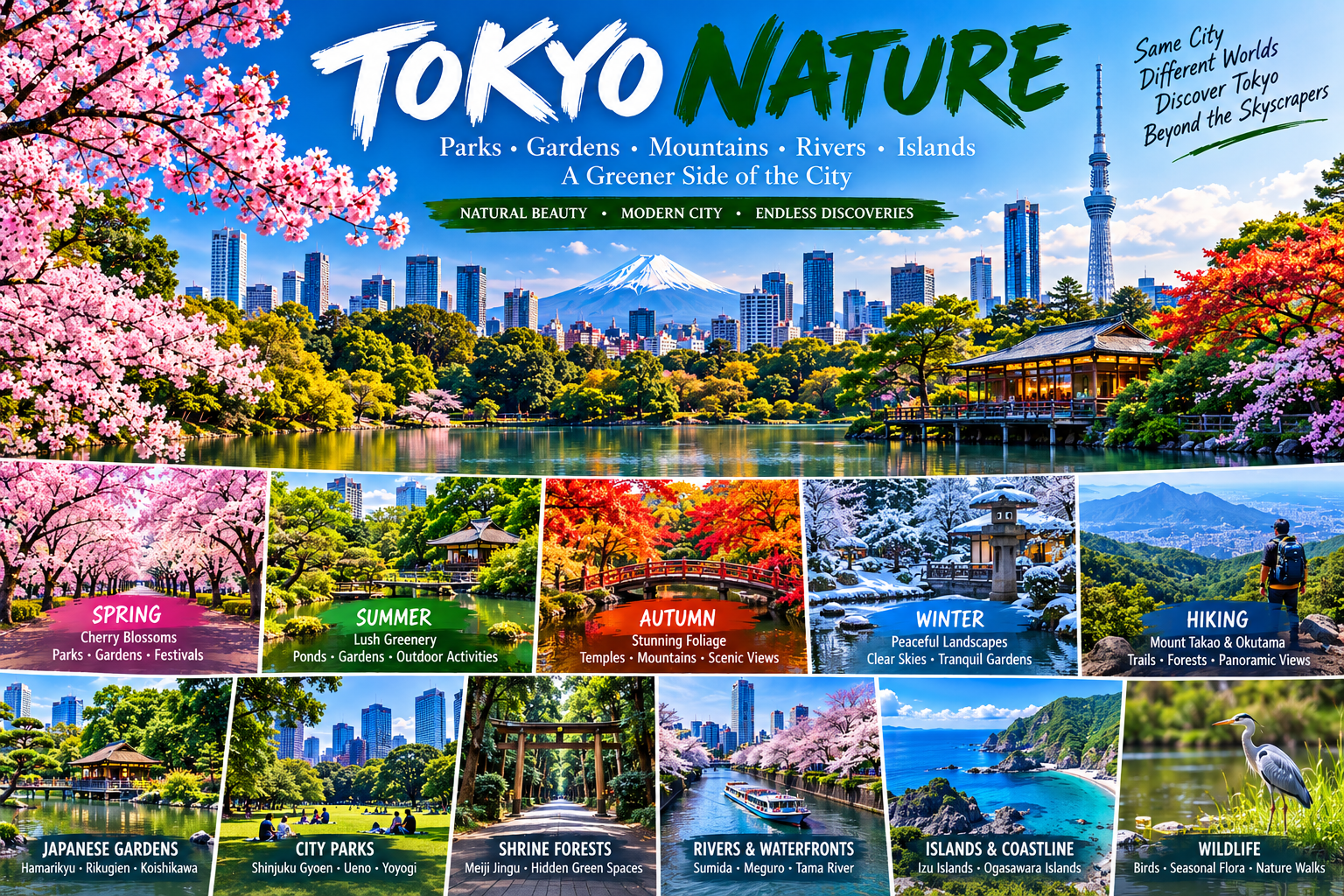
When most people imagine Tokyo, they picture neon streets, skyscrapers, crowded railway stations, shopping districts, and endless urban activity. But look beyond the concrete, and a surprisingly green city appears: temple gardens, enormous parks, forested shrines, riverside paths, wetlands, islands, mountains, botanical gardens, and quiet neighborhoods where birdsong can replace the sound of traffic. Tokyo nature is far more diverse than its futuristic image suggests, ranging from carefully designed Japanese gardens and urban parks to forests, mountains, rivers, coastlines, islands, and protected natural landscapes Tokyo Metro
Understanding Tokyo Nature
Tokyo Is a City and a Natural Landscape
Tokyo is often described primarily as a megacity, but its geographical diversity is easy to overlook.
The metropolitan region includes:
- Urban parks
- Japanese gardens
- Forests
- Rivers
- Lakes and reservoirs
- Wetlands
- Beaches
- Islands
- Coastal environments
- Mountains
- Valleys
- Agricultural landscapes
- Botanical collections
- Wildlife habitats
The western side of the wider Tokyo metropolis becomes increasingly mountainous, while central and eastern areas contain rivers, waterfront environments, parks, gardens, and urban green spaces.
This geographical variety is one reason Tokyo nature can appeal to different types of travelers.
A family may prefer an accessible city park.
A photographer may prefer a Japanese garden.
A serious hiker may travel toward Okutama or Mount Takao.
A birdwatcher may choose a wetland or waterfront environment.
A traveler with only a few hours may simply visit a garden near a major station.
Nature in a Highly Urbanized Environment
Tokyo demonstrates an important urban planning concept: nature does not have to exist completely outside a city.
Trees, gardens, waterways, parks, green corridors, shrine forests, rooftop gardens, and planted streets can all contribute to the experience of nature.
Some Tokyo green spaces are highly designed.
Others are relatively wild.
That difference is important.
A traditional Japanese garden is not “wild nature” in the conventional sense. It is a carefully designed landscape intended to create a particular relationship between people, water, rocks, plants, architecture, and seasonal change.
The result can be just as powerful as visiting a forest.
Why Tokyo Nature Is Special
The Four Seasons Transform the Landscape
One of the strongest reasons to explore Tokyo nature is seasonal variation.
The same garden can look completely different in:
- Spring
- Early summer
- Rainy season
- Summer
- Autumn
- Winter
Spring may bring cherry blossoms.
Summer produces dense green foliage.
Autumn introduces red, orange, and gold leaves.
Winter can reveal garden structures and tree shapes that are hidden by dense foliage during warmer months.
Nature and Japanese Culture Are Closely Connected
Japanese gardens, shrines, temples, seasonal festivals, poetry, painting, architecture, and traditional aesthetics have long incorporated ideas connected with nature.
Visitors therefore encounter nature not simply as scenery but as part of cultural expression.
A pond may represent more than water.
A carefully positioned stone may contribute to the composition.
A path may deliberately reveal and conceal different views.
A maple tree may become the focal point of an autumn landscape.
This makes Tokyo’s gardens particularly valuable for travelers who want to combine nature with cultural exploration.
Tokyo Parks: The Easiest Way to Experience Nature
Shinjuku Gyoen
Shinjuku Gyoen is one of Tokyo’s most famous green spaces.
Its location makes it especially impressive.
Outside the garden are some of the city’s busiest commercial and transportation districts. Inside, the atmosphere changes dramatically.
Large lawns, mature trees, landscaped gardens, ponds, seasonal flowers, and walking paths provide a strong contrast to surrounding skyscrapers.
It is particularly attractive during spring and autumn.
Ueno Park
Ueno Park is one of Tokyo’s best-known public green spaces.
It combines nature with culture because the surrounding area contains major museums and other attractions.
This makes Ueno particularly useful for travelers who want to build a mixed itinerary.
A morning in a museum can be followed by a walk through the park.
Yoyogi Park
Yoyogi Park offers a more relaxed and open urban green-space experience.
It is particularly interesting because of the variety of people who use it.
On different days, you may encounter:
- Joggers
- Families
- Picnickers
- Musicians
- Dog walkers
- Photographers
- Friends gathering outdoors
The park demonstrates how nature functions as part of everyday urban life.
Inokashira Park
Located in Kichijoji, Inokashira Park offers a combination of water, trees, walking paths, and neighborhood culture.
The surrounding Kichijoji area also contains cafés, restaurants, shops, and residential streets.
This makes the park ideal for travelers who want to combine nature with local neighborhood exploration.
Tokyo Japanese Gardens
Hamarikyu Gardens
Hamarikyu Gardens provides an excellent example of a traditional landscape existing within modern Tokyo.
The contrast between the garden and surrounding skyscrapers is particularly striking.
Water, bridges, trees, paths, and historic structures create a carefully controlled visual environment.
It is a useful destination for travelers who want to understand how Japanese garden design differs from conventional Western-style parks.
Koishikawa Korakuen Gardens
Koishikawa Korakuen is known for its carefully designed landscape and traditional aesthetics.
The garden demonstrates how designers can use:
- Water
- Rocks
- Bridges
- Trees
- Hills
- Paths
- Seasonal plants
to create changing perspectives.
Rikugien Gardens
Rikugien is particularly well known for its seasonal beauty.
Its landscape includes ponds, paths, vegetation, and carefully composed viewpoints.
Autumn can be particularly attractive when foliage changes color.
Kiyosumi Gardens
Kiyosumi Gardens offers another opportunity to experience traditional landscape design.
Large stones and water features contribute strongly to the garden’s visual identity.
It can be especially rewarding for travelers interested in Japanese aesthetics and landscape architecture.
Tokyo Forests and Shrine Woodlands
Meiji Jingu Forest
The forest surrounding Meiji Jingu provides one of Tokyo’s most memorable contrasts.
Harajuku is associated with fashion, shopping, youth culture, and crowded streets.
Yet a short distance away, visitors can walk beneath a dense canopy of trees toward a major Shinto shrine.
The experience demonstrates how green space can completely alter the psychological feeling of an urban environment.
Shrine Forests as Urban Habitats
Shrine grounds can provide more than cultural value.
Mature trees and vegetation can create habitat for birds, insects, and other organisms.
These spaces can therefore function as small ecological refuges within dense urban neighborhoods.
Todoroki Valley
Todoroki Valley has historically been valued as a green corridor within Tokyo’s urban environment.
The combination of vegetation, water, walking paths, and natural topography makes this type of location particularly important.
Urban valleys demonstrate that natural landscapes can survive even where surrounding development is extensive.
Tokyo Mountains and Hiking
Mount Takao
Mount Takao is one of the most accessible mountain destinations from central Tokyo.
Its popularity comes partly from convenience.
Travelers can move from the dense urban center toward a mountainous landscape without committing to a multi-day wilderness trip.
The mountain offers:
- Forest
- Hiking trails
- Viewpoints
- Temple culture
- Seasonal scenery
- Birdwatching opportunities
Why Mount Takao Is Good for Beginners
Visitors who have limited hiking experience can choose routes according to their ability.
That makes Mount Takao a practical introduction to Tokyo’s outdoor side.
However, travelers should still consider footwear, weather, daylight, and physical fitness.
A mountain should never be treated exactly like an urban park.
Okutama
Okutama provides a substantially more mountainous experience.
The region contains forests, rivers, valleys, hiking routes, and rural landscapes.
For travelers seeking a stronger nature escape, Okutama can feel far removed from central Tokyo.
Mount Mitake
Mount Mitake is another destination for travelers interested in mountains and forests.
The area combines hiking, natural scenery, religious heritage, and traditional mountain landscapes.
It can work particularly well as a day trip for visitors who want more than a city park.
Tokyo Rivers and Waterfront Nature
Sumida River
The Sumida River is one of Tokyo’s best-known waterways.
Walking beside it can provide a different perspective on the city.
Bridges, boats, parks, neighborhoods, and skyline views come together along the river.
Meguro River
The Meguro River is particularly famous for its cherry blossoms.
During flowering season, the river corridor becomes one of Tokyo’s most recognizable seasonal landscapes.
Outside cherry blossom season, the area remains interesting for walking, cafés, restaurants, and neighborhood exploration.
Tama River
The Tama River provides a larger-scale riverside environment.
Parts of the river corridor are used for:
- Cycling
- Walking
- Running
- Recreation
- Birdwatching
- Relaxation
It demonstrates how waterways can create continuous green and recreational corridors through metropolitan areas.
Tokyo Waterfront Nature
Odaiba
Odaiba is better known for modern entertainment and architecture, but its waterfront environment provides opportunities to experience Tokyo Bay.
Visitors can walk along the waterfront, observe boats, and enjoy open views that are difficult to find in dense central neighborhoods.
Tokyo Bay
Tokyo Bay is an important part of the metropolitan environment.
Its waterfront includes:
- Reclaimed land
- Ports
- Parks
- Artificial beaches
- Wetlands
- Industrial areas
- Commercial development
- Wildlife habitats
This mixture illustrates the complexity of Tokyo’s relationship with water.
Tokyo Islands and Marine Nature
Izu Islands
The Tokyo metropolitan jurisdiction extends far beyond central Tokyo.
The Izu Islands offer a dramatically different landscape from the mainland city.
Depending on the island, travelers can encounter:
- Volcanic landscapes
- Beaches
- Coastal cliffs
- Forests
- Marine environments
- Hiking
- Diving
- Snorkeling
- Wildlife
This is one of the most surprising facts about Tokyo nature.
Tokyo is not limited to skyscrapers and railway stations.
Ogasawara Islands
The Ogasawara Islands are particularly significant from a natural perspective.
Their isolation has contributed to distinctive ecosystems and endemic species.
Because of their remote location, visiting them is very different from taking a short trip to a central Tokyo park.
Travelers should plan carefully because transportation and logistics are substantially more demanding.
Tokyo Wildlife
Birds in Tokyo
Birdwatching is possible throughout the city.
Urban green spaces, rivers, wetlands, gardens, and forests can attract different species.
Commonly encountered urban and suburban birds may include:
- Crows
- Sparrows
- Pigeons
- Ducks
- Herons
- Egrets
- Kingfishers in suitable habitats
- Seasonal migratory birds
The variety depends heavily on habitat.
Wildlife in Western Tokyo
The mountainous western portion of the metropolitan region provides more substantial forest habitat.
Visitors may encounter wildlife signs even when they do not see animals directly.
Responsible observation is important.
Never approach wildlife simply for a photograph.
Insects and Seasonal Nature
Tokyo’s natural experience also includes insects.
Summer brings:
- Cicadas
- Butterflies
- Dragonflies
- Beetles
- Other insects
For visitors from outside Japan, cicadas can be particularly memorable because their seasonal sounds become a defining part of summer.
Tokyo Botanical Gardens
Koishikawa Botanical Garden
Koishikawa Botanical Garden provides an opportunity to explore plant diversity within the city.
Botanical gardens differ from ordinary parks because their primary purpose includes scientific, educational, and horticultural functions.
Why Botanical Gardens Matter
They can help visitors understand:
- Native plants
- Introduced species
- Plant classification
- Seasonal cycles
- Conservation
- Botanical research
For travelers who want a deeper nature experience, botanical gardens can be more informative than simply visiting a landscaped park.
Tokyo Nature by Season
Tokyo Nature in Spring
Spring is one of the most famous periods for experiencing nature in Tokyo.
Cherry blossoms receive most of the attention, but they are only one part of the seasonal landscape.
Spring can also bring:
- Plum blossoms
- New green foliage
- Flowers
- Birds
- Fresh vegetation
- Pleasant walking conditions
Cherry Blossom Season
Cherry blossoms are beautiful but highly timing-dependent.
Flowering can vary from year to year depending on winter and spring temperatures.
Travelers should therefore avoid planning an entire trip around an exact historical date.
Best Spring Nature Experiences
Consider:
- Shinjuku Gyoen
- Ueno Park
- Inokashira Park
- Meguro River
- Japanese gardens
- Shrine grounds
Tokyo Nature in Summer
Summer produces dense greenery.
Trees become fuller, gardens look lush, and mountain areas can provide relief from the urban environment.
However, heat and humidity can make outdoor activities physically demanding.
Early morning is often a more comfortable time for walking.
Tokyo Nature During the Rainy Season
The rainy season creates its own visual character.
Plants become intensely green.
Moss can appear particularly vivid.
Ponds and streams become visually dynamic.
Rain can also reduce crowds in some outdoor locations.
Tokyo Nature in Autumn
Autumn is one of the most rewarding periods for nature photography.
Trees change color gradually rather than all at once.
Maples, ginkgo trees, and other species contribute different shades and textures.
Tokyo Nature in Winter
Winter reveals structure.
Without dense summer foliage, tree branches, garden architecture, rocks, ponds, and distant views can become more prominent.
Winter is also useful for travelers who prefer cooler conditions.
Best Tokyo Nature Experiences for Photographers
Sunrise Photography
Early morning can provide:
- Softer light
- Fewer people
- Calm water
- Atmospheric conditions
Parks, rivers, and gardens can all benefit from early visits.
Rain Photography
Rain can create reflections and saturated colors.
Wet pavement around Tokyo’s green spaces can become an unexpected photographic subject.
Autumn Photography
Autumn foliage works particularly well with traditional Japanese garden architecture.
Look for combinations of:
- Maple leaves
- Bridges
- Ponds
- Lanterns
- Tea houses
- Stone paths
Winter Photography
Winter offers cleaner visual compositions.
Branches, mountains, water, and architecture can become more prominent.
Tokyo Nature for Families
Why Nature Is Valuable for Children
Tokyo’s green spaces provide an opportunity to take a break from dense urban environments.
Children can experience:
- Open space
- Plants
- Birds
- Ponds
- Seasonal changes
- Outdoor play
Family-Friendly Planning
For families, consider:
- Accessible paths
- Restrooms
- Food availability
- Shade
- Weather
- Distance from transportation
A two-hour nature visit may be more enjoyable than attempting an entire day outdoors.
Tokyo Nature for Couples
Romantic Nature Experiences
Couples may enjoy:
- Garden walks
- Riverside strolls
- Sunset waterfront views
- Autumn foliage
- Cherry blossoms
- Quiet cafés near parks
Slow Travel
Nature encourages slower travel.
Instead of moving rapidly between attractions, couples can spend time sitting beside a pond, walking beneath trees, or watching the changing light.
Tokyo Nature for Solo Travelers
Why Nature Works Well for Solo Travel
Nature-based activities do not require a large group.
A solo traveler can easily spend several hours:
- Walking
- Photographing
- Birdwatching
- Reading
- Sketching
- Exploring gardens
Solo Hiking Considerations
For mountain routes, tell someone your plans when appropriate, monitor weather, carry sufficient water, and avoid unfamiliar trails after dark.
Tokyo Nature for Seniors
Accessible Nature Experiences
Not every nature destination requires hiking.
Accessible options include:
- Major gardens
- Large urban parks
- Riverside promenades
- Botanical gardens
- Waterfront parks
Practical Planning
Choose locations with:
- Benches
- Toilets
- Nearby transport
- Short walking loops
- Food options
Weather should also influence the timing of the visit.
Tokyo Nature for Children
Educational Nature Experiences
Nature visits can become informal lessons.
Parents can ask children to identify:
- Tree species
- Birds
- Flowers
- Seasonal changes
- Insects
This can make a simple park visit much more engaging.
Nature Scavenger Hunts
Families can create simple challenges such as:
- Find three different leaf shapes.
- Spot a bird.
- Find a bridge.
- Photograph a flower.
- Identify a pond.
- Look for signs of seasonal change.
Tokyo Nature for Hikers
Beginner Hikers
Mount Takao is an obvious starting point because of its accessibility.
Intermediate Hikers
Okutama and other western Tokyo mountain areas provide opportunities for more demanding routes.
Experienced Hikers
Experienced visitors can research longer routes and more remote areas, but they should treat these environments as genuine mountain terrain rather than urban attractions.
What to Bring for Tokyo Nature
Essential Day-Hike Items
Depending on the destination, consider:
- Comfortable hiking shoes
- Water
- Portable snacks
- Weatherproof jacket
- Hat
- Sunscreen
- Small first-aid kit
- Phone
- Portable charger
- Offline map
- Compact towel
- Insect protection during warmer months
What to Bring in Summer
Summer requires additional attention to:
- Hydration
- Sun protection
- Lightweight clothing
- Cooling accessories
- Rain protection
What to Bring in Winter
For mountain areas:
- Warm layers
- Gloves
- Hat
- Appropriate footwear
- Extra clothing if conditions require it
Ten Outdoor and Travel Brands for Tokyo Nature Trips
The following brands represent different approaches to outdoor clothing, footwear, packs, and travel equipment. The table is a practical comparison rather than a ranking.
| Brand | Main Category | Useful for Tokyo Nature | Strength | Best Suited To |
|---|---|---|---|---|
| The North Face | Outdoor clothing & equipment | Very useful | Versatile outdoor gear | Hiking and mixed travel |
| Patagonia | Outdoor clothing | Very useful | Layering and outdoor apparel | Eco-conscious travelers |
| Columbia | Outdoor clothing & footwear | Very useful | Practical all-weather gear | Casual hikes and travel |
| Arc’teryx | Technical outdoor apparel | Useful | Technical mountain clothing | Serious hikers |
| Montbell | Japanese outdoor gear | Excellent | Lightweight outdoor equipment | Japan-focused hiking |
| Salomon | Footwear & outdoor gear | Excellent | Hiking and trail footwear | Mountain and trail walks |
| Merrell | Outdoor footwear | Excellent | Comfortable walking/hiking shoes | Casual hikers |
| Uniqlo | Everyday clothing | Excellent | Affordable layering | City-to-nature travel |
| Osprey | Backpacks | Excellent | Travel and hiking packs | Day trips and hiking |
| Columbia Sportswear | Outdoor apparel | Very useful | Weather-oriented clothing | General outdoor travel |
The North Face
The North Face offers a broad range of outdoor clothing and equipment.
For Tokyo travelers, versatile layers can work particularly well because a single trip may include city sightseeing and mountain excursions.
Patagonia
Patagonia is well known for outdoor apparel and its emphasis on environmental responsibility.
Lightweight layers can be useful for travelers combining urban exploration with nature activities.
Columbia
Columbia offers practical outdoor clothing and footwear suitable for travelers who want equipment without necessarily buying highly technical mountaineering gear.
Arc’teryx
Arc’teryx focuses heavily on technical outdoor apparel.
Its products can be more relevant for serious mountain activities than for ordinary Tokyo park visits.
Montbell
Montbell is particularly interesting for Japan travel because it is a Japanese outdoor brand with a strong focus on lightweight equipment and outdoor clothing.
Salomon
Salomon is widely associated with trail running and hiking footwear.
Appropriate footwear can make a significant difference when exploring Tokyo’s mountainous areas.
Merrell
Merrell is another well-known outdoor footwear brand.
Its hiking and walking shoes can work well for travelers who expect substantial walking.
Uniqlo
Uniqlo is not primarily an outdoor technical brand, but its everyday clothing can be useful for layering during city travel.
For many Tokyo visitors, a combination of ordinary travel clothing and a few specialized outdoor items is more practical than carrying a complete expedition wardrobe.
Osprey
Osprey is particularly relevant for backpacks.
A comfortable daypack can be useful for carrying water, rain protection, snacks, a camera, and extra layers.
Columbia Sportswear
Columbia provides a broad range of outdoor clothing and footwear.
Its products can suit travelers looking for general-purpose equipment for parks, trails, and day trips.
How to Choose Outdoor Gear for Tokyo Nature
For City Parks
You usually do not need specialized hiking equipment.
Comfortable walking shoes, water, weather protection, and sun protection are often sufficient.
For Mountain Trails
Footwear becomes more important.
Consider:
- Grip
- Stability
- Weather resistance
- Comfort
- Trail difficulty
For Photography
A lightweight backpack can be more useful than a large hiking pack.
Make space for:
- Camera
- Lenses
- Water
- Rain cover
- Battery
- Small tripod if appropriate
Responsible Nature Tourism in Tokyo
Stay on Marked Trails
Trails exist for safety and environmental protection.
Do not create shortcuts through vegetation.
Do Not Feed Wildlife
Feeding animals can alter natural behavior and create dependency.
Observe without interfering.
Take Your Waste With You
Carry a small bag for rubbish when visiting less-developed natural areas.
Avoid Damaging Plants
Do not pick flowers or remove natural objects.
Respect Quiet Areas
Some natural places are connected with temples, shrines, cemeteries, or residential neighborhoods.
Keep noise levels appropriate.
Common Mistakes When Exploring Tokyo Nature
Mistake 1: Thinking Every Green Space Is the Same
A Japanese garden, mountain trail, botanical garden, and riverside park offer completely different experiences.
Solution: Choose according to your interests.
Mistake 2: Ignoring Travel Time
A location may appear close on a map but require several transfers.
Solution: Check the complete route before leaving.
Mistake 3: Underestimating Mountain Weather
Mountain conditions can differ from central Tokyo.
Solution: Check a location-specific forecast.
Mistake 4: Wearing Fashion Shoes on Mountain Trails
Urban sneakers may not provide adequate grip.
Solution: Choose footwear according to trail difficulty.
Mistake 5: Planning a Mountain Hike on an Extremely Hot Day
Heat and humidity can significantly increase physical stress.
Solution: Start early or choose a less demanding activity.
Mistake 6: Ignoring Seasonal Timing Tokyo nature
Arriving after peak blossom or foliage periods can produce a different landscape than expected.
Solution: Treat seasonal dates as estimates rather than guarantees.
Mistake 7: Trying to See Too Much Tokyo nature
Tokyo nature is not something you need to “complete.”
Solution: Choose one major nature experience per day and enjoy it.
The Pros and Cons of Tokyo Nature
Advantages Tokyo nature
Tokyo nature offers:
- Extraordinary seasonal variety
- Easy access to urban parks
- Traditional Japanese gardens
- Mountain destinations
- Rivers and waterfronts
- Wildlife observation
- Photography opportunities
- Family-friendly experiences
- Cultural connections
- Options for different fitness levels
Challenges Tokyo nature
There are also limitations:
- Some parks become crowded during peak seasons.
- Summer heat can make outdoor activities uncomfortable.
- Rain can disrupt plans.
- Mountain areas require greater preparation.
- Some remote destinations take considerable time to reach.
- Seasonal attractions can be extremely busy.
The Biggest Advantage Tokyo nature
Perhaps Tokyo’s biggest advantage is accessibility.
You do not have to choose between an urban vacation and a nature vacation.
You can combine both.
Tokyo Nature and Urban Sustainability
Why Urban Green Spaces Matter Tokyo nature
Green areas can contribute to urban quality of life by providing:
- Shade
- Recreation
- Habitat
- Landscape value
- Places for relaxation
- Opportunities for environmental education
They can also form ecological connections between otherwise isolated habitats.
Green Corridors Tokyo nature
Rivers, parks, tree-lined streets, gardens, and other planted spaces can act as connected corridors through the city.
These connections matter because wildlife does not experience a city according to administrative boundaries.
Trees and Urban Comfort Tokyo nature
Trees can provide shade and contribute to a more comfortable outdoor environment.
This becomes increasingly relevant as cities consider how to respond to hotter conditions.
The Future of Tokyo Nature
More Attention to Urban Biodiversity Tokyo nature
As cities become more interested in biodiversity, Tokyo’s existing parks, waterways, gardens, and forests can become increasingly important.
The future of urban nature is not necessarily about creating enormous new wilderness areas.
It can also involve improving small habitats across the city.
Climate-Resilient Green Spaces Tokyo nature
Future urban planning is likely to place increasing emphasis on green infrastructure.
This can include:
- Trees
- Rain gardens
- Wetlands
- Parks
- Green corridors
- Water management landscapes
The goal is not simply aesthetic.
Green infrastructure can contribute to resilience against heat and heavy rainfall.
Nature-Based Tourism Tokyo nature
Travelers are increasingly interested in experiences beyond conventional sightseeing.
This creates opportunities for:
- Guided nature walks
- Birdwatching
- Botanical tours
- Hiking
- Garden photography
- Seasonal tours
- Conservation education
Digital Nature Experiences Tokyo nature
Technology is also changing how people explore nature.
Mobile maps, species identification apps, digital guides, photography tools, and weather forecasting can help visitors understand landscapes more deeply.
However, technology should supplement observation rather than replace it.
Best Tokyo Nature Experiences by Traveler Type
Best for First-Time Visitors Tokyo nature
Consider:
- Shinjuku Gyoen
- Meiji Jingu forest
- Ueno Park
- Hamarikyu Gardens
These are relatively accessible and combine nature with major sightseeing areas.
Best for Repeat Visitors Tokyo nature
Consider:
- Kichijoji
- Okutama
- Mount Mitake
- Less-famous gardens
- Riverside trails
Best for Photographers Tokyo nature
Consider:
- Japanese gardens
- Meguro River
- Autumn foliage areas
- Waterfront locations
- Shrine forests
Best for Families Tokyo nature
Consider:
- Ueno Park
- Inokashira Park
- Large urban parks
- Botanical gardens
- Accessible waterfront spaces
Best for Hikers Tokyo nature
Consider:
- Mount Takao
- Mount Mitake
- Okutama
- Other western Tokyo trails appropriate to your experience
Best for Wildlife Enthusiasts Tokyo nature
Consider:
- Rivers
- Wetlands
- Parks with mature vegetation
- Waterfront environments
- Mountain forests
A One-Day Tokyo Nature Itinerary
Morning Tokyo nature
Begin with a garden or park.
Arriving early provides cooler temperatures and fewer people.
Late Morning Tokyo nature
Continue to a nearby cultural attraction.
Combining nature and culture reduces the feeling that you are spending the entire day doing the same type of activity.
Afternoon Tokyo nature
Have lunch and explore a neighborhood.
Choose a café or restaurant close to your next destination.
Late Afternoon Tokyo nature
Visit a riverside or waterfront area.
The changing light can make this particularly enjoyable for photography.
Evening Tokyo nature
Return to the city center for dinner.
This creates a balanced day without requiring a full-day mountain excursion.
A Tokyo Nature Weekend
Day One: Urban Nature
Explore:
- Meiji Jingu
- Yoyogi Park
- Shinjuku Gyoen
- A nearby neighborhood
Day Two: Mountain Nature
Travel toward:
- Mount Takao
- Mount Mitake
- Okutama
Choose according to your fitness, available time, and weather.
How to Make Tokyo Nature More Meaningful
Slow Down Tokyo nature
Do not rush through gardens looking for the next attraction.
Observe:
- Light
- Water
- Birds
- Architecture
- Seasonal colors
- Tree shapes
- Sound
Look Beyond Famous Landscapes Tokyo nature
A small neighborhood garden can sometimes provide a more peaceful experience than a world-famous park at peak tourist hours.
Visit at Different Times of Day Tokyo nature
A garden in the morning can feel completely different from the same garden in the afternoon.
Return in Another Season Tokyo nature
If you visit Tokyo repeatedly, returning to the same nature destination in another season can be surprisingly rewarding.
FAQs
Is Tokyo a good destination for nature lovers?
Yes. Tokyo offers a surprisingly broad range of natural and semi-natural environments, including gardens, parks, forests, rivers, mountains, islands, waterfronts, and botanical spaces.
Does Tokyo have mountains?
Yes. The western part of the wider Tokyo metropolitan area includes mountainous landscapes, with destinations such as Mount Takao, Mount Mitake, and Okutama offering hiking and outdoor experiences.
Where can I see nature in Tokyo?
Popular options include Shinjuku Gyoen, Ueno Park, Yoyogi Park, Inokashira Park, Hamarikyu Gardens, Japanese gardens, riverside areas, Meiji Jingu’s forest, and mountain destinations in western Tokyo.
What is the best nature experience in Tokyo?
There is no single best experience for everyone. A first-time visitor may prefer an accessible garden or park, while a hiker may prefer Mount Takao or Okutama.
Can I see wildlife in Tokyo?
Yes. Birds, insects, and other wildlife can be observed in suitable parks, rivers, wetlands, forests, and mountain areas.
Are there forests in Tokyo?
Yes. Tokyo contains forested areas, including shrine forests and the larger mountainous forests of western Tokyo.
Is Mount Takao suitable for beginners?
Mount Takao offers routes suitable for different levels of visitors, but travelers should still choose a trail appropriate to their physical ability and check weather conditions before hiking.
Is Okutama worth visiting?
Okutama can be an excellent option for travelers seeking forests, rivers, valleys, hiking, and a more rural mountain atmosphere within the broader Tokyo metropolitan region.
Where can I see cherry blossoms in Tokyo?
Popular locations include Ueno Park, Shinjuku Gyoen, Inokashira Park, and the Meguro River area, although flowering conditions vary each year.
Where can I see autumn leaves in Tokyo?
Japanese gardens, parks, mountain areas, and tree-lined neighborhoods can all offer autumn foliage. Timing varies depending on weather and location.
Is Tokyo nature free?
Many public parks and outdoor spaces can be visited freely, while some gardens, botanical institutions, or attractions may charge admission.
Can I visit Tokyo nature with children?
Absolutely. Parks, gardens, botanical spaces, and accessible waterfront areas can provide children with opportunities to experience plants, birds, insects, water, and seasonal changes.
Is Tokyo good for birdwatching?
Yes. Rivers, parks, wetlands, gardens, and forests provide different habitats for birds. Seasonal migration can also change what visitors see.
What should I wear for Tokyo nature?
For urban parks and gardens, comfortable walking clothing is usually enough. For mountain trails, choose footwear and clothing according to the difficulty, season, weather, and terrain.
What is the best season for Tokyo nature?
Spring and autumn are especially popular because of seasonal scenery, but every season offers something different. Summer produces lush greenery, while winter can provide clearer views and a quieter atmosphere.
Can I experience nature without leaving central Tokyo?
Yes. Major parks, gardens, shrine forests, rivers, and waterfront spaces are located within central and inner Tokyo.
How far is nature from central Tokyo?
It depends on what you consider nature. Urban parks may be only minutes away, while mountain destinations such as Okutama require substantially more travel.
Is Tokyo nature crowded?
Some famous parks and seasonal destinations can become very crowded, especially during cherry blossom and autumn foliage periods. Visiting early or choosing less-famous locations can provide a quieter experience.
Can I hike in Tokyo?
Yes. Tokyo’s wider metropolitan area contains numerous hiking opportunities, particularly toward the western mountains.
Is Tokyo nature suitable for photographers?
Very much so. Gardens, cherry blossoms, autumn leaves, rivers, mountains, forests, wildlife, and waterfronts provide a wide variety of photographic subjects.
Can I visit Tokyo parks during rainy weather?
Many parks remain open during rain, but comfort depends on conditions. A light rain can create beautiful scenery, while heavy rain may make walking unpleasant or unsafe.
Should I visit Tokyo nature in summer?
Yes, but plan carefully. Summer can be hot and humid, so early morning, shaded areas, hydration, and shorter outdoor sessions are sensible.
What is special about Japanese gardens in Tokyo?
Japanese gardens are carefully composed landscapes that use water, rocks, plants, paths, structures, and changing viewpoints to create a particular aesthetic experience.
Is Tokyo’s nature completely natural?
Not always. Many famous green spaces are designed, landscaped, maintained, or managed by people. However, Tokyo also contains forests, mountains, rivers, wetlands, and other ecosystems with varying degrees of natural character.
Are Tokyo gardens good for a relaxing day?
Yes. Gardens can provide a slower experience compared with Tokyo’s commercial districts and are particularly suitable for walking, photography, quiet observation, and seasonal scenery.
What is the biggest mistake when exploring Tokyo nature?
Trying to see too many places in one day. Tokyo’s natural spaces are best experienced slowly, with enough time to appreciate the landscape rather than simply photograph it and leave.
Conclusion
Tokyo nature is one of the city’s most underrated dimensions. The metropolis may be famous for skyscrapers, technology, fashion, restaurants, railways, and nightlife, but its green spaces reveal a different story. Japanese gardens show centuries of landscape traditions. Shrine forests provide pockets of mature vegetation. Rivers create natural corridors through dense neighborhoods. Parks offer residents places to exercise and relax. Mountains in western Tokyo provide genuine hiking opportunities, while distant islands extend Tokyo’s natural geography far beyond the urban core.