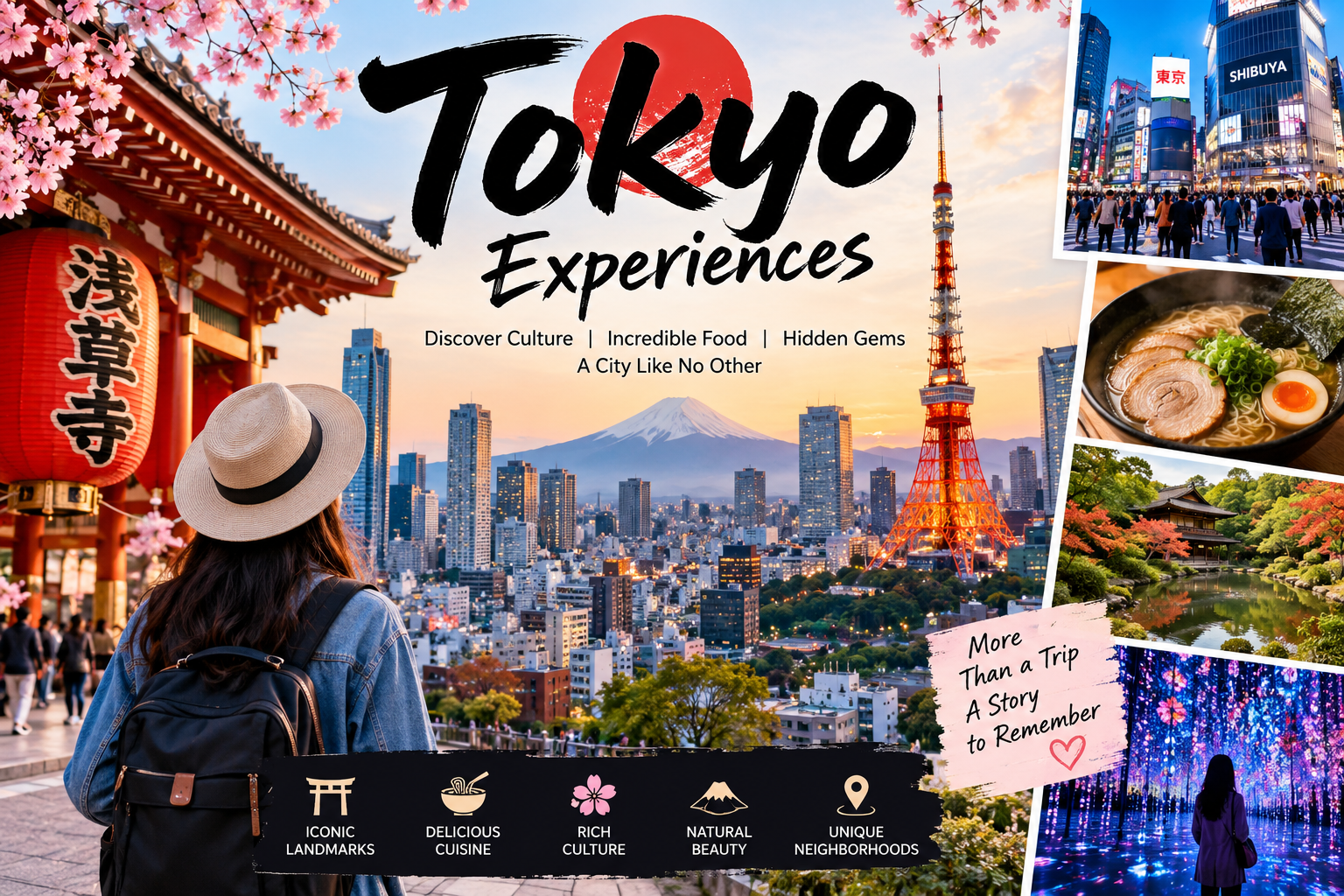
Tokyo Experiences: 25+ Unique Things to Do in Tokyo
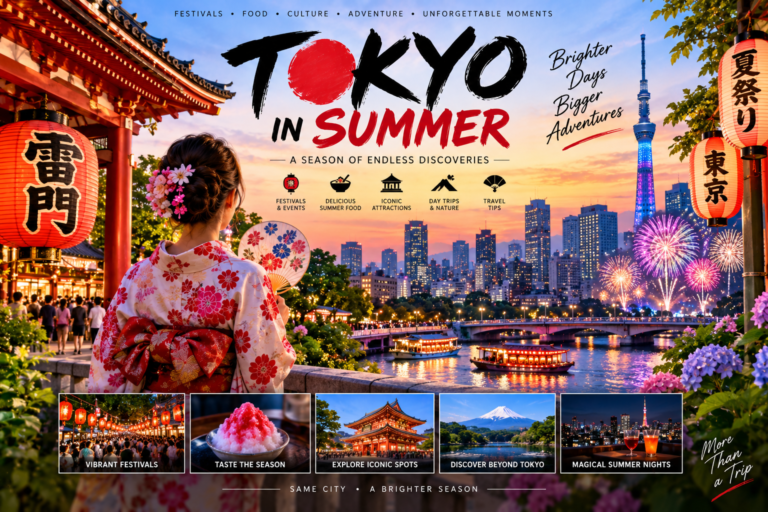
Tokyo experiences are about much more than famous landmarks: they combine traditional Japanese culture, extraordinary food, neighborhood life, technology, art, entertainment, nature, and everyday moments into one constantly changing travel experience. Whether you are visiting Tokyo for the first time or returning for another trip, the best experiences come from balancing iconic attractions with slower, more local activities. Imagine stepping out of a Tokyo train station early in the morning. A quiet shrine may be only a few streets away from a busy shopping district. A traditional restaurant could sit beneath a modern office tower. A centuries-old cultural practice might take place inside one of the world’s most technologically advanced cities Tokyo Visitor
What Makes Tokyo Experiences Different?
Tokyo is often described as a megacity, but that description can make it sound less personal than it actually feels.
The metropolitan area contains traditional districts, residential neighborhoods, commercial centers, waterfront developments, parks, mountains, islands, museums, temples, markets, entertainment zones and highly modern business districts.
Tokyo’s administrative geography also extends far beyond the famous central wards. The Tokyo Metropolitan Government describes the capital as including 23 special wards, 26 cities, five towns and eight villages, as well as the Izu and Ogasawara Islands. The western Tama region adds mountains, lakes and valleys to Tokyo’s otherwise urban image.
This creates a huge range of possible travel experiences.
Tokyo Is a City of Contrasts
One of the easiest ways to understand Tokyo is through contrasts.
You can experience:
- Ancient and modern Japan
- Quiet streets and enormous intersections
- Traditional crafts and advanced technology
- Small family restaurants and sophisticated dining
- Historic temples and futuristic architecture
- Dense neighborhoods and open green spaces
- Pop culture and traditional performing arts
- Urban entertainment and mountain hiking
- Local shopping streets and luxury retail
- Fast trains and slow neighborhood walks
The important point is that these contrasts do not exist separately.
They often exist within a few minutes of one another.
Tokyo Experiences Are Highly Neighborhood-Based
A common mistake is thinking about Tokyo as one large sightseeing area.
In practice, the character of each neighborhood can dramatically change your experience.
Shibuya feels different from Asakusa. Ginza feels different from Shimokitazawa. Akihabara feels different from Yanaka. Kichijoji feels different from Odaiba.
This means your Tokyo itinerary becomes more interesting when you plan around neighborhood experiences rather than only individual attractions.
The Best Types of Tokyo Experiences
Instead of creating a simple list of attractions, it helps to divide Tokyo experiences into categories.
Cultural Experiences
Cultural experiences allow visitors to understand Japanese traditions instead of simply observing them.
Examples include:
- Tea ceremonies
- Calligraphy
- Kimono experiences
- Traditional crafts
- Kabuki
- Noh
- Rakugo
- Temple visits
- Shrine visits
- Japanese cooking classes
- Local festivals
- Sumo-related experiences
- Traditional gardens
These activities can be especially valuable for travelers who have already visited Tokyo’s major sightseeing landmarks.
Food Experiences
Tokyo’s food culture is one of its most accessible experiences.
You do not need a luxury restaurant reservation to explore Japanese cuisine.
A food-focused day might include:
- Breakfast at a traditional Japanese restaurant
- A market visit
- Ramen for lunch
- Japanese sweets in the afternoon
- A neighborhood izakaya-style meal
- Seasonal desserts
- Specialty coffee
- Regional Japanese dishes
Tokyo’s culinary scene also caters to different dietary requirements. The official Tokyo tourism guide highlights vegetarian, vegan and Muslim-friendly dining considerations and recommends understanding Japanese dining customs before visiting restaurants.
Neighborhood Experiences
Neighborhood exploration is one of the most underrated Tokyo experiences.
Instead of moving rapidly between famous landmarks, spend two or three hours in one area.
Walk.
Look at storefronts.
Enter a small café.
Visit a local shrine.
Browse a shopping street.
Notice residential architecture.
That slower approach can reveal a side of Tokyo that organized sightseeing sometimes misses.
Technology and Digital Experiences
Tokyo is an excellent destination for travelers interested in technology, digital art and immersive entertainment.
Interactive museums and digital installations have transformed the idea of what an art experience can be.
teamLab Borderless, for example, is designed as a continuous digital-art environment where artworks move between spaces rather than remaining confined to traditional galleries.
Nature Experiences
Tokyo is not only concrete and neon.
The city and wider metropolitan area contain gardens, parks, rivers, waterfronts, hiking areas and islands.
The Tama region provides access to mountains, lakes and valleys, while Tokyo’s islands offer a dramatically different environment from central Tokyo.
Traditional Tokyo Experiences
Participate in a Japanese Tea Ceremony
A tea ceremony can be one of the most meaningful cultural experiences in Tokyo because it introduces visitors to concepts such as attention, hospitality, seasonality and simplicity.
The value is not simply drinking tea.
It is understanding the ritual surrounding the tea.
Depending on the experience, you may learn:
- How the tea is prepared
- How guests behave
- How utensils are handled
- Why movements are deliberate
- How seasonal elements influence the setting
- How hospitality is expressed
For first-time visitors, a guided tea ceremony can make unfamiliar customs easier to understand.
Try Japanese Calligraphy
Calligraphy is another hands-on cultural activity.
Rather than simply looking at Japanese writing in a museum, you can learn how characters are formed using brush, ink and paper.
The experience is particularly suitable for:
- Families
- Couples
- Solo travelers
- Students
- Art enthusiasts
- Travelers interested in Japanese culture
Do not worry about producing perfect calligraphy.
The point is participation.
Experience Traditional Japanese Crafts
Tokyo has connections to numerous traditional crafts, including textiles, ceramics, woodworking, paper-related crafts and decorative arts.
A craft workshop gives travelers an opportunity to understand the skill behind objects that may otherwise appear simple.
This is also an excellent way to purchase souvenirs with a personal connection.
Instead of buying a mass-produced item, you can return home with something you helped create.
Explore Temples and Shrines
Tokyo’s temples and shrines offer some of the easiest ways to slow down during a busy itinerary.
Asakusa’s Senso-ji is one of the city’s most recognizable cultural destinations, but travelers should not stop at the main gate and photograph the temple.
Take time to observe the surrounding streets, smaller shops, traditional foods and nearby neighborhood.
Meiji Jingu provides a different experience, particularly because of its forested approach.
The important lesson is simple:
Do not treat religious sites only as photo opportunities.
Be respectful.
Observe local behavior.
Keep noise low.
Follow posted instructions.
Avoid blocking worshippers.
Attend a Seasonal Festival
Japanese festivals, or matsuri, are closely connected with seasons, temples, shrines and local communities.
Depending on when you visit Tokyo, you may encounter:
- Spring celebrations
- Summer festivals
- Fireworks
- Autumn cultural events
- Winter illuminations
- Traditional performances
- Local shrine events
The exact calendar changes every year, so check official event information before planning around a particular festival. GO TOKYO maintains seasonal and event information for visitors.
Food-Based Tokyo Experiences
Eat Ramen in a Neighborhood Restaurant
Ramen is more than a convenient meal.
Different shops have different approaches to broth, noodles, toppings and preparation.
Try more than one style during your trip instead of deciding that one bowl represents all Japanese ramen.
A useful approach is to try:
- A rich pork-based style
- A lighter chicken or seafood-based broth
- Tsukemen
- A regional-inspired variation
Explore Japanese Convenience Store Food
Japanese convenience stores can be surprisingly useful for travelers.
They offer quick meals, snacks, drinks and desserts that can make an inexpensive food tour.
Try different items rather than purchasing only familiar international products.
Look for:
- Rice balls
- Seasonal desserts
- Japanese sandwiches
- Noodle dishes
- Tea drinks
- Local snacks
- Limited seasonal products
Visit a Food Market
Markets can introduce visitors to Japanese ingredients, seafood, sweets and prepared foods.
Tsukiji’s outer-market area is particularly well known among visitors, although travelers should understand that the wholesale fish market itself moved to Toyosu.
The wider Tokyo food experience is not limited to one market.
Neighborhood shopping streets, department-store food halls and specialist food shops can be equally interesting.
Try Japanese Sweets
Tokyo’s dessert culture is worth exploring separately.
Look for:
- Wagashi
- Matcha desserts
- Dorayaki
- Taiyaki
- Mochi-based sweets
- Japanese-style cakes
- Seasonal fruit desserts
- Modern Japanese pastry
Seasonality is particularly important in Japanese food culture, so the dessert you discover may depend on the month you visit.
Explore Department-Store Food Halls
One of the more overlooked Tokyo experiences is visiting a department-store basement food hall.
These spaces can offer an enormous variety of prepared food, sweets, gifts and regional specialties.
They are particularly useful when you want to sample several foods without committing to a long restaurant meal.
Tokyo Neighborhood Experiences
Experience Shibuya Beyond the Crossing
Shibuya Crossing is famous, but it should be the beginning rather than the end of your Shibuya experience.
Explore:
- Shibuya’s shopping streets
- Side streets
- Cafés
- Fashion stores
- Contemporary architecture
- Rooftop viewpoints
- Nearby residential areas
A particularly useful strategy is visiting at different times of day.
The atmosphere changes considerably between morning, afternoon and evening.
Discover Harajuku and Omotesando
Harajuku is strongly associated with youth culture, fashion and kawaii culture.
The area can be approached in several different ways.
Start with the energetic commercial streets, then move toward quieter areas.
You can combine:
- Japanese fashion
- Street food
- Meiji Jingu
- Yoyogi Park
- Omotesando architecture
- Independent shops
- Contemporary cafés
GO TOKYO specifically highlights Harajuku for kawaii culture, Japanese fashion, cosplay and street food.
Explore Asakusa Slowly
Asakusa is one of the best areas for travelers interested in historical Tokyo.
Rather than rushing directly to Senso-ji, consider spending half a day exploring the broader neighborhood.
You can combine:
- Senso-ji
- Nakamise shopping street
- Traditional snacks
- Small craft shops
- Sumida River views
- Tokyo Skytree views
This is a good example of how several small experiences can create a richer travel day than one major attraction.
Visit Akihabara for Pop Culture
Akihabara is closely associated with electronics, anime, manga, gaming and Japanese pop culture.
The area can be interesting even if you are not an anime expert.
Explore:
- Electronics stores
- Anime shops
- Manga stores
- Character merchandise
- Gaming-related businesses
- Specialty cafés
- Collectibles
However, avoid assuming that every part of Japanese pop culture can be understood from Akihabara alone.
Pop culture is distributed across Tokyo.
Spend Time in Kichijoji
Kichijoji provides a different perspective.
It combines shopping, restaurants, cafés and access to Inokashira Park.
GO TOKYO describes the area as a popular destination for shopping and eating, with Inokashira Park offering a greener environment.
For travelers who want to escape the intensity of central Tokyo without leaving the city, Kichijoji can be a useful choice.
Discover Yanaka’s Traditional Atmosphere
Yanaka is often associated with an older, quieter side of Tokyo.
The area is suitable for travelers who enjoy:
- Walking
- Traditional architecture
- Small temples
- Local shops
- Residential streets
- Independent cafés
- Historic atmosphere
The appeal is not one single attraction.
The neighborhood itself is the experience.
Modern Tokyo Experiences
Explore teamLab Borderless
teamLab Borderless represents a newer category of Tokyo experience: immersive digital art.
Unlike a conventional museum where each artwork has a fixed location, teamLab describes Borderless as a world where artworks move across spaces and interact with one another.
This makes the experience particularly suitable for:
- Families
- Couples
- Photography enthusiasts
- Art lovers
- Technology enthusiasts
- First-time visitors looking for something distinctly contemporary
Because admission can be date- and time-specific and pricing can vary, check the official ticket information before visiting.
Visit Tokyo Skytree
Tokyo Skytree provides one of the city’s most recognizable elevated views.
The experience is about perspective.
From street level, Tokyo can feel like an endless collection of buildings.
From above, the urban structure becomes easier to understand.
Visibility depends heavily on weather, so do not assume that every visit will provide the same view.
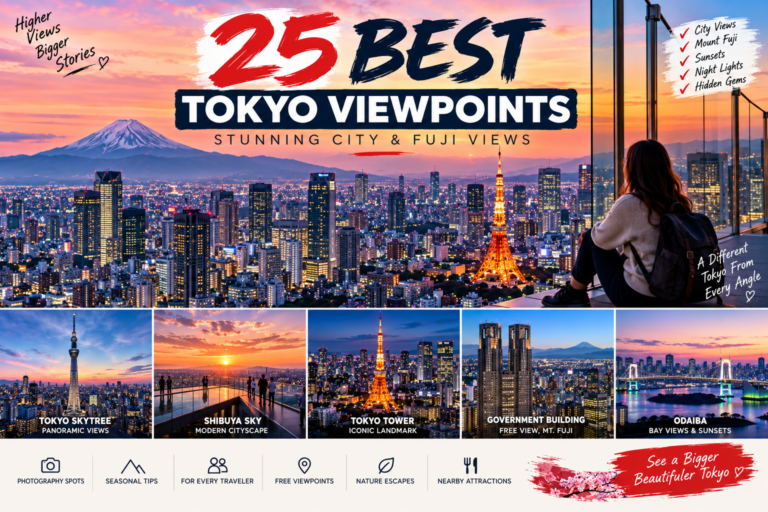
Experience Shibuya Sky
Shibuya Sky offers another perspective on Tokyo from above.
It is particularly interesting for travelers who want to understand how dense urban neighborhoods connect with one another.
For photography, timing matters.
Sunset can be popular, while nighttime offers a completely different visual experience.
Explore Odaiba
Odaiba is useful for travelers who want several modern attractions in one area.
Depending on your interests, you can combine:
- Waterfront views
- Digital entertainment
- Shopping
- Science attractions
- Large-scale architecture
- Tokyo Joypolis
- Gundam-related attractions
- Museums
Tokyo Joypolis is an indoor entertainment complex with more than 20 attractions, making it particularly useful on rainy days.
Visit SMALL WORLDS
SMALL WORLDS in Ariake offers miniature environments featuring detailed scenes and moving elements.
Its official information describes a large indoor miniature museum with themed areas including a Space Center, Global Village, Kansai International Airport and Evangelion-related environments.
This type of attraction works especially well for visitors who enjoy:
- Model making
- Engineering
- Photography
- Animation
- Detailed environments
- Family activities
It also demonstrates an important feature of Tokyo tourism: the city frequently combines technology, storytelling and physical craftsmanship.
Anime and Entertainment Tokyo Experiences
Visit the Ghibli Museum Area
For fans of Studio Ghibli, visiting the Ghibli Museum can be a highly anticipated part of a Tokyo trip.
However, access and ticketing are controlled, so planning ahead is important.
The experience is less about a conventional amusement park and more about storytelling, animation and the creative process.
Explore Warner Bros. Studio Tour Tokyo
Warner Bros. Studio Tour Tokyo: The Making of Harry Potter gives visitors an opportunity to explore film sets, props, costumes and filmmaking techniques.
Official information currently lists iconic sets such as Platform 9¾, Diagon Alley, the Great Hall, the Ministry of Magic and the Forbidden Forest. The experience also includes interactive filmmaking activities.
This is particularly suitable for:
- Harry Potter fans
- Families
- Film enthusiasts
- Photography lovers
- Travelers interested in production design
Ticket prices and opening times can change, so visitors should check the official booking calendar.
Visit Sanrio Puroland
Sanrio Puroland is located in Tama City, within Tokyo, and provides a character-focused entertainment experience built around Hello Kitty and other Sanrio characters.
JNTO describes the attraction as an indoor theme park with character interactions, shows, attractions and merchandise.
It is particularly suitable for:
- Families with children
- Sanrio fans
- Kawaii culture enthusiasts
- Travelers seeking indoor entertainment
The park is approximately 30 minutes by train from central Tokyo according to JNTO, although actual travel time depends on your starting station and service.
Nature-Based Tokyo Experiences
Walk Through a Japanese Garden
A Japanese garden can provide the opposite experience from Tokyo’s busiest streets.
Look for:
- Ponds
- Bridges
- Carefully shaped trees
- Stone arrangements
- Seasonal flowers
- Tea houses
- Traditional landscapes
Do not rush.
Gardens reward slow observation.
Visit Ueno Park
Ueno combines green space with museums, cultural attractions and access to other parts of Tokyo.
It is particularly useful when you want to create a flexible day.
Explore Okutama
For travelers willing to go farther from central Tokyo, Okutama offers a dramatically different landscape.
GO TOKYO highlights the area’s mountains, lakes, valleys, hiking opportunities, camping and autumn scenery.
This can be one of the best ways to understand why defining Tokyo only through skyscrapers is misleading.
Take a Bicycle Ride
Cycling can reveal details that are easy to miss from trains.
A bicycle allows you to move through neighborhoods at a slower pace while still covering more ground than walking.
However, always follow local traffic rules and use designated bicycle facilities where appropriate.
Tokyo Experiences for Different Types of Travelers
Tokyo Experiences for First-Time Visitors
First-time travelers often benefit from combining iconic attractions with one or two less obvious activities.
A balanced first trip might include:
- Asakusa
- Shibuya
- Meiji Jingu
- Tokyo Skytree or another observation deck
- A Japanese food experience
- One cultural workshop
- One modern attraction
- One neighborhood walking day
The goal is not to visit everything.
The goal is to understand different sides of Tokyo.
Tokyo Experiences for Families
Families may prefer experiences that are interactive rather than purely observational.
Good categories include:
- Theme parks
- Interactive museums
- Digital art
- Miniature museums
- Character attractions
- Parks
- Aquarium visits
- Food workshops
- Easy neighborhood walks
Indoor attractions are especially useful when weather becomes difficult.
Tokyo Experiences for Couples
Couples can build an itinerary around atmosphere.
Consider:
- Sunset viewpoints
- Japanese gardens
- Food tours
- Tea ceremonies
- Waterfront walks
- Digital art
- Traditional neighborhoods
- Seasonal illuminations
- Special dining experiences
A strong couple’s itinerary does not need to be expensive.
A quiet walk through a beautiful neighborhood can become a more memorable experience than an expensive attraction.
Tokyo Experiences for Solo Travelers
Tokyo is particularly suitable for independent exploration.
Solo travelers can comfortably build days around:
- Museums
- Cafés
- Ramen shops
- Neighborhood walks
- Photography
- Shopping
- Gardens
- Public transportation exploration
- Cultural workshops
The advantage of traveling alone is flexibility.
You can change your plan when an interesting street catches your attention.
Tokyo Experiences for Budget Travelers
Not every memorable Tokyo experience requires an expensive ticket.
Consider:
- Free neighborhood walks
- Public parks
- Shrines
- Temples
- Shopping streets
- Department-store food halls
- Local festivals
- Observation areas with free access
- Walking along rivers
- Exploring residential neighborhoods
Transportation costs can add up, so grouping nearby activities into the same day can help control spending.
Tokyo Experiences for Travelers With Dietary Requirements
Vegetarian and Vegan Travelers
Tokyo has a growing range of vegetarian and vegan dining options.
However, travelers should still communicate dietary restrictions clearly.
Ingredients can appear in sauces, broths, seasonings and garnishes.
Do not assume that a dish without visible meat is automatically vegetarian.
Muslim Travelers
Tokyo also offers Muslim-friendly dining options.
The official Tokyo tourism guide specifically highlights Muslim cuisine alongside vegetarian and vegan dining.
Travelers should check:
- Halal certification where relevant
- Ingredients
- Preparation methods
- Alcohol-related ingredients
- Restaurant policies
Researching restaurants before leaving your hotel can save considerable time.
Travelers With Food Allergies
If you have a serious allergy, carry clearly written information explaining the allergen in Japanese.
Do not rely only on verbal communication.
Restaurant staff may also have different levels of familiarity with specific international allergy requirements.
How to Plan Better Tokyo Experiences
Use the Neighborhood Clustering Method
One of the most effective planning methods is to group attractions geographically.
Instead of:
Shibuya → Asakusa → Odaiba → Shinjuku → Ginza
in one day, build:
Asakusa + Sumida + Skytree
or:
Shibuya + Harajuku + Omotesando
or:
Odaiba + Joypolis + waterfront
This reduces unnecessary travel.
Use the One Big Experience Rule
Avoid booking major attractions back-to-back.
Instead, choose:
- One major ticketed attraction
- One neighborhood
- One food experience
- One flexible activity
This creates breathing room.
Plan Around Energy, Not Just Distance
Two attractions may appear close on a map but still require considerable walking.
Tokyo involves stairs, station corridors, crossings and large stations.
Build recovery periods into your day.
Leave Space for Discovery
A completely scheduled Tokyo itinerary can become exhausting.
Leave at least part of each day open.
You might discover:
- A tiny bakery
- A quiet shrine
- A traditional shop
- A local festival
- A beautiful street
- An interesting café
Some of the best Tokyo experiences cannot be scheduled months in advance.
Getting Around During Tokyo Experiences
Tokyo’s public transportation system is one of the major reasons the city is practical for visitors.
The official Tokyo tourism guide highlights JR lines, Tokyo Metro, Toei Subway, buses, taxis, bicycles and water transportation. It also notes that IC cards can make subway and bus travel easier.
Use Trains Strategically
Do not judge a station by the distance shown on a map.
Large stations can involve long walking routes.
Allow extra time when transferring.
Consider an IC Card
An IC card can simplify everyday transportation.
Instead of purchasing an individual ticket for every trip, you can generally use the card for supported journeys.
Check the current availability and usage rules before your trip because transportation payment systems can change.
Consider Walking Between Nearby Neighborhoods
Walking can be an experience in itself.
For example, some areas are better understood by walking than by taking a train for every short movement.
Use Taxis Strategically
Taxis can be useful when:
- Carrying luggage
- Traveling with children
- Returning late from an activity
- Moving between places poorly connected by rail
- Traveling as a group
But for many central Tokyo journeys, public transportation is usually more practical.
Ten Major Brands and Experiences to Compare
The word “brand” in Tokyo tourism can refer to an attraction operator or recognizable entertainment destination rather than a hotel or consumer product. The following comparison is therefore designed around experience brands and destinations, not a ranking.
| Brand / Experience | Experience Type | Best For | Indoor / Outdoor | Main Appeal | Planning Consideration |
|---|---|---|---|---|---|
| teamLab Borderless | Digital art | Art & technology fans | Indoor | Immersive interactive environments | Timed admission and changing schedules |
| Tokyo Skytree | Observation | First-time visitors & photographers | Indoor/observation | High-level city views | Weather affects visibility |
| Shibuya Sky | Observation | Couples & photographers | Indoor/Outdoor areas | Urban skyline experience | Popular time slots can be busy |
| Tokyo Disney Resort | Theme park | Families & Disney fans | Indoor/Outdoor | Large-scale themed entertainment | Full-day planning recommended |
| Sanrio Puroland | Character theme park | Families & kawaii fans | Indoor | Sanrio characters and shows | Check reservation/ticket requirements |
| Warner Bros. Studio Tour Tokyo | Film experience | Harry Potter & movie fans | Indoor | Sets and filmmaking | Advance booking recommended |
| SMALL WORLDS | Miniature museum | Families, model fans & photographers | Indoor | Detailed miniature worlds | Allow time to explore details |
| Tokyo Joypolis | Indoor entertainment | Families & gamers | Indoor | Rides and digital entertainment | Attraction access can vary |
| Ghibli Museum | Animation/culture | Ghibli fans | Indoor/Outdoor | Animation storytelling | Tickets require planning |
| Tokyo Dome City | Entertainment | Families & mixed groups | Indoor/Outdoor | Attractions, food and entertainment | Check attraction schedules |
The attraction mix demonstrates why comparing Tokyo experiences purely by popularity can be misleading.
A digital-art enthusiast may prefer an immersive museum.
A family may prefer an indoor theme park.
A film enthusiast may prioritize a studio tour.
A photographer may value a viewpoint.
A traveler interested in Japanese tradition may prefer a tea ceremony or craft workshop.
The right choice depends on the type of experience you want.
Pros and Cons of Tokyo Experiences
Advantages of Exploring Tokyo Through Experiences
Exceptional Variety
Few destinations offer such a wide combination of traditional culture, food, technology, entertainment and nature within one metropolitan area.
Excellent Public Transportation
Tokyo’s extensive rail and subway network makes it possible to move between very different neighborhoods without needing a rental car.
Strong Seasonal Character
Tokyo changes noticeably throughout the year.
Spring, summer, autumn and winter each create different opportunities.
Strong Indoor Options
Museums, digital-art venues, shopping centers and indoor entertainment make it easier to adapt plans when weather changes.
Excellent Options for Different Budgets
You can build an inexpensive itinerary around walking, public spaces and local food, or create a premium itinerary around specialized experiences.
Challenges of Tokyo Experiences
The City Can Be Overwhelming
Tokyo’s scale can make planning difficult.
The solution is to divide your trip into neighborhood-based days.
Popular Experiences Can Sell Out
Major attractions may use timed admission or advance booking.
Always check official ticket information.
Too Much Walking
A Tokyo itinerary can easily become physically demanding.
Schedule breaks.
Language Differences
English support has improved, but not every small business will operate primarily in English.
A translation app and a few Japanese phrases can help.
Seasonal Weather
Heat, humidity, rain, cold and seasonal storms can influence your experience.
Always check the forecast and adjust your itinerary.
Common Tokyo Experience Mistakes
Trying to Visit Everything
Tokyo is too large to experience completely in one trip.
Trying to do so often produces exhaustion rather than enjoyment.
Spending the Entire Trip in Famous Districts
Shibuya, Shinjuku, Asakusa and Akihabara are worth visiting.
But Tokyo becomes more interesting when you also explore quieter areas.
Ignoring Travel Time
A map may make two places look close.
Station entrances, transfers and walking routes can make the journey much longer.
Booking Every Hour
A rigid itinerary leaves no room for discovery.
Eating Only at Famous Restaurants
Famous restaurants can be excellent, but neighborhood restaurants can provide a more personal experience.
Treating Cultural Sites Like Photo Sets
Temples, shrines and cultural spaces are meaningful places for local communities.
Respect should come before photography.
Ignoring Seasonal Events
Tokyo’s experience changes with the calendar.
Before traveling, check the official events calendar and seasonal guides.
A Better Framework for Choosing Tokyo Experiences
Instead of asking:
“What are the top things to do in Tokyo?”
Ask:
“What do I want to feel during my Tokyo trip?”
This creates a more useful framework.
Choose by Emotion
Do you want:
- Excitement?
- Calm?
- Discovery?
- Culture?
- Romance?
- Family fun?
- Creativity?
- Food?
- Adventure?
- Nostalgia?
Then select experiences that support that feeling.
Choose by Interaction Level
There are three broad experience levels.
Observe: temples, viewpoints, gardens and architecture.
Participate: cooking, tea ceremonies, crafts and workshops.
Immerse: digital art, theme parks, cultural festivals and interactive entertainment.
A strong itinerary mixes all three.
Choose by Pace
You can divide experiences into:
Fast: shopping, viewpoints and major attractions.
Medium: museums, neighborhoods and food tours.
Slow: gardens, temples, cafés and residential walks.
Mixing speeds prevents travel fatigue.
A Sample Three-Day Tokyo Experience Plan
Day One: Traditional Tokyo
Morning:
- Asakusa
- Senso-ji
- Traditional shopping streets
Afternoon:
- Japanese lunch
- Sumida River area
- Tokyo Skytree
Evening:
- Local restaurant
- Neighborhood walk
The purpose of this day is to establish a cultural foundation.
Day Two: Modern Tokyo
Morning:
- Harajuku
- Meiji Jingu
Afternoon:
- Omotesando
- Shibuya
Evening:
- Shibuya Sky or another viewpoint
- Dinner
This day focuses on modern urban Tokyo.
Day Three: Immersive Tokyo
Morning:
- teamLab Borderless or another interactive attraction
Afternoon:
- Odaiba
- SMALL WORLDS or Tokyo Joypolis
Evening:
- Waterfront walk
- Dinner
This creates a completely different side of the city.
A Seven-Day Tokyo Experience Strategy
Day One: Introduction
Explore the neighborhood around your hotel and visit one major landmark.
Do not overload your first day.
Day Two: Historic Tokyo
Focus on Asakusa, traditional culture and food.
Day Three: Modern Tokyo experiences
Explore Shibuya, Harajuku and Omotesando.
Day Four: Art and Technology Tokyo experiences
Choose an immersive museum or contemporary art experience.
Day Five: Neighborhood Tokyo experiences
Explore an area such as Kichijoji, Yanaka or another neighborhood that matches your interests.
Day Six: Nature Tokyo experiences
Choose a major garden, park or an excursion toward the western Tokyo region.
Day Seven: Flexible Day Tokyo experiences
Leave your final day open for shopping, repeat visits, food discoveries or anything you missed.
This structure is more resilient than an itinerary that schedules every minute.
Tokyo Experiences for Different Budgets
Budget Tokyo Experiences
You can build a meaningful day using:
- Parks
- Shrines
- Temples
- Neighborhood walks
- Local shopping streets
- Convenience-store food
- Affordable restaurants
- Free public spaces
Mid-Range Tokyo Experiences
Add:
- Museums
- Observation decks
- Food tours
- Workshops
- Cultural experiences
- Paid attractions
Premium Tokyo Experiences
A premium itinerary might include:
- High-end dining
- Private guides
- Specialized cultural workshops
- Luxury hotels
- Premium observation experiences
- Private transportation
- Exclusive tours
The important thing is not simply spending more.
The value comes from choosing experiences that match your interests.
Tokyo Experiences for Repeat Visitors
If you have already visited Tokyo’s famous landmarks, change your strategy.
Explore the City Through Food Tokyo experiences
Choose a neighborhood and eat several small meals instead of one large meal.
Explore Architecture Tokyo experiences
Tokyo’s architecture provides a fascinating mix of historical structures, contemporary buildings, compact homes, commercial towers and experimental design.
Explore Local Shopping Streets Tokyo experiences
Traditional shopping streets, or shotengai, can offer a more everyday perspective.
Visit Tokyo’s Farther Regions Tokyo experiences
The western Tokyo region and islands demonstrate how geographically diverse the metropolis actually is.
Take a Local Train Without a Tourist Checklist Tokyo experiences
Choose an interesting neighborhood and explore without trying to photograph every famous location.
Sometimes the best travel day is the one where you have no perfect plan.
The Future of Tokyo Experiences
Immersive Technology Will Continue Growing Tokyo experiences
Tokyo is already a major destination for digital and interactive experiences.
The success of immersive attractions suggests that travelers increasingly want to participate rather than simply observe.
AI Will Become Part of Travel Planning Tokyo experiences
Tokyo’s tourism infrastructure is already experimenting with AI-assisted visitor information.
GO TOKYO currently promotes Tokyo Navigation AI as a 24-hour online tourist guide for travel consultations.
Future travelers may increasingly use AI for:
- Personalized itineraries
- Translation
- Transportation planning
- Restaurant discovery
- Accessibility information
- Real-time recommendations
- Crowd-aware scheduling
Personalized Tourism Will Become More Important
The future of Tokyo tourism is unlikely to be only about creating more attractions.
It will increasingly involve helping visitors discover experiences that match their personal interests.
A family, photographer, food traveler and architecture enthusiast may all visit Tokyo during the same week but experience completely different versions of the city.
Sustainable and Responsible Tourism Will Matter More Tokyo experiences
As global tourism increases, responsible travel becomes increasingly important.
Visitors can help by:
- Avoiding unnecessary litter
- Respecting residential neighborhoods
- Following photography restrictions
- Using public transportation
- Supporting local businesses
- Respecting religious sites
- Avoiding excessive noise
- Following attraction rules
The goal is not simply to consume Tokyo.
It is to experience it without damaging the qualities that make the city attractive.
Practical Tokyo Experience Checklist
Before your trip, consider preparing:
- Passport and travel documents
- Accommodation confirmation
- Transportation plan
- IC card or suitable payment method
- Internet connectivity
- Comfortable walking shoes
- Weather-appropriate clothing
- Portable battery
- Translation app
- Attraction reservations
- Restaurant research
- Emergency information
- Travel insurance documents
- Copies of important travel information
Tokyo’s official tourism resources also provide information covering connectivity, accessibility, luggage storage, useful apps, transportation, weather and emergency information.
How to Make Tokyo Experiences More Memorable
Keep a Travel Journal Tokyo experiences
Write down small moments.
Not just places.
For example:
“The bakery near the station had the best melon pan.”
That memory may last longer than a photograph of a famous building.
Photograph Details Tokyo experiences
Instead of photographing only landmarks, look for:
- Doorways
- Signs
- Street lights
- Food displays
- Architecture
- Seasonal decorations
- Train platforms
- Gardens
- Small shops
Learn a Few Japanese Expressions
Even a few basic phrases can improve everyday interactions.
Simple greetings, thanks and polite expressions show respect and can make ordinary encounters more pleasant.
Slow Down Tokyo experiences
The greatest improvement you can make to many Tokyo itineraries is simply removing activities.
Leave time for the unexpected.
FAQs
Conclusion
Tokyo experiences go far beyond visiting famous landmarks and taking photographs. The city offers a remarkable combination of traditional Japanese culture, modern technology, local food, entertainment, nature, architecture, and neighborhood life. From exploring historic Asakusa and peaceful Japanese gardens to discovering Shibuya’s energetic streets, enjoying authentic Japanese food, experiencing immersive digital art, and exploring quieter neighborhoods, Tokyo gives every traveler an opportunity to create a different journey.