Tokyo Planner: The Ultimate Guide to Planning a Perfect Tokyo Trip in 2026
A good Tokyo planner does more than create a list of attractions; it organizes your time, neighbourhoods, transportation, budget, meals and priorities into a realistic trip. The smartest Tokyo itinerary groups nearby experiences together, leaves room for unexpected discoveries, and treats transportation time as part of the travel experience rather than an afterthought. Tokyo can initially feel overwhelming because there is simply too much to see. A first-time visitor might want to visit Senso-ji, Meiji Jingu, Shibuya, Shinjuku, Tokyo Skytree, Tokyo Tower, Ginza, Harajuku, teamLab, Tsukiji, Ueno, Odaiba and several museums Tokyo Seasonal
What Is a Tokyo Planner?
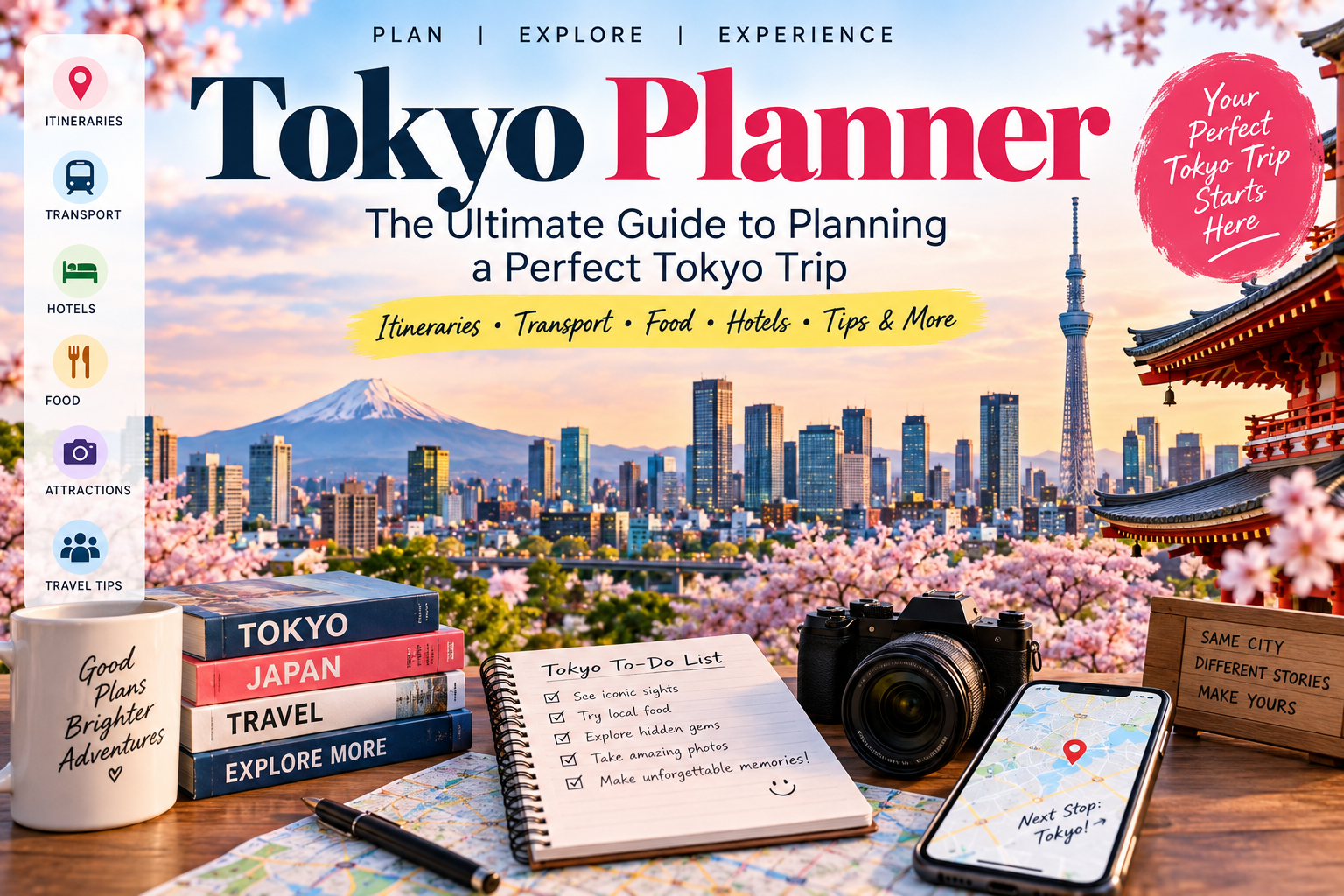
A Tokyo planner is a system for organizing a trip to Tokyo.
It can be:
- A physical notebook
- A spreadsheet
- A digital itinerary
- A travel-planning app
- A map-based itinerary
- A calendar
- A combination of several tools
The important part is not the format.
The important part is how the information is organized.
Tokyo Planner vs Tokyo Itinerary
These terms are related but not identical.
A Tokyo itinerary usually answers:
What am I doing each day?
A Tokyo planner answers a broader set of questions:
Where am I staying, how am I getting around, what should I book, what will it cost, what should I see, what happens if plans change, and how can I use my time efficiently?
An itinerary is therefore one component of a complete travel plan.
Why Tokyo Needs More Planning Than Some Cities
Tokyo’s size and transportation structure create a unique planning challenge.
Two attractions may look relatively close on a map but involve:
- A train transfer
- A long station walk
- A different railway operator
- A complicated station exit
- Crowds
- A substantial walk after leaving the station
This is why geographical planning matters.
A good Tokyo itinerary does not simply connect attractions with straight lines.
It considers actual travel friction.
Understanding Tokyo Before You Plan
Before creating your itinerary, understand the city.
Tokyo is not a single compact downtown area.
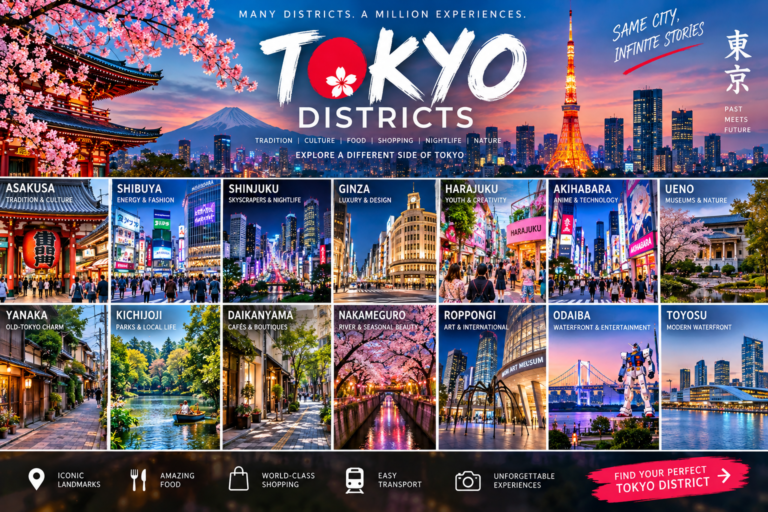
It is a huge metropolitan region made up of numerous districts with different personalities.
The official Tokyo tourism guide describes Tokyo as comprising 23 special wards alongside cities, towns and villages across the metropolitan government area.
Tokyo’s Major Travel Zones
For tourism purposes, it is useful to think in neighbourhood clusters.
Asakusa and Ueno
Best for:
- Traditional Tokyo
- Temples
- Museums
- Parks
- History
- Local streets
- Family sightseeing
Tokyo Station and Marunouchi
Best for:
- Architecture
- Business districts
- Tokyo Station
- Imperial Palace surroundings
- Shopping
- Elegant urban scenery
Ginza and Tsukiji
Best for:
- Shopping
- Food
- Luxury retail
- Department stores
- Contemporary architecture
- Market-related experiences
Shibuya and Harajuku
Best for:
- Youth culture
- Fashion
- Shopping
- Street photography
- Modern Tokyo
- Meiji Jingu
Shinjuku
Best for:
- Skyscrapers
- Night views
- Shopping
- Entertainment
- Restaurants
- Tokyo Metropolitan Government Building
Roppongi and Azabu
Best for:
- Museums
- Contemporary art
- Architecture
- Upscale dining
- Modern developments
Odaiba and Tokyo Bay
Best for:
- Waterfront views
- Family attractions
- Modern architecture
- Large-scale entertainment
- Sunset photography
Shimokitazawa and Western Tokyo
Best for:
- Independent shops
- Cafés
- Vintage fashion
- Music
- Smaller neighbourhood experiences
How Many Days Do You Need in Tokyo?
There is no universal answer.
Tokyo can occupy a few days or an entire vacation.
The correct duration depends on what you want to experience.
Tokyo in 2 Days
Two days require strong prioritization.
Focus on two major geographical areas rather than attempting to cover the entire city.
A practical structure could be:
Day 1: Asakusa, Ueno and Tokyo Station area
Day 2: Meiji Jingu, Harajuku, Shibuya and Shinjuku
This gives you a mixture of traditional, modern and commercial Tokyo.
Tokyo in 3 Days
Three days allow more breathing room.
You could structure the trip around:
- Traditional Tokyo
- Modern Tokyo
- Western Tokyo
A possible structure is:
Day 1: Asakusa, Ueno and Akihabara
Day 2: Tokyo Station, Marunouchi, Ginza and Tsukiji
Day 3: Harajuku, Omotesando, Shibuya and Shinjuku
Tokyo in 4 Days
Four days are much easier to manage.
You can add:
- Roppongi
- Odaiba
- Daikanyama
- A museum
- A food-focused evening
- A flexible half-day
Tokyo in 5 Days
Five days provide enough room to combine major attractions with slower exploration.
You could dedicate one day to:
- Asakusa and Ueno
- Tokyo Station and Ginza
- Shibuya and Harajuku
- Shinjuku and western Tokyo
- Roppongi, Odaiba or a flexible neighbourhood day
Tokyo in 7 Days
A week allows you to explore beyond the standard tourist checklist.
Consider adding:
- Shimokitazawa
- Kichijoji
- Nakameguro
- Daikanyama
- Yanaka
- Koenji
- Museums
- Day trips
- Food-focused exploration
The biggest advantage of seven days is not simply seeing more.
It is having time to slow down.
The Golden Rule of Tokyo Itinerary Planning
The most important Tokyo planning rule is:
Group attractions by location before grouping them by popularity.
This simple change can dramatically improve a trip.
The Wrong Way
Imagine planning a day like this:
- Senso-ji
- Shibuya
- Tokyo Skytree
- Meiji Jingu
- Ginza
- Shinjuku
Every attraction may be interesting.
But the day becomes dominated by transportation.
The Better Way
Instead, create geographical clusters.
For example:
Asakusa day
- Senso-ji
- Nakamise
- Sumida area
- Tokyo Skytree
Or:
Harajuku and Shibuya day
- Meiji Jingu
- Harajuku
- Omotesando
- Shibuya
This gives you more sightseeing time and less unnecessary movement.
How to Build a Tokyo Itinerary Step by Step
Step One: Define Your Travel Priorities
Write down your top five interests.
For example:
- Food
- Culture
- Shopping
- Architecture
- Photography
Do not start with 50 attractions.
Start with priorities.
Step Two: Choose Your Neighbourhoods
Match your interests with neighbourhoods.
For example:
| Interest | Useful Areas |
|---|---|
| Traditional culture | Asakusa, Ueno, Yanaka |
| Fashion | Harajuku, Omotesando, Shibuya |
| Luxury shopping | Ginza, Omotesando |
| Nightlife | Shinjuku, Shibuya, Roppongi |
| Architecture | Marunouchi, Omotesando, Roppongi |
| Anime and gaming culture | Akihabara, Ikebukuro |
| Local cafés | Daikanyama, Shimokitazawa, Kichijoji |
| Museums | Ueno, Roppongi, Ueno Park |
| Waterfront | Odaiba, Tokyo Bay |
| Food | Tsukiji, Ginza, Shinjuku, Ueno |
Step Three: Put One Major Experience at the Centre of Each Day
Avoid creating a day with ten major attractions.
Choose one anchor.
For example:
“Today is my Asakusa day.”
Then build smaller experiences around it.
Step Four: Add Two or Three Supporting Stops
A day might contain:
- One major attraction
- Two nearby attractions
- One food experience
- Flexible evening time
That is usually more realistic than constantly checking a clock.
Step Five: Add Buffer Time
This is one of the most overlooked Tokyo planning techniques.
Leave gaps.
You may need time for:
- Station navigation
- Queues
- Photography
- Meals
- Shopping
- Rest
- Unexpected discoveries
A completely packed itinerary is fragile.
Tokyo Transportation Planning
Transportation is one of the most important parts of any Tokyo planner.
The official Tokyo tourism guide states that Tokyo’s transport network includes JR trains, subways, local railways, buses, taxis, monorails and other options.
JR East
JR East operates much of the JR network in the Tokyo region.
The official Tokyo tourism guide notes that JR East operates the eastern Japan network, including Tokyo, and that various passes and IC-card options can be used depending on the journey.
JR is particularly useful for journeys involving areas served by major JR lines.
Tokyo Metro
Tokyo Metro operates a large subway network.
The official Tokyo Metro information currently lists nine Metro lines covering 180 stations and about 195 kilometres of track.
Tokyo Metro is particularly useful when your itinerary involves central Tokyo neighbourhoods.
Toei Transportation
Toei operates subway and bus services that complement Tokyo Metro.
For visitors, this matters because Tokyo’s rail system is not controlled by one company.
Private Railways
Tokyo also has railway operators including:
- Tokyu
- Keio
- Odakyu
- Seibu
- Tobu
- Keikyu
- Keisei
- Yurikamome
- Rinkai Line
The official Tokyo tourism guide lists these and other operators as important options for exploring Tokyo and the surrounding region.
IC Cards
IC cards can make Tokyo transportation much simpler.
The official Tokyo tourism guide explains that rechargeable IC cards can be used on many major rail and bus services in the metropolitan area and elsewhere in Japan.
Depending on your circumstances and device, options include:
- Suica
- PASMO
- Mobile versions of transport cards
- Other compatible payment methods
Credit Card Tap-to-Ride
Tokyo Metro currently provides a tap-to-ride service using compatible credit, debit or prepaid cards and supported smartphones.
This can be useful for travellers who want to minimize ticket purchases.
However, visitors should check current eligibility, supported cards and participating lines before relying on a particular payment method.
Should You Buy a Tokyo Rail Pass?
Not automatically.
This is one of the most common planning mistakes.
A pass is useful only when its coverage matches your actual itinerary.
When a Pass Can Make Sense
A pass may be worth considering when you have:
- Several subway journeys
- Multiple days of concentrated travel
- Regional travel
- Day trips
- Extensive JR travel
When an IC Card May Be Simpler
An IC card can be more convenient when:
- Your routes vary
- You use different operators
- You are not making many journeys
- You do not want to calculate whether a pass will save money
The official Tokyo tourism guide lists different ticket products for different networks and explains that the coverage varies by pass.
The best Tokyo planner calculates the actual itinerary first and chooses tickets second.
Airport Planning
Tokyo is served primarily by:
- Haneda Airport
- Narita International Airport
The two airports create different arrival-planning considerations.
Haneda Airport
Haneda is closer to central Tokyo than Narita and is connected to the city by rail and other transportation options.
Narita International Airport
Narita is farther from central Tokyo.
However, several rail and bus services connect the airport with Tokyo.
The Airport Mistake to Avoid
Do not simply write:
“Airport to hotel.”
Instead, record:
- Airport
- Terminal
- Transportation option
- Destination station
- Transfer requirements
- Approximate journey duration
- Luggage considerations
- Hotel walking distance
This makes arrival day much easier.
Choosing Where to Stay in Tokyo
Accommodation location can make a major difference to your trip.
The cheapest room is not necessarily the cheapest overall option if reaching it adds significant time every day.
Shinjuku
Good for:
- First-time visitors
- Transport connections
- Shopping
- Restaurants
- Nightlife
- Skyscraper views
Shibuya
Good for:
- Young travellers
- Fashion
- Nightlife
- Shopping
- Contemporary Tokyo
Asakusa
Good for:
- Traditional atmosphere
- Families
- Temple access
- Quieter evenings
- Value-oriented accommodation
Ueno
Good for:
- Museums
- Transport connections
- Families
- Cultural attractions
- Access to northern Tokyo
Tokyo Station and Marunouchi
Good for:
- Business travellers
- Luxury hotels
- Shinkansen connections
- Central location
Ginza
Good for:
- Shopping
- Luxury travel
- Dining
- Central Tokyo access
Ikebukuro
Good for:
- Families
- Shopping
- Transport connections
- Anime and pop-culture interests
Tokyo Planner for First-Time Visitors
First-time travellers often make one major mistake.
They try to “complete” Tokyo.
That is impossible.
Instead, your goal should be to experience different sides of the city.
A Balanced First-Time Formula
Try combining:
- One traditional district
- One modern district
- One shopping area
- One cultural experience
- One food experience
- One flexible neighbourhood
This gives you a more representative experience.
Tokyo Planner for Families
Travelling with children changes the planning equation.
A family itinerary needs more recovery time.
Family Planning Priorities
Consider:
- Shorter travel segments
- Nearby bathrooms
- Food options
- Indoor alternatives
- Child-friendly attractions
- Rest periods
- Weather backup plans
Do Not Overpack the Day
Children may enjoy one major attraction more than six rushed ones.
A family Tokyo planner should therefore prioritize comfort over checklist completion.
Rainy-Day Planning
Keep at least one indoor alternative available.
Potential categories include:
- Museums
- Aquariums
- Shopping complexes
- Indoor attractions
- Department stores
- Cultural facilities
Tokyo Planner for Couples
Couples can build a more flexible itinerary.
Focus on Experiences
Instead of simply listing landmarks, consider:
- Scenic walks
- Gardens
- Cafés
- Museums
- Evening views
- Neighbourhood restaurants
- Waterfront areas
Leave Unplanned Time
One of the best relationship-friendly travel strategies is to avoid scheduling every hour.
Give yourselves time to wander.
Tokyo Planner for Solo Travellers
Solo travel offers a major advantage:
flexibility.
You can change your plan easily.
Build Around Interests
Solo travellers can create specialized days such as:
- Architecture day
- Food day
- Photography day
- Museum day
- Shopping day
- Railway day
- Traditional culture day
Use Public Transport Confidently
Tokyo’s extensive rail and subway network makes independent movement practical, although large stations can require careful navigation.
Tokyo Planner for Older Travellers
Older travellers may benefit from reducing unnecessary walking and transfers.
Consider Station Complexity
A journey with one simple transfer may be preferable to a slightly shorter route involving several complicated changes.
Use Taxis Strategically
You do not need to take taxis everywhere.
Use them selectively for:
- Hotel transfers
- Late evenings
- Luggage-heavy journeys
- Difficult station connections
- Mobility considerations
The official Tokyo tourism guide notes that taxis are widely available and that destination information written in Japanese can help overcome potential language barriers.
Tokyo Planner for Budget Travellers
Tokyo can be approached at different budget levels.
Save on Transportation
Use an IC card and compare passes with your actual travel pattern.
Use Neighbourhood Restaurants
You do not need to eat every meal in a famous restaurant.
Small restaurants, cafés and casual food establishments can provide excellent experiences.
Combine Free and Paid Experiences
A strong budget itinerary might combine:
- Parks
- Shrines
- Neighbourhood walks
- Free viewpoints
- Markets
- Paid museums
- Special attractions
Avoid the “Everything Must Be Paid” Mindset
Some of Tokyo’s most memorable experiences come from simply walking.
Tokyo Planner for Luxury Travellers
Luxury planning is less about seeing more and more about reducing friction.
Consider:
- Premium hotels
- Private guides
- Reserved dining
- Private transfers
- High-end restaurants
- Special cultural experiences
- Carefully timed sightseeing
The luxury version of a Tokyo planner should optimize time and convenience.
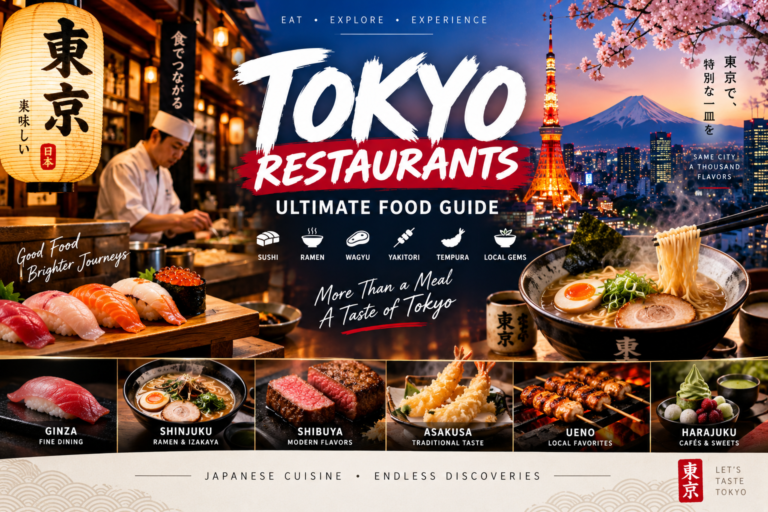
Tokyo Food Planner
Food deserves its own planning system.
Tokyo offers an enormous range of dining experiences.
Plan by Neighbourhood
Instead of travelling across the city for every meal, research restaurants near your daily sightseeing zone.
Plan One Signature Meal
Rather than making every meal a major event, select one special meal each day.
Keep Backup Options
Restaurants can be busy.
Have:
- First choice
- Second choice
- Casual backup
This prevents one unavailable restaurant from disrupting the entire day.
Tokyo Shopping Planner
Tokyo shopping is highly neighbourhood-specific.
Ginza
Consider for:
- Luxury
- Department stores
- Premium brands
- Stationery
- Beauty products
Shibuya
Consider for:
- Fashion
- Youth culture
- Lifestyle stores
- Contemporary brands
Harajuku
Consider for:
- Fashion
- Streetwear
- Pop culture
- Youth-oriented shopping
Akihabara
Consider for:
- Electronics
- Anime
- Manga
- Collectibles
- Hobby products
Shimokitazawa
Consider for:
- Vintage
- Independent shops
- Music
- Alternative fashion
Tokyo Planner for Architecture Lovers
Tokyo is one of the world’s most interesting architecture destinations.
A specialized architecture planner can include:
- Tokyo Station
- Marunouchi
- Ginza
- Omotesando
- Aoyama
- Roppongi
- Yoyogi
- Shinjuku
- Daikanyama
How to Plan an Architecture Day
Choose a neighbourhood rather than attempting to visit buildings across the city.
For example:
Omotesando architecture day
- Omotesando streetscape
- Contemporary flagship stores
- Aoyama buildings
- Side streets
- Galleries
- Cafés
This creates a coherent architectural experience.
Tokyo Planner for Photographers
Tokyo changes dramatically throughout the day.
Morning
Good for:
- Quiet streets
- Temples
- Traditional districts
- Soft light
Afternoon
Good for:
- Architecture
- Shopping districts
- Street scenes
- Museums
Evening
Good for:
- Skyscrapers
- Neon
- City lights
- Bridges
- Waterfront photography
Night
Tokyo’s visual identity becomes especially dramatic in areas such as Shinjuku and Shibuya.
Always respect private property and people’s privacy when photographing residential areas.
Tokyo Planner for Different Seasons
Spring
Spring is popular for cherry blossoms.
A flexible itinerary is particularly important because peak blossom timing varies from year to year.
Summer
Summer can be hot and humid.
Plan:
- Indoor breaks
- Early starts
- Hydration
- Evening activities
Autumn
Autumn can be excellent for:
- Parks
- Gardens
- Photography
- Comfortable walking
Winter
Winter offers:
- Clearer days at times
- Illuminations
- Fewer leaves
- Seasonal events
Daylight hours are shorter, so plan outdoor photography accordingly.
How to Create a Rain Backup Plan
Every Tokyo planner should have a weather backup.
For every outdoor-heavy day, identify one indoor alternative.
For example:
Outdoor plan: Meiji Jingu + Harajuku + Omotesando
Rain plan: Museum + department store + café + indoor shopping complex
This simple system prevents weather from destroying your itinerary.
Tokyo Planner and Reservations
Some experiences benefit from advance planning.
Potential categories include:
- Popular restaurants
- Special exhibitions
- Certain attractions
- Limited-entry experiences
- Seasonal events
- Day trips
- Long-distance trains
Do Not Reserve Everything
Overbooking is another planning mistake.
If every hour has a reservation, you lose flexibility.
A better approach is to reserve the experiences where timing genuinely matters.
Tokyo Planner and Day Trips
Tokyo’s rail network makes it a useful base for exploring nearby destinations.
Possible day-trip categories include:
- Historic towns
- Mountain areas
- Coastal destinations
- Hot-spring regions
- Temple complexes
- Lakes
- Cultural sites
The official Tokyo tourism guide notes that Tokyo is a major transportation hub for travelling elsewhere in Japan by shinkansen, express trains, buses and other services.
When Should You Add a Day Trip?
Consider a day trip if:
- You have at least five or six days
- Tokyo’s main areas are already covered
- You want a change of scenery
- Your interests extend beyond urban Tokyo
If you only have two days, staying in Tokyo is generally more practical.
Tokyo Planner Budget Categories
Instead of creating one large “Tokyo budget,” divide it.
Accommodation
Estimate separately for:
- Hotel
- Hostel
- Apartment
- Luxury accommodation
Transportation
Include:
- Airport transfer
- Daily trains
- Subways
- Buses
- Occasional taxis
- Day trips
Food
Separate:
- Breakfast
- Lunch
- Dinner
- Snacks
- Special meals
Attractions
Include:
- Museums
- Observation decks
- Special exhibitions
- Theme attractions
- Tours
Shopping
Set a separate shopping budget.
This prevents souvenirs from quietly consuming your travel funds.
Ten Tokyo Travel Planning Brands and Tools Compared
The word “brand” here refers to travel-planning services, transportation providers and travel tools rather than hotel or consumer brands.
| Brand / Tool | Main Function | Best For | Main Strength | Planning Limitation |
|---|---|---|---|---|
| GO TOKYO | Official destination guide | First-time visitors | Official Tokyo information | Not a complete personal itinerary manager |
| Google Maps | Maps and navigation | General navigation | Broad location coverage | Can require interpretation in huge stations |
| Japan Travel by NAVITIME | Japan travel planning | Rail and route planning | Japan-focused transportation information | Interface may feel detailed for beginners |
| Tokyo Metro | Subway information | Metro users | Official subway information | Primarily focused on Tokyo Metro |
| JR East | JR travel planning | JR journeys and regional travel | Official JR East information | Less useful for non-JR journeys |
| Suica | Transit/payment | Daily transportation | Convenient contactless travel | Not an itinerary-planning service |
| PASMO | Transit/payment | Rail and bus travel | Broad transport usefulness | Not designed as a full trip planner |
| Tripadvisor | Reviews and discovery | Attractions and restaurants | Large volume of traveller feedback | Reviews can vary in quality |
| GO Taxi | Taxi booking | Point-to-point travel | Useful for taxi journeys | Not a sightseeing itinerary tool |
| Tokyo Navigation AI | Tokyo tourism assistance | Trip questions | Official Tokyo tourism AI service | Should complement rather than replace trip research |
The official Tokyo tourism guide currently lists useful travel apps and services including Tripadvisor, OMOTENASHI GUIDE, Tokyo Metro For Tourists and GO taxi, while Tokyo Metropolitan Government tourist information centres also promote the Tokyo Navigation AI service.
No single tool is ideal for every part of a Tokyo trip.
The most effective approach is usually to combine tools according to their strengths.
How to Combine Tokyo Planning Tools
A simple system can use four layers.
Layer One: Inspiration
Use:
- Tokyo tourism websites
- Travel blogs
- Videos
- Reviews
- Social media
Goal:
Find ideas.
Layer Two: Mapping
Use:
- Google Maps
- Japan-focused navigation tools
- Official transportation maps
Goal:
Understand geography and routes.
Layer Three: Booking
Use:
- Official attraction websites
- Official rail reservation services
- Hotel booking platforms
- Restaurant reservation systems
Goal:
Secure time-sensitive experiences.
Layer Four: Daily Navigation
Use:
- Mobile maps
- Transit apps
- IC cards
- Offline information
Goal:
Execute the itinerary.
This separation is important.
Your inspiration tool does not have to be your navigation tool.
The 80/20 Tokyo Planning Method
A useful approach is to divide your itinerary into:
80% planned
and
20% flexible.
The planned 80% covers:
- Main attractions
- Important reservations
- Accommodation
- Transportation strategy
- Key meals
The flexible 20% covers:
- Cafés
- Shopping
- Photography
- Unexpected discoveries
- Rest
- Weather changes
This creates structure without making the trip feel like a work schedule.
The Two-Anchor Rule
Another useful framework is the two-anchor rule.
Choose no more than two major fixed experiences in a day.
For example:
Morning anchor: Senso-ji
Evening anchor: Tokyo Skytree observation experience
Everything between them remains flexible.
This works particularly well for families and first-time visitors.
The Neighbourhood Sandwich Method
Build each day like this:
Anchor → nearby exploration → meal → nearby attraction → flexible evening
For example:
Meiji Jingu → Harajuku → lunch → Omotesando → Shibuya
The locations connect naturally.
Common Tokyo Planning Mistakes
Trying to See Everything
Tokyo rewards repeat visits.
You do not need to finish the city.
Ignoring Station Size
A station can be an attraction in itself.
Allow extra time when transferring through major stations.
Changing Neighbourhoods Too Often
Constantly crossing the city wastes energy.
Planning Every Meal
Food discovery is part of Tokyo.
Forgetting Rest
Walking can add up quickly.
Ignoring Weather
Rain, heat and cold can change the practical quality of an itinerary.
Buying Passes Before Planning Routes
Always calculate the itinerary first.
Relying on One App
Technology can fail.
Keep important addresses and reservation details accessible offline.
Solutions to Common Tokyo Planning Problems
Problem: The Itinerary Is Too Busy
Solution: Remove the least important attraction.
Problem: Too Much Transportation
Solution: Rebuild the day around one neighbourhood.
Problem: The Family Is Tired
Solution: Replace the next attraction with a nearby meal or rest period.
Problem: Weather Changes
Solution: Activate the indoor backup itinerary.
Problem: A Restaurant Is Full
Solution: Use the backup list.
Problem: You Miss a Train
Solution: Avoid planning consecutive reservations with no buffer.
Pros and Cons of Using a Tokyo Planner
Advantages
A structured Tokyo planner can provide:
- Better time management
- Less unnecessary travel
- Easier budgeting
- Better neighbourhood organization
- Reduced stress
- More realistic daily schedules
- Better reservation management
Disadvantages
Over-planning can create:
- Stress
- Inflexibility
- Constant phone use
- Less spontaneous exploration
- Exhaustion
The solution is not to abandon planning.
The solution is to plan the structure, not every minute.
A Better Tokyo Planner for Sustainable Travel
Travel planning can also reduce unnecessary environmental impact.
Use Public Transportation
Tokyo’s extensive rail and subway systems make public transportation practical for many visitors.
Stay Longer
A longer stay can allow slower exploration rather than trying to cover everything through repeated long journeys.
Explore Local Neighbourhoods
Instead of concentrating all activity in famous tourist districts, consider spending time in less-central neighbourhoods.
Support Local Businesses
Small restaurants, cafés, shops and independent businesses can add depth to your trip.
Tokyo Planner for Accessibility
Accessibility should be considered before arriving rather than treated as an afterthought.
Research Stations
Not every route is equally convenient for every traveller.
Look for:
- Elevators
- Accessible entrances
- Step-free routes
- Appropriate facilities
Build Extra Time
Accessible routes can sometimes take longer.
That is not a reason to avoid them.
It is a reason to plan realistically.
The Tokyo tourism authority also provides accessibility-related visitor information and services through its tourist information centres.
Tokyo Planner for International Visitors
International visitors should consider a few practical issues.
Connectivity
Arrange mobile data, eSIM or Wi-Fi before or soon after arrival.
Currency
Keep a payment backup.
Even where cards are accepted, you should not depend entirely on one payment method.
Language
Many major tourist areas provide multilingual information, but having hotel details and important destinations written clearly can still help.
Emergency Information
Save:
- Hotel address
- Emergency contacts
- Travel insurance information
- Important reservations
What to Pack for a Tokyo Trip
Your packing list depends heavily on the season.
Generally consider:
- Comfortable walking shoes
- Portable charger
- Weather-appropriate clothing
- Compact umbrella
- Small day bag
- Reusable water bottle
- Travel documents
- Payment cards
- Phone with navigation
- Medication or personal essentials
Comfortable shoes deserve special attention.
Tokyo itineraries can involve considerably more walking than the map initially suggests.
Tokyo Planner Template
A useful daily template can look like this:
Date:
Neighbourhood:
Morning anchor:
Morning backup:
Lunch area:
Afternoon anchor:
Coffee/rest option:
Evening plan:
Restaurant backup:
Transportation notes:
Reservation time:
Estimated daily budget:
Weather backup:
This format works in a notebook, spreadsheet or notes app.
Example 5-Day Tokyo Planner
Day One: Traditional Tokyo
Start with Asakusa.
Visit:
- Senso-ji
- Nakamise
- Local streets
- Sumida River area
Then consider Tokyo Skytree if it fits your schedule.
End with a relaxed dinner.
Day Two: Central Tokyo
Explore:
- Tokyo Station
- Marunouchi
- Imperial Palace surroundings
- Ginza
This day works particularly well for architecture and shopping.
Day Three: Harajuku and Shibuya
Start with:
- Meiji Jingu
Continue toward:
- Harajuku
- Omotesando
- Aoyama
Finish around:
- Shibuya
This creates a strong combination of culture, fashion and contemporary Tokyo.
Day Four: Shinjuku Tokyo planner
Explore:
- Shinjuku Gyoen area
- Skyscraper district
- Tokyo Metropolitan Government Building
- Shopping areas
Leave time for the evening because Shinjuku changes dramatically after dark.
Day Five: Flexible Tokyo planner
Choose according to your interests.
Options include:
- Roppongi
- Odaiba
- Ueno museums
- Daikanyama
- Shimokitazawa
- Kichijoji
- Additional shopping
- A day trip
The fifth day should remain flexible because you will know your interests better after four days in the city.
Example 7-Day Tokyo Planner
Day One: Asakusa and Ueno Tokyo planner
Traditional Tokyo and cultural attractions.
Day Two: Tokyo Station, Marunouchi and Ginza Tokyo planner
Architecture, shopping and central Tokyo.
Day Three: Harajuku, Omotesando and Shibuya Tokyo planner
Fashion, contemporary architecture and youth culture.
Day Four: Shinjuku Tokyo planner
Skyscrapers, shopping, parks and nightlife.
Day Five: Roppongi and Azabu Tokyo planner
Museums, architecture and modern urban development.
Day Six: Local Tokyo planner
Choose:
- Daikanyama
- Shimokitazawa
- Nakameguro
- Kichijoji
- Yanaka
Day Seven: Flexible or Day Trip Tokyo planner
Use the final day to:
- Revisit a favourite neighbourhood
- Shop
- Visit a museum
- Take a day trip
- Relax
How Tokyo Planning Is Changing
Travel planning is becoming increasingly digital.
But the biggest change is not simply the number of apps.
It is the move from searching for information to receiving personalized recommendations.
AI Travel Planning Tokyo planner
AI can help travellers:
- Generate itinerary ideas
- Reorganize schedules
- Compare neighbourhoods
- Suggest alternatives
- Adjust plans around weather
- Create packing lists
- Translate basic information
Tokyo Metropolitan Government tourist information centres now promote Tokyo Navigation AI as a 24/7 online tourist guide for travel consultations.
The Human Advantage Tokyo planner
AI can process enormous amounts of information.
But travellers still need to make decisions based on:
- Energy
- Budget
- Personal interests
- Accessibility
- Comfort
- Travel companions
The future of Tokyo planning is therefore unlikely to be “AI replaces the traveller.”
It is more likely to be:
AI handles complexity while the traveller chooses priorities.
Future Trends in Tokyo Travel Planning
More Personalized Itineraries Tokyo planner
Instead of “Top 10 Tokyo attractions,” travellers will increasingly receive itineraries based on:
- Age
- Travel style
- Interests
- Budget
- Available time
- Mobility
- Weather
Real-Time Itinerary Adjustment Tokyo planner
Future planners may automatically reorganize a day when:
- A train is delayed
- Rain begins
- An attraction becomes crowded
- A reservation changes
- A traveller decides to stay longer somewhere
Map-Based Planning Tokyo planner
Traditional lists may gradually give way to interactive maps where travellers visually build daily neighbourhood clusters.
Integrated Transportation Tokyo planner
The strongest planners will increasingly combine:
- Rail
- Subway
- Bus
- Walking
- Cycling
- Taxi
- Airport transfers
More Responsible Tourism Planning Tokyo planner
Future travel planners may also recommend:
- Less crowded alternatives
- Local neighbourhood businesses
- Off-peak travel times
- Public transportation
- Longer stays
- More evenly distributed tourism
The Future of the Tokyo Planner
The ideal Tokyo planner of the future will probably not look like a simple itinerary.
It will behave more like a personal travel operating system.
Imagine entering:
“I have five days, I enjoy architecture and food, I am travelling with my parents, I prefer moderate walking and want one special dinner.”
A sophisticated planner could then build:
- Hotel-area recommendations
- Daily neighbourhood clusters
- Accessible routes
- Restaurant suggestions
- Transportation options
- Weather backups
- Reservation reminders
- Budget estimates
The traveller would then adjust the plan.
This is a much more useful model than simply producing a list of 50 attractions.
The Most Important Tokyo Planning Principle
After all the maps, apps, passes and itineraries, one principle matters most:
Your Tokyo planner should serve your trip—not control it.
If a neighbourhood surprises you, stay longer.
If you are exhausted, stop.
If a restaurant is full, try something else.
If it starts raining, change the plan.
If you discover a quiet street that you love, explore it.
A successful Tokyo trip is not measured by the number of attractions checked off a list.
It is measured by the quality of the experiences you remember.
Final Tokyo Planner Checklist
Before departure, check the following.
Before Booking Tokyo planner
- Choose travel dates
- Determine trip length
- Set a realistic budget
- Identify your priorities
- Compare neighbourhoods
- Research accommodation
Before Arrival Tokyo planner
- Confirm flights
- Confirm hotel
- Research airport transfer
- Arrange connectivity
- Check important reservations
- Download useful apps
- Prepare payment options
Before Each Day Tokyo planner
- Check weather
- Confirm opening hours
- Check reservations
- Group destinations geographically
- Identify transport routes
- Keep one backup option
During the Trip Tokyo planner
- Avoid rushing
- Drink water
- Take breaks
- Explore side streets
- Try local food
- Respect residential areas
- Keep your itinerary flexible
FAQs
What is the best Tokyo planner?
There is no single planner that is best for every traveller. A combination of an official Tokyo tourism source, a map/navigation service, transportation information and your own itinerary usually works better than relying on one tool.
How do I plan a Tokyo trip for the first time?
Start by choosing your travel dates and neighbourhood priorities. Then group attractions geographically, build a daily itinerary around one or two major experiences, research transportation and leave free time.
How many days are enough for Tokyo?
Three to five days can provide a useful introduction to Tokyo, while seven or more days allow a slower and more detailed experience. Your ideal duration depends on whether you want day trips and how many neighbourhoods you want to explore.
Should I stay in Shibuya or Shinjuku?
Both are major transport and entertainment areas. Shibuya is particularly convenient for visitors interested in fashion and contemporary Tokyo, while Shinjuku offers extensive shopping, restaurants, transport connections and skyscraper areas.
Is Tokyo easy to navigate?
Tokyo has an extensive public transportation system, but major stations can be complex. A navigation app, clear destination information and some preparation can make journeys much easier.
Do I need a Tokyo rail pass?
Not necessarily. Compare the pass with your actual planned journeys. For many travellers, an IC card can be a simple option, while passes can make sense when their coverage matches a high number of eligible journeys.
Can I use an IC card in Tokyo?
IC cards such as Suica and PASMO are widely used on compatible trains and buses, and they can also be used for some purchases. Current availability and conditions should be checked before travel.
Should I rent a car in Tokyo?
For many central Tokyo itineraries, a car is unnecessary because of the city’s extensive public transportation. The official Tokyo tourism guide specifically notes that visitors staying centrally are unlikely to need a rental car, although cars can be useful for larger groups or trips outside the city.
What is the best area for a first Tokyo trip?
The answer depends on your priorities. Shinjuku, Shibuya, Tokyo Station, Ueno, Asakusa and Ginza can all work well for different travel styles.
How should I plan Tokyo attractions?
Group them by neighbourhood. This reduces unnecessary travel and creates more realistic days.
Should I plan restaurants in advance?
Reserve restaurants when the experience is important or particularly popular. Keep several flexible meal options for the rest of the trip.
How can I avoid crowds in Tokyo?
Start early, visit popular attractions outside peak periods when practical, explore alternative neighbourhoods and avoid putting every famous attraction into the same day.
Is Tokyo suitable for families?
Yes, but family itineraries should include shorter travel segments, rest periods, flexible meals and indoor alternatives for bad weather.
Is Tokyo expensive?
Tokyo can accommodate different budgets. Accommodation, dining, transportation, attractions and shopping can all be adjusted according to your travel style.
Can AI help plan a Tokyo trip?
Yes. AI can help organize information, generate itinerary options and adjust plans, but travellers should verify current opening hours, transportation information, reservations and official travel requirements.
Conclusion
Planning a trip to Tokyo does not have to be overwhelming. With the right Tokyo planner, you can organize your days around neighbourhoods, transportation, attractions, food, budget and personal interests while still leaving enough room for spontaneous discoveries. The key is not to see everything in one visit. Instead, create a realistic itinerary that balances famous landmarks with local neighbourhoods, cultural experiences, relaxing breaks and flexible time. Grouping nearby attractions together can save valuable travel time and make each day more comfortable. Whether you are visiting Tokyo for two days or a full week, a thoughtful plan can help you experience more of what makes the city special.