Tokyo Attractions: 30+ Amazing Places to Visit in 2026
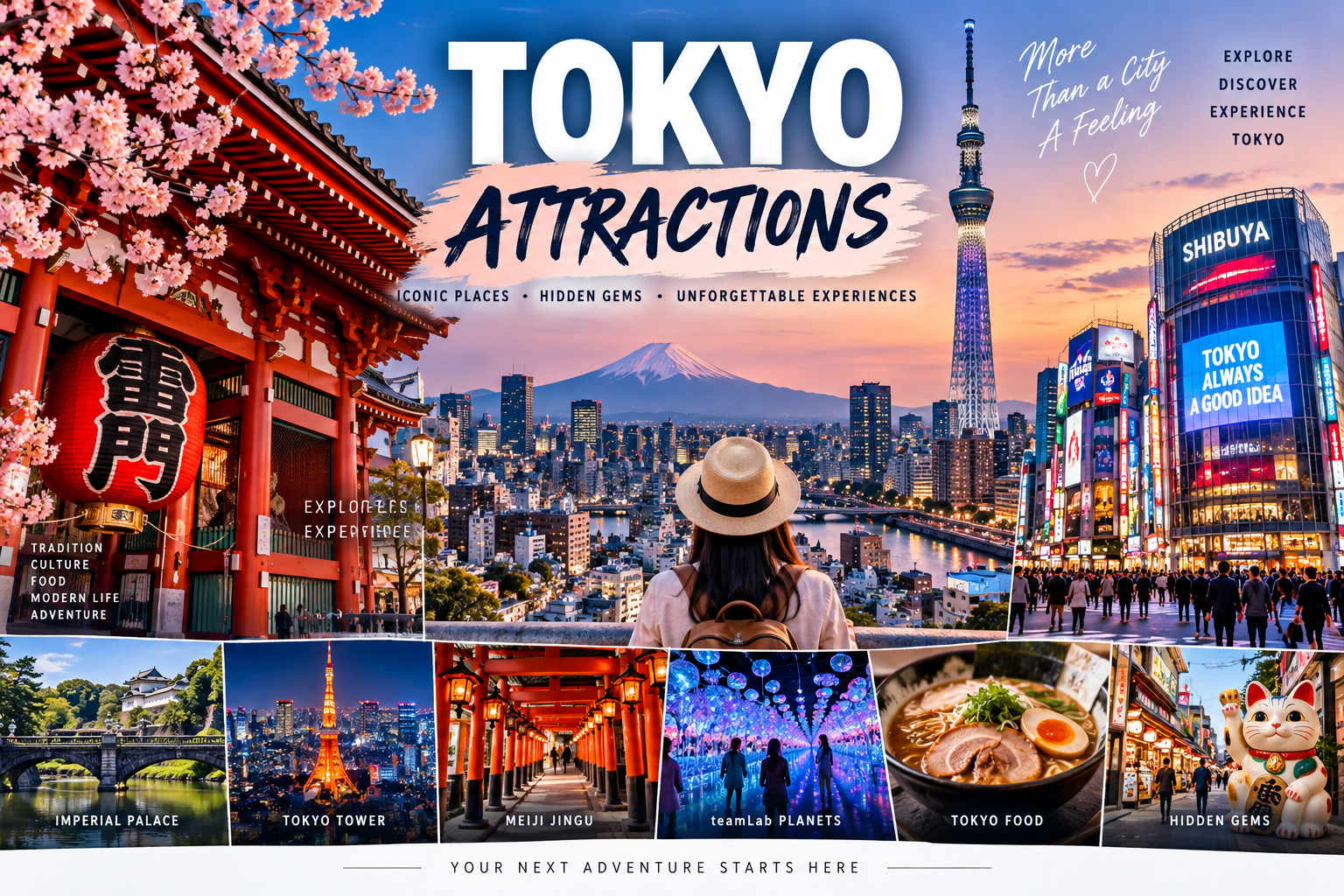
Tokyo attractions offer an extraordinary mix of ancient temples, futuristic technology, world-famous neighborhoods, gardens, observation decks, museums, shopping districts, and unforgettable cultural experiences. Whether you are visiting Tokyo for the first time, traveling with family, looking for hidden gems, or exploring Japan on a budget, the city has attractions for almost every type of traveler. The best Tokyo attractions are not limited to famous landmarks such as Sensoji Temple, Tokyo Skytree, Shibuya Crossing, and Tokyo Tower; the real magic comes from combining iconic sights with neighborhood experiences, local food, traditional culture, modern entertainment, and quieter places away from the crowds Tokyo Taxis
Why Tokyo Attractions Are Worth Exploring
Tokyo is often described as a futuristic city, but that description only tells half the story.
The other half is historical.
Tokyo was once known as Edo, and traces of that history remain visible in temples, shrines, gardens, traditional neighborhoods, museums, festivals, architecture, and food culture.
At the same time, Tokyo has become one of the world’s most influential centers for technology, fashion, entertainment, design, gaming, anime, architecture, and modern Japanese culture.
This unusual combination creates attractions that appeal to very different travelers.
A history enthusiast may spend hours around Asakusa.
A technology enthusiast may prefer teamLab Planets or Odaiba.
A fashion traveler may choose Harajuku, Omotesando, Ginza, or Shibuya.
A family may prefer Tokyo Disneyland, DisneySea, aquariums, museums, or interactive attractions.
A photographer may prioritize Tokyo Skytree, Shibuya Sky, Tokyo Tower, observation decks, gardens, and atmospheric streets.
A budget traveler can explore temples, neighborhoods, parks, markets, viewpoints, and walking routes without paying admission to every attraction.
The key is understanding what kind of Tokyo experience you want.
The Best Way to Think About Tokyo Attractions
Instead of creating a simple list of famous places, it is useful to divide Tokyo attractions into different experience categories.
This makes planning much easier.
Historical and Cultural Attractions
These include temples, shrines, traditional neighborhoods, gardens, museums, and places connected to Tokyo’s Edo heritage.
Examples include Sensoji Temple, Meiji Jingu, the Imperial Palace area, Hamarikyu Gardens, and Ueno’s cultural institutions.
Modern and Futuristic Attractions
Tokyo’s modern identity is represented by places such as teamLab Planets, Tokyo Skytree, Shibuya Sky, Odaiba, and technology-focused museums.
Entertainment Attractions
Tokyo is a global entertainment capital.
Disneyland, DisneySea, anime districts, gaming centers, themed cafés, shopping complexes, and nightlife areas all contribute to this side of the city.
Scenic Attractions
Observation decks, riverside areas, gardens, parks, and waterfront districts offer some of the best opportunities to see Tokyo from a different perspective.
Neighborhood Attractions
Some of Tokyo’s best experiences are not traditional “attractions” at all.
Walking through Shibuya, Harajuku, Shimokitazawa, Nakameguro, Yanaka, Koenji, or Kagurazaka can sometimes be more memorable than visiting a single landmark.
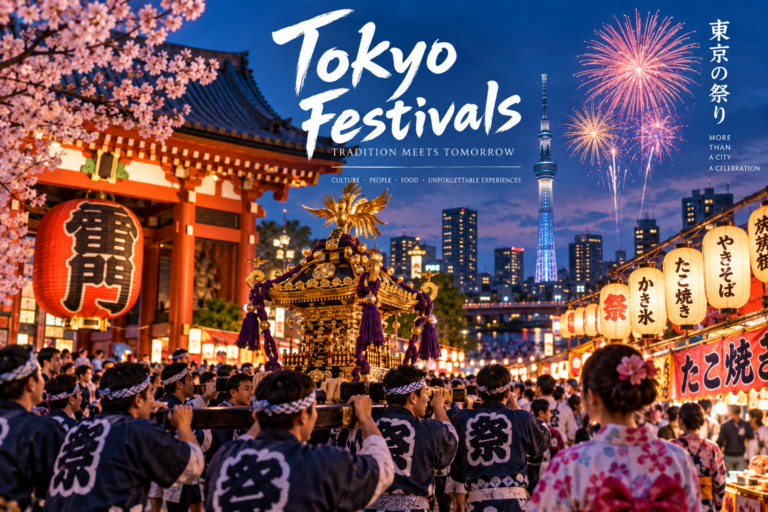
Sensoji Temple
Sensoji is one of the most recognizable cultural attractions in Tokyo and one of the best places to begin understanding the city’s historical character.
Located in Asakusa, Sensoji is famous for the Kaminarimon or Thunder Gate, its enormous red lantern, Nakamise-dori shopping street, five-story pagoda, and main temple hall.
Japan’s official tourism organization describes Sensoji as a major place to experience an atmosphere associated with the Edo period.
Why Sensoji Is Worth Visiting
The attraction is more than the temple itself.
The approach to Sensoji is part of the experience.
Nakamise-dori is lined with shops selling traditional souvenirs, snacks, crafts, clothing, sweets, and other Japanese products.
This makes Sensoji particularly useful for first-time visitors because one stop combines architecture, history, shopping, photography, food, and cultural observation.
Best Time to Visit Sensoji
Early morning is usually one of the best choices for travelers who want a quieter atmosphere.
Late evening can also be rewarding because Sensoji is illuminated after sunset.
During the daytime, the area can become extremely busy.
If you want atmospheric photographs rather than simply checking the attraction off your list, consider arriving before the major crowds.
What to Combine With Sensoji
Sensoji works particularly well as part of an Asakusa itinerary.
You can combine it with:
- Nakamise-dori
- Asakusa streets
- Sumida River
- Sumida Park
- Tokyo Skytree
- Tokyo Solamachi
- A Sumida River cruise
The official tourism information also highlights the walking connection between Sensoji, the Sumida River, and Tokyo Skytree.
Tokyo Skytree
Tokyo Skytree is one of the most dramatic modern landmarks in the city.
Standing 634 meters high, it is the tallest structure in Japan and offers panoramic views across Tokyo and the wider Kanto region.
For visitors, the attraction is about more than reaching the observation deck.
Tokyo Skytree Town includes shopping, restaurants, an aquarium, a planetarium, and other entertainment options.
Why Tokyo Skytree Is Popular
The biggest attraction is the view.
From the observation decks, Tokyo transforms from a collection of streets and buildings into an enormous urban landscape.
On clear days, Mt. Fuji may also be visible.
The tower has two major observation levels, the Tembo Deck and Tembo Galleria, providing different perspectives over the city.
Tokyo Skytree for Families
Skytree can be a useful family attraction because the surrounding complex provides several activities.
Families can combine the observation deck with shopping, dining, the aquarium, and other nearby attractions.
This makes it easier to build a half-day itinerary rather than visiting only the tower.
Tokyo Skytree for Photographers
Photographers should consider more than simply taking pictures from the observation deck.
The tower itself can be photographed from Asakusa, the Sumida River area, nearby bridges, and streets around Tokyo Skytree Town.
The relationship between old Asakusa and the futuristic tower is particularly interesting.
Shibuya Crossing
Shibuya Crossing may be one of the world’s most recognizable pedestrian intersections.
It sits directly outside Shibuya Station and has become an international symbol of modern Tokyo.
Japan’s National Tourism Organization notes that approximately 1,000 to 2,500 people can cross the intersection during a two-minute light cycle at busy times.
Why Shibuya Crossing Is Famous
The appeal is not simply the number of people.
It is the choreography.
When the traffic stops, pedestrians move from multiple directions simultaneously. Within seconds, the intersection becomes a moving pattern of people.
Then the traffic returns and the streets clear.
It is a remarkably simple experience that communicates something important about Tokyo: enormous numbers of people can move through a highly organized urban environment.
Best Things to Do Around Shibuya
Do not visit Shibuya Crossing and immediately leave.
Explore the surrounding neighborhood.
You can visit:
- Hachiko Statue
- Shibuya Center-Gai
- Shibuya 109
- Shibuya Sky
- Miyashita Park
- Dogenzaka
- Cat Street
- Omotesando
- Harajuku
Shibuya is also one of Tokyo’s major nightlife and entertainment districts.
Shibuya Sky
Shibuya Sky offers a completely different perspective on Shibuya.
Instead of standing at street level, you can look down on the famous crossing and surrounding skyline from an elevated observation area.
This is particularly attractive for travelers who want city photography.
Shibuya Sky for Sunset
Sunset is often one of the most desirable periods for observation decks because visitors can see the city transition from daylight to evening illumination.
However, this also means demand can be high.
Travelers who want sunset views should plan ahead rather than assuming they can arrive at the last minute.
Meiji Jingu
Meiji Jingu is one of Tokyo’s most important Shinto shrines.
It is located in a forested area close to Harajuku, creating a dramatic contrast with the surrounding city.
The official Japan tourism guide describes Meiji Jingu as a green sanctuary in the center of Tokyo and notes its proximity to Harajuku Station.
Why Meiji Jingu Feels Different
The transition is the attraction.
You can leave one of Tokyo’s busiest fashion districts and quickly enter a quieter environment surrounded by trees.
That contrast demonstrates one of Tokyo’s defining characteristics.
Urban intensity and natural spaces can exist surprisingly close together.
Meiji Jingu and Harajuku Combination
Meiji Jingu is ideal for combining with:
- Harajuku
- Takeshita Street
- Omotesando
- Yoyogi Park
- Shibuya
This allows travelers to experience traditional culture, youth fashion, parks, and modern shopping in a single area.
Tokyo Tower
Tokyo Tower remains one of Tokyo’s most recognizable landmarks.
Completed in 1958, it became an enduring part of the city’s skyline.
Although Tokyo Skytree is taller, Tokyo Tower has a different visual character and historical significance.
The official Tokyo tourism guide continues to list Tokyo Tower among the city’s major attractions.
Tokyo Tower vs Tokyo Skytree
The decision does not necessarily have to be either-or.
Tokyo Skytree provides a higher perspective and a modern architectural experience.
Tokyo Tower offers a classic Tokyo skyline experience.
If your schedule allows, seeing both from different parts of the city can be worthwhile.
teamLab Planets TOKYO
teamLab Planets has become one of Tokyo’s most internationally recognized modern attractions.
Located in Toyosu, the experience combines digital technology, art, light, sound, water, and interactive environments.
Visitors explore parts of the attraction barefoot, making it considerably more physical than a conventional art museum.
Why teamLab Planets Is Different
Traditional museums usually ask visitors to look at objects.
teamLab Planets asks visitors to become part of the environment.
Lights react to movement.
Digital installations change as visitors interact with them.
Water, sound, mirrors, flowers, and projected environments contribute to the experience.
The result is closer to entering an artwork than viewing one.
teamLab Planets for Families
The attraction can be particularly interesting for families because it combines art and technology.
However, visitors should remember that parts of the experience involve water and walking without shoes.
Check current requirements before visiting.
teamLab Planets and Toyosu
Do not treat the attraction as an isolated stop.
Toyosu offers additional opportunities for food, shopping, waterfront walks, and nearby experiences.
This can turn a teamLab visit into a broader half-day itinerary.
Imperial Palace
The Imperial Palace occupies a historically significant location associated with the former Edo Castle.
Today, the palace and surrounding grounds provide a quieter experience in central Tokyo.
The official Tokyo tourism guide identifies the Imperial Palace as the principal residence of the Emperor of Japan and notes that it stands on the former Edo Castle site.
Why Visit the Imperial Palace Area
The palace area is particularly useful for travelers interested in:
- Japanese history
- Architecture
- Gardens
- Central Tokyo
- Photography
- Walking
The surrounding landscape also provides a striking contrast with Tokyo’s business districts.
Hamarikyu Gardens
Hamarikyu Gardens is a historic Japanese garden surrounded by the modern Tokyo skyline.
The garden offers an opportunity to slow down after spending hours navigating busy shopping districts and railway stations.
The official Tokyo tourism guide notes that the site has historical connections to the Edo period and was used for different purposes by feudal lords.
Why Hamarikyu Is a Hidden Treasure for Busy Itineraries
One of the biggest problems with Tokyo travel is exhaustion.
Visitors often schedule too many major attractions.
A garden such as Hamarikyu gives you something different: space.
Instead of rushing from one attraction to another, you can walk, sit, drink tea, photograph the landscape, and enjoy the contrast between traditional garden design and modern skyscrapers.
Ginza
Ginza represents another side of Tokyo.
It is associated with luxury shopping, department stores, high-end dining, architecture, and polished city streets.
For travelers interested in premium Japanese products, fashion, watches, cosmetics, food, and design, Ginza can be particularly appealing.
Ginza for Luxury Travelers
Ginza is not simply about buying expensive products.
The district is also interesting as an example of Tokyo’s commercial culture.
Department stores, flagship shops, restaurants, galleries, and historic businesses operate alongside modern architecture.
Ginza for Food Travelers
Ginza is an excellent area for travelers interested in Japanese cuisine.
Depending on budget, visitors can explore everything from casual restaurants to sophisticated dining experiences.
The important point is to research restaurants in advance when a specific restaurant is a priority.
Akihabara
Akihabara is one of the best-known districts for electronics, anime, manga, gaming, collectibles, and Japanese pop culture.
It has evolved considerably over time, but it remains an important destination for travelers interested in the culture associated with Japanese gaming and entertainment.
Akihabara for Gamers
Visitors can explore:
- Arcade centers
- Retro games
- Console games
- Collectibles
- Anime merchandise
- Manga
- Character goods
- Electronics
The experience can be particularly rewarding for visitors who have a specific interest rather than simply wanting to see the district.
Harajuku
Harajuku is strongly associated with Japanese youth culture and fashion.
Takeshita Street is the area’s most famous shopping street, while nearby Omotesando offers a more sophisticated architectural and fashion environment.
Harajuku for First-Time Visitors
A practical route is to combine:
Meiji Jingu → Harajuku → Takeshita Street → Omotesando → Shibuya.
This gives you several very different experiences without requiring excessive cross-city travel.
Ueno Park
Ueno is one of Tokyo’s major cultural areas.
Ueno Park provides access to museums, cultural institutions, green space, and nearby shopping streets.
For travelers who enjoy museums, history, art, science, or family-friendly attractions, Ueno can be one of the most useful areas to include in a Tokyo itinerary.
Why Ueno Is Good for Culture Lovers
Unlike a single attraction, Ueno works as a cultural cluster.
Instead of spending the entire day traveling between museums, you can stay in the same general area.
This makes the neighborhood particularly useful for rainy days.
Tokyo National Museum
Located in Ueno, Tokyo National Museum is one of the most important places to explore Japanese art and cultural history.
Travelers interested in understanding Japan beyond contemporary pop culture should consider including a major museum in their Tokyo itinerary.
A visit can provide context for objects, traditions, artistic styles, religious influences, and historical periods that visitors may otherwise encounter without understanding their significance.
Odaiba
Odaiba is a waterfront entertainment and technology district built on reclaimed land.
The area offers modern architecture, waterfront scenery, shopping, entertainment, and museums.
The official Tokyo tourism guide describes Odaiba as a diverse attraction area in Tokyo Bay, particularly suitable for visitors of different ages.
Odaiba for Families
Odaiba is particularly useful for families because several attractions can be combined within the same general area.
The National Museum of Emerging Science and Innovation, known as Miraikan, is another major option for science and technology enthusiasts. Japan’s official tourism organization highlights exhibits covering areas such as space, life sciences, robotics, and advanced technology.
Tokyo Disneyland
Tokyo Disneyland is one of the most popular theme-park experiences associated with Tokyo.
It is especially appropriate for:
- Families
- Disney fans
- First-time visitors with children
- Theme-park enthusiasts
Because the park can consume an entire day, it should usually be treated as the primary activity rather than something squeezed between other Tokyo attractions.
Tokyo DisneySea
Tokyo DisneySea offers a different atmosphere from Disneyland and is widely known for its distinctive nautical and fantasy-themed environments.
For travelers who have limited time, the decision between Disneyland and DisneySea should depend on personal interests, age group, and preferred attractions.
Families with young children may prioritize differently from adults seeking immersive environments and themed entertainment.
Shinjuku
Shinjuku is one of Tokyo’s most energetic districts.
It combines skyscrapers, department stores, restaurants, entertainment, nightlife, transport connections, and observation opportunities.
Tokyo Metropolitan Government Building
The Tokyo Metropolitan Government Building is an important attraction for travelers looking for city views without necessarily paying for a commercial observation deck.
It can also be useful as a starting point for exploring western Shinjuku.
Shinjuku Gyoen National Garden
Shinjuku Gyoen offers one of the city’s most important green spaces.
Its location makes it especially valuable for travelers who want a break from urban intensity without leaving central Tokyo.
During seasonal periods, especially spring, gardens and parks can become major attractions in their own right.
Yanaka
Yanaka provides a slower, more traditional atmosphere than central commercial districts.
Its streets, temples, small shops, local businesses, and neighborhood character make it useful for travelers searching for a less standardized Tokyo experience.
Why Yanaka Matters
The biggest advantage of Yanaka is that it feels like a neighborhood rather than a collection of tourist attractions.
This makes it particularly suitable for repeat visitors who have already seen the major landmarks.
Shimokitazawa
Shimokitazawa is known for its independent shops, vintage clothing, cafés, music culture, and youthful atmosphere.
It is a good choice for travelers interested in Tokyo beyond the traditional sightseeing circuit.
Shimokitazawa for Young Travelers
Travelers interested in:
- Vintage fashion
- Independent music
- Cafés
- Small restaurants
- Street culture
- Alternative shopping
may find Shimokitazawa more interesting than conventional shopping districts.
Nakameguro
Nakameguro is particularly famous for its riverside atmosphere and seasonal scenery.
The area has cafés, restaurants, small shops, and an appealing neighborhood environment.
It is especially attractive for travelers who prefer slow exploration over major tourist attractions.
Tokyo’s Free Attractions
Tokyo does not have to be an expensive destination.
Many of the city’s most memorable experiences are free or inexpensive.
Free Tokyo Attractions Worth Considering
Examples include:
- Shibuya Crossing
- Meiji Jingu grounds
- Many temple and shrine grounds
- Imperial Palace exterior areas
- Parks
- Neighborhood walks
- Certain observation viewpoints
- Street photography
- Some public cultural spaces
The official Tokyo tourism guide specifically includes free attractions among its attraction categories.
How to Build a Low-Cost Tokyo Day
A budget traveler could create a day around:
Meiji Jingu → Harajuku → Shibuya Crossing → Shibuya neighborhood → evening city walk.
Another low-cost day could include:
Sensoji → Nakamise-dori → Sumida River → Asakusa streets → Tokyo Skytree area.
The goal is to group attractions geographically rather than paying for transportation repeatedly.
Tokyo Attractions for First-Time Visitors
First-time visitors should avoid trying to see everything.
Tokyo is too large for that approach.
Instead, select attractions that demonstrate different sides of the city.
Recommended First-Time Combination
A strong first-time selection could include:
Sensoji for traditional Tokyo.
Meiji Jingu for spiritual and natural Tokyo.
Shibuya Crossing for contemporary Tokyo.
Tokyo Skytree or Tokyo Tower for skyline views.
teamLab Planets for technology and immersive art.
Shinjuku for nightlife and urban energy.
A major museum or garden for cultural depth.
This creates a much more complete understanding of Tokyo than visiting seven similar observation decks.
Tokyo Attractions for Families
Families should prioritize attractions based on age and energy levels.
A day containing multiple museums, temples, and long walking routes may be exhausting for young children.
Best Family-Friendly Options
Potential choices include:
- Tokyo Disneyland
- Tokyo DisneySea
- teamLab Planets
- Tokyo Skytree
- Sumida Aquarium
- Ueno Zoo
- Miraikan
- Odaiba
- Kid-friendly museums
- Parks and gardens
The Family Planning Rule
Try to alternate high-energy attractions with slower activities.
For example:
Theme park → relaxed dinner → hotel.
Or:
Museum → park → casual neighborhood exploration.
This is often more enjoyable than scheduling three major attractions in one day.
Tokyo Attractions for Couples
Tokyo can be exceptionally romantic, but couples do not need to follow a conventional romantic itinerary.
Romantic Tokyo Experiences
Consider:
- Tokyo Tower at night
- Tokyo Skytree after sunset
- Shibuya Sky
- Hamarikyu Gardens
- Sumida River cruise
- Odaiba waterfront
- Ginza dinner
- Nakameguro
- Quiet shrine walks
- Rooftop restaurants
The best romantic experience is often created by combining an attraction with time to wander rather than rushing through a checklist.
Tokyo Attractions for Solo Travelers
Tokyo is one of the world’s easiest cities to explore alone.
Solo travelers can move through museums, restaurants, shopping streets, cafés, temples, observation decks, and neighborhoods without needing a group.
Best Solo Travel Areas
Shinjuku, Shibuya, Asakusa, Ueno, Akihabara, Harajuku, and Ginza offer different experiences and are relatively easy to incorporate into independent itineraries.
Solo travelers should also consider smaller neighborhood walks.
They often provide more opportunities for spontaneous discoveries.
Tokyo Attractions for Older Travelers
Older travelers may want to reduce the amount of walking and unnecessary transfers.
Tokyo’s public transportation is extensive, but stations can involve considerable walking, stairs, escalators, and crowded corridors.
Better Strategy for Older Travelers
Choose one major attraction and two nearby low-intensity activities per day.
For example:
Sensoji → lunch → Sumida River.
Or:
Meiji Jingu → café → Omotesando.
Or:
Tokyo Skytree → shopping → dinner.
This creates a more comfortable pace.
Tokyo Attractions for Photographers
Tokyo is one of the world’s strongest photography destinations because its visual identity changes dramatically from neighborhood to neighborhood.
Best Photography Subjects
Consider:
- Shibuya Crossing
- Tokyo Skytree
- Tokyo Tower
- Sensoji
- Meiji Jingu
- Odaiba
- Tokyo streets at night
- Shinjuku
- Harajuku
- Ginza
- Yanaka
- Sumida River
- Traditional architecture
- Neon districts
The Best Tokyo Photography Strategy
Do not photograph only famous landmarks.
Some of the strongest photographs come from transitions.
For example, the contrast between a quiet shrine entrance and a busy street.
Or traditional architecture beneath a modern skyscraper.
Or a small neighborhood restaurant surrounded by contemporary buildings.
Tokyo’s visual appeal often comes from juxtaposition.
Tokyo Attractions for Food Lovers
Food should not be treated as an activity separate from sightseeing.
Tokyo’s neighborhoods are closely connected to their food cultures.
Food Areas to Explore
Travelers can consider:
- Tsukiji outer market
- Toyosu
- Asakusa
- Ginza
- Shinjuku
- Shibuya
- Ueno
- Ebisu
- Kichijoji
- Tokyo Station area
Why Neighborhood Food Works Better Than Restaurant Hunting
If you spend your entire trip traveling across Tokyo for individual restaurants, you lose time.
Instead, choose a neighborhood and explore its food options.
This allows you to combine dining with sightseeing.
Tokyo Attractions for Budget Travelers
Tokyo can be expensive, but the biggest mistake is assuming every worthwhile experience requires a ticket.
A large portion of the city’s character is experienced outdoors.
Budget-Friendly Tokyo Strategy
Focus on:
- Walking routes
- Temples
- Shrines
- Parks
- Neighborhoods
- Free viewpoints
- Local shopping streets
- Affordable restaurants
- Public spaces
Then choose one or two paid attractions that genuinely interest you.
This often produces a better trip than buying tickets for everything.
Ten Major Tokyo Attraction Brands and Experiences Compared
The following comparison is designed to help travelers quickly understand how ten major Tokyo attraction brands or destination experiences differ.
| Attraction / Brand | Main Experience | Best For | Time Needed | Cost Level | Atmosphere |
|---|---|---|---|---|---|
| Sensoji | Temple & traditional culture | First-time visitors, culture lovers | 1.5–3 hours | Low | Historic |
| Tokyo Skytree | Observation & skyline | Families, photographers | 2–4 hours | Medium–High | Modern |
| Shibuya Crossing | Urban culture | First-time visitors, photographers | 1–2 hours | Low | Energetic |
| Shibuya Sky | Observation | Couples, photographers | 1.5–2.5 hours | Medium | Modern |
| Meiji Jingu | Shrine & forest | Culture lovers, families | 1.5–2.5 hours | Low | Peaceful |
| Tokyo Tower | Landmark & views | Couples, first-time visitors | 1.5–2.5 hours | Medium | Iconic |
| teamLab Planets | Immersive digital art | Families, young travelers | 1.5–3 hours | Medium | Futuristic |
| Tokyo Disneyland | Theme park | Families, Disney fans | Full day | High | Entertainment |
| Tokyo DisneySea | Theme park | Couples, families, theme-park fans | Full day | High | Immersive |
| Miraikan | Science & technology | Families, technology fans | 2–4 hours | Medium | Educational |
This table should not be interpreted as a universal ranking.
The “best” attraction depends heavily on your travel style.
For example, a history enthusiast may prefer Sensoji over a skyscraper, while a technology enthusiast may consider teamLab Planets more valuable than a traditional garden.
How to Choose the Best Tokyo Attractions for Your Trip
The best attraction list is personal.
Start by asking four questions.
What Do You Want to Experience?
Do you want:
History?
Food?
Technology?
Shopping?
Nature?
Photography?
Anime?
Nightlife?
Architecture?
Family entertainment?
Your answer should determine your attractions.
How Many Days Do You Have?
A two-day Tokyo trip requires a completely different strategy from a seven-day trip.
With two days, focus on geographic clusters.
With four or five days, you can explore different neighborhoods.
With a week or more, you can slow down and explore lesser-known districts.
What Is Your Travel Budget?
Paid attractions can add up quickly.
Set a daily attraction budget before booking.
How Much Walking Can You Handle?
This is often ignored.
Tokyo sightseeing can involve far more walking than travelers expect because large railway stations themselves can be enormous.
A sightseeing plan that looks easy on a map can become exhausting in real life.
How to Plan Tokyo Attractions by Neighborhood
One of the smartest ways to plan Tokyo is to stop thinking in terms of individual attractions.
Think in geographic clusters.
Asakusa and Skytree
Combine:
Sensoji → Nakamise-dori → Sumida River → Tokyo Skytree.
This is one of the easiest combinations because the attractions are geographically connected.
Harajuku and Shibuya
Combine:
Meiji Jingu → Harajuku → Omotesando → Shibuya Crossing → Shibuya Sky.
This creates a strong mix of traditional culture, youth culture, fashion, shopping, and modern architecture.
Ueno
Combine:
Ueno Park → Tokyo National Museum → other nearby museums → Ameyoko.
This is particularly useful for culture-focused travelers.
Toyosu and Odaiba
Combine:
teamLab Planets → Toyosu → waterfront → Odaiba.
This creates a modern Tokyo experience.
Shinjuku
Combine:
Shinjuku Gyoen → Tokyo Metropolitan Government Building → shopping → dinner → nightlife.
Common Mistakes When Visiting Tokyo Attractions
Tokyo rewards preparation, but excessive planning can also create problems.
Trying to See Everything
The most common mistake is creating an unrealistic itinerary.
Tokyo is not a city that should be “completed.”
Trying to visit ten major attractions in one day usually means spending more time in trains and queues than actually experiencing the city.
Ignoring Travel Time
Two attractions may look close geographically but still require complicated station transfers.
Always check the actual route.
Visiting Every Attraction at Midday
Midday is often the busiest period for major tourist sites.
Whenever practical, place popular attractions early in the morning or later in the afternoon.
Forgetting to Check Reservations Tokyo attractions
Some popular attractions have timed entry, advance reservations, or limited capacity.
Always check current official information before traveling.
Overlooking Neighborhoods Tokyo attractions
If you visit only famous landmarks, you may leave Tokyo knowing its tourist attractions but not understanding its everyday character.
Leave room for unplanned walks.
Practical Tips for Visiting Tokyo Attractions
Start Early Tokyo attractions
Early mornings can provide a calmer atmosphere at major cultural sites.
Use Public Transportation Strategically Tokyo attractions
Tokyo’s railway and subway systems make sightseeing practical, but avoid unnecessary cross-city journeys.
Group Attractions Tokyo attractions
Build daily itineraries around neighborhoods.
Wear Comfortable Shoes Tokyo attractions
This may sound obvious, but it is one of the most important Tokyo travel tips.
You can walk a surprising distance in a single sightseeing day.
Carry a Portable Battery Tokyo attractions
Navigation, translation, tickets, photography, train apps, and communication can drain your phone.
Keep Some Flexibility Tokyo attractions
Do not schedule every minute.
Leave room for unexpected discoveries.
Check Official Information Tokyo attractions
Opening hours, entry rules, ticket systems, temporary closures, exhibitions, and operating conditions can change.
Tokyo’s official tourism network provides tourist information centers at locations including Tokyo Metropolitan Government, Busta Shinjuku, Haneda Airport, Keisei Ueno, Yaesu, and Tama. It also provides an online Tokyo Navigation AI service.
How to Avoid Tourist Crowds in Tokyo
Crowds are not necessarily a reason to avoid Tokyo.
They are a reason to plan intelligently.
Visit Famous Attractions Early Tokyo attractions
Sensoji and Meiji Jingu can be particularly pleasant earlier in the day.
Explore Side Streets Tokyo attractions
Major attractions often have quieter streets only a few minutes away.
Travel During Shoulder Periods Tokyo attractions
Depending on the season, weekday travel may provide a different experience from weekends.
Choose Lesser-Known Neighborhoods Tokyo attractions
Yanaka, Koenji, Shimokitazawa, and other residential or creative districts can provide a different perspective.
Tokyo Attractions During Rainy Weather
Rain does not have to ruin a Tokyo trip.
In fact, Tokyo can be atmospheric in wet weather.
Indoor Options Tokyo attractions
Consider:
- Museums
- Department stores
- Shopping complexes
- Aquariums
- teamLab
- Arcades
- Indoor entertainment
- Cafés
- Covered shopping streets
Rainy-Day Strategy Tokyo attractions
Choose attractions located close to major stations.
This minimizes outdoor walking and makes transportation easier.
Tokyo Attractions in Spring
Spring is one of Tokyo’s most visually famous seasons.
Cherry blossoms can transform parks, riversides, gardens, and streets.
Spring Planning Tokyo attractions
Popular cherry blossom locations can become extremely crowded.
If photography is important, early mornings can provide a more peaceful experience.
Do not limit your spring itinerary to famous parks.
Smaller neighborhood parks and riversides can also be beautiful.
Tokyo Attractions in Summer
Summer can be hot and humid.
Outdoor sightseeing should therefore be balanced with indoor activities.
Summer Strategy Tokyo attractions
Plan:
Morning outdoor attraction → indoor afternoon → evening neighborhood exploration.
Evening can be particularly pleasant for city walks and illuminated landmarks.
Tokyo Attractions in Autumn
Autumn is one of the most attractive seasons for gardens and parks.
The changing foliage creates opportunities for photography and slower sightseeing.
Consider combining major cultural attractions with gardens rather than filling every day with shopping.
Tokyo Attractions in Winter
Winter can provide clearer skies and excellent city views.
It can also offer seasonal illuminations and fewer crowds at some attractions.
For travelers interested in skyline photography, winter can be particularly rewarding when visibility is good.
Pros and Cons of Tokyo Attractions
Advantages Tokyo attractions
Tokyo offers exceptional variety.
Travelers can experience centuries-old temples, modern architecture, immersive technology, gardens, shopping, food, entertainment, and nightlife within the same metropolitan area.
The transportation network makes it possible to visit multiple districts efficiently.
There are also many free or low-cost experiences.
Disadvantages Tokyo attractions
The city can be overwhelming.
Major attractions may be crowded.
Railway stations can be confusing for first-time visitors.
Walking distances can be underestimated.
Popular attractions may require advance planning.
Travelers who try to do too much can become exhausted.
The Biggest Hidden Advantage of Tokyo Attractions
Tokyo’s biggest advantage may not be any individual attraction.
It is the density of experiences.
In many cities, visiting one major attraction can consume half a day because of transportation.
In Tokyo, several different experiences can often be combined in one neighborhood.
That means a temple can lead to a shopping street.
The shopping street can lead to a river.
The river can lead to a skyscraper.
The skyscraper can lead to a shopping complex.
That interconnectedness is one of the city’s greatest strengths for travelers.
The Future of Tokyo Attractions
Tokyo’s attraction landscape is likely to become even more focused on immersive experiences, technology, accessibility, sustainability, personalization, and neighborhood-based tourism.
The growth of immersive digital attractions is particularly significant.
teamLab Planets, for example, expanded substantially in January 2025, adding new educational project areas and increasing its exhibition area by approximately 1.5 times.
This suggests that Tokyo’s future attractions may increasingly combine entertainment with technology and interactive learning.
More Personalized Travel
Tokyo’s official tourism infrastructure is already adopting AI-assisted visitor support.
GO TOKYO currently promotes Tokyo Navigation AI as a 24/7 online tourism consultation service.
Future visitors may increasingly build dynamic itineraries based on weather, crowd levels, personal interests, available time, mobility requirements, and transportation conditions.
More Accessible Tourism
Accessibility is also becoming increasingly important.
Tokyo’s tourism information centers specifically highlight accessible tourism services, including wheelchair and stroller availability at selected locations.
This direction is important because the future of tourism is not simply about attracting more visitors.
It is about making the city easier to experience for different ages, abilities, family structures, and travel styles.
Neighborhood Tourism Will Become More Important
As famous landmarks become increasingly crowded, travelers are likely to seek more authentic neighborhood experiences.
Instead of simply asking “What are the top ten attractions?” visitors may increasingly ask:
Where can I experience everyday Tokyo?
Where can I avoid crowds?
Which neighborhood matches my interests?
Where can I find independent cafés?
Where can I experience traditional Tokyo without a huge tour group?
That shift could benefit areas outside the traditional tourist circuit.
A Better Tokyo Attractions Philosophy
The best Tokyo itinerary is not necessarily the one with the most attractions.
It is the one with the best balance.
A memorable day might contain:
One famous landmark.
One cultural experience.
One neighborhood walk.
One excellent meal.
One unexpected discovery.
That is often more rewarding than rushing through five major attractions.
Tokyo is a city where wandering can be part of the itinerary.
Sample Two-Day Tokyo Attractions Itinerary
Day One: Traditional and Modern Tokyo
Start in Asakusa.
Visit Sensoji and explore Nakamise-dori.
Walk toward the Sumida River.
Continue toward Tokyo Skytree.
Spend the afternoon around Skytree Town.
In the evening, travel toward Shibuya.
Experience Shibuya Crossing after dark.
If you have a reservation and enough energy, finish with Shibuya Sky.
Day Two: Culture, Fashion and Technology
Start at Meiji Jingu.
Walk toward Harajuku.
Explore Takeshita Street and surrounding areas.
Continue toward Omotesando.
Move to Shibuya.
Spend the afternoon in Shibuya or travel toward Toyosu.
Visit teamLab Planets if it fits your schedule and current ticket availability.
Finish with dinner around Toyosu, Ginza, or Shibuya.
Sample Three-Day Tokyo Attractions Itinerary
Day One Tokyo attractions
Sensoji → Asakusa → Sumida River → Tokyo Skytree.
Day Two Tokyo attractions
Meiji Jingu → Harajuku → Omotesando → Shibuya → Shibuya Sky.
Day Three Tokyo attractions
Tokyo Imperial Palace area → Ginza → teamLab Planets → Toyosu waterfront.
This itinerary provides history, culture, architecture, shopping, technology, food, and skyline experiences without attempting to cover every district.
Sample Five-Day Tokyo Attractions Itinerary
Day One Tokyo attractions
Asakusa and Tokyo Skytree.
Day Two Tokyo attractions
Meiji Jingu, Harajuku, Omotesando, and Shibuya.
Day Three Tokyo attractions
Imperial Palace area, Ginza, Tokyo Station, and Hamarikyu Gardens.
Day Four Tokyo attractions
Ueno, museums, Akihabara, and nearby neighborhoods.
Day Five Tokyo attractions
Toyosu, teamLab Planets, Odaiba, and waterfront areas.
This five-day approach provides considerably more breathing room than a checklist itinerary.
Final Advice for Choosing Tokyo Attractions
Do not choose attractions solely because they are famous.
Choose them because they answer something you want to experience.
If you want to understand traditional Japan, prioritize temples, shrines, gardens, museums, and historic neighborhoods.
If you want modern Tokyo, focus on Shibuya, Shinjuku, Skytree, Tokyo Tower, Odaiba, and immersive technology.
If you want food, build your itinerary around neighborhoods.
If you want photography, plan around light and viewpoints.
If you are traveling with children, prioritize entertainment and reduce long transfers.
If you are on a budget, focus on neighborhoods, temples, parks, free viewpoints, and carefully selected paid attractions.
If you have visited Tokyo before, deliberately move away from the most famous landmarks and explore areas such as Yanaka, Shimokitazawa, Koenji, Nakameguro, or other neighborhood destinations.
FAQs
What are the best Tokyo attractions for first-time visitors?
For a first visit, strong choices include Sensoji Temple, Tokyo Skytree, Shibuya Crossing, Meiji Jingu, Tokyo Tower or Shibuya Sky, and one modern attraction such as teamLab Planets. These provide a balanced introduction to traditional, modern, cultural, and futuristic Tokyo.
How many days do you need to see Tokyo attractions?
Four to five days is a useful starting point for first-time visitors who want to experience several major districts without rushing constantly. Two or three days can work, but you will need to prioritize.
What is the number one attraction in Tokyo?
There is no universally correct number-one attraction because rankings depend on methodology and traveler interests. A 2025 inbound tourist attraction ranking reported teamLab Planets as number one in Tokyo, followed by Sensoji, Tokyo Tower, Tokyo Skytree, and Shibuya Scramble Crossing.
Is Sensoji Temple free to visit?
The temple grounds are generally accessible without an admission fee, although specific attractions, museums, experiences, or activities in the surrounding area may have separate costs. Always check current official information before visiting.
Is Tokyo Skytree worth visiting?
Tokyo Skytree can be worthwhile if you enjoy panoramic city views, architecture, photography, or skyline experiences. Its location also makes it easy to combine with Asakusa.
Is Tokyo Tower better than Tokyo Skytree?
Neither is universally better. Tokyo Skytree offers a higher viewpoint and a modern experience, while Tokyo Tower provides a classic Tokyo landmark experience. Your choice should depend on your interests and itinerary.
Is Shibuya Crossing worth visiting?
Yes, especially for first-time visitors. It is easy to access and represents one of Tokyo’s most recognizable examples of urban energy. Japan’s official tourism organization describes it as one of Tokyo’s busiest and most recognizable sights.
What are the best Tokyo attractions for families?
Tokyo Disneyland, Tokyo DisneySea, teamLab Planets, Tokyo Skytree, Miraikan, aquariums, parks, and selected museums can work particularly well for families. The best choice depends on the children’s ages and interests.
What are the best free attractions in Tokyo?
Shibuya Crossing, Meiji Jingu, many temple and shrine grounds, parks, neighborhood walks, and selected viewpoints can be explored for free or at very low cost.
What are the best Tokyo attractions for couples?
Couples may enjoy Tokyo Tower, Tokyo Skytree, Shibuya Sky, Hamarikyu Gardens, Sumida River experiences, Odaiba waterfront, Ginza dining, and evening neighborhood walks.
What are the best Tokyo attractions for solo travelers?
Solo travelers have enormous flexibility. Museums, temples, cafés, shopping districts, gardens, observation decks, Akihabara, Shibuya, Shinjuku, Ueno, and neighborhood walks all work well.
What should I do in Tokyo when it rains?
Choose indoor attractions such as museums, shopping complexes, aquariums, teamLab, arcades, department stores, cafés, and indoor entertainment venues. Rain can also make Tokyo’s streets particularly atmospheric for photography.
When is the best time to visit Tokyo attractions?
There is no single best season. Spring is famous for cherry blossoms, autumn is excellent for foliage, winter can provide clear skyline views, and summer offers long days but can be hot and humid. The best period depends on your priorities.
How can I avoid crowds at Tokyo attractions?
Visit major attractions early, travel on weekdays where practical, reserve popular attractions when required, and explore less-touristed neighborhoods. You can also schedule famous sites during periods when other tourists are eating or commuting.
Should I book Tokyo attractions in advance?
For highly popular attractions, timed-entry experiences, observation decks, theme parks, and immersive exhibitions, advance booking can be wise. Always check the attraction’s current official website for ticket rules.
Are Tokyo attractions expensive?
Some major attractions can be expensive, especially theme parks and premium observation experiences. However, Tokyo also has many free or inexpensive cultural attractions, parks, neighborhoods, walking routes, and public spaces.
Can I see Tokyo attractions without a tour?
Yes. Tokyo has an extensive public transportation network and many attractions are straightforward to visit independently. Travelers who prefer flexibility may find self-guided exploration particularly rewarding.
What is the biggest mistake tourists make when visiting Tokyo?
Trying to see too much in too little time is one of the biggest mistakes. A geographically organized itinerary is usually more comfortable and efficient than moving randomly between famous attractions.
Conclusion
Tokyo attractions are far more diverse than a simple list of famous landmarks suggests. The city combines historic temples, Shinto shrines, gardens, museums, futuristic architecture, immersive technology, shopping districts, entertainment venues, waterfront areas, food neighborhoods, and ordinary residential streets into one enormous travel experience. The most memorable Tokyo trip is rarely the one where you visit the greatest number of attractions. It is the trip where you understand how different parts of Tokyo connect. Start with the icons if it is your first visit. See Sensoji, experience Shibuya Crossing, admire Tokyo from an observation deck, walk through Meiji Jingu, and explore a modern attraction such as teamLab Planets. But then give yourself permission to slow down.