Tokyo Streets: 25 Amazing Streets and Areas You Must Explore
Tokyo streets reveal the city’s real character, from neon-filled entertainment districts and peaceful traditional lanes to fashionable shopping avenues and tiny local alleys. Exploring them on foot is one of the best ways to understand Tokyo beyond its famous landmarks Smoke in Tokyo
Why Tokyo Streets Are Worth Exploring
Tokyo is often introduced through its biggest attractions: Shibuya Crossing, Tokyo Tower, Senso-ji, the Imperial Palace, and the Tokyo Skytree. These landmarks are worth visiting, but they only tell part of the story.
The deeper experience begins when you leave the main attraction and start walking.
A narrow residential road can suddenly open into a lively shopping street. A quiet temple lane may sit only minutes from a crowded railway station. A fashionable neighborhood can change completely after sunset, while a tiny alley can reveal restaurants and bars that are invisible from a major road.
This contrast is one of the most fascinating things about Tokyo.
The city does not have one single street style. Instead, Tokyo is a collection of neighborhoods with their own personalities, architecture, food traditions, shopping cultures, and rhythms.
For first-time visitors, this creates an interesting opportunity. You do not need to spend every hour moving between famous tourist attractions. Sometimes, simply choosing a neighborhood and walking without rushing can produce the most memorable part of the trip.
Understanding the Different Types of Tokyo Streets
Before exploring individual streets and neighborhoods, it helps to understand what makes Tokyo’s urban landscape different.
Some roads are major commercial arteries filled with department stores, restaurants, offices, and huge signs. Others are tiny local lanes designed around homes, small businesses, temples, schools, and neighborhood life.
Tokyo also has many shotengai, or traditional shopping streets. These streets often contain independent stores, food shops, cafés, bakeries, pharmacies, and everyday services.
Then there are yokocho, narrow alley-style areas that are especially associated with small restaurants and bars.
The result is a city where a single train station can lead to several completely different walking experiences.
Major Commercial Streets
These are the streets most likely to appear in travel photographs.
They usually feature large stores, impressive architecture, digital advertising, famous brands, cafés, restaurants, and heavy pedestrian traffic.
Examples include major areas around Ginza, Shibuya, Omotesando, and Shinjuku.
Traditional Shopping Streets
Traditional shopping streets offer a slower and more local atmosphere.
They can be particularly interesting for visitors who want to see how residents shop, eat, and move through their neighborhoods.
Residential Streets
Residential Tokyo is often overlooked.
Quiet streets lined with compact houses, bicycles, utility poles, small gardens, vending machines, and neighborhood businesses can provide a completely different perspective.
These areas are best explored respectfully because they are people’s homes rather than tourist attractions.
Nightlife Alleys
Areas such as Golden Gai and Omoide Yokocho are known for their compact bars and restaurants.
They are visually fascinating but can be extremely small. Visitors should pay attention to restaurant rules, seating arrangements, minimum charges, and whether a venue is welcoming to international visitors.
The Best Tokyo Streets and Neighborhoods to Explore
Tokyo has far too many interesting streets to fit into one trip, so the best strategy is to choose areas according to your interests.
The following selection covers famous streets, traditional shopping areas, fashion districts, food neighborhoods, photography locations, and quieter walking routes.
Takeshita Street in Harajuku
Takeshita Street is one of Tokyo’s most recognizable pedestrian shopping streets.
Located near Harajuku Station, it became internationally famous for youth fashion, colorful stores, unusual snacks, cosmetics, accessories, and pop-culture influences.
The street can become very crowded, especially during popular travel periods.
That crowd is part of the experience, but it also means visitors should not expect a relaxed stroll during busy hours.
Takeshita Street works particularly well for travelers interested in fashion, youth culture, Japanese street style, affordable shopping, and playful food experiences.
What to Look For
Pay attention to the small stores rather than focusing only on the largest signs.
You may find:
- Fashion accessories
- Vintage-inspired clothing
- Character merchandise
- Japanese sweets
- Crêpes
- Cosmetics
- Small souvenirs
- Trend-driven cafés
The surrounding Harajuku area is equally important. Walking away from Takeshita Street toward quieter side streets can reveal a very different atmosphere.
Omotesando
If Takeshita Street represents energetic youth culture, Omotesando offers a more sophisticated interpretation of Tokyo fashion.
The broad tree-lined avenue is known for architecture, luxury stores, designer boutiques, cafés, and contemporary retail spaces.
The buildings themselves are part of the attraction.
Architecture enthusiasts can spend considerable time studying the façades and unusual designs along the avenue.
Best Experience on Omotesando
Rather than simply walking from one store to another, look upward.
Tokyo’s architectural landscape often becomes more interesting above street level. Modern buildings, carefully designed entrances, signs, balconies, and retail façades create a visual collection that changes from block to block.
Cat Street
Cat Street connects the Harajuku and Shibuya areas and provides a more relaxed alternative to the largest commercial avenues.
It is associated with fashion, independent stores, cafés, and street-style culture.
The atmosphere can feel younger and less formal than Omotesando while being less chaotic than Takeshita Street.
For travelers searching for Tokyo streets for fashion, this is one of the areas worth adding to an itinerary.
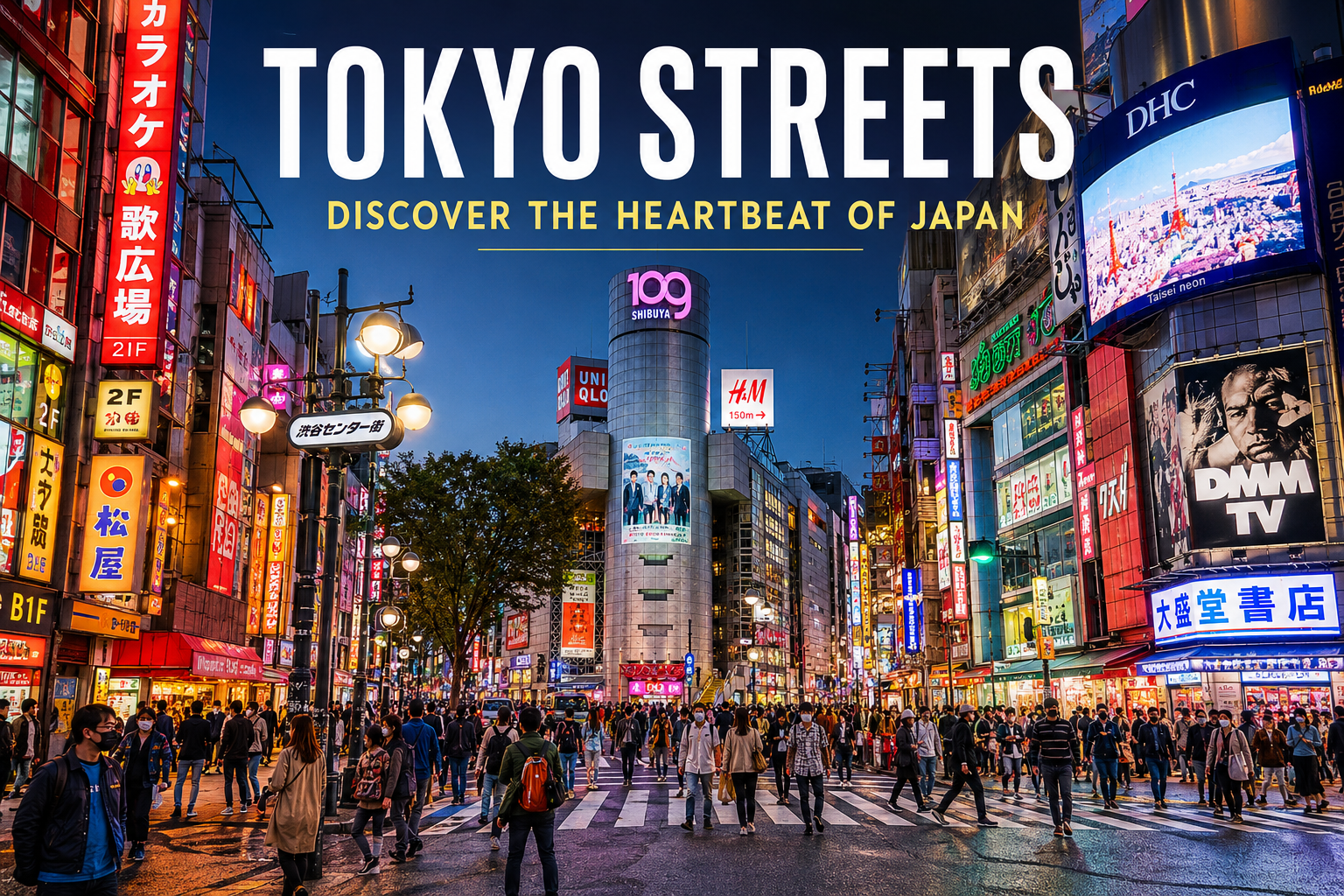
Shibuya Center-Gai
Shibuya Center-Gai is located in the heart of one of Tokyo’s busiest urban districts.
The surrounding area is packed with restaurants, entertainment venues, shops, advertising screens, and pedestrians.
For first-time visitors, the area provides a strong introduction to modern Tokyo nightlife and commercial culture.
Why Visit at Night
After dark, the visual character changes dramatically.
Illuminated signs and digital displays create the atmosphere many international visitors associate with Tokyo.
However, Shibuya is not just about taking photographs. The surrounding side streets offer restaurants, bars, cafés, and smaller businesses that show another side of the district.
Shibuya’s Nonbei Yokocho
Close to the modern energy of Shibuya is Nonbei Yokocho, a compact alley area associated with small bars and eateries.
The contrast is striking.
You can move from enormous commercial buildings into a much smaller environment within minutes.
This is one of Tokyo’s recurring themes: old and new existing almost directly beside one another.
Visitors should remember that tiny bars may have limited seating and may not operate like large tourist restaurants.
Takeshita Street vs. Cat Street vs. Omotesando
| Area | Atmosphere | Best For | Busy Level |
|---|---|---|---|
| Takeshita Street | Energetic and youthful | Youth fashion and snacks | High |
| Cat Street | Trendy and relaxed | Fashion and cafés | Moderate |
| Omotesando | Sophisticated | Architecture and luxury shopping | Moderate to high |
Shinjuku’s Omoide Yokocho
Omoide Yokocho is one of the most atmospheric small alley areas in Shinjuku.
Its narrow passages contain compact restaurants and food establishments packed close together.
The area is particularly interesting after sunset when the lights and small dining spaces create an intimate atmosphere.
For photography, Omoide Yokocho provides a very different visual experience from Shinjuku’s giant commercial avenues.
What Makes It Different
The key attraction is scale.
Shinjuku is famous for enormous buildings, crowded stations, and massive entertainment districts. Omoide Yokocho compresses that urban experience into tiny lanes where people sit close together and restaurants occupy small spaces.
Golden Gai
Golden Gai is another famous Shinjuku alley district.
It consists of a network of narrow passages and small bars.
The architecture and density make it popular with photographers and travelers interested in Tokyo nightlife.
However, Golden Gai is not simply a photo backdrop.
Many businesses are very small, and some have specific customer policies. Visitors should check whether a venue welcomes tourists before entering.
A Respectful Golden Gai Visit
Avoid:
- Blocking narrow entrances
- Taking photographs of people without permission
- Assuming every bar accepts walk-in tourists
- Entering private-looking spaces
- Treating the neighborhood purely as a photo location
A respectful visitor can enjoy the atmosphere without disrupting the businesses that make the area special.
Kabukicho Streets
Kabukicho is one of Tokyo’s most famous entertainment districts.
The streets become particularly dramatic at night, with illuminated signs, restaurants, entertainment venues, hotels, and crowds.
It is an area where visitors should remain aware of their surroundings and be cautious about aggressive solicitation.
Best For
Kabukicho is particularly suitable for travelers who want to experience:
- Tokyo nightlife
- Neon photography
- Entertainment districts
- Late-night food
- Urban architecture
It is not necessarily the best choice for families seeking a quiet evening walk.
Memory Lane and the Changing Face of Tokyo
One interesting aspect of Tokyo’s older alley districts is how they survive beside modern development.
Small streets can remain culturally important even when skyscrapers and large commercial projects surround them.
This creates a layered city.
You might see a modern tower behind an old wooden storefront or a convenience store beside a traditional restaurant.
That visual contrast is one of the best subjects for street photography in Tokyo.
Nakamise Shopping Street in Asakusa
Nakamise Shopping Street leads toward Senso-ji and is one of Tokyo’s most famous traditional shopping environments.
The street is lined with shops selling souvenirs, snacks, traditional goods, and other products aimed at visitors and local shoppers.
The area is especially attractive for travelers interested in historical Tokyo.
Combine Nakamise With Asakusa Side Streets
Do not stop at Nakamise.
After visiting the main temple area, explore the surrounding streets.
Asakusa contains quieter roads, traditional businesses, restaurants, small cafés, and older architectural details.
The further you walk from the main tourist route, the more the atmosphere can change.
Kappabashi Dougu Street
Kappabashi is a fascinating destination for anyone interested in Japanese food culture.
The area is famous for stores related to restaurant equipment and kitchen supplies.
Visitors can find everything from knives and dishes to restaurant tools and the highly recognizable plastic food displays used outside many Japanese restaurants.
Why Tourists Should Visit
You do not need to be a professional chef.
Kappabashi can be enjoyable for:
- Food lovers
- Home cooks
- Photography enthusiasts
- Souvenir hunters
- People interested in Japanese restaurant culture
It is also an excellent example of how a specialized commercial district can become a tourist attraction without being designed primarily as one.
Yanaka Ginza
Yanaka Ginza offers one of the more relaxed traditional shopping-street experiences in Tokyo.
The neighborhood is often associated with an older, more residential atmosphere.
Visitors can walk through small shops, food stalls, bakeries, cafés, and everyday businesses.
This area is particularly useful for travelers who want quiet Tokyo streets rather than major nightlife districts.
Why Yanaka Feels Different
Tokyo’s large commercial centers can sometimes make the city feel overwhelmingly modern.
Yanaka offers another perspective.
The neighborhood demonstrates that Tokyo also contains slower-paced communities where local shopping and everyday routines remain important.
Nezu
Nezu is another neighborhood worth considering for visitors interested in traditional Tokyo.
Its narrow streets, temples, small businesses, and residential atmosphere make it ideal for walking.
The area works particularly well as part of a broader Yanaka-Nezu walking route.
Rather than treating each street as an individual attraction, consider the neighborhood as a connected walking environment.
Sugamo Jizo-Dori
Sugamo Jizo-Dori is sometimes described as a shopping street associated with older residents, but that description can oversimplify the area.
It is a lively local commercial street with food, clothing, household goods, traditional products, and neighborhood businesses.
For visitors looking for a more everyday side of Tokyo, it can be an interesting alternative to major tourist shopping zones.
Ameyoko Shopping Street
Ameyoko near Ueno offers a lively commercial atmosphere.
The area is known for food, shopping, market-style businesses, and dense pedestrian activity.
It feels very different from the polished atmosphere of Ginza or Omotesando.
Best Time to Explore
Afternoon can be a good time for visitors who want to experience the shopping and food environment while many businesses are active.
The surrounding Ueno district also offers museums, parks, and cultural attractions, making it easy to combine several experiences in one day.
Ginza Chuo-Dori
Ginza represents one of Tokyo’s most polished commercial environments.
Chuo-Dori is lined with department stores, luxury brands, restaurants, cafés, and impressive architecture.
The district is particularly attractive to travelers interested in premium shopping and architecture.
Ginza on Weekends
Parts of Ginza are known for pedestrian-friendly weekend arrangements, but exact traffic restrictions and schedules can change.
Visitors should check current local information if this is an important part of their itinerary.
Yurakucho’s Under-Track Streets
One of the most interesting contrasts in central Tokyo can be found around the railway tracks near Yurakucho.
Small restaurants and drinking establishments occupy spaces beneath and beside railway infrastructure.
The result is a distinctly urban environment where transportation, dining, and commercial activity overlap.
It is a great example of how Tokyo makes practical use of limited urban space.
Akihabara Streets
Akihabara is internationally recognized for electronics, anime, manga, games, collectibles, and pop culture.
The district has changed considerably over time, but its streets remain an important destination for visitors interested in Japanese digital and entertainment culture.
Beyond the Main Avenue
The main roads provide the most recognizable images, but smaller streets can be more rewarding for enthusiasts.
Look for:
- Specialty stores
- Hobby shops
- Retro gaming
- Electronics
- Anime merchandise
- Themed cafés
- Collectibles
The district is particularly useful for visitors who want to combine shopping with cultural exploration.
Koenji Streets
Koenji has a reputation for alternative fashion, music, vintage stores, cafés, and independent businesses.
It can appeal to travelers who want something less polished and more neighborhood-oriented.
The area is also associated with a strong live-music culture.
Why Young Travelers Like Koenji
Koenji demonstrates that Tokyo’s street culture extends beyond the famous districts.
Instead of large international brands, visitors can discover smaller stores and independent businesses.
That makes it useful for travelers searching for Tokyo streets for young adults, vintage shopping, and alternative culture.
Shimokitazawa Streets
Shimokitazawa is another major destination for vintage fashion, independent cafés, music, theater, and youth culture.
The neighborhood has undergone redevelopment, but its identity remains strongly associated with small-scale entertainment and creative businesses.
Best Way to Explore Shimokitazawa
Do not create a strict shopping checklist.
Walk slowly.
Check small side streets, browse independent stores, stop for coffee, and look for live entertainment.
The neighborhood rewards exploration more than rushing.
Daikanyama
Daikanyama provides a quieter and more refined walking experience.
The neighborhood is known for stylish shops, cafés, bookstores, architecture, and relaxed streets.
It is a strong choice for travelers who enjoy design and lifestyle culture.
Nakameguro
Nakameguro is particularly famous for the Meguro River area.
During cherry blossom season, the riverside becomes extremely popular.
However, the neighborhood is worth visiting outside blossom season as well.
Cafés, restaurants, boutiques, and small businesses make the surrounding streets interesting throughout the year.
A Better Nakameguro Strategy
Instead of visiting only for cherry blossoms, treat the area as a neighborhood walk.
That makes the experience less dependent on one seasonal attraction.
Kagurazaka
Kagurazaka has a distinctive atmosphere shaped by traditional lanes, restaurants, temples, and historical connections with Tokyo’s geisha culture.
The neighborhood also has strong French influences due to its international community and institutions.
This creates an unusual combination of Japanese traditional character and European-inspired businesses.
Why Kagurazaka Stands Out
It is a good example of Tokyo’s ability to combine different cultural layers without completely erasing the older neighborhood identity.
Jimbocho
Jimbocho is especially interesting for book lovers.
The area is famous for bookstores, publishing-related businesses, and a strong literary atmosphere.
Travelers who enjoy browsing rather than sightseeing may find the neighborhood particularly rewarding.
Monzen-Nakacho
Monzen-Nakacho offers another perspective on traditional Tokyo.
The area has connections with temples, shrines, local restaurants, and old neighborhood culture.
It can be a useful choice for visitors staying in eastern Tokyo or looking for alternatives to the more heavily visited central districts.
Daiba and Tokyo Bay Streets
Tokyo’s streets are not limited to old neighborhoods.
The waterfront districts provide modern architecture, open spaces, wide roads, and futuristic urban planning.
Odaiba and surrounding Tokyo Bay areas feel very different from Yanaka or Asakusa.
This contrast demonstrates the enormous range of Tokyo’s urban environments.
Tokyo Streets for Different Types of Travelers
The best street to visit depends on what you want from your trip.
Tokyo Streets for First-Time Visitors
First-time travelers should prioritize a mixture rather than visiting five similar commercial districts.
A strong combination could include:
- Shibuya for modern Tokyo
- Asakusa for traditional culture
- Harajuku for youth fashion
- Shinjuku for nightlife
- Yanaka for neighborhood atmosphere
This provides much greater variety.
Tokyo Streets for Families
Families may prefer:
- Asakusa
- Kappabashi
- Ueno
- Odaiba
- Harajuku during less crowded periods
The best choice depends on children’s ages and interests.
Tokyo Streets for Couples
Couples may enjoy:
- Kagurazaka
- Daikanyama
- Nakameguro
- Omotesando
- Ginza
These areas offer cafés, restaurants, shopping, architecture, and evening walks.
Tokyo Streets for Photographers
Photographers should consider:
- Shinjuku
- Shibuya
- Omoide Yokocho
- Golden Gai
- Asakusa
- Yanaka
- Yurakucho
- Akihabara
Each provides a different visual language.
Tokyo Streets for Food Lovers
Food-focused travelers can explore:
- Kappabashi
- Ameyoko
- Omoide Yokocho
- Yurakucho
- Asakusa
- Tsukiji’s surrounding area
- Kagurazaka
Food streets are often most enjoyable when you choose a few places rather than attempting to eat everywhere.
Ten Popular Brands and What They Add to Tokyo’s Streetscape
Tokyo’s commercial streets are also shaped by recognizable Japanese and international brands.
The following comparison is not a ranking of quality. Instead, it shows how different brands contribute to the urban experience.
| Brand | Category | What Visitors May Notice | Best Fit |
|---|---|---|---|
| Uniqlo | Fashion | Minimal everyday clothing | Budget and casual shoppers |
| GU | Fashion | Trend-focused affordable clothing | Young shoppers |
| Muji | Lifestyle | Minimalist products and interiors | Design lovers |
| Don Quijote | Retail | Dense, eclectic shopping environment | Souvenir hunters |
| Bic Camera | Electronics | Large electronics selection | Tech shoppers |
| Yodobashi Camera | Electronics | Major electronics and hobby stores | Technology enthusiasts |
| Loft | Lifestyle | Stationery, gifts, household goods | Gift shoppers |
| Tokyu Hands | Lifestyle | DIY and creative products | Hobbyists |
| BEAMS | Fashion | Japanese contemporary style | Fashion enthusiasts |
| Nintendo | Gaming | Character and gaming merchandise | Game fans |
The presence of major brands does not mean Tokyo streets are becoming identical.
In many districts, large retailers coexist with tiny independent businesses, creating the mixed-scale environment that makes Tokyo interesting.
How to Explore Tokyo Streets Without Getting Exhausted
Tokyo is walkable in many areas, but walking all day can become surprisingly tiring.
The biggest mistake is trying to cover too much ground.
Use the One Neighborhood Rule
Instead of visiting four distant districts in one afternoon, choose one area and explore it deeply.
For example, spend several hours around:
Harajuku → Cat Street → Omotesando → Aoyama
This produces a coherent walking experience.
Another route could be:
Asakusa → Kappabashi → Ueno
The exact route should be adjusted according to your energy level and interests.
Combine Walking With Trains
Tokyo’s railway network makes neighborhood hopping practical.
Use trains for long-distance movement and walking for local exploration.
This is generally more enjoyable than trying to walk between every major district.
The Best Time to Explore Tokyo Streets
There is no single best time.
Different hours create different experiences.
Morning
Morning is ideal for quieter streets and photography.
Residential neighborhoods can feel especially peaceful before the main daytime crowds arrive.
Afternoon
Afternoon works well for shopping streets, cafés, museums, and commercial districts.
This is usually the easiest period for first-time visitors.
Evening
Evening is best for neon-heavy districts.
Shinjuku, Shibuya, and entertainment neighborhoods become visually dramatic after dark.
Late Night
Late night offers a different atmosphere but requires greater awareness.
Some neighborhoods become quieter while nightlife areas remain active.
Travelers should use normal urban safety practices and avoid entering unfamiliar situations simply because a street looks interesting.
Tokyo Street Photography Tips
Tokyo is a dream location for street photographers, but good photography requires more than finding neon.
Photograph Layers
Look for several visual layers:
- Foreground pedestrians
- Storefronts
- Signs
- Architecture
- Railway infrastructure
- Reflections
- Narrow alleys
- Background towers
This creates more depth than photographing a single building.
Look for Contrasts
One of the strongest Tokyo photography techniques is contrast.
Try pairing:
- Traditional and modern
- Narrow and wide
- Quiet and crowded
- Old and new
- Natural and artificial
- Day and night
These contrasts communicate something about Tokyo rather than simply showing a place.
Respect People
Street photography should not become an excuse to invade someone’s privacy.
Avoid photographing people in sensitive situations, and ask permission when a person is the clear subject.
Tokyo Streets in Rain
Rain can completely transform the city.
Wet pavement reflects signs and headlights, umbrellas create movement, and streets can appear more cinematic.
Rain also changes how people use the city.
Covered shopping streets, station areas, cafés, and arcades become especially useful.
Travelers should carry appropriate rain protection and use extra caution around wet pavement and crowded pedestrian areas.
Tokyo Streets During Cherry Blossom Season
Spring is one of the busiest periods for popular blossom locations.
Streets near rivers and parks can become extremely crowded.
The most important lesson is to avoid treating every cherry blossom street as a quick photo stop.
Instead, choose one location and allow enough time for crowds.
Remember that cherry blossom timing varies by year and location, so travelers should check current forecasts close to their trip.
Tokyo Streets in Autumn
Autumn provides a different visual palette.
Cooler weather makes long walks more comfortable, while foliage adds color to parks, temple grounds, and residential neighborhoods.
It can be an excellent season for travelers who prefer walking over dealing with intense summer heat.
Tokyo Streets in Winter
Winter often provides clearer air and comfortable conditions for daytime walking, although temperatures can be cold.
Illuminations and nighttime displays can also add another dimension to urban photography.
The trade-off is shorter daylight and colder evenings.
Common Mistakes When Exploring Tokyo Streets
Even experienced travelers can make mistakes when navigating Tokyo.
Mistake 1: Only Visiting Famous Streets
If you visit only Shibuya, Shinjuku, Harajuku, and Ginza, you will see an important side of Tokyo but miss much of its neighborhood character.
Solution: Add at least one quieter neighborhood.
Mistake 2: Trying to See Everything in One Day
Tokyo’s size makes aggressive itineraries exhausting.
Solution: Group nearby districts together.
Mistake 3: Treating Residential Streets Like Tourist Attractions
People live in many of the streets visitors find interesting.
Solution: Keep noise low and avoid photographing private homes or residents without reason.
Mistake 4: Assuming Every Small Bar Accepts Tourists
Tiny establishments may have limited seating and specific policies.
Solution: Check before entering and respect posted rules.
Mistake 5: Ignoring Weather
Tokyo walking plans can be dramatically affected by heat, rain, or cold.
Solution: Keep your route flexible.
Mistake 6: Focusing Only on Photos
A street can look spectacular in a photograph while offering little personal experience if you spend the entire visit behind your camera.
Solution: Take photographs, then put the phone away and observe.
Pros and Cons of Exploring Tokyo Streets
Advantages
Walking Tokyo provides several benefits.
You can discover independent businesses, notice architectural details, experience neighborhood culture, find unexpected restaurants, and understand how different districts connect.
Walking also gives you a better sense of scale than traveling entirely underground or between major attractions.
Disadvantages
The biggest challenge is physical fatigue.
Crowds can also be overwhelming in popular districts.
Some streets are confusing for first-time visitors because Japanese signs may not always be easy to understand.
Weather can further affect the experience.
The solution is not to avoid walking. It is to plan walking intelligently.
A Practical Tokyo Street-Walking Framework
A useful approach is the 3-Layer Tokyo Walk.
Layer One: The Famous Street
Start with the major street that brought you to the neighborhood.
Spend enough time to understand why it is famous.
Layer Two: The Side Street
Walk one or two blocks away.
This is where the neighborhood often becomes more interesting.
Layer Three: The Local Edge
Continue until the commercial environment begins blending into residential streets.
This final layer can reveal how tourism connects with everyday Tokyo life.
The framework prevents your trip from becoming a collection of tourist photographs.
A Sample One-Day Tokyo Streets Itinerary
If you have one full day and want a broad introduction, consider a route such as:
Morning: Asakusa
Begin with the traditional atmosphere around Senso-ji and Nakamise.
Explore surrounding streets rather than staying exclusively on the main tourist route.
Late Morning: Kappabashi
Walk toward Kappabashi and browse the kitchen-focused stores.
Afternoon: Ueno and Ameyoko
Continue toward Ueno and explore Ameyoko.
Stop for food or coffee as needed.
Evening: Shinjuku
Travel to Shinjuku for a completely different environment.
Explore Omoide Yokocho and the surrounding streets.
Night: Shibuya
Finish in Shibuya if you still have energy.
The contrast between Shinjuku and Shibuya provides a strong final impression of modern Tokyo.
How Much Time Should You Spend on Tokyo Streets?
A short trip does not require visiting dozens of neighborhoods.
For a three-day Tokyo trip, choose three or four major street experiences.
For five to seven days, you can explore a wider range.
For longer stays, dedicate entire days to neighborhood walking.
The goal should not be to collect street names.
The goal should be to understand differences between districts.
Tokyo Streets for Solo Travelers
Solo travelers have an advantage because they can change direction easily.
If a café looks interesting, stop.
If a side street catches your attention, explore it.
If an area feels too crowded, move elsewhere.
However, solo visitors should maintain normal awareness, particularly late at night in entertainment districts.
Tokyo Streets for Budget Travelers
You do not need a large shopping budget to enjoy Tokyo streets.
Walking itself is free.
Many neighborhood experiences cost little beyond transportation and food.
Budget travelers can focus on:
- Traditional shopping streets
- Parks
- Architecture
- Street photography
- Local bakeries
- Affordable restaurants
- Convenience-store snacks
- Neighborhood exploration
The biggest expense can become spontaneous shopping, so set a daily spending limit if necessary.
Tokyo Streets for Luxury Travelers
Luxury travelers may prefer Ginza, Omotesando, Aoyama, Daikanyama, and selected areas of Marunouchi.
These districts offer premium retail, fine dining, architecture, and upscale hotels.
However, even luxury-focused visitors should consider spending part of a day in a traditional neighborhood.
Tokyo’s appeal comes partly from the contrast between luxury and everyday life.
Tokyo Streets for Architecture Lovers
Architecture-focused visitors should consider:
- Omotesando
- Ginza
- Marunouchi
- Daikanyama
- Aoyama
- Shibuya
- Tokyo Bay
Look beyond famous buildings.
Storefronts, staircases, façades, signs, bridges, railway structures, and tiny buildings are all part of Tokyo’s architectural vocabulary.
Why Tokyo’s Narrow Streets Matter
One of the most overlooked aspects of Tokyo is the relationship between small streets and the larger city.
A narrow lane may appear inefficient from a purely modern planning perspective, but these small routes can support local businesses, neighborhood identity, and pedestrian connections.
They also create intimacy.
A giant boulevard gives you scale.
A narrow lane gives you detail.
Tokyo needs both.
The Future of Tokyo Streets
Tokyo continues to evolve.
Redevelopment, changing retail patterns, tourism, demographic shifts, transportation improvements, and digital technology will influence the appearance and use of urban streets.
Some older commercial areas may change as property values and consumer habits evolve.
At the same time, neighborhood streets can gain new life through cafés, independent shops, creative businesses, and tourism.
More Walkable Urban Experiences
Future urban development is likely to continue placing attention on pedestrian experiences, public spaces, accessibility, and connections between transport hubs and neighborhoods.
Blending Digital and Physical Experiences
Digital maps, translation tools, mobile payments, and location-based recommendations are already changing how visitors navigate Tokyo.
The challenge will be maintaining the value of spontaneous discovery.
If technology tells every visitor exactly where to go, travelers may miss the unexpected discoveries that make street exploration special.
Preservation and Change
Tokyo’s future will likely involve a continuing balance between redevelopment and preservation.
The most successful neighborhood transformations will ideally retain enough local character to make places feel distinctive rather than interchangeable.
What Most Tokyo Street Guides Miss
Many guides answer the question “Where should I go?”
A better question is:
What kind of Tokyo do you want to experience?
If you want excitement, choose Shibuya or Shinjuku.
If you want traditional atmosphere, choose Asakusa or Yanaka.
If you want fashion, choose Harajuku, Cat Street, or Omotesando.
If you want alternative culture, explore Koenji or Shimokitazawa.
If you want food-focused exploration, consider Kappabashi, Ameyoko, or Yurakucho.
If you want architecture, explore Ginza, Omotesando, and contemporary central districts.
This approach creates a more personal trip.
Frequently Asked Questions About Tokyo Streets
What are the most famous streets in Tokyo?
Some of the best-known streets and street areas include Takeshita Street, Omotesando, Cat Street, Shibuya Center-Gai, Nakamise, Ginza Chuo-Dori, Ameyoko, Omoide Yokocho, and Golden Gai.
What is the best street in Tokyo for first-time visitors?
There is no single best street. A combination of Shibuya, Asakusa, Harajuku, and Shinjuku gives first-time visitors a broader understanding of Tokyo’s different personalities.
Which Tokyo streets are best at night?
Shinjuku and Shibuya are among the most visually dramatic at night. Omoide Yokocho and Golden Gai provide smaller-scale nightlife environments.
What are the best Tokyo streets for shopping?
Ginza, Omotesando, Harajuku, Shibuya, and Akihabara are strong choices, depending on whether you want luxury, fashion, youth culture, electronics, or pop culture.
Where can I find traditional Tokyo streets?
Asakusa, Yanaka, Nezu, Sugamo, Kagurazaka, and other older neighborhoods offer traditional or neighborhood-oriented street experiences.
Are Tokyo streets safe for tourists?
Tokyo is generally regarded as a safe major city for visitors, but travelers should still use normal precautions, especially around nightlife districts, crowded stations, and unfamiliar areas.
Can I explore Tokyo streets without speaking Japanese?
Yes. Major tourist districts are relatively accessible, and translation technology can help. However, learning a few basic Japanese phrases and understanding simple signs can make neighborhood exploration easier.
What should I wear for walking around Tokyo?
Wear comfortable shoes and dress according to the season. Tokyo walking can involve much more distance than travelers expect.
Is Tokyo good for street photography?
Yes. Tokyo offers exceptional variety, from neon districts and railway structures to traditional shopping streets and residential neighborhoods. Photographers should respect privacy and local rules.
Are Tokyo streets crowded?
Some famous streets become extremely crowded, particularly around major stations and popular attractions. Quieter residential and neighborhood shopping streets can provide a more relaxed experience.
What is the best way to get around Tokyo streets?
A combination of walking and public transportation is usually the most practical approach. Use trains for longer distances and explore individual neighborhoods on foot.
Should I visit Tokyo streets during the day or night?
Both. Daytime reveals shopping streets, architecture, temples, and local life, while nighttime highlights neon, entertainment districts, and illuminated cityscapes.
Are Tokyo streets open all night?
Not necessarily. Some entertainment areas remain active late, but individual shops and restaurants have their own operating hours.
What is a shotengai?
A shotengai is a traditional Japanese shopping street or shopping district, generally made up of multiple local businesses serving a neighborhood.
What is a yokocho?
Yokocho generally refers to a narrow alley or alley-style area, often associated with small restaurants and bars.
How many Tokyo streets should I visit in one day?
Two or three connected areas are usually more enjoyable than trying to visit many distant neighborhoods. Tokyo rewards slow exploration.
Conclusion: Discover Tokyo One Street at a Time
Tokyo is much more than a collection of famous attractions.
Its real personality appears in the spaces between them.
A neon-lit Shinjuku alley, a quiet Yanaka lane, a fashionable Omotesando avenue, a traditional Asakusa shopping street, and a tiny restaurant tucked under railway tracks can all exist within the same enormous city.
That diversity is what makes exploring Tokyo streets so rewarding.
Instead of asking how many places you can visit, ask how many different sides of Tokyo you can experience.