
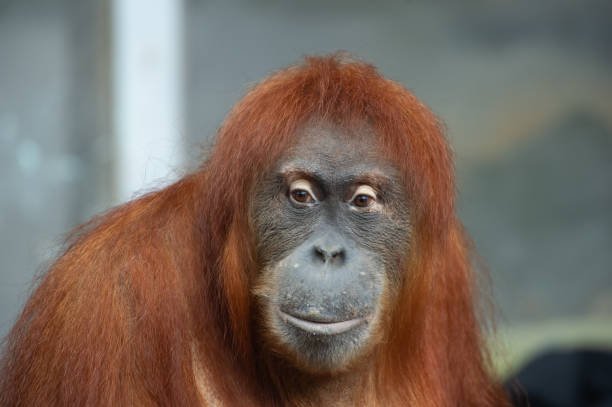
Orangutan Face: Structure, Expression, and Evolutionary Insight
The orangutan face defines one of the most distinctive features among great apes. It shows intelligence, age, emotion, and status within its social environment. Understanding its structure and variation reveals both biological and cultural dimensions of this endangered species.
Overview of the Orangutan Face
The orangutan face is characterized by broad facial planes, deep-set eyes, a projecting muzzle, and expressive muscles. The genus Pongo, which includes Pongo pygmaeus (Bornean orangutan), Pongo abelii (Sumatran orangutan), and Pongo tapanuliensis (Tapanuli orangutan), exhibits facial diversity that reflects species adaptation.
The face functions as a communicative and social tool. It displays emotional states such as curiosity, aggression, and affection. Each muscle and fold has a specific biological role in thermoregulation, dominance display, and mate attraction.
Facial Anatomy of Orangutans
The orangutan face integrates muscular, skeletal, and dermal components. These create the unique appearance that differentiates them from gorillas or chimpanzees.
| Facial Component | Description | Function |
|---|---|---|
| Flanged Cheeks | Present in dominant adult males; composed of fibrous tissue and fat pads. | Signal sexual maturity and strength. |
| Craniofacial Bones | Heavy zygomatic arches and elongated mandibles. | Support powerful jaw muscles. |
| Eyes | Positioned forward; large orbital sockets. | Enhance depth perception for arboreal navigation. |
| Nose and Lips | Flattened nasal bridge and flexible lips. | Aid in vocalization and feeding precision. |
| Facial Hair | Long reddish hair around cheeks and chin. | Functions as insulation and visual identifier. |
Male and Female Facial Differences
Male orangutans exhibit dimorphic features after sexual maturity. Flanged males develop wide cheek pads and throat sacs, while unflanged males remain slimmer-faced but fertile. Females retain smaller, less prominent faces with softer contours.
The flange, unique to orangutans, produces low-frequency calls that travel several kilometers through dense rainforest. This acoustic adaptation allows male competition and female mate selection over long distances.
Expression and Communication
The orangutan face serves as a medium for complex expression. Researchers at the University of Zurich identified more than 60 distinct facial movements in orangutans. These include eyebrow raises, lip protrusions, and cheek inflations.
Facial gestures correspond with behavioral contexts:
- Relaxed Lips indicate comfort or trust.
- Tightened Mouth Corners signal irritation or alertness.
- Wide Eyes mark surprise or vigilance.
- Cheek Inflation accompanies dominance display.
Unlike humans, orangutans lack frequent facial mimicry; however, they demonstrate emotional intelligence and social awareness through gaze and subtle movements.
Evolutionary Significance
Evolution shaped the orangutan face through environmental and reproductive pressures. Bornean orangutans developed larger cheek pads, likely due to higher male competition. Sumatran and Tapanuli orangutans evolved more gracile faces suited to dense canopies and different diets.
The orangutan face retains ancestral traits shared with early hominins. Studies from the Smithsonian Institution suggest that craniofacial features of orangutans provide insights into human evolution, particularly in muscle arrangement and jaw structure.
Behavioral Interpretation of Facial Cues
To interpret orangutan behavior, scientists analyze facial tension, direction of gaze, and lip movement. Calm faces often accompany slow, deliberate motion, while tensed expressions coincide with alarm or aggression.
Orangutans employ facial communication alongside vocalization and gesture. In mother-infant interactions, facial softness and eye contact reinforce bonding. In adult males, facial rigidity and forward-facing eyes communicate authority.
Facial Hair Patterns and Identification
Each orangutan exhibits a unique facial hair pattern, allowing researchers to identify individuals without tagging. Facial mapping technology, implemented by the Borneo Orangutan Survival Foundation, uses hair density, mole placement, and skin creases for non-invasive tracking.
Distinct beard and mustache formations act as natural signatures. These identifiers aid conservationists in long-term behavioral monitoring and genetic lineage studies.
Orangutan Face in Cultural Representation
In Southeast Asian folklore, the orangutan face symbolizes wisdom, patience, and solitude. Indigenous Dayak communities of Borneo depict orangutan visages in wood carvings to represent forest spirits.
Modern conservation campaigns use close-up facial imagery to humanize the species, emphasizing shared emotional depth between orangutans and humans. The facial gaze often becomes a powerful visual in awareness media, connecting empathy with conservation urgency.
Environmental and Health Indicators
Facial condition reflects the orangutan’s health status. Pale lips, thinning hair, or facial swelling may indicate malnutrition or parasitic infection. In rehabilitation centers, caregivers monitor facial elasticity and color as part of daily health assessments.
Stress detection through facial thermography allows non-contact observation. Rising facial temperature around the nose and eyes signifies elevated cortisol levels, offering a window into emotional and physical well-being.
Conservation Context
The orangutan face, often seen in photography campaigns, drives global conservation awareness. Deforestation, illegal trade, and habitat fragmentation threaten orangutans’ survival. Each face represents a story of environmental change and resilience.
Organizations such as the World Wildlife Fund (WWF) and Orangutan Foundation International utilize facial recognition for population tracking. This data informs habitat protection policies and rehabilitation strategies.
Facial Morphology: Orangutan vs. Other Great Apes
| Feature | Orangutan | Gorilla | Chimpanzee |
|---|---|---|---|
| Facial Shape | Oval with pronounced cheek pads | Broad and flat | Rounded, compact |
| Hair Color | Reddish-brown | Black | Dark brown |
| Facial Mobility | Moderate | Limited | High |
| Dominance Markers | Cheek flanges | Sagittal crest | Brow ridges |
| Primary Habitat | Arboreal rainforest | Montane forest | Savanna woodland |
This comparative table highlights orangutans as the most arboreal and visually distinct among apes, combining soft facial mobility with strong individuality.
Key Facts About the Orangutan Face:
- The face structure changes significantly after sexual maturity.
- Flanged males can weigh twice as much as females.
- Each individual has unique freckles and wrinkles.
- Orangutan facial expressions differ by context, not random emotion.
- Facial recognition helps conservationists identify over 90% of individuals in the wild.
- The orangutan face produces deep, resonant vocal calls through the laryngeal sac.
- Juvenile orangutans imitate maternal facial gestures during early learning.
- Skin pigmentation varies between species, from light pink to dark grey.
- Facial fur density adapts to humidity and regional temperature.
- The orangutan face represents 40% of its visual communication output.
Frequently Asked Questions (FAQs)
1. Why do male orangutans have large cheek pads?
Male orangutans develop cheek pads, or flanges, as a display of maturity and dominance. They amplify sound and visually attract females.
2. What do orangutan facial expressions mean?
Expressions communicate emotional states such as curiosity, anger, or playfulness. Subtle cues like eyebrow lifts or lip tension indicate context-specific intent.
3. How can researchers identify individual orangutans by face?
Using high-resolution imagery and AI facial mapping, scientists match patterns of wrinkles, moles, and hair growth unique to each orangutan.
4. Do all orangutans have the same face shape?
No. Bornean orangutans have broader faces with thicker flanges, while Sumatran orangutans display narrower, more elongated faces.
5. What role does the orangutan face play in communication?
Facial cues coordinate with gestures and calls, forming a tri-modal communication system essential to social interaction and parenting.
6. Can orangutan faces show emotions like humans?
Yes. Although limited by muscular structure, orangutans display recognizable emotions through eyes, mouth, and cheek movement.
See More: Jantor AI: The Complete Guide for 2025
Uncuymaza: A Comprehensive Exploration of a Emerging Concept
Conclusion
The orangutan face stands as a biological signature of intelligence, adaptability, and evolution. Its structure, from cheek pads to expressive eyes, encapsulates both individuality and species identity. Each expression reflects centuries of environmental adaptation and social complexity. Understanding this face is key to understanding one of Earth’s most remarkable primates—and to protecting its fragile existence in the modern world.