Tokyo Craftsmanship: 10 Remarkable Japanese Brands, Traditional Skills and Hidden Artisans
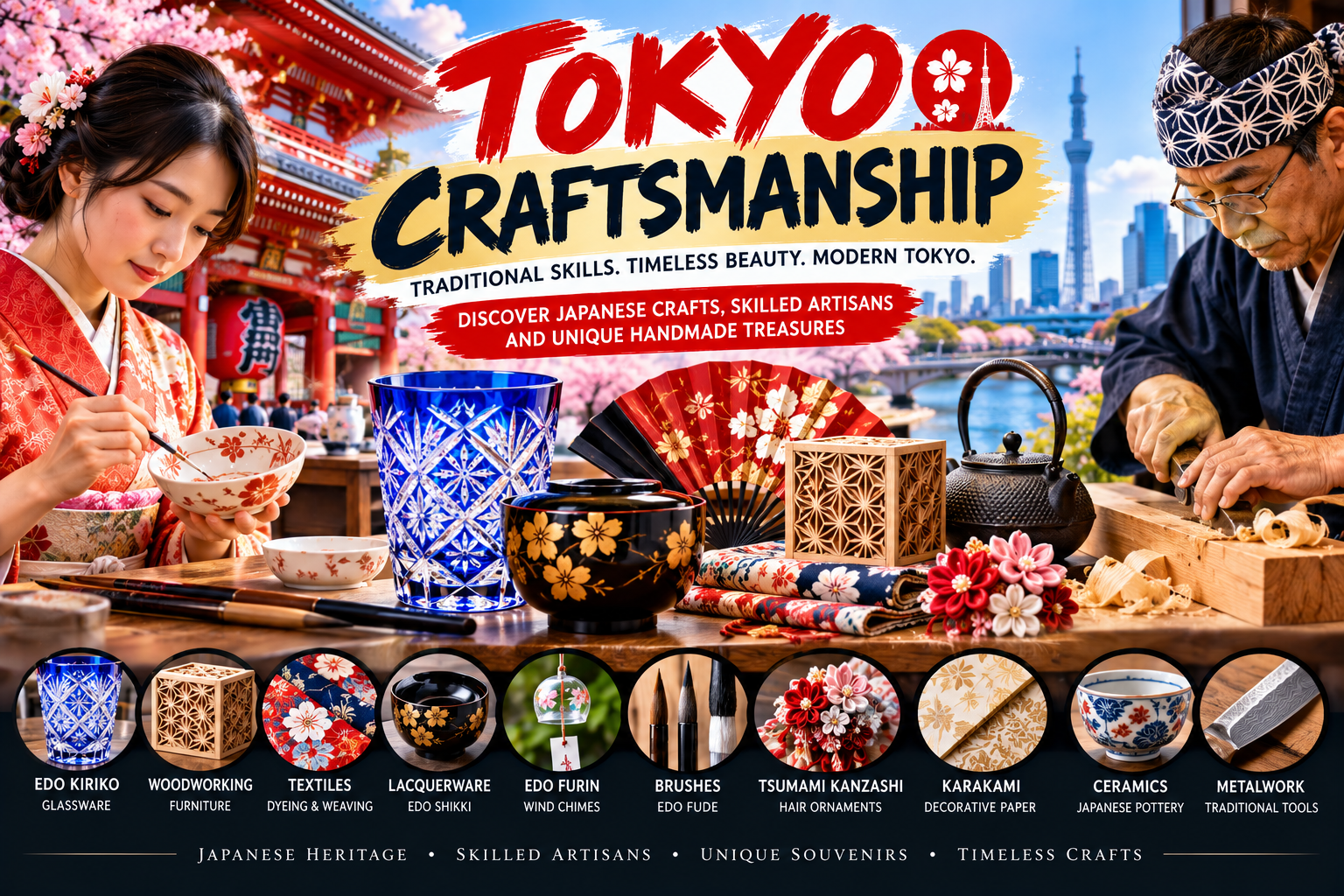
Have you ever held a beautifully made Japanese object and wondered how much skill, patience and history went into creating it? Tokyo craftsmanship reveals a fascinating side of Japan through traditional glassware, carefully constructed wooden furniture, handmade textiles, decorative paper, lacquerware and other objects created by skilled artisans. Tokyo craftsmanship combines centuries-old Japanese techniques, contemporary design and the expertise of artisans who transform ordinary materials into carefully considered objects. Visitors can explore traditional Japanese crafts, discover specialist workshops, purchase handmade products and learn how these skills continue to influence modern Japanese life Tokyo Waterpark
What Is Tokyo Craftsmanship?
Tokyo craftsmanship refers to the traditional and contemporary skills used by artisans, specialist manufacturers and craft businesses in Tokyo.
These skills combine technical knowledge, material selection, precision, design and practical experience. They can be applied to products as varied as drinking glasses, furniture, textiles, paper goods, accessories and decorative objects.
The Meaning of Japanese Craftsmanship
Japanese craftsmanship is often associated with careful attention to detail, thoughtful use of materials and an emphasis on functional quality.
A well-made object does not necessarily need elaborate decoration. A simple wooden box, for example, can demonstrate craftsmanship through precise joints, smooth surfaces and a design that makes it easy to use.
Similarly, a glass vessel may look simple from a distance, but its balance, clarity and finish can reveal the skill involved in producing it.
Tokyo craftsmanship reflects this relationship between beauty and usefulness. Many traditional crafts developed because people needed practical objects for homes, businesses, clothing, ceremonies and everyday activities.
Why Tokyo Is Important for Traditional Crafts
Tokyo has been a major centre of Japanese commerce, manufacturing and culture for centuries. As the population of Edo, the former name of Tokyo, expanded, demand grew for household goods, textiles, tools, furniture and decorative products.
Specialist makers developed techniques to serve different markets, and some of these traditions continued through generations.
Today, Tokyo remains a place where traditional craft businesses, modern designers, retailers and cultural organisations connect historical techniques with contemporary demand.
The Tokyo Metropolitan Government recognises 42 categories of traditional crafts associated with the city, demonstrating the range of skills that form part of Tokyo’s craft heritage.
The History of Tokyo Craftsmanship
From Edo to Modern Tokyo
The history of Tokyo craftsmanship is closely connected with the Edo period, which lasted from 1603 to 1868.
During this period, Edo became a major political and commercial centre. Its growing population created demand for products ranging from everyday kitchen tools and clothing to decorative accessories and furniture.
Craft workers developed specialised skills to meet these needs. Some concentrated on a particular material, while others became known for a specific technique or type of product.
Woodworkers developed precise joinery. Textile makers refined dyeing and weaving methods. Glassmakers experimented with decorative cutting, while artisans produced fans, brushes, paper products and lacquerware.
As Tokyo modernised, many craft businesses adapted to changing lifestyles and manufacturing methods. Some continued traditional techniques, while others incorporated new equipment and contemporary design.
This combination of continuity and change remains central to Tokyo craftsmanship.
Traditional Crafts Were Not Always Luxury Products
An important detail often overlooked by visitors is that many traditional Japanese crafts originally served practical purposes.
A wooden cabinet provided storage. A brush helped someone write. A textile protected the body. A glass vessel held a drink. A decorative paper product could improve the appearance of a room.
The quality of these objects depended on the maker’s ability to solve practical problems while producing something durable and attractive.
This practical foundation helps explain why traditional Japanese craftsmanship continues to appeal to modern consumers. Many people value objects that combine attractive design with everyday functionality.
Why Traditional Craftsmanship Still Matters
Traditional craftsmanship helps preserve specialised knowledge, supports small businesses and provides opportunities for apprentices to learn established techniques.
It also creates connections between consumers and the people who make the objects they use.
When a buyer understands how a product was made, the object can become more meaningful. A hand-cut glass or carefully woven textile is no longer simply a retail purchase; it represents a process that may require considerable training and experience.
For travellers, learning about Tokyo craftsmanship adds cultural depth to a visit. For residents, it provides opportunities to incorporate Japanese design and traditional materials into everyday life.
10 Traditional Japanese Crafts to Discover in Tokyo
1. Edo Kiriko: Traditional Japanese Cut Glass
Edo kiriko is one of the best-known examples of Tokyo craftsmanship. This traditional glass-cutting technique creates intricate patterns on the surface of glassware.
The craft developed in nineteenth-century Edo and remains associated with decorative drinking glasses, sake cups, bowls and other glass objects.
How Edo Kiriko Is Made
The process generally involves marking a design onto the glass and carefully cutting or grinding the surface to create the intended pattern.
The artisan must control the tool, angle, pressure and depth of each cut. Small errors can affect the symmetry and appearance of the finished piece.
Traditional designs often incorporate geometric shapes and patterns inspired by nature. When light passes through the finished glass, the cut surfaces create reflections that change according to the viewing angle.
Why Edo Kiriko Is Special
Edo kiriko combines decorative appeal with practical function. A glass may be used during meals, displayed in a cabinet or presented as a special gift.
The craft also demonstrates how a familiar material can be transformed through precision and design.
Buying Edo Kiriko Glassware
Before purchasing, examine the pattern under good lighting. Check the rim, base, surface finish and overall balance.
Ask the retailer about the maker, production method and care instructions. Individual variations may occur in artisan work, so the most important considerations are quality, authenticity and suitability for your needs.
2. Edo Furin: Traditional Japanese Wind Chimes
Edo furin are traditional glass wind chimes associated with Japanese summer culture.
A typical wind chime consists of a glass bell, a moving clapper and a hanging strip that catches the breeze. When the strip moves, the clapper produces a delicate sound.
The glass may be decorated with painted flowers, seasonal imagery or other designs.
Why Edo Furin Matters
Edo furin demonstrates how craftsmanship can engage more than one sense. The glass has a visual appearance, while the movement and sound connect the object with the surrounding environment.
The craft also reflects the importance of seasonal experiences in Japanese culture.
Discovering Edo Furin Workshops
Some specialist workshops offer experiences involving glass-blowing, painting or decorating pre-made wind chimes. Shinohara Furin in Edogawa is one example of a business associated with this tradition.
Availability, workshop prices and booking requirements can change, so visitors should confirm current arrangements before travelling.
Buying a Japanese Wind Chime
Choose a design that suits your home and is easy to transport. Glass is fragile, so ask for protective packaging and consider how the object will be carried during your journey.
3. Edo Sashimono: Traditional Japanese Woodworking
Tokyo’s woodworking heritage includes Edo sashimono, a traditional style of wooden furniture and object construction associated with precise joinery.
Instead of relying entirely on visible nails or screws, traditional joinery may use carefully shaped wooden connections.
The quality of the finished object depends on accurate measurement, skilled cutting, material selection and an understanding of how wood behaves.
Why Precision Matters in Japanese Woodworking
Wood expands and contracts as humidity changes. A skilled woodworker must account for these properties when choosing materials and designing joints.
A well-made wooden box, cabinet or small furniture item can therefore represent both aesthetic judgement and technical problem-solving.
What to Look for When Buying Woodwork
Examine the joints, surface finish, symmetry and overall construction. Ask about the type of wood and how the product should be maintained.
If you live in a different climate from Tokyo, understanding the material’s response to humidity can help you care for the object properly.
4. Tokyo Textiles: Weaving, Dyeing and Pattern Design
Textiles are an important part of Tokyo craftsmanship. Traditional textile techniques include Tokyo some-komon, Tokyo hand-dyed yuzen, Tama ori weaving and Murayama oshima tsumugi.
Each tradition uses different methods to create colour, texture and pattern.
Tokyo Some-Komon
Tokyo some-komon is associated with fine, repeated patterns created through specialised dyeing techniques.
From a distance, a textile may appear relatively uniform. Closer inspection reveals detailed patterns that require careful control during production.
Tokyo Hand-Dyed Yuzen
Yuzen dyeing uses controlled methods to apply colours and designs to fabric. The artisan must manage the pattern and colour placement to achieve the intended appearance.
Tama Ori Weaving
Tama ori is a weaving tradition associated with the Tama area of Tokyo. Its products demonstrate how the arrangement of threads creates distinctive textures and visual effects.
Why Japanese Textiles Make Good Souvenirs
Textiles can be practical, lightweight and relatively easy to pack.
Depending on the maker and retailer, visitors may find hand towels, scarves, wrapping cloths, bags and other accessories.
Before purchasing, ask whether the item is handmade, machine-made or produced through a combination of methods. Check the fibre content and washing instructions.
5. Edo Fude: Traditional Japanese Brushes
Traditional Japanese brushes are used for calligraphy, painting and other specialised applications.
Brush-making requires knowledge of hair or fibre selection, bundling, shaping and attachment. Different brushes are designed to create different marks and provide different levels of control.
Tokyo’s traditional craft heritage includes Edo fude, reflecting the city’s history of specialist brush production.
How to Choose a Japanese Brush
If you are interested in calligraphy, consider the brush’s size, softness and intended writing style.
Beginners may benefit more from a dependable practice brush than from an expensive collector’s item. Artists should check which inks or paints the brush is designed to handle.
Why Brush-Making Is a Skilled Craft
A brush may appear simple, but its performance depends on the relationship between the fibres, shape, handle and intended use.
A well-selected brush can improve control and make writing or painting more enjoyable.
6. Contemporary Japanese Glassware
Tokyo’s glassmaking culture includes contemporary products that use traditional skills alongside modern shapes and finishes.
These objects may include drinking vessels, decorative pieces, paperweights and functional accessories.
Not every Japanese glass product is Edo kiriko, and not every decorative glass object is handmade. Understanding this distinction helps buyers make informed decisions.
What Makes Quality Glassware?
Look for clarity, balance, surface finish and consistency. If the product is described as a traditional craft, ask which technique was used and where the item was made.
Contemporary glassware can be a good choice for people who appreciate Japanese design but prefer simple forms rather than elaborate patterns.
7. Edo Shikki: Traditional Japanese Lacquerware
Edo shikki is a traditional lacquerware craft associated with Tokyo.
Lacquerware involves applying lacquer to a prepared surface. Depending on the object and technique, multiple layers may be used to create a smooth, durable finish with depth and sheen.
Why Lacquerware Requires Skill
The process depends on careful surface preparation, controlled application and suitable curing conditions.
Decorative work may require additional precision. The final appearance depends on the materials, technique and finish.
What Can Visitors Buy?
Products may include bowls, trays, small boxes and decorative accessories.
Ask the seller whether an item is suitable for hot food, dishwashers or prolonged exposure to water. Different products may have different care requirements.
8. Edo Tsumami Kanzashi: Traditional Japanese Hair Ornaments
Kanzashi are decorative hair ornaments associated with Japanese hairstyles and traditional clothing.
Edo tsumami kanzashi uses small pieces of fabric that are folded and arranged to create flowers and other decorative forms.
The technique requires patience, accurate folding and careful placement. Small differences in the size or position of the fabric pieces can change the appearance of the finished design.
Why Kanzashi Is Important
Kanzashi demonstrates how a small accessory can require considerable technical skill.
The craft also connects Japanese decorative arts with fashion, ceremonies and seasonal aesthetics.
Visitors may encounter floral ornaments, colourful accessories and pieces inspired by traditional Japanese dress.
9. Edo Karakami: Decorative Japanese Paper
Karakami is a traditional decorative paper craft used in Japanese interiors and other applications.
The technique involves transferring patterns onto paper using specialised tools and printing methods. Depending on the design, the result can be subtle, textured or highly decorative.
Why Decorative Paper Is Worth Discovering
Paper crafts show how pattern and texture can change the character of a space without relying on large or expensive objects.
Visitors may find cards, stationery, decorative sheets and other paper products.
Ask about the paper’s composition, intended use and durability. If you plan to display it at home, consider protection from sunlight and moisture.
10. Metalwork, Fans and Other Specialist Crafts
Tokyo’s craft heritage extends to metalwork, traditional fans, dolls, folding screens, seals and other specialist products.
These crafts developed to serve different practical, cultural and decorative needs.
Why Specialist Crafts Deserve Attention
Some traditional crafts are less familiar to international visitors than glassware or textiles. Yet they can reveal valuable details about the everyday life of historic Tokyo.
A carefully made fan, brush or small wooden object can provide a meaningful connection with a specific trade.
When shopping, ask the seller to explain the item’s purpose, production method and distinctive characteristics.
Where to Experience Tokyo Craftsmanship
Edo Taito Traditional Crafts Center in Asakusa
The Edo Taito Traditional Crafts Center is a useful starting point for anyone interested in traditional Tokyo crafts.
Located in Asakusa, the centre displays a broad range of traditional objects and provides information about different craft techniques.
It is especially useful for visitors who want to learn about several craft categories before deciding what to purchase.
Best for: First-time visitors, cultural travellers and people who want an introduction to Tokyo’s craft heritage.
Edo Kiriko Workshops in Eastern Tokyo
Visitors interested in glasswork can look for Edo kiriko experiences in eastern Tokyo.
Specialist workshops have offered activities in which participants practise cutting traditional patterns into glass. The level of difficulty, duration and cost vary between providers.
Watching or attempting the process helps visitors understand the precision required to create a finished piece.
Best for: Couples, creative travellers and visitors looking for a hands-on souvenir.
Shinohara Furin in Edogawa
Shinohara Furin is associated with traditional Edo wind chimes and has offered experiences involving glass-blowing and painting, as well as decorating pre-made chimes.
These activities provide insight into the relationship between glassmaking, painting and seasonal Japanese design.
Confirm current workshop availability, prices and booking conditions before visiting.
Best for: Seasonal craft enthusiasts, families and visitors interested in traditional glasswork.
TOKYO Teshigoto Craft Experiences
TOKYO Teshigoto promotes traditional Tokyo craft skills through products and experiences that connect heritage with modern life.
Its activities introduce visitors to selected craft traditions, makers and production methods.
The current programme may vary, so check which experiences are available during your visit.
Best for: Travellers who want to learn directly from artisans and explore lesser-known crafts.
Traditional Crafts Aoyama Square
Traditional Crafts Aoyama Square is a destination for exploring traditional crafts from different parts of Japan, including products that may not originate in Tokyo itself.
This distinction matters because Tokyo is both a centre of local craft production and a place where visitors can discover crafts from across the country.
Best for: Collectors, design enthusiasts and visitors looking for a wider introduction to Japanese craftsmanship.
How to Buy Authentic Japanese Handmade Products
Shopping for Tokyo craftsmanship can be confusing because handmade, hand-finished, machine-assisted and mass-produced products may appear similar.
A thoughtful purchase begins with asking questions rather than assuming that a high price or traditional-looking design proves authenticity.
Ask Who Made the Product
Find out whether the item was made by an individual artisan, a small workshop, a larger manufacturer or a combination of contributors.
Each production model can produce attractive and useful goods. The important point is understanding what you are buying.
Ask Which Technique Was Used
If an item is described as Edo kiriko, lacquerware, hand-dyed textile or another traditional craft, ask about the technique.
A knowledgeable seller should be able to explain the process in accessible terms.
Look for Relevant Craft Designations
Tokyo has an official system for identifying designated traditional crafts. Relevant designations can help shoppers understand the relationship between a product and the city’s craft heritage.
However, a designation should be considered alongside information about the maker, materials, construction and product description.
Understand Handmade and Hand-Finished Products
A product may use machinery for one stage and handwork for another.
For example, a maker might use specialised equipment to shape a material and then finish or decorate the item by hand.
This does not automatically make the product inferior. The important consideration is whether the description accurately explains how it was produced.
Compare Function, Not Just Appearance
Before buying a traditional Japanese craft, consider:
- How often you will use it.
- Whether it requires special cleaning or storage.
- How fragile it is.
- Whether repairs or replacement parts are available.
- Whether it will fit in your luggage.
- Whether it is suitable for the climate where you live.
A practical, well-made object may offer more long-term value than a product purchased only because it looks unusual.
Practical Tips for Visiting Tokyo Craft Workshops
Book in Advance
Small workshops may have limited space, specialised equipment and fixed schedules.
Some require reservations, and language support varies by venue. Check booking conditions, cancellation policies, age restrictions and expected duration before confirming.
Choose a Workshop That Matches Your Interests
If you enjoy drawing, a decorative craft may be more rewarding than a physically demanding activity.
If you enjoy working with materials, a glass or woodworking experience may be more suitable.
Consider your mobility, time, budget and comfort with unfamiliar tools.
Understand What You Will Take Home
Some workshops allow participants to take their finished object immediately. Others may need time for drying, cooling, finishing or shipping.
Ask about this before booking, especially if you are leaving Tokyo shortly afterwards.
Respect the Work Environment
A traditional workshop is often a working business rather than a tourist attraction designed solely for visitors.
Follow the instructor’s directions, ask before photographing tools or workers, and avoid touching unfinished products without permission.
Prepare for Language Differences Tokyo craftsmanship
Some venues offer English guidance, while others may provide limited English support.
A translation app can help with basic questions, but it is useful to prepare a few simple expressions related to materials, prices and care instructions.
Tokyo Craftsmanship for Different Travellers
For First-Time Visitors to Japan Tokyo craftsmanship
Start with a craft exhibition or a guided experience that introduces several traditions.
This allows you to compare materials and techniques before purchasing a specialist item.
For Families Tokyo craftsmanship
Choose a workshop with clear safety guidance and an activity suitable for the ages of the participants.
Painting, simple decorative work and guided craft sessions may be more suitable than activities involving sharp tools or high temperatures.
Confirm the venue’s age requirements before booking.
For Art and Design Enthusiasts Tokyo craftsmanship
Focus on the relationship between form, material and function.
Edo kiriko offers opportunities to study light and geometric patterns. Japanese textiles demonstrate colour, repetition and texture. Woodworking reveals the relationship between structure and appearance.
Instead of collecting as many objects as possible, choose one or two pieces that illustrate a technique you find particularly interesting.
For Budget-Conscious Travellers Tokyo craftsmanship
A visit to a craft exhibition can provide a valuable introduction without requiring you to buy an expensive object.
If you want a souvenir, consider small textiles, stationery, decorative paper or compact accessories.
Prices vary according to materials, complexity, production time and the maker’s experience.
For Collectors and Luxury Shoppers Tokyo craftsmanship
Look for clear information about the maker, provenance, materials and production method.
Ask whether an item is part of a limited series, whether repairs are available and whether documentation accompanies the purchase.
For higher-value pieces, compare several options before deciding.
For Interior Designers and Homeowners Tokyo craftsmanship
Traditional Japanese crafts can introduce texture, natural materials and restrained decoration into contemporary interiors.
A wooden object, textile, lacquered tray or piece of decorative paper may complement different design styles.
Consider the item’s dimensions, maintenance requirements and suitability for your home environment.
For Travellers Buying Gifts Tokyo craftsmanship
Choose products that are durable, easy to pack and appropriate for the recipient.
A small textile, handmade brush or decorative paper product may be easier to transport than fragile glassware.
If you choose a delicate object, ask for protective packaging and consider how it will be carried.
Common Tokyo Craftsmanship Mistakes and Solutions
Mistake 1: Assuming Every Traditional-Looking Object Is Handmade Tokyo craftsmanship
Solution: Ask about the production process, the maker and the materials. Traditional design does not necessarily mean that every stage was completed by hand.
Mistake 2: Treating Every Japanese Craft as a Tokyo Craft Tokyo craftsmanship
Solution: Check where the product was made. Tokyo retailers and galleries may sell products from other regions of Japan as well as locally produced goods.
Mistake 3: Buying Without Checking Care Instructions Tokyo craftsmanship
Solution: Ask how to clean, store and maintain the object. Wood, textiles, lacquerware and glass have different care requirements.
Mistake 4: Choosing a Workshop Without Checking the Schedule Tokyo craftsmanship
Solution: Confirm the date, duration, language support, price and reservation requirements before travelling.
Mistake 5: Assuming the Cheapest Product Offers the Best Value Tokyo craftsmanship
Solution: Consider durability, craftsmanship, repairability and intended use. A low purchase price may not represent good long-term value.
Mistake 6: Buying Fragile Objects Without Planning Transport Tokyo craftsmanship
Solution: Request protective packaging, check your luggage allowance and follow airline rules for carrying fragile objects.
Mistake 7: Expecting Every Artisan to Offer English Explanations Tokyo craftsmanship
Solution: Confirm language support before booking. Prepare simple questions or use a translation tool when appropriate.
Mistake 8: Photographing Artisans Without Permission Tokyo craftsmanship
Solution: Ask before taking photographs, particularly when filming a craftsperson at work or documenting a private workshop.
Respect for the maker and their workplace is part of responsible cultural tourism.
10 Japanese Craft Brands and Organisations to Know
The following comparison brings together organisations and businesses associated with traditional crafts, Japanese materials and contemporary design.
Some focus on specialist handmade work, while others connect traditional techniques with modern products. They are not all equivalent in scale or price, and not every product they sell is necessarily handmade.
| Brand or organisation Tokyo craftsmanship | Craft focus Tokyo craftsmanship | Why explore it? | Best for Tokyo craftsmanship |
|---|---|---|---|
| Edo Kiriko Cooperative Association | Cut glass | Traditional Edo kiriko glassware and artisan work | Glassware collectors and gift shoppers |
| Shinohara Furin | Glass wind chimes | Traditional Edo furin and craft experiences | Cultural travellers and families |
| Domyo | Kumihimo braiding | Specialist braided cords and traditional textile techniques | Textile enthusiasts and accessory shoppers |
| Mogami Kogei | Traditional craftwork | Craft experiences connected with Japanese artisan traditions | Visitors interested in learning by doing |
| Sokichi | Cut glass | Edo kiriko products and glass-cutting experiences | Glassware enthusiasts |
| TOKYO Teshigoto | Traditional craft and contemporary design | Connects traditional techniques with modern products and experiences | Design-conscious travellers |
| Edo Taito Traditional Crafts Center | Multiple traditional crafts | Exhibitions representing numerous traditional craft styles | First-time visitors |
| Traditional Crafts Aoyama Square | Crafts from across Japan | Explore different regional craft traditions | Collectors and gift shoppers |
| Edo Tokyo Kirari | Heritage and contemporary products | Highlights businesses combining traditional craftsmanship with modern design | Contemporary design enthusiasts |
| Taito City Traditional Crafts Programme | Local craft heritage | Information about local makers, exhibitions and experiences | Travellers exploring traditional Tokyo |
The organisations and businesses listed above are associated with traditional craft promotion, artisan work or craft experiences. Their current products, workshop schedules and availability may change.
How to Choose Between Craft Brands Tokyo craftsmanship
- For a special gift: Consider Edo kiriko glassware or a well-made traditional textile.
- For a hands-on experience: Choose a workshop with a clearly explained activity and suitable booking arrangements.
- For contemporary Japanese design: Explore products promoted through TOKYO Teshigoto and Edo Tokyo Kirari.
- For discovering different crafts: Start with the Edo Taito Traditional Crafts Center.
- For collectors: Ask about the maker, materials, production method and documentation.
The most suitable option depends on whether you want to learn a technique, purchase a functional object, collect artisan work or discover the wider history of Japanese craftsmanship.
Advantages and Disadvantages of Tokyo Craftsmanship
Advantages of Traditional Japanese Crafts Tokyo craftsmanship
Distinctive design: Traditional techniques can create patterns, textures and finishes that differ from ordinary mass-produced products.
Practical functionality: Many Japanese crafts developed around everyday needs, making them relevant to contemporary homes and lifestyles.
Cultural value: Learning about a craft provides insight into the history, materials and working practices of the community where it developed.
Potential longevity: Well-made objects can remain useful for many years when properly cared for. Repairable products may also offer better long-term value than disposable alternatives.
Support for specialist skills: Purchasing from a maker or reputable specialist retailer can help sustain craft businesses and the knowledge they preserve.
Disadvantages and Challenges Tokyo craftsmanship
Higher prices: Handwork, specialised materials and limited production can make traditional products more expensive than mass-produced alternatives.
Limited availability: A small workshop may not have the capacity to produce large quantities or quickly replace a sold-out item.
Maintenance requirements: Some materials require careful cleaning, controlled storage or protection from heat and moisture.
Difficulty verifying production methods: Traditional-looking products may use a mixture of manual and machine processes. Buyers need clear descriptions to understand what they are purchasing.
Challenges for small makers: Artisans may need to balance production, teaching, sales, marketing and apprentice training. Maintaining traditional methods while responding to changing demand can be difficult.
Is Handmade Craftsmanship Worth the Price?
The answer depends on your priorities.
If you need an inexpensive everyday object, a mass-produced product may be the most sensible choice. If you value the maker’s technique, the material, the design and the connection to Japanese culture, a specialist craft item may justify its higher price.
A useful way to evaluate a purchase is to consider three things: how it was made, how it will be used and how long it is likely to remain useful.
The Future of Tokyo Craftsmanship
Tokyo’s traditional crafts face the challenge of preserving specialist skills while adapting to modern lifestyles and markets.
Traditional Techniques Combined With Contemporary Design Tokyo craftsmanship
Designers and artisans can collaborate to create products that suit modern homes, workplaces and fashion.
Traditional glass-cutting techniques may be applied to contemporary drinking vessels, while established textile methods can inspire accessories suited to everyday use.
The challenge is to preserve the identity of the technique while allowing the finished product to evolve.
Greater Interest From International Travellers Tokyo craftsmanship
Craft workshops offer experiences that differ from ordinary sightseeing. Visitors can learn about materials, observe a skilled maker and sometimes create an object themselves.
Tokyo’s craft initiatives increasingly present traditional crafts as opportunities for cultural participation, not simply shopping.
Digital Marketing and Online Sales Tokyo craftsmanship
Online catalogues, video demonstrations and digital storytelling can help small craft businesses introduce their products to customers outside Japan.
However, digital promotion cannot replace accurate product descriptions, reliable fulfilment and clear information about materials and manufacturing methods.
Apprenticeships and Knowledge Transfer Tokyo craftsmanship
Many craft techniques require repeated practice and direct guidance. Passing them on involves more than documenting instructions; apprentices must learn to recognise materials, correct mistakes and develop professional judgement.
Supporting training opportunities is important to the long-term survival of specialist crafts.
Responsible Materials and Repairability Tokyo craftsmanship
Consumers are increasingly interested in product longevity, materials and responsible purchasing.
Traditional craftwork can fit into this conversation when products are made to be used, maintained and repaired. Nevertheless, handmade does not automatically mean environmentally sustainable. Material sourcing, transport, durability and production methods all matter.
Craft Tourism Beyond Major Attractions Tokyo craftsmanship
Visitors who explore workshops and specialist neighbourhoods can discover a different side of Tokyo.
This may help distribute tourism spending beyond the best-known shopping streets, although individual businesses need sufficient resources and visitor management to benefit sustainably.
The future of Tokyo craftsmanship will depend on maintaining a balance between cultural continuity, commercial viability and meaningful innovation.
A One-Day Tokyo Craftsmanship Itinerary
If you have one day to explore traditional crafts, consider a flexible itinerary focused on eastern Tokyo.
Morning: Explore Asakusa’s Craft Heritage Tokyo craftsmanship
Start at the Edo Taito Traditional Crafts Center to see traditional objects and learn about the techniques behind them.
Allow time to explore Asakusa’s historic surroundings and discover specialist shops.
Midday: Experience Edo Kiriko Glasswork Tokyo craftsmanship
If you have booked a suitable session, spend time learning about traditional cut-glass techniques.
Otherwise, consider a craft exhibition or showroom where you can examine finished pieces and ask questions about the production process.
Afternoon: Browse Traditional Products Tokyo craftsmanship
Look for textiles, paper goods, accessories or small craft objects.
Ask about the materials, maker and care instructions before purchasing.
Late Afternoon: Choose a Meaningful Souvenir Tokyo craftsmanship
Compare the items you have seen and select something that fits your budget and interests.
Consider how you will use or display it at home, and make sure it can be transported safely.
Confirm current opening hours, reservations and travel arrangements before setting out.
FAQs
What Is Tokyo Craftsmanship?
Tokyo craftsmanship refers to the traditional and contemporary making skills practised in the city. It includes glass cutting, textiles, woodworking, lacquerware, brushes, decorative paper and many other specialist crafts.
What Are the Most Famous Traditional Crafts in Tokyo?
Edo kiriko cut glass, Edo furin wind chimes, Tokyo textiles, Edo shikki lacquerware, Edo sashimono woodworking and Edo tsumami kanzashi hair ornaments are among the craft traditions associated with Tokyo.
Where Can I See Traditional Japanese Crafts in Tokyo?
The Edo Taito Traditional Crafts Center in Asakusa is a useful starting point. Visitors can also explore specialist workshops, craft exhibitions and retailers around the city.
Can Tourists Participate in Japanese Craft Workshops?
Yes, some Tokyo workshops offer activities for visitors. Availability, language support, age restrictions, prices and booking requirements vary, so confirm the details before visiting.
What Is Edo Kiriko?
Edo kiriko is a traditional Japanese cut-glass craft that creates decorative patterns by cutting or grinding the surface of glassware.
What Is Edo Furin?
Edo furin are traditional Japanese glass wind chimes associated with summer culture. They combine a glass bell, a moving clapper and decorative painting.
Are Traditional Japanese Crafts Expensive?
Prices vary widely. Small accessories and paper products may be relatively affordable, while complex handmade objects and specialist pieces can cost considerably more.
How Can I Identify Authentic Japanese Craftsmanship?
Ask about the maker, materials, production method and place of manufacture. Look for relevant craft designations when applicable, and be cautious of unsupported claims that an item is entirely handmade.
What Are the Best Japanese Craft Souvenirs?
Popular options include textiles, decorative paper, traditional fans, small wooden objects, handmade brushes and glassware. Choose according to your budget, luggage space and intended use.
Are Japanese Handmade Products Suitable for Everyday Use?
Many traditional crafts were developed for everyday purposes. However, suitability depends on the particular item, material and care requirements.
Can I Buy Tokyo Crafts Online?
Many craft businesses, retailers and craft-promotion initiatives provide online information or sales. Availability, international shipping and payment options vary between sellers.
Why Is Traditional Craftsmanship Important in Modern Japan?
It preserves specialist skills, connects products with cultural history, supports local businesses and provides opportunities to develop new designs from established techniques.
Conclusion
Tokyo craftsmanship offers a rewarding way to understand Japan through the objects people make and use. From the intricate patterns of Edo kiriko glass to carefully dyed textiles, wooden furniture and decorative paper, each tradition demonstrates how materials, skill and design come together. The experience becomes more meaningful when you look beyond the finished product. Learning how a piece was made, asking about the artisan’s process and understanding its intended purpose can reveal details that are easy to miss during an ordinary shopping trip.