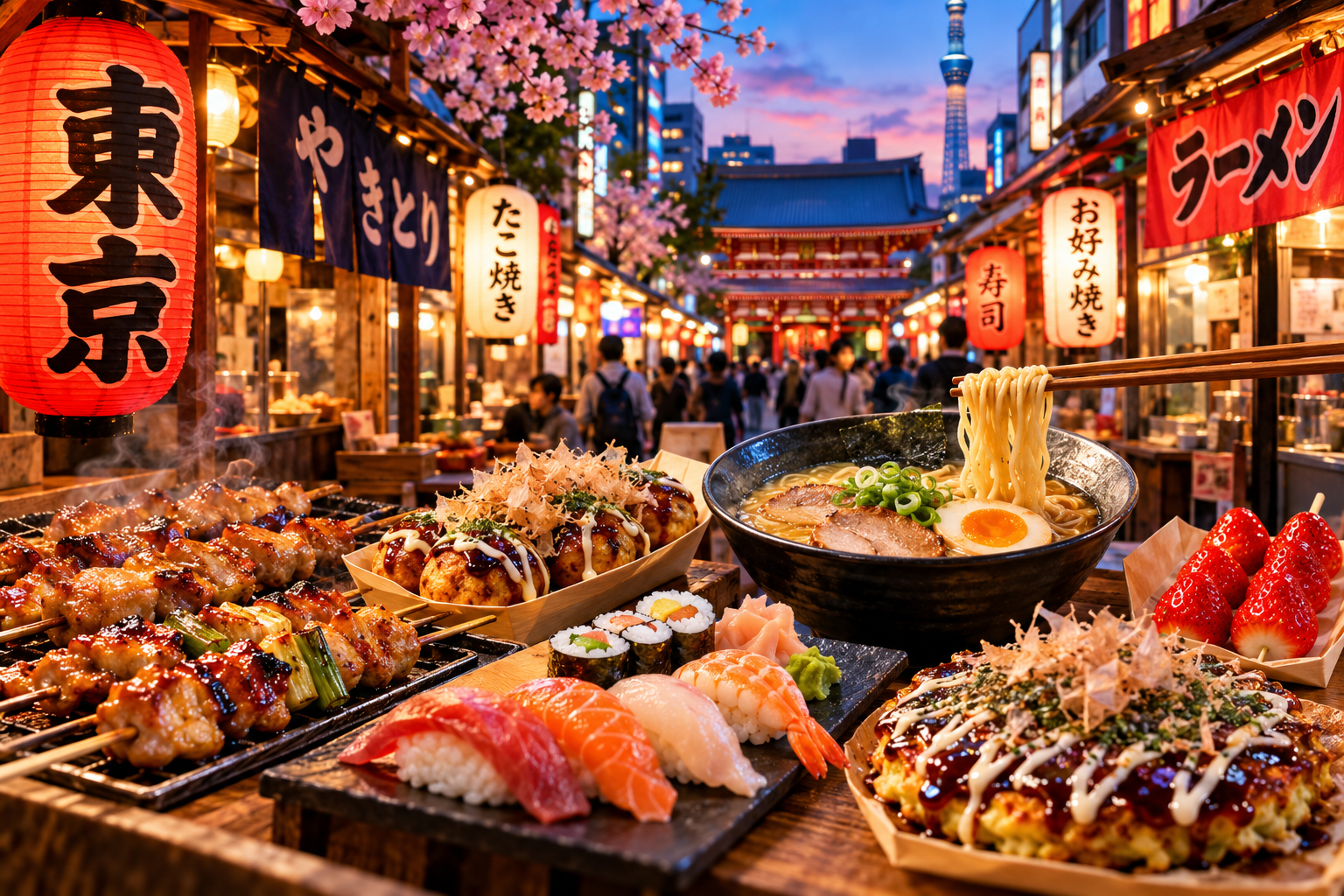
Tokyo Street Food: 25 Must-Try Japanese Snacks, Local Favourites, and the Best Places to Eat
What Tokyo streetfood if your most memorable meal in Tokyo came from a tiny food stall, a sizzling grill, or a freshly prepared snack enjoyed while exploring a lively Japanese neighbourhood? Tokyo street food offers an exciting way to discover Japan’s culinary culture, bringing together traditional recipes, regional specialities, modern flavours, and seasonal ingredients. Tokyo street food includes everything from crispy takoyaki and savoury yakitori to sweet taiyaki, freshly grilled seafood, and traditional Japanese sweets. The best way to experience it is to explore neighbourhood markets, festival stalls, specialist food streets, and local shopping districts while respecting Japanese dining customs Tokyo Education
Understanding Tokyo streetfood Culture
How Tokyo Developed Its Street Food Traditions
Tokyo was formerly known as Edo, and its development as a major urban centre helped shape many Japanese food traditions. As the population grew, vendors began serving convenient meals to workers, travellers, and residents who needed something quick and satisfying.
Foods that could be prepared efficiently became especially popular. Grilled skewers, rice-based snacks, noodles, and small savoury dishes suited busy urban life.
Over time, street-side food culture developed alongside markets, entertainment districts, festivals, and neighbourhood shopping streets. Many dishes associated with Japanese casual dining still reflect this history of convenience and craftsmanship.
Today, Tokyo’s food culture combines traditional street-side specialities with modern food halls, takeaway counters, temporary festival stalls, and small independent businesses.
The Difference Between Street Food, Market Food, and Festival Food Tokyo streetfood
Not every popular food experience in Tokyo takes place at a permanent street stall. Understanding the differences helps visitors choose where to eat.
Street Food Tokyo streetfood
Street food generally refers to prepared dishes sold for immediate consumption from small vendors, takeaway counters, stalls, or compact specialist shops.
Examples include takoyaki, taiyaki, and freshly grilled skewers.
Market Food Tokyo streetfood
Markets often feature seafood counters, produce vendors, traditional snacks, and small restaurants. Some offer ready-to-eat dishes, while others focus on ingredients intended for home cooking.
Tsukiji Outer Market is a well-known example of a Tokyo food destination where visitors can explore numerous small food businesses.
Festival Food Tokyo streetfood
Japanese festivals frequently feature temporary stalls called yatai. These may sell yakisoba, grilled corn, candied fruit, fried snacks, and other foods that are easy to prepare and eat during celebrations.
Festival menus vary according to the event and season, so visitors should not expect every dish to be available throughout the year.
Shopping Street Food Tokyo streetfood
Traditional shopping streets, known as shotengai, often contain bakeries, confectionery shops, croquette counters, and other small businesses serving neighbourhood customers.
These streets can provide a more everyday view of Tokyo’s food culture than destinations designed primarily for sightseeing.
Why Tokyo Street Food Is Different From Other Cities
Tokyo’s street food scene is shaped by Japanese culinary values, including attention to texture, seasonality, presentation, and the quality of individual ingredients.
A simple snack may involve carefully prepared batter, a precisely controlled cooking temperature, a distinctive sauce, or a filling that changes according to the season.
Another important characteristic is specialisation. Many small businesses focus on one product or a limited menu, allowing them to develop a recognisable style.
This does not mean every stall offers traditional food or that all Japanese vendors follow identical standards. Tokyo is a large, diverse city, and its food scene includes both long-established businesses and contemporary concepts.
25 Must-Try Tokyo streetfood Dishes
Tokyo offers an enormous variety of casual foods, but some dishes are particularly useful starting points for international visitors. The following selections include savoury snacks, grilled foods, seafood, traditional sweets, and modern favourites.
Prices vary by vendor, portion size, season, and location. The ranges below are approximate planning estimates in Japanese yen, not guaranteed current menu prices.
1. Takoyaki: Crispy Outside, Soft Inside Tokyo streetfood
Takoyaki is one of Japan’s best-known street snacks. These small, round balls are made from a savoury wheat-flour batter containing pieces of octopus, usually cooked in a specialised mould.
The outside develops a lightly browned surface while the centre remains soft and creamy. Vendors commonly finish takoyaki with a savoury sauce, mayonnaise, dried seaweed, and shaved bonito flakes.
<PRIVATE_PERSON>akoyaki is particularly popular in Osaka, but it is widely enjoyed in Tokyo as well.
Typical price: ¥500–¥900 per serving.
Best for: First-time visitors who want to try an iconic Japanese snack.
What to know: Takoyaki is often served extremely hot. Allow it to cool before eating, especially because the soft centre can retain heat.
2. Yakitori: Japanese Grilled Chicken Skewers Tokyo streetfood
Yakitori consists of chicken pieces grilled on skewers, often over charcoal. The cooking method creates smoky aromas and lightly charred edges while keeping the meat tender.
Popular varieties include chicken thigh, breast, skin, meatballs, and negima, a combination of chicken and Japanese spring onion.
Seasoning usually falls into two broad categories: shio, meaning salt, and tare, a sweet-savoury sauce.
Yakitori is common in small specialist restaurants, neighbourhood drinking establishments, and festival stalls. In Tokyo, the atmosphere around a traditional yakitori counter can be just as memorable as the food.
Typical price: ¥150–¥350 per skewer.
Best for: Meat lovers and travellers seeking a filling snack.
What to know: Some skewers contain offal or other less familiar chicken parts. Ask what each variety contains before ordering.
3. Taiyaki: Fish-Shaped Japanese Cakes Tokyo streetfood
Taiyaki is a fish-shaped cake made from batter and cooked in a mould. Its traditional filling is sweet red bean paste, although custard, chocolate, sweet potato, and other fillings are also available.
The contrast between the lightly crisp exterior and warm filling makes taiyaki particularly appealing during cooler weather.
Some vendors use a thin, crisp batter, while others prepare a thicker cake with a softer texture. Neither style is universally better; the choice depends on personal preference.
Typical price: ¥200–¥400 each.
Best for: Families, dessert lovers, and travellers who prefer mild sweetness.
What to know: Traditional red bean paste is made from beans and sugar, not chocolate. Check the filling if you have specific preferences or allergies.
4. Yakisoba: Japanese Stir-Fried Noodles Tokyo streetfood
Yakisoba is a popular Japanese noodle dish made by stir-frying wheat noodles with vegetables and, often, pork. It is commonly seasoned with a rich, slightly sweet sauce.
Festival versions may be cooked on large flat griddles, where vendors prepare multiple portions at once. The smell of noodles, sauce, and hot oil is often one of the defining aromas of a Japanese summer festival.
Although the name contains the word soba, typical yakisoba uses wheat-based noodles rather than buckwheat noodles.
Typical price: ¥600–¥1,000 per serving.
Best for: Hungry travellers who want a substantial meal rather than a small snack.
What to know: Standard versions may contain meat, egg, wheat, and soy. Vegetarian and other modified versions depend on the vendor.
5. Imagawayaki: Warm Filled Cakes Tokyo streetfood
Imagawayaki is a round, thick cake cooked in a mould and filled with ingredients such as sweet red bean paste or custard.
The texture is generally soft and cake-like, with a lightly browned exterior. Different regions of Japan use different names for similar products, and individual shops may offer their own fillings.
These cakes are particularly enjoyable when freshly prepared during colder months.
Typical price: ¥150–¥300 each.
Best for: Travellers seeking an inexpensive traditional sweet.
What to know: The cake usually contains wheat, and some varieties contain egg or dairy.
6. Menchi Katsu: Crispy Minced-Meat Cutlets Tokyo streetfood
Tokyo streetfood Menchi katsu is made from seasoned minced meat shaped into a patty, coated in breadcrumbs, and deep-fried.
The crust becomes golden and crunchy, while the centre remains juicy when prepared properly. It is often eaten with a savoury sauce and may be sold by butcher shops or takeaway counters.
This snack is particularly useful when exploring a shopping street because it can be eaten quickly between other stops.
Typical price: ¥200–¥450 each.
Best for: Travellers who prefer savoury, protein-rich snacks.
What to know: Menchi katsu generally contains meat and may include onion, egg, wheat, and other ingredients.
7. Korokke: Japanese Croquettes Tokyo streetfood
Tokyo streetfood Korokke is the Japanese adaptation of the croquette, commonly prepared with mashed potatoes, minced meat, or vegetables.
The filling is coated in breadcrumbs and fried until crisp. Some shops specialise in potato-based varieties, while others offer pumpkin, cream, seafood, or seasonal fillings.
Korokke is a good example of how a simple, inexpensive food can become a neighbourhood favourite through consistent preparation.
Typical price: ¥120–¥300 each.
Best for: Budget-conscious travellers and people who enjoy crispy comfort food.
What to know: Vegetable korokke is not automatically vegetarian because cooking oil, seasoning, fillings, and shared preparation equipment vary.
8. Karaage: Japanese Fried Chicken Tokyo streetfood
Tokyo streetfood Karaage is a Japanese cooking style in which small pieces of food, particularly chicken, are seasoned, coated lightly, and fried.
Chicken karaage commonly uses soy sauce, ginger, garlic, and other seasonings. The result is a crisp exterior and a juicy interior.
It appears at specialist takeaway counters, markets, festivals, convenience stores, and casual restaurants.
Typical price: ¥400–¥800 per portion.
Best for: Travellers who enjoy fried chicken and familiar savoury flavours.
What to know: Marinades commonly contain soy sauce, and some preparations include wheat. Shared fryers may also create cross-contact concerns for people with allergies.
9. Ikayaki: Grilled Squid Tokyo streetfood
Tokyo streetfood Ikayaki generally refers to squid cooked on a grill, often brushed with soy-based seasoning. Depending on the vendor, it may be served whole, cut into pieces, or prepared in a regional style.
Grilling brings out the squid’s natural savoury flavour and produces a distinctive smoky aroma.
At markets and festivals, freshly grilled squid can be an attractive choice for visitors interested in Japanese seafood.
Typical price: ¥500–¥1,200 per serving.
Best for: Seafood lovers.
What to know: Squid can be chewy, and sauces may contain soy, wheat, or other allergens.
10. Grilled Scallops and Other Seafood Tokyo streetfood
Tokyo’s seafood markets and food stalls may offer grilled scallops, prawns, oysters, and other marine ingredients.
Scallops are often cooked with butter, soy-based seasoning, or a simple savoury sauce. The quality depends on freshness, cooking technique, and the individual vendor.
Tsukiji Outer Market is one of the best-known areas for exploring seafood-focused food businesses, although not every stall specialises in ready-to-eat street food.
Typical price: ¥500–¥1,500 or more, depending on the seafood and portion.
Best for: Visitors who want to explore Japan’s seafood traditions.
What to know: Seafood prices can vary considerably. Check the displayed price before ordering and confirm that the food is cooked as requested.
11. Dango: Traditional Japanese Rice Dumplings Tokyo streetfood
Tokyo streetfood Dango consists of small dumplings made from rice flour or related rice-based ingredients. They are often served on skewers and may be coated with sweet soy glaze, red bean paste, or other toppings.
One popular style is mitarashi dango, which features a glossy, sweet-savoury glaze.
Dango is associated with Japanese seasonal traditions and tea culture as well as casual snack shops.
Typical price: ¥150–¥350 per skewer.
Best for: Travellers interested in traditional Japanese sweets.
What to know: Dango can be chewy and sticky. Eat slowly, take small bites, and be especially careful when serving it to children.
12. Senbei: Japanese Rice Crackers Tokyo streetfood
Senbei are rice crackers that may be grilled or baked and seasoned with soy sauce, salt, seaweed, sesame, or other ingredients.
Some are light and crunchy, while others are thick and hard. In certain traditional shopping streets, vendors grill senbei in front of customers, creating an appealing combination of aroma and theatre.
Senbei also makes a practical snack to carry between sightseeing stops, provided the packaging suits your travel plans.
Typical price: ¥100–¥300 each.
Best for: Travellers who prefer savoury snacks and want something easy to carry.
What to know: Ingredients vary, and some rice crackers contain wheat, soy, seafood-based seasonings, or other allergens.
13. Japanese Curry Bread Tokyo streetfood
Curry bread, known as kare pan, is a bread roll filled with Japanese curry. It is often coated in breadcrumbs and deep-fried, although baked versions are also available.
The filling tends to be thick and mildly spiced compared with many South Asian curries. The outer coating provides a crisp contrast to the soft bread and rich filling.
Curry bread is more commonly found at bakeries and takeaway counters than at traditional open-air stalls, but it fits naturally into a street-food exploration.
Typical price: ¥250–¥450 each.
Best for: Travellers seeking a filling snack with familiar flavours.
What to know: Many varieties contain wheat and may include meat, dairy, or other ingredients.
14. Nikuman: Steamed Filled Buns Tokyo streetfood
Nikuman are soft steamed buns filled with seasoned minced meat and other ingredients. They are especially popular during colder weather.
The fluffy exterior contrasts with a savoury filling that may include pork, onion, bamboo shoots, mushrooms, or seasonings.
Some shops offer related buns with vegetable, sweet bean, or other fillings, but the ingredients should be checked rather than assumed.
Typical price: ¥200–¥400 each.
Best for: Winter sightseeing and travellers who want a warm, portable snack.
What to know: The centre can be hot, so allow the bun to cool before taking a large bite.
15. Onigiri: Japanese Rice Balls Tokyo streetfood
Onigiri are rice balls shaped by hand or moulded and often wrapped in nori, or dried seaweed. Common fillings include salmon, pickled plum, tuna with mayonnaise, and seasoned vegetables.
They are widely available from convenience stores, supermarkets, specialist rice-ball shops, and takeaway counters.
Although onigiri is not always classified as street food, it is one of the most practical foods for travellers exploring Tokyo.
Typical price: ¥150–¥350 each.
Best for: Budget travellers, early starts, and quick meals between attractions.
What to know: Some fillings contain fish, mayonnaise, soy, or other ingredients. Plain-looking rice balls may also contain seasoning or fillings that are not immediately visible.
16. Okonomiyaki: Japanese Savoury Pancake Tokyo streetfood
Okonomiyaki is a savoury pancake-style dish commonly made with cabbage, batter, and ingredients such as pork, seafood, or vegetables.
It is usually cooked on a flat griddle and finished with a savoury sauce and other toppings. Regional styles differ, and the dish is strongly associated with cities such as Osaka and Hiroshima.
In Tokyo, specialist restaurants and festival stalls may serve versions suited to local tastes.
Typical price: ¥800–¥1,500 per serving.
Best for: Travellers who want a hearty dish to share or enjoy as a main meal.
What to know: Standard preparations often contain wheat, egg, and sometimes seafood. Bonito flakes are common toppings, so ask if you need a fish-free meal.
17. Gyoza: Japanese Dumplings Tokyo streetfood
Gyoza are dumplings typically filled with minced meat and vegetables. They are often pan-fried to produce a crisp base and a tender upper wrapper.
They are widely available at casual restaurants, takeaway counters, and food events. Although gyoza is not exclusively street food, its small serving size makes it easy to include in a broader tasting experience.
Typical price: ¥400–¥800 for a small serving.
Best for: Travellers who enjoy dumplings and want something savoury.
What to know: Meat-based fillings are common, and wrappers typically contain wheat. Vegetarian options depend on the establishment.
18. Tamagoyaki: Japanese Rolled Omelette Tokyo streetfood
Tamagoyaki is a Japanese rolled omelette prepared by cooking thin layers of seasoned egg and rolling them together.
It can be slightly sweet, savoury, or somewhere between the two. Some vendors serve it in rectangular pieces, while others place it on a skewer for easier eating.
At Tsukiji Outer Market, tamagoyaki is one of the foods visitors may encounter while exploring specialist shops.
Typical price: ¥200–¥500 per portion.
Best for: Travellers seeking a simple, mild snack.
What to know: Egg is the principal ingredient, and recipes may include dashi, sugar, soy sauce, or other seasonings.
19. Strawberry Candy and Candied Fruit Tokyo streetfood
Candied strawberries and other fruits are popular at some Japanese festivals and seasonal food events.
Fresh fruit is coated in a hard sugar shell, creating a sweet, glossy exterior and a juicy centre. Depending on the event, vendors may sell strawberries, grapes, apples, or other fruits.
These snacks are visually appealing and often attract families and younger visitors.
Typical price: ¥300–¥700 per serving.
Best for: Dessert lovers and visitors attending festivals.
What to know: The sugar coating can be hard and sticky. Be mindful of dental concerns and choking risks for young children.
20. Kakigori: Japanese Shaved Ice Tokyo streetfood
Kakigori is made from finely shaved ice topped with syrups, fruit, sweet beans, condensed milk, or other ingredients.
Although it is more of a seasonal dessert than a traditional savoury street snack, it is a refreshing choice during Tokyo’s hot and humid summers.
Modern shops may offer elaborate versions with fresh fruit, tea-flavoured syrups, and carefully arranged toppings.
Typical price: ¥500–¥1,500 or more.
Best for: Summer visitors and travellers who want a refreshing break.
What to know: Toppings can substantially change the price. Condensed milk and other dairy ingredients may be present.
21. Japanese Soft-Serve Ice Cream Tokyo streetfood
Japanese soft-serve ice cream is available in familiar vanilla flavours as well as matcha, black sesame, sweet potato, and seasonal fruit varieties.
Some shops use local ingredients or create distinctive regional combinations. In Tokyo, the experience can be as much about discovering unusual flavours as enjoying the dessert itself.
Typical price: ¥350–¥700.
Best for: Families, dessert enthusiasts, and travellers who prefer cold treats.
What to know: Matcha can taste more earthy and slightly bitter than conventional sweet green-tea flavourings. Dairy-free options are not available everywhere.
22. Mitarashi-Style Grilled Mochi Tokyo streetfood
Grilled mochi and other rice-based sweets may be sold at specialist shops and seasonal events. The texture can range from soft and stretchy to lightly toasted on the outside.
Some versions use a sweet soy glaze, while others are served with red bean paste or other toppings.
These foods offer a glimpse into the wider tradition of Japanese rice-based confectionery.
Typical price: ¥200–¥500, depending on the preparation.
Best for: Travellers curious about traditional Japanese desserts.
What to know: Mochi can be extremely sticky and presents a choking hazard, particularly for children and older adults. Cut it into small pieces and chew carefully.
23. Yaki Tomorokoshi: Japanese Grilled Corn Tokyo streetfood
Yaki tomorokoshi is corn grilled and often brushed with soy-based seasoning. The combination of charred kernels, natural sweetness, and savoury sauce makes it a popular festival food.
Some vendors prepare the corn over charcoal, while others use grills or griddles.
The dish is especially associated with summer events, although availability depends on the vendor and season.
Typical price: ¥300–¥600 per cob.
Best for: Travellers who want a simple, vegetable-based snack.
What to know: The seasoning may contain soy and wheat. A corn-based dish is not necessarily suitable for every vegetarian or allergy-sensitive diet.
24. Tonkatsu Sandwiches Tokyo streetfood
Tonkatsu sandwiches feature breaded, deep-fried pork cutlet placed between slices of bread, often with cabbage and a sweet-savoury sauce.
They are commonly sold at takeaway counters, bakeries, railway food shops, and specialist pork-cutlet establishments.
Although the sandwich is not a traditional open-air street stall food, it is convenient for travellers who need a portable lunch while moving between neighbourhoods.
Typical price: ¥400–¥900.
Best for: Visitors seeking a substantial meal that is easy to carry.
What to know: Standard versions contain pork and wheat, and some include egg, mayonnaise, or other ingredients.
25. Japanese Seasonal Festival Snacks Tokyo streetfood
One of the most enjoyable aspects of Tokyo street food is discovering dishes that appear mainly at particular events or during certain seasons.
Depending on the festival, visitors may encounter chocolate-coated bananas, grilled seafood, fried potatoes, sweet pancakes, candied apples, and regional specialities.
These temporary stalls often create a lively atmosphere through bright displays, cooking sounds, and the smell of food prepared in front of customers.
Typical price: ¥300–¥800 for many simple festival snacks, although larger portions and premium ingredients can cost more.
Best for: Visitors who want to experience Japanese celebrations as well as the food.
What to know: Availability, ingredients, prices, and food-handling arrangements vary by event. Check the stall before buying.
Best Places to Find Tokyo Street Food
Tokyo is too large to have a single street that represents its entire food culture. The most rewarding approach is to explore several districts, each offering a different atmosphere and style of eating.
Tsukiji Outer Market: Seafood and Traditional Food Shops Tokyo streetfood
Tsukiji Outer Market is one of Tokyo’s best-known food destinations. Its network of small shops offers seafood, kitchen ingredients, Japanese sweets, grilled foods, and other prepared dishes.
Visitors may encounter grilled scallops, tamagoyaki, seafood bowls, rice crackers, and specialist confectionery.
The market is particularly suitable for people who want to sample several foods during a single visit. However, it is also a working commercial area, so visitors should avoid blocking shop entrances or treating every business as a sightseeing attraction.
For the best experience, arrive early enough to explore comfortably, check the operating hours of individual businesses, and choose a small number of dishes rather than trying to eat everything.
Ameyoko: A Lively Market Atmosphere Tokyo streetfood
Ameyoko, near Ueno, is a busy shopping area known for its dense collection of shops and food businesses.
Depending on the establishment, visitors can find seafood, grilled foods, snacks, sweets, and casual meals. The atmosphere is energetic, making the district appealing to travellers who enjoy crowded urban markets.
Ameyoko is especially useful for combining food exploration with shopping. However, it is not exclusively a traditional street-food destination, and some popular eating places operate as restaurants rather than open-air stalls.
Nakamise Street: Traditional Snacks Near Sensō-ji
Nakamise Street leads towards Sensō-ji Temple in Asakusa and is lined with shops selling souvenirs, sweets, and traditional Japanese snacks.
Visitors may find ningyo-yaki, senbei, and other confectionery associated with the district.
Nakamise is particularly attractive for travellers who want to combine cultural sightseeing with food tasting. Its traditional setting also provides opportunities to observe Japanese confectionery craftsmanship.
The street can become crowded, particularly during busy travel periods. Follow posted instructions about eating, photography, and movement, and avoid stopping in narrow areas where other visitors need to pass.
Harajuku and Takeshita Street: Colourful Modern Treats
Harajuku is associated with youth fashion, creative retail, and visually distinctive desserts.
Depending on current shop offerings, visitors may encounter crepes, elaborate sweets, colourful drinks, and modern Japanese-inspired snacks.
This district is a strong choice for travellers interested in contemporary food presentation and social-media-friendly treats. It is less representative of traditional market food than Tsukiji or Nakamise Street.
Queues and prices can be higher at particularly popular shops. Check the menu before joining a long line, and consider visiting at a quieter time.
Shinjuku: Grilled Food and Neighbourhood Dining
Shinjuku combines major shopping areas, railway connections, restaurants, and compact dining streets.
Yakitori, takeaway snacks, noodles, and casual Japanese dishes are available across the district. Omoide Yokocho, known for its narrow lanes and small eateries, is particularly associated with intimate dining and grilled skewers.
Not every establishment in these areas is a street stall, and many operate as small restaurants with limited seating.
Shinjuku is useful for an evening food exploration, but visitors should check individual businesses for seating arrangements, minimum orders, opening hours, and payment methods.
Asakusa: Old Tokyo Flavours
Beyond Nakamise Street, Asakusa contains traditional confectionery shops, snack counters, casual eateries, and businesses serving Japanese classics.
The area is particularly suitable for trying taiyaki, dango, senbei, and other sweets while exploring its historic streets.
For a more relaxed experience, consider walking away from the busiest tourist corridors and looking for established neighbourhood businesses.
This approach can provide a broader view of Asakusa’s everyday food culture without assuming that every shop outside the main street is inexpensive or undiscovered.
Yanaka Ginza: Local Shopping Street Food
Yanaka Ginza is a traditional shopping street in Tokyo’s Yanaka area. It is known for its neighbourhood atmosphere, small shops, and casual food options.
Depending on current businesses, visitors may find croquettes, baked goods, sweets, and other takeaway snacks.
Yanaka Ginza can suit travellers who prefer a slower pace over the intense crowds of major tourist markets.
Remember that it is a residential neighbourhood as well as a visitor destination. Keep noise levels reasonable, dispose of rubbish appropriately, and avoid photographing residents without permission.
Ueno: Casual Eating and Market Shopping
Ueno offers access to Ameyoko, parks, museums, transport connections, and a broad range of casual food businesses.
It is a practical base for a half-day food walk, particularly for travellers who want to combine market exploration with cultural attractions.
Visitors can sample snacks, browse food shops, and finish with a sit-down meal nearby.
The area is varied rather than uniform, so food quality, prices, and atmosphere depend on the individual establishment.
Shibuya: Contemporary Food Trends
Shibuya is a major shopping and entertainment district with a changing collection of takeaway counters, bakeries, dessert shops, and casual dining businesses.
It is particularly useful for visitors interested in modern Japanese food trends and international influences.
Because Shibuya is a large commercial district, it is best approached by choosing a few specific food stops rather than expecting one continuous traditional street-food market.
Japanese Festivals: The Most Atmospheric Food Experience
Seasonal festivals provide a different way to discover Tokyo street food.
Temporary stalls may serve yakisoba, takoyaki, grilled corn, fried snacks, sweets, and other foods suited to outdoor celebrations.
The experience often includes music, traditional clothing, decorations, and local community activities. Food becomes part of a larger cultural event rather than the sole attraction.
Festival dates and stall selections change from year to year. Confirm the schedule of the specific event before planning your trip around it.
Ten Food Brands and Businesses to Know in Tokyo
Tokyo’s food landscape includes specialist shops, established restaurant brands, bakeries, and individual market vendors. The following ten names provide a useful starting point for researching Japanese food experiences.
Not all of them are street-food stalls, and their inclusion does not imply that every location sells every dish discussed in this guide.
| Brand or business | Known for | Food experience | Best suited to |
|---|---|---|---|
| Tsukiji Outer Market | Seafood and specialist food shops | Market-style tasting and shopping | Seafood enthusiasts |
| Gindaco | Takoyaki | Hot octopus balls and toppings | First-time visitors |
| Asakusa Kokonoe | Ningyo-yaki | Traditional small cakes | Sweet-snack lovers |
| Funawa | Traditional Japanese sweets | Sweet potato confectionery and other sweets | Traditional dessert fans |
| Kimuraya Sohonten | Anpan and bakery products | Japanese bread and filled buns | Bakery enthusiasts |
| Ippudo | Ramen | Casual Japanese noodle dining | Noodle lovers |
| Kura Sushi | Sushi | Conveyor-belt sushi dining | Families and groups |
| MOS Burger | Japanese-style burgers | Quick-service takeaway and casual dining | Convenient meals |
| Gyoza no Ohsho | Gyoza and Chinese-Japanese dishes | Casual dumplings and hot dishes | Savoury-food fans |
| Mister Donut | Doughnuts | Sweet snacks and takeaway desserts | Dessert lovers |
How to Compare These Brands Tokyo streetfood
The most important difference is the kind of experience each offers.
Tsukiji Outer Market is a district containing numerous independent businesses rather than a single food brand. It offers variety, but visitors should research individual shops if they have a specific dish in mind.
Gindaco is a recognisable takoyaki chain and can be a convenient option when a specialist street stall is unavailable.
Asakusa Kokonoe and Funawa are associated with traditional Japanese sweets, making them suitable additions to a cultural sightseeing day.
Kimuraya Sohonten provides a bakery-focused experience, while Ippudo, Kura Sushi, Gyoza no Ohsho, MOS Burger, and Mister Donut offer more structured restaurant or takeaway formats.
For a genuine street-food experience, combine established brands with independent market vendors and local specialist shops. This creates a more varied experience than relying entirely on chain restaurants.
Tokyo streetfood Prices and Budget Planning
The cost of eating in Tokyo depends on the type of food, the neighbourhood, the size of each portion, and whether the vendor caters primarily to tourists.
A small rice cracker may cost only a few hundred yen, while premium seafood or an elaborate dessert can cost substantially more.
Typical Price Ranges
| Food category Tokyo streetfood | Approximate price Tokyo streetfood |
|---|---|
| Small traditional sweets | ¥150–¥400 |
| Takoyaki | ¥500–¥900 |
| Yakitori | ¥150–¥350 per skewer |
| Korokke | ¥120–¥300 |
| Karaage | ¥400–¥800 per serving |
| Onigiri | ¥150–¥350 |
| Yakisoba | ¥600–¥1,000 |
| Grilled seafood | ¥500–¥1,500+ |
| Kakigori | ¥500–¥1,500+ |
| Festival snacks | ¥300–¥800 |
These ranges are indicative, not verified prices for every current vendor. Premium locations, seasonal products, and larger portions may cost more.
Budget-Friendly Tokyo Street Food
Travellers with limited budgets can build satisfying meals around onigiri, korokke, bakery products, small noodle dishes, and modest portions from specialist shops.
A useful strategy is to select two or three substantial snacks rather than purchasing many expensive samples in quick succession.
For example, a traveller might combine a rice ball for breakfast, a croquette while exploring a shopping street, and a noodle dish for lunch. A dessert can then become an occasional treat rather than an automatic addition to every stop.
Mid-Range Food Exploration
Visitors with a moderate budget can add takoyaki, yakitori, grilled seafood, traditional sweets, and one or two specialist dessert experiences.
The advantage of this approach is variety. It allows visitors to experience different cooking techniques and ingredients without committing to a full restaurant meal at every stop.
Premium Food Experiences
Premium street-food-style experiences may involve seasonal seafood, elaborate desserts, high-quality ingredients, or specialist shops with carefully controlled preparation.
Higher prices do not automatically guarantee a better experience. Consider ingredient quality, freshness, preparation, portion size, and whether the dish is genuinely distinctive.
A Sample Daily Food Budget
| Travel style Tokyo streetfood | Illustrative daily food budget Tokyo streetfood |
|---|---|
| Very budget-conscious | ¥2,000–¥3,500 |
| Moderate tasting day | ¥3,500–¥6,000 |
| Variety with premium treats | ¥6,000–¥10,000+ |
These are planning examples, not average-spending statistics. They assume several casual food purchases and may not include alcohol, expensive restaurants, or special dining experiences.
How to Eat Tokyo Street Food Like a Local
Start With One Neighbourhood
Tokyo’s size makes it tempting to plan a long list of food stops across the city. In practice, spending more time in one district often produces a more enjoyable experience.
Choose a neighbourhood that matches your interests:
- Tsukiji for seafood and specialist shops.
- Asakusa for traditional sweets and cultural sightseeing.
- Ameyoko for a lively market atmosphere.
- Harajuku for contemporary desserts.
- Yanaka Ginza for a slower neighbourhood walk.
- Shinjuku for evening food exploration.
A concentrated route reduces unnecessary travel and leaves more time to enjoy each stop.
Look for Signs of Fresh Preparation
Food prepared in front of customers can be appealing because you can observe the cooking process.
Look for appropriate handling of raw and cooked ingredients, clean utensils, protected food displays, and vendors who manage queues without leaving food exposed for long periods.
A long queue may indicate popularity, but it is not a guarantee of food quality or safety.
Order Small Portions Before Committing
Tokyo streetfood The best approach to tasting multiple foods is to order modest portions and share when appropriate.
For example, two travellers could split a serving of takoyaki, try different taiyaki fillings, and then order a few yakitori skewers. This creates variety without filling up too quickly.
Sharing is not suitable for every dish or every vendor, so check portion sizes and shop policies first.
Carry Cash and a Payment Card
Tokyo streetfood Japan has extensive electronic payment options, but payment methods vary between businesses.
Larger chains and established shops may accept cards or mobile payments, while some small vendors may prefer cash.
Keeping a modest amount of yen available can make small purchases easier. Check payment options before ordering if cash access is limited.
Learn a Few Useful Japanese Phrases
Even a small amount of Japanese can make food ordering easier.
- Kore o kudasai — This one, please.
- Ikura desu ka? — How much is it?
- Niku nashi desu ka? — Is it without meat?
- Arigatou gozaimasu — Thank you very much.
For serious food allergies, these phrases alone are not sufficient to confirm safety. Written allergy information and clear communication are more reliable.
Eat Considerately in Crowded Areas
Tokyo streetfood Japan does not have one universal rule requiring everyone to eat in a particular way, but local expectations differ by location.
Some food stalls provide designated eating spaces, and some shopping streets discourage eating while walking. Follow posted instructions and observe what the vendor requests.
Avoid blocking entrances, stopping in the middle of narrow streets, or leaving food packaging behind.
Dispose of Rubbish Properly
Tokyo streetfood Public rubbish bins can be less common than visitors expect in some Japanese neighbourhoods.
Look for bins provided by the vendor or use designated disposal points. If none are available, carry your rubbish until you find an appropriate place.
Never leave cups, skewers, wrappers, or napkins beside a stall or on a public street.
Tokyo Street Food for Different Travellers
Tokyo Street Food for First-Time Visitors
First-time visitors should begin with familiar dishes that are easy to recognise.
Takoyaki, yakitori, taiyaki, onigiri, and karaage offer a useful introduction to different Japanese flavours and cooking styles.
A market visit can then provide an opportunity to explore more unusual foods without needing to understand an extensive restaurant menu.
Avoid trying too many unfamiliar dishes in one sitting. A slower approach makes it easier to identify your favourites.
Tokyo Street Food for Families With Children
Tokyo streetfood Families may enjoy taiyaki, mild rice crackers, grilled corn, small bakery products, and simple rice-based snacks.
Choose foods that are easy for children to hold and eat safely. Hot fillings, hard sugar coatings, skewers, and sticky rice cakes require particular care.
Mochi and dango can pose choking risks, especially for young children. Do not assume that a small or soft-looking snack is automatically safe.
Plan regular breaks, carry drinking water, and identify seating areas before buying food that may be messy.
Tokyo Street Food for Vegetarian Travellers
Tokyo streetfood Vegetarian visitors should investigate ingredients rather than relying on the dish’s name.
Some apparently vegetable-based Japanese foods contain fish stock, bonito flakes, meat-derived seasonings, or sauces that are not vegetarian.
Potential options may include plain rice crackers, certain sweet pastries, fruit-based desserts, or vegetable dishes prepared without animal ingredients. However, recipes and preparation practices vary.
Ask whether the food contains meat, fish, fish stock, or animal-derived ingredients, and check whether it is cooked using shared equipment.
Tokyo Street Food for Vegan Travellers
Vegan visitors face additional challenges because egg, milk, honey, fish stock, and other animal-derived ingredients can appear in otherwise plant-based dishes.
Traditional sweets may use plant-based ingredients, but this should never be assumed. Breads, sauces, glazes, and fillings also require checking.
A practical strategy is to identify suitable shops in advance, examine ingredient labels when available, and communicate dietary requirements clearly.
Tokyo Street Food for Muslim Travellers
Muslim travellers should check meat sourcing, cooking methods, sauces, and the possibility of cross-contact with pork or alcohol-containing ingredients.
Yakitori, karaage, and meat-filled buns are not automatically halal. Marinades and sauces may contain ingredients that require further investigation.
Seafood and vegetarian foods may offer additional options, but preparation methods and seasonings still matter.
Where halal certification is important, look for clearly identified halal establishments or reliable certification information rather than relying on a menu description alone.
Tokyo Street Food for People With Food Allergies
Common ingredients in Japanese street food include wheat, egg, soy, milk, sesame, seafood, and shellfish.
Sauces and fillings can contain ingredients that are not obvious from appearance. Shared cooking surfaces and fryers can also create cross-contact risks.
If you have a serious allergy, prepare a written Japanese explanation of the allergy and its severity. Ask about both ingredients and preparation equipment.
When a vendor cannot confidently explain the ingredients or cross-contact risks, choose another food rather than guessing.
Tokyo Street Food for Budget Travellers
Budget travellers can enjoy a broad selection without choosing the most expensive markets or premium desserts.
Focus on neighbourhood bakeries, rice balls, croquettes, simple snacks, and small portions from established food shops.
Set a daily food allowance and keep a small reserve for a distinctive local speciality. This balances affordability with the opportunity to try something memorable.
Tokyo Street Food for Photography Enthusiasts
Food photography is popular around Tokyo’s colourful dessert shops, market counters, and festival stalls.
Ask permission before photographing staff closely or taking pictures inside small shops. Avoid obstructing queues and other customers.
Take a quick photograph of your own food when permitted, then enjoy it while it is fresh. Some dishes, especially fried foods, lose their texture as they cool.
Tokyo Street Food for Older Travellers
Older visitors may prefer a route with fewer stairs, more seating, shorter queues, and regular rest stops.
Choose soft foods when appropriate, avoid rushing between crowded stalls, and check whether a destination has accessible toilets and suitable seating.
Sticky rice cakes and other chewy foods require extra care for anyone with swallowing difficulties. Food choices should reflect individual needs rather than assumptions about age.
Common Tokyo Street Food Mistakes and How to Avoid Them
Assuming Every Popular Food Is Available Everywhere
Some dishes are strongly associated with specific regions, while others are widely available throughout Japan.
Takoyaki, for example, has strong associations with Osaka but can be found in Tokyo. Festival-only foods may be unavailable outside certain events.
Solution: Identify the particular food or experience you want and confirm that a suitable vendor is operating in your chosen neighbourhood.
Arriving at Markets Too Late Tokyo streetfood
Some markets and specialist food businesses operate primarily in the morning or close earlier than major shopping districts.
Arriving late may mean that a shop is closed or a popular product has sold out.
Solution: Check the opening hours of individual businesses and plan morning visits for destinations where early trading matters.
Assuming Street Food Is Always Cheap Tokyo streetfood
Small snacks can appear inexpensive individually, but multiple purchases, premium seafood, and elaborate desserts can add up quickly.
Solution: Set a budget before exploring, compare portion sizes, and prioritise foods that are genuinely distinctive to the area.
Eating Too Much at the First Stop Tokyo streetfood
A large meal at the beginning of a food walk leaves little room for other dishes.
Solution: Start with small portions and build your route around variety. Save substantial meals for later if you expect to try many snacks.
Ignoring Ingredients Tokyo streetfood
Food names do not always communicate every ingredient. A savoury pancake may contain fish flakes, a vegetable snack may use meat stock, and a sweet pastry may contain dairy.
Solution: Ask specific ingredient questions and use written translations where necessary.
Choosing Food Only Because It Looks Good Tokyo streetfood
Bright colours and attractive displays can be appealing, but visual presentation does not establish freshness, quality, or value.
Solution: Look at food handling, preparation, menu clarity, and the vendor’s ability to answer reasonable questions.
Treating Every Market as a Place to Eat While Walking Tokyo streetfood
Some markets and shopping streets have specific expectations about where food should be consumed.
Solution: Ask the vendor where to eat, use designated spaces, and follow posted instructions.
Forgetting Seasonal Availability Tokyo streetfood
Summer festival foods, winter snacks, and seasonal fruit desserts may not be available throughout the year.
Solution: Build your itinerary around the season of travel and keep alternative food options in mind.
Assuming a Vegetarian Dish Is Fully Vegetarian Tokyo streetfood
Fish stock and animal-derived seasonings may be present in dishes that appear vegetable-based.
Solution: Ask about the stock, sauce, toppings, and cooking method, not only the main ingredients.
Planning Too Many Stops Tokyo streetfood
A long itinerary that crosses several distant districts can become tiring and leave little time to enjoy the food.
Solution: Choose a compact area, allow time for queues, and treat additional stops as optional rather than mandatory.
The Advantages and Disadvantages of Tokyo Street Food
Advantages Tokyo streetfood
Variety: Visitors can experience a broad range of flavours, textures, and cooking methods without committing to full restaurant meals.
Cultural discovery: Traditional sweets, market specialities, and festival snacks reveal aspects of Japanese food culture that may be missed in conventional dining rooms.
Flexible budgeting: Small portions allow visitors to control spending, although premium products can be expensive.
Convenience: Food stalls and takeaway shops can fit naturally into a sightseeing itinerary.
Fresh preparation: Many dishes are cooked or assembled in front of customers, creating an engaging food experience.
Local character: Neighbourhood shops can provide a more personal introduction to a district’s everyday eating habits.
Disadvantages Tokyo streetfood
Crowds: Famous markets and shopping streets can become congested, particularly during busy travel periods.
Limited seating: Some vendors have no seating or provide only a small area for customers.
Dietary challenges: Hidden ingredients, shared equipment, and language barriers can make strict dietary requirements difficult to manage.
Variable prices: Tourist-oriented locations and premium products may cost more than expected.
Weather dependence: Outdoor stalls and festival food experiences can be affected by rain, heat, cold, or event cancellations.
Limited opening hours: Some specialist shops sell only certain products at particular times of day.
Is Tokyo Street Food Better Than Restaurant Dining?
Neither option is universally better. Street food is particularly good for tasting many small dishes, watching preparation, and exploring neighbourhoods.
Restaurants are generally more suitable when you need seating, a substantial meal, a quieter environment, or detailed communication about dietary requirements.
The strongest approach is to combine both. Use street food for discovery and casual snacking, then choose restaurants when you want to relax and enjoy a more complete meal.
Seasonal Tokyo Street Food: What to Eat Throughout the Year
Spring Tokyo streetfood
Spring is a good time to explore shopping streets, traditional sweets, bakeries, and seasonal food displays while visiting parks and gardens.
Sakura-inspired desserts and limited-edition sweets may appear during the cherry blossom season, although availability varies between businesses.
Outdoor eating can be pleasant on mild days, but popular viewing areas may become crowded.
Summer Tokyo streetfood
Summer is associated with festivals, outdoor celebrations, grilled foods, and refreshing desserts.
Visitors may encounter yakisoba, grilled corn, candied fruit, shaved ice, and other seasonal snacks.
Tokyo summers can be hot and humid. Drink water regularly, take breaks in shaded or air-conditioned spaces, and be cautious about food that has been left unrefrigerated.
Autumn Tokyo streetfood
Autumn often brings sweet potato desserts, chestnut-based sweets, seasonal fruit products, and foods associated with harvest celebrations.
The cooler weather can make grilled dishes and warm snacks particularly appealing.
Look for seasonal offerings at specialist confectionery shops and neighbourhood bakeries, but confirm availability because recipes and product schedules change.
Winter Tokyo streetfood
Winter is ideal for warm foods such as nikuman, hot takeaway dishes, and freshly prepared sweets.
Steamed buns and warm bakery products are particularly convenient during cold-weather sightseeing.
Plan indoor breaks between outdoor stops and check opening hours, as some smaller businesses may adjust their schedules during holiday periods.
A Practical One-Day Tokyo Street Food Itinerary Tokyo streetfood
A successful food walk does not need to cover every famous district. The following sample route combines traditional snacks, a market visit, and a relaxed afternoon without requiring an excessive number of meals.
Morning: Explore Tsukiji Outer Market Tokyo streetfood
Begin with a walk through Tsukiji Outer Market. Browse the shops before choosing a small breakfast or early snack.
Possible foods include tamagoyaki, grilled seafood, senbei, or another speciality available at the time of your visit.
Take time to observe the market’s commercial activity and check prices before ordering premium seafood.
Late Morning: Continue Towards Asakusa Tokyo streetfood
Travel to Asakusa and explore the streets around Sensō-ji Temple.
Try a traditional sweet such as ningyo-yaki, taiyaki, or dango, depending on what is available.
Follow local guidance about eating and photography, particularly in busy pedestrian areas.
Lunch: Choose a Substantial Dish Tokyo streetfood
Enjoy yakisoba, gyoza, a noodle dish, or another filling meal at a suitable takeaway counter or casual restaurant.
This is a good opportunity to sit down, rest, and recharge before continuing the afternoon.
Afternoon: Explore a Shopping Street Tokyo streetfood
Choose a neighbourhood shopping street such as Yanaka Ginza, or remain in Asakusa if you prefer to minimise travel.
Look for croquettes, bakery products, rice crackers, and other small snacks.
Avoid buying every interesting item immediately. Take a moment to compare portions, ingredients, and prices.
Evening: Finish With Grilled Food Tokyo streetfood
End the day with yakitori or another grilled dish in a suitable restaurant or takeaway setting.
If you prefer sweets, choose a dessert shop instead of adding another large meal.
Keep the evening flexible so that you can spend more time at a place you particularly enjoy.
How to Adapt the Route Tokyo streetfood
If you prefer seafood, spend longer at Tsukiji. If traditional Japanese sweets interest you most, prioritise Asakusa. If you want modern desserts, substitute a visit to Harajuku.
The objective is not to visit every district. It is to experience several complementary foods at a comfortable pace.
Practical Advice for Planning Your Tokyo Street Food Trip
Check Current Opening Hours Tokyo streetfood
Small businesses may close on particular weekdays, sell out of popular products, or adjust their schedules seasonally.
Check the latest information before travelling to a specific shop. Do not assume that a business is open simply because the surrounding market is operating.
Prepare for Crowds and Queues Tokyo streetfood
Popular food destinations can be busy during weekends, public holidays, and peak travel periods.
Visit earlier where practical, keep your route flexible, and have alternative choices available if a queue is too long.
Carry Water and Dress for the Weather Tokyo streetfood
Tokyo’s climate changes substantially throughout the year. Comfortable walking shoes, weather-appropriate clothing, and drinking water make a food walk easier.
During summer, avoid spending excessive time in direct sunlight while waiting for food.
Check Ingredient and Allergy Information Tokyo streetfood
If you have dietary restrictions, research likely ingredients in advance and prepare a clear explanation in Japanese.
For serious allergies, never rely solely on appearance or a machine-translated menu. When the vendor cannot confirm the relevant details, choose a safer alternative.
Use Reliable Transport Planning Tokyo streetfood
Tokyo’s railway network makes it possible to visit several food districts in one day, but unnecessary transfers can consume valuable time.
Group nearby attractions together, check travel times, and avoid crossing the city repeatedly for individual snacks.
Respect Local Businesses Tokyo streetfood
Purchase food before photographing it if that is the vendor’s expectation, ask before taking close-up photographs of staff, and avoid blocking entrances.
Remember that markets and shopping streets serve local residents and workers as well as tourists.
The Future of Tokyo streetfood
Traditional Recipes Will Continue to Matter Tokyo streetfood
Established foods such as takoyaki, yakitori, taiyaki, and senbei have recognisable flavours and strong cultural associations.
Their continued appeal is likely to depend on a balance between familiar preparation methods and the ability of small businesses to adapt to changing customer expectations.
Traditional food does not need to remain unchanged to remain meaningful. Vendors may experiment with ingredients or presentation while retaining the basic character of a dish.
Modern Desserts and Creative Presentation Tokyo streetfood
Colourful desserts, elaborate soft-serve ice cream, seasonal sweets, and visually distinctive snacks have become an important part of contemporary food experiences.
Social media can help introduce small businesses to international visitors, but trends may change quickly. A product that attracts attention today may be replaced by a new idea next season.
Travellers should balance popular recommendations with an interest in foods that have enduring local significance.
Greater Attention to Dietary Requirements Tokyo streetfood
As Tokyo welcomes visitors with a wide range of dietary needs, clear ingredient information and multilingual communication can make food exploration easier.
However, improvements will vary between businesses. Strict dietary requirements will continue to require individual checks rather than assumptions about a whole district or cuisine.
More Sustainable Food Practices Tokyo streetfood
Food businesses face questions about packaging, food waste, sourcing, and the environmental effects of disposable containers.
Some vendors may adopt more efficient packaging or purchasing practices, while others may be constrained by cost and operational demands.
Visitors can contribute by avoiding unnecessary packaging, carrying reusable items where practical, and disposing of rubbish responsibly.
Technology Will Change How Visitors Discover Food Tokyo streetfood
Digital maps, translation tools, electronic payments, and customer reviews can make Tokyo street food easier to navigate.
These tools are useful starting points, but reviews may be outdated and machine translations can miss important ingredient details.
The most reliable approach combines digital preparation with direct observation and clear communication at the shop.
A Continued Balance Between Tourism and Local Life Tokyo streetfood
Popular food districts benefit from visitors, but excessive crowds can create challenges for residents and small businesses.
Responsible food tourism involves spreading visits across neighbourhoods, following local rules, supporting businesses respectfully, and recognising that a shopping street is not simply a backdrop for photographs.
The future of Tokyo street food will depend not only on new dishes but also on preserving the everyday environments in which these foods are prepared and enjoyed.
FAQs
What Is the Most Famous Tokyo Street Food?
Takoyaki, yakitori, taiyaki, and traditional Japanese sweets are among the popular foods visitors seek in Tokyo. The best choice depends on whether you prefer savoury snacks, grilled meat, seafood, or desserts.
Where Is the Best Place to Eat Street Food in Tokyo?
Tsukiji Outer Market is a popular destination for seafood and specialist food shops. Nakamise Street in Asakusa is known for traditional sweets, while Ameyoko offers a lively market atmosphere. The best destination depends on the food you want to try.
How Much Does Tokyo Street Food Cost?
Many simple snacks cost approximately ¥150–¥500, while a serving of takoyaki may cost ¥500–¥900. Premium seafood, elaborate desserts, and larger portions can cost considerably more.
Is Tokyo Street Food Safe to Eat?
Food from reputable vendors can be an enjoyable option. Look for appropriate food handling, clean utensils, protected displays, and freshly prepared dishes. People with allergies should check ingredients and cross-contact risks carefully.
Is Tokyo Street Food Suitable for Vegetarians?
Some sweets, rice-based snacks, and vegetable dishes may be suitable, but ingredients vary. Fish stock, bonito flakes, meat-derived seasonings, and animal products can appear in unexpected places. Always confirm ingredients before ordering.
Is Halal Street Food Available in Tokyo?
Halal options are available in Tokyo, but not every meat dish or food stall is halal. Check the establishment’s certification or ingredient information, especially for meat, marinades, sauces, and shared cooking equipment.
What Is the Best Tokyo Street Food for Beginners?
Taiyaki, onigiri, karaage, yakitori, and takoyaki are useful starting points. They introduce different Japanese ingredients and cooking methods while offering familiar flavours.
Can You Eat While Walking in Tokyo?
Expectations vary by location. Some food stalls provide designated eating areas, while certain shopping streets discourage eating while walking. Follow posted signs and the vendor’s instructions.
When Is the Best Time to Try Tokyo Street Food?
Spring and autumn are comfortable seasons for walking between food destinations. Summer offers festival food and refreshing desserts, while winter is ideal for warm snacks. Opening hours and seasonal menus vary.
Is Tokyo Street Food Expensive Compared With Restaurants?
Small snacks can be less expensive than a full restaurant meal, but several purchases can quickly add up. Street food is best for sampling different flavours, while restaurants may offer better value for a complete meal.
What Should I Avoid Eating if I Have Food Allergies?
There is no universal list of foods that is safe for every allergy. Check the specific ingredients and preparation methods relevant to your allergy. If a vendor cannot confirm the necessary information, do not assume the dish is safe.
Can I Find Tokyo streetfood at Night?
Yes. Some neighbourhoods offer evening food options, particularly around entertainment and dining districts. However, markets and traditional sweet shops may close much earlier, so check individual business hours.
Conclusion
Tokyo streetfood offers much more than quick meals between sightseeing stops. It provides an accessible way to discover Japanese ingredients, traditional cooking techniques, seasonal flavours, and the character of different neighbourhoods. From crispy takoyaki and smoky yakitori to sweet taiyaki and freshly grilled seafood, each dish offers a different introduction to the city’s culinary culture. Markets such as Tsukiji Outer Market, traditional shopping streets in Asakusa, and lively areas such as Ameyoko provide varied settings for exploring these foods. The most rewarding approach is to keep your itinerary flexible, order manageable portions, check ingredients carefully, and take time to appreciate the places where food is prepared