Tokyo Antiques: The Ultimate Guide to Japanese Vintage Treasures, Antique Shops, Markets & Collecting
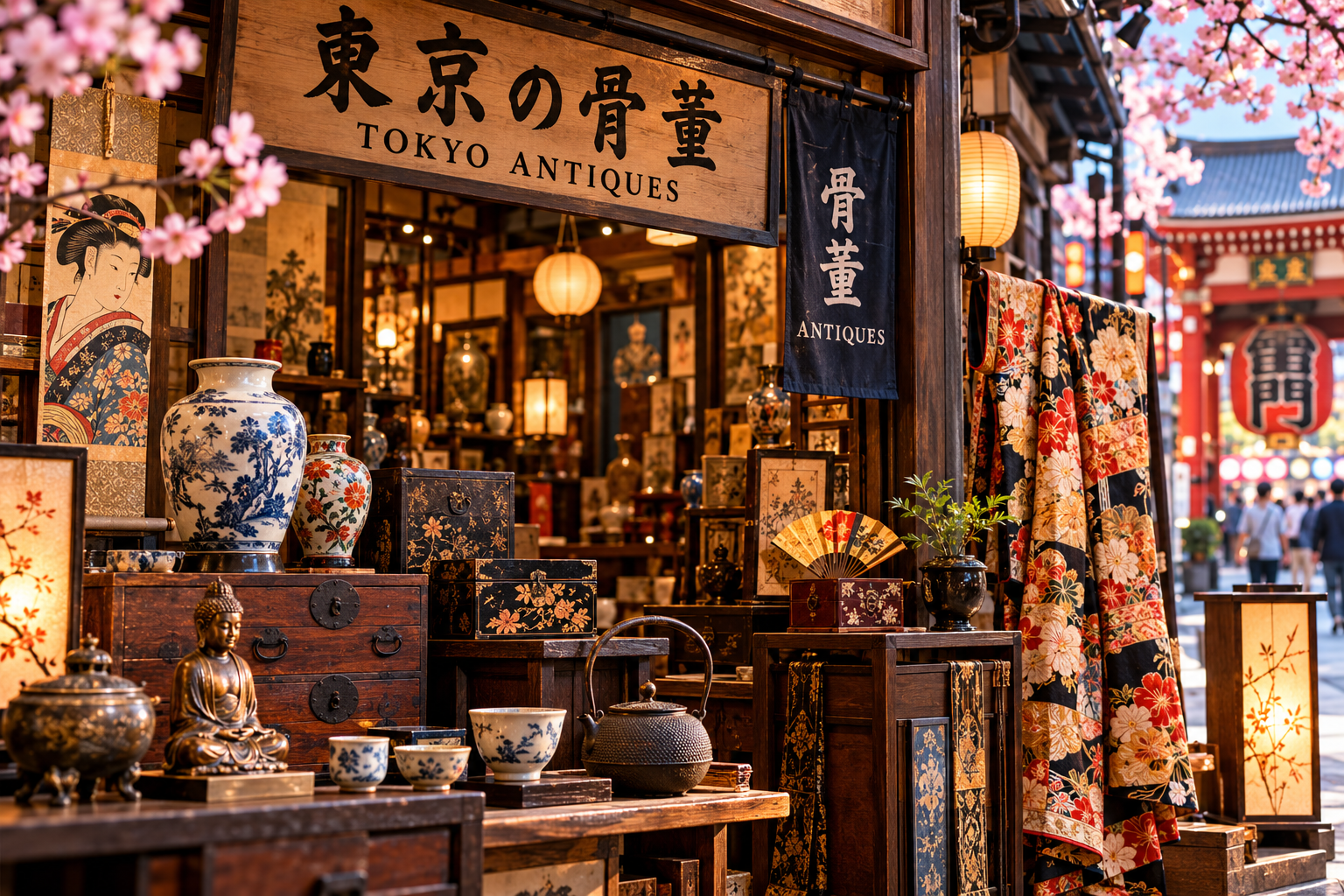
Have you ever walked into a quiet Tokyo antique shop and wondered how an ordinary-looking wooden chest, ceramic bowl, kimono, or scroll could carry hundreds of years of Japanese history? Tokyo antiques offer a fascinating window into Japan’s past, from Edo-period ceramics and lacquerware to Meiji furniture, vintage textiles, Buddhist art, tea utensils, woodblock prints, and everyday objects. The best way to explore them is to combine Tokyo’s major antique markets with specialist dealers, learn how to judge age and condition, and buy according to provenance rather than appearance alone Tokyo Rules
What Are Tokyo Antiques?
The phrase “Tokyo antiques” can mean several different things.
Some objects were actually produced in Tokyo or the historical city of Edo.
Others were made elsewhere in Japan but are now sold through Tokyo’s antique market.
Still others may be Chinese, Korean, European, or Southeast Asian antiques that entered Japanese collections and are now traded in Tokyo.
Understanding this distinction is important for collectors.
A Japanese antique sold in Tokyo is not necessarily a Tokyo-made antique.
Tokyo antiques versus Japanese antiques
Tokyo is a marketplace as much as a production center.
A dealer in Aoyama, Ginza, Nihonbashi, or Kyobashi may specialize in Japanese ceramics from Kyushu, textiles from another region, Buddhist sculpture, Chinese porcelain, Korean art, or European decorative objects.
This means the phrase Tokyo antique shopping describes the location of the experience rather than the geographic origin of every object.
For travelers, this is actually an advantage.
Tokyo allows you to compare many regional Japanese traditions in one city.
What makes an object an antique?
There is no single universal definition that applies equally to every market and collecting category.
In practical terms, an antique is generally an older object valued for its age, craftsmanship, historical significance, rarity, design, provenance, or cultural importance.
The age of an object matters, but age alone does not determine value.
A poorly preserved object with little artistic or historical significance may be worth less than a younger but exceptionally rare and well-documented piece.
Antique, vintage, retro, and reproduction
These terms are often confused.
Antique generally suggests substantial age and historical character.
Vintage usually refers to older objects associated with a particular period, style, or era, often more recent than what collectors traditionally classify as antiques.
Retro describes an object or design inspired by an earlier period and does not necessarily mean the object itself is old.
Reproduction means a newer object made to resemble an earlier design.
For beginners, learning these distinctions is one of the most useful first steps.
Why Tokyo Is So Good for Antique Shopping
Tokyo’s antique culture is connected to its long history as Edo and later as Japan’s political, commercial, cultural, and artistic center.
The city accumulated objects from across Japan and overseas.
Wealthy households, temples, merchants, tea practitioners, artists, collectors, and ordinary families all generated demand for objects that could eventually enter the secondhand and antique market.
Tokyo’s contemporary antique scene therefore sits on top of many layers of history.
Edo heritage
The Edo period lasted from 1603 to 1867 and created a highly developed urban culture.
During this period, craftsmanship expanded across many fields.
Ceramics, textiles, lacquerware, woodwork, metalwork, furniture, paper products, books, paintings, tea utensils, and household goods were produced for increasingly sophisticated consumers.
Many objects associated with Japanese antiques today reflect this period.
Meiji transformation
The Meiji period began in 1868 and brought enormous political, social, industrial, and cultural changes.
Japanese artisans began producing objects for both domestic and international markets.
Western influences became more visible.
This period is especially interesting for collectors because it produced objects that combine Japanese techniques with new decorative ideas and materials.
Taisho and early Showa design
The Taisho and early Showa periods introduced another fascinating layer.
Art Deco, modernism, Western furniture, Japanese folk design, commercial graphics, household objects, and emerging industrial production began to coexist.
For collectors who prefer interiors and lifestyle objects, these periods can be particularly rewarding.
The Most Popular Types of Tokyo Antiques
Tokyo’s antique market is enormous, but several categories consistently attract collectors and travelers.
Japanese Antique Ceramics
Ceramics are among the most accessible entry points into Japanese antiques.
They can include:
- Tea bowls
- Sake cups
- Plates
- Serving dishes
- Vases
- Storage jars
- Bowls
- Figurines
- Decorative vessels
Japanese ceramics are especially interesting because different regions developed distinctive clay bodies, glazes, firing techniques, shapes, and decorative traditions.
Why Japanese ceramics are collectible
A ceramic object combines several layers of information.
Collectors can examine:
- Shape
- Clay
- Glaze
- Decoration
- Firing
- Signature
- Provenance
- Condition
- Historical context
Two bowls can look similar at first glance but have completely different origins and values.
Popular ceramic traditions
Tokyo dealers may offer ceramics associated with traditions such as:
- Imari
- Arita
- Kutani
- Karatsu
- Seto
- Mino
- Bizen
- Shigaraki
- Mashiko
The important lesson is that the best Japanese ceramics are not necessarily the most colorful.
Some highly regarded pieces are extremely understated.
Edo and Japanese Antique Furniture
Japanese antique furniture is particularly attractive to interior designers.
Common categories include:
- Tansu chests
- Merchant chests
- Medicine chests
- Clothing chests
- Low cabinets
- Display cabinets
- Wooden boxes
- Tables
- Storage furniture
A Japanese antique chest can completely change the character of a modern room.
Tansu
Tansu are traditional Japanese storage chests.
Different types were designed for different purposes.
Some were used for clothing.
Others were associated with merchants, travel, documents, or household storage.
Their construction can reveal information about regional craftsmanship and historical use.
Why antique Japanese furniture works in modern homes
One reason Japanese antique furniture remains popular internationally is its relatively restrained visual language.
A traditional wooden chest can sit comfortably inside:
- Minimalist interiors
- Japandi interiors
- Contemporary apartments
- Rustic interiors
- Boutique hotels
- Traditional homes
The object does not need the entire room to look Japanese.
One carefully chosen piece can provide contrast and character.
Antique Kimono and Japanese Textiles
Kimono are another major category.
Antique kimono can be valuable for their:
- Fabric
- Dyeing
- Embroidery
- Pattern
- Construction
- Historical period
- Condition
- Provenance
Textiles can also be collected as art rather than clothing.
Antique obi
Obi can be particularly attractive to collectors because they often contain intricate patterns and high-quality textile work.
Some can be framed.
Others can be used as decorative textiles.
Antique Japanese fabric
Fragments of old textiles can also be valuable.
Collectors and designers may use them for:
- Interior decoration
- Fashion
- Textile research
- Art projects
- Framing
- Restoration
However, fragile antique fabric requires careful handling.
Japanese Antique Lacquerware
Lacquerware is one of the most technically demanding categories of Japanese decorative art.
Antique lacquer objects can include:
- Boxes
- Trays
- Bowls
- Cabinets
- Writing equipment
- Decorative objects
- Tea utensils
The surface may contain several layers of lacquer and decoration.
Makie
Makie involves decorative techniques using lacquer and metallic powders.
Gold and silver decoration can create exceptionally sophisticated surfaces.
When examining antique lacquerware, look beyond the obvious decoration.
Study the condition, surface, edges, interior, construction, and signs of restoration.
Antique Japanese Screens
Japanese folding screens can be spectacular.
They may contain paintings, calligraphy, gold surfaces, landscapes, flowers, birds, or seasonal imagery.
However, screens are among the more difficult antiques for international travelers to purchase.
They can be large, delicate, expensive, and difficult to transport.
For serious collectors, professional packing and shipping are often preferable.
Japanese Scrolls and Kakejiku
Kakejiku, or hanging scrolls, are another important category.
They may contain:
- Calligraphy
- Landscape paintings
- Birds and flowers
- Buddhist imagery
- Seasonal subjects
- Poetry
Their appeal goes beyond the image.
The mounting itself is part of the object.
Why scroll collecting requires expertise
A scroll can have complicated restoration history.
The painting or calligraphy may be old while the mounting is newer.
Alternatively, an older mounting may surround a later work.
Therefore, collectors should understand the relationship between:
- Artwork
- Signature
- Seals
- Paper
- Mounting
- Box
- Provenance
Buddhist Art and Sculptures
Tokyo has specialist dealers handling Buddhist art, sculptures, ritual objects, and related historical works.
These pieces require particular care.
Collectors should not judge them purely as decorative objects.
Religious objects can have cultural, historical, and spiritual significance.
What to examine
Important considerations can include:
- Period
- School
- Material
- Iconography
- Condition
- Restoration
- Provenance
- Documentation
Because of the complexity of Buddhist art, beginners should seek specialist advice before making expensive purchases.
Japanese Tea Antiques
The Japanese tea ceremony created an enormous demand for carefully selected objects.
Antique tea utensils can include:
- Tea bowls
- Water jars
- Tea caddies
- Spoons
- Baskets
- Kettles
- Containers
- Scrolls
- Flower vessels
A tea bowl can appear simple while having significant cultural importance.
This is one of the areas where Japanese aesthetics can be difficult for beginners to understand.
Wabi-sabi and tea objects
Some tea objects intentionally embrace irregularity, simplicity, aging, and imperfection.
A cracked surface or irregular shape may not be considered a defect in the same way it would be in a mass-produced product.
Context matters.
Japanese Prints and Ukiyo-e
Ukiyo-e and other Japanese prints remain internationally famous.
Tokyo’s antique dealers and galleries may offer:
- Ukiyo-e prints
- Shin-hanga
- Sosaku-hanga
- Woodblock reproductions
- Illustrated books
- Prints from later periods
Why print collecting is complicated
Not every old-looking Japanese print is an original historical impression.
There are:
- Original impressions
- Later impressions
- Reprints
- Reproductions
- Modern decorative prints
Collectors need to understand the difference.
Condition is also critical.
Fading, trimming, repairs, stains, backing, and paper quality can significantly affect value.
Antique Japanese Books
Japanese antique books can be fascinating because they reveal everyday intellectual culture.
Collectors may encounter:
- Illustrated books
- Poetry collections
- Religious texts
- Woodblock-printed books
- Maps
- Commercial publications
- Decorative papers
Some books are valuable because of their rarity.
Others are valuable because of their illustrations or historical significance.
Antique Metalwork
Metalwork includes objects made from:
- Iron
- Copper
- Bronze
- Silver
- Brass
Potential categories include:
- Tea kettles
- Decorative objects
- Vessels
- Containers
- Hardware
- Sculptures
- Samurai-related objects
Antique iron kettles
Traditional iron kettles can be particularly attractive to collectors and interior designers.
The texture of aged iron can complement modern spaces.
However, corrosion and structural damage need careful examination.
Antique Netsuke and Small Objects
Netsuke are small carved objects historically associated with traditional Japanese dress.
They were practical objects but developed into highly sophisticated miniature art.
Materials and subjects vary widely.
Because small objects are relatively easy to transport, they are attractive to international collectors.
However, buyers should be particularly careful with provenance and materials.
Antique Japanese Toys and Folk Objects
Not every collectible needs to be expensive.
Vintage and antique Japanese toys can provide an accessible way to explore social history.
Examples may include:
- Traditional dolls
- Wooden toys
- Festival objects
- Folk crafts
- Vintage children’s items
- Character merchandise from earlier decades
These objects can reveal aspects of Japanese popular culture that high-end art objects do not.
Where to Find Tokyo Antiques
Tokyo’s antique scene is spread across different environments.
There is no single “antique district” that contains everything.
Instead, different areas and formats offer different experiences.
Oedo Antique Market
The Oedo Antique Market is one of the most important places for travelers who want to experience Tokyo’s antique culture in an open-market setting.
The market is held at Tokyo International Forum in Yurakucho and brings together approximately 250 dealers. It offers Japanese pottery, Western tableware, kimono and obi, accessories, and many other categories. Admission is free, and the market generally operates from 9:00 to 16:00, weather permitting.
The official schedule is subject to change, so checking the latest schedule before visiting is essential.
Why Oedo Antique Market is useful for beginners
The market allows you to compare many dealers in one place.
That is extremely useful.
You can examine:
- Prices
- Styles
- Materials
- Quality
- Dealer knowledge
- Different interpretations of similar objects
Instead of buying immediately, walk through the entire market first.
Then return to the objects you remember.
Nihonbashi and Kyobashi
Nihonbashi and Kyobashi are particularly important for serious collectors.
The area has specialist galleries handling Japanese paintings, ceramics, porcelain, Buddhist art, tea utensils, calligraphy, and other antiques.
The Tokyo Art Antiques event and associated gallery network also provide a useful window into this part of Tokyo’s art and antique ecosystem.
Gogatsudo
Gogatsudo in Nihonbashi specializes in areas including Japanese written scripts, antique sutras, Japanese ceramics, porcelain, and Buddhist art. Its history includes a founding in Kyobashi in 1978.
This type of specialist gallery is more suitable for visitors who want expert-level material rather than casual flea-market browsing.
Aoyama and Omotesando
Aoyama is associated with high-end design, art, fashion, and curated interiors.
This makes it particularly interesting for antique furniture and design-conscious shoppers.
OTSUKA FINE ART
OTSUKA FINE ART was established in Minami Aoyama in 1983 and focuses on oriental antiques including Japanese and Korean ceramics, mother-of-pearl inlay, lacquerware, woodwork, paintings, Buddhist art, and Chinese antiques.
For interior designers and serious collectors, this kind of specialist environment can be more useful than a general market.
Ginza
Ginza is another important area for high-end antiques and art.
The shopping environment is more polished than an outdoor flea market.
Visitors may encounter specialist dealers handling:
- Japanese decorative arts
- Tea utensils
- Metalwork
- Lacquer
- Paintings
- Ceramics
- Collectible objects
Houmandō
Houmandō was established in Ginza in 1953 and operates locations in Ginza and Aoyama. Its offerings include Japanese decorative arts such as cloisonné, metalwork, makie, inro, and other historic crafts, as well as tea-related works.
This illustrates the difference between Tokyo’s market environments: some sellers are designed for casual discovery, while others cater to experienced collectors.
Fuchu
Fuchu offers another perspective on Japanese antiques.
Seibon Gallery
Seibon Gallery in Fuchu deals in Japanese antique furniture, folk art, old pottery, ceramics, textiles, vintage items, old glass, and related categories. Its inventory includes period chests and traditional furniture.
Its approach is particularly relevant to people interested in incorporating Japanese antiques into contemporary interiors.
Bunkyo
Bunkyo is home to specialist antique dealers that can be particularly interesting for collectors.
Kirin Antiques Japan
Kirin Antiques Japan specializes in areas such as hanging scrolls, Noh masks, Buddhist art, sculptures, matcha bowls, Japanese ceramics, and other Japanese antique art. The dealer operates by appointment and is licensed as an antique dealer.
This is a useful example of how specialist antique buying in Tokyo can involve consultation rather than casual browsing.
Tokyo Antiques for Beginners
If you have never bought an antique before, Tokyo can feel intimidating.
Do not worry.
You do not need to become an expert before purchasing your first object.
You simply need a sensible process.
Start with affordable objects
Consider:
- Small ceramics
- Vintage textiles
- Small wood objects
- Prints
- Simple tableware
- Decorative boxes
- Small folk-art pieces
These categories allow you to learn without risking a large amount of money.
Buy what you understand
If you know nothing about Japanese porcelain, do not begin by spending a large amount on an apparently rare bowl.
Start by learning.
Look at ten bowls.
Compare them.
Ask dealers questions.
Then decide.
Tokyo Antiques for Interior Designers
Interior designers have a particularly rich selection.
The strongest categories include:
- Tansu
- Antique lighting
- Wooden furniture
- Screens
- Textiles
- Ceramic vessels
- Lacquerware
- Old glass
- Decorative objects
Scale matters
An antique that looks beautiful in a large gallery may look overwhelming in a small apartment.
Measure your space before buying furniture.
Function matters too
Ask whether the antique can safely perform its intended function.
An old chest can be beautiful without being suitable for storing heavy modern equipment.
A fragile textile may be better framed than used as upholstery.
Tokyo Antiques for Collectors
Collectors should think in terms of specialization.
Instead of buying anything that looks old, select a field.
Collect by period
You might focus on:
- Edo
- Meiji
- Taisho
- Early Showa
Collect by material
You might collect:
- Ceramics
- Wood
- Lacquer
- Metal
- Textile
- Paper
Collect by function
Another strategy is to collect:
- Tea objects
- Household objects
- Writing tools
- Furniture
- Religious objects
- Decorative objects
A focused collection is usually easier to research and understand.
Tokyo Antiques for Tourists
Travelers should prioritize portability.
The ideal souvenir is:
- Small
- Durable
- Easy to pack
- Clearly identified
- Within your budget
- Connected to Japanese history
Good possibilities include:
- Small ceramics
- Textile pieces
- Vintage stationery
- Small prints
- Decorative boxes
- Compact folk objects
Large furniture is possible to purchase, but international shipping becomes much more important.
Tokyo Antiques for Families
Antique shopping can also be educational for children.
Instead of asking children to stand quietly in galleries, give them a mission.
Ask them to find:
- The oldest-looking object
- The strangest object
- The most detailed object
- Something made of wood
- Something made of metal
- Something used in everyday life
This turns antique shopping into a historical treasure hunt.
Tokyo Antiques for Photographers
Antique markets are visually rich.
Photographers may find:
- Textures
- Patina
- Old signage
- Ceramics
- Textile patterns
- Wooden surfaces
- Traditional packaging
- Vintage furniture
However, always follow the seller’s photography rules.
The Oedo Antique Market specifically asks visitors to obtain permission before photographing subjects or their property, particularly for personal photography, and commercial use requires prior notification.
How to Identify a Good Tokyo Antique
There is no universal formula.
However, several principles help.
Examine the object before examining the price
The price tag should not determine what you see.
First inspect:
- Shape
- Surface
- Construction
- Decoration
- Wear
- Repairs
Then look at the price.
Study the underside
For ceramics and furniture, the underside can reveal useful information.
Look for:
- Construction marks
- Signatures
- Wear
- Repairs
- Old labels
- Tool marks
Never assume that a signature automatically proves authenticity.
Look for natural aging
A genuinely old object can develop changes over time.
Examples include:
- Surface wear
- Patina
- Oxidation
- Fading
- Shrinkage
- Small repairs
But artificial aging also exists.
Therefore, aging alone is not proof.
How Provenance Affects Tokyo Antiques
Provenance means the documented history of an object.
It can include:
- Previous owners
- Dealer records
- Exhibition history
- Auction history
- Family records
- Certificates
- Purchase receipts
Strong provenance can increase confidence.
For expensive pieces, documentation can be extremely important.
Why provenance matters internationally
When an object crosses borders, questions about ownership, cultural property, export regulations, and protected materials can become more important.
Serious collectors should therefore think about provenance before purchase rather than after purchase.
How to Negotiate at Tokyo Antique Markets
Negotiation practices vary.
Some dealers may have flexibility.
Others may have carefully calculated prices.
Do not assume that every price is negotiable.
A respectful approach
Instead of immediately saying “lowest price?”, ask:
“Is there any flexibility on the price?”
Then listen.
A polite conversation is much more effective than aggressive bargaining.
When not to negotiate
If the item is clearly priced according to rarity, documentation, or specialist market value, pushing heavily on price may not be useful.
How to Compare Two Similar Antiques
Imagine you find two Japanese ceramic bowls.
One costs ¥20,000.
The other costs ¥45,000.
Do not assume the cheaper one is the better deal.
Compare:
- Age
- Maker
- Region
- Technique
- Condition
- Rarity
- Provenance
- Size
- Aesthetic quality
- Restoration
The more expensive piece may have a stronger reason for its price.
Condition: The Most Important Thing Beginners Miss
Condition can dramatically influence antique value.
A beautiful object may have:
- Cracks
- Chips
- Repaired breaks
- Repainted areas
- Missing components
- Replaced parts
- Water damage
- Insect damage
- Structural weakness
None of these automatically makes an antique worthless.
But they should be understood.
Ask directly about repairs
A useful question is:
“Has this been repaired?”
For Japanese antiques, professional restoration can sometimes be appropriate and historically accepted.
The important issue is transparency.
Japanese Antique Restoration
Restoration is a complicated subject.
Some collectors prefer objects with minimal intervention.
Others accept high-quality restoration if it preserves the object.
Why restoration can be valuable
Without restoration, some objects may become unusable or deteriorate further.
Traditional restoration can therefore extend the life of an object.
Why restoration can reduce value
For certain collecting categories, extensive restoration can affect originality and market value.
The answer depends on:
- Object type
- Age
- Rarity
- Quality of restoration
- Extent of intervention
- Collector preferences
Caring for Tokyo Antiques
Different materials require different care.
Caring for ceramics
Avoid sudden temperature changes.
Handle older ceramics carefully.
Do not automatically put antique pieces into dishwashers.
Caring for wood
Avoid excessive humidity and direct sunlight.
Do not place antique furniture next to intense heating sources.
Caring for textiles
Protect them from:
- Sunlight
- Moisture
- Insects
- Excessive handling
Caring for lacquerware
Lacquer can be surprisingly durable but still requires appropriate care.
Avoid harsh cleaning chemicals.
Caring for paper
Keep prints, books, and scrolls away from:
- Direct sunlight
- Humidity
- Water
- Excessive handling
Shipping Tokyo Antiques Internationally
Shipping is one of the most overlooked parts of antique shopping.
A small purchase can fit in your luggage.
A large screen, chest, sculpture, or fragile ceramic may require professional shipping.
Ask the dealer about export
A professional dealer should be able to explain whether they offer:
- Export packing
- International shipping
- Insurance
- Documentation
- Customs paperwork
Do not assume the airline will accept everything
Different countries and airlines have different rules.
This is especially important for:
- Blades
- Animal-derived materials
- Large wooden objects
- Cultural property
- Fragile works
- Restricted materials
Research before purchasing.
Ten Notable Tokyo Antique Dealers, Markets and Antique Names Compared
Antique businesses do not generally function like consumer brands. For that reason, the following comparison uses 10 notable Tokyo antique markets, dealers, galleries, and antique-focused names rather than pretending they are conventional product brands.
| Antique Name | Tokyo Area | Main Specialty | Best For | Experience Level | Price Range |
|---|---|---|---|---|---|
| Oedo Antique Market | Yurakucho | Japanese & Western antiques | Beginners and collectors | Beginner–Advanced | $–$$$$ |
| OTSUKA FINE ART | Minami-Aoyama | Japanese/Korean ceramics, lacquer, art | Serious collectors | Intermediate–Advanced | $$$–$$$$ |
| Gogatsudo | Nihonbashi | Scripts, sutras, ceramics, Buddhist art | Art collectors | Advanced | $$$–$$$$ |
| Maesaka Seitendo | Nihonbashi | Ko-Imari, Nabeshima, Kakiemon, porcelain | Ceramic collectors | Intermediate–Advanced | $$$–$$$$ |
| OGAWA SHOTEN | Kyobashi | Ceramics, paintings, lacquer, Buddhist art | Art enthusiasts | Intermediate–Advanced | $$–$$$$ |
| Houmandō | Ginza/Aoyama | Cloisonné, metalwork, makie, tea objects | Japanese art collectors | Advanced | $$$–$$$$ |
| Taigadou Art | Ginza | Japanese antiques and art | General collectors | Intermediate–Advanced | $$–$$$$ |
| Seibon Gallery | Fuchu | Tansu, furniture, pottery, textiles | Interior designers | Beginner–Advanced | $$–$$$$ |
| Kirin Antiques Japan | Bunkyo | Scrolls, Noh masks, Buddhist art, ceramics | Specialist collectors | Intermediate–Advanced | $$$–$$$$ |
| Pejite Aoyama | Aoyama | Meiji–early Showa furniture, pottery | Design lovers | Beginner–Intermediate | $$–$$$$ |
Oedo Antique Market is particularly useful for broad browsing because it brings approximately 250 dealers together in one outdoor event.
OTSUKA FINE ART’s specialization includes Japanese and Korean ceramics, lacquerware, woodwork, paintings, Buddhist art, and Chinese antiques.
Maesaka Seitendo specializes in Japanese antique ceramics and porcelain, including Ko-Imari, Nabeshima, Kakiemon, Ko-Kutani, and related traditions.
OGAWA SHOTEN handles Chinese and Japanese antique ceramics, porcelain, paintings, lacquerware, calligraphy, and Buddhist art.
Taigadou operates a Ginza location and has a longer history in the antique trade dating to its establishment in Suginami in 1995.
Seibon Gallery offers Japanese antique furniture, folk art, old pottery and ceramics, textiles, vintage items, and old glass, making it especially relevant to interior-focused shoppers.
Kirin Antiques Japan focuses on Japanese antique art including hanging scrolls, Noh masks, Buddhist art, matcha bowls, and ceramics, and operates by appointment.
Tokyo Antique Market Versus Antique Gallery
Both have advantages.
Antique market advantages
Markets offer:
- Variety
- Lower entry prices
- Many dealers
- Unexpected discoveries
- Casual atmosphere
- Negotiation opportunities
Antique market disadvantages
You may encounter:
- Less documentation
- Inconsistent descriptions
- Variable condition
- Limited time to research
- Crowds
Antique gallery advantages
Specialist galleries can offer:
- Expertise
- Provenance
- Curated inventory
- Better documentation
- Specialist knowledge
- Higher-end pieces
Antique gallery disadvantages
Prices can be significantly higher.
The environment can also feel intimidating to first-time buyers.
The solution is simple.
Ask questions.
Most serious dealers understand that not every visitor is an expert.
How Much Do Tokyo Antiques Cost?
Prices vary enormously.
You can find inexpensive objects at outdoor markets and much more expensive works in specialist galleries.
Budget antique shopping
A modest budget may allow you to explore:
- Small ceramics
- Vintage textiles
- Decorative objects
- Small wood items
- Prints
- Everyday utensils
Mid-range collecting Tokyo antiques
With a larger budget, you may explore:
- Better ceramics
- Antique furniture
- Fine textiles
- Lacquerware
- Specialist decorative arts
High-end antiques
Serious collectors may encounter:
- Important ceramics
- Buddhist art
- High-quality paintings
- Fine lacquerware
- Rare furniture
- Historic tea objects
The important lesson is that Tokyo offers opportunities for almost every collecting budget.
What Makes an Antique Valuable?
Collectors often assume age is the main factor.
It is not.
Value can depend on:
- Rarity
- Condition
- Artist
- Maker
- Period
- Provenance
- Historical importance
- Artistic quality
- Materials
- Demand
- Documentation
Rarity versus beauty Tokyo antiques
A beautiful object is not necessarily rare.
A rare object is not necessarily beautiful.
Collectors should learn to separate personal taste from market value.
You may love an inexpensive object more than an expensive one.
That is perfectly reasonable.
The Emotional Value of Tokyo Antiques
There is another type of value that market prices cannot measure.
Imagine finding an old ceramic cup that reminds you of your first trip to Japan.
It may never become an important auction object.
But it could become the object you keep for thirty years.
That is a legitimate form of collecting.
Antiques can connect history with personal memory.
Common Mistakes When Buying Tokyo Antiques
Buying because something looks old
Old-looking is not the same as old.
Solution: Ask about age, origin, and documentation.
Buying because the seller says it is rare
“Rare” is a market claim, not proof.
Solution: Ask what makes it rare.
Ignoring condition Tokyo antiques
A beautiful object can have major restoration.
Solution: Inspect carefully and ask directly.
Spending too much on your first purchase Tokyo antiques
Excitement can overwhelm judgment.
Solution: Start small.
Buying without researching transport Tokyo antiques
Large antiques can become expensive to ship.
Solution: Ask about shipping before purchasing.
Assuming Japanese antiques were made in Tokyo
They may have originated anywhere in Japan.
Solution: Ask about the object’s production region.
Treating a signature as proof Tokyo antiques
Signatures can be complicated and may not always identify the maker conclusively.
Solution: Consider the entire object and seek expert advice.
The Pros and Cons of Tokyo Antique Shopping
Pros Tokyo antiques
Exceptional variety: Tokyo brings together antiques from many regions and traditions.
Cultural depth: Objects can reveal everyday Japanese history.
Wide price range: Beginners and serious collectors can both find suitable objects.
Expert dealers: Specialist galleries can provide detailed information.
Unique souvenirs: Antiques can be far more distinctive than mass-produced souvenirs.
Design value: Traditional Japanese antiques can work beautifully in contemporary interiors.
Cons Tokyo antiques
Authenticity can be difficult: Beginners may struggle to judge age and provenance.
Condition varies: Restoration and damage can be significant.
Prices can be confusing: Similar-looking objects may have very different values.
Transport can be difficult: Furniture and fragile objects require planning.
Export rules: Certain materials and cultural objects can be subject to restrictions.
Language barriers: Detailed conversations may sometimes require translation.
How to Avoid Fake or Misrepresented Antiques
No market can eliminate every risk.
The best protection is education.
Buy from established dealers Tokyo antiques
Reputable dealers have a business reputation to protect.
Ask for documentation Tokyo antiques
For expensive pieces, request:
- Receipts
- Certificates
- Provenance
- Previous exhibition information
- Written descriptions
Compare multiple examples Tokyo antiques
Do not make a large purchase after seeing one object.
Study comparable pieces.
Consult specialists Tokyo antiques
For expensive ceramics, paintings, Buddhist art, or other specialist categories, independent expertise can be worthwhile.
Tokyo Antiques and Sustainability
Antiques have an interesting relationship with sustainability.
An object that already exists does not need to be newly manufactured.
A wooden chest can continue serving another generation.
A ceramic bowl can remain useful.
A textile can be reused.
A vintage object can be repaired rather than discarded.
This does not mean every antique purchase is automatically sustainable.
Shipping, restoration materials, and conservation all have environmental costs.
But the basic concept of extending an object’s useful life remains important.
The Rise of Japanese Vintage Interiors
Japanese antique furniture is increasingly compatible with global interior design.
The rise of:
- Japandi
- Minimalism
- Wabi-sabi
- Natural interiors
- Slow design
has created new international interest in Japanese vintage furniture.
Why tansu works internationally Tokyo antiques
Tansu often combine:
- Natural wood
- Metal fittings
- Simple geometry
- Practical storage
- Visible craftsmanship
This makes them particularly adaptable.
A traditional Japanese chest can look natural in a contemporary European, North American, Middle Eastern, or Asian home.
Tokyo Antiques and the Global Collector
The international collector market has changed the Tokyo antique experience.
Buyers from around the world now discover Japanese objects through:
- Online marketplaces
- Social media
- Auction platforms
- Interior design
- Museums
- Japanese cultural exhibitions
This creates both opportunities and challenges.
More international demand Tokyo antiques
More demand can help support specialist dealers and artisans.
Higher prices Tokyo antiques
International demand can also increase competition for desirable pieces.
Greater transparency Tokyo antiques
Online catalogs and digital photography can make research easier.
Digital Tokyo Antique Shopping
Many Tokyo antique dealers now present inventory online.
This is useful for international buyers.
However, buying remotely has limitations.
Photographs can hide:
- Small cracks
- Surface wear
- Repairs
- Texture
- Scale
- Color differences
For expensive pieces, request detailed photographs and condition reports.
Why In-Person Viewing Still Matters Tokyo antiques
Antiques are physical objects.
A photograph cannot fully communicate:
- Weight
- Texture
- Smell
- Surface reflection
- Construction
- Scale
- Patina
This is why visiting Tokyo remains valuable even in an increasingly digital antique market.
You can see five similar objects in one afternoon and understand differences that photographs may never reveal.
Future Trends in Tokyo Antiques
Tokyo’s antique market is likely to evolve in several important ways.
More Online Sales
Dealers will increasingly use digital catalogs, social media, and international shipping.
This will make Japanese antiques accessible to collectors who cannot travel to Tokyo.
More Demand for Interior Antiques
As Japanese-inspired interior design continues to influence international homes, demand for:
- Tansu
- Old ceramics
- Japanese textiles
- Wooden objects
- Screens
- Decorative furniture
may continue to grow.
Greater Interest in Everyday Objects Tokyo antiques
Collectors are increasingly interested not only in elite art but also in ordinary historical objects.
Kitchenware, household storage, tools, textiles, toys, packaging, and folk objects can tell powerful stories.
More Young Collectors Tokyo antiques
Antiques are increasingly being presented as lifestyle objects rather than purely academic collectibles.
A younger collector may purchase one old bowl for a modern apartment rather than building a traditional collection.
That shift could help expand the market.
More Interest in Provenance Tokyo antiques
International collectors are becoming more careful about documentation.
This is positive.
Clear provenance can help buyers understand what they are purchasing and can improve long-term confidence.
Restoration as Preservation Tokyo antiques
Traditional restoration may become increasingly important.
Instead of treating restoration as simply repairing damaged objects, the future may place greater emphasis on preserving traditional materials and techniques.
Craft and Antique Boundaries May Blur
One of the most interesting future developments is the relationship between antiques and contemporary crafts.
A modern artisan may recreate a historical technique.
A designer may reinterpret an antique form.
A collector may combine a 200-year-old object with contemporary furniture.
The result is a living design culture rather than a museum-like separation between old and new.
A Perfect One-Day Tokyo Antique Route
For travelers with one day, a practical itinerary could look like this.
Morning: Oedo Antique Market Tokyo antiques
Begin early.
Give yourself enough time to walk through the market before purchasing anything.
The official market schedule changes, and weather can cause cancellations, so verify the current date before traveling.
Late morning: Marunouchi and Tokyo Station Tokyo antiques
Take a break.
Review photographs and notes.
Decide which objects genuinely interested you.
Afternoon: Nihonbashi or Kyobashi Tokyo antiques
Move into specialist gallery territory.
Look at higher-end ceramics, paintings, tea objects, and decorative arts.
Evening: Ginza Tokyo antiques
Finish with a more curated antique-shopping environment.
This gives you three different perspectives:
- Open market
- Specialist gallery
- High-end retail district
A Three-Day Tokyo Antique Itinerary
Day One: Markets Tokyo antiques
Focus on:
- Oedo Antique Market
- Vintage shops
- Small dealers
- Textile stores
Learn how pricing varies.
Day Two: Japanese Art Tokyo antiques
Explore:
- Nihonbashi
- Kyobashi
- Specialist galleries
- Ceramics
- Scrolls
- Buddhist art
- Tea objects
Day Three: Furniture and Interiors Tokyo antiques
Explore:
- Aoyama
- Fuchu
- Japanese furniture dealers
- Tansu
- Textiles
- Decorative objects
This approach provides a much deeper understanding than trying to visit every antique store in Tokyo.
The Best Tokyo Antique Shopping Strategy
A good strategy is simple:
Research → Observe → Compare → Ask → Inspect → Purchase.
Do not reverse the order.
Many tourists do this:
See → Love → Buy → Research.
For inexpensive souvenirs, that may be fine.
For valuable antiques, it can be expensive.
Questions to Ask an Antique Dealer
Before buying, ask:
- Where was this made?
- Approximately when was it made?
- What is the material?
- Who made it?
- Is there a signature?
- Has it been repaired?
- Has it been restored?
- Is there provenance?
- Is the price negotiable?
- Can you ship it internationally?
- Are there export restrictions?
- How should it be cared for?
These questions demonstrate that you are a serious buyer without pretending to be an expert.
Tokyo Antiques for Different Demographics
For young travelers Tokyo antiques
Focus on affordable vintage objects, stationery, textiles, small ceramics, and retro Japanese design.
For couples Tokyo antiques
Choose one meaningful object together rather than purchasing many souvenirs.
For families Tokyo antiques
Turn antique shopping into a historical discovery activity.
For retirees Tokyo antiques
Specialist galleries and traditional crafts may offer a slower and more educational travel experience.
For professional designers Tokyo antiques
Prioritize furniture, textiles, ceramics, lighting, and decorative arts.
For collectors Tokyo antiques
Focus on provenance, condition, specialization, and long-term collecting strategy.
For first-time international visitors Tokyo antiques
Start with established markets and dealers before moving into high-value purchases.
Tokyo Antiques for Specific Problems
If you have a small budget Tokyo antiques
Visit outdoor markets and focus on small objects.
If you have limited luggage Tokyo antiques
Choose textiles, prints, small ceramics, and compact decorative objects.
If you want authentic Japanese history Tokyo antiques
Focus on documented traditional objects rather than generic tourist merchandise.
If you want home décor Tokyo antiques
Look for tansu, ceramics, woodwork, textiles, and lacquerware.
If you want an investment Tokyo antiques
Do not buy purely because something appears expensive or old.
Seek specialist advice and strong documentation.
If you are worried about authenticity Tokyo antiques
Buy from reputable dealers and obtain documentation.
If you do not speak Japanese Tokyo antiques
Choose dealers accustomed to international customers or prepare translation tools and written questions.
What Not to Buy Without Research
Certain categories deserve extra caution.
These include:
- Very expensive ceramics
- Religious artifacts
- Rare paintings
- Samurai-related objects
- Animal-derived materials
- Large cultural objects
- High-value textiles
- Rare books
- Expensive furniture
The higher the value and cultural sensitivity, the more important professional advice becomes.
The Difference Between Collecting and Decorating
This distinction is often overlooked.
A collector asks:
What is this, and why is it historically important?
A decorator asks:
Does this work beautifully in my space?
Neither approach is wrong.
But they lead to different purchases.
An interior designer may choose an antique chest because its proportions are perfect.
A specialist collector may reject the same chest because its provenance is unclear.
Understanding your own objective can save money.
Should You Buy Tokyo Antiques as an Investment?
Antiques can appreciate, remain stable, or decline in value.
There is no guaranteed return.
The safest reason to buy an antique is because you appreciate it.
If the object later increases in value, that is an additional benefit.
What can support long-term value?
Factors may include:
- Strong provenance
- Recognized maker
- Rarity
- Excellent condition
- Historical importance
- Cultural significance
- Established collecting category
But markets change.
A style that is fashionable today may not be equally desirable tomorrow.
How to Build a Meaningful Tokyo Antique Collection
Start with one category.
Learn it deeply.
For example, if you choose ceramics, learn:
- Major regions
- Periods
- Glazes
- Shapes
- Marks
- Famous makers
- Restoration practices
After several purchases, your eye will improve.
That is the real benefit of collecting.
You begin to see differences that were invisible to you at the beginning.
Tokyo Antiques and Personal Storytelling
Imagine a home with three objects:
A small Edo-period bowl.
A Meiji-era wooden chest.
A vintage textile from the early Showa period.
Each object represents a different moment.
Together they tell a story.
This is perhaps the most beautiful reason to collect antiques.
You are not simply accumulating old things.
You are creating a personal history around other people’s history.
FAQs
What are the best antiques to buy in Tokyo?
Popular choices include Japanese ceramics, antique textiles, kimono, tansu furniture, lacquerware, tea utensils, woodwork, prints, scrolls, and small decorative objects.
Where is the best place to buy Tokyo antiques?
The answer depends on what you want. Oedo Antique Market is useful for broad selection and discovery, while Nihonbashi, Kyobashi, Ginza, Aoyama, and specialist dealers are better for focused collecting.
Is Oedo Antique Market worth visiting?
Yes, especially for travelers who want to browse a large selection in one location. The market brings together approximately 250 dealers and offers a wide range of Japanese and Western antiques.
Is Oedo Antique Market free?
Yes. The official information currently lists free admission.
How often is Oedo Antique Market held?
The market is generally held about twice a month, although dates can change. The official schedule should always be checked before visiting.
What time should I visit an antique market in Tokyo?
For popular outdoor markets, arriving near opening time can give you more time to browse before crowds increase and before some dealers begin packing up.
Can tourists buy Japanese antiques in Tokyo?
Yes. International visitors can purchase many types of Japanese antiques, although certain categories and materials can be subject to export or import regulations.
Are Tokyo antiques expensive?
They can range from affordable small objects to extremely expensive museum-quality works. The market serves beginners, interior designers, collectors, and high-end buyers.
What is the cheapest antique to buy in Tokyo?
Small ceramics, textiles, vintage household objects, prints, and decorative items can sometimes be found at accessible prices, particularly at outdoor markets.
Are Japanese antique ceramics good souvenirs?
Yes. Small ceramics are among the more practical antique purchases because they can be meaningful, relatively compact, and connected to specific regional traditions.
What is a tansu?
Tansu are traditional Japanese storage chests. Different forms were created for different household and commercial purposes, and antique examples are now collected as furniture and decorative objects.
Are antique kimono worth buying?
They can be excellent purchases for textile enthusiasts, collectors, designers, and fashion lovers. Condition, fabric, dyeing, embroidery, age, and provenance should be considered.
How do I know if a Japanese antique is authentic?
There is no single visual test. Examine construction, materials, wear, signatures, provenance, condition, and documentation. For valuable objects, specialist advice is recommended.
Can I negotiate antique prices in Tokyo?
Sometimes. Practices vary by dealer and object. A respectful question about price flexibility is better than assuming every item should be discounted.
Can I take antique furniture from Tokyo to another country?
Potentially, but large furniture requires shipping, customs documentation, and careful consideration of export and import rules.
Can I put Japanese antiques in checked luggage?
Some small objects may be suitable, but fragile antiques can be damaged. Large, delicate, valuable, or restricted objects should be discussed with the seller and airline before travel.
Are antique Japanese scrolls expensive?
Prices vary enormously according to artist, subject, age, condition, provenance, mounting, and historical significance.
Where can I find Japanese Buddhist antiques in Tokyo?
Specialist galleries in areas such as Nihonbashi, Kyobashi, Aoyama, and Bunkyo handle Buddhist art and related objects. Specialist dealers are recommended for serious purchases.
Is Tokyo good for antique furniture?
Yes. Japanese tansu, cabinets, wooden objects, vintage lighting, screens, and other furniture can be found through specialist dealers and curated antique shops.
Which Tokyo area is best for antique furniture?
Aoyama and specialist furniture dealers can be particularly useful for design-conscious shoppers, while other parts of Tokyo offer broader Japanese furniture selections.
Can I buy Japanese antiques online?
Yes. Many Tokyo dealers now maintain online stores or digital catalogs. However, high-value purchases are often better evaluated in person when possible.
What should I check before buying an antique?
Check age, origin, material, condition, restoration, provenance, authenticity, price, care requirements, and whether the item can legally be exported.
Is old Japanese furniture suitable for modern homes?
Yes. Tansu and other traditional wooden furniture can work especially well with minimalist, contemporary, Japandi, and natural interior styles.
Are Japanese antiques sustainable?
Reusing existing objects can extend their useful life and reduce the need for new production, although shipping, restoration, and conservation also have environmental impacts.
Should beginners buy expensive Japanese antiques?
Generally, beginners benefit from learning with smaller purchases first. Once you understand a category, you can make more confident higher-value decisions.
What is the biggest mistake when buying Tokyo antiques?
One of the biggest mistakes is buying because an object looks old or rare without understanding its condition, origin, provenance, and market context.
Can antiques from different Japanese regions be found in Tokyo?
Yes. Tokyo is a major marketplace, so dealers may offer objects originating from many parts of Japan.
Are all antiques sold in Tokyo Japanese?
No. Tokyo dealers may also specialize in Chinese, Korean, European, and other international antiques.
What is the difference between a Tokyo antique and a Japanese antique?
A Tokyo antique generally suggests an object connected specifically with Tokyo or its historical culture. A Japanese antique may originate anywhere in Japan and simply be sold in Tokyo.
Is antique shopping in Tokyo suitable for non-collectors?
Absolutely. You do not need to become a collector. A single small object can serve as a meaningful travel souvenir.
How should I pack a ceramic antique?
Ask the dealer for professional protective packaging. Keep fragile items away from heavy luggage and consider carry-on transport where airline rules permit.
Should I photograph an antique before buying it?
Yes, if the dealer permits photography. Photograph the object, maker marks, labels, packaging, and receipt so you can remember what you purchased and research it later.
Can antique dealers ship purchases internationally?
Many specialist dealers offer or can arrange shipping, but services vary. Ask about packaging, insurance, customs paperwork, and delivery costs before completing the purchase.
What is the future of Tokyo antiques?
The market is likely to become increasingly international and digital, while demand for Japanese furniture, ceramics, textiles, everyday historical objects, and design-focused antiques continues to connect traditional collecting with modern interiors.
Conclusion
Tokyo antiques offer far more than beautiful old objects. They provide a tangible connection to Japan’s history, craftsmanship, traditions, and everyday life. From Edo-period ceramics and lacquerware to antique kimono, tansu furniture, woodblock prints, tea utensils, scrolls, and decorative arts, each piece can reveal something about the people and culture that created and used it. For first-time visitors, exploring Tokyo antiques is best approached with curiosity rather than the pressure to find the most expensive or rarest item. Markets such as Oedo Antique Market can provide an accessible introduction, while specialist areas such as Nihonbashi, Kyobashi, Ginza, and Aoyama offer opportunities to explore more specialized collections.