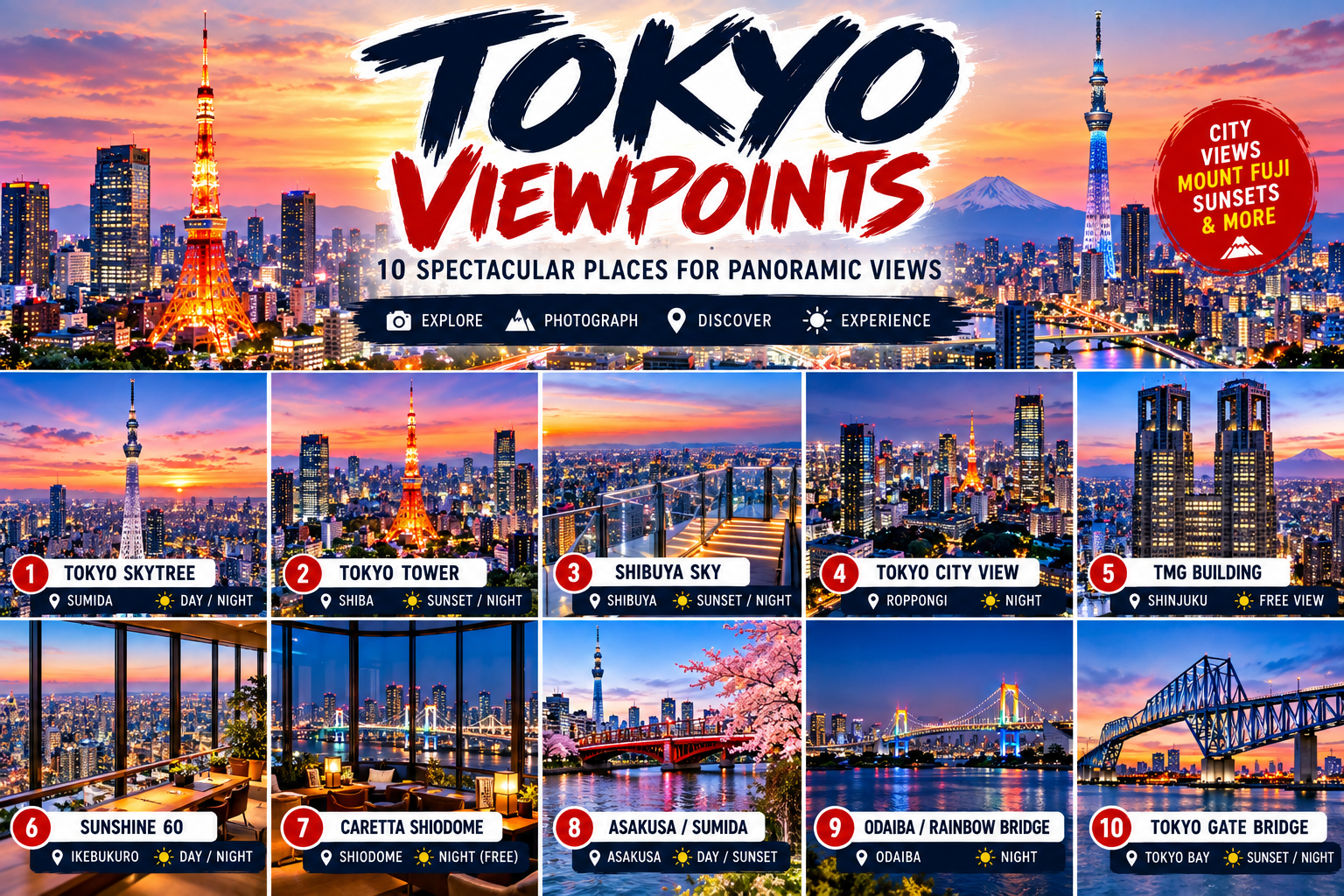
Tokyo Viewpoints: 10 Spectacular Places for Panoramic City Views
Have you ever looked at Tokyo from above and wondered how a city this enormous can still feel organized? The best Tokyo viewpoints reveal a completely different side of Japan’s capital, from skyscraper forests and glowing highways to distant mountains, Tokyo Bay, temples, rivers, and neighborhoods stretching toward the horizon. Whether you want a free observation deck, a rooftop sunset, a luxury skyline experience, or the highest possible panorama, Tokyo has a viewpoint for almost every traveler. Tokyo is one of the world’s most fascinating cities to see from above because its skyline is not dominated by one single type of architecture. Instead, different parts of the city create different visual personalities Tokyo Retreats
Understanding Tokyo’s Skyline
Tokyo Is a City of Multiple Skylines
Tokyo does not have one central skyline in the same way that some major cities do.
Instead, its visual identity changes depending on where you stand.
Shinjuku has a dense concentration of skyscrapers.
Shibuya has a younger, more contemporary atmosphere.
Roppongi provides views toward Tokyo Tower and central Tokyo.
Asakusa gives you a mixture of traditional architecture, Tokyo Skytree, and the Sumida River.
Odaiba introduces Tokyo Bay, Rainbow Bridge, and waterfront infrastructure.
This means that choosing the right viewpoint is almost as important as choosing the right time of day.
Why Height Is Not Everything
A common mistake is assuming that the highest observation deck must automatically provide the best view.
That is not necessarily true.
A very high viewpoint can provide a spectacular panorama, but landmarks may appear smaller.
A lower viewpoint can sometimes produce better photographs because recognizable structures are closer and easier to frame.
For example, a viewpoint that allows you to photograph Tokyo Tower from a moderate height may produce a more memorable image than a much higher platform where Tokyo Tower appears tiny.
The ideal viewpoint depends on what you want to see.
The 10 Best Tokyo Viewpoints Compared
| Tokyo Viewpoint | Approx. Height | Main View Experience | Best Time | Best For | Cost Style |
|---|---|---|---|---|---|
| TOKYO SKYTREE | 350–450m | Huge panoramic cityscape | Clear day/night | First-time visitors, scale | Paid |
| Tokyo Tower | 150–250m | Classic Tokyo skyline | Sunset/night | Iconic views | Paid |
| SHIBUYA SKY | About 229m | Open-air Shibuya panorama | Sunset/night | Photography, couples | Paid |
| Tokyo City View | About 250m | Central Tokyo and landmark views | Sunset | Architecture, nightlife | Paid |
| Tokyo Metropolitan Government Building | 202m | Wide Shinjuku panorama | Morning/night | Budget travelers | Free |
| Sunshine 60 Observatory TENBOU-PARK | About 251m | Indoor panoramic skyline | Evening | Families, night views | Paid |
| Caretta Shiodome Sky View | About 200m | Tokyo Bay and Rainbow Bridge | Night | Budget/night views | Free |
| Yebisu Garden Place | Upper-floor viewpoint | Urban skyline and Tokyo Tower area | Evening | Dining and views | Free/varies |
| Asakusa/Sumida viewpoints | Low-level | Skytree, river and traditional Tokyo | Day/sunset | Families, culture | Mostly free |
| Tokyo Bay waterfront viewpoints | Low-level | Rainbow Bridge, bay and skyline | Sunset/night | Photography | Mostly free |
The table is not a ranking. Each location provides a different viewing experience, and the most suitable choice depends on your itinerary, budget, weather, photography goals, and preferred atmosphere.
TOKYO SKYTREE: The Ultimate High-Level Tokyo Viewpoint
Why Tokyo Skytree Is Special
TOKYO SKYTREE is the obvious choice for travelers who want to experience Tokyo from an extraordinary height.
The Tembo Deck is located approximately 350 meters above ground, while the Tembo Galleria extends from approximately 445 to 450 meters. The highest point of the observation experience reaches 451.2 meters.
That elevation changes the way Tokyo looks.
Instead of seeing individual neighborhoods, you begin to understand the city as a vast urban landscape.
Buildings become patterns.
Roads become lines.
Rivers become silver curves.
Railways become thin threads.
What You Can See From Tokyo Skytree
Depending on weather and visibility, views can extend across much of the Kanto region.
Potential visual highlights include:
- Tokyo city center
- Tokyo Tower
- Sumida River
- Tokyo Bay
- Saitama-area landscapes
- Chiba-area landscapes
- Mount Fuji on clear days
- Dense residential districts
- Major transportation corridors
The enormous height also makes Tokyo’s urban density particularly obvious.
Tembo Deck Versus Tembo Galleria
The Tembo Deck is approximately 350 meters high.
The Tembo Galleria rises considerably higher and includes a sloping glass-walled walkway that creates an almost floating sensation. The official Skytree information describes the Galleria as the highest observation area of the tower, reaching the 450-meter level, with the Sorakara Point at 451.2 meters.
For travelers who want the maximum possible altitude, the Galleria provides the more elevated experience.
However, the Tembo Deck can already provide an enormous panorama.
Best Time to Visit Tokyo Skytree
Clear weather is more important than a particular hour.
If your priority is distance, visibility during a clear day can be excellent.
If you want atmosphere, sunset and evening are compelling.
A particularly interesting strategy is to arrive before sunset and stay through the transition from daylight to darkness.
You can then experience:
- Daytime Tokyo
- Golden-hour light
- Sunset
- Blue hour
- Nighttime Tokyo
Tokyo Skytree for Families
The large viewing areas, elevators, shops, restaurants, and surrounding Tokyo Skytree Town complex make the area convenient for families.
Instead of treating the tower as a standalone attraction, build a larger itinerary around:
- Tokyo Skytree
- Solamachi
- Sumida Aquarium
- Sumida River
- Asakusa
This creates a full day rather than a short observation-deck visit.
Tokyo Tower: The Classic Tokyo Viewpoint
Why Tokyo Tower Remains Special
Tokyo Tower is one of the city’s most recognizable symbols.
The tower’s Main Deck is 150 meters above ground, while the Top Deck experience reaches 250 meters. The current official information lists the Main Deck as open from 9:00 a.m. to 11:00 p.m., with final entry at 10:30 p.m., while the Top Deck Tour operates within its own scheduled hours.
Tokyo Tower provides something that Tokyo Skytree cannot: the opportunity to see Tokyo while the tower itself becomes part of the experience.
What Makes the Tokyo Tower View Different
From Tokyo Tower, the surrounding city feels more immediate.
You are high enough to see far across Tokyo but still close enough to recognize buildings and neighborhoods.
You can also see Tokyo Skytree in the distance under suitable visibility.
The result is an interesting visual relationship between two of Tokyo’s most famous towers.
Main Deck or Top Deck?
The Main Deck sits at 150 meters and provides a classic 360-degree panorama.
The Top Deck reaches 250 meters and offers a more elevated perspective.
The current official ticket information lists the Main Deck online adult admission from ¥1,500 and the Top Deck Tour from ¥3,300 for adults when purchased online, although prices and operating conditions can change.
Tokyo Tower for First-Time Visitors
If this is your first trip to Tokyo and you love classic landmarks, Tokyo Tower can be particularly satisfying.
The experience combines:
- A historic landmark
- A central Tokyo location
- Observation decks
- Shiba Park surroundings
- Tokyo skyline views
- Night illumination
You can also combine the visit with nearby attractions such as Zojo-ji Temple.
SHIBUYA SKY: A Modern Rooftop Tokyo Viewpoint
Why SHIBUYA SKY Feels Different
SHIBUYA SKY provides one of Tokyo’s most modern observation experiences.
The observation area rises approximately 229 meters above Shibuya and includes an outdoor rooftop observation area known as SKY STAGE, along with indoor observation spaces.
The location directly above Shibuya Station is particularly convenient.
You can move from one of Tokyo’s busiest transportation hubs to an elevated open-air environment within minutes.
The Shibuya Scramble View
One of the major attractions is the ability to look down toward the famous Shibuya Scramble Crossing.
From above, the crossing becomes a moving pattern of pedestrians.
People who appear individually from street level become tiny moving figures.
This provides a completely different way to understand one of Tokyo’s most photographed urban spaces.
Best Time for SHIBUYA SKY
Sunset is particularly popular.
The sequence can be spectacular:
Afternoon → golden light → sunset → city lights → nighttime Shibuya.
The official facility currently lists SHIBUYA SKY hours as 10:00 a.m. to 10:30 p.m., with final admission at 9:20 p.m.
Because weather can affect outdoor observation experiences, travelers should check the latest operating information before visiting.
SHIBUYA SKY for Couples
The combination of an open-air rooftop, sunset, city lights, and Shibuya’s energy makes this viewpoint particularly attractive for couples.
It also works well for travelers who want a modern Tokyo atmosphere rather than a traditional sightseeing experience.
Tokyo City View at Roppongi Hills
A Central Tokyo Perspective
Tokyo City View is located on the 52nd floor of Roppongi Hills Mori Tower, approximately 250 meters above sea level. The observation deck has floor-to-ceiling windows and views toward landmarks including Tokyo Tower and Tokyo Skytree. On clear days, Mount Fuji may also be visible.
This makes it an excellent choice for travelers interested in central Tokyo architecture.
Why Roppongi Works for View Seekers
Roppongi has a different atmosphere from Shibuya and Shinjuku.
The neighborhood is known for:
- Contemporary architecture
- Museums
- Restaurants
- Art
- Luxury shopping
- International culture
You can therefore combine a viewpoint visit with a wider cultural itinerary.
Photography From Tokyo City View
The indoor glass windows are useful in variable weather.
Photographers can work with:
- Tokyo Tower
- Skyscrapers
- Urban roads
- Tokyo Bay
- Distant mountains
On clear days, the visibility can be particularly rewarding.
Tokyo Metropolitan Government Building Viewpoint
One of Tokyo’s Best Free Views
For budget travelers, this is one of the most important Tokyo viewpoints to know.
The Tokyo Metropolitan Government Building observatories are approximately 202 meters above ground, and admission is free.
This makes it an excellent alternative for travelers who want a high-level panorama without paying for a commercial observation deck.
Why It Is Often Overlooked
The building is a government facility rather than a traditional tourist attraction.
That can make it feel less glamorous than Tokyo Tower or SHIBUYA SKY.
But the actual view can be excellent.
You can see:
- Shinjuku skyscrapers
- Tokyo Skytree
- Tokyo Bay
- Mount Fuji under favorable conditions
- Extensive urban neighborhoods
Best Time to Visit
The official Tokyo travel guide notes that early mornings in autumn and winter can offer particularly good visibility because the air can be cooler and less hazy.
This is an important lesson for all Tokyo viewpoints.
Visibility often matters more than height.
A slightly lower viewpoint on a clear winter morning may provide a better distant panorama than a much taller observation deck during humid summer conditions.
Tokyo Night & Light
The building itself can also become part of an evening experience.
The Tokyo Metropolitan Government Building currently hosts the free Tokyo Night & Light projection-mapping program on its facade. The official Tokyo travel guide says performances run nightly from around sunset and that the projection covers a large portion of the building’s facade.
That makes the area particularly useful for travelers who want both a viewpoint and an evening activity.
Sunshine 60 Observatory TENBOU-PARK
A Different Kind of Observation Experience
Sunshine 60 Observatory TENBOU-PARK in Ikebukuro provides a panoramic viewpoint approximately 251 meters above Tokyo.
The attraction combines observation with a more relaxed indoor park-like atmosphere.
The official facility currently describes it as family-friendly, with artificial grass areas and spaces designed for visitors to relax while viewing the city.
Why Families May Prefer It
Traditional observation decks can feel formal.
TENBOU-PARK is designed more like an elevated relaxation space.
That makes it useful for:
- Families
- Couples
- Travelers with children
- Visitors who want to sit for longer
- Travelers visiting Ikebukuro
Night Views
The facility’s official information highlights nighttime views and identifies the night view as part of Japan’s recognized night-view heritage.
The surrounding highways and illuminated buildings create a very different atmosphere after sunset.
Caretta Shiodome Sky View
A Free Tokyo Bay Viewpoint
Caretta Shiodome is an excellent option for travelers searching for a free Tokyo viewpoint.
Its Sky View on the 46th floor provides views over Tokyo Bay and is free to enter. The facility is approximately 200 meters above ground, and views can include Tokyo Tower, Tokyo Skytree, Rainbow Bridge, and Ginza.
Why It Is a Useful Alternative
Caretta Shiodome is particularly interesting because it does not require a dedicated observation-deck ticket.
You can combine the view with:
- Shiodome
- Ginza
- Hamarikyu Gardens
- Tokyo Bay
- Restaurants
- Cultural attractions
This makes it easy to add to an existing itinerary.
Best Time to Visit
Evening is particularly attractive if your priority is Tokyo Bay and Rainbow Bridge.
You can also make the experience part of a dinner itinerary.
Yebisu Garden Place Viewpoint
A More Relaxed Skyline Experience
Yebisu Garden Place provides another way to see Tokyo from above.
The complex is known for its restaurants, shopping, architecture, and elevated views.
The Official Tokyo Travel Guide highlights Yebisu Garden Place Tower as a place where visitors can enjoy daytime and nighttime views from the upper floors while combining the experience with shopping and dining.
Why It Works for Travelers
Not every viewpoint needs to be a dedicated attraction.
Sometimes the best travel experiences happen when the view is part of a larger activity.
Yebisu is useful for:
- Dinner with a view
- Couples
- Evening sightseeing
- Travelers who prefer quieter neighborhoods
- Combining food and photography
Asakusa and Sumida River Viewpoints
Why Ground-Level Views Matter
Not every great Tokyo viewpoint requires an elevator.
Asakusa offers some of the most recognizable low-level city views in Tokyo.
From the Sumida River area, you can see:
- Tokyo Skytree
- Azuma Bridge
- Sumida River
- Traditional Asakusa architecture
- Modern Tokyo buildings
The advantage is context.
Instead of seeing Tokyo as a distant carpet of buildings, you see the city at street level with landmarks rising around you.
Best View for Tokyo Skytree
The Asakusa waterfront provides some excellent opportunities to frame Tokyo Skytree with the Sumida River.
This is particularly effective around sunset.
The tower becomes a vertical focal point while the river creates horizontal depth.
Tokyo Bay Waterfront Viewpoints
Why Waterfront Views Feel Different
Tokyo Bay provides one of the city’s most dramatic visual environments.
Instead of a dense wall of buildings, you get open water.
That creates more space between the viewer and the skyline.
Major visual elements include:
- Rainbow Bridge
- Odaiba
- Tokyo Tower
- Ships
- Waterfront towers
- Industrial infrastructure
- Reflections
Best Time for Tokyo Bay
Sunset is an obvious choice.
However, blue hour can sometimes be even more interesting.
At blue hour, the sky remains visible while the city lights become increasingly prominent.
This gives photographs more depth than a completely black sky.
Tokyo Viewpoints for Mount Fuji
Why Fuji Visibility Is Difficult
Mount Fuji is not guaranteed from Tokyo.
Weather, humidity, clouds, haze, and atmospheric conditions all affect visibility.
This is why travelers should avoid building an entire itinerary around seeing Fuji from a Tokyo viewpoint.
Instead, treat Fuji as a bonus.
Best Conditions for Fuji Views
Clear, cool weather is generally helpful.
The official Tokyo travel guide specifically notes that early morning during autumn and winter can provide better conditions from the Tokyo Metropolitan Government Building because cooler air can reduce haze.
Viewpoints Where Fuji May Appear
Potential locations include:
- Tokyo Metropolitan Government Building
- Tokyo City View
- Tokyo Skytree
- Tokyo Tower
- Other high-rise observation spaces
Visibility is always weather-dependent.
Tokyo Viewpoints for Sunset
Why Sunset Is So Popular
Sunset combines several visual elements at once.
You can photograph:
- Warmly lit buildings
- Long shadows
- Changing sky colors
- Silhouettes
- Emerging city lights
But popular sunset viewpoints can become crowded.
If sunset photography is your priority, arrive early.
Sunset Strategy Tokyo viewpoints
A useful approach is to arrive approximately 60–90 minutes before sunset.
This gives you time to:
- Enter the facility.
- Find a suitable viewing position.
- Photograph daylight scenes.
- Capture golden-hour light.
- Photograph sunset.
- Stay for blue hour.
- Photograph the beginning of the night view.
Tokyo Viewpoints for Night Photography
Why Tokyo Looks Better After Dark Tokyo viewpoints
Tokyo’s nighttime appearance is almost a separate visual identity.
Roads become illuminated ribbons.
Buildings become individual light sources.
Train lines appear as moving streams.
Bridges and towers become landmarks against dark skies.
Best Night View Locations Tokyo viewpoints
Consider:
- Tokyo Tower
- SHIBUYA SKY
- Tokyo City View
- Tokyo Metropolitan Government Building
- Sunshine 60 Observatory
- Caretta Shiodome
- Tokyo Bay waterfront
Each provides a different interpretation of nighttime Tokyo.
Tokyo Viewpoints for Photography
Use a Recognizable Landmark Tokyo viewpoints
A skyline photograph becomes stronger when viewers can understand where they are looking.
Try including:
- Tokyo Tower
- Tokyo Skytree
- Rainbow Bridge
- Shibuya Crossing
- Mount Fuji
- Tokyo Bay
Use Reflections Tokyo viewpoints
Glass buildings, rivers, and wet streets can create reflections.
After rain, Tokyo can become particularly photogenic.
Shoot Through Glass Carefully Tokyo viewpoints
Indoor observation decks often require shooting through windows.
Avoid pressing the camera directly against the glass.
Instead:
- Turn off flash.
- Keep the lens close to the window without touching it.
- Look for reflections.
- Use a darker jacket or cloth around the lens if necessary.
- Choose areas away from bright interior lighting.
Photograph More Than the Horizon
Look downward.
Many Tokyo viewpoints become more interesting when you photograph roads and buildings below rather than simply pointing toward the distant skyline.
Best Tokyo Viewpoints for Couples
SHIBUYA SKY Tokyo viewpoints
Ideal for sunset and modern urban atmosphere.
Tokyo City View
Good for a combination of skyline views, dining, and Roppongi nightlife.
Tokyo Tower Tokyo viewpoints
Suitable for travelers who prefer an iconic landmark experience.
Caretta Shiodome Tokyo viewpoints
Useful for couples who want a quieter, more relaxed evening view.
Best Tokyo Viewpoints for Families
Families may appreciate:
- Tokyo Skytree
- Sunshine 60 Observatory TENBOU-PARK
- Tokyo Metropolitan Government Building
- Asakusa riverside viewpoints
The best option depends on children’s ages and how much walking your itinerary includes.
Best Tokyo Viewpoints for Solo Travelers
Solo travelers can be flexible about timing.
They can arrive early, stay through sunset, experiment with photography, and leave whenever they want.
Good choices include:
- Tokyo Metropolitan Government Building
- Tokyo Skytree
- Tokyo Tower
- SHIBUYA SKY
- Tokyo City View
Best Tokyo Viewpoints for Budget Travelers
If you want to minimize observation-deck costs, focus on free options.
The Tokyo Metropolitan Government Building is free.
Caretta Shiodome’s Sky View is also free according to its official information.
Ground-level viewpoints around Asakusa and Tokyo Bay can also provide excellent experiences without admission fees.
A budget traveler can therefore enjoy impressive Tokyo skyline views without purchasing multiple expensive tickets.
Best Tokyo Viewpoints for Luxury Travelers
Travelers seeking a premium experience may prefer:
- Tokyo Tower Top Deck
- Tokyo City View
- High-rise restaurants
- Luxury hotel lounges
- Premium observation experiences
- Private dining with skyline views
The Tokyo Tower Diamond Tour, for example, currently includes access to the 150-meter and 250-meter observation levels plus a dedicated lounge and is limited to a specified number of guests each day.
Best Tokyo Viewpoints for First-Time Visitors
If this is your first Tokyo trip, three types of viewpoints are particularly useful.
The Iconic Tokyo viewpoints
Tokyo Tower.
The Extreme Height Tokyo viewpoints
Tokyo Skytree.
The Modern Rooftop Tokyo viewpoints
SHIBUYA SKY.
Together, they show three different sides of Tokyo.
Best Tokyo Viewpoints for Repeat Visitors
Repeat visitors can go beyond the famous towers.
Try:
- Caretta Shiodome
- Yebisu Garden Place
- Asakusa riverside
- Tokyo Bay
- Shinjuku public viewpoints
- Smaller neighborhood observation areas
The second or third Tokyo trip is often the best time to explore these alternatives.
Tokyo Viewpoints for Travelers With Limited Time
One-Hour Viewpoint Experience
Choose a viewpoint close to your current neighborhood.
If you are in Shinjuku, visit the Tokyo Metropolitan Government Building.
If you are in Shibuya, SHIBUYA SKY is convenient.
If you are in Asakusa, use the riverside.
If you are near Tokyo Bay, use a waterfront viewpoint or Caretta Shiodome.
This reduces unnecessary transportation.
Three-Hour Viewpoint Experience
Arrive before sunset.
Stay through blue hour.
Have dinner afterward.
This provides much more value than rushing through several viewpoints.
How to Choose the Right Tokyo Viewpoint
Choose by Height Tokyo viewpoints
If height is your priority, Tokyo Skytree is the obvious option.
Choose by Landmark Tokyo viewpoints
If you want to photograph Tokyo Tower, choose a viewpoint from which the tower itself is visible.
Choose by Atmosphere Tokyo viewpoints
For a modern open-air experience, consider SHIBUYA SKY.
For a classic landmark experience, choose Tokyo Tower.
Choose by Budget Tokyo viewpoints
Use the Tokyo Metropolitan Government Building and other free viewpoints.
Choose by Photography Tokyo viewpoints
Look for viewpoints with fewer reflections, open-air access, strong foregrounds, and recognizable landmarks.
Common Mistakes When Visiting Tokyo Viewpoints
Mistake 1: Assuming Clear Weather Tokyo viewpoints
A cloudy day can completely change the experience.
Check the forecast before purchasing a ticket when possible.
Mistake 2: Arriving Too Late for Sunset Tokyo viewpoints
Popular viewpoints can become crowded.
Arriving just before sunset may leave you searching for a good position.
Mistake 3: Visiting Too Many Observation Decks
Paying for five observation decks can become expensive while offering similar skyline views.
Instead, choose viewpoints that show different parts of Tokyo.
Mistake 4: Ignoring Free Viewpoints
Some of Tokyo’s best views do not require admission fees.
The Tokyo Metropolitan Government Building is a particularly strong example.
Mistake 5: Forgetting That Weather Can Change Access Tokyo viewpoints
Outdoor observation areas can be affected by rain, wind, or other conditions.
Tokyo Tower, for example, notes that its outdoor stair operation can be affected by bad weather, while its Top Deck can also be suspended under certain conditions.
How to Avoid Crowds at Tokyo Viewpoints
Visit on Weekdays Tokyo viewpoints
Weekdays can sometimes provide a more relaxed experience than weekends.
Visit Earlier Tokyo viewpoints
Morning visits are often useful for travelers who prioritize visibility over atmosphere.
Choose Alternative Viewpoints
Instead of automatically selecting the most famous deck, consider free or less-promoted alternatives.
Avoid Major Holiday Periods Tokyo viewpoints
Japanese public holidays and major travel seasons can increase visitor numbers.
Tokyo Viewpoints and Weather
Clear Winter Days Tokyo viewpoints
Winter can provide some of the clearest long-distance views.
This is especially useful if Mount Fuji is a priority.
Summer Humidity Tokyo viewpoints
Summer can create haze that reduces long-distance visibility.
However, summer sunsets and thunderstorms can sometimes produce dramatic skies.
Rainy Days Tokyo viewpoints
Rain does not necessarily mean you should cancel.
Wet streets can create excellent reflections at lower-level viewpoints.
Indoor observation decks are also useful when outdoor activities are limited.
Tokyo Viewpoints and Accessibility
Accessibility varies by facility.
Major commercial observation decks generally have elevators and accessible facilities, but outdoor rooftop areas can have additional restrictions.
The Tokyo Metropolitan Government Building observatories are accessed by dedicated elevators from the first floor of the main building.
Travelers with mobility requirements should check the latest official information for their chosen viewpoint before visiting.
Tokyo Viewpoints and Sustainable Travel
Combine Viewpoints With Existing Itineraries
Instead of crossing the city simply to visit a viewpoint, attach it to attractions you already plan to visit.
For example:
- Asakusa + Sumida River
- Shibuya + SHIBUYA SKY
- Shinjuku + Tokyo Metropolitan Government Building
- Roppongi + Tokyo City View
- Odaiba + Tokyo Bay viewpoints
This reduces unnecessary travel.
Use Public Transportation Tokyo viewpoints
Tokyo’s railway and subway systems make most major viewpoints accessible without private vehicles.
Walking between nearby attractions also allows you to experience the neighborhoods below the skyline.
The Most Interesting Thing About Tokyo Viewpoints
They Change Your Understanding of the City
At street level, Tokyo can feel fragmented.
You see one neighborhood at a time.
From above, the connections become obvious.
Railways connect districts.
Highways curve through buildings.
Rivers divide and connect neighborhoods.
Tokyo Bay opens toward the wider region.
Skyscrapers cluster in particular business centers.
Residential areas extend far beyond the famous tourist districts.
A viewpoint therefore functions almost like a geographic lesson.
The City Becomes a Pattern Tokyo viewpoints
From above, individual buildings matter less.
Instead, you see patterns.
Tokyo’s famous density becomes visible.
This is one of the reasons observation decks remain popular even for repeat visitors.
Ten Major Tokyo Viewpoint Experiences Compared
| Viewpoint | View Type | Height | Indoor/Outdoor | Sunset | Night | Fuji Potential | Ideal Traveler |
|---|---|---|---|---|---|---|---|
| TOKYO SKYTREE | Ultra-high panorama | 350–450m | Indoor | Excellent | Excellent | Good in clear weather | First-time visitors |
| Tokyo Tower | Landmark panorama | 150–250m | Indoor | Excellent | Excellent | Possible | Iconic Tokyo fans |
| SHIBUYA SKY | Rooftop city view | 229m | Indoor + outdoor | Excellent | Excellent | Possible | Photographers |
| Tokyo City View | Central skyline | 250m | Indoor | Excellent | Excellent | Possible | Couples |
| TMG Building | City panorama | 202m | Indoor | Good | Excellent | Good | Budget travelers |
| Sunshine 60 | Panoramic urban view | 251m | Indoor | Good | Excellent | Possible | Families |
| Caretta Shiodome | Bay panorama | ~200m | Indoor | Good | Excellent | Limited | Budget travelers |
| Yebisu Garden Place | Urban skyline | High-level | Indoor/complex | Good | Good | Limited | Dining travelers |
| Asakusa Riverside | Street-level | Low | Outdoor | Excellent | Good | No | Culture travelers |
| Tokyo Bay | Waterfront skyline | Low | Outdoor | Excellent | Excellent | No | Photographers |
Future Trends in Tokyo Viewpoints
More Immersive Observation Experiences
Observation decks are evolving beyond simple windows.
Visitors increasingly expect:
- Interactive displays
- Digital maps
- Augmented experiences
- Projection systems
- Special events
- Astronomy programs
- Seasonal installations
SHIBUYA SKY, for example, has introduced rooftop astronomical observation events using telescopes and guided programs, showing how observation spaces can combine city views with astronomy and educational experiences.
Observation Decks as Lifestyle Spaces
The future of Tokyo viewpoints is likely to involve more than looking through glass.
Restaurants, cafes, exhibitions, entertainment, photography areas, and cultural programming can turn observation decks into destinations where visitors stay longer.
Tokyo City View already combines panoramic viewing with gallery events, restaurants, cafes, and shops.
Greater Interest in Night Tourism
Tokyo is increasingly attractive after dark.
Viewpoints benefit from this because the city becomes visually dramatic once its buildings and roads are illuminated.
Night tourism can also spread visitors across different hours rather than concentrating sightseeing entirely during the day.
More Free Viewing Opportunities
Public buildings and commercial complexes can provide free or low-cost views.
These options are especially important for budget travelers and families.
The Tokyo Metropolitan Government Building demonstrates how a public facility can provide a major observation experience without admission charges.
A Perfect Tokyo Viewpoint Strategy
Rather than asking which viewpoint is universally best, ask four questions.
What Do You Want to See?
Tokyo Tower?
Tokyo Skytree?
Mount Fuji?
Shibuya?
Tokyo Bay?
Choose based on the subject.
What Time Are You Visiting?
Morning, sunset, blue hour, and nighttime produce completely different experiences.
What Is Your Budget?
A free viewpoint may be all you need.
How Much Time Do You Have?
Do not spend two hours traveling across Tokyo for a view that could have been added to your existing itinerary.
Suggested Tokyo Viewpoint Itineraries
One-Day Skyline Itinerary Tokyo viewpoints
Morning:
Tokyo Metropolitan Government Building.
Afternoon:
Shinjuku sightseeing.
Sunset:
SHIBUYA SKY.
Night:
Shibuya streets and restaurants.
This route minimizes unnecessary travel between distant parts of the city.
Classic Tokyo Viewpoint Itinerary Tokyo viewpoints
Morning:
Asakusa and Sumida River.
Afternoon:
Tokyo Skytree.
Evening:
Tokyo Tower.
This provides traditional Tokyo, extreme height, and classic landmark views.
Budget Viewpoint Itinerary
Morning:
Tokyo Metropolitan Government Building.
Afternoon:
Asakusa riverside.
Evening:
Caretta Shiodome.
This can provide several different skyline experiences without paying for multiple premium observation decks.
Photography-Focused Itinerary Tokyo viewpoints
Early morning:
Tokyo Metropolitan Government Building.
Late afternoon:
SHIBUYA SKY.
Sunset:
Tokyo Bay.
Night:
Tokyo Tower area.
This creates a progression from clear daylight to illuminated cityscape.
FAQs
Frequently Asked Questions About Tokyo Viewpoints
What is the best viewpoint in Tokyo?
The best viewpoint depends on what you want to see. TOKYO SKYTREE is ideal for an extremely high panoramic view, Tokyo Tower offers a classic Tokyo experience, and SHIBUYA SKY is excellent for modern city and sunset views.
Which Tokyo viewpoint is best for first-time visitors?
TOKYO SKYTREE and Tokyo Tower are strong choices for first-time visitors because both are iconic Tokyo landmarks with extensive city views.
Is there a free viewpoint in Tokyo?
Yes. The Tokyo Metropolitan Government Building in Shinjuku offers free observation areas at approximately 202 meters above ground. Caretta Shiodome also offers a free elevated view of Tokyo Bay.
Can you see Mount Fuji from Tokyo viewpoints?
Yes, Mount Fuji can sometimes be seen from high observation points, but visibility depends heavily on weather and atmospheric conditions. Clear, cool days generally provide better opportunities.
What is the best Tokyo viewpoint for sunset?
SHIBUYA SKY, Tokyo Tower, Tokyo City View, and Tokyo Bay viewpoints can all be excellent for sunset. Arriving before sunset gives you time to find a good viewing position.
What is the best Tokyo viewpoint at night?
Tokyo Tower, SHIBUYA SKY, TOKYO SKYTREE, Tokyo City View, and Sunshine 60 Observatory all offer impressive nighttime city views.
Is Tokyo Skytree worth visiting for the view?
For travelers who want to experience Tokyo from one of the highest observation points in the city, Tokyo Skytree provides an exceptional panoramic perspective.
How high is Tokyo Skytree’s observation deck?
The Tembo Deck is approximately 350 meters high, while the Tembo Galleria reaches approximately 450 meters, with its highest point at about 451.2 meters.
How high is Tokyo Tower’s observation deck?
Tokyo Tower’s Main Deck is approximately 150 meters above ground, while the Top Deck is approximately 250 meters high.
How high is SHIBUYA SKY?
SHIBUYA SKY is approximately 229 meters above ground and provides views over Shibuya and the wider Tokyo metropolitan area.
What is the best free view of Tokyo?
The Tokyo Metropolitan Government Building is one of the most popular free high-level viewpoints. Its observation area provides broad views over Shinjuku and other parts of Tokyo.
Which Tokyo viewpoint is best for photography?
SHIBUYA SKY, Tokyo City View, Tokyo Skytree, Tokyo Tower, and Tokyo Bay are all strong options. The best choice depends on whether you want skyline, landmark, sunset, night, or waterfront photography.
What is the best Tokyo viewpoint for couples?
SHIBUYA SKY, Tokyo Tower, and Tokyo City View are popular choices for couples because they combine panoramic scenery with sunset and nighttime atmospheres.
What is the best Tokyo viewpoint for families?
TOKYO SKYTREE and Sunshine 60 Observatory TENBOU-PARK are convenient choices for families because they offer observation experiences alongside other attractions and facilities.
What is the best Tokyo viewpoint for budget travelers?
The Tokyo Metropolitan Government Building is particularly useful because its observation areas are free. Ground-level viewpoints around Asakusa, the Sumida River, and Tokyo Bay can also provide excellent scenery without admission fees.
Can you see Tokyo Skytree from Tokyo Tower?
Yes. On clear days, Tokyo Skytree can be visible from Tokyo Tower, although distance and atmospheric conditions affect visibility.
Can you see Tokyo Tower from Tokyo Skytree?
Yes. Tokyo Tower can be visible from Tokyo Skytree under suitable weather and visibility conditions.
What time should I visit a Tokyo viewpoint?
For photography, arriving around 60–90 minutes before sunset is useful. You can experience daylight, golden hour, sunset, blue hour, and the beginning of Tokyo’s nighttime illumination.
Is morning a good time for Tokyo viewpoints?
Yes. Morning can be particularly good for visibility, fewer crowds, and long-distance views. Autumn and winter mornings may offer especially clear conditions.
Are Tokyo viewpoints crowded?
Popular viewpoints can become busy, especially around sunset, weekends, holidays, and peak travel periods. Booking ahead where available and arriving early can make the experience easier.
Can I take photos from Tokyo observation decks?
Yes, photography is generally an important part of the observation-deck experience. However, individual facilities may have rules concerning tripods, flash, equipment, or specific areas.
Which Tokyo viewpoint is best for night photography?
Tokyo Tower, SHIBUYA SKY, Tokyo City View, and Tokyo Skytree are particularly useful for nighttime photography because they provide extensive views of illuminated buildings and roads.
What is the best viewpoint for Tokyo Bay?
Tokyo Bay waterfront locations, Rainbow Bridge viewing areas, Caretta Shiodome, and elevated observation decks such as Tokyo City View can provide excellent views toward the bay.
Are Tokyo viewpoints accessible for wheelchair users?
Accessibility varies by location. Major observation facilities generally provide accessible routes, elevators, and facilities, but travelers with specific mobility requirements should check the latest accessibility information before visiting.
Should I visit more than one Tokyo viewpoint?
You can, but visiting several similar observation decks may not be necessary. A better approach is to choose viewpoints that offer different perspectives, such as one high observation deck, one rooftop viewpoint, and one waterfront location.
What should I bring to a Tokyo viewpoint?
Bring a camera or smartphone, portable battery, comfortable shoes, and water. For photography, a microfiber cloth can also be useful when shooting through observation-deck glass.
What happens if the weather is cloudy?
Cloudy weather can reduce long-distance visibility, but the city can still look impressive. Indoor observation decks remain useful, and rainy conditions can create attractive reflections at street-level viewpoints.
Are Tokyo viewpoints worth visiting at night?
Yes. Tokyo’s illuminated skyline is dramatically different from its daytime appearance. Roads, buildings, towers, bridges, and neighborhoods create a huge network of lights after sunset.
What is the most affordable way to see Tokyo from above?
Start with free viewpoints such as the Tokyo Metropolitan Government Building and free elevated spaces such as Caretta Shiodome. Then choose one paid observation deck that offers the particular view you want.
What is the best overall strategy for visiting Tokyo viewpoints?
Choose your viewpoint based on what you want to see rather than simply how high it is. Consider the landmark, weather, time of day, budget, photography goals, and nearby attractions before deciding where to go.
Conclusion
Tokyo viewpoints are much more than places to look at the city from above. They are opportunities to understand the geography, architecture, transportation, history, and atmosphere of one of the world’s most fascinating urban environments. TOKYO SKYTREE provides extraordinary height and an enormous panorama. Tokyo Tower offers the classic experience of seeing the capital from one of its most recognizable landmarks. SHIBUYA SKY brings visitors directly into the modern energy of Shibuya, while Tokyo City View provides a sophisticated central-city perspective.