Tokyo Seasonal Guide: The Ultimate Year-Round Guide to Weather, Festivals, Food and Travel
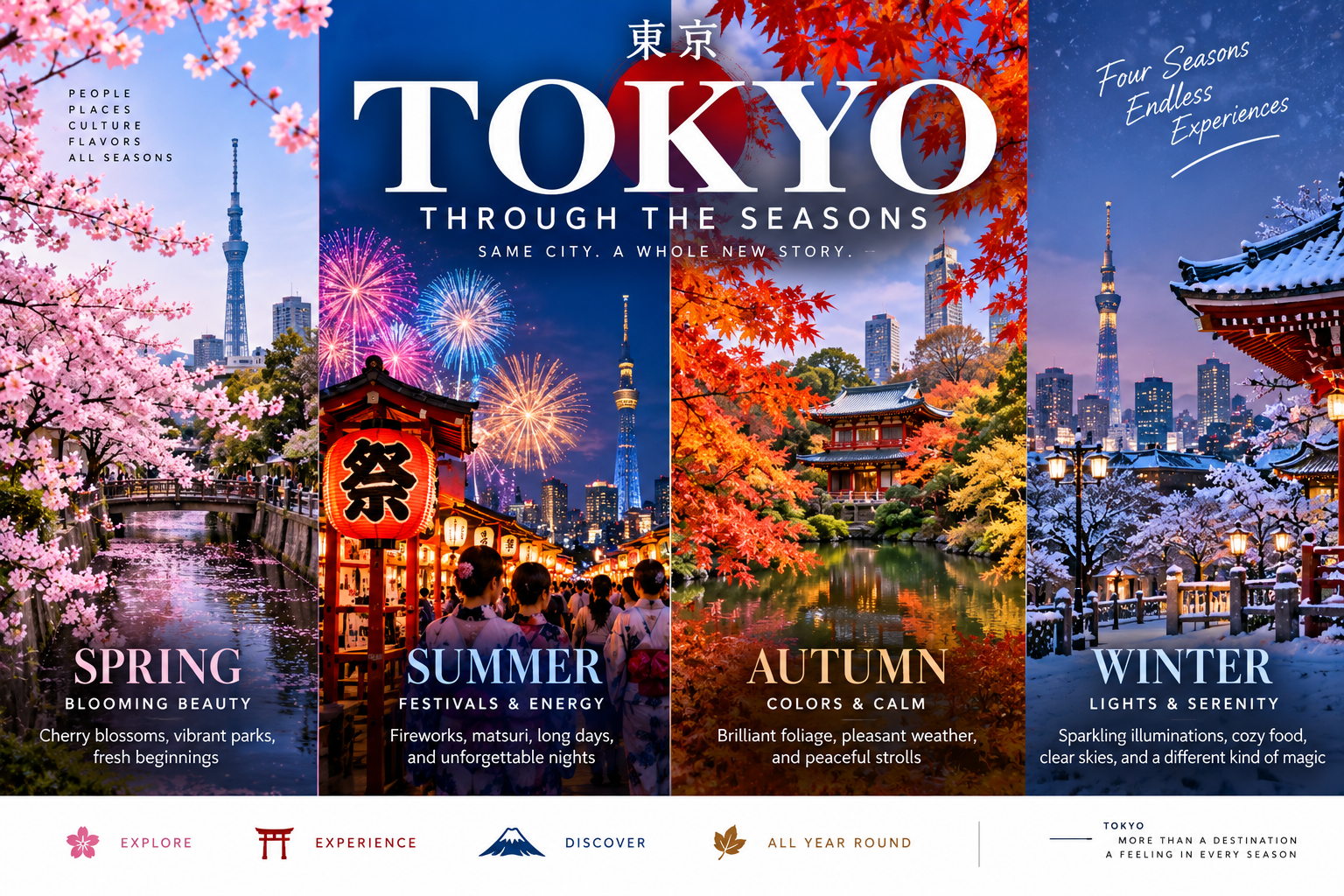
When is the best season to visit Tokyo? The answer depends less on finding one perfect month and more on understanding what you want from your trip. Tokyo seasonal travel changes dramatically throughout the year, with spring bringing blossoms and comfortable sightseeing weather, summer offering festivals and vibrant outdoor events, autumn bringing colorful foliage and pleasant temperatures, and winter delivering crisp days, illuminations, seasonal food, and a quieter atmosphere. Understanding Tokyo by season helps travelers choose the right neighborhoods, clothing, attractions, festivals, food experiences, and travel pace instead of discovering after arrival that the weather or crowds do not match their plans Tokyo Hiking
What Does Tokyo Seasonal Travel Mean?
Tokyo seasonal travel refers to planning a visit around the city’s four major seasons:
- Spring
- Summer
- Autumn
- Winter
Each season brings different environmental conditions and cultural experiences.
However, the boundaries between seasons are not perfectly fixed.
Spring can begin with cool weather and later become warm.
Summer can move from relatively comfortable early-season conditions into intense heat and humidity.
Autumn may begin warm before becoming noticeably cooler.
Winter can have bright, crisp days but cold mornings and evenings.
For travelers, this means packing and itinerary planning should account for transition periods rather than relying only on calendar dates.
Why Tokyo Changes So Much With the Seasons
Tokyo’s Climate Influences Daily Travel
Temperature and humidity affect how comfortable it is to walk through Tokyo.
This matters because many Tokyo experiences involve walking between railway stations, restaurants, shopping streets, parks, temples, museums, and neighborhoods.
A comfortable spring afternoon can encourage hours of exploration.
A hot summer afternoon may require more indoor breaks.
A cool winter morning may be perfect for photography but less comfortable for long outdoor activities.
Seasonal Culture Is Deeply Connected to Japanese Life
Japan has a strong cultural appreciation for seasonal change.
Seasonal flowers, foods, festivals, decorations, clothing, and traditional customs all reflect the time of year.
Visitors therefore experience more than a change in weather.
They experience a change in atmosphere.
Tokyo Is a Four-Season Destination
Although Tokyo is a modern megacity, seasonal changes remain visible throughout the urban environment.
You can notice them in:
- Parks
- Gardens
- Food
- Department stores
- Restaurant menus
- Temple grounds
- Shrine decorations
- Street displays
- Seasonal events
- Fashion
- Architecture and lighting
This makes Tokyo particularly rewarding for repeat travelers.
You can return in a different season and feel as though you are seeing another version of the same city.
Tokyo Seasonal Travel in Spring
Spring is one of the most famous periods for visiting Tokyo.
The season is associated with cherry blossoms, gardens, pleasant walking conditions, seasonal food, and outdoor sightseeing.
However, spring is not simply “cherry blossom season.”
It is much broader than that.
What Tokyo Is Like in Early Spring
Early spring can still feel cool.
Travelers should not assume that spring automatically means warm weather.
Mornings and evenings can remain chilly, and weather conditions can change.
This is especially important for visitors planning outdoor sightseeing.
What to Pack for Early Spring
Useful clothing can include:
- Light jacket
- Sweater
- Long trousers
- Comfortable walking shoes
- Compact umbrella
- Layering pieces
Layering is particularly practical because indoor locations may feel warmer than outdoor streets.
Cherry Blossom Season in Tokyo
Cherry blossoms are one of the most recognizable seasonal experiences in Japan.
Tokyo has numerous parks, riverside areas, gardens, and streets where travelers can experience flowering trees.
Why Cherry Blossoms Matter
The cultural importance of cherry blossoms goes beyond photography.
They are associated with seasonal change and the temporary nature of beauty.
This is one reason cherry blossom viewing has such a strong emotional and cultural significance in Japan.
Popular Cherry Blossom Areas
Depending on conditions and annual flowering timing, travelers may explore places such as:
- Ueno Park
- Shinjuku Gyoen
- Chidorigafuchi
- Meguro River
- Sumida Park
- Inokashira Park
These locations can become extremely busy during peak periods.
How to Avoid the Worst Crowds
Try:
- Early morning visits
- Weekday visits where practical
- Less-famous neighborhood parks
- Visiting outside the peak flowering window
- Exploring areas away from the most famous viewing locations
The goal should not necessarily be finding an empty park.
The goal is finding a comfortable experience.
Spring Food in Tokyo
Spring also influences food culture.
Restaurants, cafés, bakeries, convenience stores, department stores, and confectionery shops often introduce seasonal items.
Travelers may encounter ingredients and flavors associated with spring.
This is one of the easiest ways to experience seasonality without planning an elaborate itinerary.
Spring Festivals and Events
Tokyo’s spring calendar can include cultural celebrations, traditional festivals, flower-related events, and neighborhood activities.
Exact event dates can vary from year to year.
Travelers should verify dates through official sources before planning around a specific festival.
Spring Photography in Tokyo
Spring provides extraordinary opportunities for photographers.
Good subjects include:
- Cherry blossoms against modern buildings
- Traditional temples surrounded by flowers
- Rivers lined with flowering trees
- Gardens
- Residential streets
- Morning light
- Seasonal food
- Japanese gardens
One of the most interesting photographic themes is the contrast between modern Tokyo and delicate spring landscapes.
Spring for Families
Spring can be excellent for families because outdoor conditions are often more comfortable than in the hottest months.
However, peak blossom periods can bring heavy crowds.
Families may therefore benefit from visiting larger parks during quieter hours.
Spring for Couples
Spring is particularly attractive for couples because gardens, riverside paths, evening illuminations, cafés, and seasonal dining can be combined into relaxed itineraries.
A simple afternoon walk can become one of the most memorable parts of a Tokyo trip.
Spring for Budget Travelers
Spring can be more expensive around major travel periods.
Budget-conscious travelers should consider:
- Flexible travel dates
- Accommodation outside the most central areas
- Weekday travel
- Early booking
- Neighborhood restaurants
- Free public parks
- Walking-based itineraries
Tokyo Seasonal Travel in Summer
Summer changes Tokyo dramatically.
The city becomes warmer, more humid, energetic, and festival-oriented.
Summer is not necessarily the easiest season for long outdoor walks, but it offers experiences that other seasons cannot replicate.
Tokyo Summer Weather
Summer can be hot and humid.
For travelers unfamiliar with humid climates, the combination of temperature and moisture can make outdoor sightseeing feel considerably more tiring than expected.
How to Manage Summer Heat
Plan your day around the weather.
A practical strategy is:
Morning: Outdoor sightseeing
Midday: Museum, shopping, café, restaurant, or indoor attraction
Late afternoon: Outdoor exploration
Evening: Festival, neighborhood walk, or dining
This can be much more comfortable than spending an entire afternoon outdoors.
Tokyo Summer Festivals
Summer is one of the most culturally energetic seasons in Tokyo.
Traditional festivals can feature:
- Processions
- Decorations
- Food stalls
- Music
- Traditional clothing
- Performances
- Fireworks
Festival dates and locations change, so travelers should check current schedules.
Summer Fireworks in Tokyo
Fireworks are an important part of Japanese summer culture.
Tokyo and the surrounding region host major fireworks events during the warmer months.
These events can attract very large crowds.
Fireworks Planning Tips
Arrive early.
Plan your transportation before the event.
Check the return route.
Expect crowds around major stations.
Carry water.
Wear comfortable shoes.
Do not assume you can easily find a taxi after a large fireworks event.
Summer Food in Tokyo
Summer creates its own food culture.
Travelers may encounter:
- Cold noodles
- Seasonal fruit
- Shaved ice
- Refreshing drinks
- Summer sweets
- Seasonal fish
- Cold desserts
Food is an excellent way to experience Tokyo seasonal culture without spending the entire day outdoors.
Summer Gardens and Parks
Green spaces remain attractive during summer, particularly early in the day.
However, visitors should plan around heat and humidity.
Shaded areas can make a significant difference.
Summer for Photographers
Summer photography can be dramatic.
Useful subjects include:
- Summer festivals
- Lanterns
- Fireworks
- Green gardens
- Rainy streets
- Reflections
- Neon after rainfall
- Traditional summer clothing
- Evening neighborhoods
Rain can actually create interesting photographic opportunities.
Wet streets reflect signs and lights, producing a very different visual atmosphere from dry-weather Tokyo.
Summer for Families
Families should consider heat carefully.
Children can become tired quickly during long outdoor sightseeing sessions.
Museums, aquariums, shopping complexes, indoor attractions, and shaded parks can help create a balanced itinerary.
Summer for Budget Travelers
Summer may provide opportunities outside peak spring travel periods, depending on dates and events.
However, air conditioning and transportation between destinations can become important considerations.
Budget planning should include:
- Indoor attractions
- Drinks
- Extra transportation
- Convenient accommodation
- Flexible meal breaks
Tokyo Seasonal Travel in Autumn
Autumn is often considered one of Tokyo’s most comfortable periods for sightseeing.
The combination of cooler weather and seasonal colors makes it particularly appealing for walking.
What Tokyo Looks Like in Autumn
Trees gradually change color, creating different visual experiences across parks, gardens, temple grounds, and streets.
Autumn is not limited to one sudden transformation.
The season develops gradually.
This means different locations can look their best at different times.
Autumn Foliage in Tokyo
Popular places for seasonal foliage may include:
- Rikugien Gardens
- Koishikawa Korakuen
- Meiji Jingu Gaien
- Shinjuku Gyoen
- Hibiya Park
- Showa Kinen Park
- Inokashira Park
Crowd levels vary.
Popular foliage destinations can become busy during peak periods.
Why Autumn Is Excellent for Walking
The weather can make long walking routes more comfortable than during summer.
This is ideal for exploring neighborhoods such as:
- Yanaka
- Nezu
- Kagurazaka
- Jimbocho
- Kiyosumi-Shirakawa
- Koenji
- Setagaya
Travelers can combine walking with cafés, bookstores, gardens, museums, and local shopping streets.
Autumn Food in Tokyo
Seasonal ingredients become especially important during autumn.
Visitors may encounter:
- Mushrooms
- Sweet potatoes
- Chestnuts
- Seasonal fish
- Persimmons
- Pumpkin
- Autumn sweets
Department store food halls are particularly useful for travelers interested in seasonal products.
Autumn Festivals
Autumn can feature traditional festivals, cultural events, exhibitions, and neighborhood celebrations.
Again, schedules should be checked for the specific year of travel.
Autumn Photography
Autumn offers an exceptional combination of:
- Red and orange foliage
- Traditional architecture
- Gardens
- Reflections
- Soft light
- Clearer skies
- Modern skyline contrasts
For photographers, the season can provide both urban and natural subjects.
Autumn for Families
Autumn can be particularly comfortable for family sightseeing.
Parks, gardens, museums, and walking routes become easier to combine.
However, foliage hotspots can still become crowded.
Autumn for Couples
Autumn gardens can create an atmospheric setting for couples.
A relaxed itinerary could include:
- Morning garden
- Neighborhood café
- Museum
- Evening walk
- Seasonal dinner
Autumn for Budget Travelers
Autumn demand can vary considerably depending on exact dates.
Travelers can potentially reduce costs by avoiding the most popular weekends and booking accommodation strategically.
Tokyo Seasonal Travel in Winter
Winter provides one of the most underestimated Tokyo experiences.
The city becomes cooler, but winter can offer clear days, seasonal illuminations, shopping, food, cultural experiences, and a different rhythm.
Tokyo Winter Weather
Winter can be cold, particularly in the morning and evening.
However, travelers may encounter bright days that are comfortable for sightseeing with appropriate clothing.
What to Wear in Winter
Consider:
- Warm coat
- Sweater
- Thermal layers
- Comfortable shoes
- Scarf
- Gloves
- Warm socks
Layering is still useful because trains, department stores, restaurants, and museums are often heated.
Winter Illuminations
Tokyo’s winter evenings can feature spectacular illumination displays.
Trees, buildings, shopping districts, gardens, and public spaces may be decorated with lights.
These experiences provide a completely different visual identity from summer Tokyo.
Winter Views of Mount Fuji
Winter can sometimes provide favorable visibility for distant mountain views.
Clearer atmospheric conditions can create opportunities to see Mount Fuji from suitable viewpoints.
Visibility is never guaranteed.
Travelers should therefore treat a Mount Fuji view as a bonus rather than something guaranteed by a particular day.
Winter Food in Tokyo
Winter is an excellent season for warming foods.
Travelers may encounter:
- Hot pots
- Nabe
- Ramen
- Oden
- Seasonal seafood
- Warm desserts
- Tea
- Roasted sweet potatoes
Japanese seasonal cuisine becomes especially noticeable during colder weather.
New Year in Tokyo
The New Year period is culturally significant in Japan.
Shrines and temples can become extremely busy around the beginning of January as people participate in traditional New Year visits.
Travelers interested in this experience should prepare for large crowds.
Some businesses may also have altered schedules during the holiday period.
Winter for Families
Indoor attractions become especially useful.
Families can combine:
- Museums
- Aquariums
- Shopping centers
- Indoor entertainment
- Restaurants
- Short outdoor walks
Winter also provides opportunities for seasonal illumination experiences.
Winter for Photographers
Winter offers:
- Clearer skies
- Illuminations
- Evening cityscapes
- Mount Fuji possibilities
- Minimal foliage
- Strong architectural silhouettes
The reduced greenery can actually emphasize Tokyo’s architecture.
Winter for Budget Travelers
Winter can be attractive for travelers who prioritize indoor cultural experiences and are comfortable with colder weather.
However, New Year travel periods can be unusually busy.
Tokyo Seasonal Comparison
| Season | Weather Character | Main Attractions | Crowds | Best For |
|---|---|---|---|---|
| Spring | Cool to mild, gradually warmer | Cherry blossoms, gardens, outdoor walks | Often high during blossom periods | First-time visitors, couples, photographers |
| Summer | Hot and humid | Festivals, fireworks, nightlife, green spaces | Variable | Festival lovers, cultural travelers |
| Autumn | Mild to cool | Foliage, gardens, walking, seasonal food | Moderate to high at foliage peaks | Walkers, photographers, families |
| Winter | Cool to cold | Illuminations, food, shopping, clear views | Variable | Couples, photographers, indoor attractions |
Which Tokyo Season Is Best for First-Time Visitors?
There is no universal answer.
First-time visitors should think about priorities.
If you want famous seasonal scenery, spring may be attractive.
If you want festivals, consider summer.
If comfortable walking is important, autumn may be appealing.
If you prefer winter lights, food, shopping, and potentially clearer views, winter can be rewarding.
The best decision comes from matching the season with your travel goals.
Which Tokyo Season Is Best for Families?
Families may prefer periods when outdoor temperatures are more comfortable.
Spring and autumn can provide good conditions for parks and walking.
Summer requires stronger heat management.
Winter makes indoor attractions more important.
Family travel should always consider the ages and needs of children rather than relying on a generic seasonal recommendation.
Which Tokyo Season Is Best for Couples?
Every season offers a different romantic atmosphere.
Spring provides blossoms.
Summer provides evening festivals and fireworks.
Autumn provides colorful gardens.
Winter provides illuminations and cozy dining.
Instead of asking which season is most romantic, couples should decide what type of atmosphere they want.
Which Tokyo Season Is Best for Photographers?
Photographers have opportunities in every season.
Spring offers flowers.
Summer offers rain, greenery, festivals, and fireworks.
Autumn offers foliage.
Winter offers illuminations, architecture, and potentially clearer views.
For photography, the best season depends heavily on the subject.
Which Tokyo Season Is Best for Budget Travelers?
Budget travelers should look beyond season alone.
Accommodation prices can be strongly affected by:
- Specific dates
- Weekends
- Major events
- Holidays
- School vacation periods
- Demand around popular attractions
A flexible traveler may find better value by avoiding major demand periods rather than choosing a season automatically.
Tokyo Seasonal Clothing Guide
Spring Clothing
Pack layers.
Recommended:
- Light jacket
- Sweater
- Long trousers
- Comfortable walking shoes
- Rain protection
Summer Clothing
Recommended:
- Lightweight clothing
- Breathable fabrics
- Comfortable shoes
- Sun protection
- Portable umbrella
- Reusable water bottle
Autumn Clothing
Recommended:
- Light jacket
- Long sleeves
- Comfortable trousers
- Walking shoes
- Optional warmer layer for late autumn
Winter Clothing
Recommended:
- Warm coat
- Sweater
- Thermal layers
- Scarf
- Gloves
- Warm footwear
Tokyo Seasonal Food Guide
Food is one of the easiest ways to understand seasonality.
Spring
Look for seasonal vegetables, blossom-inspired sweets, strawberries, and limited-time spring products.
Summer
Look for cold noodles, shaved ice, chilled drinks, seasonal fruit, and refreshing dishes.
Autumn
Look for mushrooms, sweet potatoes, chestnuts, seasonal fish, and autumn sweets.
Winter
Look for hot pots, oden, ramen, seasonal seafood, and warming dishes.
The exact availability of ingredients depends on the restaurant and year.
Tokyo Seasonal Festivals
Seasonal festivals are an important part of the travel experience.
Spring Festivals
Spring can include shrine festivals, flower events, cultural celebrations, and neighborhood activities.
Summer Festivals
Summer is particularly associated with:
- Fireworks
- Bon-related events
- Matsuri
- Lanterns
- Traditional performances
Autumn Festivals
Autumn can include:
- Shrine festivals
- Cultural celebrations
- Harvest-related themes
- Traditional performances
Winter Events
Winter is strongly associated with:
- Illuminations
- New Year traditions
- Seasonal markets
- Temple and shrine visits
Because festival calendars change, travelers should check official event information before booking around a particular date.
Tokyo Seasonal Travel for Food Lovers
Food travelers should plan around the season rather than eating the same types of dishes throughout the year.
Spring Food Strategy
Visit department-store food halls and specialty shops for limited seasonal products.
Summer Food Strategy
Use cold dishes and seasonal desserts as part of a heat-management strategy.
Autumn Food Strategy
Look for restaurants highlighting seasonal ingredients.
Winter Food Strategy
Focus on warming dishes and seasonal seafood.
Tokyo Seasonal Travel for Photographers
Spring Photography Strategy
Photograph early in the day.
Look for combinations of flowers and architecture.
Summer Photography Strategy
Use evening light, reflections, festivals, and rainy streets.
Autumn Photography Strategy
Visit gardens during foliage periods and look for reflections.
Winter Photography Strategy
Focus on illumination, architecture, night photography, and clear-sky landscapes.
Tokyo Seasonal Travel for Solo Travelers
Solo travelers should use the season to determine their pace.
Spring
Explore parks and historic neighborhoods.
Summer
Use indoor attractions during the hottest hours.
Autumn
Plan longer walking routes.
Winter
Combine museums and shopping with shorter outdoor walks.
Tokyo Seasonal Travel for Luxury Travelers
Luxury travel can become more seasonal through customized experiences.
Spring
Private garden or cultural experiences.
Summer
Customized evening cultural itineraries.
Autumn
Private foliage-focused tours.
Winter
Seasonal dining and illumination experiences.
The value of luxury seasonal travel comes from personalization rather than simply higher spending.
Tokyo Seasonal Travel for Budget Travelers
Budget travelers can use seasonality strategically.
Save Money By
- Booking accommodation early
- Comparing neighborhoods
- Traveling on weekdays
- Using public transportation
- Walking between nearby attractions
- Eating at local restaurants
- Using public parks
- Checking free cultural events
- Avoiding unnecessary taxis
Tokyo Seasonal Travel for Older Travelers
Older travelers should consider comfort and walking distance.
A useful strategy is to schedule:
- One major attraction
- One meal
- One rest period
- One smaller activity
per half-day rather than attempting continuous sightseeing.
Tokyo Seasonal Travel for Travelers With Mobility Needs
Seasonal conditions can affect accessibility.
Summer heat can increase fatigue.
Winter rain or cold can affect comfort.
Busy spring and autumn periods can make popular destinations more crowded.
Research accessibility information for individual attractions and consider routes with elevators and shorter transfers where appropriate.
Tokyo Seasonal Travel for Travelers Who Hate Crowds
The season alone does not determine crowd levels.
Time of day matters.
Location matters.
Day of the week matters.
Events matter.
A practical strategy is to visit popular locations early and reserve the middle of the day for less crowded neighborhoods or indoor attractions.
Tokyo Seasonal Travel for Repeat Visitors
Repeat travelers have an opportunity to experience Tokyo as a seasonal destination.
A first visit might happen during spring.
A second visit during autumn can reveal completely different landscapes.
A summer trip can introduce festivals and nightlife.
A winter trip can reveal illuminations, food culture, and quieter streets.
This is one reason Tokyo has such strong repeat-visit potential.
Tokyo Seasonal Travel Mistakes
Mistake 1: Assuming Spring Is Always Warm
Early spring can be cool.
Pack layers.
Mistake 2: Underestimating Summer Humidity
Heat and humidity can make long walking routes exhausting.
Build indoor breaks into your itinerary.
Mistake 3: Assuming Autumn Colors Have One Fixed Date
Foliage changes gradually and varies by location and year.
Mistake 4: Forgetting Winter Evenings
Daytime may be manageable while evenings feel much colder.
Mistake 5: Planning Only Around Famous Seasonal Attractions
Popular blossom and foliage sites can become crowded.
Explore alternatives.
Mistake 6: Ignoring Seasonal Business Hours
Some attractions and businesses change schedules.
Check before traveling.
Mistake 7: Booking Without Considering Major Events
Large festivals and seasonal events can affect transportation and accommodation demand.
Pros of Tokyo Seasonal Travel
Every Season Offers a Different Experience
You can return multiple times and see a dramatically different Tokyo.
Seasonal Culture Is Easy to Experience
Food, decorations, festivals, gardens, and public spaces reflect the time of year.
Excellent Photography Variety
Each season offers different colors, light, weather, and cultural events.
Strong Choice for Repeat Travelers
Tokyo rewards visitors who return at different times.
Cons of Tokyo Seasonal Travel
Peak Seasons Can Be Crowded
Cherry blossom and autumn foliage periods can attract significant visitor numbers.
Weather Can Disrupt Plans
Rain, heat, humidity, or cold can affect outdoor sightseeing.
Seasonal Events Can Be Difficult to Predict
Some dates change annually.
Seasonal Pricing Can Vary
Demand can affect accommodation and transportation-related costs.
How to Build a Tokyo Seasonal Itinerary
Step One: Choose Your Main Seasonal Goal
Ask yourself:
Do I want flowers?
Festivals?
Foliage?
Winter lights?
Food?
Photography?
Step Two: Choose Neighborhoods Around That Goal
For example, a foliage-focused trip should prioritize gardens and parks.
A summer cultural trip can emphasize evening events.
Step Three: Mix Indoor and Outdoor Attractions
This is particularly important during summer and winter.
Step Four: Leave Empty Time
Do not fill every hour.
Seasonal travel is more enjoyable when you can stop for a café, photograph an interesting street, or spend longer than expected at a garden.
A Sample Tokyo Spring Itinerary
Day One
Explore central Tokyo and a major garden.
Day Two
Visit a cherry blossom area early and spend the afternoon in a traditional neighborhood.
Day Three
Explore museums, shopping districts, and seasonal food experiences.
A Sample Tokyo Summer Itinerary
Day One Tokyo seasonal
Outdoor sightseeing in the morning.
Indoor museums and shopping during midday.
Evening neighborhood exploration.
Day Two Tokyo seasonal
Explore traditional culture and attend a seasonal event if available.
Day Three Tokyo seasonal
Visit an indoor attraction and finish with an evening walk.
A Sample Tokyo Autumn Itinerary
Day One Tokyo seasonal
Visit a historic garden.
Day Two Tokyo seasonal
Explore Yanaka and Nezu.
Day Three Tokyo seasonal
Combine foliage viewing with museums and seasonal dining.
A Sample Tokyo Winter Itinerary
Day One Tokyo seasonal
Explore museums and central Tokyo.
Day Two Tokyo seasonal
Visit temples and shopping districts.
Evening Tokyo seasonal
See winter illuminations.
Day Three Tokyo seasonal
Explore seasonal food and architecture.
Ten Travel Brands and Services for Tokyo Seasonal Planning
Travel services differ in their strengths, so the best option depends on the specific part of your trip you are planning.
| Brand Tokyo seasonal | Main Service | Useful for Tokyo Seasonal Travel | Best For | Main Limitation |
|---|---|---|---|---|
| Google Maps | Navigation and local discovery | Finding seasonal locations, parks, restaurants and routes | Independent travelers | Popular results can dominate |
| Tripadvisor | Reviews and attraction research | Comparing attractions and visitor experiences | First-time visitors | Reviews may emphasize major attractions |
| Booking.com | Accommodation | Finding hotels for seasonal trips | All traveler types | Primarily accommodation focused |
| Expedia | Flights and hotels | Building complete travel arrangements | International travelers | Less focused on neighborhood detail |
| Agoda | Accommodation | Comparing Tokyo hotels | Budget and international travelers | Accommodation-centric |
| Airbnb | Accommodation and experiences | Neighborhood-focused stays and activities | Couples and longer stays | Availability and listings vary |
| Japan Travel by NAVITIME | Transport and travel planning | Planning seasonal routes around Tokyo | Independent travelers | More useful for transport-focused planning |
| Rakuten Travel | Japan travel services | Accommodation and domestic travel planning | Japan-focused travelers | Interface and availability may vary |
| GO | Taxi transportation | Short transfers during hot, cold or rainy weather | Convenience-focused travelers | Transportation rather than sightseeing |
| Japan Guide | Destination research | Researching neighborhoods and seasonal attractions | Independent travelers | Coverage varies by destination |
The best strategy is to use several resources together.
Maps help with geography.
Travel platforms help with accommodation.
Transport tools help with routes.
Official tourism and attraction sources should be used to confirm event dates, opening hours, admission rules, and temporary closures.
Tokyo Seasonal Planning by Traveler Problem
If You Want Cherry Blossoms Tokyo seasonal
Build your trip around flexible dates rather than assuming an exact flowering date months in advance.
If You Want Autumn Foliage Tokyo seasonal
Research several gardens and parks so you have alternatives if foliage develops differently than expected.
If You Hate Heat Tokyo seasonal
Avoid long outdoor afternoons in summer.
If You Hate Cold Tokyo seasonal
Prioritize spring or autumn and build indoor breaks into winter itineraries.
If You Want Festivals Tokyo seasonal
Summer may offer many opportunities, but verify specific event calendars.
If You Want Quiet Tokyo seasonal
Consider early mornings and less-famous neighborhoods regardless of season.
If You Want Seasonal Food Tokyo seasonal
Visit department-store food halls, traditional restaurants, specialty shops, and local markets.
If You Want Photography Tokyo seasonal
Choose the season based on the subject you want to photograph.
If You Travel With Children Tokyo seasonal
Balance outdoor experiences with indoor attractions.
If You Are on a Budget Tokyo seasonal
Avoid automatically choosing peak dates simply because they are associated with famous seasonal events.
Tokyo Seasonal Travel and Sustainability
Seasonal tourism can place additional pressure on popular locations.
Cherry blossom and autumn foliage destinations can become particularly crowded.
Responsible visitors can help by:
- Following local instructions
- Staying on designated paths
- Avoiding private property
- Disposing of waste correctly
- Using public transportation
- Avoiding excessive noise
- Supporting local businesses
- Respecting residential neighborhoods
The goal is to enjoy seasonal beauty without damaging the environment or disrupting local communities.
The Future of Tokyo Seasonal Travel
More Travelers Will Seek Season-Specific Experiences
Rather than simply visiting Tokyo, travelers increasingly want to visit Tokyo for a particular seasonal experience.
This could mean:
- Cherry blossoms
- Summer festivals
- Autumn foliage
- Winter illuminations
- Seasonal cuisine
Technology Will Improve Seasonal Planning
Weather information, travel applications, digital maps, translation systems, and AI itinerary tools will make seasonal travel planning easier.
Travelers will increasingly be able to adapt plans when weather conditions change.
Crowd Management Will Become More Important
Popular seasonal attractions can experience concentrated visitor numbers.
Tourism authorities and local communities will likely continue developing strategies to distribute visitors across different locations and time periods.
Lesser-Known Seasonal Destinations May Grow
As travelers search for alternatives to crowded landmarks, smaller neighborhoods, gardens, and regional attractions may receive greater attention.
That creates both opportunities and responsibilities.
Weather Patterns May Affect Seasonal Tourism
Changing climate conditions can influence flowering periods, heat levels, rainfall, and seasonal comfort.
Travelers should increasingly rely on current forecasts and annual conditions rather than assuming historical patterns will always repeat exactly.
Why Tokyo Seasonal Travel Is Worth Experiencing
Tokyo’s greatest seasonal advantage is variety.
You can visit the same neighborhood in spring and winter and have two completely different experiences.
A garden can change color.
A street can change its decorations.
A restaurant can change its menu.
A festival can transform a quiet neighborhood.
A winter evening can completely change the visual character of a commercial district.
This constant transformation makes Tokyo feel alive.
FAQs
What is the best season to visit Tokyo?
There is no single best season for everyone. Spring is popular for blossoms, summer for festivals, autumn for foliage and comfortable walking, and winter for illuminations, seasonal food, and a different urban atmosphere.
What is Tokyo like in spring?
Tokyo is generally cool to mild during spring, becoming warmer as the season progresses. Cherry blossoms, gardens, seasonal food, and outdoor sightseeing are major attractions.
Is summer a good time to visit Tokyo?
Summer can be rewarding for travelers interested in festivals, fireworks, greenery, and evening activities. However, heat and humidity can make extended outdoor sightseeing challenging.
Is autumn a good time for Tokyo?
Autumn can be excellent for walking, gardens, photography, seasonal food, and foliage. Popular foliage locations can become busy during peak periods.
Is winter worth visiting Tokyo?
Yes. Winter offers illuminations, seasonal food, shopping, cultural experiences, potentially clearer views, and a different atmosphere from the warmer months.
When is cherry blossom season in Tokyo?
Cherry blossom timing varies from year to year depending on weather conditions. Travelers should check current seasonal forecasts and official local information rather than relying on a fixed calendar date.
When is autumn foliage season in Tokyo?
Foliage develops gradually and varies by tree species, elevation, location, and yearly weather conditions. Different parks and gardens can peak at different times.
Does Tokyo get snow?
Snow can occur in Tokyo, but significant snowfall is not a guaranteed or typical feature of every winter. Travelers should check current forecasts when planning winter trips.
Is Tokyo humid in summer?
Yes. Summer can be hot and humid, which can make walking and outdoor sightseeing feel more demanding.
What should I wear in Tokyo during spring?
Layered clothing is practical. A light jacket or sweater, long trousers, and comfortable walking shoes are useful, particularly during cooler periods.
What should I wear in Tokyo during summer?
Lightweight and breathable clothing is generally practical. Comfortable shoes, sun protection, and rain protection can also be useful.
What should I wear in Tokyo during autumn?
Layering works well because temperatures can vary between morning, afternoon, and evening.
What should I wear in Tokyo during winter?
Warm layers, a coat, comfortable shoes, and accessories such as gloves and a scarf can be useful.
Which Tokyo season is best for photographers?
All four seasons offer strong photography opportunities. Spring is excellent for flowers, summer for festivals and rain, autumn for foliage, and winter for illuminations and architecture.
Which Tokyo season is best for families?
Spring and autumn can be comfortable for outdoor sightseeing, while summer and winter can work well when indoor attractions are incorporated into the itinerary.
Which Tokyo season is best for couples?
Every season offers different experiences. Spring provides blossoms, summer offers festivals and fireworks, autumn offers foliage, and winter offers illuminations and cozy seasonal experiences.
Is Tokyo expensive during cherry blossom season?
Demand can increase around popular travel periods, potentially affecting accommodation and other travel costs. Travelers seeking better value should compare dates and neighborhoods rather than assuming every spring date costs the same.
Are Tokyo seasonal festivals free?
Some outdoor festivals and public events may be free to observe, while particular activities or venues may charge fees. Always check the event’s current information.
What seasonal foods should I try in Tokyo?
Spring can bring blossom-themed sweets and seasonal produce, summer offers cold dishes and desserts, autumn highlights ingredients such as mushrooms and sweet potatoes, and winter is ideal for warming foods such as hot pots and oden.
How can I avoid seasonal crowds in Tokyo?
Visit popular attractions early, travel on appropriate weekdays, consider alternative locations, and avoid planning your entire trip around the most famous seasonal attraction.
Can I visit Tokyo in summer with children?
Yes, but heat management is important. Combine outdoor activities with museums, shopping centers, indoor attractions, and regular breaks.
Is winter in Tokyo too cold for sightseeing?
Winter can be cold, especially in the morning and evening, but appropriate clothing makes outdoor sightseeing possible. Indoor attractions also provide excellent alternatives.
Should I book Tokyo hotels early for seasonal travel?
Early planning can be useful for periods of strong demand, particularly around major events and popular seasonal travel dates.
What is the quietest season in Tokyo?
Crowds depend on specific dates, holidays, events, and locations, so no season is universally quiet. Travelers can often find calmer experiences by visiting less-famous areas and traveling at less busy times of day.
Can I see Mount Fuji from Tokyo in every season?
No. Visibility depends on weather and atmospheric conditions. Winter can sometimes provide favorable visibility, but a clear view is never guaranteed.
Does Tokyo have seasonal festivals throughout the year?
Yes. Tokyo has a broad calendar of cultural, religious, neighborhood, food, music, illumination, and seasonal events. Exact dates vary annually.
Is Tokyo seasonal travel good for repeat visitors?
Absolutely. Returning in a different season can create a substantially different experience, even when visiting some of the same neighborhoods.
Conclusion
Tokyo seasonal travel is ultimately about understanding that Japan’s capital is not a static destination. Spring, summer, autumn, and winter each reveal different colors, foods, cultural traditions, landscapes, festivals, weather patterns, and ways of experiencing the city. The right season therefore depends on what you want your trip to feel like. Spring is ideal for travelers drawn to blossoms, gardens, and fresh seasonal energy. Summer brings festivals, fireworks, greenery, and vibrant evenings, although the heat requires thoughtful planning. Autumn is particularly appealing for comfortable walking, colorful foliage, seasonal cuisine, and photography. Winter provides illuminations, warming food, cultural traditions, shopping, and a quieter visual atmosphere.