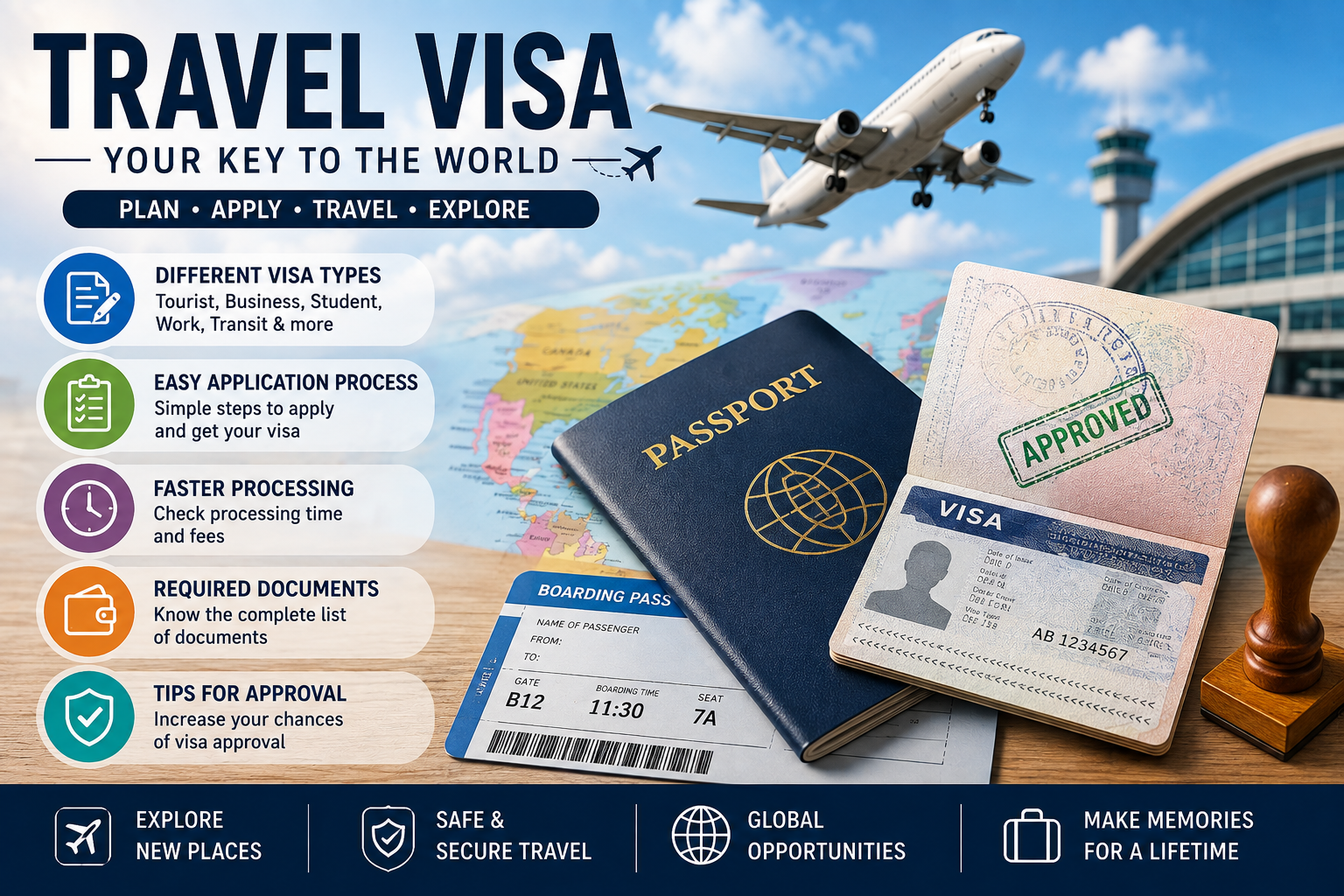
travel visa

Travel Visa Guide: Types, Requirements, Application Process, Fees, and Approval Tips

Traveling to another country is an exciting experience. Whether you are planning a vacation, attending a business meeting, visiting family, studying abroad, or receiving medical treatment, you may need a travel visa before your trip. A travel visa is an official document or electronic authorization that allows a foreign citizen to enter another country for a specific purpose and period. Every country has its own visa rules, requirements, and application process. Some countries allow travelers to enter without a visa, while others require visitors to obtain approval before arrival Istanbul Travel

What Is a Travel Visa?

A travel visa is an official permission issued by a country’s government that allows foreign nationals to enter, stay, or leave that country for a specific purpose and time.

A visa does not replace a passport. Instead, it works together with your passport. Most travelers must present both documents when entering another country.

Depending on the destination, a travel visa may be:

  • A sticker placed inside your passport
  • A stamp issued by immigration authorities
  • An electronic visa (eVisa)
  • A digital travel authorization

Each visa includes important details such as:

  • Visa type
  • Date of issue
  • Expiration date
  • Number of entries allowed
  • Length of stay
  • Special conditions

Immigration officers check these details before allowing travelers to enter the country.

Why Do Countries Require Travel Visas?

Countries use travel visas to manage international travel and maintain border security.

A visa helps immigration authorities:

  • Verify the traveler’s identity
  • Confirm the purpose of travel
  • Check financial ability
  • Review travel history
  • Protect national security
  • Manage the length of visitor stays

Visa requirements also help countries control tourism, business travel, education, and employment.

Who Needs a Travel Visa?

Whether you need a visa depends on several factors, including:

  • Your nationality
  • Your destination country
  • The purpose of your trip
  • The planned length of stay
  • Existing visa agreements between countries

Some travelers can visit certain countries without a visa, while others must apply in advance.

Information Found on a Travel Visa

A travel visa usually contains important travel information.

Information Description
Visa Number Unique identification number
Visa Type Tourist, business, student, etc.
Passport Number Linked passport information
Date of Issue When the visa was approved
Expiration Date Last day the visa remains valid
Number of Entries Single or multiple entries
Length of Stay Maximum number of days allowed

Always check your visa carefully after receiving it to ensure all details are correct.

How Does a Travel Visa Work?

A travel visa allows a foreign visitor to request entry into another country. However, having a visa does not automatically guarantee admission. The final decision is made by immigration officers at the border or airport.

Although the process differs from country to country, most travel visas follow the same general steps.

Step 1: Check Visa Requirements

Before planning your trip, check whether your destination requires a visa for your nationality.

Important information includes:

  • Visa requirement
  • Application process
  • Required documents
  • Processing time
  • Visa fees
  • Entry conditions

Applying without understanding these requirements may lead to delays or rejection.

Step 2: Submit an Application

Most countries require travelers to complete a visa application.

Applications may be submitted:

  • Online
  • At an embassy
  • At a consulate
  • Through a visa application center

Applicants usually provide personal information, passport details, travel plans, and supporting documents.

Step 3: Document Verification

Immigration authorities review the submitted documents.

They may verify:

  • Passport validity
  • Financial documents
  • Hotel reservations
  • Flight bookings
  • Invitation letters
  • Employment records
  • Travel history

Some countries may request additional documents during the review process.

Step 4: Visa Approval

If the application meets all requirements, the visa is approved.

Depending on the country, travelers may receive:

  • Passport with visa sticker
  • Electronic visa by email
  • Digital approval letter
  • Travel authorization number

Always keep a copy of your visa during your trip.

Step 5: Arrival at Immigration

When arriving at your destination, immigration officers review your documents.

They may ask questions such as:

  • Why are you visiting?
  • Where will you stay?
  • How long will you remain?
  • Do you have a return ticket?
  • How will you pay for your trip?

Answer honestly and provide supporting documents if requested.

Step 6: Entry Decision

After reviewing your documents, immigration officers decide whether to allow entry.

If approved, they may:

  • Stamp your passport
  • Record your arrival electronically
  • Inform you of the permitted length of stay

You must leave the country before your visa or authorized stay expires unless an extension is officially granted.

Typical Travel Visa Process

Step What Happens
Check Requirements Confirm if a visa is needed
Complete Application Fill out the visa application form
Submit Documents Provide passport and supporting documents
Pay Fees Pay the required visa fee
Application Review Immigration checks your information
Visa Approval Receive your visa or electronic authorization
Travel Present your documents at immigration
Entry Decision Immigration officer grants or denies entry

Types of Travel Visas

Different visas are issued for different travel purposes. Choosing the correct visa type is important because each one has its own rules and conditions.

Tourist Visa

A tourist visa is issued to people traveling for leisure, sightseeing, vacations, or visiting friends and family.

This is one of the most common travel visas.

Typical activities include:

  • Visiting tourist attractions
  • Family visits
  • Holiday travel
  • Cultural experiences
  • Short vacations

Tourist visas usually do not allow employment.

Business Visa

A business visa is intended for individuals traveling for professional purposes.

Common reasons include:

  • Business meetings
  • Conferences
  • Trade shows
  • Client meetings
  • Contract negotiations
  • Corporate training

A business visa generally does not permit full-time employment in the destination country.

Transit Visa

A transit visa allows travelers to pass through a country while traveling to another destination.

It is often required when:

  • Changing flights
  • Leaving the airport during a layover
  • Staying in the transit country for a short period

Transit visas are usually valid for only a few hours or days.

Student Visa

A student visa allows international students to study at educational institutions abroad.

Applicants often need:

  • Admission letter
  • Financial proof
  • Passport
  • Medical documents
  • Academic records

Student visas are generally valid for the duration of the educational program.

Work Visa

A work visa allows foreign nationals to work legally in another country.

Applicants usually need:

  • Job offer
  • Employment contract
  • Employer sponsorship
  • Work permit approval

Many countries require employers to complete part of the application process.

Medical Visa

Medical visas are issued to people traveling for healthcare or medical treatment.

Supporting documents may include:

  • Medical reports
  • Hospital appointment
  • Treatment plan
  • Financial evidence

Some countries also allow one companion to travel with the patient under a related visa category.

Family Visit Visa

A family visit visa allows travelers to visit relatives living in another country.

Applicants may need:

  • Invitation letter
  • Proof of relationship
  • Sponsor information
  • Financial documents

The permitted stay depends on the destination country’s immigration rules.

Electronic Visa (eVisa)

An eVisa is an electronic travel authorization that can be applied for online.

Benefits include:

  • Online application
  • Faster processing
  • Digital approval
  • No embassy visit for many applicants
  • Convenient document submission

Travelers usually receive the approved eVisa by email.

Visa on Arrival

Some countries issue visas after travelers arrive at the airport or border crossing.

Travelers may need:

  • Valid passport
  • Passport-size photos
  • Visa fee
  • Return ticket
  • Hotel booking
  • Financial proof

Visa on arrival is convenient but is not available for every nationality.

Multiple-Entry Visa

A multiple-entry visa allows travelers to enter and leave the country several times during the visa’s validity period.

This type of visa is useful for:

  • Frequent business travelers
  • Regional travel
  • Family visits
  • International work assignments

Single-Entry Visa

A single-entry visa allows one entry into the destination country.

Once the traveler leaves, the visa generally cannot be used again, even if it has not expired.

This visa is commonly issued for short vacations and one-time visits.

Comparing Different Travel Visa Types

Visa Type Main Purpose Typical Stay
Tourist Visa Vacation and sightseeing Short-term
Business Visa Meetings and conferences Short-term
Transit Visa Passing through a country Very short-term
Student Visa Education Long-term
Work Visa Employment Long-term
Medical Visa Medical treatment Short to medium-term
Family Visit Visa Visiting relatives Short-term
eVisa Various travel purposes Depends on country
Visa on Arrival Tourism or business Usually short-term
Multiple-Entry Visa Repeated travel Valid for multiple visits
Single-Entry Visa One-time visit Single trip only

Understanding these visa types will help you choose the correct option based on your travel purpose and ensure a smoother application process.

Documents Required for a Travel Visa

Applying for a travel visa usually requires several supporting documents. The exact requirements vary from one country to another, but many governments ask for similar information to verify your identity, travel plans, and financial situation.

Preparing all required documents before submitting your application can help avoid delays and improve the chances of approval.

Valid Passport

A valid passport is the most important document for any visa application.

Your passport should:

  • Be valid for the required period
  • Have blank visa pages
  • Be in good condition
  • Match the information on your application

Some countries require the passport to remain valid for at least six months beyond your planned travel date.

Completed Visa Application Form

Most countries require applicants to complete an official visa application form.

The form normally includes:

  • Personal information
  • Passport details
  • Travel purpose
  • Travel dates
  • Employment details
  • Contact information

Always review the form carefully before submitting it to avoid mistakes.

Passport-Size Photographs

Many visa applications require recent passport-size photographs.

Photos usually must:

  • Be taken recently
  • Have a plain background
  • Meet the required size
  • Clearly show your face

Different countries may have different photo requirements.

Flight Itinerary

A flight itinerary helps immigration authorities understand your travel plans.

It may include:

  • Departure flight
  • Return flight
  • Connecting flights
  • Travel dates

Some countries recommend booking refundable tickets until the visa is approved.

Hotel Reservation or Accommodation Details

Applicants often need to provide proof of accommodation.

Examples include:

  • Hotel bookings
  • Resort reservations
  • Rental property confirmation
  • Invitation from a host

The accommodation should generally cover the planned travel period.

Travel Insurance

Some countries require travel insurance before issuing a visa.

Travel insurance may cover:

  • Medical emergencies
  • Hospital treatment
  • Trip cancellation
  • Lost luggage
  • Emergency evacuation

Having travel insurance can also provide peace of mind during your trip.

Financial Proof

Immigration authorities often ask applicants to prove they can afford their trip.

Acceptable financial documents may include:

  • Bank statements
  • Salary slips
  • Tax documents
  • Sponsorship letters
  • Business financial records

The required amount depends on the destination country and the length of your stay.

Invitation Letter

An invitation letter may be required if you are visiting family, friends, or attending a business event.

The letter may include:

  • Host’s name
  • Address
  • Contact information
  • Purpose of your visit
  • Length of your stay

Some countries require additional proof from the host.

Employment or Business Documents

Working professionals and business owners may need to submit documents showing their employment or business activities.

These may include:

  • Employment letter
  • Company registration
  • Business license
  • Leave approval
  • Salary certificate

These documents help demonstrate your ties to your home country.

Common Travel Visa Documents

Document Purpose
Passport Identity and travel document
Visa Application Form Official visa request
Passport Photos Identity verification
Flight Itinerary Planned travel schedule
Hotel Reservation Proof of accommodation
Travel Insurance Medical and travel protection
Financial Proof Ability to cover expenses
Invitation Letter Supports visit purpose
Employment Documents Confirms employment status

How to Apply for a Travel Visa

Although every country has its own visa process, most applications follow similar steps. Preparing carefully and submitting accurate information can make the process much smoother.

Check Visa Requirements

Before starting your application, visit the official immigration website or embassy of your destination country.

Check:

  • Whether you need a visa
  • Available visa types
  • Required documents
  • Processing times
  • Application fees
  • Appointment requirements

Understanding these rules before applying can help prevent delays.

Gather Required Documents

Collect every required document before completing your application.

Organizing your paperwork in advance makes the application process easier and reduces the chance of missing important documents.

Double-check:

  • Passport validity
  • Photo requirements
  • Financial documents
  • Travel bookings

Complete the Application Form

Fill out the application form carefully.

Make sure all information matches your passport exactly.

Review details such as:

  • Name spelling
  • Passport number
  • Date of birth
  • Travel dates
  • Contact information

Incorrect information may delay your application.

Pay the Visa Fee

Most visa applications require payment before processing begins.

Payment methods may include:

  • Online payment
  • Bank transfer
  • Credit card
  • Cash payment at a visa center

Keep your payment receipt for future reference.

Schedule a Visa Appointment

Some countries require applicants to visit an embassy or visa application center.

During the appointment, you may:

  • Submit documents
  • Provide fingerprints
  • Have your photograph taken
  • Attend an interview

Arrive on time and bring all required documents.

Attend the Visa Interview

Not every country requires an interview, but when one is required, immigration officers may ask questions about your trip.

Common questions include:

  • Why are you traveling?
  • How long will you stay?
  • Where will you stay?
  • Who is paying for your trip?
  • What do you do for work?

Answer honestly and clearly.

Wait for Processing

After submitting your application, immigration authorities review your documents.

Processing may include:

  • Identity verification
  • Background checks
  • Financial review
  • Travel history review
  • Document verification

Processing times vary depending on the destination country.

Receive Your Visa

If approved, you will receive your visa.

Depending on the country, it may be:

  • A visa sticker
  • An electronic visa
  • A digital travel authorization

Before traveling, check:

  • Your name
  • Passport number
  • Visa type
  • Validity dates
  • Number of entries allowed

If you notice any mistakes, contact the issuing authority immediately.

Travel Visa Application Process

Step Description
Check Requirements Review official visa rules
Gather Documents Prepare all required paperwork
Complete Application Fill out the application accurately
Pay Fees Submit the required payment
Attend Appointment Visit the embassy or visa center if required
Interview Answer immigration questions if requested
Processing Wait for authorities to review your application
Receive Visa Obtain your approved visa

Travel Visa Processing Time

Visa processing times differ depending on the country, visa type, and application volume.

Some visas are approved within a few days, while others may take several weeks or even months.

Applying early gives you more time to resolve any unexpected issues.

Standard Processing

Standard processing is the most common option.

Typical timelines range from:

  • A few business days
  • One to four weeks
  • Several weeks for more detailed applications

Processing times vary by country.

Express Processing

Some countries offer faster processing for an additional fee.

Express services may reduce waiting times significantly, depending on the visa type.

Availability differs between countries.

Factors That Affect Processing Time

Several factors can influence how long your application takes.

These include:

  • Time of year
  • Visa type
  • Application volume
  • Missing documents
  • Security checks
  • Public holidays
  • Embassy workload

Submitting a complete application can help avoid unnecessary delays.

Estimated Processing Times

Visa Type Typical Processing Time
Tourist Visa Several days to a few weeks
Business Visa One to several weeks
Student Visa Several weeks
Work Visa Several weeks to several months
Medical Visa Often processed quickly, depending on urgency
eVisa Often within a few days

Travel Visa Fees

Visa fees vary widely depending on the destination country, visa category, and processing speed.

The fee is usually paid when submitting your application and is often non-refundable, even if the visa is not approved.

What Can Affect Visa Fees?

The total cost may depend on:

  • Visa type
  • Destination country
  • Applicant’s nationality
  • Number of entries
  • Processing speed
  • Additional service charges

Always check the official government website for the latest fee information before applying.

Typical Visa Fee Comparison

Visa Type Typical Cost Processing Time
Tourist Visa Varies by country Several days to a few weeks
Business Visa Varies One to several weeks
Student Visa Varies Several weeks
Work Visa Varies Several weeks to several months
eVisa Often lower than traditional visas Usually faster
Transit Visa Usually lower Short processing time

Understanding the required documents, following the correct application steps, and applying early can make the travel visa process smoother and increase your chances of receiving approval.


Common Reasons for Travel Visa Rejection

Receiving a travel visa rejection can be disappointing, especially after spending time preparing your application. While every country has its own immigration policies, many visa refusals happen for similar reasons.

Understanding these common mistakes can help you prepare a stronger application in the future.

Incomplete Application

One of the most common reasons for rejection is submitting an incomplete application.

Examples include:

  • Missing signatures
  • Blank sections on the application form
  • Incorrect travel dates
  • Missing supporting documents

Always review your application carefully before submitting it.

Incorrect or False Information

Providing inaccurate information may result in visa refusal.

This includes:

  • Incorrect passport details
  • Wrong employment information
  • False travel history
  • Incorrect financial information

Ensure every detail matches your official documents.

Insufficient Financial Proof

Many countries want to confirm that travelers can pay for their trip.

Applications may be rejected if:

  • Bank balances are too low
  • Financial documents are incomplete
  • Income cannot be verified
  • Funding sources are unclear

Providing clear and recent financial records can strengthen your application.

Weak Travel History

Some immigration authorities review your previous international travel.

A limited travel history does not always lead to rejection, but it may require stronger supporting documents.

Invalid or Damaged Passport

A passport may cause problems if it:

  • Is close to expiration
  • Has damaged pages
  • Contains missing information
  • Does not meet passport validity requirements

Always check your passport before applying.

Missing Supporting Documents

Failure to include required documents may delay or prevent approval.

Examples include:

  • Hotel reservation
  • Flight itinerary
  • Invitation letter
  • Travel insurance
  • Employment certificate

Preparing a complete application reduces this risk.

Unclear Purpose of Travel

Immigration officers need to understand why you are visiting.

Applications may be questioned if:

  • Travel plans are unclear
  • Supporting documents do not match the purpose
  • Itinerary is incomplete

A clear travel plan helps support your application.

Previous Immigration Violations

Past immigration issues may affect future visa applications.

Examples include:

  • Overstaying a previous visa
  • Working without permission
  • Violating visa conditions

Following immigration rules during every trip helps build a positive travel record.

Failure to Attend an Interview

If an interview is required, missing the appointment without approval may result in rejection.

Attend all scheduled appointments on time and bring the required documents.

Common Reasons for Visa Refusal

Reason Possible Result
Incomplete application Application rejected
Incorrect information Delays or refusal
Low financial proof Visa denied
Missing documents Processing delays or rejection
Invalid passport Application refused
Unclear travel purpose Additional review or refusal
Immigration violations Higher risk of rejection
Missed interview Application closed or denied

Tips to Improve Your Travel Visa Approval Chances

While no visa approval can be guaranteed, following good application practices can improve your chances of success.

Apply Early

Do not wait until the last minute.

Applying early gives you time to:

  • Collect documents
  • Correct mistakes
  • Respond to additional requests
  • Avoid travel delays

Complete Every Section Carefully

Fill out every part of the application honestly and accurately.

Double-check:

  • Names
  • Passport number
  • Travel dates
  • Address
  • Contact details

Small mistakes can delay processing.

Submit Complete Documents

Prepare every required document before submitting your application.

Use a checklist to ensure nothing is missing.

Show Financial Stability

Provide clear financial documents that demonstrate your ability to pay for your trip.

Examples include:

  • Recent bank statements
  • Salary slips
  • Tax documents
  • Sponsorship letters

Prepare a Clear Travel Plan

A detailed itinerary helps immigration officers understand your visit.

Include:

  • Arrival date
  • Departure date
  • Hotel bookings
  • Planned destinations
  • Return ticket

Follow Embassy Instructions

Every embassy has different requirements.

Read all instructions carefully before applying.

Ignoring small requirements can cause unnecessary delays.

Attend Interviews Confidently

If an interview is required:

  • Arrive early
  • Dress neatly
  • Answer honestly
  • Bring all documents

Remain calm and provide clear answers.

Keep Copies of Your Documents

Always save copies of:

  • Passport
  • Visa application
  • Payment receipt
  • Travel insurance
  • Financial documents

These copies can be useful if additional information is requested.

Tips for Better Approval Chances

Tip Benefit
Apply early More time to fix problems
Complete the form carefully Fewer mistakes
Submit all documents Faster processing
Show financial proof Demonstrates ability to support your trip
Prepare a travel itinerary Supports your travel purpose
Follow official instructions Reduces delays
Attend interviews prepared Creates a positive impression

Travel Visa vs Passport

Many people confuse a passport with a travel visa, but they serve different purposes.

A passport is your official identity and nationality document for international travel.

A travel visa is permission from another country allowing you to enter for a specific purpose.

Main Differences

Feature Travel Visa Passport
Purpose Permission to enter another country Official identity and nationality document
Issued By Destination country’s government Your home country’s government
Required For Entry into certain countries All international travel
Validity Temporary Usually valid for several years
Number of Entries Single or multiple Unlimited until expiration
Purpose of Use Tourism, business, study, work, medical visits Identification while traveling

Do You Need Both?

In many cases, yes.

For international travel, you generally need:

  • A valid passport
  • A valid visa (if required by your destination)

Some countries allow visa-free travel for certain nationalities, while others require travelers to obtain a visa before departure.

Always check the entry requirements for your destination before booking your trip.

What to Do After Receiving Your Travel Visa

Receiving your travel visa is an important step, but there are still several things you should do before traveling.

Check All Visa Details

Review every detail carefully.

Confirm:

  • Your name
  • Passport number
  • Visa type
  • Issue date
  • Expiration date
  • Number of entries allowed

If you notice an error, contact the issuing authority immediately.

Understand the Visa Conditions

Read the visa conditions carefully.

Important information includes:

  • Maximum length of stay
  • Entry restrictions
  • Employment rules
  • Extension policies
  • Travel limitations

Following these rules helps prevent immigration problems.

Print Important Documents

Carry printed or digital copies of:

  • Passport
  • Visa
  • Flight tickets
  • Hotel reservations
  • Travel insurance
  • Emergency contacts

Keeping copies can be helpful if your original documents are lost.

Confirm Your Travel Plans

Before departure, verify:

  • Flight schedules
  • Hotel bookings
  • Airport transportation
  • Local entry requirements

This reduces the chance of last-minute travel issues.

Prepare for Immigration

When arriving at your destination, immigration officers may ask for additional documents.

Keep the following easily accessible:

  • Passport
  • Visa
  • Return ticket
  • Hotel reservation
  • Financial proof
  • Invitation letter (if applicable)

Providing documents quickly can make the immigration process smoother.

FAQs

What is a travel visa?

A travel visa is an official authorization issued by a country’s government that allows a foreign national to enter, stay, or leave the country for a specific purpose and period. Depending on the destination, it may be a sticker in your passport, an electronic visa (eVisa), or another form of travel authorization.

Do all countries require a travel visa?

No. Some countries allow visa-free entry for certain nationalities based on international agreements. Others require travelers to obtain a visa before arrival or offer a visa on arrival or an eVisa.

How long does it take to process a travel visa?

Processing times vary by country and visa type. Some visas are approved within a few days, while others may take several weeks or even months. Applying early is recommended to avoid travel delays.

What documents are usually required for a travel visa?

Commonly required documents include:

  • A valid passport
  • Completed visa application form
  • Passport-size photographs
  • Flight itinerary
  • Hotel reservation or accommodation details
  • Financial proof
  • Travel insurance (if required)
  • Invitation letter (when applicable)

The exact requirements depend on the destination country.

Can a travel visa be extended?

Some countries allow visitors to apply for a visa extension if they meet certain conditions. Others require travelers to leave the country before their visa expires. Always check the immigration rules of your destination.

What happens if my travel visa application is rejected?

If your visa application is rejected, the issuing authority may provide a reason for the decision. Depending on the country’s policies, you may be able to correct the issues and submit a new application or file an appeal.

What is the difference between an eVisa and a visa on arrival?

An eVisa is obtained online before traveling and is approved electronically. A visa on arrival is issued after you arrive at the destination country’s airport or border checkpoint, provided you meet the entry requirements.

Can I work with a tourist visa?

No. A tourist visa is generally intended for tourism, sightseeing, or visiting family and friends. Working while holding a tourist visa is usually prohibited. If you plan to work abroad, you should apply for the appropriate work visa.

Is travel insurance required for a travel visa?

Some countries require travel insurance as part of the visa application process, while others do not. Even when it is not mandatory, travel insurance is recommended because it can provide coverage for medical emergencies, trip cancellations, and other unexpected situations.

What should I do after receiving my travel visa?

After receiving your visa, carefully review all the details, including your name, passport number, visa type, validity dates, and the number of entries allowed. You should also carry supporting documents such as your passport, travel itinerary, accommodation details, and travel insurance during your trip.

Conclusion

A travel visa is an important document for international travel and helps ensure that visitors meet a country’s immigration requirements. Whether you are traveling for tourism, business, education, medical treatment, or family visits, understanding the correct visa type and following the application process can make your journey much smoother. Preparing accurate documents, applying early, providing honest information, and following the immigration rules of your destination country can greatly improve your chances of a successful application. It is also important to understand your visa’s conditions, including its validity period, permitted length of stay, and entry restrictions, to avoid any travel complications.

Author

Similar Posts

Leave a Reply

Your email address will not be published. Required fields are marked *