
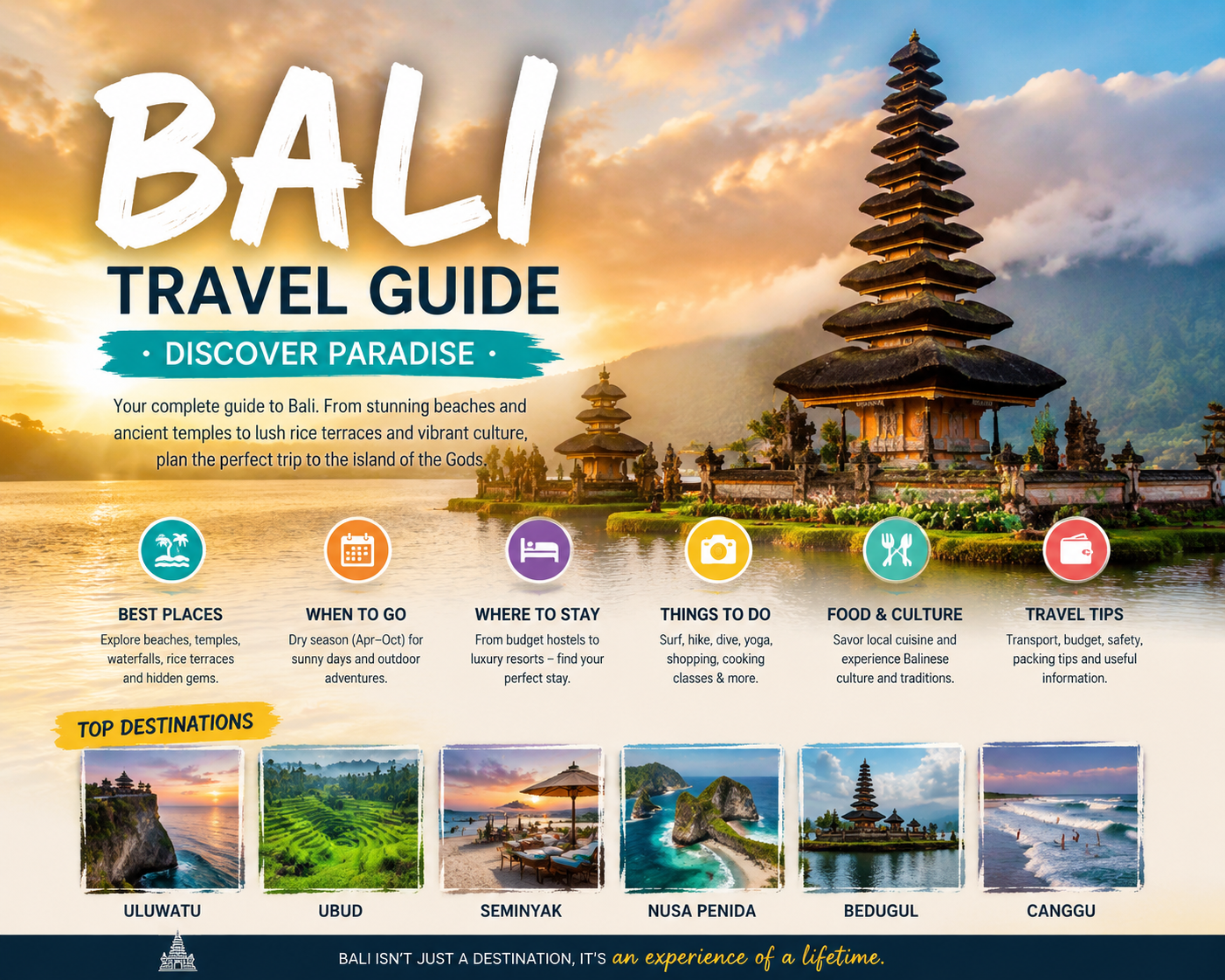
Bali Travel Guide 2026: Ultimate Tips for Paradise
Bali is a mesmerizing destination, known for its vibrant culture, stunning beaches, lush rice terraces, and spiritual experiences. This Bali travel guide will take you through everything you need to know to plan an unforgettable trip. Whether you are a first-time visitor or returning to explore hidden gems, this guide covers Bali’s attractions, regions, local culture, transport, and practical tips for a smooth journey. Bali is not just a tropical paradise; it is an experience that blends adventure, relaxation, and cultural immersion into one seamless holiday Best Travel Magazines
Traveling to Bali requires careful planning to make the most of your visit. From understanding the best time to go to discovering where to stay and how to move around the island, this Bali travel guide provides detailed insights. With this comprehensive resource, you can design an itinerary that matches your preferences, whether you are seeking tranquility, adventure, or a mix of both. Read on to explore the ultimate Bali experience.
Bali Quick Facts and Travel Essentials
Location and Geography
Bali, part of Indonesia, lies in the Lesser Sunda Islands and is surrounded by the Java Sea and Indian Ocean. Its diverse landscape includes lush rice terraces, volcanic mountains, and pristine beaches. Understanding Bali’s geography helps travelers plan a logical Bali itinerary covering key regions efficiently.
Population and Culture
Home to about 4.3 million residents, Bali’s culture is deeply rooted in Hindu traditions. From temple ceremonies to traditional dances, the island’s spiritual atmosphere is reflected in daily life. Experiencing Bali’s culture is essential when visiting major Bali attractions like Uluwatu Temple and Besakih.
Language, Currency, and Time Zone
The main language is Indonesian, with Balinese spoken locally. English is widely understood in tourist areas. The currency is Indonesian Rupiah (IDR), and Bali follows Central Indonesia Time (UTC+8). Travelers should exchange money or use ATMs when exploring Bali resorts and local markets.
Climate Overview
Bali features a tropical climate with dry and rainy seasons. Dry season from April to October is ideal for beach activities, outdoor adventures, and visiting Bali temples. Rainy season brings short showers but fewer tourists and lower costs. Planning around climate ensures a better travel experience.
| Fact | Details |
|---|---|
| Area | 5,780 sq km |
| Population | 4.3 million |
| Language | Indonesian, Balinese, English |
| Currency | Indonesian Rupiah (IDR) |
| Time Zone | UTC+8 |
Best Time to Visit Bali and Seasonal Tips
Dry Season Advantage
The dry season is perfect for exploring Bali beaches, hiking Mount Batur, or visiting Ubud’s rice terraces. Travelers enjoy clear skies, ideal for photography and outdoor activities across popular Bali attractions.
Rainy Season Considerations
While Bali experiences heavier rainfall during November to March, travelers can benefit from lower prices and smaller crowds. Short rains rarely affect sightseeing and allow for peaceful visits to temples and markets.
Festivals and Events
Bali hosts cultural festivals such as Nyepi and Galungan. Nyepi is the Day of Silence, where the island temporarily shuts down. Planning your Bali itinerary around these events ensures a unique cultural experience.
Regional Weather Variations
Ubud is cooler with morning fog, while Seminyak and Canggu are sunnier. Understanding these microclimates aids in planning activities and selecting accommodations, including Bali resorts.
Airfare and Accommodation Trends
Flights are cheaper during the rainy season. Early bookings during the dry season secure the best Bali resorts. Seasonal planning is crucial for budgeting and itinerary scheduling.
Packing Tips
Light clothing, swimwear, sunscreen, and comfortable shoes are essentials. Rain gear is needed for the wet season. Proper packing enhances comfort for a variety of things to do in Bali, from temple visits to beach adventures.
Bali Regions and Resorts: Best Places to Stay
Ubud: Cultural and Spiritual Hub
Ubud offers art galleries, traditional performances, and yoga retreats. Staying here allows access to Bali attractions like the Monkey Forest and Tegallalang Rice Terrace. It is ideal for travelers seeking serenity and cultural immersion.
Seminyak: Luxury and Shopping
Seminyak is known for Bali resorts, upscale dining, and nightlife. Visitors can enjoy fine dining, stylish boutiques, and trendy beach clubs. This region caters to travelers seeking comfort and entertainment.
Canggu: Surf and Lifestyle
Canggu combines surfing, café culture, and rice terrace views. Digital nomads and young travelers enjoy its laid-back vibe. Staying in Canggu provides easy access to Bali beaches and adventure activities.
Uluwatu: Cliffs and Temples
Uluwatu features cliffside temples, dramatic sunsets, and pristine beaches. The region is ideal for photography, surfing, and cultural experiences. The Uluwatu Temple Kecak dance is a must-see for those exploring Bali attractions.
Nusa Dua and Sanur: Family-Friendly Escapes
These regions offer calm waters, family-friendly beaches, and well-planned Bali resorts. Ideal for travelers with children or those seeking tranquility.
Lovina: Northern Highlights
Lovina’s black sand beaches and dolphin tours offer a quiet retreat. It is perfect for travelers interested in off-the-beaten-path things to do in Bali and cultural exploration.
Transportation in Bali
Airport Transfers
Ngurah Rai International Airport connects Bali globally. Taxis, Grab, and private drivers are popular. Early booking ensures smooth arrival at Bali resorts.
Scooters and Ride-Sharing
Scooters are a convenient way to explore Bali attractions. Ride-sharing apps like Grab and Gojek offer reliable transport for short trips.
Private Drivers and Guided Tours
Hiring a private driver allows flexible itineraries. Guided tours cover temples, waterfalls, and islands, ideal for first-time visitors planning a Bali itinerary.
Public Transport
Public transport is limited outside main towns. Scooters, taxis, or private vehicles remain the best options for exploring Bali attractions efficiently.
Walking and Cycling
In Ubud and small towns, cycling or walking is perfect for visiting local markets and rice terraces. Eco-friendly transport offers a unique perspective on Bali culture.
Travel Safety
Traffic can be heavy and chaotic. Safety precautions, including helmets and adherence to local laws, are essential when visiting Bali beaches and cultural sites.
Suggested Bali Itineraries
Three-Day Itinerary
A short trip focuses on key Bali attractions, including Ubud, Tanah Lot, and Seminyak beaches. This schedule balances culture and relaxation.
Five-Day Itinerary
This itinerary includes Nusa Penida, waterfalls, rice terraces, and local markets. Travelers can experience more things to do in Bali while avoiding rush.
Seven-Day Itinerary
A full week allows visiting remote areas, adventure sports, and island hopping. It provides a complete Bali travel guide experience for first-time visitors.
Ten-Day Itinerary
Longer stays allow exploration of Sidemen, Lovina, and cultural workshops. Immersive experiences in Bali culture enhance the journey.
Custom Itineraries
Travelers can design a tailored Bali itinerary combining luxury resorts, adventure sports, cultural tours, and wellness programs. Flexibility ensures maximum enjoyment.
Budget Considerations
Itineraries cater to backpackers, mid-range, or luxury travelers. Choosing accommodations, meals, and activities based on budget ensures comfort across Bali resorts and attractions.
Top Things to Do in Bali
Temples and Spiritual Sites
Bali is famous for temples such as Tanah Lot, Uluwatu, Besakih, and Tirta Empul. Visitors can experience rituals and traditional ceremonies. Exploring these Bali attractions enriches cultural understanding.
Beaches and Water Activities
Bali beaches like Kuta, Seminyak, Padang Padang, and Jimbaran offer surfing and relaxation. Snorkeling and diving in Nusa Lembongan are must-dos. Beach resorts provide easy access to Bali attractions.
Rice Terraces and Nature
Tegalalang and Jatiluwih rice terraces showcase Bali’s agricultural heritage. Hikes, waterfalls, and hot springs offer natural escapes. These experiences are essential in a Bali itinerary.
Adventure Sports
Surfing, rafting, paragliding, and Mount Batur treks attract adventure enthusiasts. Safety guidelines ensure a secure experience across things to do in Bali.
Cultural Experiences
Cooking classes, traditional dances, and artisan workshops allow immersive participation in Bali culture. Visitors can connect with locals and understand daily traditions.
Island Hopping
Nusa Penida, Nusa Lembongan, and Gili Islands offer beaches, snorkeling, and cliff viewpoints. These excursions enhance a complete Bali travel guide experience.
Food and Cuisine in Bali
Local Dishes
Try Nasi Goreng, Babi Guling, Sate Lilit, Lawar, and Bebek Betutu. Sampling traditional cuisine is a key aspect of Bali culture.
Cafés and Restaurants
Ubud, Seminyak, and Canggu offer trendy cafés, vegan eateries, and fine dining. Culinary diversity caters to international visitors seeking Bali resorts or local flavors.
Beachside Dining
Jimbaran Bay features seafood dinners by the beach. Sunset views enhance the Bali itinerary dining experience.
Dietary Options
Vegetarian, vegan, and gluten-free meals are widely available. Health-conscious travelers can enjoy local and international cuisine.
Beverage Culture
Balinese coffee, tropical juices, and cocktails are popular. Fresh coconut water and kopi Bali provide authentic tastes.
Food Etiquette
Sharing meals and respecting local customs show appreciation for Balinese hospitality. Travelers should follow hygiene standards when enjoying Bali cuisine.
Safety and Health Tips
Road and Travel Safety
Traffic can be chaotic, especially in tourist areas. Helmets, following road rules, and avoiding night driving is essential.
Health Precautions
Mosquito-borne diseases and Bali Belly are common. Using insect repellent and drinking bottled water reduces risks.
Emergency Services
Hospitals and clinics are available in major towns. Travel insurance is recommended for activities like adventure sports or island hopping.
Cultural Respect
Temple dress codes, ceremony etiquette, and respectful behavior enhance Bali culture experiences. Observing these customs prevents misunderstandings.
Environmental Awareness
Reduce plastic use and practice sustainable tourism. Supporting conservation helps preserve Bali attractions for future travelers.
Travel Insurance
Medical coverage, theft protection, and activity-related insurance ensure peace of mind. Many tours and resorts require it.
Bali Budget Guide
| Budget Type | Daily Cost (USD) | Accommodation | Food & Activities |
|---|---|---|---|
| Backpacker | 30-50 | Hostel or budget guesthouse | Street food, basic transport |
| Mid-Range | 60-120 | Boutique hotels or villas | Mix of local and restaurant meals, tours |
| Luxury | 150+ | 5-star resorts and private villas | Fine dining, spa, private tours |
Bali accommodates various budgets, making it accessible for backpackers and luxury travelers alike. Smart planning, seasonal timing, and local insights can optimize spending while enjoying experiences.
Safety and Health Tips
Road and Travel Safety
Traffic is often congested, especially in tourist hotspots. Wearing helmets, following road rules, and avoiding night driving ensures safety.
Health Precautions
Mosquito-borne diseases and Bali Belly are common. Using insect repellent, drinking bottled water, and choosing hygienic eateries minimizes risk.
Emergency Services
Hospitals, clinics, and tourist police are available in major towns. Travel insurance and emergency contacts are recommended for unexpected situations.
Cultural Respect
Balinese culture is deeply spiritual. Respecting temple rules, dress codes, and local customs prevents misunderstandings. Participating respectfully in ceremonies enhances the travel experience.
Environmental Awareness
Plastic use is limited in some areas, and sustainable tourism is encouraged. Carrying reusable items reduces environmental impact and supports local conservation efforts.
Travel Insurance
Insurance covering medical emergencies, theft, and activity-related accidents is essential. Many adventure sports require insurance for participation.
FAQs
Do I need a visa for Bali?
Most travelers can obtain a Visa on Arrival (VOA) or e-VOA for short stays. Check your nationality and current regulations before departure.
When is the best time to visit Bali?
The dry season from April to October is ideal for outdoor activities, while the rainy season offers fewer crowds and discounted rates.
How many days are enough for Bali?
A minimum of three days allows visiting main attractions, while 7–10 days offers a more relaxed exploration including remote areas and islands.
Can I drive in Bali with my license?
International driving permits are recommended. Scooters are popular, but road conditions and traffic rules differ from other countries.
Are Bali’s beaches safe for swimming?
Most beaches are safe, but currents and surf conditions vary. Always follow local advice and cautionary signs.
What is the local currency in Bali?
Indonesian Rupiah (IDR) is the local currency. ATMs are widely available, and major credit cards are accepted in tourist areas.
Is Bali safe for solo travelers?
Yes, with common-sense precautions. Avoid isolated areas at night and respect local customs.
What are must-try Balinese dishes?
Nasi Goreng, Babi Guling, Sate Lilit, Lawar, and Bebek Betutu are traditional favorites.
Do I need travel insurance for Bali?
Travel insurance covering medical emergencies, theft, and activity-related accidents is highly recommended.
What cultural practices should I observe?
Dress modestly in temples, respect offerings, participate respectfully in ceremonies, and avoid offensive gestures.
Conclusion
Bali is an enchanting island that offers a rich blend of natural beauty, culture, and adventure. From the serene rice terraces of Ubud to the vibrant nightlife of Seminyak, this Bali travel guide provides everything needed to plan a perfect trip. Understanding the best times to visit, regions to explore, and local customs ensures a rewarding experience. Travelers can enjoy both relaxation and excitement, making each visit unique and memorable.
Planning ahead and following practical tips for transport, health, and safety allows visitors to focus on enjoying Bali’s charm. Whether you are seeking cultural immersion, thrilling adventures, or luxury retreats,Bali travel guide delivers an unforgettable travel experience. This guide empowers travelers to explore the island confidently and create lasting memories.