Free Spotify: Features, Benefits, Limitations and How to Listen to Music for Free
Many people want to understand whether Spotify is genuinely free, what features are included, and whether the free version provides enough listening options for everyday entertainment. Although users can access a large collection of music and podcasts without paying, the experience includes certain restrictions. Advertisements, playback limitations, internet requirements, and differences in audio quality can affect how people use the service. Understanding these details can help new listeners decide whether the free subscription meets their needs or whether upgrading to Premium would provide better value AI Agents
This guide explains how the platform works, how to create an account, which features are available, and what limitations users should understand before getting started. It also explores device compatibility, data consumption, playlist management, music discovery, common problems, and the differences between free and paid subscriptions.
What Is Free Spotify?
Understanding the Spotify Free Version
Spotify is a digital audio streaming platform that provides access to music, podcasts, and other audio content. Its free subscription allows registered users to listen without paying a monthly membership fee. Instead of charging listeners directly, the platform supports its free service through advertising and offers optional paid subscriptions with additional features. This model makes music streaming accessible to people who want entertainment without adding another monthly expense.
The free version provides access to a large catalogue of licensed music and audio content, although availability can depend on the user’s country and licensing agreements. Listeners can search for artists, explore albums, follow playlists, and receive recommendations based on their interests. They can also use Spotify across supported devices, making it easier to continue listening in different environments.
How Does Spotify Free Work?
The service works through an internet connection and a Spotify account. After registering, users can browse the music library, search for specific songs, explore recommended content, and create personal collections. When someone selects audio content, Spotify streams it through the application or web player rather than requiring the user to purchase individual tracks. Advertisements may appear during the listening experience because the free subscription is supported by advertising.
The platform also uses listening activity to improve recommendations. For example, frequently playing certain artists or musical styles can influence the suggestions displayed on the home screen. Users can discover new releases, explore curated collections, and find playlists designed for different moods and activities. These features help make the listening experience more personal, even when someone does not have a paid membership.
Is Spotify Completely Free?
Spotify offers a free subscription that does not require users to pay a regular monthly subscription fee. However, free access should not be confused with an unrestricted service. Advertising, certain playback controls, and other limitations are part of the free experience. Users may also need an internet connection to stream music, and some features available to Premium members are not included.
It is important to distinguish between a standard free account and a Premium free trial. A free account can continue to be used without purchasing Premium, subject to the service’s terms and availability. A trial, on the other hand, temporarily provides selected paid features and may require payment information. Understanding this difference helps users avoid unexpected subscription charges.
Who Should Use the Free Version?
The free subscription is suitable for casual listeners who enjoy discovering music but do not necessarily need every available feature. Students, occasional music listeners, podcast fans, and people who want to explore a streaming platform before paying may find it useful. It provides an opportunity to build playlists, follow artists, and explore different musical genres without committing to a monthly expense.
People who listen for several hours every day may have different requirements. They might prefer uninterrupted playback, offline downloads, and greater control over their music. For these listeners, the free experience may feel restrictive over time. Choosing between the available subscriptions ultimately depends on listening habits, personal preferences, and budget.
Free Music Streaming Without Purchasing Individual Songs
Traditional music purchasing usually involves buying individual tracks or complete albums. Streaming services offer a different approach by providing access to licensed catalogues through a subscription or advertising-supported model. This allows users to explore different artists without purchasing every song separately. Spotify follows this approach by making its free listening option available to eligible users.
However, streaming access does not mean that users own the music. Songs remain subject to licensing agreements and the platform’s usage rules. Listeners generally cannot download ordinary music files from the service and use them independently. Understanding this distinction is important for anyone who wants convenient access to music without expecting permanent ownership.
How to Get Free Spotify
Creating a Spotify Free Account
Getting started begins with creating a Spotify account through the official website or application. Users can visit Spotify’s website, choose the registration option, and provide the information requested during the process. Depending on the available registration methods, they may be able to sign up using an email address or a supported third-party account. They should always provide accurate information and follow the instructions displayed during registration.
Once the account has been created, users can access the free listening experience by signing in. They can select their favourite artists, explore different genres, and begin creating playlists. New listeners should review their account settings and privacy preferences before using the platform regularly. Using a strong password and keeping login information private can also help protect the account.
Downloading the Spotify Free App
The official Spotify application is available through supported mobile and desktop platforms. Android users can look for the application in Google Play, while iPhone and iPad users can find it through Apple’s App Store. Computer users can download the desktop application from Spotify’s official website or use the supported web player.
It is best to download the application from an official source rather than unfamiliar websites offering modified installation files. Unofficial applications may contain security risks, request unnecessary permissions, or violate the platform’s terms. Installing the genuine application helps users receive official updates and access the service through a more reliable environment.
Using Spotify Free on Android
Android users can install Spotify on a compatible smartphone or tablet and sign in with their account. The application provides access to music discovery, search, playlists, podcasts, and account settings. Users can browse the home screen to find recommended content or use the search function to locate a particular artist, album, or song.
The listening experience may vary according to the device, account, location, and available features. Keeping the application updated can help improve performance and provide access to newer functionality. Users should also check their mobile data settings if they regularly stream music outside their home or workplace.
Using Spotify Free on iPhone and iPad
Apple users can access the service through the official iOS application. After installation, they can sign in, search for their favourite music, and explore personalised recommendations. The interface provides access to playlists, albums, podcasts, and other audio collections. Users can also manage their listening preferences through the settings available in the application.
The free subscription works without requiring an Apple Music membership. However, Spotify’s own Premium subscription remains separate from Apple’s services. Users should understand which account they are using and avoid confusing an Apple subscription with a Spotify membership when reviewing payment settings.
Listening Through the Spotify Web Player
People who do not want to install a desktop application can use Spotify’s supported web player through a compatible browser. They can open the official Spotify website, sign in, and access available music and podcast content. This option is particularly useful for people using shared computers or devices where installing additional software is not convenient.
The web experience may differ slightly from the desktop application. Browser compatibility, internet performance, and device settings can affect playback. Users should also remember to sign out when using a public or shared computer to prevent other people from accessing their account.
Free Spotify Features
Access to a Large Music Library
One of the main attractions of the free subscription is access to a large collection of licensed music. Users can explore songs from international artists, independent musicians, popular performers, and different musical traditions. Whether someone enjoys pop, rock, classical music, electronic music, hip-hop, or regional sounds, the platform provides opportunities to discover a wide variety of content.
The available catalogue can vary between countries because music distribution depends on licensing agreements. Some tracks may be unavailable in certain regions, while others may be added or removed over time. Despite these differences, the platform offers a convenient way to explore music from different parts of the world through one account.
Discovering Music Through Personalised Recommendations
Spotify uses listening activity and other signals to recommend music that may match a user’s interests. These recommendations can introduce listeners to artists and songs they might not discover through ordinary searches. The home screen may display different collections based on listening history, followed artists, and changing musical preferences.
Personalised discovery is particularly useful for people who enjoy exploring new genres. Instead of repeatedly searching for the same songs, listeners can browse recommended albums, playlists, and releases. The quality of recommendations may improve as the platform receives more information about the user’s listening habits.
Creating and Managing Personal Playlists
Playlist creation allows users to organise music according to their own preferences. Someone might create a collection for exercise, studying, travelling, relaxing, or spending time with friends. Playlists can contain different artists and musical styles, giving listeners more control over how they organise their favourite content.
Users can also update their collections by adding new tracks, removing songs, and changing playlist details. Sharing options allow people to introduce their musical choices to friends and family. These tools make playlists useful for everyday listening as well as organising music for special occasions.
Exploring Discover Weekly and Release Radar
Discover Weekly and Release Radar are two well-known Spotify discovery features. Discover Weekly provides personalised music suggestions based on listening preferences and related recommendation signals. It can help users find artists and tracks that match their interests while introducing them to unfamiliar music.
Release Radar focuses on music releases connected to artists and listening preferences. It gives listeners another way to discover new songs without manually checking every artist’s profile. Availability and presentation can vary by account and market, but both features demonstrate how recommendation technology can support music discovery.
Search and Playback Options
The search function helps listeners locate songs, artists, albums, playlists, and podcasts. Users can enter a name or keyword to find relevant content and explore the results. Spotify has also introduced additional free playback controls, including Pick & Play, Search & Play, and Share & Play, although the exact experience can vary by market and account.
These controls make it easier for free listeners to interact with music they want to hear. However, they do not necessarily provide the same level of unrestricted playback control available with Premium. Users should check the current application experience instead of relying on older descriptions of free playback restrictions.
Podcasts and Other Audio Content
Spotify is not limited to music. It also provides access to podcasts covering subjects such as technology, education, business, entertainment, personal development, history, and everyday life. Users can explore podcast episodes, follow creators, and discover programmes that match their interests.
This makes the platform useful for people who want more than background music. Someone might listen to songs during exercise and switch to an educational podcast while travelling. The availability of individual podcasts and other audio formats can depend on regional distribution and licensing arrangements.
Free Spotify vs Spotify Premium
Understanding the Main Differences
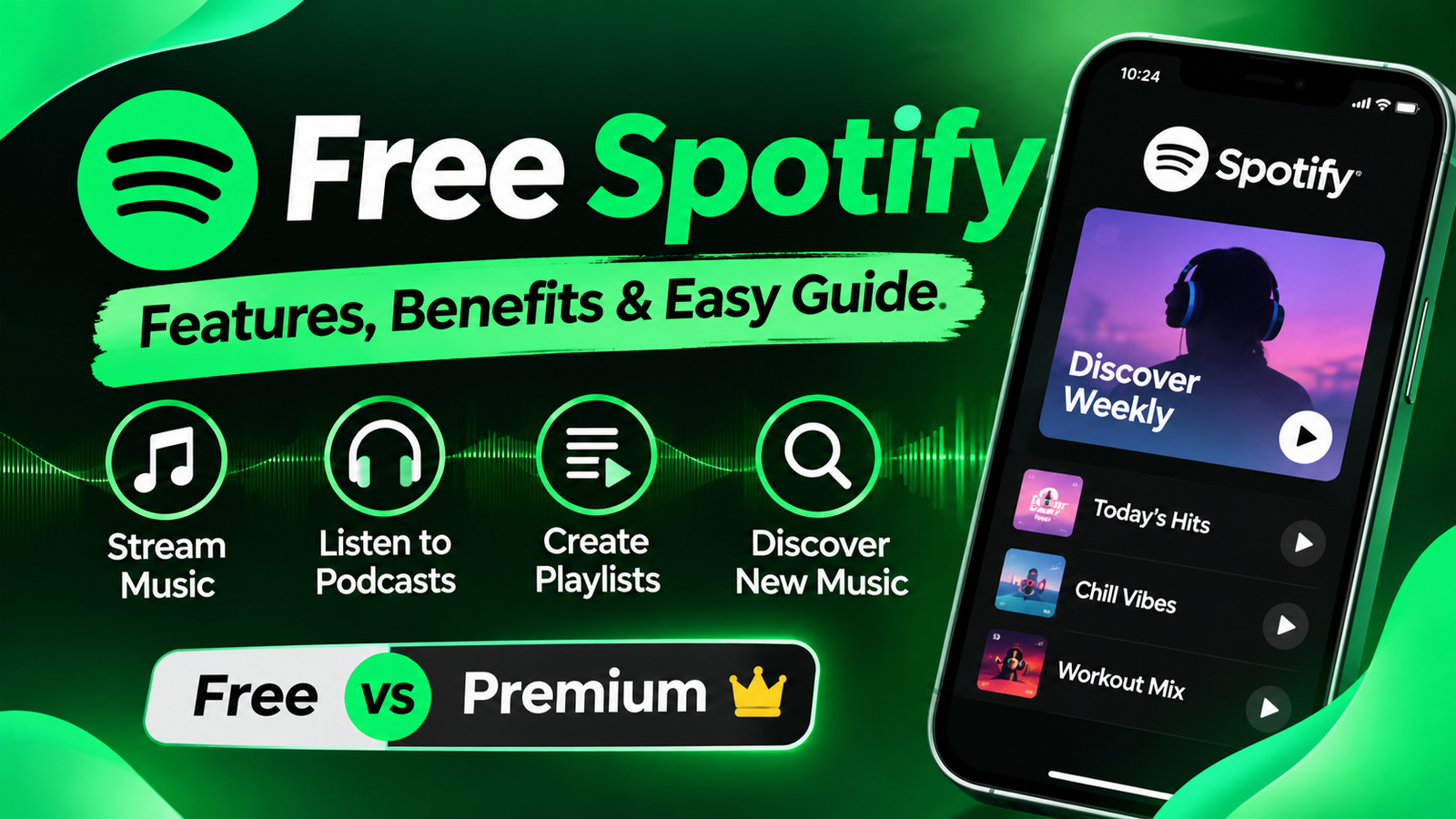
The most important difference between the two subscriptions is the listening experience. Free users can access music through an advertising-supported service, while Premium provides additional features for people who want greater convenience and playback control. Both options allow listeners to explore Spotify’s music catalogue, but the restrictions and benefits are different.
Premium is designed for people who prefer fewer interruptions and additional listening flexibility. Free access is more appropriate for users who are comfortable with advertisements and do not need every paid feature. The following comparison explains the general differences, although exact availability can change.
| Feature | Spotify Free | Spotify Premium |
|---|---|---|
| Monthly subscription | No regular fee | Paid subscription |
| Music streaming | Yes | Yes |
| Advertisements | Yes, where applicable | Ad-free music listening |
| Offline music downloads | Not included for ordinary music | Available |
| Playback control | Some restrictions | Greater control |
| Audio quality | Lower available maximum | Higher available options |
| Personal playlists | Yes | Yes |
| Music discovery | Yes | Yes |
| Podcasts | Yes | Yes, with applicable differences |
| Unlimited on-demand listening | Subject to restrictions | Greater flexibility |
Advertisements and Listening Interruptions
Advertising is one of the main differences between the subscriptions. Free users may hear advertisements between songs or encounter promotional messages during their listening experience. These advertisements help support the free service and allow users to access music without paying a monthly subscription fee.
Premium generally removes advertisements from music listening. This can make a noticeable difference for people who listen for extended periods or use music as background entertainment throughout the day. However, podcast advertising may still appear in some content because advertisements can be included directly within podcast episodes.
Offline Listening and Downloads
Offline listening is an important feature for people who travel frequently or have limited internet access. Spotify Premium provides the ability to download eligible music for offline playback within the application. This allows subscribers to listen without continuously streaming through a mobile or Wi-Fi connection.
The standard free subscription does not include offline downloads of ordinary music tracks. Users can still listen while connected to the internet, but downloaded music should not be confused with permanently owned audio files. Anyone who needs reliable offline music access should review the current Premium options.
Audio Quality Differences
Audio quality can influence the overall listening experience, particularly for people who use quality headphones or speakers. Spotify offers different playback quality options depending on the subscription, device, and supported settings. Free users may have a lower maximum streaming quality than eligible Premium subscribers.
The actual difference can depend on the headphones, speakers, internet connection, and listening environment. Someone using basic smartphone speakers may not notice a significant improvement, while listeners using more capable audio equipment may care more about available quality settings. Users should review the current official audio specifications before making a subscription decision.
Which Subscription Is Better?
Neither subscription is automatically better for every listener. The free option provides a way to explore music without adding a monthly payment, making it useful for casual listening. People who mainly play music occasionally, enjoy discovering artists, or listen while connected to Wi-Fi may find that it meets their requirements.
Premium may be more suitable for people who listen frequently, travel regularly, or prefer uninterrupted music. Offline downloads and greater playback flexibility can make the paid experience more convenient. The best decision depends on how often someone listens and whether the additional features justify the subscription cost.
Limitations of Free Spotify
Advertisements During Music Streaming
Advertisements are an unavoidable part of the advertising-supported model. They help the platform generate revenue while providing access to music without a regular subscription payment. Some listeners may find the interruptions acceptable, while others may prefer a continuous listening experience.
The type, frequency, and presentation of advertisements can vary. Users should understand that the free subscription is not designed to provide the same advertising-free music experience as Premium. If advertisements become frustrating, reviewing the available subscription options may be worthwhile.
Restrictions on Offline Music
People using the free subscription generally need an internet connection to stream ordinary music. This can create difficulties when travelling through areas with weak mobile coverage or when trying to conserve mobile data. Premium’s offline listening feature addresses this requirement by allowing eligible tracks to be downloaded within the application.
It is also important to understand that downloaded tracks are managed within Spotify rather than provided as ordinary transferable music files. Users cannot assume that streaming access gives them permanent ownership of a song. Music remains subject to the platform’s licensing and account conditions.
Playback Control Differences
Free playback controls may be more limited than Premium controls, particularly depending on the device and listening mode. Some users may encounter restrictions related to selecting tracks, skipping songs, or using certain playback options. These restrictions can make the experience less predictable for people who want complete control over every listening session.
Spotify has introduced changes to its free listening features, so older articles may no longer describe the service accurately. The best approach is to check the current application and official support information for the user’s country. This helps avoid confusion caused by outdated feature comparisons.
Internet Connection Requirements
Streaming requires an internet connection, which means network quality can affect playback. Slow connections may cause buffering, lower available streaming quality, or interruptions. Users who regularly experience connectivity problems may find that music streaming is less convenient than listening to locally stored audio.
A stable Wi-Fi connection can help reduce these problems at home or work. Mobile users should consider their network coverage and data allowance before streaming music for long periods. People who frequently travel to places without reliable internet may prefer a service with suitable offline listening options.
Can You Use Free Spotify Without a Credit Card?
Registration Without Payment Details
A standard free account does not require a paid Premium subscription or a recurring monthly payment. Users can register through the official platform and follow the available account creation instructions. This makes it possible to begin listening without entering payment information for a normal free account.
However, registration requirements and available sign-in methods can change. Users should always check the information displayed during the official registration process. If a page requests payment information for a Premium offer, they should carefully review whether they are signing up for a trial rather than a standard free account.
Avoiding Unwanted Subscription Charges
People should pay attention when selecting a Premium trial or promotional offer. Some trials require payment details and may automatically transition into a paid subscription when the promotional period ends, depending on the terms. Users should review the renewal date, price, and cancellation conditions before accepting an offer.
A normal free account is different from a trial that temporarily provides Premium features. Keeping this distinction clear can prevent unexpected payments. Anyone who has subscribed should review their account’s subscription page to understand their current plan and renewal information.
Is Free Spotify Available on Every Device?
Using Spotify on Smartphones and Tablets
Spotify supports a range of smartphones and tablets, including compatible Android and Apple devices. Users can access music, podcasts, search tools, and playlists through the official mobile application. This makes the service convenient for listening at home, during travel, or while performing everyday activities.
Device requirements may change as operating systems receive updates. Older phones may not support the latest version of the application. Users should check the official app store listing to confirm compatibility before installing the service.
Using Spotify on Windows and Mac
Computer users can listen through the desktop application or a supported web browser. These options make it possible to access music while working, studying, or using a computer for entertainment. The desktop environment also provides a convenient way to search for albums and organise playlists.
The application and web player may have slightly different interfaces and functionality. Users should choose whichever option works best with their computer and browser. Downloading software from official sources is recommended for security and reliable updates.
Listening Through Smart Devices and Speakers
Spotify can also work with supported smart speakers, televisions, gaming consoles, and connected audio devices. Spotify Connect allows users to control playback across compatible devices when the necessary requirements are met. This can make it easier to move music from a smartphone to a home speaker or another supported system.
The availability of particular features depends on the device and its integration with Spotify. Some manufacturers may offer additional controls or require specific setup steps. Users should check device compatibility before expecting every feature to work in the same way across different products.
How Much Data Does Free Spotify Use?
Understanding Music Streaming Data Consumption
Music streaming uses internet data because audio content is delivered through a network connection. The amount consumed depends on factors such as playback quality, listening duration, and network conditions. Higher audio quality generally requires more data than lower quality settings, so people with limited mobile allowances should pay attention to their streaming preferences.
There is no single data figure that applies to every user. Someone listening for twenty minutes a day will consume less data than someone streaming music for several hours. Understanding this relationship helps users estimate their usage and avoid exhausting a limited mobile data package.
Managing Data Usage on Spotify
Users can review available playback settings to manage how much data the application consumes. Selecting a lower streaming quality where available may help reduce usage. They can also limit mobile streaming by using Wi-Fi whenever possible and reviewing their device’s data consumption settings.
Spotify’s Data Saver and other playback settings may help eligible users manage their listening experience. The exact options can vary by device and application version. Checking these settings regularly can be useful for people who stream music while travelling or using limited mobile data.
How to Fix Common Spotify Free Problems
Spotify Is Not Playing Songs
Playback problems can happen because of a weak internet connection, an outdated application, temporary service interruptions, or account-related issues. Users should first check whether their internet connection is working properly. Restarting the application and trying another track may help identify whether the issue affects one song or the entire service.
If the problem continues, updating Spotify or restarting the device may resolve temporary software issues. Users should also check Spotify’s official support information for known problems. Reinstalling the application can be considered if other troubleshooting steps do not work.
Spotify Keeps Buffering
Buffering usually occurs when the application cannot receive audio data quickly enough. Network congestion, weak Wi-Fi signals, mobile coverage problems, and background downloads can all affect playback. Moving closer to a Wi-Fi router or switching to a more stable network may improve the experience.
Users can also reduce streaming quality where the relevant settings are available. Closing unnecessary applications that consume bandwidth may help as well. If buffering happens across multiple networks, checking for an application update or a wider service issue may be useful.
Problems Logging Into a Free Account
Login difficulties can occur when users enter an incorrect password, select the wrong registration method, or attempt to access an account connected to another service. They should confirm the email address or sign-in option originally used to register. Using the official password recovery process is the safest way to regain access.
Users should avoid sharing login information with unfamiliar websites or people claiming to provide free Premium upgrades. Such offers may be designed to collect personal information or compromise accounts. Official account recovery and support channels should always be preferred.
Free Spotify Alternatives
Exploring Other Free Music Streaming Services
Although Spotify is a popular option, it is not the only platform offering music streaming. Other services may provide free listening options, depending on location, device compatibility, and licensing arrangements. Some focus on music discovery, while others offer radio-style listening or a combination of music and video content.
People comparing alternatives should consider the size of the music catalogue, advertising experience, playback controls, audio quality, and availability. A service that works well in one country may offer different features in another. Checking the official service information is important before choosing an alternative.
Choosing the Right Music Platform
The right platform depends on what someone expects from music streaming. Listeners who value personalised recommendations may prefer a service with strong discovery features. People who primarily want music videos, live performances, or creator content might prefer a different platform.
It is also useful to consider device compatibility and existing playlists. Moving between streaming services can require rebuilding collections or using supported playlist transfer tools. Comparing the available free plans before making a decision can save time and help users find a service that fits their habits.
Is Free Spotify Worth Using?
Benefits for Casual Music Listeners
The free subscription offers several advantages for people who want convenient music access without a monthly payment. It provides opportunities to explore artists, create playlists, discover podcasts, and listen across supported devices. For someone who does not mind advertisements, these features can provide considerable entertainment without requiring a paid membership.
It is particularly useful for listeners who want to try the platform before considering an upgrade. They can explore the catalogue, learn how recommendations work, and decide whether the available playback controls meet their expectations. This makes the free option a practical starting point for new users.
When Premium May Be a Better Choice
Premium may be worth considering when uninterrupted music and offline listening are important. People who frequently travel, commute, exercise, or listen throughout the day may appreciate the additional convenience. Greater playback control and the removal of music advertisements can also make the paid experience more comfortable.
However, paying for Premium is not necessary for everyone. Users should compare the current subscription price with the features they actually need. If the free service already provides enough functionality, continuing without a paid subscription may be the more sensible decision.
FAQs About Free Spotify
Is Spotify completely free to use?
Yes. Spotify provides a standard free subscription that allows eligible users to stream music and other available audio content without paying a regular monthly membership fee. The experience is supported by advertisements and includes certain feature restrictions.
Can I listen to Spotify without Premium?
Yes. You can use a standard free account without purchasing Premium. You can explore music, create playlists, follow artists, and access supported podcasts, although some playback and listening features are restricted.
Can I download songs with Spotify Free?
Ordinary music downloads for offline listening are a Premium feature. Free users generally need an internet connection to stream music. Some other content or features may have different availability, so check Spotify’s current support information.
Does Spotify Free require a credit card?
A standard free account does not normally require payment details. However, Premium trials and promotional subscriptions may request payment information. Always review the offer and renewal conditions before signing up.
Can I use Spotify Free on a computer?
Yes. Spotify can be accessed through its desktop application and supported web player. Users can sign in to their accounts, search for music, create playlists, and explore available audio content.
Does Spotify Free have advertisements?
Yes. The free subscription is advertising-supported. Users may encounter advertisements during their listening experience, while Premium generally provides ad-free music listening.
Can I play any song on Spotify Free?
Users can search for and access a large music catalogue, but playback controls and availability may vary by account, country, and device. Some songs may also be unavailable because of licensing restrictions.
Is Spotify Free available in Pakistan?
Spotify availability and account features depend on regional service support. Users in Pakistan should check the official Spotify website or application to confirm current availability and registration options in their location.
Does Spotify Free expire?
A standard free account does not have a normal monthly subscription expiry date. Users can continue using it subject to Spotify’s terms, account requirements, and service availability. This is different from a limited-time Premium trial.
Is Spotify Free better than other free music apps?
That depends on personal preferences. Spotify offers music discovery, playlists, podcasts, and personalised recommendations, but other services may provide different catalogues and features. Comparing their free plans can help users choose the most suitable platform.
Conclusion
Free Spotify provides an accessible way to enjoy digital music streaming, discover artists, organise playlists, and explore podcasts without paying a regular monthly subscription fee. Its advertising-supported model allows listeners to access a broad collection of audio content through smartphones, computers, tablets, and other supported devices. Features such as personalised recommendations, music discovery, playlist creation, and search functionality make the platform useful for different types of listeners. It also gives new users an opportunity to explore music streaming without committing to a paid membership.