
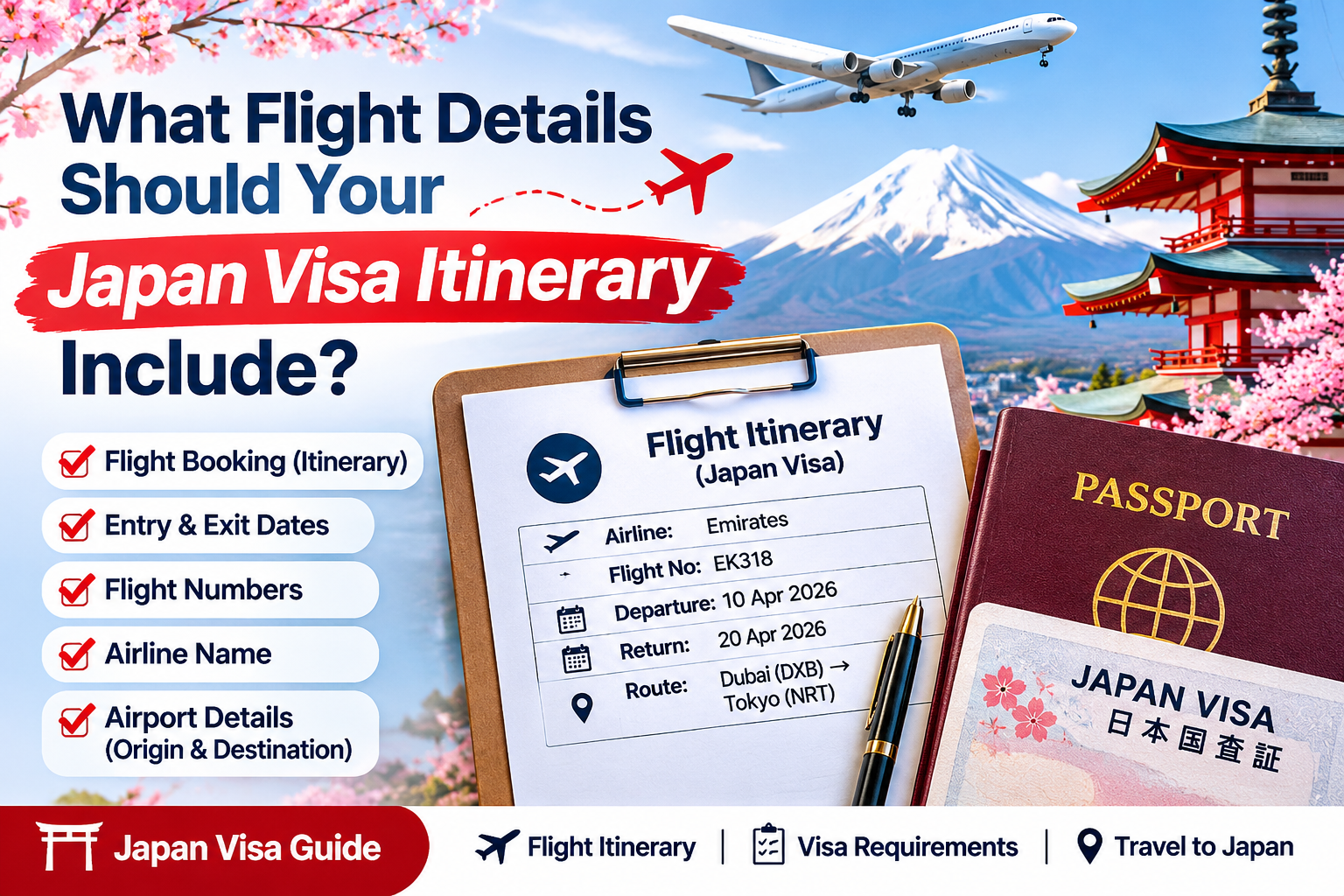
What Flight Details Should Your Japan Visa Itinerary Include?
A Japan visa flight itinerary should present the proposed journey in a clear, organised format. It normally identifies the traveller, travel dates, flights, and airports.
These details must support the visa form and daily schedule in Japan. Consistency across every document makes the travel plan easier to assess.
Essential Information for the Flight Itinerary
Applicants should check the instructions issued by the Japanese embassy or consulate handling their application. The exact document format can vary by location and visa category.
Japanese government guidance commonly requests the flight or ship number and the intended arrival and departure dates. Some missions also specify that tickets do not need to be purchased before approval.
Main Flight Details That Need Careful Review
Every entry should help explain the traveller’s movement from the home country to Japan and back. Missing segments can make the route difficult to understand.
1. Passenger Name
The traveller’s full name should match the passport exactly. Correct spelling links the itinerary to the identity documents.
Include every surname and given name required by the booking. Avoid nicknames, initials, or shortened versions not shown in the passport.
2. Departure Date
The first flight date should agree with the proposed travel period. A consistent date prevents conflicts across the application.
Check this date against the visa form, approved leave, and daily schedule. Update all related documents if the travel plan changes.
3. Arrival Date in Japan
Show the date on which the applicant expects to enter Japan. Arrival timing should align with the first accommodation and activity.
Remember that overnight flights may arrive on the following calendar day. Use the local arrival date printed in the flight schedule.
4. Airline and Flight Number
List the operating airline and flight number for every segment. Specific flight details make the proposed route clear to the reviewer.
A codeshare may display two airline names or numbers. Use the information shown on the reservation and keep each segment identifiable.
5. Departure and Arrival Airports
Use complete airport names or recognised airport codes. Accurate airport details distinguish cities with several international airports.
Check whether Tokyo flights use Narita or Haneda. The selected airport should make sense for the first or final destination in Japan.
6. Connecting Flight Details
Include every transit airport, connecting flight, and departure time. A complete route avoids unexplained gaps between destinations.
Allow realistic connection time for terminal changes, security, and immigration. Check whether the transit country requires a visa.
7. Return Journey
Applicants arranging a flight itinerary for a Japan visashould include a realistic return route. Departure details confirm the timeline.
The return date should match the visa form and daily schedule. Include each airline, airport, flight number, and connection on the route.
A compact review table can help applicants check the core information:
|
Detail |
Outbound journey |
Return journey |
|
Travel date |
Departure and arrival |
Departure and arrival |
|
Airline |
Operating carrier |
Operating carrier |
|
Flight number |
Every segment |
Every segment |
|
Airport |
Origin, transit, Japan |
Japan, transit, destination |
|
Passenger |
Passport name |
Same passport name |
Connections Between Flights and the Daily Schedule
Japan’s itinerary form may request dates, planned activities, contact information, and accommodation. The flight plan and daily schedule should describe one trip.
The Ministry of Foreign Affairs itinerary format includes columns for the date, activity plan, contact, and accommodation. Applicants should complete the relevant schedule carefully rather than listing only city names.
Final Checks Before Submitting the Itinerary
A last review can identify incorrect airport codes, missing connections, or inconsistent dates. Compare the itinerary directly with every relevant supporting document.
Match the Visa Form
Arrival and departure dates should match the application form. Conflicting information can create uncertainty about the intended travel period.
Review the Daily Activities
The first and final activities should fit the flight times. A realistic schedule allows time for airport procedures and ground transport.
Confirm Accommodation Details
The first hotel or host location should suit the arrival airport. Accommodation dates must cover the planned stay without unexplained nights.
Check Transit Requirements
A connection may involve immigration or an airport transit visa. Transit conditions depend on nationality, airport, and route structure.
Avoid Premature Ticket Purchases
Some Japanese missions advise applicants not to purchase flights before approval. A reservation can limit financial riskwhen permitted.
Use Current Travel Information
Flight schedules can change, so review the route near submission. Current information improves accuracy and reduces avoidable inconsistencies.
Keep a Copy
Save the submitted itinerary with the rest of the application. A retained copy helps answer later questions and organise final travel.
Conclusion
A Japan visa flight itinerary should show the applicant, travel dates, flight numbers, departure point, arrival airport, connections and return route. These details must agree with the visa form and daily schedule in Japan. Follow the checklist of the responsible Japanese mission, use genuine travel information, and avoid purchasing restrictive tickets before approval when payment is not required.